
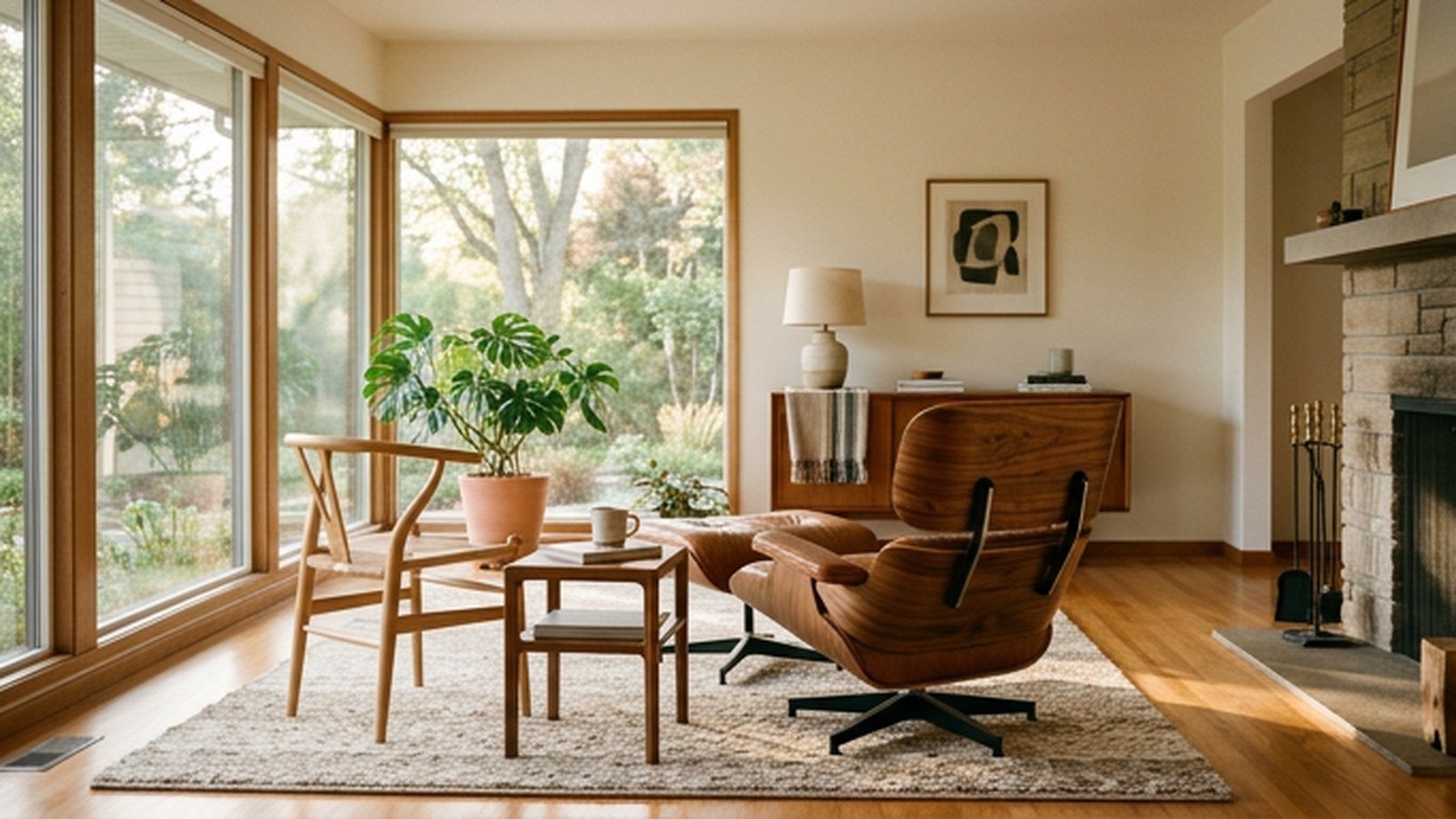
A living room built around mid-century modern design lives or dies by its seating, since a single well-chosen chair does more to establish the style than any other piece. The mid-twentieth century produced an unusually deep bench of genuinely iconic chair designs, many still in production today. This guide walks through fifteen of the most recognizable, from the Eames Lounge Chair to the Wishbone Chair.
I have furnished more than one living room around a single statement chair, and the lesson that sticks is that authenticity and reproduction both have a real place depending on your budget. An original Eames Lounge Chair is a genuine investment piece, while a well-made reproduction of a simpler design delivers most of the visual impact for less. Knowing which chairs are worth the original, and which tolerate a reproduction well, is worth understanding before you spend.
By the end of this piece you will know the real history behind each design, what it actually costs new and used, and how to pair it with the rest of a mid-century living room. I have included a comparison table and a cost breakdown, since prices for these pieces vary enormously between an original, a licensed reissue, and an unlicensed copy. Read through all fifteen before deciding which chair anchors your room.
Why These Chairs Still Define The Style Decades Later
Mid-century modern chair design broke from the heavily upholstered furniture that came before it, favoring exposed structure, new materials like molded plywood and fiberglass, and a genuine focus on the body’s actual shape. Designers like Charles and Ray Eames, Hans Wegner, and Eero Saarinen worked with manufacturing techniques that had only recently become available, and the resulting chairs looked like nothing before them. That novelty, combined with real ergonomic thought, is why these designs still read as modern.
Most of the chairs on this list remain in production today through the original manufacturers, including Herman Miller, Knoll, and Fritz Hansen, which means an authentic version is still purchasable new rather than only available on the vintage market. This continuous production also means the designs have been refined over decades of manufacturing rather than frozen at a single historical moment. Buying new from the original manufacturer gets you both the authentic design and current-day build quality.
| Chair | Designer | Original Manufacturer | Typical New Price Range |
|---|---|---|---|
| Eames Lounge Chair | Charles and Ray Eames | Herman Miller | $6,000 to $8,000 |
| Wishbone Chair | Hans Wegner | Carl Hansen and Son | $700 to $900 |
| Barcelona Chair | Mies van der Rohe | Knoll | $5,000 to $7,000 |
| Egg Chair | Arne Jacobsen | Fritz Hansen | $8,000 to $10,000 |
| Womb Chair | Eero Saarinen | Knoll | $4,000 to $5,500 |
Reproductions and licensed reissues exist for nearly every chair on this list, and the quality gap between a genuine reproduction and an unlicensed knockoff is significant. A well-made reproduction uses comparable materials and construction methods, while a cheap knockoff often uses inferior foam, plastic, or laminate that will not hold up the way the original design intended. Knowing this distinction matters more than most buyers realize before their first purchase.
Planning A Living Room Around A Statement Chair
Choosing which iconic chair to build a room around starts with an honest assessment of how the piece will actually be used, since a chair for daily lounging needs different priorities than a visual anchor. The Eames Lounge Chair, for example, is built for genuine daily use and stays comfortable for hours, while some of the more sculptural designs here prioritize form over marathon television sessions. Matching a chair’s real function to your habits prevents an expensive piece from becoming unused furniture.
Consider a chair’s visual weight before committing, since several of these designs, particularly the Barcelona Chair and the Egg Chair, carry a strong sculptural presence that can overwhelm a small space. A single iconic chair often works better as the room’s clear focal point, surrounded by simpler, quieter pieces, than as one of several competing statement items.
Think about material and color cohesion across your existing furniture before choosing a specific chair, since leather, wool, and molded plastic each bring a different tactile and visual quality into the room. A leather Eames Lounge Chair pairs naturally with a leather sofa or a warm wood coffee table, while a fiberglass shell chair suits a room with more mixed, playful materials.
Budgeting For An Authentic Piece Versus A Reproduction
An authentic, licensed original from Herman Miller, Knoll, or Fritz Hansen carries a real price premium over a reproduction, but it also carries genuine collector value and manufacturing quality a reproduction cannot fully replicate. A quality reproduction is a reasonable choice for someone who wants the visual impact without the full investment, particularly for a first home. Reserve the authentic purchase for the one or two chairs you are certain will anchor your space.
1. Eames Lounge Chair And Ottoman
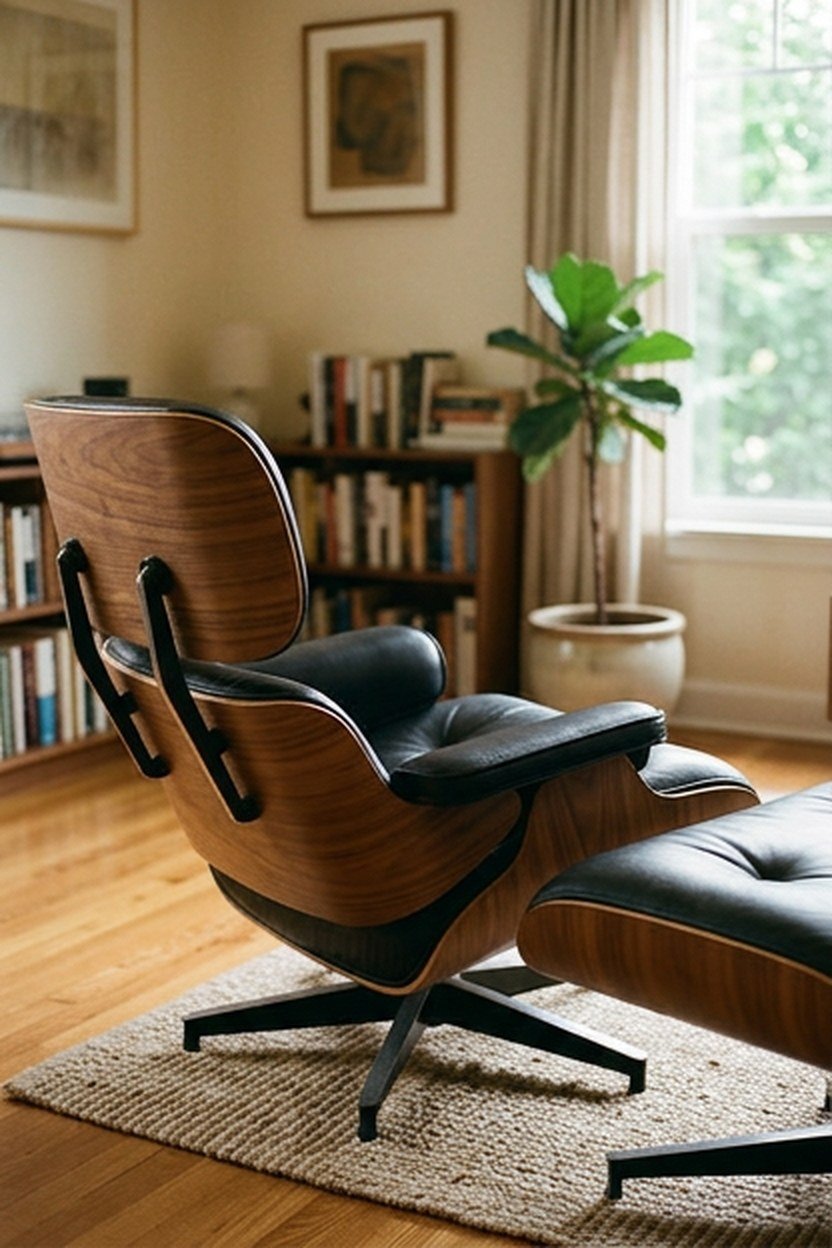
Designed by Charles and Ray Eames in 1956, the Eames Lounge Chair and Ottoman remains the single most recognized chair in modern furniture design, instantly identifiable by its curved molded plywood shell and leather cushions. It was designed to have the warm, comfortable look of a well-used first baseman’s mitt, a reference the Eameses made explicitly, and that lived-in warmth has kept it relevant for nearly seventy years. The chair remains in continuous production by Herman Miller today.
The chair’s plywood shell comes in several wood veneer options, including walnut, which is the most classic and widely recognized choice, alongside cherry and other finishes that shift the piece’s overall warmth. The leather cushions are available in a range of colors, though black and various brown tones remain the most historically accurate choices for anyone aiming for authenticity. Pairing the chair with its matching ottoman is standard, since the two pieces were designed as a single composition rather than separate items.
This chair works best as a genuine focal point, ideally positioned to take advantage of natural light and a view, since the original design intent was a reading and relaxation spot rather than formal seating. It needs real floor space to breathe, roughly a six-foot radius including the ottoman, so a smaller room may need to build around it. Its investment-level price makes it a purchase most people make once and keep for decades.
Spotting An Authentic Eames Lounge Chair
Authentic Herman Miller production carries a manufacturer’s label underneath the base and uses a specific five-star aluminum base rather than the four-star or wood bases common on unlicensed copies. The plywood shell on a genuine piece shows consistent, evenly spaced veneer lines without visible gaps, while cheaper reproductions often show inconsistent lamination. Buying from an authorized Herman Miller dealer is the most reliable way to guarantee authenticity if that matters for your purchase.
2. Wishbone Chair By Hans Wegner
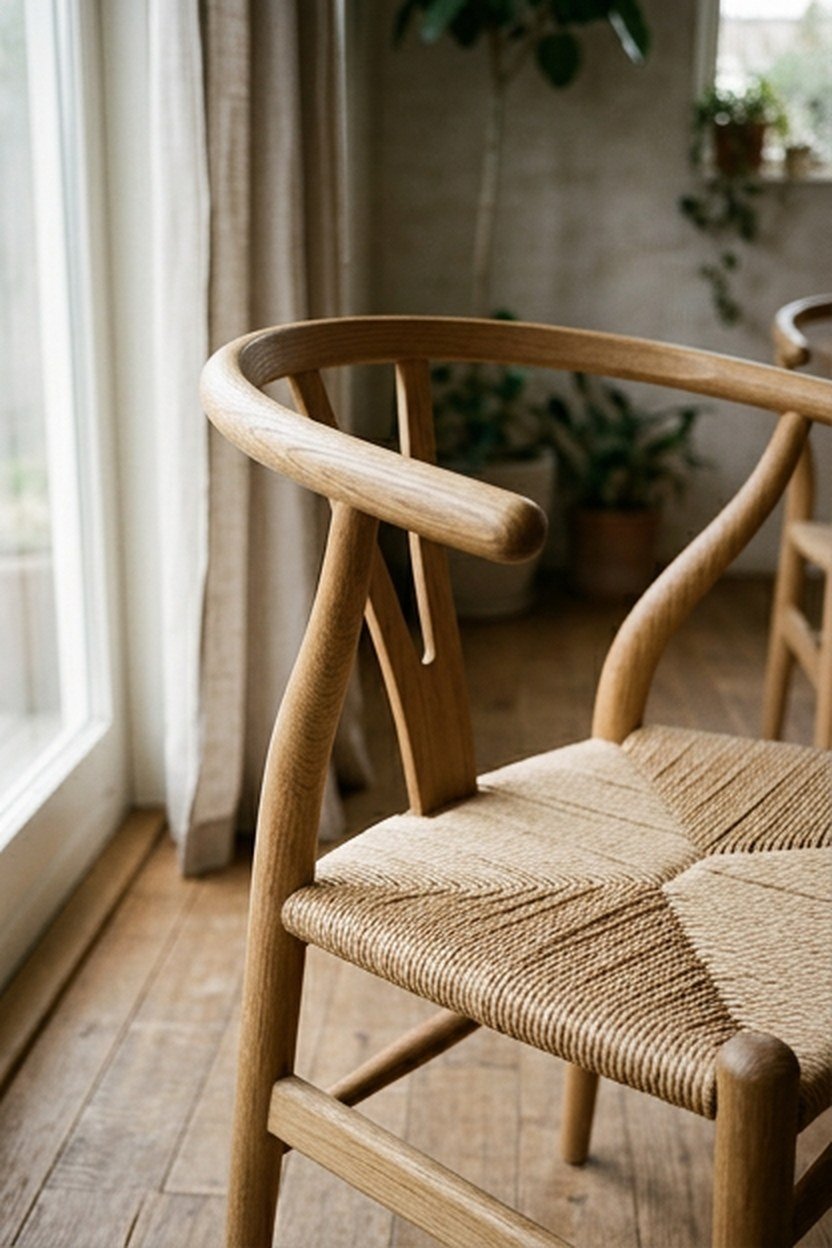
Designed by Hans Wegner in 1949 and still produced today by Carl Hansen and Son, the Wishbone Chair gets its name from the distinctive Y-shaped back support splitting from the top rail down to the seat. It is one of the more accessible entries here in terms of price, making it a realistic choice for a full dining set rather than one statement piece. The chair’s woven paper cord seat is hand-woven by a single craftsperson, a detail unchanged since the original.
The chair’s solid wood frame, most commonly oak or beech, showcases genuine craftsmanship in its steam-bent curves, and it has aged well precisely because it never leaned on trend-driven details. Available in a range of wood finishes and seat cord colors, the Wishbone Chair adapts easily to a strictly mid-century room or a more contemporary space wanting one historical reference point.
Because the Wishbone Chair was designed primarily as dining seating rather than lounge seating, it suits a dining table or a home office desk chair role better than a living room lounging spot. A full set of six or eight around a dining table creates real visual rhythm through the repeated Y-back silhouette.
Maintaining A Paper Cord Seat
The Wishbone Chair’s woven paper cord seat is surprisingly durable for a material that sounds delicate, holding up to years of daily dining use when kept reasonably dry and out of direct exposure to standing water. If the seat does eventually wear through after many years, Carl Hansen and other specialty upholsterers offer a re-caning service that restores the seat to its original construction.
3. Barcelona Chair By Mies van der Rohe
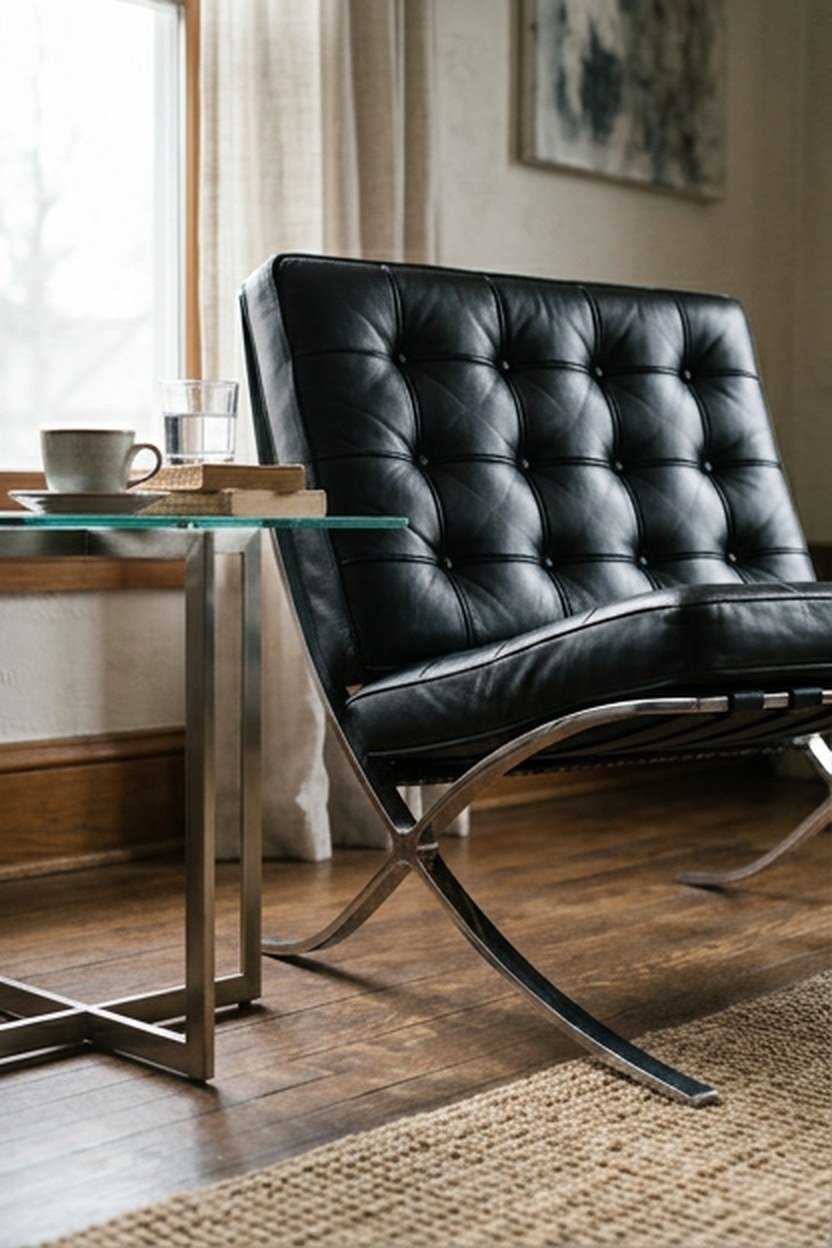
Designed by Ludwig Mies van der Rohe for the 1929 Barcelona International Exposition, the Barcelona Chair predates most other chairs here but remains firmly associated with mid-century style due to its later popularity. Its X-shaped stainless steel frame and tufted leather cushions create one of the most architecturally striking silhouettes in furniture history, and it has appeared in countless corporate lobbies since. Knoll has held the licensed production rights for decades, ensuring consistent quality.
The chair’s leather cushions use a deep diamond tufting pattern that requires real skill, and this is one of the most common places where cheaper reproductions fall visibly short. Genuine Knoll production uses full-grain leather that develops a rich character over years, while lower-quality reproductions often use bonded or faux leather that wears unevenly.
Because of its strong architectural presence, the Barcelona Chair works best in a room with clean, relatively minimal surrounding furniture, letting its geometric silhouette read clearly rather than competing with other bold pieces. It pairs particularly well with glass, chrome, and stone surfaces that echo its own cool, structural materials. A single Barcelona Chair beside a simple sofa creates a strong visual contrast that has become a recognizable formula in modern interior design.
Choosing Between A Chrome And Stainless Frame
Original Barcelona Chair production has shifted over the decades between chrome-plated and brushed stainless steel frames, with current Knoll production using stainless steel for better long-term durability and resistance to the plating wear that older chrome versions can develop. A stainless frame requires less maintenance over the chair’s lifetime and resists the pitting that chrome plating can eventually show in humid climates.
4. Egg Chair By Arne Jacobsen
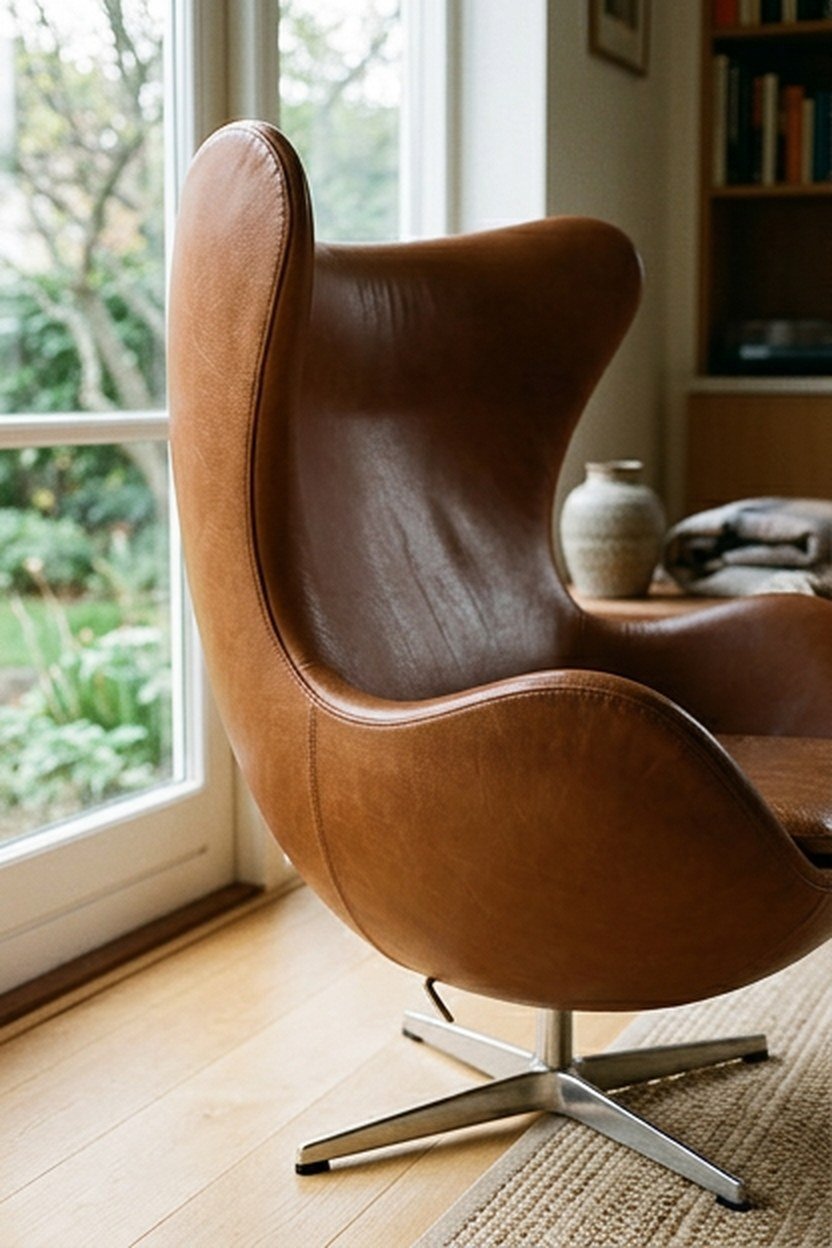
Designed by Arne Jacobsen in 1958 for the Royal Hotel in Copenhagen, the Egg Chair takes its name from its rounded, enclosing shell shape that wraps around the sitter like a cocoon. Fritz Hansen has produced it continuously since, and its swiveling base and foam-and-fabric or leather upholstery make it one of the more comfortable sculptural chairs here. The design has become nearly as recognizable as the Eames Lounge Chair as shorthand for the style.
The Egg Chair is available in an extensive range of upholstery options, from traditional leather to bold contemporary fabric colors, giving it more flexibility than some of the more historically fixed designs on this list. A leather version in black or a warm cognac tone reads as more classically mid-century, while a saturated fabric color pushes the chair toward a bolder, more contemporary statement. Either direction works within a mid-century modern room, depending on how much color you want the piece to carry.
Its enclosing shape and generous proportions mean the Egg Chair needs real breathing room, similar to the Eames Lounge Chair, and works best positioned where its distinctive silhouette can be appreciated from multiple angles in the room. A corner near a window lets natural light play across the shell’s curves throughout the day. This chair rewards a room built with intentional negative space around it rather than crowded in among other furniture.
The Egg Chair’s Swivel And Tilt Mechanism
Genuine Fritz Hansen production includes a smooth swivel base and a tilt mechanism that lets the chair recline slightly under the sitter’s weight, a functional detail that many cheaper reproductions omit or execute poorly. This mechanism is part of what makes the chair comfortable enough for extended sitting rather than a purely decorative piece. Testing the swivel and tilt action in person, if possible, is one of the more reliable ways to judge a reproduction’s actual build quality before buying.
5. Womb Chair By Eero Saarinen
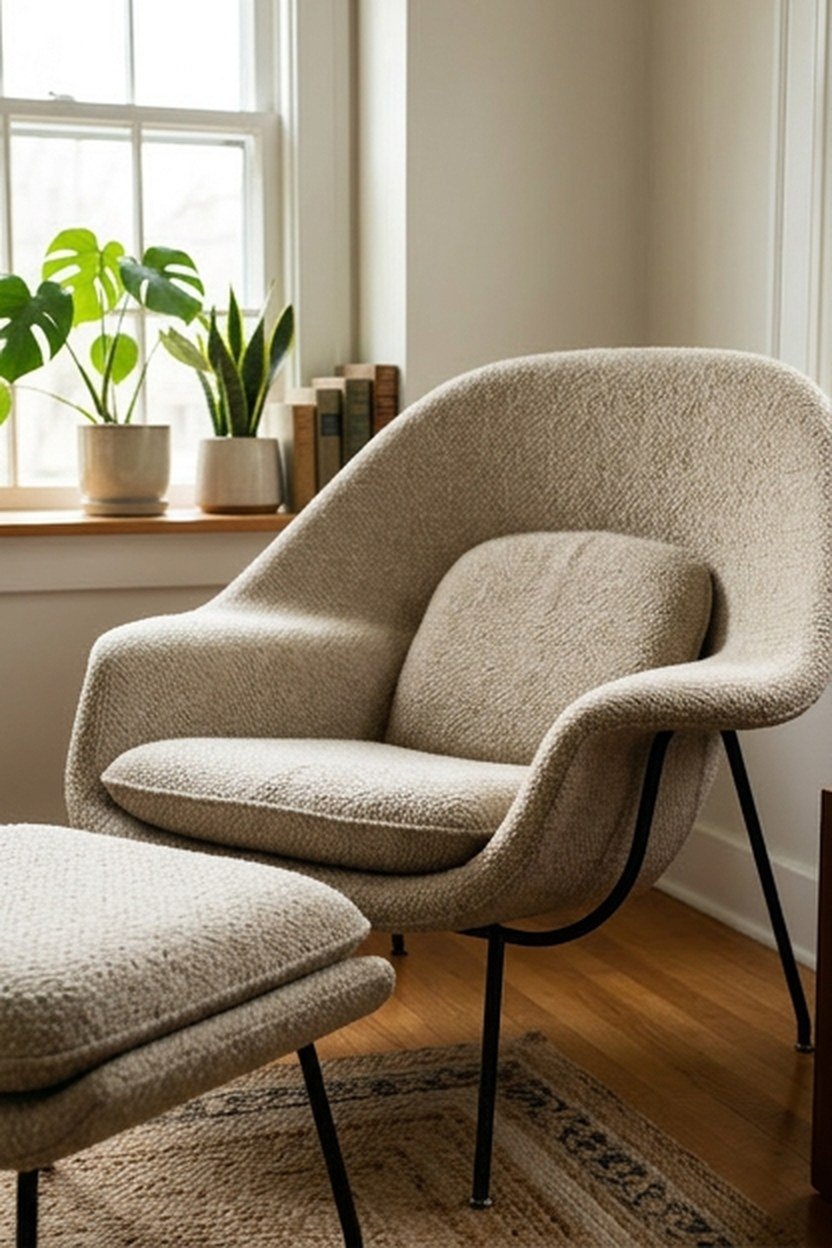
Eero Saarinen designed the Womb Chair in 1948 at the request of Florence Knoll, who reportedly asked him for a chair she could curl up in sideways, and its deep, enveloping shell delivered exactly that. Its fiberglass-reinforced shell, upholstered in foam and fabric, creates a relaxed, casual posture that contrasts with the upright formality of many other mid-century designs. Knoll has produced it continuously since, making it another design still available new.
The chair’s rounded, organic shape softens a room’s overall geometry in a way that the more angular Barcelona Chair or Wishbone Chair do not, making it a strong choice for a living room that wants mid-century style without an overly rigid, architectural feeling. It pairs naturally with a matching ottoman, similar to the Eames Lounge Chair, extending the seating into a genuine lounging setup. A Womb Chair in a soft neutral fabric reads as approachable and comfortable rather than purely a design statement.
Because the chair’s deep shell creates a semi-enclosed feeling, it works particularly well as a reading nook chair or a secondary seating spot rather than the primary sofa-adjacent seat in a conversation area. Its casual, curled-up posture suits solo relaxation better than it suits formal entertaining.
Fabric Versus Leather For The Womb Chair
A fabric-upholstered Womb Chair, particularly in a bouclé or wool blend, emphasizes the design’s soft, organic character more than a leather version does, since fabric’s texture echoes the chair’s rounded silhouette. Leather brings a more polished, formal quality that can work well in a room already carrying leather elsewhere. Either upholstery choice is historically accurate, since Knoll has offered both since the chair’s introduction, so the decision comes down to which reads better in your specific room.
6. Tulip Chair By Eero Saarinen
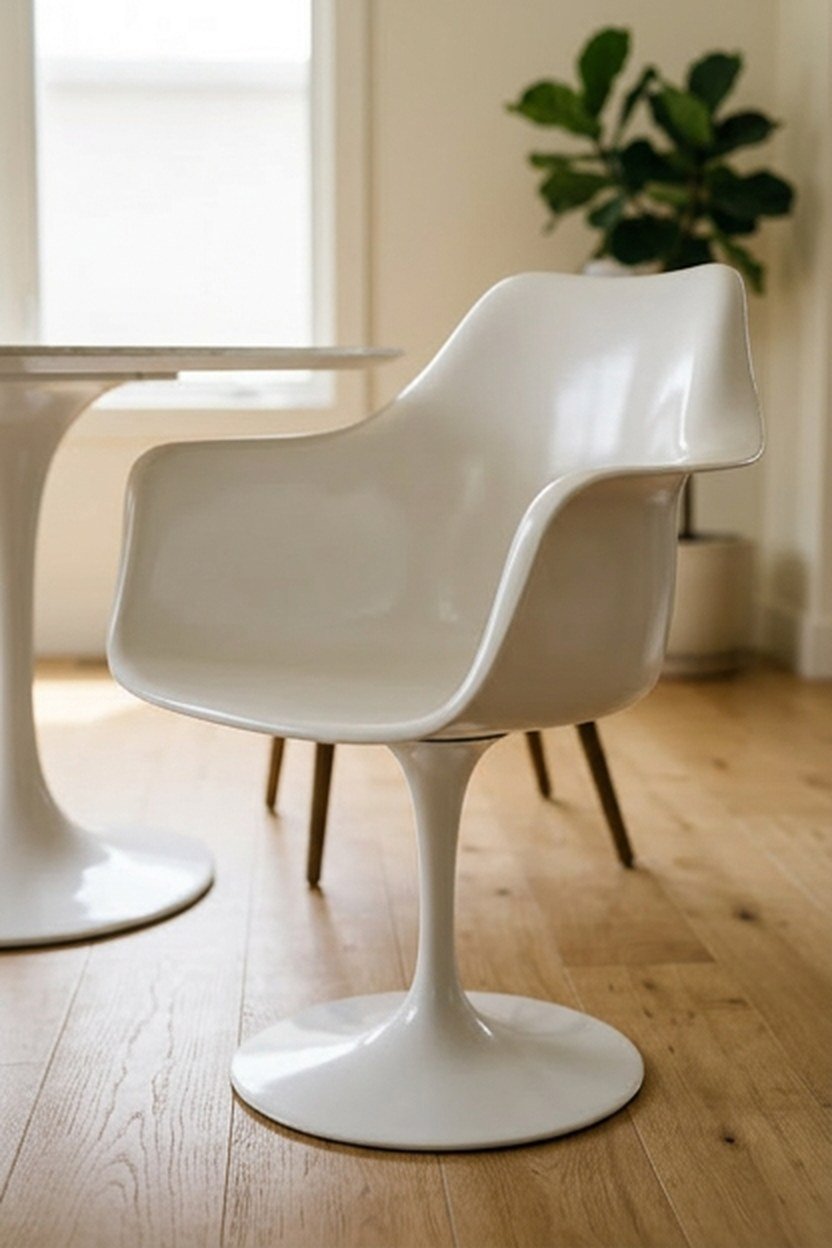
Saarinen designed the Tulip Chair in 1956 as part of his broader Pedestal furniture collection, motivated by his frustration with what he called the “slum of legs” created by traditional four-legged chairs and tables clustered around a dining setting. Its single pedestal base, flaring out from a slim stem into a molded fiberglass seat, solved that visual clutter while creating one of the most distinctive silhouettes in furniture design. Knoll continues to produce the chair today, typically paired with a matching Tulip dining table.
The chair is most often seen in a matched dining set, where the repeated pedestal bases beneath table and chairs create a striking visual rhythm few other pairings achieve. It comes in a range of shell colors and cushion fabrics, from stark white for a clean look to bolder colors that lean into the design’s playful quality. This range gives the Tulip Chair more flexibility than the more historically fixed leather designs here.
Because the chair’s pedestal base takes up minimal visible floor space compared to four-legged alternatives, it suits smaller dining areas particularly well, where traditional chair legs would otherwise create a cluttered, congested feeling underfoot. This practical benefit is as much a part of its enduring appeal as its striking visual design. A Tulip dining set remains one of the more space-efficient options among genuinely iconic mid-century furniture.
Cushion Options For The Tulip Chair’s Molded Seat
The molded fiberglass seat can be used bare for the cleanest, most minimal look, or fitted with a matching upholstered cushion for additional comfort during longer meals. A bare shell reads as more architectural and gallery-like, while a cushioned version softens the chair for everyday family dining use. Both options remain available directly through Knoll, so the choice comes down to how the chair will actually be used rather than any authenticity concern.
7. Papa Bear Chair By Hans Wegner
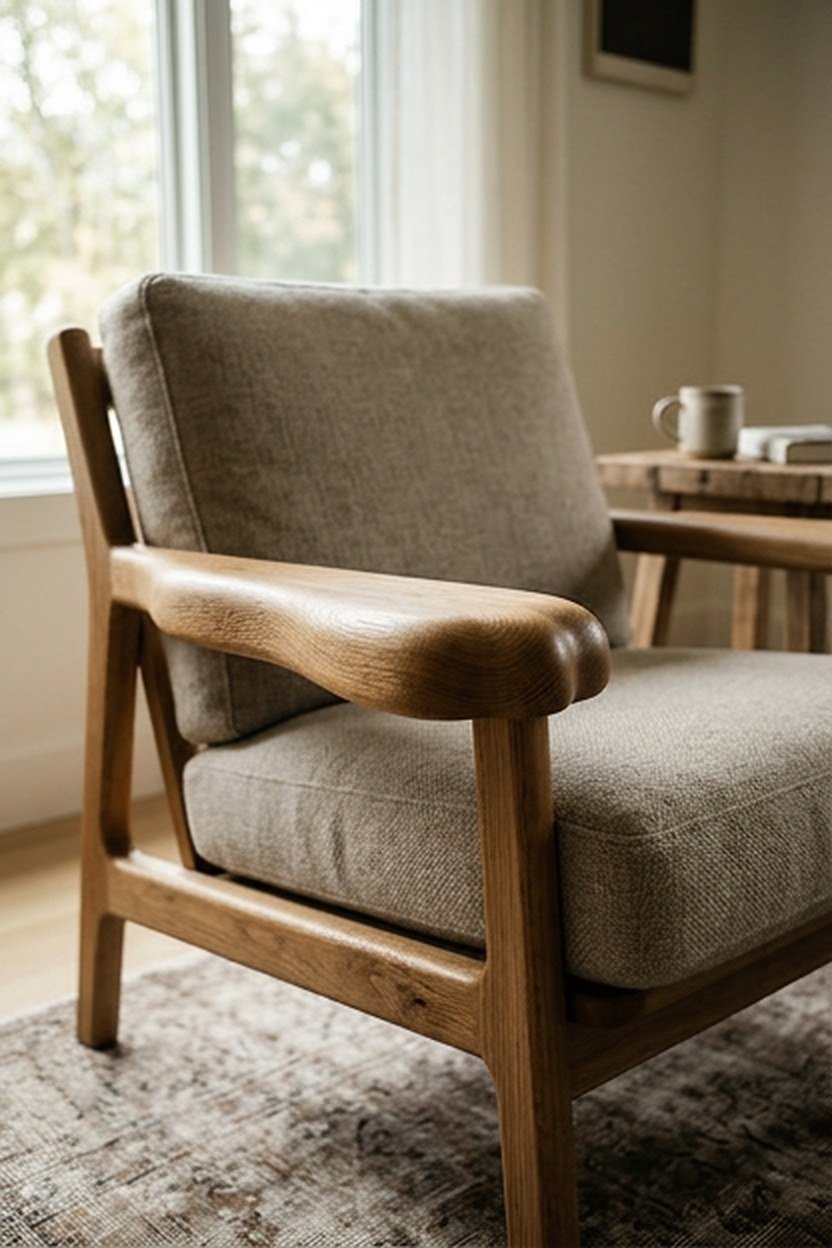
Hans Wegner designed the Papa Bear Chair in 1951, officially titled the AP19 but nicknamed for its rounded, paw-like armrests that suggest a bear’s protective embrace around the sitter. Produced by PP Møbler, the chair combines an exposed wood frame with substantial down-filled cushions, creating a design that feels both architecturally precise and genuinely inviting. It represents a different design language than the molded plastic and fiberglass chairs elsewhere on this list, leaning instead into traditional Scandinavian wood joinery.
The chair’s oak or walnut frame remains visible around the cushions, showcasing the same exposed structural honesty that defines much of Wegner’s broader body of work, including the Wishbone Chair. Its generous proportions and deep seat make it one of the more genuinely comfortable lounge chairs on this list, suited to long reading sessions rather than purely decorative display. A matching ottoman is available and extends the chair into a full lounging setup similar to the Eames or Womb pairings.
Because of its substantial size and wood-forward material palette, the Papa Bear Chair suits a room already leaning toward warm Scandinavian materials, wool textiles, and natural wood tones rather than a room built around chrome and fiberglass. It reads as cozier and less architecturally severe than the Barcelona or Egg Chair.
Down Cushion Maintenance For Long-Term Comfort
The Papa Bear Chair’s down-filled cushions require periodic fluffing and occasional professional refilling over many years of use, since down naturally compresses and loses loft with regular sitting. This maintenance is a genuine consideration for a piece meant to be used daily rather than kept purely for display. Choosing a chair with removable, cleanable cushion covers makes this long-term care considerably more manageable for a household that uses the piece often.
8. Pelican Chair By Finn Juhl
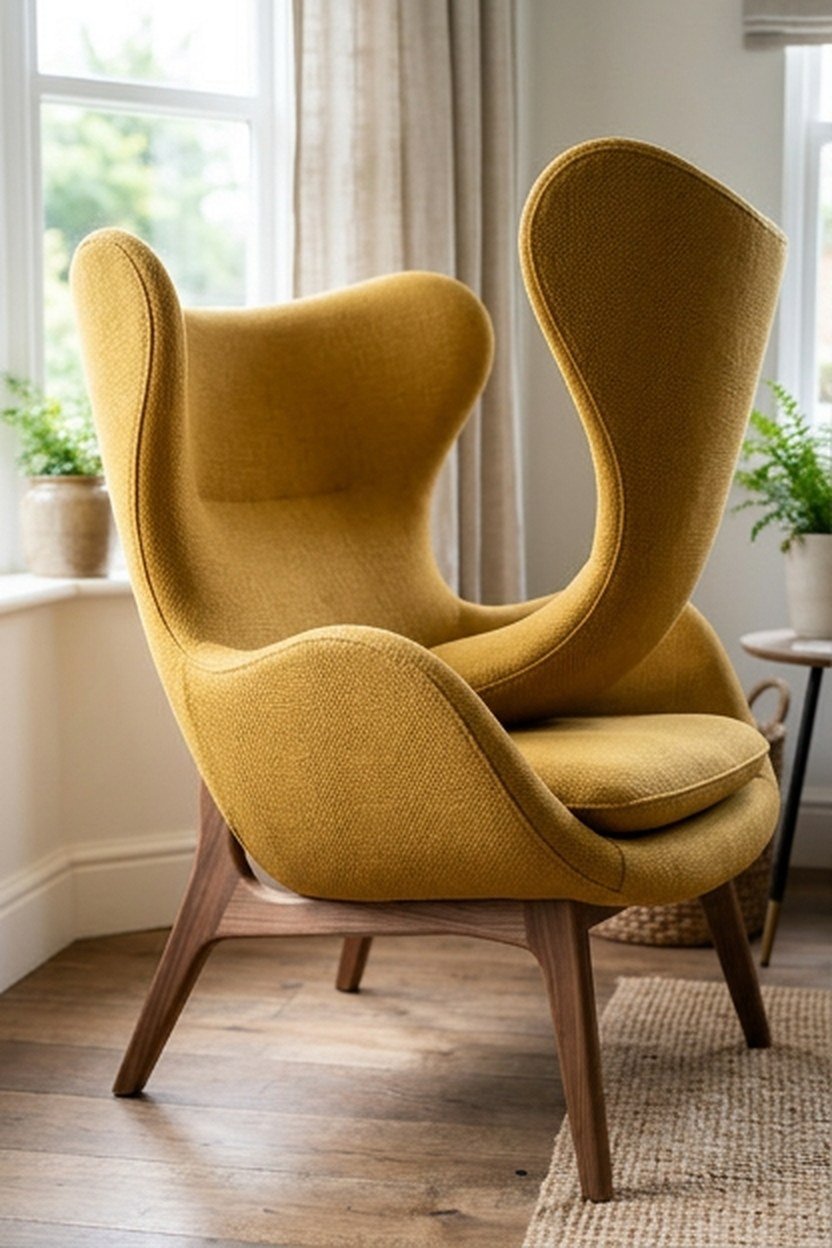
Finn Juhl designed the Pelican Chair in 1940, and its rounded, wing-like form, which gives the chair its name, was considered genuinely radical at the time for breaking so completely from traditional upholstered chair silhouettes. Onecollection now produces the chair to the original specifications, and its sculptural, almost biomorphic shape remains one of the more unusual and distinctive entries in mid-century chair design. The chair predates much of the more geometric mid-century work that followed it, offering a softer, more organic alternative.
Available in both fabric and leather upholstery, the Pelican Chair’s deep, wrapping form creates a cocoon-like seating position similar in spirit to the Womb Chair, though its silhouette reads as considerably more sculptural and unusual. Its wood legs, typically oak or walnut, ground the otherwise floating, organic shell in a way that ties it back to traditional Scandinavian furniture construction. This blend of radical shape and traditional materials is part of what made the original design so striking in its own era.
Because the Pelican Chair’s silhouette is genuinely unusual even among iconic mid-century designs, it works best as a clear conversation-starting statement piece rather than blending quietly into a room. A single Pelican Chair in a bold color creates real visual drama in an otherwise simple space.
Positioning A Sculptural Chair Like The Pelican
A chair with such an unusual silhouette benefits from being viewed in the round, or at least from multiple angles, rather than pushed against a wall where its full shape cannot be appreciated. Floating it slightly away from walls, even a foot or two, lets the design’s sculptural quality read properly. This positioning principle applies broadly to any of the more organic, shell-shaped chairs on this list, not just the Pelican.
9. Shell Chair By Charles And Ray Eames
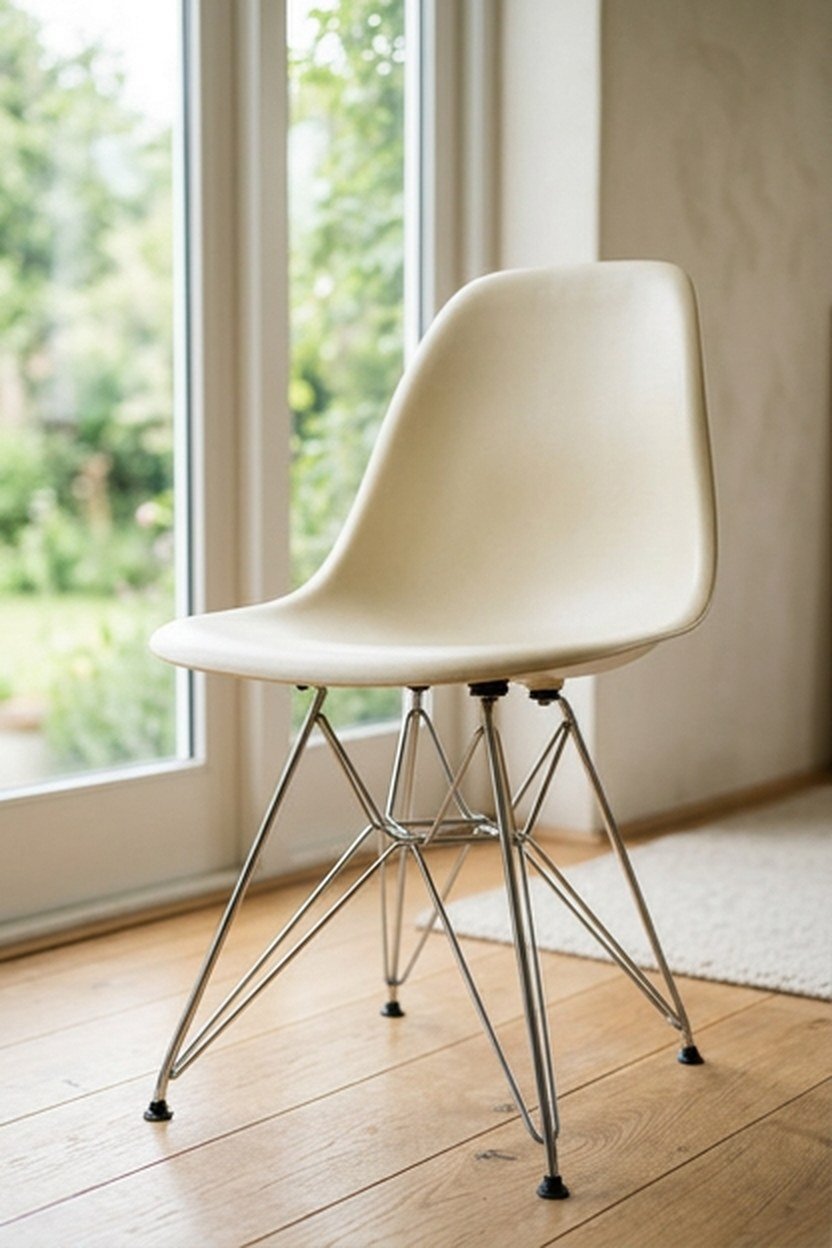
The Eames Molded Plastic Chair, commonly known as the Shell Chair, debuted in 1950 as one of the first mass-produced chairs made from a single molded shell, originally fiberglass and now recycled polypropylene from Herman Miller. Its curved seat pairs with a range of base options, wire legs, wood dowel legs, or a rocking base, giving it more configuration flexibility than almost any other chair here.
Because the Shell Chair is considerably more affordable than most other entries on this list, it works well purchased in multiples, whether as a full dining set or a scattered collection of accent chairs throughout a home. Its range of available colors, from classic neutral tones to bold saturated hues, lets it adapt to nearly any room’s existing palette. This flexibility and relative affordability make it one of the most practical entry points into iconic mid-century design for someone building a collection gradually.
The chair’s molded seat shape was developed through genuine ergonomic research into how the human body actually sits, rather than purely aesthetic considerations, which is part of why it remains comfortable despite its minimal, unupholstered construction. Pairing it with a simple seat cushion, available directly from Herman Miller, adds comfort for longer sitting sessions without compromising the chair’s clean silhouette.
Choosing A Base Style For The Shell Chair
The wire base, sometimes called the Eiffel base for its resemblance to the tower’s latticed structure, reads as the most classically mid-century option, while the wood dowel base brings a warmer, more approachable quality that suits a room already carrying wood furniture. A rocking base turns the same shell into a nursery or living room rocking chair, extending the design’s versatility even further. Matching your base choice to your room’s existing material palette keeps the chair feeling intentional rather than randomly selected.
10. Butterfly Chair By Jorge Ferrari-Hardoy
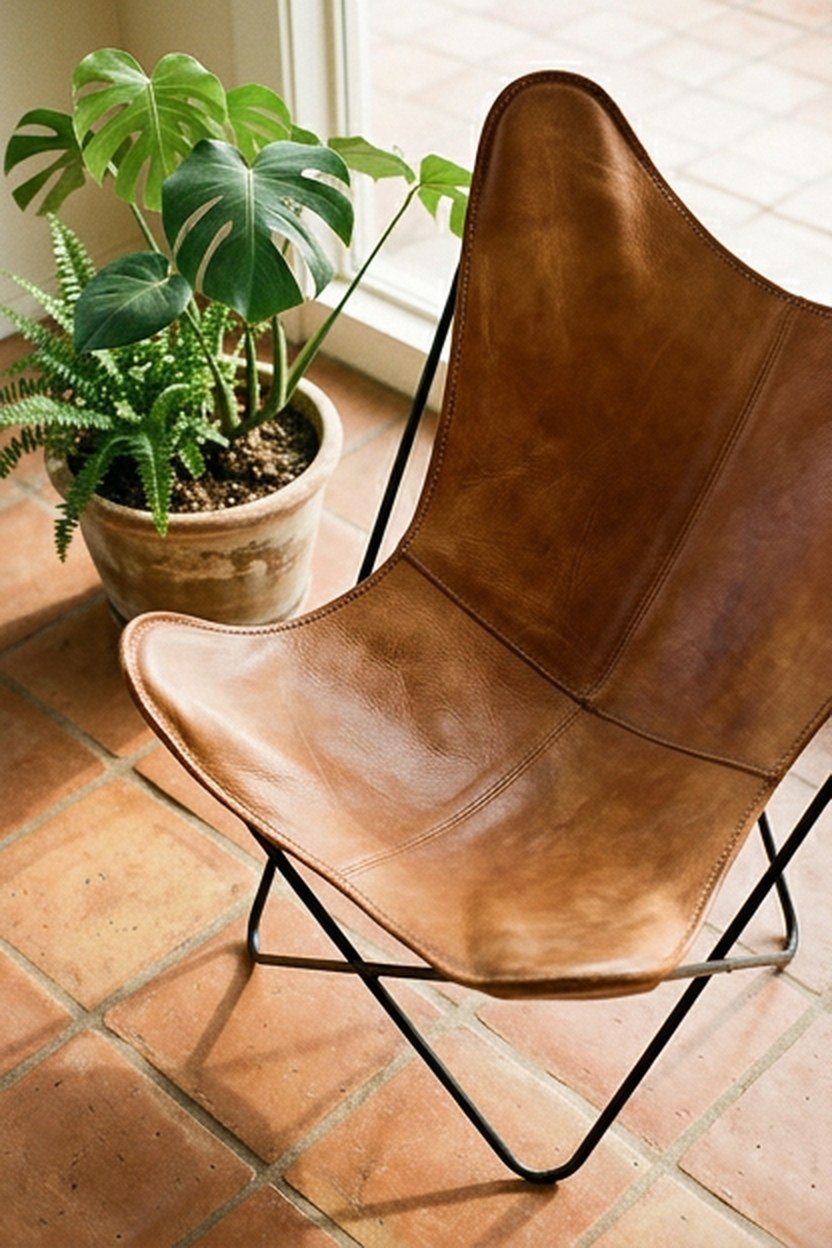
Designed in 1938 by Argentine architect Jorge Ferrari-Hardoy with collaborators Juan Kurchan and Antonio Bonet, the Butterfly Chair, also called the BKF Chair, uses a simple folded steel rod frame and stretched leather or canvas to create genuinely comfortable, low-slung seating. Despite its simple construction, it became one of the best-selling furniture designs of the twentieth century and remains a mid-century icon. Its low cost relative to other entries here has kept it accessible across generations.
The chair’s stretched fabric sling conforms naturally to the sitter’s body, creating a relaxed, low seating position that suits casual living rooms, sunrooms, and outdoor patios equally well. Available in leather, canvas, and a range of colors and patterns, the Butterfly Chair adapts easily to both a strict mid-century interior and a more eclectic, bohemian space. This versatility across both style and setting is a major part of its long-running popularity.
Because the fabric sling is a wear item that will eventually need replacement after years of use, most Butterfly Chair frames are designed with the sling as a separate, swappable component rather than a permanently attached piece. This design detail means a single frame can be refreshed with a new cover rather than replaced entirely once the original fabric shows real wear. That repairability has kept many original frames from the mid-century era in active use today.
Indoor Versus Outdoor Butterfly Chair Placement
A leather Butterfly Chair suits indoor use best, since leather does not tolerate direct weather exposure well over time, while a canvas or outdoor-rated fabric version can handle a covered patio or sunroom setting. Checking the specific fabric’s weather resistance before placing the chair outdoors prevents premature wear from sun and moisture exposure.
11. Panton Chair By Verner Panton
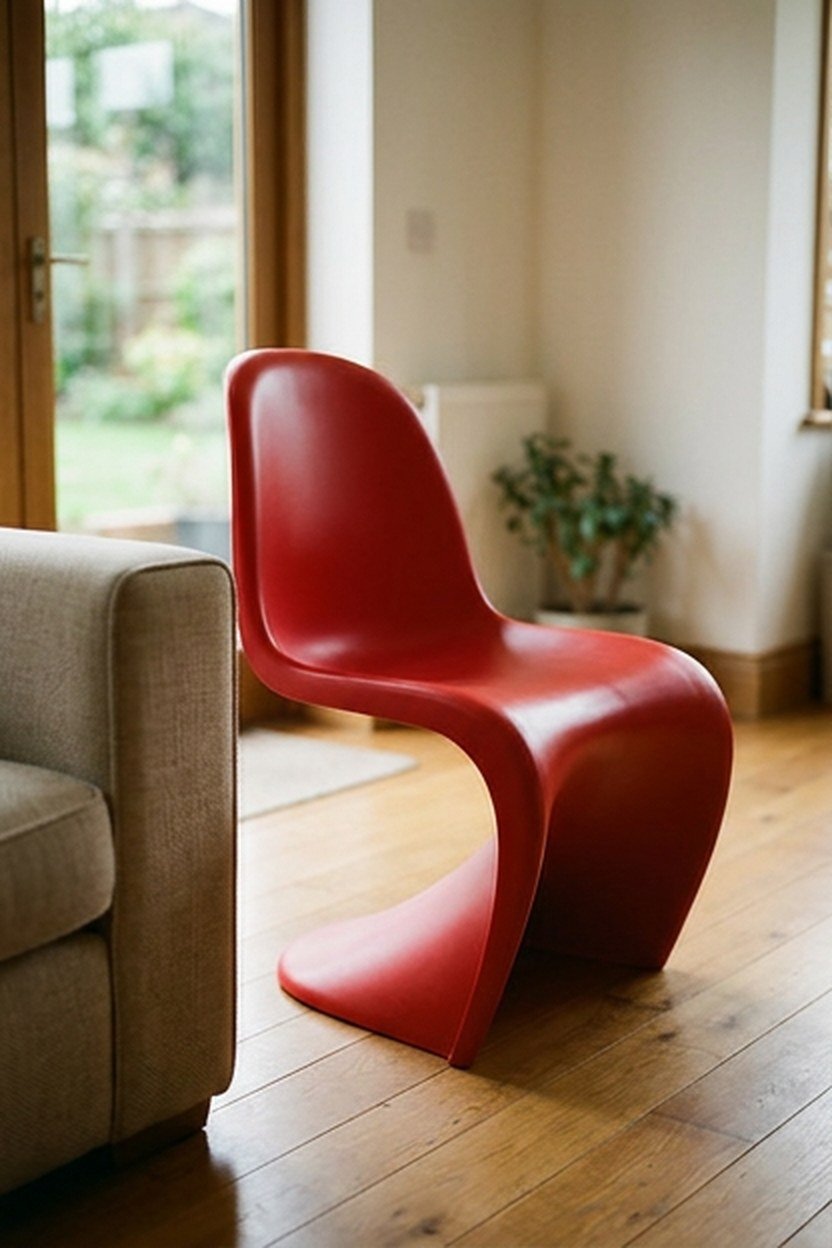
Verner Panton designed the Panton Chair in 1967, the first chair molded from a single piece of plastic in one continuous cantilevered form, a genuine manufacturing achievement at the time. Vitra has produced the chair since, and its sinuous S-curve silhouette remains one of the most futuristic-looking designs of the mid-century era, even decades later. It represents a later, more experimental phase of mid-century design than the earlier entries here.
Available in a wide range of solid colors, from classic red and white to more muted contemporary tones, the Panton Chair works as a bold accent piece rather than a chair meant to disappear into a room’s background. Its stackable design also makes it practical for a dining or home office setting where extra seating needs to store away compactly when not in use. This blend of sculptural boldness and genuine practicality is part of what has kept it in continuous production for decades.
Because the Panton Chair’s cantilevered form has no back legs, it relies entirely on the strength and flex of its molded plastic construction, which is why genuine Vitra production, using specific high-grade polypropylene, performs noticeably better under regular use than cheaper unlicensed copies. A quality original flexes slightly and returns to shape, while a poor reproduction can crack or lose its structural integrity over time.
Using The Panton Chair As A Color Accent
Because the chair’s entire body is typically a single saturated color, it works well as a deliberate color-blocking element within an otherwise neutral mid-century room, drawing the eye without requiring any other bold color choices nearby. A single Panton Chair in a bright hue beside a neutral sofa creates focused visual interest without overwhelming the space.
12. Coconut Chair By George Nelson
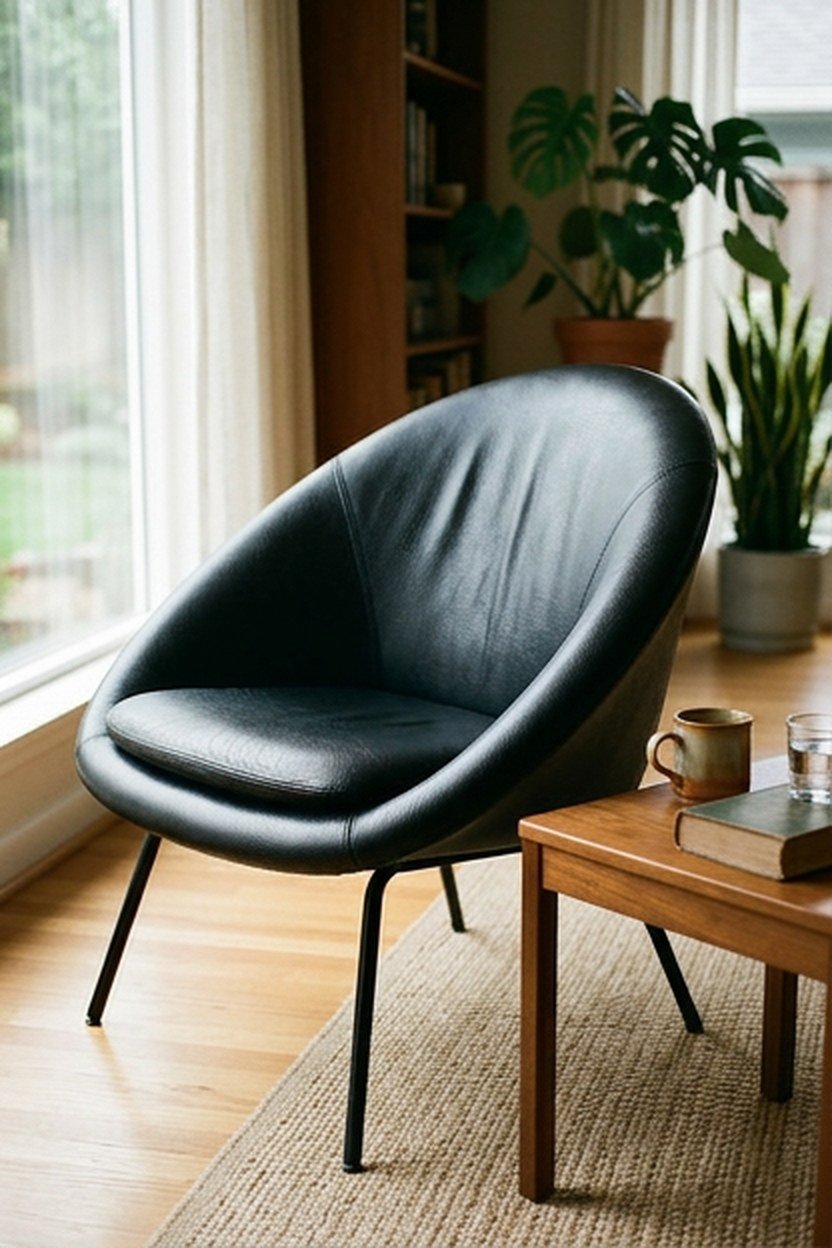
George Nelson designed the Coconut Chair in 1955, taking its name and its distinctive rounded triangular shell shape from a slice of coconut shell, a form unlike almost anything else in mid-century furniture design. Herman Miller has produced the chair since its introduction, and its dramatic, sculptural profile, balanced on slim metal legs, makes it one of the more visually striking entries on this list despite its relatively simple underlying construction. The shell’s shape creates a naturally enclosing, semi-private seating position.
The chair is most commonly upholstered in leather, which suits its bold, architectural silhouette and has remained the historically standard choice since the original design. Its slim, angled metal legs contrast sharply with the shell’s substantial rounded form, creating a visual tension that is part of the chair’s enduring appeal. This combination of a bold, soft shell atop slender, precise legs is a design move that several later mid-century chairs would echo in various forms.
Because of its dramatic, attention-commanding shape, the Coconut Chair suits a room that wants a clear singular focal point rather than a matched pair or grouping, similar in spirit to how the Pelican or Barcelona Chair are typically used. Positioning it where its profile is visible from the room’s main sightlines, such as facing an entry or a hallway, maximizes its visual impact. This chair rewards being seen rather than tucked into a quiet corner.
Pairing The Coconut Chair With Simpler Seating
Because the Coconut Chair carries so much visual weight on its own, pairing it with a simpler, lower-profile sofa or accent chairs keeps the room from feeling visually crowded with competing statement pieces. A neutral linen or wool sofa lets the Coconut Chair’s dramatic shell remain the room’s clear focal point. This pairing principle, one bold piece surrounded by quieter furniture, applies to several of the more sculptural chairs throughout this list.
13. LC2 Chair By Le Corbusier
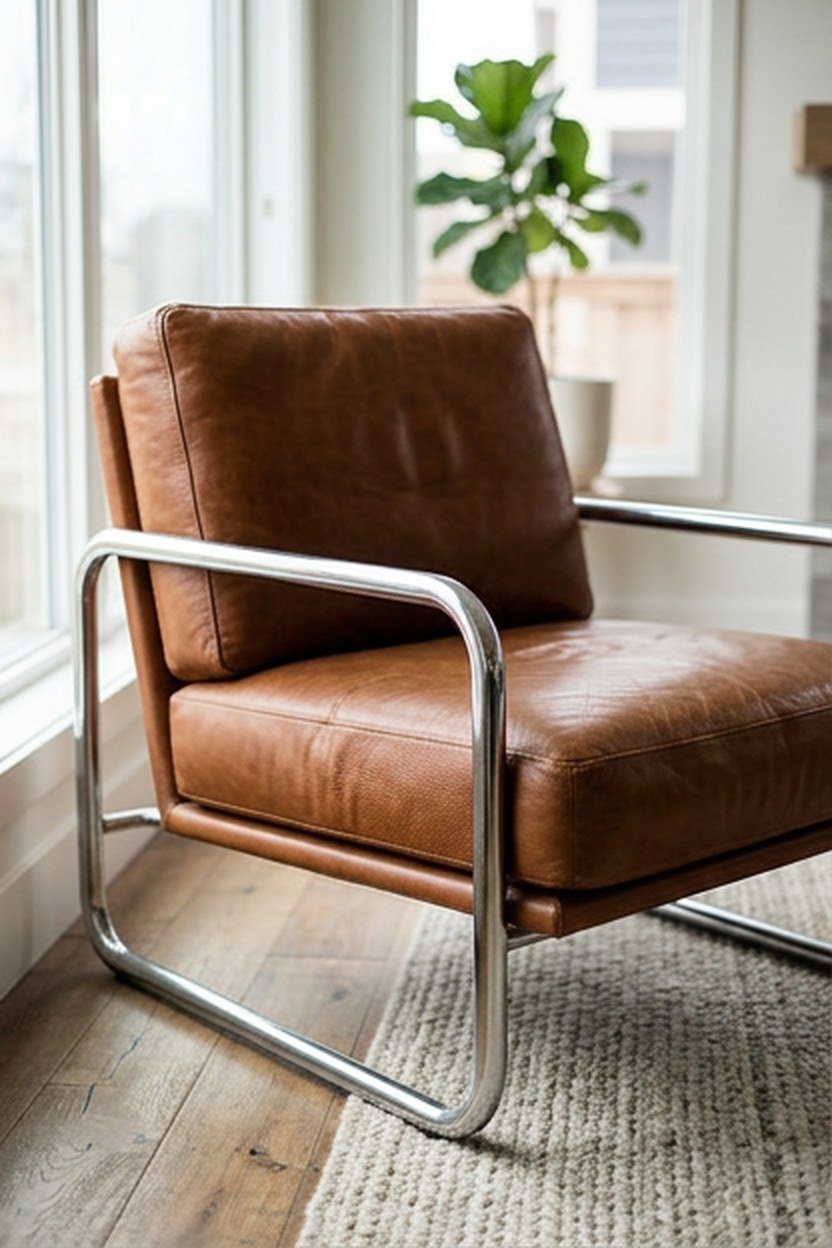
Designed in 1928 by Le Corbusier along with Pierre Jeanneret and Charlotte Perriand, the LC2 Chair predates the mid-century era proper but remains closely associated with it due to its continued production and popularity throughout the following decades. Its boxy, cube-like leather cushions held within a chrome tubular steel frame created a genuinely new visual language for upholstered seating, one that influenced countless later designs. Cassina holds the official licensed production rights and continues to manufacture the chair to the original specifications today.
The chair’s geometric, almost architectural silhouette suits a room already leaning toward clean lines and minimal ornamentation, pairing naturally with other chrome and glass elements. Its leather cushions, typically offered in a range of colors from classic black to bolder contemporary options, sit as distinct rectangular forms within the visible steel frame, creating a clear visual structure that reads as intentional and precise.
Available in single-seat, two-seat, and three-seat sofa configurations, the LC2 line offers more flexibility for furnishing an entire seating area in a single cohesive design language than most of the single-chair entries on this list. A matched LC2 chair and sofa combination creates a strongly unified mid-century living room without needing to source multiple different iconic pieces.
Distinguishing An Authentic Cassina LC2 From A Copy
Genuine Cassina production carries a distinctive brand plaque and uses full-grain leather with consistent, high-quality stitching along the cushion edges, details that cheaper reproductions frequently cut corners on. The chrome frame on an authentic piece uses a thicker gauge tubing that holds its shape better over years of use than the thinner tubing common in unlicensed copies. Buying through an authorized Cassina dealer remains the most reliable way to guarantee you are getting the genuine design and construction quality.
14. Diamond Chair By Harry Bertoia
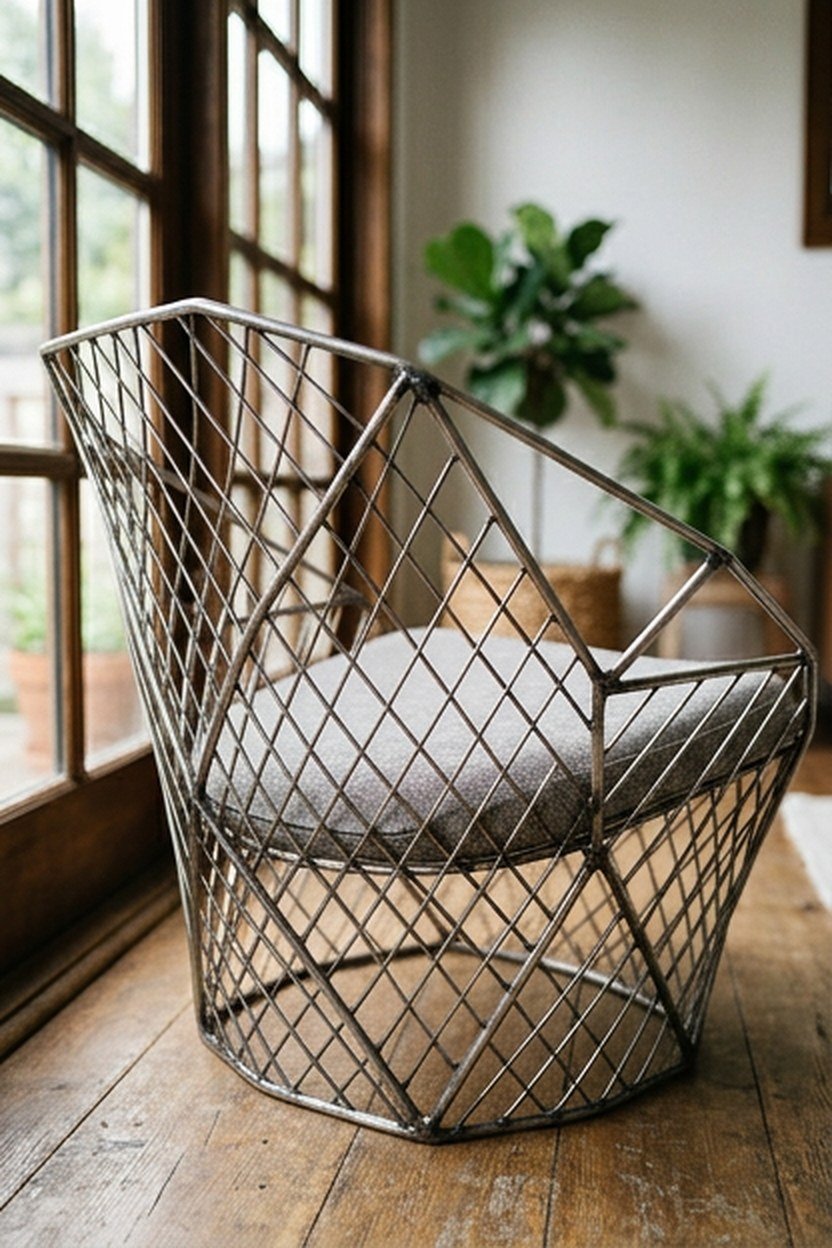
Harry Bertoia, originally a sculptor before turning to furniture design, created the Diamond Chair in 1952 using a welded steel wire mesh formed into a faceted, diamond-like shape. Knoll has produced it continuously since, and its open, airy wire construction makes it visually lighter than almost any other chair here, reading as nearly transparent. Bertoia himself described the chair as being made mostly of air.
The chair is available bare, showcasing its sculptural wire form fully, or fitted with a seat cushion, sometimes called a bikini cover for its minimal coverage, that softens the chair for more comfortable seating. Its wire construction comes in chrome, powder-coated, or rhodium finishes, each shifting the chair’s overall tone from cool and industrial to warmer and more matte depending on the choice. This range of finish options gives the Diamond Chair real flexibility across different room palettes.
Because the chair’s open wire construction takes up minimal visual space compared to a solid-shelled chair, it works particularly well in a smaller room or as a secondary accent chair where a bulkier design would feel overwhelming. Its sculptural quality also means it photographs beautifully from multiple angles, making it a popular choice for a room’s most visible seating spot. This combination of visual lightness and genuine sculptural interest is unique among the chairs on this list.
Cushion Options For The Diamond Chair’s Wire Shell
The bare wire version suits a room that wants the sculptural quality to read clearly, while the cushioned version trades some visual lightness for genuine seating comfort. Cushions are available in a range of fabric and leather options directly through Knoll, letting the chair adapt to different rooms without changing its base structure. Testing both versions in person, if possible, clarifies which tradeoff matters more for your use.
15. Swan Chair By Arne Jacobsen
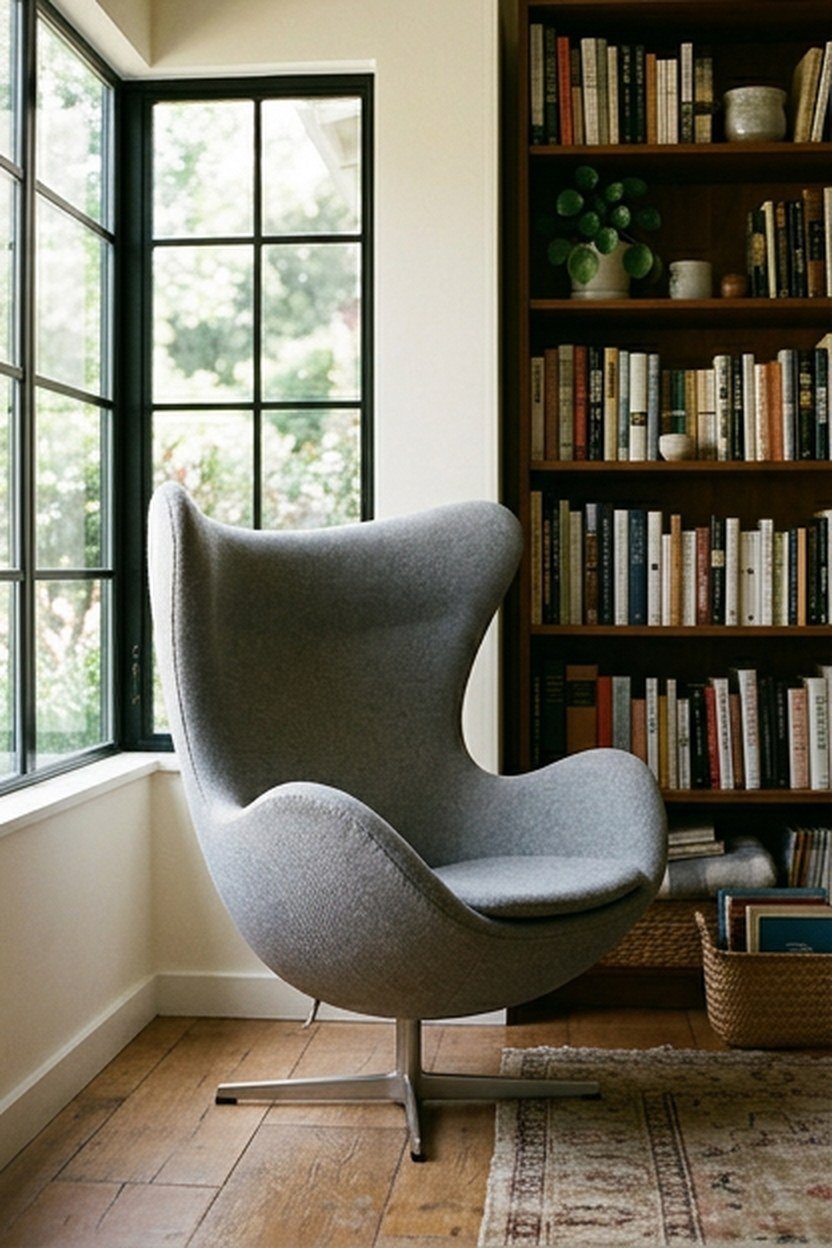
Arne Jacobsen designed the Swan Chair in 1958 alongside the Egg Chair for the same Royal Hotel project, and its compact, upright silhouette offers a related but distinctly different profile. Fritz Hansen continues to produce it today, and its curved, wing-like sides taper into a slim swivel base, reading as more approachable than the Egg Chair while still carrying genuine sculptural presence. The two chairs are often used together, referencing their shared design origin.
Available in a similarly wide range of leather and fabric upholstery as the Egg Chair, the Swan Chair’s smaller footprint makes it more practical for compact living rooms or as a secondary accent chair. Its swivel base lets it rotate to face different parts of a room, a functional detail suiting daily conversation and use. This practicality has made it one of the more frequently specified mid-century chairs in both homes and offices.
Because the Swan Chair shares such a clear design lineage with the Egg Chair, using both in the same room creates an intentional, cohesive statement rather than a mismatched pairing of unrelated pieces. A Swan Chair in a contrasting color to a nearby Egg Chair adds visual variety while still reading as a considered set.
Sizing The Swan Chair For A Smaller Room
The Swan Chair’s more compact proportions compared to the Egg Chair make it a better fit for apartments or smaller living rooms where a full Egg Chair’s footprint would dominate the available floor space. Its slimmer profile also fits more easily into a reading corner or beside a narrower window than the bulkier Egg Chair would.
What These Iconic Chairs Actually Cost
The price range across these fifteen chairs spans enormously, from a few hundred dollars for a Wishbone Chair to well over eight thousand for an authentic Egg Chair, so budget fit matters before falling for a specific design. Authentic, licensed production carries a real premium over reproductions, but that premium reflects genuine material quality and long-term durability differences. Buying used or vintage can bring authentic pieces within reach, though condition and authenticity both require careful verification.
Reproductions vary enormously in quality, and the cheapest copies of any design typically use inferior materials that show real wear within a few years. A mid-tier reproduction from a reputable maker, rather than the absolute cheapest option, usually represents the better long-term value for daily use. Reserving the authentic purchase for your room’s single most important chair, and choosing reproductions for secondary pieces, is a sensible budgeting strategy.
| Chair | New Authentic Price | Quality Reproduction Price |
|---|---|---|
| Wishbone Chair | $700 to $900 | $250 to $400 |
| Shell Chair | $500 to $800 | $150 to $300 |
| Butterfly Chair | $300 to $600 | $100 to $250 |
| Womb Chair | $4,000 to $5,500 | $800 to $1,500 |
| Barcelona Chair | $5,000 to $7,000 | $700 to $1,200 |
Buying vintage originals from the mid-century era itself is another path worth considering for collectors specifically, since a well-maintained original chair from the actual production era can carry both authenticity and genuine historical value. This route requires more research and careful inspection than buying new, since condition and originality both vary enormously between individual pieces. For most buyers, new authentic pieces or quality reproductions remain the more practical, reliable path.
Common Mistakes When Buying Iconic Mid-Century Chairs
The most common mistake is buying an unlicensed, low-quality reproduction without understanding the real material differences from an authentic piece, then being disappointed when it does not hold up as promised. Researching the specific manufacturer before purchasing prevents this, since the gap between a good and poor reproduction is often invisible in a photo. A slightly higher upfront cost for a reputable reproduction usually saves money over a shorter-lived cheap copy.
A second common error is choosing a chair based purely on its iconic status without considering how it will actually function in your specific room and daily routine. A stunning Barcelona Chair that never gets sat in because it does not suit casual lounging is a less successful purchase than a slightly less famous chair that genuinely gets used every day. Matching the chair’s actual intended use to your household’s real habits matters more than chasing the most recognizable name.
The third mistake is overcrowding a room with too many competing statement chairs at once, which undermines the visual impact each individual piece is capable of delivering on its own. Most of the chairs on this list work best as a singular focal point or a deliberately matched pair, rather than combined with several other equally bold designs in the same space. Restraint in how many iconic pieces you introduce at once is a genuine design skill worth practicing.
Verifying Authenticity Before A Major Purchase
For any chair carrying a significant price tag, verifying authenticity through an authorized dealer, checking for manufacturer labels and plaques, and researching the specific construction details unique to genuine production protects a real financial investment. Buying directly from the original manufacturer or an authorized retailer remains the most reliable path, even if it costs somewhat more than a third-party marketplace listing.
Conclusion
These fifteen chairs represent the deepest, most enduring bench of iconic seating design from any single era, and understanding their real history helps you choose pieces that genuinely suit your room rather than chasing names. Whether you build around a single investment piece like the Eames Lounge Chair or assemble a collection gradually through accessible designs like the Wishbone or Shell Chair, the underlying principles stay consistent. Prioritize how each chair will actually be used over its reputation.
Budget realistically, understanding the genuine differences between authentic pieces, quality reproductions, and cheap knockoffs, since that knowledge protects both your money and your long-term satisfaction with the purchase. Start with the one or two chairs that matter most to your room’s overall feeling, and let the rest of your mid-century collection grow more gradually over time. A room built this way, piece by piece with real intention, tends to feel more considered than one furnished all at once.
Frequently Asked Questions
What is the most iconic mid-century modern chair? The Eames Lounge Chair is generally considered the single most recognized mid-century chair, due to its continuous production since 1956 and its widespread cultural recognition.
Are mid-century modern chair reproductions worth buying? A quality reproduction from a reputable maker can deliver much of the visual and functional benefit of an authentic piece at a fraction of the cost, though material quality varies significantly between reproduction makers.
How do I know if a chair is an authentic original? Look for manufacturer labels or plaques, verify the seller is an authorized dealer, and research the specific construction details unique to genuine production for the chair you are considering.
Which of these chairs is best for everyday use rather than display? The Eames Lounge Chair, Papa Bear Chair, and Wishbone Chair are all designed for genuine daily comfort, while more sculptural pieces like the Coconut or Pelican Chair suit occasional use better.
Can I mix multiple iconic chairs in the same living room? Yes, but most designers recommend choosing one clear statement piece surrounded by quieter furniture, or a deliberately matched pair like the Egg and Swan Chair, rather than several unrelated bold pieces at once.
Why do authentic mid-century chairs cost so much more than reproductions? Authentic pieces use higher-grade materials, more precise manufacturing, and carry licensing costs paid to the original design estate, all of which contribute to genuine long-term durability and collector value.
Do any of these chairs work well outdoors? The Butterfly Chair, in a canvas or outdoor-rated fabric version, is the most suitable for covered outdoor or patio use among the chairs on this list, though most others are intended for indoor use only.