
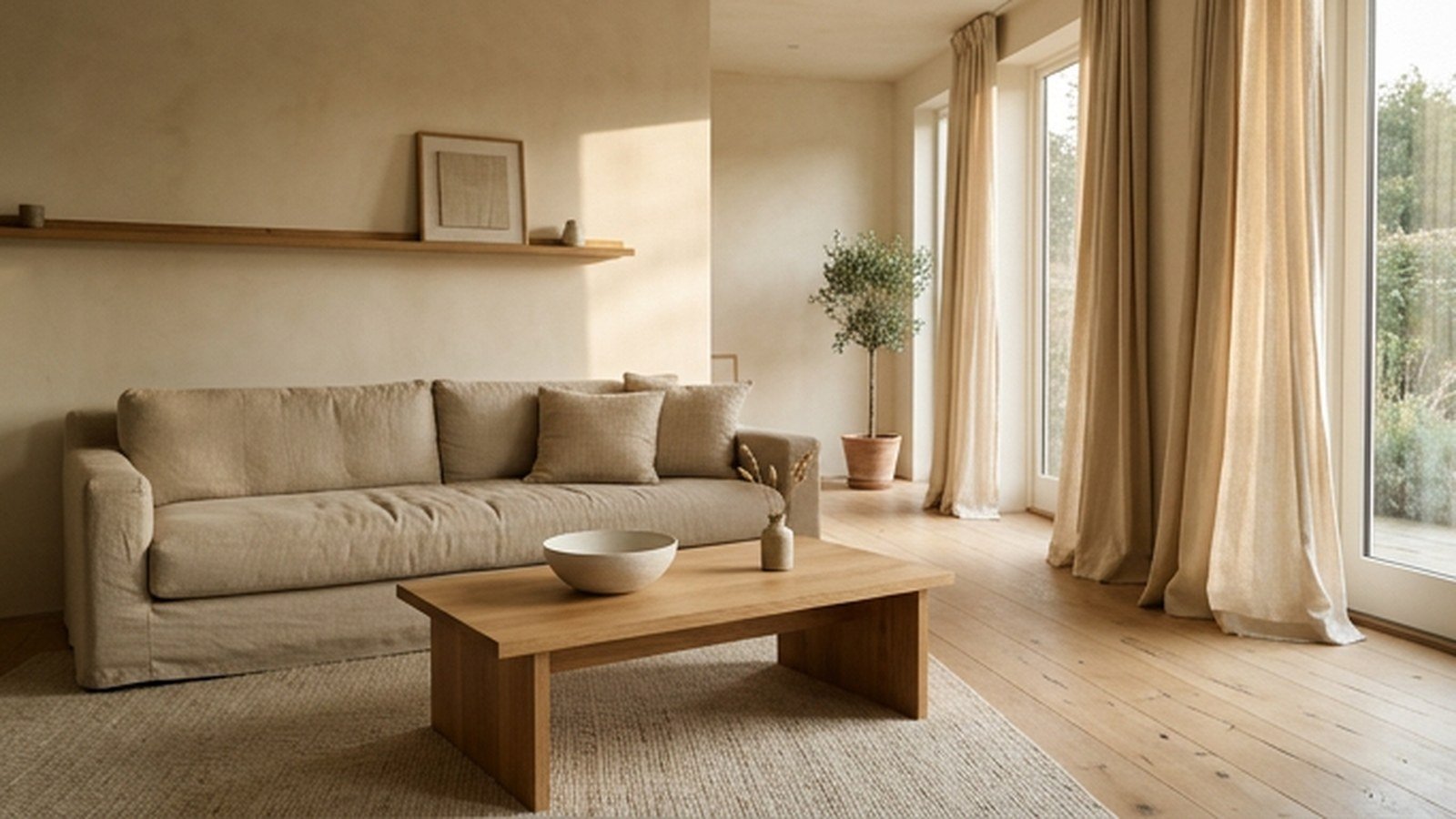
A warm minimalist living room keeps the clear surfaces and short list of furniture that minimalism is known for, then adds warmth through color undertones, natural materials and soft light. The result feels calm without the cold, empty look of a showroom, and it depends far more on material choices than on how many things you own.
I would build a warm minimalist room from the floor up: pick the wood tone and the wall color together, then the textiles, then the lighting. Decorating comes last, and in this style it means choosing four or five objects you genuinely like rather than filling every surface.
Below you will find the colors, materials and pieces that make the style work, with real undertones, fabric choices, bulb temperatures and typical costs. Each section can be done on its own, so the room can come together in stages as budget allows.
What Makes Minimalism Feel Warm Instead of Stark
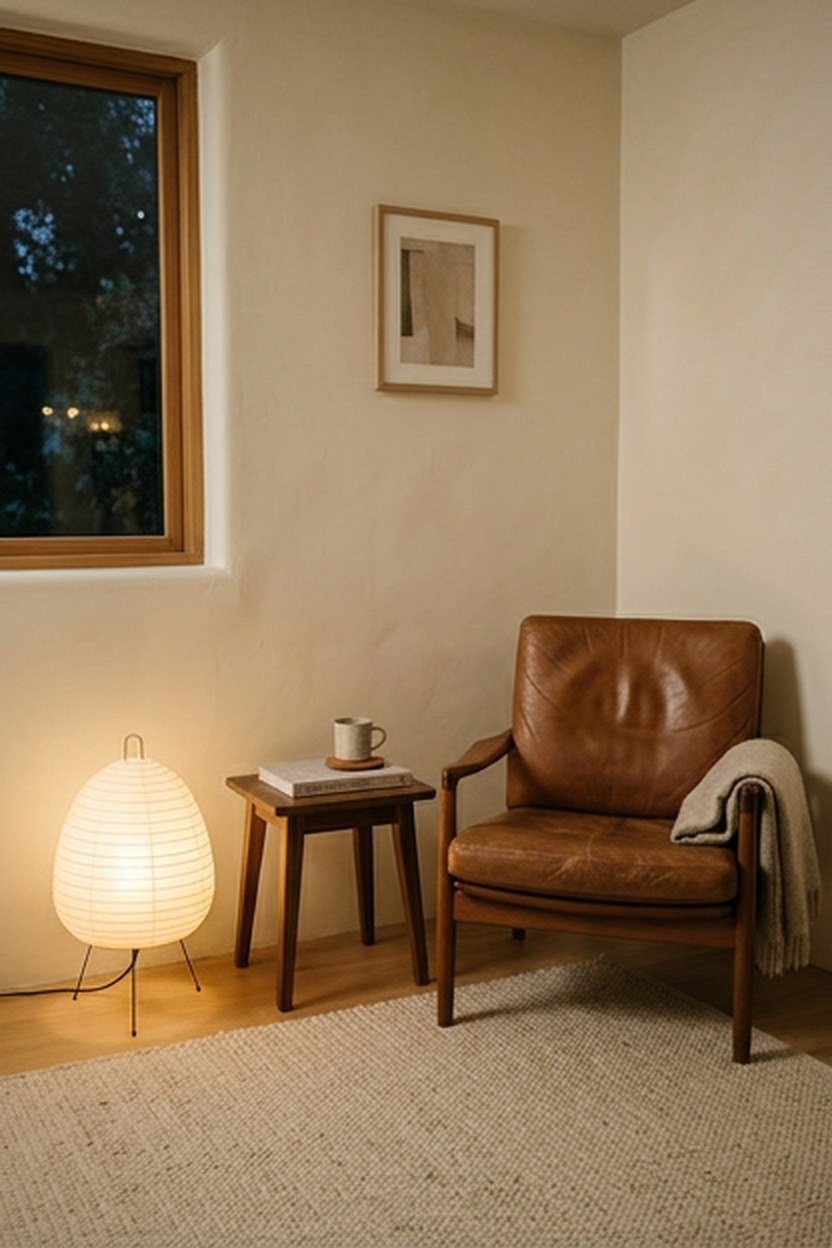
Cold minimalism relies on pure white walls, grey upholstery, chrome and glass, with every surface bare. Warm minimalism keeps the restraint but swaps those for creamy whites, oatmeal and taupe fabrics, oak and walnut, and a few soft, handmade textures.
The other difference is light. A warm minimalist room is lit with low lamps at 2700K and daylight filtered through linen, so surfaces glow rather than reflect harshly in the evening.
Floors matter as much as walls. Wide oak boards with a matte or oiled finish, or a warm-toned engineered floor, set up the whole palette, while grey-washed laminate pulls the room back toward the cold version of the style.
Start With a Warm White or Soft Neutral Base
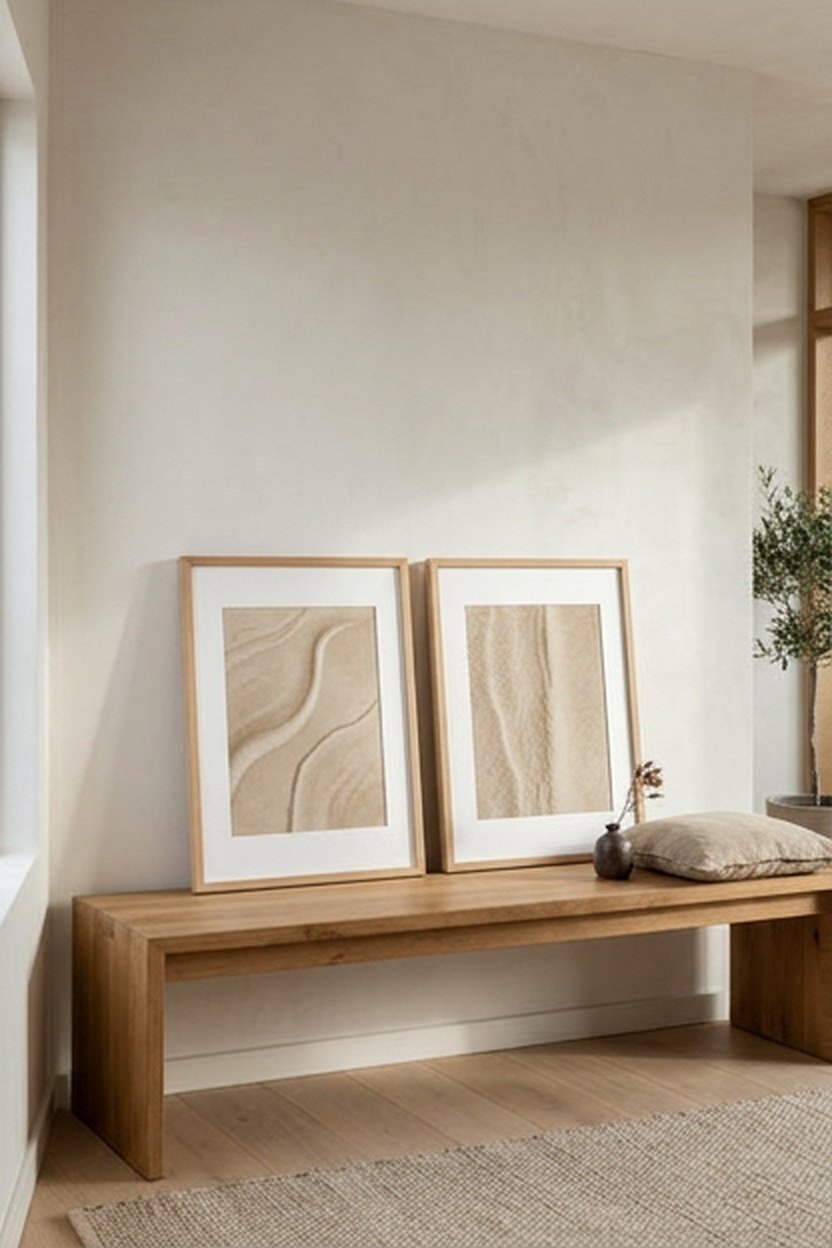
Walls set the temperature of the whole room, so choose them first. Warm whites with a slight yellow or red undertone, creamy beiges and soft greige read as gentle, while blue-based whites look crisp and can turn cold in low light.
In a small or north-facing room, a white with a little warmth stops the walls from looking grey on dull days. In a bright south-facing room you can go a shade cooler, since strong sunlight already pushes everything warmer through the afternoon.
A few widely used warm whites make good starting points for testing: Benjamin Moore White Dove, Sherwin-Williams Alabaster and Farrow and Ball Pointing all lean creamy without looking yellow. Treat any named color as a shortlist to test on your own walls, since flooring and daylight shift every shade.
Choosing Undertones That Stay Warm at Night
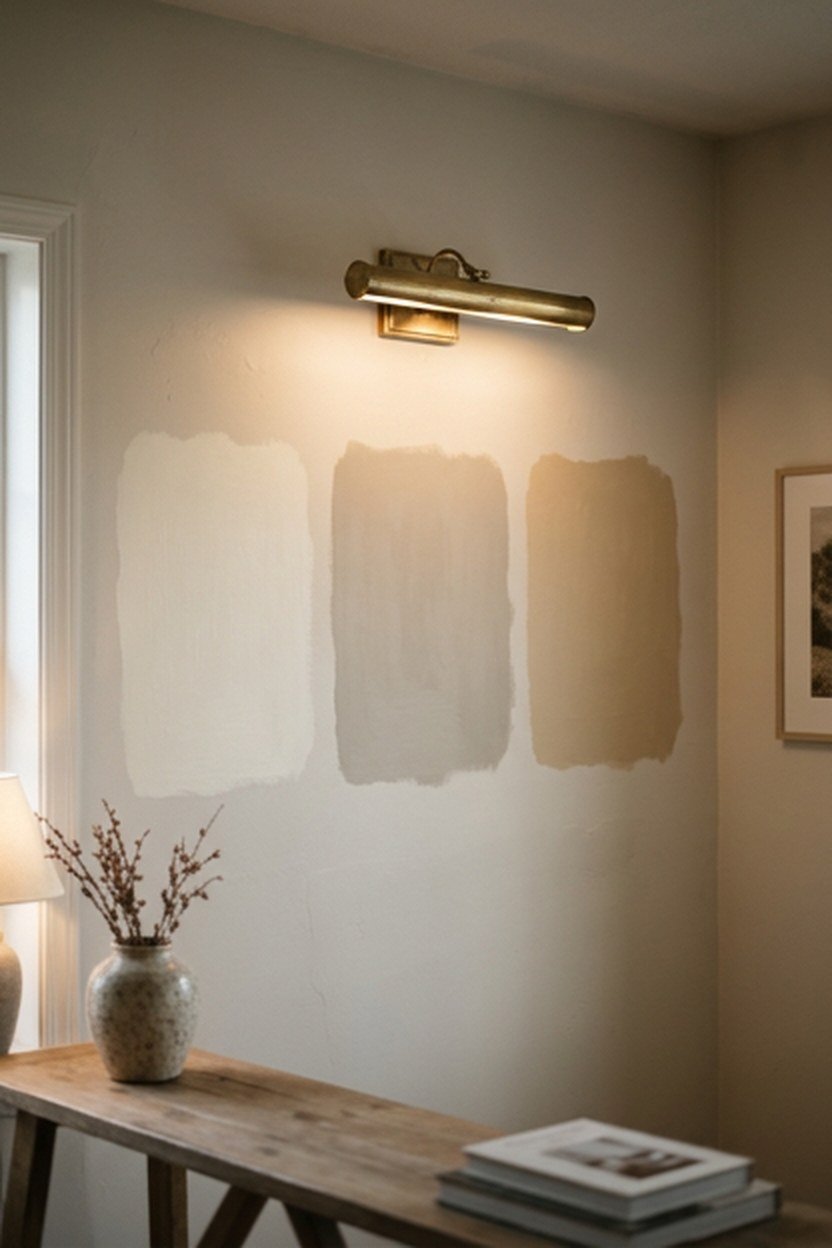
An undertone that looks lovely at noon can shift after sunset under lamps. Look for neutrals described as having red, yellow or pink undertones rather than green or blue, which tend to turn flat or murky under warm bulbs.
Keep the ceiling one step lighter than the walls, or use the same color at 50 percent strength. A bright blue-white ceiling above creamy walls is one of the most common reasons a room reads as disjointed.
Check the wall color against the floor as well as the furniture. An orange-toned oak floor next to a pink-leaning beige can clash, so hold the paint card against the boards before you commit.
Testing Paint the Right Way
Paint swatches at least 60 by 60 centimetres on two different walls, then check them in morning light, afternoon light and under your evening lamps. Tester pots cost around 5 to 10 dollars, and two or three rounds of testing are still far cheaper than repainting a room.
Earthy Accent Colors Used Sparingly
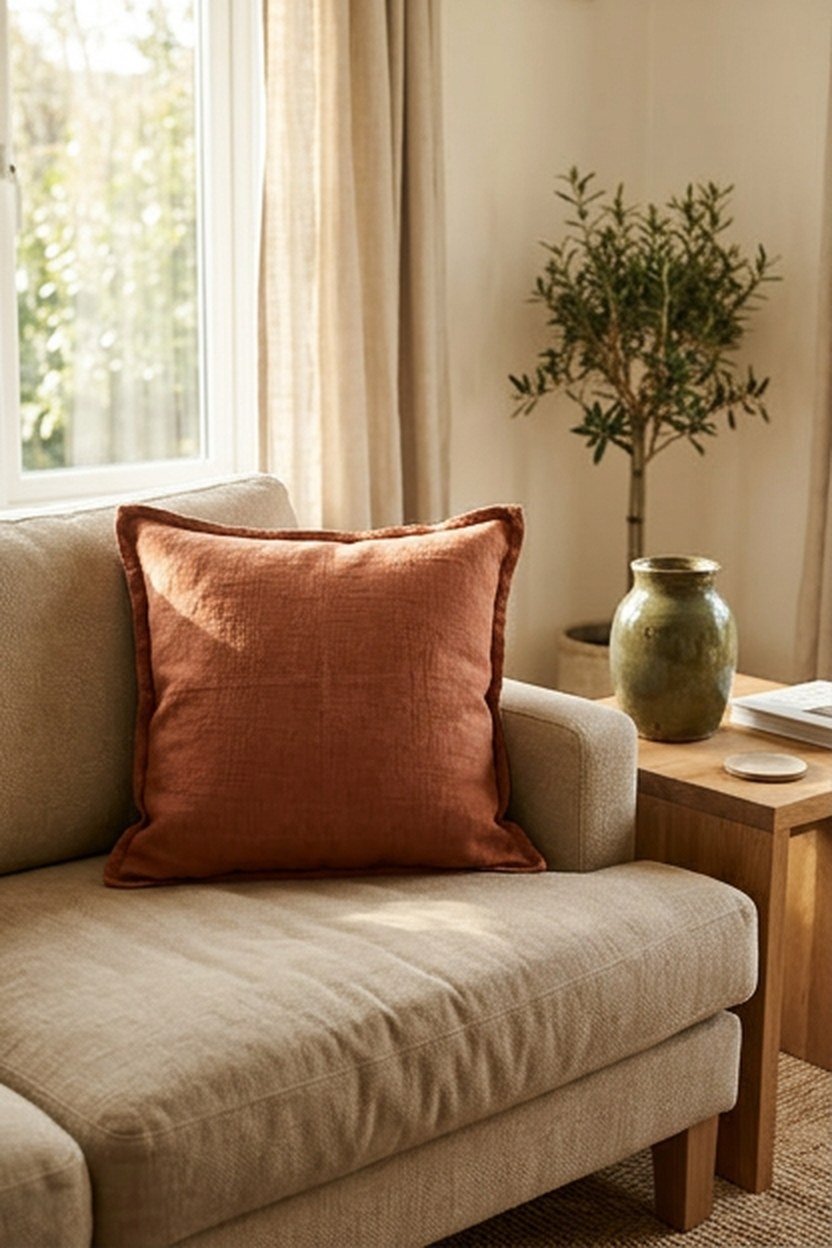
Warm minimalist rooms use accent color quietly. Terracotta, rust, olive, ochre and warm charcoal all work, but keep them to two or three places, such as a cushion, a vase and one artwork.
A useful rule is to let the accent take up no more than about 10 percent of what you can see from the doorway. More than that and the room starts to read as bohemian or eclectic rather than minimal.
Metal finishes count as accents too. Brushed brass, bronze and blackened steel feel warmer than polished chrome, and one metal repeated in a lamp, a curtain rod and a picture frame keeps the room coherent.
Natural Wood as the Main Material
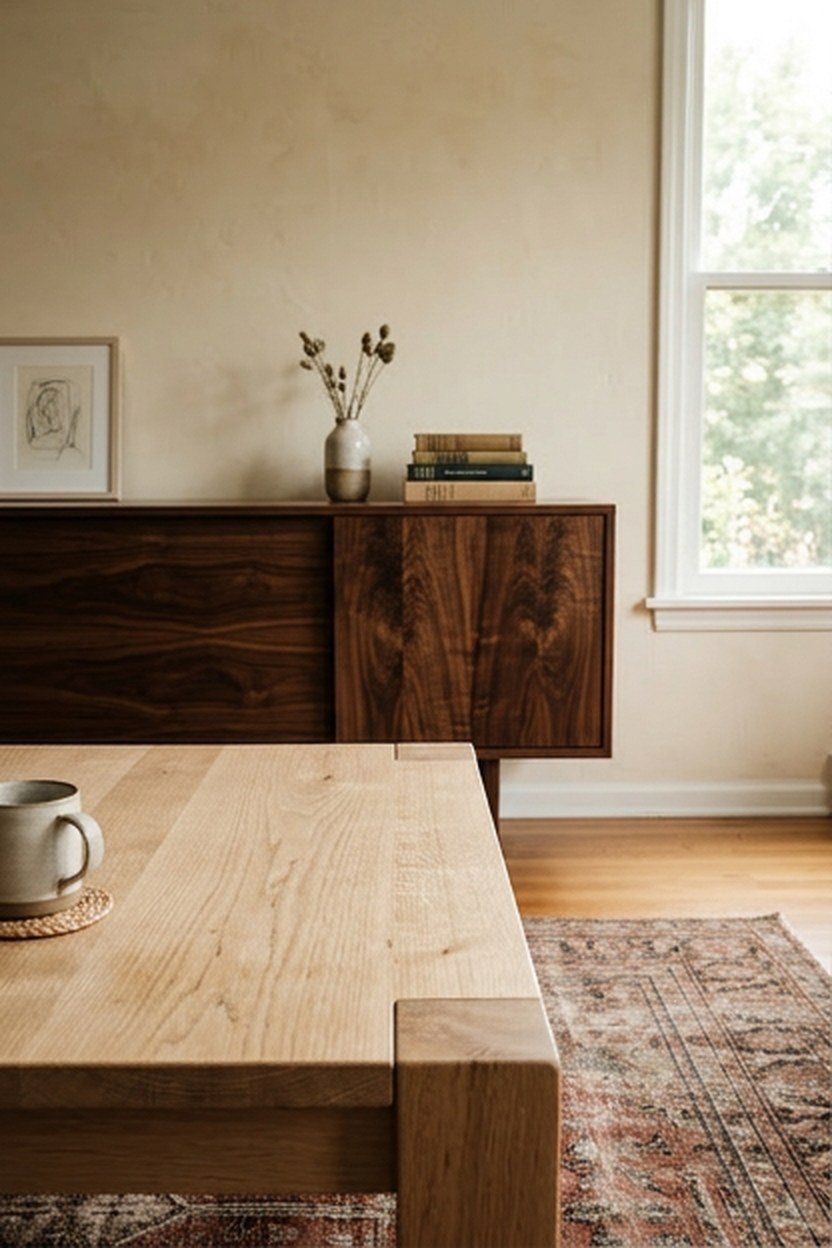
Wood carries most of the warmth in this style. Light oak, ash and beech feel airy and Scandinavian, while walnut and smoked oak add depth and suit rooms with plenty of natural light.
Pick one main wood tone and repeat it in two or three pieces, such as the coffee table, a sideboard and a picture frame. A second tone is fine if it is clearly different, since two woods that almost match look like a mistake.
| Wood | Look | Typical cost for a solid coffee table |
|---|---|---|
| White oak | Pale, fine grain, calm | 400 to 1,200 dollars |
| Ash | Light with a bolder grain | 350 to 1,000 dollars |
| Walnut | Rich brown, dramatic grain | 700 to 2,000 dollars |
| Smoked or stained oak | Mid to dark, even tone | 500 to 1,400 dollars |
| Pine | Soft yellow, knotty, casual | 200 to 600 dollars |
Veneered pieces cost less and look nearly identical from a sitting distance. For large items like a sideboard, a good oak veneer over plywood is also more stable than solid timber in a room with heating that swings through the year.
Linen, Wool, and Boucle for Soft Texture
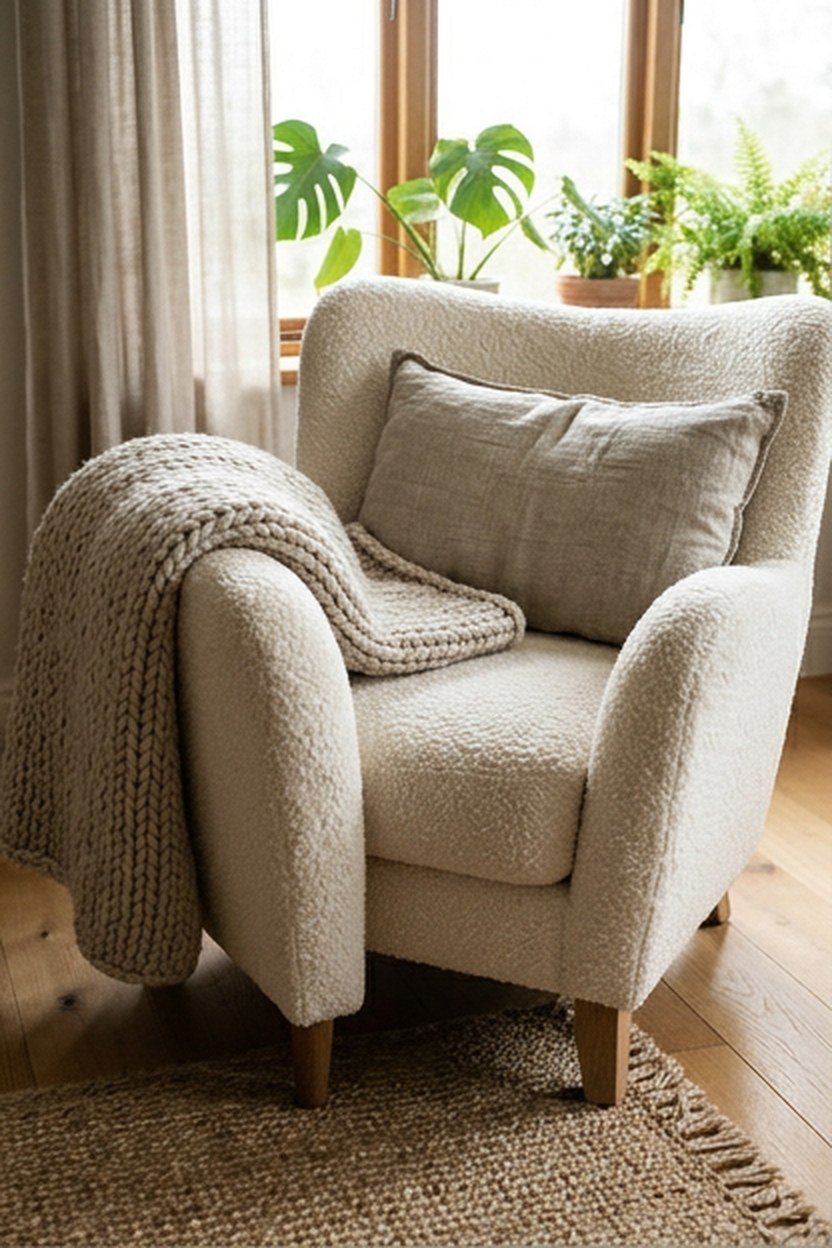
Textiles do the job that clutter would do in a busier room, adding interest without adding objects. Linen curtains, a wool rug, a boucle chair and a chunky knit throw give the eye plenty to read even when the surfaces are bare.
Stick to natural fibers where you can. Linen, cotton and wool age well and soften over time, while shiny synthetics tend to look cheaper and pill within a year or two of daily use.
Curtains are the largest textile in most living rooms, so they set the tone. Mid-weight linen hung from a ceiling track, pooling slightly or just kissing the floor, softens the whole window wall and filters daylight into an even glow.
How Many Textures Is Enough
Aim for five to seven distinct textures in the room, spread across the floor, seating, windows and walls. Fewer than that and the room feels flat, while more than about eight starts to compete with the calm, pared-back look.
Stone and Travertine Accents
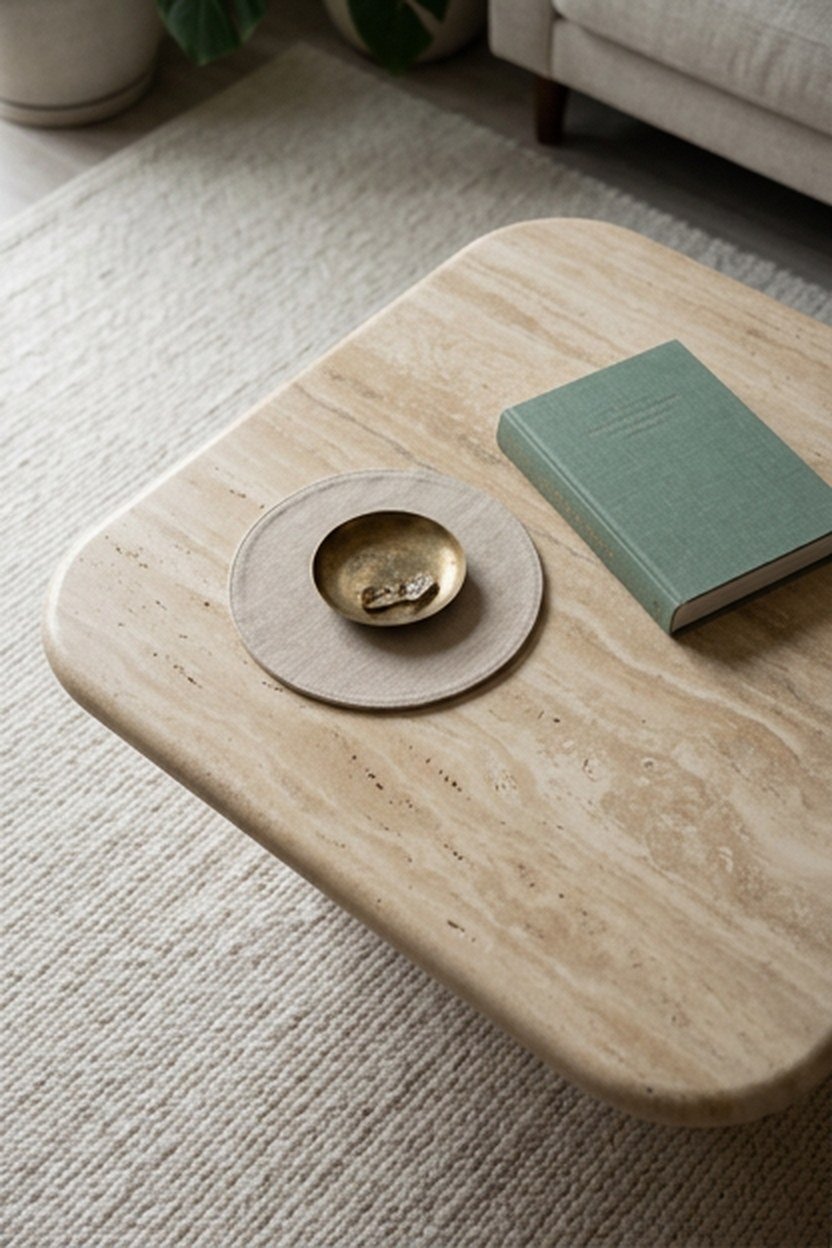
Stone adds weight and a quiet, natural pattern that suits minimal rooms. A travertine coffee table, a marble side table or a stone lamp base brings in texture without adding color.
Honed or matte finishes feel warmer than polished stone, which can look cold and reflective. Travertine is porous, so a sealed top is worth checking for if the table will hold drinks every day.
A travertine coffee table usually costs 500 to 1,500 dollars. Limestone, tumbled marble and even a solid concrete side table give a similar quiet, mineral look at a range of prices, and a single stone lamp base is the cheapest way to try the material at around 80 to 200 dollars.
A Low, Simple Sofa as the Anchor
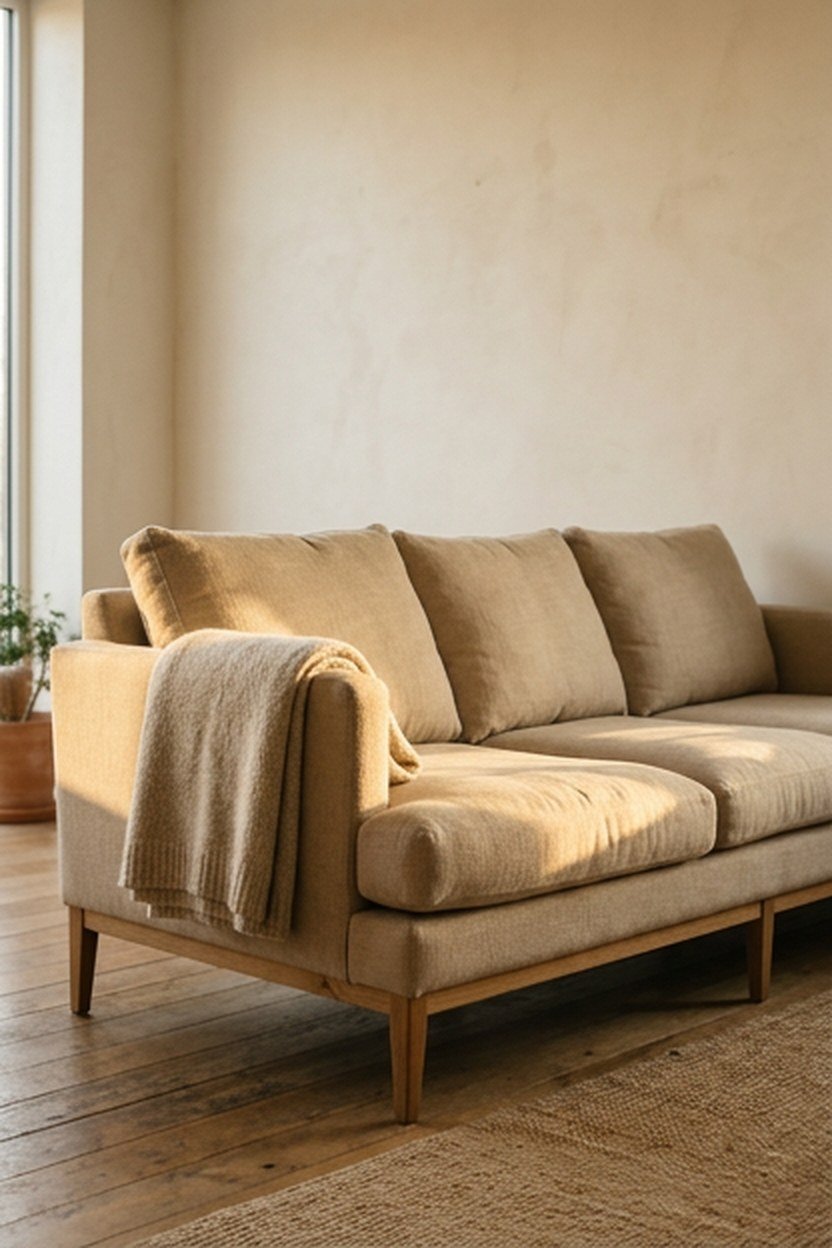
The sofa in a warm minimalist room is usually low, with clean lines and soft, relaxed cushions. Oatmeal, sand, warm grey and soft caramel leather all fit, while bright colors or tufted details pull the room toward another style.
Choose a seat height around 40 to 43 centimetres for the low look without making it hard to stand up. Loose back cushions feel more relaxed than tight upholstered backs and are easier to plump back into shape.
Leather in caramel or cognac is a strong alternative to fabric in this style. It softens and darkens with use, suits homes with pets better than loose weaves, and a good leather sofa typically starts around 1,800 to 2,500 dollars.
Fewer, Better Furniture Pieces
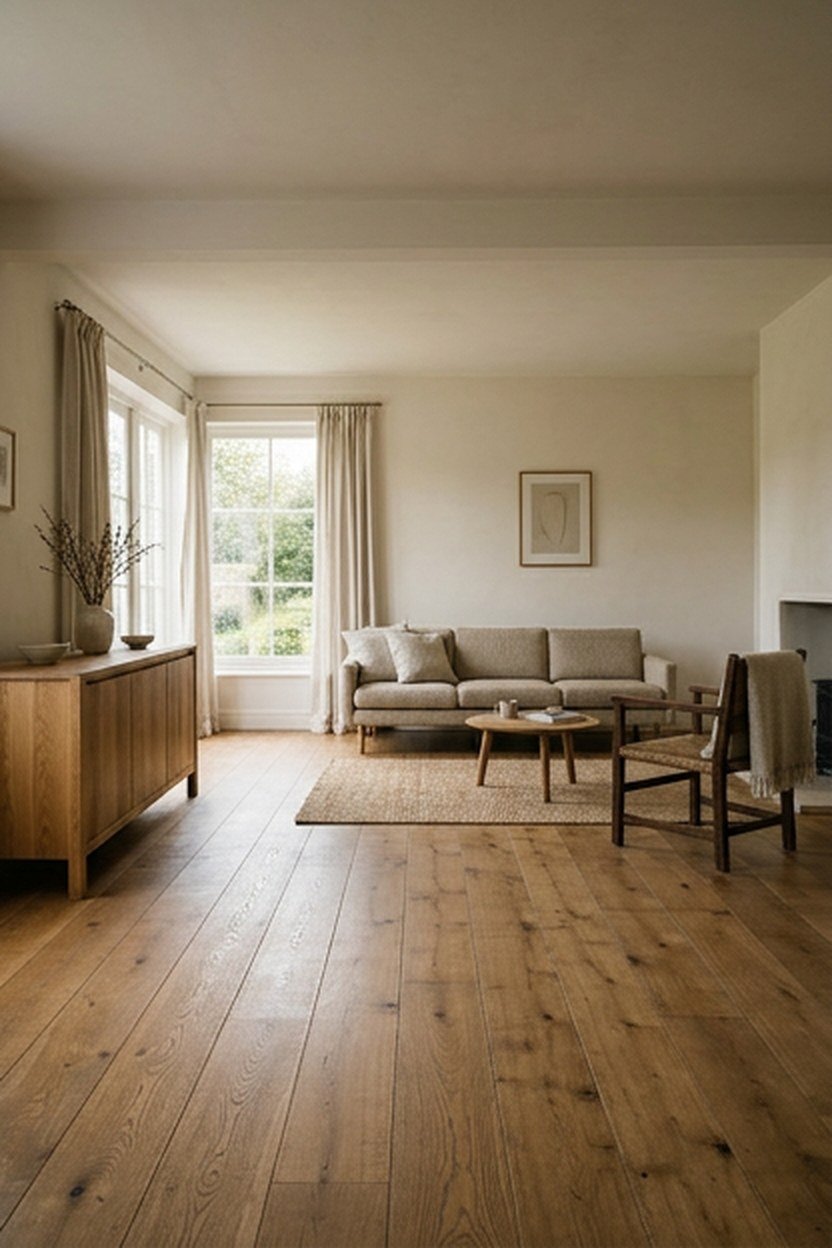
Minimalism works best when every piece earns its place. A sofa, one or two chairs, a coffee table, a side table and a sideboard cover most living rooms, and each can be better quality because there are fewer of them.
I would rather buy one solid wood sideboard at 800 dollars than three flat-pack units at 250 dollars each. The single piece looks calmer, lasts longer and holds its value if you move.
Vintage and second-hand pieces suit warm minimalism well because they bring character without adding clutter. A mid-century teak chair or an old pine chest often costs less than a new flat-pack equivalent and gives the room a sense of history.
The One In, One Out Rule
Once the room is furnished, bring in a new piece only when something else leaves. The rule stops surfaces slowly filling up again and makes every purchase a real decision rather than an impulse.
Warm Layered Lighting With Paper and Linen Shades
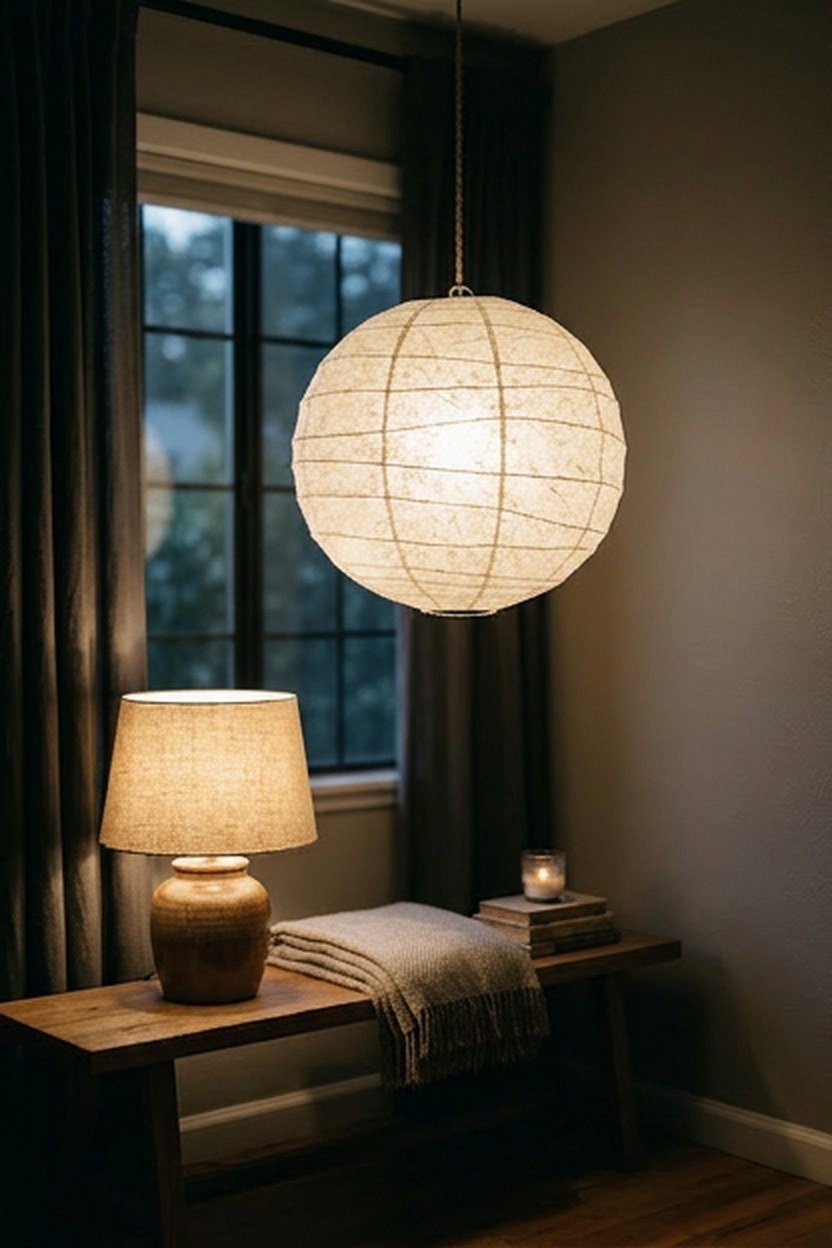
Lighting turns a minimal room from stark to warm faster than anything else. Paper lanterns, linen drum shades and alabaster or opal glass lamps diffuse light softly, which suits the calm mood of the style.
Use three layers: a soft ceiling or pendant light, two or three low lamps, and one accent such as a wall light over art. Keep every bulb at 2700K and put the main lamps on dimmers, which cost around 15 to 30 dollars each as plug-in units.
Choose fixtures that look good switched off, since in a minimal room they are part of the decor during the day. Alabaster, ceramic and paper bases and shades suit the style, while visible bare bulbs and glossy chrome feel too harsh.
Plaster, Limewash, and Textured Walls
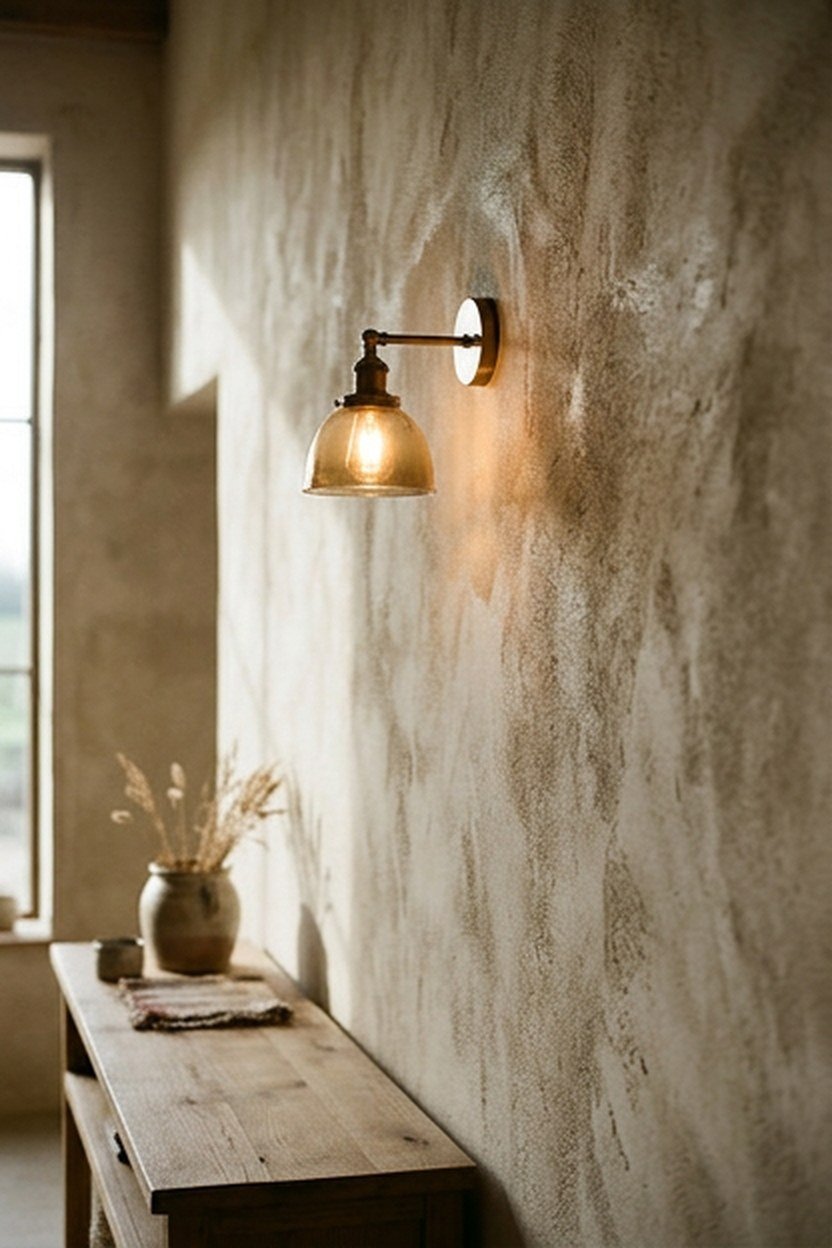
Textured wall finishes add warmth without a single extra object. Limewash and mineral paints give a soft, cloudy depth, while plaster finishes add movement that shows up beautifully under low lamps.
Limewash usually costs 60 to 120 dollars for enough to cover an average feature wall, and it can be applied without special training. Venetian or clay plaster looks richer but is normally a job for a plasterer at a higher cost.
Vertical wood slats or simple panelling on one wall are another option, especially behind a media unit. Oak veneer slat panels cost roughly 60 to 120 dollars per square metre and also soften echo in a sparsely furnished room.
Hidden Storage That Keeps Surfaces Bare
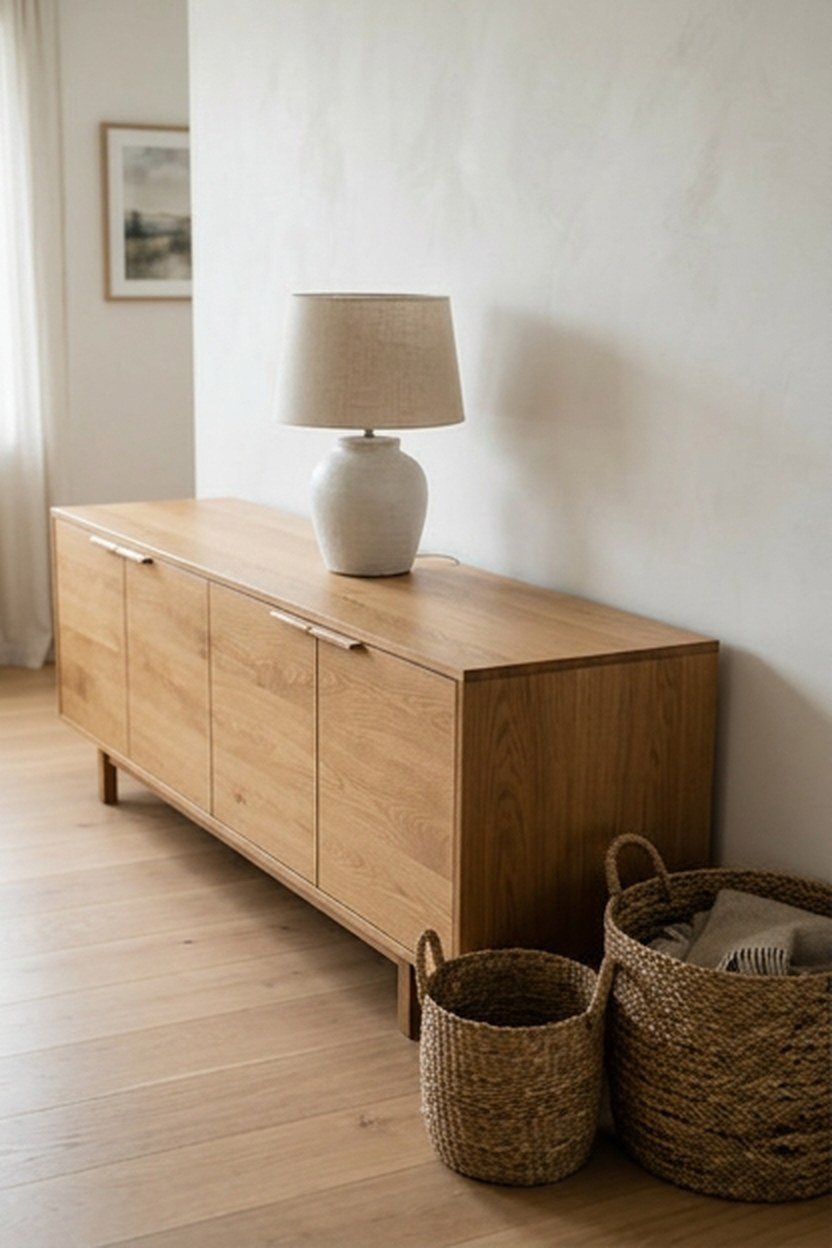
Warm minimalism only works if daily clutter has somewhere to go. Closed storage, such as a low sideboard, a media unit with doors or built-in cupboards, keeps remotes, chargers and paperwork out of sight.
Plan for more storage than you think you need, roughly one closed cupboard per person in the household plus one shared unit. Open shelving should be the exception, and when it appears it looks best holding only a few chosen objects.
Alcoves beside a chimney breast are the classic spot for built-in cupboards with shelves above. A joiner typically charges 1,500 to 4,000 dollars per alcove, and flat-pack carcasses with custom oak fronts can cut that roughly in half.
Baskets and Boxes That Belong
Woven baskets in seagrass or rattan and lidded linen boxes fit the style and hide small things. Keep them to one material and one or two sizes, so they read as part of the room rather than as extra objects.
Decor Chosen With Restraint: Books, Ceramics, One Artwork
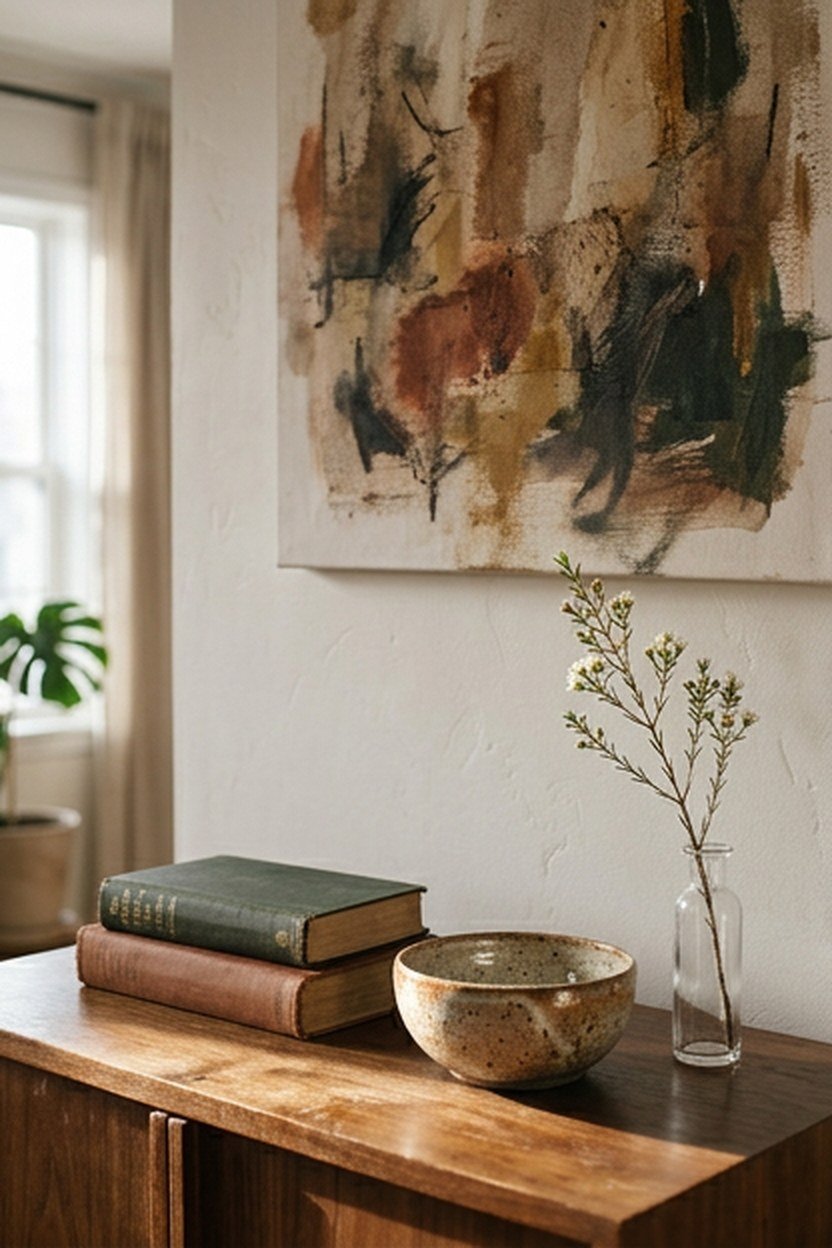
Decorating in a warm minimalist room means choosing a few things you genuinely love. A stack of books, a handmade ceramic bowl, a vase and one strong artwork are usually enough for the whole room.
Group objects in odd numbers and vary their height, then leave generous space around each group. A single large artwork over the sofa looks calmer than several small frames, and abstract pieces in earthy tones suit the style well.
Size artwork to about two thirds the width of the sofa below it, and hang it 20 to 25 centimetres above the sofa back. A large canvas at that scale looks deliberate, while a small print on a big wall looks like an afterthought.
Plants and Branches for Life and Softness
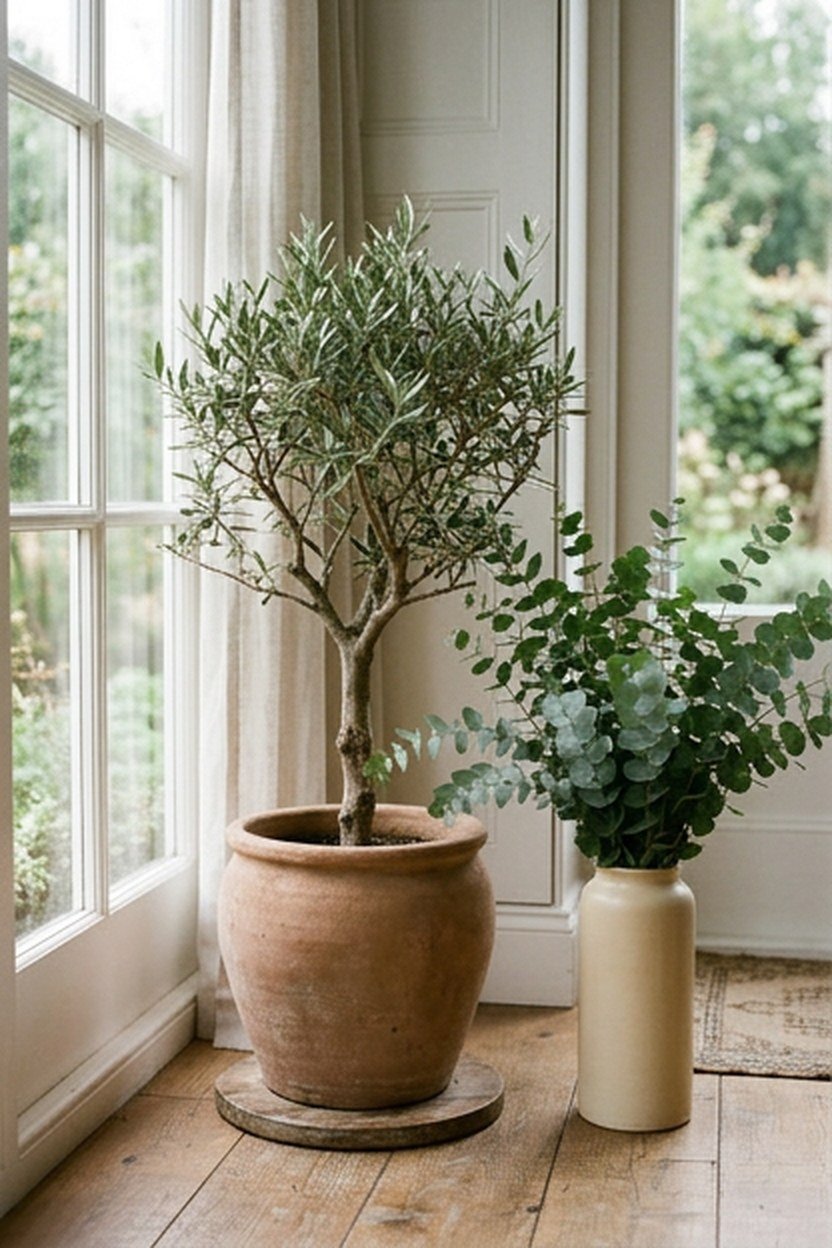
Plants soften straight lines and add color that never clashes with a neutral palette. One large floor plant, such as an olive tree or a fiddle leaf fig, usually works better than many small pots on every surface.
Cut branches in a tall ceramic vase are a low-effort alternative that changes with the seasons. Eucalyptus, olive or dried pampas last weeks, and fresh branches from the garden cost nothing at all.
Match the plant to the light before buying it. An olive tree needs four to six hours of direct sun a day, while a rubber plant or a snake plant copes with a darker corner, and a good-quality faux plant is a fair choice where nothing living will thrive.
Keeping the Look Warm Through the Seasons
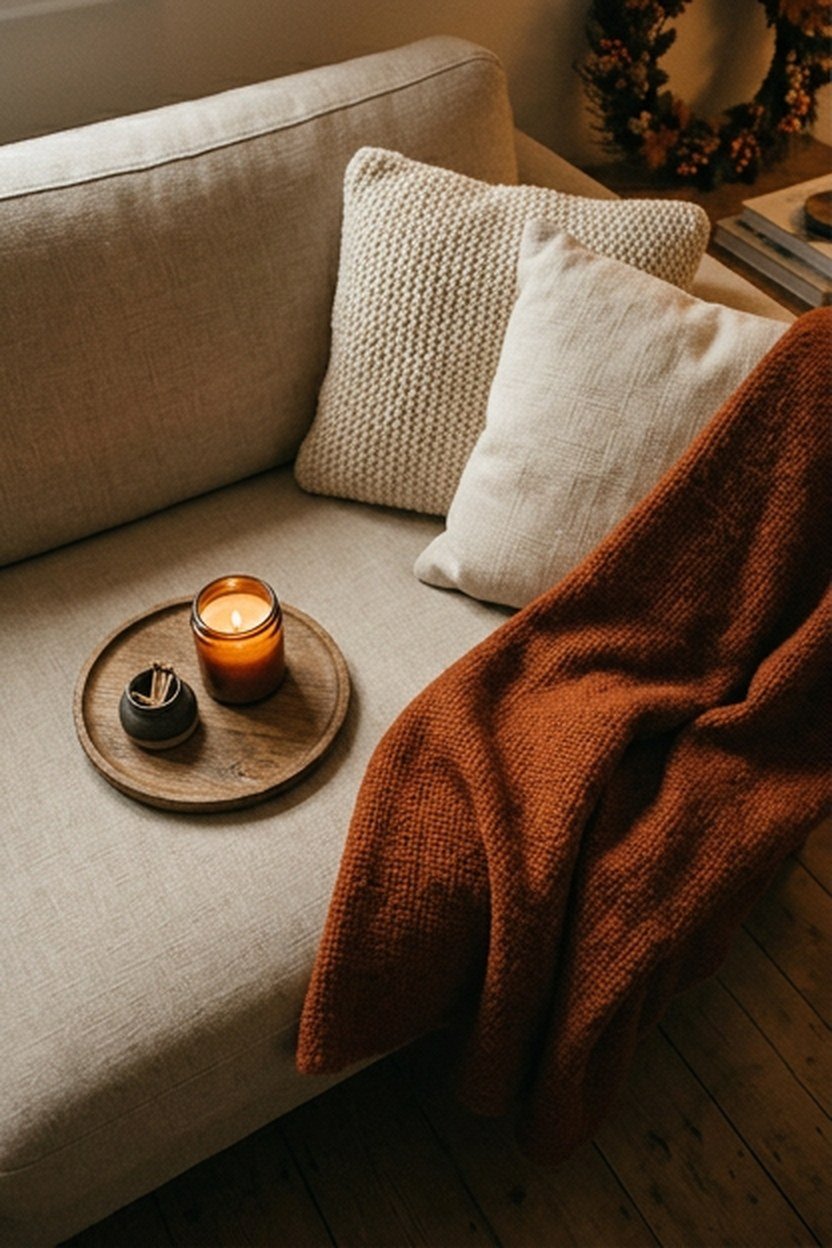
A warm minimalist room can shift through the year with a few small swaps rather than new furniture. Heavier wool throws and textured cushion covers in autumn, lighter linen in spring, are enough to change the feel.
Store the off-season textiles in one labelled box so the swap takes ten minutes. Keeping the number of cushions and throws the same year round stops seasonal changes from adding clutter.
Scent and Sound
Warmth is not only visual. A wool rug and heavy curtains soften echo in a sparsely furnished room, and a single candle or diffuser in a warm scent such as cedar or sandalwood adds to the calm without adding objects.
Conclusion
A warm minimalist living room depends on three choices: a warm neutral base, natural materials repeated with care, and soft layered light at 2700K. Get those right and a room with very few objects still feels welcoming.
Decorate last and decorate lightly, with closed storage doing the hard work of keeping surfaces clear. When you do add something, choose a natural material or a handmade piece over anything shiny or mass-produced.
Frequently Asked Questions
What colors work best in a warm minimalist living room? Creamy whites, oatmeal, sand, taupe and warm greige make a good base. Add accents in terracotta, olive, rust or ochre in two or three places only.
How do I stop a minimalist room from feeling cold? Swap cool whites for warm ones, add wood and natural textiles, and light the room with low lamps at 2700K. Texture on walls, floors and fabrics fills the space without clutter.
Which wood tone suits warm minimalism? Light oak and ash give an airy look, while walnut and smoked oak feel richer. Pick one main tone and repeat it in two or three pieces.
Is warm minimalism the same as Japandi? They overlap, since both use natural materials and restraint. Japandi leans toward Japanese simplicity and darker contrasts, while warm minimalism can be softer and creamier overall.
How many decorative objects should a minimalist living room have? Usually four to six chosen pieces, such as books, a ceramic bowl, a vase, a plant and one artwork. Leave clear space around each group.
Can a warm minimalist living room work with children? Yes, if storage is generous and fabrics are durable. Closed cupboards for toys and washable linen covers keep the room calm and practical.