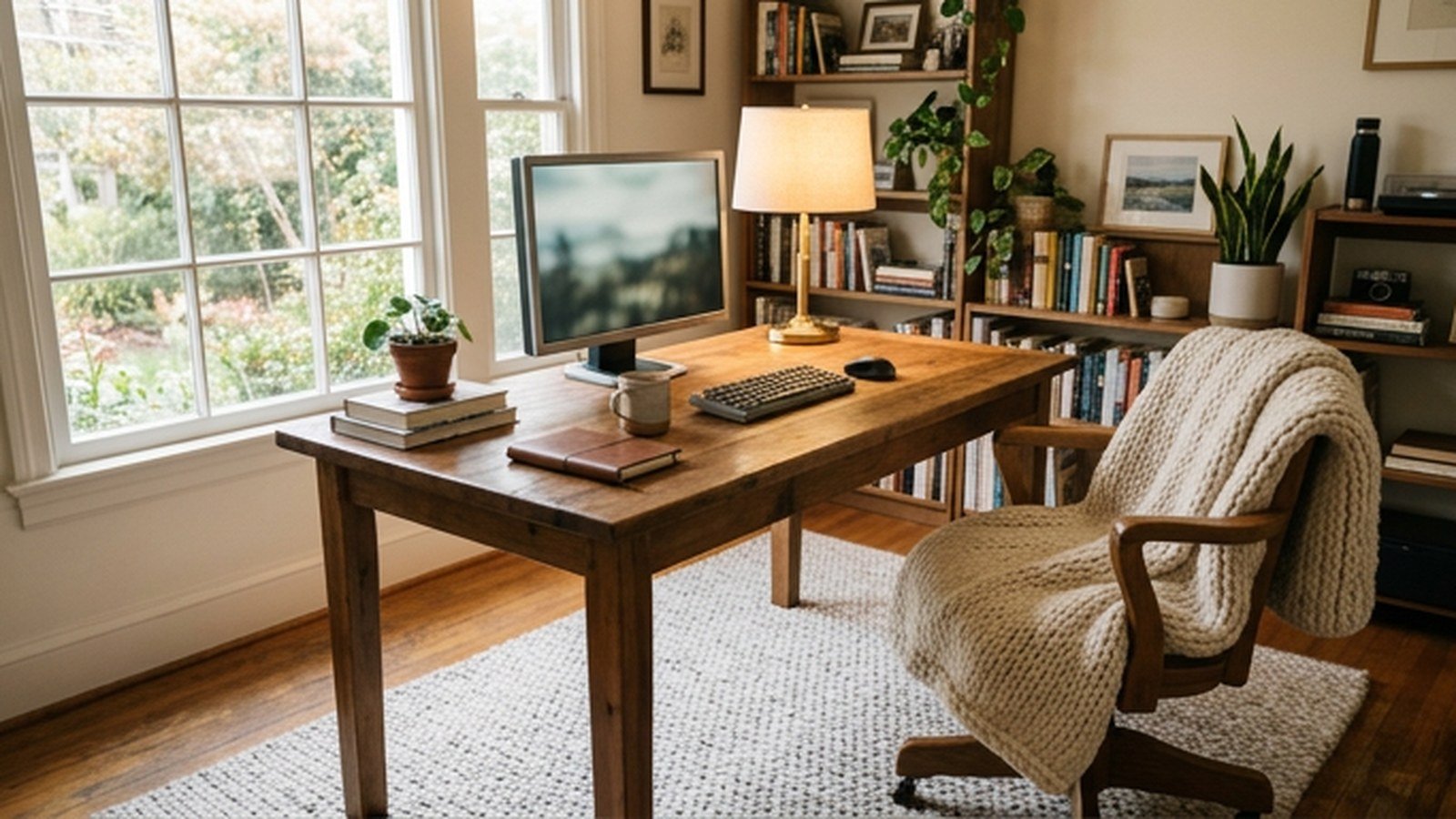
A home office does not have to feel like a cubicle you happened to install in your spare bedroom. Hygge, the Danish idea of deliberate coziness, translates surprisingly well into a workspace once you stop treating texture as decoration and start treating it as function. This guide walks through fifteen real ways to layer warmth into a home office, from the chair you sit in to the light you work under.
I switched my own office from a stark white desk and a metal chair to a setup built almost entirely around texture, and the difference in how the room feels by 4pm is real. A room full of hard, cold surfaces reads as clinical even with good natural light. Softening even a few of those surfaces changes how long you actually want to stay at your desk.
By the end of this piece you will know which materials carry the most hygge impact for the least cost, and which changes are worth doing first if you are working with a small budget. I have included a comparison table and a cost breakdown, since some of these changes cost almost nothing while others are a genuine investment. Read through all fifteen before deciding where to start.
Why Texture Matters More Than Color In A Hygge Office
Most people reach for color first when they want a room to feel warmer, but texture does more of that work than color ever will. A pale gray office with a wool rug, a linen curtain, and a wood desk feels warmer than a beige office full of laminate and metal. Texture changes how a room feels to the touch and, surprisingly, how it feels just to look at.
Hygge as a design idea leans on natural, tactile materials specifically because they slow you down. Wool, linen, wood, and rattan all carry small imperfections and variation that a smooth plastic or glass surface cannot replicate.
| Material | Texture Quality | Best Use In An Office |
|---|---|---|
| Wool | Soft, dense, slightly nubby | Rugs, throws, pillows |
| Linen | Loose weave, slightly crisp | Curtains, desk pads |
| Wood | Grain, warmth, natural variation | Desk surface, shelving |
| Rattan | Woven, airy, slightly rough | Baskets, chairs, lighting |
| Ceramic | Smooth with a matte glaze | Desk accessories, planters |
I recommend starting with whichever surface you touch most during the workday, since that contact point carries the most impact for the least cost. A wool throw over your chair or a linen mat under your keyboard changes your physical experience of the desk within a single afternoon. Larger investments like a new desk or rug can wait until you know the smaller changes are working.
Planning Your Hygge Office Around What You Already Have
Before buying anything new, walk through your current office and note which surfaces are hard, cold, or reflective, since those are your starting points. A glass desktop, a metal filing cabinet, and a bare hardwood floor are the three most common culprits in an office that feels sterile. You do not need to replace any of them outright to soften their effect.
Layering a textile over or beside a hard surface often works as well as replacing it entirely. A wool rug under a metal desk, a linen runner across a glass top, or a woven basket beside a filing cabinet all soften the room without a full renovation.
Think about which materials you already own before shopping for new ones, since a throw blanket from your living room or a basket from another room might already suit your office. Hygge design rewards reuse and thoughtful placement over buying everything new at once. Walking your whole home for textures you already own is a free first step.
Working With A Small Office Or A Shared Room
A small office, or a desk tucked into a corner of a bedroom, benefits from fewer, more concentrated textures rather than layering everything at once. Choose two or three key materials, like wool and wood, and repeat them consistently rather than introducing five different textures in a cramped space.
1. Chunky Knit Throw Over The Desk Chair
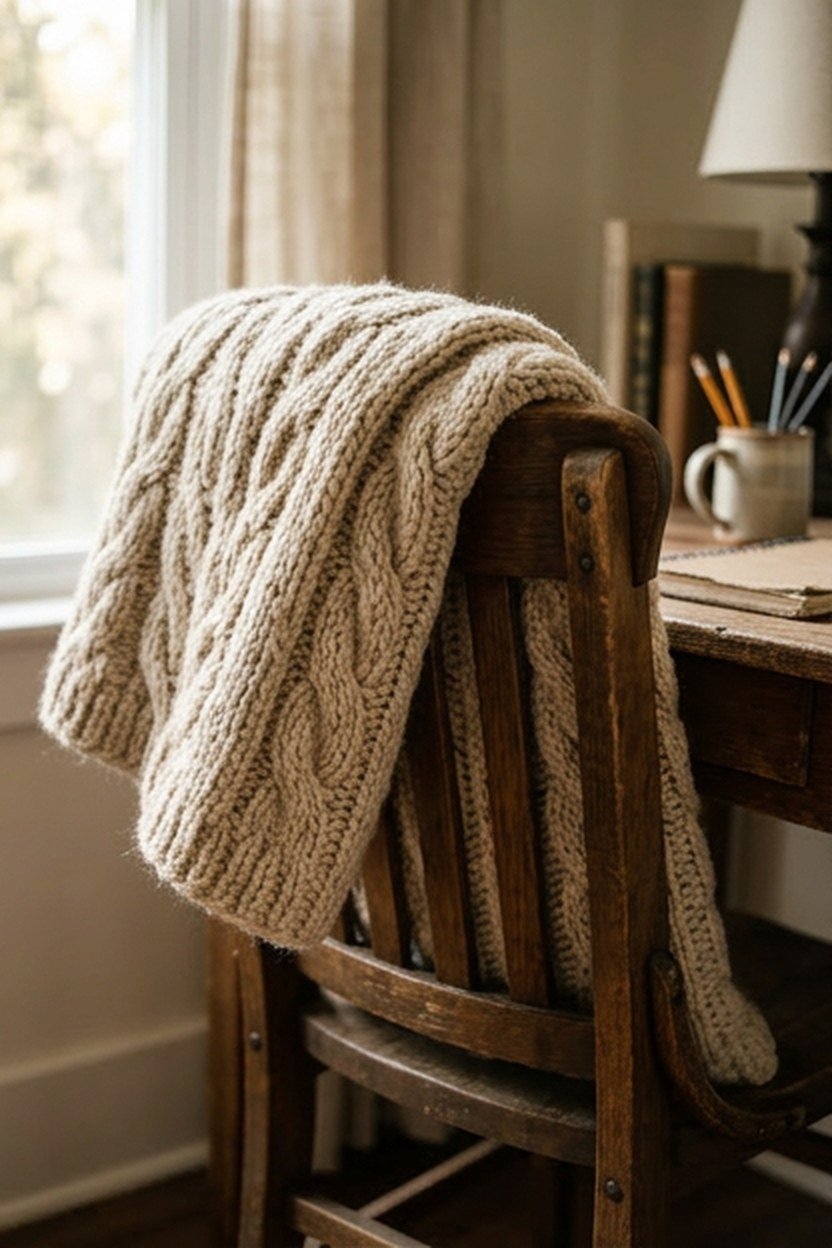
A chunky knit throw draped over the back of your desk chair is one of the fastest, cheapest ways to introduce real texture into an office. It doubles as a layer you can actually use when the room gets cold. The visible cable or waffle knit pattern catches light differently than a flat fabric, changing the whole feel of a chair that otherwise reads as purely functional.
Choose a throw in a natural fiber like wool or a wool blend rather than synthetic fleece, since natural fibers carry a more substantial, tactile weight that reads as genuinely cozy rather than cheap. A cream, oatmeal, or soft gray throw works with nearly any existing color scheme, which makes this an easy first purchase if you are unsure where else to start. Drape it loosely rather than folding it perfectly, since a slightly relaxed drape reads as lived-in rather than staged.
This is also one of the easiest changes to reverse or swap seasonally, since a throw takes seconds to remove or replace with a lighter option in warmer months. If you are renting or sharing a workspace, this low-commitment texture layer delivers real impact without touching a single fixed surface. It is worth trying before any of the larger, more expensive changes further down this list.
Choosing A Knit Weight For Your Climate
A heavier, denser knit suits a colder climate or a drafty office and doubles as genuine warmth on cold mornings, while a lighter, more open weave works better in a warmer climate where you want the texture without the added heat. Consider owning two throws, a heavier winter option and a lighter one for warmer months, if your region sees real seasonal swings. Swapping them out costs nothing and keeps the office feeling appropriate to the season.
2. Warm Wood Desk As The Anchor Piece
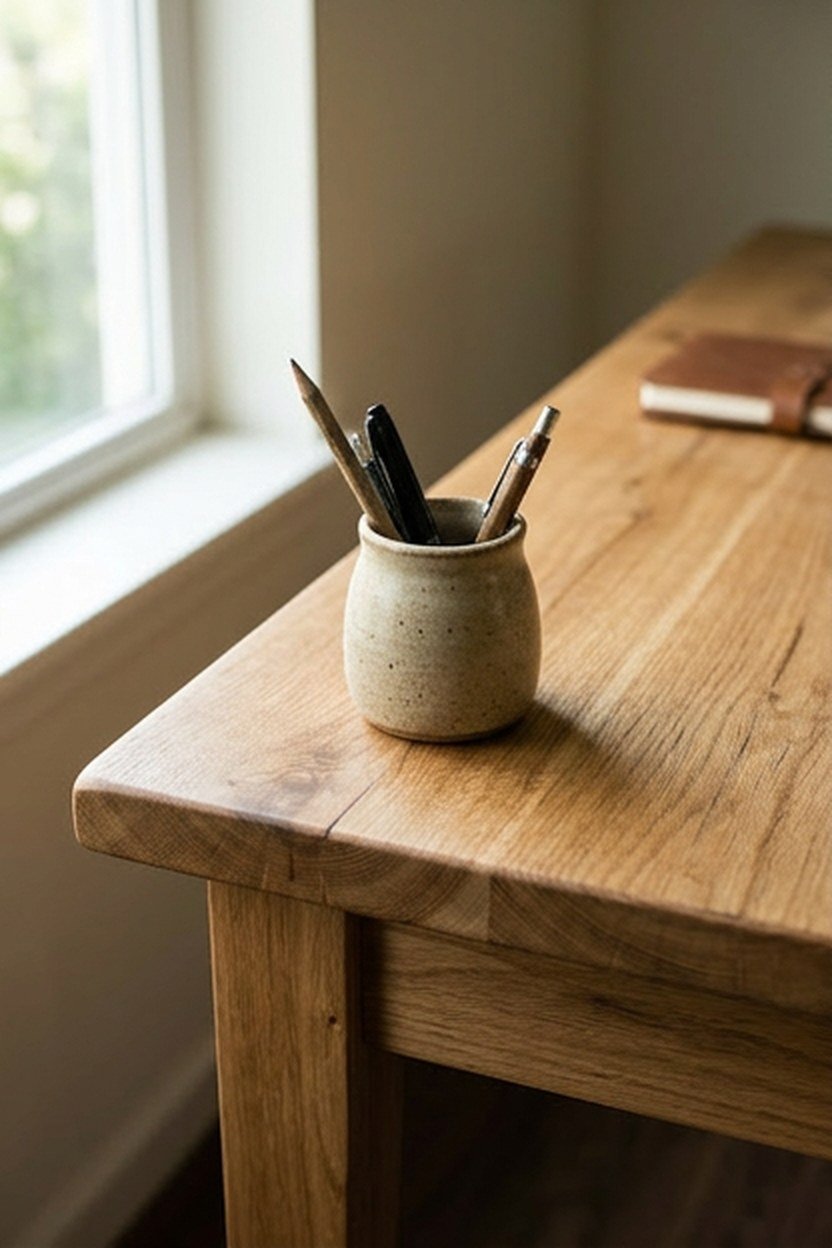
A solid wood desk, or even a wood-topped desk with metal legs, anchors a hygge office in a way that glass or laminate simply cannot match. The visible grain running through a real wood surface adds warmth and variation that changes throughout the day as light moves across the room.
Oak, walnut, and pine each bring a different warmth level, with oak reading neutral and versatile, walnut reading rich and formal, and pine reading casual and rustic. Match the wood tone to your existing flooring or other furniture where possible, since a jarring mismatch between two different wood tones can undercut the cohesive feeling you are working toward. A desk with simple, unfussy lines lets the wood grain itself carry the visual interest.
If a full wood desk is outside your budget, a wood desktop shelf or a simple wood tray placed on an existing desk introduces the same material in a smaller, more affordable dose. This partial approach works especially well in a shared or temporary workspace where replacing the whole desk is not practical. Even a small wood element near your main work surface carries real warmth into the room.
Caring For A Wood Desk Surface Over Time
A wood desk benefits from an occasional wipe with a wood-safe cleaner and a coaster habit for hot mugs, since consistent moisture exposure can dull the surface finish over years of daily use. Choosing a desk with a durable sealed finish, rather than raw unfinished wood, makes this maintenance simpler for a surface that sees daily coffee cups and laptop use. A little care keeps the grain looking rich rather than dull.
3. Layered Wool Area Rug Underfoot
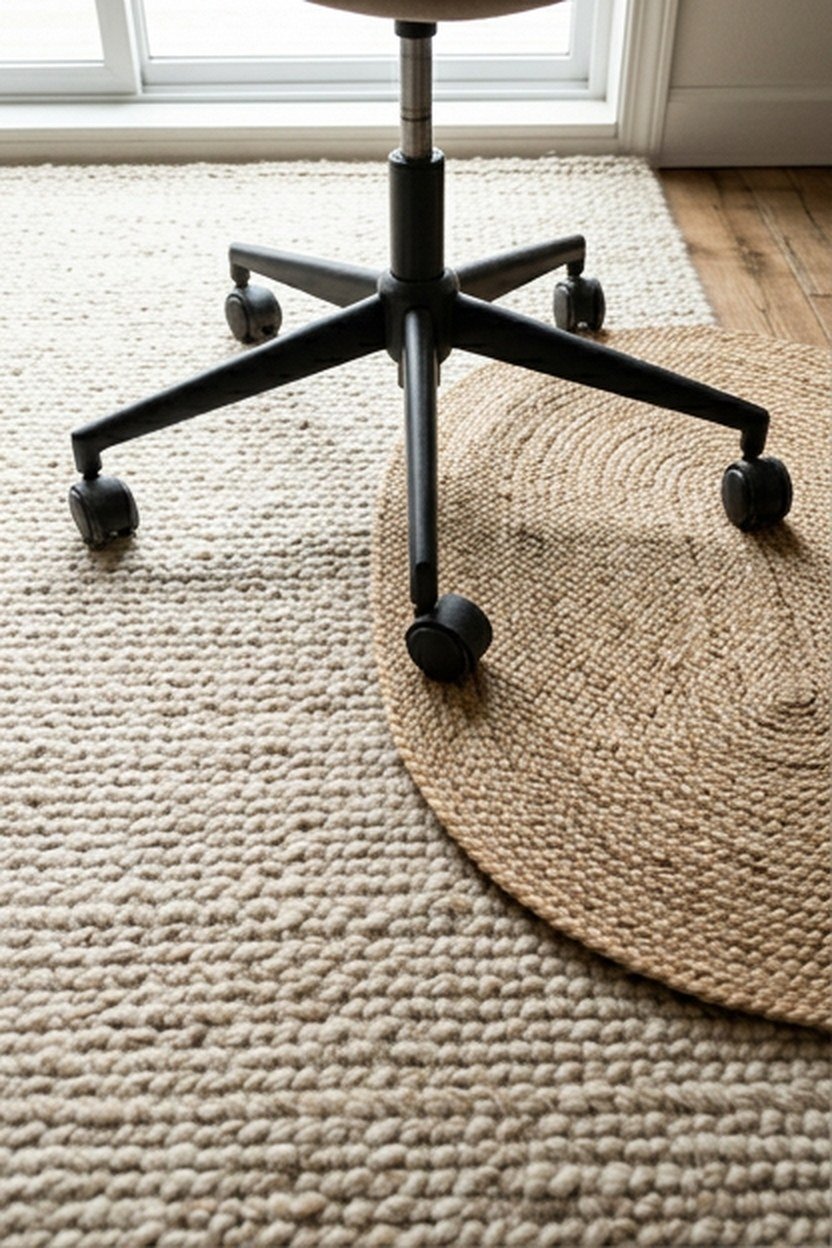
A wool area rug underfoot changes an office more than almost any other single addition, since it affects both how the room looks and how it feels to sit at your desk barefoot. Wool holds warmth in a way that a bare floor or a thin synthetic rug cannot, which matters if your office sits over an uninsulated or drafty floor. A genuine wool rug also adds visual depth that a flat printed rug lacks.
A rug in a natural, undyed wool tone or a simple geometric pattern works well in most office settings without competing with your other decor choices. Sizing the rug so it extends at least a foot beyond your desk chair’s rolling radius keeps the wheels from catching the edge repeatedly.
Wool rugs cost more upfront than synthetic alternatives, but they also last considerably longer and develop a richer texture with age rather than flattening and pilling the way cheaper materials often do. If a full wool rug is outside your current budget, a smaller wool runner placed just under your desk and chair delivers much of the same tactile benefit in a smaller, more affordable footprint. Either approach makes a real difference to how the office feels underfoot.
Layering A Second Rug For Extra Texture
Placing a smaller, differently textured rug, like a flatweave jute mat, partially over or beside a larger wool rug adds another layer of texture variation without requiring a second full-size purchase. This layered rug approach is a common styling trick that reads as intentional rather than accidental once the two textures are placed thoughtfully. It also gives you a durable, easy-to-clean surface right at your chair’s rolling path while the wool handles the surrounding warmth.
4. Linen Curtains For Soft Filtered Light
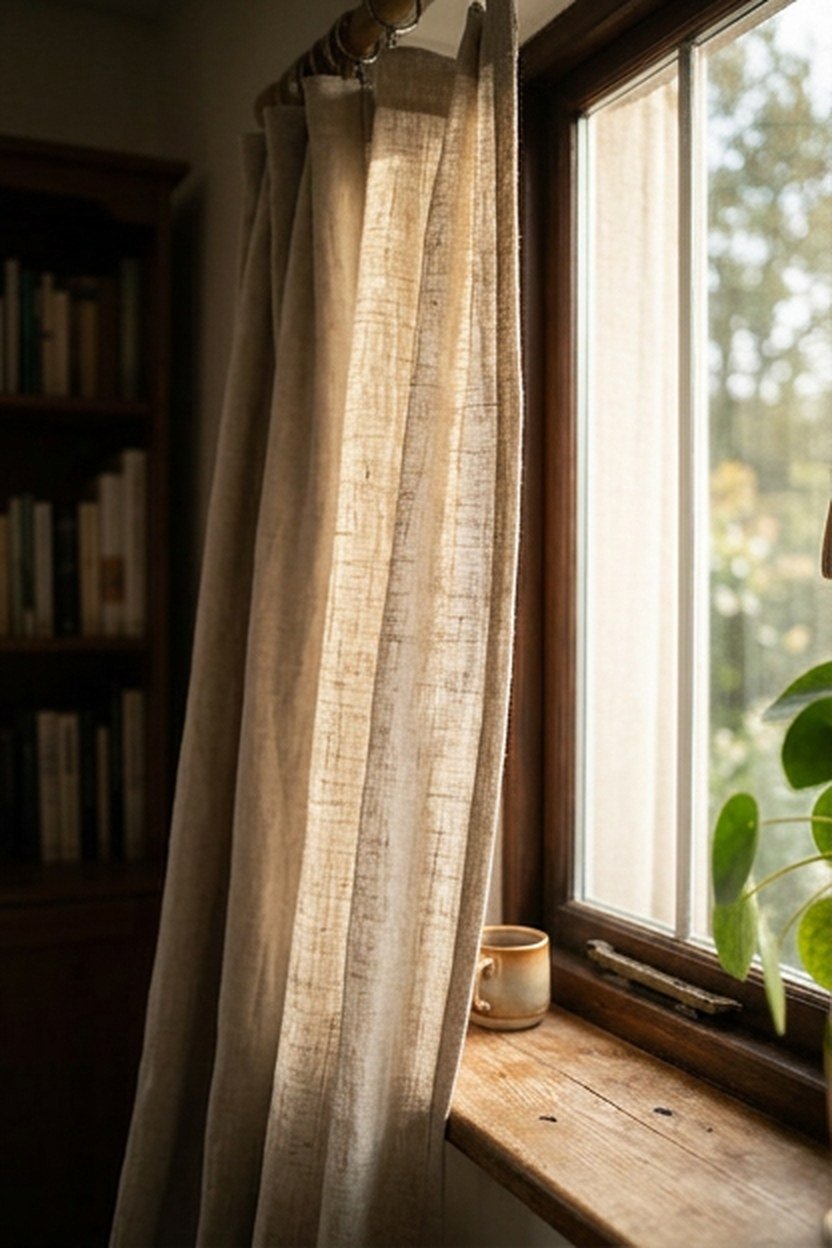
Linen curtains soften the quality of light entering an office in a way that bare windows or plastic blinds cannot replicate, filtering direct sun into something diffuse and gentle rather than harsh. The visible slub and loose weave of natural linen catches available light and creates a subtle texture on the fabric itself, adding visual interest even when the curtains are simply hanging still.
Choose an unlined linen in a natural, undyed, or soft neutral tone to maximize how much light filters through while still providing some privacy and glare reduction. A heavier lined linen works better if you need more complete light control for video calls or glare-sensitive screen work. Either weight brings real texture into a room where curtains might otherwise be an afterthought.
Linen curtains also introduce movement into an office, since the fabric shifts gently with air currents in a way that a rigid blind never will. This small kinetic quality adds a subtle sense of life to a room where you spend long stretches sitting still. It is a detail most people notice only once it is missing.
Hanging Linen Curtains For Maximum Softness
Hanging curtains from a rod mounted higher and wider than the window frame itself, rather than fitted tightly to the window’s exact dimensions, lets the linen pool and fold more generously when open. This small installation choice makes a real difference in how soft and intentional the curtains look compared to a tightly fitted panel. The extra fabric pooling at the sides reads as considered rather than budget-constrained.
5. Woven Rattan Storage Baskets
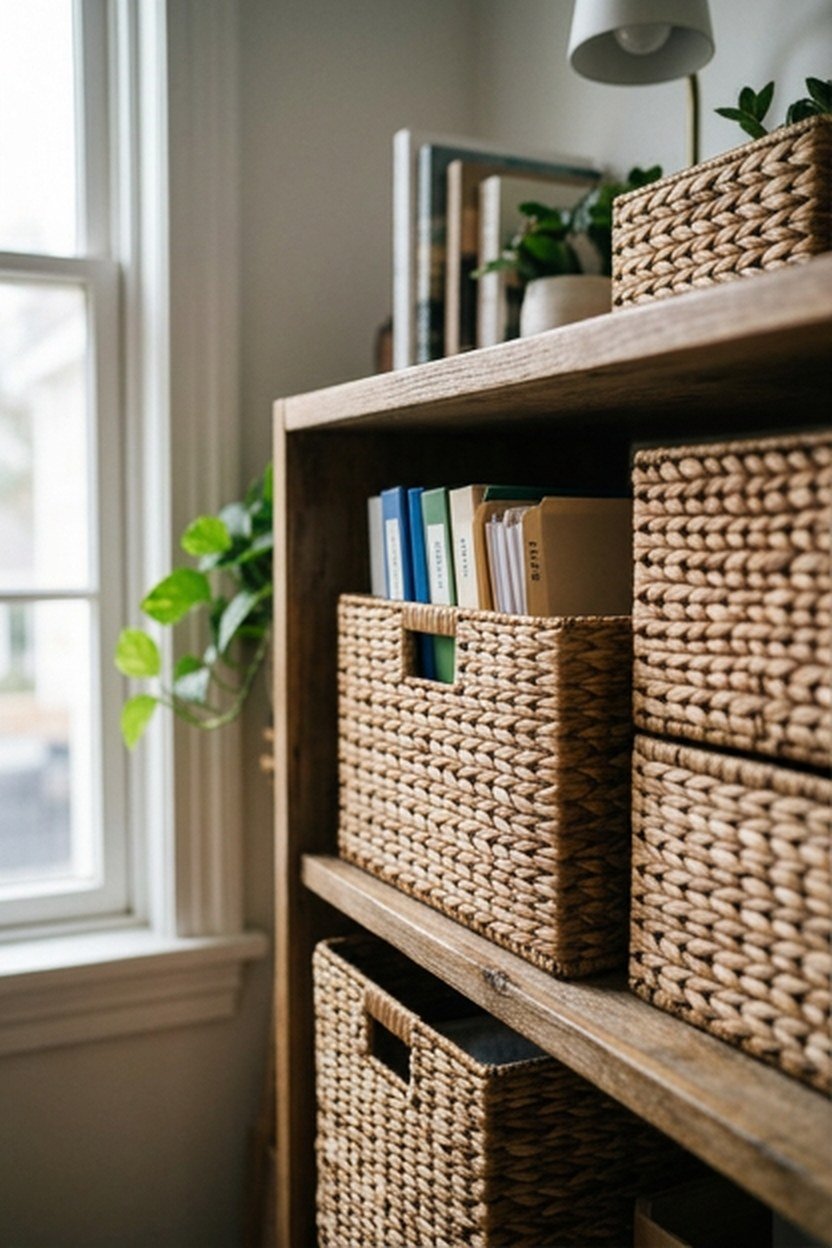
Woven rattan baskets solve a real organizational problem while adding genuine texture, which makes them one of the more functional entries on this list. Filing papers, cables, or office supplies into an open-weave rattan basket keeps clutter contained without resorting to a plastic bin that undercuts the room’s warmth. The natural fiber texture of rattan reads as intentional storage rather than a hidden mess shoved out of sight.
Rattan baskets work well stacked on open shelving, tucked under a desk, or lined up along a low bookshelf, and their relatively light weight makes them easy to move as your storage needs shift. Choosing baskets in a range of sizes lets you sort supplies by category while keeping a cohesive material palette across the whole storage system.
Because rattan is a natural material, it varies slightly from basket to basket even within the same product line, which is part of what gives it visual character compared to uniform plastic bins. This variation is a feature rather than a flaw in a hygge-inspired space, where handmade irregularity is part of the appeal. Embracing that slight inconsistency, rather than seeking perfectly matched baskets, keeps the look feeling genuine.
Lining Baskets For Small Or Loose Items
A rattan basket’s open weave works beautifully for larger items but can let small loose items like paper clips or cords slip through the gaps, so lining the interior with a simple fabric liner solves this practically. A linen or cotton liner in a neutral tone maintains the material palette while keeping smaller supplies contained. This small addition extends the basket’s usefulness without sacrificing the woven texture that makes it appealing in the first place.
6. Sheepskin Seat Cushion On A Hard Chair
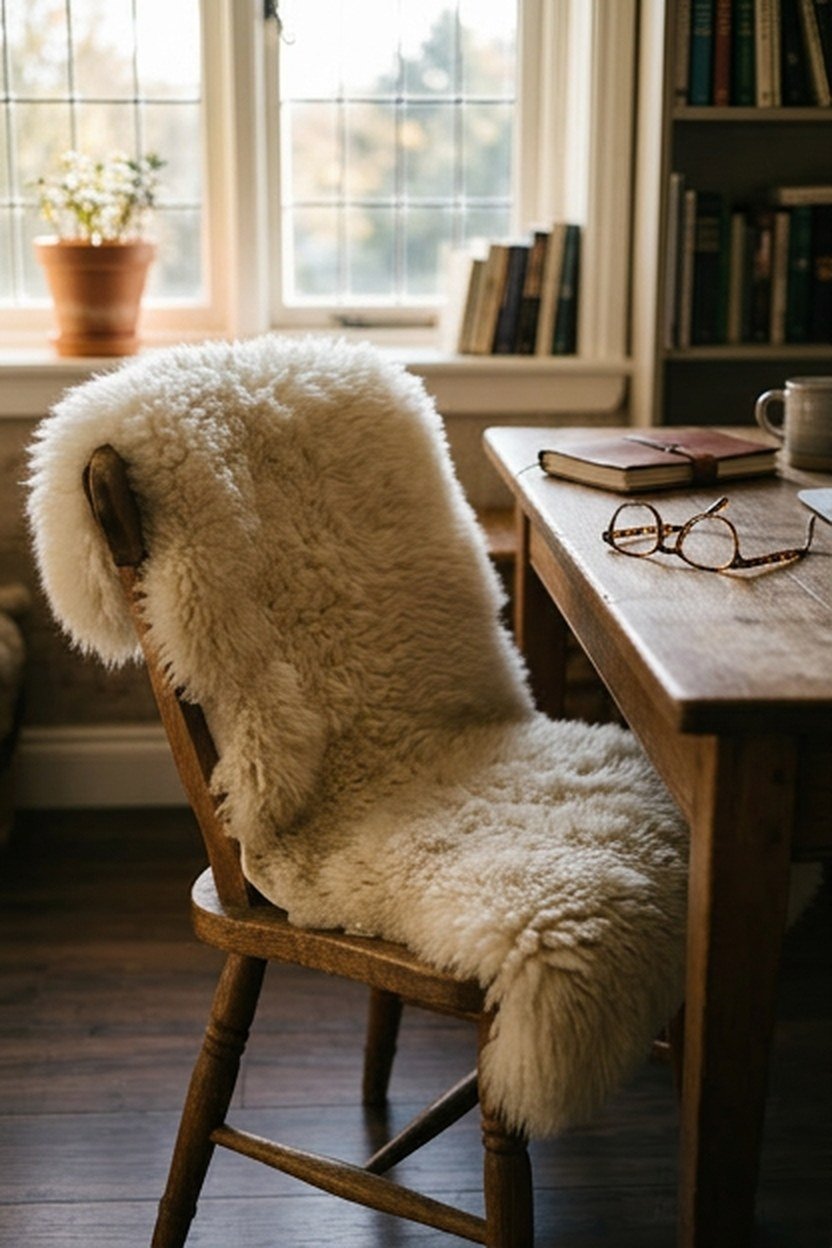
A sheepskin or faux sheepskin throw over a hard wood or metal desk chair adds instant softness exactly where your body makes the most contact with the room. This is one of the highest-impact, lowest-cost changes on this entire list, since a single sheepskin piece transforms how a chair feels within seconds of sitting down. The dense, soft pile also adds visible texture that reads as genuinely cozy rather than merely decorative.
A natural sheepskin carries real warmth and a slightly irregular, organic shape that drapes differently than a manufactured faux version, though a quality faux sheepskin delivers much of the same visual and tactile benefit at a lower price point. Either option works well draped loosely over the chair back and seat rather than fitted precisely, since the relaxed drape is part of what makes it feel inviting rather than formal.
Sheepskin requires occasional shaking out and airing to keep it fresh, particularly if your office chair sees daily use through long work sessions. A gentle brush with a wide-toothed comb keeps the pile looking full rather than matted down over time.
Choosing Between Real And Faux Sheepskin
Real sheepskin offers a denser, more substantial pile and tends to regulate temperature better across seasons, staying cool in summer and warm in winter, but it comes at a real cost premium and requires more careful cleaning. Faux sheepskin is considerably more affordable and easier to spot clean, making it the more practical choice for a first attempt at this texture or for a household with pets or allergies. Either choice delivers the core visual and tactile benefit this entry is built around.
7. Cork Board Wall For Warmth And Function
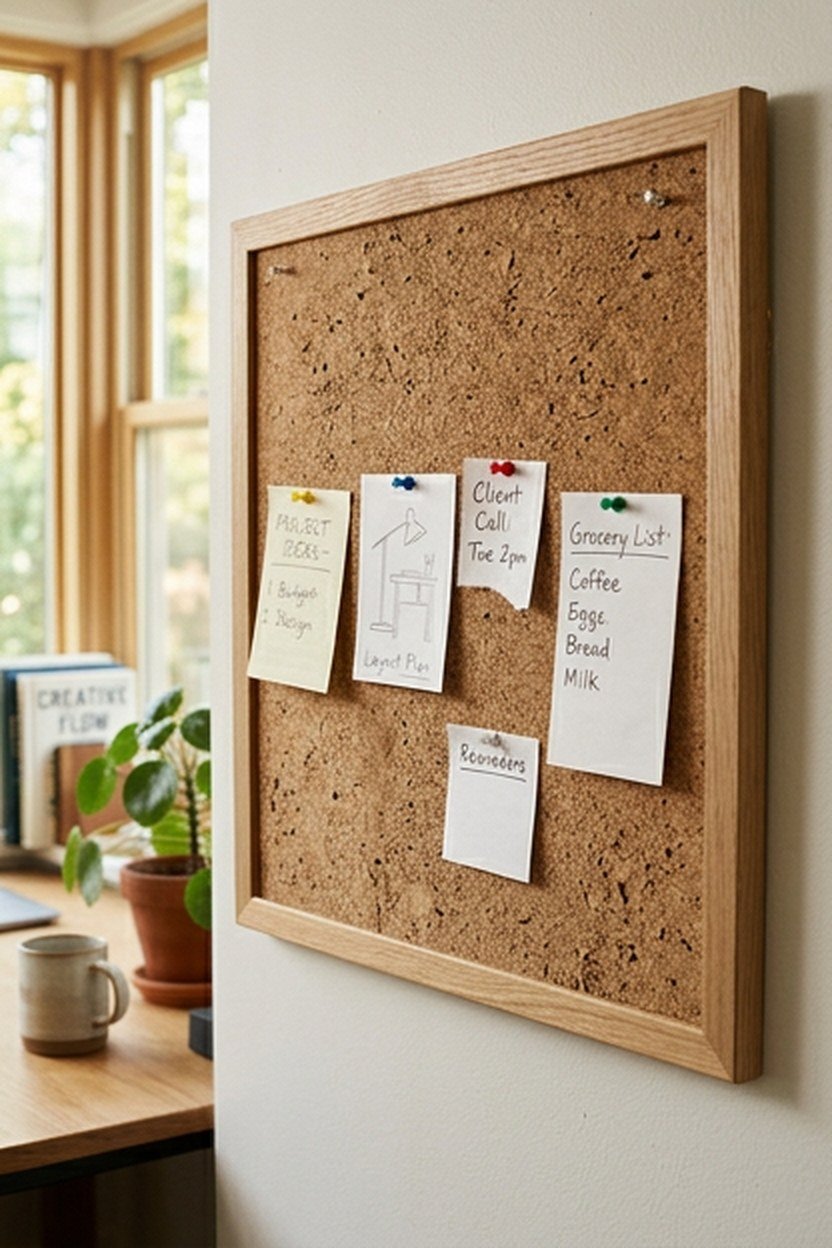
A cork board, whether a single framed piece or a full wall covered in cork tiles, brings genuine textural warmth into an office while solving the practical problem of pinning notes, photos, and reference materials. The porous, slightly rough surface of natural cork reads as organic and tactile in a way that a whiteboard or a bare painted wall never will. This dual function, warmth plus utility, makes cork one of the more practical entries on this list.
Covering a full wall in cork tiles creates a strong visual statement and gives you generous pinning space for an active project board, while a single framed cork panel works better in a smaller office where wall space is limited. Either approach benefits from staying organized rather than becoming visually chaotic, since an overloaded cork board can undercut the calm feeling hygge design is built around. Curating what stays pinned matters as much as the material choice itself.
Natural cork’s warm tan tone pairs easily with wood furniture and rattan accents, extending the same material family across multiple surfaces in the room. This consistency across cork, wood, and rattan reinforces the natural, tactile palette that defines a hygge-inspired office. A cork wall next to a wood desk reads as considered rather than accidental.
Framing A Cork Board For A More Finished Look
A simple wood frame around a cork panel, rather than leaving raw cork edges exposed, elevates the material from a purely functional bulletin board into a genuine design element. A frame in the same wood tone as your desk ties the cork board into the room’s broader material palette.
8. Ceramic Desk Accessories With A Matte Glaze
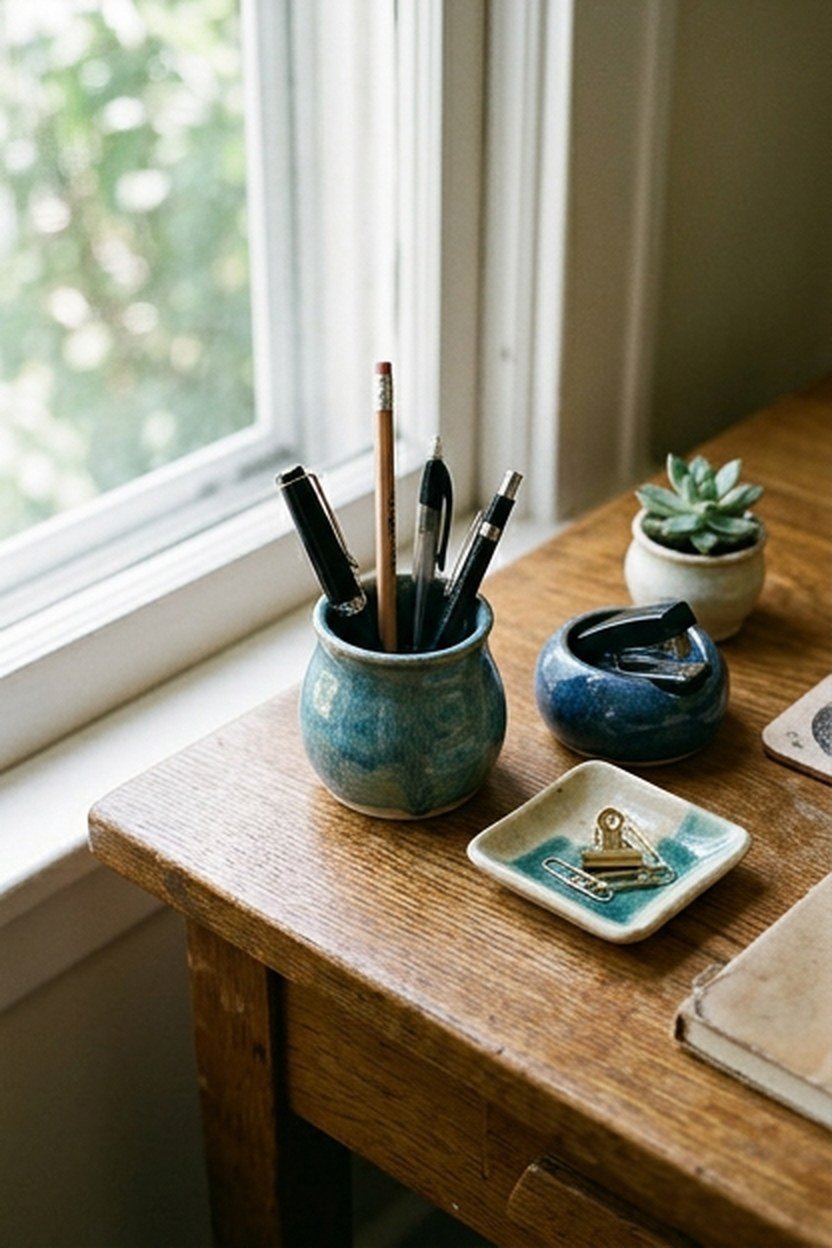
Small ceramic pieces, like a pen holder, a small dish for paper clips, or a simple vase, introduce a different kind of texture than the soft fabrics and woven materials elsewhere on this list. A matte glazed ceramic surface has a smooth, tactile quality that feels substantial and grounded next to softer textiles, adding variety to the room’s overall material mix.
Choosing ceramics in an earthy, neutral tone, like a soft cream, sage, or terracotta, keeps these small accessories cohesive with the rest of the room’s natural palette. Handmade or artisan ceramic pieces carry slight variations in glaze and shape that mass-produced plastic organizers cannot replicate, and that variation is part of what makes them feel considered rather than generic. A small grouping of two or three ceramic pieces on a desk corner reads as intentional styling rather than clutter.
Ceramic desk accessories also serve genuine organizational functions, holding pens, paper clips, or small notes in a way that feels more pleasant to interact with daily than a plastic desk organizer. This combination of function and texture is worth prioritizing over purely decorative pieces if your budget is limited. A useful object that also looks good does more work per dollar than decoration alone.
Balancing Ceramic With Softer Textures Nearby
Because ceramic reads as harder and cooler than wool, linen, or rattan, placing it near a softer texture, like a small woven mat under a ceramic vase, keeps the smooth surface from feeling isolated. This pairing trick applies across the whole office, not just ceramics. It is worth considering any time you introduce a smooth, hard material into an otherwise soft, tactile room.
9. Soft Wool Throw Pillow On A Reading Chair
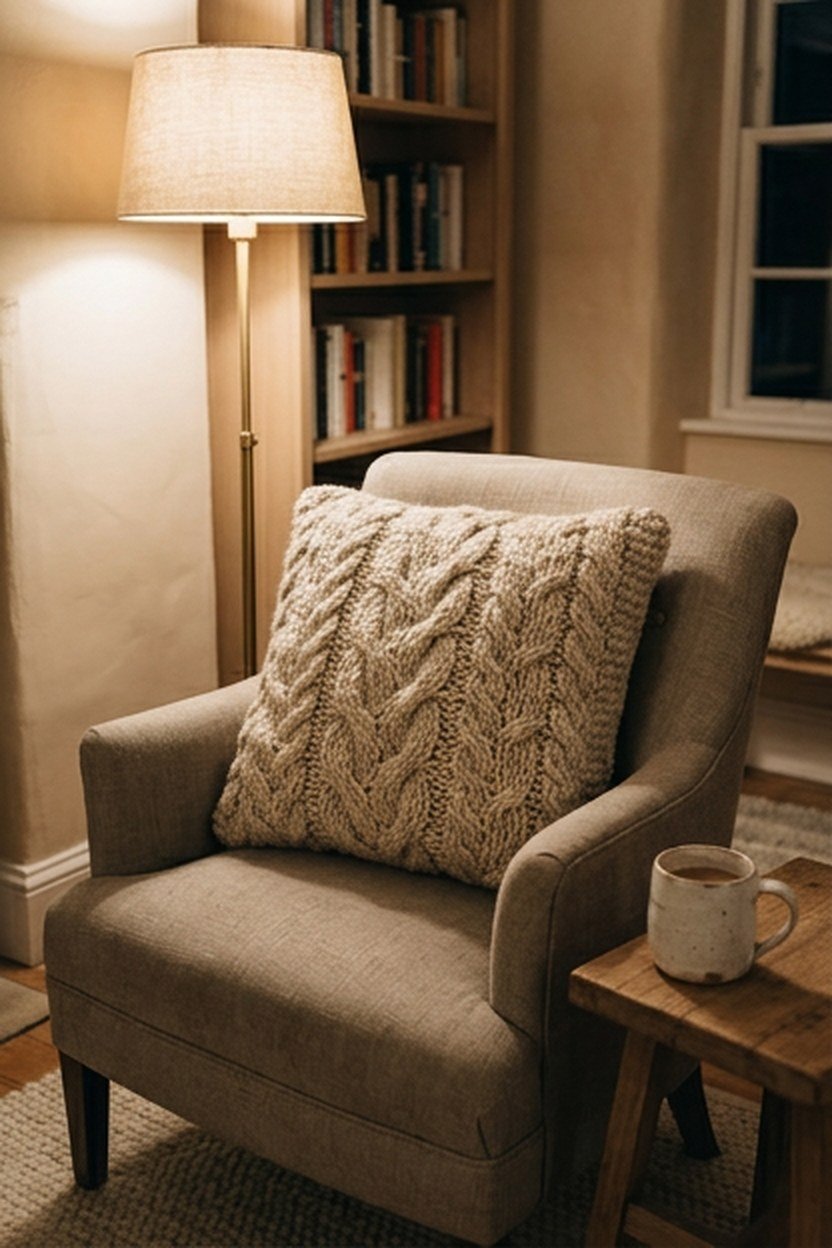
If your office includes a small reading chair or a secondary seating spot beyond the desk itself, a wool or chunky knit throw pillow there extends the hygge material palette into that corner. This secondary seating area often gets overlooked, but it is exactly the kind of spot where a soft pillow earns its place, inviting you to use the chair rather than let it collect stray papers. A single well-chosen pillow can change whether that corner feels used or forgotten.
Match the pillow’s texture family to your existing throw or rug, whether that means a similar wool knit or a complementary weave, to keep the room’s material story consistent. A neutral or earthy tone works best if the rest of the room already carries color elsewhere, while a bolder textured pillow can serve as a single accent if the palette stays quiet. Either approach benefits from restraint over piling on competing textures in one small chair.
A reading chair with a wool pillow also gives you a deliberate break spot away from the screen, which supports the broader hygge idea of building small moments of comfort into a workday rather than treating the office purely as a productivity machine. Even five minutes in a genuinely comfortable chair during a break changes the tone of a long work session.
Sizing A Throw Pillow For A Reading Chair
A slightly oversized pillow, larger than what you might choose for a sofa, tends to read as more substantial and cozy in a single accent chair, since the chair itself is usually smaller in scale than a full sofa. Proportion matters here more than people expect, and a pillow that looks right on a large sofa can look undersized and awkward on a compact reading chair. Testing the pillow in place before committing helps you judge the right scale for your specific chair.
10. Candle Or Warm Lamp Lighting Instead Of Overhead
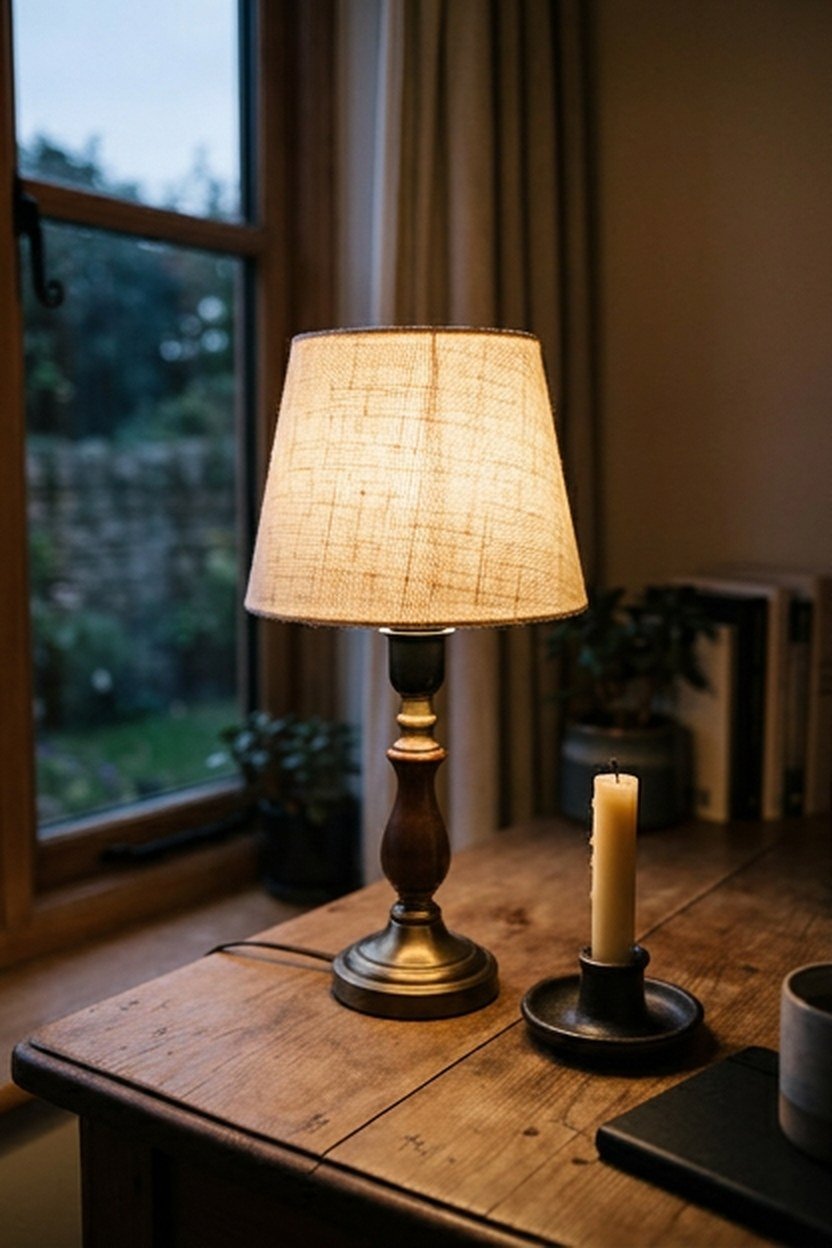
Swapping harsh overhead lighting for a warm desk lamp, and adding a candle for evening work sessions, changes the emotional temperature of an office as much as any textile choice on this list. Overhead lighting tends to be flat and clinical, while a lamp positioned at desk height creates pools of warm light and shadow that feel considerably more inviting. This single change costs relatively little and can be tested immediately with a lamp you likely already own.
Choose a lamp with a warm-toned bulb, generally labeled around 2700K on the packaging, rather than a cooler daylight bulb, since the warmer color temperature does most of the emotional work in making a room feel cozy rather than sterile. A lampshade in linen or a similarly textured fabric diffuses the light further, softening shadows and avoiding the harsh pooled light a bare bulb can create. This combination of warm bulb and textured shade is worth prioritizing over lamp style alone.
A candle, whether lit during video-call-free stretches or simply present unlit as a textural object, adds another layer of warmth and a genuine scent element that no visual choice alone can replicate. Battery-powered flameless candles offer a safer alternative if an open flame near paperwork and electronics makes you nervous, while delivering much of the same warm, flickering visual effect. Either option adds a sensory layer beyond what sight alone provides.
Layering Multiple Light Sources For Depth
Relying on a single light source, even a warm one, tends to flatten a room, while combining a desk lamp, a smaller accent light, and natural window light during the day creates the layered depth that makes a space feel genuinely considered. This layering principle is standard in professional interior lighting design and translates directly into a home office. Turning on two or three smaller lights rather than one large overhead fixture is often all it takes to notice the difference.
11. Woven Wall Hanging Behind The Desk
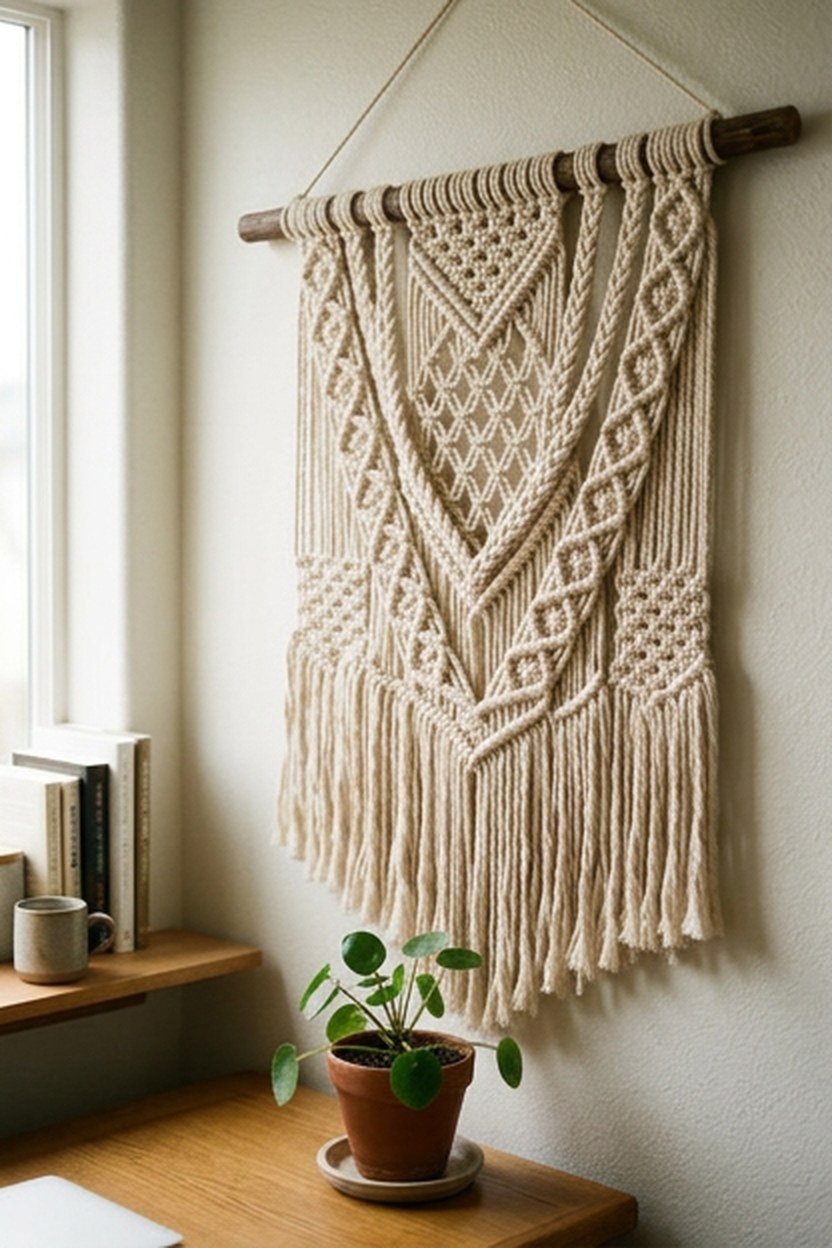
A woven wall hanging, whether a macrame piece or a flat woven tapestry, gives your video call background genuine texture instead of a bare wall or a generic framed print. The dimensional quality of a woven piece, with its visible knots, fringe, or raised pattern, catches light differently than flat wall art and adds real depth to what is often the most-seen part of your office.
Choosing a wall hanging in a neutral, natural fiber tone keeps it from competing with your face and your other background elements during calls, while still adding meaningful texture behind you. A piece sized to roughly two thirds the width of your desk tends to look proportional without overwhelming the wall. Hanging it at a height where it is fully visible on camera, rather than partially cropped, is worth testing with an actual video call before finalizing placement.
Woven wall hangings also work well layered with a smaller framed print or a shelf beside them, creating the kind of curated, gathered look that reads as considered rather than a single central focal point. This layering approach mirrors how the rest of a hygge room typically comes together, through accumulation rather than a single dramatic statement piece. Building the wall gradually over a few weeks also keeps costs manageable.
Video Call Considerations For A Textured Background
A heavily patterned or high-contrast woven piece can occasionally read as visually busy on a webcam’s compressed video feed, even when it looks great in person. Testing your specific setup with a quick call to a friend before finalizing the hanging’s placement catches this issue early. A slightly simpler, more textural piece over a dramatically patterned one usually performs better on camera.
12. Textured Linen Desk Pad

A linen or woven fabric desk pad replaces the smooth plastic or synthetic leather mat many desks default to, introducing texture at the exact surface where your hands rest for hours each day. This is a small, inexpensive change that has an outsized impact on how your immediate workspace feels, since it is the surface you interact with most directly and most often. A linen pad in a neutral tone also visually softens the hard edges of a laptop and keyboard.
Choose a desk pad with a slightly padded or felted backing rather than a completely flat weave, since the added thickness improves both the tactile feel and the sound dampening when typing. A pad sized to comfortably fit your keyboard and mouse, with a little extra room around the edges, keeps the whole main work zone consistent in material and tone. This small footprint change reframes the entire desk surface without requiring a new desk.
Because a desk pad sees constant daily contact, choosing a material that is reasonably easy to spot clean matters as much as its visual texture. A tightly woven linen blend resists staining better than a loose, open weave, while still carrying genuine textural interest.
Coordinating A Desk Pad With Your Wider Material Palette
Matching your desk pad’s tone to your curtains, throw, or rug ties the whole room together at the level of small details, reinforcing the cohesive material story you have been building throughout the rest of the office. This is a subtle move that most visitors will not consciously notice, but its absence, a jarring mismatched desk pad, is often felt even when it cannot be immediately named. Small consistent choices like this compound into a room that feels genuinely finished.
13. Layered Bookshelf With Mixed Materials
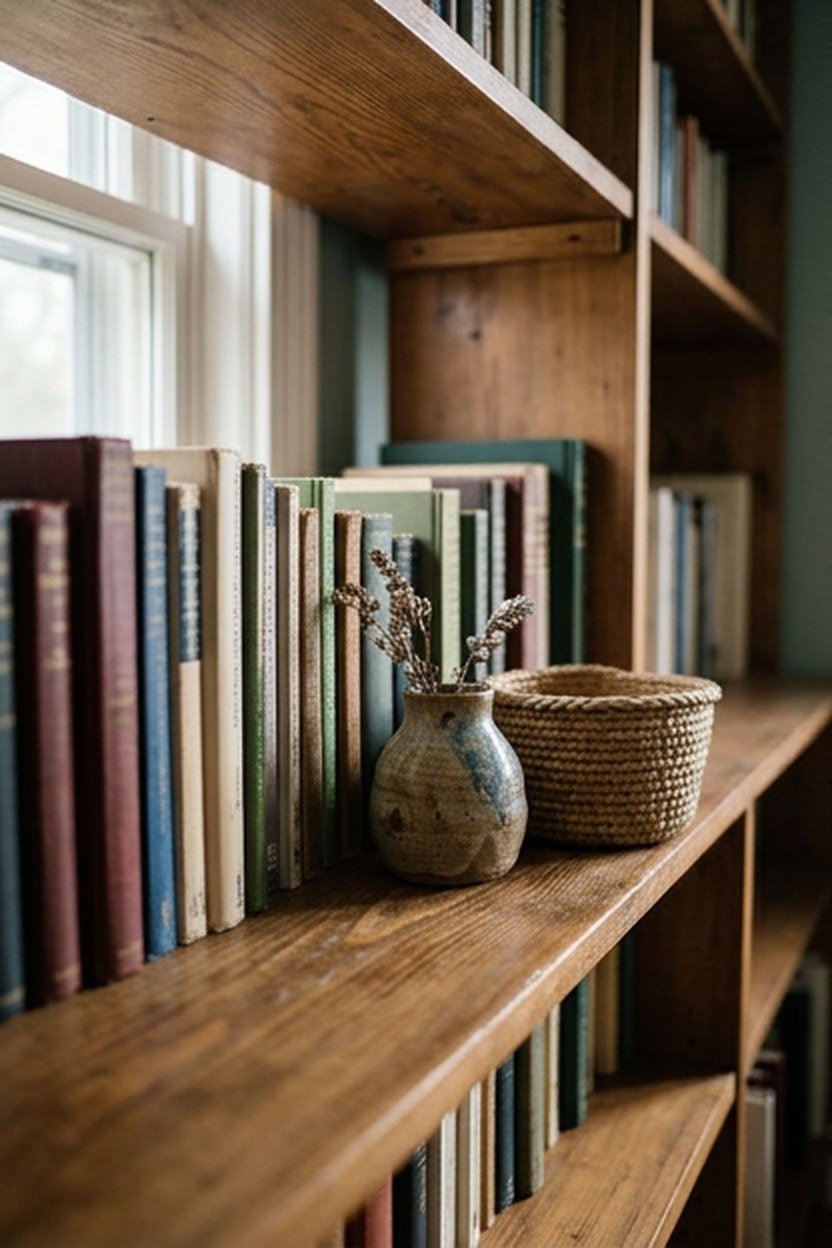
A bookshelf styled with a deliberate mix of materials, books, ceramic objects, a small woven basket, a framed print leaned rather than hung, brings texture into vertical space a flat shelf would otherwise waste. This layered approach treats the shelf as a genuine design opportunity rather than simple storage. It is one of the more rewarding projects here because it evolves gradually rather than looking finished on day one.
Group items by height and material rather than spreading everything evenly, since intentional clustering reads as more considered than a uniform row of identical-height objects. Leaving some genuine negative space between groupings keeps the shelf from feeling overstuffed, which is a common mistake once the styling process starts feeling fun. A shelf with breathing room between its groupings photographs and feels calmer than one packed edge to edge.
Rotating a few items seasonally, swapping a ceramic piece or adding a small plant, keeps a styled bookshelf feeling current without requiring a full restyle. This ongoing, low-effort maintenance is part of what separates a genuinely lived-in hygge shelf from a one-time styled photo that never changes. Treating the shelf as an evolving project rather than a finished product suits the whole hygge philosophy well.
Balancing Books With Decorative Objects
A shelf entirely full of books can start to feel visually heavy and monotonous, while a shelf with too few books and too many decorative objects can feel styled rather than genuinely used. A rough balance of roughly two thirds books to one third decorative objects, adjusted to your actual reading habits, tends to strike the right note between function and styling.
14. Potted Plant In A Woven Basket Planter
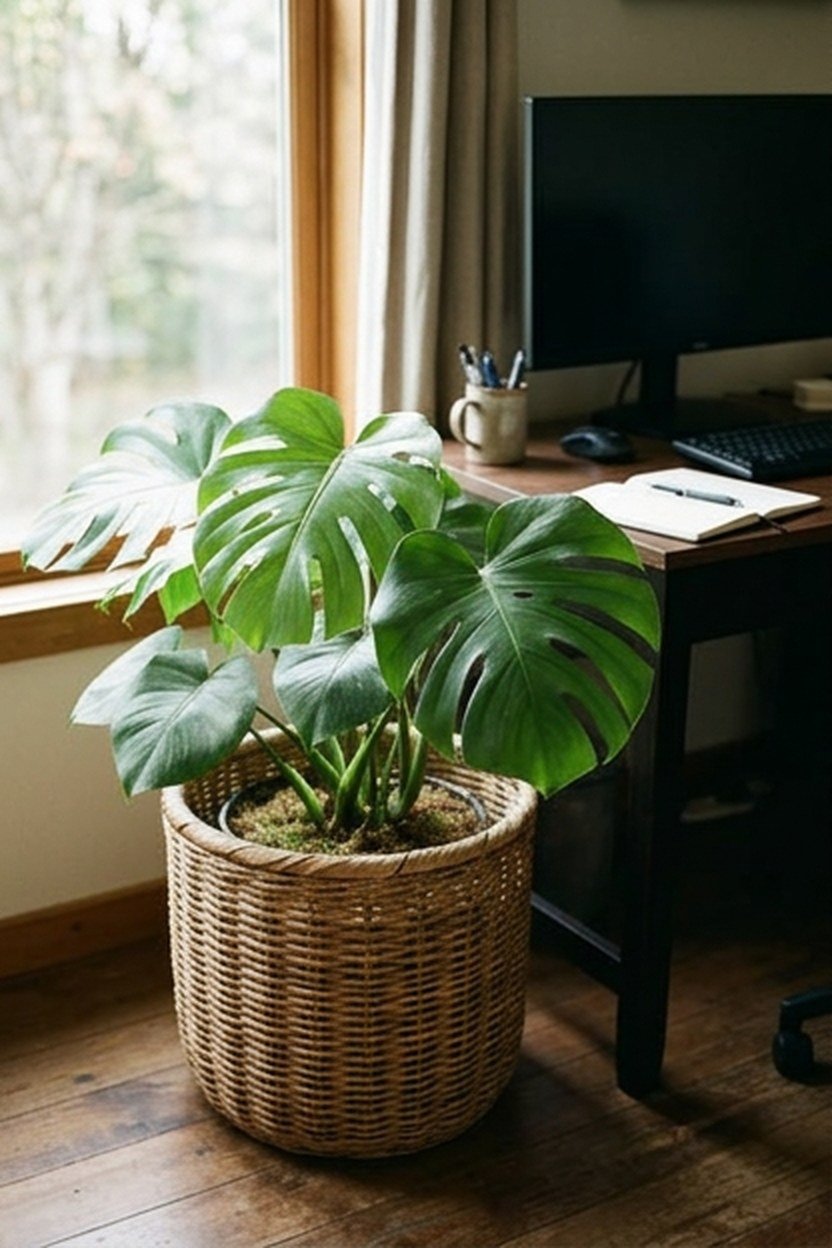
A real plant, even a low-maintenance one like a pothos or a snake plant, brings living texture into an office that no fabric or ceramic object can fully replicate. Placing that plant in a woven rattan or seagrass basket planter, rather than a plain plastic nursery pot, extends the natural material palette down to the container itself.
Choose a plant size proportional to its placement, with a smaller plant suited to a desk corner and a larger floor plant suited to an empty corner of the room that could otherwise feel bare. A woven basket planter needs a plastic liner or a nursery pot inserted inside it, since rattan itself is not waterproof and will degrade with direct water contact over time.
Living plants also do genuine functional work beyond their visual appeal, improving air quality slightly and giving your eyes a natural point of focus to rest on during long screen sessions. This functional benefit, combined with the textural appeal of both the plant and its woven container, makes this one of the more well-rounded entries on this list. A single well-placed plant often does more for a room’s feeling than several smaller decorative objects combined.
Choosing Low Maintenance Plants For An Office
An office often has less consistent attention than a living room, since work schedules and travel can interrupt watering routines, so choosing genuinely low maintenance plants matters more here than in other rooms. Pothos, snake plants, and ZZ plants all tolerate inconsistent watering and lower light conditions considerably better than more demanding options. Starting with one of these forgiving varieties sets you up for a plant that survives your actual routine rather than an idealized one.
15. Cozy Reading Nook Beside The Desk
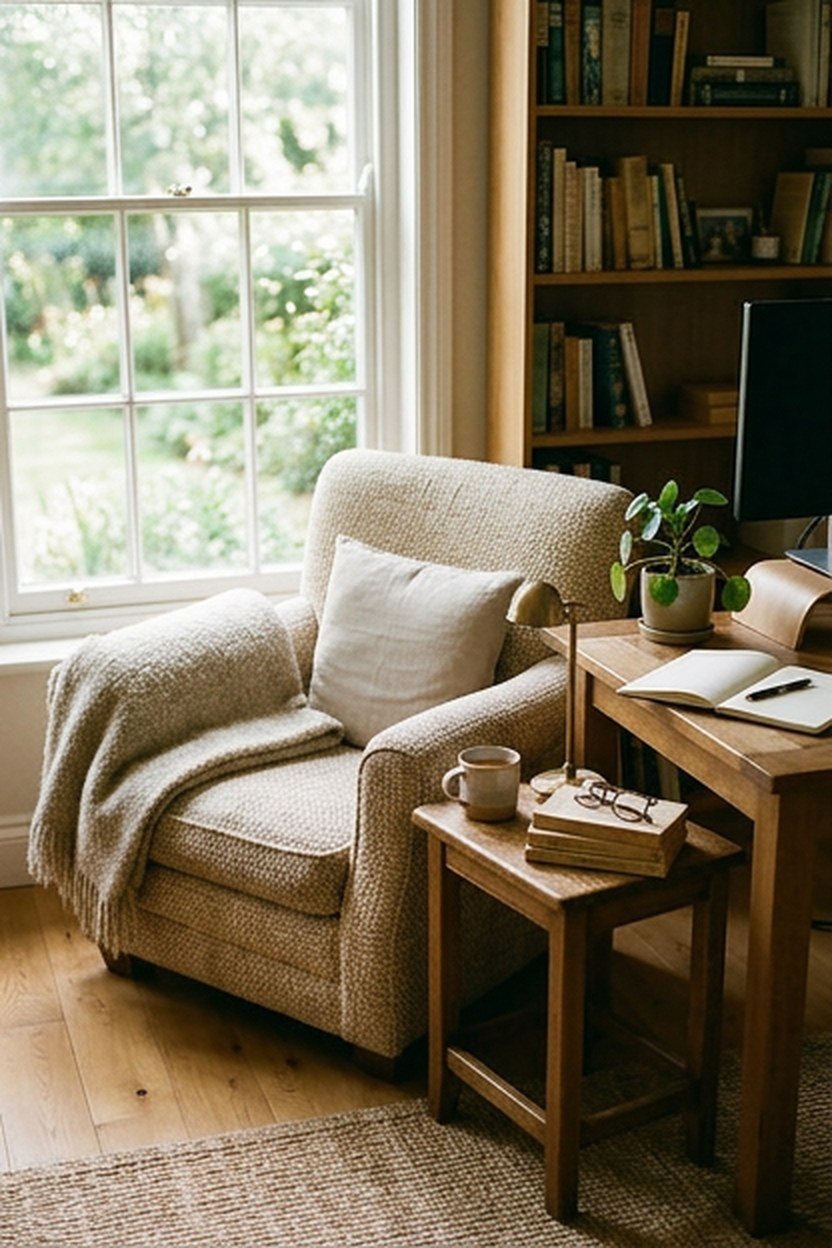
If your office has any spare square footage, carving out a small reading nook beside the main desk gives the room a second, softer function beyond pure work. A single comfortable chair, a wool throw, a small side table, and a floor lamp are enough to establish this secondary zone without requiring a large footprint.
Positioning the nook near a window, if possible, takes advantage of natural light for daytime reading while the desk handles the more task-focused work under lamp light. This zoning creates a psychological break between work mode and rest mode within the same room. Even a small physical shift, moving five feet to a different chair, can reset your focus during a long day.
Furnishing this nook is also where you can experiment with a bolder texture or pattern that might feel like too much across the whole room, since its smaller scale contains the visual impact. A patterned wool throw or a more textured accent chair fabric works well here specifically because it does not need to coordinate with every other surface in the office.
Making A Small Nook Feel Genuinely Separate From The Desk
Even without a physical wall, small cues like a different rug underfoot, a change in lighting, or simply turning the chair to face away from the desk help a reading nook feel like a distinct zone rather than an extension of the workspace. This separation matters more for the psychological break it provides than for any strict physical distance. A nook that feels genuinely different from the desk earns its keep far more than one that blends invisibly into the rest of the room.
What A Hygge Office Makeover Actually Costs
The cost of adding texture to an office ranges enormously depending on how many of the fifteen changes above you take on and whether you choose budget or higher-end versions of each material. Textiles, throws, pillows, and curtains generally cost the least while delivering some of the highest visual impact per dollar spent. Furniture-level changes, like a new desk or a full wool rug, represent a bigger investment but also a more permanent transformation.
Starting with the lowest-cost textile changes lets you test whether the hygge aesthetic genuinely suits your work habits before committing to furniture-level purchases. A throw, a few ceramic accessories, and a warm lamp bulb together cost relatively little and can be assembled in a single weekend. Save the desk, rug, and wall hanging for a second phase once you know the smaller changes are working for you.
| Change | Typical Cost Range | Impact Level |
|---|---|---|
| Warm lamp bulb swap | Under $15 | High for the cost |
| Chunky knit throw | $30 to $80 | High |
| Ceramic desk accessories | $20 to $60 | Medium |
| Sheepskin chair cover | $40 to $120 | High |
| Linen curtains | $60 to $150 | Medium |
| Wool area rug | $150 to $500 | High |
| New wood desk | $300 to $1,200+ | High, long term |
Budgeting for this project in phases, textiles first and furniture second, keeps the whole process financially manageable and lets your taste refine itself as you go. Many of the most cozy home offices are built gradually over months rather than all at once in a single shopping trip.
Common Mistakes In A Hygge Office
The most common mistake is treating hygge as a specific look to copy exactly, down to the same throw and the same lamp seen in a photo, rather than as a principle to apply to your own space and habits. A genuinely cozy office reflects what you actually use and touch, not a styled photo built for a single image. Chasing an exact replica often results in a room that looks right but does not function the way you actually work.
A second common error is overloading a small room with too many textures at once, which can tip from cozy into cluttered surprisingly quickly. Choosing two or three core materials and repeating them with intention, rather than adding one of everything, keeps a small office feeling calm rather than chaotic. Restraint is a genuine design skill here, not a compromise.
The third mistake is neglecting lighting in favor of textiles, since even the coziest wool rug and linen curtain cannot compensate for harsh overhead lighting left unchanged. Lighting affects the emotional temperature of a room more than almost any single textile choice, so it deserves equal priority rather than being treated as an afterthought. A warm lamp paired with a plain office is often cozier than a texture-rich room lit by a single harsh overhead fixture.
Recovering From An Overdone First Attempt
If your first pass at adding texture feels cluttered rather than cozy, the fix is usually subtraction rather than further addition. Removing one or two competing elements and leaving more breathing room between the remaining pieces often solves the problem faster than trying to rebalance everything at once. A slightly sparser room that still breathes is almost always cozier than one crammed with every idea on this list simultaneously.
Conclusion
A hygge home office comes together through layered, tactile materials rather than any single dramatic purchase, which makes it one of the more forgiving design approaches to attempt gradually. Wool, linen, wood, rattan, and ceramic each bring a distinct texture to the room, and even a handful of these changes noticeably shifts how the space feels to work in. Start with whichever surface you touch most during the day, since that contact point delivers the most immediate impact for the least cost.
The fifteen approaches in this guide range from a five-minute lamp bulb swap to a full furniture investment, giving you a realistic path regardless of your current budget or timeline. Whichever changes you choose first, prioritize the materials and lighting over decoration for its own sake, since function and texture together are what genuinely define a hygge space. Give the changes time to accumulate, and the office you end up with will feel considered rather than assembled in a single afternoon.
Frequently Asked Questions
What is the fastest way to make a home office feel more hygge? Swapping your overhead light for a warm desk lamp and adding a chunky knit throw over your chair are the two fastest, cheapest changes with the most noticeable impact.
Do I need to buy all new furniture to achieve a hygge office look? No, layering textiles like throws, rugs, and curtains over your existing furniture delivers most of the visual and tactile impact without replacing anything structural.
Is hygge design expensive to achieve? It can be done affordably by starting with textiles and lighting first, since a lamp bulb, a throw, and a few ceramic accessories together cost relatively little.
What colors work best in a hygge office? Neutral, earthy tones like cream, oatmeal, sage, and soft terracotta support the texture-focused approach better than bold or saturated colors that compete for attention.
Can a hygge office still look professional for video calls? Yes, choosing a simpler woven wall hanging or a tidy styled bookshelf behind your desk reads as considered and professional rather than cluttered on camera.
How do I keep a small office from feeling cluttered with all this texture? Limit yourself to two or three core materials repeated intentionally throughout the room rather than introducing a new texture in every corner.
Do real plants matter for a hygge office, or is a faux plant enough? A real, low-maintenance plant like a pothos or snake plant adds a living quality and slight air quality benefit that a faux plant cannot replicate, though a quality faux option still works visually.