
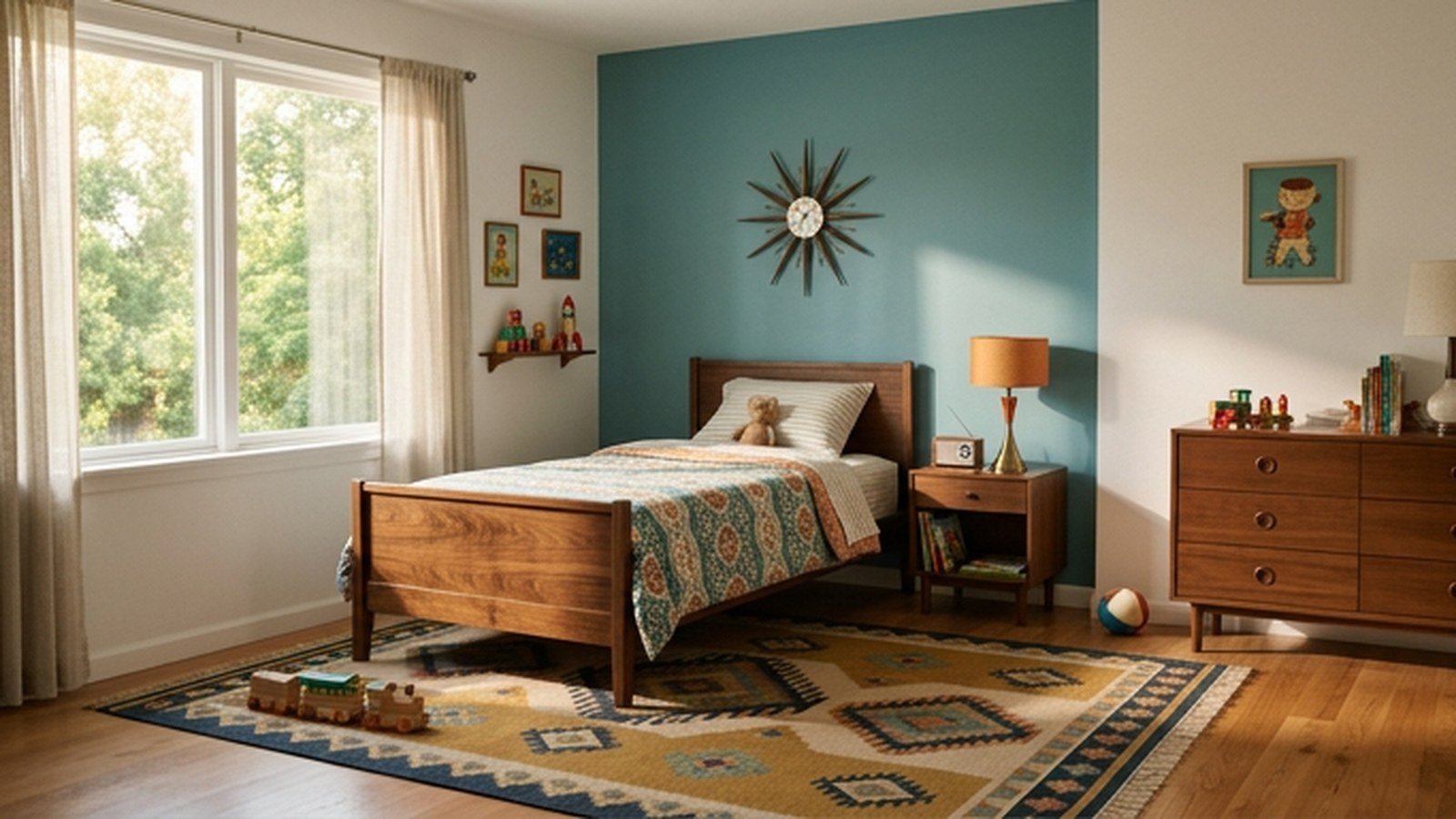
Mid century designs for a modern kids bedroom bring the era’s warm wood tones, organic shapes, and functional furniture into a room that still needs to serve a child’s genuine practical needs, storage, play space, and durability. This style works particularly well for kids’ rooms because its clean lines and playful geometric patterns translate naturally into a space that feels both sophisticated and genuinely kid-friendly. Fifteen concepts below cover the furniture, colors, and layout choices that build this look without sacrificing function.
I designed my own daughter’s room around this style because I wanted furniture that would grow with her rather than needing replacement every few years, and mid century pieces, built with genuine durability, delivered exactly that. A well-chosen mid century dresser or bookshelf looks just as appropriate in a teenager’s room as it did in a toddler’s room, unlike more juvenile furniture styles that age out quickly.
Below you will find fifteen numbered concepts covering furniture, color, storage, and layout, plus a cost comparison table and a rundown of the mistakes that make a mid century kids room feel either too adult or too juvenile. Each idea includes a sub-angle on cost, durability, or what commonly goes wrong so you can build the room with a realistic budget. By the end you should know exactly which pieces earn their place and which trends are safe to skip.
Why Mid Century Design Works So Well For A Kids Bedroom
Mid century design succeeds in a kids bedroom because its core principles, functional furniture, durable natural materials, and playful but restrained pattern use, align naturally with what a genuinely practical children’s room actually needs. This alignment means the style requires less compromise between aesthetic and function than many other design approaches might in this specific room type. Most designers consider this style one of the more naturally kid-appropriate aesthetics available today.
The style’s emphasis on organic, rounded shapes, rather than sharp corners or overly ornate detailing, also happens to align with genuine child safety considerations, since rounded furniture edges reduce injury risk during active play. This safety alignment is a practical bonus beyond the style’s purely aesthetic appeal. Understanding this dual benefit helps justify choosing this style specifically for a child’s room rather than purely for its visual appeal.
| Design Element | Typical Juvenile Style | Mid Century Approach |
|---|---|---|
| Furniture longevity | Ages out quickly | Grows with the child |
| Color palette | Often bright, saturated | Warm, muted tones |
| Shape language | Varies widely | Consistently organic, rounded |
A complete mid century kids bedroom, covering furniture, textiles, and decor, typically costs $1,500 to $5,000 depending on how many pieces are purchased new versus sourced secondhand. This range reflects the fact that authentic mid century furniture, whether vintage or reproduction, generally costs more upfront than mass-market juvenile furniture but delivers considerably more longevity. Understanding this helps set realistic budget expectations before shopping begins.
Planning Your Mid Century Kids Room For Long-Term Use
Planning starts with choosing furniture pieces genuinely built to last through multiple childhood stages, rather than pieces marketed specifically for a narrow age range that the child will quickly outgrow. Most experienced designers recommend prioritizing a quality dresser, bed frame, and bookshelf that can transition from a toddler’s room into a teenager’s room with only textile and decor updates. This longevity-focused planning is worth prioritizing above trend-driven purchases that age out quickly.
Balancing genuine child-friendly elements, soft textiles, playful patterns, and durable, easy-to-clean surfaces, against the style’s more restrained, adult-oriented aesthetic tendencies requires thoughtful curation throughout the planning process. Most successful mid century kids rooms achieve this balance by keeping large furniture pieces true to the style’s clean lines while introducing playfulness through smaller, easily updated textiles and decor.
The biggest planning mistake is choosing furniture with sharp corners or fragile finishes purely because they photograph well in a mid century aesthetic, without considering genuine safety and durability needs for active child use. Prioritizing rounded edges and durable finishes, even if this means choosing a slightly less photogenic piece, protects both the child’s safety and the furniture’s long-term condition.
Choosing Furniture That Grows With Your Child
Selecting a bed frame with a low, simple mid century profile that works for a toddler bed conversion and later a full-size bed frame avoids needing a completely new bed purchase every few years as the child grows. Many mid century-style bed frames are designed with this kind of flexibility in mind, unlike more juvenile bed designs built around a single character theme.
Choosing a dresser and bookshelf in a genuinely timeless mid century profile, rather than one with juvenile decorative elements, ensures these storage pieces remain appropriate and useful well into the child’s teenage years without needing replacement. This timeless quality is one of the most practical arguments for this specific design style in a child’s room. Prioritizing this longevity over trendy juvenile decoration is worth the potentially higher upfront furniture cost.
1. Walnut Wood Bed Frame With A Low Profile
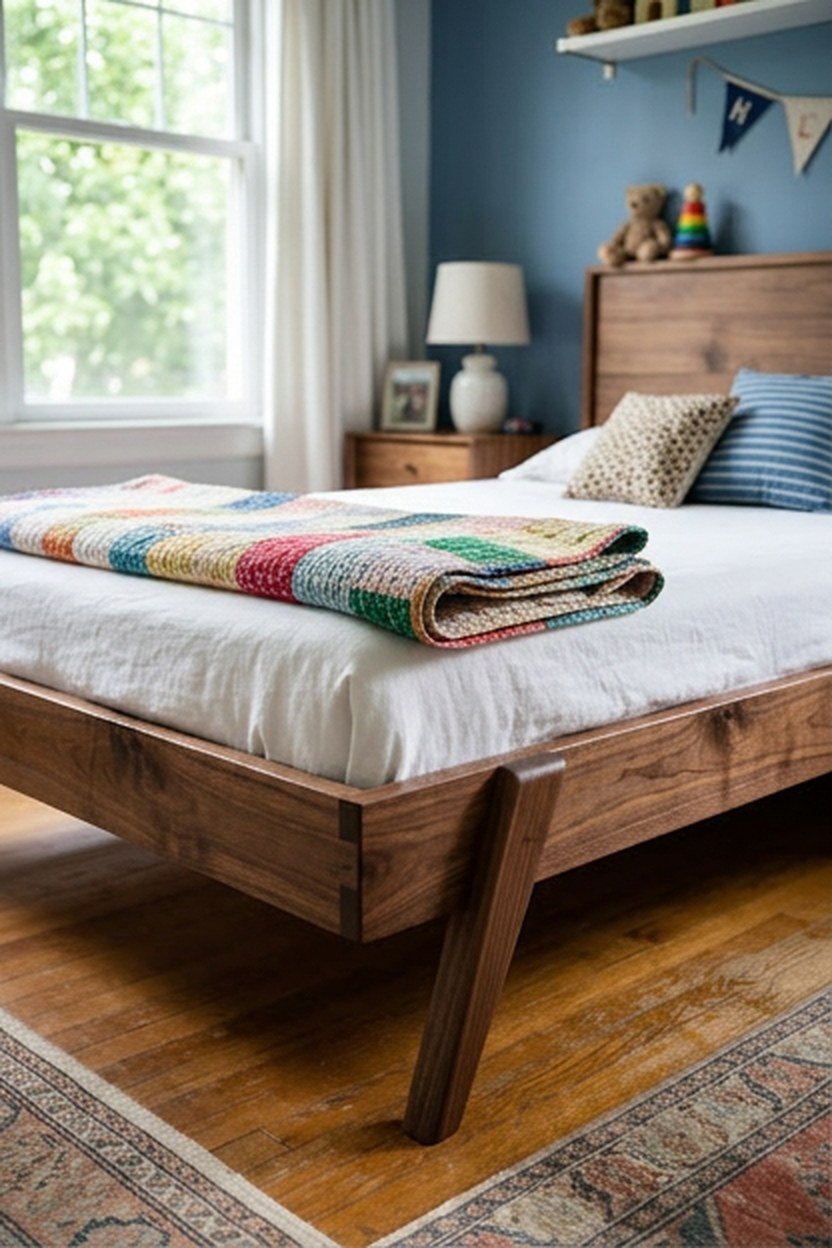
A walnut wood bed frame with a low, simple profile anchors the room in the mid century aesthetic while providing a genuinely safe, low-to-ground sleeping surface well suited to younger children transitioning from a crib. This bed style typically features clean, tapered legs and minimal ornamentation, characteristics that define the mid century furniture aesthetic throughout this entire style.
Choosing a bed frame with rounded corners and edges, rather than the sharp angular profile some mid century pieces feature, prioritizes genuine child safety without sacrificing the style’s core aesthetic character. Most furniture makers offer rounded-edge variations specifically because this safety consideration matters so much for furniture intended for a child’s room. This safety-conscious variation is worth seeking out specifically when shopping for this piece.
Selecting a bed frame sized to accommodate a full-size mattress from the start, rather than a toddler-specific frame requiring replacement within a few years, extends the piece’s usable lifespan considerably. This sizing consideration, paired with appropriate bed rails for younger children during the transition period, allows the same frame to serve the child from early childhood through the teenage years. This long-term sizing approach is worth the modest additional upfront cost.
Cost And Safety Guidance
A walnut wood bed frame with a low mid century profile typically costs $400 to $1,200 depending on size and whether the piece is new or vintage. Choosing bed rails specifically designed for a low-profile frame, rather than universal rails that may not fit properly, ensures a secure fit during the years a younger child needs this additional safety feature. This proper-fit consideration is worth confirming before purchasing bed rails separately from the frame itself.
A common mistake is choosing a bed frame with sharp, angular corners purely for its striking mid century silhouette without considering the genuine injury risk this poses for an active child. Prioritizing a rounded-edge variation, even if slightly less dramatic in profile, avoids this preventable safety concern.
2. Geometric Patterned Area Rug In Muted Tones
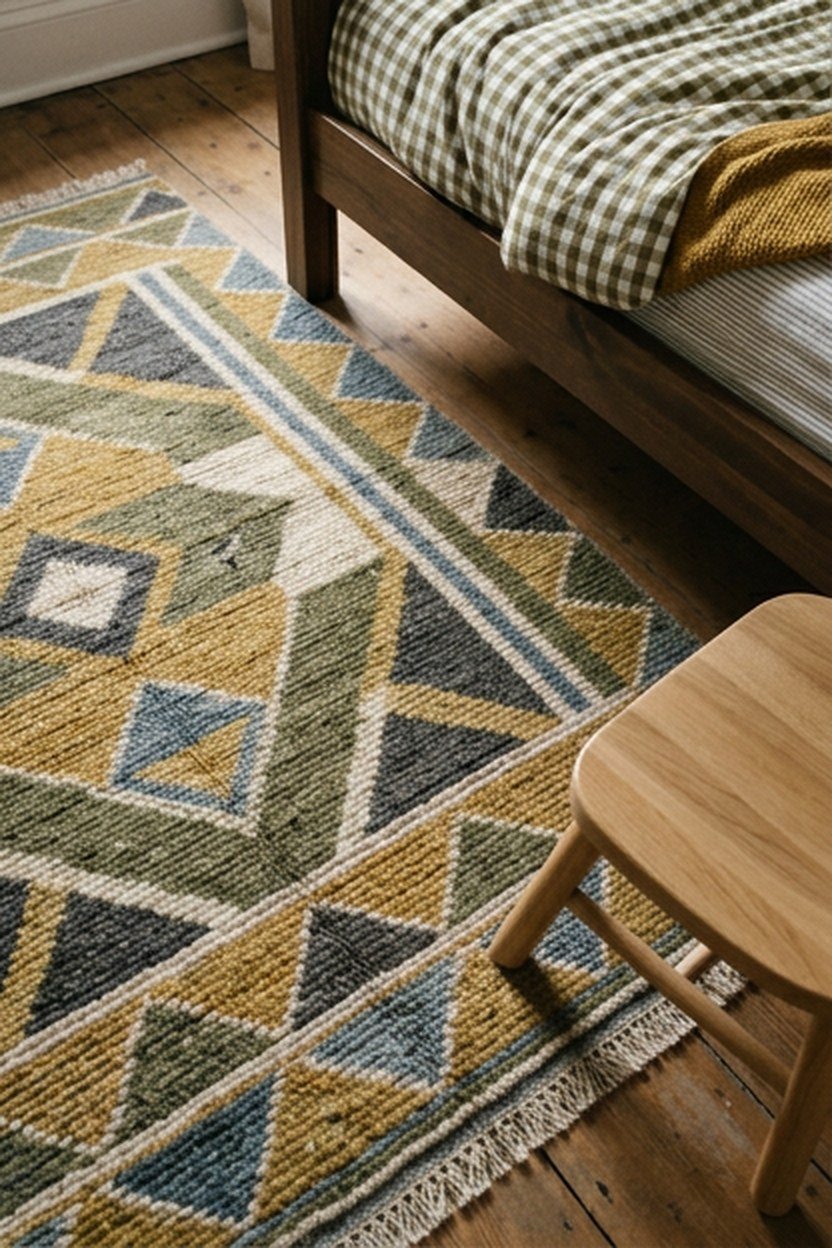
A geometric patterned area rug, in muted mustard, burnt orange, or olive tones characteristic of the mid century palette, introduces playful pattern at floor level without overwhelming the room with bright, juvenile colors. This rug choice grounds the room’s overall aesthetic while providing a soft, comfortable play surface for a child spending considerable time on the floor.
Choosing a rug in a durable, stain-resistant material, given how much floor-level activity a child’s room typically sees, balances the aesthetic choice against genuine practical durability needs. Wool or a wool-blend construction generally offers better durability and stain resistance than a lower-quality synthetic alternative.
Sizing the rug appropriately for the room’s actual floor space, large enough to define a play area or the space beneath the bed, rather than an undersized rug that reads as an afterthought, creates a more intentional, finished look. This sizing consideration applies to any room but is worth confirming specifically for a child’s room where floor-level activity happens so frequently. Measuring the intended space before ordering avoids a disappointing undersized fit.
Cost And Durability Guidance
A geometric patterned area rug suited for a kids room typically costs $80 to $300 depending on size and material quality. Choosing a rug with a low pile height, rather than a plush, high-pile option, simplifies cleaning considerably given the spills and messes a child’s room regularly experiences.
A common mistake is choosing a rug in a delicate, dry-clean-only material unsuited to a child’s room’s regular spills and general wear. Choosing a machine-washable or at minimum spot-cleanable rug material avoids the frustration and cost of professional cleaning for a rug in such active daily use.
3. Molded Plywood Chair For A Reading Corner
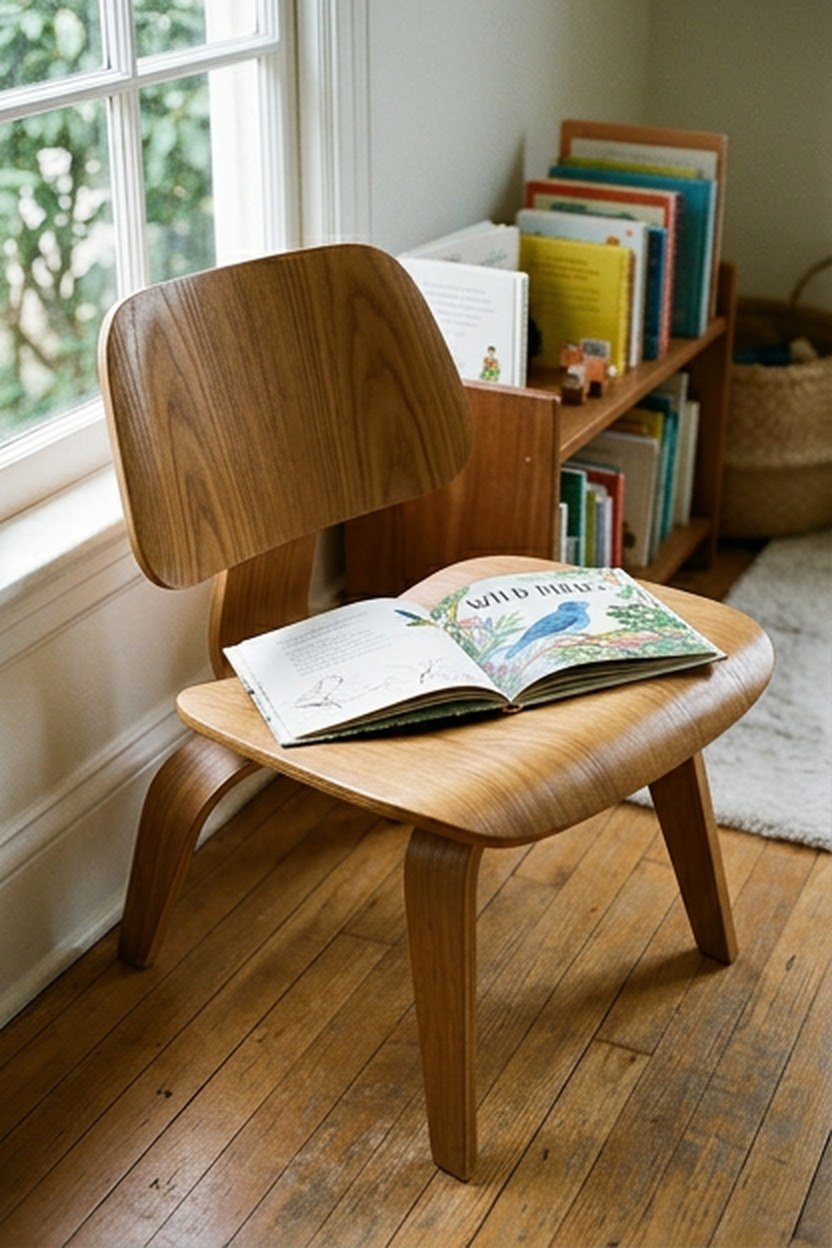
A molded plywood chair, scaled appropriately for a child’s size, brings one of mid century design’s most iconic furniture forms into a dedicated reading corner within the bedroom. This chair style’s curved, ergonomic seat shell provides genuine comfort while its lightweight construction makes it easy for a child to move and reposition independently.
Choosing a chair specifically sized for a child, rather than a full-size adult chair that might prove uncomfortable or unwieldy for a smaller body, ensures the piece genuinely gets used rather than remaining an oversized decorative object. Several furniture makers now offer child-sized versions of classic mid century chair designs specifically for this reason.
Positioning this chair near a window or reading lamp creates a genuine dedicated reading nook within the larger bedroom, giving the child a specific, comfortable spot for independent reading time. This placement consideration extends the chair’s function beyond simply occupying floor space decoratively.
Cost And Sizing Guidance
A child-sized molded plywood chair typically costs $80 to $250 depending on the manufacturer and whether the piece is new or a vintage find. Testing the chair’s actual seat height and depth against your specific child’s current size, rather than assuming a generic “kids size” label fits appropriately, avoids purchasing a chair that proves uncomfortable in practice.
A common mistake is purchasing a full-size adult molded plywood chair for a young child’s room, resulting in a piece that looks appropriately styled but proves impractical for the child to actually use independently. Choosing a properly child-scaled version, even if slightly more expensive than sourcing an adult chair secondhand, ensures the piece serves genuine daily function.
4. Teak Or Walnut Dresser With Tapered Legs
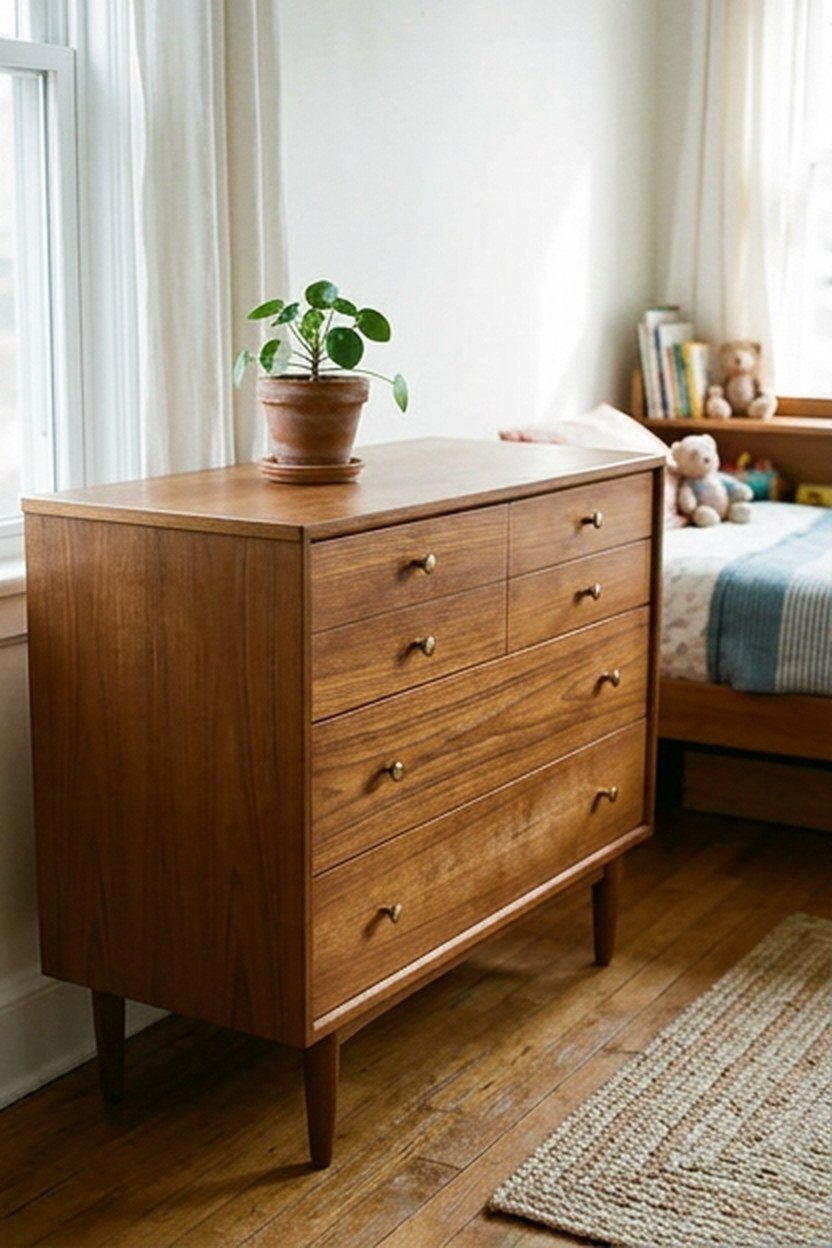
A teak or walnut dresser with characteristic tapered mid century legs provides genuine clothing storage while anchoring the room’s furniture in the style’s signature warm wood tones and clean silhouette. This piece, more than almost any other in the room, benefits from the style’s inherent durability and timeless design, since dressers typically see decades of use across multiple childhood stages. This furniture investment often represents one of the room’s more significant but longest-lasting purchases.
Choosing a dresser with rounded drawer pulls or simple recessed pulls, rather than sharp or protruding hardware, prioritizes safety for a young child who will interact with this furniture piece daily and independently. This hardware safety consideration is worth checking specifically when evaluating dresser options for a younger child’s room. Most quality mid century-style dressers offer hardware options specifically suited to this safety priority.
Selecting a dresser height appropriate for the child to reach and use independently, rather than a taller adult-oriented piece, encourages genuine self-sufficiency in getting dressed and putting away clothing from an early age. This height consideration is worth weighing against the aesthetic appeal of a taller, more dramatic dresser silhouette that might not serve the child’s actual daily use as effectively.
Cost And Hardware Guidance
A teak or walnut dresser with a mid century profile typically costs $300 to $1,000 depending on size, wood quality, and whether the piece is new or vintage. Choosing vintage or secondhand pieces, refinished if needed, often provides genuine cost savings compared to new reproduction furniture while still delivering authentic mid century character.
A common mistake is choosing decorative hardware purely for its striking mid century aesthetic without considering how a young child will actually interact with drawer pulls during daily independent use. Testing hardware for ease of grip and pull, ideally with the actual child if age-appropriate, confirms the piece serves genuine daily function beyond its visual appeal.
5. Starburst Or Sunburst Wall Clock
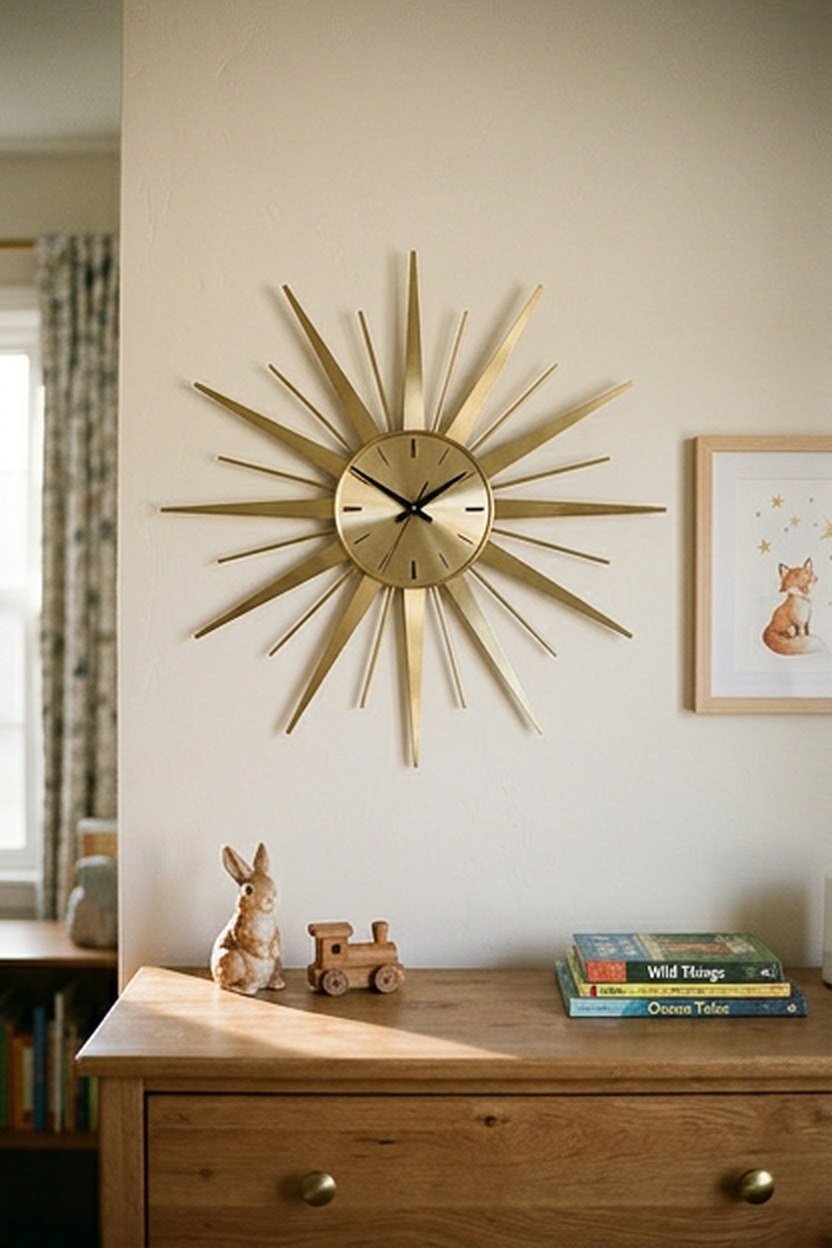
A starburst or sunburst wall clock, a quintessential mid century decorative motif, introduces a striking focal point that doubles as a practical tool for teaching a child to tell time as they grow. This decorative choice brings genuine mid century character to the room’s walls at a relatively modest cost compared to larger furniture investments.
Choosing a clock with a simple, easy-to-read face, particularly for a younger child just learning to tell time, balances the decorative starburst frame against genuine educational function. Positioning the clock at a height and location where the child can easily view it from their bed or play area maximizes both its decorative and functional value.
Selecting a clock in a warm wood tone or muted metallic finish, rather than a bright, overtly juvenile color scheme, keeps the piece consistent with the room’s broader restrained, sophisticated mid century palette. This finish consideration matters for maintaining the overall aesthetic cohesion this style depends on throughout every decor choice. Most mid century-style clock options naturally lean toward this appropriate finish palette.
Cost And Placement Guidance
A starburst or sunburst wall clock suited for this application typically costs $30 to $100 depending on size and material quality. Positioning the clock at a height visible from the child’s bed, typically requiring a slightly lower placement than a standard adult-height installation, maximizes its practical function for a younger child.
A common mistake is choosing a clock face too complex or cluttered with unnecessary detail for a young child actually learning to tell time, undermining the piece’s educational function despite its decorative appeal. Choosing a clean, simple clock face with clear numbers, even within the starburst frame’s more elaborate silhouette, balances both goals effectively.
6. Organic Curved Bookshelf For Display And Storage
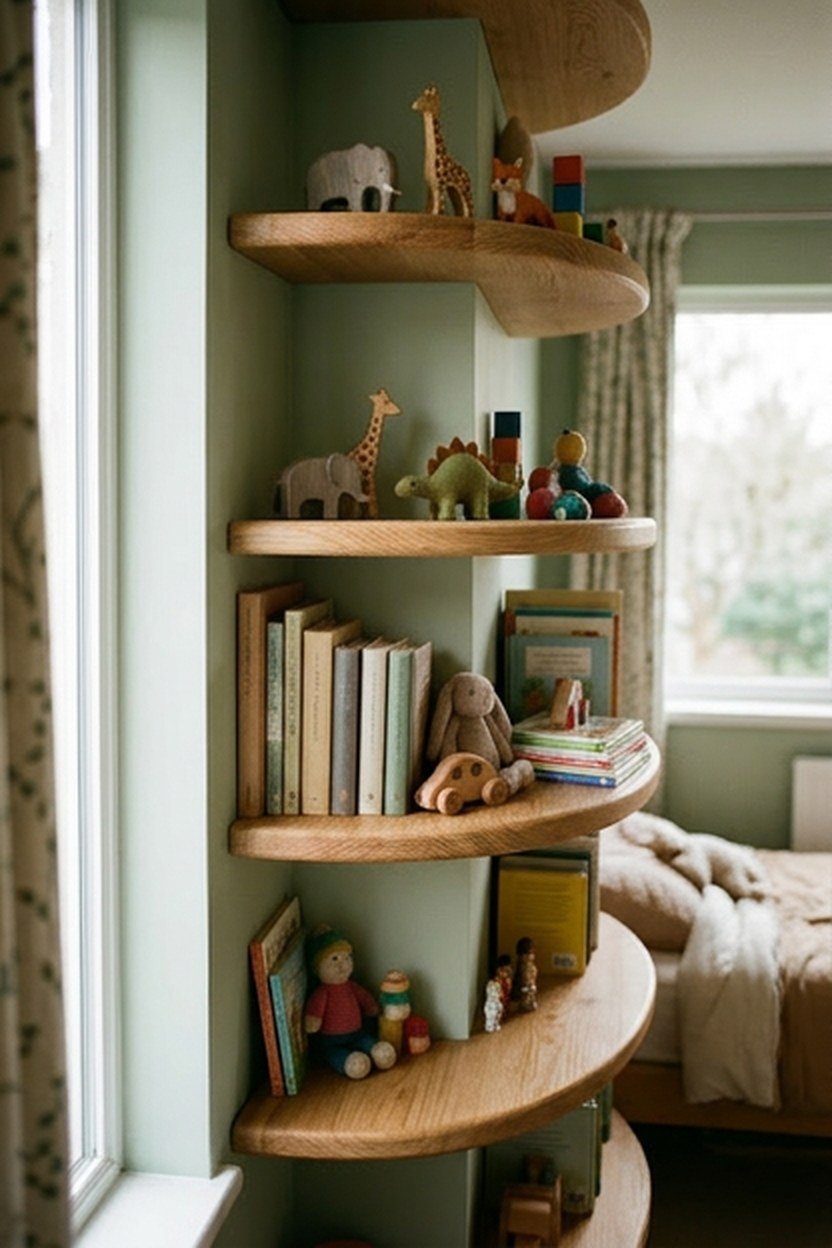
An organic, curved bookshelf, reflecting mid century design’s characteristic soft, rounded silhouettes, provides genuine book and toy storage while introducing the era’s distinctive shape language into the room’s furniture layout. This piece typically features open shelving that displays books and favorite objects rather than concealing everything behind closed doors, encouraging a child’s independent engagement with their own belongings.
Choosing open shelving at a height accessible to the child, rather than shelving that requires adult assistance to reach favorite books or toys, encourages independent play and reading habits from an early age. This accessibility consideration matters more for younger children specifically, and can be adjusted as shelving height needs change with the child’s growth.
Styling the shelving with a curated mix of books, small toys, and a few decorative objects, rather than overcrowding every available surface, maintains the clean, uncluttered aesthetic mid century design depends on while still serving genuine storage function. This curation approach requires some ongoing maintenance as the child’s collection of books and toys grows and changes over time.
Cost And Accessibility Guidance
An organic curved mid century bookshelf typically costs $200 to $600 depending on size and material quality. Choosing a shelving unit with adjustable shelf heights allows the piece to adapt as the child grows and their storage needs change, extending the furniture’s usable lifespan considerably.
A common mistake is choosing shelving positioned entirely out of the child’s independent reach, requiring adult assistance for every book or toy retrieval and undermining the piece’s potential to encourage self-sufficiency. Ensuring at least some shelving remains accessible at the child’s current height, even if upper shelves serve more decorative or less frequently accessed storage, balances both considerations.
7. Boomerang Or Kidney-Shaped Play Table
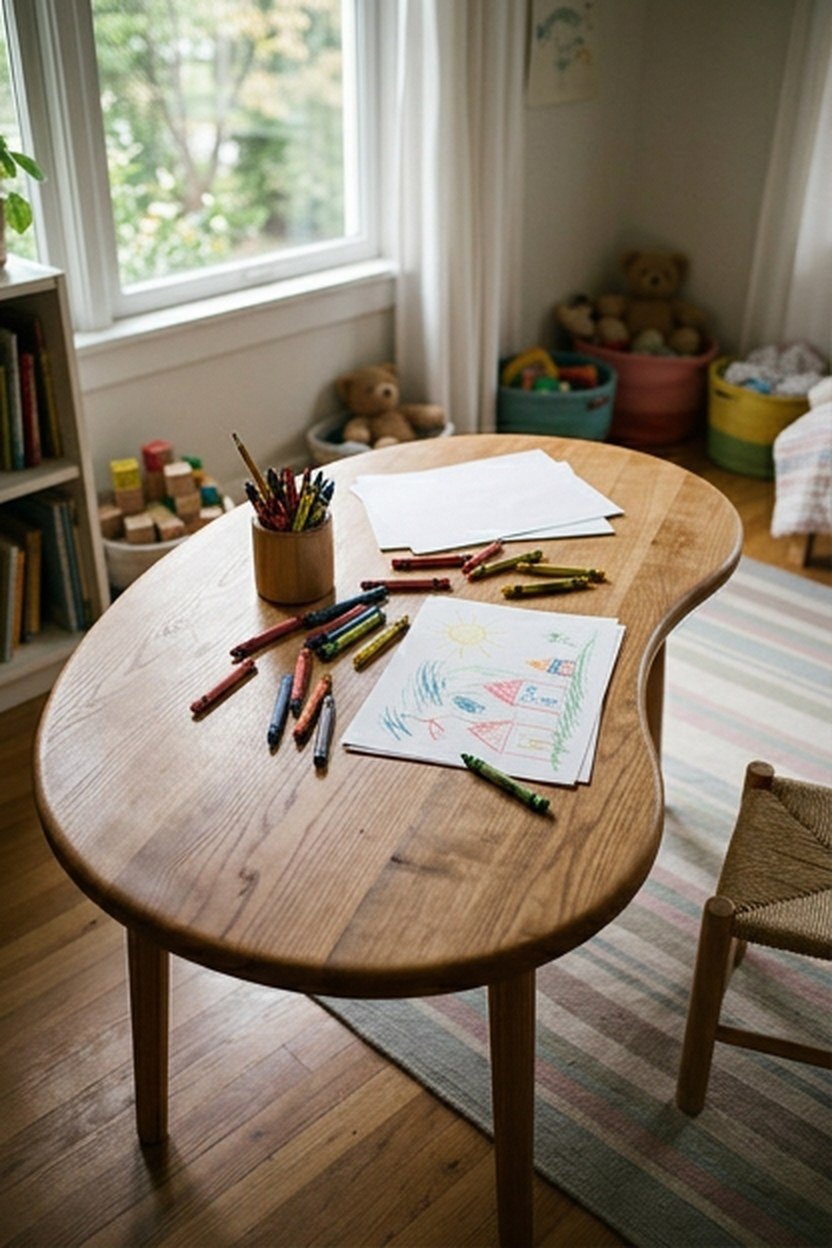
A boomerang or kidney-shaped play table, a signature mid century silhouette, provides a dedicated surface for coloring, building, and other tabletop play while introducing one of the era’s most recognizable and playful shape choices. This organic table shape suits a kids room particularly well given how naturally it lends itself to a genuinely fun, engaging furniture piece within an otherwise sophisticated design aesthetic.
Choosing a table height and size appropriate for the child’s current age, with an eye toward how long the piece will remain functionally useful as the child grows, balances immediate practicality against long-term furniture investment value. Some manufacturers offer adjustable-height versions specifically designed to extend a play table’s usable years as a child grows.
Selecting a durable, easy-to-clean table surface, given how much creative mess a play table typically experiences from art projects and general active use, prioritizes practical function alongside the table’s aesthetic contribution. A sealed wood finish or a durable laminate surface both offer reasonable durability for this kind of regular use.
Cost And Adjustability Guidance
A boomerang or kidney-shaped play table typically costs $150 to $450 depending on size and whether it includes height adjustability. Choosing a table with a durable, wipeable surface finish, rather than an unsealed or delicate wood surface, accounts for the regular messes this piece will experience during active daily use.
A common mistake is choosing a table sized for the child’s current age without considering how quickly they will outgrow a fixed-height, fixed-size piece, resulting in premature replacement need. Choosing an adjustable-height option, even at a somewhat higher upfront cost, extends the furniture’s usable lifespan and reduces the need for replacement within just a few years. This long-term cost consideration is worth weighing against the lower upfront cost of a fixed alternative.
8. Atomic Age Patterned Curtains Or Bedding
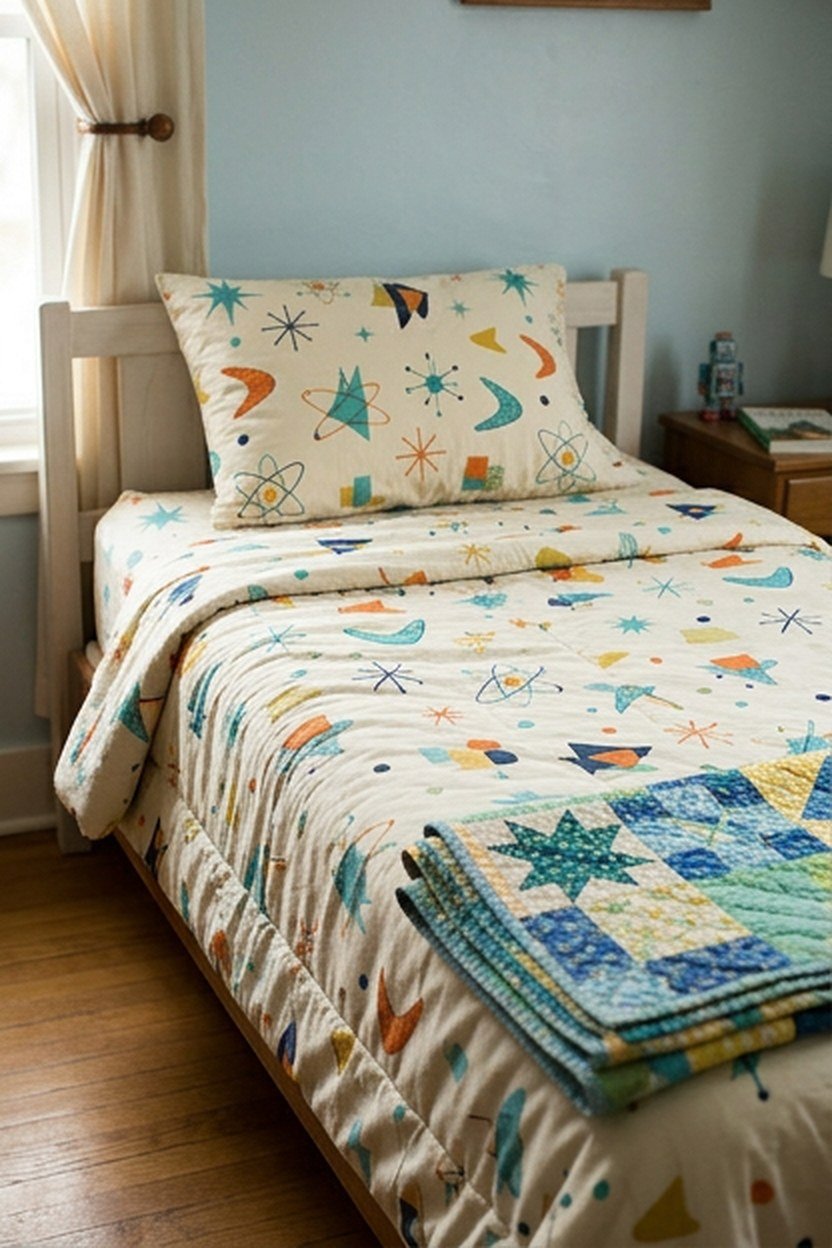
Atomic age patterned textiles, curtains or bedding featuring the era’s characteristic starburst, boomerang, or geometric motifs, introduce playful pattern into the room’s softer furnishings without requiring a permanent furniture commitment to this specific pattern choice. This textile-based approach allows the room’s pattern scheme to be updated more easily than furniture as the child’s preferences evolve over time.
Choosing a pattern scale and color intensity appropriate to the room’s overall size, since a very large, bold pattern can overwhelm a smaller bedroom while working well in a more spacious room, requires some consideration of the specific space’s proportions. This scale consideration is worth assessing honestly for your specific room before committing to a particularly bold pattern choice. Most fabric retailers offer several scale variations of popular mid century-inspired patterns specifically for this reason.
Selecting durable, machine-washable fabric for bedding specifically, given how frequently children’s bedding requires washing, balances the pattern’s aesthetic appeal against genuine practical maintenance needs. This washability consideration matters more for bedding than for curtains, which typically require less frequent washing.
Cost And Scale Guidance
Atomic age patterned curtains or a bedding set typically costs $60 to $200 depending on fabric quality and the number of pieces included. Choosing a smaller-scale pattern for a smaller bedroom, reserving bolder, larger-scale patterns for more spacious rooms, avoids an overwhelming visual effect disproportionate to the room’s actual size. This scale-to-room-size consideration is worth applying when selecting any patterned textile for this style.
A common mistake is choosing delicate, dry-clean-only bedding fabric that proves impractical given how frequently children’s bedding needs washing due to regular spills and general use. Choosing a durable, machine-washable cotton or cotton-blend fabric, even if slightly less visually elaborate than a more delicate alternative, avoids this ongoing practical frustration.
9. Walnut Nightstand With A Single Drawer
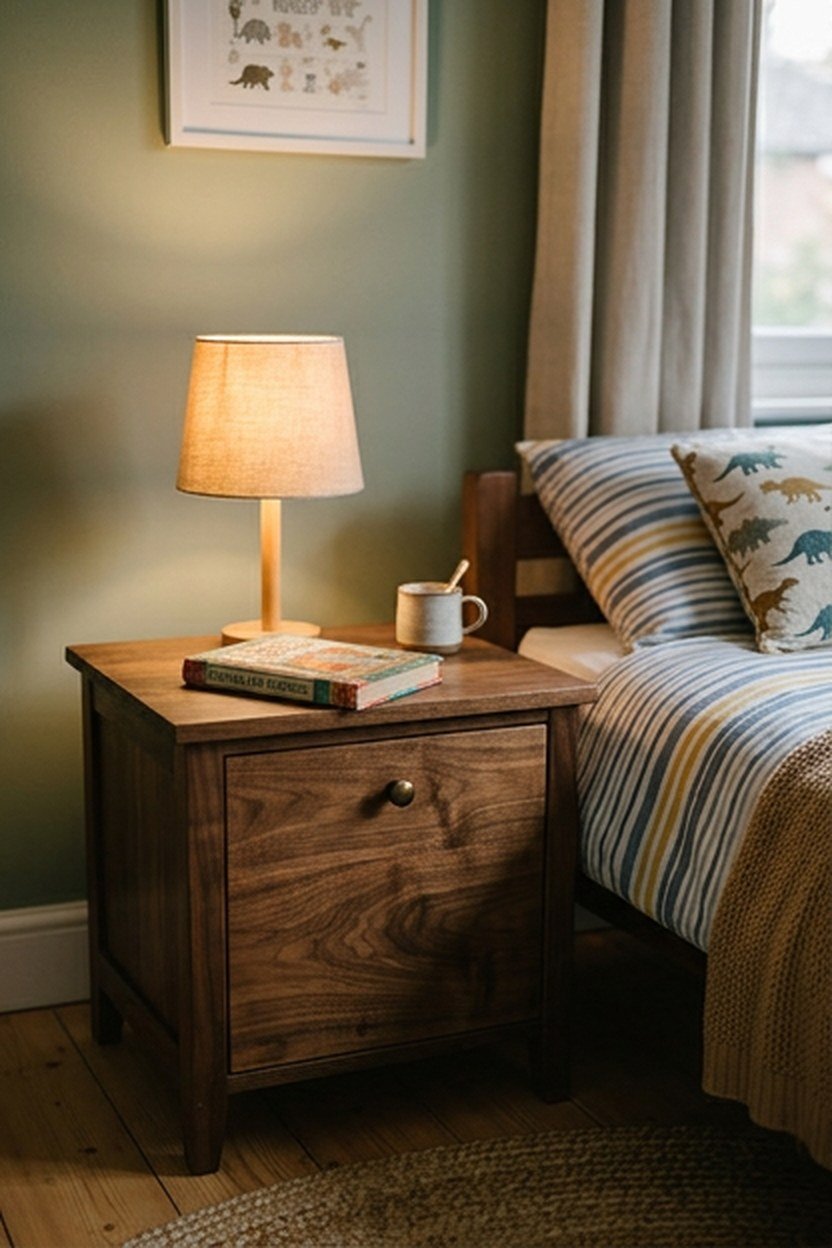
A simple walnut nightstand with a single drawer provides a compact bedside storage solution while maintaining the room’s consistent mid century wood tone and clean, minimal silhouette. This piece, smaller in scale than the dresser or bookshelf discussed elsewhere in this guide, still contributes meaningfully to the room’s overall material and color consistency. This nightstand often holds a child’s most frequently used bedtime items, a book, a small lamp, or a favorite small toy.
Choosing a nightstand height appropriate for easy reach from the bed, considering the specific bed frame’s height discussed earlier in this guide, ensures the piece serves genuine practical function alongside its aesthetic contribution. This height coordination between the bed and nightstand is worth confirming with actual measurements before finalizing either purchase separately. Most furniture retailers can advise on appropriate height pairings for these two pieces.
Selecting a nightstand with rounded edges and a stable, low center of gravity, given how frequently a child might bump into or lean on this bedside furniture piece, prioritizes genuine safety alongside the aesthetic choice. This safety consideration mirrors the same priority discussed throughout this guide regarding bed frames and dresser hardware.
Cost And Height Guidance
A walnut nightstand with a single drawer typically costs $100 to $350 depending on size and whether the piece is new or vintage. Measuring the coordinated bed frame’s height before selecting a nightstand ensures the two pieces work together proportionally and functionally, rather than the nightstand sitting awkwardly too high or too low relative to the bed.
A common mistake is choosing a nightstand with a top surface too small to hold a lamp and a book comfortably, resulting in a piece that looks appropriately styled but proves impractical for genuine daily use. Confirming the tabletop surface area against the intended items before purchase avoids this common functional oversight.
10. Terrazzo Or Speckled Pattern Accent Rug
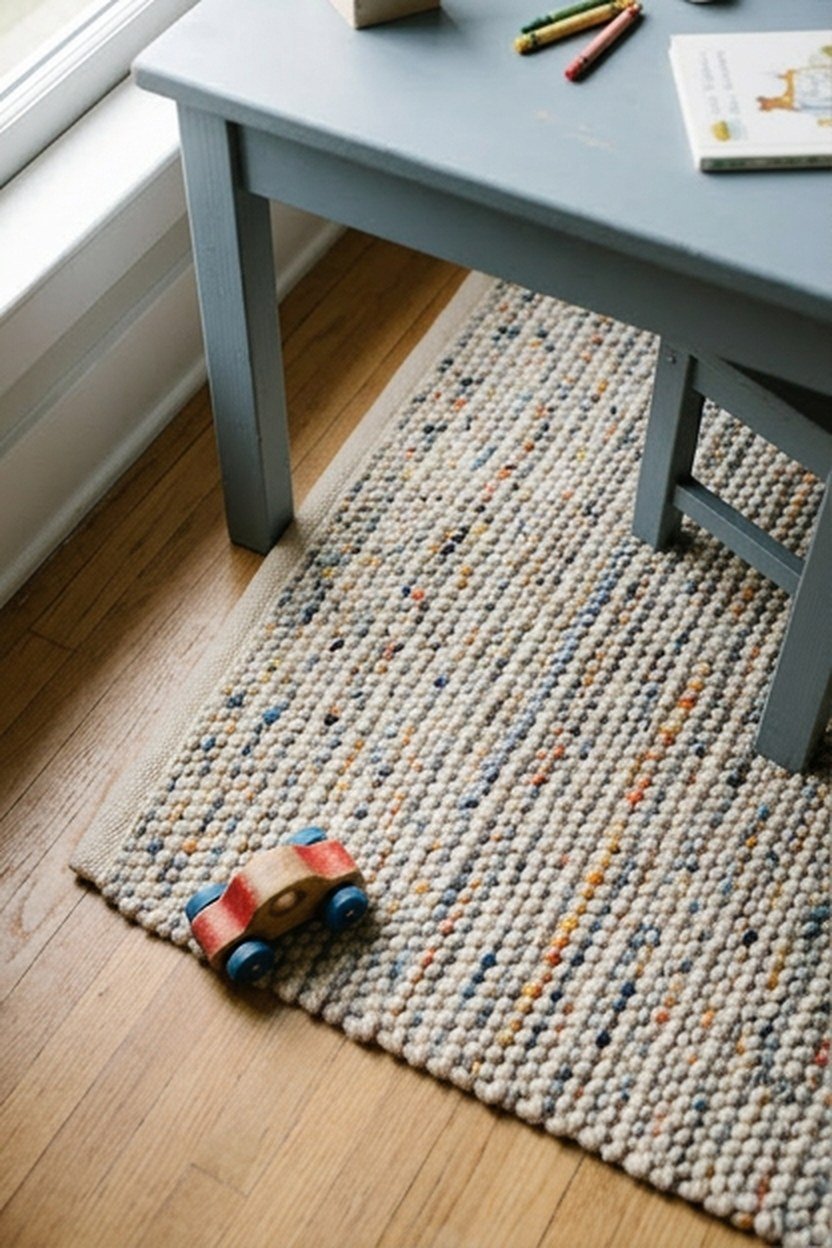
A terrazzo or speckled pattern accent rug, a material and pattern closely associated with mid century design, introduces textural and visual interest at floor level in a smaller-scale application than the larger geometric rug discussed earlier in this guide. This smaller accent rug works well layered near the play table or reading chair, defining a specific activity zone within the larger room.
Choosing a terrazzo pattern with a muted, sophisticated color palette, rather than an overly bright, juvenile color scheme, maintains the room’s overall restrained aesthetic while still introducing genuine visual texture and interest. This color restraint consideration applies the same principle discussed throughout this guide regarding balancing playful elements against the style’s inherently sophisticated character.
Positioning this accent rug specifically within a defined activity zone, near the play table or reading chair rather than randomly placed, gives it genuine functional purpose beyond pure decoration. This zone-defining placement consideration mirrors the same functional thinking applied throughout this guide to the room’s larger furniture pieces.
Cost And Placement Guidance
A terrazzo or speckled pattern accent rug typically costs $40 to $120 depending on size and material quality. Choosing a rug material that pairs well with the play table’s likely mess exposure, if positioned in that specific activity zone, prioritizes practical durability over a more delicate material choice.
A common mistake is choosing a rug pattern so busy or high-contrast that it competes visually with the room’s larger geometric rug discussed earlier, creating a cluttered rather than layered floor-level design. Selecting a terrazzo pattern that complements rather than competes with any other patterned flooring elsewhere in the room avoids this visual conflict.
11. Brass Or Walnut Pendant Light Fixture
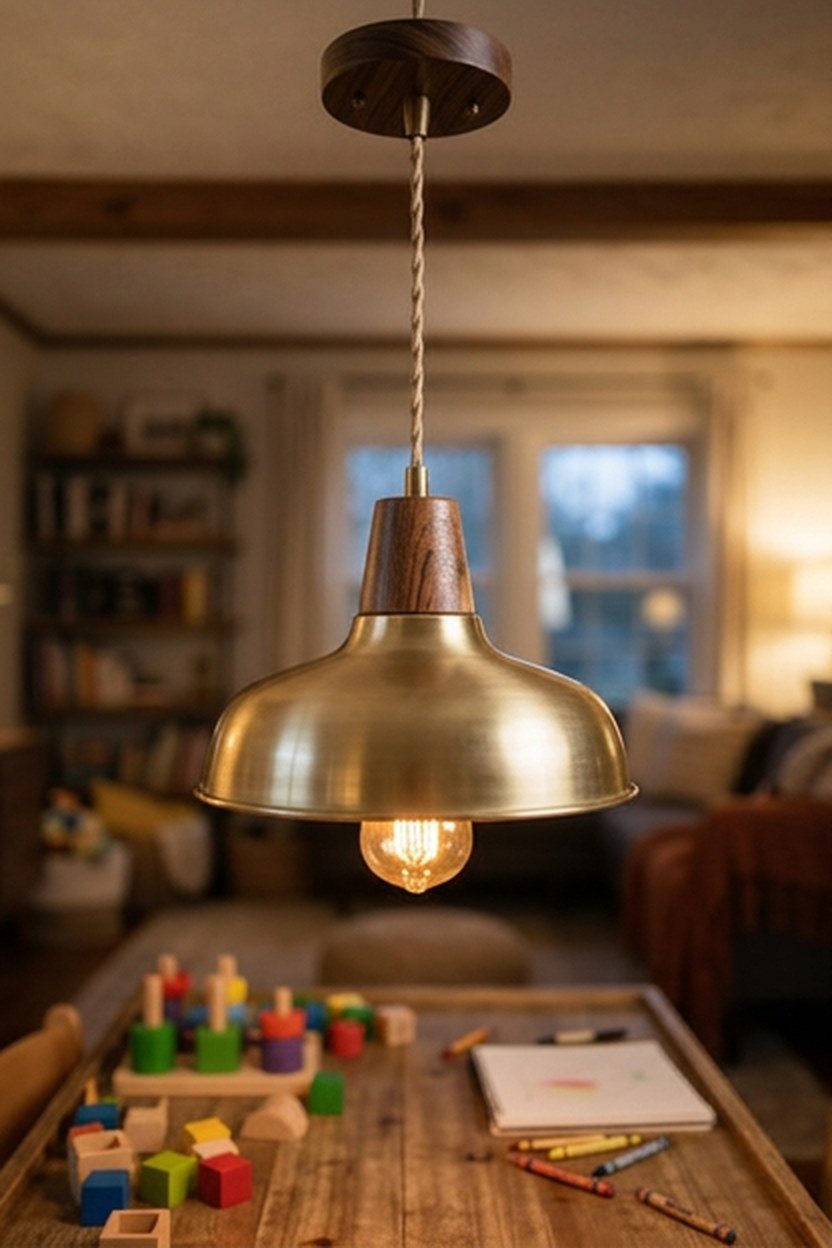
A brass or walnut pendant light fixture, hung at an appropriate height above a play table or reading area, introduces mid century lighting design while providing genuine task lighting for the room’s activity zones. This fixture style typically features clean geometric or organic forms consistent with the broader mid century aesthetic established throughout the room’s furniture and decor choices. This lighting upgrade often elevates the room’s overall finished appearance considerably.
Choosing a pendant fixture hung at a height that avoids interfering with a child’s movement or play, particularly important given how much more active a child’s use of a room tends to be, requires careful height planning specific to the fixture’s location. This consideration matters more in a kids room than in many other room types given the genuinely more physical, active use the space typically sees. This safety-conscious height planning is worth prioritizing over purely aesthetic hanging height decisions.
Selecting a warm-toned bulb for this fixture, consistent with the overall warm, cozy lighting quality mid century design generally favors, ensures the fixture’s light quality matches the room’s broader aesthetic and mood. This bulb temperature consideration is worth confirming when purchasing replacement bulbs for this or any other lighting fixture throughout the room. Most mid century-style fixtures pair naturally with this warmer bulb temperature choice.
Cost And Height Guidance
A brass or walnut pendant light fixture suited for a kids room typically costs $60 to $200 depending on size and material quality, plus installation cost if hardwiring is required rather than a plug-in option. Choosing a plug-in pendant option, rather than requiring hardwired electrical installation, simplifies both installation and any future relocation if the room’s layout changes. This plug-in flexibility consideration is worth exploring for households wanting to avoid the additional electrical installation cost and complexity.
A common mistake is hanging a pendant fixture at a height that interferes with a child’s normal movement through the room, creating a genuine bump hazard given how much more physically active children’s use of a space tends to be. Testing the fixture’s hung height against the child’s actual height and typical movement patterns before finalizing installation avoids this common and easily preventable safety issue.
12. Wool Felt Ball Garland Or Wall Hanging
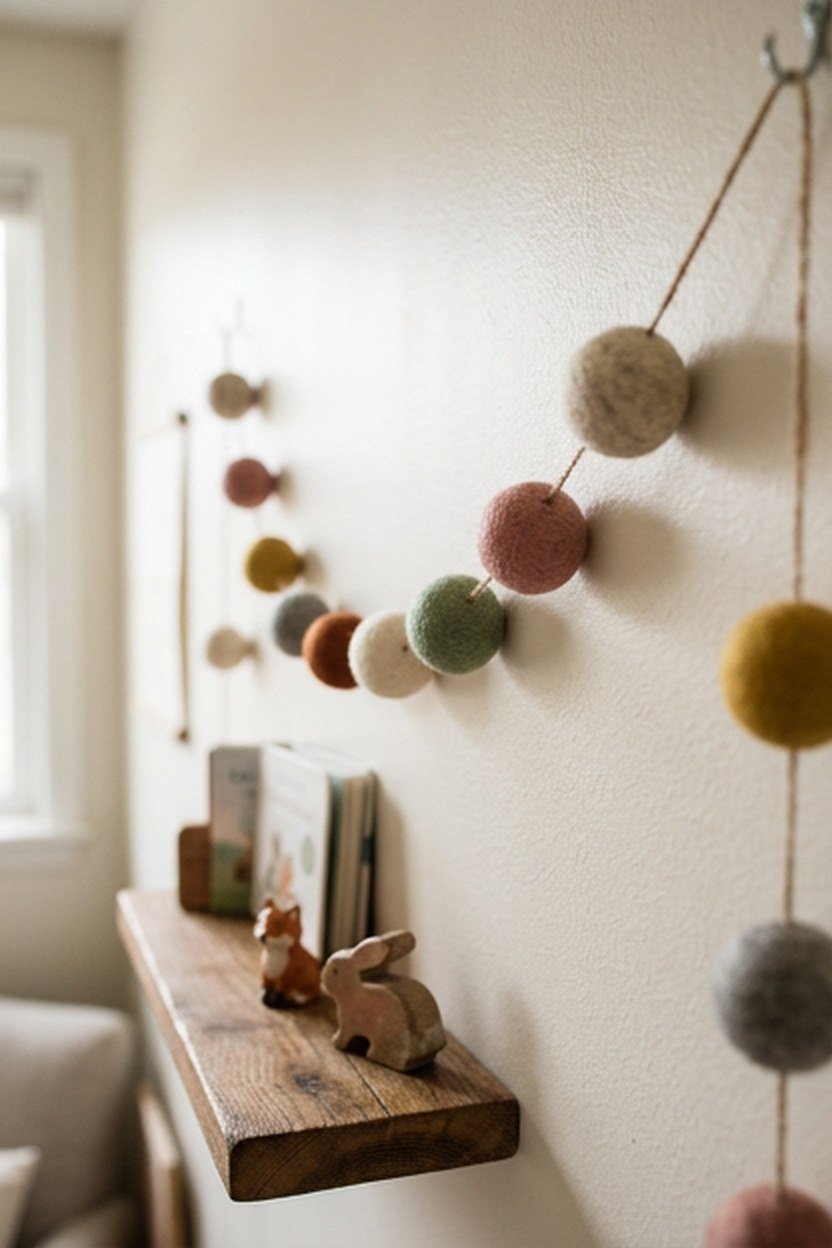
A wool felt ball garland or wall hanging, in the muted, earthy tones characteristic of mid century color palettes, introduces a soft, tactile decorative element that suits a child’s room’s need for genuine tactile engagement alongside the room’s overall sophisticated aesthetic. This detail brings texture and playful color variation without relying on bright, overtly juvenile colors that might clash with the room’s broader restrained palette.
Choosing felt ball colors that echo the room’s established mid century palette, mustard, olive, burnt orange, and warm neutrals, rather than introducing an unrelated bright color scheme, maintains the room’s overall cohesion. This color coordination consideration applies the same principle discussed throughout this guide regarding textile and decor choices.
Positioning this garland or wall hanging at a height where the child can genuinely see and enjoy it, rather than purely for adult viewing enjoyment from a standing height, ensures the piece serves the room’s actual primary occupant. This child-eye-level placement consideration is worth applying to decorative elements throughout the room, not only this specific piece.
Cost And Color Coordination Guidance
A wool felt ball garland or wall hanging typically costs $20 to $60 depending on size and the number of felt balls included. Building a small collection of coordinating felt decor pieces gradually, rather than purchasing everything at once, allows for careful color matching against the room’s established palette as it develops.
A common mistake is choosing felt ball colors in a bright, primary color scheme that clashes with the room’s more muted, sophisticated mid century palette established through the larger furniture pieces. Selecting muted, earthy tones consistent with the broader room palette, even within this playful decorative format, maintains the aesthetic cohesion this style depends on throughout every decor choice.
13. Walnut Toy Storage Bench With Cushioned Top
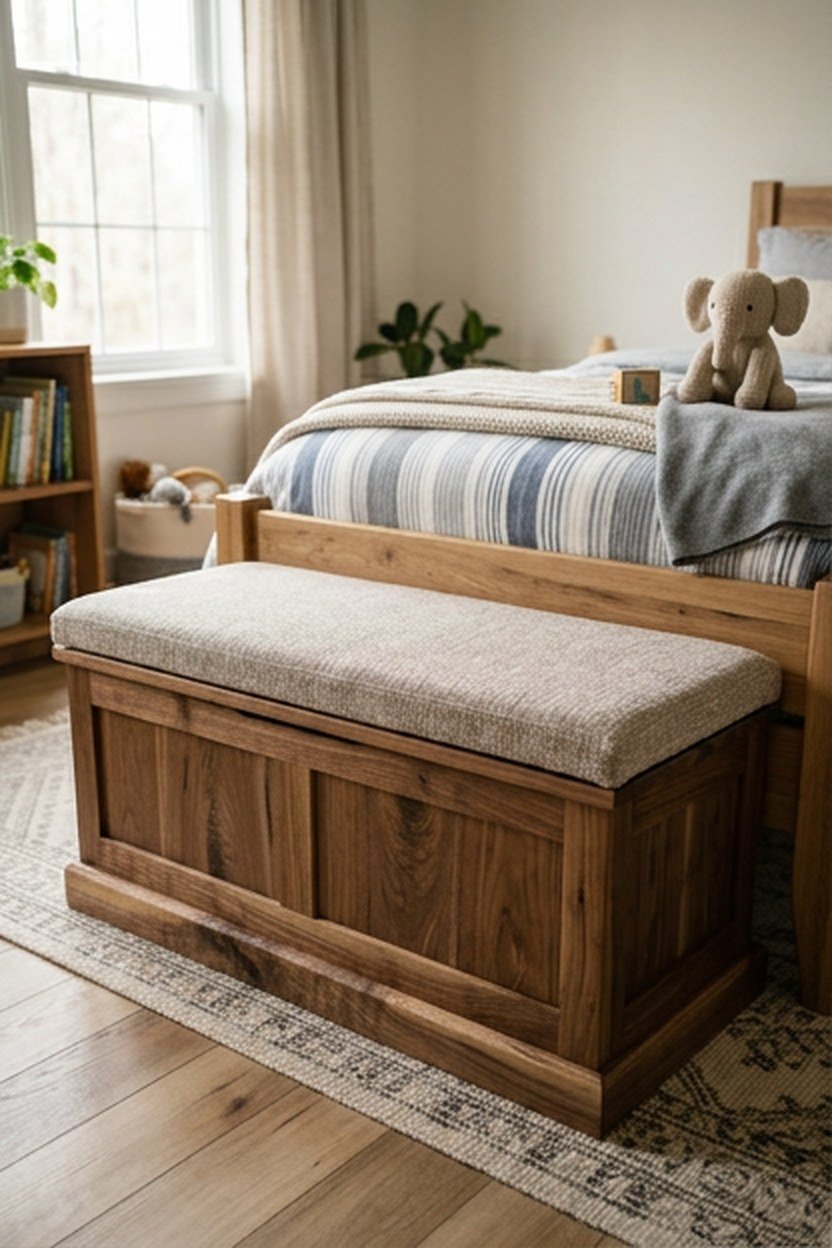
A walnut toy storage bench with a cushioned top provides dual-purpose seating and genuine toy storage capacity, combining function with the room’s established mid century wood tone and clean furniture silhouette. This piece works particularly well positioned at the foot of the bed or along a wall, offering additional seating for reading time or getting dressed while concealing toy clutter behind a clean exterior. This dual-function furniture piece is one of the more practically valuable additions on this entire list.
Choosing a bench with a soft-close lid mechanism, rather than a standard hinged lid that could pinch small fingers, prioritizes genuine safety for a young child regularly opening and closing this storage piece independently. This safety mechanism consideration is worth checking specifically when evaluating different bench storage options for a younger child’s room. Most quality storage bench designs now include this safety feature specifically for this reason.
Selecting cushion fabric that is durable and easy to clean, given how frequently a bench seat in a child’s room experiences regular use and occasional spills, balances the aesthetic cushion choice against genuine practical maintenance needs. A removable, washable cushion cover further simplifies maintenance over an integrated cushion that cannot be laundered separately.
Cost And Safety Mechanism Guidance
A walnut toy storage bench with a cushioned top typically costs $200 to $600 depending on size and cushion quality. Confirming the bench includes a soft-close lid mechanism, a safety feature discussed above, is worth prioritizing over choosing purely based on price or aesthetic appeal alone.
A common mistake is choosing a storage bench without adequate weight capacity for its intended use as genuine seating, resulting in a piece that looks appropriately sized but fails structurally under regular sitting use. Confirming the bench’s weight rating against its intended dual function as both storage and seating avoids this structural oversight.
14. Mid Century Modern Growth Chart Or Height Marker
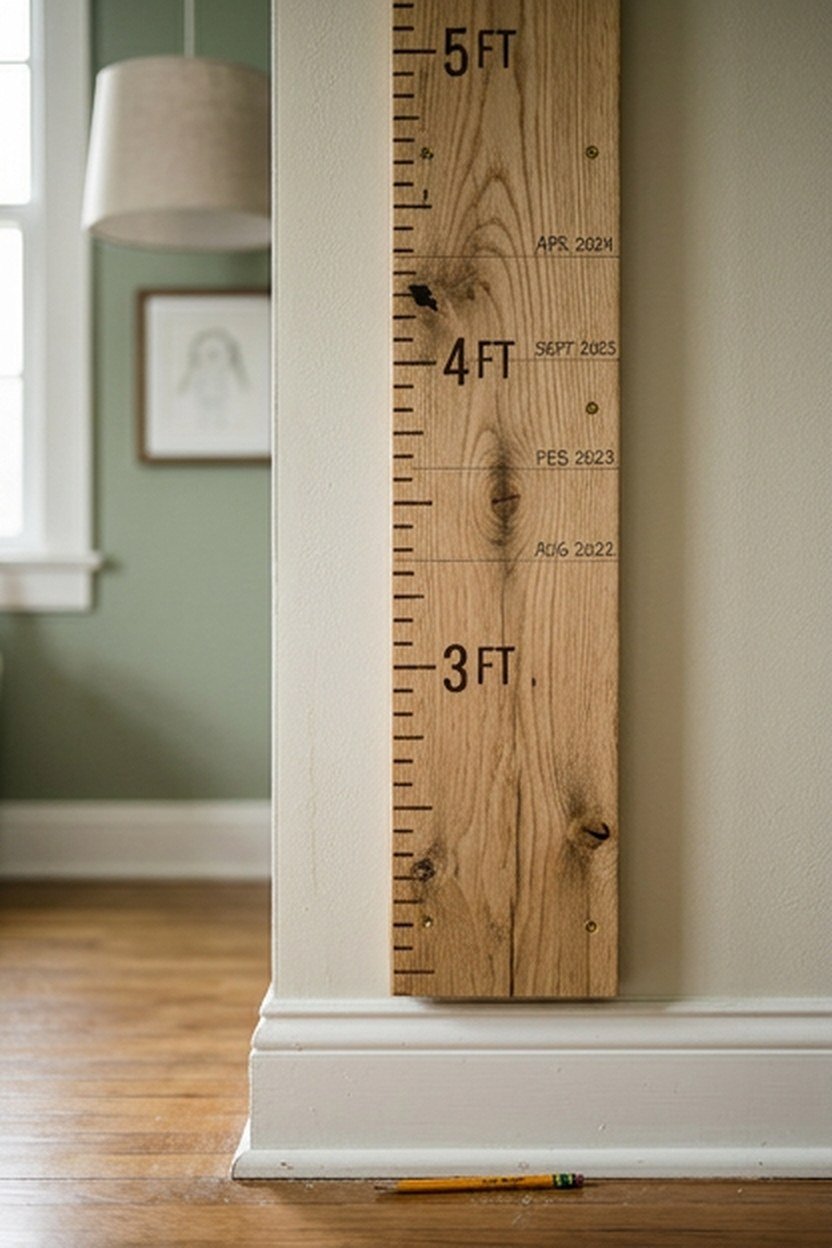
A mid century modern growth chart, styled as a wall-mounted wood ruler or a framed decorative piece rather than a purely functional plastic growth chart, combines a genuinely meaningful family tracking tool with the room’s broader design aesthetic. This detail transforms a common childhood milestone-tracking practice into a piece that also contributes positively to the room’s overall visual design.
Choosing a growth chart crafted from warm wood, walnut or oak, consistent with the room’s other established wood tones, rather than a painted or laminated alternative, maintains material consistency throughout the room’s overall design. This material coordination consideration applies the same principle discussed throughout this guide regarding maintaining consistent wood tones across furniture pieces.
Mounting the growth chart at a height and location that remains accessible for regular measurement throughout the child’s growing years, rather than in a spot that becomes inconvenient to access as furniture arrangement changes over time, ensures the piece continues serving its intended function. This accessibility planning is worth considering as part of the room’s overall furniture layout rather than treating the growth chart as an isolated wall decoration.
Cost And Material Guidance
A wood mid century modern growth chart typically costs $40 to $120 depending on size and wood quality. Choosing a chart crafted from a durable, solid wood construction, rather than a thin veneer or laminate alternative, ensures the piece holds up to years of regular handling and measurement marking.
A common mistake is mounting the growth chart in a location that later gets blocked by rearranged furniture, undermining its ability to continue serving its intended function throughout the child’s growing years. Planning the growth chart’s placement in coordination with the room’s overall furniture layout, rather than as an afterthought, avoids this frustrating oversight.
15. Vintage-Inspired Alarm Clock Or Radio Decor Piece
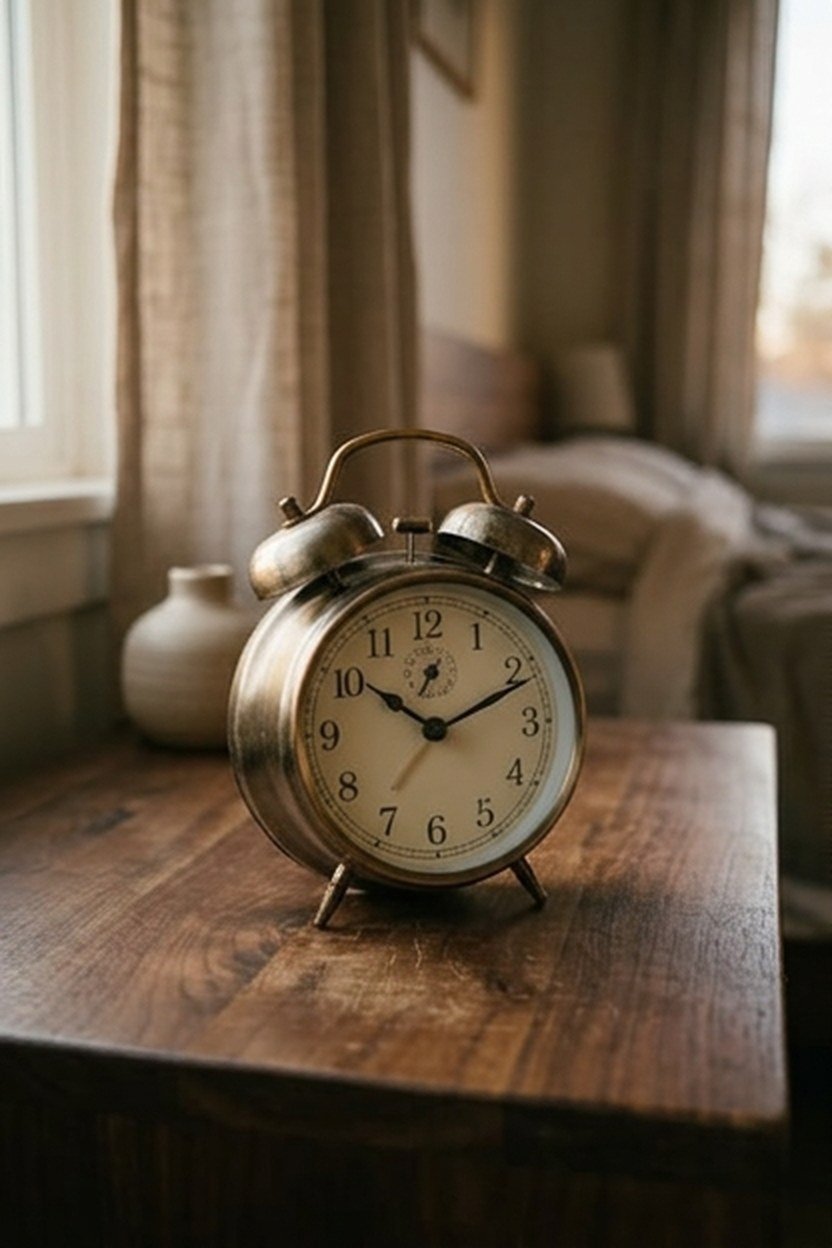
A vintage-inspired alarm clock or radio-style decor piece, reflecting mid century design’s characteristic rounded forms and simple dial interfaces, introduces a small but genuinely functional detail that reinforces the room’s overall aesthetic theme. This piece often doubles as a practical tool for teaching a child about time management and morning routines as they grow older.
Choosing a piece with genuinely simple, easy-to-use controls, appropriate for a child gradually taking on more independent morning routine responsibility, balances the decorative vintage aesthetic against real functional usability. This usability consideration matters more as the child grows into using this piece independently rather than purely as a parent-managed decorative object.
Selecting a color and finish consistent with the room’s broader mid century palette, muted tones or warm wood-toned casings rather than bright plastic colors, maintains the piece’s aesthetic cohesion with the rest of the room’s established design. This coordination consideration applies the same principle discussed throughout this guide regarding maintaining palette consistency across every decor choice. Even a small item like this one benefits from this consistent approach.
Cost And Functionality Guidance
A vintage-inspired alarm clock or radio-style decor piece typically costs $25 to $80 depending on whether it includes genuine functional features like an actual working alarm or radio versus purely decorative styling. Choosing a piece with genuine functionality, rather than a purely decorative object resembling a vintage piece, provides more practical long-term value as the child grows into using it independently.
A common mistake is choosing an overly complex vintage-styled alarm clock with confusing controls inappropriate for a child gradually learning to use it independently. Testing the piece’s actual controls for genuine simplicity and ease of use, rather than assuming a vintage aesthetic automatically implies simple functionality, avoids this common usability mismatch.
What A Mid Century Kids Bedroom Actually Costs
A complete mid century kids bedroom, incorporating several of the concepts discussed throughout this guide, typically costs $1,500 to $5,000 depending on how many pieces are purchased new versus sourced secondhand or vintage. This range reflects the genuine cost difference between authentic vintage or reproduction mid century furniture and more generic mass-market children’s furniture options. Understanding this rough breakdown helps prioritize spending toward the elements with the most long-term value and daily function.
Ongoing costs beyond the initial furnishing remain relatively modest, mainly consisting of periodic textile replacement as the child’s preferences evolve and occasional furniture refinishing if pieces show wear over many years of use. Most quality mid century furniture pieces, whether vintage or well-made reproductions, hold up considerably well over decades of regular use given the style’s inherent construction quality.
| Investment Category | Typical Cost Range | Notes |
|---|---|---|
| Bed and dresser | $700 to $2,200 | Largest single investment category |
| Storage and seating | $400 to $1,300 | Bookshelf, bench, reading chair |
| Textiles and decor | $300 to $1,000 | Rugs, bedding, lighting, small accents |
Prioritizing the bed and dresser first, since these represent the room’s core long-term furniture investment, before layering in smaller textiles and decor accents gives the most reliable path to a cohesive room even on a limited initial budget. This prioritization strategy is worth discussing before the first purchase is made. Most designers find this order of investment produces the most satisfying result relative to the budget spent at each stage.
Common Mistakes That Undermine A Mid Century Kids Bedroom
The most common mistake across mid century kids bedroom projects is choosing furniture and decor so restrained and sophisticated that the room fails to feel genuinely appropriate for a child, reading instead as a miniature adult space. Deliberately introducing playful elements through textiles, patterns, and smaller decor pieces, while keeping larger furniture in the style’s clean, timeless silhouette, balances this concern.
A second frequent mistake is prioritizing aesthetic appeal over genuine child safety, choosing furniture with sharp edges or fragile finishes purely because they photograph well in the mid century style. Prioritizing rounded edges, durable finishes, and age-appropriate sizing throughout every furniture choice, a principle discussed repeatedly throughout this guide, avoids this common oversight.
Recovering From These Setbacks
Recovering from an overly adult-feeling room typically means adding two or three key playful elements, patterned bedding, a felt garland, or a colorful accent rug, rather than replacing the room’s larger furniture investment. This targeted addition approach is considerably less expensive than reconsidering the entire furniture layout and often resolves the overly mature feeling with surprisingly few additional pieces. Identifying which specific missing element, color, pattern, or texture, is contributing most to the overly adult feeling helps target this addition most effectively.
Recovering from a safety oversight, sharp furniture edges or fragile finishes that prove impractical for active child use, usually means replacing the specific problematic piece rather than the entire room’s furniture collection. This targeted replacement, while representing a sunk cost on the original purchase, protects the child’s safety and prevents repeating the same mistake with future furniture decisions. Prioritizing safety over the sunk cost of an inappropriate original purchase is the correct, if sometimes difficult, decision in this situation.
Conclusion
A mid century kids bedroom succeeds by balancing the style’s sophistication and durability against genuine safety and function, introducing playfulness through textiles while keeping larger furniture timeless. The fifteen concepts here, from a low-profile bed frame to a vintage-inspired alarm clock, each contribute a piece of a room that grows with the child rather than requiring frequent replacement. Prioritizing safety and longevity first, then layering in playful details, gives the most reliable path to a room that serves the child well.
Whether this is a first attempt at designing a child’s room in this style or a refinement of a space that has felt mismatched, the underlying principles stay consistent: choose furniture that will genuinely grow with the child, prioritize rounded edges and durable finishes, and introduce playful pattern through easily updated textiles rather than permanent choices. These fundamentals matter more than any single purchase on this list. Get them right, and the room becomes a long-term investment rather than needing reinvention every few years.
Frequently Asked Questions
Why does mid century design work well for a kids bedroom? Mid century furniture is built with genuine durability and timeless proportions, meaning pieces like a dresser or bookshelf remain appropriate from toddlerhood through the teenage years. The style’s rounded shapes also align naturally with child safety considerations.
How much does a mid century kids bedroom cost? A complete room typically costs $1,500 to $5,000 depending on how many pieces are purchased new versus sourced secondhand or vintage. The bed and dresser usually represent the largest portion of this budget.
Is mid century furniture safe for young children? It can be, as long as pieces are chosen with rounded edges, stable construction, and age-appropriate sizing rather than purely for their striking silhouette. Prioritizing safety features like soft-close lids and rounded corners is worth the extra attention.
How do I keep a mid century kids room from feeling too adult? Introducing playful patterns and colors through textiles, bedding, rugs, and smaller decor pieces keeps the room feeling appropriately child-friendly. Larger furniture can stay in the style’s clean, timeless silhouette while smaller items carry the playfulness.
Can mid century furniture grow with my child? Yes, many pieces like dressers, bookshelves, and low-profile bed frames are designed with timeless proportions that work from early childhood through the teenage years. This longevity is one of the style’s most practical advantages for a child’s room.
Should I buy vintage or new mid century furniture for a kids room? Vintage pieces often cost less than new reproductions while still delivering authentic character, though they may need refinishing or safety updates like rounded-edge modifications. New reproductions typically include modern safety features built in from the start.
What is the biggest mistake people make with mid century kids rooms? Choosing furniture and decor so restrained that the room fails to feel genuinely appropriate for a child is the most common mistake. Balancing sophisticated furniture with playful, easily updated textiles and decor avoids this problem.