
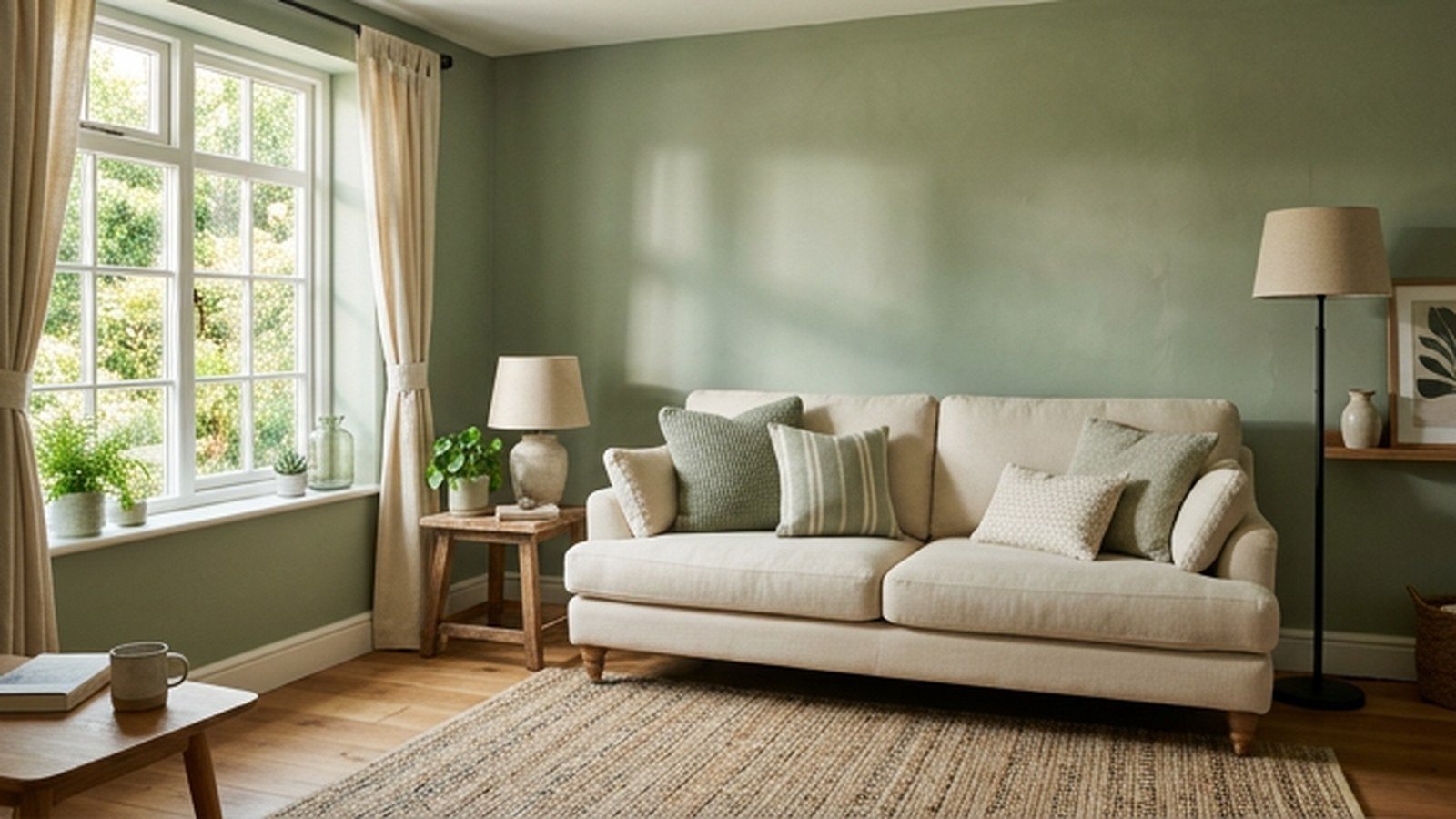
Sage green is one of the few deep, saturated colors that genuinely works in a small living room rather than making it feel smaller. The muted, grayed quality of the color reads as calming rather than closing in, which is exactly why it has become such a popular choice for compact living spaces. I have used sage green in three small living rooms now, each under 200 square feet, and the color consistently made the room feel more intentional rather than more cramped.
This guide covers fifteen specific sage green palette approaches for a small living room, what each one actually costs, and where the color choice can go wrong in a genuinely tight space. Expect honest notes about light, furniture pairing, and the small details that separate a small room that feels cozy from one that feels cramped. By the end you will have a real plan matched to your own room’s light and layout.
Sage green in a small room needs more careful handling than in a larger space, since a wrong pairing or an overly dark application can genuinely shrink a room rather than flatter it. I will flag these small space risks directly throughout this guide. The best small sage green living rooms use the color with real intention, not just enthusiasm for the trend.
Why Sage Green Works Well In A Small Living Room
Sage green sits at a genuinely useful point on the color wheel for small spaces, dark enough to add real depth and coziness but muted enough to avoid the closing in feeling a more saturated or darker color can create. This balance is why sage green outperforms many other deep colors specifically in compact rooms. Few colors offer this much depth without the visual weight that typically comes with it.
The color also reflects light in a soft, diffused way rather than absorbing it entirely, which matters considerably in a small room that often has more limited natural light to begin with. A small room painted in a true dark color can feel like a cave in low light, while sage green maintains enough brightness to avoid this specific problem. This practical light behavior is a real advantage beyond the color’s aesthetic appeal.
The table below compares sage green against a true dark color and a pale neutral on the factors that matter most for a small living room specifically. None of the three is objectively better, since the right pick depends on your room’s light and your own risk tolerance. Use it as a starting point before reading the planning section that follows.
| Factor | Sage green | True dark color | Pale neutral |
|---|---|---|---|
| Adds depth and coziness | Strong | Very strong | Weak |
| Maintains brightness in low light | Moderate to strong | Weak | Strong |
| Risk of feeling closed in | Low | High | Very low |
Planning A Sage Green Small Living Room Before You Paint
Test your specific sage green paint sample in your actual room at different times of day, since a small room’s light conditions can shift the color’s appearance more noticeably than in a larger space with more consistent light exposure. Paint a large sample board rather than relying on a small paint chip, since color reads differently at scale in an actual room. I always recommend living with a sample for at least a few days before committing to a small room specifically.
Consider whether you will paint all four walls or just one accent wall, since a small living room can handle either approach but they create genuinely different effects. A full room application creates a cohesive, enveloping feeling, while a single accent wall adds depth without the same level of commitment. Decide based on how bold a statement you want and how the room’s specific layout supports each approach.
Set a realistic budget that accounts for both paint and any furniture or textile updates needed to complete the palette, since sage green often looks best paired with specific complementary tones that may require some textile changes. Both a full room commitment and a smaller accent approach can achieve genuine sage green character. The palette approaches below are ordered roughly from lower commitment to more comprehensive.
1. Sage Green Accent Wall Behind The Sofa
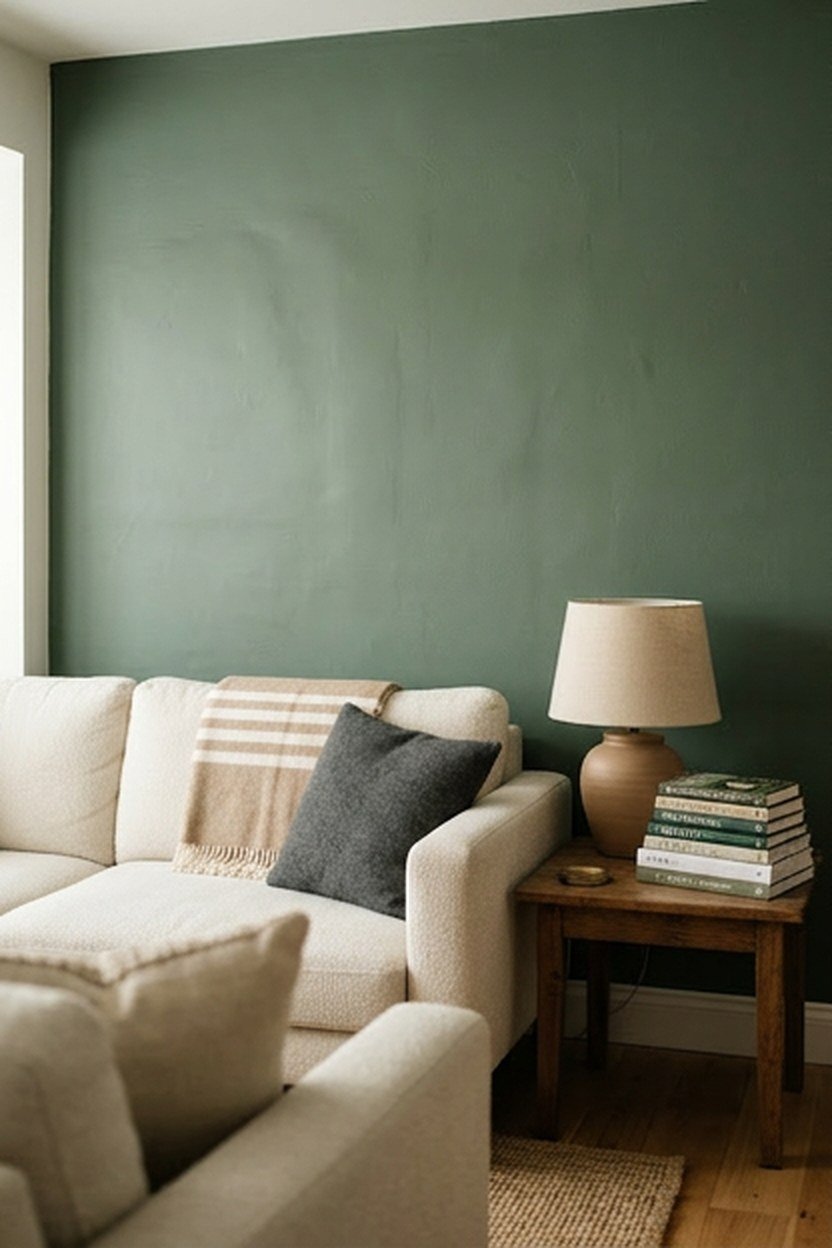
Painting just the wall behind the sofa in sage green creates a genuine focal point without the commitment of a full room application, making this one of the most popular entry points into the color for a small space. Expect to pay 40 to 100 dollars for paint and supplies to cover a standard small living room wall. This approach also visually anchors the sofa, giving the seating area a defined sense of place within an open small room.
Choose a sage shade with enough depth to read as an intentional accent rather than a slight, ambiguous variation from the surrounding walls. A too pale, close to neutral sage can look like an unfinished paint job rather than a deliberate design choice in this specific application. Bring your sofa’s actual fabric color when choosing the accent wall shade to confirm they work well together.
The painted wall will develop a soft matte texture across the surface within the first year or two of normal living room use and occasional cleaning. This gradual textured change in the paint’s original sheen is expected for a painted wall in regular use and does not affect the wall’s structural integrity. A durable, washable paint formulation slows this change considerably compared to a basic flat paint.
Choosing Which Wall To Paint As The Accent
The wall behind your sofa or main seating area typically makes the strongest accent wall choice, since this creates a natural backdrop that draws the eye without disrupting the room’s traffic flow. Avoid choosing a wall broken up by multiple doors or windows for this treatment, since the color reads less as a cohesive statement when interrupted by openings. Walk through your room’s specific layout before finalizing which wall will carry the color.
Confirm the chosen wall receives at least some natural or artificial light directly, since an accent wall in a genuinely dark corner of the room loses much of its intended visual impact. Walk the room at different times of day to check this before painting. This small check prevents choosing a wall that never gets seen clearly.
2. Sage Green Velvet Sofa As The Anchor
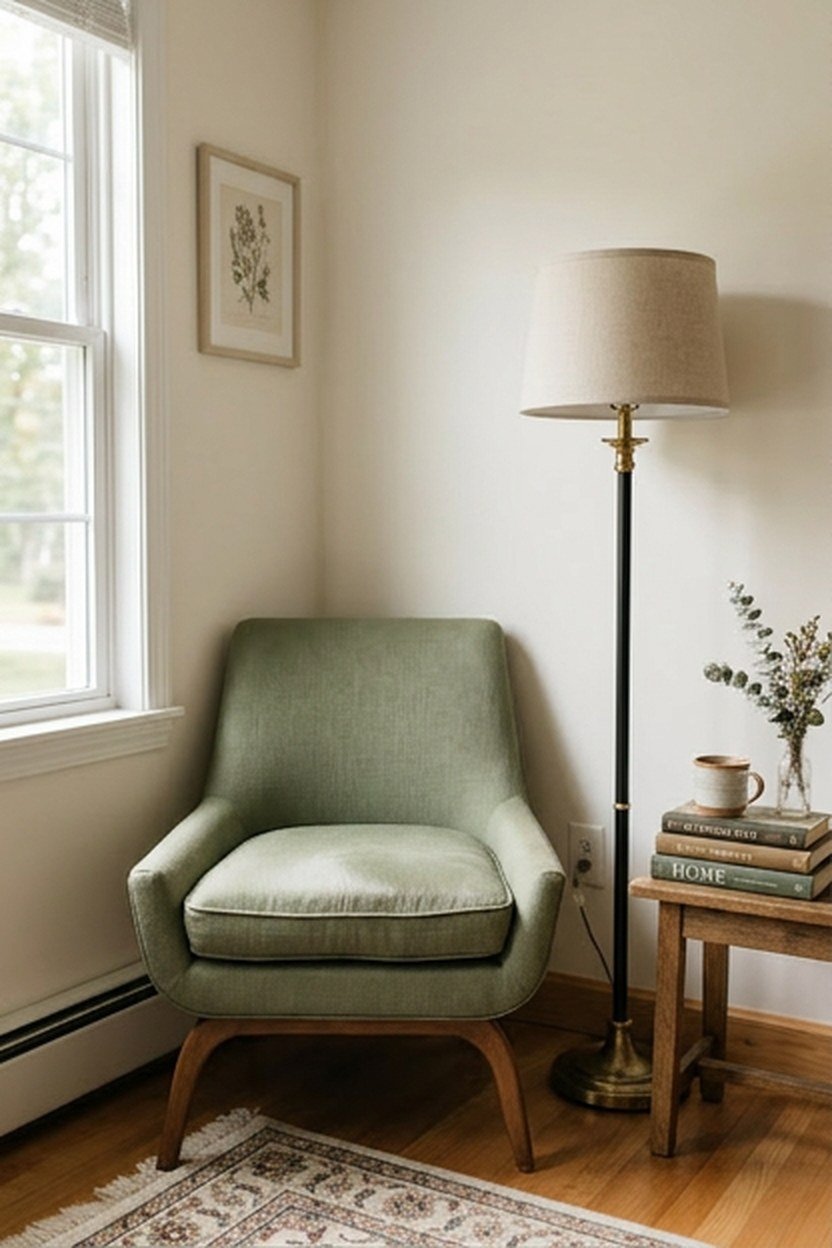
A sage green velvet sofa becomes the room’s primary color statement, letting surrounding walls stay a neutral tone while the furniture itself carries the palette. Expect to pay 800 to 2000 dollars for a quality sage green velvet sofa sized appropriately for a small living room. This approach suits a small room specifically since it adds bold color without requiring any wall painting or larger renovation.
Choose a sofa scale genuinely appropriate for your room’s dimensions, since an oversized sofa in a bold color draws even more attention to a mismatched scale than a neutral colored oversized sofa would. Measure your room and any doorways the sofa needs to pass through before ordering, confirming both fit and delivery feasibility. This practical sizing consideration matters more for a small room than almost any other decision on this list.
The velvet fabric will develop a soft natural sheen change across the most contacted areas from years of regular sitting and use. This gradual textured change in the fabric’s original finish is normal for quality velvet upholstery under sustained use and does not affect its structural support. Professional cleaning every year or two maintains the fabric’s appearance despite this natural aging.
Sizing A Statement Sofa For A Small Room
Measure your room’s actual usable floor space, accounting for walkways and other furniture, before choosing a sofa size, rather than simply choosing the largest sofa that could physically fit through the door. A sofa that leaves adequate circulation space reads as more comfortable and intentional than one that crowds the entire room. Bring these measurements when shopping rather than judging scale purely by eye in a showroom.
Consider a sofa with visible legs rather than a fully upholstered base, since visible legs let light pass beneath the piece and can make a small room feel more open despite the sofa’s bold color. This detail matters more in a small room than a larger one with more inherent floor visibility. Ask about this option specifically if it is not clearly shown in product photos.
3. Sage Green And Cream Two Tone Palette
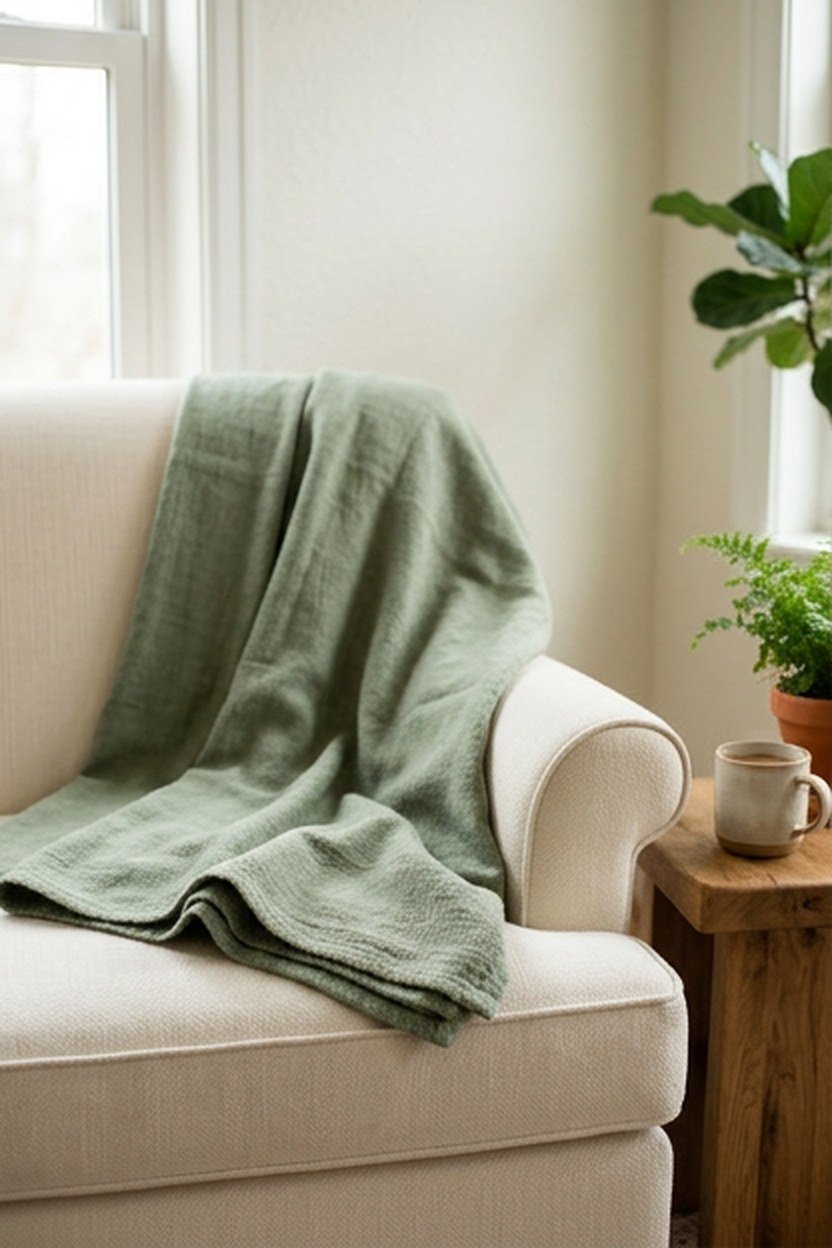
Pairing sage green with cream, rather than pure white, creates a warmer overall palette that suits a small living room’s need for a genuinely cozy, inviting feeling. Expect to pay 60 to 150 dollars for paint and basic textile updates to establish this two tone approach across a standard small living room. This pairing works well whether sage green appears on walls, furniture, or a combination of both.
Choose a cream with a warm rather than cool undertone specifically, since this warmer companion tone complements sage green’s own muted warmth better than a stark, cool white would. Bring both your sage green and cream samples together in the room before finalizing the pairing, checking them under your room’s actual lighting conditions. This coordination step prevents an unintentional clash between the two main palette tones.
Textiles in this palette, if natural fiber like linen or cotton, will develop a soft natural fiber texture becoming more pronounced after repeated washing and regular use. This gradual textured change is completely normal for natural fiber textiles and many people specifically prefer this softened texture over a crisp, unwashed feel. Regular laundering according to each fabric’s specific care label maintains both color and texture over time.
Balancing Sage Green And Cream Proportions
A roughly two thirds cream to one third sage green ratio generally reads as balanced and cozy without either tone overwhelming the room, though this proportion can shift based on your specific space and preference. Consider your room’s actual light levels when deciding this balance, since a darker room may benefit from leaning more toward the lighter cream tone. Test this proportion with paint and fabric samples before committing to a full room application.
Photograph your room with different proportion tests applied via fabric swatches or paint samples, since photos sometimes reveal an imbalance more clearly than viewing the room in person. Compare the photos side by side rather than relying on memory alone. This small habit catches a mismatch before it becomes a larger purchase.
4. Sage Green Curtains For Softening Hard Lines
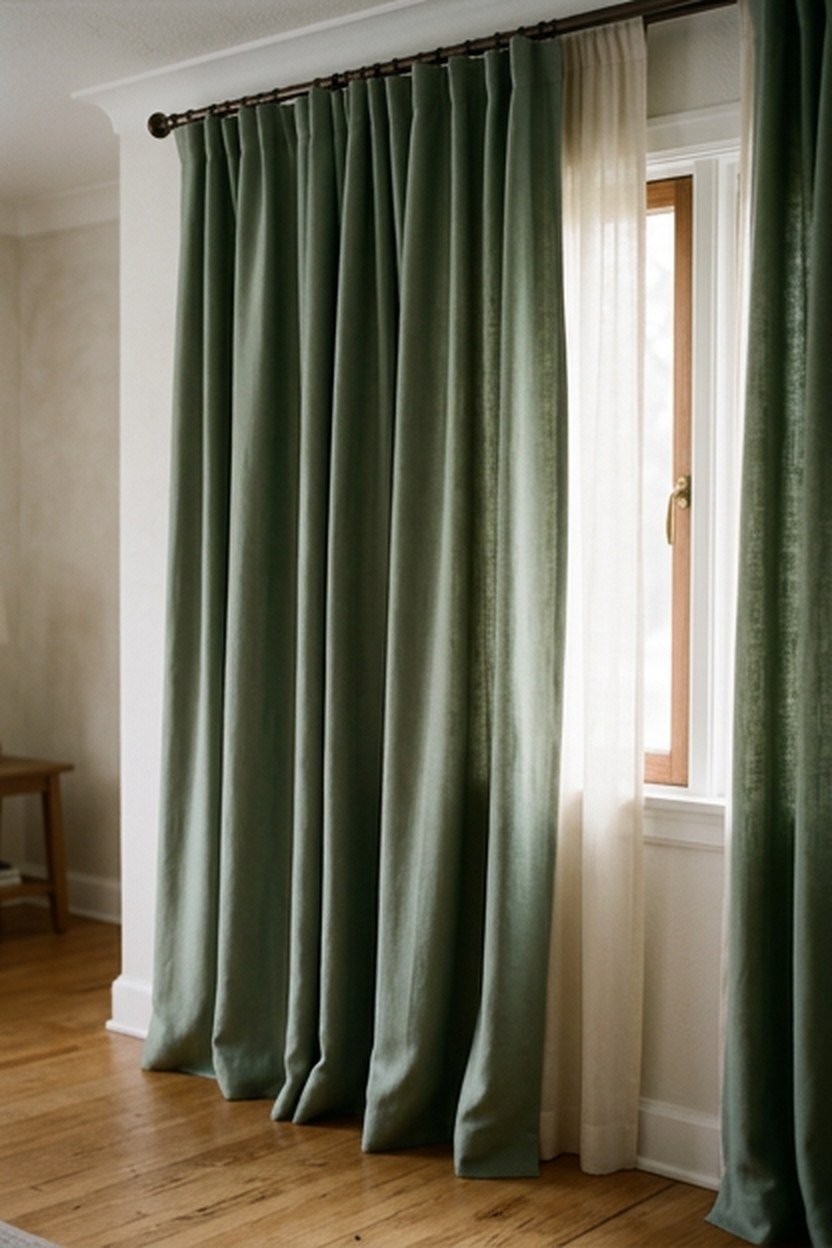
Sage green curtains soften a small living room’s window lines while introducing the color through an easily changed, lower commitment element than paint or furniture. Expect to pay 60 to 150 dollars for quality sage green curtain panels sized for a standard small living room window. This approach also adds fabric texture that a purely painted room can lack.
Mount curtain rods close to the ceiling and choose panels that reach the floor, a styling technique that makes a small room’s ceiling feel taller regardless of the actual window size. This vertical emphasis matters more in a small room than in a larger space with more inherent visual height. Measure your specific ceiling height and window placement before ordering curtain length and rod height.
The curtain fabric will develop a soft natural sheen change along the fold lines where the fabric hangs and moves regularly, this gradual textured change appearing at natural fold points over years of use. This is a normal characteristic of quality curtain fabric under sustained use and does not detract from its overall drape. Professional cleaning maintains the fabric’s appearance despite this natural change.
Choosing Curtain Fabric Weight For A Small Room
A lighter weight sage green fabric, like a linen blend, suits a small room better than a heavy velvet, since heavier fabric can visually weigh down a compact space more than a lighter, more airy material would. Consider how much the curtains will be opened and closed regularly, since a lighter fabric also handles frequent movement more easily than a heavy one. Choose based on both the visual weight and the practical daily use pattern in your specific room.
Confirm your curtain rod hardware can support the specific fabric weight you choose, since a heavier fabric on an undersized rod can sag or fail to hang properly over time. Check the rod’s weight rating against your chosen fabric before installing. This small check prevents a sagging rod after just a few months of use.
5. Sage Green Throw Pillows On A Neutral Sofa
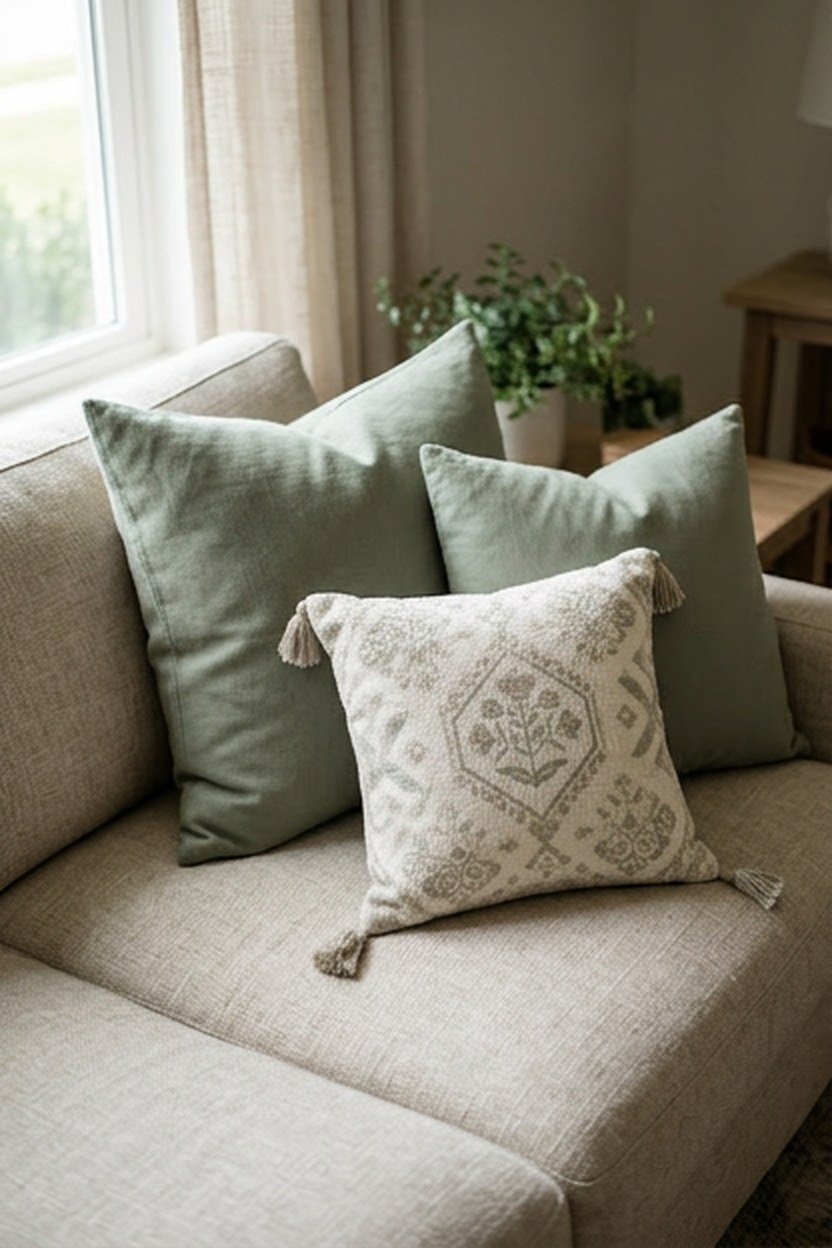
Sage green throw pillows on an otherwise neutral colored sofa introduce the palette without any painting or larger furniture investment, making this one of the most accessible ideas on this entire list. Expect to pay 20 to 45 dollars per pillow for quality sage green pillow covers, with most small living rooms needing three to five pillows for a complete look. This approach also allows easy seasonal or occasional palette changes.
Mix a few different sage green shades and textures across your pillow selection rather than choosing pillows that match exactly, since slight variation reads as more intentionally curated than a perfectly matched set. Vary pillow sizes as well, combining one or two larger pillows with a smaller accent pillow for visual interest. This layering approach works regardless of your total pillow budget.
The pillow fabric will develop a soft natural sheen change or a natural fiber texture, depending on the specific material, after a season or two of regular use and handling. This gradual textured change is expected for pillow fabric under sustained use and does not significantly affect comfort or appearance from a normal viewing distance. Rotating pillow positions periodically evens out this wear across the full set.
Storing Off Season Throw Pillows
Store any off season or spare throw pillows in a breathable fabric bag rather than a sealed plastic container, since natural fiber pillow covers benefit from some airflow even during storage to prevent a musty smell developing over time. A simple labeled storage bag also makes finding the right pillows easier when you want to rotate your palette seasonally. This small habit keeps stored pillows fresh and ready to use.
Fluff and reshape pillow inserts periodically even when not in active use, since a compressed insert left in storage for extended periods can lose some of its original loft. A quick monthly fluff during storage keeps inserts ready to use. This small habit extends how long a pillow set looks genuinely full and fresh.
6. Sage Green Area Rug As The Palette Foundation
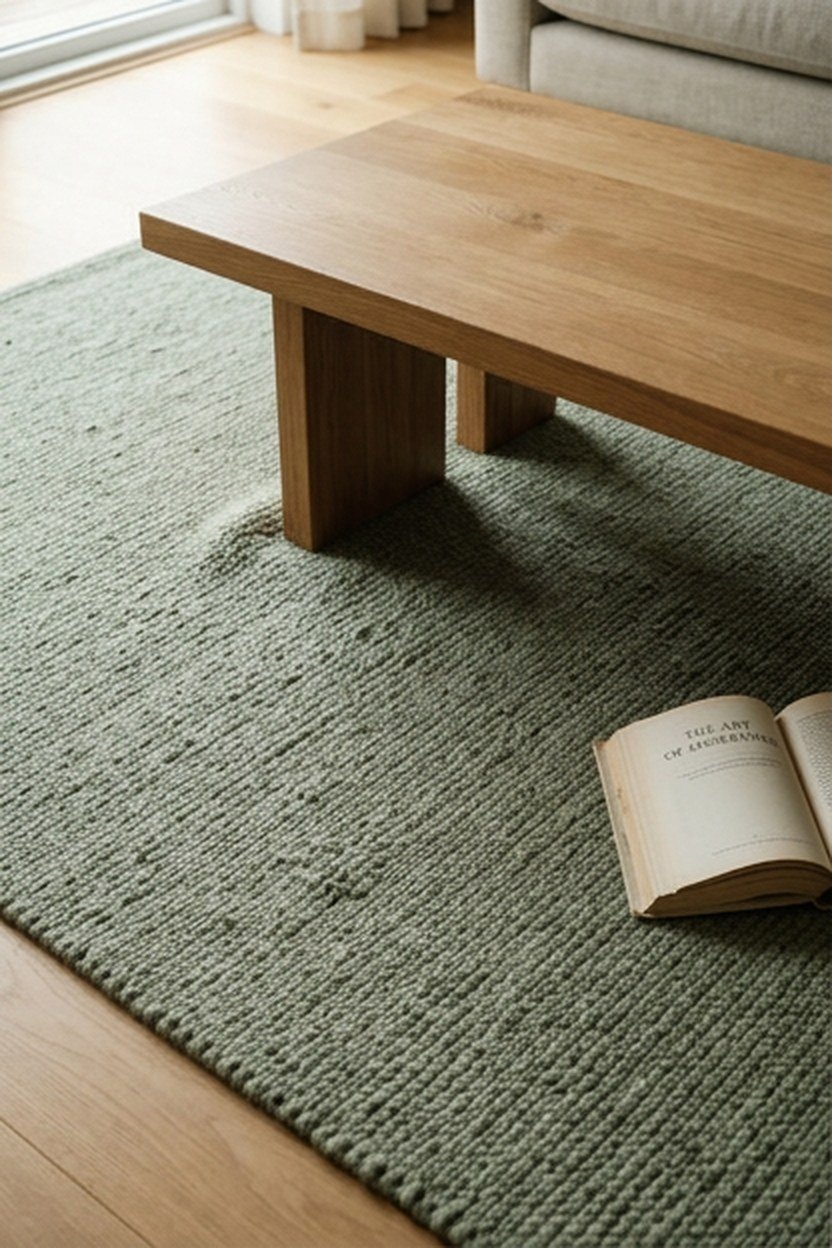
A sage green area rug anchors a small living room’s floor and can serve as the starting point for building the rest of the palette around it. Expect to pay 150 to 400 dollars for a quality sage green rug sized appropriately for a small living room’s seating area. This approach works particularly well if you want to introduce the color at a lower visual height than walls or a large sofa would.
Size the rug so all major furniture pieces have at least their front legs resting on it, a common styling guideline that keeps a small room’s seating area feeling connected rather than having furniture floating disconnected from the rug’s edge. Measure your specific furniture arrangement before ordering a rug size, since an undersized rug is one of the most common and most visually deflating mistakes in small room styling. This detail matters more to the finished look than most people initially realize.
The rug’s fibers will develop a soft natural fiber texture becoming more pronounced as the material settles and the pile compresses slightly with regular foot traffic. This gradual textured change is completely normal for quality area rugs under sustained use and does not indicate a defect. Rotating the rug periodically evens out this wear across the full surface.
Choosing Rug Scale For A Small Living Room
A rug that is too small relative to the room makes the space feel more fragmented and busier than a properly scaled rug would, an effect that matters considerably more in a small room than a larger one. Measure your room’s total floor space and furniture footprint carefully before choosing a rug size, erring toward a larger rug within your available budget rather than a smaller one. This scaling consideration is worth prioritizing over a slightly higher cost for the correct size.
Consider a rug with a subtle pattern rather than a solid sage green if you want some visual texture underfoot without introducing an entirely separate color into the palette. Look for a tonal pattern within the same sage family for this effect. This small variation adds interest without complicating the overall palette.
7. Sage Green Built-In Shelving Or Bookcase
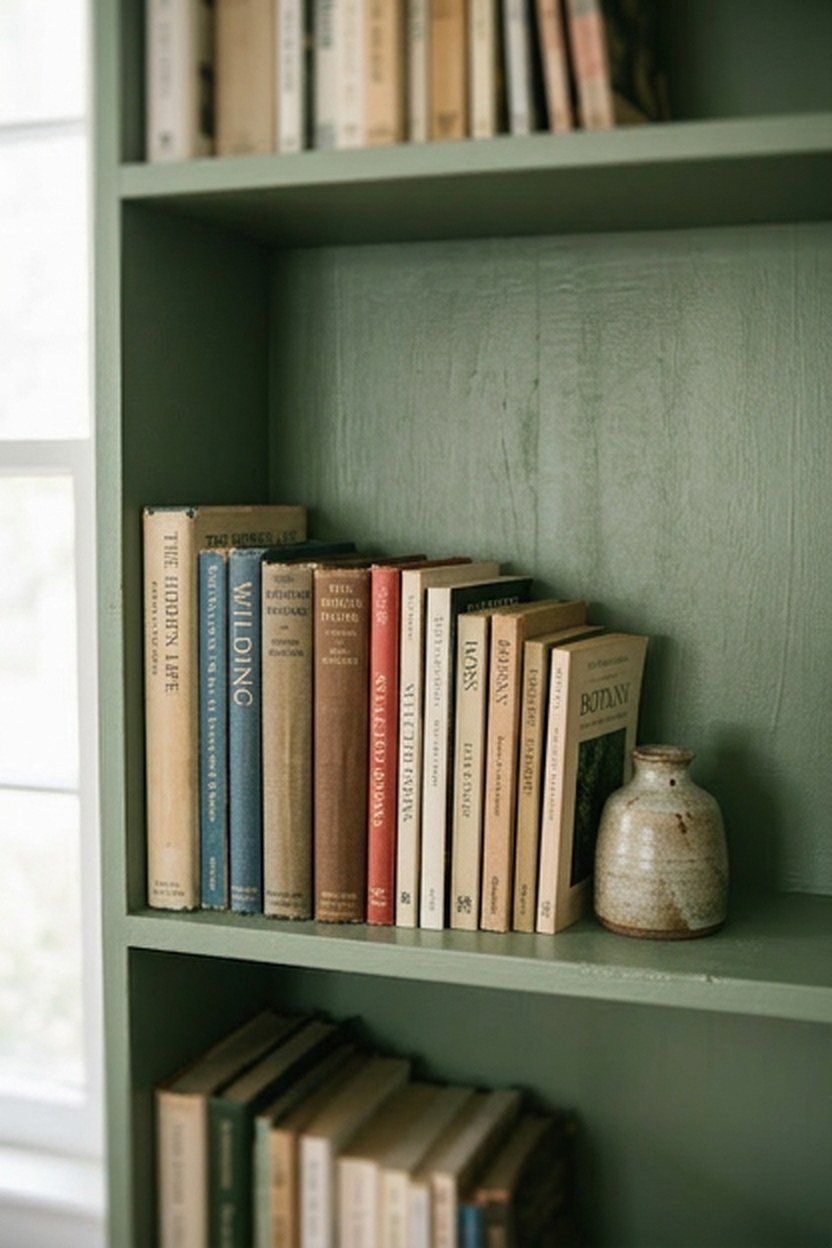
Painting built-in shelving or a bookcase in sage green, while keeping surrounding walls neutral, creates depth and a genuine focal point that suits a small living room’s need for visual interest without floor space commitment. Expect to pay 100 to 300 dollars for paint and supplies to update existing built-ins or a bookcase. This approach works especially well since it adds color at a vertical scale that a small room’s limited floor space cannot otherwise accommodate.
Paint the interior back panel of shelving in sage green while keeping the shelf frame itself in a neutral tone, or paint the entire structure, depending on how bold a statement you want. The painted back panel approach specifically makes displayed books and objects pop against the colored background. Consider your existing collection of books and objects when deciding which approach will look best.
The painted shelving will develop a soft matte texture across the surface from dust settling and regular handling of displayed items over months of normal use. This gradual textured change is a normal characteristic of painted built-ins under regular use and does not affect their structural function. Regular dusting keeps the display looking intentional rather than neglected.
Styling Sage Green Shelving Without Overcrowding
Edit your displayed items to a genuinely curated selection rather than filling every available shelf space, since a small room’s built-ins benefit from breathing room just as much as the room’s overall floor space does. Group items by color or type rather than scattering them randomly across shelves. This styling discipline matters more for a colored built-in than a neutral one, since the background itself already carries visual weight.
Leave some genuinely empty shelf space intentionally, since a fully packed shelving unit can feel cluttered regardless of how well curated the individual items are. Aim for roughly a third of each shelf to stay visually open. This restraint matters more on a colored background than a neutral one.
8. Sage Green Ceiling For Added Depth
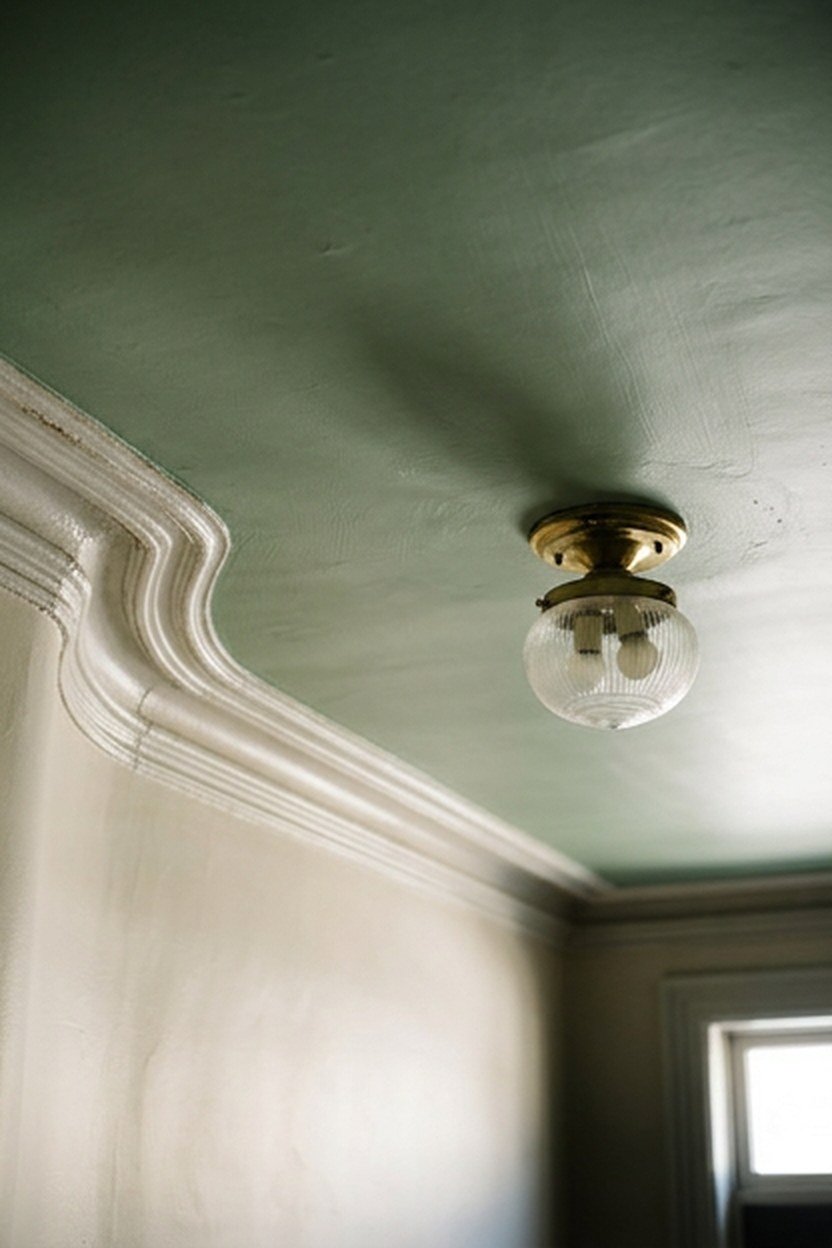
Painting the ceiling in sage green, rather than the traditional white, adds genuine depth and a cocoon like feeling that suits a small living room wanting to feel cozy rather than sparse. Expect to pay 80 to 200 dollars in materials and labor if hiring painting help, or considerably less doing the work yourself. This is a bolder commitment than most ideas on this list, since a ceiling color reads year round rather than as an easily changed accent.
Choose a slightly lighter sage tone for the ceiling than you might use on walls or furniture, since a very dark ceiling color can make a small room feel lower and more enclosed than intended. Test the exact shade on a poster board taped to the ceiling before committing to the full paint job, since ceiling color reads differently overhead than on a paint chip held at eye level. This upfront test prevents an expensive repaint if the shade feels too heavy once applied.
The painted ceiling will develop a soft matte texture in the areas nearest any light fixtures from heat exposure over multiple seasons of use. This gradual textured change near light fixtures is a normal characteristic of painted surfaces exposed to consistent heat and does not indicate any structural issue. A heat resistant paint formulation near fixtures slows this specific change if it concerns you.
Deciding Between A Full Ceiling Or A Painted Border
A full sage green ceiling creates maximum coziness and depth, while a painted border just at the ceiling’s edge offers a subtler introduction of the color with less commitment. Consider your own comfort with a bolder design choice before committing to a full ceiling application. Both approaches achieve genuine depth, so this decision comes down to your personal risk tolerance for a more dramatic change.
Get a second opinion from someone who will see the room daily before committing to a full ceiling repaint, since this is one of the more involved ideas on this list to reverse if you change your mind later. A second perspective often catches a concern you have grown too close to the project to notice. This small step is worth the delay before a full ceiling commitment.
9. Sage Green And Terracotta Warm Pairing
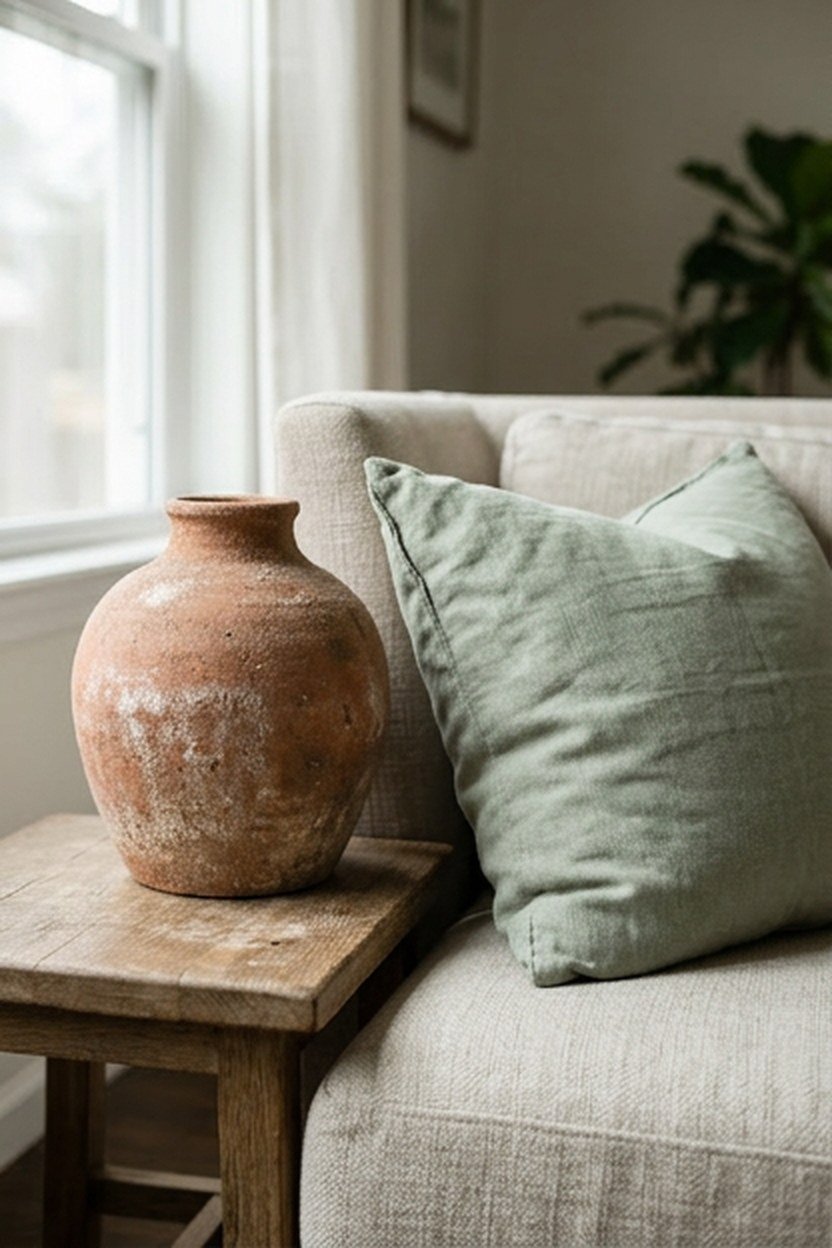
Pairing sage green with terracotta or a warm rust tone creates a genuinely warm, earthy palette that suits a small living room wanting more visual warmth than a cooler sage and white combination provides. Expect to pay 60 to 200 dollars for textile and accent updates to establish this warmer pairing across a standard small living room. This combination has grown increasingly popular for its inviting, grounded feeling.
Introduce terracotta through accessories like pillows, a vase, or a small rug, rather than large furniture pieces, if you want to test this pairing before a larger commitment. This lower risk approach lets you confirm the two colors work well together in your specific room’s light before investing in bigger pieces. Most people find this pairing reads as warmer and more inviting than they initially expected from the color combination alone.
Terracotta ceramic accessories in this palette will develop a light natural mineral bloom on their surface from regular handling and ambient humidity over time. This textured surface change is a normal characteristic of unglazed terracotta under typical indoor conditions and many people consider it an attractive sign of a well loved, actively used piece. A glazed terracotta accessory shows less of this specific change if you prefer a more consistent surface appearance.
Balancing Warm And Cool Tones In This Pairing
Sage green leans slightly cool while terracotta leans distinctly warm, so balance the proportion of each carefully to avoid one tone overwhelming the other in your specific room. A roughly even split, or a slight lean toward whichever tone suits your room’s natural light better, typically works well. Test both proportions with samples before committing to a specific ratio throughout the room.
Add a neutral element, like a cream or white base, between the sage green and terracotta if the direct pairing feels too busy or high contrast for your taste, letting the neutral tone provide visual breathing room. A cream rug or wall color works well for this purpose. This small buffer keeps the two bolder tones from competing directly.
10. Sage Green Painted Trim And Molding
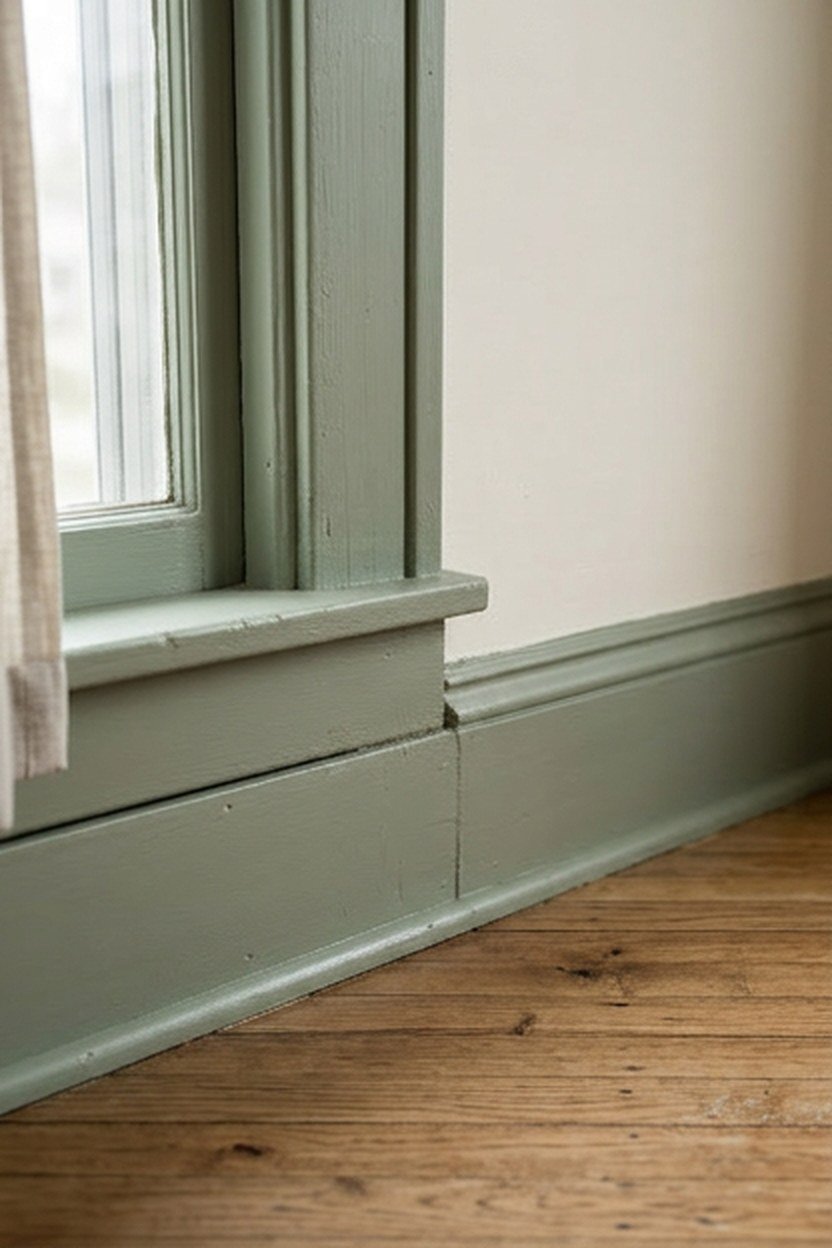
Painting trim, molding, and door frames in sage green while keeping walls in a lighter neutral tone creates an inverted color approach that adds genuine architectural interest to a small living room. Expect to pay 100 to 250 dollars in materials for a standard small living room’s trim work. This approach suits a room with genuine architectural detail worth highlighting, like crown molding or paneled doors.
Choose a semi gloss or satin finish for trim specifically, since this sheen level highlights the architectural detail’s dimension better than a flat paint would while also handling the regular contact trim experiences. Confirm your trim’s existing condition, filling any gaps or damage before painting, since a colored trim draws more attention to any imperfections than a neutral white trim typically would. This preparation step matters more for this approach than for a flat wall application.
The painted trim will develop a soft matte texture in the highest contact areas, like door frames and window sills, after a year or two of regular use. This gradual textured change from repeated contact is completely normal for painted trim in regular use and does not indicate a paint quality problem. A touch up kit matched to your specific paint color keeps these high contact areas looking fresh.
Coordinating Trim Color With Wall And Furniture Tones
Choose a wall color that provides genuine contrast against your sage green trim, since minimal contrast between wall and trim colors undermines the architectural highlighting this approach is meant to achieve. A crisp white or warm cream wall typically provides this contrast effectively. Bring your specific wall paint sample when finalizing the trim color to confirm adequate contrast in person.
Consider whether your existing furniture colors coordinate with this trim approach, since a room with many different wood tones and colors can look busier when trim itself becomes a colored architectural feature. Take stock of your room’s existing tones honestly before committing to colored trim. This upfront check avoids an unexpectedly busy final result.
11. Sage Green Woven Baskets For Storage
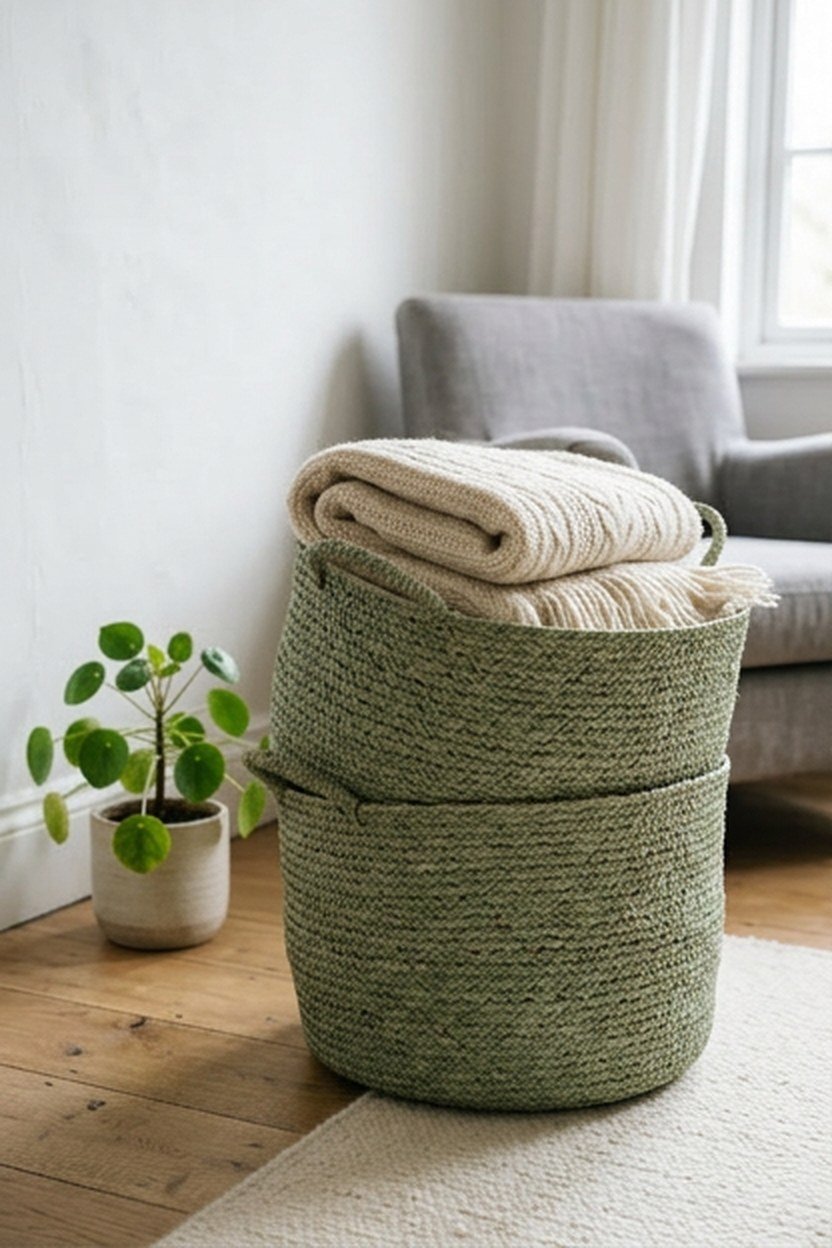
Woven baskets in a sage green tone provide genuine storage for blankets, magazines, or toys while adding color at floor or shelf level throughout a small living room. Expect to pay 20 to 50 dollars per basket for quality sage green woven storage. This is one of the most practical ideas on this list, solving a real small room storage challenge while contributing to the overall palette.
Choose basket sizes proportional to what you actually need to store, since an oversized basket wastes valuable small room floor space while an undersized one fails to solve the storage problem it was meant to address. Measure your typical storage items, blankets or toys specifically, before choosing a basket size. This practical sizing consideration matters more than the basket’s color for its actual daily usefulness.
The woven material will develop a soft natural fiber texture becoming more pronounced as the material settles and the weave loosens slightly with regular handling. This gradual textured change is completely normal for woven baskets under regular use and adds to their authentic character. Positioning baskets away from direct heat sources, like a radiator, slows this change considerably.
Choosing Basket Placement For Small Room Storage
Position storage baskets in corners or beside furniture rather than in the middle of walkways, since a small room’s traffic paths are already limited and a poorly placed basket creates a genuine obstacle. Walk through your typical movement patterns in the room before finalizing basket placement. This practical consideration matters more in a small room than almost any other storage decision.
Consider stacking two or three baskets of graduated sizes rather than spreading several same sized baskets throughout the room, since this stacking approach uses vertical space more efficiently in a room where floor space is genuinely limited. Nesting baskets also look more intentional than scattered single pieces. This small styling choice matters more in a small room than a larger one.
12. Sage Green Painted Fireplace Surround
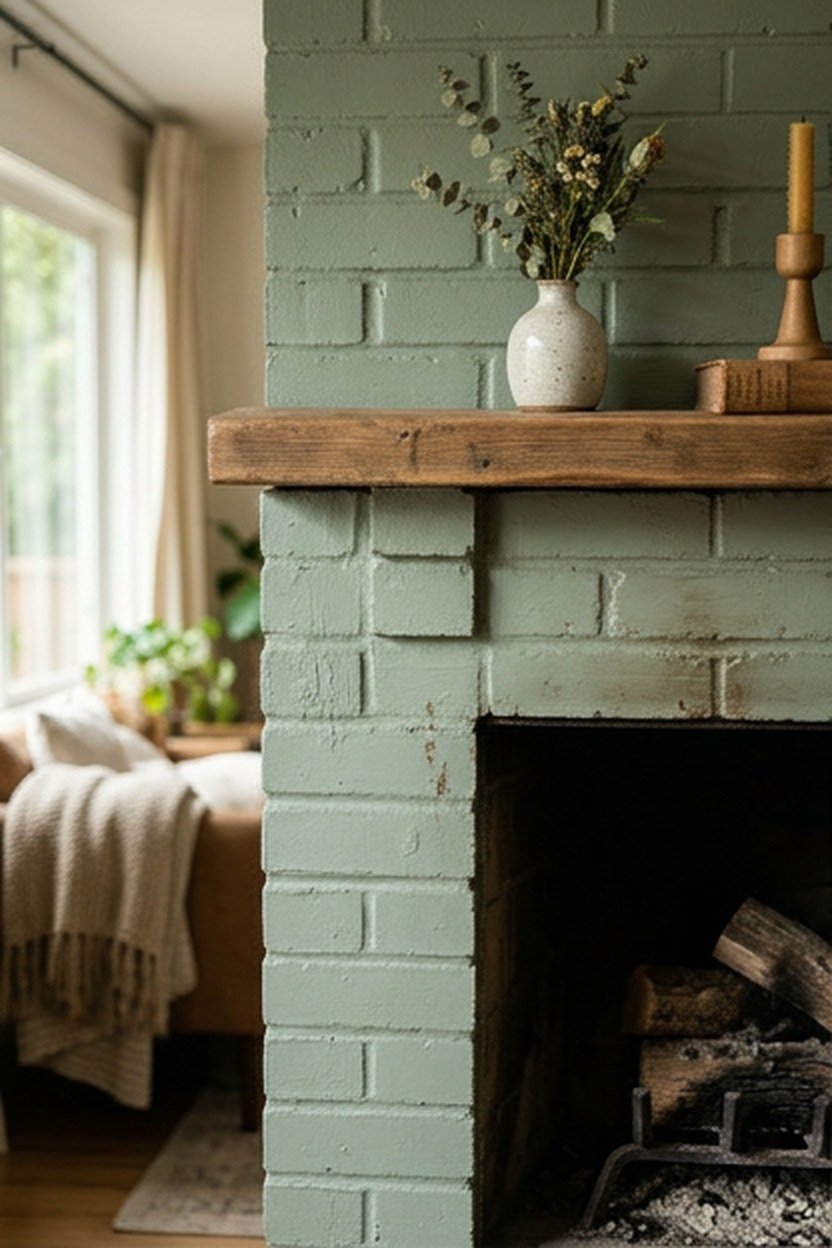
Painting an existing fireplace surround in sage green, if your small living room has this architectural feature, transforms a typically overlooked element into a genuine focal point. Expect to pay 60 to 150 dollars in materials for a standard fireplace surround repaint. This approach works especially well since a fireplace already serves as a natural gathering point in most living rooms.
Choose a heat resistant paint formulation specifically rated for the surface temperatures a fireplace surround experiences, since a standard decorative paint not rated for this application can discolor or degrade with regular fireplace use. Confirm this rating specifically with your paint supplier before beginning this project. This detail matters considerably more here than for almost any other painted surface in the room.
The painted surround will develop a soft matte texture change near the firebox opening from heat exposure and regular cleaning over years of use. This gradual textured change is normal for a fireplace surround surface under sustained heat exposure and does not affect its function. A quality heat resistant finish continues performing despite this cosmetic surface change.
Coordinating A Painted Fireplace With The Mantel
Consider whether to paint the mantel shelf the same sage green or keep it in a contrasting wood tone, since this decision significantly affects how bold the overall fireplace statement reads. A contrasting wood mantel against a sage green surround creates a layered, less monochromatic look than painting everything the same color. Choose based on your room’s existing wood tones and your appetite for a bolder single color statement.
Style the mantel with a few curated objects that complement rather than compete with the sage green surround below it, since an overly cluttered mantel can distract from the color statement the surround itself is making. Choose two or three pieces rather than a full collection. This restraint keeps the fireplace as the room’s clear focal point.
13. Sage Green Vase And Ceramic Accents
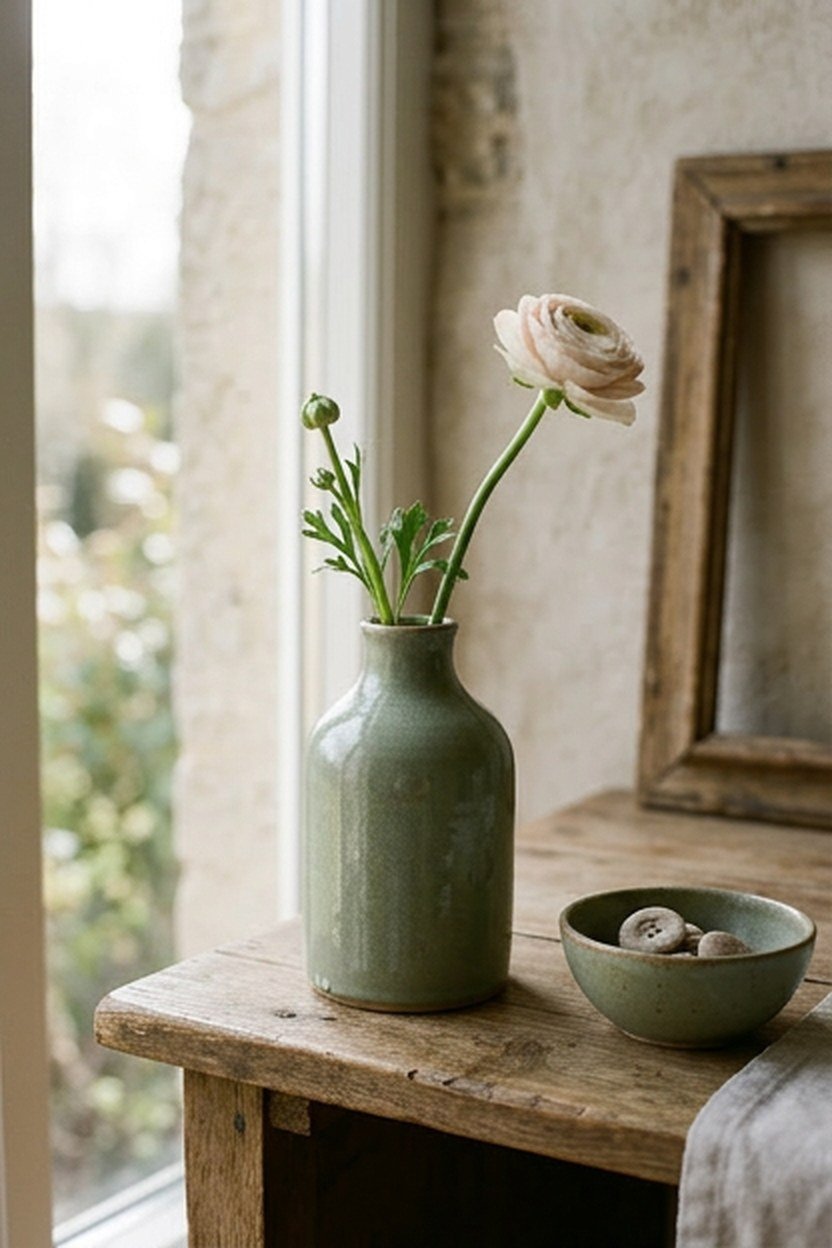
Sage green vases and ceramic accents scattered thoughtfully throughout a small living room introduce the color in an easily changed, low commitment way that suits testing the palette before larger investments. Expect to pay 15 to 45 dollars per piece for quality sage green ceramic accents. This approach works well as a starting point for anyone unsure whether they want to commit to a larger sage green application.
Group a few sage green accents together on a shelf or coffee table rather than scattering single pieces throughout the room, since this grouping creates more visual impact than isolated accents would. Mix in some greenery or a single fresh flower stem for additional organic texture that complements the ceramic pieces. This grouping approach applies regardless of your total accent budget.
The ceramic surface will develop a soft natural sheen change or a light mineral bloom, depending on the specific glaze, from regular handling and any water contact over months of use. This gradual textured change is a normal characteristic of ceramic accents under regular household use and does not affect their function. Gentle regular cleaning keeps these pieces looking their best.
Building A Sage Green Accent Collection Gradually
Start with two or three sage green accent pieces rather than buying an entire matching set at once, adding more gradually as you confirm the color genuinely works well in your specific room. This gradual approach also naturally creates a collected over time look rather than an obviously matched set. Most people find their accent collection evolves naturally over a year or two of living with the initial pieces.
Mix pieces from different sources rather than buying an entire set from one retailer, since slight variation in shade and style among genuinely sage green pieces reads as more authentically collected than a uniform matched set. Shop secondhand or vintage sources alongside new retail pieces for this effect. This mixing approach also tends to be gentler on the overall budget.
14. Sage Green Gallery Wall Frames
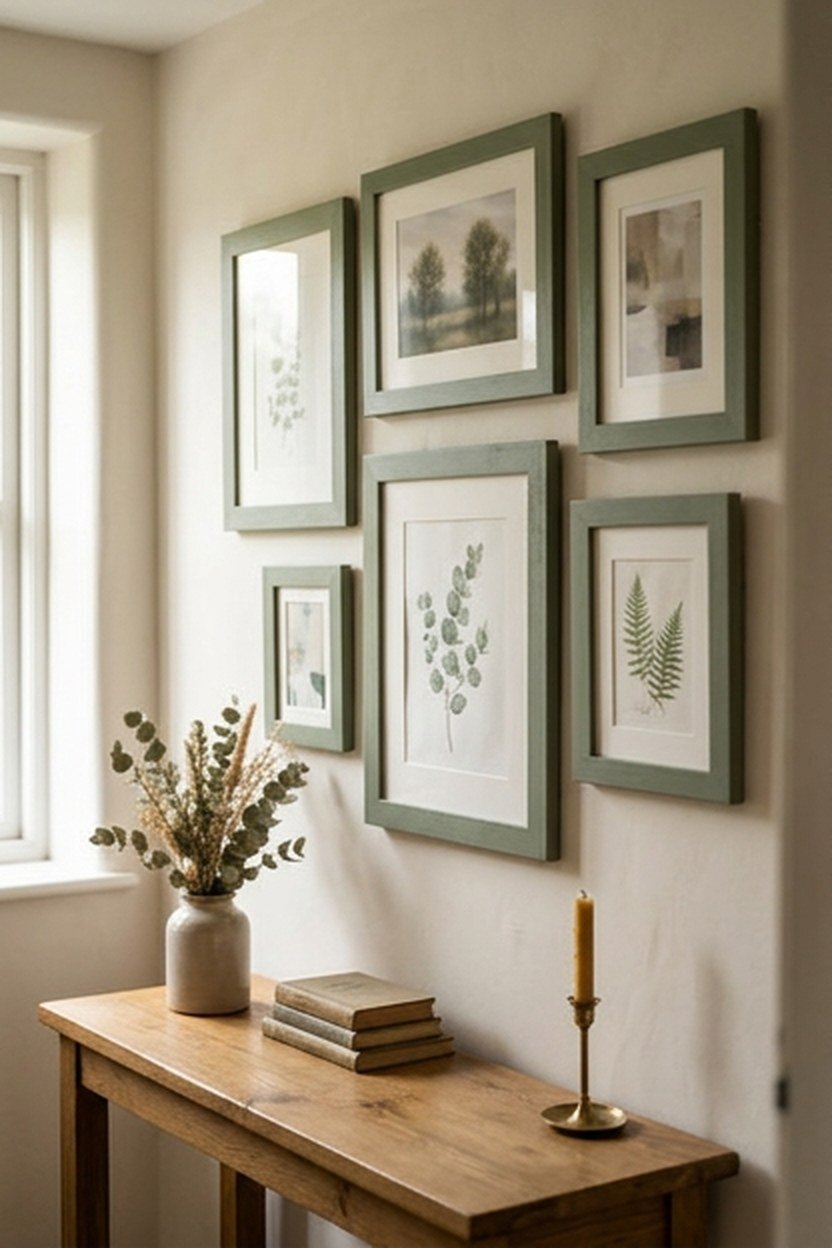
Framing art or photography in sage green mats or frames, arranged as a small gallery wall, introduces the color through a personal, easily curated display. Expect to pay 100 to 300 dollars for a gallery wall of five to seven quality framed pieces with sage green matting or frames. This approach adds both color and genuine personal character to a small living room’s wall space.
Plan your gallery wall layout on the floor before hanging anything, arranging frames of varying sizes in a composition that feels balanced rather than either too rigid or too chaotic. Use painter’s tape to mark the planned positions on the wall before committing to any actual hanging. This planning step prevents a frustrating series of repositioning attempts once frames are already on the wall.
The frame’s painted or stained sage green surface will develop a soft matte texture change at the edges from years of handling and general room humidity exposure. This gradual textured change is normal for painted or stained frame trim under typical indoor conditions and does not affect the frame’s structural function. Regular dusting keeps both frames and displayed art looking their best.
Choosing Frame Style Consistency For A Gallery Wall
Choose either uniform sage green frames throughout the gallery wall for a cohesive, curated look, or mix sage green with a complementary neutral frame color for more visual variety. Both approaches work well, so this choice comes down to whether you want a more unified or a more eclectic final composition. Confirm your choice before purchasing frames, since mixing approaches partway through can create an unintentionally inconsistent look.
Measure your available wall space carefully before finalizing a gallery wall layout, since this composition needs enough room to breathe without crowding adjacent furniture or architectural features. Leave at least a few inches of clearance around any nearby furniture or doorways. This small buffer keeps the display from feeling cramped.
15. Sage Green Reading Chair In A Corner Nook
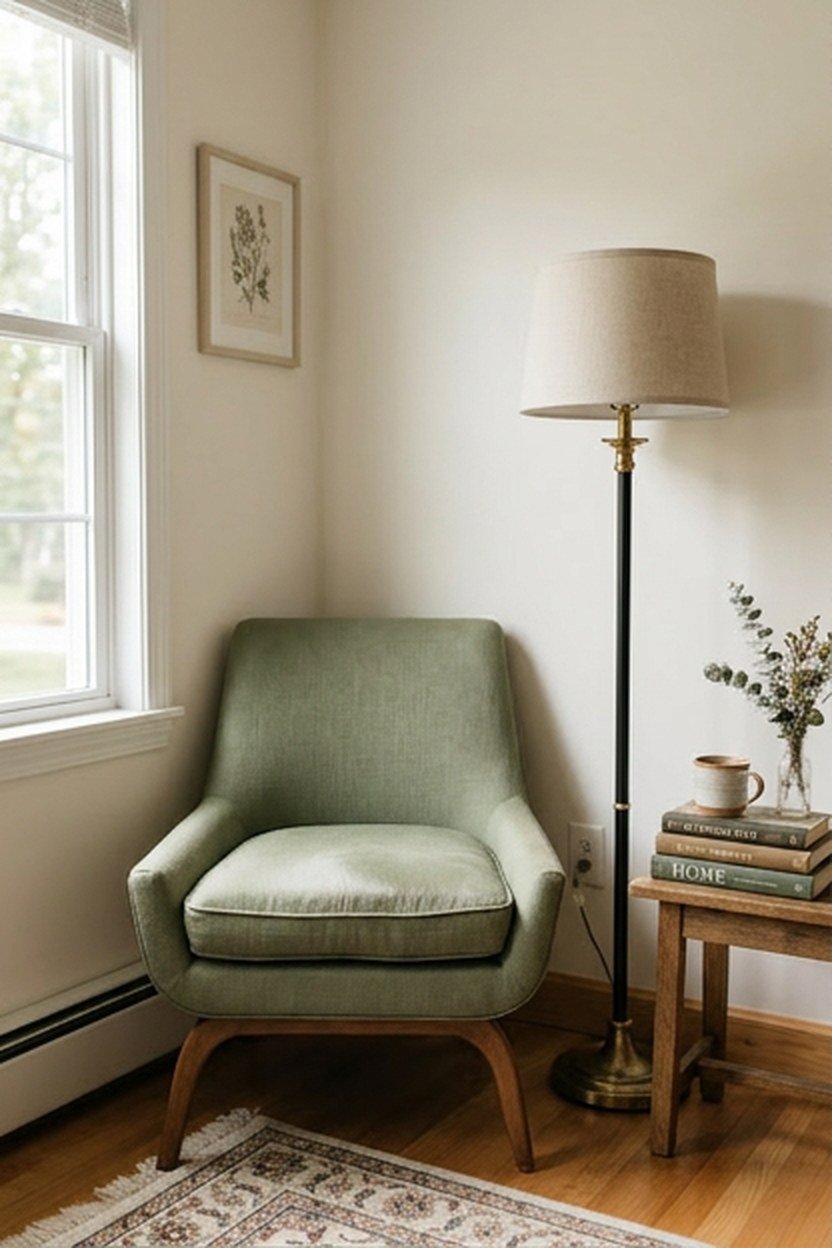
A single sage green accent chair positioned in an underused corner creates a small but genuine reading nook that makes efficient use of a small living room’s often overlooked corner space. Expect to pay 400 to 900 dollars for a quality sage green accent chair. This addition works especially well in a small room that lacks the square footage for a larger dedicated seating area elsewhere.
Choose a chair scale genuinely appropriate for your available corner space, since an oversized chair in a small nook creates the same crowding problem an oversized sofa would elsewhere in the room. Measure your specific corner dimensions before ordering, confirming the chair fits with enough clearance for comfortable use. This sizing consideration matters as much here as it does for any larger furniture piece in a small room.
The chair’s upholstery will develop a soft natural sheen change across the most sat upon areas from years of regular use, this contact point aging at a visibly different rate than less used areas of the same piece. This gradual textured change is normal for quality upholstery under sustained use and does not affect its structural comfort or support. Professional cleaning maintains the fabric’s appearance despite this natural aging pattern.
Adding A Small Side Table To Complete The Nook
Pair the sage green chair with a small, appropriately scaled side table specifically, since this addition makes the corner genuinely functional for holding a book, a lamp, or a beverage rather than purely decorative seating. Choose a table scale proportional to the chair, avoiding anything so large it crowds the already limited corner space. This small functional addition completes the reading nook concept more than the chair alone could achieve.
Add a small reading lamp specifically for this nook if the corner lacks adequate natural or overhead light, since a reading chair without adequate light for its intended purpose undermines the nook’s actual function. Test the actual reading brightness at the chair itself before considering the nook finished. This small check ensures the space earns its place functionally, not just visually.
What A Sage Green Small Living Room Actually Costs
A complete sage green small living room palette can range from under 150 dollars using paint and textile accents to 2500 dollars or more including a statement sofa or chair and coordinated accessories. Most people land somewhere in the middle, choosing either a bold furniture statement or a paint based approach as the primary investment. Prioritize the approach that best suits your specific room’s layout and your own risk tolerance for a bold color choice.
Spread a larger investment like a sage green sofa across a longer timeline if the full cost feels like a stretch, starting with paint, textiles, and smaller accents to test the color before committing to expensive furniture. I recommend this staged approach specifically for a small room, since living with the color in smaller doses first confirms it genuinely works in your space before a larger investment. This gradual confirmation prevents an expensive commitment to a color that does not quite work once fully applied.
The table below breaks down rough cost tiers for a sage green small living room project, acknowledging that specific material and furniture choices shift these numbers considerably. Treat it as a planning starting point rather than a firm quote for your specific project. Most people land in the middle tier once curtains or a rug are included.
| Budget tier | What it covers | Approach |
|---|---|---|
| Under $150 | Paint accent wall, pillows, small accents | Low commitment, easily changed |
| $150 to $800 | Curtains, rug, ceiling, trim | Moderate, semi-permanent commitment |
| $800 and up | Statement sofa or chair, full palette | Full room transformation |
Common Mistakes When Using Sage Green In A Small Living Room
Choosing a sage green shade too dark or too saturated for a genuinely small, low light room is the most common mistake, since this can push the color from cozy toward closing in and cramped. Test physical samples in your actual room’s lighting before committing to a full application, favoring a more muted shade if your room has limited natural light. This upfront testing prevents the single most common regret with this color in a small space.
Applying sage green without adequate light sources to balance its depth is the second frequent mistake, since a small room already working with limited natural light needs genuinely good artificial lighting to keep a deeper color from feeling heavy. Add layered lighting, not just a single overhead fixture, when introducing sage green into a small room. This lighting investment matters as much as the paint color choice itself.
Overcrowding a small sage green room with too many additional colors and patterns is the third mistake, since a small space benefits from a more restrained overall palette than a larger room could support. Choose sage green as the anchor color and add no more than one or two complementary tones throughout the room. This restraint keeps a small room feeling calm rather than visually chaotic.
Testing Sage Green Before A Full Room Commitment
Paint a large sample board, at least two feet square, in your candidate sage green shade and view it against your actual furniture and existing light sources before committing to a full room application. A small paint chip cannot reveal how a color reads at a larger scale in your specific space. This larger sample test is worth the modest extra effort for a decision this significant in a small room.
Live with the sample board in the room for at least a few days, viewing it in different lighting conditions, before finalizing your choice, since first impressions in a single lighting condition can be misleading. Check the sample at morning, midday, and evening before deciding. This patience prevents a costly full room commitment to the wrong shade.
Conclusion
Sage green earns its place as one of the few deep colors that genuinely flatters a small living room by offering real depth without the visual weight of a truly dark color. Start with a lower commitment approach like an accent wall or textiles to confirm the color works in your specific room’s light before moving to a larger investment like a statement sofa or full room paint. The fifteen approaches covered here scale from an affordable accent update up to a complete room transformation.
Prioritize testing your specific sage shade in your own room’s actual light above simply trusting how the color looks in someone else’s photographed space. A well chosen and properly tested sage green small living room rewards you with a genuinely cozy, considered space that makes the most of every square foot. Get the testing right, and the color will keep earning its place for years to come.
Frequently Asked Questions
Will sage green make my small living room feel smaller? Not when chosen and applied thoughtfully, since the color’s muted quality and light reflecting properties help it avoid the closing in feeling a truly dark color can create. Test your specific shade in your own room’s light before committing to confirm this balance works for your space.
Should I paint all four walls or just one accent wall? Both approaches work, with a full room application creating a more enveloping feeling and a single accent wall offering a lower commitment introduction to the color. Choose based on your comfort with a bolder statement and your room’s specific layout.
What is the most affordable way to try sage green in a small living room? Throw pillows and small ceramic accents offer the lowest cost and most easily reversible way to test the color. This approach lets you confirm sage green works in your space before any larger commitment.
Does sage green work in a small living room with limited natural light? Yes, though a more muted, less saturated shade performs better in low light than a deeper, more saturated sage tone would. Adding layered artificial lighting also helps balance the color’s depth in a room with limited natural light.
Can I pair sage green with bold patterns in a small room? Yes, but sparingly, since a small room benefits from restraint in its overall palette. Choose one or two patterned elements at most, letting sage green remain the room’s primary visual statement.
What is the biggest risk of choosing sage green for a small living room? Choosing a shade too dark or saturated for your room’s specific light conditions is the biggest risk, since this can tip the color from cozy toward cramped. Always test physical samples in your own space before a full commitment.