
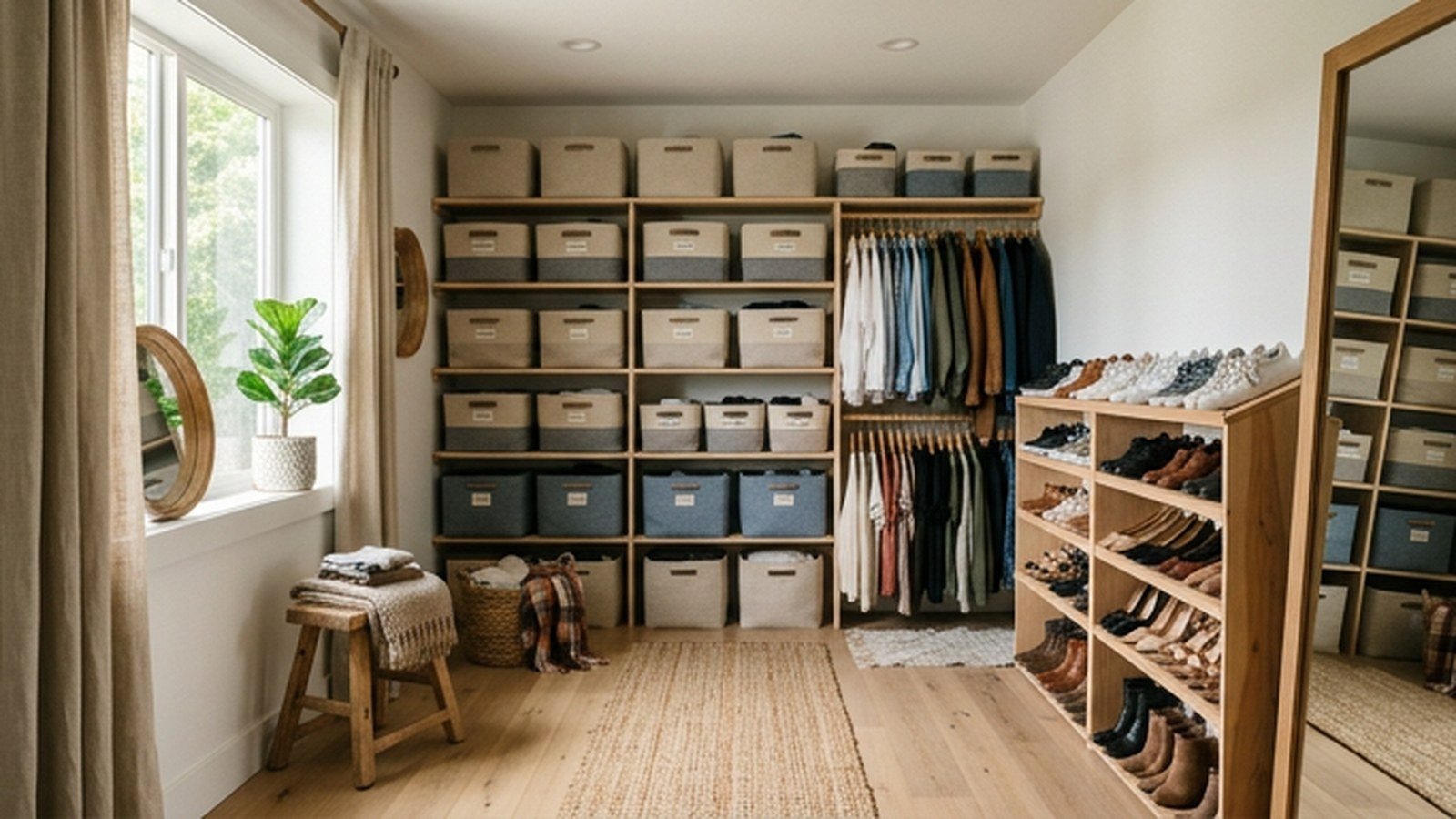
A dressing room only earns its name once everything inside it has a genuine place, since a beautiful closet crammed with unsorted clothes functions no better than a cramped one. The best organized dressing rooms combine smart storage systems with a layout that matches how you actually get dressed each morning. This guide walks through fifteen real organizing ideas, from labeled bins to a dedicated accessory wall.
I have helped organize more than one dressing room from scratch, and the detail that makes the biggest difference is almost never the most expensive one. A simple labeling system or a properly sized hanging rod does more for daily usability than an elaborate custom built-in ever could on its own. Getting the fundamentals right matters more than any single splurge item.
By the end of this piece you will know which organizing systems are weekend projects and which call for a professional closet company, along with real costs for each. I have included a comparison table and a cost breakdown, since prices swing enormously between a simple bin system and a full custom built-in. Read through all fifteen before deciding what your dressing room actually needs.
Why Organization Matters More Than Square Footage
A small, well-organized dressing room functions better than a large, chaotic one, since square footage alone does nothing to solve the daily friction of hunting for a specific item. The real measure of a dressing room’s success is how quickly you can find and put away anything inside it.
Zoning the room by category, keeping all shoes together, all folded items together, and all hanging items together, is the single habit that keeps a dressing room functional over time. Without zoning, even a generously sized room slides back into visual chaos within a few weeks of regular use. This principle underlies nearly every specific idea in this guide.
| System | Best For | Typical Cost |
|---|---|---|
| Labeled bins | Folded items, accessories | $50 to $150 |
| Adjustable shelving | Changing wardrobe needs | $200 to $600 |
| Custom built-in closet | Long-term, high-use rooms | $2,000 to $8,000+ |
| Rolling garment rack | Overflow, seasonal rotation | $80 to $250 |
| Drawer dividers | Small folded items | $20 to $80 |
Building in flexibility from the start, through adjustable shelving or modular components rather than fixed permanent fittings, keeps a dressing room organizing system useful even as your wardrobe changes over the years. A system that only works for your current closet contents becomes a liability the moment your needs shift.
Planning A Dressing Room Around Your Actual Habits
Before installing any organizing system, spend a week paying attention to how you actually get dressed, noting which items you reach for daily versus rarely, since this observation should drive the whole layout. Placing daily essentials at eye level and easy reach, while pushing rarely used items to higher or lower storage, saves real time every single morning.
Measuring your actual wardrobe before buying any storage system prevents the common mistake of purchasing bins or shelving that do not match what you actually own. Counting hanging items, folded items, shoes, and accessories separately gives you real numbers to plan storage capacity around.
Consider your dressing room’s natural light and add task lighting specifically at any mirror or dressing area, since good lighting affects how well the whole space actually functions day to day. A dim dressing room makes color matching and outfit selection genuinely harder regardless of how well organized the storage itself is.
Auditing Your Wardrobe Before Organizing
Removing every item from the dressing room and sorting it into keep, donate, and discard piles before reorganizing prevents the common mistake of building a beautiful system around clothes you no longer actually wear. This audit is uncomfortable but genuinely necessary, since organizing clutter you should have removed anyway wastes real time and storage space. Doing this audit once every year or two keeps the whole system from slowly filling back up with items nobody needs.
1. Labeled Storage Bins For Folded Items
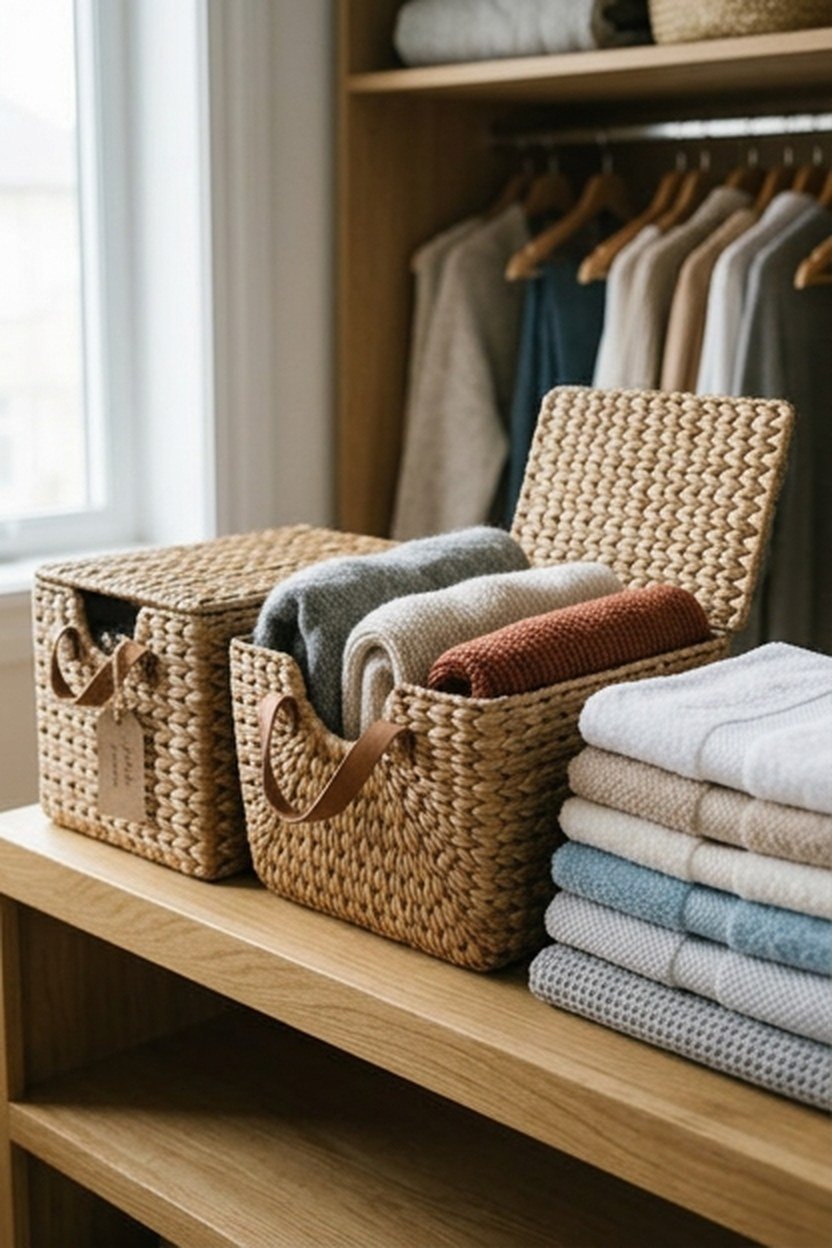
Clear or labeled storage bins for folded sweaters, t-shirts, and other soft goods solve the common problem of a shelf becoming an unsorted pile the moment more than one item gets stacked there. Labeling each bin by category, rather than trusting memory alone, means anyone in the household can find and return items to the correct spot without guessing.
Choosing bins in a consistent material and color scheme, rather than a mismatched collection of whatever containers were on hand, makes the whole shelving area look considered rather than makeshift. Woven fabric bins bring texture and warmth, while clear acrylic bins let you see contents at a glance without opening anything. Either material choice works, so pick based on whether you prioritize visibility or a softer aesthetic.
Sizing bins to match your actual shelf depth prevents the common mistake of bins that stick out awkwardly or leave wasted space behind them. Measuring your shelving before ordering bins, rather than guessing, avoids an expensive reordering process once the wrong size arrives.
Choosing Bin Labels That Actually Get Used
A label system only works if it is easy enough to update that people actually bother, so a simple removable label maker tag beats an elaborate printed label that feels too permanent to change. Labeling by broad category, like “workout tops” or “winter sweaters,” rather than overly specific subcategories, keeps the system realistic to maintain.
2. Adjustable Shelving System For A Changing Wardrobe
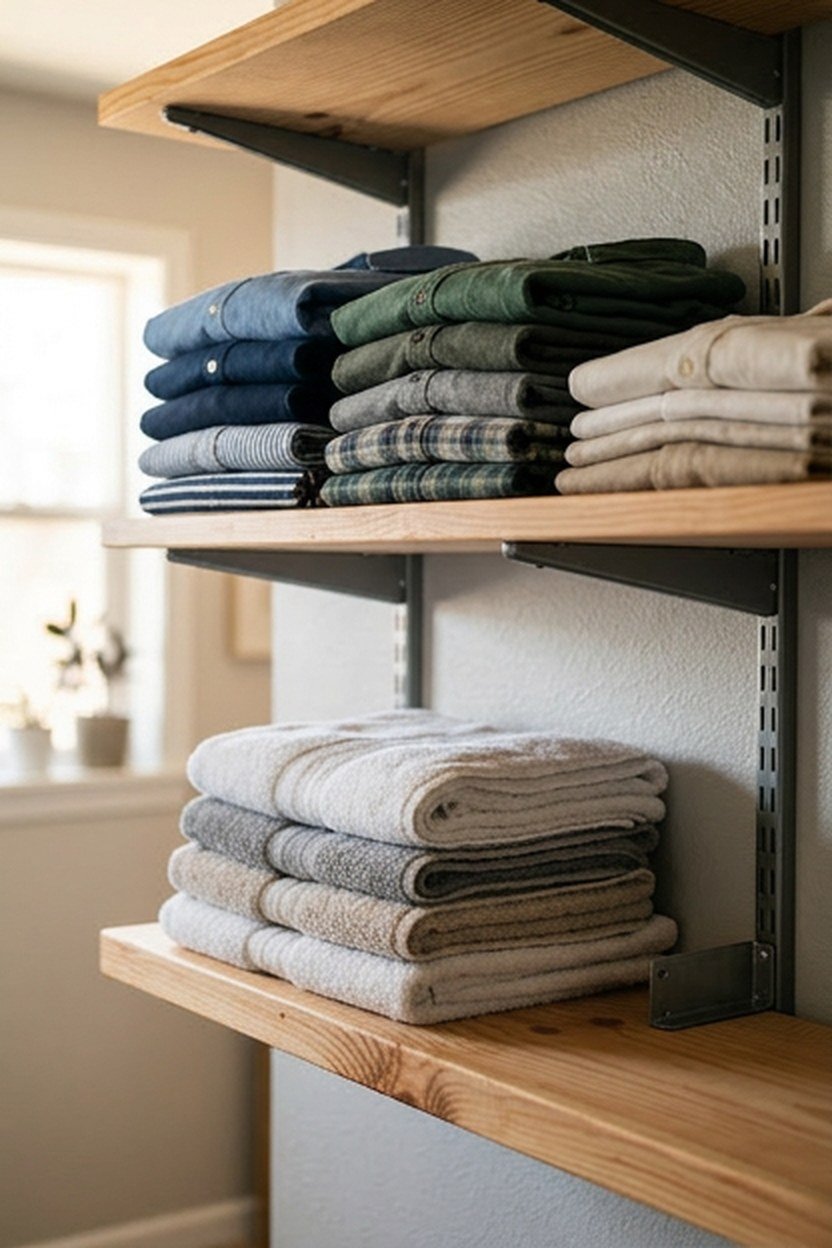
An adjustable shelving system, where shelf height can be reconfigured without tools, adapts to a wardrobe that changes with the seasons or over the years in a way that fixed shelving cannot. Taller shelves accommodate folded bulky sweaters or stacked shoe boxes, while shorter shelf spacing suits folded t-shirts or smaller accessories.
Track-and-bracket shelving systems, sold at most home improvement stores, offer this adjustability at a reasonable price point without requiring custom carpentry. Choosing a system rated for your actual load, particularly if you plan to store heavier items like folded jeans or shoe boxes, prevents sagging shelves over time.
Reconfiguring the shelving seasonally, moving winter coats to more accessible shelves in cold months and summer clothes to the same spot when the season shifts, keeps the most relevant items always within easy reach. This seasonal rotation habit is a genuine advantage adjustable shelving offers over a fixed system. Building this rotation into your regular routine gets more value out of the flexible system you have installed.
Weight Limits For Adjustable Shelving
Most adjustable shelving systems specify a maximum weight per shelf, and exceeding this limit, particularly with stacked shoe boxes or folded heavy sweaters, risks the shelf bracket failing over time. Checking the manufacturer’s stated weight capacity before loading a shelf heavily protects both your stored items and the shelving system itself.
3. Custom Built-In Closet System
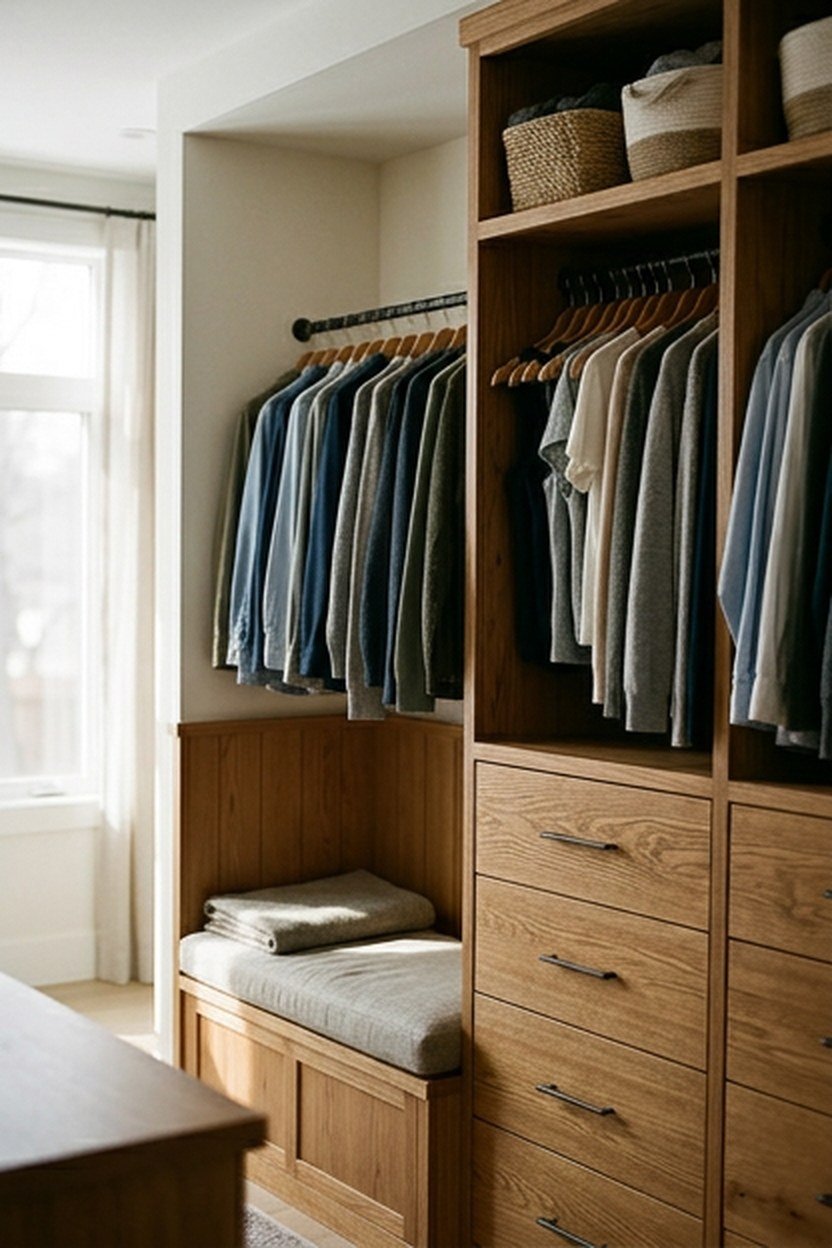
A custom built-in closet system, designed and installed by a professional closet company, delivers storage precisely matched to your specific wardrobe and dressing room dimensions in a way that off-the-shelf shelving cannot fully replicate. This investment suits a dressing room you plan to use for many years, where the upfront cost is justified by long-term daily function. A well-designed custom system also tends to add real value if you ever sell the home.
The design process typically starts with a detailed wardrobe inventory, similar to the audit described earlier in this guide, which the closet company uses to allocate hanging space, shelving, and drawers to match your actual storage needs. Choosing a company with a strong portfolio of dressing rooms similar in size to yours helps ensure the final design translates well to your specific space.
Because a custom system is a genuinely permanent installation, getting the wardrobe audit and space planning right before construction begins matters more here than for any other idea on this list. Revising a custom built-in after installation is far more expensive than getting the initial design right. This upfront planning investment protects the larger financial commitment a custom system represents.
Getting Multiple Quotes For A Custom Closet
Closet company pricing varies considerably for what can be a similar final product, so getting at least three quotes for any custom built-in project helps you understand the real market range before committing. Comparing not just price but also material quality and installation timeline across quotes gives a fuller picture than price alone.
4. Rolling Garment Rack For Overflow Storage
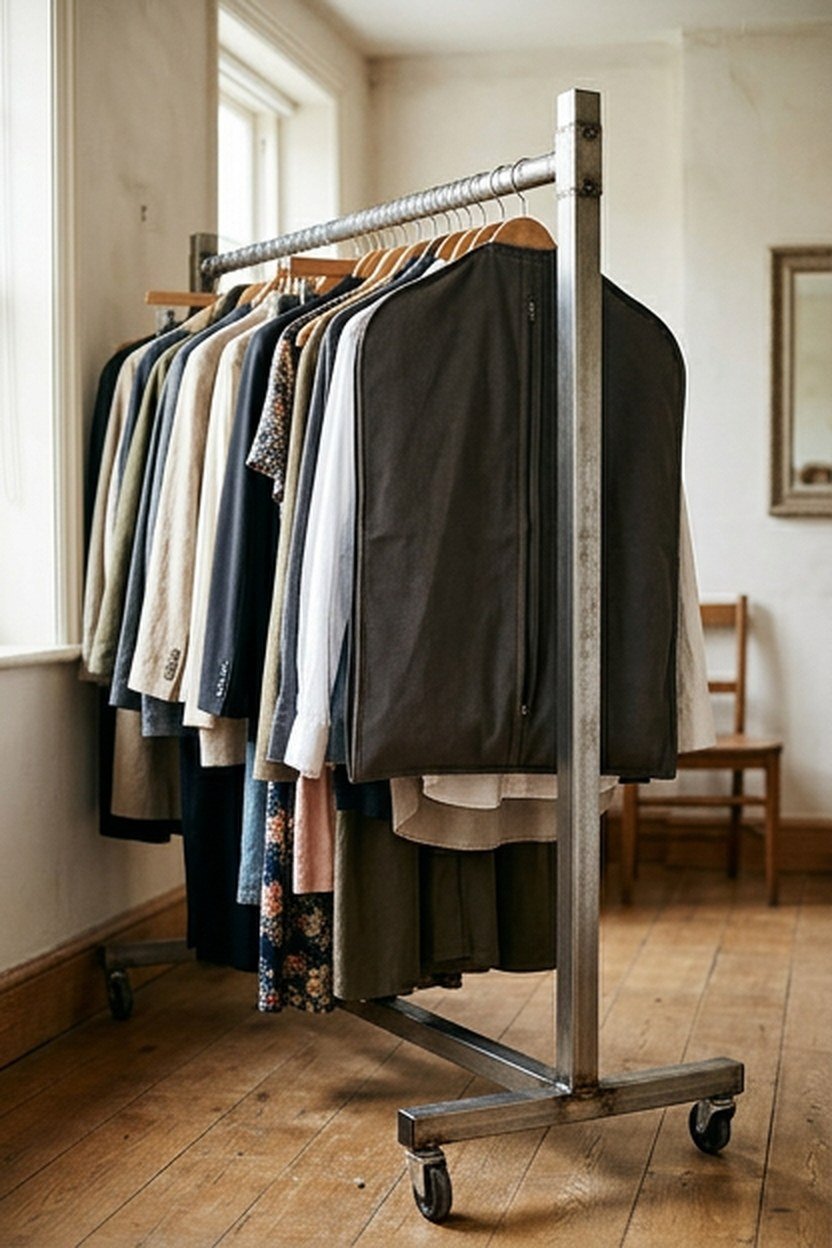
A rolling garment rack provides flexible, movable hanging storage for overflow items that exceed a dressing room’s built-in hanging capacity, whether that overflow is seasonal coats, special occasion wear, or simply a wardrobe that has outgrown the existing closet. Because the rack rolls, it can be repositioned or moved to another room entirely when not needed, unlike a fixed additional closet rod.
Choosing a rack with a sturdy metal frame, rather than a lightweight version prone to bowing under a full load of clothes, matters if you plan to keep it loaded regularly rather than using it only occasionally. A rack with wheels that lock in place prevents unwanted rolling once positioned where you want it.
Covering a rolling rack with a garment bag or fabric cover protects stored clothes from dust while keeping the overall look tidier than an exposed rack of hanging items. This covering also works well if the rack needs to double as a somewhat presentable piece of furniture in a shared space.
Positioning A Rolling Rack Within A Small Dressing Room
In a genuinely small dressing room, positioning a rolling rack along the least-trafficked wall, rather than in the center of the room, keeps the space navigable for daily use. Measuring the rack’s full footprint, including the width needed to actually open its hanging space, before finalizing placement prevents an awkward, cramped final layout.
5. Dedicated Accessory Wall With Hooks And Pegs
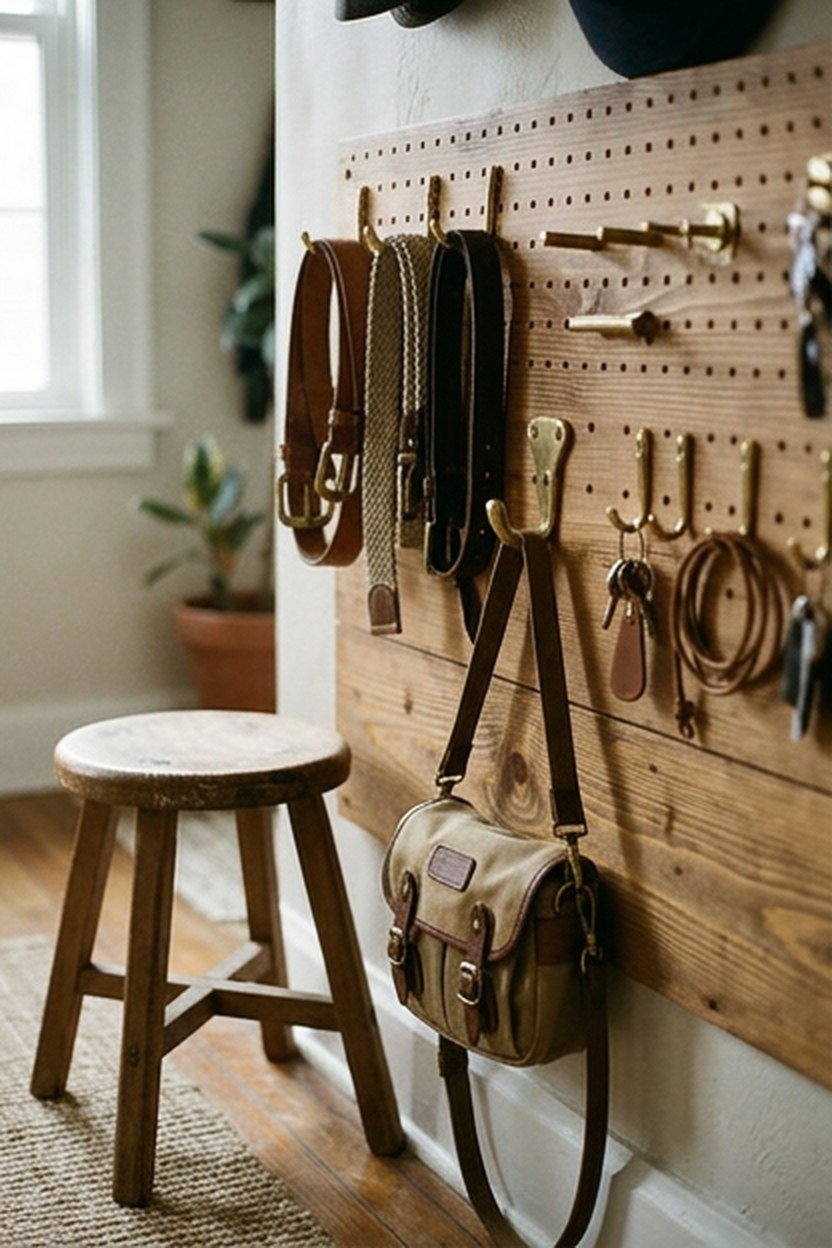
A dedicated wall fitted with hooks, pegs, or a slatted organizing panel gives belts, scarves, bags, and jewelry their own visible storage zone, solving the common problem of accessories ending up in a tangled drawer or scattered across a dresser top. This visible storage also makes accessories easier to actually incorporate into daily outfits, since you can see your full collection at a glance rather than digging through a drawer.
Grouping hooks by accessory type, belts together, bags together, keeps the wall organized rather than becoming its own source of visual clutter despite being visible storage. Spacing hooks generously enough that items do not overlap and obscure each other maintains this organization over time.
Choosing a hook or peg material that complements your dressing room’s existing hardware, whether brass, matte black, or simple wood, ties this accessory wall into the room’s broader design rather than feeling like a bolted-on afterthought. This small material coordination detail is worth considering even for a purely functional addition. A cohesive material palette makes the whole room feel more considered.
Protecting Delicate Accessories On An Open Wall
Delicate items like fine jewelry or silk scarves benefit from a slightly more protected storage method than an entirely open hook, since dust and direct light exposure can affect certain materials over time. A small glass-fronted case or a fabric-lined drawer nearby for these more delicate pieces, alongside the open hook wall for sturdier accessories, balances visibility with genuine protection.
6. Shoe Storage With Angled Display Shelving
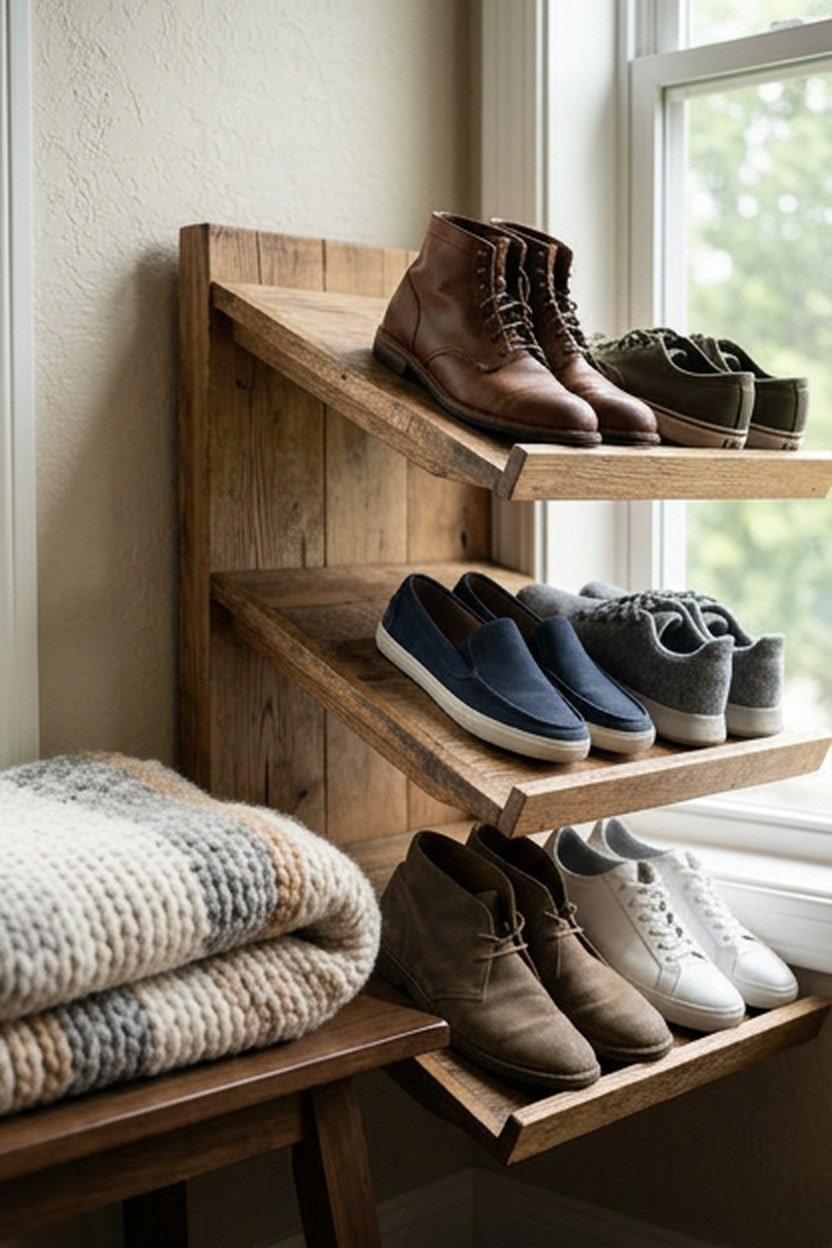
Angled shoe shelving, where each pair sits at a slight incline rather than flat, displays shoes more like a retail store than a typical flat shelf, making it considerably easier to see and select a specific pair at a glance. This display method also tends to fit more pairs into the same vertical space than flat shelving, since the angled design uses depth more efficiently.
Grouping shoes by type, sneakers together, heels together, boots together, on the angled shelving keeps the display organized beyond simple visibility. This grouping also makes seasonal rotation easier, since an entire category of shoes can move to more or less accessible shelving together as the season changes. This organizational layer on top of the angled display multiplies its usefulness.
Choosing angled shelving with a lip or small barrier at the shelf’s edge prevents shoes from sliding forward over time, a practical detail that purely flat angled shelving sometimes lacks. This small design feature matters more than it might seem until the first pair of shoes slides onto the floor below. Testing this feature before committing to a full shelving system is worth the extra research.
Sizing Angled Shelving For Different Shoe Types
Standard angled shoe shelving spacing suits typical sneakers and flats well, but taller boots or shoes with significant heel height need either adjustable spacing or a separate storage solution entirely. Measuring your tallest shoe types before finalizing shelf spacing prevents an expensive system that turns out to only fit part of your actual shoe collection.
7. Drawer Dividers For Small Folded Items

Drawer dividers, whether simple adjustable inserts or a full grid system, keep folded underwear, socks, and other small items from becoming a jumbled pile the moment a drawer is opened and closed a few times. This organization is one of the more affordable ideas on this list, since basic dividers cost relatively little compared to any shelving or built-in project.
Choosing adjustable dividers, rather than a fixed grid, lets you reconfigure the sections as your specific collection of small items changes over time. Measuring your actual drawer dimensions before ordering dividers ensures a snug fit rather than dividers that shift and slide within an oversized drawer.
Folding items using a consistent method, like rolling rather than flat folding for items stored upright in a divided section, maximizes how many items fit visibly within each divided compartment. This folding technique, popularized through various organizing methods, works particularly well paired with drawer dividers specifically. Combining the right folding method with the right divider system delivers more organizational benefit than either alone.
Choosing Divider Material For Durability
Wood or bamboo dividers tend to hold their shape better over years of regular use than lightweight plastic versions, which can warp or crack under repeated pressure from drawer contents. This durability difference matters more for a drawer that gets opened and closed multiple times daily than for occasional-use storage. Investing in a slightly more durable material upfront often costs less than replacing a cheaper version within a year or two.
8. Color-Coded Hanging System
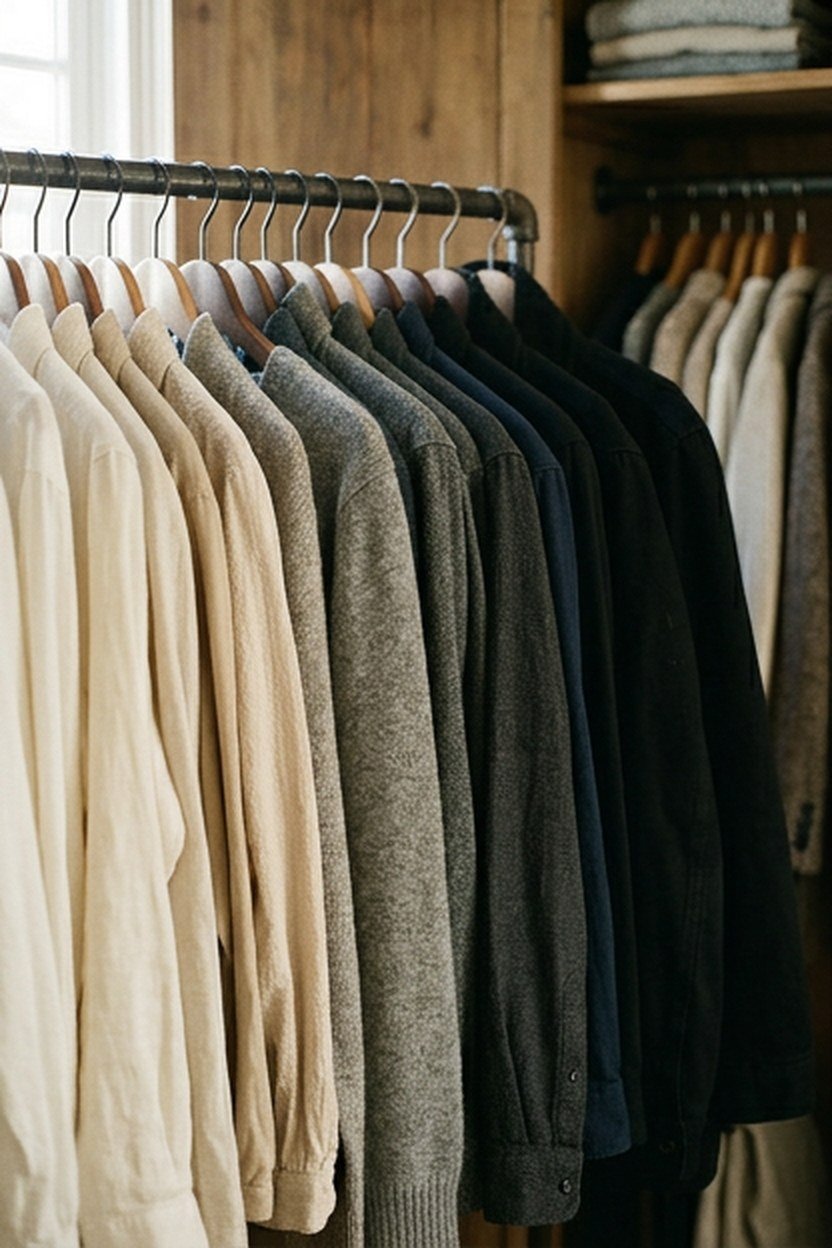
Organizing hanging clothes by color, moving gradually across the visible spectrum from light to dark, creates both a visually striking closet and a genuinely functional system for quickly locating a specific item by its color. This method works particularly well for households with a large hanging wardrobe, where scrolling through dozens of similar items by garment type alone can still take real time. This idea pairs naturally with the category-based zoning described earlier in this guide.
Combining color coding with category zoning, keeping all dresses together sorted by color rather than mixing color order across garment types, delivers the benefits of both systems rather than choosing one over the other. This combined approach takes slightly more initial setup time than either system alone but pays off in daily usability. Most people who try this combined method report it becomes second nature within a few weeks.
Maintaining a color-coded system requires returning each item to its correct color position after wearing and laundering, which is a habit that takes conscious effort initially but becomes automatic with repetition. This maintenance requirement is worth being honest about before committing to the system, since a color-coded closet that slides back into random order provides little of its intended benefit. Building the return-to-position habit early keeps the system genuinely functional long-term.
Color Coding For Households With Multiple People
In a shared dressing room, color coding works best when each person maintains their own designated section rather than blending everyone’s clothes into a single spectrum. Mixing multiple wardrobes into one color order becomes confusing rather than helpful. Assigning clear boundaries between each person’s section, even within a shared color-coded system, keeps the method functional for everyone using the space.
9. Pull-Out Valet Rod For Outfit Planning
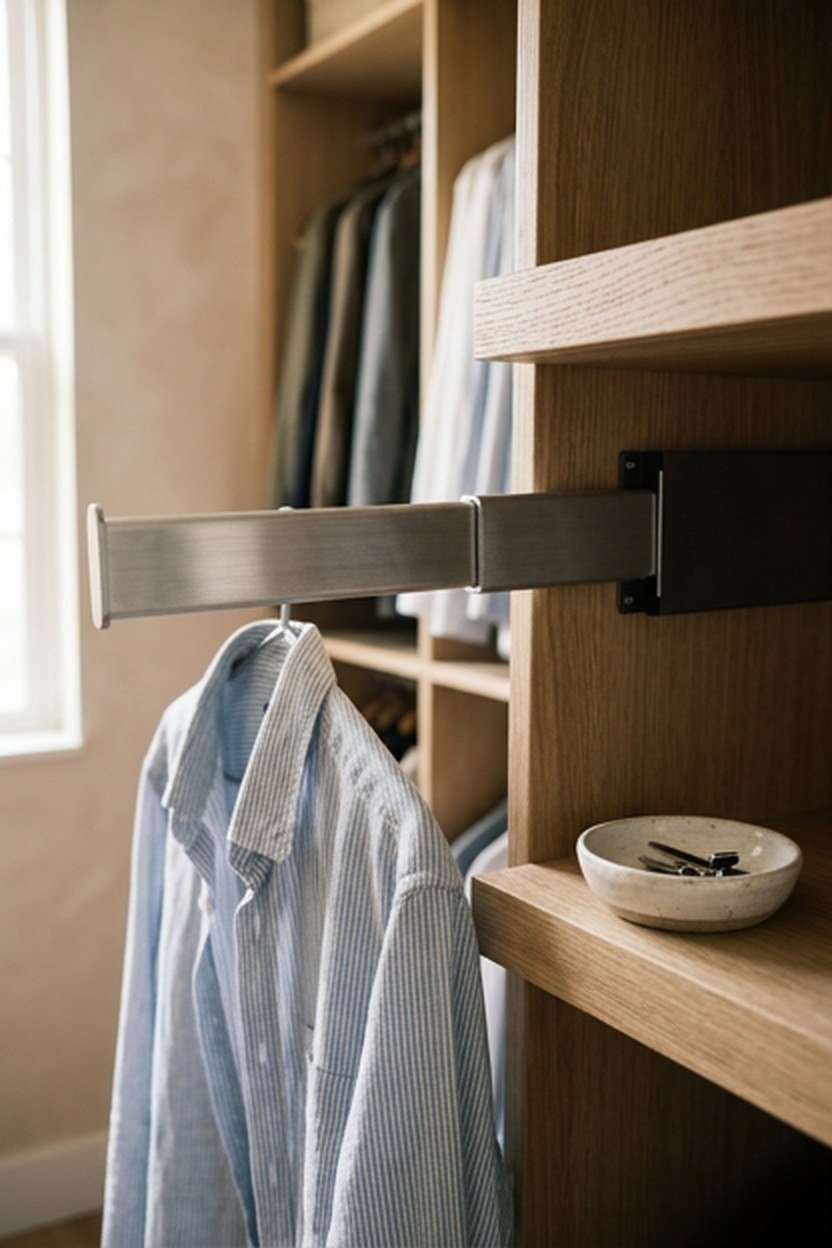
A pull-out valet rod, a short hanging bar that extends from the closet’s side wall or shelving unit, gives you a dedicated spot to hang tomorrow’s planned outfit separate from the main closet rod. This small addition solves the common morning problem of an outfit assembled the night before getting lost among the rest of the hanging wardrobe.
Positioning the valet rod near the dressing room’s mirror or entrance, rather than buried in a back corner, keeps the planned outfit visible and easy to grab on the way out each morning. Most valet rods retract fully into the cabinetry when not in use, so this addition does not consume permanent visible space.
Because the valet rod is a small, relatively inexpensive addition compared to most other ideas on this list, it is one of the easier upgrades to add to an existing closet system without a full renovation. Many closet hardware suppliers sell valet rods designed to retrofit into existing shelving.
Using A Valet Rod For Multiple Outfits
Some valet rod designs extend far enough to hold two or three hangers rather than just one, which suits planning a few days of outfits in advance rather than a single next-day outfit. This expanded capacity is worth considering specifically for a household member who prefers planning a full week’s wardrobe at once. Checking a specific product’s stated capacity before purchase confirms it matches your actual planning habits.
10. Jewelry Organizer With Individual Compartments
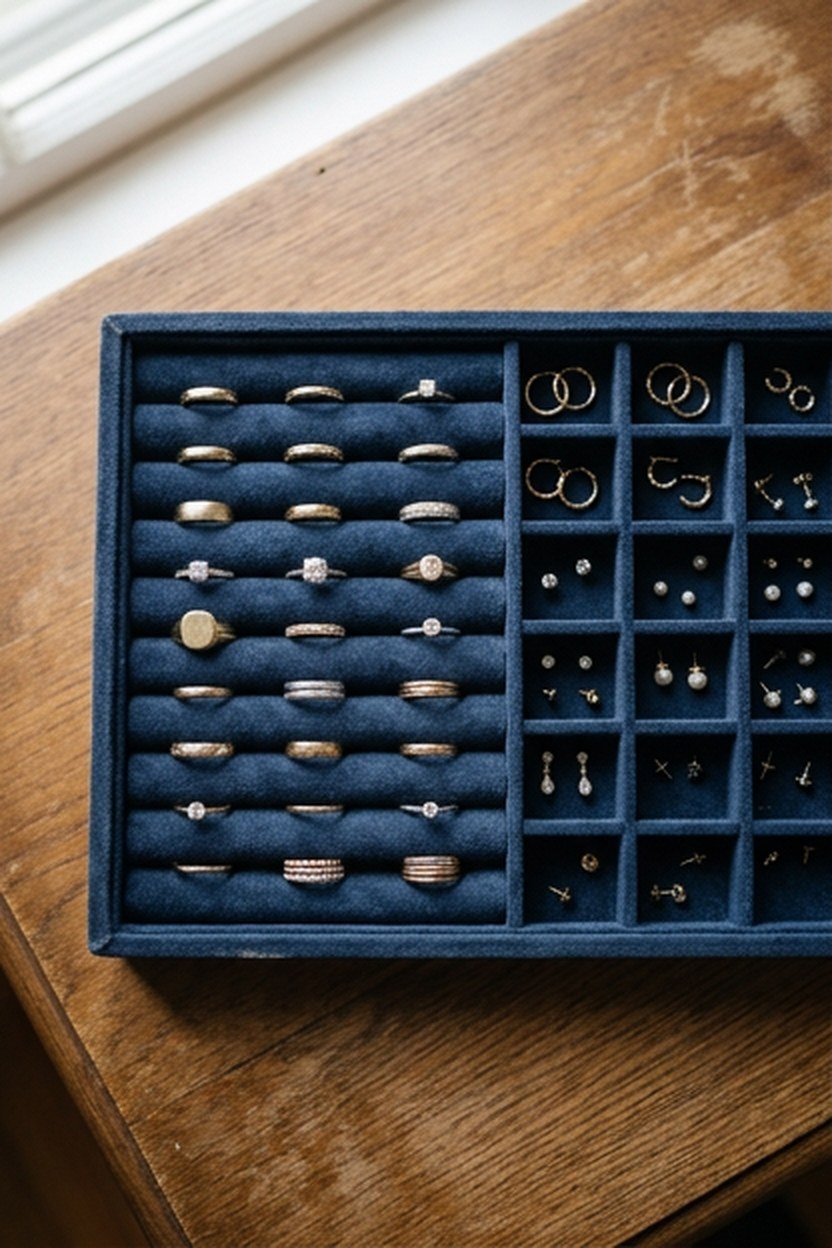
A jewelry organizer with individual compartments for rings, earrings, necklaces, and bracelets prevents the common tangling problem that occurs when jewelry is stored loosely together in a single drawer or box. This organization also protects delicate pieces from scratching against each other, a genuine concern for finer jewelry stored without separation.
Choosing a organizer with a soft, lined interior, typically velvet or microsuede, protects jewelry surfaces better than a hard plastic compartment. Necklace hooks specifically prevent the tangling that loose necklace storage almost inevitably produces, making this a particularly worthwhile feature to prioritize.
Positioning the jewelry organizer near natural or task lighting makes it considerably easier to distinguish between similar pieces, like different gold tones, when selecting jewelry to wear. This lighting consideration is easy to overlook when planning the organizer’s location but genuinely affects daily usability. A well-lit jewelry organizer functions better than an identical one tucked into a dim corner.
Securing Valuable Jewelry Within An Organizer
For genuinely valuable jewelry pieces, an organizer with a small lock or a hidden compartment adds a layer of security beyond simple organization, worth considering if the dressing room is accessible to guests or household staff. This security feature is a specific consideration for higher-value collections rather than a universal requirement. Balancing easy daily access against genuine security needs is a personal decision based on the actual value of what you are storing.
11. Vertical Scarf And Tie Storage
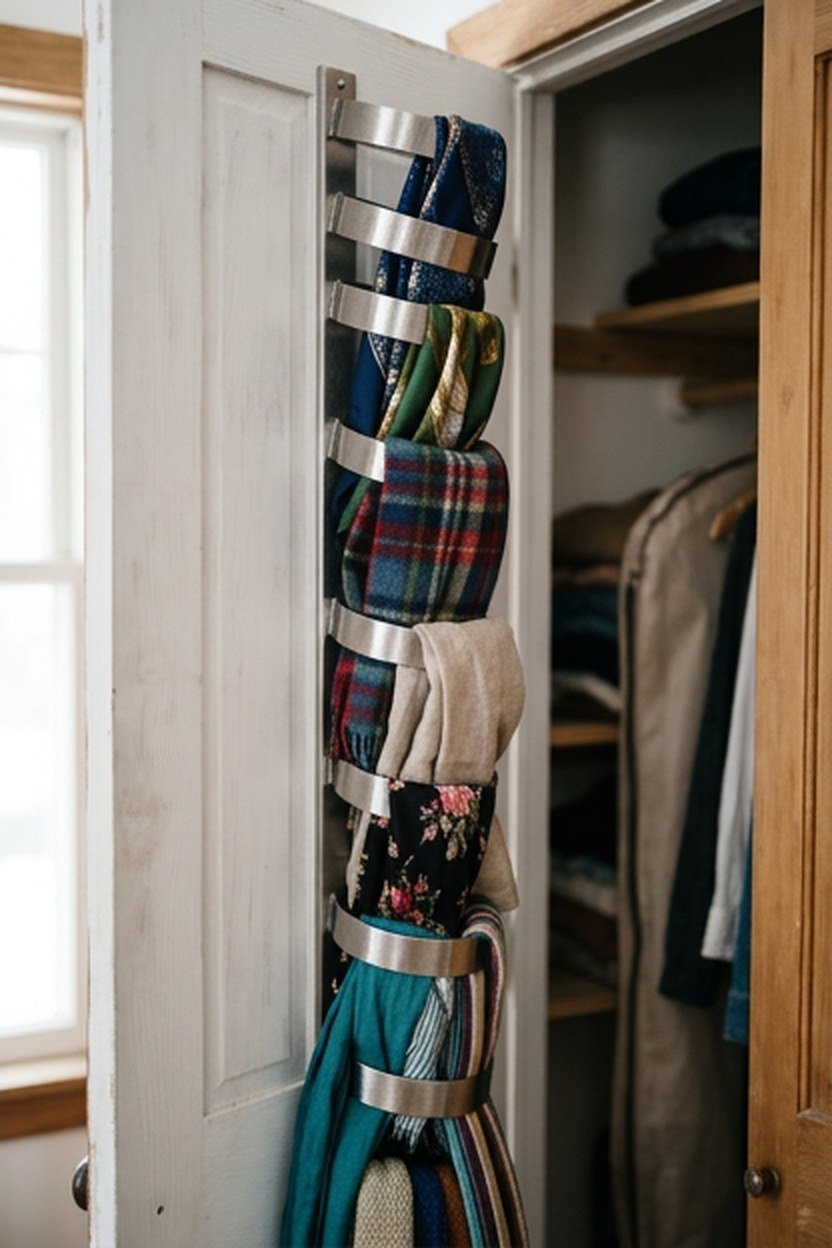
A vertical storage rack or hanging organizer specifically designed for scarves and ties keeps these often-tangled accessories visible and individually accessible rather than balled up in a drawer. This vertical approach uses wall or closet door space efficiently, which matters in a dressing room where floor and shelf space are already allocated to other storage needs.
Choosing a rack with individual slots or loops, rather than a single rod where items can slide together and tangle, maintains the organization this storage type is meant to provide. Mounting the rack on the inside of a closet door takes advantage of otherwise unused vertical space that many dressing rooms waste. This door-mounted placement is one of the more space-efficient ideas on this entire list.
Because scarves and ties are relatively delicate fabric items, choosing a storage rack with smooth, rounded edges rather than sharp hardware prevents snagging over repeated use. This small hardware detail protects the actual items being stored, which matters more for silk specifically than for sturdier fabric types. Testing a rack’s edges by hand before purchase catches this issue before it damages a favorite item.
Rotating Seasonal Scarves And Ties
Keeping only the current season’s scarves and ties on the main vertical rack, with off-season items stored separately in a drawer or bin, keeps the visible display from becoming overcrowded with items not currently in rotation. This seasonal rotation habit, similar to the shelving rotation described earlier in this guide, applies just as usefully to smaller accessory storage. Building this habit into a twice-yearly closet refresh keeps the vertical rack genuinely functional year-round.
12. Full-Length Mirror With Built-In Storage
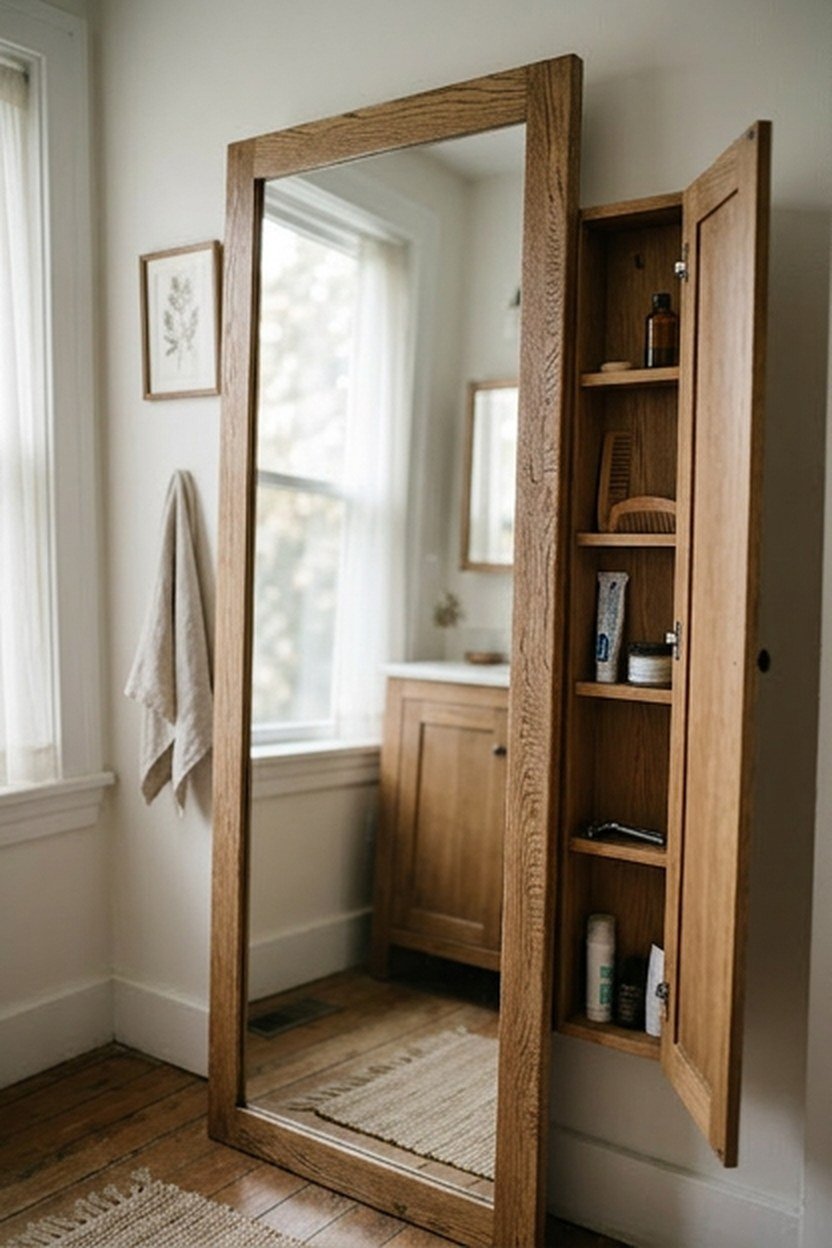
A full-length mirror that incorporates built-in storage, whether a mirrored cabinet door or a mirror frame with small shelving, combines a genuine daily-use item with additional storage capacity in a footprint that a mirror alone would otherwise occupy without contributing extra function. This dual-purpose approach suits a smaller dressing room where every piece of furniture needs to earn its space.
Choosing a mirrored cabinet specifically for smaller items like jewelry or grooming products keeps these frequently used items within arm’s reach of where you actually get dressed. This placement logic mirrors the reasoning behind the valet rod idea earlier in this guide, prioritizing convenience for daily-use items. Positioning both ideas near each other creates a genuinely efficient dressing zone within the larger room.
Because a mirrored storage cabinet is viewed daily and up close, choosing a genuinely well-made hinge and door mechanism matters more here than for storage tucked away and rarely seen directly. A cheap, wobbly mirrored cabinet door becomes a daily annoyance in a way that hidden storage flaws elsewhere in the room would not.
Lighting A Mirror With Built-In Storage
Adding dedicated lighting around a full-length mirror, whether integrated LED strips or simple sconces on either side, improves both the mirror’s function for checking an outfit and the visibility of anything stored in an attached cabinet. This lighting addition is a relatively small cost relative to the mirror and storage unit itself but meaningfully improves daily usability. Positioning lights to minimize shadows across the face and body, rather than harsh overhead lighting alone, gives the most accurate reflection for outfit checks.
13. Modular Cube Storage For Flexible Reconfiguration
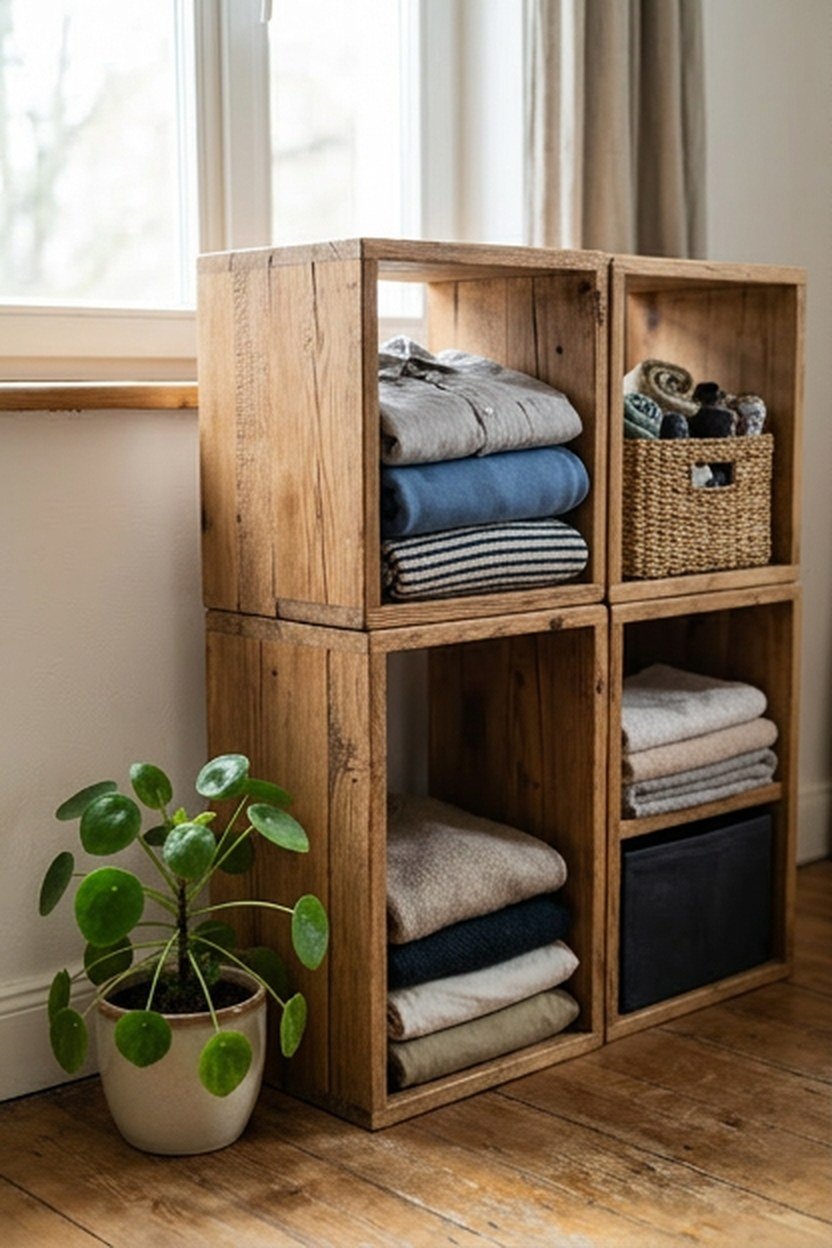
Modular cube storage units, which can be stacked, rearranged, and reconfigured as needed, offer a genuinely flexible organizing system that adapts to a dressing room’s changing needs without requiring new furniture purchases each time. Individual cubes can hold folded items, bins, or shoes depending on which insert or accessory is used within each one.
Because individual cubes can be added incrementally, this system suits a household building out dressing room storage gradually rather than all at once, spreading the cost over time rather than requiring a single large purchase. Choosing cubes with a consistent finish across purchases, even if bought at different times, keeps the growing system looking cohesive rather than mismatched.
Reconfiguring the cube arrangement seasonally or as wardrobe needs change is one of the genuine advantages this system offers over fixed built-in shelving. It requires actually taking the time to reconfigure rather than leaving the same arrangement indefinitely. Building periodic reconfiguration into your regular closet maintenance routine gets the most value from that adaptability.
Weight Distribution In Stacked Cube Systems
Stacking modular cubes higher than a few units without securing them to a wall creates a genuine tip risk, particularly in a household with children or pets who might bump into freestanding furniture. Anchoring taller cube stacks to the wall with simple furniture straps, widely available and inexpensive, addresses this safety concern without limiting the system’s flexibility.
14. Under-Shelf Storage Baskets For Wasted Space
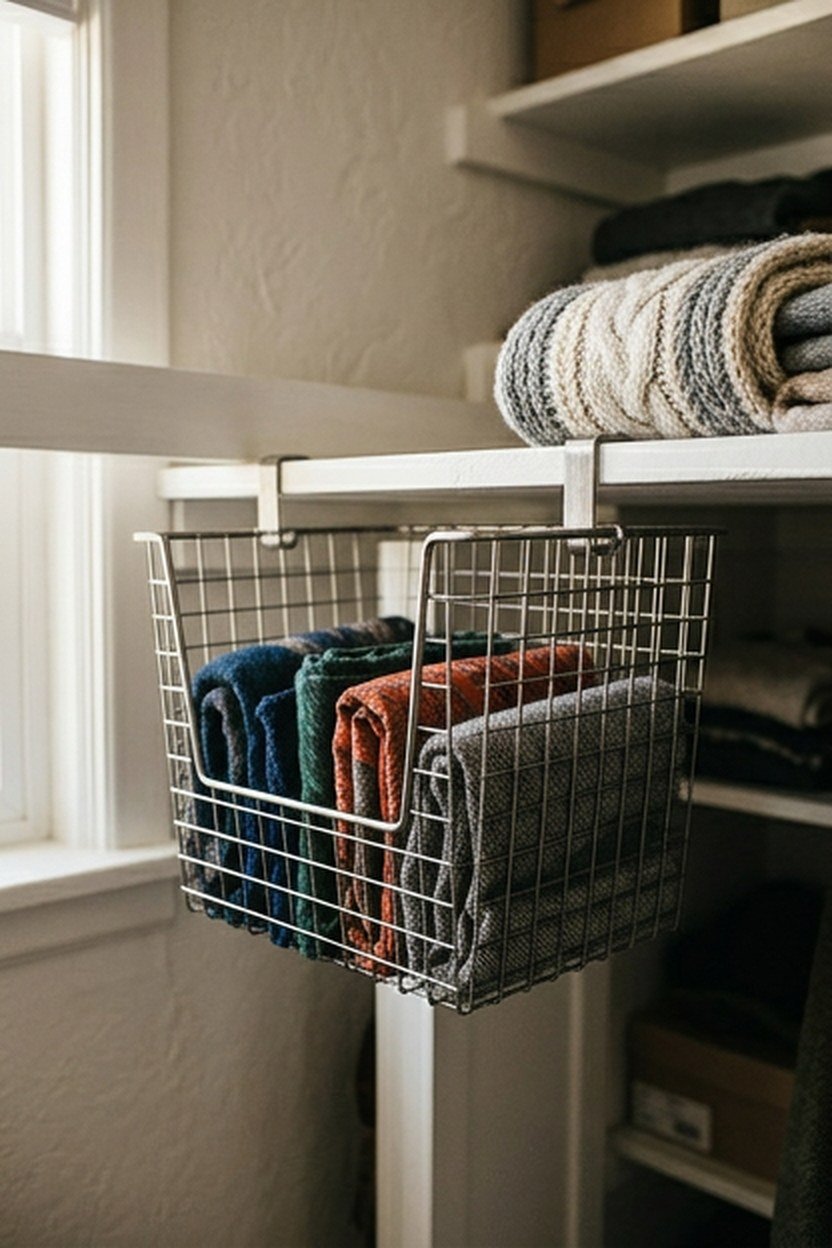
Under-shelf baskets, which hang from the underside of an existing shelf to create an additional storage layer in the otherwise wasted air gap above, add meaningful storage capacity to a dressing room without requiring any new furniture or structural changes. This idea works particularly well in a closet with generous shelf spacing that leaves visible unused space between shelves.
Choosing under-shelf baskets sized to hold smaller, lighter items, like folded scarves or small accessory pouches, matches the practical weight limits this hanging storage method can support. Heavier items are better suited to the main shelf itself rather than an under-shelf hanging basket, which typically has a lower weight capacity than a solid shelf surface.
Because these baskets install without tools in most cases, simply hooking over the shelf edge, this idea is one of the easiest to test and adjust without commitment. If a specific basket placement does not work well in practice, repositioning or removing it costs nothing beyond the time involved. This low-risk installation makes under-shelf storage worth trying even in a dressing room otherwise not planned for major changes.
Measuring Shelf Gaps Before Buying Under-Shelf Baskets
Measuring the actual vertical gap between your existing shelves before purchasing under-shelf baskets confirms the baskets will fit without the shelf above becoming unusable or the basket dragging against the shelf below. This measurement step prevents purchasing baskets that turn out to be the wrong size for your specific shelving configuration. A few minutes with a tape measure before ordering saves the hassle of returning an ill-fitting product.
15. Digital Wardrobe Inventory App

A digital wardrobe inventory app, where you photograph and catalog your clothing items, brings a modern organizational layer on top of the physical storage systems described throughout this guide, letting you plan outfits or check what you own without physically searching the closet. This idea suits anyone who travels frequently or plans outfits well in advance and wants to reference their wardrobe remotely.
Photographing each item against a plain background, rather than cluttered or dimly lit photos, makes the resulting digital catalog considerably more useful for actually planning outfits from it later. This initial cataloging effort takes real time upfront, similar to the wardrobe audit described earlier in this guide, but many people combine both processes into a single organizing session.
Because a digital inventory requires ongoing maintenance, adding new items and removing donated or discarded ones, choosing an app with a genuinely quick, low-friction entry process matters for whether the system stays current over time. An app that takes too long to update tends to fall out of use within a few months, becoming an outdated snapshot rather than a living reference.
Choosing Between A Dedicated App And A Simple Photo Album
A dedicated wardrobe cataloging app offers features like outfit planning and search by category, while a simple photo album on your phone accomplishes basic visual reference with far less setup effort. Choosing between the two comes down to how much you want advanced planning features versus a simple visual reference. Starting with the simpler photo approach, then upgrading later if the habit sticks, is a reasonable way to test this idea.
What Organizing A Dressing Room Actually Costs
The price of organizing a dressing room ranges enormously depending on whether you choose simple bins and dividers or a full custom built-in closet system, so understanding where your budget fits matters before committing to a specific approach. Small, affordable additions like drawer dividers and labeled bins deliver meaningful organizational improvement for relatively little money. Larger investments, like a custom built-in or a full shelving system, represent a bigger commitment but also a more comprehensive, permanent solution.
Starting with the lowest-cost organizing systems lets you test which specific ideas genuinely improve your daily routine before committing to a larger, more expensive project. Bins, dividers, and a rolling rack together cost relatively little and can be assembled within a single weekend. Save the custom built-in and full shelving replacement for a second phase once you know which organizing principles actually work for your habits.
| Idea | Typical Cost Range | Time Investment |
|---|---|---|
| Drawer dividers | $20 to $80 | One afternoon |
| Labeled storage bins | $50 to $150 | One afternoon |
| Rolling garment rack | $80 to $250 | Same day |
| Adjustable shelving | $200 to $600 | One weekend |
| Custom built-in closet | $2,000 to $8,000+ | Several weeks |
Budgeting for this project in phases, small organizing purchases first and structural shelving or built-ins second, keeps the whole process financially manageable and lets you confirm which systems you actually use before spending more. Many of the most functional dressing rooms were built up gradually rather than fully organized in a single weekend.
Common Mistakes When Organizing A Dressing Room
The most common mistake is buying storage systems before auditing what you actually own, resulting in bins, shelving, or dividers that do not match your real wardrobe’s size or category breakdown. Completing an honest wardrobe audit before any purchase prevents this expensive mismatch.
A second common error is choosing a system that looks appealing in photos but does not match your actual daily habits, like an elaborate color-coded system for someone who genuinely prefers grabbing items by garment type. Being honest about how you actually get dressed each morning, rather than aspiring to a habit you do not really have, leads to a system you will actually maintain. Matching the system to real behavior matters more than matching it to an aesthetic ideal.
The third mistake is failing to build in any flexibility, choosing entirely fixed shelving or storage that cannot adapt as your wardrobe changes over the years. Prioritizing at least some adjustable or modular elements, even within an otherwise custom system, protects against this rigidity. A system built for today’s wardrobe alone often needs expensive retrofitting within just a few years.
Recovering From A Disorganized Dressing Room
If an existing dressing room has slid back into disorganization despite an initial setup effort, the fix usually starts with identifying which specific system broke down rather than reorganizing everything from scratch. A color-coded system abandoned under time pressure, or bins that never got labeled properly, are specific, fixable problems rather than reasons to give up on organization entirely. Addressing the actual failure point, rather than starting over completely, is usually the faster and more sustainable path back to an organized space.
Conclusion
An ingeniously organized dressing room comes down to matching real storage systems to your actual wardrobe and daily habits, rather than chasing an aesthetic ideal that does not fit how you get dressed. The fifteen ideas here range from simple additions like drawer dividers to bigger investments like a custom built-in closet. Start with an honest wardrobe audit, since every other idea works better once you know exactly what you are organizing.
Whichever systems you choose first, prioritize genuine daily usability over visual perfection, since a dressing room that looks beautiful in photos but frustrates you every morning has failed at its actual purpose. Build the system gradually if budget requires it, testing smaller changes before committing to larger, more permanent investments. A dressing room that genuinely works every single day beats one that only looks organized on the day it was finished.
Frequently Asked Questions
What is the cheapest way to organize a dressing room? Drawer dividers and labeled storage bins deliver meaningful organizational improvement for relatively little money and can be set up within a single afternoon.
How often should I audit my wardrobe? Completing a full wardrobe audit once every year or two keeps your storage systems matched to what you actually own and prevents clutter from slowly accumulating.
Is a custom built-in closet worth the cost? A custom system is worth the investment for a dressing room you plan to use for many years, since it delivers storage precisely matched to your specific wardrobe and space.
How do I keep a color-coded closet system from falling apart? Consistently returning each item to its correct color position after wearing and laundering is the habit that keeps a color-coded system functional over the long term.
What is the best storage solution for a small dressing room? Vertical storage like door-mounted racks, under-shelf baskets, and modular cubes make efficient use of limited square footage without requiring major construction.
Should I organize by color, category, or both? Combining category zoning with color coding within each category delivers the benefits of both systems and tends to work better than relying on either method alone.
How do I organize a dressing room shared by multiple people? Assigning each person a clearly defined section, even within a shared organizing system like color coding, keeps the space functional for everyone using it.