
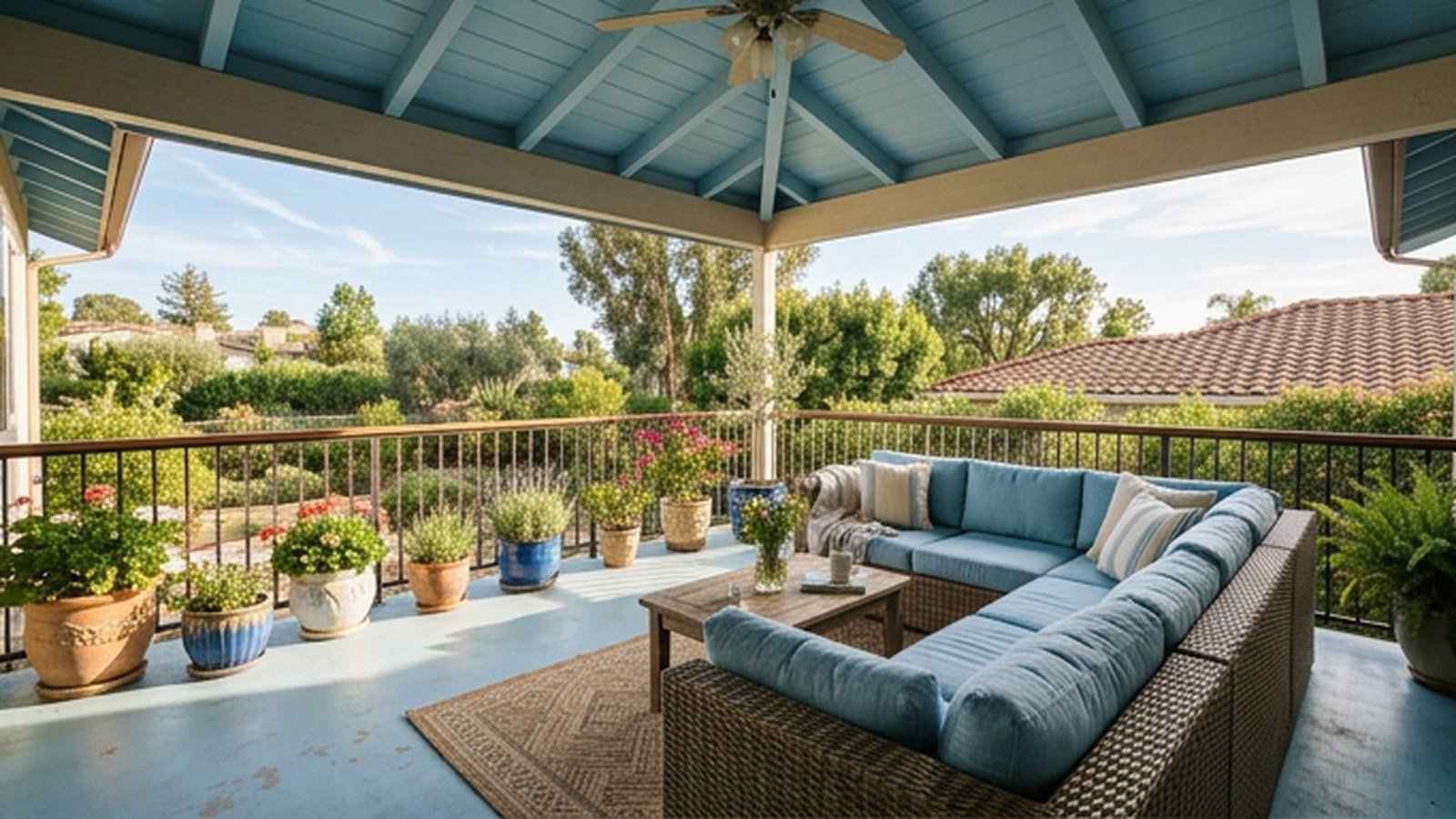
A sky blue patio reads as instantly cooler and more restful than almost any other outdoor color choice, which is exactly why it has stayed a favorite for porches and patios for generations. The color echoes open sky and calm water, and that association does real psychological work even on a hot afternoon. This guide walks through fifteen genuine ways to bring sky blue into an outdoor space, from a painted ceiling to woven cushions.
I have used sky blue on more than one porch project, and the detail that surprises people is how differently the color reads depending on whether it sits overhead, at eye level, or underfoot. A painted ceiling in this color has a centuries-old tradition behind it that most homeowners have never heard the full story on. Understanding where the color works best in a space changes how satisfying the final result feels.
By the end of this piece you will know which sky blue applications are quick weekend projects and which take more planning, along with real costs for each. I have included a comparison table and a cost breakdown, since some of these ideas cost almost nothing while others involve a genuine purchase. Read through all fifteen before deciding where sky blue belongs in your own outdoor space.
Why Sky Blue Works So Well Outdoors
Sky blue occupies a unique place in outdoor color choices because it already exists naturally in the setting, unlike a bold interior color that has no organic reference point outside. Painting a surface to match the sky above it creates a subtle visual continuity that makes a patio feel like an extension of the open air rather than a separate, boxed-in space.
The tradition of painting porch ceilings a pale blue, often called haint blue, dates back to the American South, where the color was believed to ward off spirits and confuse insects that mistake the ceiling for open sky. Whether or not either claim holds up, the practical effect is real, since a pale blue ceiling genuinely brightens a shaded porch and can reduce wasp nests overhead.
| Application | Visual Effect | Typical Effort |
|---|---|---|
| Painted ceiling | Brightens shade, echoes sky | Weekend project |
| Cushions and textiles | Soft color without commitment | Same-day swap |
| Ceramic planters | Focused color accent | Same-day purchase |
| Painted furniture | Bold, coordinated look | Weekend project |
| Tile or mosaic | Textured, permanent color | Multi-day project |
Sky blue also has a practical advantage over more saturated colors in direct sun, since pale colors reflect more heat than dark ones, keeping painted surfaces and furniture noticeably cooler to the touch on a hot day. This matters directly for anything you plan to sit on or lean against during summer afternoons. A pale sky blue cushion or chair stays more comfortable in full sun than a dark navy equivalent would.
Planning Sky Blue Into Your Existing Outdoor Space
Before buying paint or furniture, look at your patio’s existing hard surfaces, including any stone, brick, or wood decking, since these fixed elements will need to coexist with whatever sky blue you introduce. A warm terracotta paver pulls a sky blue toward feeling more Mediterranean, while a gray composite deck keeps the same blue feeling crisper and more contemporary. This context shapes which specific shade of sky blue will feel intentional rather than random.
Consider how much direct sun the space actually gets throughout the day, since a pale sky blue in full sun can wash out and read as nearly white by midday, while the same color in partial shade holds its color much more consistently. Testing a paint sample in the actual location, at different times of day, matters just as much outdoors as it does for an interior room.
Decide early whether you want sky blue as the dominant color across the whole space or as a single accent against a more neutral backdrop, since both approaches work but require different levels of commitment. A painted ceiling plus neutral furniture keeps the blue as a clear focal point overhead, while blue cushions against white furniture spreads the color more evenly at eye level. Either approach can look considered if you commit to the choice rather than scattering small blue touches randomly.
Weatherproofing Sky Blue Paint For Outdoor Durability
Not every blue paint is rated for outdoor use, and choosing an exterior-grade paint with UV resistance matters more for a color like sky blue than it does for a darker, less fade-prone shade. A quality exterior paint holds its color for several years under direct sun exposure, while an interior paint used outdoors by mistake can fade noticeably within a single season. Always confirm the paint can is labeled for exterior or porch ceiling use before starting a painting project.
1. Sky Blue Painted Ceiling
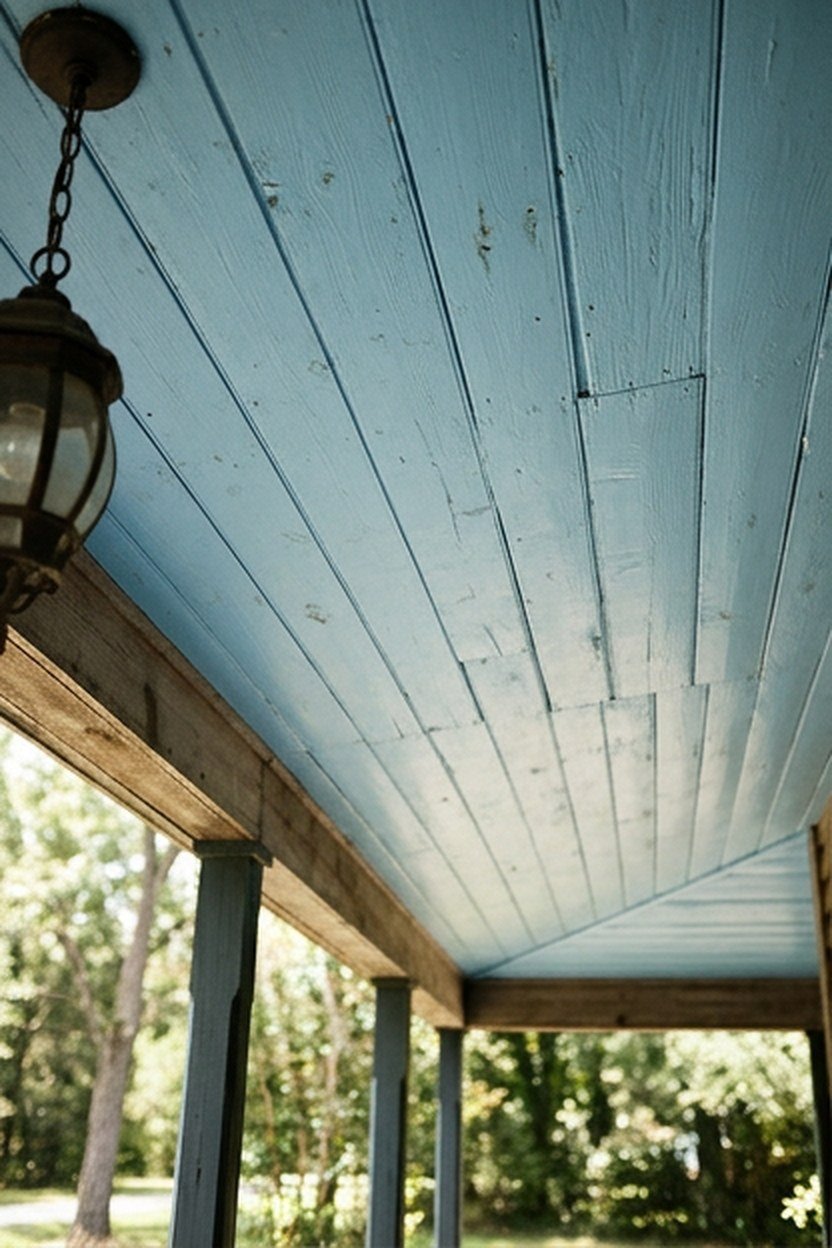
Painting a porch or patio ceiling sky blue is the single most traditional and visually striking way to bring this color outdoors, drawing directly on the haint blue tradition of the American South. The overhead placement means the color is visible from nearly every seat on the patio without competing with furniture or plants at eye level.
A pale, slightly gray-leaning sky blue reads as the most historically accurate choice, while a brighter, more saturated blue pushes the look toward contemporary rather than traditional. Most exterior ceiling paint comes in a flat or matte finish that reduces glare, which matters directly for a surface you are looking up at in bright daylight. Test your chosen shade at different times of day before committing, since ceiling color shifts noticeably between morning and afternoon light.
This project requires proper prep work, including cleaning the existing ceiling surface and priming over any existing stain or discoloration, particularly on an older wood porch ceiling. A single coat rarely provides full, even coverage outdoors, so budget for at least two coats for a finish that reads as intentional rather than patchy. The result, once finished, changes the entire feeling of the space beneath it.
Choosing Between A Flat And Satin Finish
A flat finish minimizes glare and reads as more historically traditional, while a satin finish is easier to clean and holds up somewhat better against moisture in a humid climate. Porches in consistently damp or coastal climates benefit from the added durability of a satin finish, even though it carries slightly more visible sheen overhead. This tradeoff between historical accuracy and practical durability is worth weighing based on your specific climate.
2. Sky Blue Outdoor Sofa Cushions
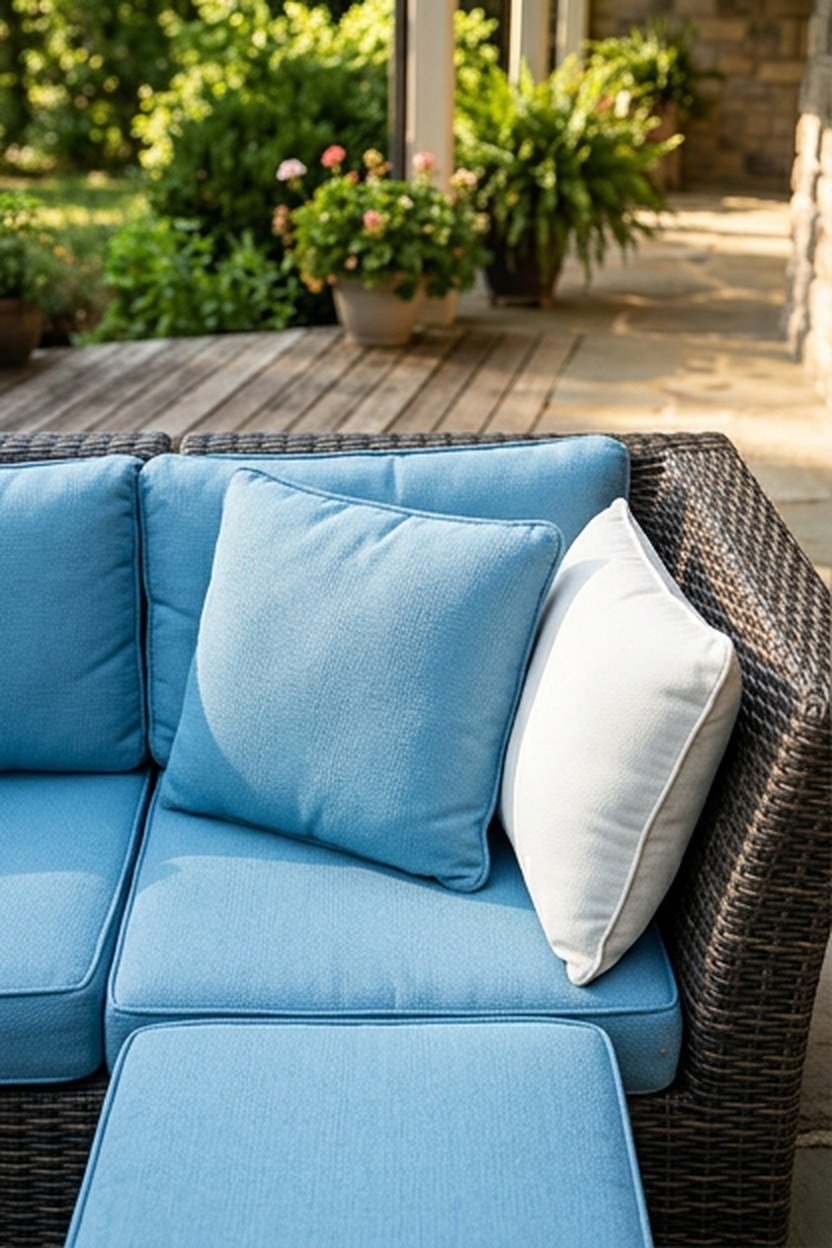
Swapping standard neutral cushions for sky blue ones on an existing outdoor sofa or sectional is one of the fastest, lowest-commitment ways to bring the color into a patio, since it requires no painting or construction. A set of cushions in a weather-resistant outdoor fabric delivers real color impact within an afternoon, and the change is fully reversible if your taste shifts later.
Choose an outdoor-rated fabric specifically, since standard indoor upholstery fabric will fade and deteriorate quickly under direct sun and occasional rain exposure. Solution-dyed acrylic fabrics hold their color notably better than printed fabrics over years of outdoor use, making them worth the modest price premium for a piece that will see real weather. A sky blue in this fabric type keeps its color considerably longer than a cheaper alternative.
Pairing sky blue cushions with a neutral wicker or teak frame keeps the color as the clear visual focus without competing against a patterned or colored furniture base. White or cream cushions elsewhere on the same patio create breathing room around the blue, preventing the space from feeling like every surface is competing for attention. This balance between color and neutral is worth planning before buying cushions for the whole seating area.
Storing Cushions Between Seasons
Outdoor cushions last considerably longer when stored indoors or in a weatherproof deck box during off-season months rather than left outside year-round, even when the fabric itself is rated for outdoor use. This simple habit protects both the color and the foam filling from unnecessary UV and moisture exposure. A storage bench doubles as seating and cushion storage, solving both needs with one purchase.
3. Sky Blue Ceramic Planters
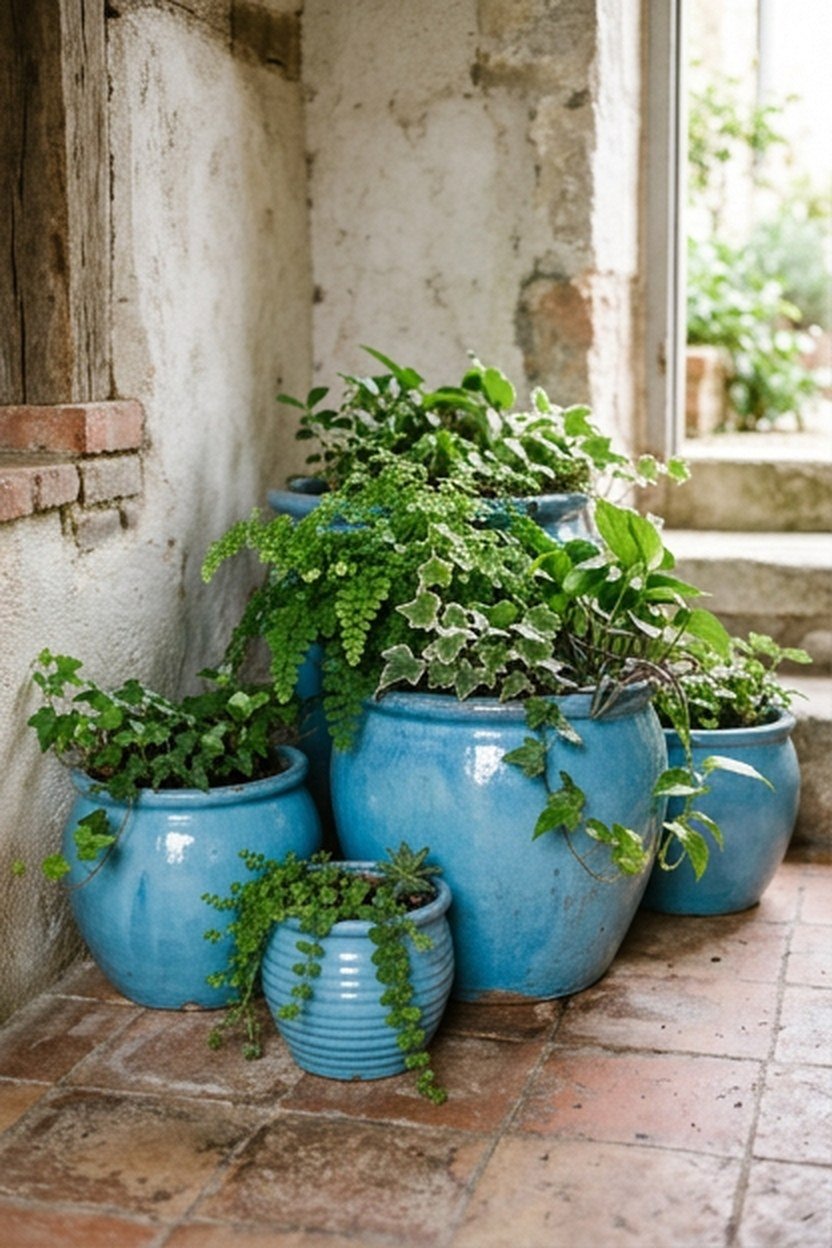
A cluster of sky blue ceramic planters brings real color into a patio’s plant display without requiring any painting or permanent changes to the space itself. Glazed ceramic in this color pairs beautifully with green foliage, since the blue and green sit as complementary tones on the color wheel, making plants look more vivid against the pot rather than competing with it.
Mixing a few different sizes of sky blue planters, rather than a single uniform set, creates more visual interest and lets you vary plant heights across the display. A large floor planter anchors a corner, while smaller tabletop versions add color at different eye levels around the seating area.
Ceramic planters need adequate drainage holes and, in colder climates, protection from freeze-thaw cycles that can crack unglazed or thin ceramic over multiple winters. Choosing a frost-resistant glazed ceramic, or moving planters to a covered area during winter, protects the investment in a color that can be hard to match exactly if a piece cracks and needs replacing.
Pairing Plant Color With Sky Blue Ceramic
Plants with silver or gray-green foliage, like lavender or dusty miller, create a particularly striking contrast against sky blue ceramic, since the cooler foliage tone echoes the pot’s own coolness rather than fighting it. Bright green foliage creates a more classic, high-contrast pairing that reads as fresh and lively. Either direction works, so choose based on whether you want the overall feeling to lean cool and calm or bright and energetic.
4. Sky Blue And White Striped Umbrella
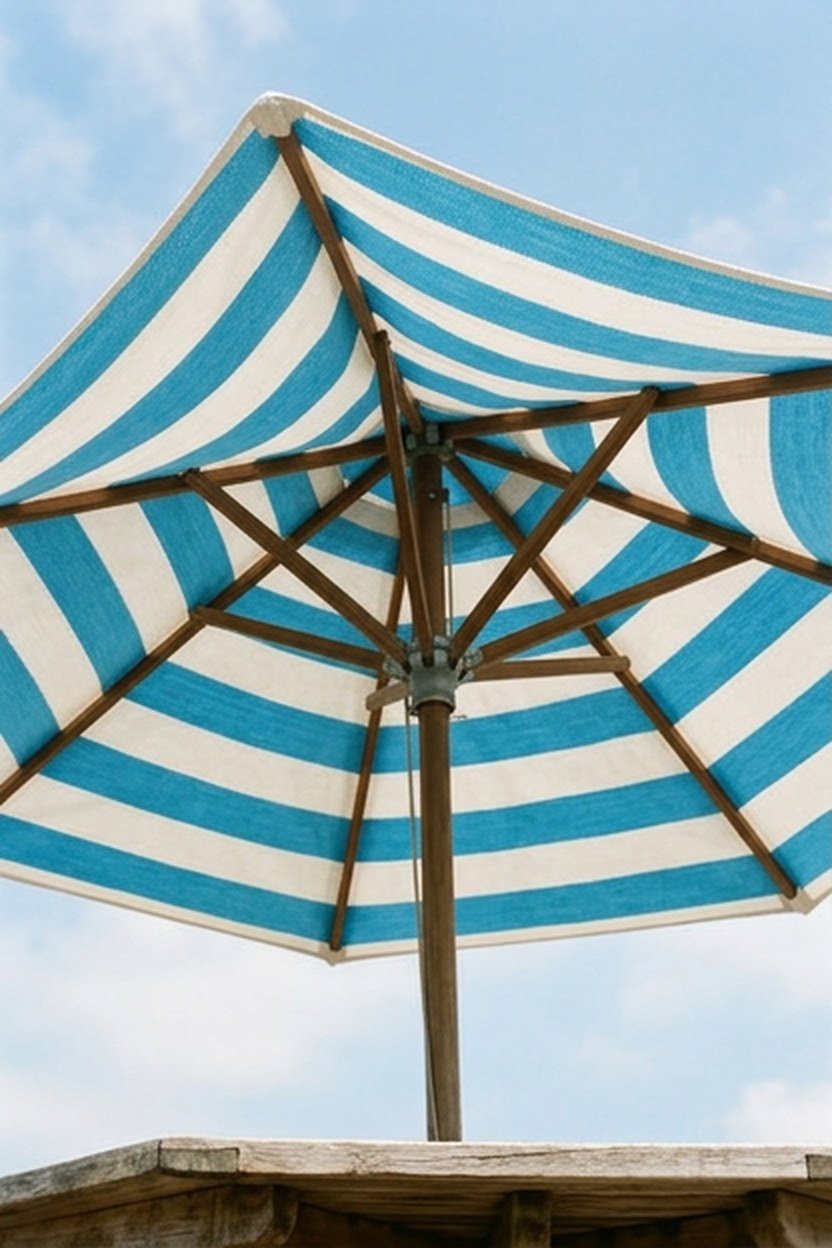
A sky blue and white striped patio umbrella brings genuine shade function alongside real color impact, making it one of the more practical entries on this list for a sun-exposed patio. The classic striped pattern reads as timeless rather than trendy, drawing on a long tradition of beach and garden umbrellas in this exact color combination. A single umbrella over a dining table does double duty as both shade and the space’s clear color anchor.
Choose a fade-resistant, solution-dyed outdoor fabric for the umbrella canopy, since this component sees more consistent direct sun exposure than almost any other item on a patio. A quality umbrella frame in a coordinating neutral, like a natural wood or a matte black, keeps the striped canopy as the clear visual focus. This combination of function and color makes the umbrella one of the higher-value purchases on this entire list.
Position the umbrella to actually provide useful shade during the hours you use the patio most, rather than purely for visual placement, since a beautifully positioned umbrella that fails to block afternoon sun defeats its own purpose. A cantilever-style umbrella offers more flexibility in shade positioning than a traditional center-pole design, worth considering if your table’s exact center does not align with where shade is actually needed.
Closing And Storing An Umbrella Properly
Closing a patio umbrella during high winds and storms protects both the canopy fabric and the frame from damage that direct storm exposure can cause even to a well-made umbrella. A properly weighted base prevents tipping even when the umbrella is open in moderate wind, an important safety detail beyond the purely aesthetic choice of color and pattern. Following the manufacturer’s specific wind rating keeps both the umbrella and anyone seated nearby genuinely safe.
5. Sky Blue Painted Outdoor Dining Chairs
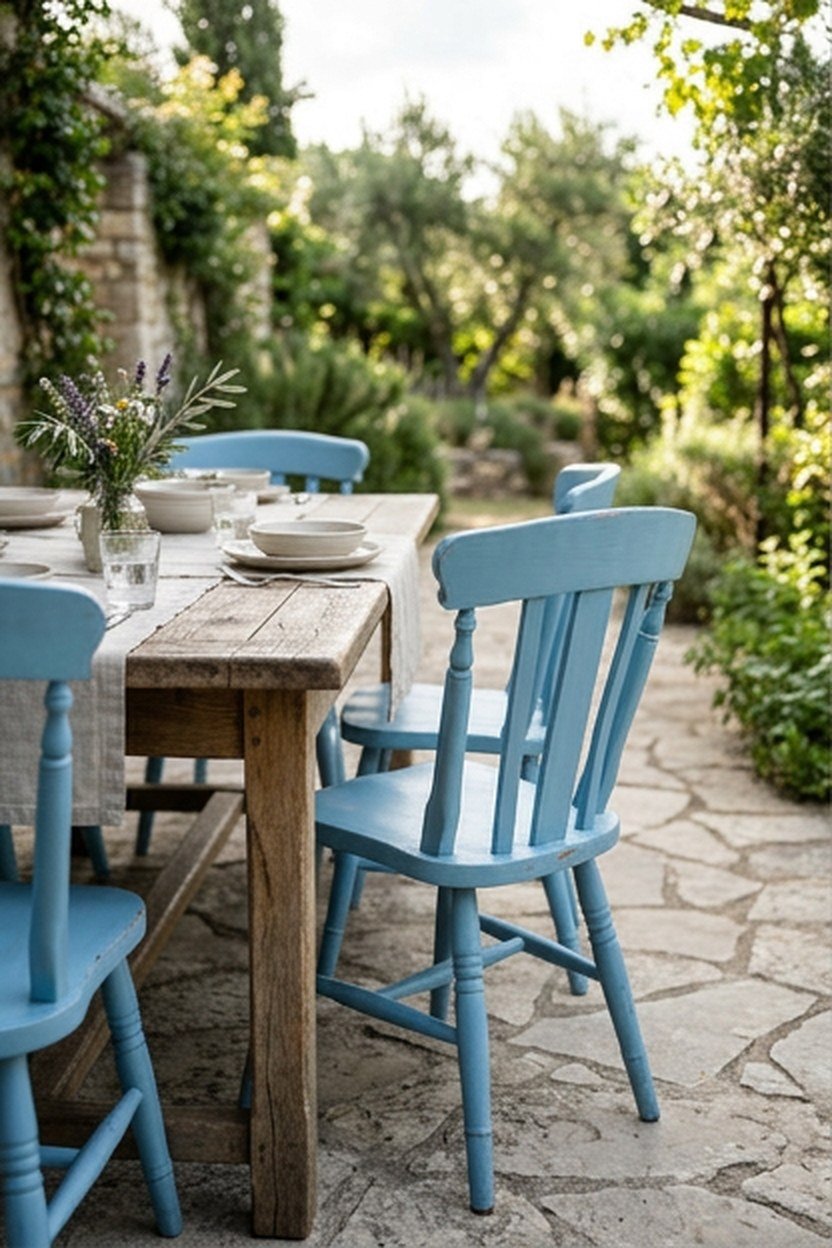
Painting a set of outdoor dining chairs sky blue transforms a patio dining area with a relatively modest investment, especially if you are refreshing chairs you already own rather than buying new ones. A matched set of painted chairs around a neutral wood or metal table creates a cohesive, intentional look that reads as considerably more custom than mismatched or unpainted seating.
Choosing a paint specifically formulated for outdoor furniture, rather than standard wall paint, ensures the finish can handle direct sun, rain, and the physical wear of regular use without chipping or peeling within a single season. Metal furniture in particular needs a rust-inhibiting primer before the color coat goes on, a step that is easy to skip but leads to real problems within a year or two if skipped. Proper prep work here matters more than the paint color choice itself.
A full matched set of sky blue chairs makes the strongest visual statement, while painting just one or two accent chairs within an otherwise neutral set introduces the color more subtly. Either approach works depending on how much color commitment your patio’s overall design calls for.
Prepping Furniture Before Painting For A Durable Finish
Sanding the existing finish lightly before painting improves paint adhesion significantly, even on furniture that appears to be in good condition, since a slick existing finish gives new paint little to grip onto. Cleaning off any dirt, mildew, or old wax residue with a proper outdoor furniture cleaner before sanding further improves how well the new paint bonds.
6. Sky Blue Mosaic Tile Accent Table
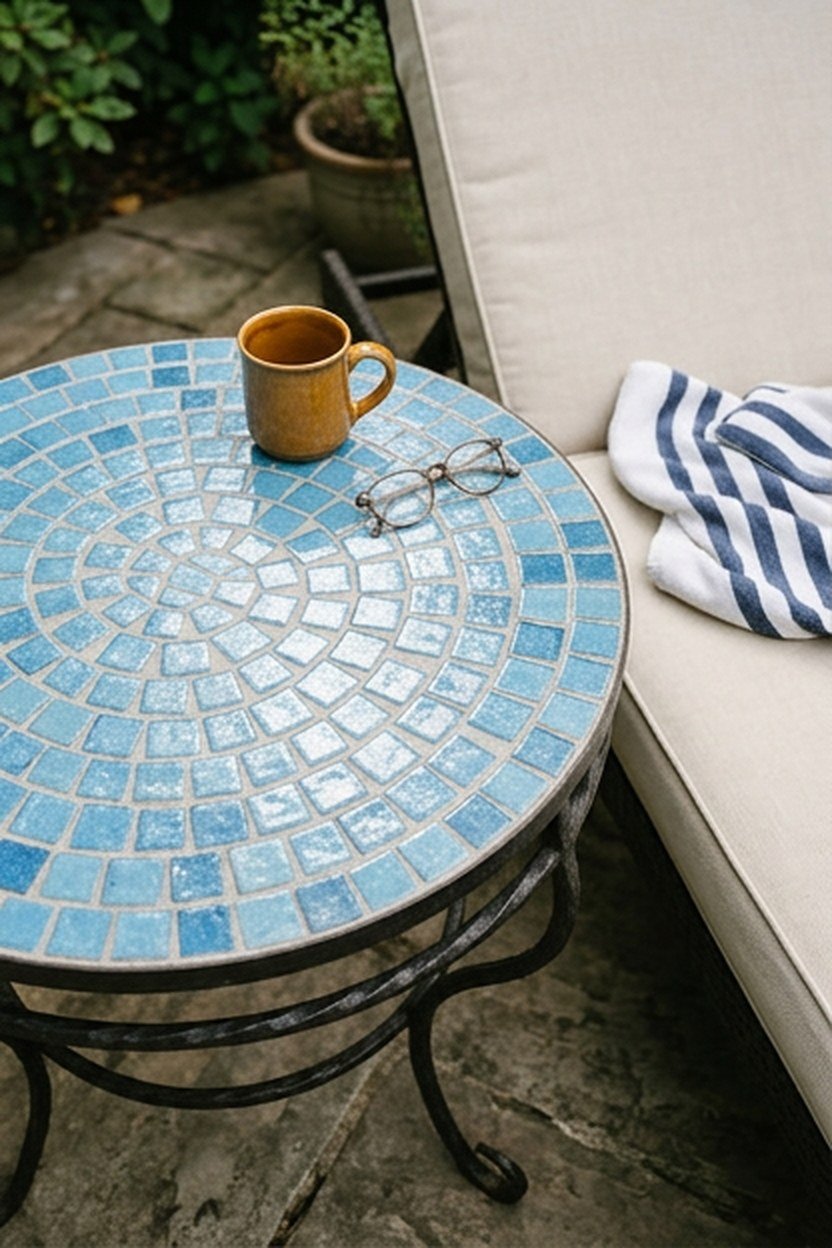
A side table topped with sky blue mosaic tile brings genuine texture and permanence to a patio’s color palette in a way that paint or fabric alone cannot replicate. The individual tile pieces catch and reflect light differently depending on the time of day, giving the tabletop a subtle shimmer that a flat painted surface lacks.
Choosing tile rated for outdoor and wet-area use matters for durability, since tile meant for interior walls may crack or discolor under direct sun and temperature swings. Grout color affects the overall look, with white grout creating high contrast between tile pieces and a gray or blue-toned grout letting the mosaic read as one unified field of color. Either grout choice is valid depending on how graphic or subtle you want the table to read.
A mosaic tabletop pairs naturally with a simple wrought iron or wood base, letting the tile itself carry the visual interest without competing against an elaborately detailed base. This table works particularly well as a side table beside a lounge chair or sofa, where its smaller surface gets regular close-up viewing. Its permanence, compared to fabric or paint, makes it one of the longer-lasting color investments on this list.
DIY Versus Purchased Mosaic Tile Tables
Building a mosaic table from scratch, using a purchased base and individually applied tiles, is a genuinely achievable weekend project for someone comfortable with basic tile adhesive and grout work. Purchasing a pre-made mosaic table skips that labor entirely but limits your color and pattern choices to whatever is commercially available. Either route delivers the same visual result, so the decision comes down to whether the DIY process itself appeals to you.
7. Sky Blue Outdoor Rug
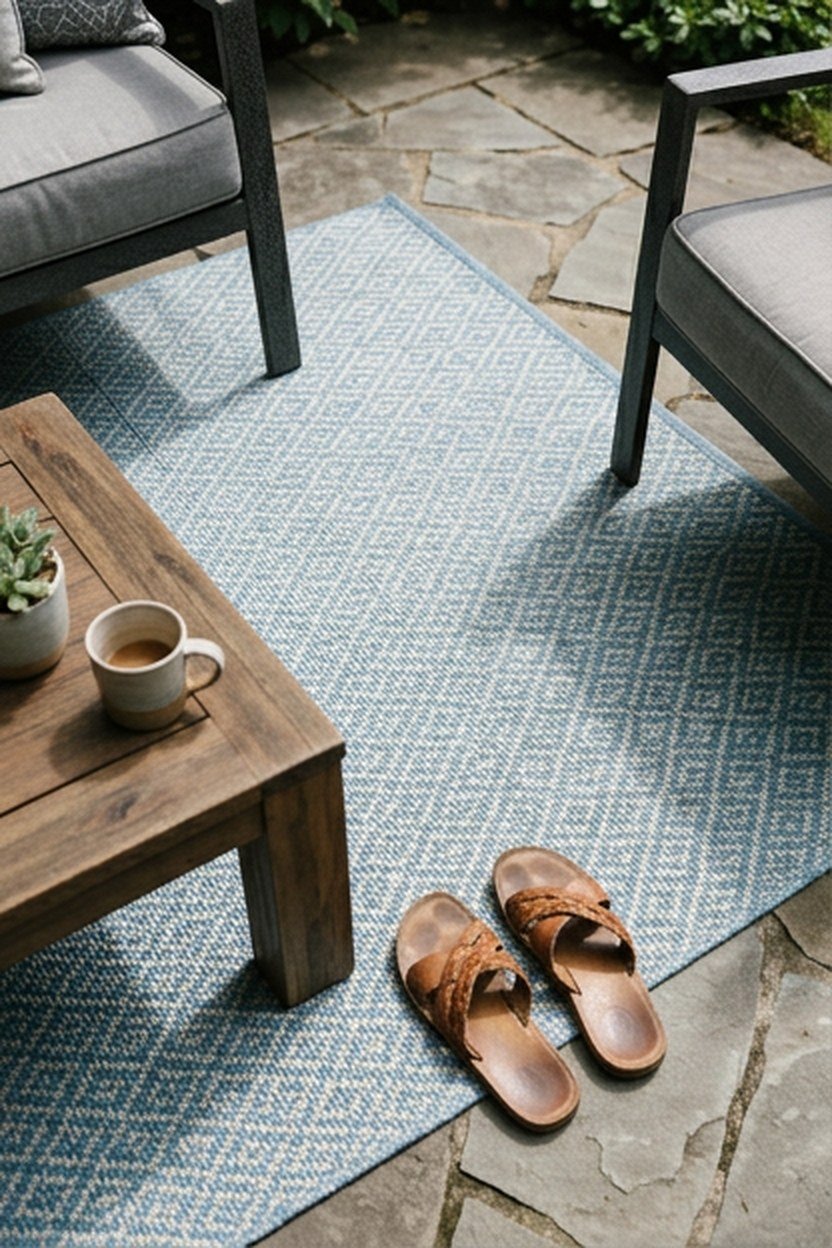
An outdoor rug in sky blue anchors a patio’s seating area underfoot, defining the space visually the same way an indoor rug defines a living room. A rug with a subtle pattern, like a simple geometric or a faded stripe, tends to hide dirt and wear better over time than a solid, uninterrupted field of color.
Choose a rug made from a genuinely outdoor-rated synthetic material, like polypropylene, rather than a natural fiber rug meant for indoor use, since natural fibers deteriorate quickly when exposed to rain and humidity. These synthetic outdoor rugs are also typically mold and mildew resistant, a real practical advantage in a humid climate where a natural fiber rug would develop problems within a single season.
Sizing the rug to extend slightly beyond your seating area’s furniture, rather than choosing something undersized, creates a more grounded, intentional look that ties the whole seating group together visually. An undersized rug that only the coffee table sits on, with all the chairs sitting off the rug’s edge, tends to look accidental rather than planned. This sizing principle applies to outdoor rugs just as strongly as it does indoors.
Cleaning An Outdoor Rug Regularly
Outdoor rugs benefit from occasional hosing down and air drying, a maintenance routine that is considerably simpler than cleaning an indoor rug and helps the color stay vibrant despite constant sun and weather exposure. Shaking out loose debris regularly between deeper cleanings prevents dirt from grinding into the rug’s fibers over time. This low-effort maintenance routine keeps a sky blue rug looking fresh for years rather than fading and graying prematurely.
8. Sky Blue Glass Lanterns Or Candle Holders
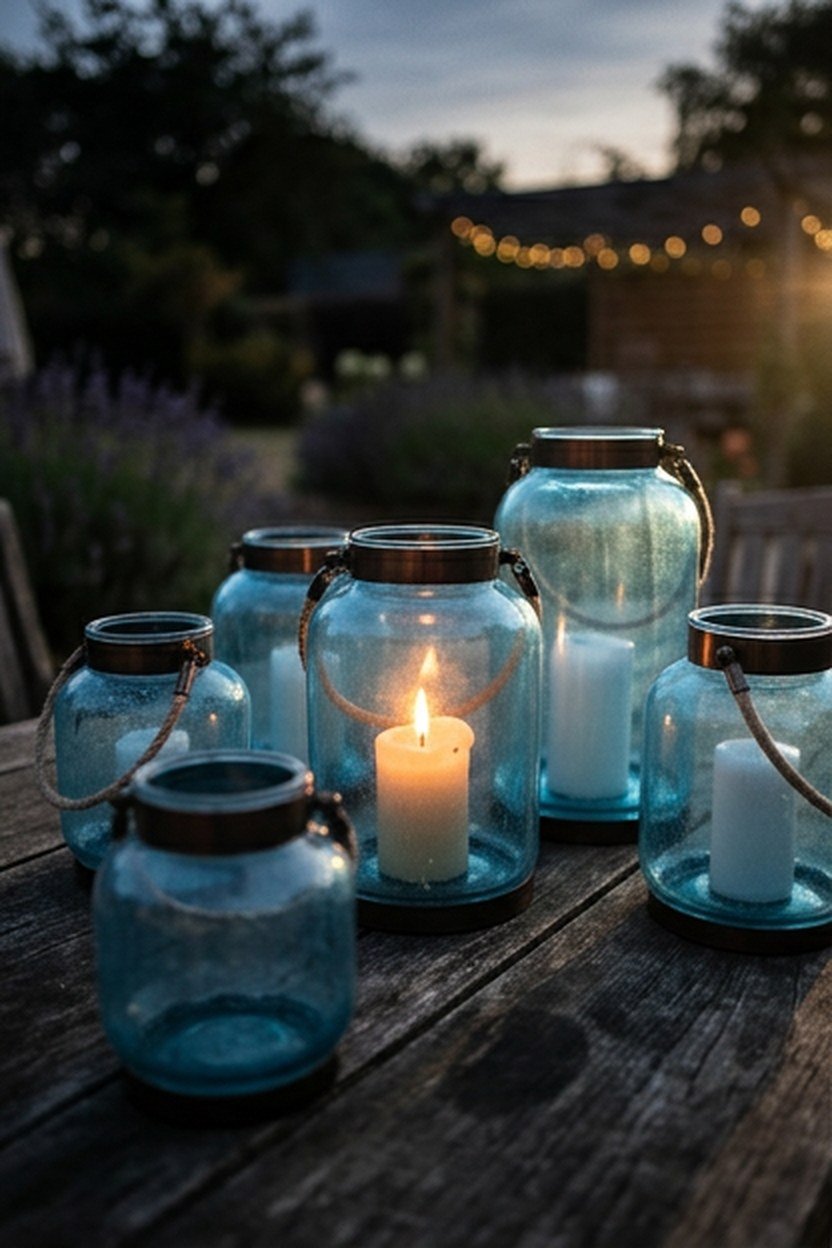
Sky blue glass lanterns or candle holders scattered across a patio table or hung from a pergola bring color into the space’s evening lighting, extending the palette beyond daytime use. The glass catches both natural daylight and the warm glow of a candle flame differently, giving these small accents a dual character depending on the time of day.
Grouping several lanterns of varying heights, rather than a single matched set at identical scale, creates a more layered, collected look that reads as considered rather than purchased as a uniform kit. Mixing sky blue glass with a few clear or amber pieces keeps the color from feeling monotonous while still letting the blue read as the dominant tone.
Because glass lanterns are relatively fragile compared to most other items on this list, choosing tempered or shatter-resistant glass specifically rated for outdoor use reduces the risk of breakage from wind or accidental knocks. Bringing lanterns indoors or to a covered area during severe weather protects both the glass and any candles inside from damage. This small precaution extends the life of what is otherwise a relatively affordable decorative purchase.
Battery Versus Real Candles For Outdoor Lanterns
Battery-powered flameless candles eliminate fire risk entirely, an important consideration for lanterns positioned near dry plants, umbrellas, or other flammable patio materials during a dry season. Real candles provide a warmer, more authentic flicker and genuine scent options that flameless versions cannot fully replicate. Choosing between the two often comes down to how much you prioritize convenience and safety against the specific ambiance a real flame provides.
9. Sky Blue Painted Front Door Or Gate Visible From The Patio
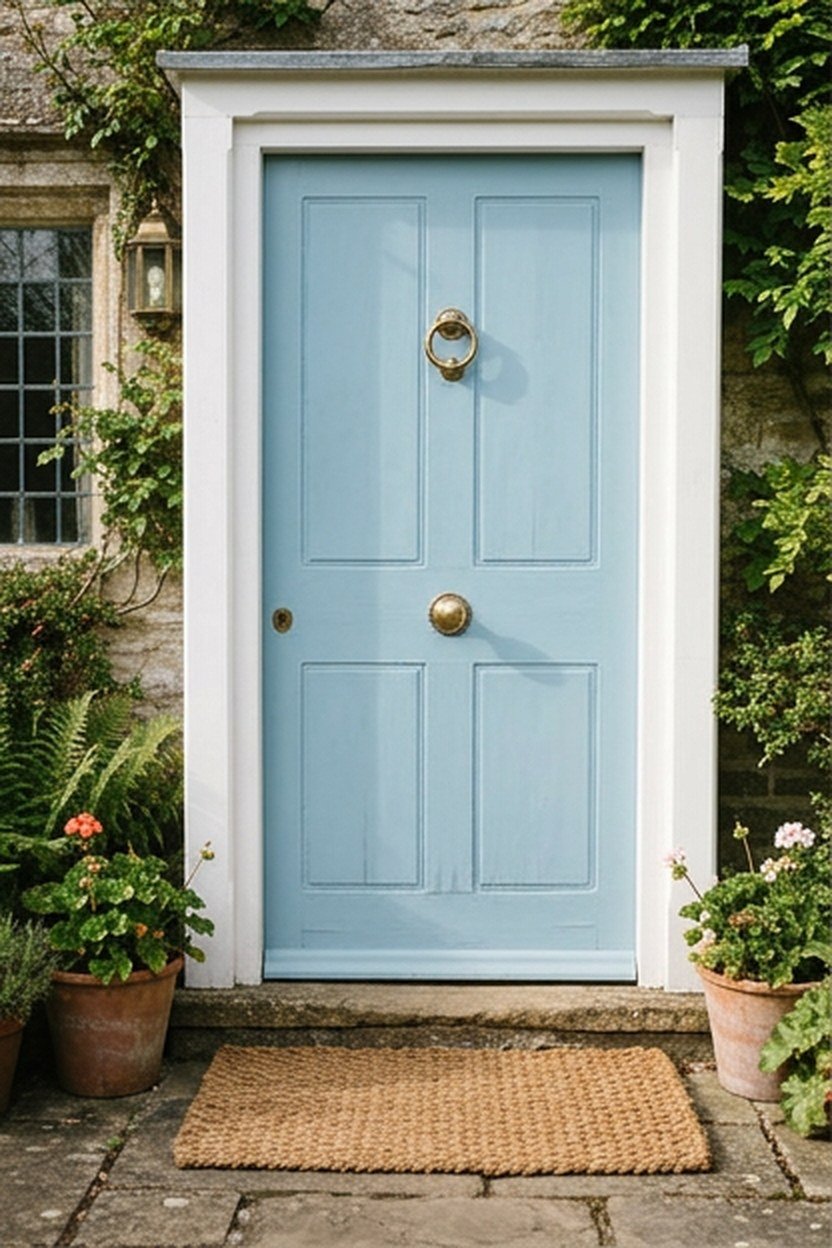
If your patio has a sight line to your home’s front door or a garden gate, painting that surface sky blue extends the color story into a spot the patio’s users see regularly, even though it sits at the edge of the space rather than within it. A painted door creates a strong, saturated color moment that a scattered collection of smaller accents cannot quite replicate on its own.
Exterior door paint needs to handle significantly more direct handling and weather exposure than most other painted surfaces on this list, so choosing a genuinely durable exterior enamel matters for how well the color holds up over years of daily use. A glossier finish on a door reads as more polished and intentional than the flatter finish typically used on a ceiling or furniture.
Coordinating the door’s exact shade of sky blue with other blue elements elsewhere on the patio, rather than choosing an unrelated blue independently, ties the whole outdoor space together as one considered palette rather than several disconnected color choices. Bringing a paint sample from your ceiling or cushion choice to the paint store when selecting the door color prevents an awkward mismatch between two different blues.
Choosing Hardware To Complement A Sky Blue Door
Brass or black hardware both work well against sky blue, with brass adding warmth that softens the cool tone and black creating crisper, more graphic contrast. Testing a hardware sample against your specific paint chip before committing helps you judge which direction suits your home’s broader style.
10. Sky Blue Throw Pillows On A Wicker Sectional
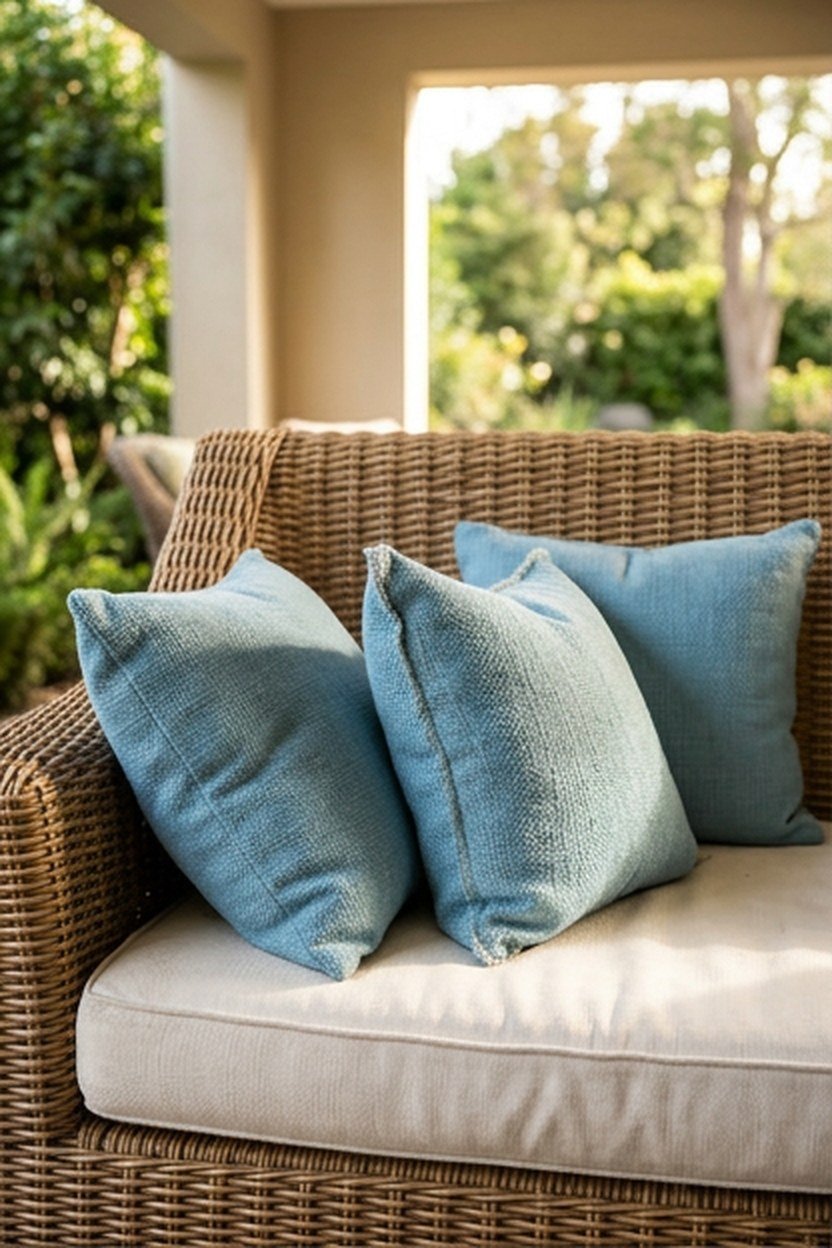
Adding sky blue throw pillows to an existing wicker or rattan sectional is one of the simplest, most affordable ways to introduce color without touching the furniture itself. Wicker’s natural warm tone provides a pleasing contrast against the coolness of sky blue, letting both materials read clearly rather than competing. A handful of pillows in varying sizes and slightly different blue tones adds visual depth without requiring a full cushion replacement.
Mixing a solid sky blue pillow with one or two patterned options, like a simple stripe or a subtle geometric in the same color family, prevents the seating area from looking flat or overly matched. Outdoor-rated pillow covers with removable, washable inserts make ongoing maintenance considerably easier than fixed, non-removable cushion covers.
Because throw pillows are inexpensive relative to most other items on this list, they make an easy way to test whether sky blue suits your specific patio before committing to a larger purchase like painted furniture or a full rug. Living with a few pillows for a season tells you more about whether the color works in your actual light and setting than any online photo could. This low-risk testing approach is worth using before bigger sky blue investments elsewhere on the patio.
Seasonal Pillow Rotation For A Wicker Sectional
Swapping sky blue pillows for a warmer autumn palette during cooler months, then returning to blue in spring and summer, keeps a wicker sectional feeling seasonally appropriate without any structural changes to the furniture itself. Storing the off-season pillows in a dry, covered space protects them from mildew and fading between uses. This rotation habit extends the useful life of both pillow sets considerably compared to leaving one set outside year-round.
11. Sky Blue Painted Wood Trellis
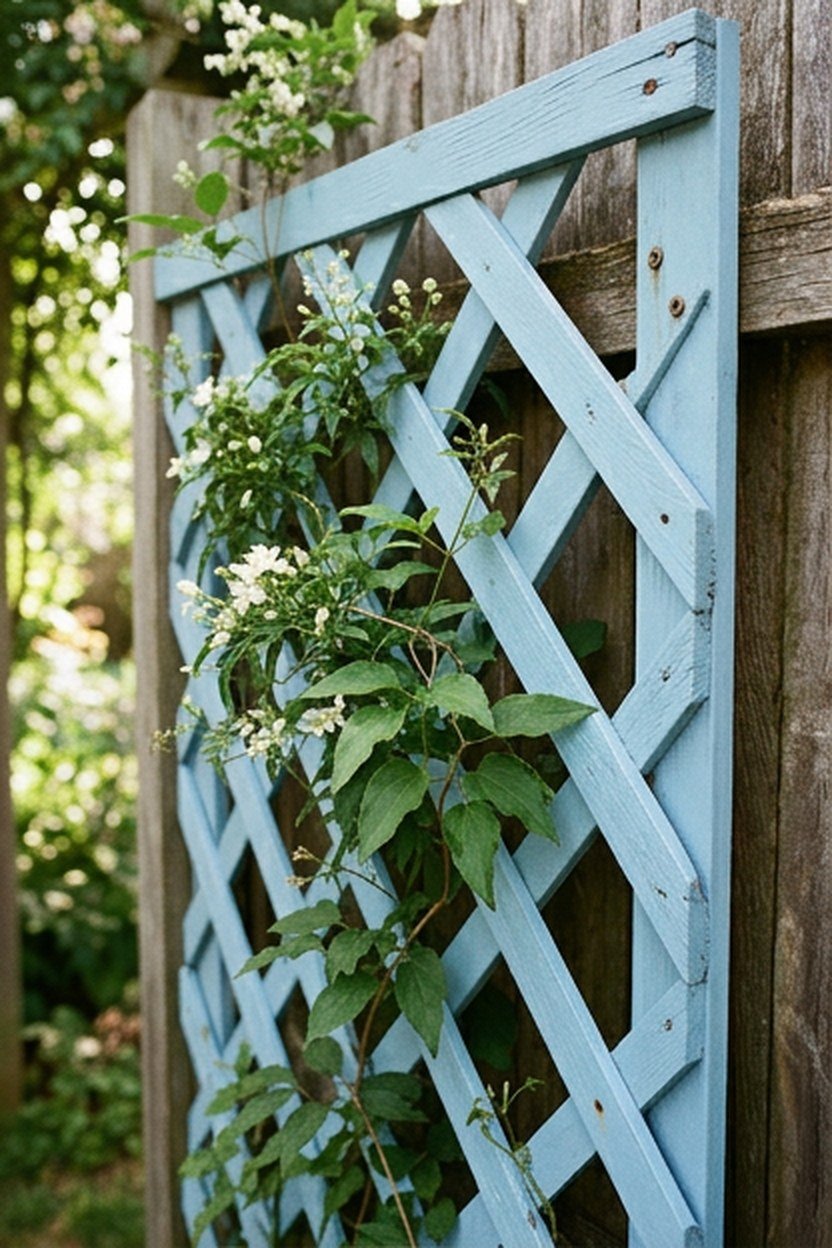
A sky blue painted trellis, whether supporting climbing vines or standing as a decorative garden feature, brings color into the vertical plane of a patio, an area that flat furniture and rugs cannot address. Climbing plants growing against the painted lattice create a striking combination of structured color and organic green growth as the season progresses. This vertical color placement complements the more common horizontal color choices like cushions and rugs found elsewhere on this list.
Choosing a paint rated for exterior wood use, with genuine UV and moisture resistance, matters considerably for a trellis that will be partially shaded by growing vines and exposed to consistent moisture from watering. Priming raw wood before painting prevents the color from absorbing unevenly into the grain, which can otherwise create a blotchy, unfinished-looking final result.
A trellis works particularly well positioned against a plain fence or wall that would otherwise remain visually empty, giving the sky blue color a clear, uncluttered backdrop to read against. Pairing it with a climbing plant that offers seasonal flowers, like clematis or morning glory, adds a changing color and texture layer on top of the trellis’s own fixed blue. This combination rewards patience, since the fullest effect develops over a full growing season rather than immediately after installation.
Maintaining Painted Wood Through Seasonal Weather
A painted outdoor trellis benefits from an annual inspection for chipping or peeling paint, particularly at joints and corners where moisture tends to collect and cause damage first. Touching up small areas promptly, rather than waiting for a full repaint, keeps the color looking fresh and prevents minor wear from spreading into a larger, more visible problem. This small annual maintenance habit protects the investment in what is otherwise a relatively low-cost garden feature.
12. Sky Blue Ceramic Wind Chimes Or Wall Art
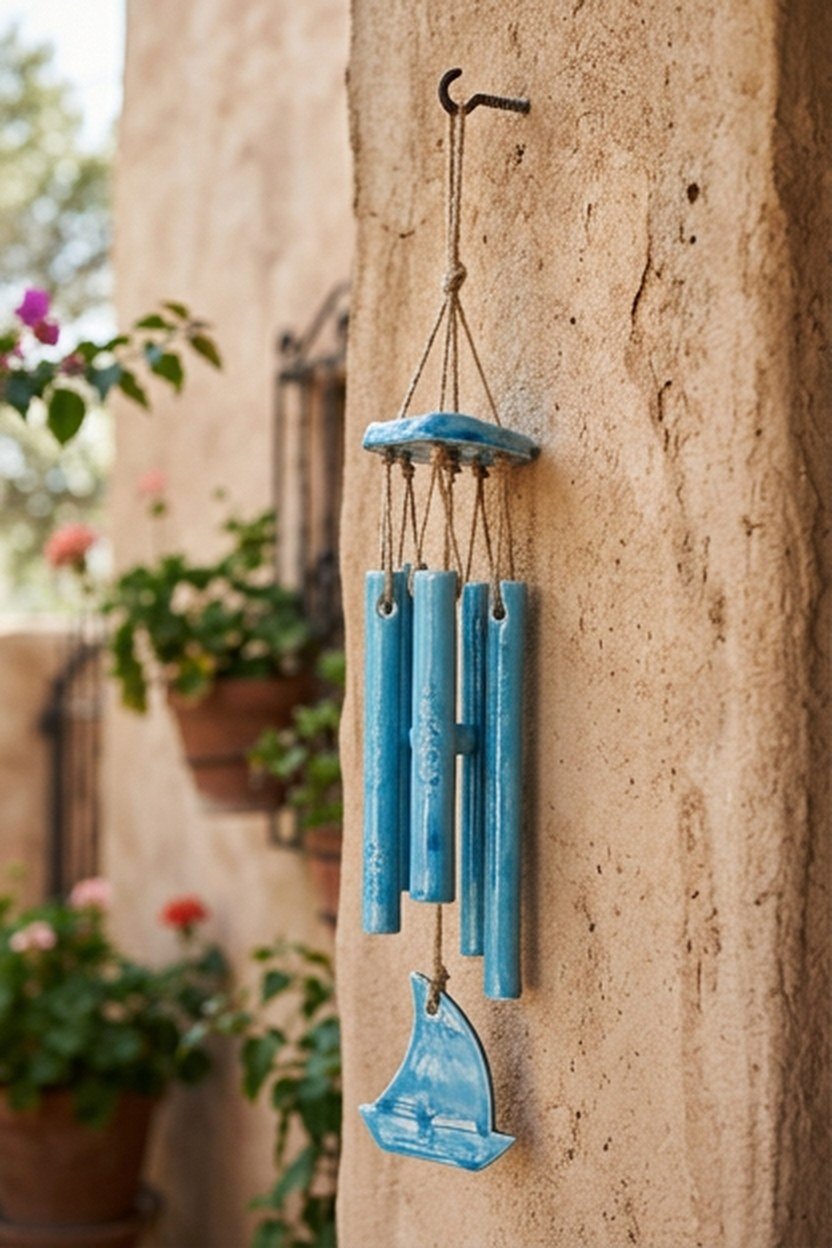
A sky blue ceramic wind chime or a piece of glazed wall art hung on an exterior wall introduces color at eye level or above, filling a vertical surface that might otherwise stay bare. Wind chimes add a genuine sensory layer beyond sight, contributing sound that shifts with the breeze in a way no purely visual decoration can replicate. This combination of color and sound makes wind chimes a distinctive addition among the more purely visual items on this list.
Choosing ceramic pieces specifically glazed and fired for outdoor durability protects against the cracking and fading that a purely decorative indoor ceramic piece would suffer under direct weather exposure. Hanging wall art under a covered porch section, rather than in a completely exposed spot, extends its lifespan considerably regardless of how weather-resistant the piece itself claims to be.
A small grouping of two or three pieces at varying heights on a single wall creates more visual interest than a single centered piece, echoing the layered approach that works well for planters and lanterns elsewhere on this list. Keeping the grouping to a single wall, rather than scattering individual pieces across the whole patio, helps the display read as an intentional collection.
Weatherproofing Ceramic Wall Art For Direct Exposure
Ceramic pieces without a proper outdoor-rated glaze can absorb moisture through hairline cracks that develop over repeated freeze-thaw cycles in colder climates, eventually leading to real cracking or crumbling. Applying a clear sealant designed for outdoor ceramic adds a layer of protection beyond the original glaze, particularly worthwhile for a piece with sentimental or higher purchase value.
13. Sky Blue String Lights Globe Covers
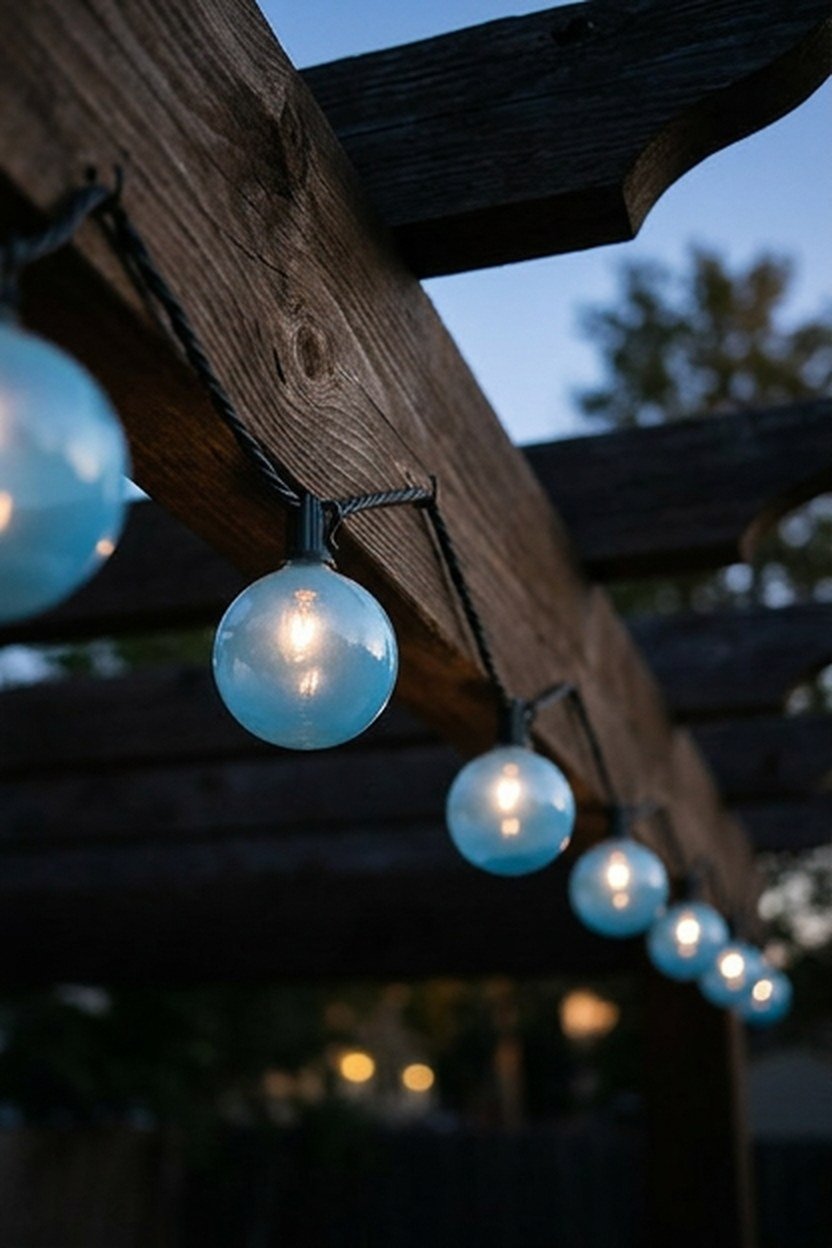
Swapping clear string light bulbs for sky blue globe covers changes a patio’s evening atmosphere considerably, casting a cool, calming glow rather than the warm amber tone most string lights default to. This is one of the more affordable and reversible ways to bring color into evening outdoor use specifically, since the covers slip over existing bulbs without any rewiring or new electrical work. A string of blue-toned lights along a pergola or fence line creates real ambiance after sunset.
Choosing shatter-resistant plastic or glass globe covers, rather than delicate decorative glass, matters for durability in a spot that will hang outdoors through wind and occasional storms over a full season. LED bulbs paired with colored covers run considerably cooler and use less energy than traditional incandescent bulbs, a practical benefit alongside the purely aesthetic color choice. This combination of efficiency and color makes updated string lights a reasonable upgrade even beyond the visual impact.
Positioning the lights to actually illuminate the areas you use most in the evening, rather than purely for daytime visual appeal, ensures the investment pays off functionally as well as aesthetically. A string running along a pergola beam above a dining table provides both light and color exactly where it is needed most during evening meals.
Layering String Lights With Other Evening Lighting
Combining sky blue string lights with warmer lanterns or candles elsewhere on the same patio creates a more layered lighting scheme than relying on a single light source and color temperature throughout the whole space. This layering principle, familiar from indoor lighting design, translates directly to an outdoor evening setting. A mix of cool and warm light sources reads as more considered than a single uniform glow across the entire patio.
14. Sky Blue Painted Planter Boxes Along A Railing
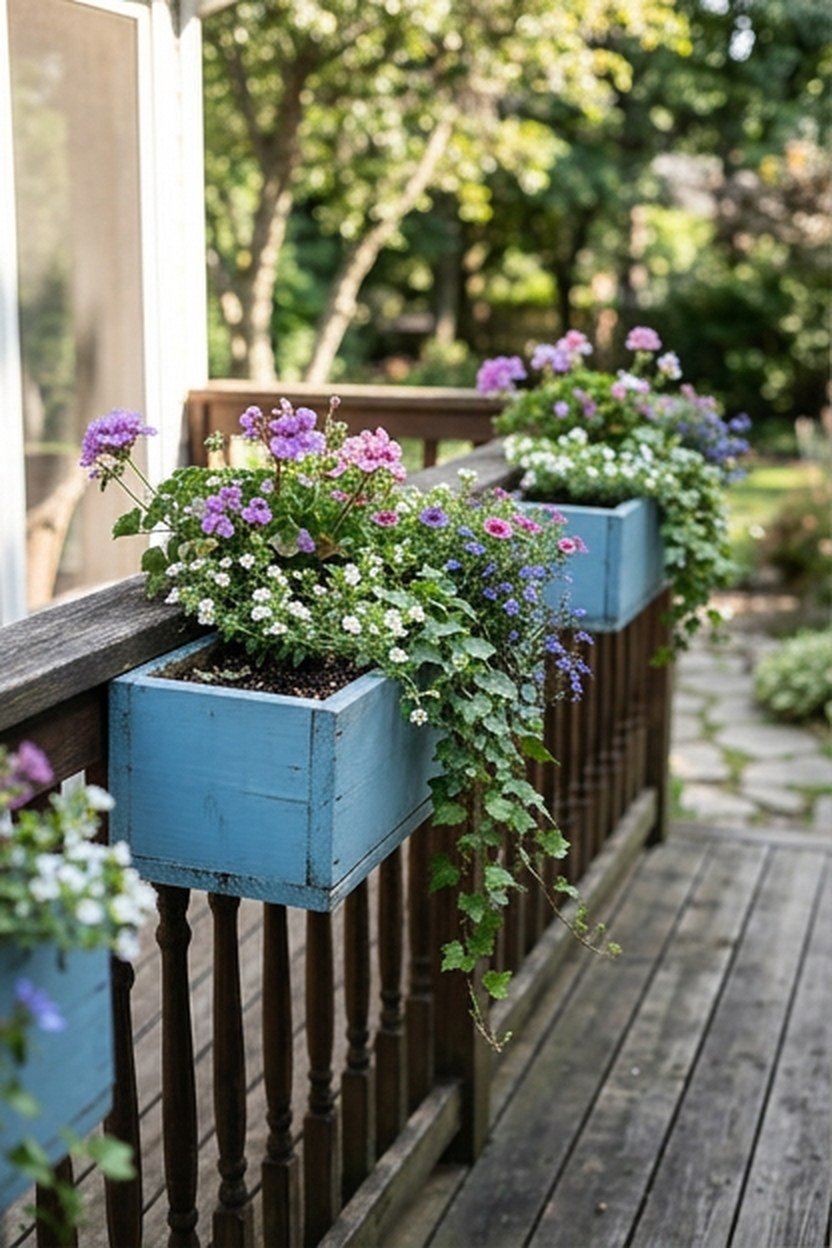
Painting a run of planter boxes sky blue along a porch or balcony railing creates a continuous band of color at a consistent height, which reads as more deliberate than scattered individual pots of varying colors. This approach works particularly well for a narrow balcony or a raised deck where railing-mounted planters make efficient use of limited floor space. A repeated row of matched blue boxes creates real visual rhythm along the railing’s full length.
Choosing exterior-grade paint and ensuring proper drainage holes in each box protects both the paint finish and the plants themselves from problems caused by trapped moisture. Lining the interior of painted wood boxes with a plastic liner protects the wood from direct soil contact, extending the box’s structural life considerably beyond an unlined equivalent.
Filling the boxes with trailing plants that spill slightly over the painted edge, like petunias or trailing lobelia, softens the hard line between the painted wood and the plants themselves. This soft transition keeps the display from reading as purely architectural, blending the built and the growing elements together. A mix of upright and trailing plants within the same box adds further variation without needing multiple separate planters.
Spacing Planter Boxes Evenly Along A Railing
Measuring and marking consistent spacing before mounting multiple planter boxes prevents an uneven, visually distracting rhythm along the railing once all the boxes are in place. A spacing of roughly the box’s own width between each unit tends to read as balanced without looking either crowded or sparse.
15. Sky Blue Outdoor Curtains Or Privacy Panels
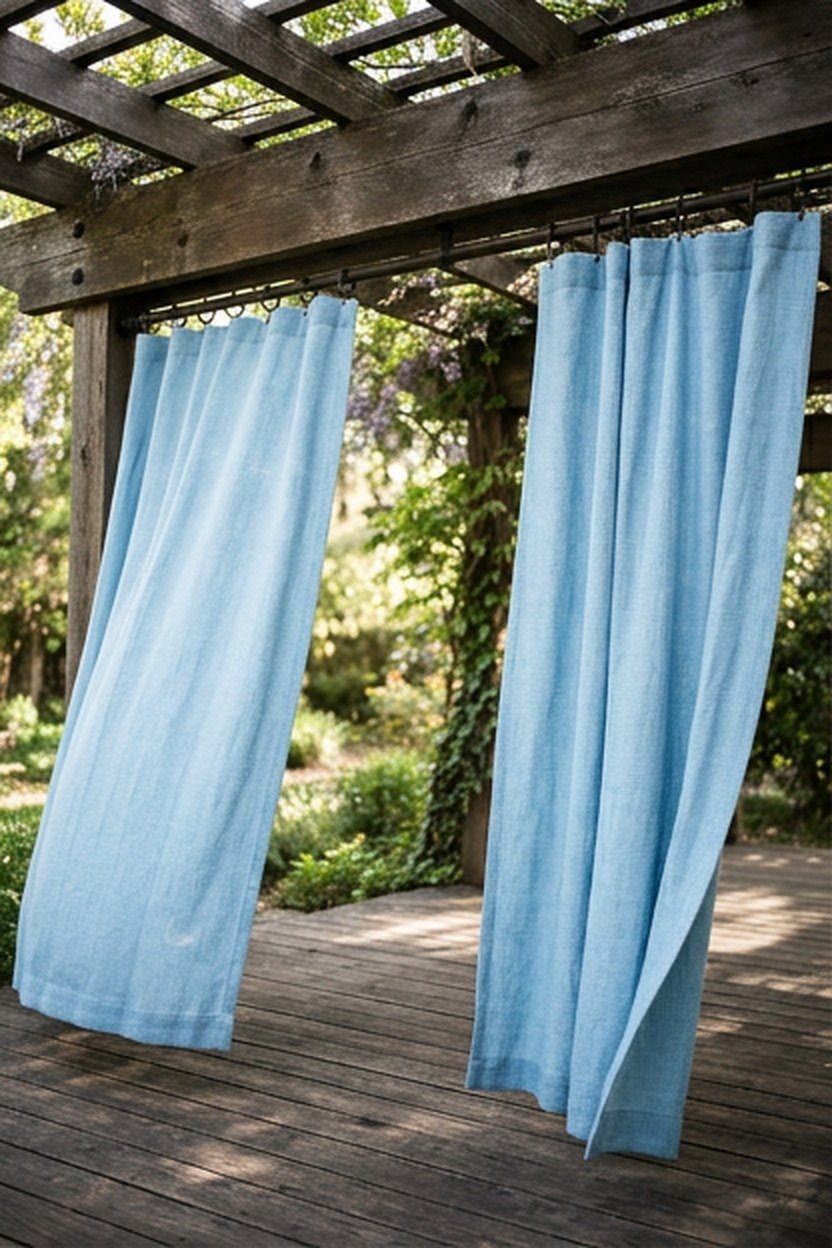
Sky blue outdoor curtains hung along a pergola, patio cover, or privacy screen bring soft, movable color into a space in a way that fixed paint or furniture cannot replicate, since fabric shifts and catches light differently as it moves. This softness also serves a genuine functional purpose, providing adjustable shade and privacy that can be opened or closed as needed. Curtains represent one of the more changeable entries here, shifting character depending on whether they are drawn or open.
Choosing an outdoor-rated fabric, typically a solution-dyed polyester or acrylic blend, ensures the curtains resist fading and mildew far better than an indoor fabric would. Grommet-top curtains slide easily along a rod for regular opening and closing, while tab-top styles offer a slightly more relaxed look at the cost of some ease of movement.
Hanging curtains at a height that allows them to move freely in the breeze, rather than mounted so tightly they cannot billow, captures the relaxed, coastal feeling that pale blue fabric outdoors is often chosen to evoke. This small installation detail is easy to overlook but makes a real difference in how the finished space feels in person. Sky blue curtains catching a breeze are one of the more genuinely sensory entries on this entire list.
Cleaning And Storing Outdoor Curtains
Outdoor curtain fabric benefits from an occasional gentle wash with mild soap and water, done in place or after removal from the rod, to keep the color looking fresh despite regular sun and dust exposure. Taking curtains down and storing them in a dry space during severe weather or the off-season protects the fabric from unnecessary wear. This maintenance routine, similar to cushion care, extends the useful life of the fabric considerably compared to leaving it exposed year-round.
What A Sky Blue Patio Makeover Actually Costs
The cost of bringing sky blue into a patio ranges enormously depending on how many of the fifteen ideas above you take on and whether you choose budget or premium versions of each element. Textiles, pillows, and small decorative accents generally cost the least while delivering meaningful visual impact for relatively little money. Larger projects, like a full ceiling repaint or a custom mosaic table, represent a bigger investment but also a more permanent, dramatic transformation.
Starting with the lowest-cost textile and accent changes lets you test whether sky blue genuinely suits your specific patio before committing to a painted ceiling or new furniture. A few pillows, a string of colored lights, and a couple of ceramic planters together cost relatively little and can be assembled within a single weekend. Save the ceiling paint, furniture repaint, and mosaic table for a second phase once you know the smaller changes are working.
| Change | Typical Cost Range | Time Investment |
|---|---|---|
| Throw pillows | $30 to $80 | Same day |
| Ceramic planters | $20 to $70 each | Same day |
| String light globe covers | $15 to $40 | One afternoon |
| Painted ceiling | $100 to $300 in materials | One weekend |
| Painted furniture set | $80 to $200 in materials | One weekend |
| Mosaic accent table | $150 to $500 | Multi-day project |
Budgeting for this project in phases, small accents first and structural paint or furniture projects second, keeps the whole process financially manageable and lets your specific shade preference refine itself as you live with the color. Many of the most successful sky blue patios were built gradually across more than one season rather than all at once.
Common Mistakes With A Sky Blue Patio
The most common mistake is choosing a paint or fabric not rated for outdoor use, then watching the color fade or the material deteriorate within a single season of direct sun and weather exposure. Always confirm any paint, fabric, or ceramic glaze is specifically rated for exterior or outdoor use before purchasing, since indoor-rated versions simply will not hold up the same way.
A second common error is choosing a shade of sky blue that shifts unexpectedly once it is up, since outdoor lighting conditions change far more dramatically throughout the day than most indoor rooms experience. Testing a paint or fabric sample in the actual outdoor location, at multiple times of day, catches this mismatch before a full purchase or painting project is complete. Skipping this step is how a promising color choice ends up disappointing once fully installed.
The third mistake is introducing so much sky blue at once that the patio starts to feel like a themed display rather than a considered, livable outdoor room. Balancing the blue with neutral tones, natural wood, and greenery keeps the color feeling like an intentional accent rather than an overwhelming single note.
Recovering From Too Much Blue
If a first attempt at sky blue feels overdone rather than calming, the fix is usually removing one or two of the boldest elements rather than adding more competing colors to balance it out. Swapping one painted or upholstered item for a neutral alternative often resolves the imbalance faster than introducing an entirely new color into the mix. A slightly more restrained sky blue patio, with room left for neutral materials to breathe, almost always reads as more considered than one crowded with color.
Conclusion
A sky blue patio draws on a genuinely long tradition of using this color outdoors, from historic haint blue porch ceilings to contemporary striped umbrellas and mosaic tables, giving it a timeless quality trend-driven colors rarely achieve. The fifteen approaches here range from a same-day pillow swap to a full weekend painting project, offering a realistic path regardless of your budget. Start with whichever application matters most, whether that means shade, seating, or overhead color.
Whichever ideas you choose first, prioritize outdoor-rated materials and real weather testing over purely aesthetic considerations, since durability determines how long the color actually lasts once it is exposed to real sun and rain. Give the changes time to accumulate across more than one season if needed, and the patio you end up with will feel considered rather than assembled all at once. Sky blue, used with intention, remains one of the more reliably calming choices available for any outdoor space.
Frequently Asked Questions
What is the traditional meaning behind a sky blue porch ceiling? The haint blue tradition originated in the American South, where the pale blue color was believed to ward off spirits and also happens to genuinely discourage wasps from nesting overhead.
Does sky blue paint fade quickly outdoors? A quality exterior-grade paint with UV resistance holds its color for several years, while an indoor paint used outdoors by mistake can fade noticeably within a single season.
What is the fastest way to add sky blue to a patio? Swapping in a few sky blue throw pillows or adding ceramic planters delivers real color impact within a single afternoon without any painting or construction.
Is sky blue a good color choice for a small patio? Yes, pale colors like sky blue tend to make a small space feel more open, especially when used on a ceiling or as an accent rather than covering every surface.
How do I keep sky blue outdoor fabric from fading? Choose a solution-dyed, outdoor-rated fabric rather than a printed indoor fabric, and store cushions or curtains indoors during severe weather or the off-season when possible.
Can I mix sky blue with other colors on my patio? Yes, sky blue pairs naturally with white, warm wood tones, and greenery, and balancing it with enough neutral material keeps the space from feeling overly themed.
What sky blue shade works best for a sun-drenched patio? A pale, slightly gray-leaning sky blue tends to hold its visual richness better in full sun than a brighter, more saturated blue, which can wash out considerably by midday.