
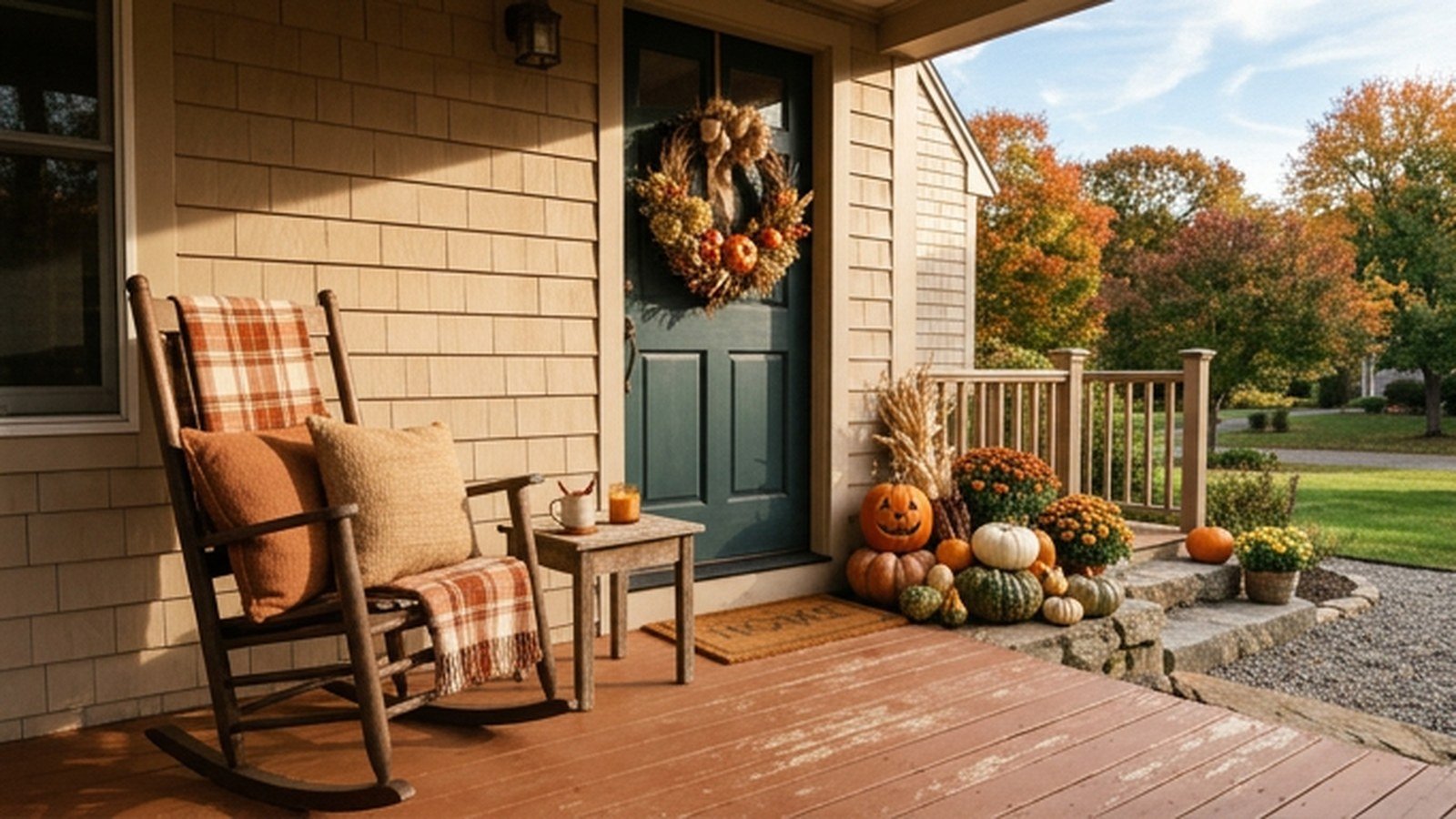
Toasted cinnamon is the warmest fall color you can put on a porch, and it works because it splits the difference between orange pumpkin tones and deep brown woods without leaning too hard on either. The shade reads as genuinely autumnal rather than costume like Halloween orange, which is why it holds up from early September through Thanksgiving without feeling dated. I have styled porches in this palette for three seasons running, and it remains the color scheme that draws the most compliments from neighbors.
This guide covers fifteen specific toasted cinnamon fall porch looks, what each one actually costs, and where the color choice can go wrong if paired badly. Expect honest notes about weatherproofing, seasonal timing, and the small styling details that separate a genuinely cohesive porch from a random collection of fall items. By the end you will have a real plan for a porch that looks intentional rather than thrown together.
A toasted cinnamon porch does not mean everything has to be orange brown, and treating the color as the only note in the palette is the fastest way to make a porch look flat. I will point out where a contrasting color or texture earns its place throughout this guide. The best toasted cinnamon porches use the shade as an anchor, not the entire story.
Why Toasted Cinnamon Works So Well For Fall Porches
Toasted cinnamon sits in a genuinely flexible part of the color wheel, warm enough to read as autumnal immediately but muted enough to avoid looking like a Halloween display stuck up too early. This muted warmth is why the color pairs easily with both rustic natural textures and slightly more polished, refined porch elements without ever clashing. Few fall colors offer this much range while still reading as unmistakably seasonal.
The color also photographs exceptionally well in the lower, warmer light typical of fall afternoons, which matters if your porch decor ends up on social media or simply gets admired from the street at golden hour. Toasted cinnamon catches that specific light in a way brighter oranges or reds tend to wash out under. This is part of why the color has become such a popular choice for fall porch styling over the past several seasons.
The table below compares toasted cinnamon against two other popular fall porch color schemes on the factors that matter most for exterior styling specifically. None of the three is objectively better, since the right pick depends on your house’s existing exterior colors. Use it as a starting point before reading the planning section that follows.
| Factor | Toasted cinnamon | Bright pumpkin orange | Deep burgundy |
|---|---|---|---|
| Versatility with other colors | High, pairs with many tones | Moderate, can clash | Moderate, needs careful pairing |
| Feels seasonal without looking costume like | Strong | Weaker, reads more Halloween | Strong |
| Works in both warm and cool light | Yes | Less consistently | Yes |
Planning Your Toasted Cinnamon Porch Before You Buy
Walk your porch at different times of day before choosing specific decor pieces, since the toasted cinnamon shade shifts noticeably between morning shade and late afternoon direct sun. A color that looks perfectly warm at 4pm can look almost muddy in flat morning light, so test any fabric or painted item in your porch’s actual lighting conditions before committing. I learned this after buying a set of pillows that looked ideal in the store but oddly dull on my own north facing porch.
Consider your porch’s existing hardscape and house exterior color before building a full toasted cinnamon scheme, since the shade needs to coordinate with whatever brick, siding, or trim color is already permanently in place. A toasted cinnamon palette against a cool gray house reads very differently than the same palette against a warm cream or brick exterior. Bring paint chips or fabric swatches outside and hold them against your actual house before finalizing purchases.
Set a realistic budget and timeline for how long you want this specific look to last, since fall porch decor typically needs refreshing or storing away within eight to ten weeks before winter décor takes over. Some toasted cinnamon elements, like a painted door or a permanent planter, can stay up well past the fall season, while others are clearly seasonal and temporary. Decide upfront which pieces earn a longer-term spot on your porch.
1. Toasted Cinnamon Front Door Paint
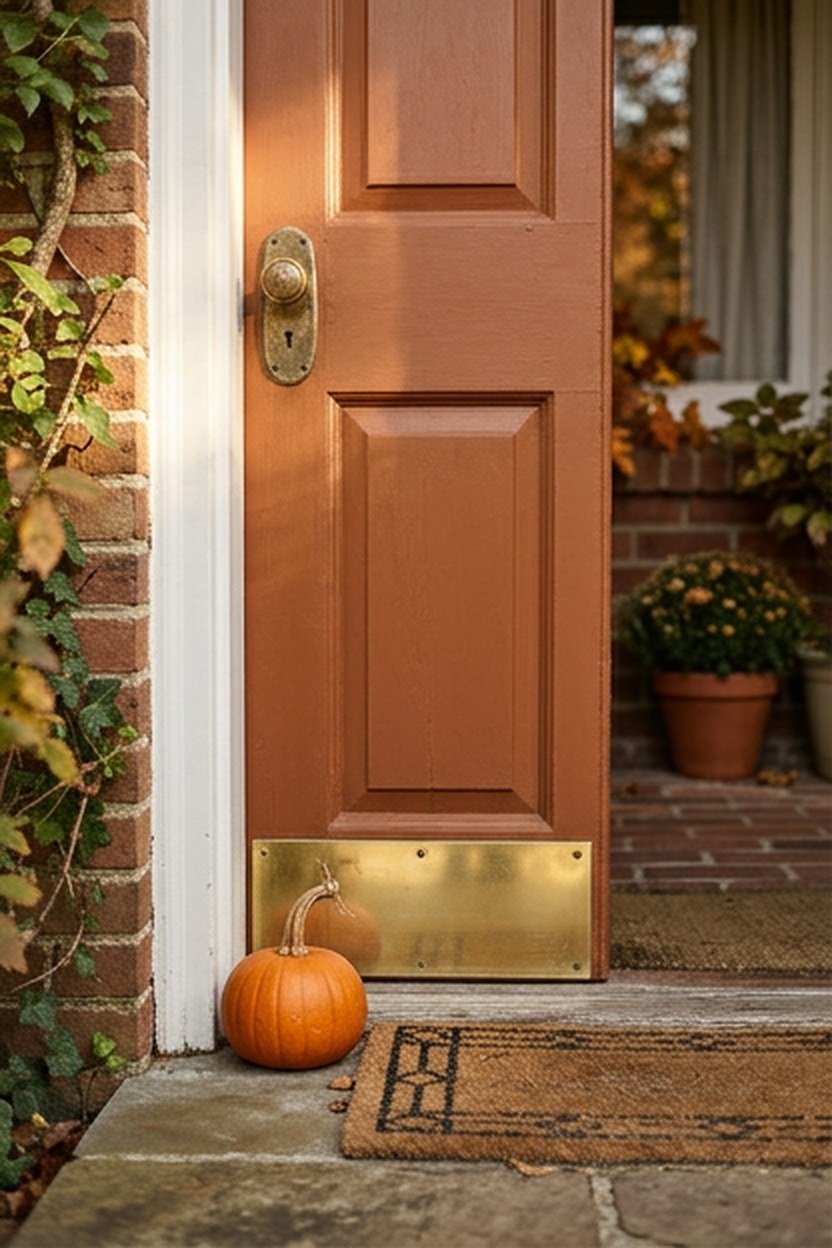
Painting the front door in a toasted cinnamon shade is one of the highest impact, most permanent choices on this list, since the door remains a focal point well beyond the fall season if you choose to keep it. Expect to pay 40 to 80 dollars for quality exterior door paint, or 150 to 300 dollars if you hire a painter. This is also one of the few ideas here that works year round rather than needing seasonal removal.
Choose a satin or semi gloss exterior finish rather than flat paint for a front door specifically, since the door sees regular hand contact and weather exposure that a flatter finish handles poorly over time. A properly prepped and primed door surface also holds the color truer over multiple seasons than a rushed paint job would. Take the extra day for proper prep work rather than rushing straight to the color coat.
The painted door surface will develop a soft matte texture in the highest contact areas near the handle and kickplate after a year or two of regular use. This gradual textured change from repeated hand and foot contact is completely normal for an exterior door finish and does not indicate a paint quality problem. A touch up kit matched to your specific paint color keeps these high contact areas looking fresh between full repaints.
Choosing The Right Toasted Cinnamon Shade For Your Door
Toasted cinnamon spans a real range from a lighter, almost terracotta tone to a deeper, near rust shade, and the right choice depends heavily on your house’s existing exterior colors. Bring several paint chips home and view them against your actual siding and trim at different times of day before committing to a specific can of paint. A shade that looks perfect on a chip can read too orange or too brown once applied to a full sized door.
Test a sample swatch directly on the door itself for at least a full day before committing to the full paint job, since exterior lighting affects color perception more than most people expect. Morning and afternoon light can make the same swatch look noticeably different. This small patience test prevents an expensive repaint if the shade reads wrong once it covers the whole door.
2. Layered Toasted Cinnamon Pumpkins By The Steps
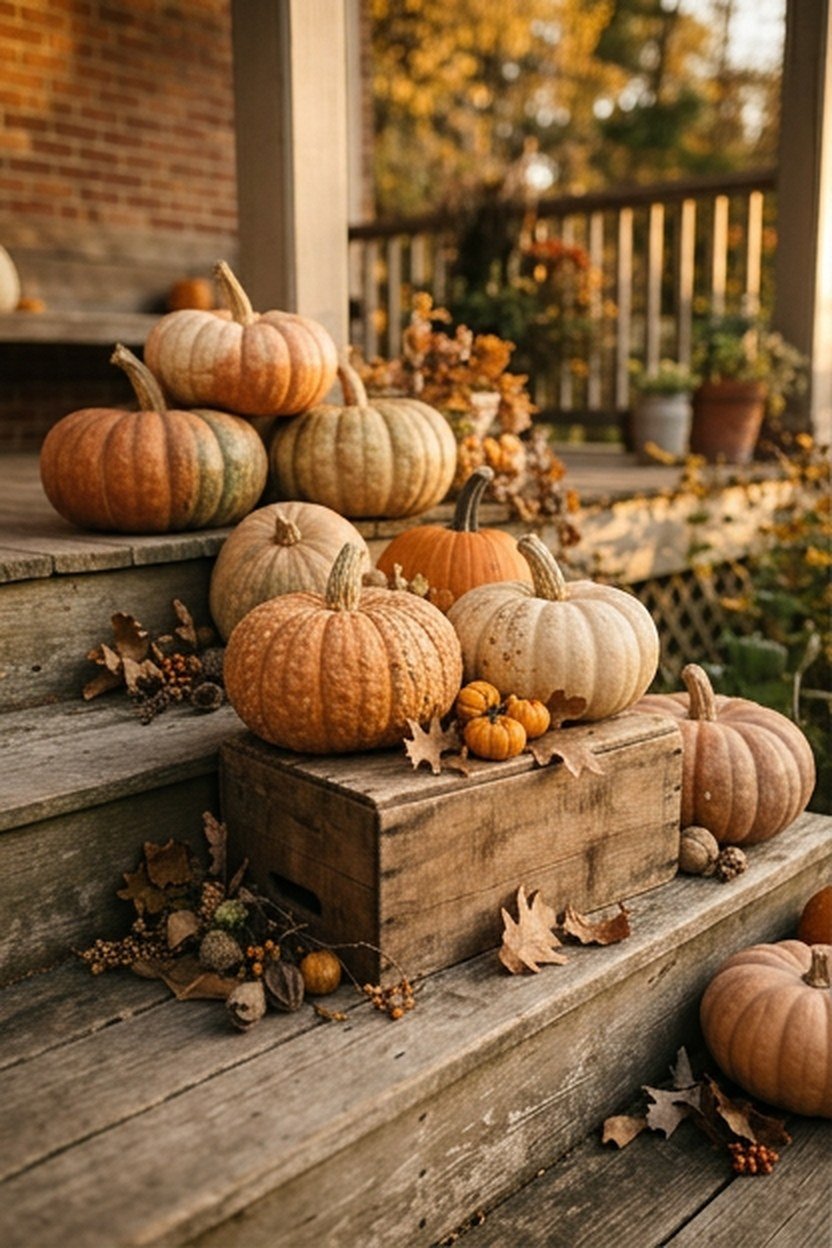
A layered arrangement of pumpkins and gourds in varying toasted cinnamon and complementary cream tones at the base of your porch steps creates an inviting entrance without requiring any permanent changes. Real pumpkins cost relatively little, typically 5 to 15 dollars each depending on size, though a mixed display of six to eight pumpkins adds up to a modest but worthwhile total. Faux pumpkins cost more upfront but last multiple seasons if stored properly.
Vary the pumpkin heights and sizes deliberately rather than lining them up in a uniform row, since an organic, slightly asymmetrical cluster reads as more intentionally styled than a perfectly even display. I stack a few pumpkins on small wood crates or stands specifically to add height variation without needing larger pumpkins. This layering trick works regardless of your total budget for the display.
Real pumpkins will develop a soft matte texture across their surface as they cure and age naturally through the fall season, a gradual softening of the original glossy rind that is completely normal. This textured change does not mean the pumpkin has gone bad, just that it is aging as expected outdoors. Faux pumpkins made from foam or plastic composite skip this natural change entirely if you prefer a consistent look all season.
Real Versus Faux Pumpkins For A Long Display Season
Real pumpkins generally last four to six weeks outdoors before starting to soften and decline, which matters if you want your porch display to stay fresh from early September through Thanksgiving. Faux pumpkins cost more initially but last for many seasons, making them the better value if you plan to recreate a similar display every year. Consider a mix of both, real pumpkins for the earliest fall weeks and faux ones layered in as backup for the display’s later stretch.
Store faux pumpkins in a dry, temperature stable location between seasons to prevent the material from becoming brittle or fading prematurely in storage. A basement shelf or a closet works better than a hot attic or a damp garage. This small habit noticeably extends how many seasons a faux pumpkin set actually lasts.
3. Cinnamon Toned Outdoor Throw Pillows
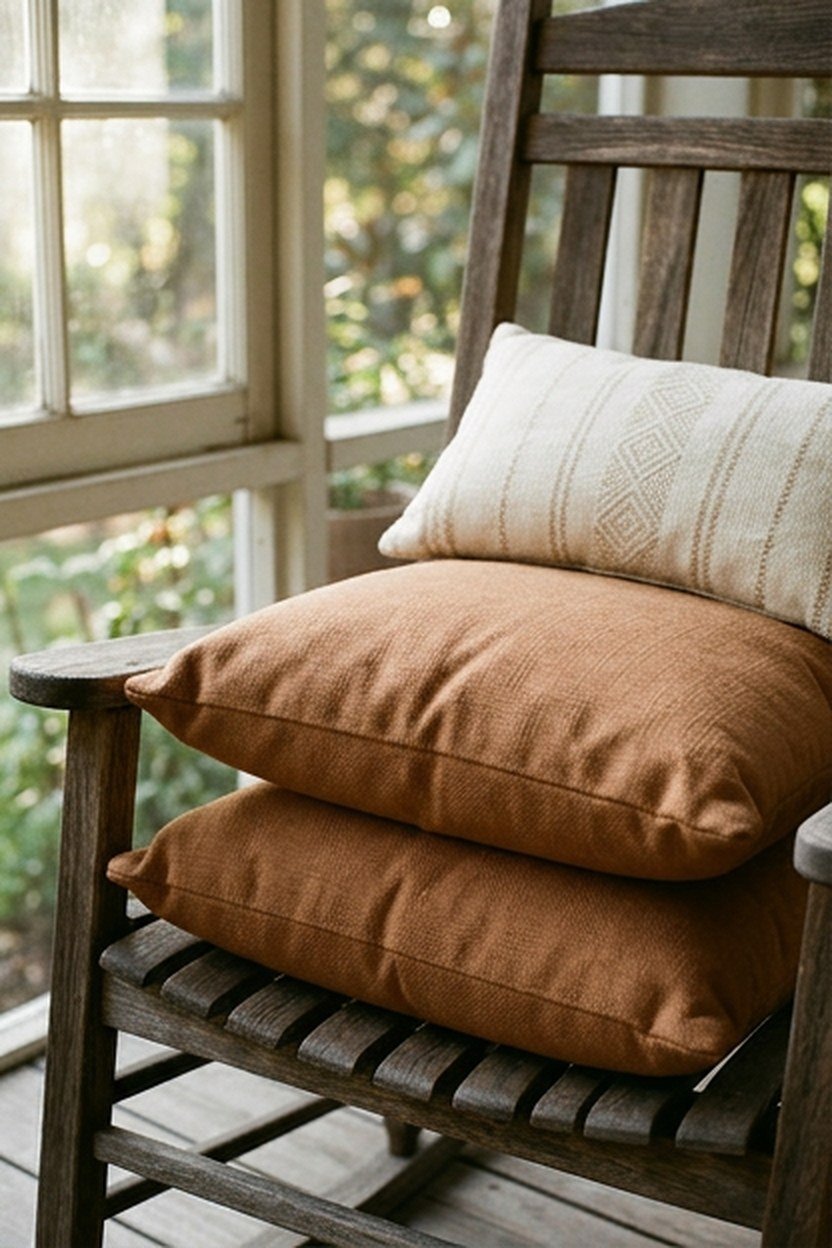
A set of toasted cinnamon outdoor throw pillows on a porch bench or rocking chairs adds soft texture and color without any permanent commitment, making this one of the easiest and most affordable ideas to try. Expect to pay 20 to 45 dollars per pillow for quality outdoor rated fabric, with most porches needing four to six pillows for a full look. Outdoor rated fabric specifically resists fading and moisture better than indoor pillow fabric brought outside.
Mix a few different toasted cinnamon shades and patterns across your pillow set rather than choosing pillows that match exactly, since slight variation reads as more intentionally curated than a perfectly matched set. I pair a solid toasted cinnamon pillow with a smaller patterned one in a complementary cream tone on each chair, which keeps the display feeling layered rather than flat. This mixing approach works with almost any budget level.
The outdoor fabric will develop a soft matte texture on its surface after a season or two of sun exposure and regular handling, a gradual softening from the original crisper finish. This textured change is expected for outdoor fabric under sustained weather exposure and does not affect the pillow’s water resistance significantly. Rotating pillows to a shadier spot partway through the season slows this change if you want to preserve the original texture longer.
Storing Outdoor Pillows Between Seasons
Store outdoor pillows in a dry, ventilated space rather than a sealed plastic bin, since trapped moisture inside a sealed container encourages mildew growth even in fabric rated for outdoor use. A breathable canvas storage bag works better than plastic for this specific purpose. This small storage choice extends how many seasons a set of outdoor pillows genuinely lasts.
Check pillow inserts specifically for moisture retention before storing, since a foam insert that absorbed rain during the season can develop mildew issues even if the outer fabric itself dried completely. Press firmly on the insert to feel for any lingering dampness before boxing it away. A damp insert stored sealed for months is the most common cause of a musty smell the following fall.
4. Toasted Cinnamon Ribbon On A Fall Wreath
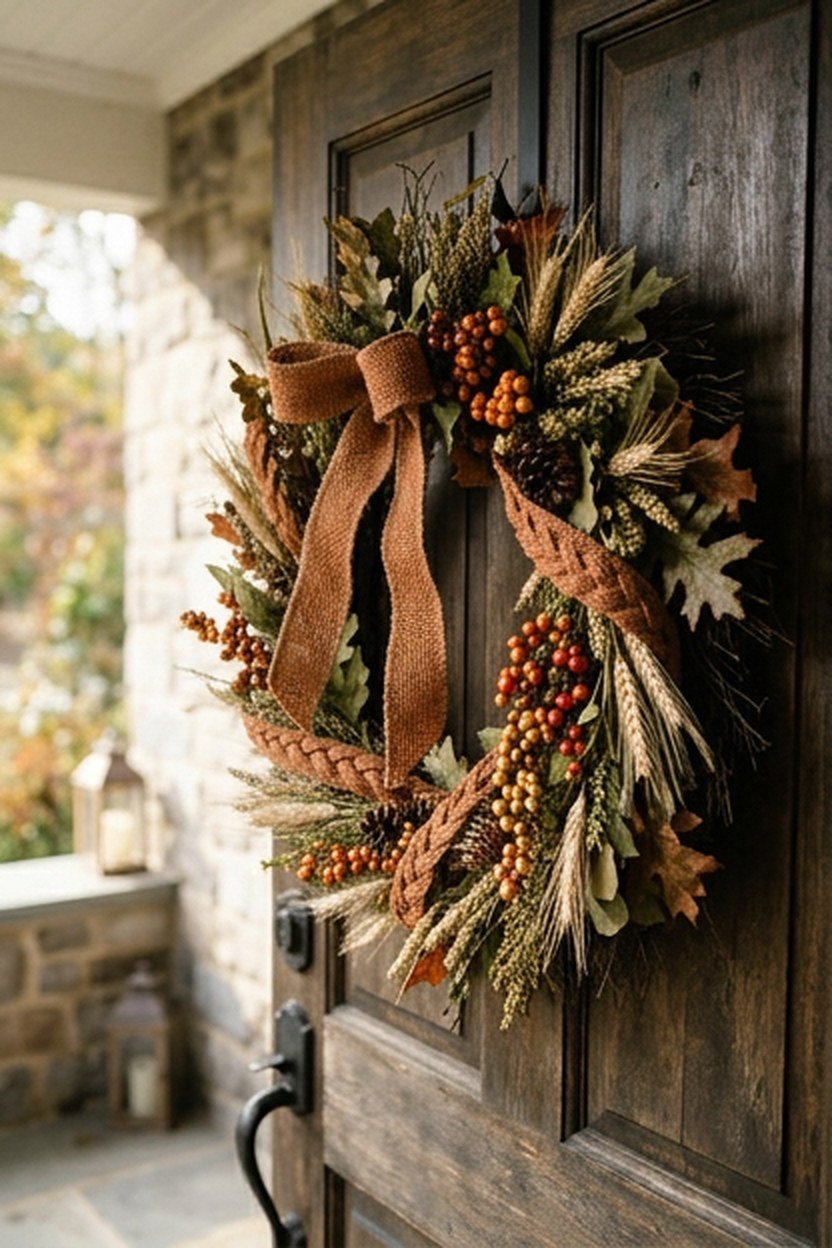
A fall wreath featuring toasted cinnamon ribbon woven through dried foliage, wheat stalks, or faux berries gives your front door a focal point that coordinates with the rest of your porch scheme. Expect to pay 30 to 70 dollars for a quality pre-made wreath, or considerably less if you build one yourself from a plain grapevine base and individual accent pieces. A DIY approach also lets you match the exact toasted cinnamon shade you want more precisely than a pre-made option might offer.
Position the wreath at genuine eye level on the door rather than centered purely on the door’s own dimensions, since a wreath hung too high or too low reads as an afterthought regardless of how well it is made. Most doors look best with the wreath’s center sitting roughly at the height of an adult’s eyes when standing on the porch. This small positioning detail affects the wreath’s visual impact more than people initially expect.
The ribbon material, if a natural fiber like burlap or linen blend, will show a soft natural fiber texture becoming more visible as the fabric weathers slightly through fall’s fluctuating temperatures and occasional rain. This textured change suits the rustic character most toasted cinnamon fall displays are going for in the first place. A synthetic ribbon resists this change if you prefer a crisper look through the whole season.
Weatherproofing A Wreath For Outdoor Display
Choose dried or faux foliage specifically rated for outdoor use rather than indoor decorative dried flowers, since indoor rated dried materials crumble and fade far faster once exposed to real outdoor humidity and sun. A wreath built with the wrong materials often looks tired within just a few weeks outdoors. Ask specifically about outdoor durability when buying individual wreath components.
Position the wreath under any porch overhang or covered area if possible, since direct rain exposure shortens the lifespan of even properly rated outdoor wreath materials considerably. A few feet of overhang coverage makes a real difference across a full season of weather. This small placement choice often matters more than the wreath’s actual material quality.
5. Cinnamon Stick Bundles As Accent Decor
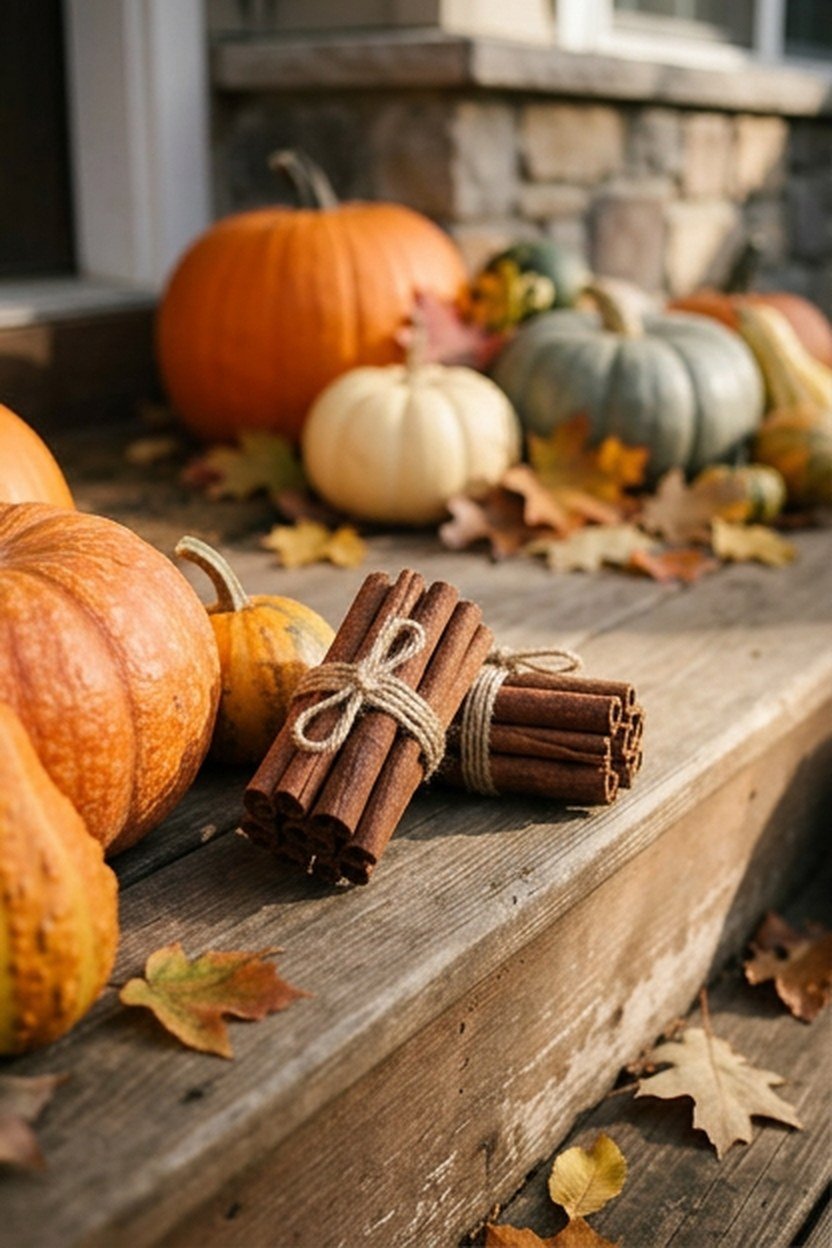
Small bundles of real cinnamon sticks tied with twine and tucked into a pumpkin display or wreath add genuine fragrance along with the color and texture connection to the season’s namesake spice. This is one of the lowest cost ideas on this entire list, typically 5 to 12 dollars for enough cinnamon sticks to make several small bundles. The scent alone makes this a favorite detail for anyone who actually stops to look closely at your porch display.
Position cinnamon stick bundles somewhere visitors will pass close enough to notice the fragrance, like near the door handle or tucked into a display right beside the front steps. A bundle placed too far from where people actually walk loses most of its sensory impact regardless of how nice it looks visually. This placement consideration matters more for this specific idea than almost any other on the list.
The cinnamon sticks themselves will show a soft natural texture becoming slightly more pronounced as they dry further and age through the fall weather outdoors. This gradual textured change is completely normal for dried spice bundles and does not affect their appearance or fragrance significantly within a single season. Fresh bundles replace easily each year for a modest cost if you want the display to smell strong every season.
How Long Cinnamon Stick Bundles Last Outdoors
Real cinnamon stick bundles typically hold their fragrance and appearance well for a full fall season, roughly eight to ten weeks, before the scent fades noticeably and the sticks become more brittle. Refresh bundles partway through the season if fragrance matters a lot to your display, since a light spritz of concentrated cinnamon fragrance oil can extend the scent without replacing the sticks entirely. This small refresh costs very little compared to buying entirely new bundles.
Store any leftover cinnamon sticks in a sealed container away from direct sunlight if you want to reuse them the following season, since sunlight exposure fades both their color and fragrance faster than dark storage would. A simple jar in a closet or pantry works well for this purpose. Sticks stored this way often carry a usable scent into a second season.
6. Toasted Cinnamon And Cream Striped Rug
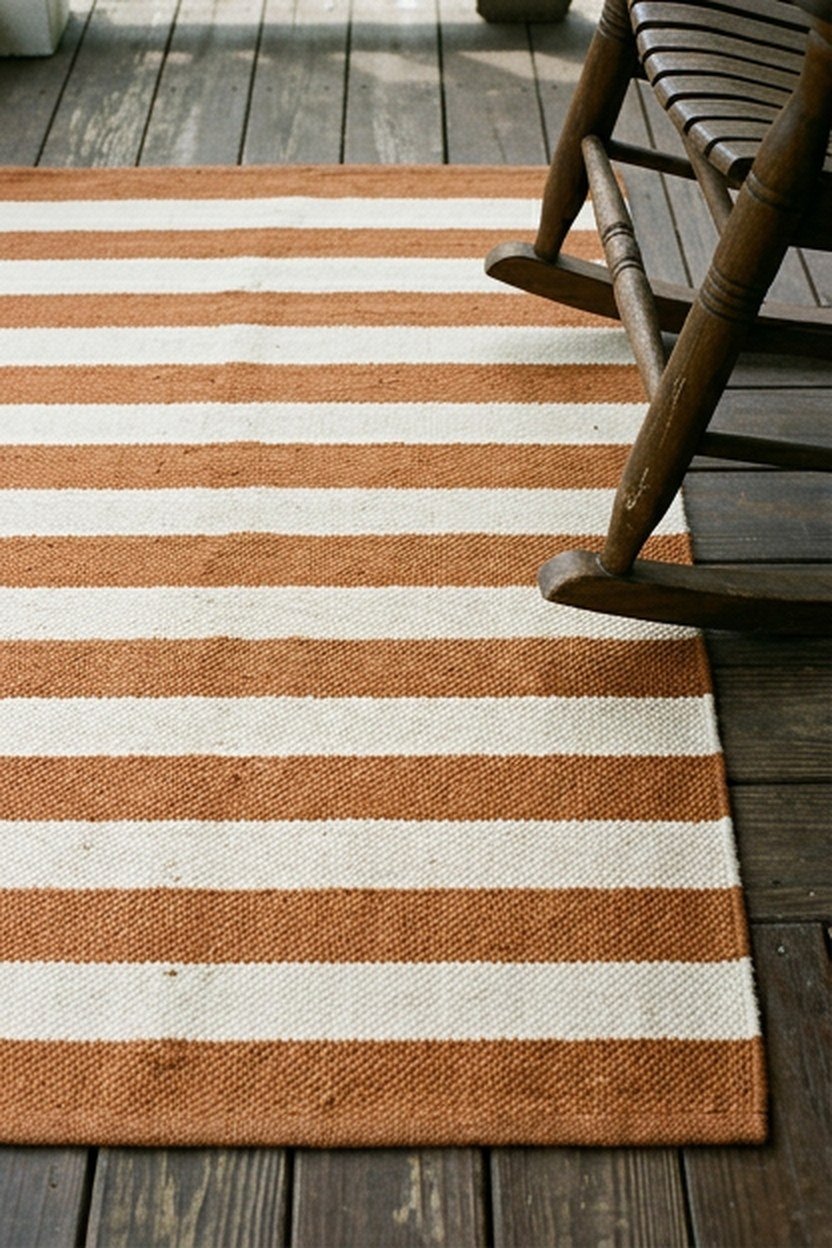
An outdoor rug featuring toasted cinnamon and cream stripes anchors a porch seating area and ties the whole color scheme together at ground level, which is often the most overlooked surface in porch styling. Expect to pay 60 to 150 dollars for a quality outdoor rated rug in a reasonable porch sized dimension. This single piece often does more to make a porch feel finished than several smaller decor items combined.
Size the rug so all porch furniture has at least its front legs resting on it, a styling guideline that keeps the seating area feeling connected rather than having furniture floating disconnected from the rug’s edge. Measure your actual furniture footprint before ordering a rug size, since an undersized rug looks more like an afterthought than a genuine anchor for the space. This detail matters more to the finished look than most people expect.
Outdoor rated rug material will develop a soft matte texture underfoot after a season of foot traffic and weather exposure, the fibers settling slightly from their original crisper factory finish. This gradual textured change is normal wear for outdoor rug material and does not indicate any defect in the product. Rotating the rug periodically evens out this texture change across the full surface rather than concentrating it in one high traffic zone.
Choosing Rug Material For Uncovered Versus Covered Porches
A fully synthetic polypropylene rug handles direct rain and sun exposure on an uncovered porch far better than a natural fiber option would, resisting mold and fading more reliably in genuinely wet conditions. A covered porch with less direct weather exposure can use a wider range of materials, including some natural fiber blends, without the same durability concerns. Match your rug material choice to your porch’s actual exposure level rather than choosing purely on look.
Check the rug’s specific care instructions before buying, since some outdoor rugs can be hosed down directly while others need more careful spot cleaning only. This distinction matters a lot for a porch that sees regular foot traffic and occasional spills. A rug rated for direct hosing saves considerable maintenance effort over a full season.
7. Cinnamon Colored Porch Rocking Chair Cushions
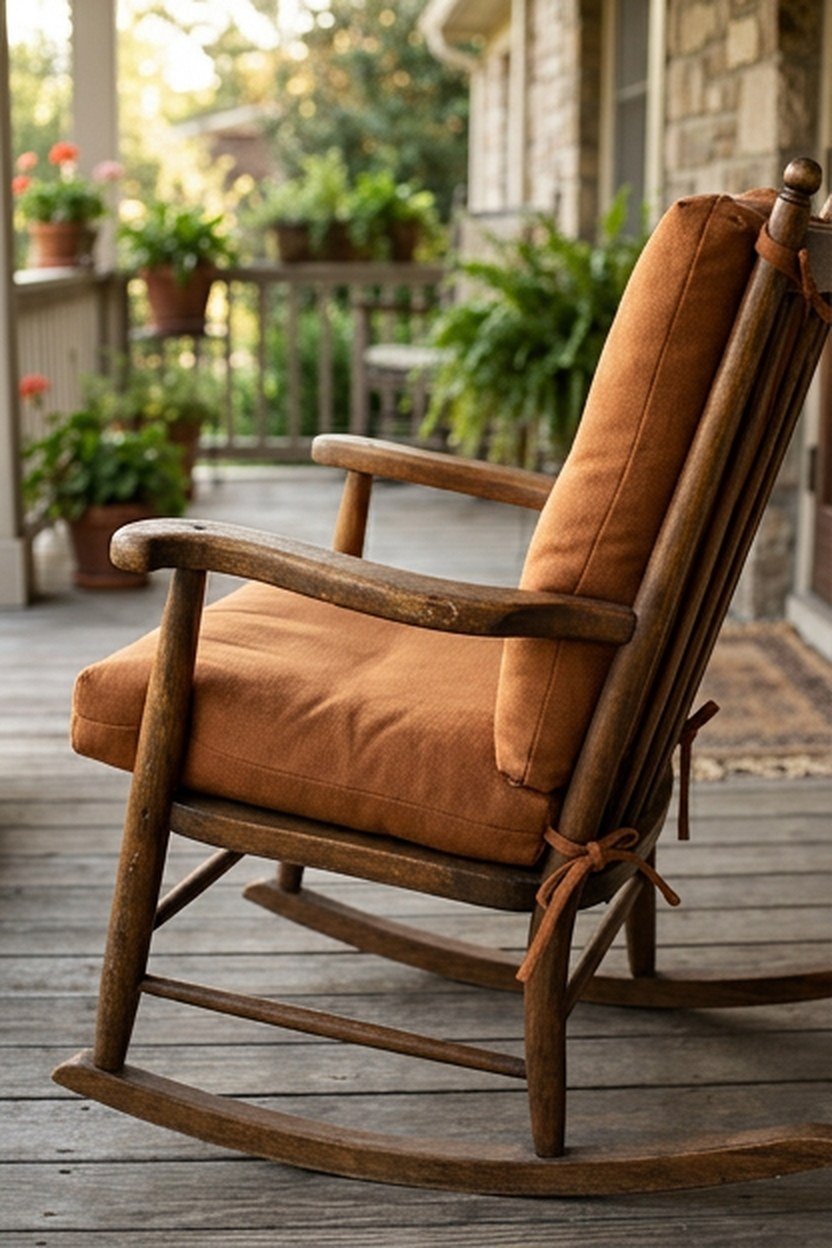
Replacing plain or faded rocking chair cushions with a toasted cinnamon set instantly updates a porch’s seating for fall without needing to replace the chairs themselves. Expect to pay 25 to 60 dollars per cushion set depending on the chair size and fabric quality. This is one of the more practical ideas on this list since most porches already have rocking chairs that simply need a seasonal refresh.
Choose cushions with ties or straps that secure to the chair frame rather than loose cushions that shift or blow away in wind, since a porch by definition experiences more airflow than an interior room. This practical detail matters more than the fabric pattern itself for keeping cushions actually usable through a full season of porch weather. Test the tie security before your first storm of the season rather than after.
The cushion fabric will show a soft matte texture developing across the seat surface after a season of regular sitting and sun exposure, a gradual softening from the original crisper factory finish. This textured change is expected for outdoor cushion fabric under sustained use and does not significantly affect comfort or water resistance. Removable, washable cushion covers make maintaining the look easier across multiple seasons.
Matching Cushions To Existing Rocking Chair Wood Tones
Consider your rocking chairs’ existing wood tone or paint color before choosing a specific toasted cinnamon shade for the cushions, since a warm wood tone can either complement or clash with a similarly warm cushion color depending on the exact shades involved. A lighter painted white or gray chair generally pairs well with almost any toasted cinnamon shade, while a naturally stained wood chair needs more careful matching. Bring a cushion sample outside to check against your actual chairs before ordering a full set.
Check cushion thickness against your chair’s specific seat dimensions, since a cushion too thin looks skimpy while one too thick can look overstuffed on a smaller rocking chair frame. Measure the seat before ordering rather than assuming a standard size will fit correctly. This small check avoids returning a mismatched cushion set after the fact.
8. Dried Wheat And Cinnamon Stem Bundles
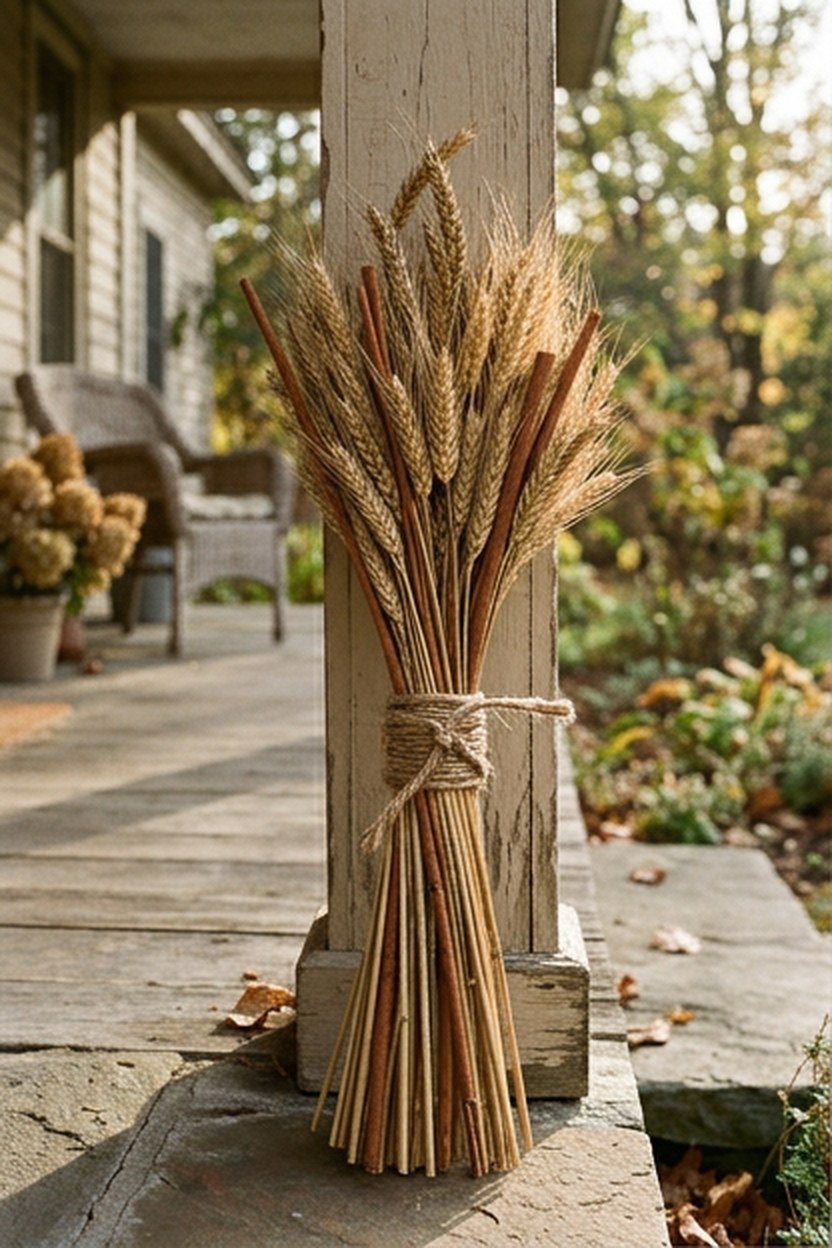
Bundles of dried wheat stalks paired with cinnamon colored dried flowers or stems, tied together and leaned against a porch column or door frame, add height and organic texture that flat decor items cannot achieve. Expect to pay 15 to 35 dollars per bundle depending on size and the specific dried materials included. Two or three bundles positioned at different points on the porch usually creates enough visual rhythm without looking repetitive.
Vary bundle height and position rather than placing identical bundles in a perfectly symmetrical arrangement, since a slightly asymmetrical placement reads as more organic and less obviously store bought. I lean my tallest bundle against the door frame and a shorter one near the steps specifically to create a sense of natural variation across the porch. This asymmetry works with almost any porch layout.
The dried wheat stalks will show a soft natural texture becoming more brittle looking as they continue drying and age through the fall season outdoors. This gradual textured change is completely normal for dried plant material and is part of the expected aesthic progression through the display’s lifespan. Handle bundles gently as the season progresses, since fully dried stalks become more fragile toward the display’s later weeks.
Securing Bundles Against Wind And Weather
Tie dried bundles securely with wire or sturdy twine rather than a simple ribbon knot, since wind on an exposed porch can loosen a decorative bow far more easily than a proper binding. Position bundles in a somewhat sheltered spot near a column or wall rather than in the most exposed corner of the porch if wind is a regular concern in your area. This placement consideration extends how long a bundle display stays looking neat.
Check bundles after any significant storm and re-secure or replace any stems that have scattered, since a partially collapsed bundle looks far worse than no bundle at all. A quick five minute check after bad weather keeps the display looking intentional. This habit matters most in a genuinely windy or exposed location.
9. Toasted Cinnamon Painted Porch Ceiling
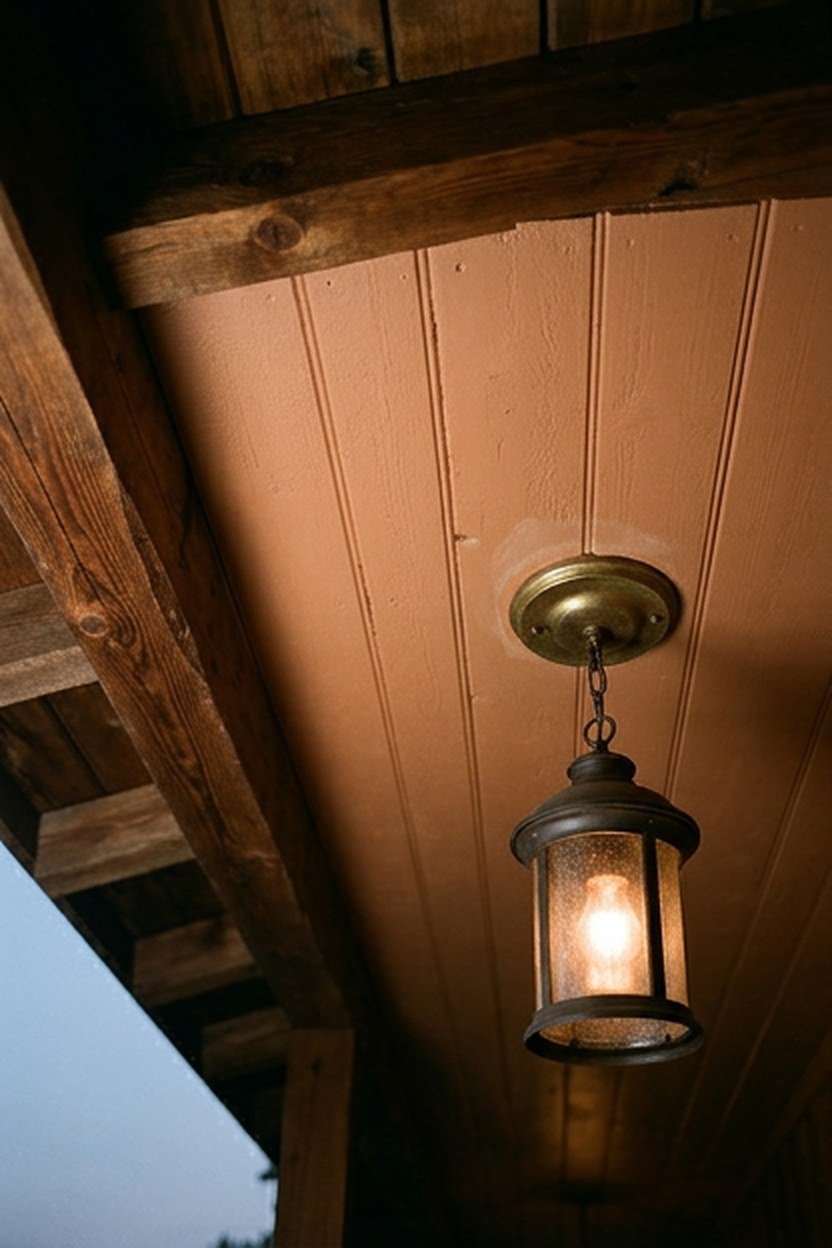
Painting a porch ceiling in a soft, muted toasted cinnamon rather than the traditional pale blue “haint blue” gives the porch a warmer, more cocoon like feeling that suits a fall focused scheme well. Expect to pay 100 to 250 dollars in materials and labor if hiring help, or less for materials alone doing it yourself. This is a bigger commitment than most ideas here since a ceiling color reads year round.
Choose a lighter, more muted toasted cinnamon tone for a ceiling rather than the deeper shade you might choose for a door or accent piece, since a dark ceiling color can make a porch feel lower and more enclosed. Test the exact shade on a poster board taped to the ceiling before committing, since ceiling color reads differently overhead than on a chip held at eye level. This upfront test prevents an expensive repaint if the shade feels too heavy once applied.
The painted ceiling will develop a soft matte texture in the areas nearest any porch light fixtures from heat exposure over multiple seasons of use. This gradual textured change near light fixtures is a normal characteristic of painted surfaces exposed to consistent heat and does not indicate any structural issue. A heat resistant paint formulation near fixtures slows this specific change if it concerns you.
Deciding Between A Seasonal Or Year Round Ceiling Color
A porch ceiling in toasted cinnamon works well year round since the warm tone does not read as strictly seasonal the way a bright orange might, making this a reasonable permanent choice rather than one requiring repainting each fall. Consider whether you want this level of commitment before choosing a ceiling color purely for a single fall display. Most people who choose this option end up keeping the color well beyond the fall season specifically because it works so broadly.
Get a second opinion from someone who will see the porch daily before committing to a full ceiling repaint, since this is one of the more expensive and time consuming ideas on this list to reverse if you change your mind. A second perspective often catches a concern you have grown too close to the project to notice. This small step is worth the delay before a full ceiling commitment.
10. Layered Lanterns With Cinnamon Toned Candles
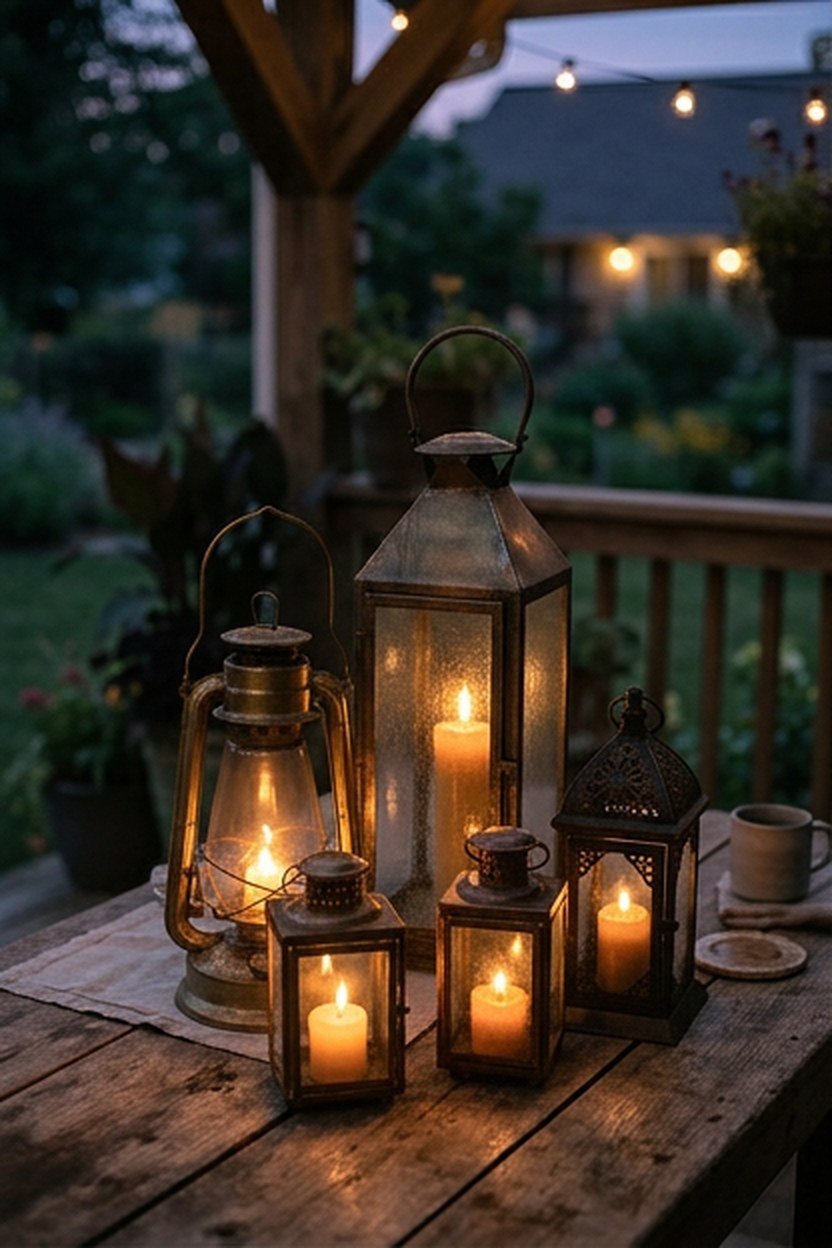
A cluster of lanterns in varying heights, holding cinnamon toned or amber candles, creates warm evening ambiance on a porch that gets used after dark through the fall season. Expect to pay 20 to 50 dollars per lantern depending on size and material, with battery operated flameless candles adding a modest amount more per lantern. Battery operated candles specifically solve the safety concern of an open flame on a porch that sees regular foot traffic.
Group lanterns in odd numbered clusters of three or five at varying heights rather than a single row of matching lanterns, since this varied height grouping reads as more intentionally styled than a uniform line. Use small risers, stacked books, or short crates to create height variation if your lanterns themselves are all similar sizes. This basic styling principle applies well beyond just lanterns specifically.
The lantern’s metal frame, if a matte black or bronze finish, will develop a soft natural sheen change over multiple seasons of outdoor exposure to humidity and temperature swings. This gradual textured change in the metal’s original finish is expected for outdoor metal lanterns and many people consider it part of the material’s authentic aging character. A sealed or powder coated finish resists this change more than an unsealed metal option.
Battery Life Considerations For Flameless Candles
Check the battery life rating on flameless candles before buying a full set for lantern display, since some budget models need battery changes far more frequently than higher quality options rated for extended outdoor use. A timer function that automatically turns candles on each evening adds convenience worth paying slightly more for. This small feature saves the hassle of manually switching multiple candles on and off nightly.
Store lantern glass panels separately from the metal frame during off season storage if the lanterns disassemble easily, since this reduces the risk of scratched glass during a full season of storage. Wrap each panel individually in soft cloth before boxing them together. This small extra step keeps the set looking new for many seasons.
11. Toasted Cinnamon Doormat With Fall Pattern
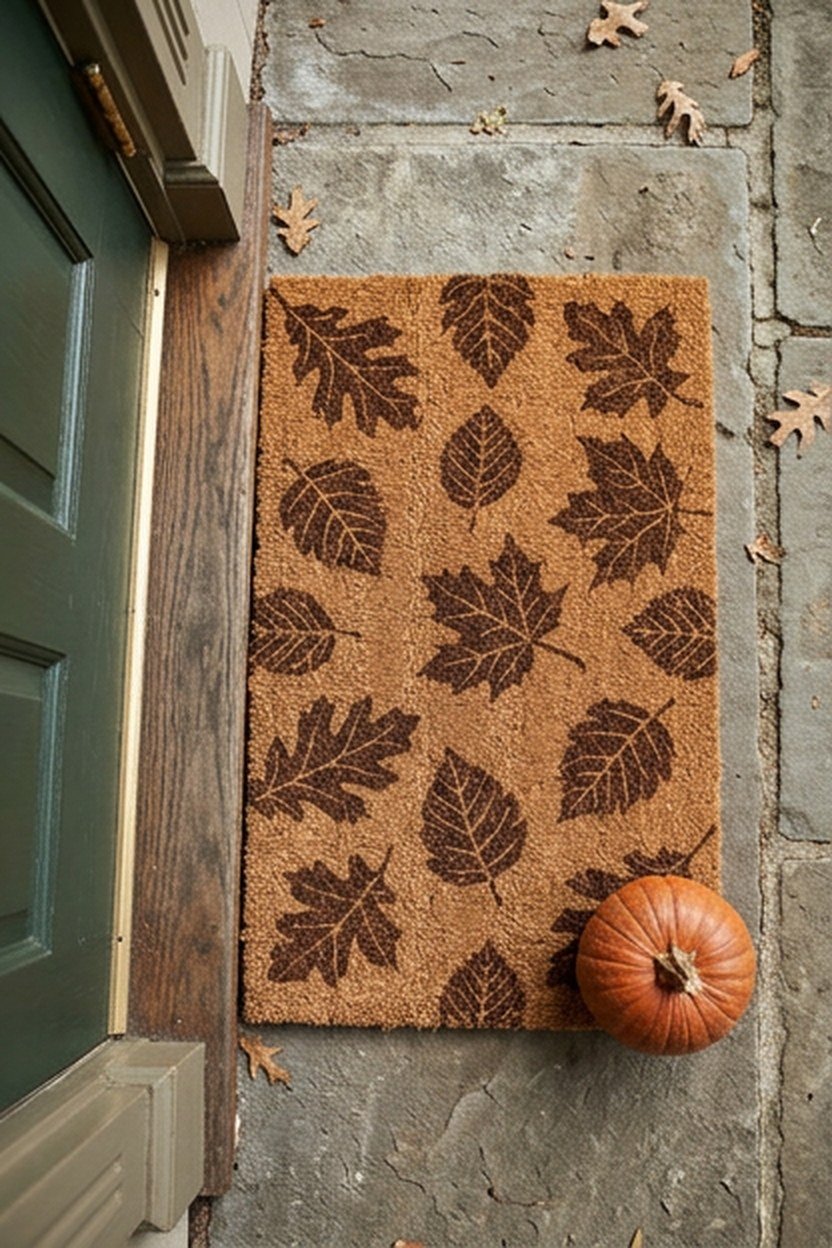
A doormat in toasted cinnamon tones featuring a simple fall pattern, like a leaf motif or a subtle plaid, is a small but genuinely functional addition that ties the entrance directly into your broader color scheme. Expect to pay 20 to 45 dollars for a quality outdoor rated doormat with a fall specific pattern. This is one of the easiest ideas on this list to swap seasonally without any real commitment.
Choose a doormat material that handles genuine foot traffic and weather well, like a coir or rubber backed option, rather than a purely decorative mat not rated for regular outdoor use. A doormat that looks great but wears out within a single season is a poor value regardless of how well it matches your color scheme. Check the specific material rating before buying based purely on the pattern.
The coir fiber doormat will show a soft natural fiber texture becoming more pronounced as the material compresses slightly from regular foot traffic through the season. This textured change at the highest traffic point is normal wear for coir material and does not affect the mat’s basic function as a shoe wiping surface. Rotating the mat periodically if it is symmetrical evens out this wear pattern somewhat.
Layering A Doormat Over A Larger Porch Rug
Some porch styles layer a smaller, patterned doormat directly at the door threshold over a larger neutral outdoor rug covering more of the porch floor, creating visual depth similar to indoor rug layering. This layered approach works especially well on a larger porch with room for both pieces without feeling crowded. Measure both pieces to scale before assuming they will layer well together on your specific porch footprint.
Choose a doormat pattern that complements rather than competes with a layered rug underneath, since two busy patterns stacked together can look cluttered rather than intentionally styled. Let one piece carry the bold pattern while the other stays simpler. This balance keeps the layered look feeling curated rather than chaotic.
12. Cinnamon Toned Corn Stalks Flanking The Door
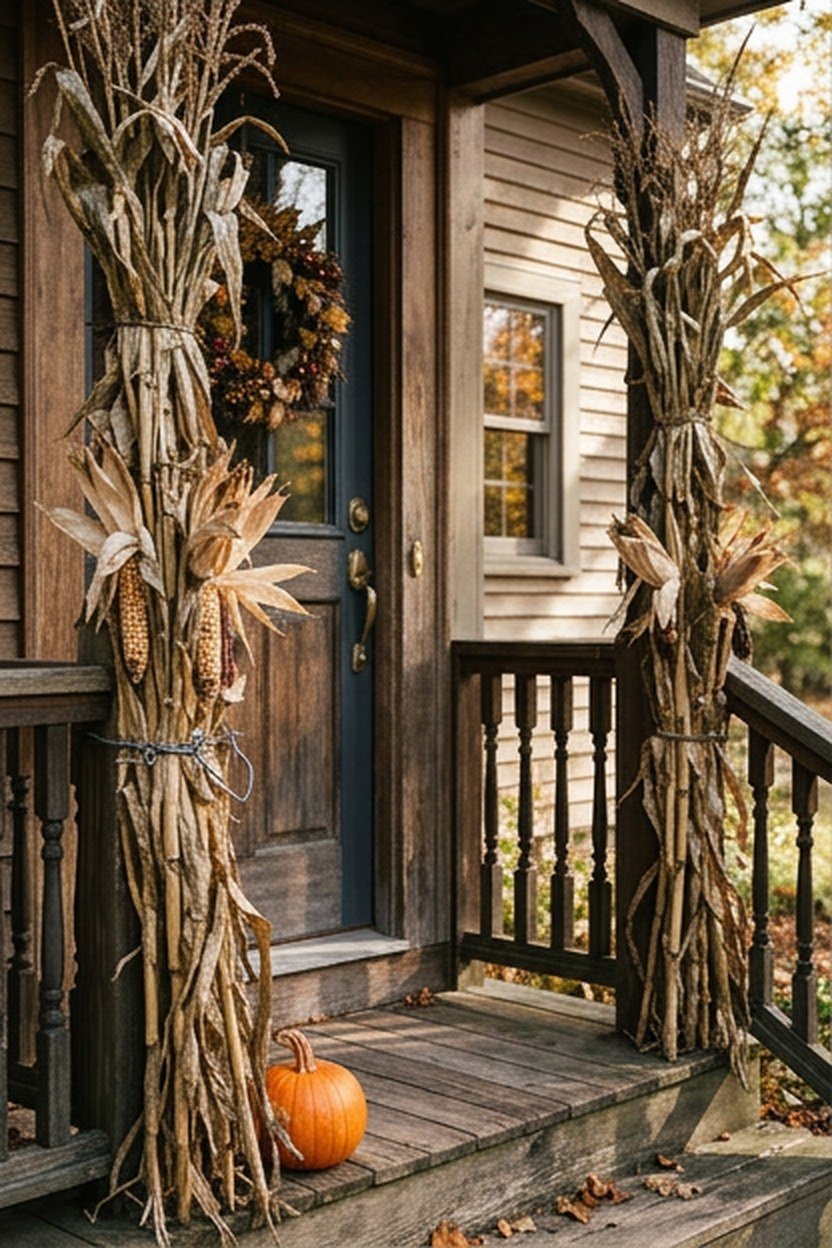
Bundled corn stalks in a warm, toasted cinnamon toned dried state, positioned in matching pairs flanking the front door, create a classic, tall vertical accent that most other fall porch decor cannot match in scale. Expect to pay 15 to 30 dollars per bundle, with most doorway displays needing two matching bundles for symmetry. This idea works especially well on a porch with a genuinely tall entrance that can support the stalks’ height without looking oversized.
Secure corn stalk bundles to the porch railing or a sturdy stake driven into a planter rather than simply leaning them freely against the house, since wind can topple an unsecured bundle and damage both the display and anything nearby. A simple zip tie or wire wrap around the railing takes only a minute and prevents this common problem. This small step matters more on an exposed or windy porch specifically.
The dried corn husks will show a soft natural texture becoming more pronounced as they continue drying through the fall season, the husks curling and toughening slightly with continued exposure to outdoor air. This gradual textured change is completely normal for dried corn stalks and is part of the expected look through the display’s several week lifespan. Handle the stalks carefully toward the end of the season as the fully dried husks become more brittle.
Sizing Corn Stalk Bundles To Your Porch Scale
Measure your porch’s actual entrance height before ordering corn stalk bundles, since a bundle disproportionately tall or short for your specific doorway looks awkward regardless of how well made the bundle itself is. Most residential doorways suit a bundle between four and six feet tall, though this varies with your specific porch proportions. A local supplier can often trim bundles to a custom height on request.
Check local regulations or homeowner association guidelines before installing tall exterior displays if you live in a managed community, since some communities have specific rules about seasonal decor height and placement. A quick email or phone call to the association clarifies this before you invest in a display. This small step avoids an unwelcome request to remove a display you already paid for.
13. Toasted Cinnamon String Lights Along The Porch Railing
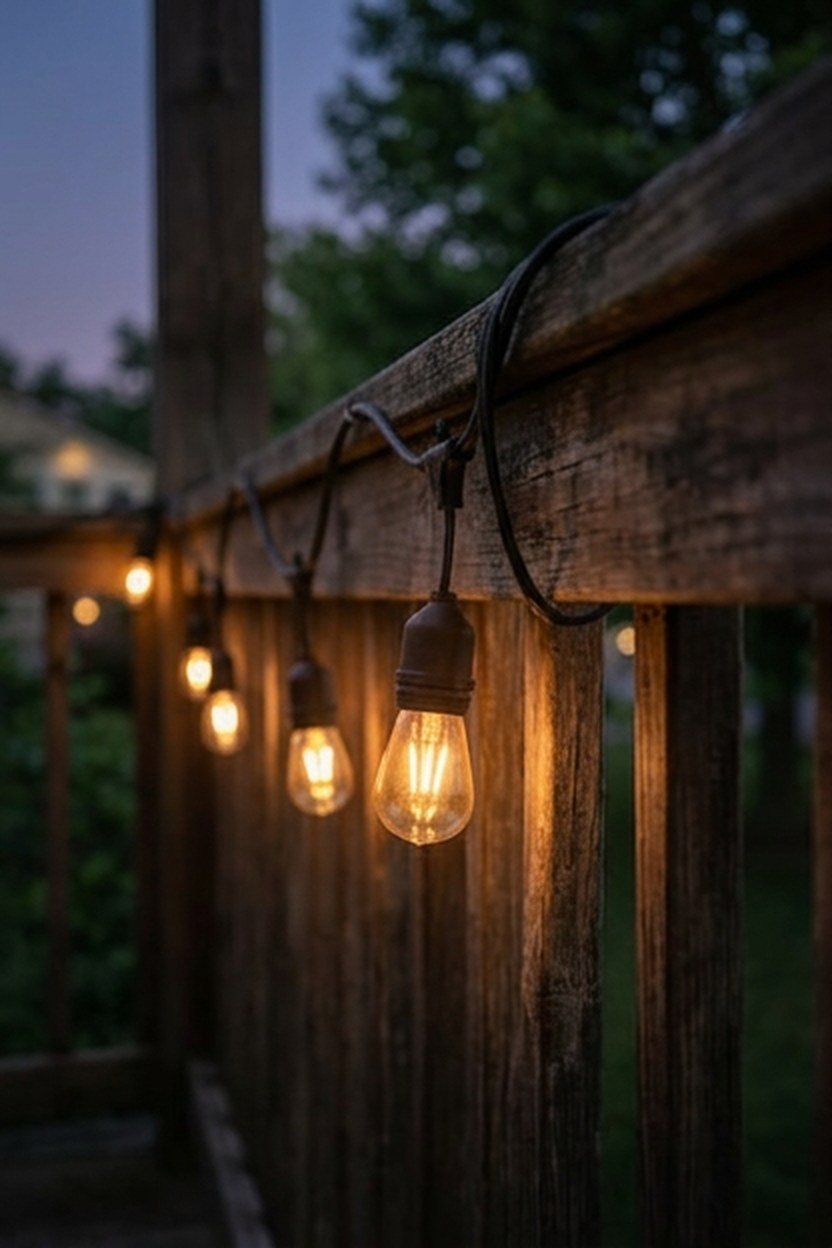
Warm toned string lights, ideally with an amber or toasted cinnamon tinted bulb rather than plain clear white, run along a porch railing to add both function and seasonal ambiance for evening use. Expect to pay 20 to 40 dollars for a quality outdoor rated string light set of reasonable length. This idea works well combined with several others on this list rather than as a standalone feature.
Choose outdoor rated string lights specifically rather than indoor lights used outside, since indoor rated electrical components are not built to handle direct weather exposure safely. This distinction matters enormously for both the lights’ longevity and basic electrical safety on an exposed porch. Check the packaging specifically for an outdoor use rating before purchasing any string light set.
The light strand’s plastic housing will develop a soft matte texture across its surface after a season or two of continuous outdoor sun and temperature exposure, a gradual dulling from its original glossy finish. This textured change is completely normal for outdoor rated plastic housings and does not affect the lights’ electrical function or safety rating. Replacing strands every few seasons is normal maintenance regardless of this cosmetic change.
Powering String Lights Without An Exposed Extension Cord
Plan your string light layout around your porch’s actual outlet locations before buying a specific length, since running a long exposed extension cord across a walking path creates both a trip hazard and an eyesore that undermines the display’s finished look. A porch with limited outlet access may need a battery operated string light option instead of a plug-in style. Check outlet placement before finalizing which style of lights to buy.
Consider a light strand with a built-in timer or smart plug control, which adds convenience for turning the display on each evening without needing to remember manually every single day. Most timer options cost only a small amount more than a basic plug-in strand. This small upgrade makes the display far more consistent through the season.
14. Cinnamon And Sage Layered Planters
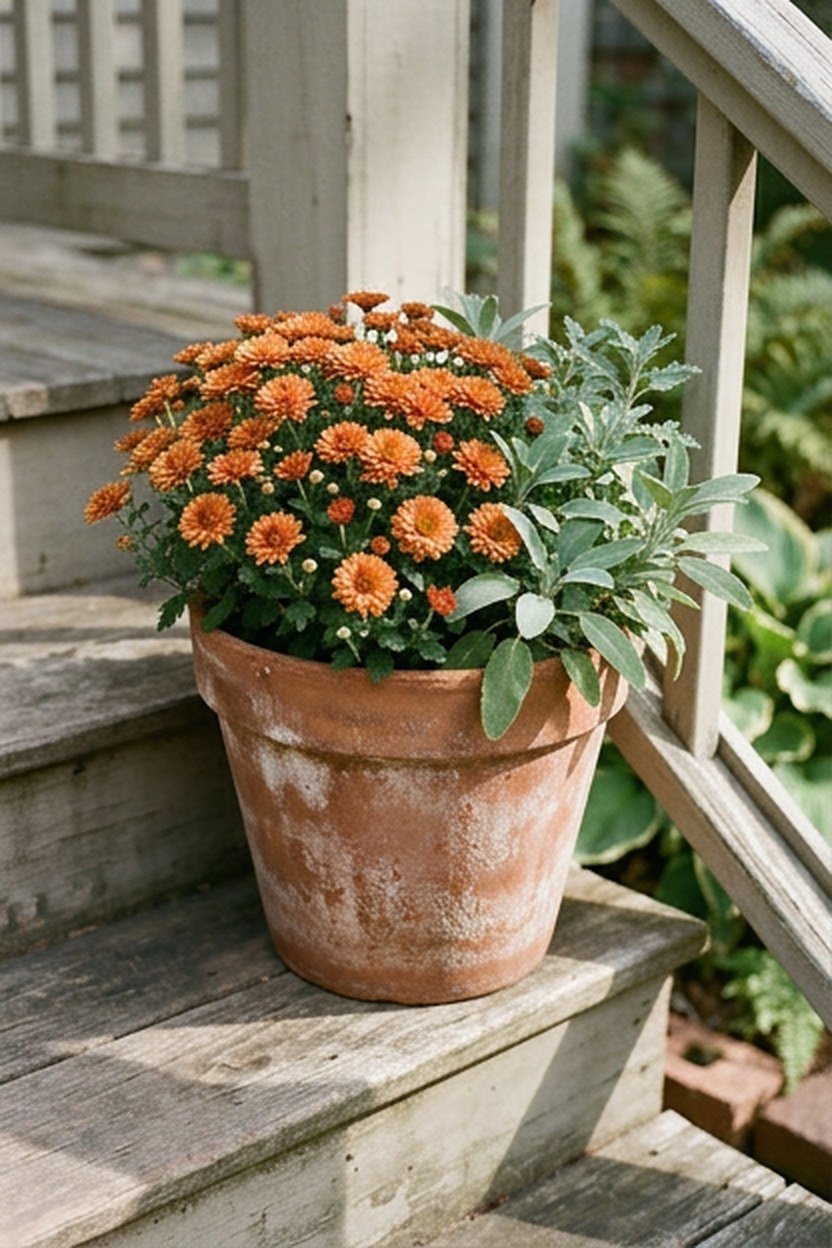
Pairing toasted cinnamon toned mums or dried flowers with sage green foliage in matching planters flanking the porch steps creates a color contrast that makes both tones read more vividly than either would alone. Expect to pay 15 to 35 dollars per planter arrangement depending on the specific plants chosen and planter size. This combination works particularly well for anyone who wants their toasted cinnamon scheme to include some genuine color contrast rather than an entirely monochromatic look.
Choose a planter material and color that does not compete with either the cinnamon or sage tones inside it, since a busy or brightly colored planter can undercut the careful color pairing of the plants themselves. A simple terra cotta, black, or cream planter generally works best as a neutral backdrop for this specific plant pairing. Keep the planter itself as the supporting element rather than a competing focal point.
The terra cotta planter surface will show a light, even mineral bloom developing from regular watering and outdoor humidity exposure through the fall season. This textured surface change is a normal characteristic of unglazed terra cotta under consistent moisture exposure and many people consider it an attractive sign of a well tended, actively used planter. A glazed planter shows less of this specific change if you prefer a more consistent surface appearance.
Choosing Plants That Will Survive A Full Fall Season
Mums generally hold their color and shape for four to six weeks before declining, while dried or faux stems last the entire season without any maintenance concerns at all. Consider mixing a few real mums for immediate color impact with some dried or faux stems that will carry the display through to Thanksgiving once the mums fade. This mixed approach balances upfront visual impact against a display that needs to last many weeks.
Water real mums according to their specific care tag rather than a generic watering schedule, since overwatering is the most common reason mums decline faster than their expected bloom window. Check the soil with a finger before watering rather than following a fixed daily routine. This small habit extends bloom time noticeably.
15. Toasted Cinnamon Chalkboard Welcome Sign

A small chalkboard or wood sign with a toasted cinnamon painted frame, featuring a handwritten or stenciled fall greeting, adds a personal and easily updated welcome detail near the front door. Expect to pay 15 to 40 dollars for a quality sign with a chalkboard or dry erase surface built in. This is one of the few ideas on this list that lets you change the specific message throughout the season without buying anything new.
Position the sign somewhere visible from the front walkway rather than tucked into a corner where visitors might miss it entirely, since the whole point of a welcome sign is that people actually see and read it. I position mine at the top of the porch steps specifically so it is the first detail visitors notice as they approach. This placement consideration matters more than the sign’s specific design.
The painted wood frame will develop a soft matte texture in the areas most exposed to weather, particularly along the top edge that catches the most direct sun and occasional rain. This gradual textured change in the painted finish is normal for exterior painted wood and does not affect the sign’s structural function. A protective clear coat over the painted frame slows this change if you want to preserve the crisp original finish longer.
Choosing Chalk Versus Vinyl Lettering For A Seasonal Sign
A genuine chalkboard surface lets you update the message as often as you like, which suits someone who enjoys changing the display through the season for different fall holidays or occasions. A fixed vinyl lettering approach looks more polished and permanent but commits you to one specific message for the display’s full run. Choose based on whether you actually want the flexibility to change the message or prefer the cleaner, more finished look of fixed lettering.
Seal a chalkboard surface used outdoors with a specific outdoor rated chalkboard paint, since standard interior chalkboard paint can degrade faster when exposed to genuine outdoor humidity and temperature swings. Ask specifically for the exterior rated version when buying rather than assuming any chalkboard paint works outside. This distinction affects how many seasons the sign’s surface stays usable.
What A Toasted Cinnamon Fall Porch Actually Costs
A complete toasted cinnamon fall porch transformation can range from under 100 dollars using a few pillows, a doormat, and some pumpkins to several hundred dollars with larger investments like a painted door, a new rug, and a full lantern collection. Most homeowners land somewhere in the middle, choosing a handful of higher impact ideas rather than attempting every one from this list. Prioritize the ideas that address your porch’s specific gaps, whether that is seating, entrance appeal, or evening ambiance.
Spread larger purchases across the fall season rather than buying everything before the first weekend of September, both to manage cost and to see how the display develops before committing to every planned element. I regret one impulse purchase of an oversized lantern set that never actually fit the scale of my own porch once everything else was in place. Living with a partial display for a week or two before finishing it out helps you judge what is actually needed.
The table below breaks down rough cost tiers for a toasted cinnamon fall porch project, though sourcing secondhand or seasonal sale items can push any tier toward the lower end. Treat it as a planning starting point rather than a firm quote for your specific project. Most homeowners land in the middle tier once a few accent pieces are included.
| Budget tier | What it covers | Approach |
|---|---|---|
| Under $100 | Pillows, doormat, pumpkins, small accents | Mostly seasonal, easy to store |
| $100 to $300 | Rug, lanterns, wreath, planters | Mix of seasonal and semi permanent |
| $300 and up | Painted door, ceiling color, full lantern set | Includes longer term investments |
Common Mistakes When Styling A Toasted Cinnamon Porch
Using toasted cinnamon as the only color in the entire display is the most common mistake, since a fully monochromatic porch can end up looking flat rather than rich and layered. Pair the color with cream, sage green, or a matte black accent to give the eye somewhere to rest between all the warm tones. A single contrasting element, even something as small as a planter or a doormat, makes the whole scheme read as more considered.
Overcrowding a small porch with too many individual decor items is the second frequent mistake, since a porch has finite visual space and too many competing elements start to look cluttered rather than intentionally styled. Choose three or four strong ideas from this list rather than attempting all fifteen on a compact porch. A smaller, more curated display consistently looks more expensive than a crowded one regardless of the actual cost involved.
Ignoring weatherproofing and material durability while focused purely on color coordination is the third mistake, leading to a beautiful display that looks tired within just a few weeks of real outdoor exposure. Check that fabric, wood finishes, and any electrical components are genuinely rated for outdoor use before purchasing based on color alone. A gorgeous item that cannot handle actual porch conditions will not stay gorgeous for long regardless of how well it matched your palette.
Testing A New Color Combination Before Committing Fully
Test any new color pairing, like a specific cinnamon and sage combination, with small, inexpensive items before investing in larger pieces in that same combination. A few dollars spent on sample pillows or a small planter reveals whether a color pairing actually works on your specific porch before you commit to a full rug or painted door in that scheme. This small step prevents an expensive full commitment to a combination that does not quite work once installed.
Photograph your porch at different times of day during this testing phase, since a color pairing that looks great at noon can read differently in evening light when many people actually use their porch most. Compare the photos side by side rather than relying on memory alone. This small habit catches a mismatch before it becomes a larger purchase.
Conclusion
Building a toasted cinnamon fall porch comes down to using the color as an anchor rather than the entire palette, layering in genuine texture through natural materials, and choosing pieces rated to actually survive outdoor fall weather. Start with the ideas that address your porch’s specific gaps, whether that is seating, lighting, or entrance appeal, and build outward as budget and time allow. The fifteen ideas covered here scale from a nearly free weekend refresh up to a more substantial seasonal investment.
Prioritize weatherproofing and thoughtful color pairing above simply buying every toasted cinnamon item you can find, since restraint and durability both matter more than volume for a display that actually holds up through a full fall season. A well planned toasted cinnamon porch rewards you with a genuinely warm, welcoming entrance for months at a time. Get the fundamentals right, and the rest of the styling falls into place easily.
Frequently Asked Questions
How long does a fall porch display typically need to last? Most fall porch displays run from early September through Thanksgiving, roughly eight to twelve weeks depending on your climate and when winter decor typically takes over. Plan material durability and any real pumpkin purchases around this realistic timeline.
What is the most budget friendly toasted cinnamon porch idea? Cinnamon stick bundles and a set of outdoor throw pillows deliver strong visual and sensory impact for the lowest cost on this list. Both can be added for well under fifty dollars combined.
Does toasted cinnamon work with a cool colored house exterior? Yes, though the pairing needs more careful color testing than with a warm exterior, since the contrast between a cool house color and a warm porch scheme can look either striking or mismatched depending on the specific shades involved. Test paint chips and fabric swatches against your actual exterior before committing to larger purchases.
Can real pumpkins and mums survive the entire fall season outdoors? Real pumpkins typically last four to six weeks before softening, and mums bloom for a similar window before declining. Mixing real elements for early season impact with faux or dried elements for the later weeks covers the full display period.
How do I keep a toasted cinnamon porch from looking too monochromatic? Pair the toasted cinnamon tone with cream, sage green, or matte black accents rather than using cinnamon as the only color throughout the display. Even one contrasting element makes the full scheme read as more intentionally layered.
Is a painted front door a good idea if I might change my color scheme later? A toasted cinnamon door works well as a semi permanent choice since the tone is warm enough to feel intentional year round rather than strictly tied to fall. If you expect to change styles frequently, consider a more removable accent like pillows or a wreath instead of committing to a full door repaint.