
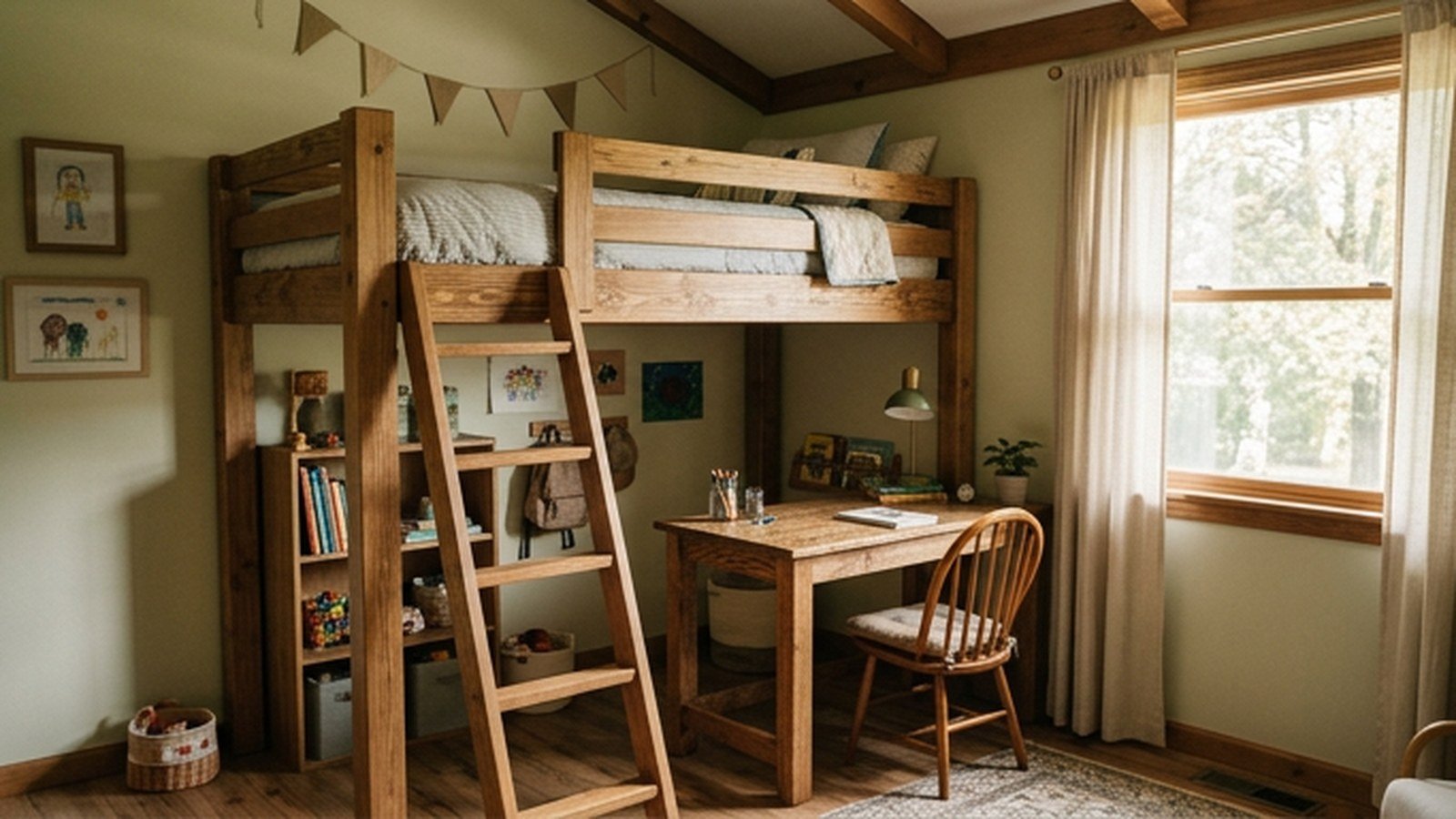
A loft bed turns a small kids bedroom into two rooms stacked on top of each other, and that trade is almost always worth it. Lifting the sleeping surface off the floor frees up the entire footprint underneath for a desk, a reading nook, a play area, or storage that a floor level bed could never give back. I have specced loft beds for three different kids bedrooms now, each one under 100 square feet, and the floor space gain still surprises me every time.
This guide covers fifteen specific loft bed configurations, what each one actually costs, and where parents commonly run into safety or sizing problems. Expect honest notes about weight limits, ceiling clearance, and the assembly headaches that show up after the box is already open. By the end you will have a real shortlist instead of a vague idea of “get a loft bed.”
A loft bed is not the right call for every kid or every room, and I will flag those cases directly rather than pretend this solution fits everyone. Ceiling height, a child’s comfort with heights, and how long they will actually use the bed before outgrowing it all matter here. Read the planning section before you fall in love with a specific style.
Why Loft Beds Solve Small Bedroom Problems So Well
A standard twin bed on the floor claims roughly 20 square feet of a room permanently, often close to a third of a small kids bedroom’s entire floor plan. Raising that same mattress up returns nearly all of that footprint to the room below, the entire appeal of a loft bed over a regular one. The vertical space above a normal bed usually sits unused, so a loft bed simply puts empty air to work.
The real gain shows up in what goes underneath, not just the space itself. A desk and chair, a small dresser, a reading chair, or even a second bed for a sibling can all fit into that reclaimed footprint depending on the loft bed’s exact height and design. This is why loft beds work so well for shared kids bedrooms specifically, where floor space is already split between two children’s needs.
The table below compares a loft bed against a standard bed and a bunk bed on the factors that matter most for a small kids bedroom specifically. None of the three is universally correct, since the right pick depends on ceiling height and how many children share the room. Use it as a starting point before reading the planning section below.
| Factor | Loft bed | Standard bed | Bunk bed |
|---|---|---|---|
| Floor space freed | High, full footprint underneath | None | Partial, only one bed’s worth |
| Ceiling height needed | 8 feet minimum, more is better | Any | 7.5 feet minimum |
| Best for | One child, maximizing under-bed use | Any room, no height limit | Two children sharing a room |
Planning A Loft Bed Before You Buy One
Measure your actual ceiling height at the exact spot the bed will sit, not just a rough guess for the room overall, since older homes often have subtle slope or lower spots near exterior walls. Most loft beds need at least 8 feet of ceiling height to leave a child sitting up in bed enough headroom, and taller loft styles want closer to 9 feet. A ceiling fan or a sloped attic ceiling can rule out an otherwise perfect loft bed design entirely.
Talk to your child honestly about their comfort with heights and with climbing a ladder every night before committing to a loft bed, especially for a child under seven. Some kids take to it immediately and treat the climb like part of the fun, while others develop real anxiety about sleeping that far off the ground. A trial run at a friend’s house or a furniture showroom floor model can reveal this before you have spent the money.
Check the weight rating on any loft bed frame against your child’s current weight plus a few years of growth room, since kids’ loft beds typically max out between 200 and 250 pounds. A loft bed bought for a six year old should realistically last until age eleven or twelve, and undersizing the rating cuts that life short. A suspiciously low price is often a signal to check this fine print first.
1. Classic Loft Bed With Open Desk Below
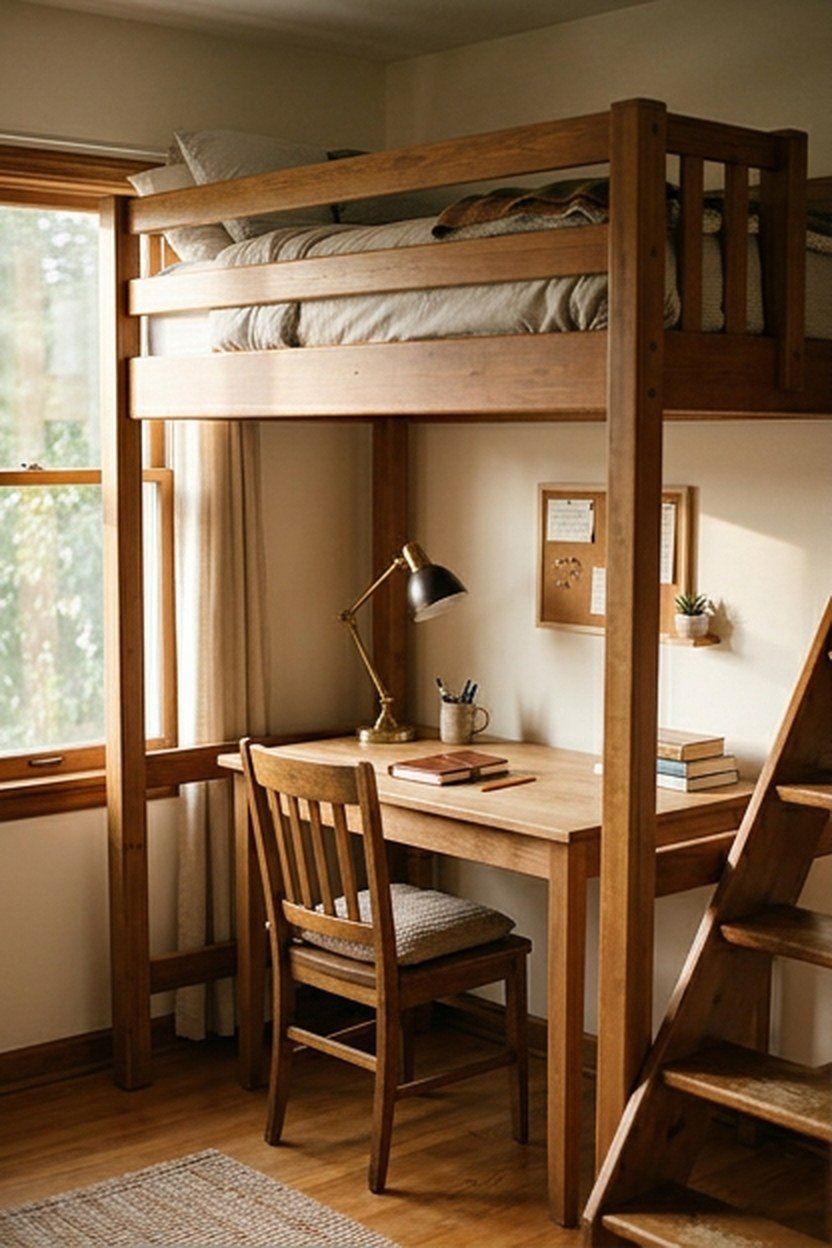
A classic loft bed with a simple desk and chair tucked underneath is the configuration most parents picture first, and it remains the most space efficient option for a single child’s bedroom. The desk surface typically runs the full width of the bed frame above it, giving a genuinely usable homework or craft space rather than a cramped corner desk. Most classic loft bed and desk combinations run between 400 and 700 dollars depending on the wood species and desk surface material.
Position the desk so window light falls across it from the side rather than directly behind the child facing the window, which reduces both glare and squinting during homework time. I learned this the hard way with my nephew’s setup, where the desk originally faced a window and every afternoon turned into a battle over drawn blinds. A simple 90 degree rotation of the whole unit fixed the glare problem completely.
The desk surface, if it is a lower grade laminate rather than solid wood, will develop a soft matte texture across the most used writing area within the first year of regular homework use. This textured wear pattern is normal for laminate surfaces under repeated pencil and eraser contact and does not affect the desk’s structural function at all. A desk pad or a large blotter protects the surface if you want to delay this texture change.
Choosing Desk Height For A Growing Child
Standard loft bed desks sit at a fixed height, usually around 28 to 30 inches, which suits an average sized eight to ten year old but can leave a smaller or larger child working at an awkward angle. Check the specific desk height against your child’s measured sitting elbow height before buying, adding a supportive footrest if their feet dangle well above the floor. A mismatched desk height causes more homework complaints than almost any other single furniture decision in a kids bedroom.
Some loft bed brands offer an adjustable height desk attachment as an upgrade, which costs more upfront but adapts as your child grows over several years. This upgrade earns back its cost fastest in households planning to keep the same loft bed frame for five or more years. Ask specifically about this option before assuming a fixed height desk is your only choice.
2. Loft Bed With Built-In Closet And Drawers
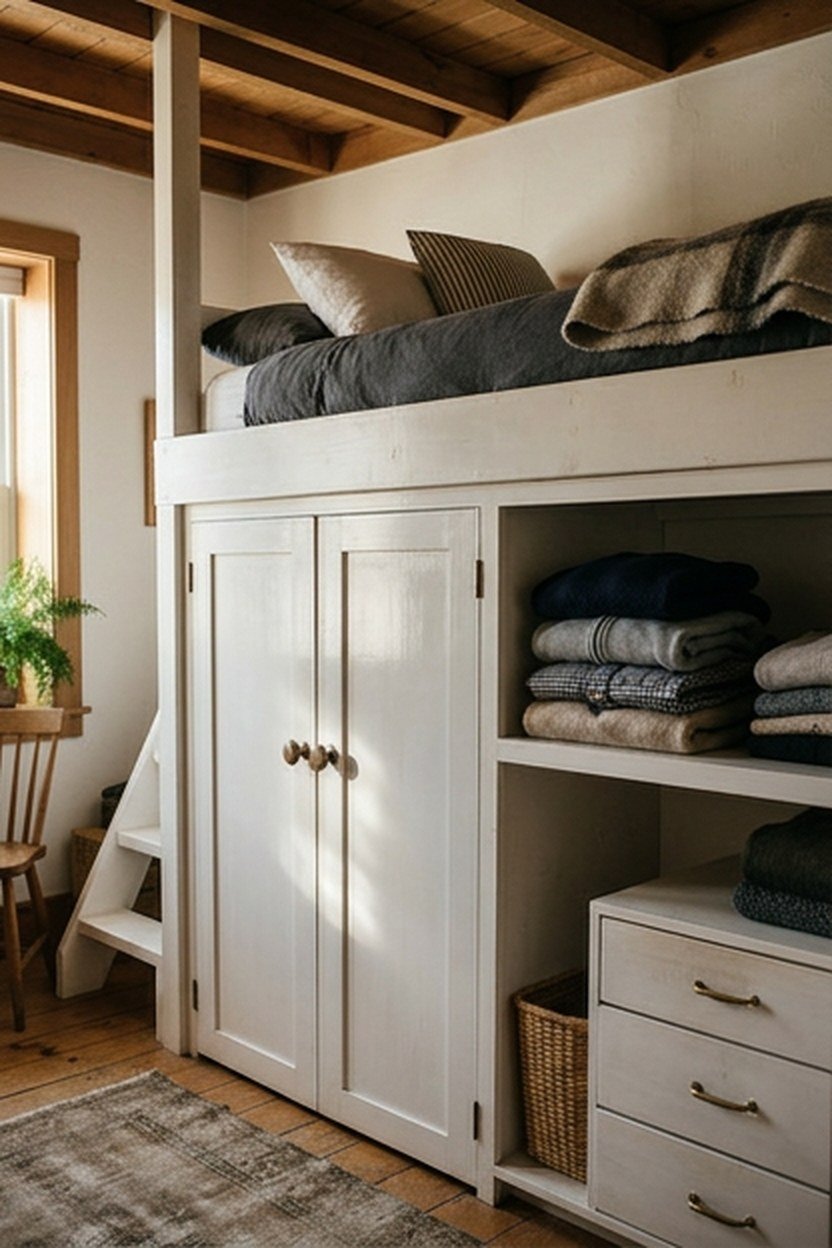
A loft bed built with an integrated closet and drawer unit underneath solves two space problems in a small kids bedroom at once, sleeping and storage. This configuration typically costs more than a basic loft bed, usually between 700 and 1200 dollars, since the closet component adds both material and hardware. The trade off is real though, since a small kids bedroom rarely has room for both a loft bed and a full sized standalone dresser.
Measure your child’s current wardrobe volume honestly before assuming the built-in closet will hold everything, since these integrated units run smaller than a standalone closet or dresser combination. Seasonal clothing rotation, stored out of season in a different closet or under-bed bin, keeps the built-in unit from feeling overstuffed year round. This is a detail many parents skip during the initial excitement of the purchase.
The closet doors, if a painted MDF rather than solid wood, will show a soft even sheen change near the handle area after a couple years of daily opening and closing. This gradual textured wear at the highest contact point is expected for painted MDF doors under regular use and does not indicate any manufacturing defect. Repainting just the door fronts refreshes the look without replacing the entire unit.
Balancing Closet Size Against Bed Height
A larger built-in closet underneath the loft bed generally means a taller overall structure, since the closet needs standing headroom of its own below the sleeping platform. Confirm the combined height of the closet section plus the bed platform against your actual ceiling clearance before ordering, since this compound height catches people off guard more than a simple loft bed’s height does. A showroom visit to see the actual combined unit beats trusting spec sheet numbers alone.
Consider whether your child actually needs standing closet access or would do fine with lower open shelving instead, since shelving cuts several inches off the total structure height. This substitution works particularly well in a room with genuinely limited ceiling height where every inch matters. A showroom mockup of both options side by side makes the height difference obvious in a way spec sheets rarely do.
3. Loft Bed With A Slide For Younger Kids
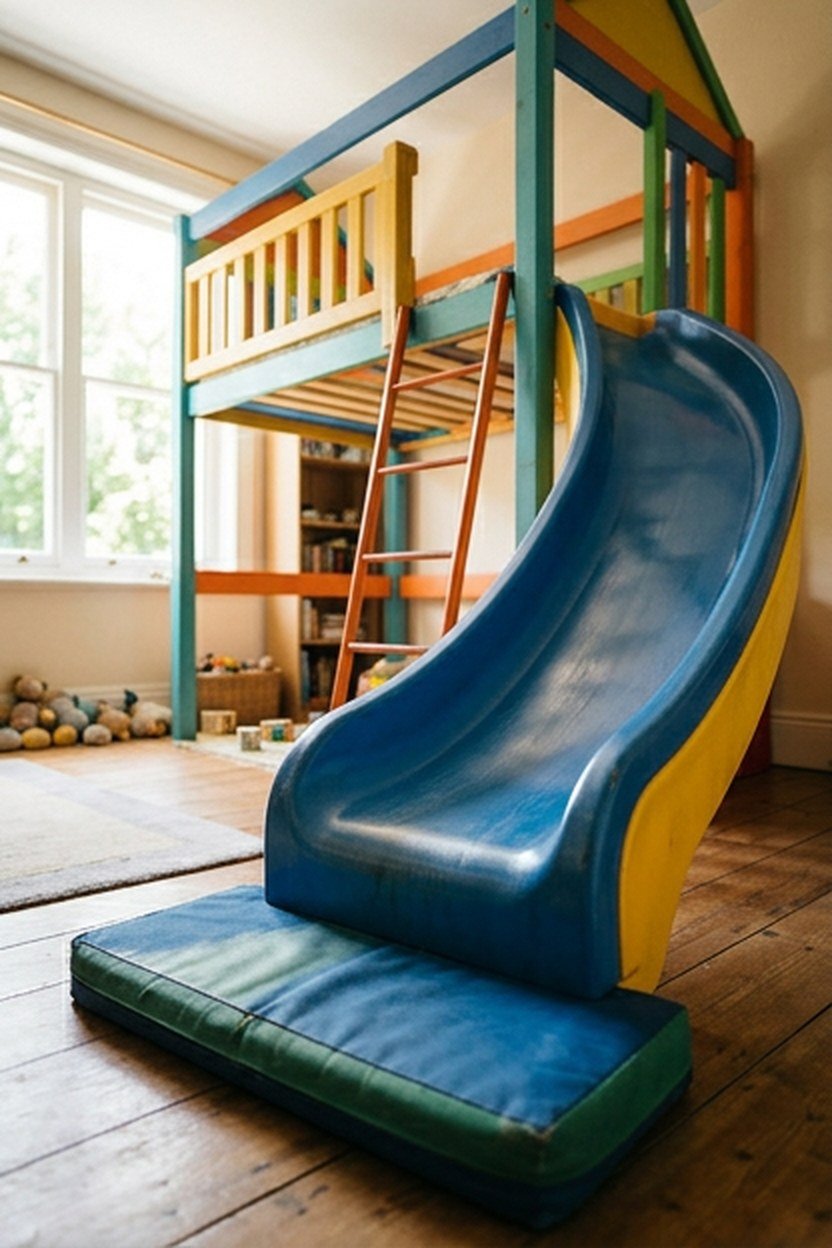
A loft bed with an integrated slide turns bedtime and morning wake-up into something a younger child genuinely looks forward to, which matters more for adoption than most parents expect. This style suits children roughly four to eight years old best, since the fun factor outweighs practical space concerns at that age. Expect to pay between 500 and 900 dollars for a loft bed with a quality integrated slide.
Check the slide’s exit clearance carefully before finalizing placement, since a child needs several feet of clear floor space at the bottom of the slide to land and get up safely. This clearance requirement sometimes conflicts with a desk or storage plan you had underneath, so plan the slide’s landing zone first and build everything else around it. A slide angled toward a doorway or a hard furniture edge is a real safety problem waiting to happen.
The slide’s plastic surface will develop a faint even dulling of its original glossy finish after a year or two of regular sliding, a gradual softening in the surface sheen from repeated friction rather than any damage. This dulled texture does not affect how well the slide functions and is simply cosmetic. Manufacturers rate these slides for years of daily use specifically anticipating this kind of surface change.
When To Retire The Slide As Kids Get Older
Most kids naturally outgrow interest in a bed slide by age eight or nine, at which point it becomes an unused space taker rather than a feature. Some loft bed brands sell the slide as a removable attachment specifically so you can take it off later and repurpose that side of the bed for a ladder or additional storage. Ask about this modularity before buying if you expect to keep the frame for many years past the slide’s fun phase.
A slide left in place after a child loses interest in it still needs the same safety clearance underneath, which can feel like wasted space once the novelty wears off. Removing it at that point often opens up room for a small bookshelf or a beanbag chair instead. Plan for this eventual swap when you first buy the bed rather than treating the slide as a permanent fixture.
4. Convertible Loft Bed That Lowers As Kids Grow
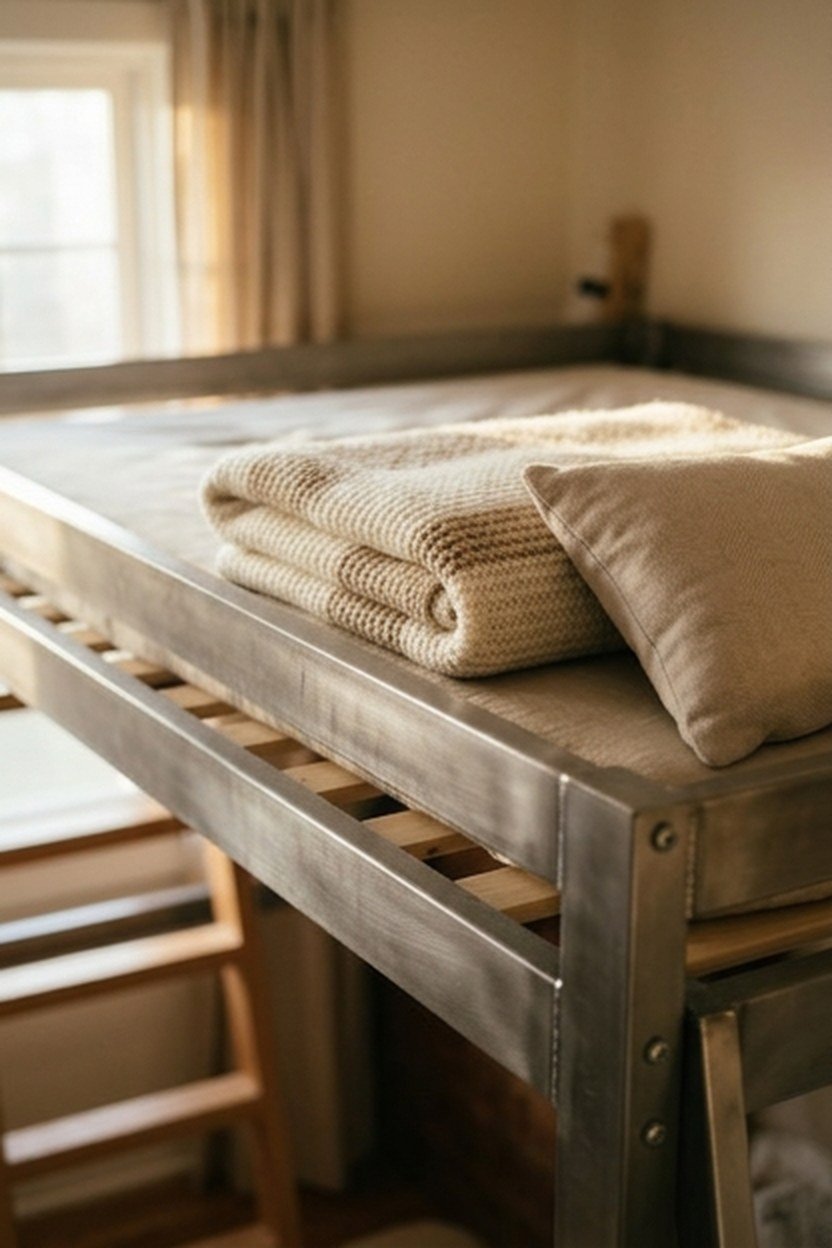
A convertible loft bed frame that can be lowered in stages as a child grows offers genuine long term value that a fixed height loft bed cannot match. These systems typically offer three or four height settings, from a nearly floor level starting position for a toddler transitioning out of a crib up to a full loft height for an older child. Expect to pay a premium for this flexibility, usually 600 to 1000 dollars for a quality convertible frame.
Read the specific weight and height limits for each configuration setting separately, since a convertible bed’s lowest setting often has a different weight rating than its highest loft position. This detail gets missed often, since parents assume one weight rating covers the whole product regardless of height setting. Confirming this upfront avoids an unpleasant surprise years into ownership.
The bed frame’s metal hardware, if left in a fixed setting for extended periods, can develop a faint even discoloration in a brushed metal finish from years of consistent handling during height adjustments. This gradual texture change in the brushed finish is cosmetic only and does not affect the hardware’s structural strength. A light metal polish restores the original brushed look if it bothers you visually.
Planning How Many Height Changes You Will Actually Make
Be realistic about how often you will actually reconfigure a convertible loft bed, since the process usually takes an hour or more of disassembly and reassembly each time. Many parents buy the convertible option intending to adjust it every year or two but end up leaving it at one setting for most of its useful life. If that describes your household honestly, a simpler fixed height loft bed at the correct starting height might serve just as well for less money.
Factor in whether you plan to have another child use the same bed after the first outgrows it, since that scenario is where a convertible frame’s cost genuinely pays for itself over time. A single child household gets less value from the flexibility than a household planning to pass the bed down. Ask yourself honestly which category your family falls into before paying the premium.
5. Twin Over Full Loft Configuration For Sleepovers
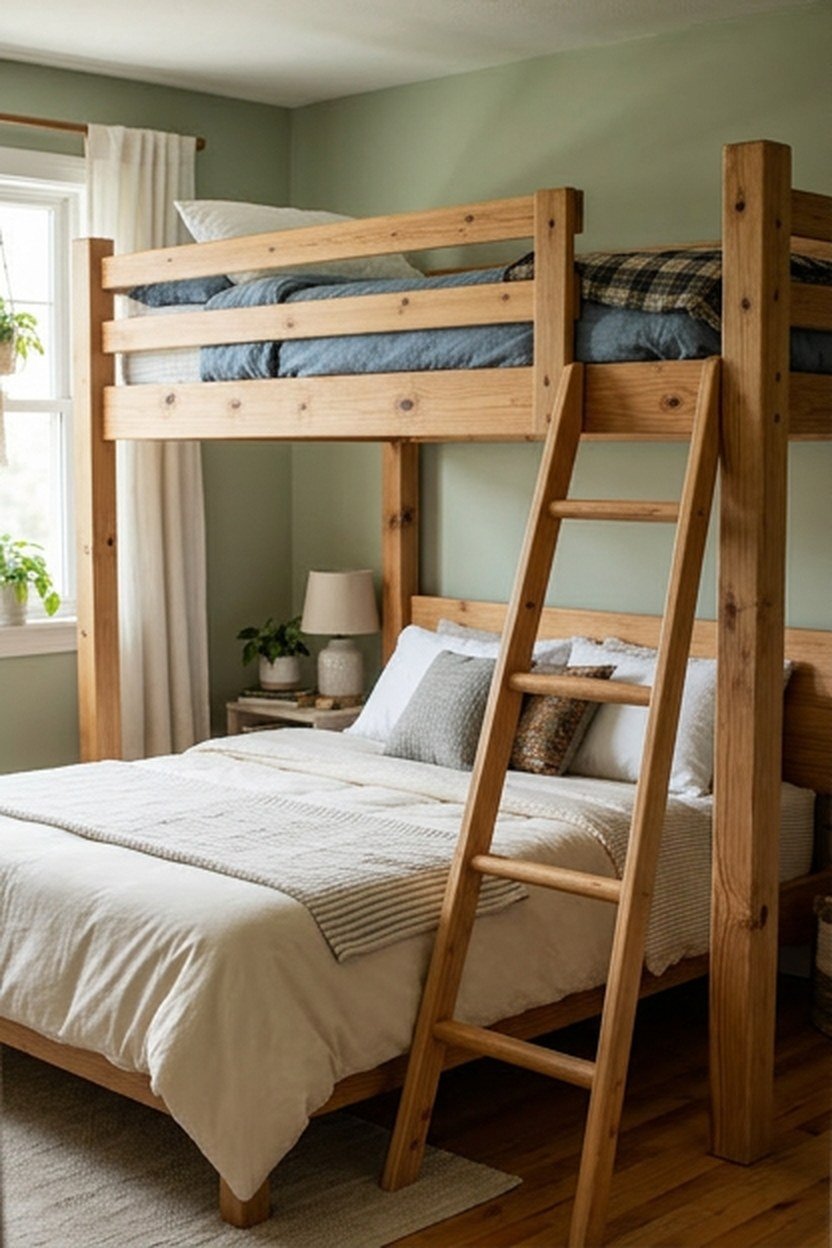
A twin over full loft configuration puts a twin sized loft bed above a full sized bed or a full sized play and lounge area below, giving genuinely generous space for sleepovers and shared activities. This style suits an only child’s room specifically, since it provides a spare sleeping surface for friends without needing a second permanent bedroom. Pricing runs higher than a standard loft bed, typically 800 to 1400 dollars given the larger overall frame.
Consider whether the full sized lower area will function as a bed most nights or mostly as a lounge and play space, since this affects what kind of mattress or cushioned surface makes sense down there. A firm sofa style cushion setup works better for daily lounging, while a genuine full sized mattress makes more sense if sleepovers happen often. Many families switch between the two configurations seasonally with a removable cushion topper.
The frame’s structural wood, if a lower grade pine rather than a hardwood, will show a gentle natural grain pattern more visibly over time as the wood settles and the finish wears into the grain slightly. This visible grain deepening is completely normal for pine furniture and many people consider it an attractive sign of the wood aging naturally. A hardwood frame shows less of this visible change but costs meaningfully more upfront.
Weight Distribution With Two Sleeping Levels
Confirm the frame’s total weight rating accounts for both levels being occupied simultaneously during a sleepover, not just the upper loft bed alone, since some cheaper frames only rate the top bunk individually. This distinction matters enormously for a configuration specifically marketed around hosting sleepovers. Ask the manufacturer directly if the spec sheet does not make this clear.
Check the floor beneath a twin over full configuration for adequate support as well, since this is one of the heavier loft bed styles once both levels are occupied. A floor joist inspection is worth the effort for an older home before committing to this specific configuration. A contractor can usually confirm this in under an hour for a modest fee.
6. Loft Bed With A Fold-Down Tent Underneath
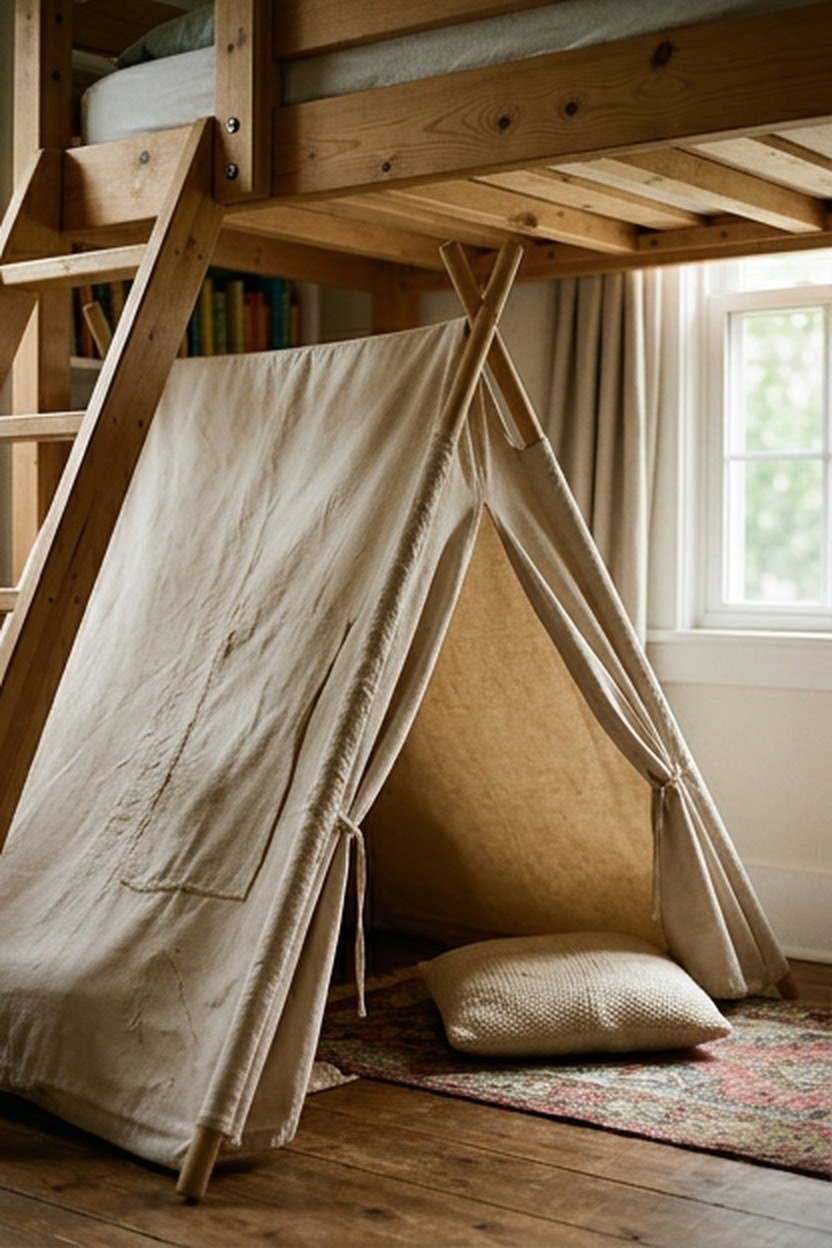
A loft bed paired with a fold-down play tent underneath creates a dedicated imagination space that younger kids treat as genuinely their own private area. This configuration works best for kids roughly three to seven years old, before the appeal of a tent style hideaway starts to fade. Expect to pay 450 to 750 dollars for a loft bed that includes a quality tent attachment, with the tent itself often available separately if you already own a compatible frame.
Choose a tent fabric in a washable canvas or cotton blend rather than a delicate material, since this space sees genuine daily play including snacks, art projects, and the occasional spilled drink. A removable and machine washable tent cover extends the useful life of this feature considerably compared to a fixed, non washable fabric. This single detail separates a tent that still looks good after a year from one that looks tired within months.
The tent fabric will develop a soft, even texture change across its most handled panels after regular daily use, a gentle softening from repeated touching and folding that most washable cotton and canvas blends show naturally. This textured softening does not affect the tent’s function or its ability to fold away cleanly. Regular washing according to the fabric’s care label keeps the color and texture looking fresher longer.
Storing The Tent When It Is Not In Use
Most fold-down tent attachments collapse flat against the loft bed’s side rail or into a dedicated storage pocket when not in active use, which keeps the space from feeling cluttered when your child wants an open floor plan instead. Check this collapsed profile specifically before buying if floor space underneath needs to serve multiple purposes throughout a typical week. A tent that does not fold away cleanly defeats much of the space saving purpose of a loft bed in the first place.
Rotate the tent’s fabric panels periodically if only one side sees regular light exposure, since even a washable fabric benefits from more even wear across its full surface over time. This small habit keeps the whole tent looking consistent rather than fading unevenly on just one panel. A quarterly rotation is plenty for most households.
7. Industrial Style Metal Loft Bed For Teens
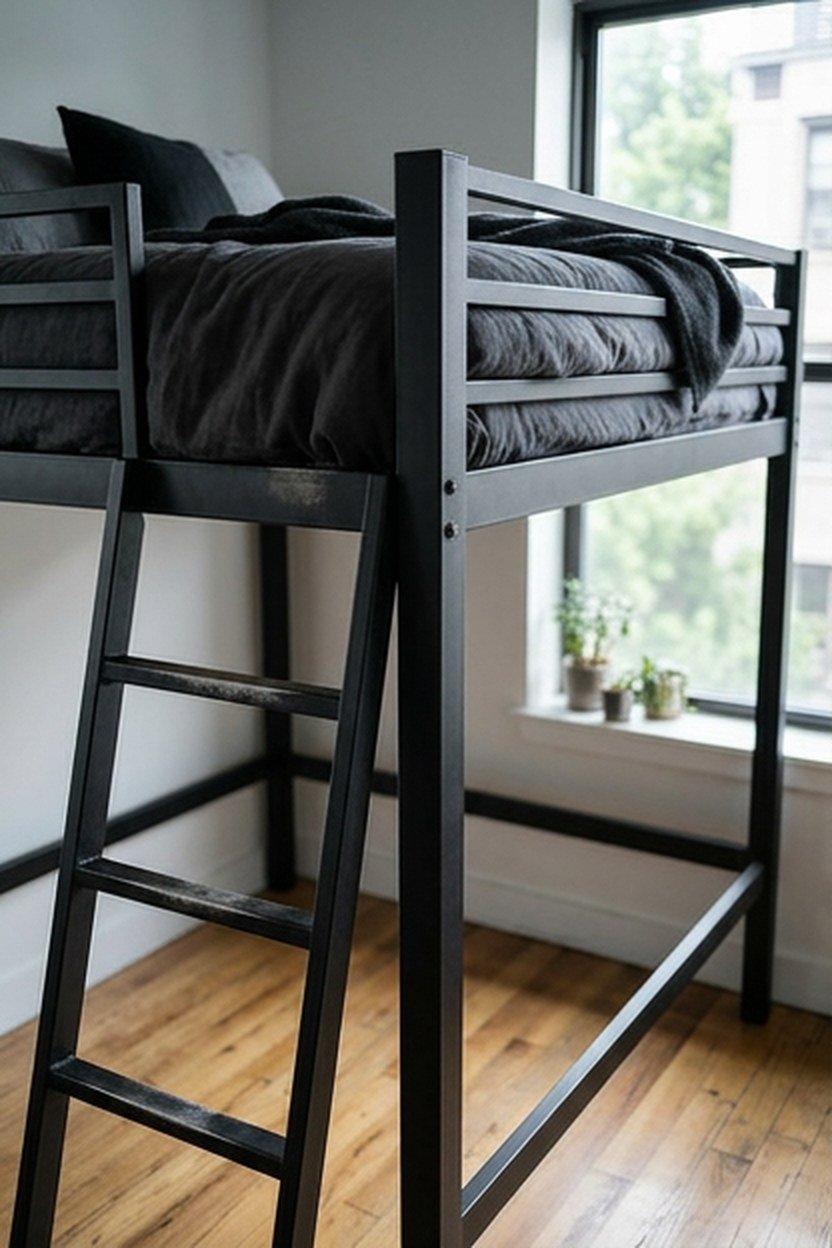
An industrial style metal frame loft bed suits an older child or teenager who has outgrown the playful styling of a wood frame with a slide or tent attachment. These frames typically use a matte black or bronze powder coated steel construction, giving a more grown up look that works well into the high school years. Expect to pay 350 to 650 dollars for a quality metal loft bed frame, generally less than comparable wood options.
Metal frames tend to run lighter than wood equivalents, which makes assembly and any future room rearranging noticeably easier for a parent working alone. This weight advantage matters more than people initially expect, particularly in a household that rearranges bedroom furniture every year or two as a teenager’s preferences change. A metal frame also typically disassembles and reassembles with fewer stripped screw holes than particleboard furniture over repeated moves.
The powder coated metal finish will show a faint even softening of its original sheen at the most handled contact points, like the ladder rungs and headboard rail, after a few years of regular use. This gradual dulling in the coating’s original sheen is cosmetic and expected for powder coated metal under sustained contact. It does not affect the frame’s structural integrity or safety rating at all.
Matching A Metal Loft Bed To A Teen’s Room Style
Industrial metal loft beds pair naturally with a room palette built around darker walls, exposed shelving, and simple black or wood accents rather than the pastel or character themed decor common in younger kids’ rooms. Discuss the intended room aesthetic with your teenager directly before choosing a specific metal finish, since bronze and matte black read very differently in a finished room. This conversation avoids buying a frame your teen considers embarrassing within a year.
Consider that a teenager is more likely to want privacy underneath the loft rather than open shelving, so a simple curtain rod mounted to the frame’s underside adds a low cost, high impact privacy option many industrial frames do not include by default. A basic tension rod and a plain curtain panel costs under thirty dollars and installs in minutes. This small addition often matters more to a teenager than the bed frame’s actual style.
8. Loft Bed With A Built-In Bookshelf Headboard
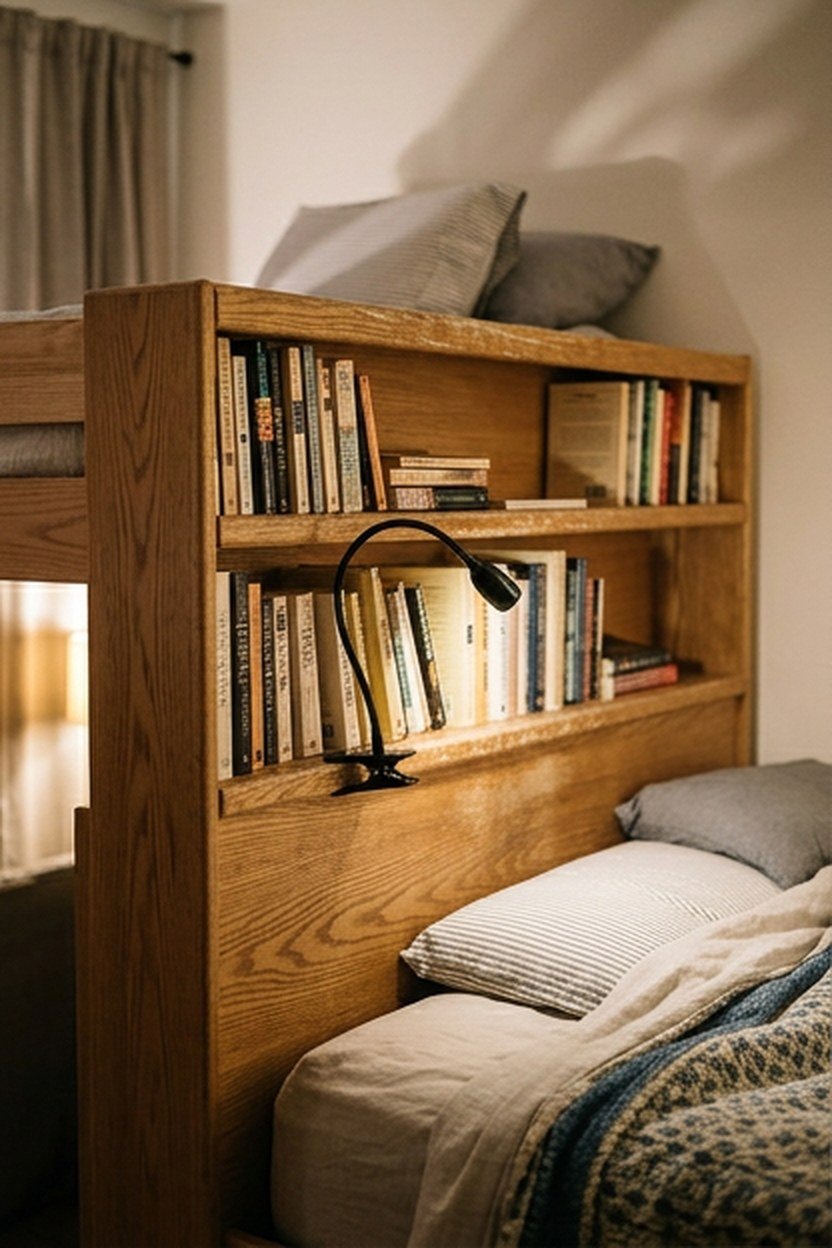
A loft bed with a built-in bookshelf integrated into the headboard end puts a genuinely useful storage feature exactly where a young reader will use it most, right next to their pillow. This configuration works particularly well for a child who reads in bed regularly, since favorite books stay within arm’s reach without needing a separate nightstand. Pricing typically runs 500 to 850 dollars depending on the bookshelf’s size and the wood grade used.
Position a small reading light or clip-on lamp near the bookshelf headboard specifically, since the shelf itself often blocks ambient light from a ceiling fixture at exactly the angle needed for comfortable reading. This detail gets overlooked in the excitement of picking the bed style itself, then becomes an obvious gap the first night your child tries to read up there. A simple battery powered clip light solves this for under twenty dollars.
The bookshelf’s wood surface, if particleboard with a veneer rather than solid wood, will show a soft visible grain pattern more prominently where books are repeatedly slid in and out over several years. This gradual visible texture change in the veneer surface is a normal characteristic of engineered wood under repeated contact and does not affect the shelf’s carrying capacity. Solid wood versions show less of this visible change but cost more.
Weight Limits For A Loaded Bookshelf Headboard
Check the specific weight rating for the bookshelf section separately from the bed frame’s overall rating, since a headboard bookshelf loaded with hardcover books can add real weight at one end of the structure. Most quality loft bed bookshelves rate for twenty to thirty pounds of books, which sounds like plenty until you actually stack a full shelf of hardcovers. Distributing heavier books toward the bottom shelf keeps the unit’s center of gravity lower and more stable.
Avoid stacking books so high they interfere with the safety rail height required at the head of a loft bed, since some parents inadvertently create a step-over hazard by overloading the top shelf. This is a small detail that matters enormously for actual nighttime safety. Check the shelf height against the rail every few months as the book collection grows.
9. Compact Loft Bed For A Truly Tiny Bedroom
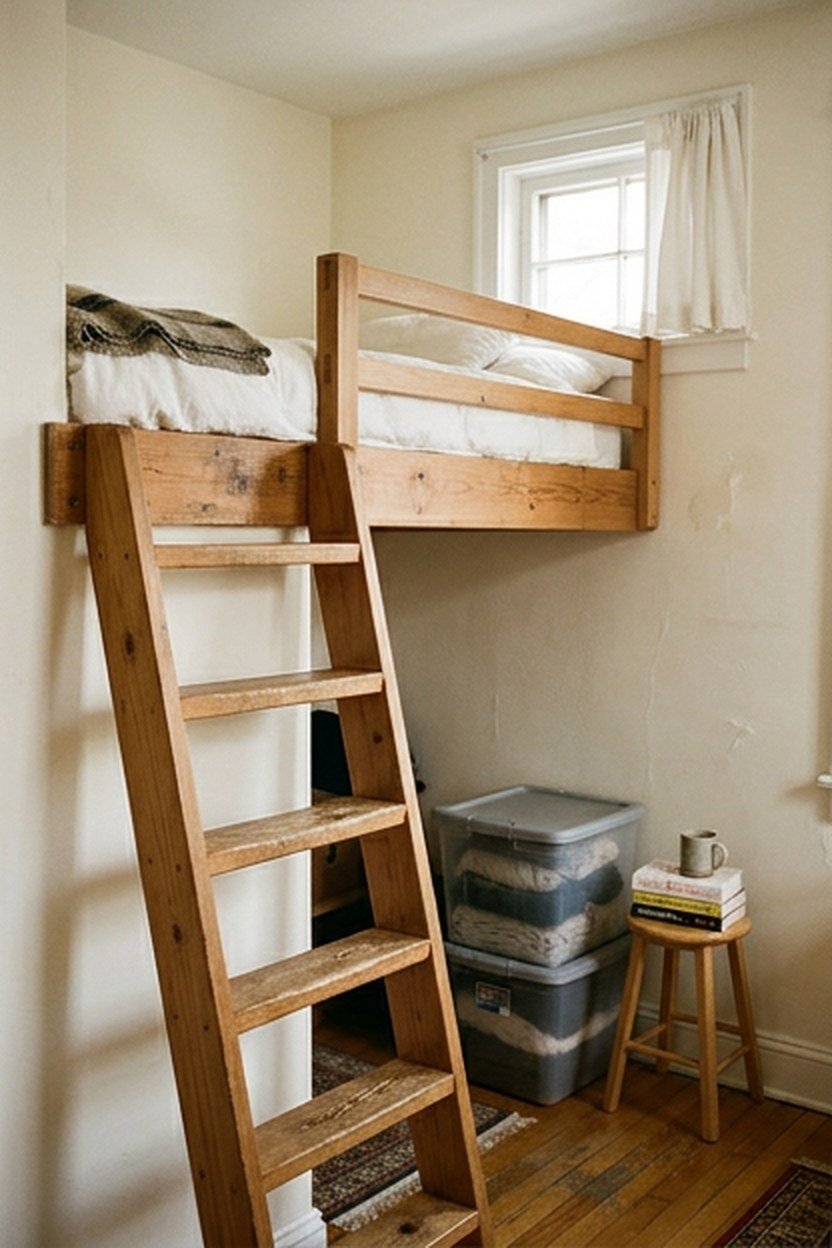
A compact loft bed designed specifically for a truly tiny bedroom, often under 80 square feet total, strips away the desk, closet, and play features of other styles to focus purely on maximizing basic floor space. These minimal frames typically cost less than fully featured options, usually 300 to 500 dollars, since there is simply less material and fewer components involved. This style suits a bedroom so small that even a modest desk or closet addition underneath would create a cramped, unusable space.
Measure your room’s actual clear floor dimensions after accounting for doors and closets before assuming a compact loft bed will feel spacious underneath, since a truly tiny room can still feel tight even with the bed lifted. A rough floor plan sketch reveals whether the remaining space genuinely works for a play area or just becomes an empty gap. Some families end up finding that a small floor cushion and a few storage bins are all that realistically fits.
The frame’s finish, typically a simple painted or stained wood in these minimal designs, will develop a soft even texture change in the wood grain at the ladder rungs specifically from years of daily climbing contact. This textured wear pattern at the highest contact points is normal for painted or stained wood under sustained daily use. It does not indicate any structural concern with the frame itself.
Making The Most Of Minimal Underneath Space
Even a compact loft bed with no built-in features underneath benefits from a simple storage solution like stackable bins or a slim rolling cart, since empty floor space under a loft bed often becomes a dumping ground for loose toys instead of a genuinely useful area. Plan this storage at the same time you order the bed rather than as an afterthought. A little upfront planning here prevents clutter within the first month.
Consider whether a slim floor lamp fits in the remaining corner space, since a truly tiny room often lacks room for a full sized lamp elsewhere and this compact underneath area can serve double duty as a reading or activity corner with the right lighting. A clip-on lamp works just as well if floor space is too tight even for a slim base. Test the fit with the actual lamp before buying storage bins around it.
10. Loft Bed With A Fold-Down Craft Table
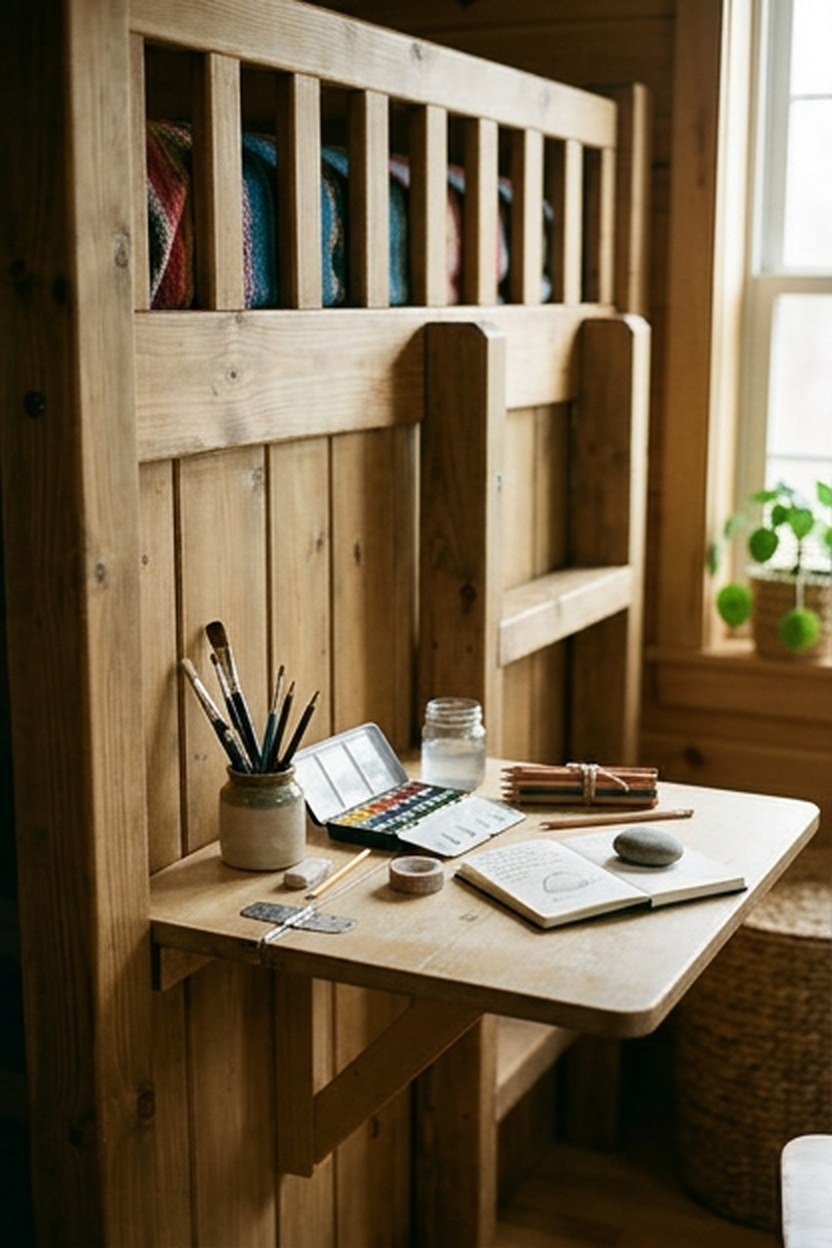
A loft bed with a fold-down craft table attached to one side gives a young artist a dedicated work surface without permanently claiming floor space the way a full desk setup would. The table folds flat against the frame when not in use, which suits a room that also needs open floor space for other activities throughout the week. Expect to pay 450 to 800 dollars for a loft bed with a quality fold-down craft table included.
Position the craft table on the side of the room with the most reliable natural light, since art and craft work benefits enormously from good color rendering that overhead artificial light rarely matches. I set one up on the wrong wall originally in a friend’s daughter’s room, and moving it to the window side made a visible difference in how easily she could match paint colors. This kind of placement decision is worth testing before finalizing where the whole bed frame goes.
The table’s surface, usually a sealed particleboard or laminate, will show a soft matte texture developing across the most used work area within the first year of regular craft projects. This textured surface change from repeated marker, paint, and glue contact is normal and does not affect the table’s flat working surface. A removable protective mat extends the clean look of the surface considerably.
Keeping Craft Supplies Organized Nearby
A small wall mounted caddy or a rolling cart positioned next to the fold-down table keeps craft supplies within reach without cluttering the table itself when it needs to fold away. This organization system matters more for a fold-down table than a fixed desk, since anything left on the table blocks it from folding flat against the frame. Establish a specific spot for supplies before the craft table becomes a permanent mess that never folds away.
Choose supply storage that can also fold flat or slide underneath the loft bed when the room needs to convert to an open floor plan for other activities, keeping the whole craft zone genuinely flexible rather than a fixed fixture. A rolling cart with a locking wheel works especially well for this since it tucks away in seconds. Label each drawer or bin so cleanup stays quick even for a young child.
11. Loft Bed With Stairs Instead Of A Ladder
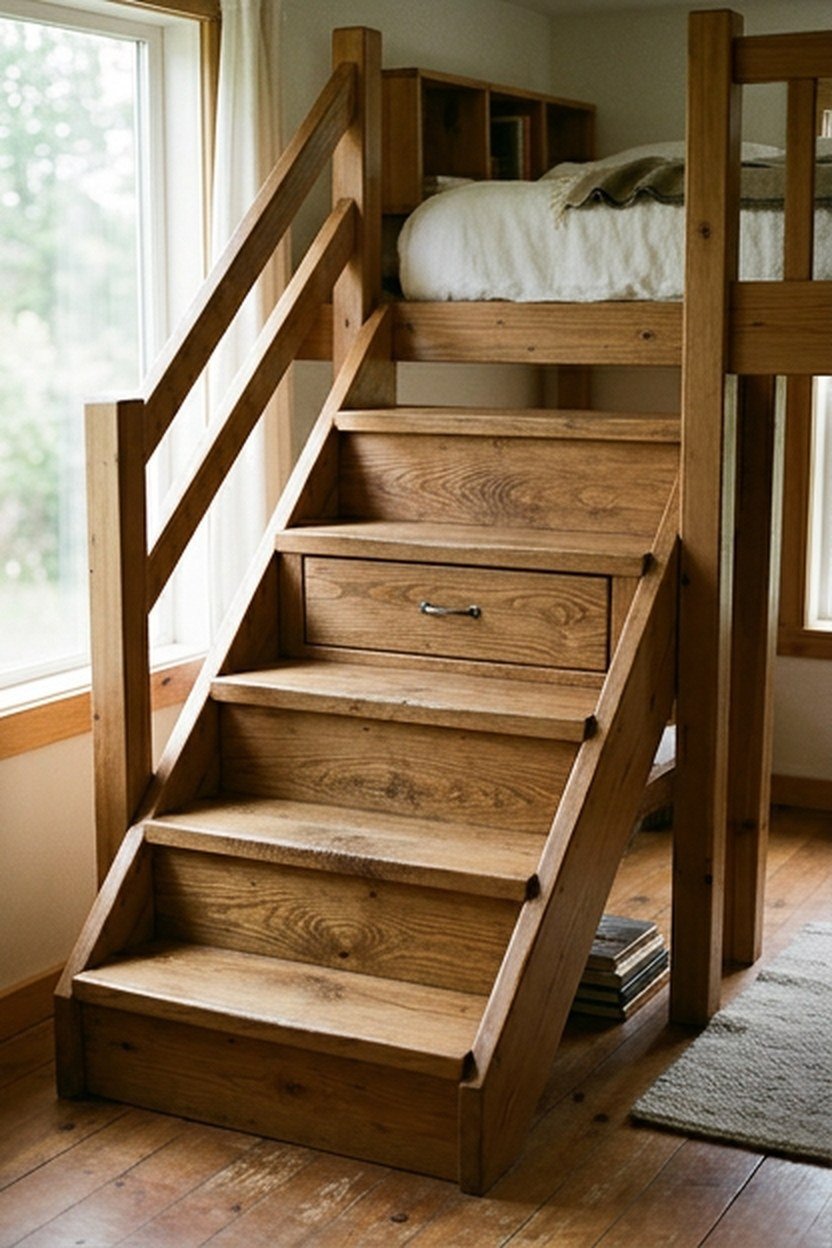
A loft bed built with a set of solid stairs rather than a vertical ladder suits a nervous climber or a younger child who struggles with rung based ladders specifically. The stairs typically include their own built-in storage in the form of drawers or cubbies within each step, which recovers some of the floor space the wider stair footprint uses. Expect to pay a genuine premium for this configuration, usually 700 to 1100 dollars given the additional material and engineering involved.
Measure the floor space the stair unit itself will occupy before assuming it fits the same footprint as a simple ladder, since stairs need considerably more horizontal room than a nearly vertical ladder does. This tradeoff is worth it for many families specifically because of the added safety and storage, but it does change the room’s available floor plan meaningfully. Sketch both options to scale before deciding between a ladder and a stair configuration.
The stair treads, usually a painted or stained solid wood, will develop a soft visible grain pattern at the center of each tread from years of daily foot traffic. This gradual textured wear at the exact contact point is expected for wood stair treads under sustained daily use and does not affect the stairs’ structural safety. A runner or grip strip on each tread reduces this visible change while adding traction.
Storage Options Built Into Loft Bed Stairs
Drawer style stair steps typically hold more volume than cubby style open steps, but drawers add cost and a small amount of extra depth to each stair tread. Decide which storage style suits your child’s habits better, since a child who tends to leave things visible does better with open cubbies while a child who prefers a tidy look benefits more from closed drawers. This is a genuinely personal preference rather than one style being objectively better.
Confirm the stair unit’s total weight capacity accounts for both foot traffic and whatever gets stored inside the steps themselves, since a fully loaded set of drawer steps adds real weight to the overall structure. Ask the manufacturer directly whether their stated rating already includes this stored weight or assumes empty steps. This distinction matters more here than for a simple ladder.
12. Loft Bed With A Built-In Reading Nook
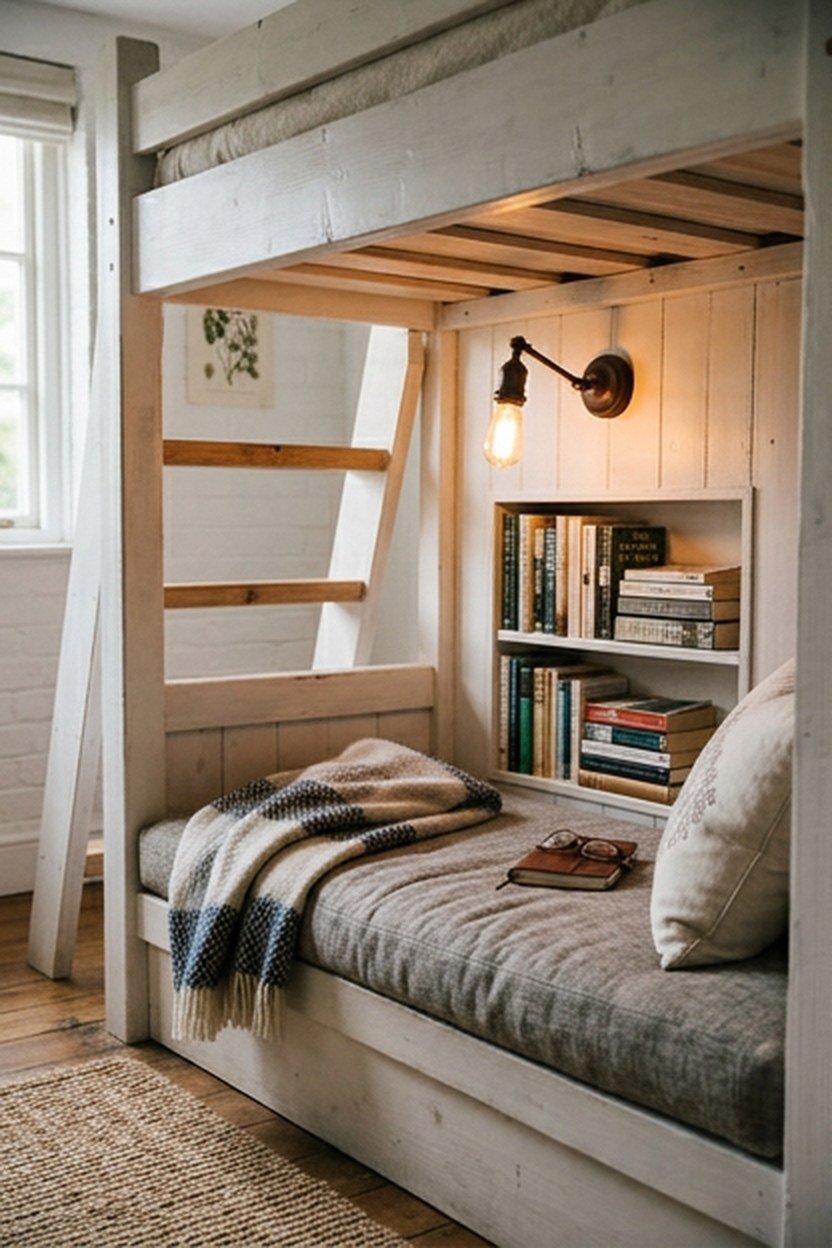
A loft bed with a built-in reading nook carved into one end of the underneath space gives a child a cozy, semi enclosed spot that feels distinctly different from the open desk or play area other configurations offer. This nook typically includes a low bench seat, a small shelf, and sometimes a curtain for a sense of privacy. Pricing runs 500 to 900 dollars depending on how elaborate the nook’s built-in features are.
Add a soft cushion and a few pillows sized specifically for the nook’s bench dimensions rather than repurposing full sized bed pillows that overwhelm the smaller space. A reading nook succeeds or fails based on how genuinely comfortable it feels, and generic pillows sized for a full bed rarely translate well to a compact built-in bench. Measure the bench before buying cushions rather than guessing at standard sizes.
The bench seat’s wood frame, if a painted softwood rather than a hardwood, will show a soft even texture change in the finish where a child regularly sits and shifts position. This gradual textured wear at the seating contact point is normal for painted softwood under regular use and does not affect the bench’s structural support. A cushioned seat pad reduces this change while adding comfort.
Lighting A Reading Nook Properly
A reading nook needs its own dedicated light source separate from the room’s main overhead fixture, since the nook’s semi enclosed design usually blocks general room light from reaching the reading surface effectively. A small battery powered or plug-in sconce mounted at the right height solves this without needing an electrician for most families. Test the light’s brightness and color temperature with your child actually reading there before considering the nook finished.
Position any curtain or privacy panel so it can tie back fully during the day, since a reading nook that stays dark and enclosed around the clock sees less use than one that opens up for daytime light. A simple tieback loop or clip lets a child open the space in seconds without adult help. This small detail decides whether the nook gets used daily or ignored after the first week.
13. Corner L-Shaped Loft Bed Configuration
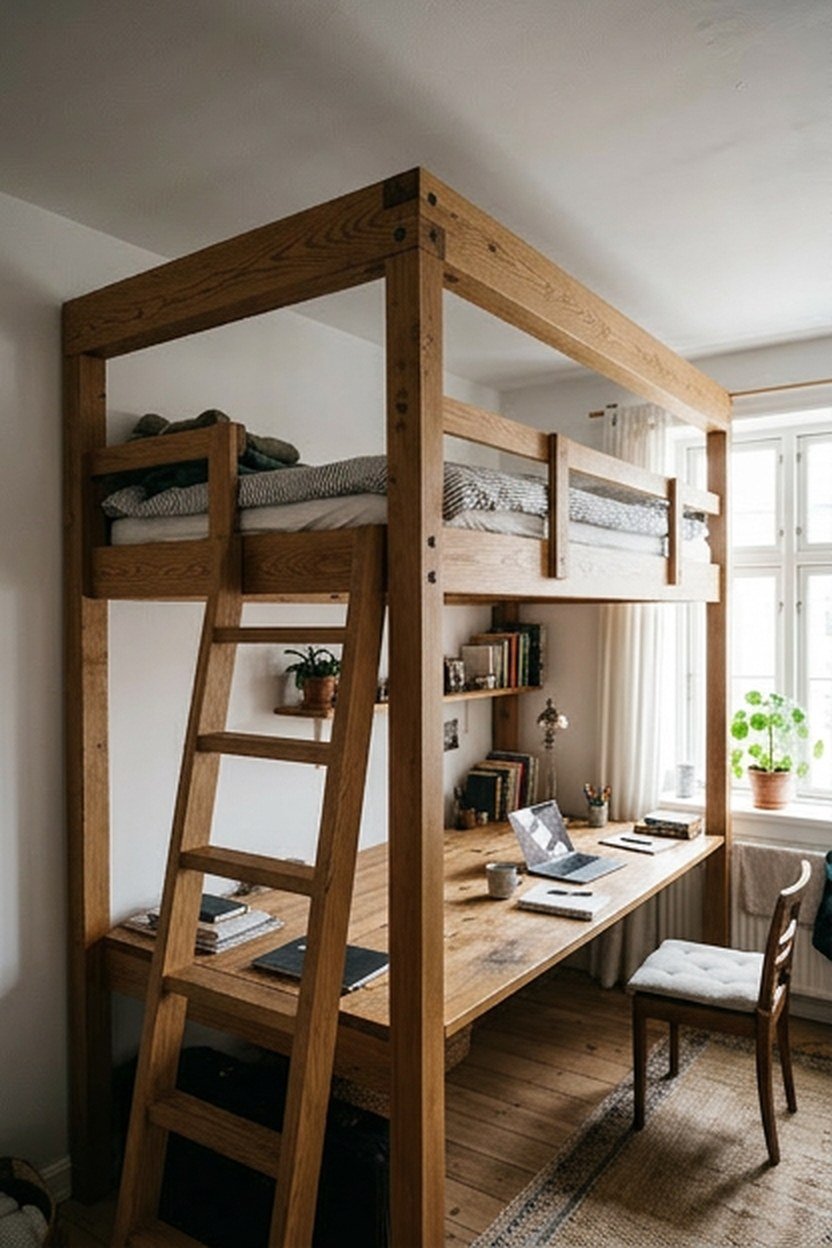
A corner L-shaped loft bed configuration uses two walls of a room rather than one, which works particularly well in a bedroom with an awkward corner that other furniture layouts struggle to use well. This style often combines a loft bed on one wall with a lower desk or storage unit running along the perpendicular wall, creating an efficient built-in feel. Expect to pay 800 to 1300 dollars for a quality L-shaped configuration given its larger scale.
Measure both walls involved in the L-shape carefully, including any windows, outlets, or vents that might conflict with the planned layout, since this configuration commits more of the room’s total wall space than a single wall loft bed does. A corner configuration that ignores an existing window placement often ends up blocking natural light in a way that is hard to fix after installation. Plan around existing fixed room features rather than fighting them.
The frame’s corner joint, where the two wall sections meet structurally, will show a fine wood grain pattern becoming more visible over time as the finish settles into the joint. This is a normal characteristic of a solid wood corner joint under the structural stress of supporting two connected sections and does not indicate any weakness. A properly engineered L-shaped frame accounts for this stress in its original design.
Fitting An L-Shaped Loft Bed Into An Existing Room
Bring exact measurements of both relevant walls to a furniture showroom or when ordering online, since an L-shaped configuration has far less flexibility to adjust after the fact compared to a single wall loft bed. A mismatch of even a few inches can mean the difference between a snug, intentional fit and a configuration that blocks a door or window. This upfront precision matters more here than for any other loft bed style covered.
Consider whether the room’s door swings into the space an L-shaped configuration would occupy, since this conflict is easy to miss on a flat floor plan sketch but becomes obvious and frustrating once furniture is actually in place. Stand in the doorway and swing it fully open before finalizing any corner layout. This quick physical check catches a conflict no drawing reliably shows.
14. Loft Bed With A Pull-Out Trundle Underneath
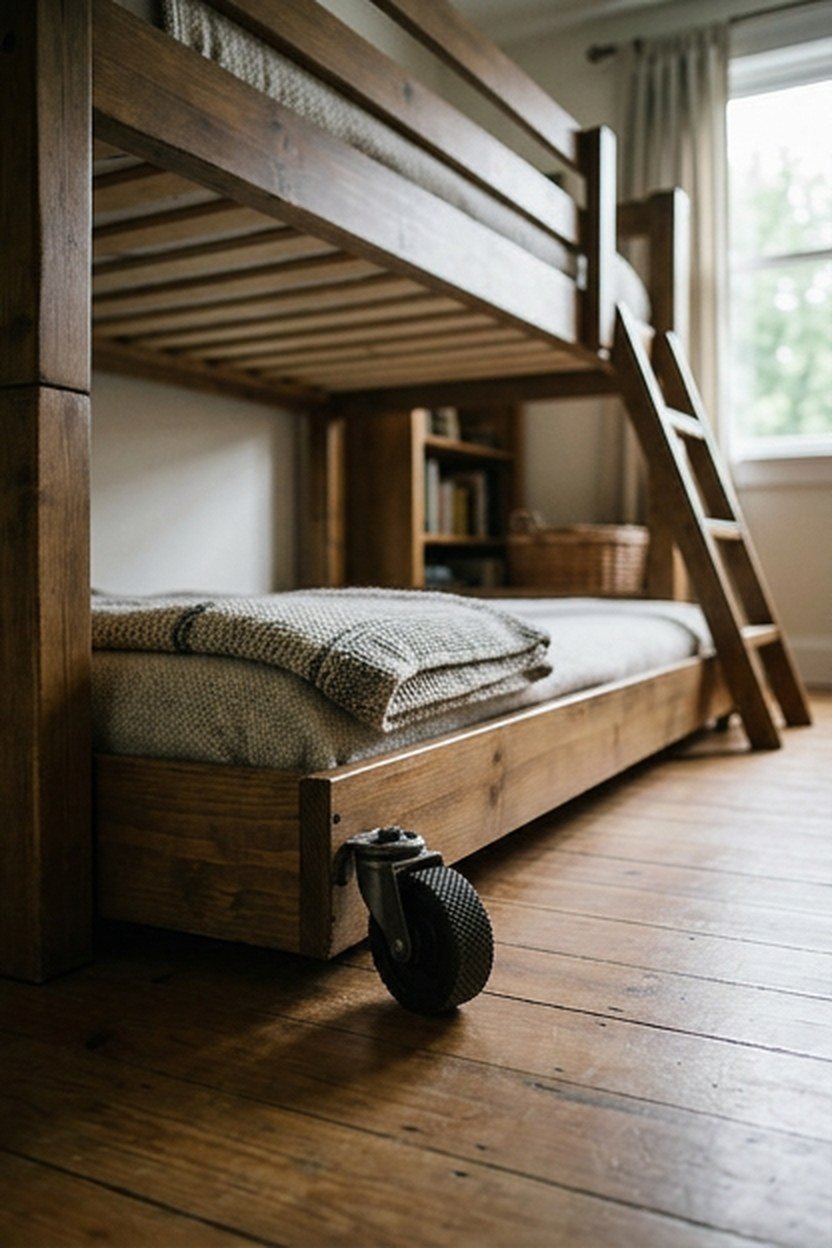
A loft bed with a pull-out trundle bed underneath offers sleepover capacity similar to a twin over full configuration but keeps the extra sleeping surface completely hidden until needed. The trundle slides out on casters from underneath the main structure, then tucks away again to restore full underneath floor space for daily use. Expect to pay 550 to 950 dollars for a loft bed with a trundle included.
This configuration suits a family that wants sleepover flexibility without permanently sacrificing daily floor space the way a twin over full setup does. The trade off is that the trundle mattress is usually a lower profile design than a standard mattress, which some guests find noticeably firmer or thinner than they expect. Set expectations with visiting friends or family about the trundle’s specific feel before an overnight stay.
The trundle’s caster wheels, typically a hard plastic or rubber composite, will show a soft even texture change on their rolling surface after regular use pulling the trundle in and out. This gradual textured wear on the wheel surface is expected for casters under repeated rolling use and does not affect how smoothly the trundle operates. Replacement casters are widely available and inexpensive if the original set wears down further over years of use.
Trundle Bed Weight And Floor Clearance
Confirm the specific floor clearance height underneath your loft bed’s main structure before assuming any trundle bed will fit, since trundle heights vary and a mismatch means the trundle simply will not slide into place. This measurement matters more than people expect, since trundle beds are often purchased separately from the loft frame itself rather than as a single matched unit. Always measure before ordering a trundle as an add-on to an existing frame.
Check the trundle’s own weight rating separately from the main loft bed’s rating, since the trundle typically supports its own sleeper independently and needs its own adequate rating for safe overnight use. Manufacturers sometimes list only the main frame’s rating prominently, burying the trundle’s own figure in fine print. Ask directly if the listing does not make this clear.
15. Loft Bed With Integrated LED Reading Lights
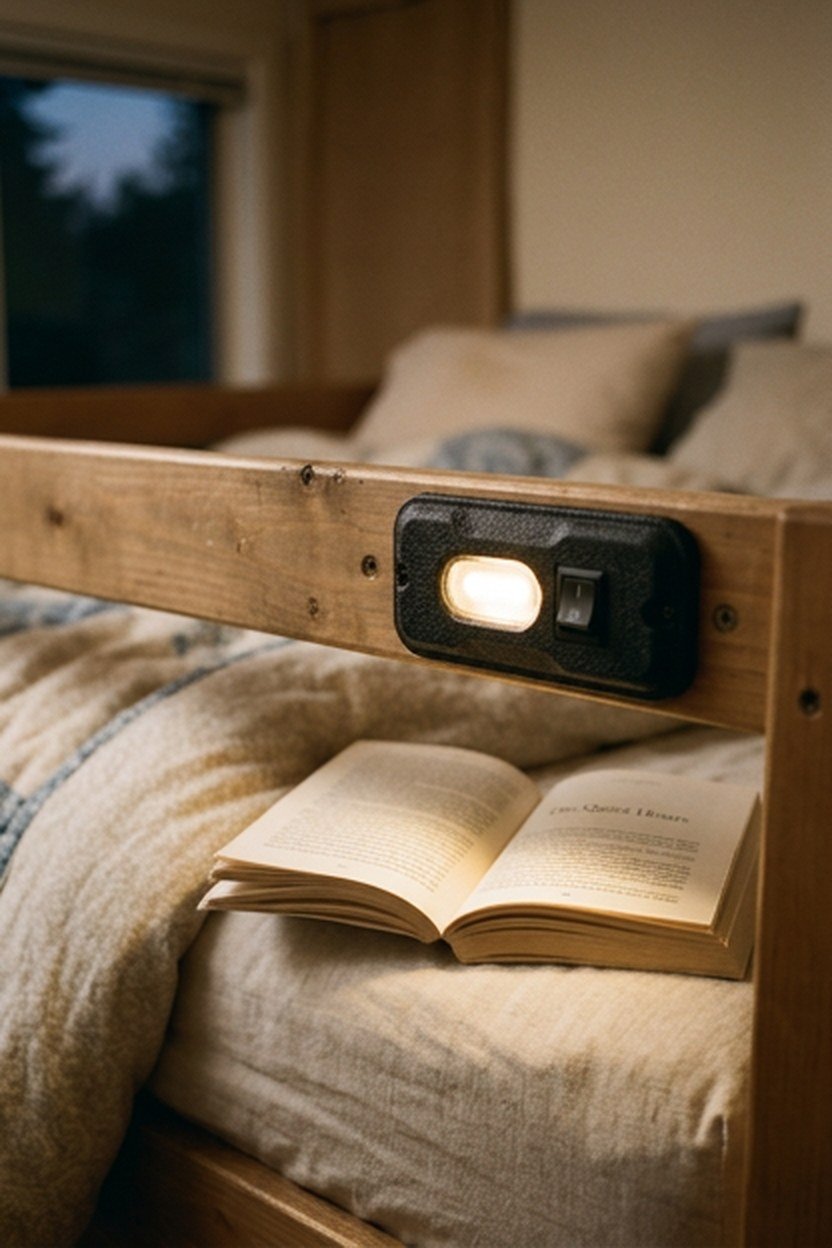
A loft bed with integrated LED reading lights built into the frame itself, usually along the guardrail or headboard area, solves the common problem of a loft bed’s upper level being too far from the room’s main light source for comfortable reading. These built-in lights typically run on a low voltage system with a simple on-off switch or dimmer within easy reach of the mattress. Expect to pay 500 to 850 dollars for a loft bed with quality integrated lighting.
Choose a warm white LED color temperature rather than a cool or daylight toned light for a bedroom reading application, since warm white supports winding down for sleep better than a brighter, cooler light does. This detail gets overlooked often when families focus purely on the convenience of built-in lighting without considering the specific color temperature. Most quality integrated systems let you choose or adjust this setting during setup.
The light fixture’s housing, typically a matte plastic or coated metal, will show a soft even texture change around the switch area from repeated daily handling over a year or two of use. This gradual textured wear at the highest contact point is normal for a frequently used switch housing and does not affect the light’s electrical function. The LED bulbs themselves typically last many years before any replacement is needed.
Wiring And Battery Options For Built-In Lights
Battery powered integrated lighting avoids the need for an electrician or a nearby outlet, making it the simpler choice for most families retrofitting lights onto an existing loft bed frame. A hardwired or plug-in system offers more consistent brightness without battery changes but requires either an outlet within cord reach or professional installation. Weigh the convenience of battery power against the maintenance of periodic battery replacement based on your specific situation.
Test any integrated lighting system fully before your child’s first night using it, confirming the switch is genuinely reachable from a lying down position on the mattress rather than requiring an awkward reach that defeats the light’s convenience. Have your child test it themselves rather than assuming your own reach translates to theirs. A five minute test avoids weeks of a light that never gets used.
What Loft Beds Actually Cost Once Everything Is Included
A basic loft bed frame alone rarely tells the full story of what a family actually spends, since mattress and assembly help both add to the real total. Budget an additional 150 to 300 dollars beyond the frame price for a quality twin mattress sized for loft bed use, since a standard mattress can be too thick for the guardrail height. Assembly, hired out rather than done yourself, typically adds another 75 to 150 dollars depending on complexity.
Spread this purchase across a few paychecks if the full cost feels like a stretch, prioritizing the frame and mattress first and adding accessories like a reading light later. I regret rushing the accessory purchases on my nephew’s setup, buying storage bins that turned out to be the wrong size for the under-bed space once assembled. Measuring the actual available space after the frame is built avoids this exact mistake.
The table below breaks down rough all-in cost tiers for a complete loft bed setup, acknowledging that regional pricing and specific brand choices shift these numbers somewhat. Treat it as a planning starting point rather than a firm quote for your specific project. Your actual total will land somewhere in one of these three tiers most of the time.
| Budget tier | What it covers | Notes |
|---|---|---|
| $400 to $700 | Basic frame, mattress, minimal accessories | Compact or classic styles fit here |
| $700 to $1200 | Frame with built-in feature, quality mattress | Closet, slide or tent styles typically land here |
| $1200 and up | Twin over full, premium materials, professional assembly | Best for sleepover focused or long term family use |
Common Mistakes When Choosing A Kids Loft Bed
Buying a loft bed based purely on the fun feature, like a slide or a tent, without checking the ceiling clearance first is the most common and most disruptive mistake I see parents make. This order of operations backwards, choosing the exciting feature before confirming the room can even fit it, leads to returns and restocking fees that a five minute tape measure check would have avoided. Always confirm ceiling height and total footprint before falling in love with a specific style.
Underestimating how quickly a young child will outgrow a themed or novelty loft bed feature is the second frequent mistake, since kids move through interests faster than parents often expect. A slide or tent that seemed perfect at age five can feel babyish to the same child by age eight, leaving an expensive feature unused for years afterward. Choosing a more neutral style with the option to add or remove features later hedges against this faster than expected shift in taste.
Skipping the manufacturer’s specific safety guidelines around minimum age and guardrail height for the upper sleeping level is the third and most serious mistake, since these guidelines exist based on real injury data rather than arbitrary caution. Most manufacturers recommend the upper level of a loft bed only for children six and older specifically because of fall risk and the guardrail height needed for genuine safety. Never place a younger child on the upper level regardless of how excited they are about the bed.
Verifying Assembly Was Done Correctly
Recheck every bolt and connection point on a newly assembled loft bed after the first week of regular use, since normal use during that initial period often reveals a connection that needs re-tightening even when assembly seemed correct initially. This follow-up check catches a loosening bolt before it becomes a genuine safety issue rather than after. Make this a habit specifically for loft beds given the height involved, even though it takes only a few minutes.
Ask a second adult to double check ladder attachment points and guardrail bolts specifically, since a second set of eyes catches assembly errors that the person who built the frame might miss simply from familiarity with their own work. Make this a standing habit every few months rather than a one time check right after assembly. It costs five minutes and closes off the most common source of loft bed accidents.
Conclusion
Choosing the right loft bed for a small kids bedroom comes down to matching the specific configuration, desk, closet, slide, or minimal frame, to your child’s actual age, room dimensions, and how long you expect to use it. Measure ceiling height and floor footprint honestly before falling for a style’s fun features, and budget for the mattress and accessories beyond the frame price. The fifteen options covered here scale from a tiny room’s bare minimum needs up to a sleepover ready twin over full setup.
Prioritize safety guidelines around minimum age and guardrail height above every other consideration, since no space saving benefit is worth compromising on that. A well chosen loft bed rewards a family with years of genuinely useful floor space that a standard bed could never give back. Take the time to get the fit right, and it pays off for most of your child’s remaining time in that bedroom.
Frequently Asked Questions
What age is appropriate for a loft bed? Most manufacturers recommend the upper sleeping level of a loft bed only for children six years old and up. Younger children should use the lowest available configuration or wait until they meet the manufacturer’s age guideline.
How much ceiling height do I need for a loft bed? Most loft beds need a minimum of 8 feet of ceiling height, with taller styles wanting closer to 9 feet for comfortable headroom. Measure the exact spot the bed will sit rather than the room’s average height.
Can two kids share one loft bed? A twin over full configuration works well for two children or for a single child hosting frequent sleepovers, but a standard single loft bed is designed for one child at a time. Check the specific frame’s design before assuming it supports two sleepers.
How long does a loft bed typically last a child? A well built loft bed with an appropriate weight rating can serve a child from around age six through the early teen years, roughly six to eight years of use. A convertible frame can extend this even further by adjusting height as the child grows.
Do loft beds require special mattresses? Loft beds often need a mattress sized specifically to the frame’s guardrail height, since a standard thickness mattress can sit too high relative to the rail on some frames. Check the manufacturer’s recommended mattress thickness before buying one separately.
What is the safest loft bed style for a nervous climber? A loft bed with a wider, more gently angled ladder or built-in stairs rather than a steep vertical ladder tends to suit a child nervous about height and climbing best. Some brands offer a staircase attachment specifically designed for this situation.