
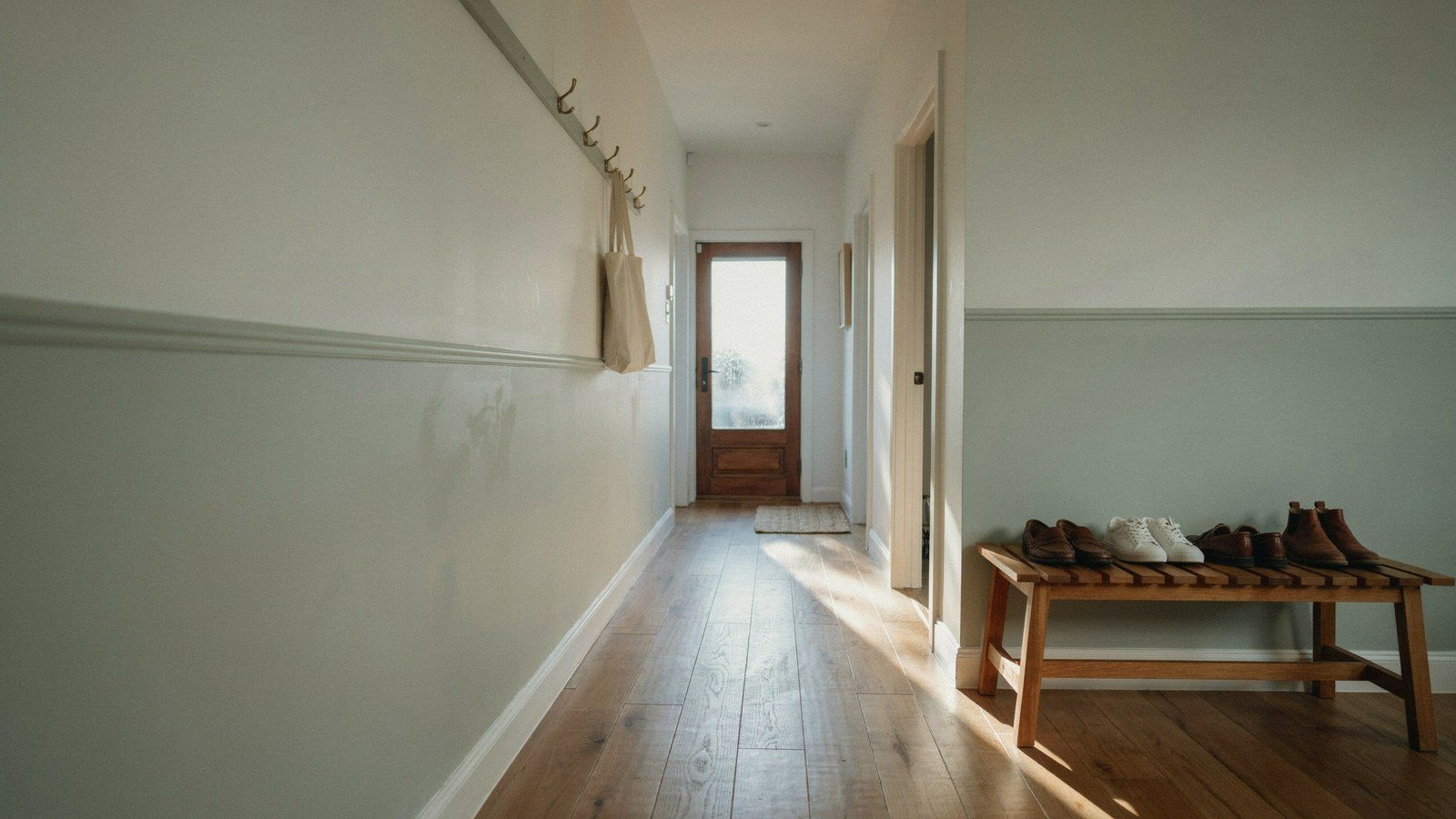
Soft sage is the colour that makes a small entryway feel calm instead of cramped. It is quiet enough to recede, warm enough to avoid the grey trap, and it sits happily against oak, brass and almost every floor tile you already own. In a space this small, choosing a colour that behaves itself matters more than choosing one that impresses.
My hallway is 1.4 metres wide and it spent years as a dumping ground with a radiator and four coats on one hook. Painting the lower half sage and adding a proper bench changed how the whole flat felt on the way in. The paint was the cheap part; the bench was the part that actually fixed it.
Below is the whole process in fifteen steps, from choosing the sage through to the last hook. Some are half an hour of work and some are a weekend. They are ordered so that the decisions that constrain everything else come first.
Why Sage Works So Well In A Small Entryway
Sage sits between green and grey, which means it reads as a colour without ever demanding attention. That is exactly what a small entryway needs, because a hallway is somewhere you pass through rather than somewhere you sit. A bold colour in a corridor becomes tiring within a week.
It also handles poor light better than most quiet colours. Entryways are usually the darkest space in a home, and many soft greys turn flat and blue in low light. Sage holds a trace of warmth from the yellow in the green, which keeps it looking intentional even at the back of a hallway.
The practical argument is just as good. Sage hides the scuffs and marks that a hallway collects far better than a pale neutral, especially at bag height. I have repainted a white hallway twice and a sage one never.
| Sage Pairing | Effect | Best Used On |
|---|---|---|
| Warm brass | Lifts the green, adds glow | Hooks, handles, light fittings |
| Pale oak | Natural and calm | Bench, shelf, mirror frame |
| Off white ceiling | Keeps the space open above | Ceiling and upper wall |
| Black metal | Sharp, contemporary | Slim console legs, rail |
| Cool chrome | Drains the warmth out | Best avoided entirely |
| Cream or bone | Soft, slightly traditional | Woodwork and skirting |
What A Small Entryway Actually Has To Do
Before any colour goes on a wall, be honest about the jobs the space has to perform. Most entryways need somewhere for coats, somewhere for shoes, somewhere to put keys down and somewhere to sit while you deal with laces. That is four functions in what is often less than two square metres.
The order of those jobs matters, because you cannot fit all four properly in a narrow hallway. Coats and shoes are daily and non negotiable. A seat is the one that gets sacrificed most often and the one people miss most.
Measure the clear width before deciding anything. A hallway needs around 800mm of walking space, so a 1.4 metre hallway gives you roughly 600mm of depth to play with on one side only. That single number rules out most furniture before you start looking.
1. Choose The Sage Before Anything Else
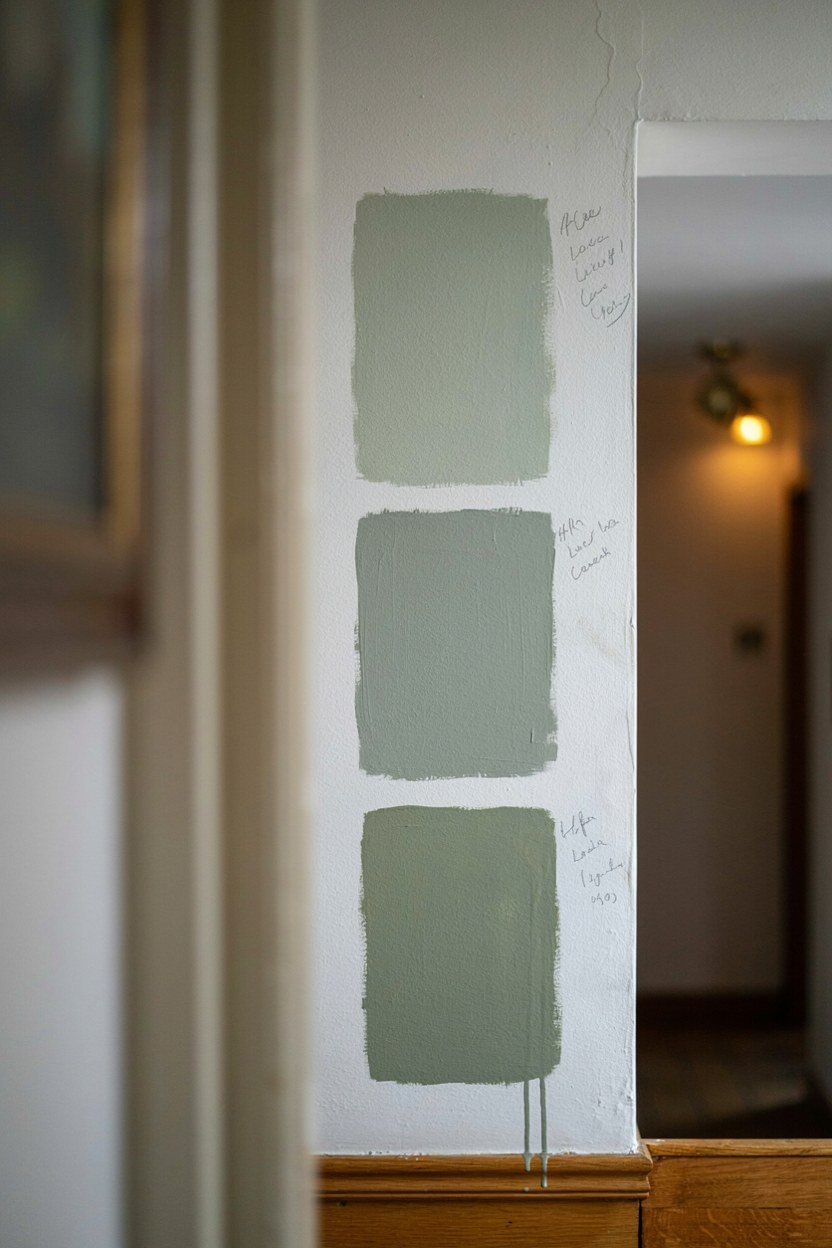
Sage varies enormously, from a grey green that is almost stone to a soft olive with real warmth. Which one you choose depends entirely on how much light your entryway gets. Darker hallways need the warmer, more olive versions to avoid going flat.
Paint a large test patch rather than relying on a small card, because colour in a narrow space bounces off the opposite wall and intensifies. A sage that looks gentle on a card can read considerably stronger across a 1.4 metre corridor. Test it on two walls, not one.
Look at it in the evening under the light you actually use. Hallways are used most in the dark half of the day, and a colour chosen in Saturday morning daylight often disappoints at six on a Tuesday. This is the test that matters.
Judging Sage In A Dark Hallway
Hold the test patch beside your front door and check it against whatever daylight comes through the glazing. Front doors often have coloured or frosted glass that casts a tint into the hall. That tint shifts the paint colour and it is invisible until you look for it.
If the hallway is genuinely dark, go one step warmer than you think you need. Cool sage in low light slides towards grey and loses the quality that made you choose it. The warmer version still reads as sage and holds up far better.
2. Paint The Lower Half Only
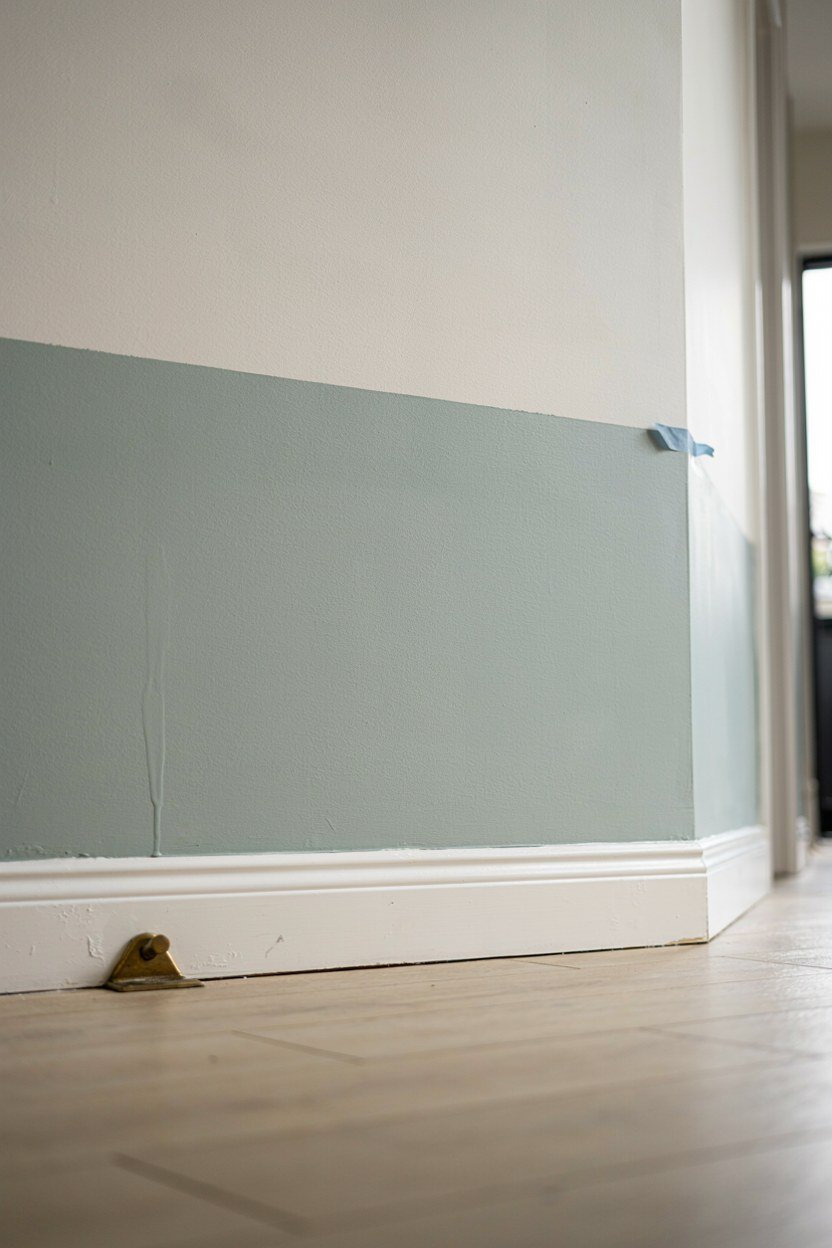
A two tone wall with sage below and off white above is the single most useful trick in a small entryway. It keeps the upper half light and open while putting the darker, more practical colour where the marks actually happen. The room feels taller and stays cleaner.
Set the break line somewhere between 900mm and 1100mm from the floor. Below 900 it looks like a skirting board and above 1100 the space starts to close in. I settled on 1000mm and it has looked right from every angle.
Run the line dead level with a laser rather than measuring up from the floor. Hallway floors are rarely level and a line that follows the floor will look wrong against the door frames. This is the detail that separates a neat job from an obvious one.
Adding A Rail Or Just A Line
A slim timber rail at the break line hides any wobble in the paint edge and gives you somewhere to hang small things. It also reads as a deliberate architectural feature rather than a paint effect. In a period property it looks entirely at home.
If you prefer a clean line, use a low tack tape and seal the edge with the upper colour before painting the sage. That trick stops bleed completely and gives a crisp line first time. It takes ten extra minutes and saves an hour of touching up.
3. Keep The Ceiling And Upper Wall Very Pale
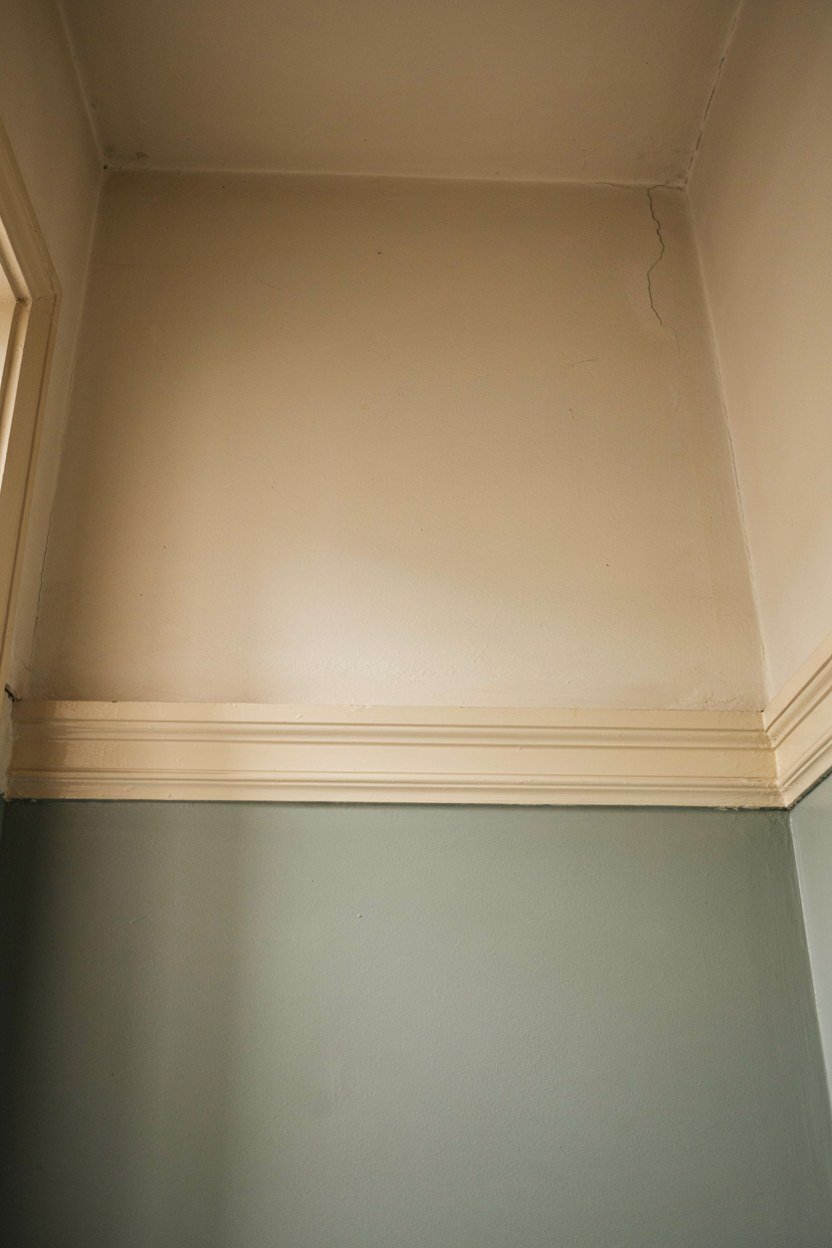
Whatever you do below, the ceiling and upper wall should stay pale to keep the space open. A dark ceiling in a narrow hallway makes it feel like a tunnel, and hallways are already the most tunnel like space in a home. Pale above, colour below, always.
Use the same off white on the ceiling and the upper wall rather than two different whites. A visible change at the cornice line chops the height in half and undoes the benefit. One colour running up and over reads as more space.
Choose a warm white rather than a brilliant white. Brilliant white against sage looks stark and slightly cold, while a warm off white lets the two colours sit together. This is a small change with a visible result.
The Ceiling Finish To Use
Matt on the ceiling every time, because any sheen shows every imperfection in old plaster. Hallway ceilings are usually the worst plaster in the house and the most awkward to repair properly. Matt paint hides a considerable amount.
If the ceiling is genuinely bad, a thin lining paper before painting is worth the effort. It gives a flat surface for very little money and lasts for years. Skimming is better and considerably more disruptive in a working hallway.
4. Fit A Bench, Even A Narrow One
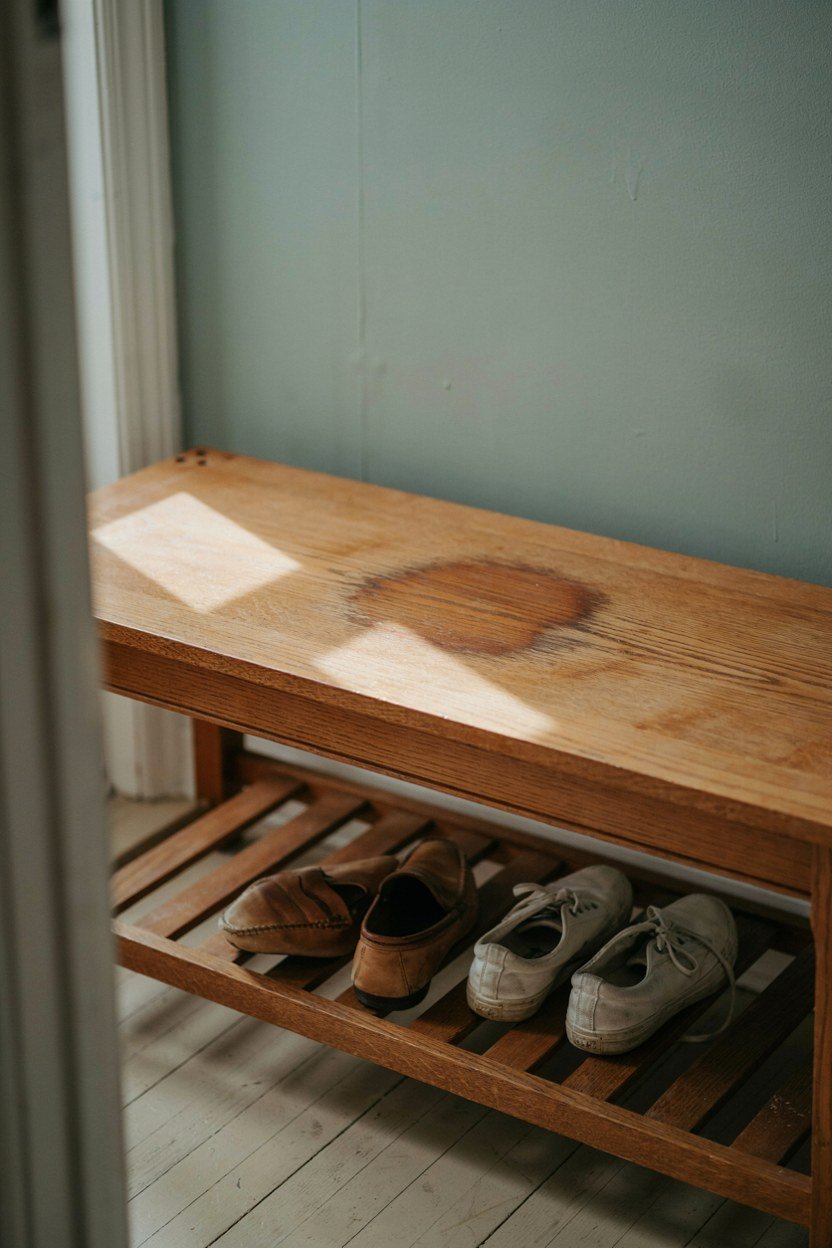
A place to sit is the thing most small entryways lack and the thing that changes daily use most. Putting shoes on standing up in a narrow hallway is genuinely awkward, and a bench solves it in 350mm of depth. That is less than most people assume.
Choose one with storage underneath if you can, because the space beneath a bench is the best shoe storage available. A slatted or open base lets wet shoes dry, which a closed box does not. Wet trainers in a sealed cupboard become a problem within days.
Keep it against the longest clear wall and leave the walking route past it. A bench that narrows the corridor to under 700mm will get resented every time someone carries shopping through. Measure the remaining gap before buying.
If There Is Genuinely No Room
A fold down seat fixed to the wall gives you the function without the permanent footprint. Several are designed for exactly this and fold to under 100mm deep. They are more useful than they look in photographs.
Failing that, a small stool that tucks fully under a console works. It occupies no walking space when stored and comes out when needed. This is the compromise I would make before giving up the seat entirely.
5. Use Brass Hooks Rather Than A Coat Rack
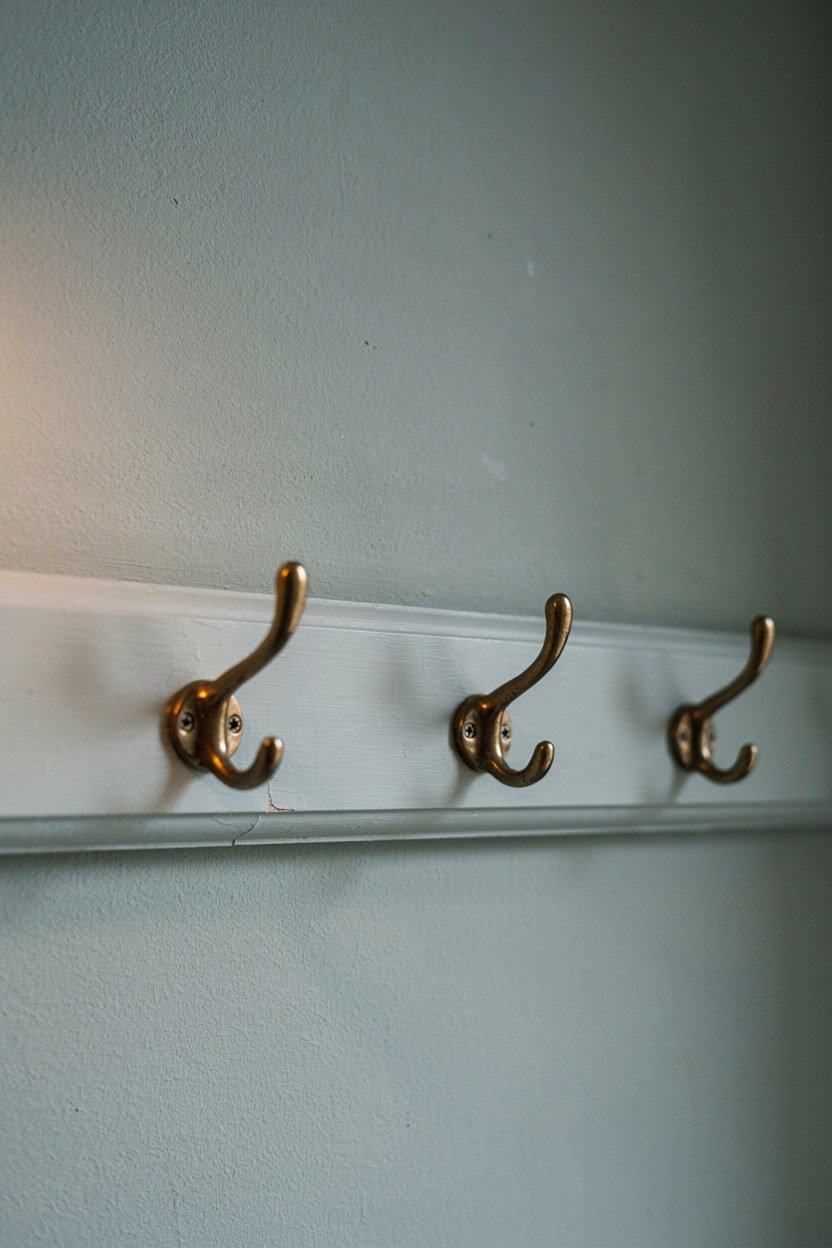
Individual hooks fixed to the wall take up no floor area and look far better than a freestanding rack. Brass against sage is the pairing that makes the whole scheme work, and hooks are the cheapest way to introduce it. Six good hooks cost less than one mediocre coat stand.
Fit them at two heights if the household includes children. A row at 1700mm for adults and one at 1100mm for children stops coats being dumped on the bench. That single change made more difference in my hallway than anything else.
Space them generously, around 200mm apart, because coats need room to hang without compressing. Hooks crammed at 100mm centres hold half as many coats as you expect. Fewer, better spaced hooks hold more.
Fixing Hooks Into A Hallway Wall
Coats are heavier than people think and a loaded hook can pull out of plasterboard within months. Fix into a timber batten screwed to the studs rather than directly into the board. The batten also gives you a horizontal line that suits the two tone wall.
Paint the batten the sage colour so it reads as part of the wall. A contrasting batten becomes a shelf visually and draws attention to the coats. Matching it lets the hooks and the coats be the only things you notice.
6. Choose One Mirror And Make It Large
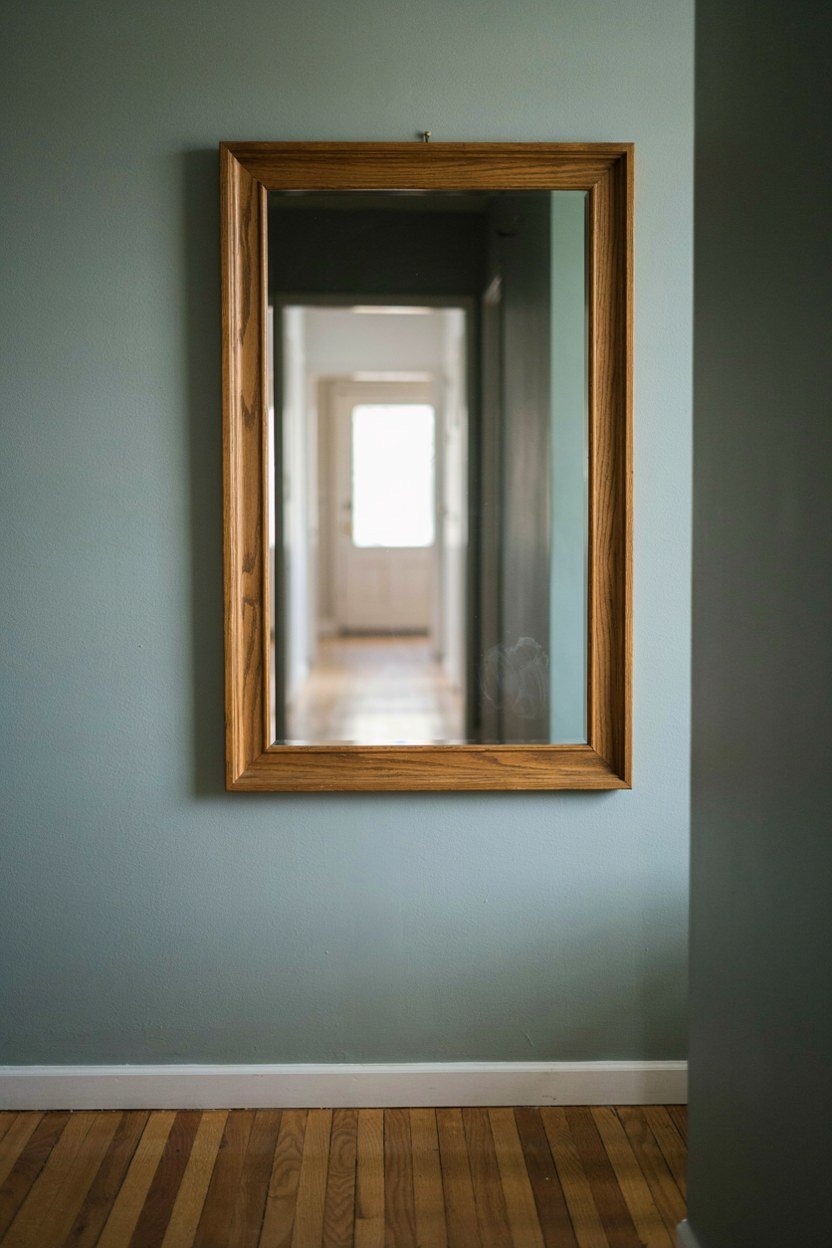
A mirror is the highest value object in a small entryway because it doubles the apparent depth and gives you somewhere to check yourself on the way out. One large mirror beats three small ones by a wide margin. Go bigger than feels sensible.
Hang it opposite or adjacent to whatever light source exists, so it bounces daylight down the hallway. A mirror on the dark wall facing a blank wall achieves very little. Check what it will actually reflect before fixing it.
An oak or brass frame ties it to the rest of the scheme. Frameless mirrors look sharp but can read as bathroom fittings in a hallway. A visible frame makes it furniture rather than a fixture.
Getting The Height Right
Hang the centre at around 1500mm from the floor, which suits most adults standing close to it. Hallway mirrors are used at close range, unlike living room mirrors, so the usual eye level advice applies more strictly. Too high is the common error.
Leave clear wall around it rather than crowding it with hooks. A mirror surrounded by coats reflects coats, which is not the point. Give it its own patch of sage.
7. Add A Slim Console Or Shelf For Keys
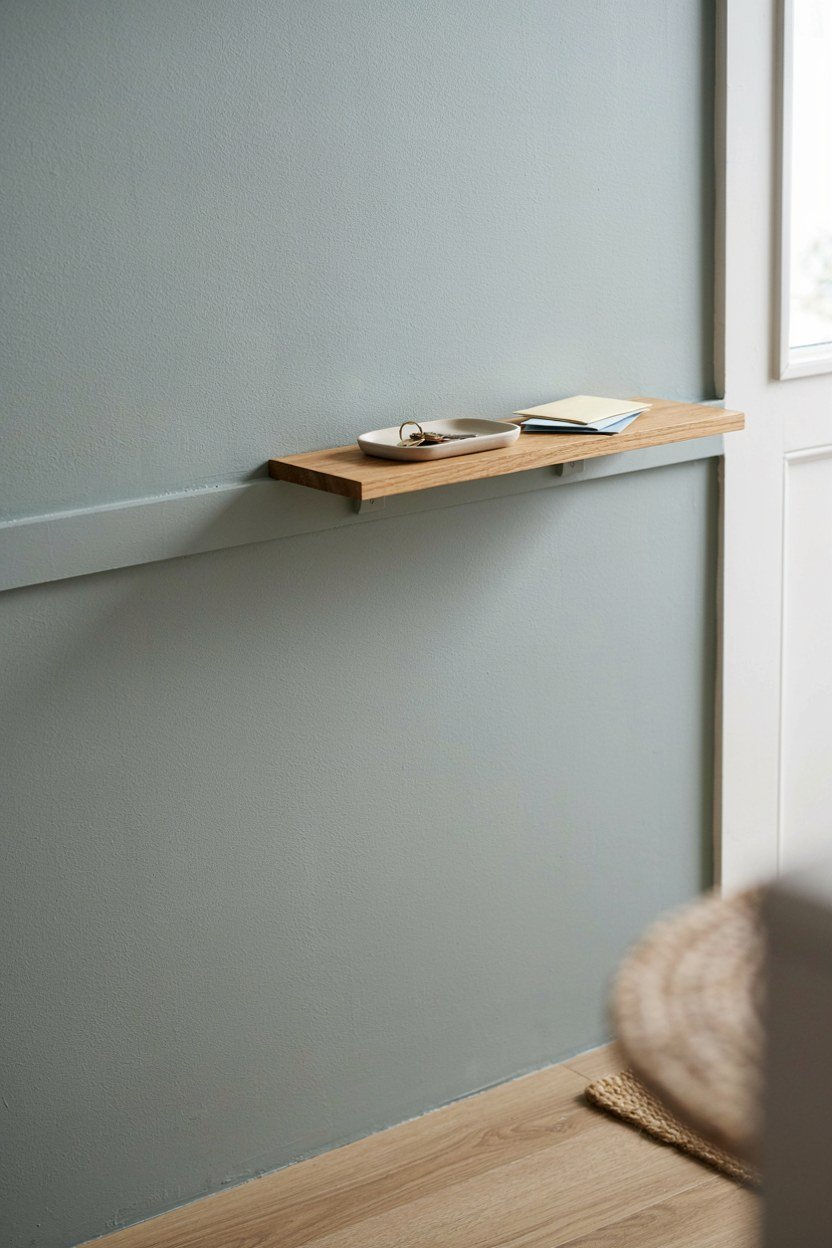
Every entryway needs a surface for keys, post and the things that come out of pockets. Without one, all of that lands on the floor or the stairs. A shelf 150mm deep is enough and takes almost no space.
A floating shelf in oak, fixed just above the break line, works in the narrowest hallway. It gives you the surface without legs to walk into. In a 1.4 metre corridor this is often the only sensible option.
If there is room for a console, choose one under 300mm deep with open legs. The visible floor underneath keeps the hallway reading as wider. A solid console in a narrow space acts as a wall.
Keeping The Surface From Filling Up
Put one small tray or bowl on the shelf and treat everything outside it as clutter. A defined landing spot stops the surface spreading, which is what always happens otherwise. This is a habit more than a purchase.
Clear it weekly rather than daily. Entryway surfaces accumulate at a predictable rate and a Sunday sweep keeps it under control without constant attention. Leaving it a month is what turns it into a problem.
8. Sort Out The Shoes Properly
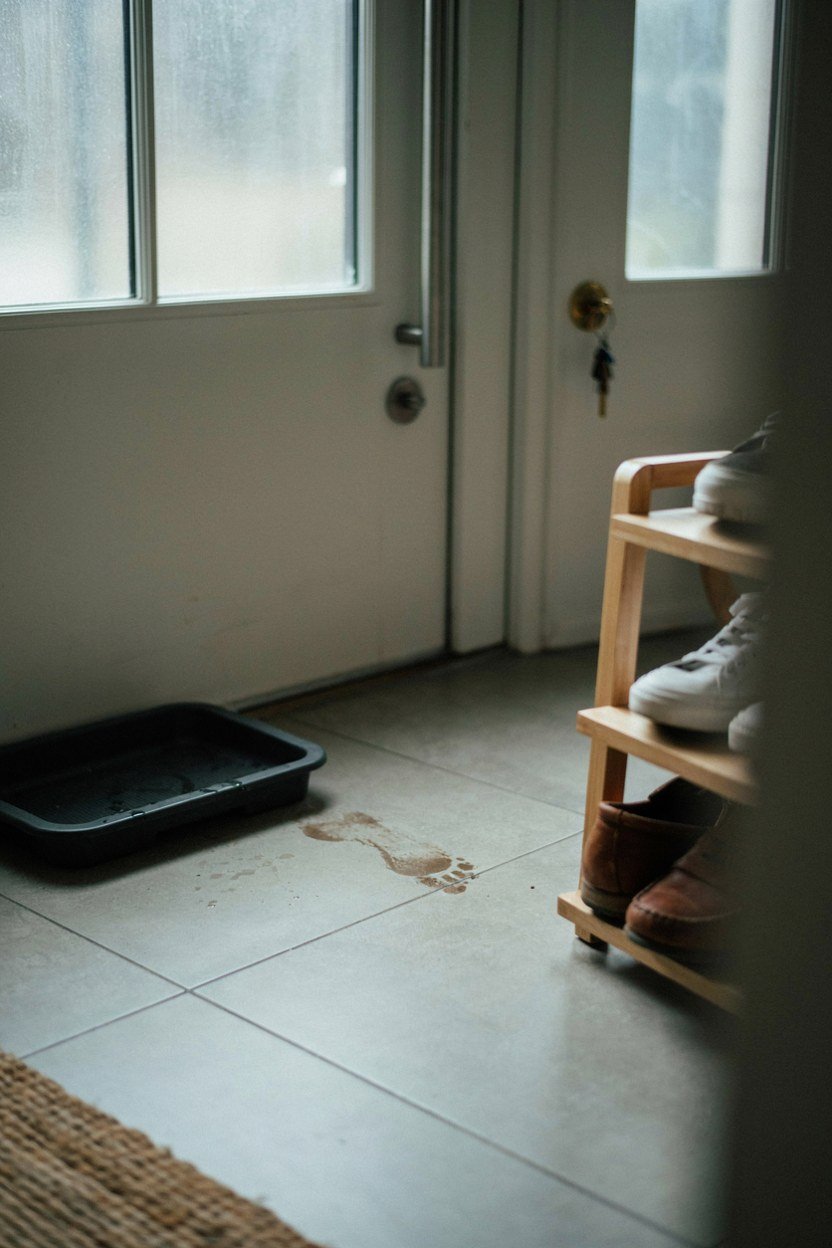
Shoes are the thing that ruins small entryways and they need a designated home, not a pile. Under the bench is the obvious place, and a shallow rack there holds far more than a jumble does. Two rows of five is a realistic target for a family.
Keep only current season shoes in the hallway and move the rest elsewhere. A small entryway cannot hold a household’s entire shoe collection and trying makes everything worse. Rotate them seasonally.
Add a boot tray by the door for wet weather. A shallow metal or rubber tray contains the mess and protects whatever flooring you have. It costs very little and saves the floor finish.
The Wet Shoe Problem
Wet shoes need air, so avoid closed cupboards for daily footwear. An open rack or a slatted bench base lets them dry overnight, which a sealed box prevents. Damp shoes in a closed unit smell within a week.
If a closed unit is the only option, drill a row of ventilation holes in the back panel. It is not elegant and it works. Nobody sees the back of a shoe cupboard.
9. Get The Lighting Off The Centre Of The Ceiling
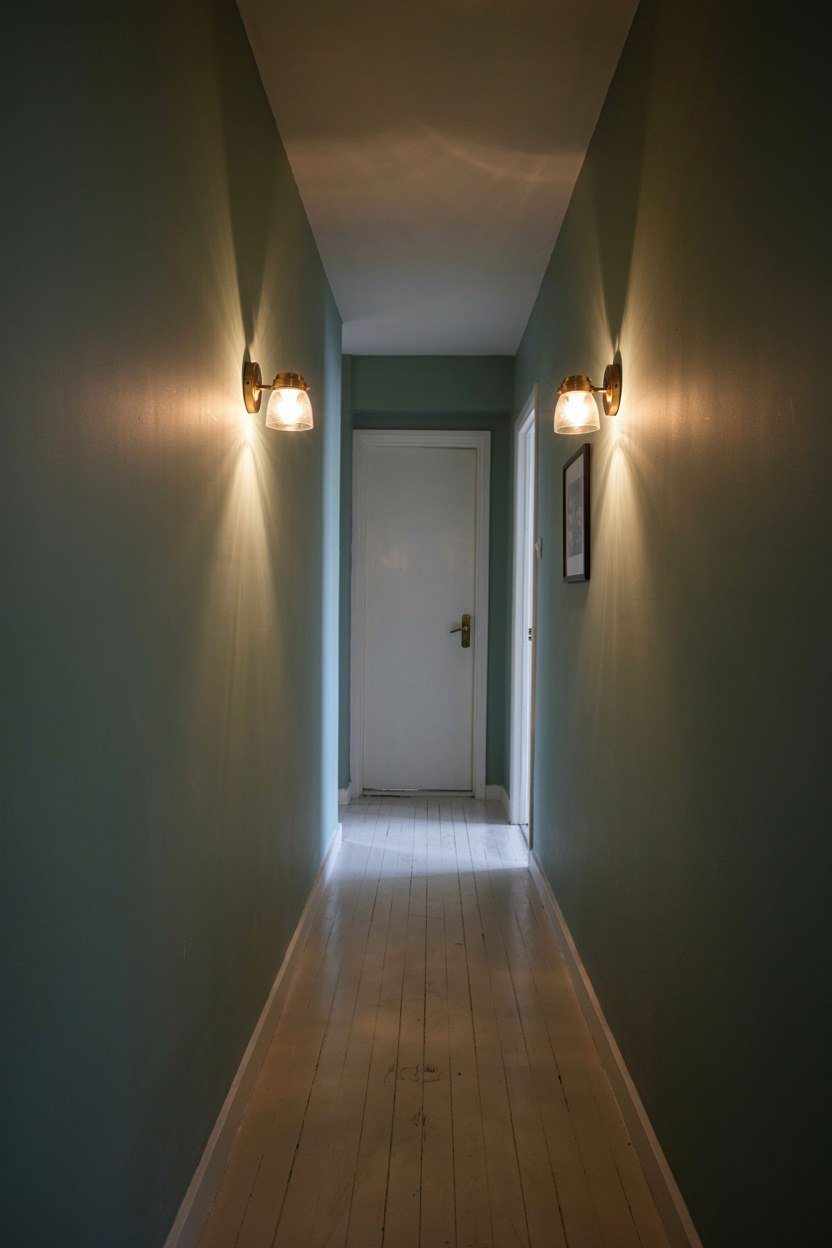
A single pendant in the middle of a hallway ceiling is the standard arrangement and it is a poor one. It throws shadow down onto faces at the mirror and lights the middle of the corridor while leaving both ends dark. Almost anything else is better.
Two wall lights at eye level, or a run of three small ceiling fittings spaced along the hallway, both work far better. Even light along the length is what makes a corridor feel longer rather than shorter. This is worth rewiring for.
Use warm bulbs at 2700K to keep the sage looking like sage. Cool light pulls the green towards grey and flattens the whole scheme. The bulb choice affects the colour as much as the paint choice does.
Adding A Light By The Door
A small light close to the front door is the one everyone forgets and everyone uses. Finding a keyhole or reading a delivery note in a dark porch is a daily irritation with a simple fix. A single wall light solves it.
Put it on a separate switch or a sensor so it can be on alone. A hallway where you can turn on one small light at midnight is far more pleasant than one where the only option is full brightness. Sensors work well here.
10. Choose Flooring That Handles Wet Feet
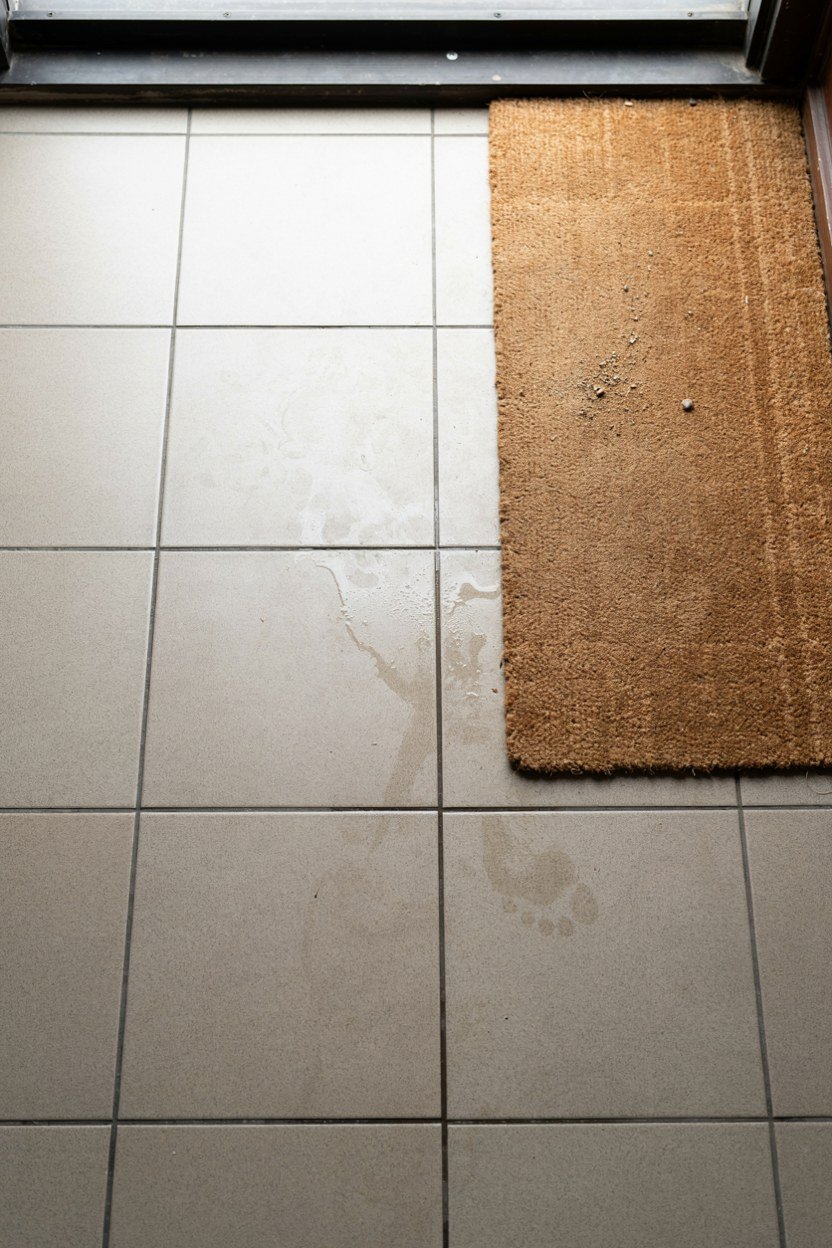
Entryway flooring takes more abuse than any other floor in a home, and it takes it while wet. Porcelain tile, vinyl and engineered timber with a hard wearing finish all cope. Solid timber and most laminates do not enjoy standing water.
Choose a mid tone rather than very pale or very dark. Pale floors show every mark from outside and dark floors show every speck of dust. A mid tone with some variation hides both and needs less attention.
Run the same floor through into the adjoining room if you possibly can. A threshold strip at the hallway door chops a small space in two and makes both feel smaller. Continuous flooring is worth the extra planning.
Doormats That Actually Work
A doormat needs to be at least as wide as the door and long enough for two full steps, which is longer than most people buy. A short mat catches the first step and misses the second, which is the one carrying most of the water. Around 800mm long is the target.
A recessed matwell is the proper answer if you are laying a new floor. It sits flush, holds a much larger mat and stops the trip hazard of a raised edge. Retrofitting one is disruptive, so decide during the floor work.
11. Paint The Front Door Inside Face Too
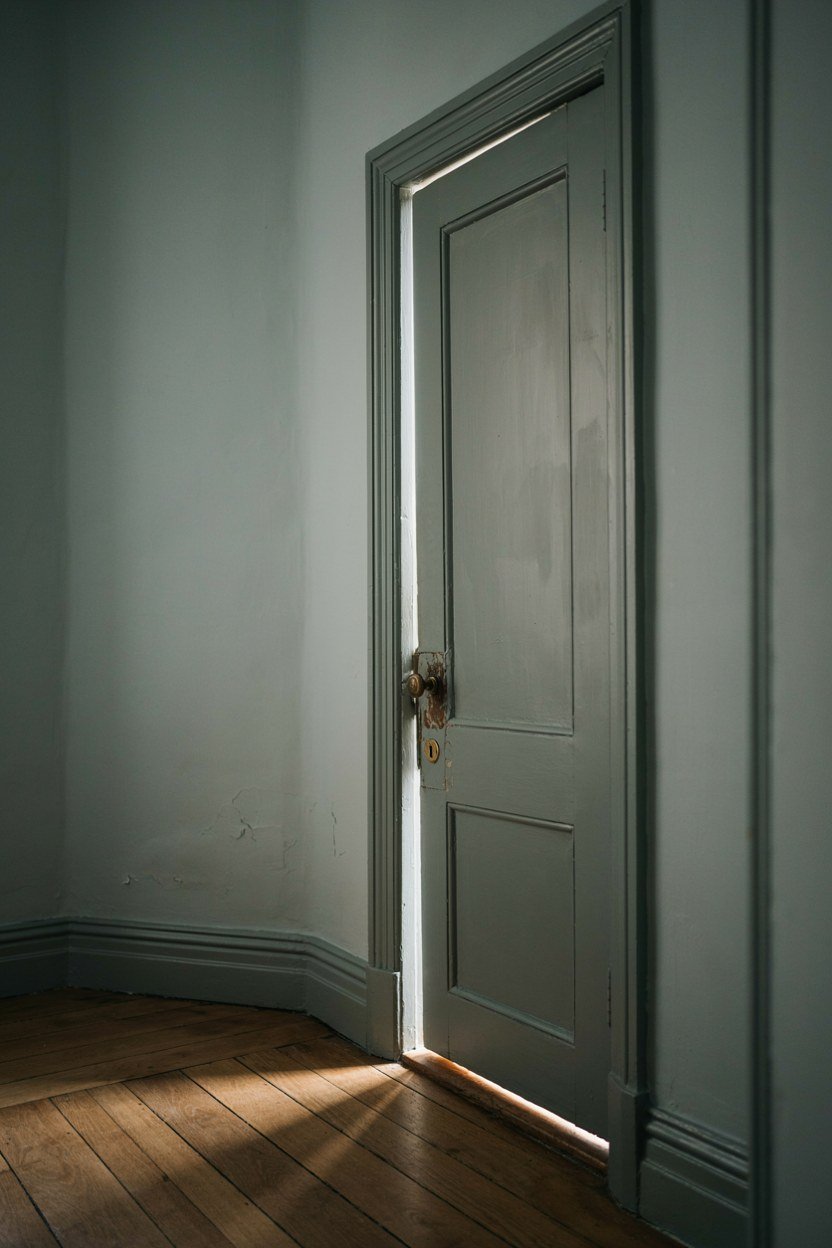
The inside of the front door is a large surface that most people leave in whatever colour it arrived in. Painting it the sage, or a shade darker, ties it into the scheme and makes the hallway feel finished. It is a two hour job with a large effect.
Going one step darker than the walls works particularly well, because it gives the door presence without introducing a new colour. That small tonal shift reads as deliberate. Matching it exactly to the wall can look flat.
Use an eggshell or satin finish rather than matt. Front doors get touched constantly and matt paint marks in exactly the places hands land. Eggshell wipes clean and still looks soft.
Do The Frame And Architrave As Well
Leaving a white frame around a sage door creates a hard outline that draws the eye to the door edge. Painting the frame the same colour lets the door sit into the wall. In a narrow hallway that reduction in visual noise is noticeable.
Take the colour onto the door reveal too if there is one. Half painted reveals are the sort of unfinished detail that nags. It is a small amount of extra work while the brush is out.
12. Add One Soft Thing For Sound
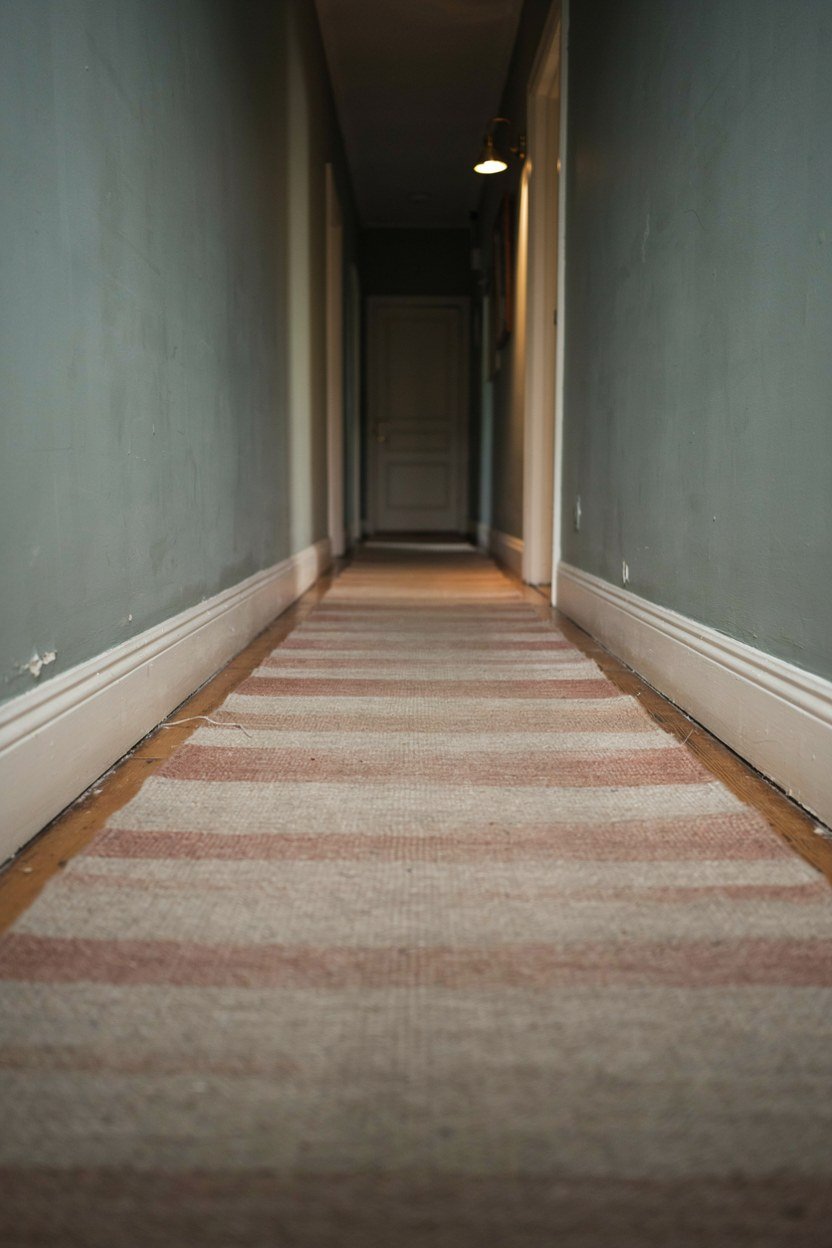
Hallways are hard surfaces and they echo, which is part of why they feel unwelcoming. One soft element changes the acoustics noticeably. A runner, a curtain over the door, or even a wool bench cushion all help.
A runner is the usual answer and it does two jobs, absorbing sound and protecting the floor along the walking line. Choose a flat weave in a tone close to the floor so it extends the space rather than dividing it. Anything with a strong border shortens the hallway visually.
Fix it down with a proper underlay or grippers. A sliding runner on a hard floor is a genuine hazard, particularly with wet shoes involved. This is not the place to economise.
A Door Curtain For Draughts
A heavy curtain across the front door handles both draught and sound in one move. On a portière rod it swings with the door and does not need moving. In an older property it makes a real difference to how warm the hallway feels.
Choose a fabric that suits the sage rather than a heavy pattern. A plain wool or a textured linen in a slightly darker tone works well. The curtain is large enough that pattern would dominate the space.
13. Hide The Meter And The Fuse Box
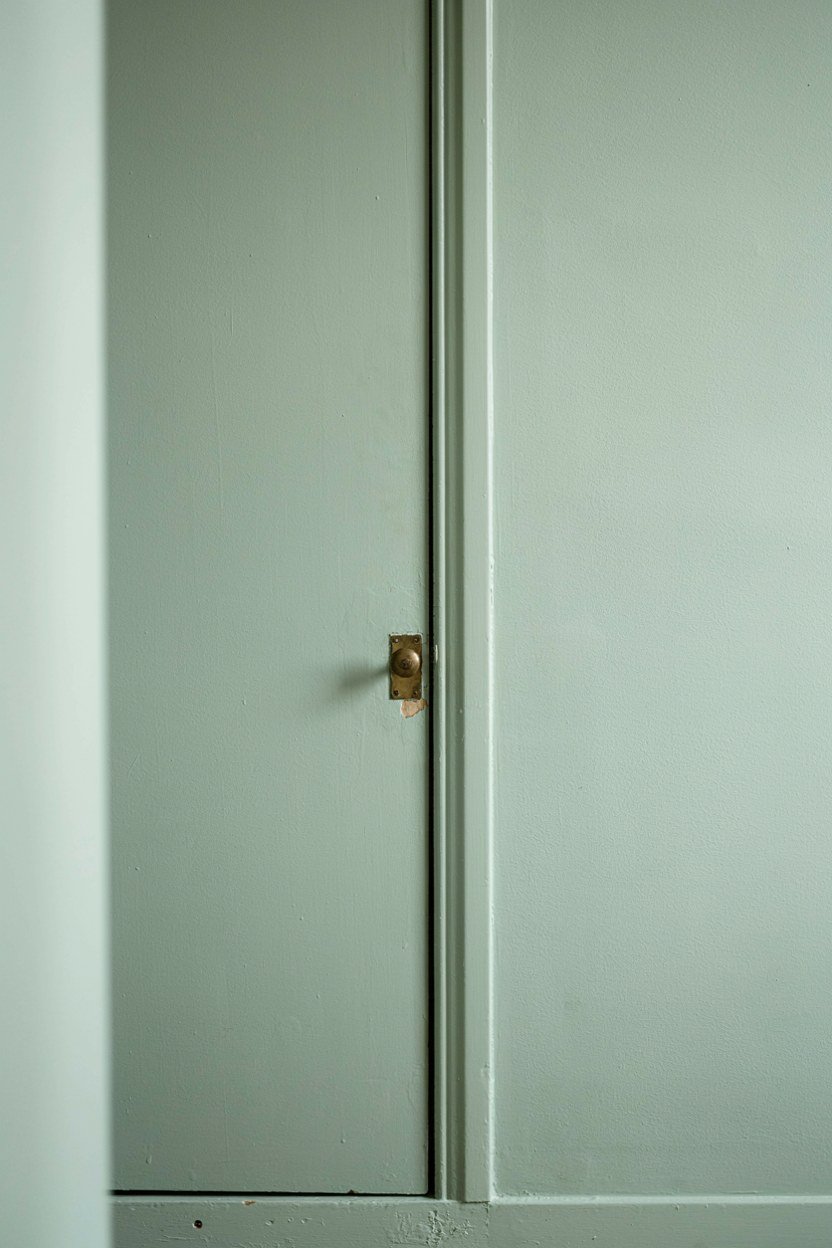
Almost every small entryway has a meter cupboard or a consumer unit at eye level, and it is always the first thing you see. Painting the door the wall colour makes it recede substantially. It will not vanish, but it stops being the focal point.
A slim hinged panel or a picture on a magnetic mount covers it entirely while keeping access. Whatever you use has to open easily, because a cover that needs unscrewing will end up left off. Test the access before finishing it.
Leave the meter readable if it is the type that gets read. Anything that has to be dismantled for a reading will not survive its first visit. Check what your supplier needs.
Painting Over The Details
Do not paint over the consumer unit itself or any labelling inside it. The circuit labels matter and painting them out creates a genuine problem later. Only the cupboard door should be painted.
Use the same finish as the wall so the sheen matches. A satin cupboard door in a matt wall catches light differently and gives itself away. Matching the finish is what makes it disappear.
14. Keep The Palette To Three Things
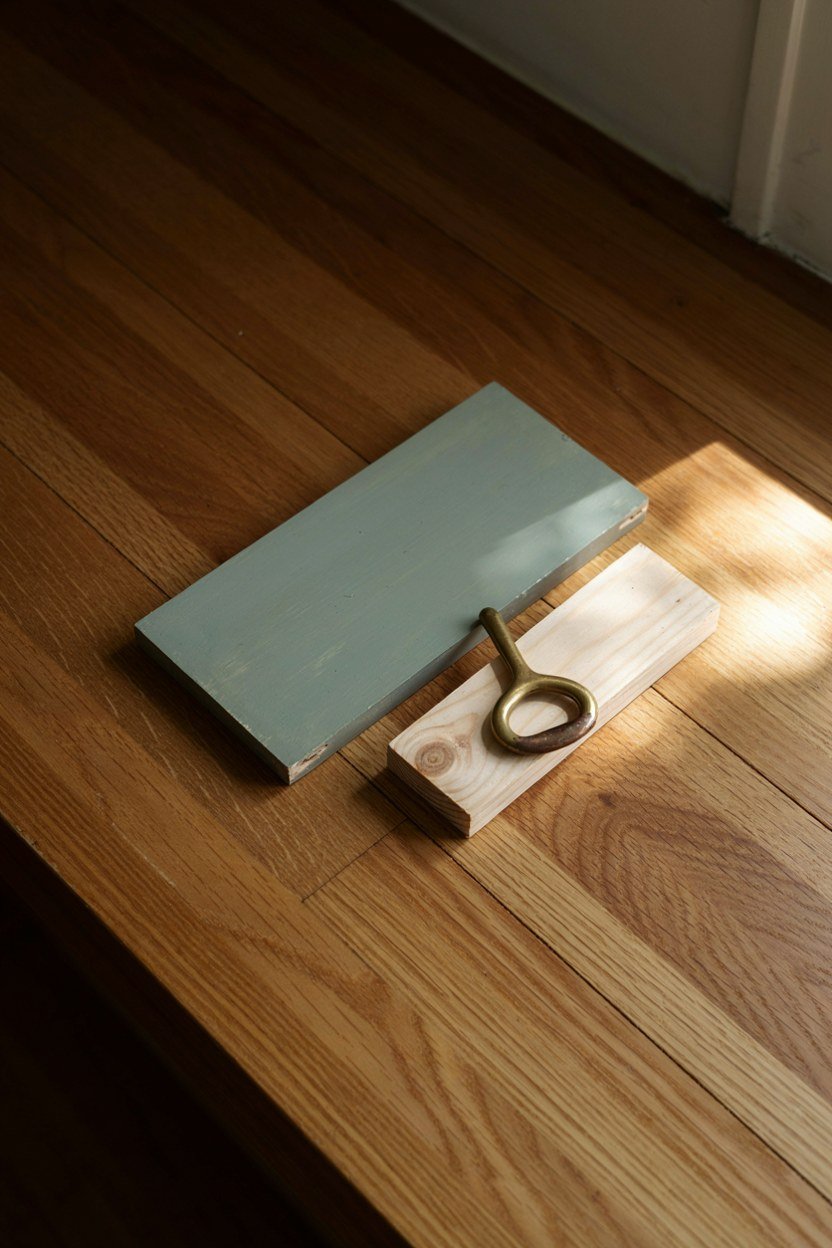
Sage, one wood and one metal is the whole scheme. Adding a fourth element is where small entryways start to look busy, and busy is the opposite of what a transitional space should be. Three is enough to feel considered.
That means choosing between brass and black rather than using both. Mixed metals work in larger rooms where they have space to breathe, but in two square metres they read as indecision. Pick one and use it on every hook, handle and fitting.
The same applies to the wood. One oak, repeated on the bench, the shelf and the mirror frame, ties everything together. Two timbers in a hallway this size look like separate purchases.
Where The Fourth Colour Can Go
If you want an accent, put it in something replaceable such as a runner or a single piece of art. That way the scheme survives changing your mind. Permanent accents in a small space are a commitment.
Keep it to one item. A patterned runner and a coloured mirror frame and a bright bowl together become the scheme rather than an accent. One thing, chosen well.
15. Leave One Hook And One Shelf Empty
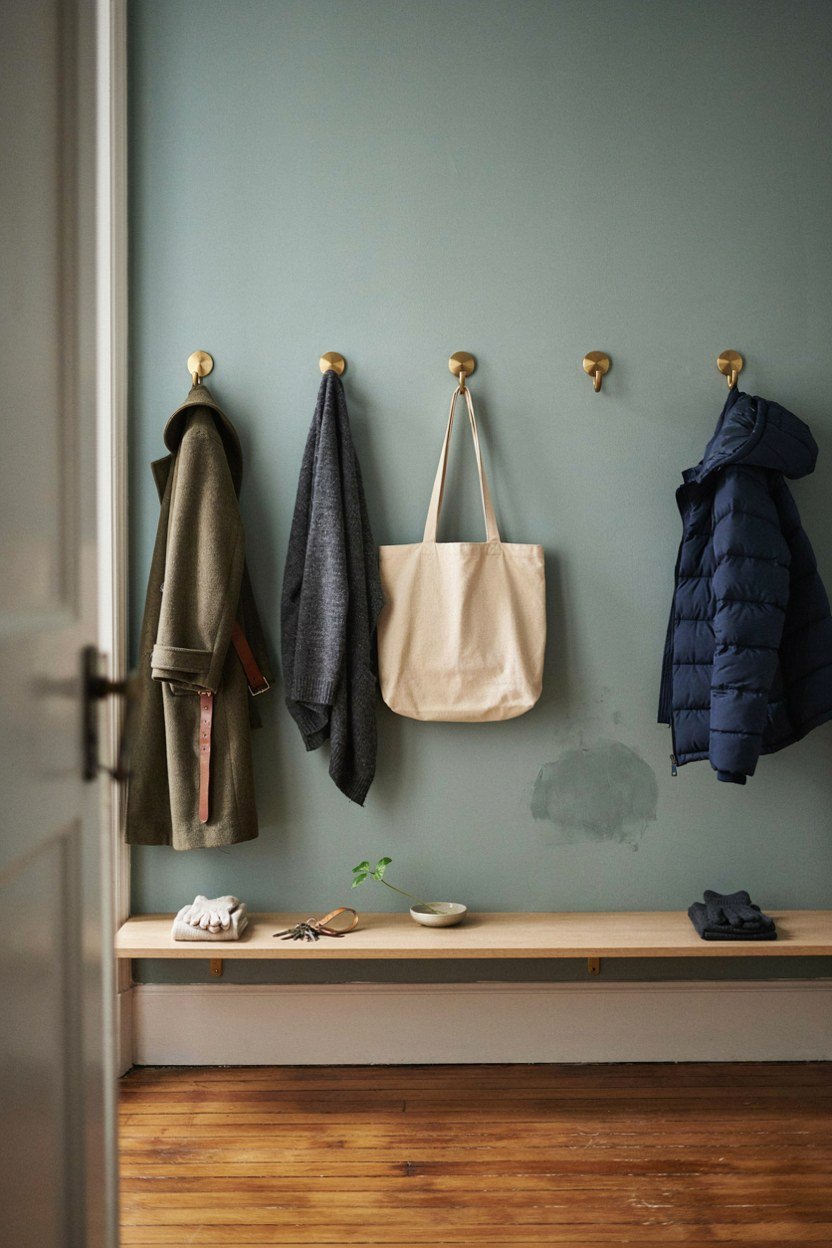
An entryway that is completely full stops working, because there is nowhere for a visitor’s coat or today’s post. Leaving one hook and a clear stretch of shelf keeps the space usable. This is the maintenance rule that keeps everything else looking right.
It also gives you a buffer for the days when everything arrives at once. A hallway with no spare capacity pushes coats onto the bench and post onto the floor. The spare hook absorbs that.
Enforce it the way you would a parking space. The empty hook is not storage in reserve, it is the thing that keeps the entryway functioning. It fills up the moment you stop treating it as reserved.
The Weekly Reset
Five minutes on a Sunday returns the hallway to its starting state. Coats that belong upstairs go upstairs, shoes out of season move on, and the shelf gets cleared. That short reset is what keeps a small entryway from degrading.
Do it before the week rather than after. A hallway that starts the week clear absorbs five days of arrivals, while one that starts full has nowhere to put Monday. The timing matters more than the effort.
What A Sage Entryway Costs To Put Together
Paint and hooks give you most of the visible change for very little money. A tin of sage, a tin of warm off white and six brass hooks will transform a hallway for the price of a takeaway dinner. That version already looks like the photographs.
The bench and the mirror are the middle of the budget and both earn their place. If I could only buy one, it would be the bench, because it changes how the space is used rather than how it looks. The mirror changes how it feels.
Flooring and lighting sit at the expensive end and both can wait. A hallway with good paint, proper hooks and a bench works perfectly well on the floor it already has. Plan the rest into the next round of work.
| Change | Effect On A Small Entryway | Rough Cost |
|---|---|---|
| Sage paint below a break line | Highest impact, do first | Low |
| Brass hooks on a fixed batten | Solves the daily coat problem | Low |
| Large mirror | Doubles apparent depth | Low to mid |
| Bench with open shoe storage | Changes how the space is used | Mid |
| Runner and a decent doormat | Sound, warmth and floor protection | Low |
| Wall lights replacing a pendant | Even light along the corridor | Mid |
| New flooring with a matwell | Best done during other work | High |
The Mistakes That Spoil A Small Entryway
The most common mistake is choosing furniture by looks rather than depth. A beautiful 400mm console in a 1.4 metre hallway leaves a corridor nobody can carry shopping through. Measure the remaining walking width before anything else.
The second is too many hooks too close together. It feels efficient and it holds fewer coats than a generous arrangement, because compressed coats take more depth. Six well spaced hooks beat twelve crammed ones.
The third is lighting the space from a single central point. It is what the wiring gives you and it flatters nothing, throwing shadow onto faces and leaving both ends of the hallway dark. Almost any alternative is an improvement.
The Check That Catches All Three
Walk through the hallway carrying a full bag of shopping and a coat over one arm. Every problem in a small entryway shows up in that one journey, and none of them show up when you walk through empty handed. It takes thirty seconds.
Then look at the space from the front door with the door open. That is the view a visitor gets and it is the one nobody ever checks. If the first thing you see is the meter cupboard, you know what to fix.
Conclusion: The Three Things That Change A Small Entryway
Paint the lower half sage, fit proper hooks on a fixed batten, and put in a bench with open storage underneath. Those three changes cost very little and they solve the colour, the coats and the shoes in one go. Everything else on this list refines what they establish.
Then handle the light. Get it off the centre of the ceiling, keep it warm, and add a small light near the door for the daily jobs. A hallway that is pleasant to walk into at night is doing most of its work.
Finally, protect the spare capacity. One empty hook and a clear stretch of shelf are what keep a small entryway functioning rather than silting up. Sage will hide the scuffs, but nothing hides clutter.
Frequently Asked Questions About Sage Entryways
What shade of sage suits a dark hallway?
Go warmer and more olive rather than grey green. Cool sage slides towards grey in low light and loses what made it appealing.
Should I paint the whole wall or just the lower half?
Lower half in most small entryways, with a pale upper wall and ceiling. It puts the practical colour where the marks happen and keeps the space feeling taller.
What height should the break line be?
Between 900mm and 1100mm from the floor, set dead level with a laser rather than measured from an uneven floor.
Which metal finish goes with sage?
Brass or black, and only one of them. Brass warms the green, black sharpens it, and chrome drains the warmth out entirely.
How deep can a hallway bench be?
Around 350mm works in most narrow hallways. Check that at least 700mm of walking width remains once it is in place.
How many coat hooks do I need?
Fewer than you think, spaced around 200mm apart. Crammed hooks hold fewer coats because coats need room to hang without compressing.
What flooring copes best with a wet entryway?
Porcelain tile, vinyl or a hard wearing engineered timber in a mid tone. Pale floors show outdoor marks and dark floors show every speck of dust.