
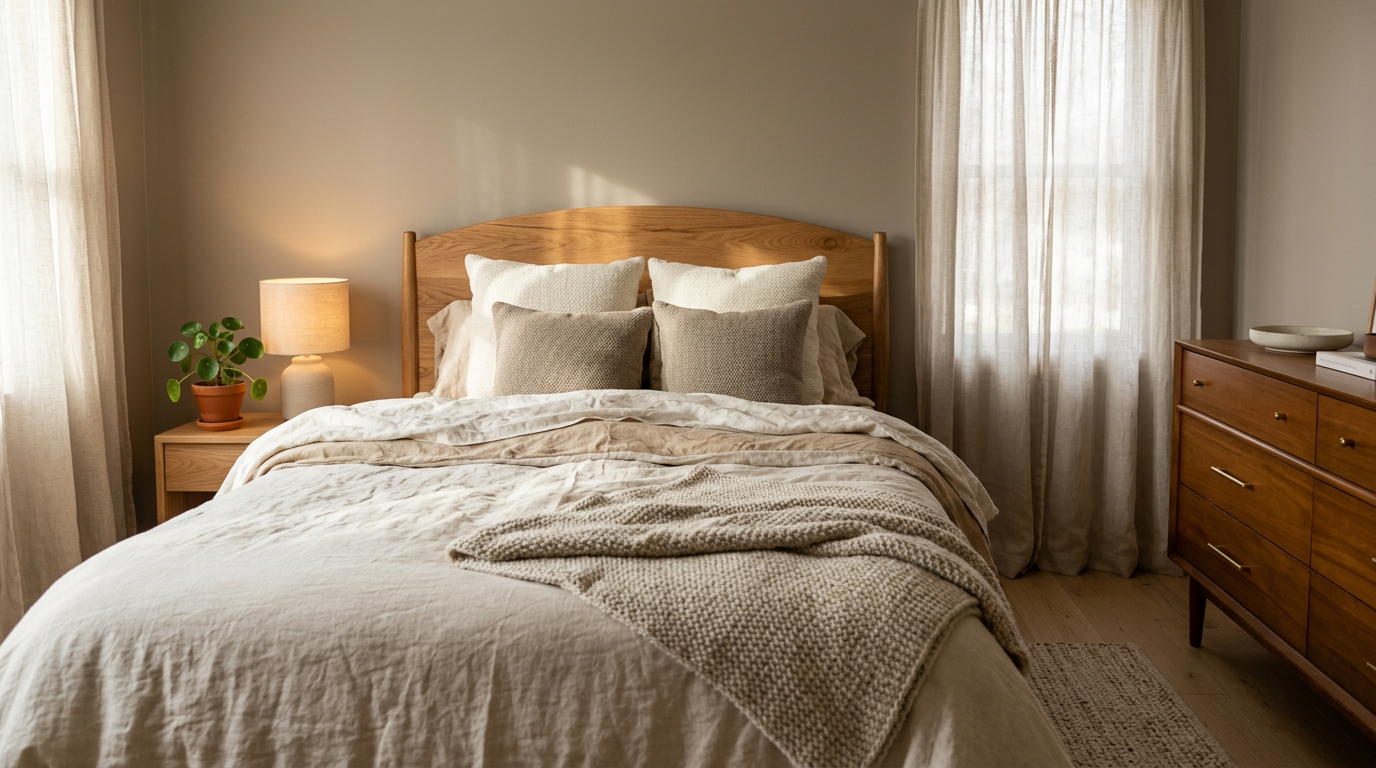
A neutral bedroom does not have to feel boring. The difference between a plain beige room and a warm, inviting one usually comes down to texture and undertone, not color choice itself.
I painted my own bedroom a soft neutral a couple of years back, and for a few weeks, it genuinely felt flat. A handful of small changes turned it from forgettable into one of my favorite rooms in the house.
If your neutral bedroom currently feels more sterile than cozy, this guide walks through practical ways to warm it up without adding bold color or losing that calm, timeless neutral look you were going for.
Why Neutral Bedrooms Feel Plain in the First Place
Neutral gets a bad reputation because it is often done wrong. A single flat beige on the walls with matching flat bedding and no texture reads as unfinished rather than calming.
The problem usually is not the color family itself. Cream, taupe, and warm gray are timeless for a reason, but a room built entirely from one shade with no layering falls flat fast.
Warmth in a neutral bedroom comes from contrast within the palette. Mixing textures, undertones, and a few natural materials is what separates a cozy neutral room from a plain one.
1. Layer Different Textures Throughout the Room
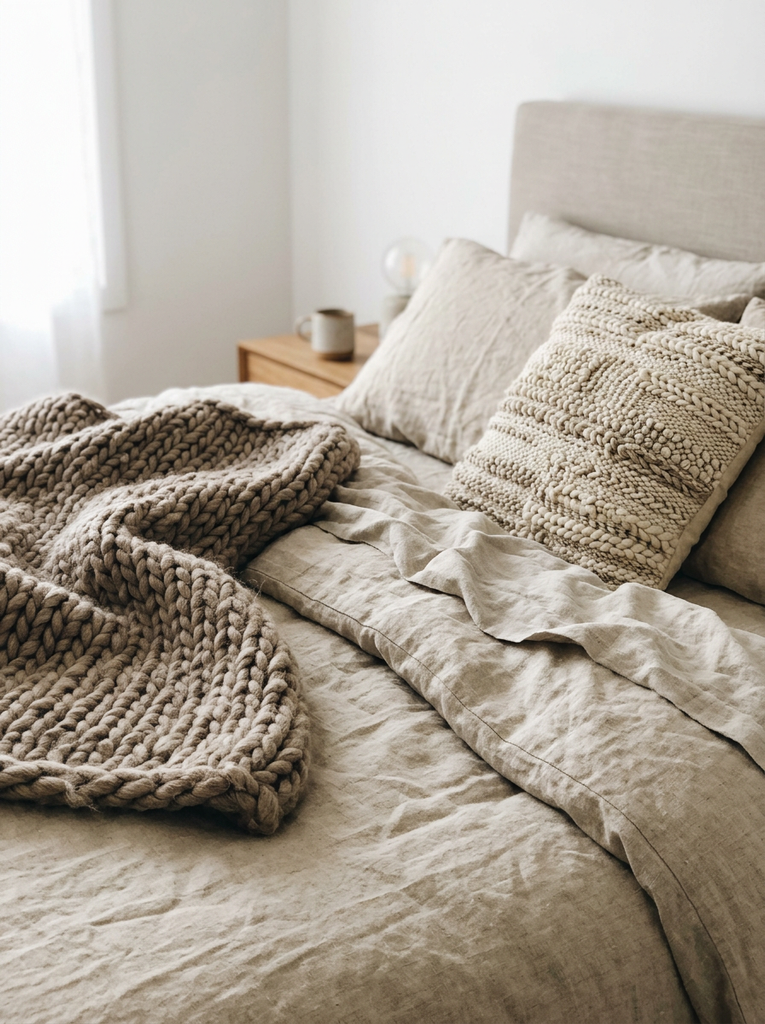
Texture is the single biggest factor in whether a neutral bedroom feels warm or flat. A room with only smooth cotton bedding and flat painted walls has nowhere for the eye to rest.
Mixing linen, wool, boucle, and woven textures adds depth without introducing new colors. A chunky knit throw over smooth linen sheets, or a woven rug beneath a simple wood bed frame, instantly changes how the room feels.
I added a wool throw and a textured woven pillow to my mostly cream bedroom, and neither piece added color, yet the room stopped feeling like an empty hotel room almost overnight.
2. Choose Warm Undertones Over Cool Ones
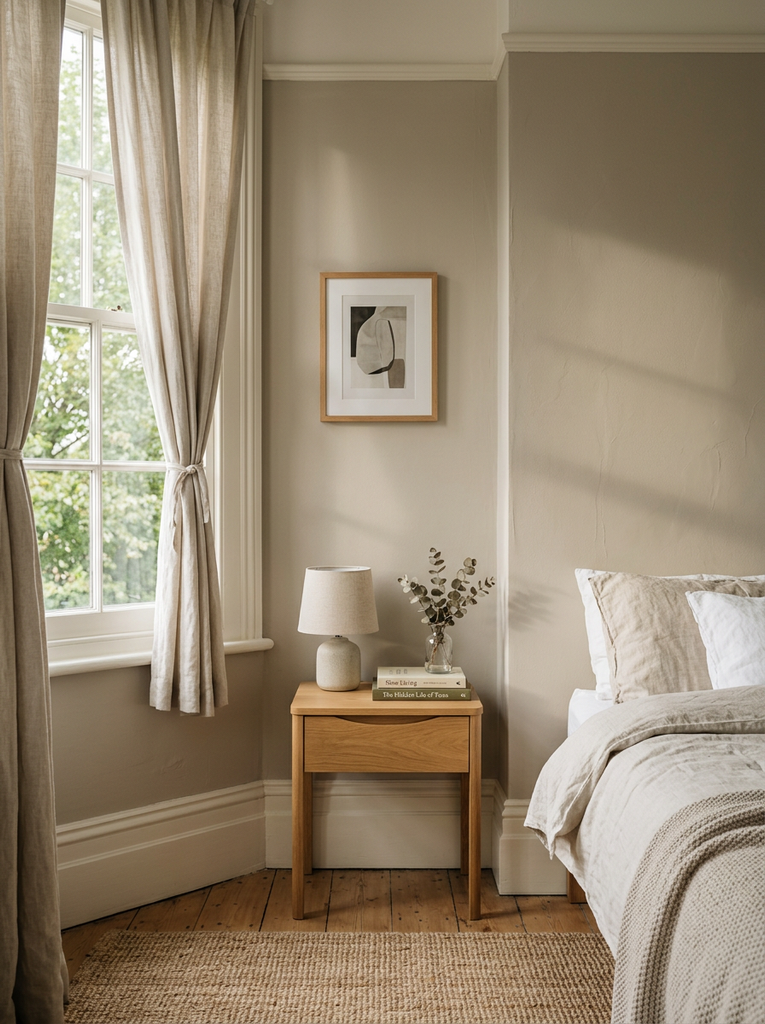
Not all neutrals read the same way, and this trips up a lot of people. A gray with cool blue undertones can feel sterile, while a warm greige or soft taupe with yellow or pink undertones feels cozy in the exact same room.
Testing paint samples on your actual wall matters more than trusting a swatch in the store. Lighting changes undertones significantly, so a color that looked warm under store lighting can turn cold and flat once it is on your bedroom wall.
I learned this the hard way with a gray that looked warm on the sample card and turned distinctly cool once painted. Switching to a warmer greige fixed the entire feel of the room without changing anything else.
3. Bring In Natural Wood Accents
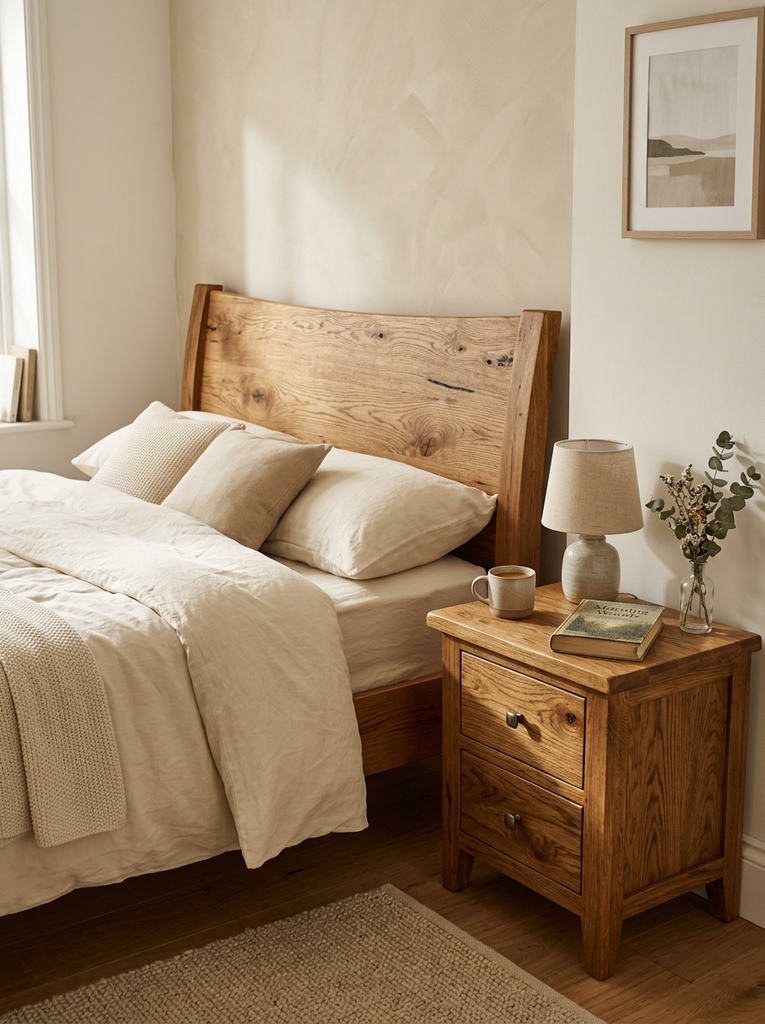
Wood tones are one of the easiest ways to add warmth to a neutral bedroom without introducing color. A wooden headboard, nightstand, or even a simple wood accent wall grounds the room in a way flat walls alone cannot.
Pairing warm wood tones with soft neutral bedding creates the kind of contrast that keeps a room from feeling one dimensional. Even a small wood tray on the dresser or a wooden lamp base adds this effect on a smaller scale.
Reclaimed or natural finish wood tends to read warmer than heavily varnished pieces. If your existing furniture feels too cool or glossy, even swapping hardware for warmer toned metal can shift the mood.
4. Mix Multiple Shades of Neutral Instead of One Flat Tone

A common mistake is picking one neutral shade and using it everywhere, from walls to bedding to curtains. This flattens the whole room instead of giving it the depth that makes neutral spaces feel intentional.
Layering a few different neutral shades, like a warm white ceiling, taupe walls, and cream bedding, creates subtle contrast that a single flat tone cannot. The variation keeps your eye moving instead of settling on one uniform block of color.
In my own bedroom, pairing warm white trim with taupe walls and an oat colored duvet made the room feel layered rather than plain, even though every piece technically falls under the same neutral family.
5. Add Warm Metallic Accents
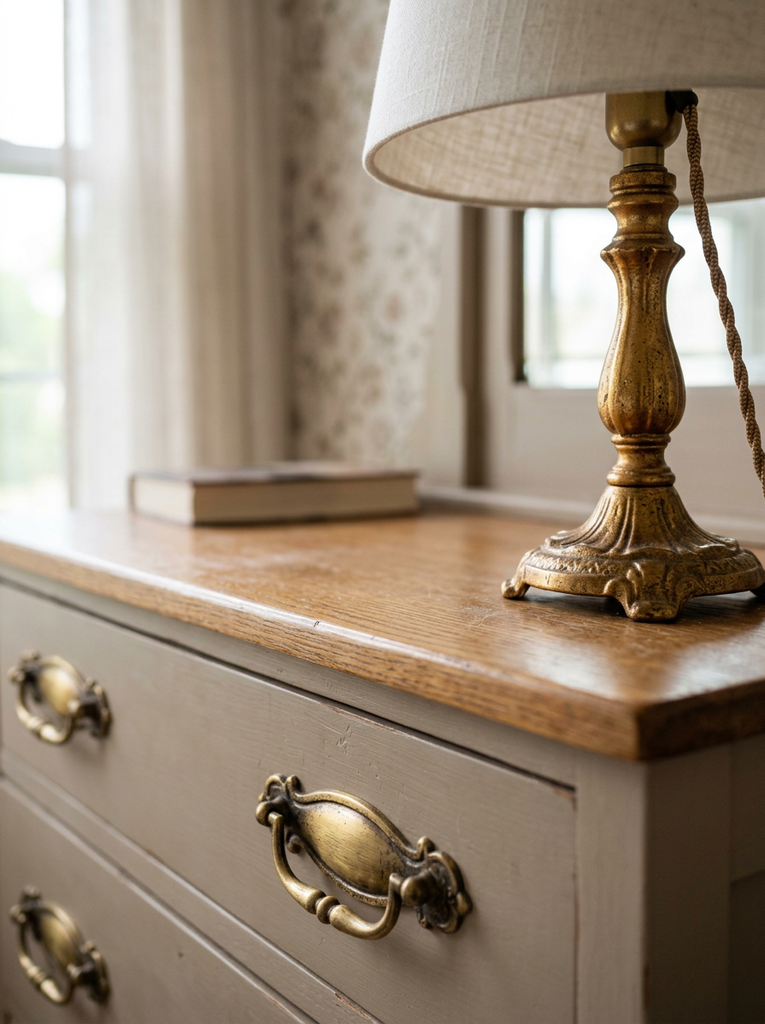
Metallic touches sound like an unusual addition to a neutral bedroom, but warm tones like brass, copper, or aged gold do a lot of quiet work. A single metallic lamp base or drawer pulls adds shine without disrupting the calm palette.
Cool metals like chrome or brushed nickel tend to reinforce that flat, sterile feeling neutral bedrooms sometimes fall into. Swapping to warmer finishes, even just on light fixtures or cabinet hardware, shifts the whole mood of the room.
I replaced the cabinet hardware on my dresser with warm brass, and it sounds like a small change, yet it tied the wood tones and bedding together in a way plain silver hardware never did.
6. Bring In a Little Greenery
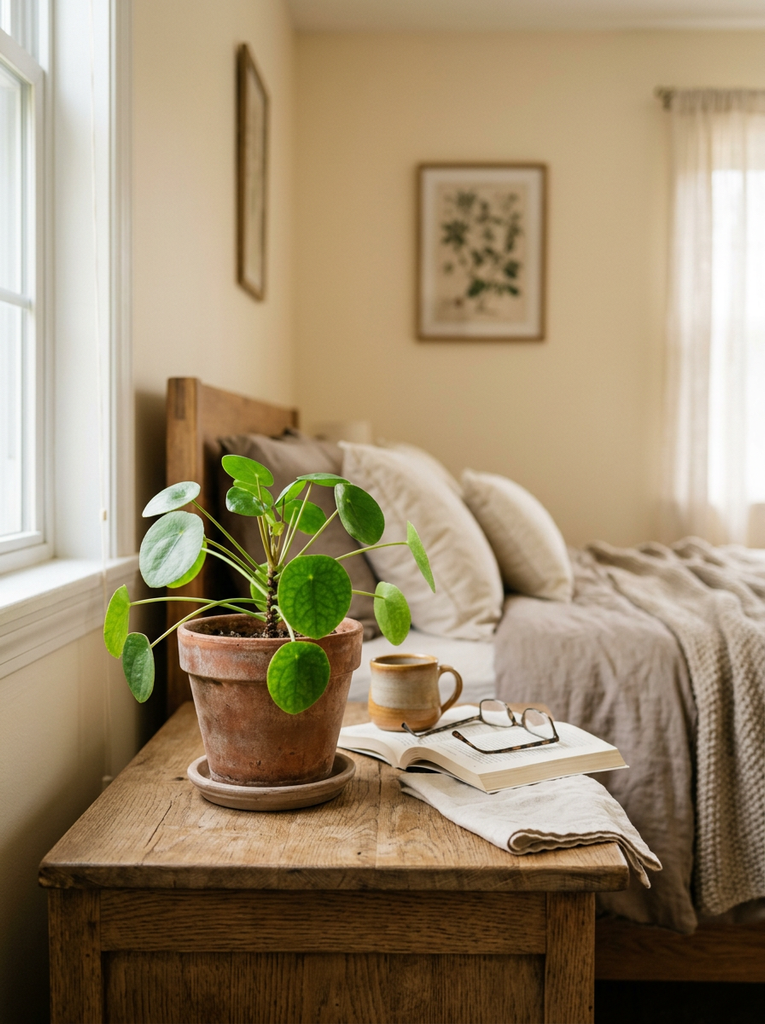
A neutral bedroom benefits from a small pop of life, and plants do this without adding actual color to your palette. Even one low maintenance plant on a nightstand or dresser softens hard lines and adds a natural element the rest of the room is missing.
Deeper greens, like a snake plant or a faux olive branch, work especially well against warm neutral backgrounds. They read as earthy rather than bold, which keeps the calm mood intact while still adding visual interest.
You do not need real plants if you are not confident keeping them alive. A well made faux plant in a ceramic or woven planter gives you the same warming effect with none of the maintenance.
7. Layer Your Window Treatments
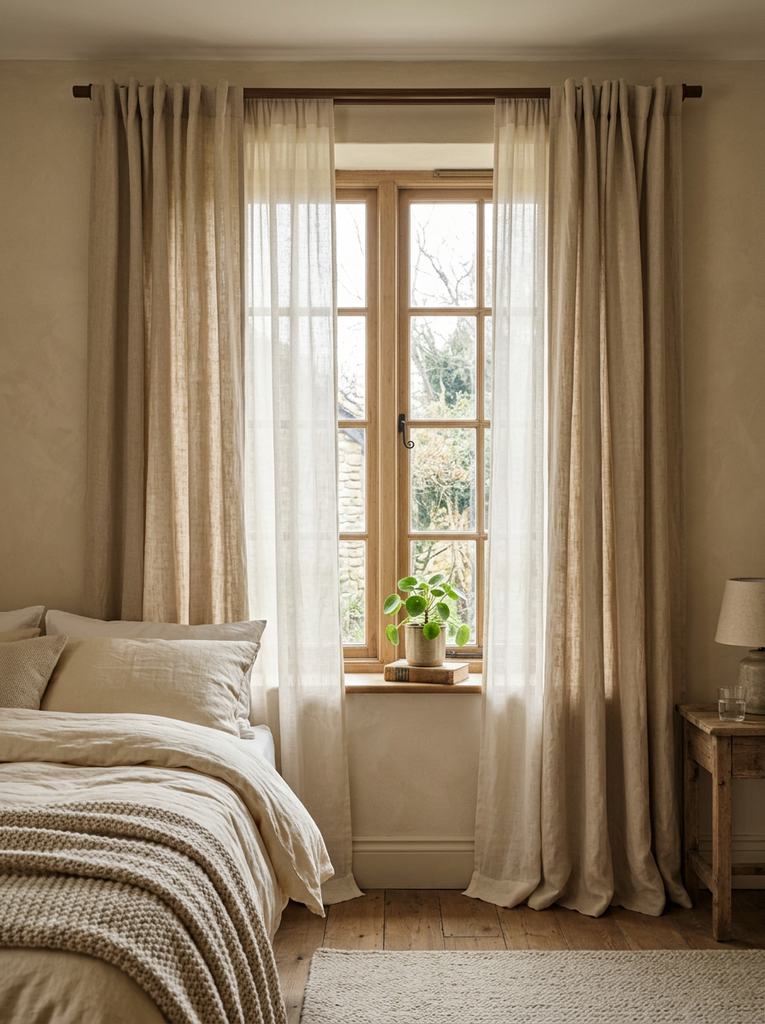
Bare windows or a single thin curtain panel can leave a neutral bedroom feeling unfinished. Layered curtains, especially in linen or a similarly textured fabric, add both warmth and a softer look to the whole wall.
Choosing curtains in a slightly different neutral shade than your walls creates subtle depth rather than one flat surface from ceiling to floor. A warm oatmeal linen curtain against a cream wall, for example, adds contrast without breaking from the palette.
Heavier drapes work particularly well in cooler months, while lighter linen panels keep the room feeling airy the rest of the year, so swapping seasonally is worth considering if you want the room to feel intentional year round.
8. Choose One Statement Piece to Anchor the Room
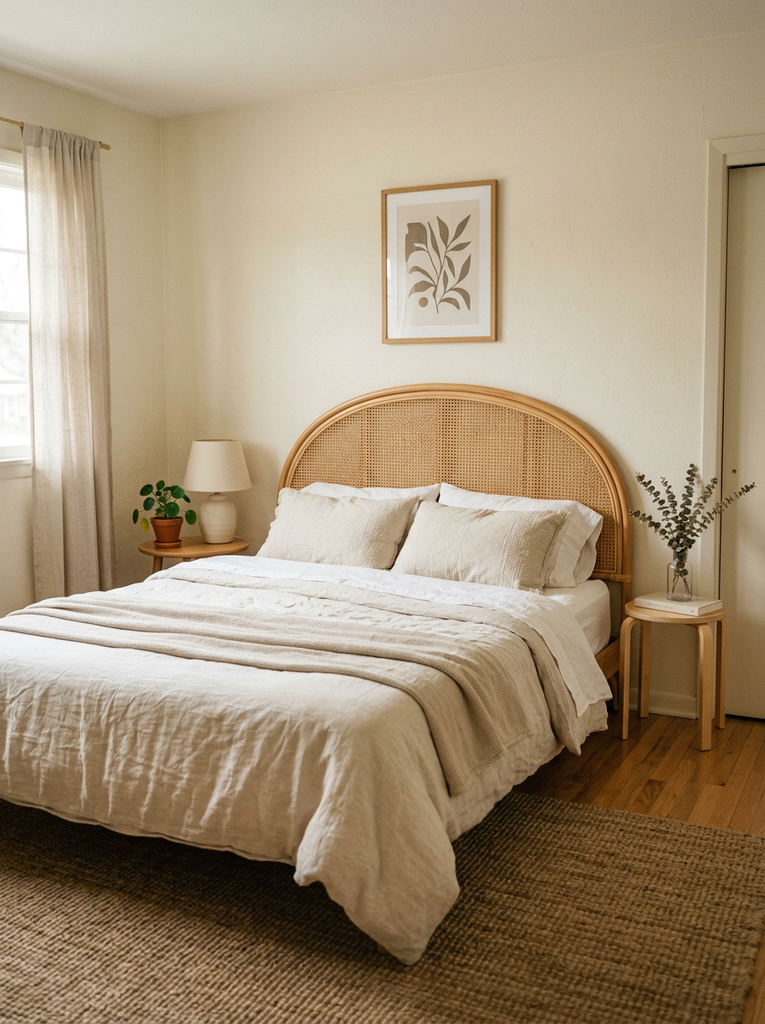
A neutral bedroom does not need color to have a focal point. A curved wood headboard, a textured area rug, or even a single piece of neutral toned art can anchor the whole room and give your eye somewhere to land.
This statement piece does not have to be expensive or bold. Its job is simply to stand out slightly from the rest of the palette through shape, texture, or material rather than color.
I added a curved rattan headboard to my own bedroom, and it became the one piece guests always mention, even though it still fits entirely within the neutral color scheme.
Small Details That Complete a Warm Neutral Bedroom
Once the bigger elements are in place, small finishing touches tie everything together. A stack of neutral toned books, a ceramic vase, or a ridged ceramic lamp base all add texture without disrupting the calm palette you have built.
Scent and lighting matter here too. Warm toned bulbs and a simple candle or diffuser reinforce the cozy feeling, while cool white lighting can undo a lot of the warmth you just spent time creating.
These details are the easiest to change if something still feels off. Swapping one small accessory for a warmer or more textured version often fixes a room faster than repainting or buying new furniture ever could.
Final Thoughts on Making a Neutral Bedroom Feel Warm Instead of Plain
Every idea in this guide points back to one simple truth. Neutral does not have to mean plain, and warmth comes from layering, not from adding bold color.
Texture, undertone, and natural materials do most of the work. A warm wood headboard, a few mixed shades of neutral, and some brass or copper details quietly transform a flat room into a cozy one.
The smaller details finish the job. Layered curtains, a bit of greenery, and warm lighting all reinforce the mood you have been building through the bigger changes.
I have tested most of these ideas in my own bedroom over time, and the smaller swaps, like hardware or a single statement piece, often made just as much difference as repainting the walls.
Start with one change, whether that is testing a warmer paint sample or adding a textured throw, and build from there. A neutral bedroom with real warmth comes together gradually, one layered detail at a time.
Frequently Asked Questions
How do I make a neutral bedroom feel less plain?
Focus on layering textures like linen, wool, and woven fabrics, and mix a few different neutral shades instead of one flat tone. Warm wood accents and metallic details help too.
What is the difference between warm and cool neutrals?
Warm neutrals have yellow, pink, or peach undertones, while cool neutrals lean blue or gray. Warm undertones generally feel cozier in a bedroom setting.
Do I need color to make a neutral bedroom feel warm?
No, warmth comes from texture, undertone, and natural materials like wood rather than bold color. A neutral palette can feel just as inviting as a colorful one.
What metal finishes work best in a neutral bedroom?
Warm metals like brass, copper, and aged gold add warmth without disrupting the palette. Cooler finishes like chrome can make the room feel more sterile.
Should I test paint samples before choosing a neutral wall color?
Yes, lighting changes how undertones appear, so a color that looks warm on a swatch can turn cool once painted. Testing on your actual wall avoids that surprise.
Can plants really make a difference in a neutral bedroom?
Yes, even one plant, real or faux, softens hard lines and adds a natural element. Deeper greens pair especially well with warm neutral backgrounds.
Do I need a statement piece in a neutral bedroom?
It helps give the room a focal point without relying on color. A textured headboard, rug, or piece of art works well and keeps the space from feeling flat.