
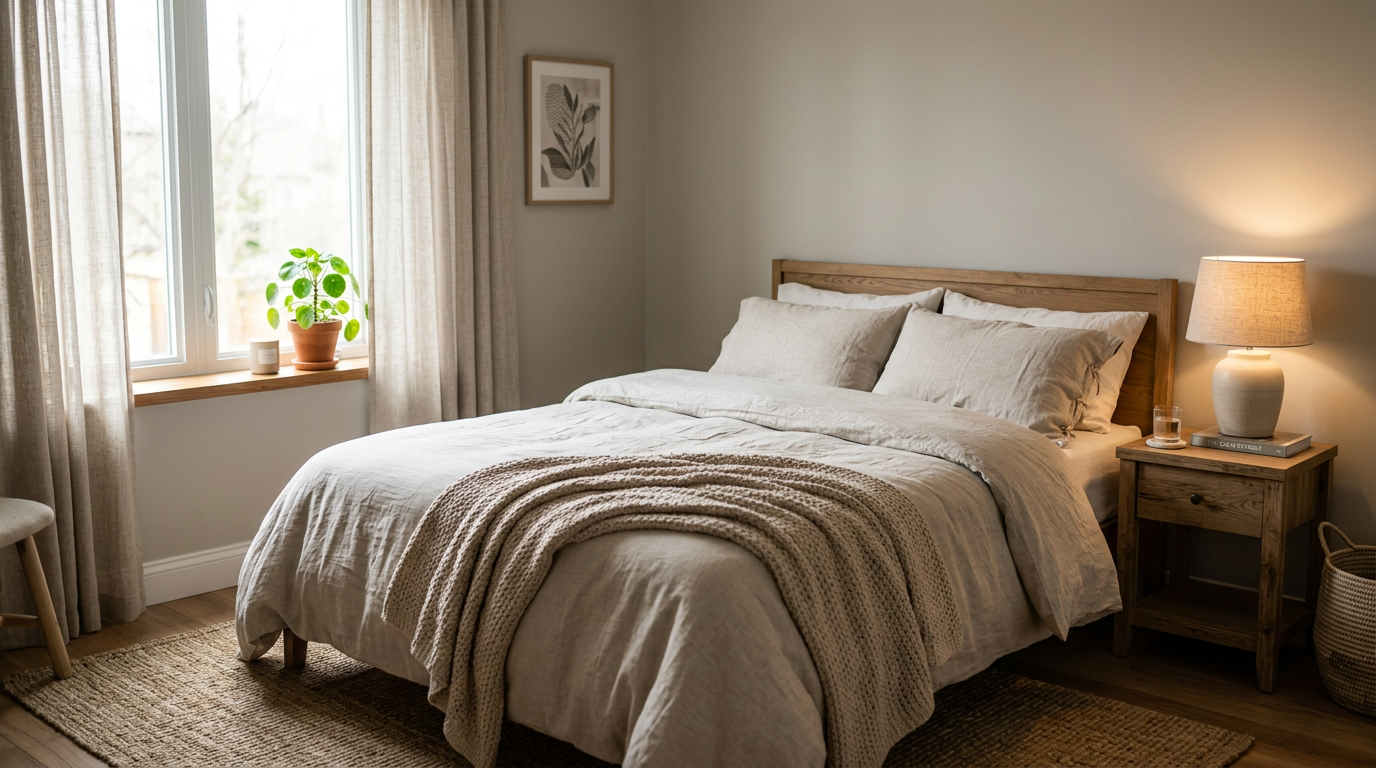
A calm bedroom starts with a few intentional choices, not an expensive overhaul. The right color palette, lighting, and layout can turn any bedroom into a genuine retreat.
I redesigned my own bedroom last year expecting to spend a fortune on it. Instead, the biggest improvements came from small, deliberate changes that cost far less than I assumed.
If your bedroom currently feels more chaotic than calming, this guide walks through modern bedroom design ideas that actually create a comfortable, restful retreat, without turning into a Pinterest board you can never replicate.
Why a Calm Bedroom Design Actually Matters
Your bedroom affects more than how the room looks. A cluttered, harshly lit, or visually busy bedroom can quietly work against you every single night.
Sleep quality drops when a room feels chaotic, even if you don’t consciously notice the mess. A calmer bedroom design supports better rest, which affects nearly everything else in your day.
Modern bedroom design leans into this idea directly. Clean lines, soft textures, and a considered layout aren’t just trends. They genuinely make a bedroom feel like somewhere you want to unwind.
1. Choose a Calm, Neutral Color Palette

Color sets the tone for your entire bedroom before anything else is added. Soft neutrals like warm beige, pale gray, and gentle taupe create an instantly calmer atmosphere than bright or saturated tones.
You don’t need an all white bedroom to feel peaceful either. A muted sage green or dusty blue works just as well, as long as you keep the overall palette limited to two or three shades.
I repainted my bedroom walls a soft warm gray a while back, and the room felt noticeably calmer within days, before I even changed a single piece of furniture.
2. Layer Your Lighting With Dimmers
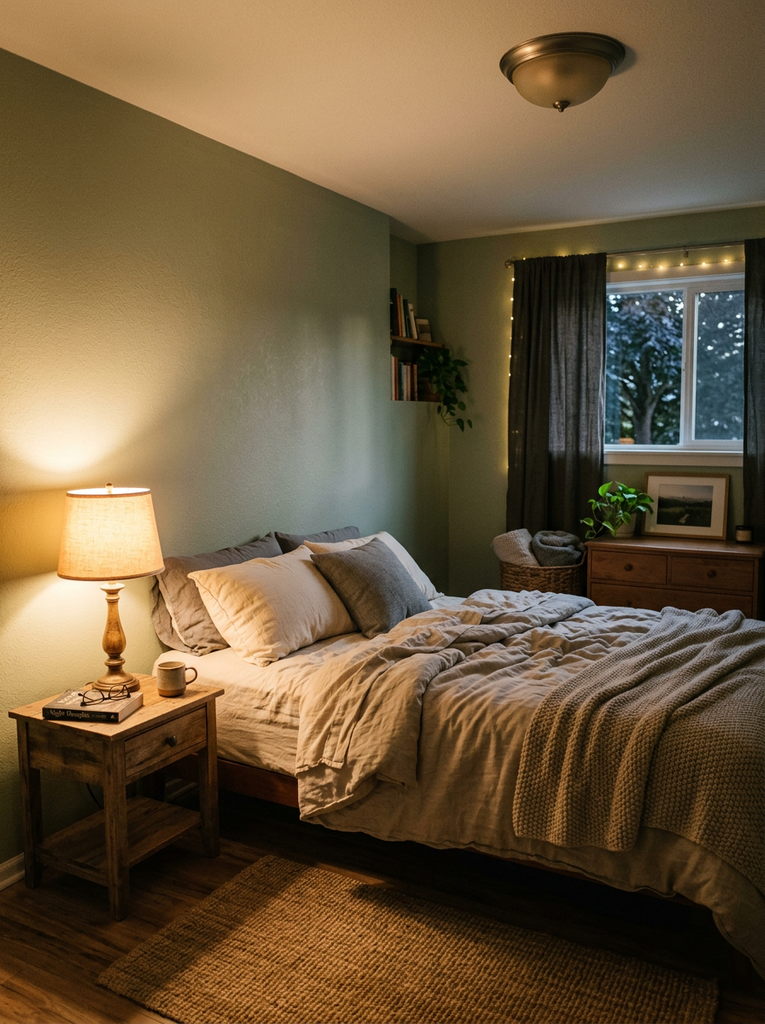
A single overhead light rarely does a bedroom any favors, especially at night. Harsh, bright lighting works against the calm, restful mood you’re trying to create in a comfortable retreat.
Layering a bedside lamp, a floor lamp, and warm toned overhead lighting gives you far more control over the room’s mood. Adding dimmer switches lets you shift from bright and functional during the day to soft and relaxing at night.
Warm white bulbs matter here too. Cool white lighting tends to feel clinical in a bedroom, while warm light naturally signals to your body that it’s time to wind down.
3. Keep Furniture Simple and Clutter Free

Visual clutter creates mental clutter, even in a room you barely notice during the day. Bedroom furniture with clean, simple lines helps the whole space feel more spacious and calm.
A minimalist approach doesn’t mean an empty room. It means choosing a few essential, well made pieces rather than filling every corner with furniture you don’t actually use.
Clearing your nightstands and dresser tops makes a bigger difference than most people expect. I keep mine down to a lamp and a single book, and the room genuinely feels calmer for it.
4. Invest in Quality, Comfortable Bedding

Your bed is the centerpiece of the room, so it deserves the biggest investment. Soft, breathable bedding in cotton or linen instantly makes a bedroom feel more like a retreat than a functional sleeping space.
Layering matters here too. A simple duvet, a couple of quality pillows, and one textured throw create depth without cluttering the bed with too many decorative cushions.
I upgraded to linen sheets a few years ago, and it remains one of the few purchases that made an immediate, noticeable difference to how the room feels every single night.
Continuing with the next set of ideas, plus the closing heading section.
5. Bring in Natural Elements

Nature has a genuinely calming effect, which makes it perfect for bedroom design. Wooden furniture, cotton or linen fabrics, and a few indoor plants all add warmth without disrupting a peaceful color palette.
You don’t need a jungle of plants to notice the benefit either. A single low maintenance plant, like a snake plant or pothos, adds life to the room and softens hard edges from furniture and flooring.
I added one plant to my bedside table last spring, and it sounds small, but the room felt more alive and less sterile almost immediately.
6. Add a Rug for Texture and Warmth
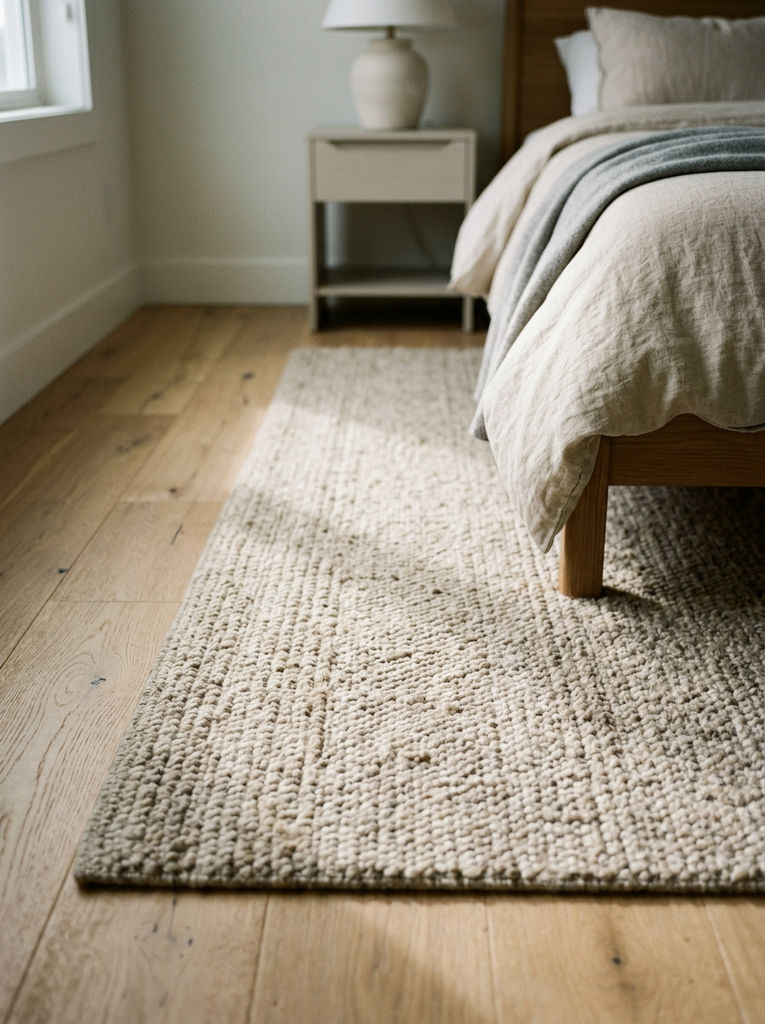
A rug does more work in a bedroom than most people realize. Beyond comfort underfoot, it adds texture and warmth that hard flooring alone can’t provide, especially in a modern bedroom with clean, minimal furniture.
Placement matters more than most people think. Centering a rug under the bed, or placing a smaller rug on each side, gives your feet a soft landing in the morning instead of stepping straight onto cold flooring.
A rug also helps with noise, absorbing sound in a way that makes the whole room feel quieter and more serene, which matters more than it seems once you notice the difference.
7. Control Light With the Right Window Treatments
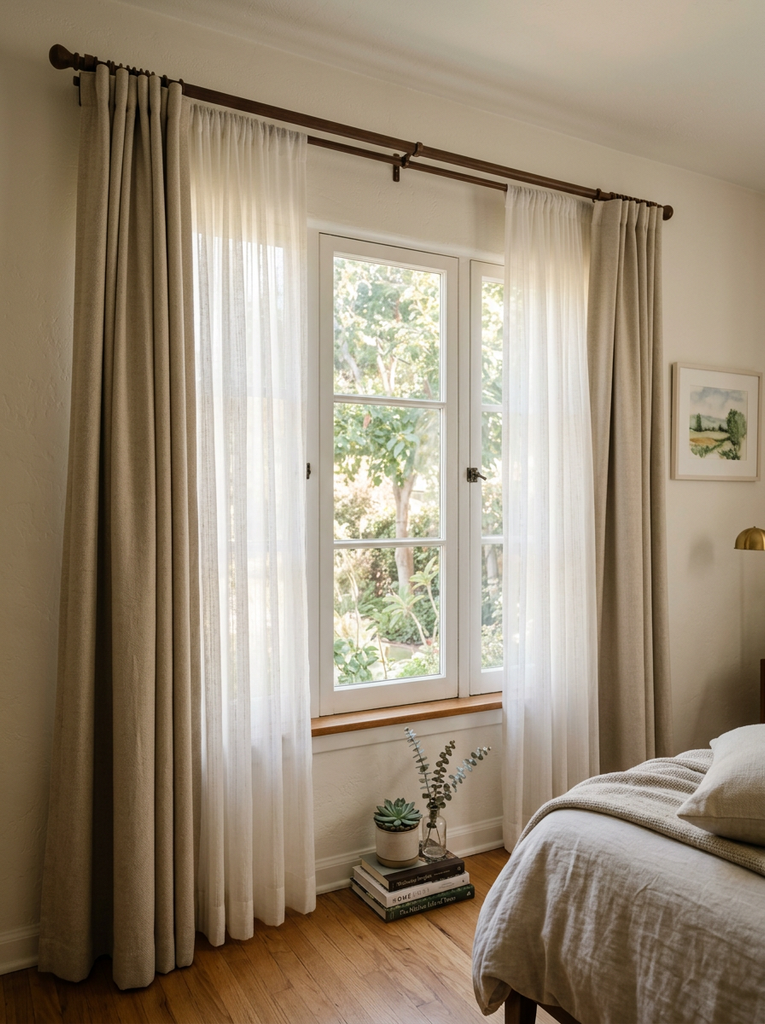
Natural light during the day genuinely improves mood, so blocking it out entirely isn’t the goal. Sheer curtains that let daylight filter in while still offering privacy strike the right balance for most bedrooms.
At night, the opposite matters. Blackout curtains or blinds help your body wind down properly, especially if streetlights or early morning sun tend to disrupt your sleep.
I switched to layered curtains, a sheer panel with a blackout layer behind it, and being able to adjust for day or night made a bigger difference to my sleep than I expected.
8. Add Personal Touches Without Creating Clutter

A calm bedroom doesn’t need to feel impersonal or like a hotel room. A few meaningful touches, like a piece of art you love or a small stack of books, add warmth without working against the minimal, clutter free feel you’re going for.
The key is restraint. Choose two or three items that genuinely matter to you instead of filling every shelf and surface with decor, which quickly tips a calm room back toward visual clutter.
Scent plays a role here too. A simple diffuser with lavender or chamomile, or even a scented candle you only light in the evening, reinforces the retreat feeling every time you walk into the room.
Small Details That Complete a Calm Bedroom Retreat
Once the bigger elements are in place, a few finishing touches tie everything together. Soft ambient sound, whether from a white noise machine or simply a quiet fan, can mask outside noise and make the room feel more enclosed and peaceful.
Keeping technology out of the bedroom, or at least out of easy reach from the bed, supports the calm atmosphere you’ve built. A phone charging across the room instead of on the nightstand removes one more source of visual and mental clutter.
Small, consistent habits matter as much as the design choices themselves. Making your bed each morning and keeping surfaces clear takes a few minutes, yet it keeps the whole room feeling like the retreat you designed it to be.
Final Thoughts on Creating a Calm and Comfortable Bedroom Retreat
Every idea in this guide comes back to one simple principle. A calm bedroom happens through small, intentional choices, not a full renovation.
A soft neutral palette, layered lighting, and a decluttered layout do most of the heavy lifting. Quality bedding, natural elements, and a well placed rug then add the comfort that turns a bedroom into an actual retreat.
The details matter just as much as the bigger changes. Window treatments that adjust for day and night, a couple of meaningful personal touches, and even a simple diffuser all reinforce the calm atmosphere you’ve built.
I have made most of these changes gradually in my own bedroom over a couple of years, and the smaller additions, like a rug or layered curtains, often mattered just as much as bigger purchases like new bedding.
Start with one change, whether that’s repainting in a calmer tone or adding a dimmer switch, and build from there. A modern bedroom retreat comes together over time, not all at once.
Frequently Asked Questions
What colors make a bedroom feel calm?
Soft neutrals like warm beige, pale gray, and muted sage green work well. Keeping your palette to two or three shades helps the room feel calm rather than visually busy.
How can I make my bedroom feel more like a retreat on a budget?
Small changes make a big difference, like adding a dimmer switch, upgrading your bedding, or decluttering surfaces. You don’t need a full renovation to notice a calmer atmosphere.
Should I use blackout curtains in a modern bedroom?
Yes, especially paired with a sheer curtain layer underneath. This lets you enjoy natural daylight while still blocking outside light at night for better sleep.
Do plants actually help a bedroom feel calmer?
Yes, even one low maintenance plant adds warmth and softens the space. Natural elements like plants and wood furniture support a more relaxed atmosphere.
How much furniture should a calm bedroom have?
Less is generally better. Choose a few essential, well made pieces instead of filling every corner, since visual clutter can work against the calm feeling you want.
What kind of lighting works best for a relaxing bedroom?
Layered lighting with warm toned bulbs and a dimmer switch gives you the most control. Avoid relying on one bright overhead light, especially in the evening.
Does a rug really make a difference in a bedroom?
Yes, a rug adds warmth, comfort underfoot, and even helps reduce noise. Placing it under or beside the bed makes the space feel softer and more finished.