
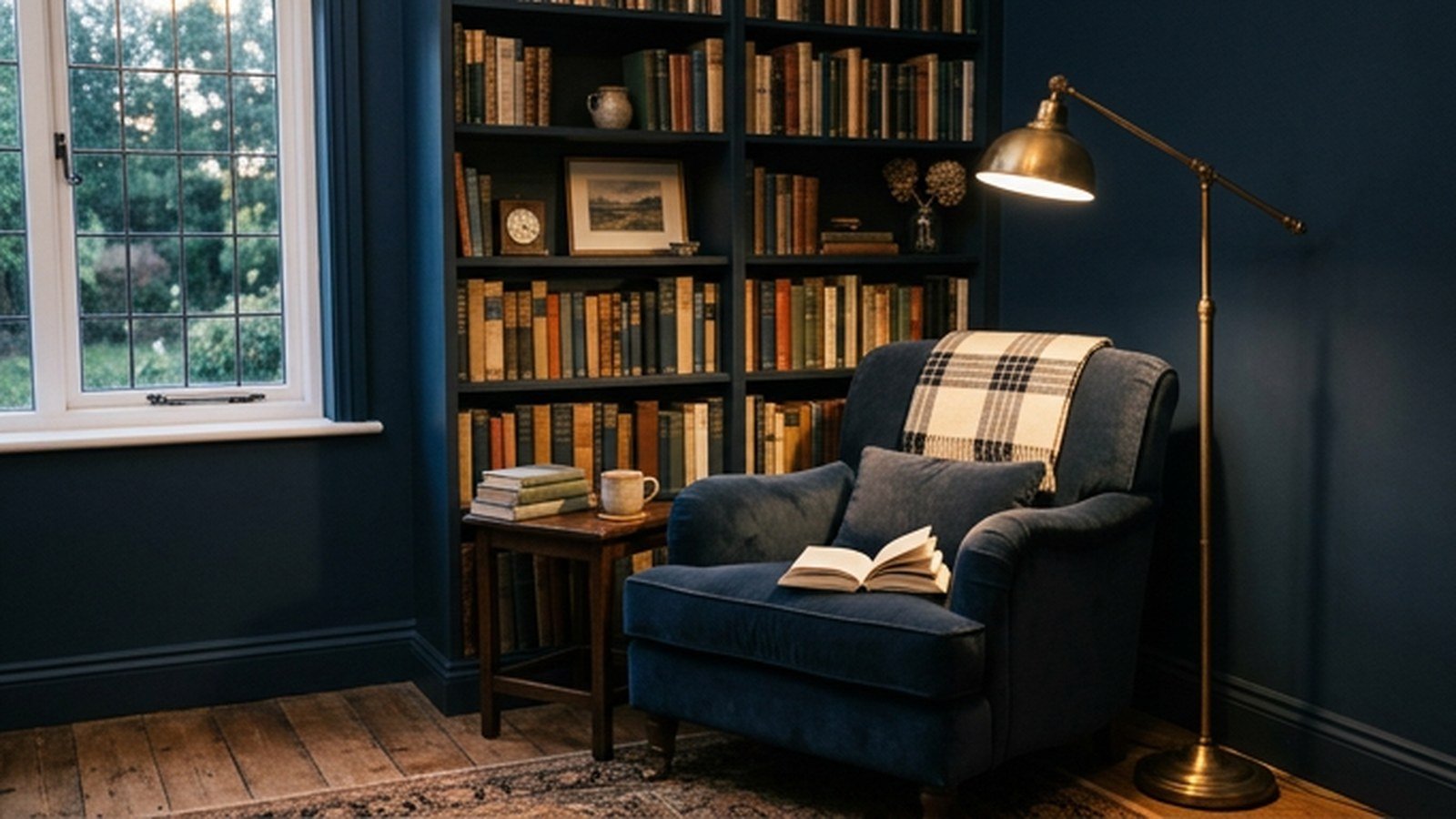
Navy reading nook ideas for adults use a deep, saturated blue as the anchor color for a small dedicated reading space, pairing it with warm lighting and tactile textures for a genuinely restful corner rather than an afterthought. Navy works particularly well here because the color reads as sophisticated and calming rather than juvenile, distinguishing an adult nook from a child’s brightly colored corner. Fifteen concepts below cover the seating, lighting, and layout choices that build this look in any home.
I converted an awkward corner beside my bedroom window into a navy reading nook two years ago, and the biggest lesson was that the color needs genuine contrast, wood tones, brass hardware, or cream textiles, to avoid feeling like a dark cave. Navy absorbs more light than a pale color would, so the lighting plan matters more here than in almost any other room styling project. Getting this balance right is what separates a genuinely inviting nook from one that feels closed off.
Below you will find fifteen numbered concepts covering seating, lighting, storage, and layout, plus a cost comparison table and a rundown of the mistakes that make a navy nook feel gloomy rather than cozy. Each idea includes a sub-angle on cost, sourcing, or what commonly goes wrong so you can build the space with a realistic budget. By the end you should know exactly which elements carry the most visual and functional weight in a small reading corner.
Why Navy Works So Well For An Adult Reading Nook
Navy succeeds as a reading nook color because it reads as calm and grounded without feeling as stark as black or as cold as gray, giving the space a genuine sense of retreat from the rest of the home. This psychological quality matters specifically for a reading nook, since the entire point of the space is relaxation and focus rather than high energy or visual stimulation. Most designers consider navy one of the more versatile deep tones for exactly this reason.
Navy also pairs successfully with a wider range of accent materials than many other deep colors, working equally well with warm brass hardware, natural wood tones, or cool silver accents depending on the rest of the home’s existing palette. This flexibility means a navy nook can be tailored to match nearly any adjacent room without requiring a complete redesign of the surrounding space.
| Design Element | Light Color Nook | Navy Nook |
|---|---|---|
| Sense of retreat | Lower, blends with room | Higher, reads as distinct zone |
| Lighting need | Lower, reflects ambient light | Higher, needs dedicated task lighting |
| Accent flexibility | Moderate | High, pairs with brass, wood, or silver |
A complete navy reading nook, including seating, lighting, and textiles, typically costs $600 to $2,500 depending on whether existing furniture is repurposed or new pieces are purchased. This range is comparable to many other single-room styling projects, since the cost comes down more to furniture quality than the specific color chosen. Understanding this helps set a realistic budget before shopping begins.
Planning The Layout And Lighting Before You Decorate
Planning starts with choosing a location that receives at least some natural daylight, since a navy nook built in a windowless corner needs considerably more artificial lighting to avoid feeling like a dark, unwelcoming space. A spot near a window, even a small one, gives the space a natural light source during daytime reading hours that artificial lighting alone cannot fully replicate.
Lighting layers matter more in a navy nook than in a lighter-colored room, since the dark walls and furnishings absorb more ambient light rather than reflecting it back into the space. Most successful navy nooks combine a dedicated reading lamp with some form of ambient lighting, like a wall sconce or string lights, rather than relying on a single light source.
The biggest planning mistake is choosing a corner too cramped for genuine comfort, since a reading nook needs enough space for a chair, a side table, and some legroom to feel like a real retreat rather than a squeezed-in afterthought. Measuring the intended space against the actual chair and table dimensions before committing to a location avoids this common and frustrating oversight.
Choosing Between A Built-In And A Freestanding Nook
A built-in reading nook, incorporating a window seat or custom shelving into the room’s actual architecture, offers more permanent storage and a more polished, tailored appearance than a freestanding arrangement of furniture. This approach typically requires more upfront investment and sometimes contractor involvement, making it a bigger commitment than simply arranging existing furniture in a corner. Most homeowners choose this route when planning a longer-term renovation rather than a quick seasonal refresh.
A freestanding nook, built from a comfortable chair, a side table, and a floor lamp, offers considerably more flexibility to relocate or update the space as needs change over time. This approach costs less upfront and can be assembled over a single weekend rather than requiring weeks of construction. Choosing between these two approaches largely comes down to how permanent a change the household is ready to commit to.
1. Navy Velvet Armchair As The Nook’s Centerpiece
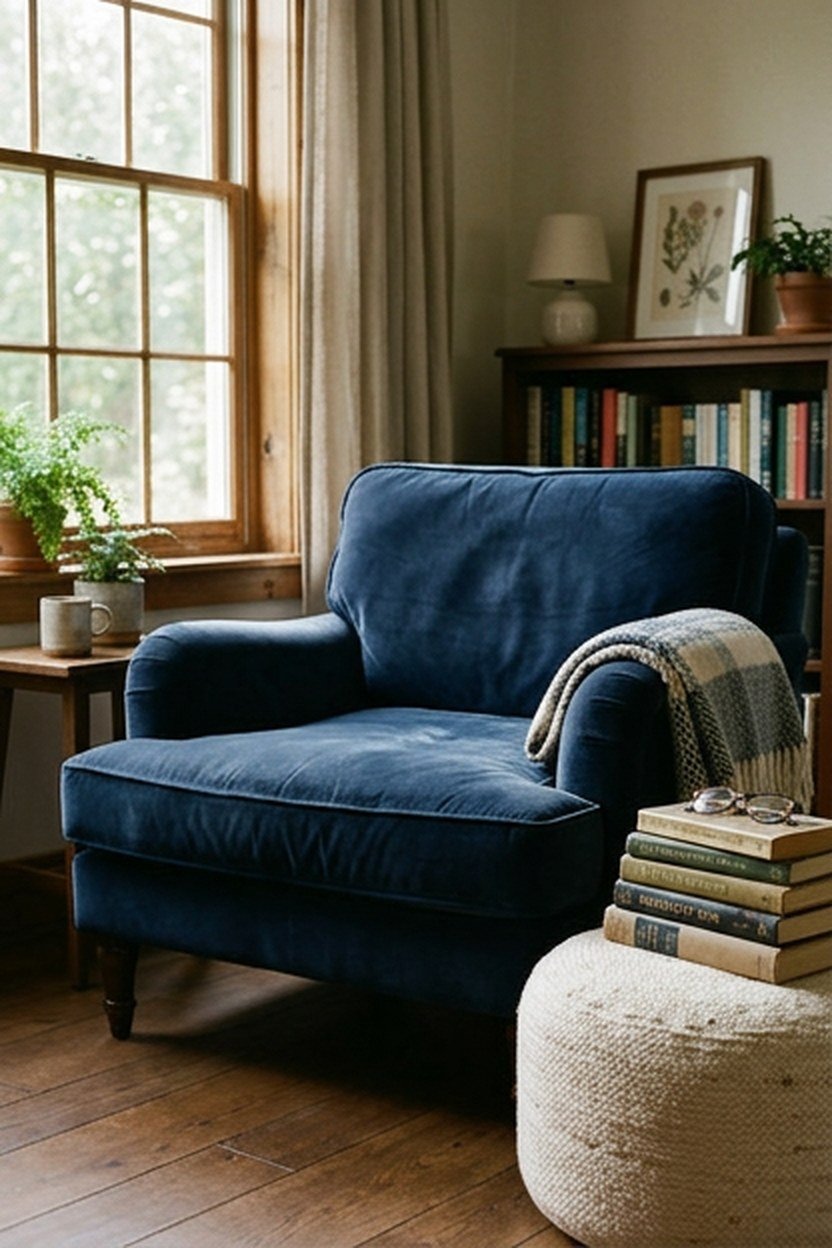
A navy velvet armchair, oversized enough for genuine lounging rather than simply perching, anchors the entire reading nook both visually and functionally as the space’s primary seating element. Velvet upholstery in particular reads as more luxurious than a flatter cotton or linen fabric, and the fabric’s texture also catches light in a way that adds visual depth to the deep navy color. This single piece typically represents the largest investment in the entire nook project.
Choosing a chair with a slightly reclined back and supportive arms improves the actual reading comfort considerably compared to a purely decorative but less ergonomic chair style. Testing a chair in person before purchase, checking both the seat depth and the back support, is worth the extra effort given how much time will actually be spent sitting in this piece.
Adding a coordinating ottoman or footstool in a complementary neutral fabric extends the seating’s comfort for longer reading sessions, letting the reader fully recline rather than sitting upright for extended periods. This addition also introduces a helpful textural contrast against the chair’s velvet upholstery. Most nook owners find this small addition considerably improves the space’s actual daily use.
Cost And Comfort Testing Guidance
A quality navy velvet armchair typically costs $400 to $1,200 depending on brand and construction quality, representing the single largest expense in most reading nook budgets. Testing floor models in person before ordering, particularly checking the cushion firmness and seat depth against your own body proportions, avoids an expensive mismatch discovered only after the chair arrives. This in-person testing is worth prioritizing over ordering sight-unseen from online images alone.
A common mistake is choosing a chair based purely on its appearance in photos without considering its actual seat depth relative to your own height, resulting in a chair that looks perfect but proves uncomfortable for extended reading sessions. Checking the manufacturer’s listed seat depth and comparing it against a chair you already know is comfortable avoids this frustrating and costly mismatch.
2. Brass Reading Lamp With An Adjustable Arm

A brass reading lamp with an adjustable arm, positioned directly beside the nook’s seating, provides the dedicated task lighting a navy nook needs to avoid feeling underlit during evening reading sessions. Brass specifically complements navy exceptionally well, since the warm metal tone provides visual contrast against the cool, deep blue surrounding it.
Choosing a lamp with a warm-toned bulb, typically in the 2700 kelvin range, rather than a cooler white bulb, keeps the reading light feeling inviting rather than clinical against the navy backdrop. This bulb temperature consideration matters considerably more in a navy nook than in a lighter room, since the contrast between warm light and cool navy is part of what makes the space feel genuinely cozy. Getting this bulb choice right is a small but genuinely worthwhile detail.
Positioning the lamp’s adjustable arm to direct light directly onto the reading material, rather than generally into the room, improves actual reading comfort and reduces eye strain during longer sessions. This positioning should be tested with an actual book in hand before finalizing the lamp’s placement, since the ideal angle varies depending on the chair’s height and the reader’s typical posture.
Cost And Bulb Selection Guidance
A quality brass adjustable reading lamp typically costs $60 to $180 depending on brand and the complexity of the adjustable mechanism. Choosing a lamp with a dimmer function adds modest additional cost but allows the light level to be adjusted for different times of day and different reading materials.
A common mistake is choosing a lamp shade that directs light too broadly rather than focusing it onto the reading material, resulting in a generally lit room but insufficient direct light for comfortable reading. Choosing a lamp with a more directional shade, or one explicitly marketed for reading rather than general ambient lighting, avoids this common and easily overlooked mismatch.
3. Built-In Bookshelf Wall In Navy And Wood
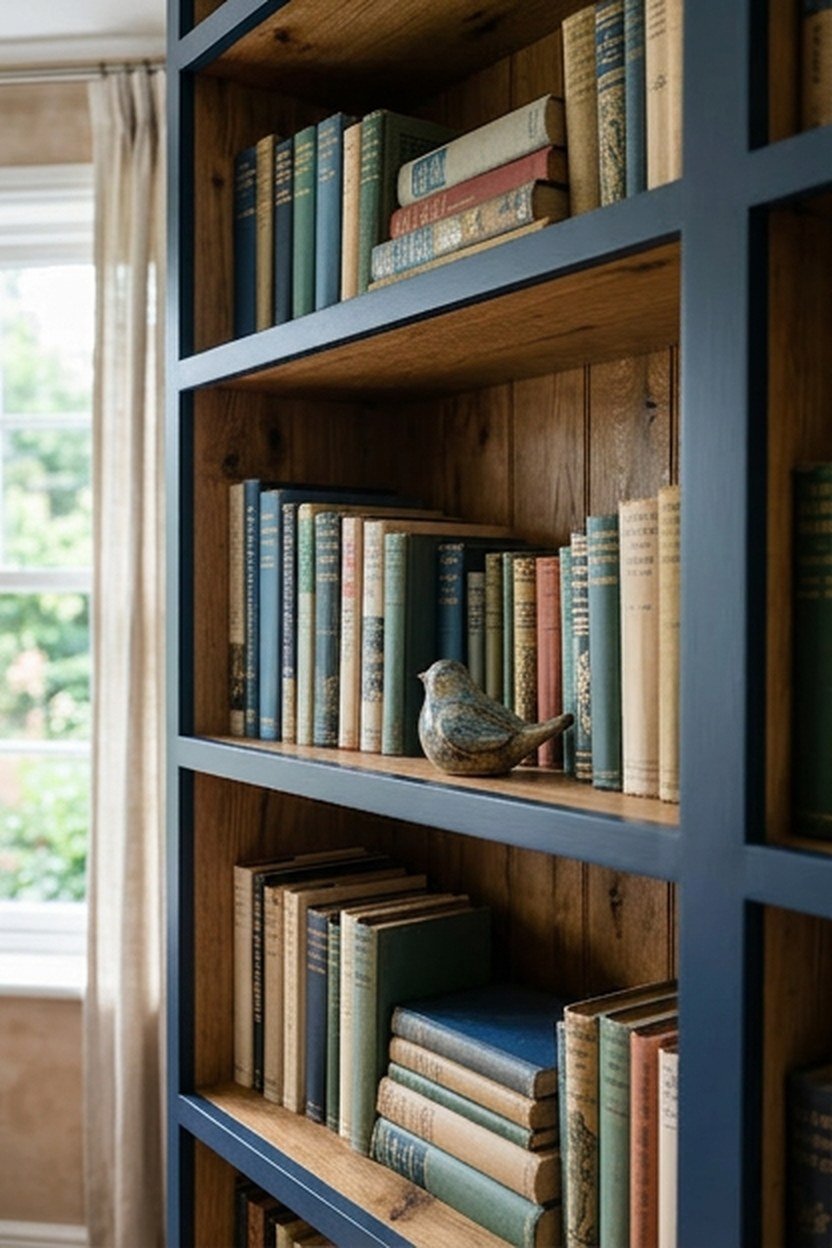
A built-in bookshelf wall, painted navy on the shelving structure itself while leaving the shelf interiors in a natural wood tone, creates a striking visual layering effect that showcases both colors simultaneously. This approach works particularly well for a reading nook specifically, since the surrounding shelving reinforces the space’s purpose while also providing genuine storage for the reader’s book collection.
Painting only the shelving frame and leaving the back panel or interior shelf surfaces in a lighter wood or cream tone prevents the entire wall from reading as an overwhelming block of dark color. This two-tone approach, contrasting the navy frame against a lighter interior, is what keeps a floor-to-ceiling bookshelf from feeling visually heavy despite its dark exterior color.
Arranging books by color or size within this shelving, rather than purely alphabetically, creates an additional layer of visual interest that complements the navy and wood contrast already established. This arrangement approach takes some initial organizing effort but produces a noticeably more considered final look than a purely functional, alphabetized arrangement. Most nook owners find this extra organizing effort worthwhile given how prominently the shelving features in the space.
Cost And Construction Guidance
A built-in bookshelf wall, whether custom-built or assembled from modular shelving units, typically costs $500 to $2,500 depending on size and construction quality. Choosing modular units that can be painted and reconfigured, rather than a fully custom built-in, offers more flexibility and a lower cost for renters or those planning to move within a few years.
A common mistake is painting the entire bookshelf structure, including interior shelf surfaces, in a single flat navy tone, resulting in a heavy, cave-like appearance once fully loaded with books. Reserving the navy paint for the exterior frame only, and leaving interior surfaces in a lighter finish, avoids this common visual heaviness. This two-tone painting approach is worth the extra masking effort during the painting process itself.
4. Layered Textiles With Cream And Camel Accents
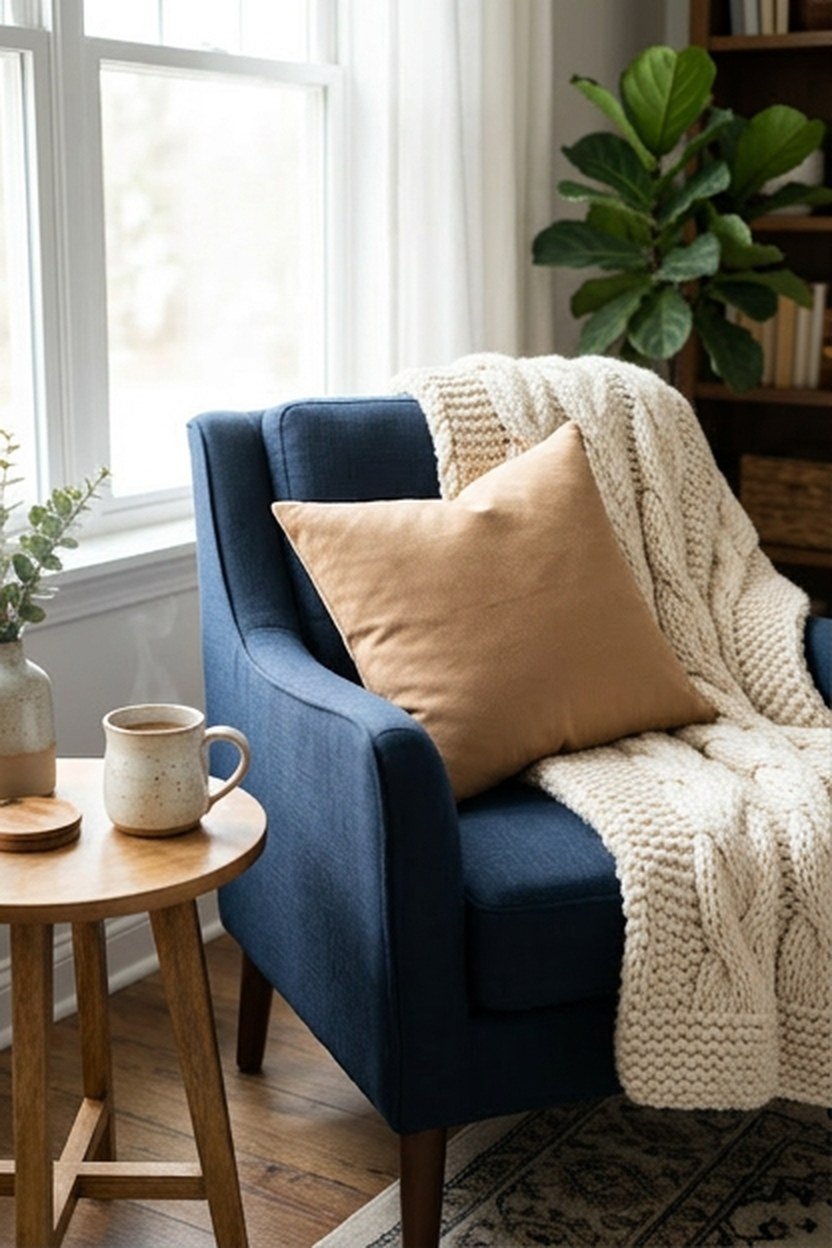
Layering cream and camel-toned textiles, throw pillows, a blanket, and a small area rug, against the navy backdrop introduces the warm contrast this deep color depends on to avoid feeling cold or closed off. This textile layering approach is one of the most affordable ways to soften a navy nook’s overall feel without requiring any structural or furniture changes. Most nook owners can achieve a noticeable improvement with just a few well-chosen textile pieces.
Choosing textiles in varied textures, a chunky knit blanket paired with a smoother woven pillow cover, adds tactile interest that a single uniform fabric texture cannot achieve on its own. This textural variety mirrors the same principle that makes many successful interior color schemes work, applying it specifically to the smaller scale of a single reading nook.
Positioning a small area rug beneath the seating area, even in a nook too small for a full room-sized rug, defines the space as its own distinct zone while adding warmth underfoot during colder months. A rug in a cream or camel tone, rather than another dark color, provides the grounding contrast this space needs against the surrounding navy elements.
Cost And Layering Guidance
A full set of layered textiles for a reading nook, including pillows, a throw blanket, and a small area rug, typically costs $100 to $350 depending on fabric quality and rug size. Building this textile collection gradually, adding one or two pieces at a time rather than purchasing an entire set at once, allows for more careful color and texture matching against the existing navy elements.
A common mistake is choosing textiles in a color too similar to the navy backdrop, resulting in a scheme that reads as monotone rather than genuinely layered and contrasted. Confirming that new textile purchases provide real visual contrast, not just a slightly different shade of the same dark tone, avoids this subtle but noticeable styling misstep.
5. Navy Wallpaper With A Subtle Pattern
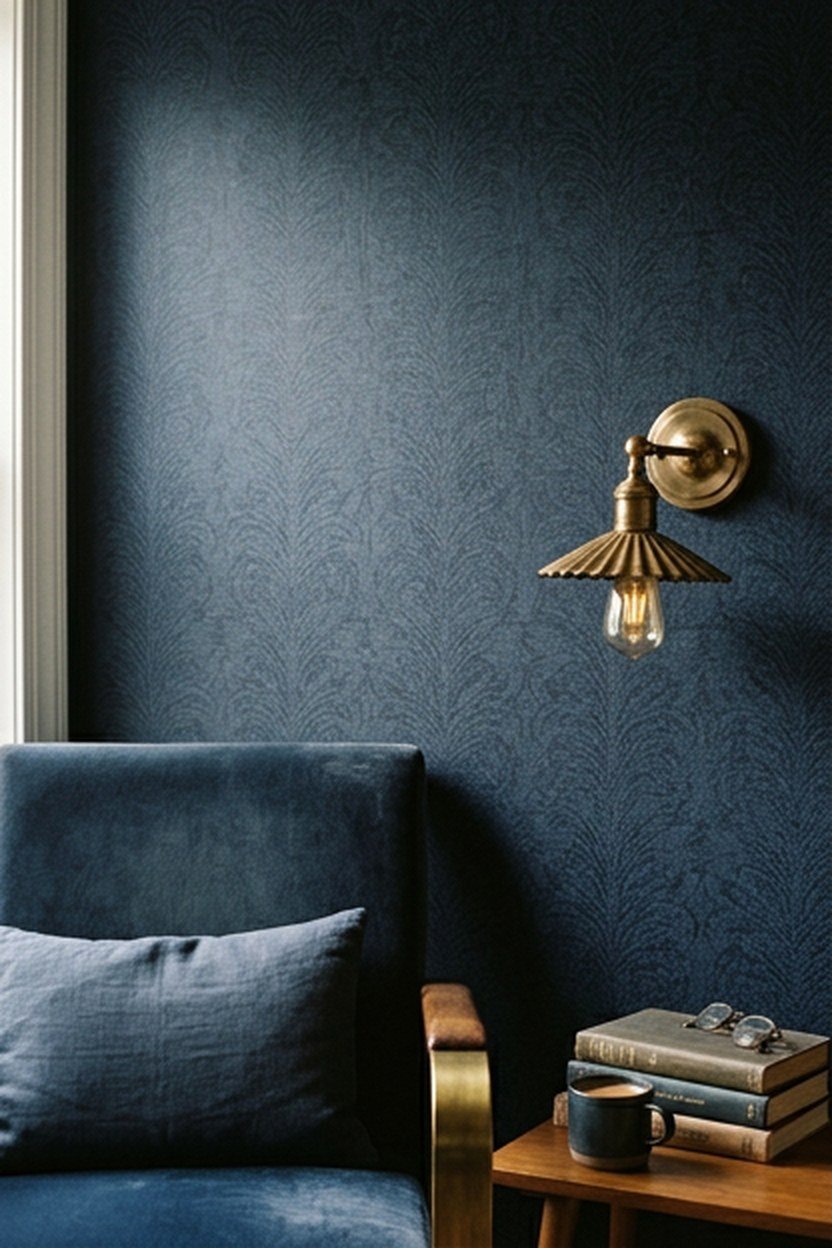
Navy wallpaper with a subtle pattern, like a fine botanical print or a delicate geometric design, adds visual depth to the nook’s walls without the flatness a single solid navy paint color can sometimes produce. This subtle patterning catches light differently across the wall’s surface, creating a more textured backdrop than a completely flat, uniform color.
Choosing a pattern with a tone-on-tone design, where the pattern itself uses varying shades of navy rather than an entirely different color, keeps the overall look sophisticated rather than visually busy. This subtlety consideration matters especially in a small nook space, where a bold, high-contrast pattern can quickly feel overwhelming in a confined area. Most designers recommend this restrained approach specifically for smaller spaces like a reading nook.
Applying wallpaper to just the nook’s back wall, rather than the entire surrounding room, contains the pattern to the intended feature zone while keeping the rest of the space in a simpler, complementary paint color. This accent wall approach is considerably more affordable than wallpapering an entire room and also keeps the pattern feeling special rather than overused throughout the space.
Cost And Application Guidance
Navy patterned wallpaper for a single accent wall typically costs $80 to $250 for materials, depending on paper quality and pattern complexity, plus installation cost if not applied as a DIY project. Choosing a peel-and-stick wallpaper option, rather than a traditional pasted variety, simplifies installation considerably and also allows for easier removal if the space is later redecorated or the home is a rental property.
A common mistake is choosing a pattern scale too large for the confined space of a typical reading nook, resulting in a pattern that reads as disproportionate or overwhelming once applied. Choosing a smaller-scale pattern, and viewing a physical sample against the actual wall space before committing to a full order, avoids this common proportion mismatch. This sample-testing step is worth the small delay it adds to the overall project timeline.
6. Floor-To-Ceiling Curtains For A Cozy Enclosure
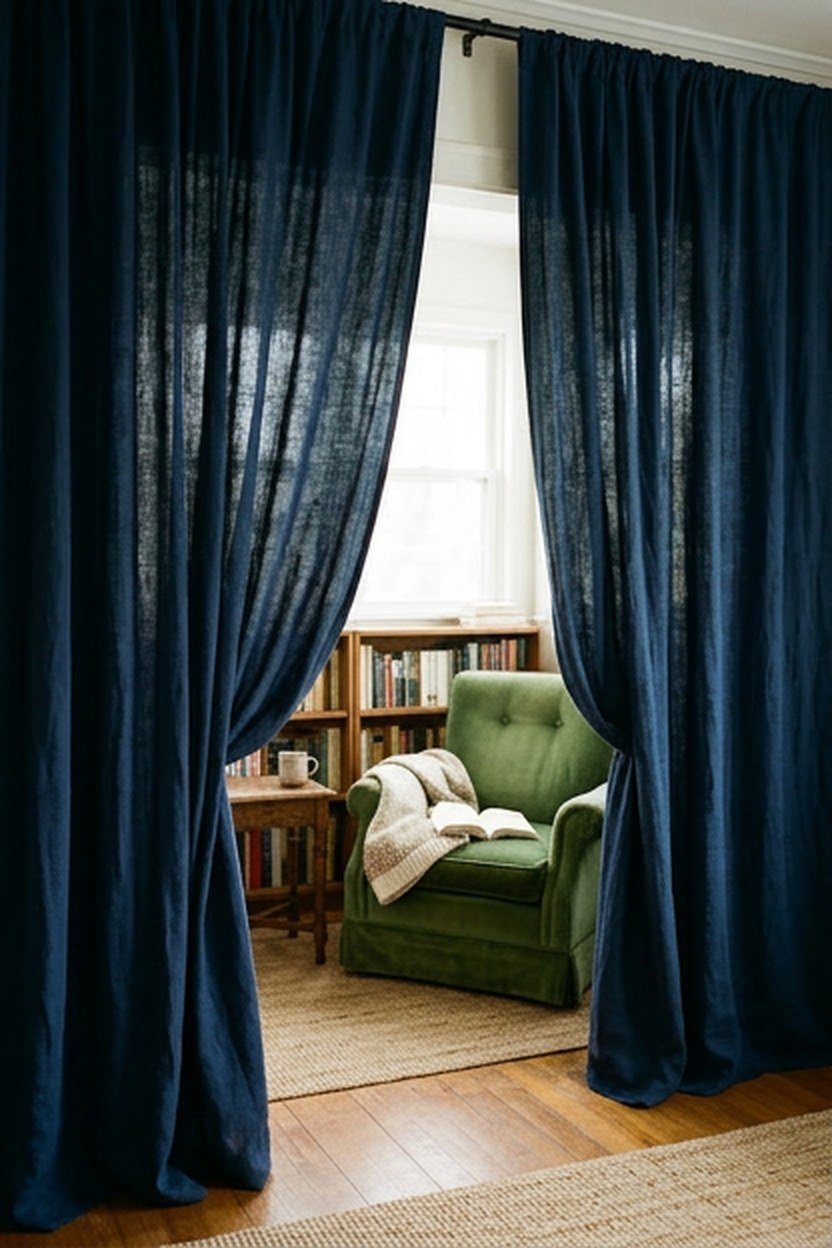
Floor-to-ceiling curtains, hung around the nook’s open side in a coordinating navy or cream fabric, create a sense of enclosure that transforms an open corner into a genuinely private, cozy retreat. This detail works particularly well for a nook positioned within a larger open room, where the curtains provide a visual and physical boundary that a simple furniture arrangement alone cannot achieve. Many nook owners consider this one of the most striking additions on this entire list.
Choosing a curtain fabric with some weight and body, rather than a thin, sheer material, provides genuine acoustic and visual privacy when the curtains are drawn closed. A curtain rod mounted higher than the actual window or nook opening, extending closer to the ceiling, creates the illusion of a taller, grander space than the nook’s actual dimensions might suggest.
Selecting curtains in a navy tone slightly different from the nook’s existing wall or furniture color, rather than an exact match, adds subtle depth rather than a flat, monochromatic effect. This tonal variation consideration mirrors the same principle discussed earlier regarding bookshelf and textile color choices throughout this guide. Most successful navy schemes benefit from this kind of subtle tonal layering rather than committing to one single flat shade throughout every element.
Cost And Installation Guidance
Floor-to-ceiling curtains for a typical reading nook opening typically cost $80 to $300 depending on fabric quality and the number of panels required. Installing a ceiling-mounted track system, rather than a traditional wall-mounted rod, allows the curtains to wrap around a corner nook more seamlessly if the space requires this configuration. This track system costs somewhat more but provides considerably more flexibility for an irregular nook shape.
A common mistake is choosing curtains too short for genuine floor-to-ceiling coverage, resulting in a visible gap that undermines the enclosed, cozy effect this detail is meant to create. Measuring the actual ceiling height and ordering curtains slightly longer than the exact measurement, allowing for a slight pooling at the floor, avoids this common and easily preventable shortfall.
7. Small Bar Cart Or Side Table For Tea And Coffee
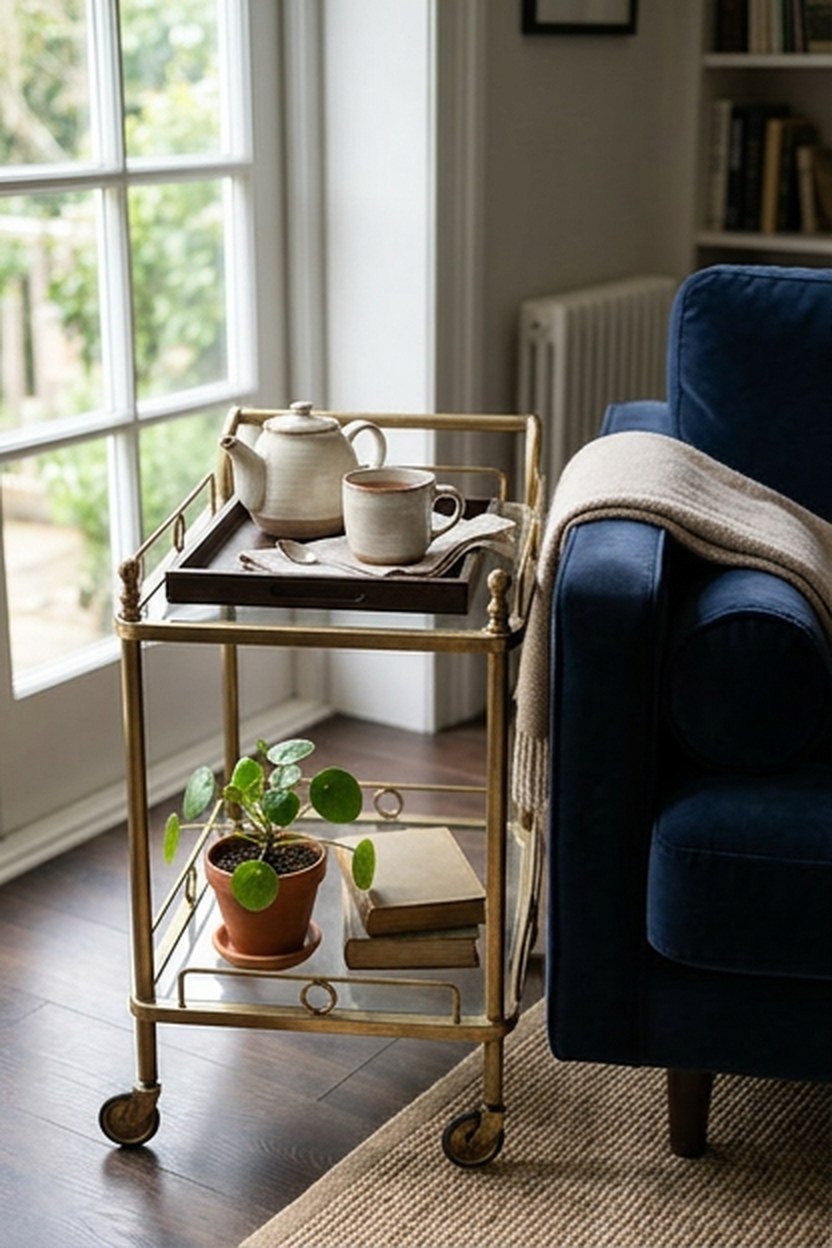
A small bar cart or dedicated side table, positioned within easy reach of the nook’s seating, holds a tea or coffee setup that supports longer reading sessions without requiring a trip to the kitchen. This practical addition transforms the nook from a purely passive seating area into a genuinely self-sufficient retreat where a reader can settle in for an extended period. Many nook owners report this small addition considerably increases how often they actually use the space.
Choosing a cart or table with a brass or gold-toned frame continues the warm metal accent established by the reading lamp discussed earlier, reinforcing the nook’s overall color coordination. A small tray on top of the cart, holding a teapot or French press alongside a mug, keeps this setup organized and ready for use rather than scattered loosely across the surface.
Positioning this cart or table within arm’s reach of the seated reader, rather than requiring the reader to stand and walk even a short distance, is worth testing with an actual seated position before finalizing the placement. This reach consideration is easy to overlook during initial planning but becomes an obvious oversight once the nook is in regular daily use. Getting this placement right the first time avoids a frustrating adjustment later.
Cost And Placement Guidance
A small bar cart or dedicated side table suited for this purpose typically costs $80 to $250 depending on material and size. Choosing a cart with wheels, rather than a fixed side table, allows the piece to be repositioned easily for cleaning or rearranging the nook’s layout as needed over time.
A common mistake is choosing a table or cart too large for the nook’s actual available floor space, resulting in a cramped feeling that undermines the retreat-like quality the space is meant to provide. Measuring the nook’s available floor space carefully, accounting for the chair’s actual footprint when someone is seated, avoids this common sizing mismatch.
8. Navy Ceiling Paint For An Enveloping Effect
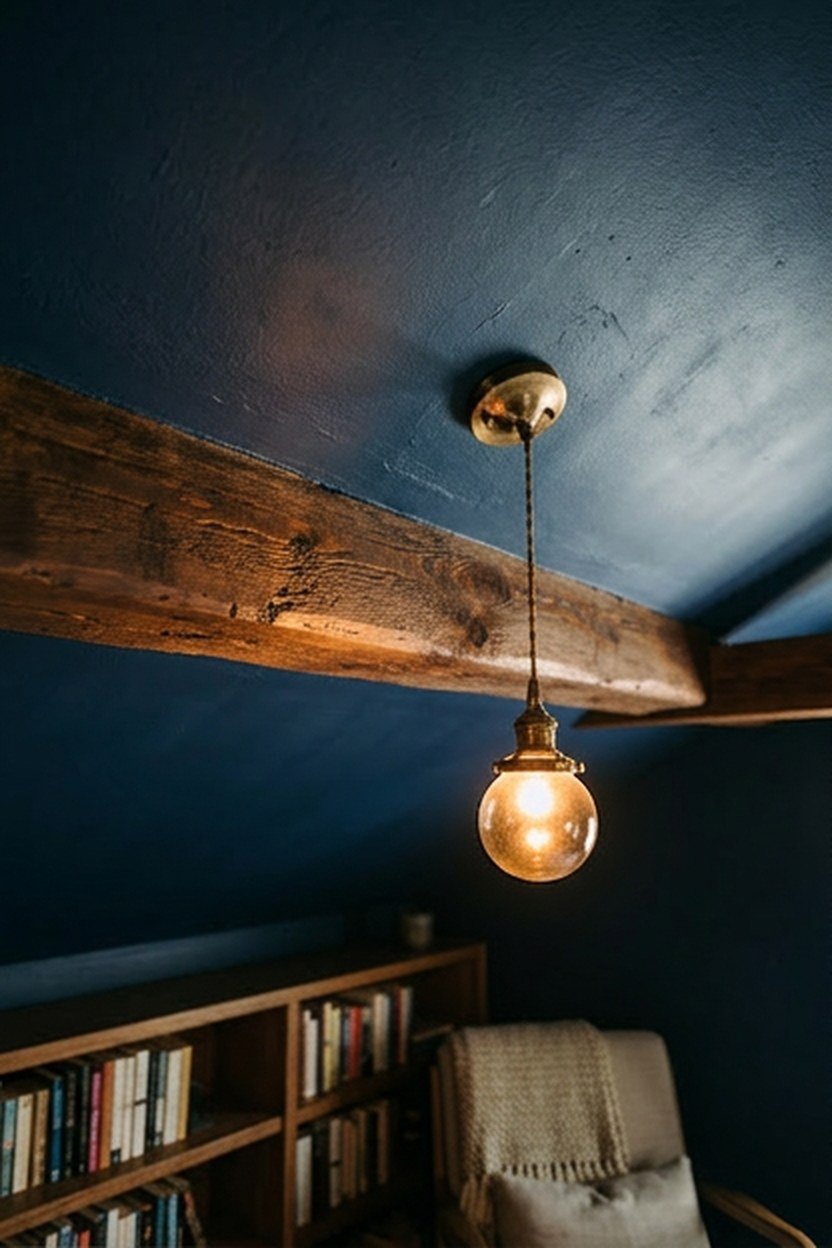
Extending the navy color onto the ceiling, rather than stopping at the walls, creates a fully enveloping effect that makes a small nook feel more like an intentional cocoon than an incomplete color scheme. This technique, sometimes called a “fifth wall” treatment, is a favorite among designers specifically for small spaces where a fully immersive color creates more drama than a partial application.
Choosing a slightly different sheen for the ceiling paint, typically a flatter matte finish compared to a satin finish on the walls, prevents the ceiling from appearing as a glossy, reflective surface that can feel visually distracting overhead. This sheen distinction is a subtle but important technical detail that many first-time painters overlook when extending a single color across multiple surfaces. Confirming this sheen difference with your paint supplier before purchase avoids this common oversight.
Adding a simple pendant light or a small chandelier against the navy ceiling introduces a visual focal point overhead that keeps the space from feeling like an undifferentiated block of color from floor to ceiling. This lighting fixture, ideally in a brass or gold finish matching the room’s other metal accents, provides both function and a visual anchor point against the dark backdrop.
Cost And Application Guidance
Painting a small nook’s ceiling in navy typically costs $50 to $150 in materials for a DIY project, or considerably more if a professional painter is hired for the application. Testing a sample swatch on the actual ceiling, viewed under both daytime and evening lighting conditions, before committing to the full application avoids an unwelcome surprise once the entire ceiling is painted.
A common mistake is applying this full ceiling treatment in a nook with genuinely low ceiling height, where the enveloping effect can tip into feeling oppressive rather than cozy. Reserving this technique for nooks with at least standard ceiling height, and considering a lighter alternative for genuinely low-ceilinged spaces, avoids this common miscalculation.
9. Navy And Brass Ladder For Book Access

A small navy and brass library ladder, mounted on a rail beside a tall bookshelf, provides both genuine functional access to higher shelves and a striking decorative detail that reinforces the space’s overall color and metal accent scheme. This detail works best in a nook with genuinely tall shelving, since a shorter shelf arrangement would not require a ladder for practical access.
Choosing a ladder with a navy-painted wood structure and brass hardware and rail fittings continues the same color and metal pairing established throughout the rest of the nook’s design elements. This coordination consideration is worth prioritizing over a mismatched finish that might otherwise be more readily available or slightly less expensive. Most specialty ladder suppliers offer some degree of custom finish selection specifically for this reason.
Testing the ladder’s stability and rail security before regular use, particularly if the ladder will see frequent daily use rather than purely decorative purposes, is a genuine safety consideration worth taking seriously. Confirming the rail mounting reaches the wall’s actual structural framing, rather than relying on surface-level anchoring alone, prevents a potentially serious fall hazard.
Cost And Safety Guidance
A navy and brass library ladder system typically costs $300 to $800 depending on rail length and ladder construction quality. Confirming the ladder’s weight rating against the heaviest person likely to use it regularly avoids a safety issue disguised as a purely decorative purchase.
A common mistake is installing this ladder system purely for decorative appeal without genuinely needing the functional shelf access it provides, adding considerable cost and installation complexity for a feature that ultimately sees little practical use. Considering whether the nook’s actual shelving height genuinely requires this feature, rather than adding it purely for visual appeal, helps avoid this costly overreach.
10. Navy Window Seat With Hidden Storage
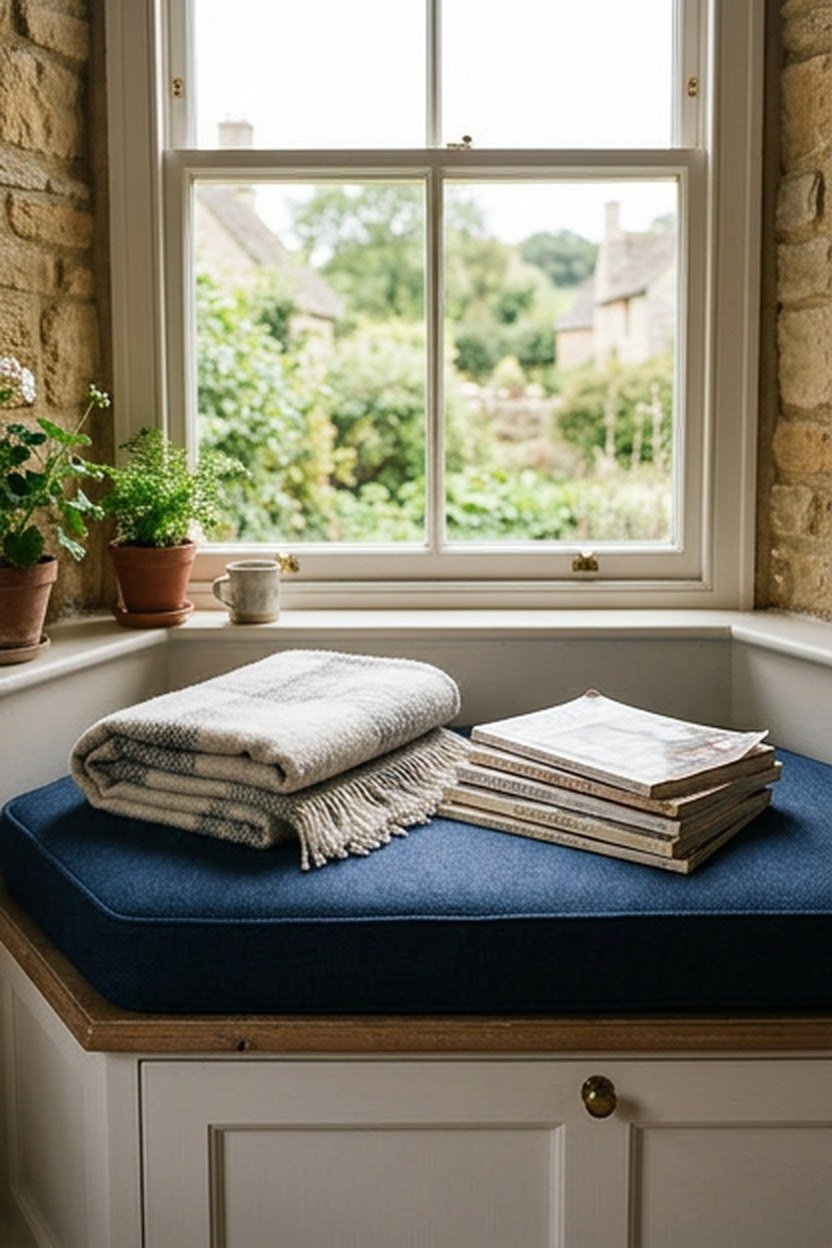
A navy-upholstered window seat, built with a hinged lid or pull-out drawers beneath the cushion, combines comfortable seating with genuine hidden storage for books, blankets, or other reading nook accessories. This dual-purpose design is particularly valuable in a smaller home where every piece of furniture ideally serves more than one function.
Choosing a durable, easy-to-clean upholstery fabric for the seat cushion, rather than a delicate fabric prone to staining, accounts for the seat’s regular daily use and the inevitable spills that come with tea or coffee enjoyed while reading. A removable, washable cushion cover simplifies cleaning considerably compared to a fully upholstered, non-removable cushion.
Organizing the hidden storage space with small bins or dividers, rather than leaving it as one large undivided cavity, keeps stored items from becoming a disorganized jumble every time the seat is opened. This organizational detail takes a small amount of extra planning but considerably improves the storage space’s actual usability over time. Most window seat owners find this organizing step worth the modest additional effort involved.
Cost And Storage Guidance
A built-in navy window seat with hidden storage typically costs $800 to $2,500 depending on whether it is custom-built or assembled from a modular seating unit with storage drawers. Choosing a modular unit with drawers, rather than a single hinged-lid design, provides easier day-to-day access to stored items without needing to remove seat cushions each time.
A common mistake is building or purchasing a window seat without confirming the actual storage capacity matches what the household intends to store inside it, resulting in either wasted space or insufficient capacity once in regular use. Measuring your intended stored items against the planned storage dimensions before finalizing the purchase avoids this practical mismatch.
11. Navy Blue Ombre Or Gradient Accent Wall

A navy ombre or gradient accent wall, transitioning from a deep navy at the base to a lighter, softer blue toward the ceiling, introduces visual movement and depth that a single flat navy tone cannot achieve on its own. This technique requires more skilled painting execution than a standard single-color wall, making it a detail best suited for either an experienced DIY painter or a hired professional.
Blending the gradient transition smoothly, avoiding a visible hard line between color zones, is the most technically challenging part of this painting technique and benefits considerably from practicing the blending method on a test board before attempting the actual wall. Most painters use a wet-on-wet blending technique, working the two colors together while both remain wet, to achieve this seamless transition.
Choosing gradient colors that share the same underlying blue family, rather than jumping between unrelated hues, keeps the effect reading as an intentional gradient rather than two mismatched colors awkwardly abutting each other. Working with a paint supplier who can mix custom intermediate shades between the two end colors helps ensure a smoother, more professional-looking transition.
Cost And Execution Guidance
A navy ombre accent wall typically costs $100 to $300 in paint materials, plus considerably more if a professional painter is hired given the technique’s added skill requirement. Practicing the blending technique on a large test board, matching the actual wall’s approximate size, before attempting the real wall catches technique issues before they become a permanent mistake.
A common mistake is attempting this technique without adequate practice, resulting in a visible, uneven transition line that reads as a painting mistake rather than an intentional design choice. Hiring a professional painter experienced specifically with gradient or ombre techniques, rather than attempting a first try directly on the final wall, is worth the added cost for anyone lacking confidence in their own painting skill.
12. Navy Throw Blanket With Brass Blanket Ladder
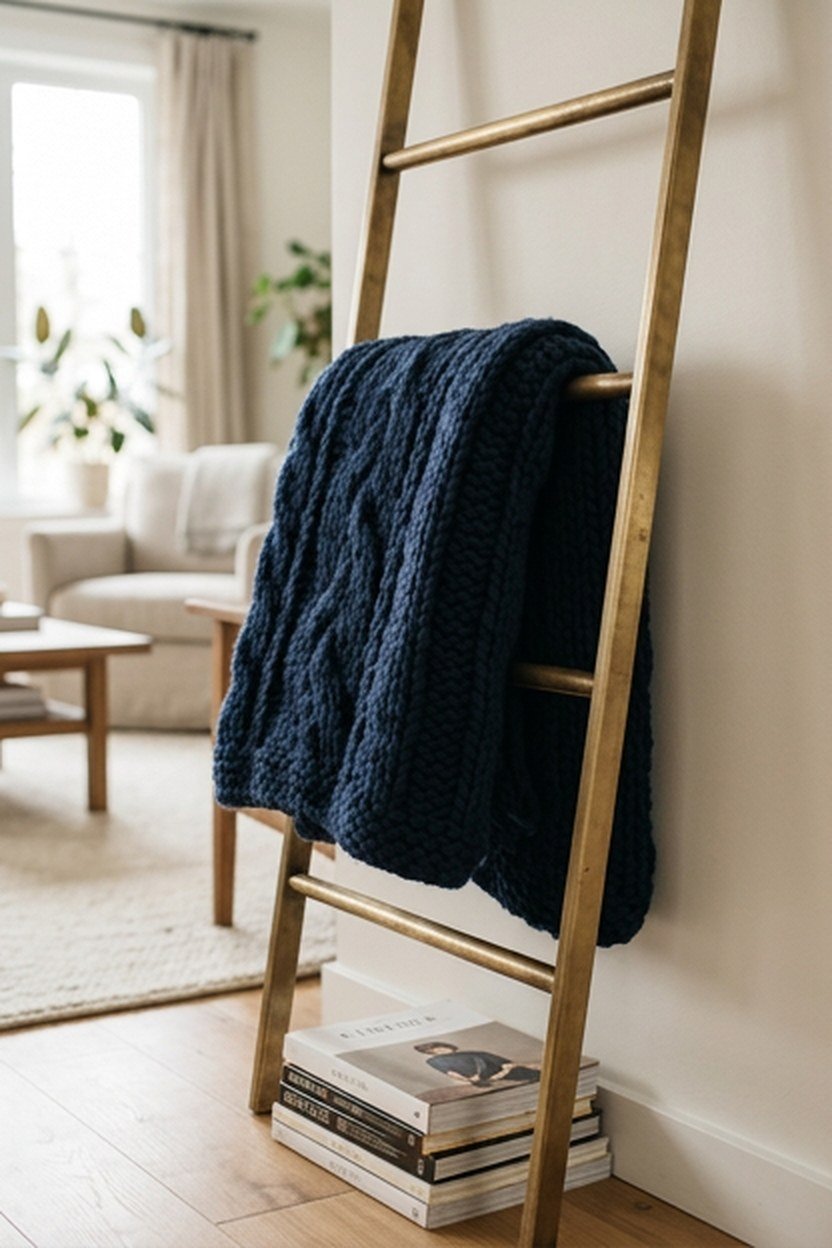
A navy throw blanket, displayed on a brass blanket ladder positioned beside the nook’s seating, adds both a practical layer of warmth and a decorative display element that reinforces the space’s established color and metal palette. This detail is one of the more affordable additions on this entire list, given how modestly a quality throw blanket and simple ladder typically cost relative to larger furniture pieces. Many nook owners add this detail as one of the final finishing touches to an otherwise complete space.
Choosing a throw blanket in a slightly different navy shade or a complementary texture, rather than an exact match to the nook’s existing seating or wall color, adds the subtle tonal variation discussed throughout this guide’s other sections. A chunky knit or waffle-weave texture provides tactile contrast against a smoother velvet chair upholstery.
Draping the blanket loosely over the ladder’s rungs, rather than folding it into a tight, uniform stack, creates a more relaxed, lived-in appearance that suits the cozy, informal quality this reading nook style depends on. This draping technique is a small styling detail that experienced decorators apply almost instinctively but is worth learning explicitly if this styling skill is newer. Getting this draping right noticeably improves how inviting the overall display feels.
Cost And Styling Guidance
A quality navy throw blanket and a simple brass blanket ladder typically cost $60 to $150 together, making this one of the more budget-friendly additions to any reading nook. Choosing a blanket ladder with multiple rungs, rather than a single bar, allows for displaying more than one blanket or textile piece if the household owns several coordinating options. This multi-rung consideration is worth the modest cost difference for households with a growing textile collection.
A common mistake is choosing a blanket fabric that sheds or pills easily, resulting in a display piece that looks worn and shabby within just a few months of regular handling. Choosing a higher-quality knit or woven fabric, even at a somewhat higher price point, avoids this frustrating and visually noticeable deterioration.
13. Navy Herringbone Or Patterned Rug Underfoot
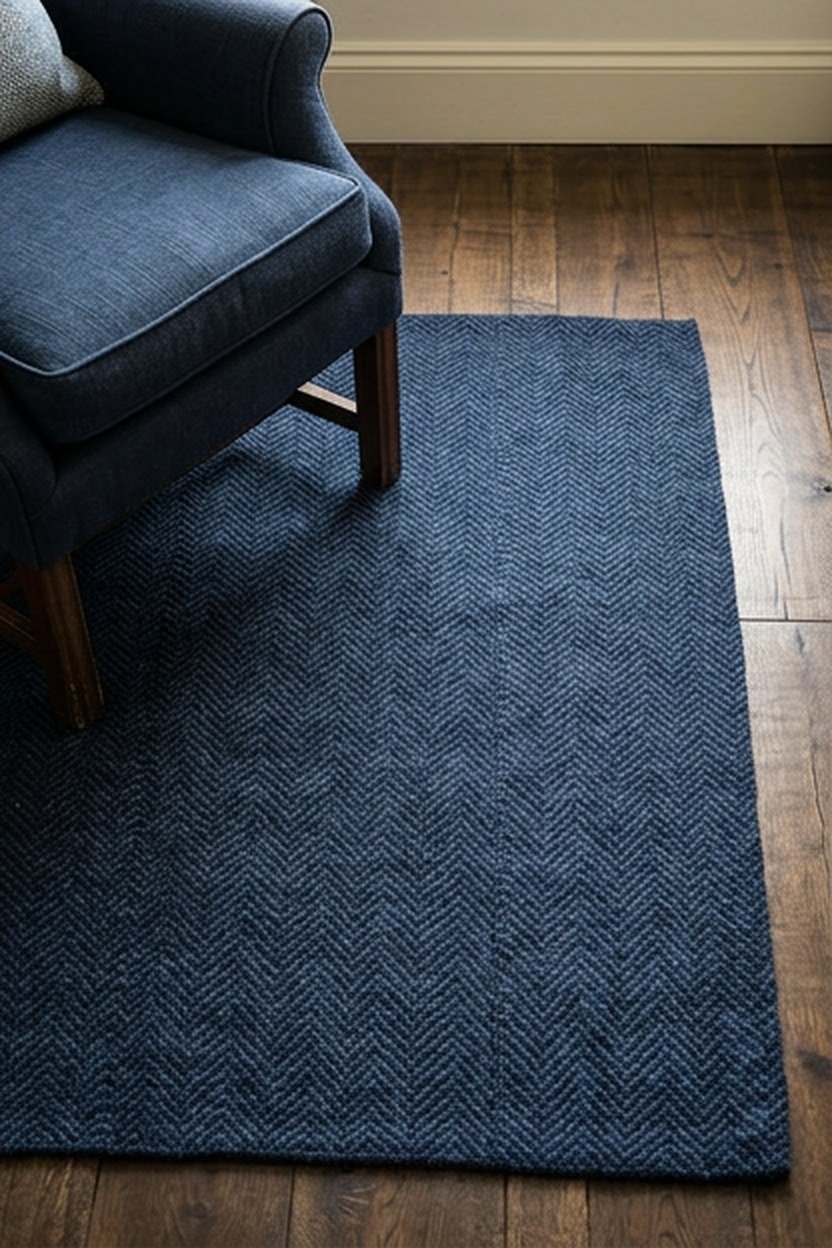
A navy herringbone or subtly patterned area rug, placed beneath the nook’s seating area, grounds the space visually while adding a layer of pattern that complements rather than competes with the solid navy walls or furniture elsewhere in the room. This patterned texture provides visual interest at floor level, an area that otherwise often gets overlooked in favor of wall and furniture styling decisions.
Choosing a rug with a tone-on-tone pattern, using varying shades of navy and cream rather than introducing an entirely different color family, keeps the overall palette cohesive while still adding textural and visual interest at floor level. This tonal restraint mirrors the same principle applied to wallpaper and gradient wall choices discussed earlier in this guide. Most successful navy nooks apply this restrained, tone-on-tone approach consistently across every patterned element in the space.
Sizing the rug appropriately for the actual nook footprint, large enough that the chair’s front legs rest on the rug rather than floating just off its edge, creates a more finished, intentional look than an undersized rug awkwardly placed beneath the furniture. This sizing consideration is a common styling mistake across many rooms, not just reading nooks specifically, but is worth double-checking given how much it affects the finished appearance. Measuring the actual furniture footprint before ordering a rug avoids this common sizing error.
Cost And Sizing Guidance
A quality navy patterned area rug sized appropriately for a reading nook typically costs $100 to $400 depending on material and size. Choosing a rug in a durable, easy-to-clean material, like a wool blend or a synthetic fiber designed for high-traffic areas, accounts for the wear a rug experiences in a frequently used seating area.
A common mistake is purchasing a rug sized too small for the actual seating arrangement, resulting in the visually awkward floating effect discussed above. Measuring the chair’s actual footprint, including enough margin for the chair to sit fully on the rug even when someone leans back or shifts position, avoids this common and easily preventable sizing mistake.
14. Navy Accent Pillows With Piping Detail
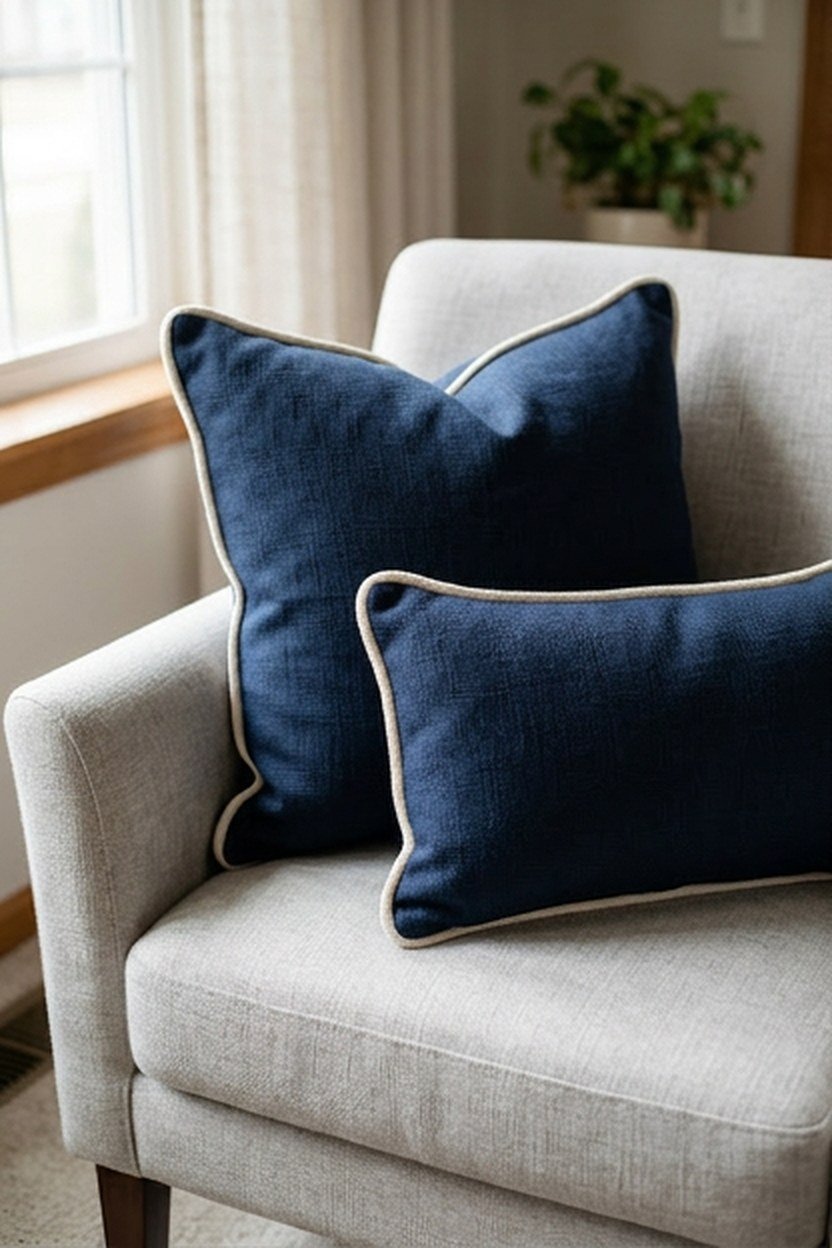
Navy accent pillows finished with a contrasting piping detail, typically in cream, brass-toned, or a lighter blue, add a refined finishing touch that elevates a simple pillow from purely functional to genuinely decorative. This piping detail, a thin contrasting trim stitched along the pillow’s edge, is a small but noticeable upgrade that distinguishes a more considered pillow choice from a plain, mass-produced option.
Mixing pillow sizes and shapes, pairing a larger square pillow with a smaller lumbar-shaped option, creates the same visual layering principle discussed throughout this guide’s other textile sections. Limiting the total pillow count to two or three pieces, rather than overcrowding the seating with too many pillows, keeps the nook feeling genuinely usable rather than requiring pillows to be removed before actually sitting down.
Choosing a pillow insert with genuine down or a down-alternative fill, rather than a cheaper foam insert, considerably improves both the pillow’s comfort and its ability to hold its shape over repeated daily use. This insert quality consideration is worth the modest additional cost, since a pillow with a collapsed, flat insert looks noticeably less appealing than one that maintains its full, plump shape. Most quality pillow retailers offer this fill upgrade as a simple option during purchase.
Cost And Insert Quality Guidance
Navy accent pillows with a piping detail typically cost $30 to $80 per pillow depending on fabric and insert quality. Purchasing pillow covers separately from inserts allows for easier seasonal refreshing, swapping fabric covers without needing to replace the insert each time a new look is desired. This separate-purchase approach is worth considering for households that like to update their decor periodically without a full replacement cost each time.
A common mistake is choosing an insert sized slightly smaller than the pillow cover itself, resulting in a flat, deflated-looking pillow rather than a full, plump appearance. Choosing an insert one size larger than the cover’s stated dimensions, a common styling trick among interior designers, produces a noticeably fuller and more attractive finished pillow.
15. Small Navy Bookend Collection With Brass Accents

A small collection of navy and brass bookends, arranged throughout the nook’s shelving, adds a finishing decorative touch that ties the shelving display back into the room’s broader color and metal palette discussed throughout this guide. This detail, while modest in scale, is one of the easier ways to add polish to an otherwise purely functional book storage arrangement. Many nook owners consider this one of the final small touches that completes the overall design.
Choosing bookends in varied shapes, geometric versus organic forms, rather than an identical matching set throughout every shelf, adds visual variety that keeps the shelving display from feeling repetitive or overly uniform. This variety consideration mirrors the same layering principle applied throughout many other decor categories in this guide. Most experienced decorators build this kind of varied collection gradually rather than purchasing an entire matching set at once.
Positioning bookends not just at the very ends of each shelf but occasionally within a shelf’s book collection, breaking up a long uninterrupted row of spines, creates additional visual interest and practical organization within the larger shelving unit. This mid-shelf placement technique is a subtle detail that many first-time decorators overlook in favor of only using bookends at the shelf’s outer edges.
Cost And Collection Building Guidance
Navy and brass bookends typically cost $15 to $50 per pair depending on material and design complexity. Building this collection gradually across multiple shopping trips or even multiple seasons, rather than purchasing an entire matching set at once, allows for the kind of varied, curated look discussed throughout this section.
A common mistake is choosing bookends too lightweight to actually support a full row of books, resulting in books that lean or fall despite the bookend’s decorative presence. Choosing a genuinely weighted bookend, testing its stability against an actual stack of books before committing to a full collection, avoids this common functional failure disguised as a purely decorative purchase.
What A Navy Reading Nook Actually Costs
A complete navy reading nook, incorporating several of the concepts discussed throughout this guide, typically costs $600 to $3,000 depending on whether the space uses primarily repurposed furniture or an entirely new furniture and decor purchase. The seating and lighting typically represent the largest portion of this budget, with smaller decorative accents like bookends and pillows adding a more modest additional cost. Understanding this rough breakdown helps prioritize spending toward the elements with the most functional and visual impact.
Ongoing costs beyond the initial setup remain relatively modest, mainly consisting of periodic textile replacement as pillows, blankets, and rugs show wear from regular use over several years. Most durable furniture pieces, particularly a quality armchair and brass lighting fixtures, last many years with only occasional cleaning or minor maintenance required.
| Budget Category | Typical Cost Range | Notes |
|---|---|---|
| Seating | $400 to $1,200 | Largest single investment category |
| Lighting and shelving | $150 to $700 | Reading lamp plus bookshelf or ladder |
| Textiles and accents | $100 to $400 | Pillows, blankets, rug, bookends |
Prioritizing the seating and lighting first, since these represent the space’s core functional elements, before investing in smaller decorative accents gives the most reliable path to a nook that feels complete even on a limited initial budget. This prioritization strategy is worth discussing before the first purchase is made. Most nook owners find this order of investment produces the most satisfying result relative to the budget spent at each stage.
Common Mistakes That Undermine A Navy Reading Nook
The most common mistake across navy reading nook projects is underestimating the lighting a dark color scheme requires, resulting in a space that looks striking in photos but feels too dim for comfortable evening reading. Planning at least two distinct light sources, a dedicated reading lamp and some form of ambient lighting, from the very start of the project avoids this recurring and easily preventable problem.
A second frequent mistake is choosing a nook location too cramped for genuine comfort, squeezing furniture into a corner that technically fits a chair but leaves no room for a side table, a footrest, or comfortable legroom. Measuring the actual intended space against real furniture dimensions before committing to a location, a step discussed earlier in this guide’s planning section, prevents this frustrating spatial miscalculation.
Recovering From These Setbacks
Recovering from an underlit nook typically means adding a second or third light source, like a wall sconce or a set of warm string lights, rather than replacing the existing lamp entirely. This additive approach is considerably less expensive than starting the lighting plan over from scratch and often resolves the dimness problem with just one or two additional fixtures. Identifying exactly where the darkest spot in the nook falls helps target this additional lighting most effectively.
Recovering from an overly cramped nook layout usually means removing one unnecessary piece of furniture, like a bulky side table, in favor of a smaller wall-mounted shelf that serves a similar function without consuming floor space. This targeted removal is a far less disruptive fix than relocating the entire nook to a different part of the home. Identifying which single piece is contributing most to the cramped feeling, rather than removing furniture at random, makes this correction considerably more successful.
Conclusion
A navy reading nook succeeds by pairing the color’s genuine sophistication with deliberate warm contrast, brass accents, wood tones, or cream textiles, and layered lighting that keeps the space feeling cozy rather than dim. The fifteen concepts here, from the anchor armchair to a small bookend collection, each contribute a piece of a considered whole. Prioritizing seating comfort and lighting first, then layering in smaller touches, gives the most reliable path to a nook that gets used daily rather than admired occasionally.
Whether this is a first attempt at a dedicated reading space or a refinement of an existing corner, the underlying principles stay consistent: plan for adequate light, choose furniture for genuine comfort, and let warm accents balance the navy’s natural depth. These fundamentals matter more than any single decorative purchase on this list. Get them right, and the space becomes the kind of retreat that gets used every single day rather than simply admired from a distance.
Frequently Asked Questions
Why is navy a good color for a reading nook? Navy reads as calm and sophisticated without feeling as stark as black, giving a small space a genuine sense of retreat. It also pairs well with brass, wood, or silver accents depending on the room’s existing palette.
How much does a navy reading nook cost to build? A complete navy reading nook typically costs $600 to $3,000 depending on whether furniture is repurposed or purchased new. Seating and lighting usually represent the largest share of that budget.
How do I keep a navy nook from feeling too dark? Layering at least two light sources, a dedicated reading lamp and some form of ambient lighting, prevents the space from feeling underlit. Warm-toned bulbs around 2700 kelvin also help keep the light inviting against the dark backdrop.
What accent colors pair best with navy in a reading nook? Brass and warm wood tones provide the contrast navy needs to avoid feeling cold, while cream and camel textiles soften the overall look. This warm-cool balance is central to making a navy nook feel cozy rather than closed off.
Do I need a window for a navy reading nook? A window is not strictly required, but natural daylight considerably reduces how much artificial lighting the space needs during the day. A windowless nook will need more deliberate ambient lighting to avoid feeling dim.
Can a small corner work as a navy reading nook? Yes, as long as the space is measured carefully against the actual furniture dimensions, including room for a side table and comfortable legroom. A cramped, undersized nook is one of the most common planning mistakes to avoid.
What is the biggest mistake people make with navy reading nooks? Underestimating the lighting a dark color scheme requires is the most common mistake, leaving the space feeling too dim for comfortable evening reading. Planning at least two distinct light sources from the start avoids this problem.