
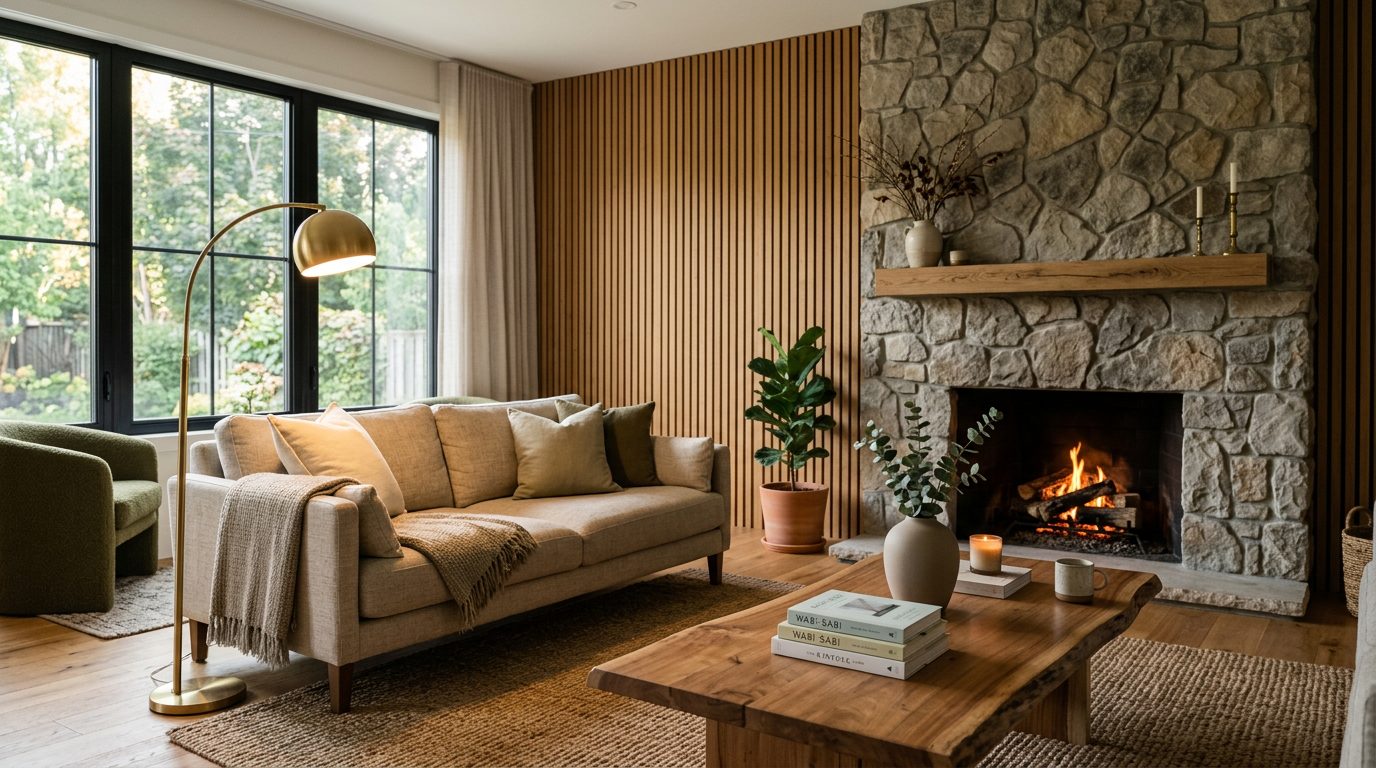
A living room built around wood, stone, and natural textures never goes out of style. These materials bring warmth into a space that sleek modern furniture alone often can’t deliver.
I have redone my own living room twice now, and both times, the moment I added real wood or stone, the room stopped feeling like a showroom. It started feeling like somewhere I actually wanted to sit.
If you are aiming for a modern living room that still feels grounded and lived in, this guide walks through practical ways to layer wood, stone, and other natural textures without turning your space into a cabin.
Why Wood and Stone Work So Well in a Modern Living Room
Natural materials do something furniture alone cannot. They add visual weight and texture that keeps a room from feeling flat, even when your color palette stays neutral.
Modern design often leans minimal, and that can tip into cold or sterile territory fast. Wood grain, stone texture, and woven fibers soften those clean lines without cluttering the space.
There is also a practical reason these materials work so well together. Wood, stone, and natural fibers all age well, so a living room built around them tends to look better over time instead of dated.
1. Add a Wood Accent Wall
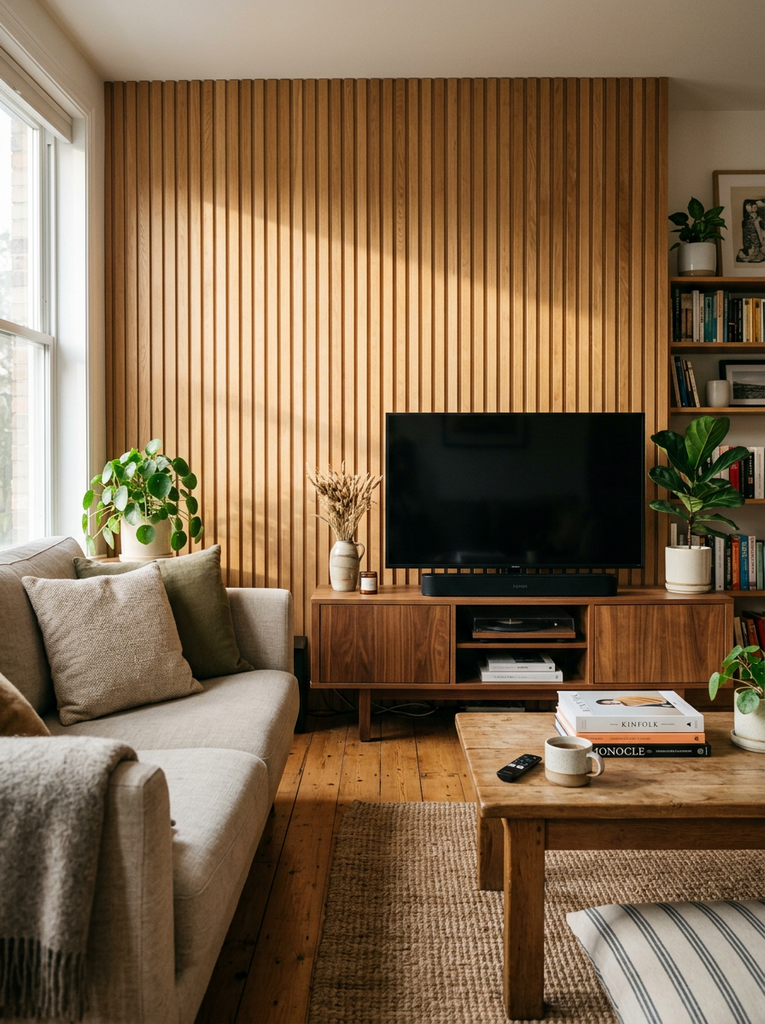
A wood accent wall is one of the fastest ways to bring warmth into a modern living room. Whether you choose reclaimed planks, slatted wood panels, or a simple wood veneer, it instantly becomes a focal point.
I added slatted wood panels behind my media console last year, and it completely changed how the room felt. The space went from generic apartment to something that actually had character, without a full renovation.
Keep the rest of the room fairly neutral if you go this route. The wood wall already does the visual heavy lifting, so simple furniture around it lets the texture stand out instead of competing for attention.
2. Bring in a Stone Fireplace or Accent Wall
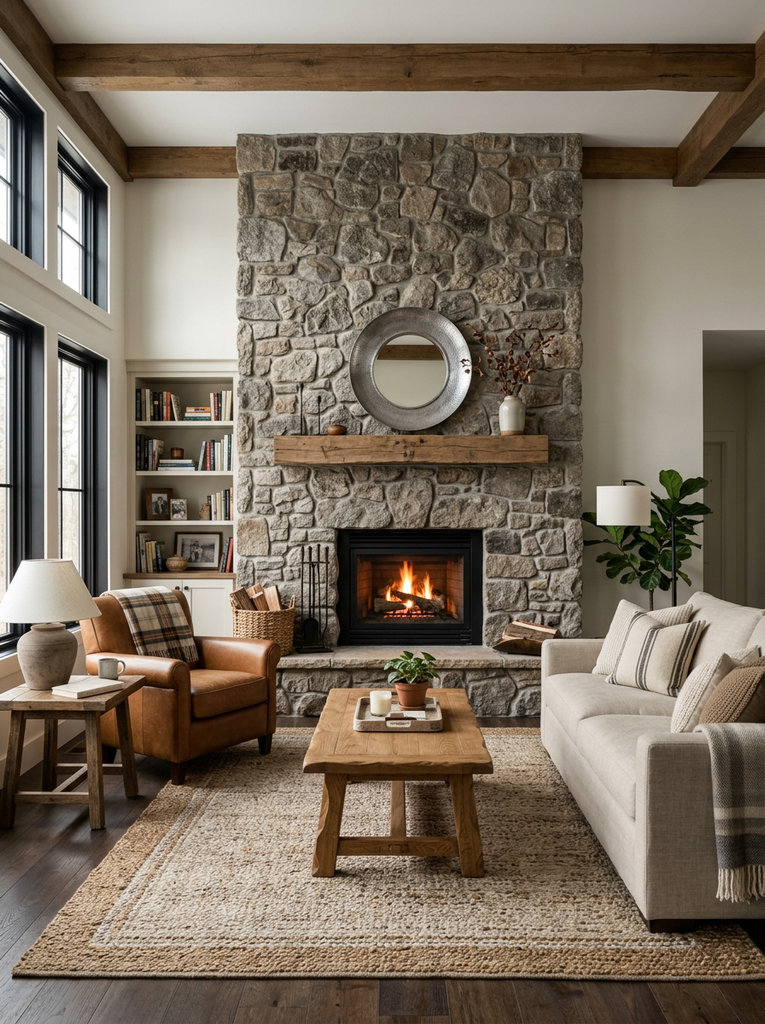
Stone works as a natural focal point, especially around a fireplace. A textured stone surround, whether real stone or a quality stone veneer, gives a modern living room an anchor that feels architectural rather than decorative.
If you don’t have a fireplace, a stone accent wall behind your media console or sofa achieves a similar effect. Rough natural stone in gray or warm beige tones pairs especially well with wood furniture nearby.
The contrast between stone’s coolness and wood’s warmth is part of what makes this combination so popular in modern living rooms right now. Neither material overwhelms the other when you balance them intentionally.
3. Choose Natural Wood Flooring
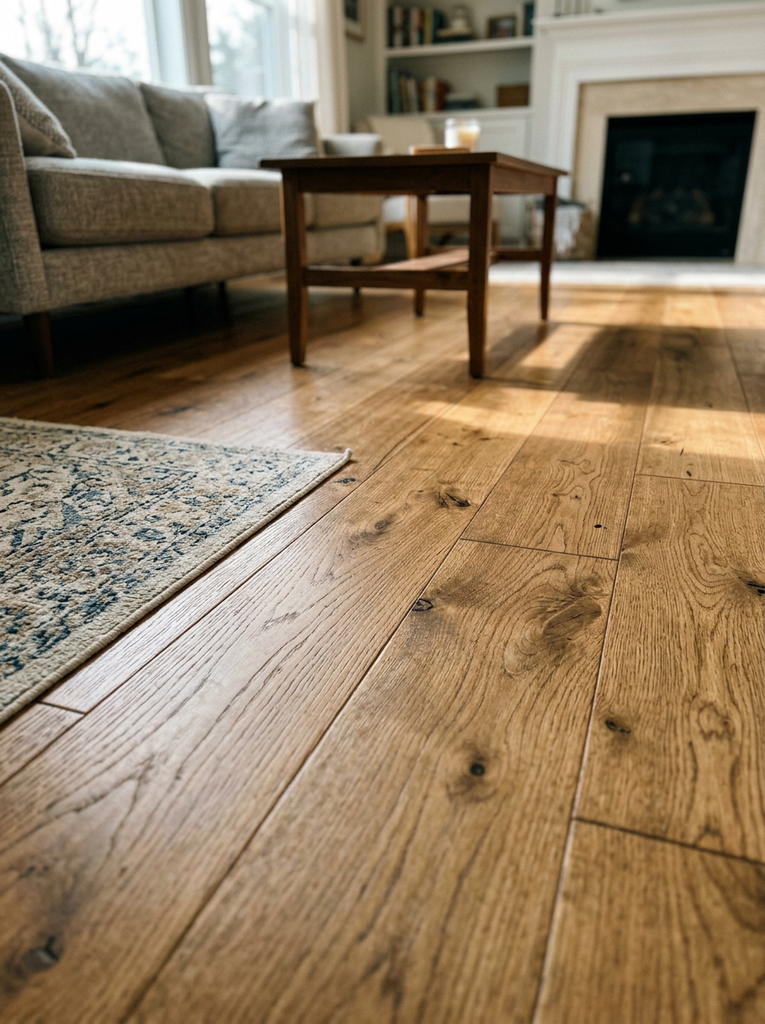
Flooring sets the tone for everything above it, and wood flooring brings a warmth that tile or all gray concrete can’t quite match. Even a light oak or walnut floor grounds a modern living room in a way that feels intentional.
If you already have wood flooring, leaning into its natural grain rather than covering most of it with a rug lets the material actually do its job. A smaller, well-placed rug can highlight the flooring instead of hiding it.
For renters or anyone not ready to replace flooring, wide plank vinyl or laminate with a realistic wood texture gets you close to the same effect for a fraction of the cost.
4. Mix Wood Tones on Purpose
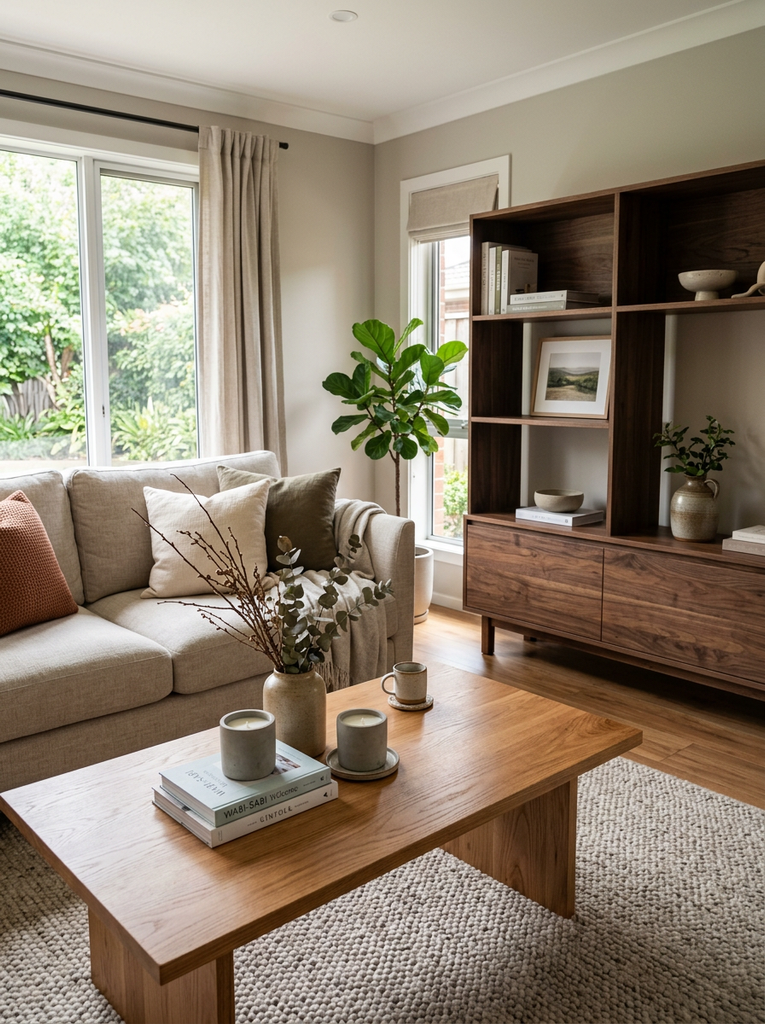
A common living room mistake is assuming every piece of wood furniture has to match. In reality, mixing a lighter wood coffee table with a darker wood console or shelving unit often looks more collected than an all matching set.
The key is choosing an undertone, either warm or cool, and sticking with it across your wood pieces. A warm oak coffee table generally pairs better with warm walnut shelving than with a cool gray toned wood.
I mixed a light wood coffee table with a darker wood TV console in my own living room, and it reads as intentional layering rather than mismatched furniture, as long as the undertones agree.
Continuing with the next set of ideas, plus the closing heading section.
5. Layer Natural Textures Beyond Wood and Stone
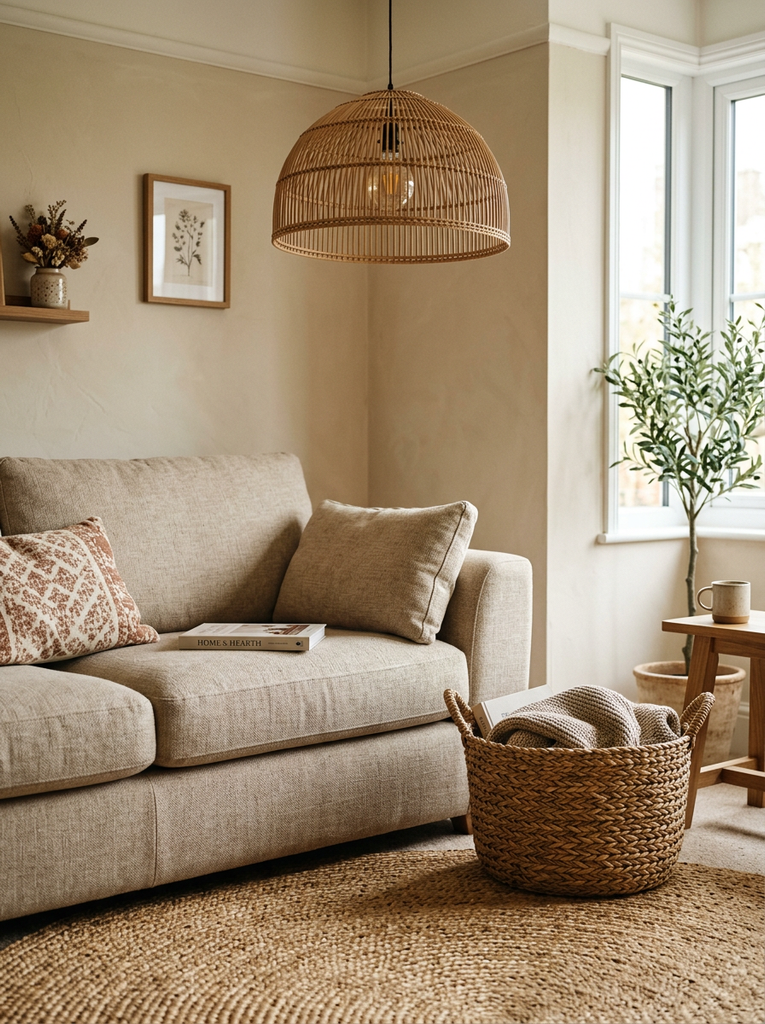
Wood and stone are the foundation, but jute, linen, wool, and rattan round out a modern living room with natural textures. These materials add tactile variety without introducing any extra color to manage.
A jute rug under a linen sofa, paired with a rattan pendant light or a woven basket for storage, keeps everything in the same natural material family. Nothing feels out of place because it all comes from the same earthy palette.
I added a rattan mirror and a jute pouf to my living room last spring, and both pieces cost very little, yet they tied the whole room together in a way expensive furniture alone never did.
6. Choose Stone or Live Edge Wood Furniture Pieces

Beyond flooring and accent walls, furniture itself can carry the natural materials theme. A stone topped side table or a live edge wood coffee table brings texture right into the seating area, not just the background.
Live edge wood, with its natural uneven border left intact, works especially well as a coffee table since it becomes a conversation piece on its own. Every slab looks different, so no two rooms end up looking identical.
A small stone or concrete side table next to a wood dominant room adds contrast the same way a stone accent wall does, just on a smaller and more affordable scale.
7. Let Natural Light Do Some of the Work
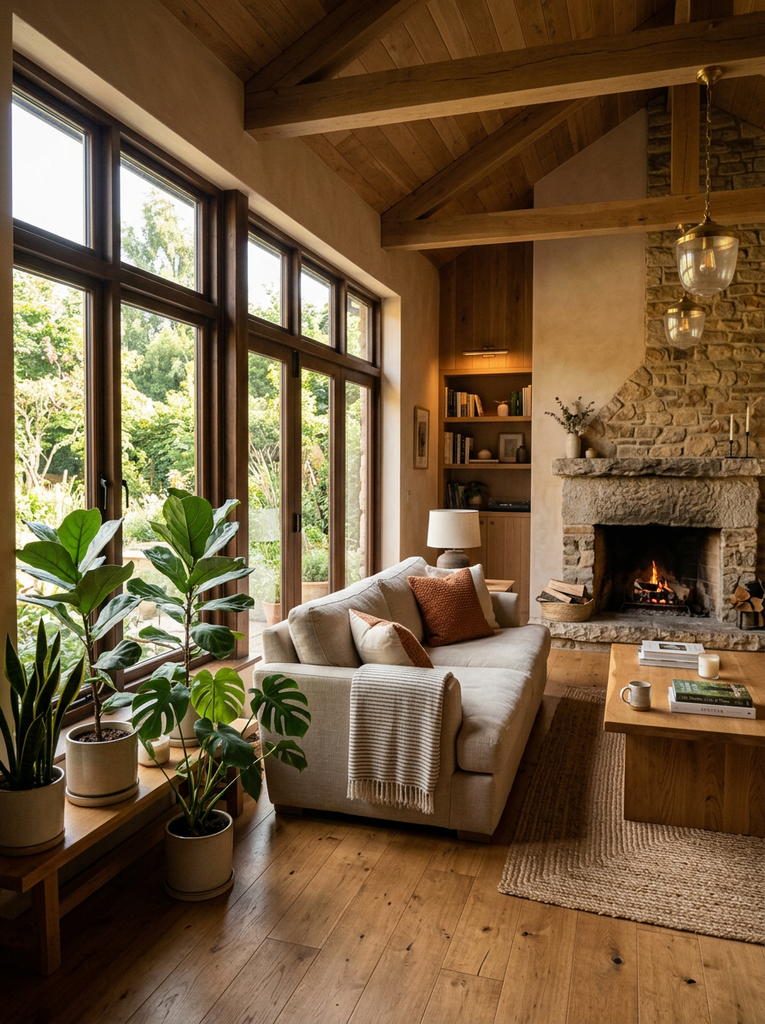
Wood and stone both look their best under natural light, which brings out grain and texture that artificial lighting tends to flatten. Large windows or sheer curtains that let daylight in make every natural material in the room look richer.
If your living room does not get much natural light, warm toned bulbs help mimic that effect. Cool white lighting tends to wash out the warmth that wood and stone are supposed to bring into the space.
Pairing good natural or warm lighting with a few indoor plants rounds out the natural materials look. Plants add life and color without breaking from the earthy, grounded feel the rest of the room is going for.
8. Stick to an Earthy, Neutral Color Palette

Wood and stone do their best work against a neutral backdrop. Sand, warm beige, soft cream, and muted greens all let natural textures stay the visual focus instead of competing with bold wall colors.
This does not mean your living room has to be boring. Texture itself adds plenty of visual interest, so a neutral palette built around wood and stone often feels richer than a room relying on color alone.
If you want a pop of color, keep it small and intentional, like a green velvet pillow or a single piece of art. One accent color works better here than several competing for attention.
Small Details That Complete a Natural Modern Living Room
Once the bigger elements are in place, smaller details finish the look. Woven baskets, ceramic vases, and simple linen throws add function while staying true to the natural materials theme.
Avoid overly polished or glossy finishes if you want the space to feel authentic. Matte and textured surfaces read as more natural, while high-shine finishes can pull a room back toward a colder, more sterile modern look.
A single well-placed plant, a stack of real books, or a hand-thrown ceramic bowl on the coffee table adds personality. These small, imperfect touches are often what make a wood and stone living room feel lived in rather than staged.
Every idea in this guide comes back to one theme. Natural materials give a modern living room warmth that furniture alone can’t provide.
A wood accent wall, a stone fireplace surround, or even a single live edge coffee table can shift how a room feels. You don’t need every element at once to notice the difference.
The layering approach matters more than any single piece. Wood, stone, jute, and linen working together create depth, while sticking to a neutral, earthy palette keeps the whole room feeling cohesive instead of busy.
I have tested most of these ideas in my own living room over the past couple of years, and the smaller additions, like a rattan mirror or a jute rug, often made just as much difference as bigger changes like flooring.
Start with one element, whether that’s a wood accent wall or a stone side table, and build from there. A modern living room with real texture and warmth comes together gradually, not all at once.
Frequently Asked Questions
How do I make a modern living room feel warmer with natural materials?
Add wood tones through flooring, furniture, or an accent wall, then layer in stone and woven textures like jute or linen. Natural light and warm toned lighting bring out the warmth even more.
Can I mix different wood tones in the same living room?
Yes, as long as you keep the undertones consistent, either warm or cool. Mixing a light and dark wood with matching undertones usually looks intentional rather than mismatched.
Is real stone necessary, or can I use stone veneer?
Quality stone veneer works well and costs less than real stone. It still gives you the texture and focal point effect of a stone wall or fireplace surround.
What natural textures pair best with wood and stone?
Jute, linen, wool, and rattan all complement wood and stone without adding extra color. These materials keep the room feeling cohesive and grounded.
Do I need a fireplace to use stone in my living room?
No, a stone accent wall behind your sofa or media console creates a similar focal point. It works whether or not your living room has a fireplace.
How can I add natural texture on a small budget?
Small additions like a jute rug, a rattan pendant light, or a woven basket cost very little but add noticeable texture. These pieces work well even before a bigger renovation.
Does a neutral color palette work with natural wood and stone?
Yes, neutral and earthy tones let wood and stone stay the visual focus. Texture itself adds interest, so the room rarely feels flat even without bold color.