
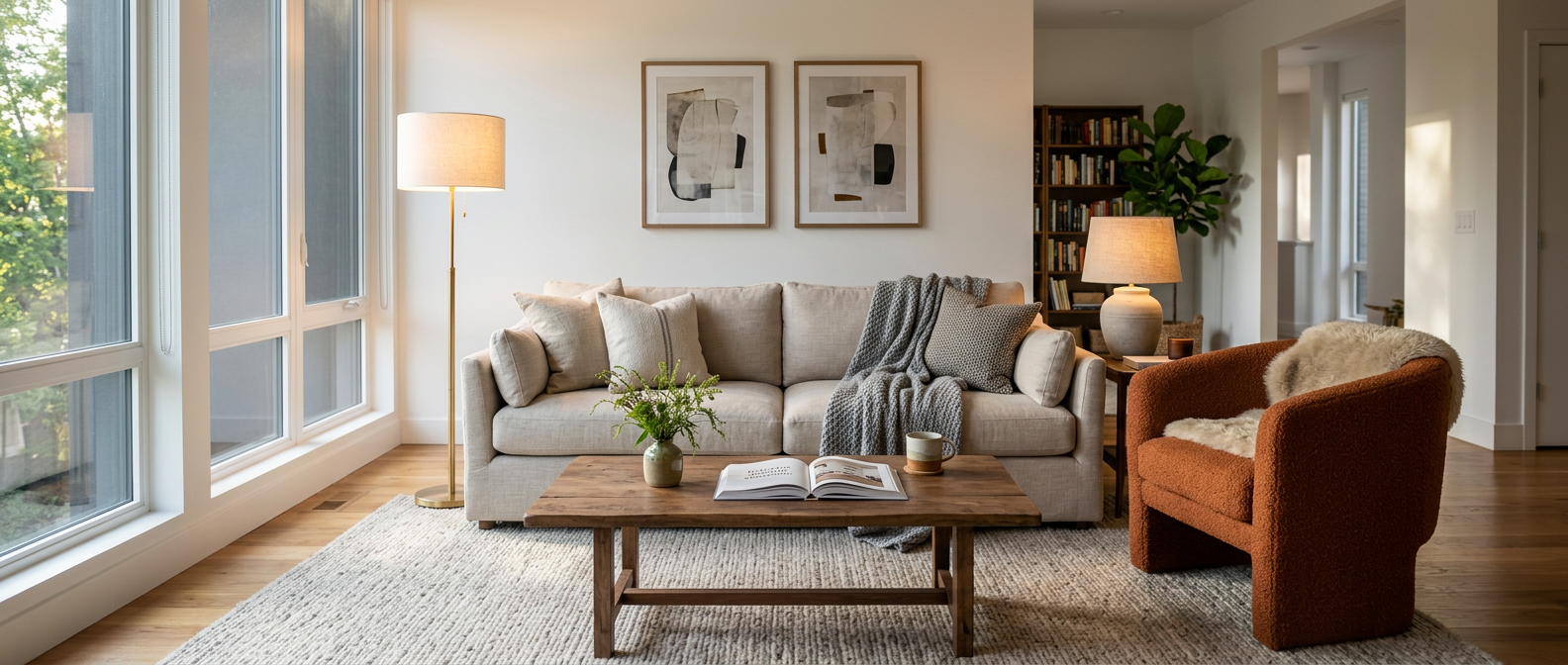
I have walked into so many living rooms that looked expensive but felt off. The furniture was nice, the paint color was on trend, yet something never clicked. Most of the time, the problem comes down to a handful of repeatable living room design mistakes.
The good news is that none of these mistakes are permanent. A few smart swaps can turn a stiff, awkward room into one that actually feels like home. I am walking you through the most common living room decorating mistakes and the better alternatives that fix them fast.
This is not another generic list copied from a showroom catalog. These are real layout, lighting, and furniture errors I see over and over, along with fixes that work in real homes, not just in photos.
Why These Living Room Design Errors Happen So Easily
Most living room mistakes are not about bad taste. They happen because a room gets furnished piece by piece, often over months or years, without a real plan.
You buy a sofa first, then a rug on sale, then a lamp that catches your eye. Nothing was chosen with the whole room in mind, so the space ends up feeling like a collection of separate purchases instead of one cohesive room.
There is also the layout trap. Many people arrange a living room the way it has “always been done,” pushing everything to the edges and calling it finished. That habit alone causes several of the mistakes below.
1. Pushing Every Piece of Furniture Against the Wall
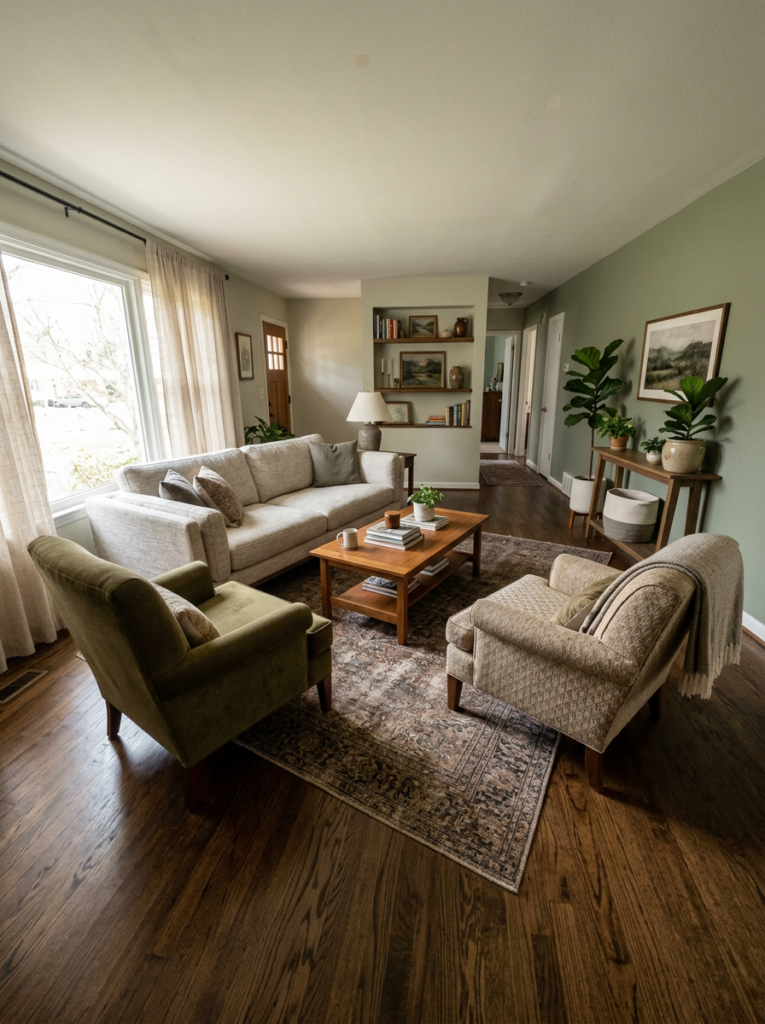
This is probably the most common living room layout mistake I come across. It feels logical, since shoving furniture to the edges seems to “open up” the middle of the room.
In reality, it does the opposite. A big empty gap in the center makes conversation awkward and the whole room feel disconnected, especially in a mid-size or small living room.
The better alternative is pulling your seating in toward each other, even by a foot or two. Float the sofa slightly off the wall if space allows, and group chairs so people can actually talk without raising their voices.
2. Relying on One Single Overhead Light
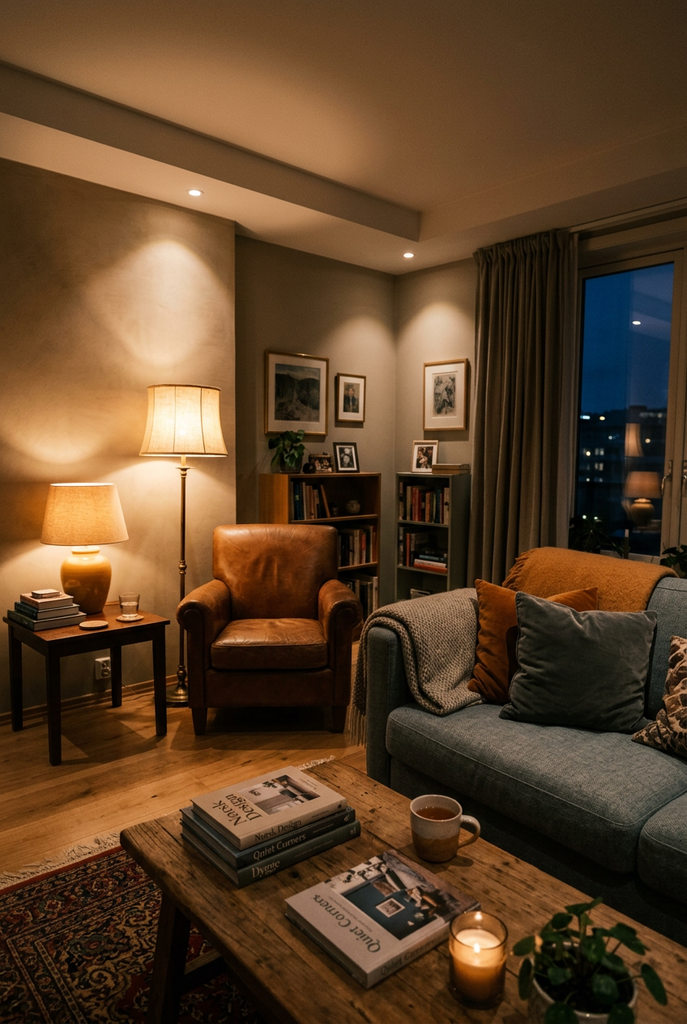
A single ceiling fixture might be convenient, but it rarely does a living room any favors. It throws flat, harsh light from one direction and leaves corners looking dim and lifeless.
I learned this one the hard way in my first apartment. My living room had one overhead light, and no matter what I did with furniture, the room always felt like a waiting area instead of somewhere to relax.
Layered lighting is the fix. Mix a floor lamp, a table lamp, and maybe a wall sconce with your overhead light, then add a dimmer if you can. This creates depth and lets you adjust the mood for movie night versus a dinner with friends.
3. Ignoring Scale and Proportion

Furniture size matters more than most people expect when they are shopping. An oversized sectional can swallow a small living room, while a tiny loveseat looks lost and awkward in a large, open space.
Proportion mistakes are not just about the sofa either. A coffee table that is too small or too large for the seating around it throws off the whole layout, even if every individual piece looks great on its own.
Before buying anything, measure your room and map out furniture dimensions, not just style. A good rule of thumb is pairing a larger sofa with a mid-size coffee table and smaller accent pieces, so nothing competes for attention.
4. Skipping a Clear Focal Point
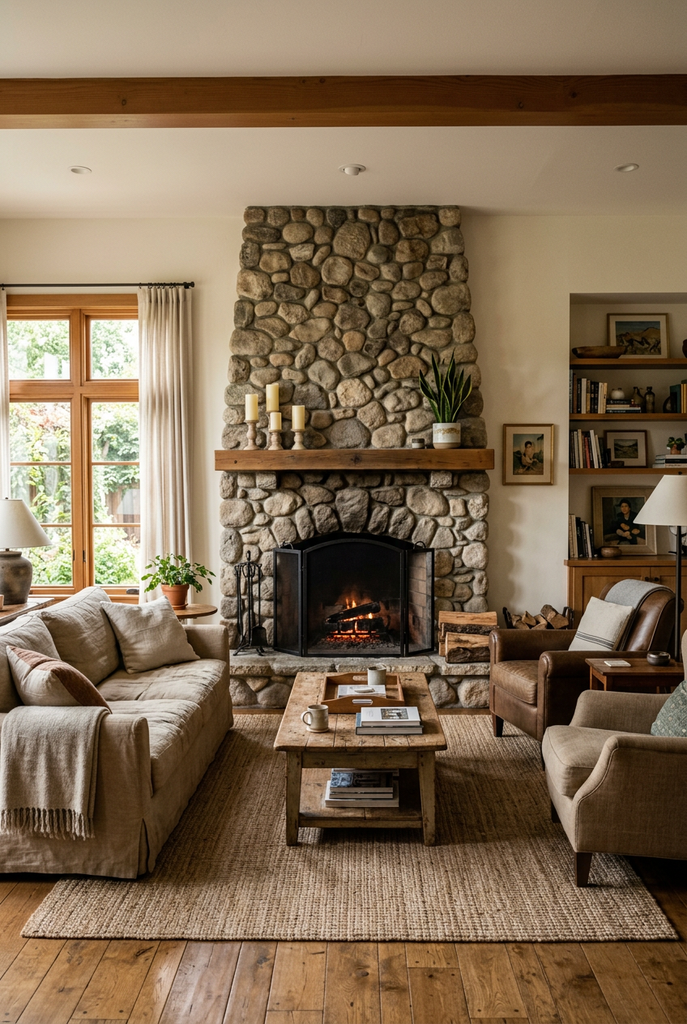
Walk into a living room with no focal point and your eyes do not know where to land. Furniture ends up scattered because there was never a center to arrange around in the first place.
A fireplace, a media wall, or even a large window with a great view all work as natural focal points. Once you pick one, arranging seating and rugs around it becomes far easier.
If your living room genuinely has no obvious focal feature, you can create one. A statement piece of art, a bold accent wall, or a well-styled bookshelf can anchor the whole room just as well.
| Mistake | Better Alternative |
|---|---|
| Furniture pushed against every wall | Pull seating inward to create a conversation area |
| Single overhead light only | Layer lamps, sconces, and dimmers |
| Wrong furniture scale | Measure the room before buying, mix sizes intentionally |
| No focal point | Anchor the room around a fireplace, art, or accent wall |
5. Choosing the Wrong Size Rug
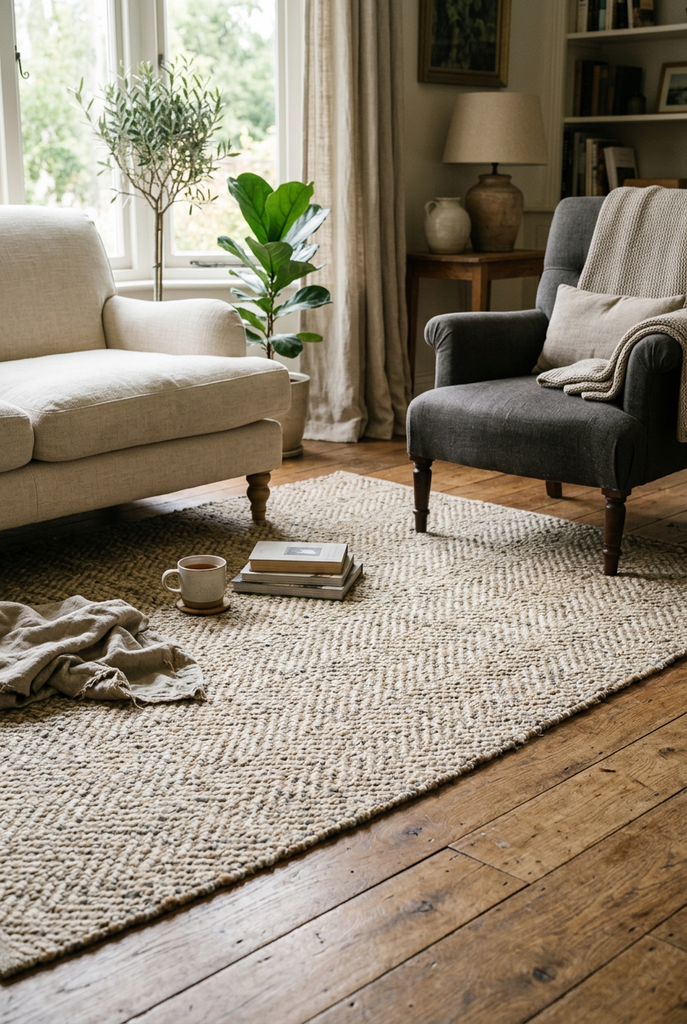
A rug that is too small is one of those living room mistakes that instantly makes a room look unfinished. When a tiny rug floats in the middle with no furniture touching it, the whole space feels disconnected and cramped.
I made this exact mistake in my last apartment. I bought a rug that looked plenty big online, but once it landed under the coffee table, it barely reached the front of my sofa.
The fix is simple. At least the front legs of your sofa and chairs should sit on the rug, and ideally all four legs do if your budget and room size allow it. This visually ties the whole seating area together instead of leaving it stranded.
6. Buying a Matching Furniture Set
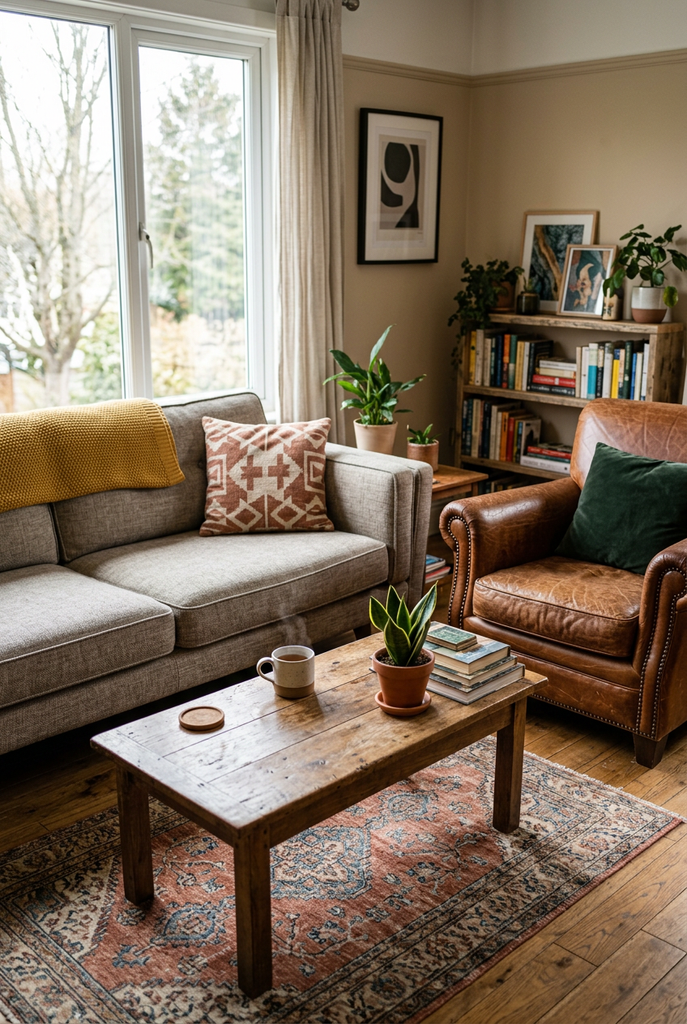
A matching sofa, loveseat, and armchair set feels like the safe choice, and furniture stores love to sell them as one bundle. The problem is that matchy-matchy sets can make a living room look like a hotel lobby instead of a home.
Mixing textures, eras, and even slightly different tones gives a room personality. A leather armchair next to a fabric sofa, or a vintage side table beside a modern coffee table, reads as intentional rather than mismatched, as long as you keep a common thread like color or wood tone running through the room.
You do not need to throw out matching furniture you already own either. Adding one or two unexpected pieces, like a patterned accent chair or an antique lamp, breaks up the sameness without a full furniture overhaul.
7. Hanging Artwork Too High
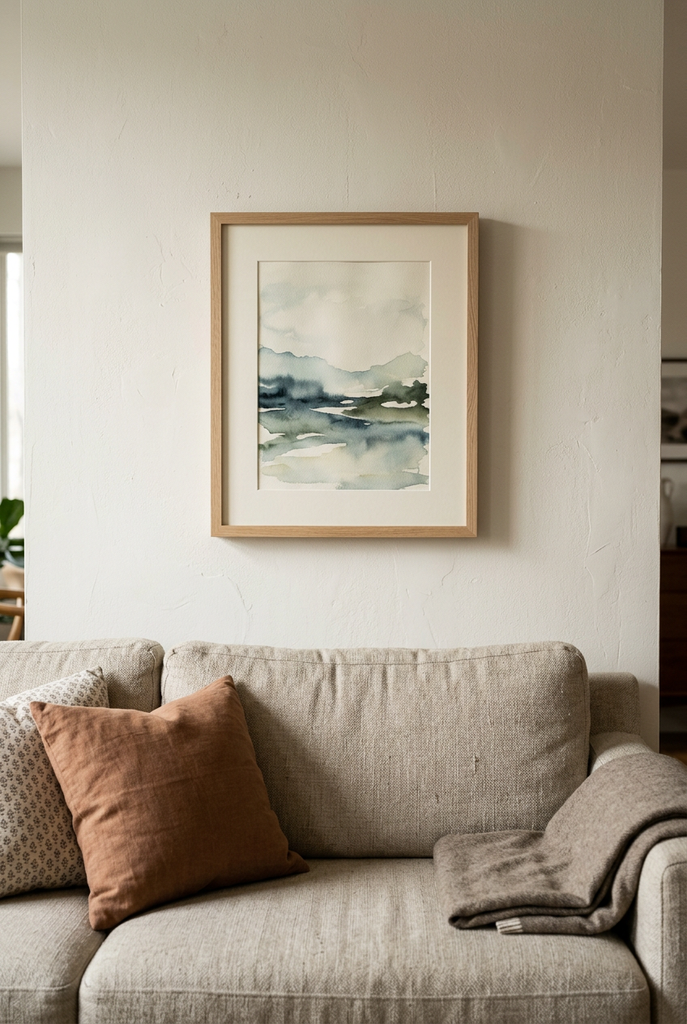
This one is sneaky because it seems harmless, yet it throws off an entire wall. Art hung too close to the ceiling leaves a large gap of empty wall below it and makes the ceiling feel lower than it is.
The general guideline is hanging artwork so the center sits around eye level, roughly 57 to 60 inches from the floor. Above a sofa, leave about 6 to 8 inches between the top of the furniture and the bottom of the frame.
Getting this right instantly makes a room feel more considered, even if nothing else changes. It is one of the fastest and cheapest living room design fixes on this entire list.
8. Overcrowding the Room with Too Much Furniture
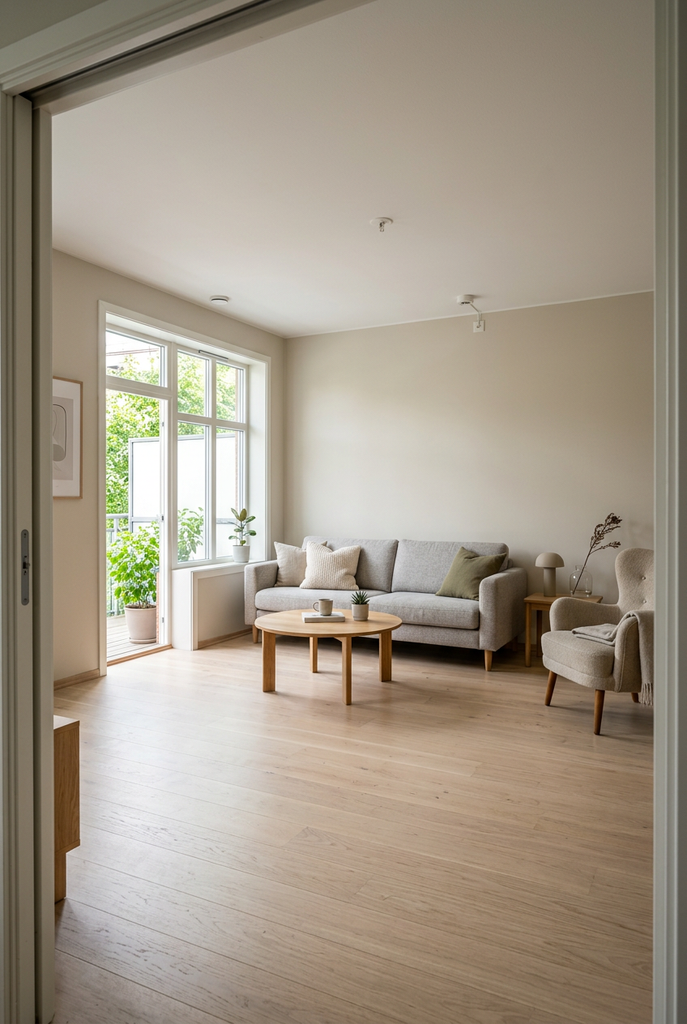
More furniture does not equal more comfort. Cramming in an extra armchair, a second coffee table, or one too many side tables can make even a spacious living room feel tight and cluttered.
Every piece should earn its spot. If you cannot walk through the room comfortably or the furniture blocks natural pathways, something needs to go, even if you love that piece on its own.
A good habit is picking a handful of key pieces and a few purposeful accents instead of filling every open corner. Negative space is not wasted space. It actually makes a living room feel calmer and more expensive.
| Mistake | Better Alternative |
|---|---|
| Rug too small for the seating area | Fit at least the front furniture legs on the rug |
| Matching furniture sets | Mix textures and eras with one unifying color or tone |
| Artwork hung too high | Center art at eye level, 6 to 8 inches above furniture |
| Overcrowded layout | Keep key pieces only and leave breathing room |
Simple Living Room Design Tips That Tie Everything Together
Once the bigger layout and furniture mistakes are fixed, small details finish the job. Color is one of the easiest places people play it too safe, sticking to all neutrals and wondering why the room feels flat.
Adding color does not mean repainting every wall. A few throw pillows, a bold piece of art, or even a colorful vase can bring warmth and personality into an otherwise neutral living room without much risk.
Personal touches matter just as much as the big decisions. Books you actually read, photos that mean something, or a plant you enjoy caring for make a living room feel lived in, not staged for a magazine.
Final Thoughts on Fixing Common Living Room Design Mistakes
Every mistake covered in this guide has one thing in common. None of them require a full renovation or a massive budget to fix.
Pulling furniture off the walls, layering your lighting, sizing your rug properly, and hanging art at eye level are small, affordable changes. Yet together, they completely change how a living room feels to live in.
The biggest shift happens when you start treating your living room as one connected space instead of a bunch of separate purchases. Once you plan around a focal point and let every piece support that plan, the room finally clicks.
I have tested most of these fixes in my own homes over the years, and the difference is always noticeable within a day. You do not need a designer’s eye. You just need to know which mistakes to look for.
Start with one or two changes from this list, like fixing your rug size or adding a second lamp. Small wins build momentum, and before long, your living room will feel like the room you always pictured.
Frequently Asked Questions
What is the most common living room design mistake?
Pushing all the furniture against the walls is one of the most common living room layout mistakes. It creates a large empty gap in the middle and makes conversation feel awkward.
How big should a living room rug be?
Your rug should be large enough for at least the front legs of your sofa and chairs to sit on it. A rug that floats alone with no furniture touching it usually looks too small.
Is it bad to buy a matching living room furniture set?
It is not wrong, but an entirely matching set can look impersonal. Mixing in one or two different textures or styles usually makes the room feel more collected and less like a showroom.
How high should I hang artwork above my sofa?
Leave about 6 to 8 inches between the top of your sofa and the bottom of the frame. The center of the artwork should generally sit around eye level, close to 57 to 60 inches from the floor.
Why does my living room feel cluttered even though it is not messy?
Overcrowding is often the real cause. Too many furniture pieces or accents, even neatly arranged ones, can make a room feel tight and visually busy.
Do I need a focal point in my living room?
A focal point makes arranging furniture much easier, so it helps a lot. A fireplace, media wall, or large window works well, and you can create one with art or an accent wall if your room lacks an obvious feature.
Can I fix these living room mistakes on a small budget?
Yes, most of these fixes cost very little. Rearranging furniture, adjusting art height, and adding an affordable lamp make a noticeable difference without a full redesign.