
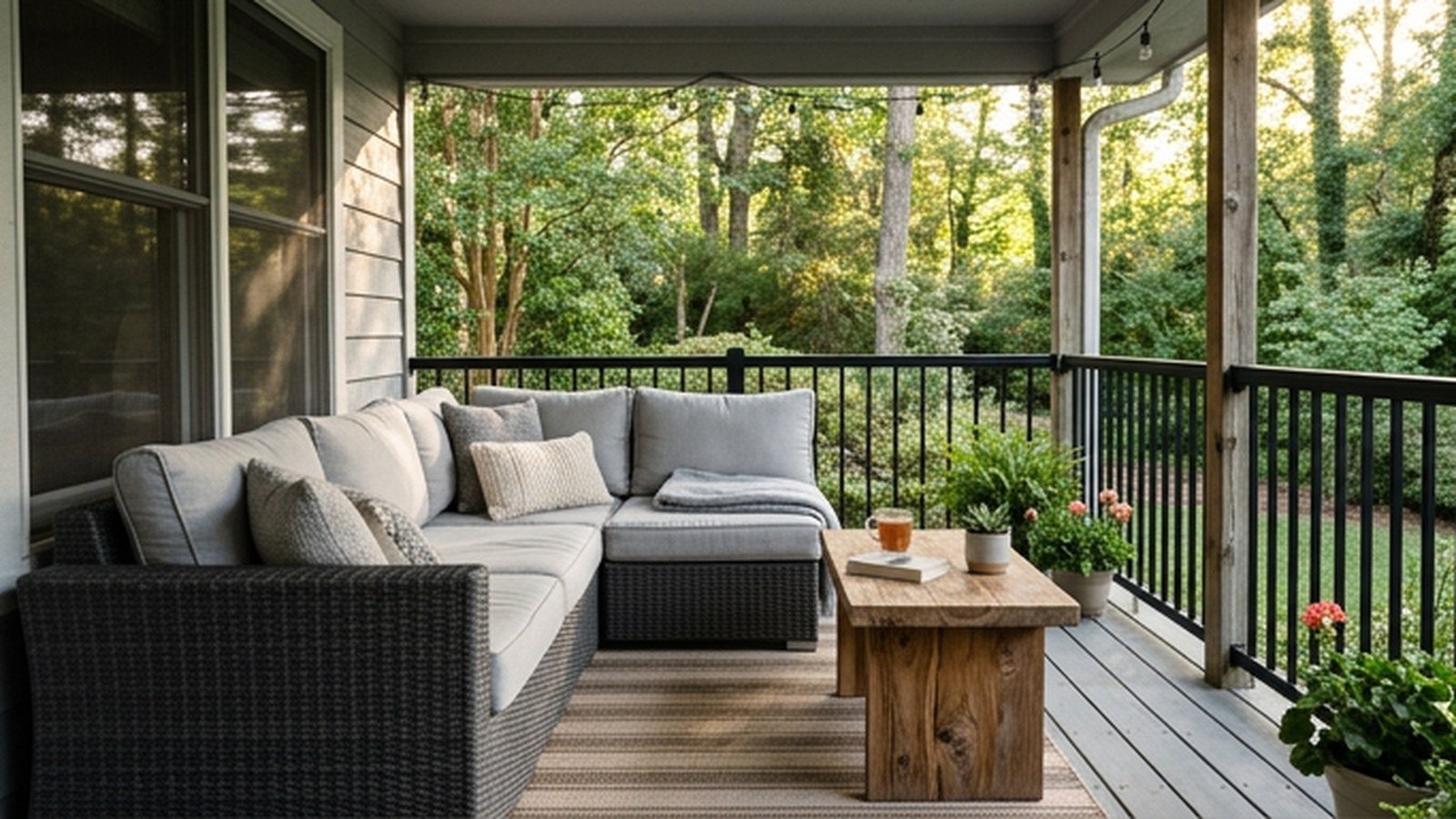
Grey back porch ideas use a neutral, sophisticated color palette to bring the same contemporary design sensibility found inside a modern home out onto an often-overlooked outdoor living space. Grey works particularly well for this purpose because the color reads as calm and versatile, pairing naturally with the wood, metal, and stone materials common in porch furniture and hardscaping. Fifteen concepts below cover the flooring, furniture, and accent choices that build this look on any back porch.
I redesigned my own back porch around a grey palette after years of mismatched furniture accumulated without any real plan, and the shift toward a cohesive, contemporary look happened faster and more affordably than I expected. Grey provides a genuinely versatile backdrop that lets furniture, plants, and accent colors do the visual work, rather than fighting against a busy or dated existing color scheme.
Below you will find fifteen numbered concepts covering flooring, furniture, lighting, and accents, plus a cost comparison table and a rundown of the mistakes that make a grey porch feel cold rather than contemporary. Each idea includes a sub-angle on cost, sourcing, or what commonly goes wrong so you can build the look with a realistic budget. By the end you should know exactly which grey elements carry the most visual impact in this specific outdoor space.
Why Grey Works So Well For A Contemporary Back Porch
Grey succeeds as a back porch palette because it bridges the gap between a home’s interior design language and its exterior surroundings, reading as sophisticated without competing against the natural greenery and sky tones already present in any outdoor setting. This bridging quality means a grey porch feels like a genuine extension of the home’s interior rather than a disconnected outdoor afterthought. Most designers consider grey one of the more versatile color choices for exactly this transitional purpose.
Grey also photographs and wears well across changing light conditions throughout the day, from harsh midday sun to soft evening light, unlike bolder colors that can shift dramatically in appearance depending on lighting. This visual consistency matters specifically for an outdoor space experiencing considerably more variable lighting than an interior room ever would. Understanding this practical advantage helps explain why grey has remained popular for exterior and semi-exterior spaces specifically.
| Design Element | Traditional Wood-Toned Porch | Grey Contemporary Porch |
|---|---|---|
| Interior connection | Lower, feels separate | Higher, reads as extension |
| Light consistency | Shifts with lighting | Remains stable |
| Furniture flexibility | Moderate | High, pairs with most styles |
A complete grey back porch update, covering flooring, furniture, and accents, typically costs $1,500 to $6,000 depending on whether existing structural elements are repainted or fully replaced. This range reflects how much of this style can be achieved through paint, furniture, and accessories alone, without necessarily requiring structural renovation. Understanding this helps set realistic budget expectations before starting the project.
Planning Your Grey Porch Palette And Material Mix
Planning starts with choosing a specific grey undertone, warm or cool, that complements your home’s existing exterior siding or brick color, since a grey that clashes with the home’s existing exterior palette can look disconnected rather than intentionally coordinated. Testing paint or stain swatches against the actual home exterior under natural daylight conditions avoids a color mismatch discovered only after painting is complete.
Balancing hard and soft materials matters considerably on a porch specifically, since an all-hard-surface grey palette, concrete, metal, and stone, can feel cold without genuine textile softness from cushions, rugs, and pillows to counteract it. Most successful grey porches layer in warm wood tones and soft textiles specifically to prevent this cold, clinical feeling.
The biggest planning mistake is choosing porch materials not genuinely rated for outdoor or semi-outdoor exposure, since a porch experiences considerably more humidity, temperature swings, and UV exposure than any interior room. Choosing weather-resistant, UV-treated materials specifically marketed for outdoor or covered-porch use protects the investment from premature fading or deterioration.
Choosing Between A Covered And An Open Back Porch Approach
A fully covered back porch, protected from direct rain and intense sun exposure, allows for slightly more flexibility in material choices, since covered furniture and textiles experience less extreme weather exposure than a fully open porch would. This covered protection still requires weather-appropriate materials but with somewhat more room for choices that might not survive direct, unprotected outdoor exposure. Most homeowners with a covered porch find this flexibility genuinely useful when selecting furniture and textiles.
An open back porch, fully exposed to rain, sun, and temperature extremes, requires stricter material choices throughout, since anything not genuinely rated for full outdoor exposure will deteriorate considerably faster in this more demanding environment. Choosing furniture, textiles, and finishes specifically rated for full outdoor exposure, rather than assuming covered-porch-rated materials will suffice, protects the investment appropriately for this more exposed application.
1. Grey Composite Decking With Wood-Look Grain
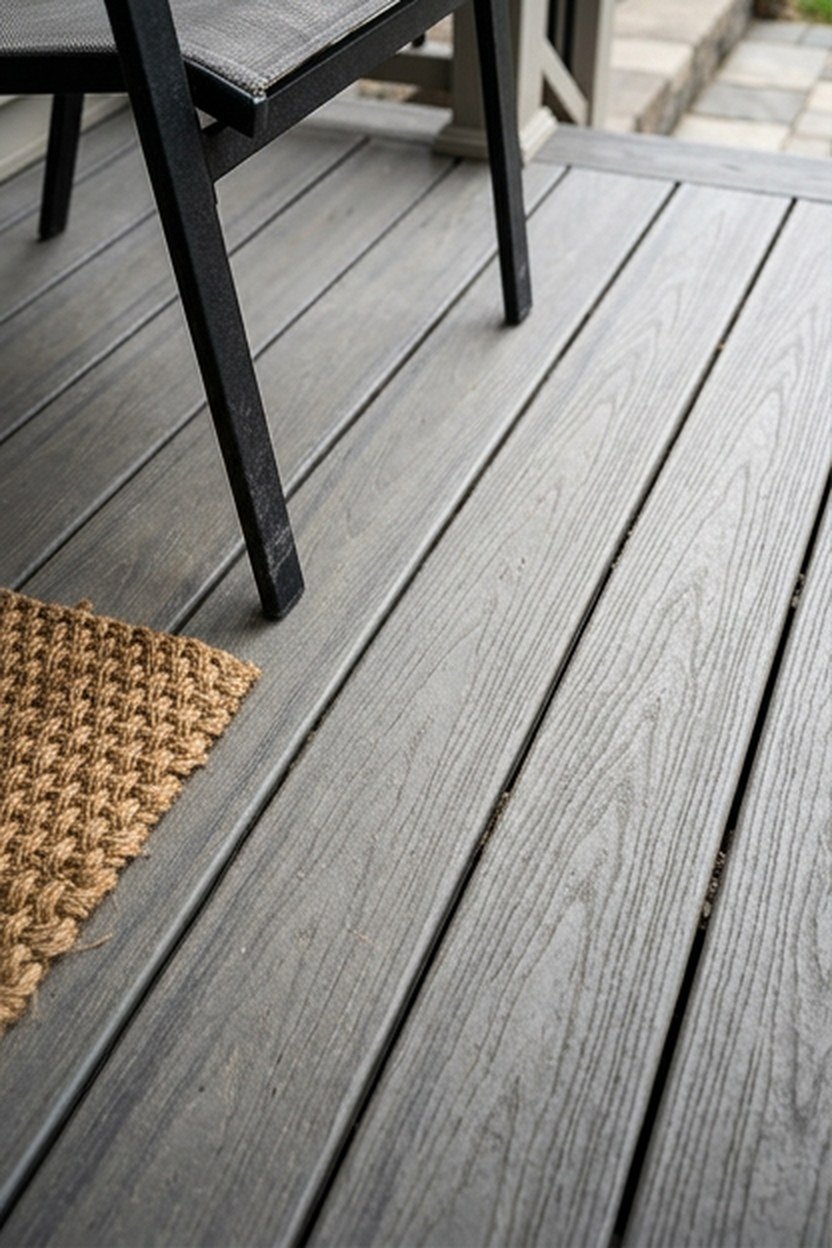
Grey composite decking, engineered to mimic natural wood grain while resisting the rot, warping, and fading that real wood experiences outdoors, provides a durable, low-maintenance flooring foundation for the entire porch design. This decking material has become increasingly popular specifically because it delivers the visual warmth of wood grain while requiring considerably less ongoing maintenance than real lumber.
Choosing a composite decking product with a genuinely convincing wood grain texture, rather than a flatter, more obviously synthetic surface, ensures the material delivers real visual warmth despite its engineered composition. Most quality composite decking manufacturers now offer several grain pattern and texture options specifically to address this authenticity concern.
Selecting a grey tone that complements rather than clashes with the home’s existing exterior siding or trim color ensures the decking integrates visually with the rest of the home’s exterior. Bringing an actual decking sample to view against your home’s exterior before finalizing the full order avoids a color mismatch discovered only after installation is complete.
Cost And Texture Guidance
Grey composite decking typically costs $8 to $15 per square foot installed, depending on product quality and installation labor costs in your specific area. Choosing a composite product with a genuine wood grain texture and matte finish, rather than a glossier, more obviously synthetic surface, delivers a considerably more convincing and sophisticated final appearance.
A common mistake is choosing composite decking without confirming its slip resistance rating, particularly important for a porch surface that regularly experiences rain or moisture exposure. Confirming the specific product’s slip resistance rating with your supplier before purchase prioritizes genuine safety alongside the material’s aesthetic and durability benefits.
2. Charcoal Grey Outdoor Sectional Sofa
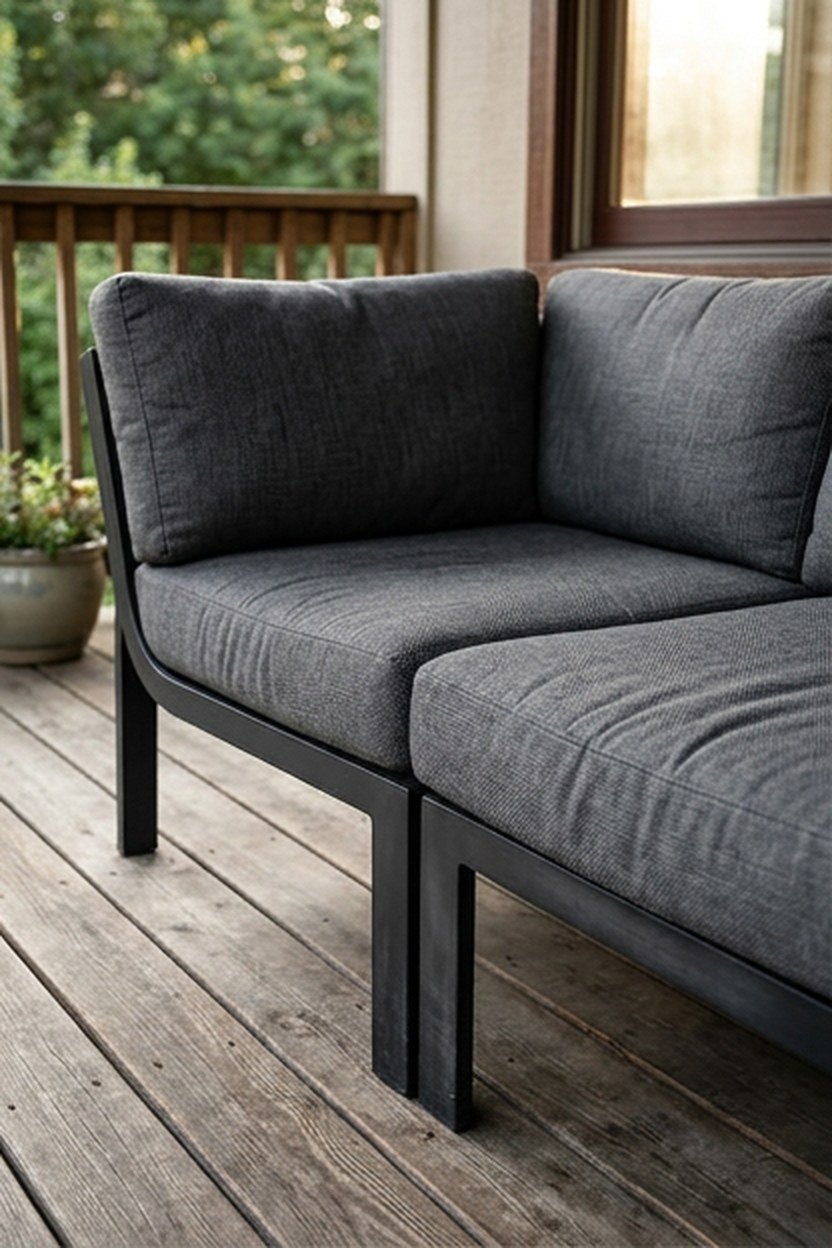
A charcoal grey outdoor sectional sofa anchors the porch’s seating area with a substantial, comfortable furniture piece that suits both casual daily use and larger gatherings. This sectional style provides considerably more flexible seating configuration than individual chairs, allowing the arrangement to adapt to different gathering sizes and porch layouts.
Choosing a sectional with genuinely weather-resistant cushion fabric, typically a solution-dyed acrylic rather than standard indoor upholstery fabric, ensures the cushions resist fading and moisture damage even with regular outdoor exposure. This fabric rating consideration matters more for this piece than almost any other on this list, given how much surface area the cushions represent. Confirming this fabric rating with the manufacturer before purchase is worth the extra verification step.
Selecting a sectional frame material, aluminum, teak, or a weather-resistant wicker, appropriate for your specific porch’s exposure level, whether fully covered or more open to the elements, ensures the frame itself holds up alongside the cushion fabric. This frame material consideration is worth weighing against your porch’s specific covered or open status discussed earlier in this guide’s planning section. Most furniture retailers can advise on appropriate frame choices for different exposure levels.
Cost And Fabric Guidance
A charcoal grey outdoor sectional sofa typically costs $800 to $3,000 depending on size, frame material, and cushion fabric quality. Choosing cushion covers that are removable and machine washable, rather than fully integrated cushions, simplifies cleaning and seasonal storage considerably.
A common mistake is choosing a sectional with standard indoor-rated cushion fabric because it initially costs less than genuine outdoor-rated fabric, resulting in premature fading and mildew within just one season of regular outdoor use. Confirming the fabric is specifically solution-dyed and rated for outdoor use, even at a higher upfront cost, avoids this expensive and disappointing premature deterioration.
3. Grey Stone Pavers For The Porch Surround
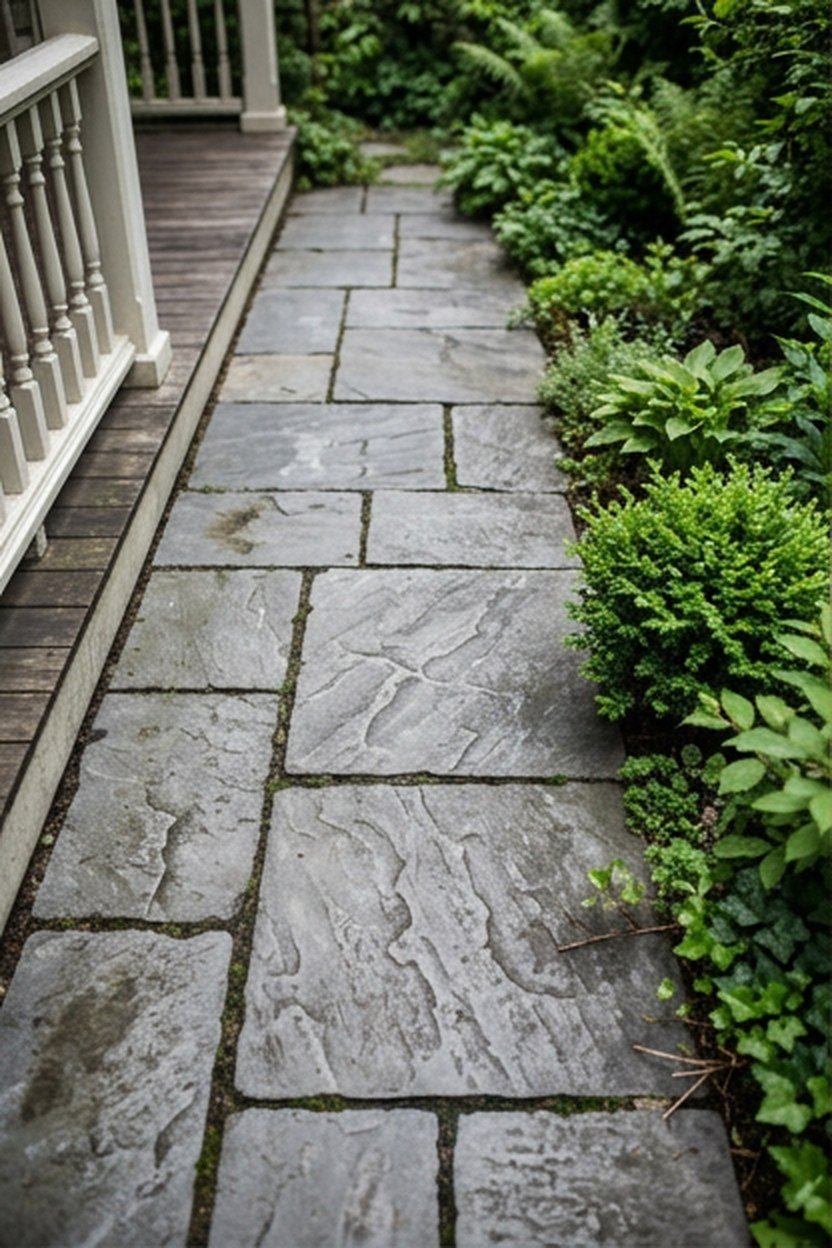
Grey stone pavers, installed around the porch’s perimeter or as a transitional walkway leading to the yard, extend the contemporary grey palette beyond the porch’s immediate footprint into the surrounding landscape. This material choice creates a cohesive visual transition between the porch and the broader outdoor living space rather than treating the porch as an isolated design element.
Choosing pavers with a consistent grey tone across the entire installation, rather than a highly variegated stone with dramatic color variation, maintains the cohesive, contemporary look this style depends on throughout the surrounding hardscape. Selecting a paver size and laying pattern appropriate for the space’s actual proportions, larger pavers for a more spacious area and smaller ones for a more compact space, keeps the installation feeling proportionally considered.
Ensuring proper drainage and a stable base beneath the pavers, rather than simply laying stone directly on unprepared soil, prevents shifting, settling, or water pooling issues that can develop within just a few seasons of installation. This foundation preparation step is worth the additional upfront cost and time it requires, given how much more expensive and disruptive a full paver reinstallation would be if the foundation fails.
Cost And Foundation Guidance
Grey stone pavers typically cost $10 to $25 per square foot installed, depending on stone type and the complexity of any required foundation preparation work. Hiring a landscaper experienced specifically in paver installation, rather than attempting this as a first-time DIY project, ensures the foundation and drainage work meets the standards needed for long-term durability.
A common mistake is skipping proper foundation preparation to save on upfront installation cost, resulting in pavers that shift, settle unevenly, or develop drainage problems within just a few years. Insisting on proper base preparation and drainage planning, even if this adds cost and time to the project, protects the long-term durability of this substantial hardscape investment.
4. Black Metal Railing With Grey Accents
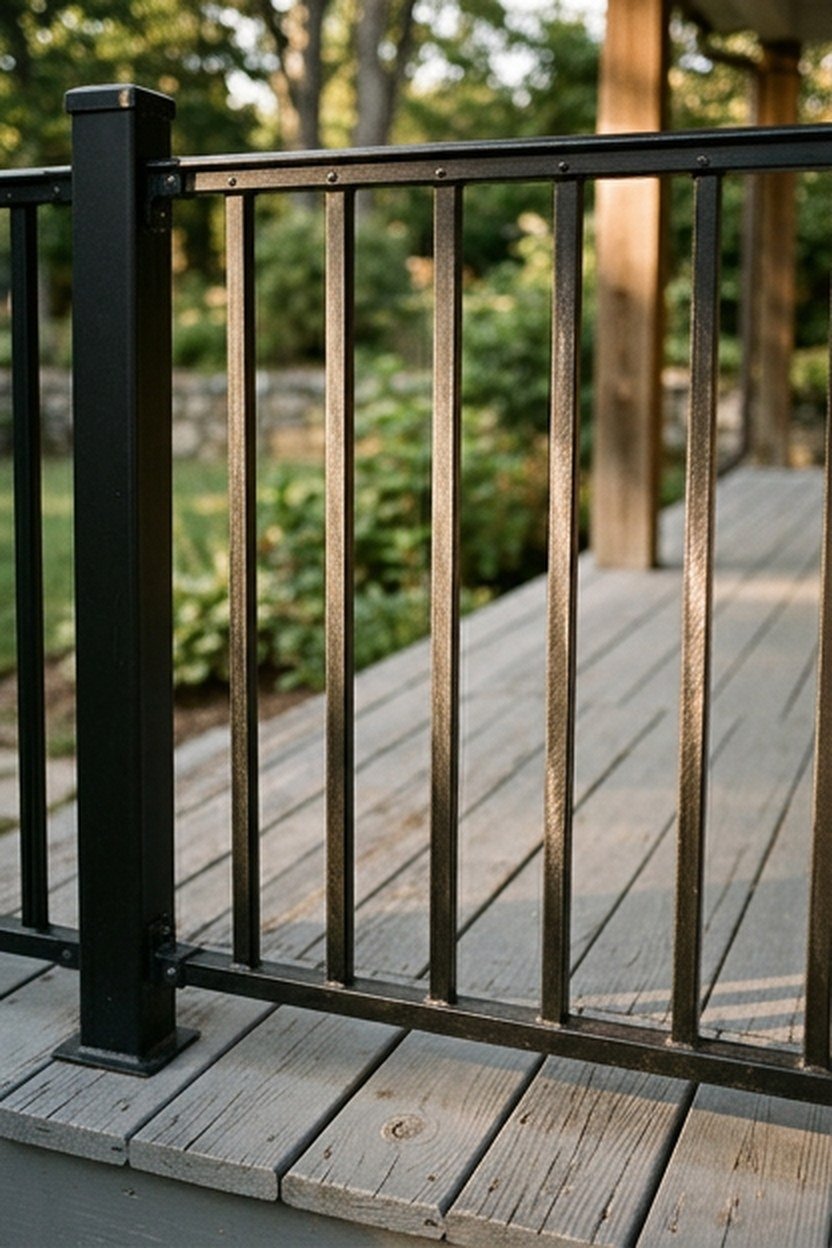
Black metal railing, paired with grey decking or flooring, introduces a striking contemporary contrast that anchors the porch’s overall material and color palette. This railing style has become a signature element of modern outdoor design specifically because the slim, dark profile reads as considerably more sophisticated than a bulkier white or wood-toned traditional railing.
Choosing a railing with clean, simple vertical or horizontal lines, rather than an ornate traditional baluster design, maintains the contemporary aesthetic this style depends on throughout every structural element. Selecting a powder-coated finish, rather than raw or simply painted metal, ensures the railing resists rust and weathering considerably better over years of outdoor exposure.
Confirming the railing meets local building code requirements for height and baluster spacing, particularly important for any porch elevated above ground level, ensures the installation is both safe and legally compliant. This code compliance consideration is worth confirming with a local contractor or building department before finalizing any railing design, regardless of how visually appealing a particular non-compliant design might seem.
Cost And Code Compliance Guidance
Black metal railing with a powder-coated finish typically costs $30 to $80 per linear foot installed, depending on design complexity and material gauge. Confirming local building code requirements for railing height and baluster spacing before finalizing the design avoids a costly redesign forced by a failed inspection later in the project.
A common mistake is choosing a raw or inadequately finished metal railing that develops visible rust within just a season or two of outdoor exposure, undermining the sleek, contemporary appearance this element is meant to provide. Confirming the railing has a genuine powder-coated or otherwise weather-resistant finish, rather than simply painted raw metal, avoids this premature and unattractive deterioration.
5. Grey And White Striped Outdoor Rug
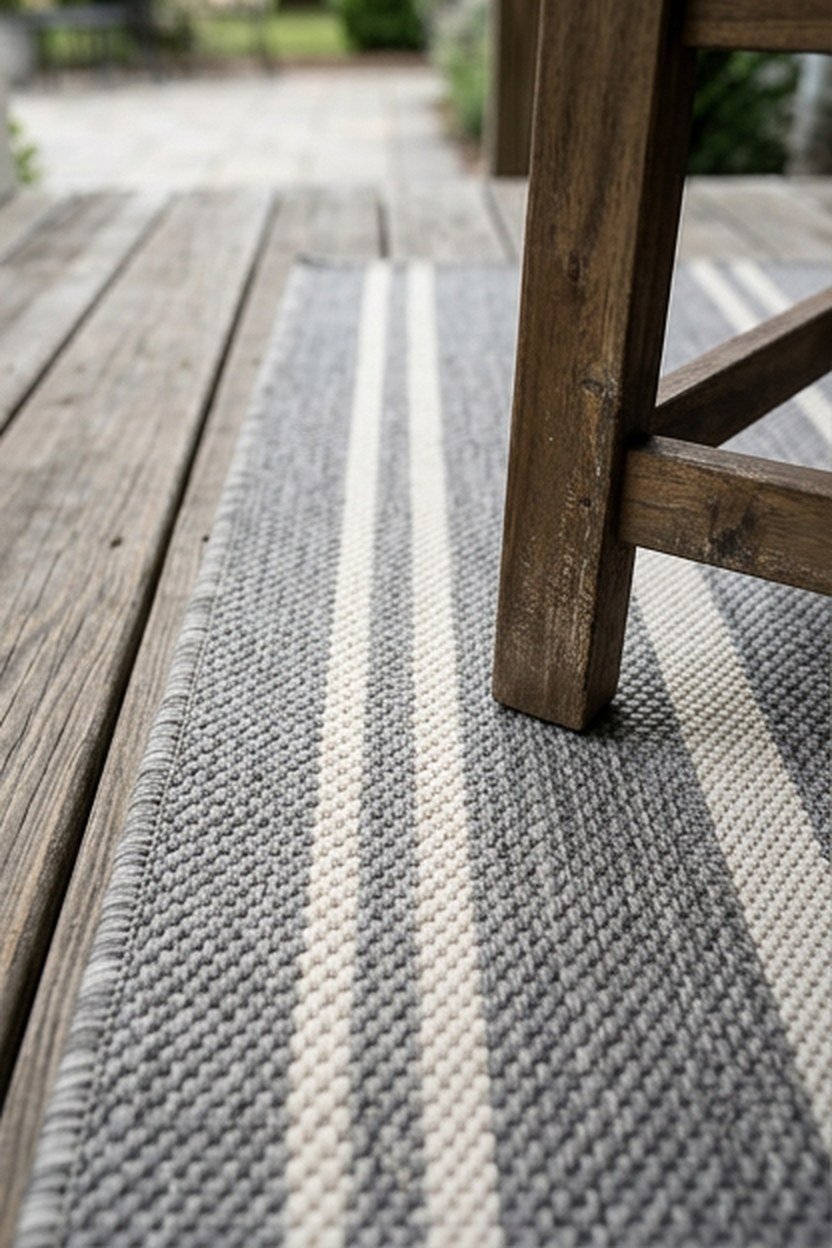
A grey and white striped outdoor rug, sized to define the porch’s primary seating area, introduces pattern and softness at floor level while remaining durable enough for regular outdoor exposure. This rug style has become a signature accent for contemporary outdoor spaces specifically because the classic stripe pattern reads as timeless rather than tied to a passing decor trend.
Choosing a rug specifically rated for outdoor use, typically constructed from polypropylene or a similar weather-resistant synthetic fiber, ensures the material resists fading, mildew, and moisture damage even with regular exposure to rain and humidity. This material rating consideration matters more for this piece than for almost any indoor rug application, given the porch’s genuinely demanding environmental conditions. Confirming this outdoor rating before purchase is worth the extra verification step.
Sizing the rug appropriately for the seating area it defines, large enough that furniture legs rest at least partially on the rug rather than floating entirely off its edge, creates a more finished, intentional appearance. This sizing consideration applies to any rug application but is worth confirming specifically for this outdoor context, where the rug also needs to withstand foot traffic in and out of the home. Measuring the actual seating arrangement before ordering avoids a disappointing undersized fit.
Cost And Material Guidance
A grey and white striped outdoor rug typically costs $80 to $250 depending on size and material quality. Choosing a rug that can be easily hosed off or spot cleaned, rather than one requiring specialty cleaning products or professional service, simplifies maintenance considerably given how much dirt and debris an outdoor rug typically accumulates. This easy-cleaning consideration is worth prioritizing when comparing different outdoor rug options.
A common mistake is choosing an indoor-rated rug for this outdoor application because it costs less or offers a more elaborate pattern selection, resulting in premature fading, mildew, or material breakdown within just one season of regular outdoor exposure. Confirming the rug is specifically rated and marketed for outdoor use, even at a higher cost than a similar-looking indoor option, avoids this expensive and disappointing premature deterioration.
6. Modern Grey Outdoor Pendant Lighting
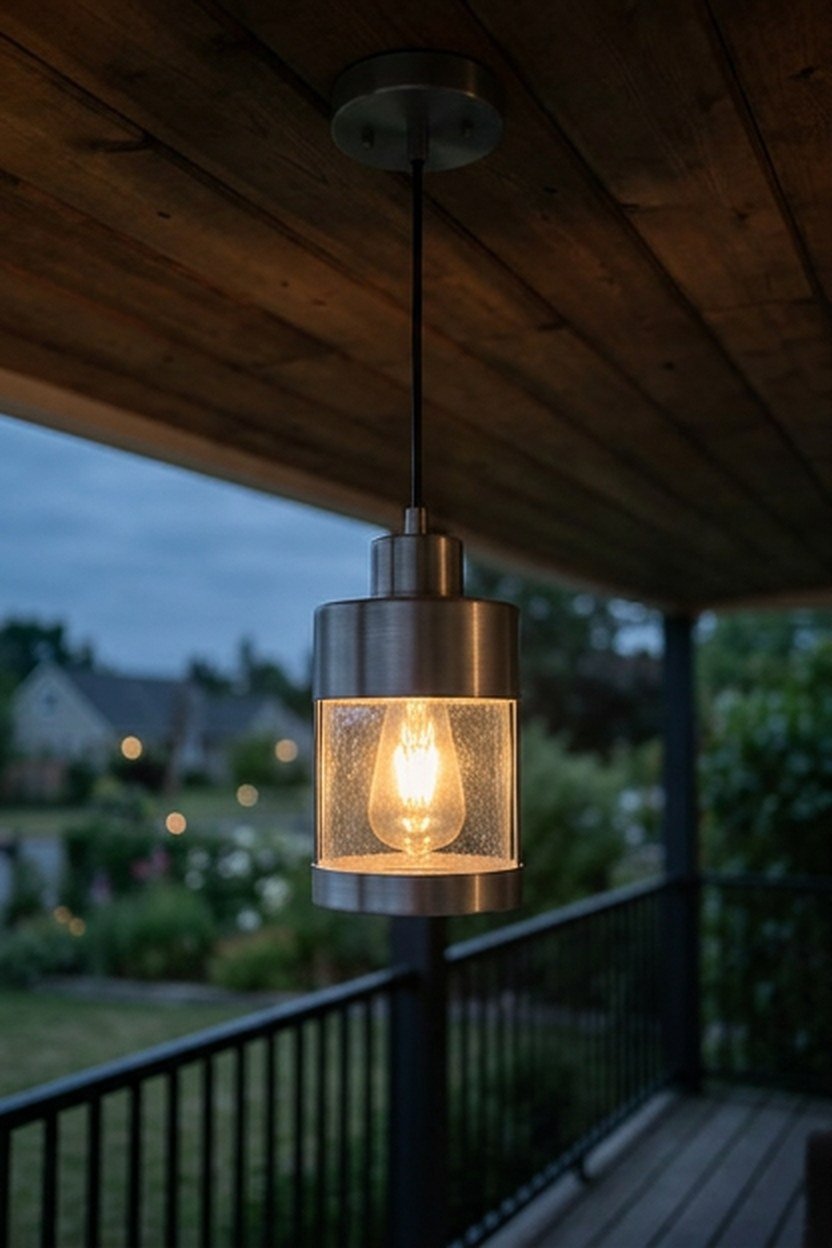
Modern grey outdoor pendant lighting, hung from the porch ceiling or roof structure, introduces contemporary lighting design while providing genuine ambient illumination for evening porch use. This fixture style typically features clean geometric forms consistent with the broader contemporary aesthetic established throughout the porch’s furniture and material choices. This lighting upgrade often elevates the porch’s overall finished appearance considerably beyond what furniture and flooring alone can achieve.
Choosing fixtures specifically rated for outdoor or wet-location use, rather than an interior pendant adapted for outdoor application, ensures the electrical components resist moisture damage and function safely over years of exposure. This rating consideration is non-negotiable for any electrical fixture installed in an outdoor or semi-outdoor space, regardless of how appealing an indoor-rated alternative might look. Confirming this outdoor electrical rating with the manufacturer before purchase is a genuine safety requirement, not merely a preference.
Hiring a licensed electrician for any new wiring this installation requires, rather than attempting a DIY electrical installation in an outdoor setting, ensures the work meets safety code and functions reliably despite ongoing weather exposure. This professional installation consideration matters more for outdoor electrical work than for many interior lighting projects, given the added moisture and safety complexity involved.
Cost And Rating Guidance
Modern grey outdoor pendant lighting typically costs $80 to $300 per fixture depending on size and design complexity, plus installation cost if new electrical wiring or hardwiring is required. Confirming the fixture’s wet-location or damp-location rating, appropriate to whether your porch is fully covered or more exposed, ensures the correct product is chosen for your specific installation conditions.
A common mistake is installing an interior-rated pendant fixture outdoors because it matches the desired aesthetic more closely than available outdoor-rated options, creating a genuine electrical safety hazard given the fixture’s lack of proper moisture sealing. Insisting on a properly outdoor-rated fixture, even if this requires more searching to find a matching aesthetic, avoids this serious safety risk. This safety-first material selection is worth prioritizing over purely aesthetic considerations for any outdoor electrical fixture.
7. Grey Painted Brick Or Stone Fireplace
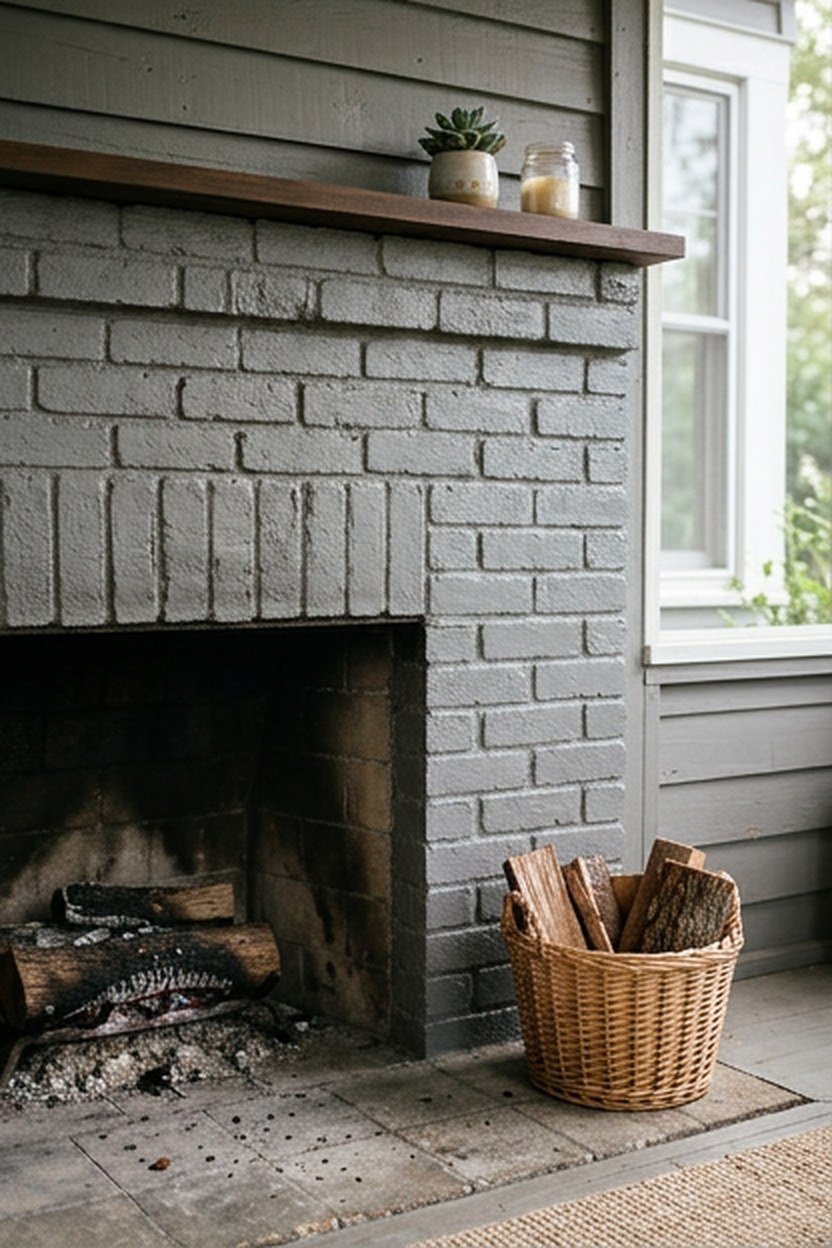
A grey painted brick or stone fireplace, if the porch includes this feature, transforms an existing traditional red brick or natural stone fireplace into a contemporary focal point consistent with the porch’s broader grey palette. This painting technique is considerably more affordable than replacing an existing fireplace structure entirely, while still delivering a substantial visual transformation.
Choosing a masonry-specific paint product, rather than standard exterior wall paint, ensures proper adhesion and breathability for the brick or stone material, which requires different paint chemistry than typical siding or wood surfaces. This masonry-specific paint consideration is worth confirming with your paint supplier before beginning this specific project. Skipping this material-appropriate paint selection risks premature peeling or trapped moisture damage within the masonry itself.
Testing the chosen grey tone on a small, inconspicuous section of the fireplace before committing to the full painting project confirms the color reads as intended against the specific brick or stone’s existing texture and color variation. This sample testing step is worth the small delay it adds, particularly given how difficult and costly it would be to reverse an unsatisfactory full fireplace repainting.
Cost And Paint Selection Guidance
Painting an existing brick or stone fireplace in grey typically costs $200 to $600 in materials for a DIY project, or considerably more if a professional painter with masonry experience is hired. Choosing a breathable, masonry-specific paint formulated to allow moisture vapor to escape through the material, rather than a fully sealing paint, prevents trapped moisture damage that can develop within the brick or stone over time.
A common mistake is using a standard exterior paint not formulated for masonry application, resulting in trapped moisture that can cause spalling or crumbling within the brick or stone over subsequent seasons. Confirming the paint product is specifically formulated and marketed for masonry use, rather than a general exterior paint used incorrectly on this material, avoids this potentially serious and costly material damage. This masonry-specific product selection is worth researching carefully before beginning this particular project.
8. Teak Wood Accent Table Against Grey Backdrop
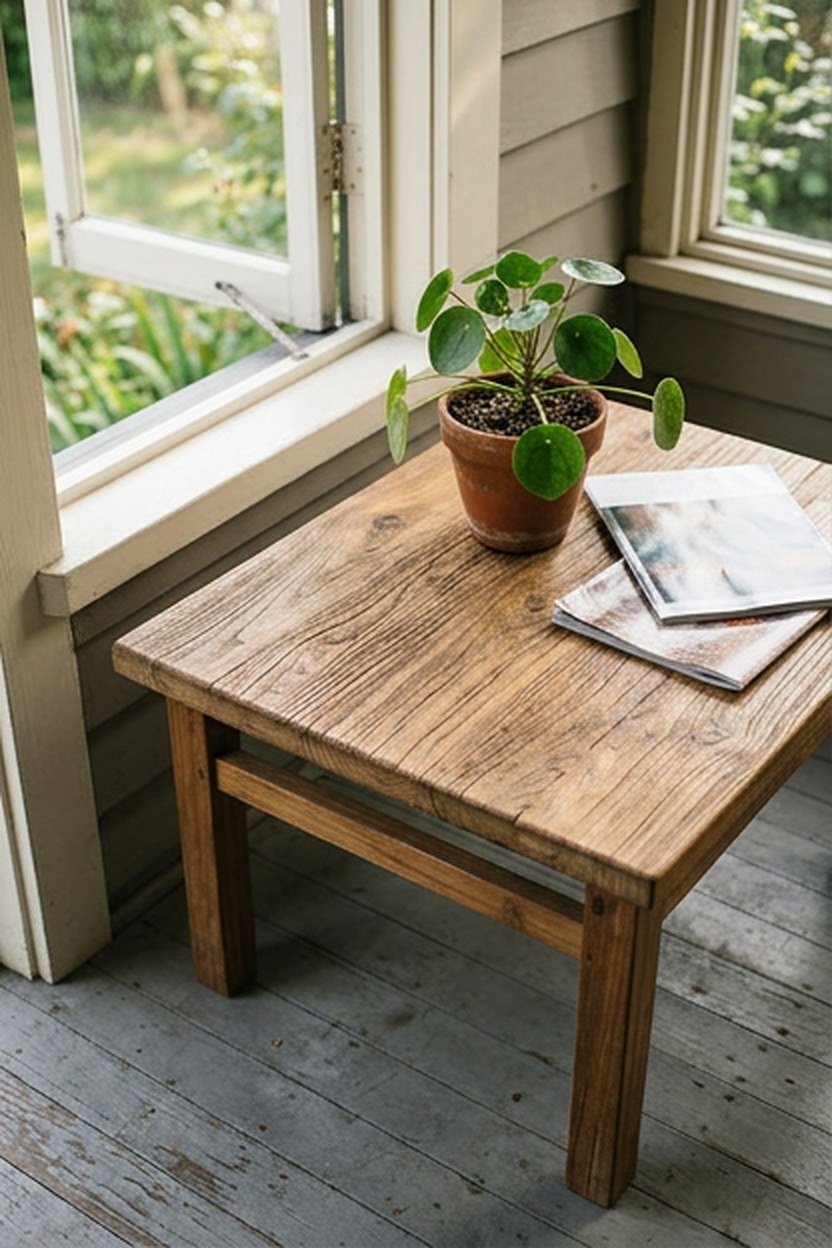
A teak wood accent table, positioned against the porch’s broader grey backdrop, introduces the warm wood contrast this style depends on to avoid feeling cold or overly monochromatic. Teak specifically suits outdoor application given its natural resistance to rot and insect damage without requiring the chemical treatments some other outdoor wood species need.
Choosing a table with clean, simple lines consistent with the broader contemporary aesthetic, rather than an ornate traditional design, maintains stylistic consistency with the porch’s other furniture and material choices. Allowing the teak to weather naturally to a silvery grey patina over time, rather than treating it to maintain its original warm brown tone, actually reinforces the porch’s overall grey palette as the wood ages.
Applying a protective oil treatment periodically, if the household prefers to maintain the teak’s original warm brown tone rather than allowing natural silvering, requires ongoing maintenance commitment discussed clearly with the household before this choice is made. This maintenance consideration is worth weighing honestly against the household’s actual willingness to maintain this kind of ongoing treatment schedule. Most households ultimately choose to let the wood weather naturally given the reduced maintenance this approach requires.
Cost And Weathering Guidance
A teak wood accent table typically costs $200 to $600 depending on size and construction quality. Deciding upfront whether to maintain the wood’s original tone through periodic oiling or allow natural silvering avoids inconsistent maintenance decisions made partway through the table’s lifespan that can result in a patchy, uneven appearance.
A common mistake is applying oil treatment inconsistently, treating the table sporadically rather than committing to either regular maintenance or none at all, resulting in a patchy, uneven weathering pattern that looks unintentional rather than naturally aged. Committing clearly to one approach or the other from the start avoids this inconsistent and visually unattractive outcome.
9. Grey Outdoor Curtains For Privacy And Softness
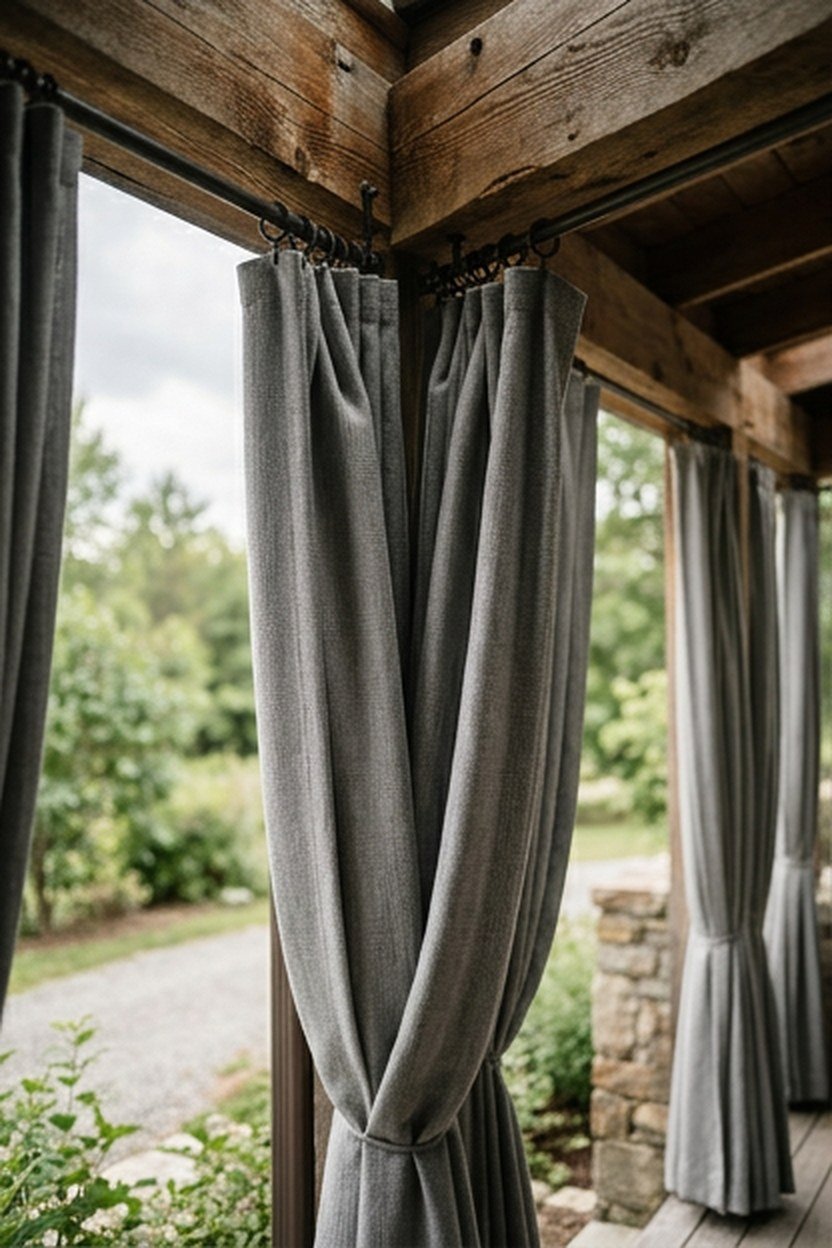
Grey outdoor curtains, hung along the porch’s open sides, introduce fabric softness while providing adjustable privacy and shade control for the space. This detail brings genuine textile texture into a porch environment that otherwise often relies entirely on hard materials, furniture, and flooring for its aesthetic.
Choosing curtains in a genuinely weather-resistant fabric, typically a solution-dyed acrylic similar to the outdoor cushion fabric discussed earlier, ensures the material resists fading and moisture damage with regular outdoor exposure. Installing a sturdy curtain rod or track system rated for outdoor use, rather than an interior rod adapted for this application, ensures the hardware holds up to wind and weather over time.
Positioning the curtains to allow easy opening and closing based on changing sun angles and privacy needs throughout the day, rather than a fixed, permanently drawn configuration, maximizes the practical function this detail provides alongside its aesthetic contribution. This adjustability consideration is worth planning for during the initial installation rather than treating the curtains as purely static decoration. Testing the curtain’s actual ease of operation before finalizing the installation confirms this practical function works as intended.
Cost And Hardware Guidance
Grey outdoor curtains and appropriate outdoor-rated hardware typically cost $150 to $500 depending on the porch’s total curtain length and the number of panels required. Choosing a fabric specifically rated for outdoor use, rather than a similar-looking indoor curtain fabric, avoids the premature fading and mildew that inappropriately rated fabric experiences with regular outdoor exposure.
A common mistake is installing standard interior curtain hardware in this outdoor application, resulting in hardware that rusts or fails structurally within just one or two seasons of wind and weather exposure. Confirming the hardware is specifically rated for outdoor use, with appropriate rust-resistant materials and weather-appropriate mounting, avoids this common and disappointing premature failure.
10. Grey Concrete Planters With Structural Greenery
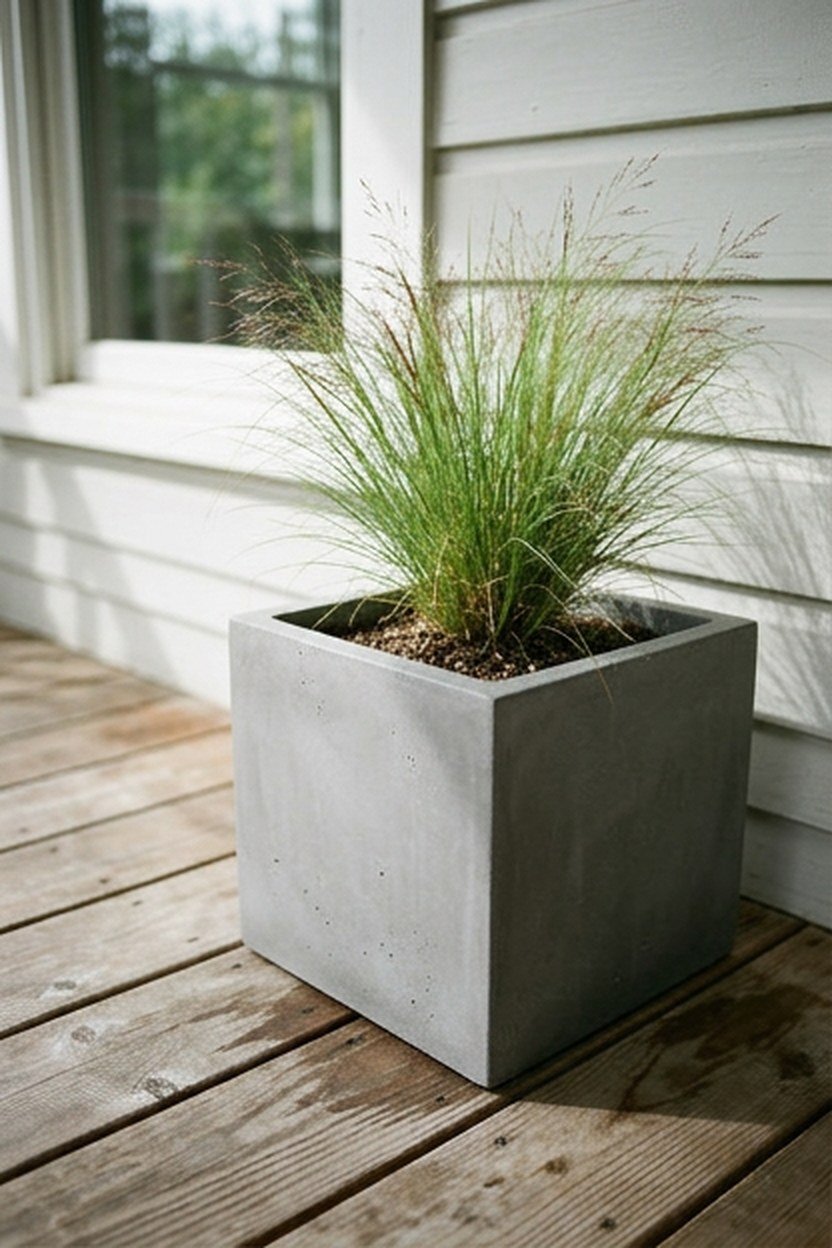
Grey concrete planters, holding structural greenery like ornamental grasses or boxwood, introduce genuine living plant material within containers that match the porch’s broader material palette. This planter style suits the contemporary aesthetic particularly well given concrete’s clean, minimal appearance compared to more ornate traditional planter materials.
Choosing plant varieties with strong architectural form, rather than delicate, wispy plants that can look visually lost against the substantial concrete planters, matches the visual weight these containers carry. Selecting plants well suited to your specific climate and the porch’s actual sun exposure ensures the greenery genuinely thrives rather than struggling within the container over time.
Confirming the concrete planters include proper drainage, or planning to drill drainage holes if the chosen planter lacks them, protects plant root health and prevents water pooling that could damage the porch flooring beneath the containers. This drainage consideration is worth confirming before filling any planter with soil and plants. Most quality outdoor planter manufacturers include proper drainage as a standard feature specifically for this reason.
Cost And Plant Selection Guidance
Grey concrete planters suited for structural greenery typically cost $60 to $250 depending on size, with plants adding a separate cost depending on variety and size at planting. Choosing plant varieties genuinely suited to your specific climate zone and the porch’s actual sun exposure, rather than selecting purely based on appearance, avoids the frustration and expense of replacing struggling plants repeatedly. This climate and light matching consideration is worth researching before any plant purchase for this application.
A common mistake is choosing concrete planters without confirming adequate drainage, resulting in waterlogged soil that damages plant roots and potentially stains or damages the porch flooring beneath the container. Confirming drainage before planting, or adding drainage holes if needed, avoids this common and preventable plant health and flooring damage issue.
11. Grey Slate Tile Flooring For A Covered Porch
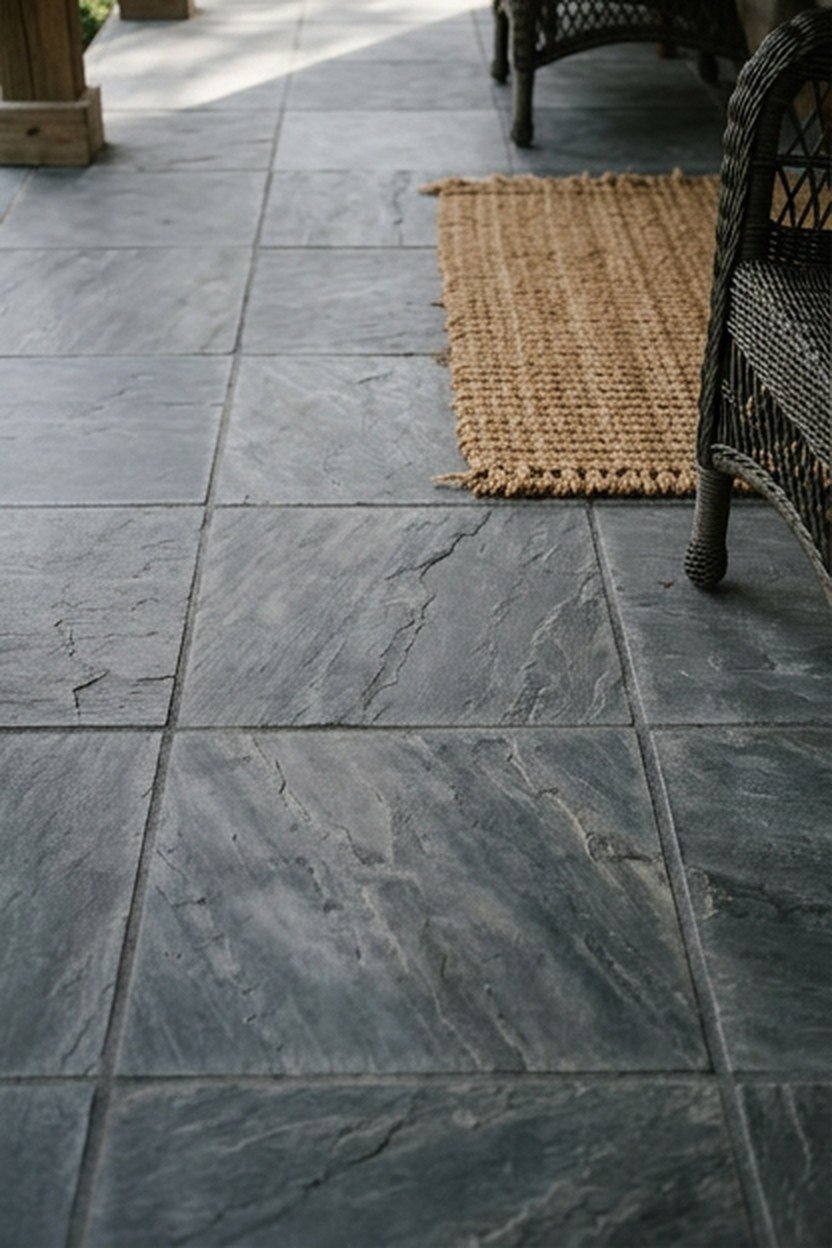
Grey slate tile flooring, suited specifically to a fully covered porch protected from direct rain exposure, introduces genuine natural stone texture and durability at floor level. This material choice provides a more substantial, permanent-feeling flooring option compared to composite decking, suiting a porch intended as a genuine extension of the home’s interior living space.
Choosing slate with a consistent grey tone across the installation, rather than a highly variegated stone with dramatic color shifts, maintains the cohesive contemporary look this style depends on throughout the flooring surface. Selecting a honed or textured slate finish, rather than a polished, glossy surface, provides better slip resistance for a porch floor that may still experience occasional moisture from tracked-in rain or humidity.
Confirming the slate is appropriately sealed for its specific application, protecting the porous natural stone from staining and moisture absorption, extends the material’s long-term durability and appearance. This sealing consideration is worth discussing with your tile installer or a stone specialist before installation, and periodically thereafter as part of ongoing maintenance.
Cost And Finish Guidance
Grey slate tile flooring for a covered porch typically costs $10 to $25 per square foot installed, depending on slate quality and installation labor costs. Choosing a honed rather than polished finish prioritizes genuine slip resistance safety alongside the material’s aesthetic appeal.
A common mistake is choosing slate flooring for a porch without adequate covering, exposing the material to direct rain and freeze-thaw cycles it may not be rated to withstand depending on the specific stone type and your climate. Confirming the slate’s suitability for your specific porch’s exposure level and climate conditions before installation avoids potential cracking or deterioration from inappropriate material selection.
12. Grey And Black Outdoor Dining Set
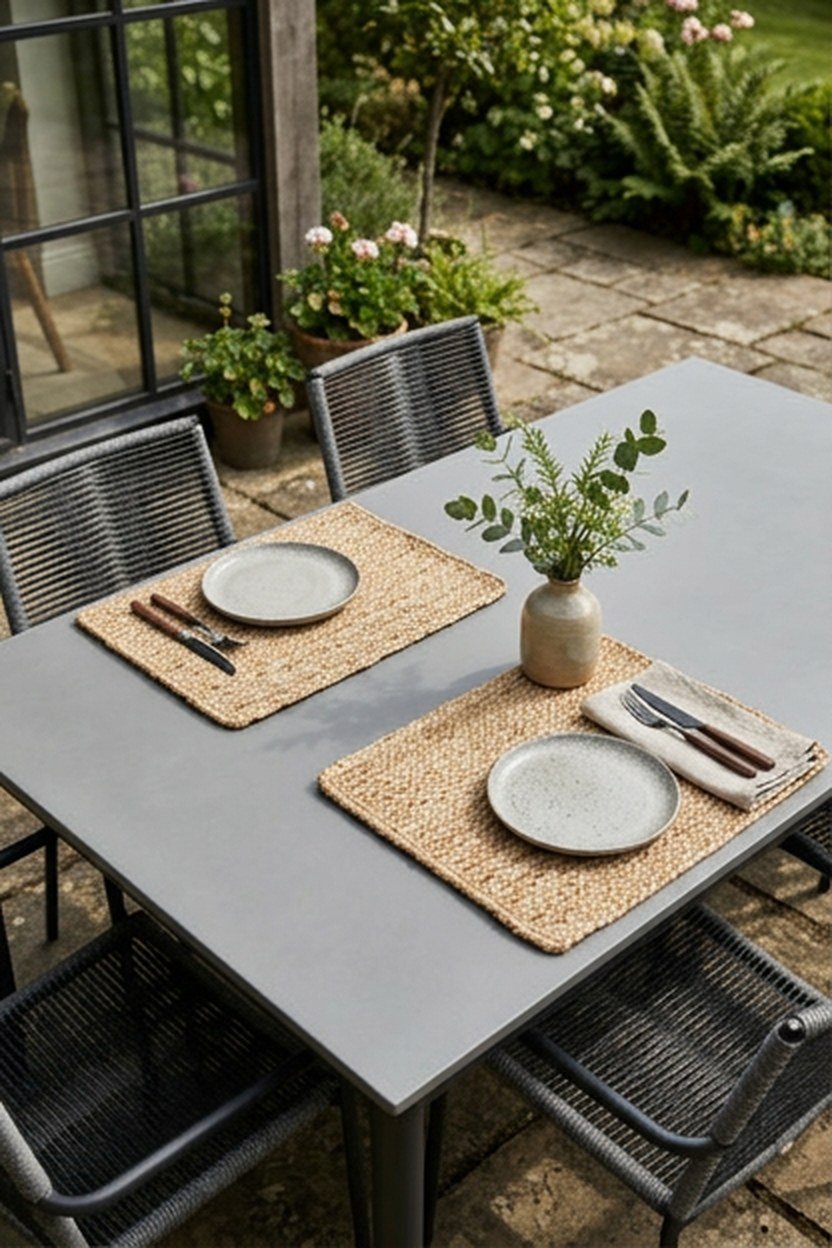
A grey and black outdoor dining set, sized appropriately for the porch’s actual floor space, provides a dedicated area for outdoor meals while reinforcing the broader contemporary color palette established throughout the space. This furniture piece serves genuine functional purpose beyond pure decoration, making it one of the more practically valuable investments on this entire list.
Choosing a table material, teak, aluminum, or a weather-resistant composite, appropriate for your porch’s specific covered or open exposure level, ensures the material holds up to your particular environmental conditions over years of regular use. Selecting chairs with weather-resistant cushions or a genuinely comfortable bare seat design, depending on the household’s seating comfort preferences, balances practical durability against genuine everyday comfort.
Sizing the dining set appropriately for the porch’s actual available floor space, allowing comfortable clearance for chairs to be pulled out and for people to move around the table during use, prevents a beautiful but impractically cramped final arrangement. This sizing consideration is worth measuring carefully against the porch’s actual dimensions before ordering any dining set. Most furniture retailers provide detailed dimension information specifically to help avoid this common sizing mismatch.
Cost And Sizing Guidance
A grey and black outdoor dining set typically costs $500 to $2,000 depending on size, material, and the number of chairs included. Measuring the porch’s actual available floor space, accounting for clearance needed around the table for chairs and movement, before ordering avoids a disappointing sizing mismatch discovered only after the set arrives.
A common mistake is choosing a dining set sized for the porch’s total floor space without accounting for other furniture, like a separate seating area, that also needs to fit within the same space. Planning the porch’s overall furniture layout holistically, rather than selecting each piece in isolation, avoids this common spatial planning oversight.
13. Grey Outdoor Throw Pillows With Textural Variety
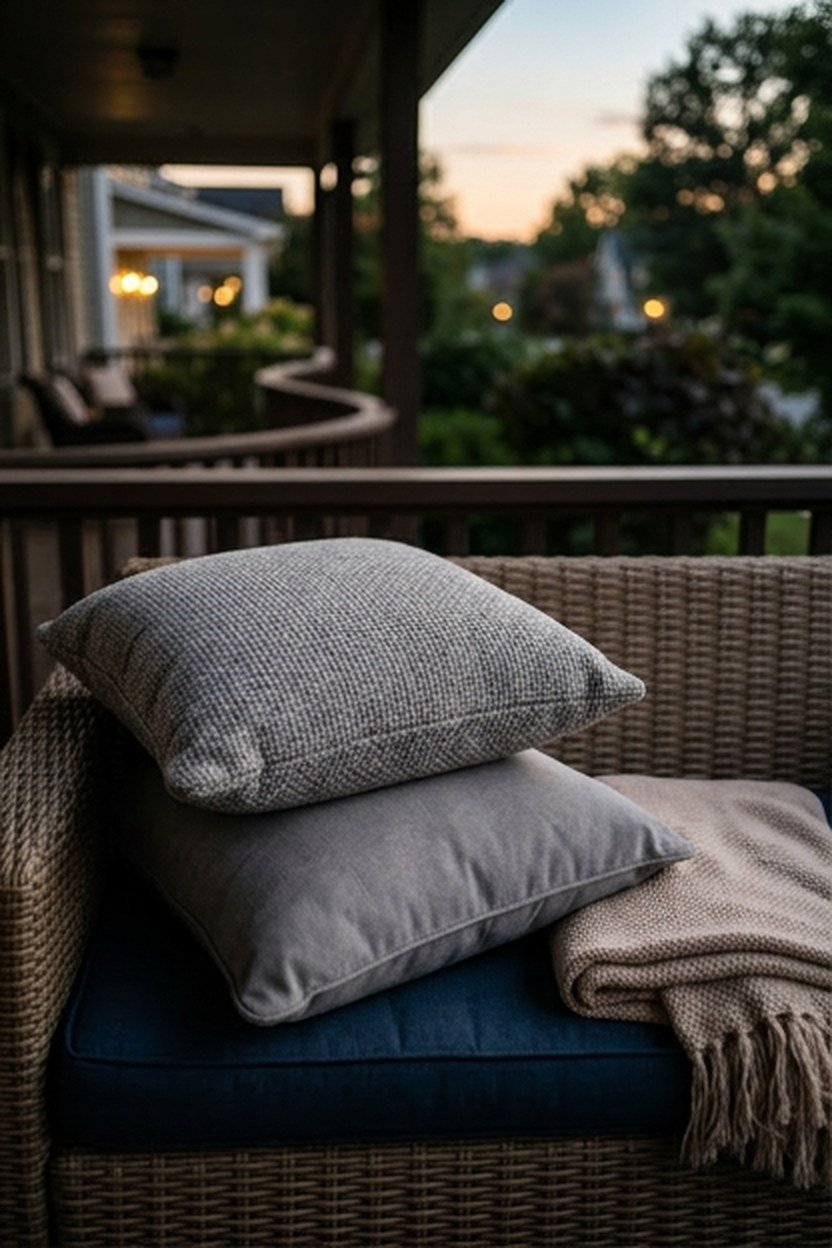
Grey outdoor throw pillows, incorporating varied textures like a woven outdoor fabric, a chunky knit-look weather-resistant material, and a smoother solid option, introduce the textural layering this style depends on to avoid feeling flat or one-dimensional despite the palette’s monochromatic foundation. This detail is one of the more affordable and easily updated ways to introduce visual interest into the porch’s seating area. This textural variety principle applies the same layering technique used throughout many other interior and exterior design styles.
Choosing pillow covers specifically rated for outdoor use, constructed from solution-dyed acrylic or a similar weather-resistant material, ensures the pillows resist fading and moisture damage with regular outdoor exposure. Mixing pillow sizes and shapes, a larger square pillow paired with a smaller lumbar option, creates the same visual layering principle discussed throughout many other sections of this guide.
Choosing pillow inserts specifically designed for outdoor use, typically featuring a quick-drying foam or polyester fill resistant to mildew, ensures the pillows remain genuinely usable after exposure to rain or humidity rather than retaining moisture and developing mildew. This insert quality consideration matters as much as the cover fabric choice for genuine outdoor durability. Most quality outdoor pillow retailers offer this appropriate insert material as a standard feature specifically for this reason.
Cost And Insert Guidance
Grey outdoor throw pillows with textural variety typically cost $20 to $60 per pillow depending on size and fabric quality. Choosing pillows with a quick-drying insert material, rather than standard indoor pillow filling, ensures the pillows remain usable and mildew-free after inevitable exposure to rain or morning dew.
A common mistake is choosing indoor-rated pillow inserts for this outdoor application because they cost less initially, resulting in retained moisture, mildew, and an unpleasant odor developing within just one season of regular outdoor exposure. Confirming both the cover fabric and the interior insert are genuinely rated for outdoor use avoids this common and unpleasant deterioration. This dual material rating verification is worth prioritizing over the lower upfront cost of inappropriately rated alternatives.
14. Grey Ceiling Fan With Wood-Tone Blades
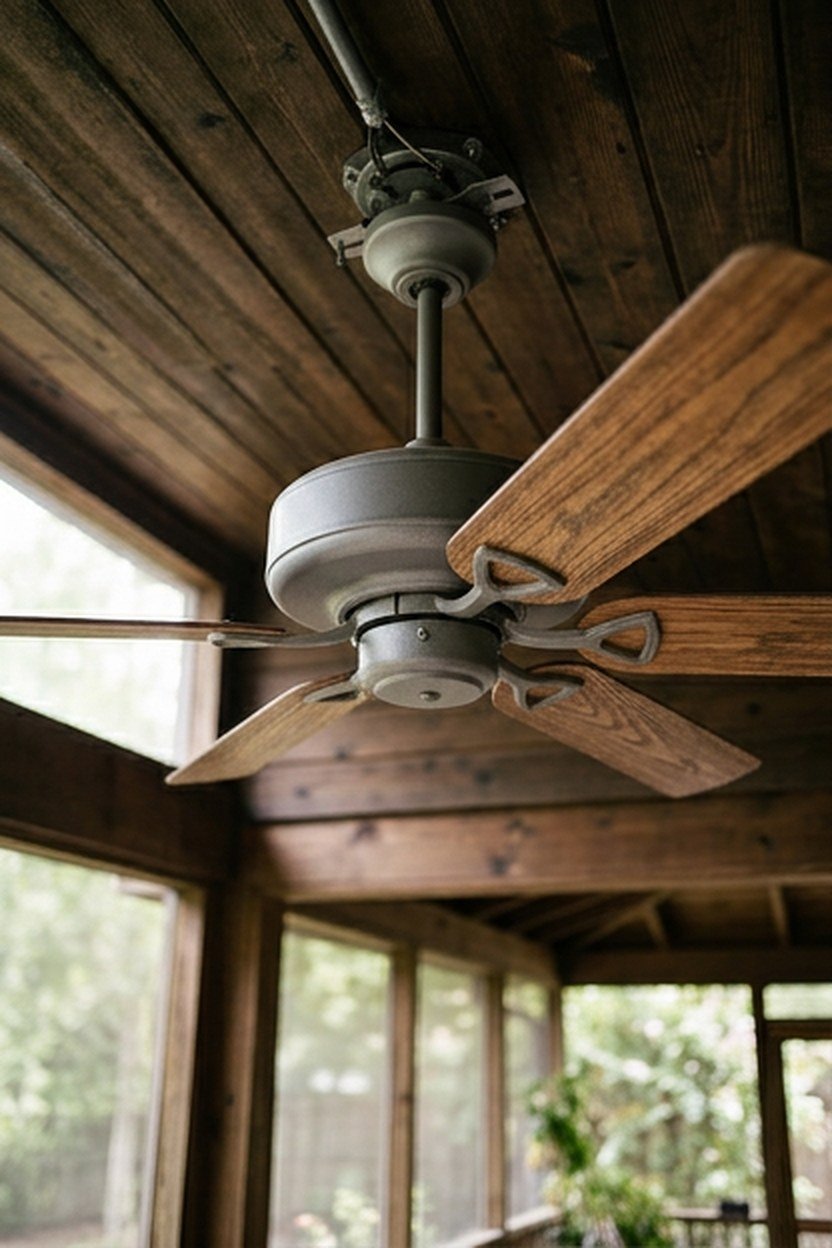
A grey ceiling fan with wood-tone blades, installed on a covered porch’s ceiling, provides genuine cooling function during warmer months while introducing the warm wood contrast this style depends on to avoid feeling entirely cold and monochromatic. This fixture serves genuine practical function beyond pure decoration, making it one of the more functionally valuable additions on this entire list.
Choosing a fan specifically rated for outdoor or wet-location use, appropriate to whether your porch is fully covered or more exposed to the elements, ensures the electrical components and motor housing resist moisture damage over years of regular use. This rating consideration is a genuine safety and durability requirement, not merely a preference, for any fan installed in this kind of outdoor or semi-outdoor setting. Confirming this outdoor rating with the manufacturer before purchase is worth the extra verification step.
Selecting a fan with a grey motor housing and warm wood-tone blades specifically, rather than an all-grey or all-wood design, achieves the material contrast this style depends on within a single functional fixture. This specific pairing is worth seeking out when shopping for this fixture, since many ceiling fan options default to either all-metal or all-wood blade designs. Checking a few different retailers before settling on one option is often necessary to find this specific combination.
Cost And Rating Guidance
A grey ceiling fan with wood-tone blades typically costs $150 to $400 depending on size and features, plus installation cost if hardwiring or new electrical work is required. Confirming the fan’s wet-location or damp-location rating, appropriate to your porch’s specific covered or open exposure level, ensures the correct product is chosen for your particular installation conditions.
A common mistake is installing an interior-rated ceiling fan in this outdoor or semi-outdoor application, creating a genuine electrical and mechanical safety hazard given the fan’s lack of proper moisture sealing and weather-appropriate motor construction. Insisting on a properly outdoor or damp-location rated fan, even if this narrows the available style options somewhat, avoids this serious safety and durability risk. This safety-first material selection is worth prioritizing over purely aesthetic considerations for this specific fixture.
15. Grey Painted Ceiling With Wood Beam Accents
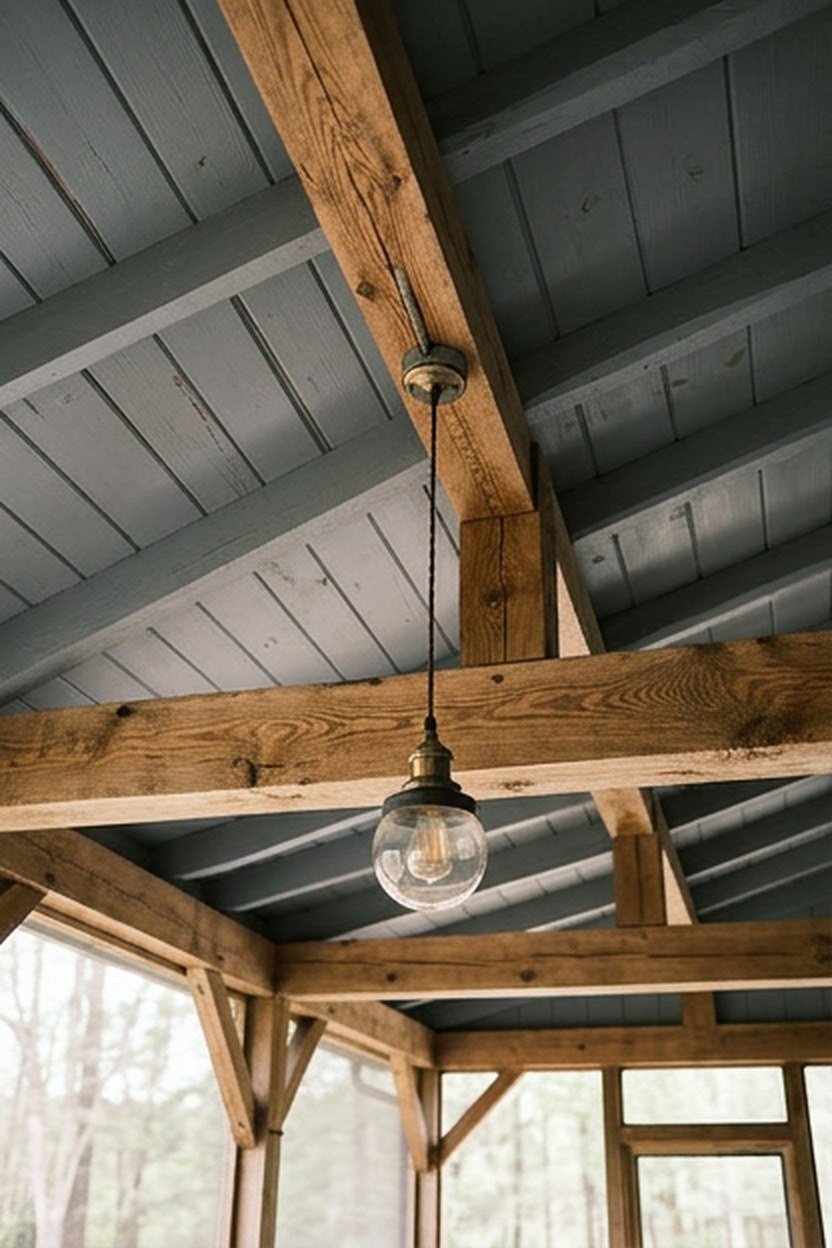
Painting the porch’s ceiling in a soft grey tone, while leaving structural wood beams in their natural finish, creates a striking material contrast overhead that ties together the porch’s broader grey and wood story established throughout the flooring and furniture choices. This detail is one of the more architecturally significant finishing touches for this style, requiring coordination between paint and existing structural wood.
Choosing a paint sheen appropriate for outdoor or semi-outdoor ceiling application, typically a flatter finish that reduces glare from overhead sun exposure, balances the desired color against genuine visual comfort for anyone spending time beneath this ceiling. This sheen consideration is worth confirming with your paint supplier specifically for this outdoor ceiling application. Most exterior-rated ceiling paints offer this appropriate flatter finish as a standard product option.
Protecting the natural wood beams from any paint overspray during the ceiling painting process, through careful masking and preparation, preserves their natural finish and the material contrast this detail depends on for its visual impact. This masking and protection step is worth the additional preparation time it requires, given how disappointing it would be to accidentally paint over the beams meant to provide contrast.
Cost And Masking Guidance
Painting a porch ceiling in grey while preserving natural wood beam accents typically costs $150 to $400 in materials and labor for a DIY project, or considerably more if a professional painter is hired. Choosing an exterior-rated ceiling paint specifically formulated for outdoor or semi-outdoor application, rather than standard interior ceiling paint, ensures the finish withstands humidity and temperature swings this space experiences.
A common mistake is rushing the masking process around wood beams, resulting in visible paint overspray or drips that compromise the clean contrast this detail depends on for its visual impact. Taking adequate time with careful masking and using a smaller brush for detail work near the beam edges, rather than relying entirely on a roller for the entire ceiling, avoids this common and visually disappointing execution mistake.
What A Grey Back Porch Renovation Actually Costs
A complete grey back porch renovation, incorporating several concepts from this guide, typically costs $2,000 to $10,000 depending on how much involves structural changes like decking or railing replacement versus furniture and accessory updates alone. This range reflects the cost gap between smaller updates, like new pillows or a rug, and larger investments, like new decking or a paver installation. Understanding this rough breakdown helps prioritize spending toward the elements with the most visual impact.
Ongoing costs beyond the initial renovation remain relatively modest for most durable materials, mainly consisting of periodic sealing for natural stone surfaces and occasional fabric replacement for cushions and textiles as they show wear from regular outdoor exposure over several years. Choosing genuinely weather-appropriate materials from the start, a consideration discussed throughout this guide, meaningfully extends how long the initial investment maintains its original appearance.
| Investment Category | Typical Cost Range | Notes |
|---|---|---|
| Flooring and structural | $1,000 to $5,000 | Decking, pavers, railing, ceiling |
| Furniture | $800 to $3,500 | Sectional, dining set, accent table |
| Textiles and lighting | $300 to $1,200 | Rugs, pillows, curtains, fixtures |
Prioritizing flooring and one significant furniture piece first, since these carry the most visual weight, before layering in smaller textile and lighting accents gives the most reliable path to a cohesive look even on a limited initial budget. This prioritization strategy is worth discussing before the first purchase is made. Most homeowners find this order of investment produces the most satisfying porch transformation relative to the budget spent at each stage.
Common Mistakes That Undermine A Grey Back Porch
The most common mistake across grey back porch projects is choosing materials not genuinely rated for the porch’s specific exposure level, covered or open, resulting in premature fading, mildew, or structural deterioration within just one or two seasons. Choosing weather-appropriate, properly rated materials throughout, a consideration discussed repeatedly throughout this guide, avoids this recurring and costly problem.
A second frequent mistake is applying grey too extensively across every surface without any warm wood or textile element to provide visual relief, resulting in a porch that feels cold and clinical rather than genuinely contemporary and inviting. Balancing grey hard surfaces against warm wood accents and soft textiles, a principle discussed throughout this guide’s planning section, avoids this common overapplication problem.
Recovering From These Setbacks
Recovering from prematurely deteriorated materials typically means replacing the affected element with a properly rated, weather-appropriate alternative, rather than repeating the same material mistake with a like-for-like replacement. This correction requires accepting the sunk cost of the original purchase, but prevents the same deterioration from recurring with the replacement material. Choosing the more durable, appropriately rated option this time, even at a somewhat higher upfront cost, is worth the investment given the porch’s genuinely demanding outdoor conditions.
Recovering from an overly cold, all-grey porch typically means introducing a few key warm elements, a teak accent table, wood ceiling beams, or warm-toned textiles, rather than replacing the entire grey material palette from scratch. This targeted addition approach is considerably less expensive than a full material overhaul and often resolves the cold feeling with surprisingly few additional warm elements. Identifying which specific missing warmth, wood, textile, or lighting, is contributing most to the cold feeling helps target this correction most effectively.
Conclusion
A grey back porch succeeds by choosing weather-appropriate materials for the space’s exposure level, balancing cool grey surfaces against warm wood and soft textiles, and treating the porch as an extension of the home’s interior. The fifteen concepts here, from composite decking to a wood-beam ceiling, each offer a different entry point depending on your budget. Prioritizing durability and warm-cool balance first, then layering in accents, gives the most reliable path to a porch that feels genuinely inviting rather than coldly contemporary.
Whether this is a first attempt at renovating an existing back porch or a refinement of a space that has always felt slightly incomplete, the underlying principles stay consistent: choose weather-appropriate materials, balance grey against warm wood and textiles, and let the porch genuinely extend your home’s interior design sensibility outdoors. These fundamentals matter more than any single decorative purchase on this list. Get them right, and the porch becomes a genuinely usable extension of the home rather than an underutilized afterthought.
Frequently Asked Questions
Why does grey work well for a contemporary back porch? Grey bridges the gap between a home’s interior design and its outdoor surroundings, reading as sophisticated without competing against natural greenery and sky tones. It also photographs consistently across changing outdoor light conditions throughout the day.
How much does a grey back porch renovation cost? A complete renovation typically costs $2,000 to $10,000 depending on whether the project involves structural changes like decking replacement or mainly furniture and accessory updates. Flooring and structural work usually represent the largest portion of this budget.
How do I keep a grey porch from feeling cold? Balancing grey hard surfaces against warm wood accents, like a teak table or exposed ceiling beams, and soft textiles like cushions and rugs prevents the space from feeling clinical. This warm-cool balance is central to making a grey porch feel inviting.
What materials work best for an open, uncovered porch? Materials specifically rated for full outdoor exposure, like solution-dyed acrylic fabrics and powder-coated metal, hold up considerably better than materials only rated for covered or semi-outdoor use. Confirming this rating before purchase avoids premature deterioration.
Can I add a grey palette to an existing porch without full renovation? Yes, painting existing railing or a fireplace, adding grey textiles and furniture, or introducing a striped outdoor rug can update the palette without requiring flooring or structural replacement. This approach is one of the more affordable ways to try the style.
Do outdoor fixtures need special electrical ratings? Yes, any lighting or ceiling fan installed on a porch needs a wet-location or damp-location rating appropriate to the space’s exposure level. Installing an interior-rated fixture outdoors creates a genuine electrical safety hazard.
What is the biggest mistake people make with grey back porches? Choosing materials not rated for the porch’s actual exposure level is the most common mistake, leading to premature fading, mildew, or structural deterioration within a season or two. Choosing weather-appropriate, properly rated materials throughout avoids this problem.