
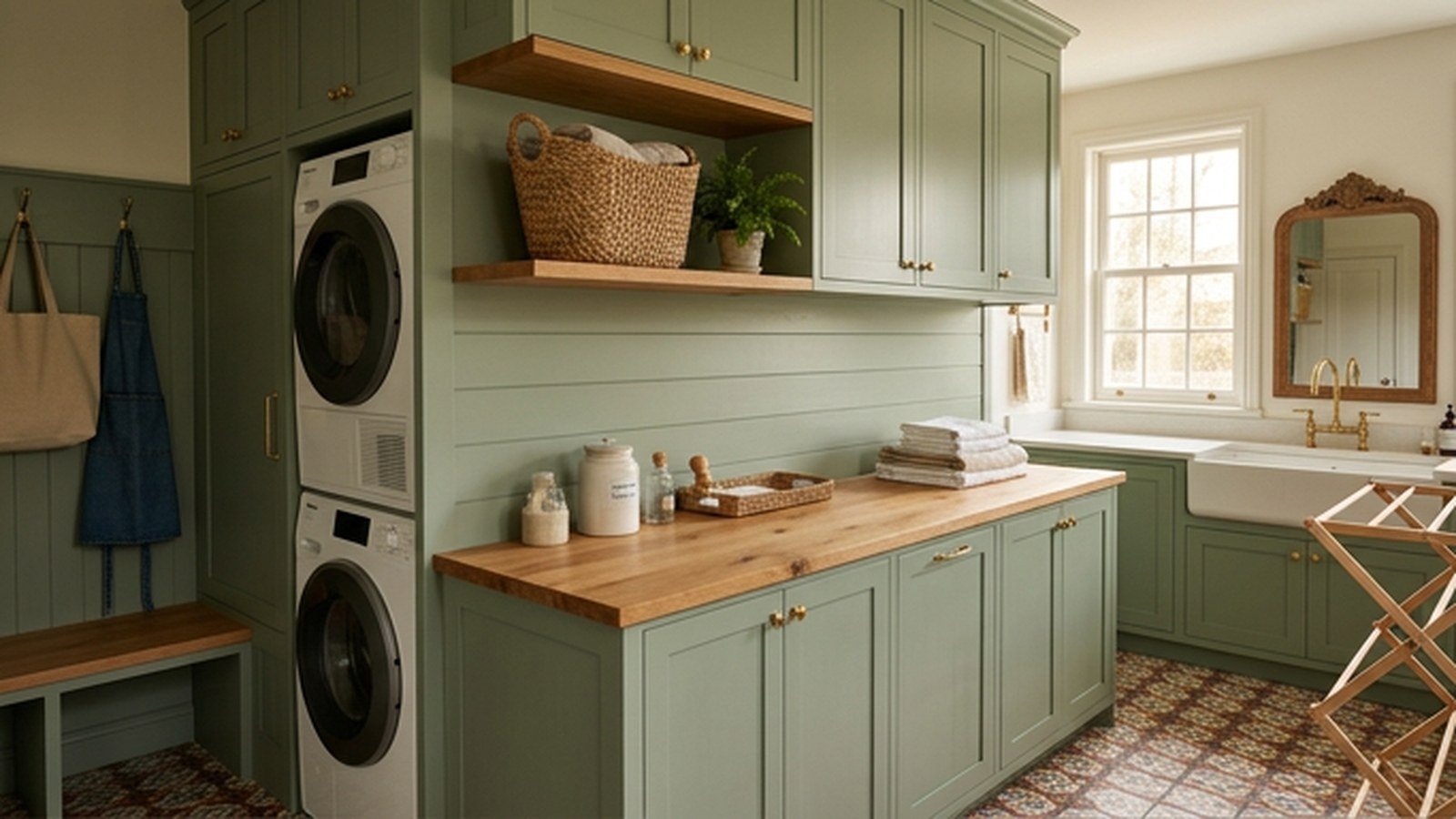
Green laundry room ideas use the color’s natural association with growth and calm to transform a purely functional space into one that feels considered rather than purely utilitarian. Green works particularly well in a laundry room because the color pairs naturally with the natural materials, wood, stone, and woven textiles, that soften a room otherwise dominated by hard-surfaced appliances and cabinetry. Fifteen concepts below cover the cabinetry, tile, and accent choices that build this look in any laundry room.
I repainted my own laundry room a deep sage green after years of stark white walls, and the shift in how the room felt surprised me given how small and purely functional the space actually is. Green, unlike many bolder colors, reads as calming even in a small, enclosed utility space, making it one of the more forgiving color choices for a room this size.
Below you will find fifteen numbered concepts covering cabinetry, walls, tile, and accents, plus a cost comparison table and a rundown of the mistakes that make a green laundry room feel dated rather than fresh. Each idea includes a sub-angle on cost, sourcing, or what commonly goes wrong so you can build the look with a realistic budget. By the end you should know exactly which green elements carry the most visual impact in this specific room type.
Why Green Works So Well In A Laundry Room
Green succeeds in a laundry room because the space typically lacks natural greenery or organic elements otherwise present in living spaces, making painted or tiled green surfaces a reasonable substitute for the calming, natural quality plants usually provide. This substitution effect matters specifically in a laundry room, which often has limited space for actual plants given the humidity and limited natural light many laundry rooms experience. Most designers consider green one of the more versatile colors for this specific room type for exactly this reason.
Green also pairs successfully with the metal, wood, and stone materials common in laundry room fixtures and cabinetry, creating a cohesive palette without requiring an entirely new material palette throughout the renovation. This material compatibility means a green laundry room update can often be achieved through paint and smaller accents alone, without requiring a full appliance or cabinetry replacement.
| Design Element | Traditional White Laundry Room | Green Laundry Room |
|---|---|---|
| Perceived warmth | Lower, clinical feel | Higher, more inviting |
| Material compatibility | Neutral, pairs with anything | Pairs well with wood, brass |
| Renovation cost | Baseline | Often achievable with paint alone |
A complete green laundry room update, covering paint, cabinetry, and smaller accents, typically costs $500 to $3,000 depending on whether cabinetry is repainted or fully replaced. This range reflects how much of this style can be achieved through paint and accessories alone, without necessarily requiring a full cabinetry or countertop replacement. Understanding this helps set realistic budget expectations before starting the project.
Planning Your Green Laundry Room Palette And Finish
Planning starts with choosing a specific green shade appropriate to the room’s size and light levels, since a smaller, darker laundry room generally suits a lighter sage better than a deep forest tone that could feel overwhelming. Testing paint swatches in the actual room under its typical lighting, rather than relying on how a color appears online, avoids a mismatch discovered only after painting is complete.
Balancing green’s application across walls, cabinetry, and tile matters considerably, since applying the color everywhere can feel overwhelming while applying it too sparingly may fail to establish the intended aesthetic. Most successful green laundry rooms apply the color to one or two primary surfaces, cabinetry or an accent wall, while keeping other surfaces in a complementary neutral tone.
The biggest planning mistake is choosing a paint finish unsuited to a laundry room’s humidity and splash exposure, since a flat matte finish can absorb moisture and stain more easily than a satin or semi-gloss finish designed for high-moisture rooms. Choosing a paint specifically rated for bathrooms or laundry rooms, rather than a standard interior wall paint, protects the investment from premature wear.
Choosing Between A Full Green Room And Green Accents
A full green room, walls, cabinetry, and sometimes even ceiling, in a cohesive tone creates a more dramatic, fully immersive effect that suits a laundry room used frequently and viewed as a genuine extension of the home’s living spaces. This approach requires more paint and potentially more labor than a partial application but delivers a more striking transformation. Most homeowners choosing this fuller approach have a laundry room they specifically want to feel intentional rather than purely functional.
A more restrained green accent approach, applying the color only to cabinetry or a single accent wall while keeping the remaining surfaces neutral, suits a laundry room where budget or a desire for a lighter, less committed aesthetic matters more. This approach also allows for easier future updates if preferences change, since repainting a single accent wall costs considerably less than repainting an entire room. Choosing between these two approaches largely comes down to budget and how committed the household feels to the color.
1. Sage Green Cabinetry With Brass Hardware
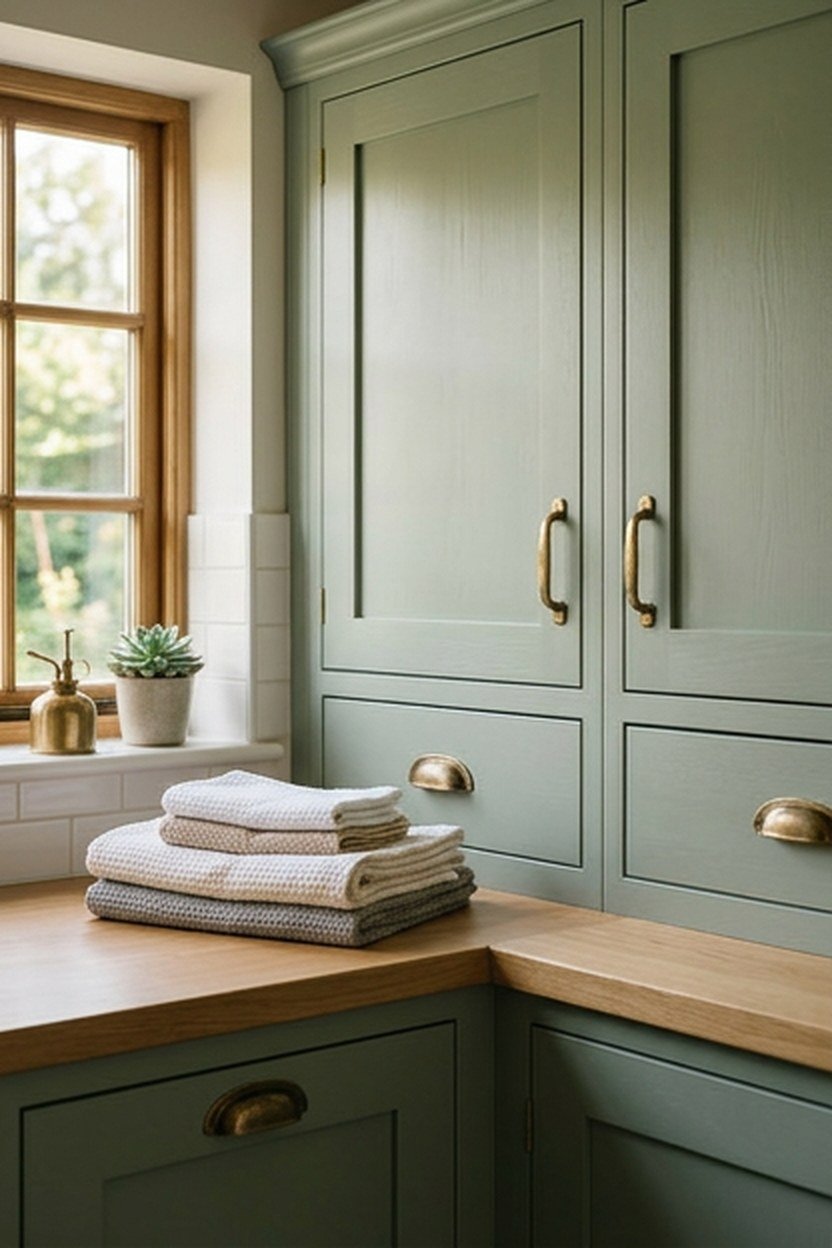
Sage green cabinetry, paired with brass hardware, brings the room’s largest visual surface area into the green palette while the warm brass accents provide the contrast this combination depends on for genuine visual interest. This cabinetry choice typically becomes the room’s primary focal point, anchoring the overall design more than any other single element on this list. This combination has become one of the most popular green laundry room styling choices specifically for this reason.
Choosing a muted, grayed-down sage tone, rather than a brighter, more saturated green, keeps the cabinetry feeling sophisticated and timeless rather than trend-driven in a way that might feel dated within just a few years. This tonal restraint consideration matters for a surface this large and permanent within the room’s overall design. Testing this specific sage tone against the room’s actual lighting conditions before committing to a full cabinetry repaint avoids a color mismatch discovered too late.
Selecting brass hardware in a warm, slightly antiqued finish, rather than a bright, highly polished option, complements the sage green’s muted quality more effectively than a stark, glossy contrast would. This hardware finish consideration is worth prioritizing when selecting pulls and knobs specifically for this cabinetry application. Most hardware suppliers offer several brass finish variations specifically suited to this kind of pairing.
Cost And Finish Guidance
Repainting existing cabinetry in a sage green with new brass hardware typically costs $400 to $1,200 depending on the cabinetry’s size and whether professional painting services are used. Choosing a durable cabinet-specific paint, rather than standard wall paint, ensures the finish withstands the regular opening and closing this cabinetry experiences during daily laundry room use.
A common mistake is choosing a paint sheen too flat for cabinetry that experiences frequent handling, resulting in a finish that shows fingerprints and wear more visibly than a slightly glossier option would. Choosing a satin or semi-gloss cabinet paint, rather than a completely matte finish, balances the desired muted color against genuine durability for this frequently touched surface.
2. Green Subway Tile Backsplash
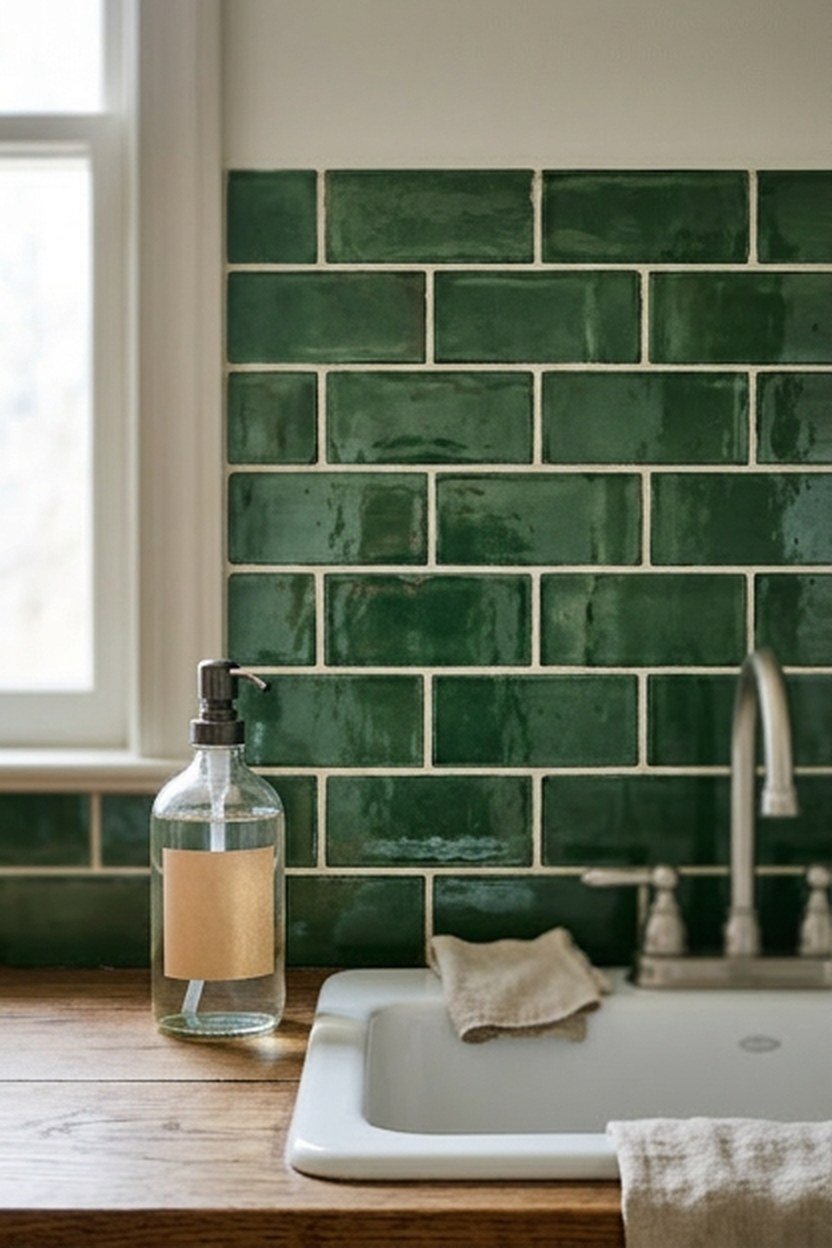
A green subway tile backsplash, installed behind the laundry sink or along the counter area, introduces the color through a durable, water-resistant material well suited to a laundry room’s regular moisture exposure. This tile application provides genuine practical protection for the wall surface while contributing significantly to the room’s overall green aesthetic.
Choosing a tile in a muted sage or olive tone, rather than a brighter, more saturated green, maintains consistency with the broader sophisticated, timeless palette this style depends on throughout every material choice. Selecting a classic subway tile shape and size, rather than an oversized or unusually shaped tile, keeps the installation feeling timeless rather than tied to a passing trend.
Choosing a grout color that complements rather than starkly contrasts with the tile, a slightly warm white or a soft gray rather than a stark bright white, creates a more cohesive, less visually busy overall appearance. This grout color consideration is a small detail that meaningfully affects how the finished installation reads. Most tile installers can advise on grout color options specifically suited to a chosen tile color.
Cost And Installation Guidance
A green subway tile backsplash typically costs $8 to $20 per square foot installed, depending on tile quality and installation labor costs in your specific area. Choosing a tile rated specifically for wet, high-moisture applications, rather than a decorative tile intended purely for dry wall installations, ensures the material holds up to the laundry room’s regular moisture exposure.
A common mistake is choosing a tile pattern or laying technique too visually busy for the room’s actual size, resulting in an installation that feels overwhelming in a smaller laundry room. Choosing a simple, classic laying pattern, like a straight or offset brick pattern, rather than a more elaborate herringbone or basketweave design, suits a smaller room’s proportions better.
3. Green Painted Ceiling For A Cozy Enclosed Feel
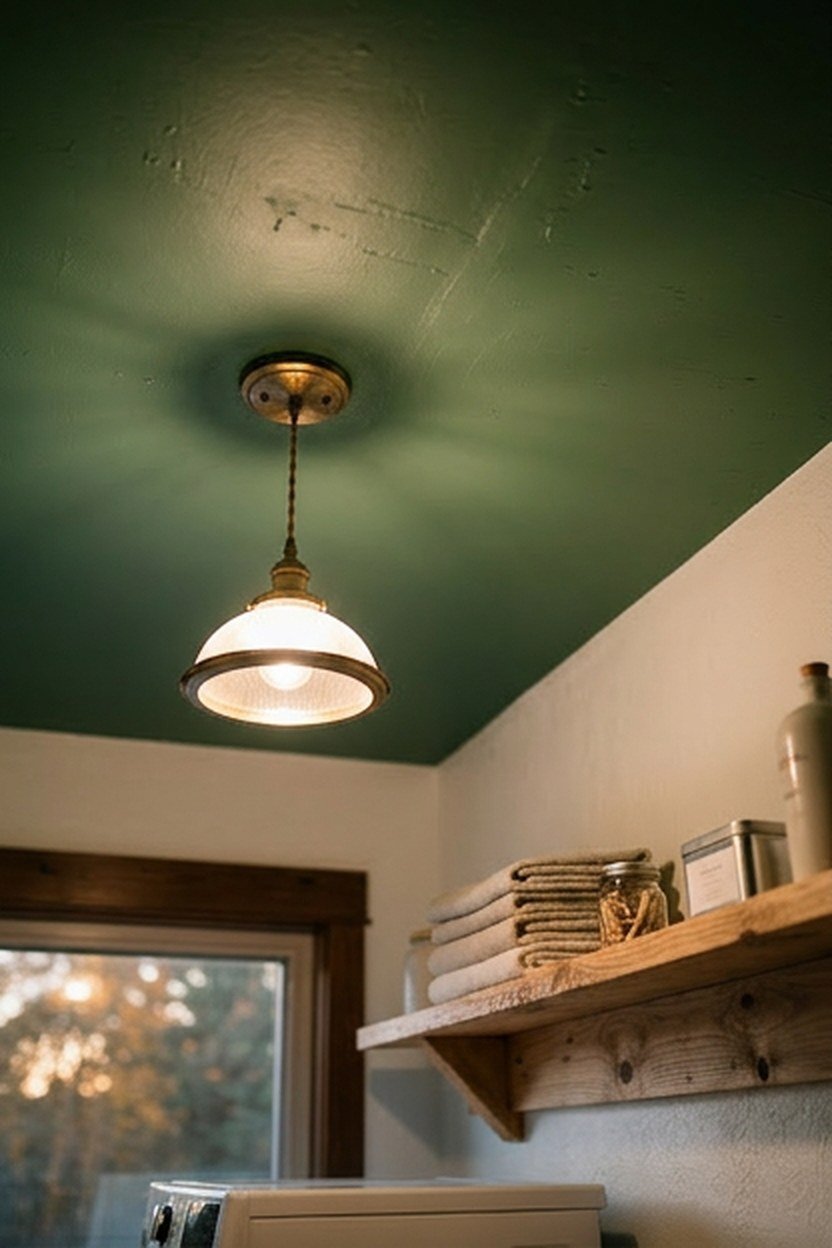
Extending green paint onto the ceiling, rather than stopping at the walls, creates a fully enveloping effect that makes a small, enclosed laundry room feel intentional and cozy rather than an afterthought. This technique, sometimes called a fifth wall treatment, works particularly well here because the room’s small size and lack of architectural features benefit from this immersive color application.
Choosing a slightly lighter shade of the same green for the ceiling, rather than an exact match to the walls, adds subtle dimension without creating a jarring color transition between the two surfaces. This tonal variation technique is a common professional painting trick worth applying specifically for this kind of full-room color treatment. Testing this tonal relationship on a sample board before painting the actual ceiling confirms the effect works as intended.
Choosing a paint sheen appropriate for ceiling application, typically a flatter finish than what might be used on walls or cabinetry, avoids an overly glossy ceiling that can appear visually distracting overhead. This sheen distinction is a subtle but important technical detail worth confirming with your paint supplier specifically for this ceiling application. Most professional painters apply this sheen distinction automatically but it is worth confirming for a DIY project.
Cost And Application Guidance
Painting a small laundry room’s ceiling in green typically costs $80 to $200 in materials for a DIY project, or considerably more if a professional painter is hired for the application. Testing a sample swatch on the actual ceiling, viewed under the room’s typical lighting conditions, before committing to the full application avoids an unwelcome surprise once the entire ceiling is painted.
A common mistake is applying this full ceiling treatment in a laundry room with genuinely low ceiling height, where the enveloping effect can tip into feeling oppressive rather than cozy given the room’s already confined dimensions. Reserving this technique for laundry rooms with at least standard ceiling height, and considering a lighter alternative for genuinely low-ceilinged spaces, avoids this common miscalculation.
4. Woven Baskets In Natural Fiber For Laundry Sorting
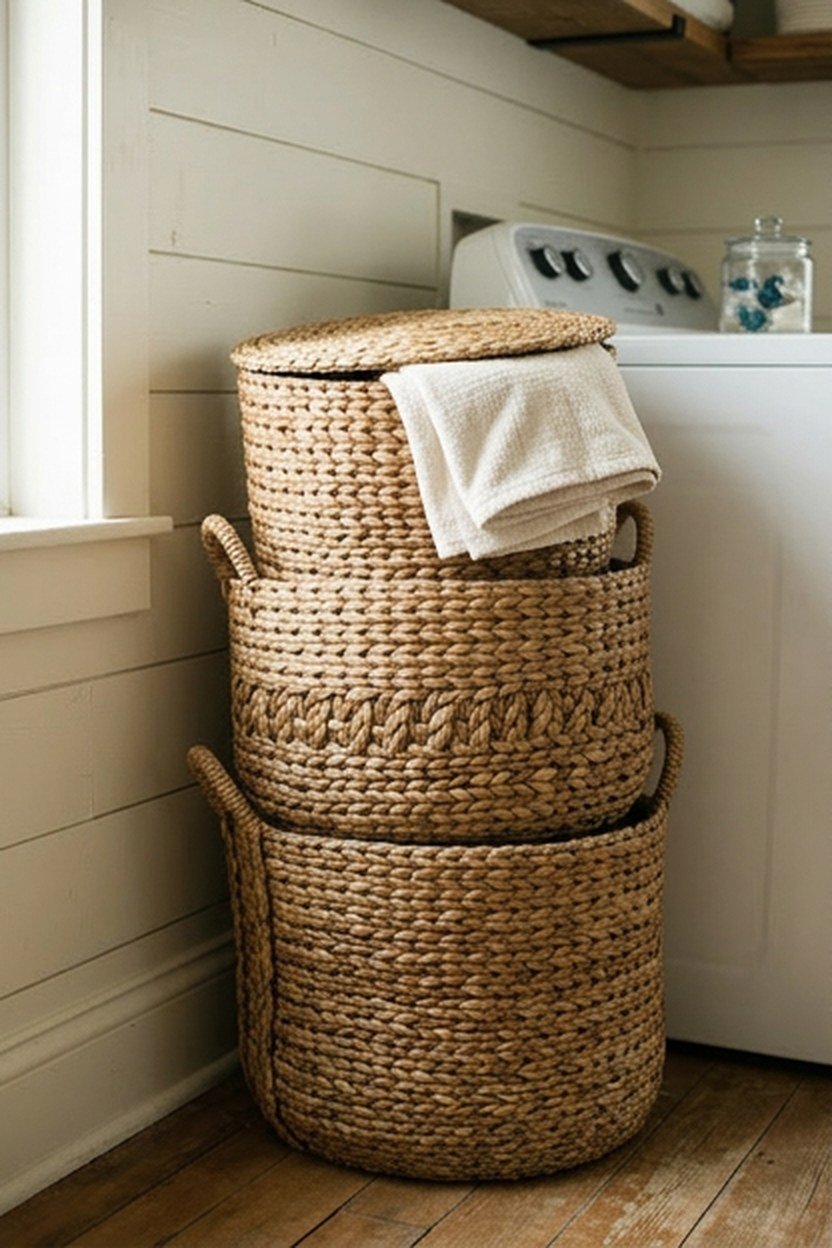
Woven baskets in natural fiber, jute or seagrass, used for sorting dirty laundry or storing supplies, introduce genuine organic texture that complements the room’s green palette while providing practical, functional storage. This detail brings the natural material connection this style depends on into a purely functional storage solution most laundry rooms already need regardless of styling choices. This combination of function and aesthetic makes woven baskets one of the more practically valuable additions on this entire list.
Choosing baskets in varying sizes, a larger one for general laundry sorting and smaller ones for detergent or dryer sheet storage, allows for organized function while also creating visual interest through the size variation itself. Positioning these baskets on open shelving or beneath a counter, rather than scattered without clear organization, keeps the room feeling considered rather than cluttered despite the practical storage need.
Selecting baskets with sturdy handles, given how frequently laundry sorting baskets get lifted and carried during regular use, ensures the pieces function well for their genuine practical purpose beyond pure decoration. This functional consideration matters more here than for a purely decorative basket used elsewhere in the home. Testing a basket’s handle strength against an actual load of laundry before committing to a full set confirms this practical requirement.
Cost And Organization Guidance
A set of woven natural fiber laundry baskets typically costs $60 to $180 depending on the number and size of baskets included. Choosing baskets with a removable liner, rather than an unlined natural fiber interior, simplifies cleaning if detergent or fabric softener spills occur during regular use.
A common mistake is choosing baskets too small for the actual household’s laundry volume, resulting in overflowing baskets that undermine the organized, considered appearance this detail is meant to provide. Sizing baskets generously relative to your household’s typical laundry accumulation between wash days avoids this practical mismatch.
5. Green And White Checkerboard Flooring
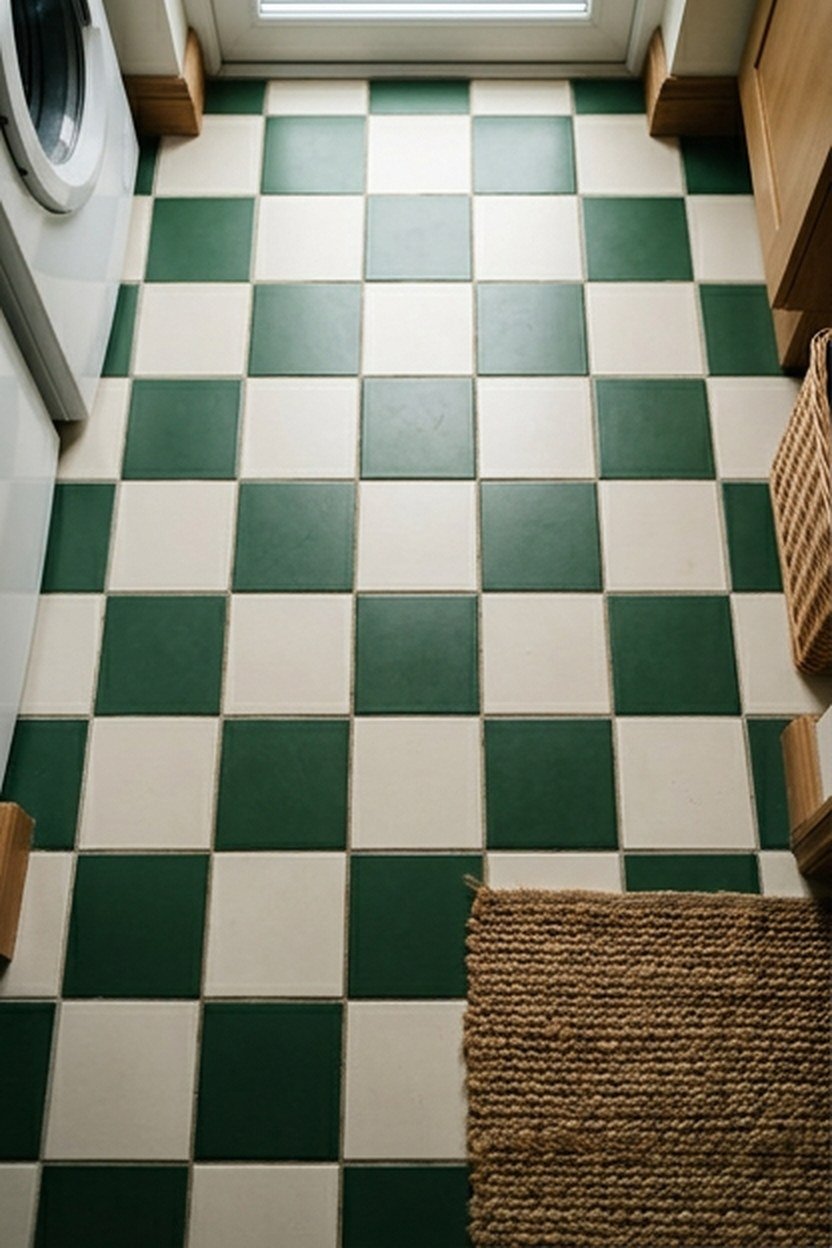
Green and white checkerboard flooring, whether tile or vinyl, introduces a classic, slightly retro pattern that pairs naturally with the room’s green palette while providing a durable, easy-to-clean surface well suited to a laundry room’s practical demands. This flooring choice makes a strong visual statement at floor level, an area otherwise often overlooked in laundry room styling in favor of wall and cabinetry choices.
Choosing a muted green rather than a bright, saturated tone for this checkerboard pattern keeps the overall look sophisticated rather than overly playful or dated. Selecting a matte or low-sheen tile finish, rather than a high-gloss option, reduces the appearance of water spots and general wear that a laundry room floor regularly experiences.
Sizing the checkerboard pattern’s individual squares appropriately for the room’s actual floor space, smaller squares for a more compact laundry room and larger squares for a more spacious one, keeps the proportions feeling considered rather than either overwhelming or visually insignificant. This sizing consideration is worth discussing with your flooring installer before finalizing the specific tile or vinyl product chosen. Most flooring suppliers offer several size options specifically for this reason.
Cost And Durability Guidance
Green and white checkerboard flooring typically costs $4 to $15 per square foot depending on material choice, tile costing more than vinyl but offering somewhat greater durability and longevity. Choosing a slip-resistant finish, particularly important given a laundry room’s regular exposure to water and detergent spills, prioritizes genuine safety alongside the aesthetic pattern choice.
A common mistake is choosing a glossy, high-shine tile finish that becomes genuinely slippery when wet, creating a real safety hazard in a room that regularly experiences water exposure. Choosing a matte or textured finish specifically rated for wet-area use avoids this safety concern while still delivering the checkerboard pattern’s visual impact. This safety-first finish consideration is worth prioritizing over a glossier option that might photograph slightly better.
6. Green Roman Shades For The Laundry Room Window
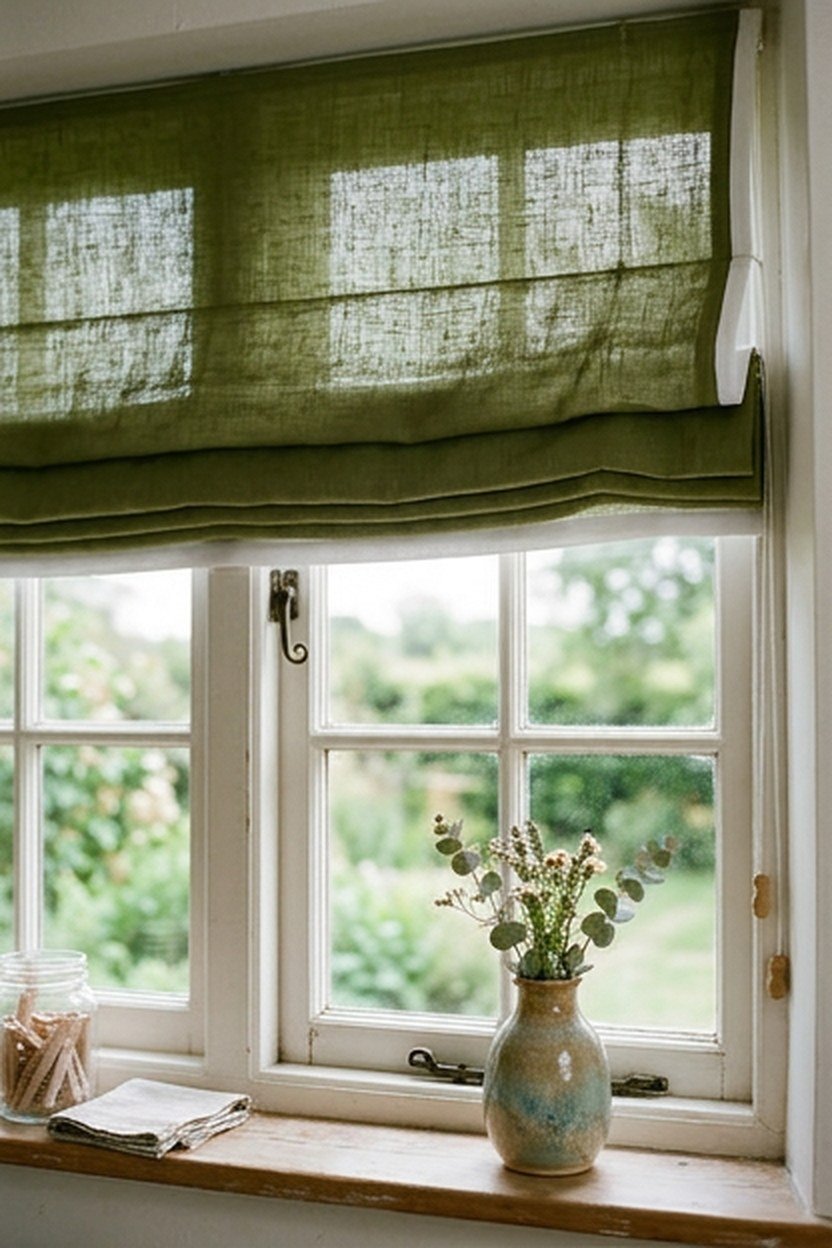
Green Roman shades, installed at a laundry room window if the space includes one, introduce softness and fabric texture into a room otherwise dominated by hard surfaces, appliances, cabinetry, and tile. This detail brings genuine textile softness into a space that typically lacks this kind of tactile element given its purely functional purpose.
Choosing a fabric in a durable, easy-to-clean material, given the laundry room’s humidity and occasional splash exposure, balances the shade’s aesthetic contribution against genuine practical durability needs. A moisture-resistant fabric blend, rather than a delicate natural fiber prone to water damage, suits this specific room’s environmental conditions better.
Selecting a green tone that complements rather than exactly matches the room’s cabinetry or wall color, a slightly different shade within the same green family, adds the subtle tonal variation principle discussed throughout many other design guides. This tonal variation consideration is worth applying even to a smaller detail like a window treatment. Most successful green rooms benefit from this kind of layered tonal approach rather than committing to one single flat shade throughout every element.
Cost And Fabric Guidance
Green Roman shades sized for a typical laundry room window typically cost $60 to $180 depending on fabric quality and the shade’s operating mechanism. Choosing a cordless or top-down bottom-up operating mechanism, particularly important in a household with young children, prioritizes genuine safety alongside the aesthetic choice.
A common mistake is choosing a delicate, dry-clean-only fabric for a window treatment installed in a room with regular humidity and occasional water exposure, resulting in premature fabric damage or staining. Choosing a moisture-resistant, easy-to-clean fabric blend specifically suited to this room’s environmental conditions avoids this practical mismatch.
7. Terracotta And Green Accent Pairing
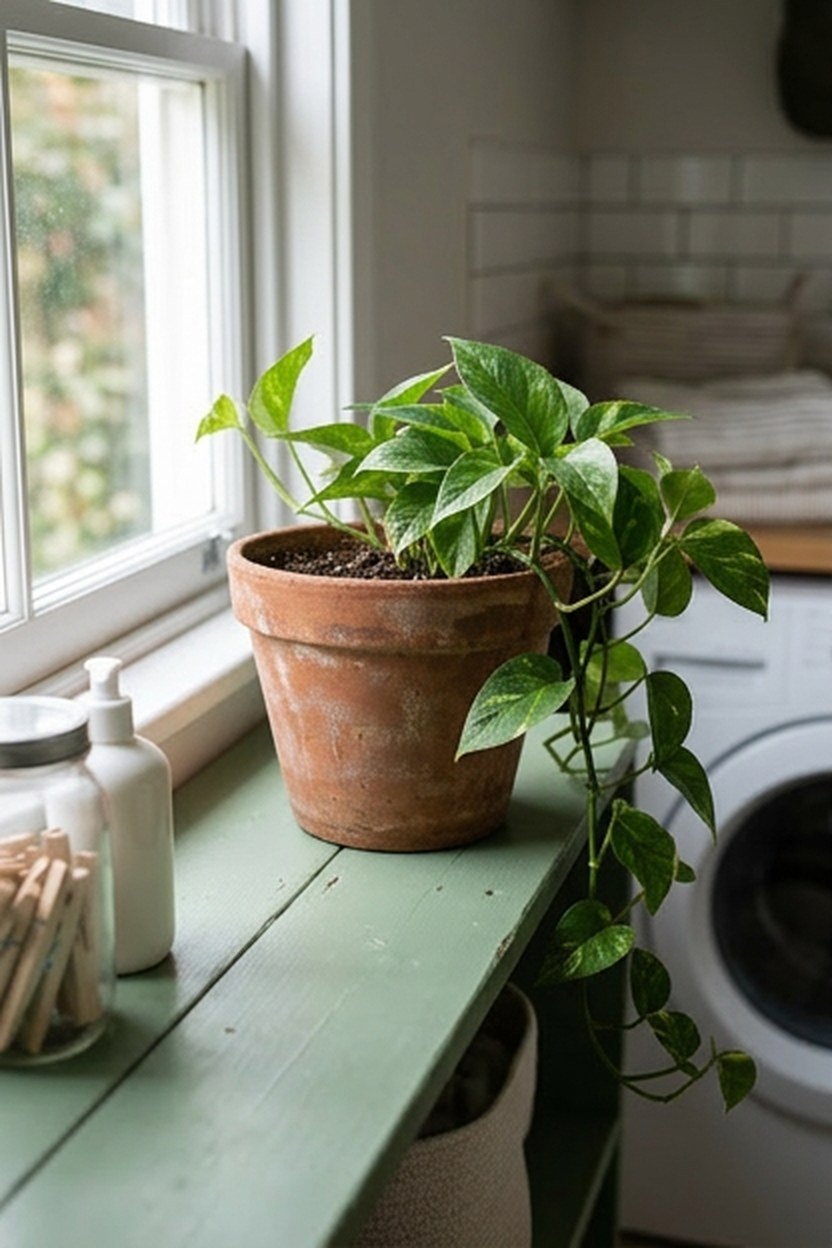
Pairing terracotta pots or accents with the room’s green palette introduces a warm, earthy contrast that echoes the natural, organic connection this entire style depends on throughout its material and color choices. This pairing works particularly well for small potted plants or decorative terracotta vessels positioned on open shelving or a windowsill within the laundry room. This combination brings genuine warmth against green’s inherently cooler undertone.
Choosing terracotta pieces in a naturally weathered, unglazed finish, rather than a glossy glazed alternative, maintains the organic material connection this style depends on throughout every element in this guide. Positioning these terracotta accents near any natural light the laundry room receives, if a plant is included, ensures the greenery actually thrives rather than struggling.
Selecting plant varieties well suited to a laundry room’s typically humid, sometimes low-light conditions, like pothos or a snake plant, ensures any greenery included in this terracotta pairing genuinely thrives rather than declining within a few months. This plant selection consideration matters as much as the terracotta vessel’s aesthetic contribution, since a struggling plant undermines the display regardless of how attractive the pot itself remains.
Cost And Plant Care Guidance
Terracotta pots and accents suited for this pairing typically cost $10 to $40 per piece depending on size and finish quality, with any included plants adding a modest additional cost depending on variety. Choosing plant varieties specifically tolerant of humidity and lower light, a consideration discussed above, avoids the frustration of a struggling plant in this specific room environment.
A common mistake is choosing a plant variety poorly suited to a laundry room’s typical conditions, resulting in a struggling or declining plant that undermines the otherwise polished terracotta and green pairing. Researching a plant’s actual humidity and light tolerance before purchase, rather than choosing based on appearance alone, avoids this common and disappointing outcome.
8. Green Beadboard Wainscoting
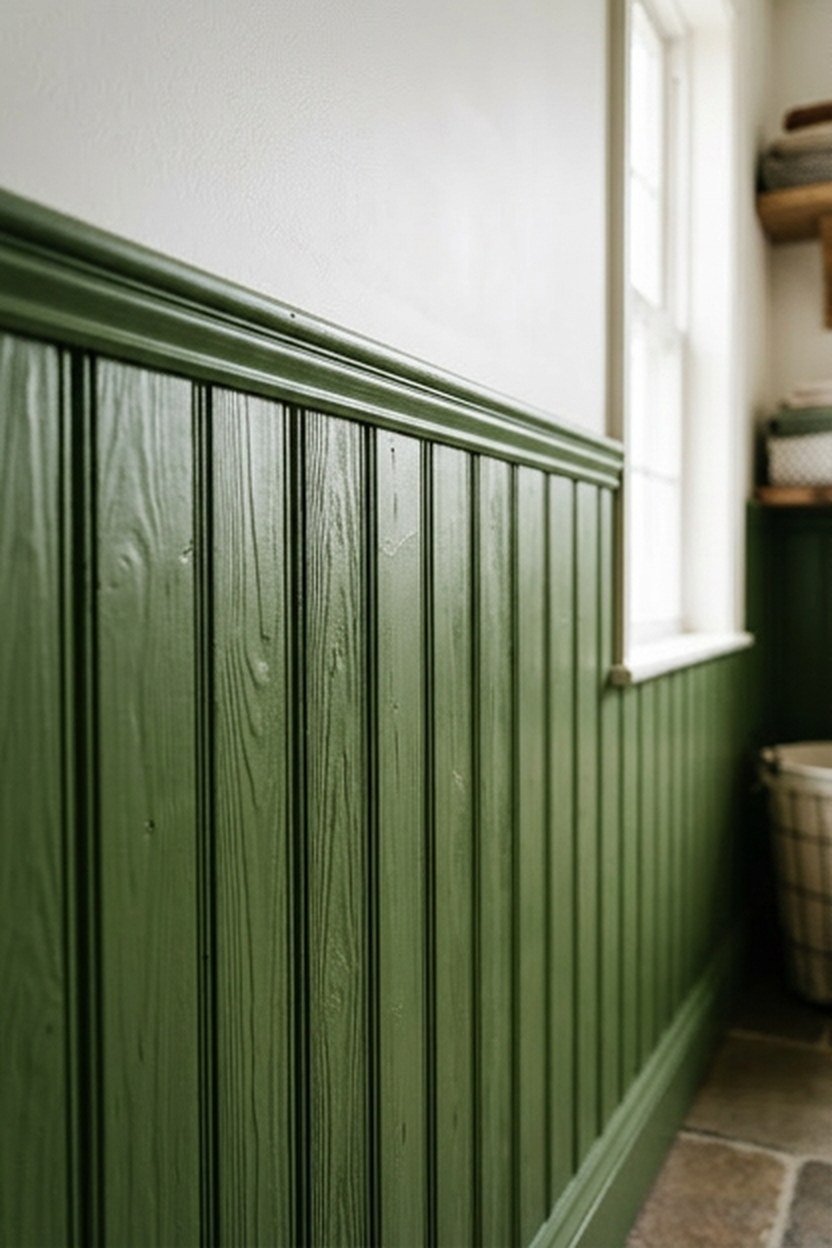
Green beadboard wainscoting, applied to the lower portion of the laundry room’s walls, introduces classic architectural texture while providing a durable, easy-to-clean surface well suited to a room’s regular splash and moisture exposure. This detail brings genuine dimensional texture to what might otherwise be a flat, unremarkable wall surface.
Choosing a beadboard panel height appropriate for the room’s proportions, typically extending to about a third of the wall’s total height, maintains a balanced visual proportion rather than overwhelming the space with too much paneling. This height consideration is worth measuring against your specific room’s dimensions before installation begins. Most beadboard installation guides recommend this proportional approach specifically for smaller rooms like a typical laundry room.
Selecting a durable, moisture-resistant beadboard material, rather than standard interior paneling not rated for humidity exposure, ensures the installation holds up to the room’s regular environmental conditions over many years. This material rating consideration is worth confirming with your supplier before purchase, given how much moisture a laundry room’s regular use introduces into its wall surfaces.
Cost And Proportion Guidance
Green beadboard wainscoting typically costs $6 to $15 per square foot installed, depending on material quality and installation labor costs. Choosing a moisture-resistant material specifically rated for laundry room or bathroom application, rather than standard interior paneling, protects the investment from premature warping or damage.
A common mistake is installing beadboard at a height disproportionate to the room’s actual ceiling height, resulting in a wainscoting treatment that feels either too dominant or too insignificant relative to the overall wall space. Measuring the room’s proportions carefully and following the roughly one-third height guideline discussed above avoids this common proportion mismatch.
9. Brass Faucet And Fixtures Against Green Cabinetry
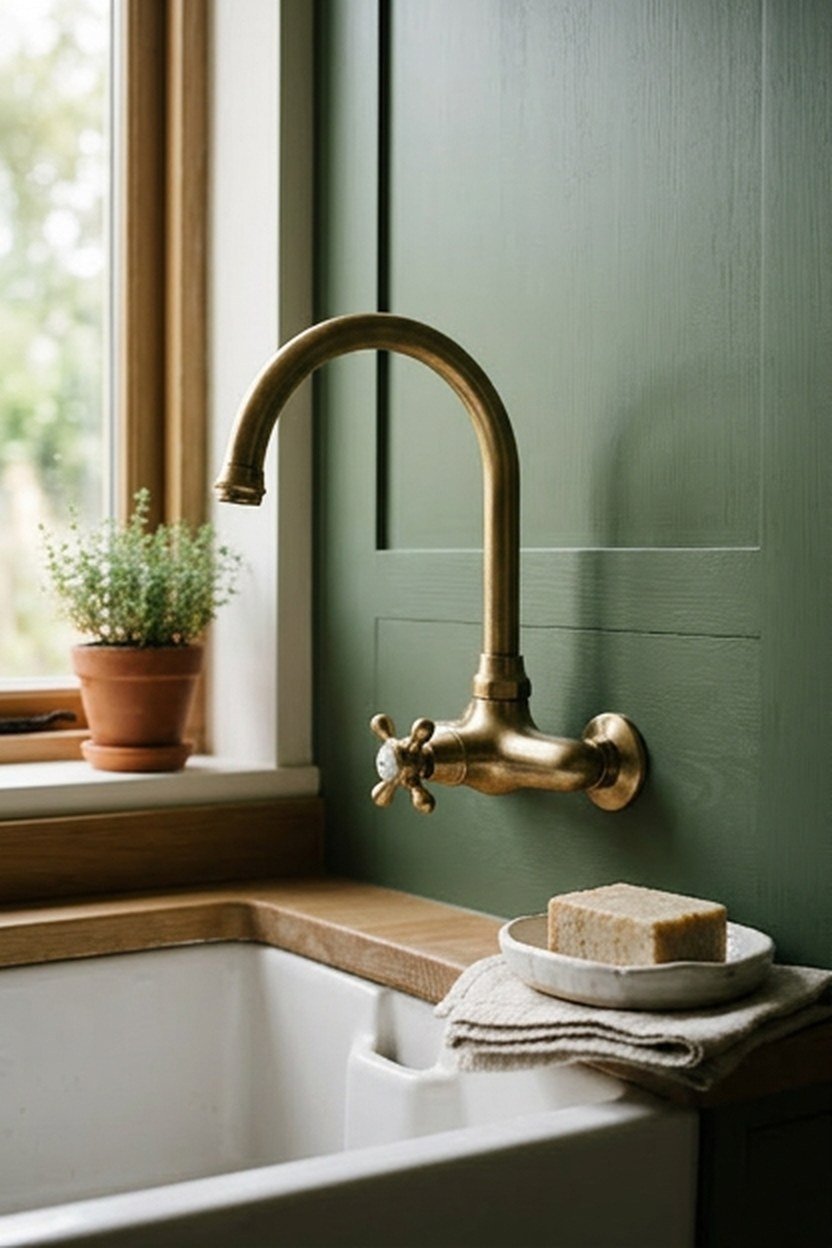
A brass faucet and matching fixture hardware, installed against green cabinetry or a green tile backsplash, reinforces the warm-cool contrast this style depends on for genuine visual sophistication throughout the room’s functional fixtures. This pairing extends the same brass and green combination discussed earlier regarding cabinetry hardware into the room’s plumbing fixtures specifically.
Choosing a brass finish consistent with any other brass accents already selected elsewhere in the room, cabinetry hardware or lighting fixtures, ensures the metal tones read as intentionally coordinated rather than a random assortment of similarly-colored but mismatched pieces. This coordination consideration matters considerably for achieving the cohesive look this style depends on throughout every fixture choice. Most fixture manufacturers offer coordinated collections specifically designed to solve this matching challenge.
Selecting a faucet style appropriate for the laundry room’s actual function, typically a simple, durable design rather than an overly ornate style better suited to a decorative bathroom application, balances the aesthetic choice against genuine practical function. This functional style consideration matters more for a laundry room faucet than for a purely decorative fixture elsewhere in the home.
Cost And Coordination Guidance
A brass laundry room faucet with matching fixture hardware typically costs $150 to $400 depending on brand and finish quality. Purchasing fixtures from the same manufacturer or coordinated product line, rather than mixing unrelated brass tones from different sources, ensures the metal finishes genuinely match rather than clash subtly once installed together.
A common mistake is choosing a faucet finish that looks appropriately brass in isolation but clashes with the specific green tone chosen for cabinetry or tile, particularly when the green has a cooler undertone that a warmer brass finish can clash against. Testing an actual hardware sample against your chosen green paint or tile swatch before finalizing the faucet purchase avoids this subtle but noticeable undertone mismatch.
10. Green Painted Utility Sink Cabinet
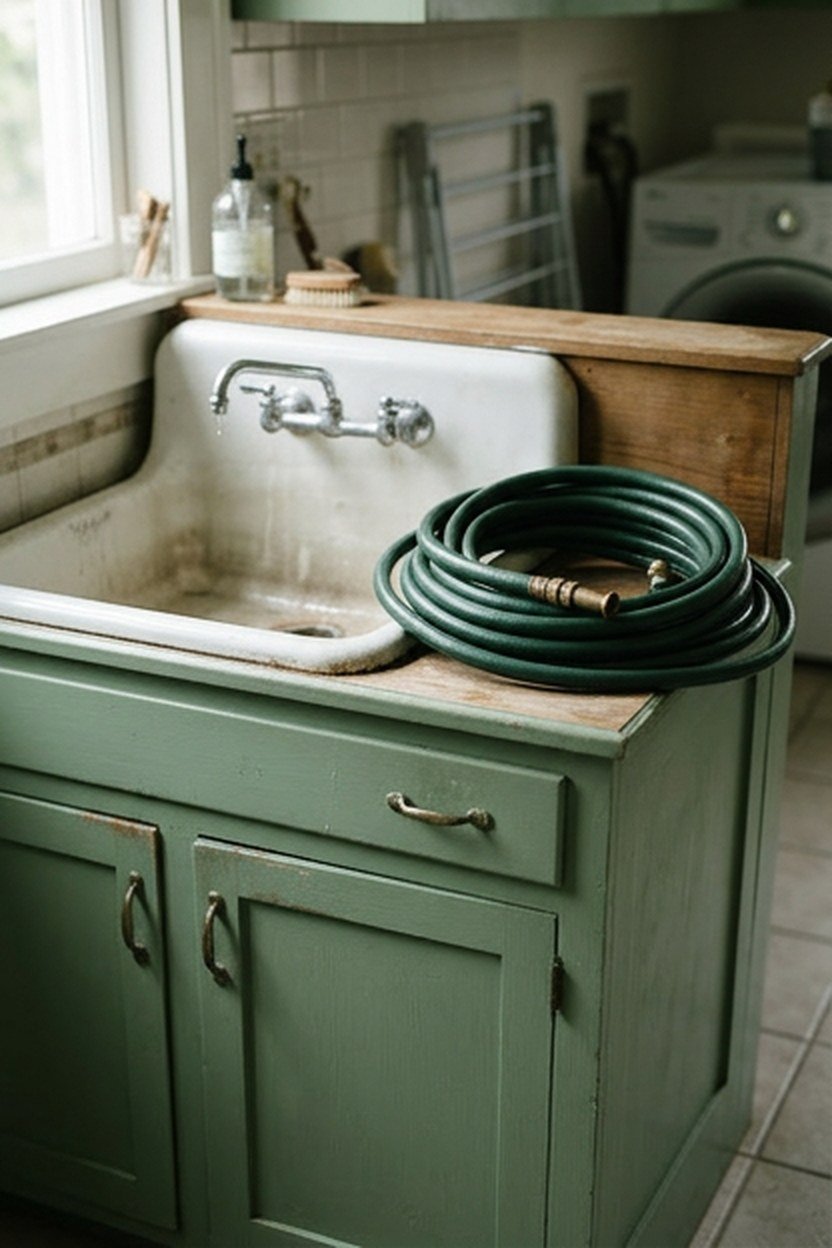
Painting or refinishing an existing utility sink cabinet in the room’s chosen green tone extends the color scheme into this often-overlooked functional fixture, integrating it visually with the room’s broader cabinetry and wall choices rather than leaving it as a mismatched afterthought. This detail is a relatively affordable way to extend the green aesthetic into a fixture many laundry rooms already include regardless of styling choices.
Choosing a paint specifically rated for the cabinet’s material, wood, metal, or laminate depending on the specific utility sink cabinet’s construction, ensures the finish adheres properly and withstands the moisture this fixture regularly experiences. This material-appropriate paint selection is worth confirming before beginning any painting project on this specific fixture. Most paint suppliers can advise on appropriate products once the cabinet’s material is identified.
Coordinating this utility sink cabinet’s exact green tone with the room’s other cabinetry, rather than choosing a slightly different shade, maintains the cohesive color scheme this style depends on throughout every surface. This tonal consistency consideration is worth prioritizing over introducing an additional, slightly different green tone that could create visual inconsistency. Testing paint samples side by side before finalizing this specific application confirms the tones genuinely match.
Cost And Material Guidance
Painting an existing utility sink cabinet in the room’s chosen green tone typically costs $50 to $150 in materials for a DIY project, a relatively affordable way to extend the color scheme into this specific fixture. Confirming the cabinet’s material composition before selecting paint products ensures proper adhesion and durability for this frequently used, moisture-exposed fixture.
A common mistake is skipping proper surface preparation, sanding and priming, before applying paint to an existing utility sink cabinet, resulting in a finish that chips or peels prematurely given the fixture’s regular moisture exposure and handling. Following proper preparation steps specific to the cabinet’s material, even though this adds time to the project, ensures a more durable, long-lasting finished result.
11. Green Glass Jar Storage For Laundry Supplies
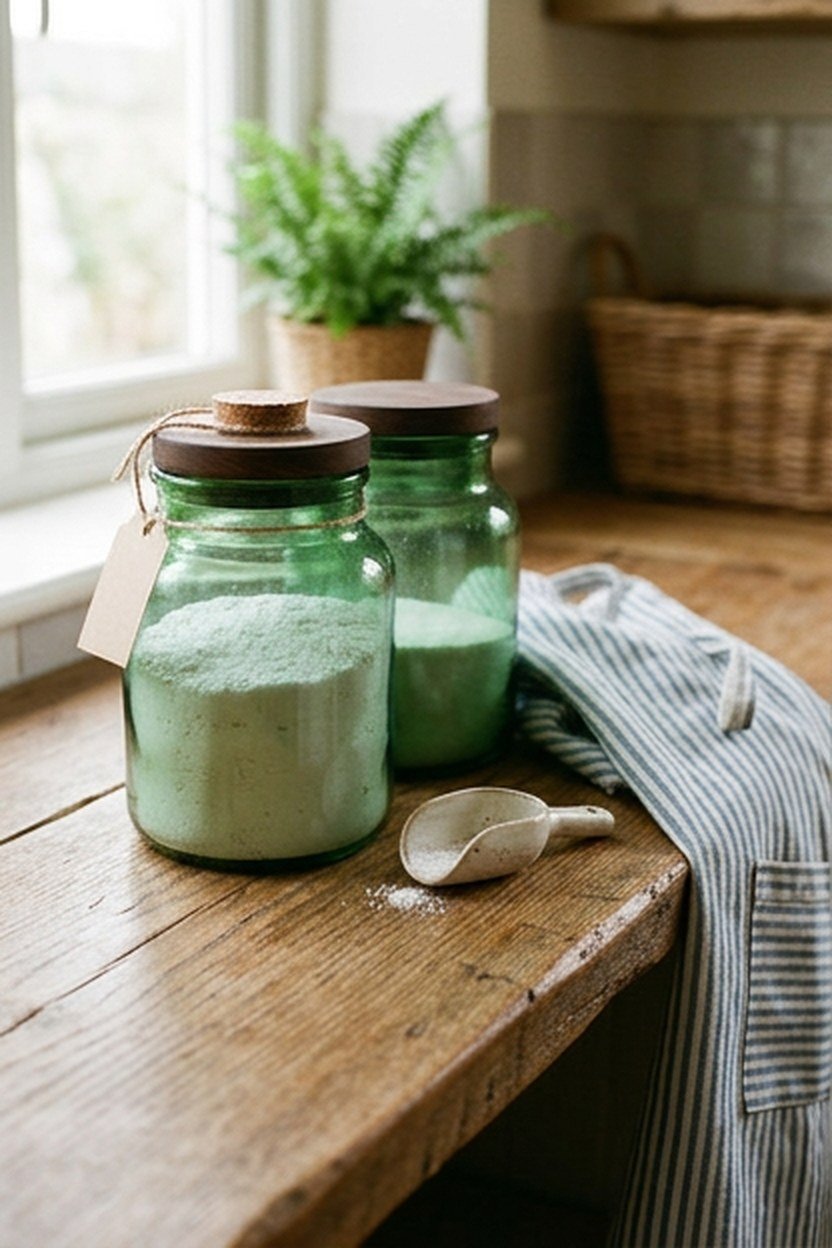
Green glass jars, used to store detergent, fabric softener, or dryer sheets, introduce a subtle green accent through functional storage containers rather than requiring any structural or paint changes to the room itself. This detail is one of the more affordable and easily updated ways to introduce the color into a laundry room, particularly for renters or anyone hesitant to commit to a larger renovation. This storage solution also typically looks more polished than displaying products in their original plastic packaging.
Choosing jars in a consistent green tone and shape, rather than a mismatched assortment, creates a more cohesive, considered display on open shelving or a counter surface. Labeling these jars clearly, whether through an etched label or a simple tag, ensures the storage remains genuinely functional despite the aesthetic upgrade from original product packaging.
Selecting jars with airtight, secure lids, particularly for storing powdered detergent or other products sensitive to moisture exposure, ensures the practical storage function holds up over regular use. This lid quality consideration matters more for genuine functional storage than for a purely decorative glass jar used elsewhere in the home. Testing a jar’s lid seal before committing to a full set confirms this practical requirement is met.
Cost And Labeling Guidance
A set of green glass storage jars suited for laundry supplies typically costs $30 to $90 depending on the number and size of jars included. Choosing jars with a wide mouth opening, rather than a narrow neck, simplifies filling and scooping powdered or liquid laundry products during regular use.
A common mistake is choosing jars without confirming they seal adequately against moisture and humidity, particularly relevant for a laundry room’s typically higher humidity levels compared to other storage areas in the home. Testing a jar’s seal quality before committing to a full set, or reading reviews specifically addressing this concern, avoids product degradation from inadequate moisture protection.
12. Green Painted Door With Contrasting Trim
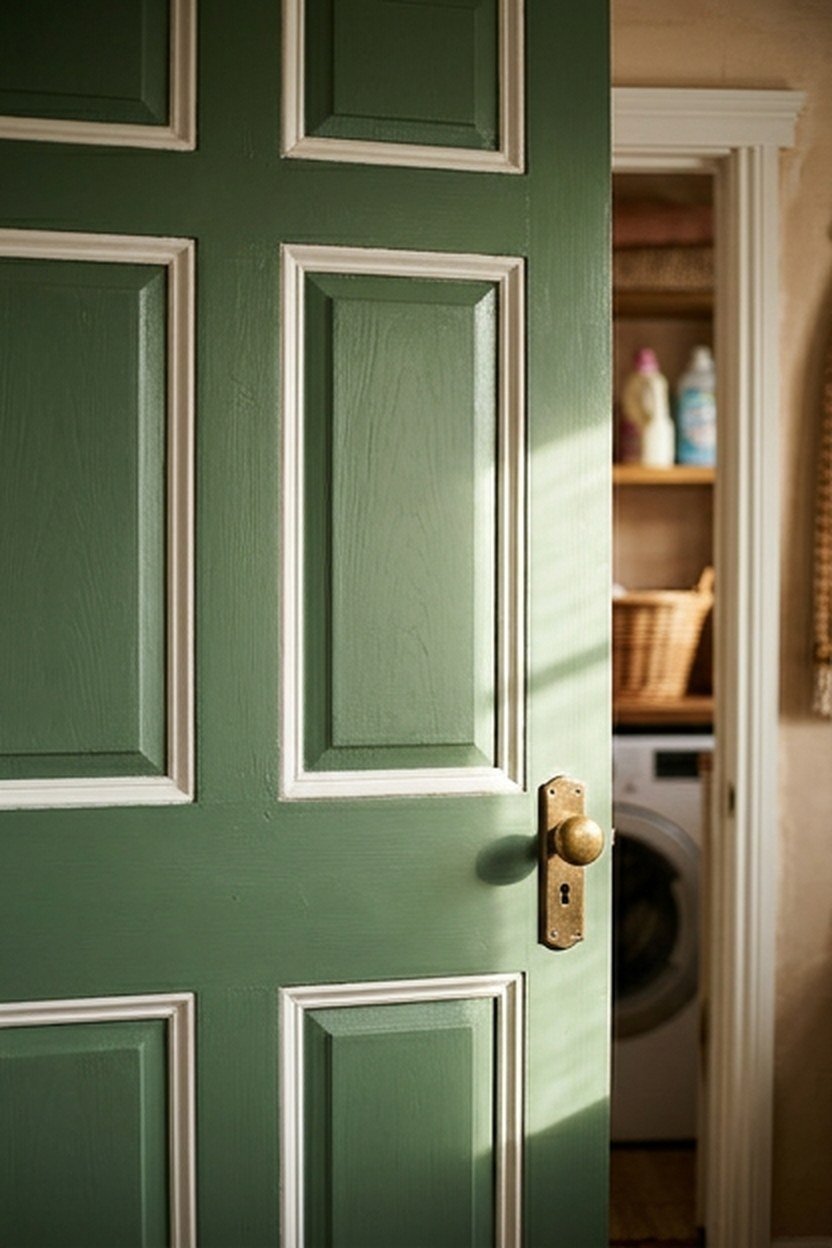
Painting the laundry room’s door in the room’s established green tone, while keeping the surrounding door trim and casing in a contrasting white or cream, creates a defined, intentional accent that signals the room’s distinct character even before entering the space. This detail is a small but meaningful way to extend the green aesthetic beyond the room’s interior into the transitional threshold space.
Choosing a paint sheen appropriate for a frequently touched door surface, typically a semi-gloss or satin finish rather than a completely flat option, ensures the finish withstands regular handling and cleaning better than a more delicate matte alternative. This durability-focused sheen consideration matters for a surface that experiences this much regular physical contact. Most interior door painting projects benefit from this slightly glossier finish choice regardless of the specific color chosen.
Selecting hardware, a door handle or hinges, in a finish that coordinates with the room’s other established metal accents, brass fixtures or cabinetry hardware discussed elsewhere in this guide, extends the coordinated palette even to this transitional threshold element. This hardware coordination consideration is worth applying consistently throughout every metal accent choice in the room, including this door-specific detail.
Cost And Sheen Guidance
Painting a laundry room door in green with contrasting trim typically costs $40 to $120 in materials for a DIY project, a relatively affordable detail given its meaningful visual impact. Choosing a durable, washable paint specifically formulated for doors and trim, rather than standard wall paint, ensures the finish withstands the regular handling this surface experiences.
A common mistake is choosing a paint sheen too flat for a frequently touched door surface, resulting in a finish that shows fingerprints, scuffs, and general wear more visibly than a slightly glossier alternative would. Choosing a semi-gloss or satin finish specifically formulated for doors and trim avoids this common durability oversight.
13. Green And Cream Striped Wallpaper
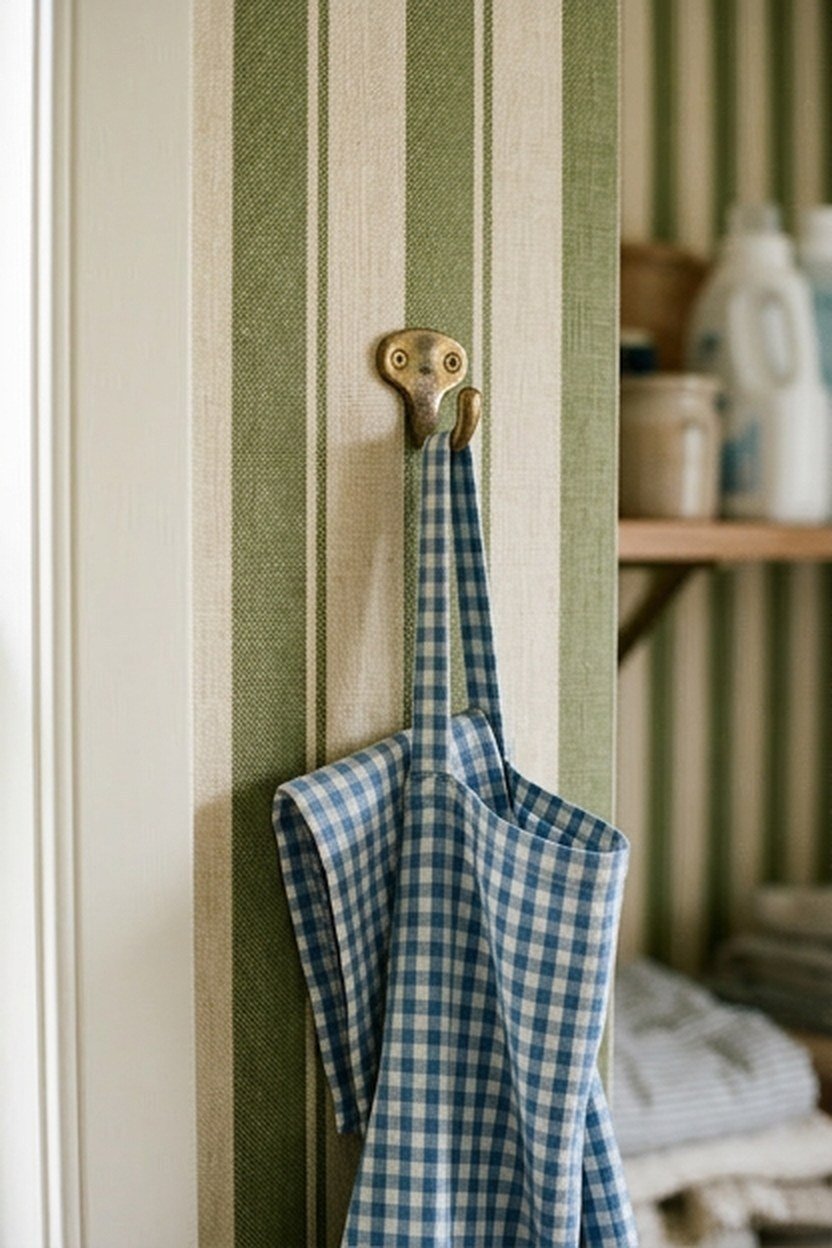
Green and cream striped wallpaper, applied to a full wall or as an accent behind open shelving, introduces pattern and visual texture beyond what a solid paint color alone can achieve throughout the room’s wall surfaces. This detail suits a laundry room specifically well given how often this room lacks other sources of visual interest, windows, artwork, or architectural detail, that other rooms typically include.
Choosing a stripe width and spacing appropriate for the room’s actual proportions, narrower stripes for a smaller laundry room and wider stripes for a more spacious one, maintains visual balance rather than overwhelming a confined space with an oversized pattern. This proportional consideration is worth confirming with a physical sample viewed in the actual room before committing to a full wallpaper order. Most wallpaper suppliers offer several stripe width options specifically for this reason.
Selecting a peel-and-stick wallpaper option, rather than a traditional pasted variety, simplifies installation considerably and also allows for easier removal if the space is later redecorated or the home is a rental property. This installation flexibility consideration is worth prioritizing for anyone uncertain about long-term commitment to this specific pattern choice. Most peel-and-stick options available today offer considerably improved quality compared to earlier generations of this product category.
Cost And Proportion Guidance
Green and cream striped wallpaper for a typical laundry room wall typically costs $60 to $180 for materials, depending on paper quality and whether professional installation is used. Choosing a moisture-resistant wallpaper specifically rated for humid room applications, rather than a standard interior wallpaper, protects the investment from premature peeling or damage given the room’s regular humidity exposure.
A common mistake is choosing a stripe pattern scale too large for the room’s actual proportions, resulting in a pattern that reads as disproportionate or overwhelming once applied to a typically smaller laundry room wall. Choosing a narrower stripe width, and viewing a physical sample against the actual wall space before committing to a full order, avoids this common proportion mismatch. This sample-testing step is worth the small delay it adds to the overall project timeline.
14. Green Enamel Laundry Signage Or Wall Art
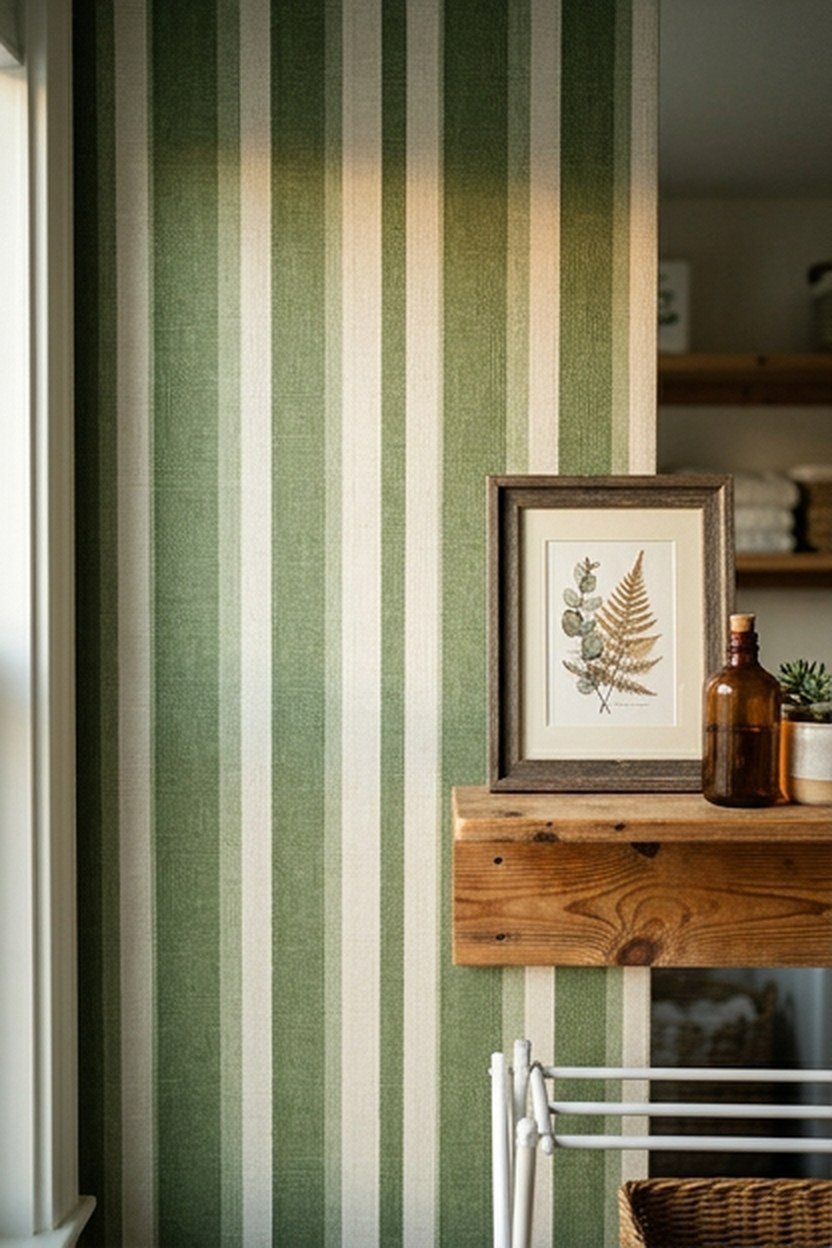
A green enamel sign or small piece of wall art featuring a laundry-themed phrase or graphic introduces a playful, personalized decorative touch that reinforces the room’s green palette while adding genuine personality to an otherwise purely functional space. This detail is one of the smaller, more affordable finishing touches available for this style, requiring no structural or paint changes to the room itself.
Choosing a sign or art piece in a green tone that complements the room’s established cabinetry or wall color, rather than introducing an unrelated shade, maintains the aesthetic cohesion this style depends on throughout every decor choice. This color coordination consideration applies the same principle discussed throughout this guide regarding maintaining palette consistency across every element, regardless of how small or seemingly minor the specific item.
Positioning this signage or art at a height and location that feels genuinely intentional, rather than as an obvious afterthought squeezed into leftover wall space, ensures the piece contributes meaningfully to the room’s overall considered design. This placement consideration matters as much as the piece’s aesthetic content itself. Most successful laundry room signage placements position the piece above the folding counter or near the entrance, where it naturally draws attention.
Cost And Placement Guidance
A green enamel laundry sign or small wall art piece typically costs $20 to $60 depending on size and material quality. Choosing a piece crafted from durable, moisture-resistant material, enamel or a sealed wood finish rather than unsealed paper or canvas, ensures the piece holds up to the laundry room’s typical humidity levels over time.
A common mistake is choosing signage or wall art in a font or graphic style that clashes with the room’s broader design aesthetic, particularly an overly whimsical or juvenile style that feels inconsistent with a more sophisticated green and brass palette established elsewhere in the room. Selecting a piece with a clean, simple design consistent with the room’s broader aesthetic sophistication avoids this stylistic inconsistency.
15. Green Painted Trim With White Walls
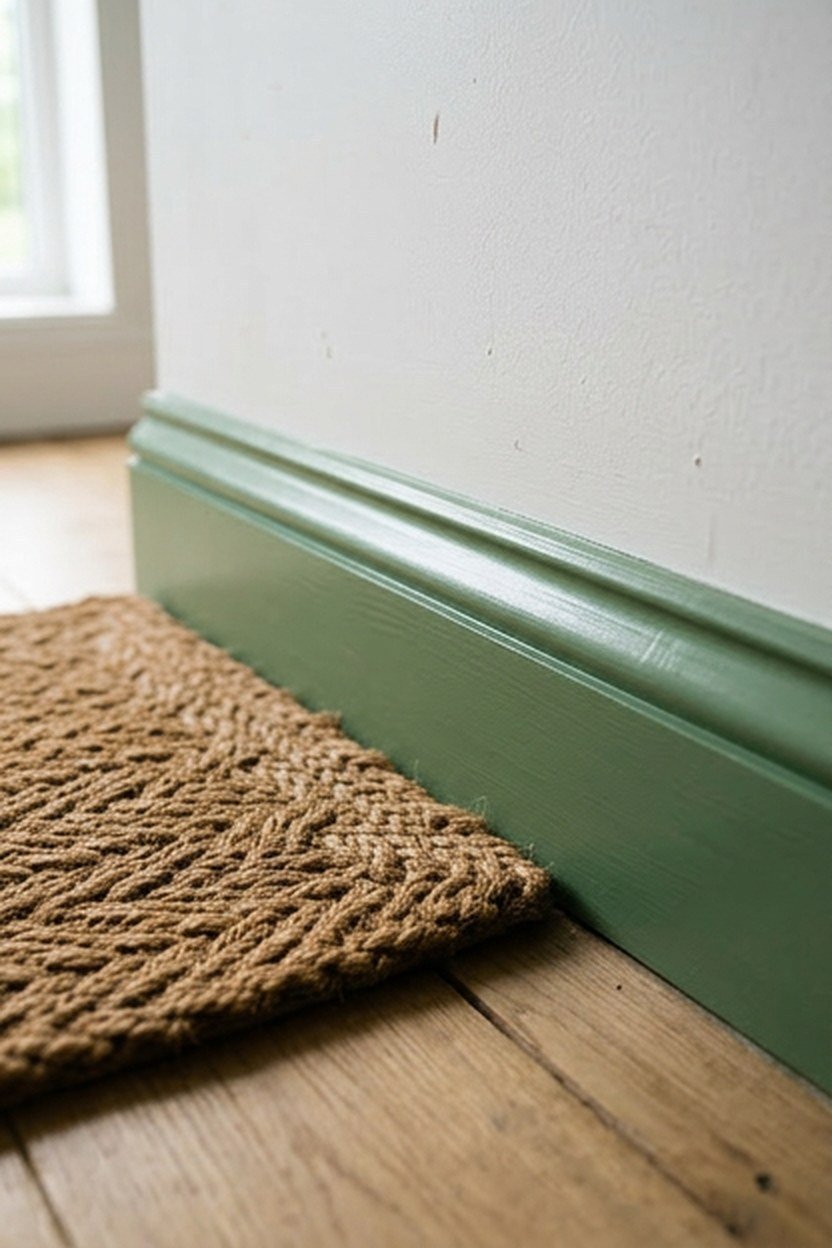
For a more restrained approach, painting only the room’s trim, baseboards, window casings, and door frames in green while keeping the walls crisp white introduces the color in a subtle, architectural way rather than as a dominant wall color. This detail suits a household hesitant to commit to a bolder green application while still wanting the color meaningfully in the room.
Choosing a slightly darker or more saturated green for this trim application, rather than the same muted tone that might work for larger surfaces, ensures the color reads clearly against white walls rather than disappearing into a too-similar tone. This intensity consideration is worth testing with an actual paint sample against your wall color before committing to the full project. Most successful trim-only applications benefit from this bolder color choice given the smaller surface area involved.
Selecting a durable, washable paint specifically formulated for trim and baseboards, given how much handling and cleaning these surfaces typically experience, ensures the finish holds up over years of regular use. This durability consideration matters as much for trim paint as for any other frequently touched surface discussed throughout this guide.
Cost And Color Intensity Guidance
Painting a laundry room’s trim in green typically costs $60 to $150 in materials for a DIY project, one of the more affordable ways to introduce this color into the room’s overall design. Choosing a semi-gloss or gloss finish specifically formulated for trim application, rather than a flat wall paint used incorrectly on this surface, ensures proper durability and the correct visual sheen expected for trim work. This finish-appropriate product selection is worth confirming before beginning this specific painting project.
A common mistake is choosing a green tone too similar to the wall’s white shade, resulting in trim that fails to read as a distinct, intentional color choice once painted. Testing the chosen green against the actual wall color under the room’s typical lighting conditions before committing to the full trim painting project avoids this subtle but disappointing color relationship mismatch.
What A Green Laundry Room Update Actually Costs
A complete green laundry room update, incorporating several concepts from this guide, typically costs $500 to $3,500 depending on how much relies on paint and accessories versus more substantial renovations like tile or flooring replacement. This range reflects how much of this style can be achieved affordably through paint alone, while still allowing for a fuller renovation investment. Understanding this rough breakdown helps prioritize spending toward the elements with the most visual impact.
Ongoing costs beyond the initial update remain relatively modest, mainly consisting of occasional touch-up painting given the room’s regular moisture and handling exposure, and periodic replacement of smaller accessories like baskets or glass jars as they show wear over time. Choosing durable, appropriately rated materials from the start, a consideration discussed throughout this guide, meaningfully extends how long the initial investment maintains its original appearance.
| Investment Category | Typical Cost Range | Notes |
|---|---|---|
| Cabinetry and hardware | $400 to $1,600 | Repainting plus new brass hardware |
| Tile and flooring | $300 to $1,500 | Backsplash, checkerboard flooring |
| Textiles and accents | $150 to $500 | Baskets, jars, signage, shades |
Prioritizing cabinetry and one significant tile or flooring element first, since these carry the most visual weight, before layering in smaller textile and decor accents gives the most reliable path to a cohesive look even on a limited initial budget. This prioritization strategy is worth discussing before the first purchase is made. Most homeowners find this order of investment produces the most satisfying room transformation relative to the budget spent at each stage.
Common Mistakes That Undermine A Green Laundry Room
The most common mistake across green laundry room projects is choosing a paint or material finish unsuited to the room’s actual humidity and splash exposure, resulting in premature peeling, staining, or damage within just a year or two of installation. Choosing moisture-resistant, appropriately rated materials throughout, a consideration discussed repeatedly throughout this guide, avoids this recurring and costly problem.
A second frequent mistake is applying green too extensively throughout every surface without any neutral or contrasting element to provide visual relief, resulting in a room that feels overwhelming rather than genuinely calming despite the color’s typically soothing reputation. Balancing green surfaces against neutral walls, white trim, or natural wood tones, a principle discussed throughout this guide’s planning section, avoids this common overapplication problem.
Recovering From These Setbacks
Recovering from prematurely damaged paint or materials typically means replacing the affected surface with a properly rated, moisture-resistant alternative, rather than repeating the same material mistake with a like-for-like replacement. This correction requires accepting the sunk cost of the original installation, but prevents the same deterioration from recurring with the replacement material. Choosing the more durable, appropriately rated option this time, even at a somewhat higher upfront cost, is worth the investment given the room’s genuinely demanding moisture conditions.
Recovering from an overwhelming, too-much-green room typically means introducing a few key neutral elements, white trim, natural wood shelving, or cream textiles, rather than repainting the entire room from scratch. This targeted addition approach is considerably less expensive than a full repaint and often resolves the overwhelming feeling with surprisingly few additional neutral elements. Identifying which specific surface is contributing most to the overwhelming feeling helps target this correction most effectively.
Conclusion
A green laundry room succeeds by choosing an appropriately muted, sophisticated green tone, applying it across one or two primary surfaces, and pairing it with durable, moisture-resistant materials suited to the room’s demands. The fifteen concepts here, from sage cabinetry to green enamel signage, each offer a different entry point depending on your budget and renovation appetite. Prioritizing durability and color balance first, then layering in accents, gives the most reliable path to a laundry room that feels genuinely considered rather than purely utilitarian.
Whether this is a first attempt at incorporating green into a laundry room or a refinement of an existing space that has always felt slightly incomplete, the underlying principles stay consistent: choose moisture-appropriate materials, balance green against neutral elements, and let brass or wood accents provide the warm contrast this palette depends on. These fundamentals matter more than any single decorative purchase on this list. Get them right, and the laundry room becomes a space that feels genuinely designed rather than purely functional.
Frequently Asked Questions
Why does green work well in a laundry room? Green pairs naturally with wood, stone, and brass materials common in laundry room fixtures, and it substitutes for the calming quality of plants in a room that often lacks natural greenery. It also reads as forgiving and calm even in a small, enclosed space.
How much does a green laundry room update cost? A complete update typically costs $500 to $3,500 depending on whether the project relies mainly on paint and accessories or includes more substantial renovations like tile or flooring. Cabinetry and hardware usually represent the largest share of this budget.
What green shade works best in a small laundry room? A lighter sage or muted green generally suits a smaller, darker laundry room better than a deep, saturated tone that can feel overwhelming in a confined space. Testing swatches under the room’s actual lighting conditions helps confirm the right choice.
Does green cabinetry need a special paint? Yes, a durable cabinet-specific paint in a satin or semi-gloss finish holds up better to frequent handling than a standard flat wall paint. This finish consideration matters more for cabinetry than for less frequently touched surfaces.
What metal finish pairs best with green in a laundry room? Brass in a warm, slightly antiqued finish complements muted green tones particularly well, providing the contrast this combination depends on for visual interest. Coordinating brass across hardware, faucets, and fixtures keeps the look cohesive.
Can I add green to a laundry room without a full renovation? Yes, painting cabinetry, trim, or a single accent wall, or adding green glass jars and woven baskets, can introduce the color without requiring tile or flooring replacement. This approach is one of the more affordable ways to try the style.
What is the biggest mistake people make with green laundry rooms? Choosing paint or materials not rated for the room’s humidity and splash exposure is the most common mistake, leading to premature peeling or staining. Choosing moisture-resistant, appropriately rated materials throughout avoids this problem.