
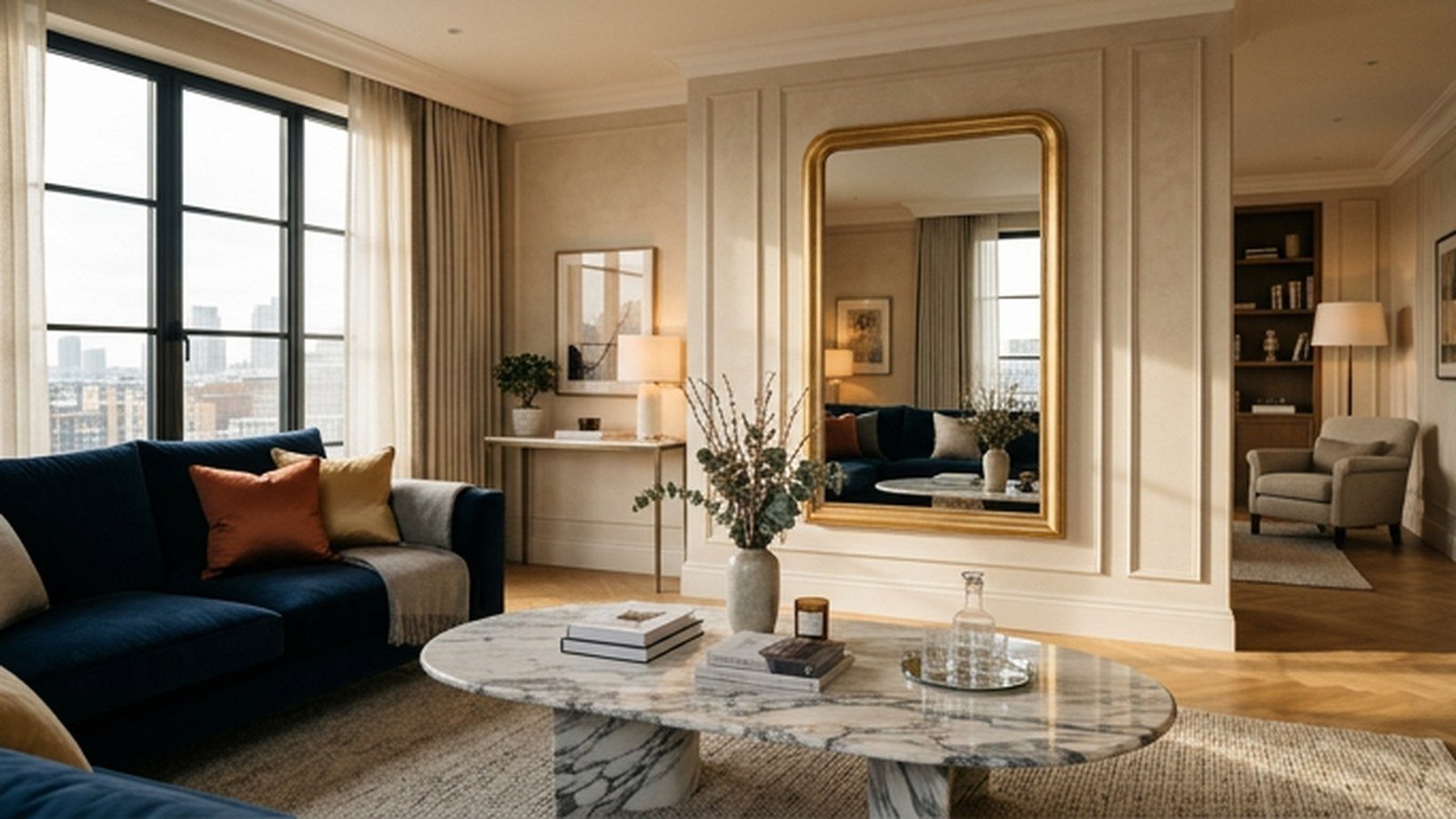
Gold and marble accents pair a warm metallic finish with a naturally veined stone surface to create the polished, elevated look most people associate with a genuinely luxury apartment interior. This combination works because marble’s cool, organic veining contrasts beautifully against gold’s warm sheen, giving a room visual depth without requiring an entire renovation. Fifteen concepts below cover the furniture, fixtures, and small accents that build this look room by room.
I added my first gold and marble piece, a simple side table, to my apartment as an experiment before committing to anything larger, and the shift in how the room read surprised me. A single well-placed gold and marble piece does more visual work than several smaller, unrelated decor items combined, since the pairing carries genuine luxury signaling regardless of the object.
Below you will find fifteen numbered concepts covering furniture, lighting, and small accents, plus a cost comparison table and a rundown of the mistakes that make a gold and marble scheme feel gaudy rather than elevated. Each idea includes a sub-angle on cost, sourcing, or what commonly goes wrong so you can build the look with a realistic budget. By the end you should know exactly which pieces carry the most visual weight and which ones are safe to skip.
Why Gold And Marble Work So Well Together
Gold and marble succeed as a pairing because they represent two distinct luxury signals, a warm reflective metal and a cool natural stone, that together read as considerably more expensive than either material used alone. This visual contrast mirrors the same warm-cool balance principle that shows up across many other successful interior color and material pairings. Most designers consider this specific combination one of the more reliable ways to signal a polished, elevated aesthetic.
Marble’s natural veining also varies piece to piece, meaning no two marble surfaces look identical, which adds a genuine sense of exclusivity that a mass-produced material cannot replicate. Pairing this naturally unique material with gold, itself associated with rarity and value across many cultures, reinforces this exclusivity signal throughout a room.
| Material Pairing | Visual Signal | Typical Cost Tier |
|---|---|---|
| Gold and marble | High luxury, timeless | Higher upfront cost |
| Chrome and laminate | Modern, budget-friendly | Lower upfront cost |
| Brass and wood | Warm, casual luxury | Moderate cost |
A complete gold and marble apartment accent package, covering a few furniture pieces and smaller decor items, typically costs $500 to $2,500 depending on whether genuine marble or a marble-look alternative is chosen. This range reflects the fact that genuine marble carries a real cost premium over engineered stone or marble-pattern laminate. Understanding this helps set a realistic budget before shopping begins.
Planning Where To Concentrate Gold And Marble In Your Apartment
Planning starts with choosing one or two rooms to carry the primary gold and marble treatment, since applying this pairing throughout an entire apartment can feel excessive rather than genuinely luxurious. Most successful apartments concentrate the strongest treatment in the living room and bathroom, two spaces where guests and the resident both spend considerable visual attention.
Balancing the ratio of gold to marble matters considerably, since a room with too much gold relative to marble can read as gaudy, while a room with too much marble and too little gold can feel cold and clinical. Most designers recommend using marble as the larger surface area, countertops, tabletops, or flooring, while reserving gold for smaller accents, hardware, lighting, and trim.
The biggest planning mistake is choosing a gold tone that clashes with existing metal finishes already present in the apartment, like chrome bathroom fixtures or brushed nickel cabinet hardware. Confirming that any new gold pieces coordinate with, or deliberately replace, existing conflicting metal finishes avoids this common and easily overlooked inconsistency.
Choosing Between Genuine Marble And Marble-Look Alternatives
Genuine marble offers unmatched natural veining and a cool touch that alternatives cannot fully replicate, but it comes with a real cost premium and requires periodic sealing to prevent staining from acidic substances like wine or citrus. This maintenance requirement is worth weighing honestly against the household’s actual willingness to maintain a natural stone surface. Most genuine marble owners find the maintenance routine manageable once established as a regular habit.
Marble-look alternatives, including engineered quartz with a marble pattern or high-quality laminate, offer considerably lower cost and easier maintenance while still delivering much of the visual impact genuine marble provides. These alternatives suit budget-conscious households or rental apartments where a permanent, expensive material investment does not make practical sense. Choosing between these options largely comes down to budget, permanence, and how much maintenance the household is willing to take on.
1. Marble Coffee Table With Gold Base
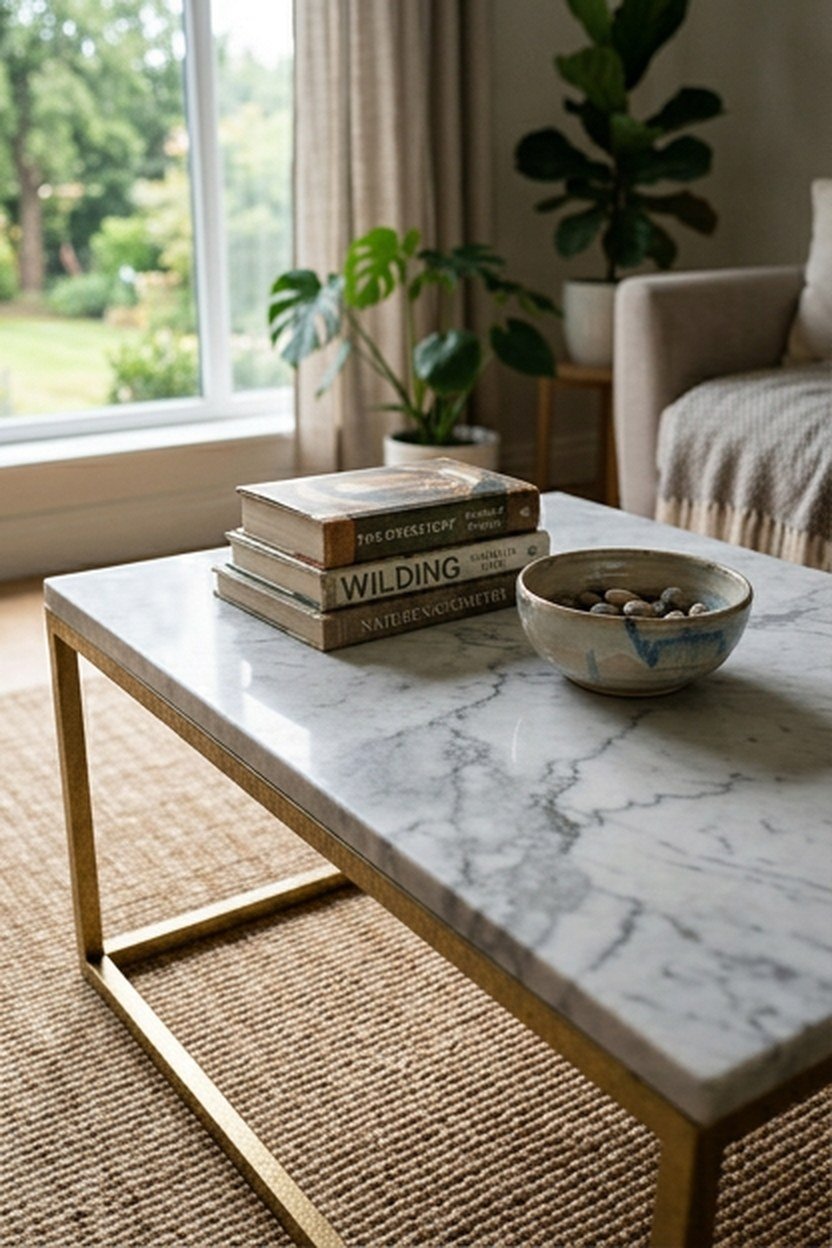
A marble-top coffee table with a gold metal base anchors a living room with both material signals working together in a single, highly visible piece of furniture. This combination works particularly well as a centerpiece since the coffee table sits at the room’s visual center, drawing attention naturally during any gathering.
Choosing a table with a genuine marble slab top, rather than a marble-pattern laminate, provides the most authentic look and the coolest, most premium touch, though at a considerably higher cost than an engineered alternative. A gold base in a matte or brushed finish, rather than a high-polish mirror finish, tends to read as more sophisticated and less prone to showing fingerprints during daily use.
Sizing the table appropriately for the room’s actual seating arrangement, allowing comfortable legroom between the table and surrounding seating, prevents an otherwise beautiful piece from feeling cramped or awkwardly positioned. This sizing consideration applies to any coffee table regardless of material, but is worth mentioning specifically here given how much visual weight a marble and gold table carries in a room. Measuring the intended space before ordering avoids a disappointing fit once the table arrives.
Cost And Material Guidance
A marble-top coffee table with a gold base typically costs $300 to $1,200 depending on whether genuine marble or an engineered alternative is chosen, plus the base’s construction quality. Choosing a table with a removable or replaceable top, some designs allow this, provides flexibility if the marble surface is ever damaged and needs replacement.
A common mistake is choosing an unsealed genuine marble top without understanding the staining risk from spilled beverages during regular coffee table use. Confirming the marble has been properly sealed, or applying a sealant treatment after purchase, protects the surface from the everyday spills a coffee table inevitably experiences.
2. Gold Framed Mirror With A Marble Console Table
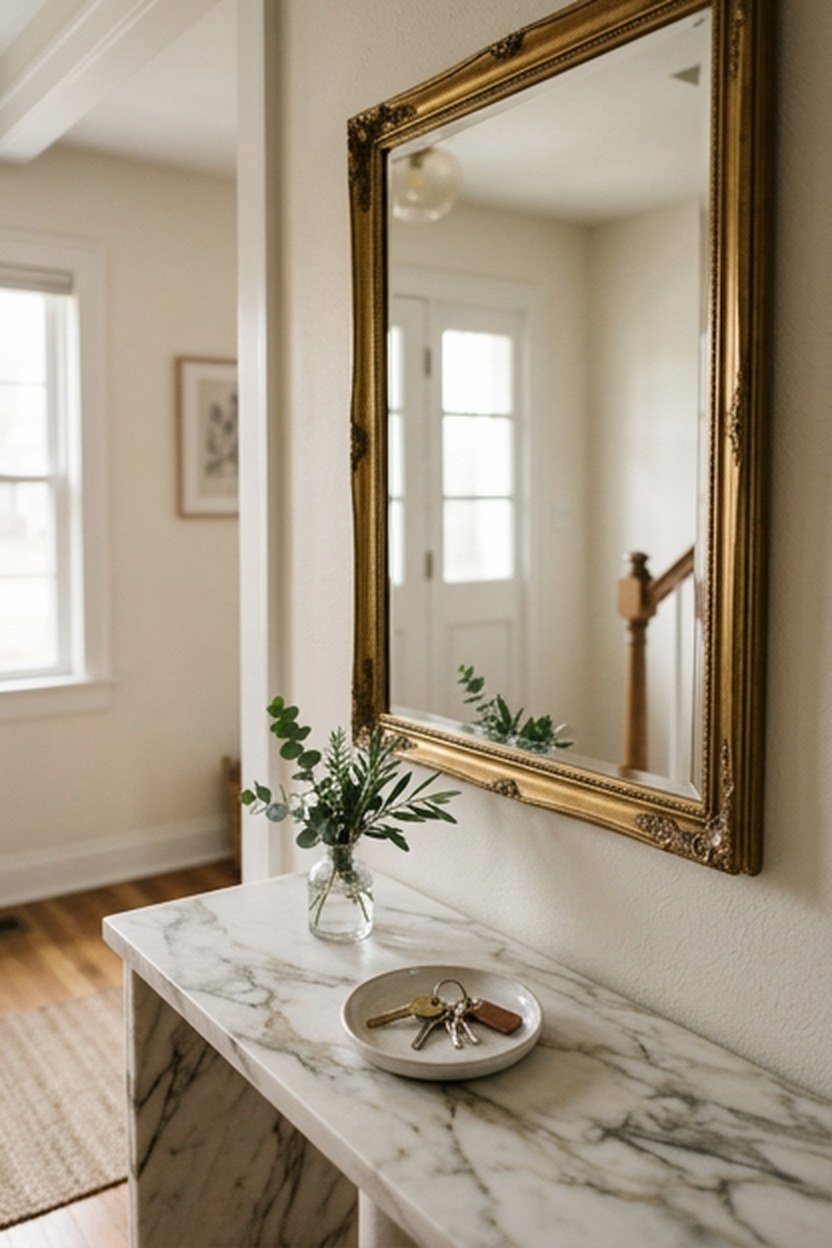
A gold framed mirror paired with a marble-top console table, positioned in an entryway or along a hallway, creates a coordinated first impression that sets the tone for the entire apartment’s design language. This pairing works particularly well in a smaller entry space, since the mirror’s reflective quality helps the area feel larger while the marble surface provides a practical spot for keys or mail.
Choosing a mirror frame in a substantial, slightly ornate gold design, rather than a thin, minimal frame, provides enough visual weight to balance against the console table’s own presence without one piece overwhelming the other. Sizing the mirror to roughly two-thirds the console table’s width creates a proportionally pleasing arrangement that avoids either piece feeling disconnected from the other.
Positioning the console table at a height that allows the mirror to sit at a genuinely useful reflection height, roughly eye level for most household members, ensures the piece serves its practical function alongside its decorative role. This height consideration is worth testing with an actual standing position before finalizing the console table’s exact placement. Getting this height right meaningfully improves the entryway’s daily usability.
Cost And Proportion Guidance
A gold framed mirror and marble console table set typically costs $400 to $1,500 depending on mirror size and whether the console uses genuine or engineered marble. Purchasing these two pieces from the same collection or coordinated product line, rather than mixing unrelated gold tones from different manufacturers, helps ensure the metal finishes genuinely match rather than clash subtly.
A common mistake is choosing a console table too narrow relative to the mirror above it, resulting in a top-heavy visual arrangement that feels imbalanced. Confirming the proportional relationship between these two pieces before purchase, using the two-thirds width guideline discussed above, avoids this common styling misstep.
3. Marble Bathroom Countertop With Gold Faucet Fixtures
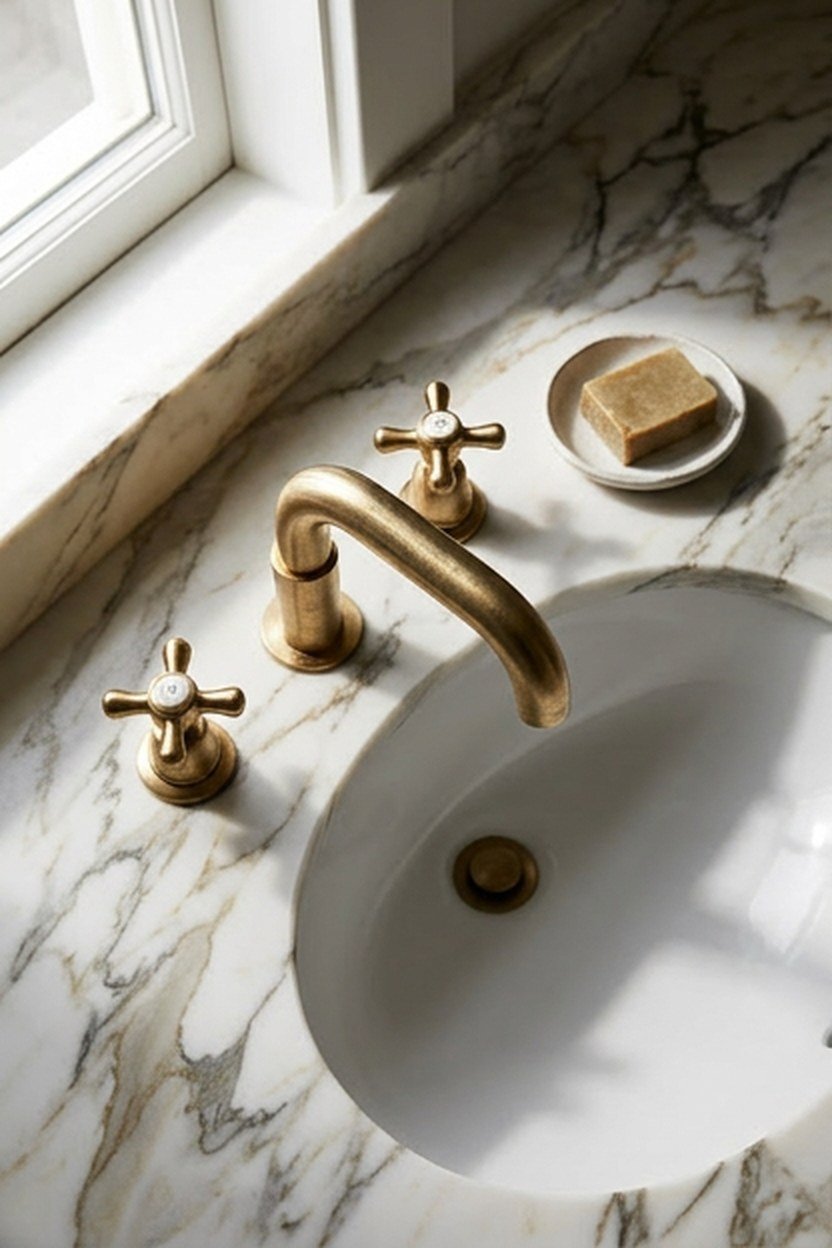
A marble bathroom countertop paired with gold faucet fixtures brings the luxury pairing into one of the most frequently used rooms in the apartment, where its visual impact gets appreciated multiple times daily. This combination works especially well in a bathroom because the room’s smaller scale means the marble and gold materials cover a larger proportion of the visible surface area compared to a larger room.
Choosing a gold faucet finish that matches or intentionally coordinates with any other gold accents in the bathroom, like cabinet hardware or a mirror frame, ensures the metal tones read as a cohesive design choice rather than a random assortment of similarly-colored but mismatched fixtures. Most bathroom fixture manufacturers offer coordinated collections specifically designed to solve this matching challenge.
Selecting a marble countertop with veining that complements rather than competes with the bathroom’s existing tile or flooring pattern prevents the space from feeling visually overloaded with too many competing natural stone patterns. Bringing a marble sample into the bathroom to view alongside existing tile before finalizing the countertop choice helps confirm this compatibility. This sample-testing step is worth the small delay it adds to the renovation timeline.
Cost And Fixture Coordination Guidance
A marble bathroom countertop with gold faucet fixtures typically costs $600 to $2,000 depending on countertop size and fixture quality, representing a more significant renovation investment than smaller decor pieces discussed elsewhere in this guide. Choosing a marble variety known for good water resistance, since bathroom countertops experience regular moisture exposure, is worth discussing specifically with your countertop supplier.
A common mistake is choosing gold fixtures in a bright, shiny finish that shows water spots and fingerprints prominently in a room with frequent water exposure. Choosing a brushed or matte gold finish specifically for bathroom fixtures, rather than a high-polish option, considerably reduces the visible maintenance this room’s fixtures require on a daily basis.
4. Gold Pendant Lighting Over A Marble Kitchen Island
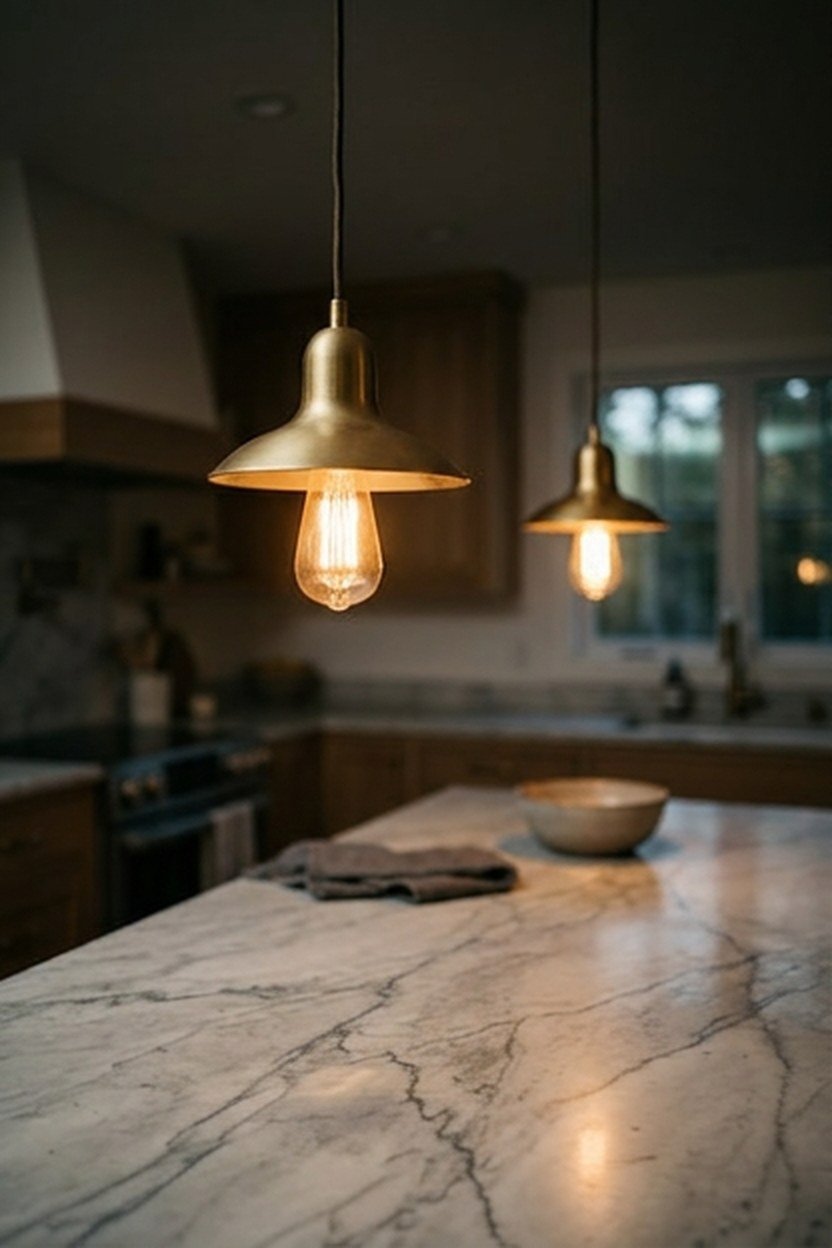
Gold pendant lights suspended above a marble kitchen island combine both materials in one of the apartment’s most functional and frequently viewed spaces, creating a genuine focal point during meal preparation and casual gatherings. This pairing works particularly well in an open-concept apartment layout, where the kitchen island remains visible from the living and dining areas. This visibility means the investment in this specific pairing pays off across multiple sightlines throughout the apartment.
Choosing pendant lights sized and spaced appropriately for the island’s actual length, typically two to three fixtures spaced evenly for a standard island, provides balanced illumination without overcrowding the space above the counter. A warm-toned bulb within these gold fixtures complements both the metal’s warmth and the marble’s cooler tone, striking the same balance discussed throughout this guide.
Positioning the pendants at a height that provides adequate clearance for someone standing at the island, typically 30 to 36 inches above the counter surface, balances the lighting’s visual impact against genuine everyday functionality. This height consideration is worth measuring against your own counter height and the specific pendant style chosen before finalizing installation. Getting this height right avoids both an awkwardly low fixture and one positioned too high to provide adequate task lighting.
Cost And Spacing Guidance
Gold pendant lights suited for kitchen island lighting typically cost $80 to $250 per fixture depending on size and design complexity, with most standard islands requiring two to three fixtures total. Confirming your electrical setup can support the number of fixtures planned, and hiring a licensed electrician for any new wiring this installation requires, is worth doing before ordering the fixtures themselves.
A common mistake is spacing pendant lights too close together or too far apart relative to the island’s actual length, resulting in either overcrowded or unevenly distributed illumination across the counter surface. Measuring the island’s length and dividing it into equal segments for fixture placement, rather than guessing at spacing, avoids this common installation error.
5. Marble Bookend Set With Gold Detailing
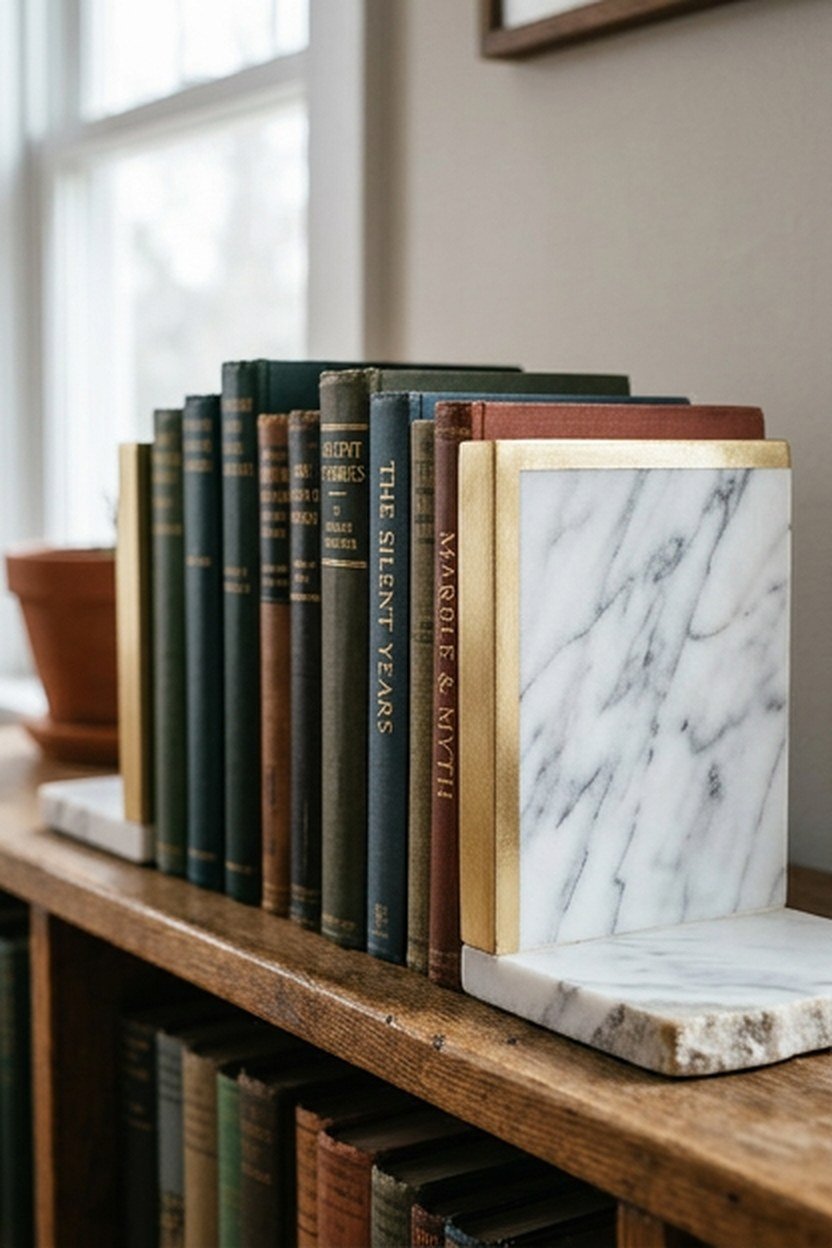
A marble bookend set with gold trim or accent detailing brings the luxury pairing into a small, affordable decor piece suited for a bookshelf, desk, or console table display. This detail works well as an entry point into the broader gold and marble aesthetic for anyone not yet ready to commit to larger furniture pieces. This smaller-scale application is one of the more accessible ways to begin building toward the fuller look discussed throughout this guide.
Choosing bookends genuinely weighted with real marble, rather than a lightweight marble-pattern resin imitation, ensures the pieces actually work as bookends rather than purely decorative objects that fail to hold books upright. This weight consideration matters as much as the visual appearance for a piece meant to serve a genuine practical function. Testing the bookends against an actual stack of books before committing to a full set confirms this functional requirement is met.
Positioning these bookends alongside other smaller gold accents already present in the room, rather than as an isolated decor piece, reinforces the overall coordinated palette discussed throughout this guide. This coordination consideration applies the same principle used for larger furniture pairings, scaled down to this smaller decorative object. This small-scale coordination is worth considering even for a relatively minor decor purchase.
Cost And Weight Testing Guidance
A marble bookend set with gold detailing typically costs $30 to $90 per pair depending on marble quality and the amount of gold detailing included. Testing the bookends’ actual weight and stability against a full stack of hardcover books before finalizing the purchase avoids a disappointing discovery that a purely decorative piece cannot fulfill its intended practical function.
A common mistake is choosing bookends in a gold tone that clashes with other established gold accents elsewhere in the room, particularly when purchased as a standalone impulse item rather than as part of a coordinated planning process. Bringing a photo or sample of the room’s existing gold accents when shopping for bookends helps avoid this common mismatch.
6. Marble Tile Backsplash With Gold Grout Accent
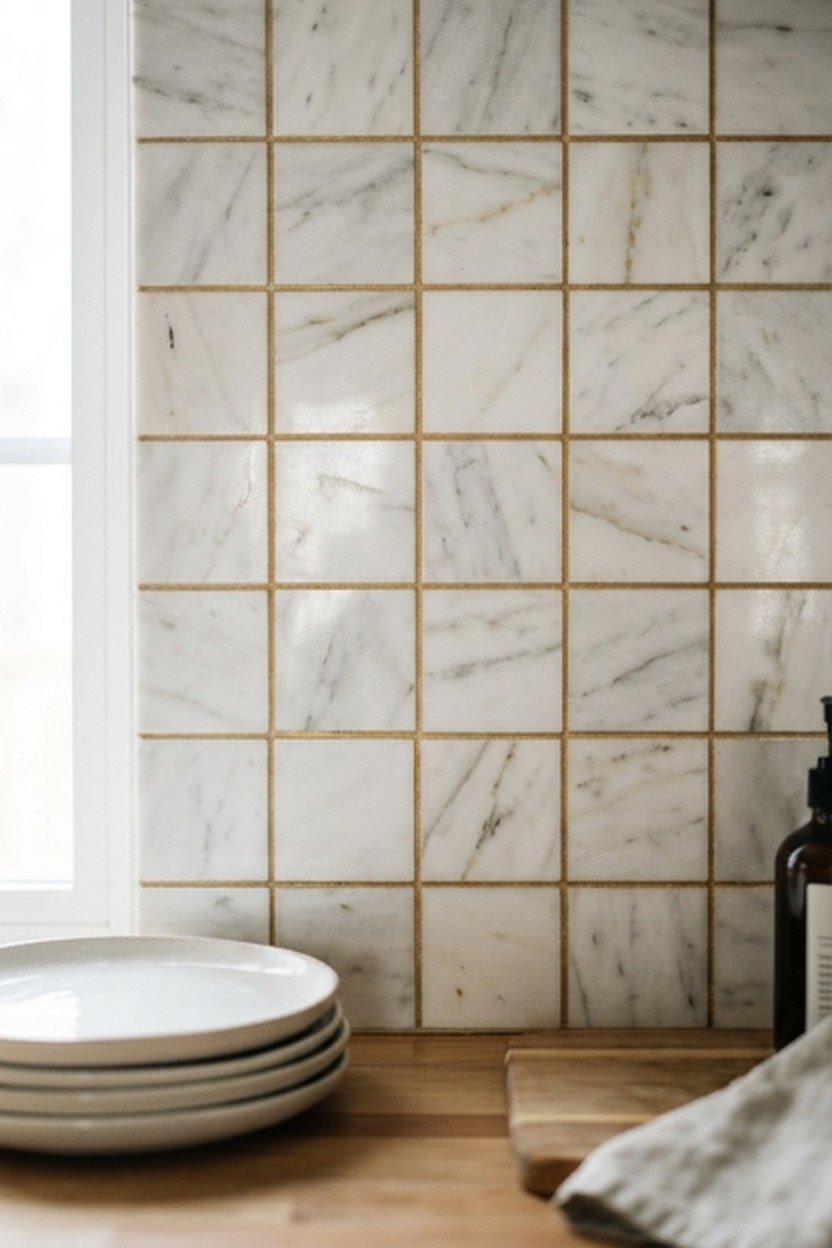
A marble tile backsplash finished with a gold-tinted grout accent introduces a subtle but distinctive detail that most standard marble installations skip entirely, since gold grout requires a specialty product not typically stocked for standard tile projects. This detail, while modest in scope, adds a genuinely unique touch that distinguishes a considered installation from a purely standard one.
Choosing a gold-tinted grout in a subtle, muted tone rather than a bright, obviously metallic color keeps the accent reading as sophisticated rather than gimmicky. Most specialty tile suppliers can special-order this type of grout, though it typically requires more lead time than standard grout colors readily available at most hardware stores.
Testing a small sample of the gold grout against the actual marble tile before committing to the full installation confirms the color combination reads as intended once both materials are combined. This sample testing step is worth the small delay it adds, particularly given how difficult and costly it would be to redo an already-grouted installation.
Cost And Sourcing Guidance
Gold-tinted grout for a standard kitchen backsplash typically costs $40 to $100 more than standard grout, a modest premium relative to the overall marble tile installation cost. Sourcing this specialty grout from a tile supplier experienced with luxury or specialty installations, rather than a standard hardware store, ensures access to the product and knowledgeable installation guidance.
A common mistake is applying gold grout inconsistently across the installation, resulting in visible variation in color intensity between different sections of the backsplash. Working with an experienced tile installer familiar with specialty grout products, rather than attempting this specific detail as a first-time DIY project, avoids this common execution problem.
7. Gold Accent Chair With Marble Side Table
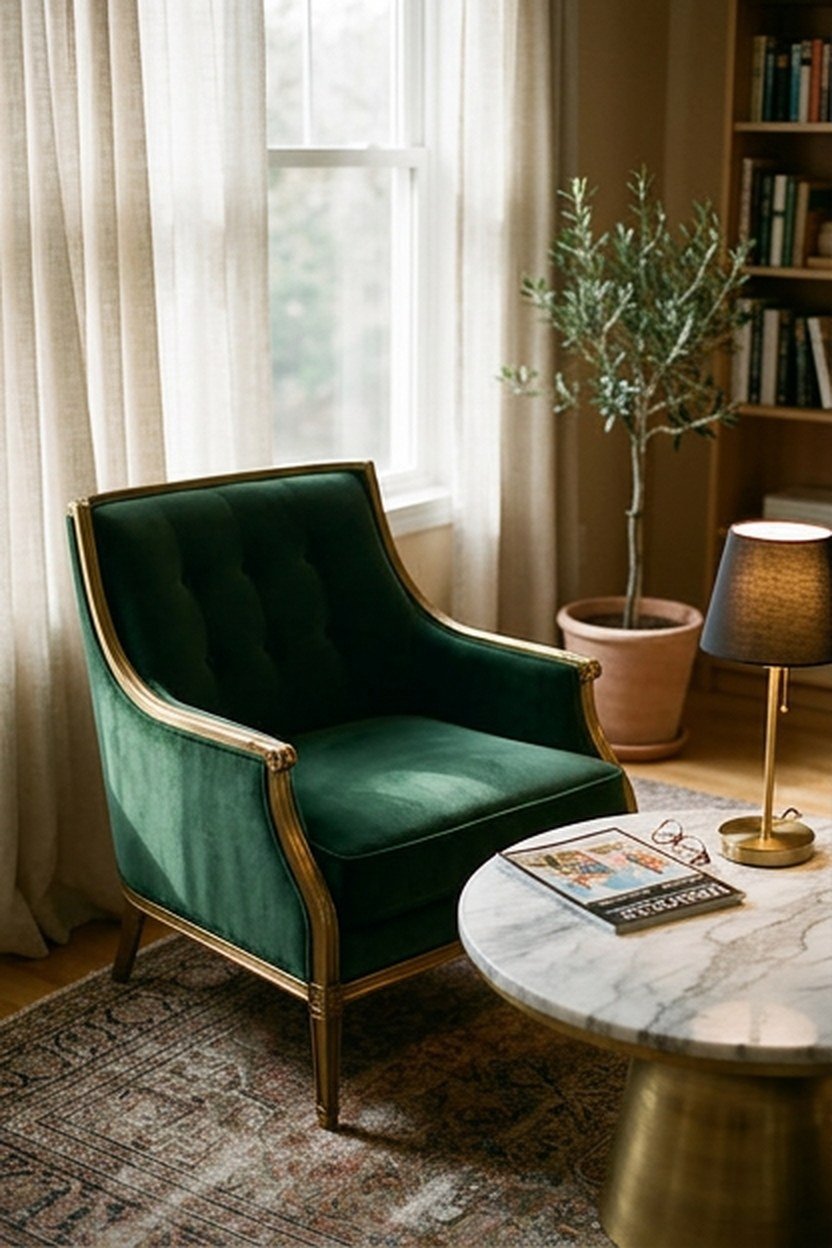
A gold-framed accent chair paired with a marble-top side table creates a coordinated seating vignette that works well in a living room corner, bedroom reading area, or any smaller seating zone throughout the apartment. This combination brings the gold and marble pairing into functional seating furniture rather than confining it to purely decorative objects or larger furniture pieces already discussed.
Choosing an accent chair with a gold metal frame and a complementary neutral upholstery fabric, rather than a bold pattern that competes visually with the marble side table, keeps the vignette feeling cohesive rather than visually busy. Velvet upholstery in particular pairs well with this material combination, echoing the same luxurious material quality that marble and gold both represent.
Positioning the side table within easy reach of the chair’s seated position, holding a lamp, a small plant, or a stack of books, gives the vignette genuine everyday function beyond pure visual display. This practical consideration matters as much as the aesthetic pairing itself, since a decor vignette that never gets used ultimately provides less value than one integrated into daily life.
Cost And Fabric Guidance
A gold-framed accent chair with a marble side table typically costs $400 to $1,200 for the pair, depending on chair upholstery quality and whether the table uses genuine or engineered marble. Choosing a durable, easy-to-clean upholstery fabric for the chair, rather than a delicate option prone to staining, accounts for the chair’s regular daily use in an active living space.
A common mistake is choosing a chair frame in a noticeably different gold tone than the side table’s own metal accents, resulting in a vignette that reads as mismatched rather than coordinated once both pieces are placed together. Purchasing both pieces from the same collection, or bringing a sample of one piece when shopping for the other, avoids this common coordination failure.
8. Marble Fireplace Surround With Gold Mantel Accents
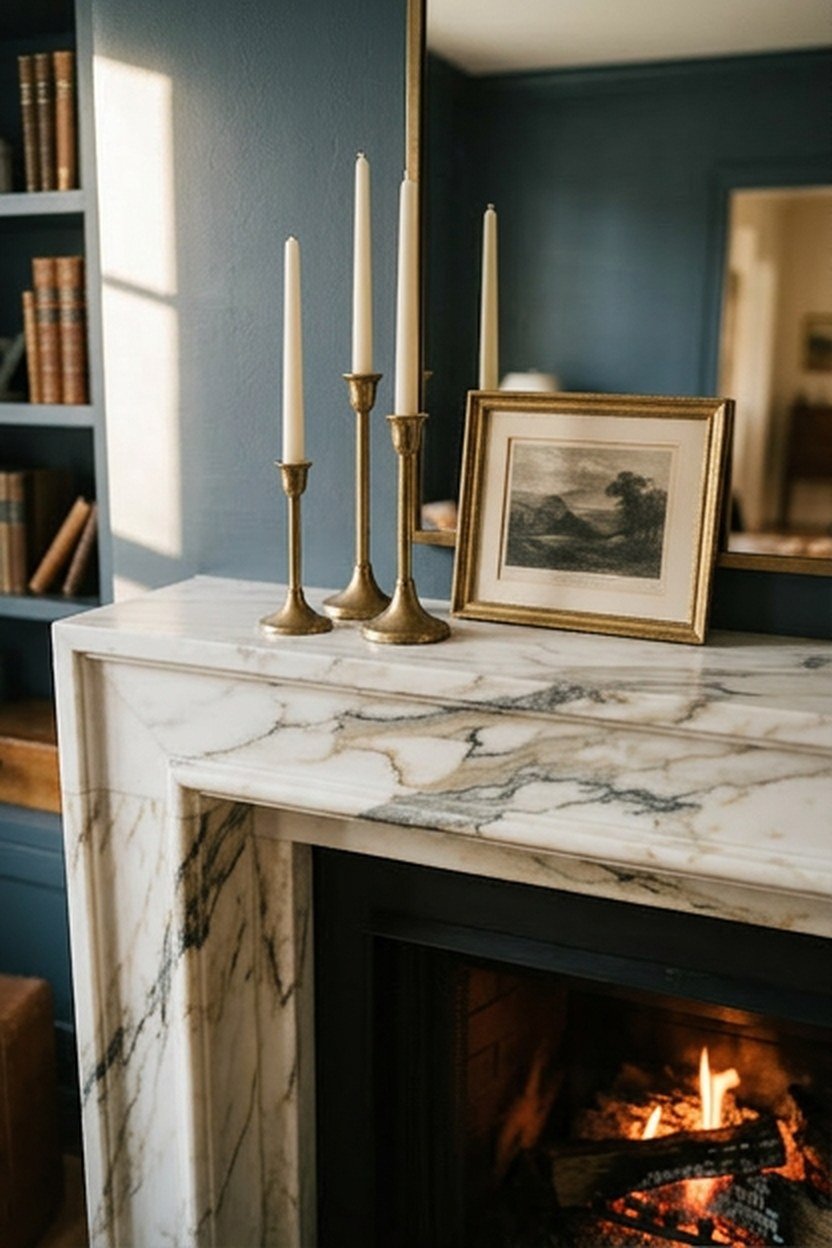
A marble fireplace surround paired with gold mantel accents, candlesticks, small sculptures, or a mirror frame, transforms the fireplace into the room’s clear focal point using both materials in their most architecturally significant application on this entire list. This combination works particularly well in an apartment fortunate enough to have an existing fireplace, since the surround typically represents a substantial but one-time renovation investment.
Choosing a marble variety with veining bold enough to remain visually interesting at the fireplace’s larger scale, rather than a subtle pattern that gets lost across a large surround area, ensures the material choice matches the application’s scale appropriately. Consulting with a stone supplier experienced in fireplace surround installations helps identify marble varieties specifically suited to this larger-format application. This scale-appropriate material selection is worth discussing directly with an experienced supplier.
Arranging gold mantel accents in a balanced but asymmetrical grouping, rather than a perfectly symmetrical, matched arrangement, creates a more collected, curated appearance that avoids feeling overly formal or staged. This asymmetrical arrangement principle applies the same styling technique discussed throughout many other sections of this guide regarding object grouping and display.
Cost And Installation Guidance
A marble fireplace surround typically costs $1,500 to $4,000 depending on marble variety and surround size, representing one of the larger single investments discussed throughout this entire guide. Gold mantel accents added afterward typically cost an additional $100 to $400 depending on how many pieces are included in the final arrangement. Budgeting for both the structural surround and the decorative accents separately helps set realistic overall expectations for this specific project.
A common mistake is installing the marble surround without adequately planning for heat exposure near an active fireplace, since certain marble varieties are more prone to heat-related staining or discoloration than others. Consulting with your stone supplier specifically about heat resistance for this particular application, rather than assuming any marble variety works equally well, avoids this potentially costly material mismatch.
9. Gold Cabinet Hardware With Marble Countertops
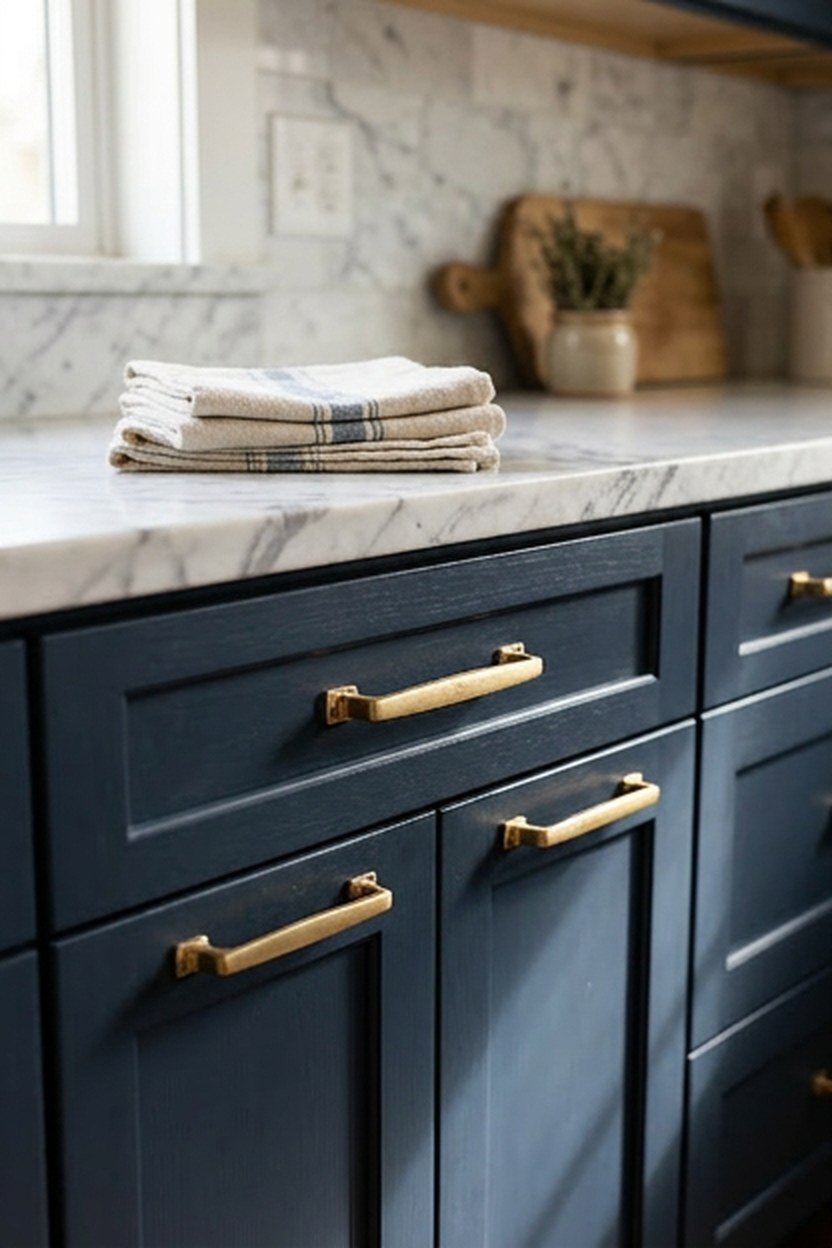
Replacing standard cabinet hardware with gold pulls and knobs, paired with marble countertops in a kitchen or bathroom, extends the luxury pairing into the smaller functional details that get touched and viewed constantly during daily use. This hardware swap is one of the more affordable ways to reinforce the gold and marble aesthetic across an entire room without requiring structural changes to the cabinetry itself.
Choosing a consistent gold hardware style and finish across every cabinet in the room, rather than mixing several different pull designs, keeps the overall look cohesive rather than visually busy. Most successful installations standardize on a single hardware style throughout, varying only the size slightly between larger and smaller cabinet doors as needed.
Testing hardware placement and finish against an actual marble countertop sample before finalizing a full hardware order confirms the specific gold tone genuinely complements the marble’s particular veining and base color. This test-first approach, while an extra planning step, is worth the confidence it provides before committing to hardware for an entire kitchen or bathroom’s worth of cabinetry. Most hardware suppliers offer sample pieces specifically for this kind of pre-purchase testing.
Cost And Consistency Guidance
Gold cabinet hardware typically costs $5 to $20 per pull depending on style and size, with a typical kitchen needing 15 to 30 pulls total across all cabinetry. This modest per-piece cost makes hardware one of the most budget-friendly ways to reinforce the gold and marble aesthetic throughout an entire room. Ordering a few extra pulls beyond the exact count needed accounts for any installation mistakes or future replacement needs.
A common mistake is choosing hardware that looks appropriately gold in isolation but clashes with the specific marble’s undertone, particularly when marble with cooler gray veining is paired with a hardware finish that reads as too warm or yellow-toned. Bringing an actual marble sample when shopping for hardware, rather than relying on memory or photos, avoids this subtle but noticeable undertone mismatch.
10. Marble Vanity Tray With Gold Perfume Bottles Or Accessories
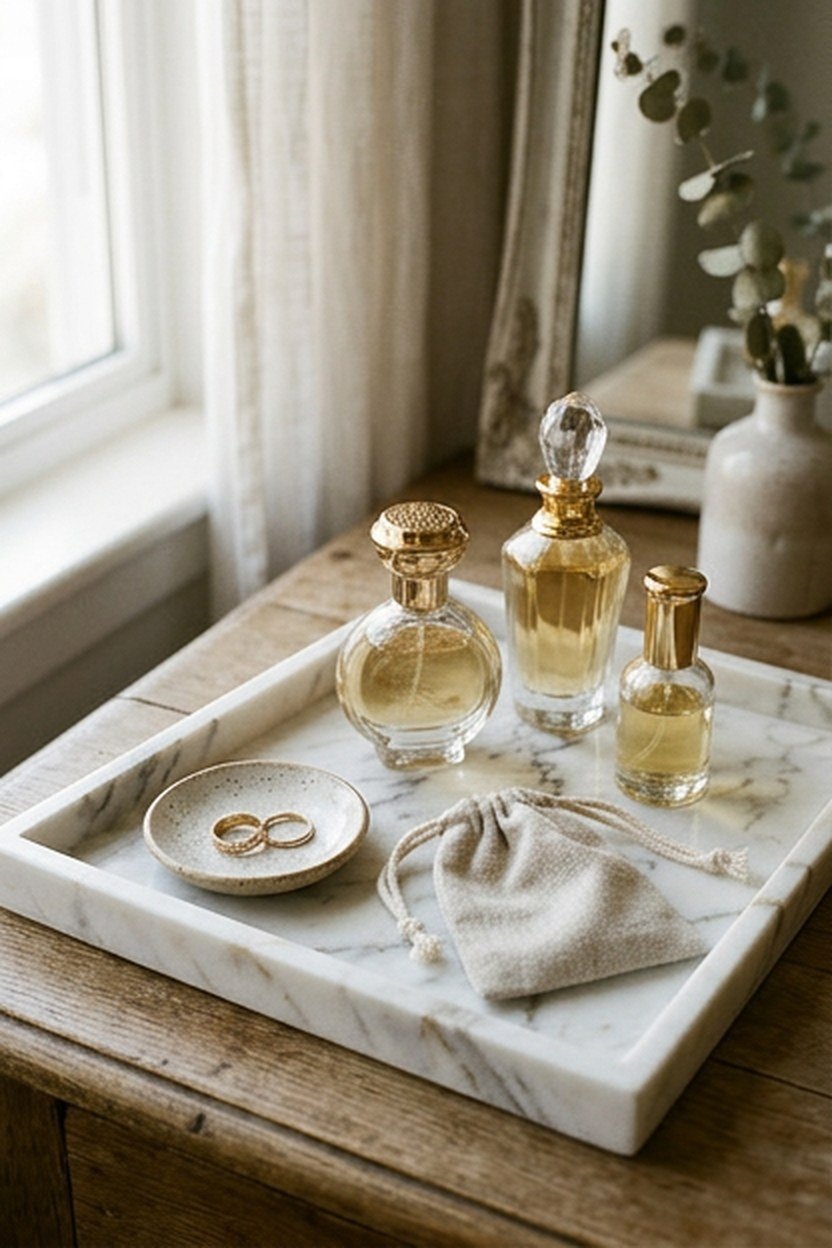
A marble vanity tray, styled with gold-capped perfume bottles or small gold accessory dishes, brings the luxury pairing into a bedroom or bathroom vanity display at a genuinely affordable and easily achievable scale. This small tabletop vignette is one of the more approachable entry points into the broader gold and marble aesthetic, requiring no renovation or major furniture purchase whatsoever.
Choosing a marble tray with distinctive veining, rather than a plain, uniform white marble slab, adds visual interest to what would otherwise be a purely functional surface for holding smaller items. Arranging the gold-accented items on top with some height variation, mixing taller perfume bottles with a flatter ring dish, creates the same layered visual interest principle applied throughout many other sections of this guide.
Limiting the tray’s total item count to a curated handful, rather than crowding it with every small accessory the household owns, keeps the display feeling intentional rather than cluttered. This restraint consideration matters especially for a small surface area, where even a few too many items can quickly tip the display from curated to chaotic. Most successful vanity displays limit themselves to four or five carefully chosen pieces.
Cost And Styling Guidance
A marble vanity tray with a few gold-accented accessories typically costs $40 to $120 depending on tray size and the number of accessory pieces included. Building this small collection gradually, adding one new gold-accented piece at a time rather than purchasing an entire matched set at once, allows for a more curated, collected-over-time appearance.
A common mistake is overcrowding the tray with too many items, undermining the curated appearance this small vignette depends on for its visual impact. Removing items until only the most visually interesting or frequently used pieces remain, rather than displaying everything owned, produces a noticeably more polished final result.
11. Gold Curtain Rod With Marble-Look Curtain Weights
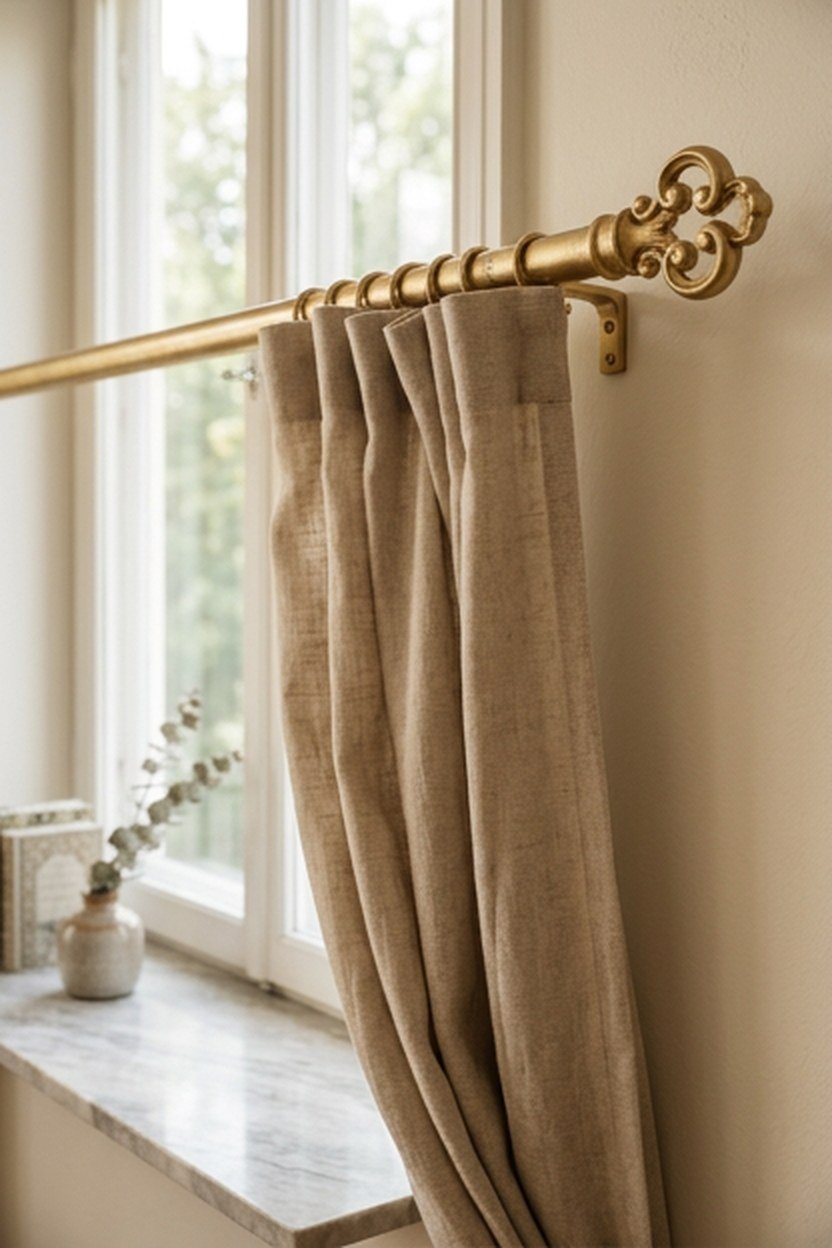
A gold curtain rod, paired with curtain panels finished with marble-pattern weighted hems, extends the luxury pairing into window treatments, an often-overlooked decor category relative to furniture and fixtures discussed throughout most of this guide. This detail works well as a finishing touch for a room already incorporating other gold and marble elements, tying the window treatment into the room’s broader established palette.
Choosing a gold rod with substantial, ornate finials, rather than a plain, minimal rod design, provides enough visual presence to read clearly as an intentional design choice rather than a purely functional, unnoticed hardware piece. This finial detail is a small but meaningful upgrade that many curtain installations overlook in favor of purely functional, unremarkable rod hardware.
Selecting curtain fabric in a complementary neutral tone, rather than a busy pattern that competes with the room’s other established gold and marble elements, keeps the window treatment reading as a supporting rather than competing design element. This restraint consideration mirrors the same textile coordination principle discussed throughout many other sections of this guide.
Cost And Hardware Guidance
A gold curtain rod with decorative finials typically costs $30 to $100 depending on length and finial design complexity, with curtain panels adding a separate cost depending on fabric quality and any marble-pattern weighted hem detailing. Measuring the window’s actual width and adding appropriate extension on each side for the rod, typically eight to twelve inches beyond the window frame, ensures proper curtain coverage and an appropriately proportioned final look.
A common mistake is choosing a curtain rod too thin or lightweight relative to the curtain fabric’s actual weight, resulting in a rod that sags or bows once the curtains are hung. Confirming the rod’s weight rating against the curtain fabric’s listed weight, particularly for a heavier fabric choice, avoids this frustrating installation failure.
12. Marble Planter With Gold Trim For Indoor Greenery
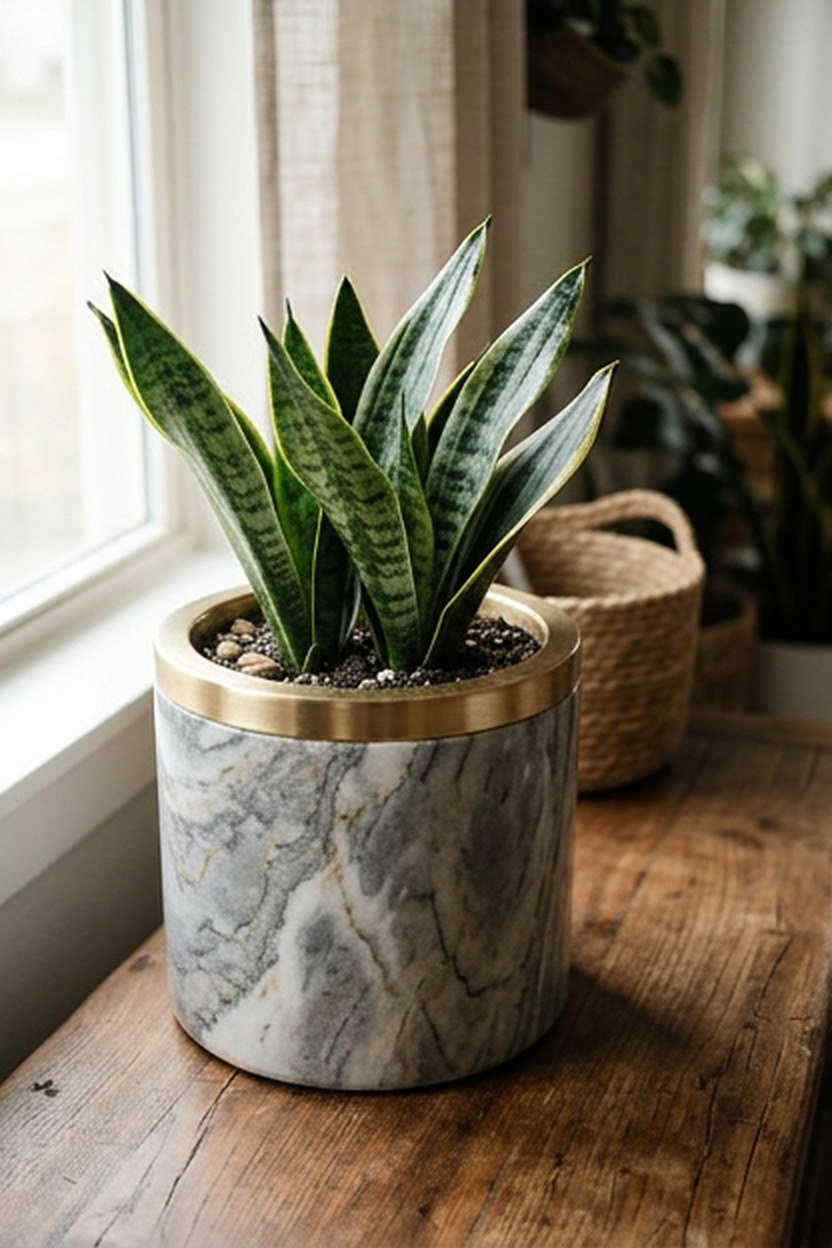
A marble planter finished with a gold rim or trim detail brings genuine living greenery into the gold and marble aesthetic, softening what might otherwise feel like an entirely hard, material-focused room design. This combination is one of the more unexpected but successful interpretations of the pairing, since plants are rarely the first thing people associate with a luxury material combination.
Choosing plant varieties with substantial, architectural foliage, like a snake plant or a fiddle leaf fig, rather than delicate, wispy plants, matches the visual weight and presence the marble and gold planter itself carries. This plant selection consideration ensures the greenery holds its own visually against a genuinely substantial planter rather than looking undersized or lost within it. Most plant retailers can advise on varieties specifically suited to this kind of visually substantial planter application.
Positioning this planter in a location with adequate light for the chosen plant variety, rather than prioritizing the planter’s visual placement over the plant’s actual care needs, ensures the greenery thrives rather than declining within a few months. This practical plant care consideration matters as much as the decorative placement decision, since a dying plant undermines the display regardless of how beautiful the planter itself remains.
Cost And Plant Selection Guidance
A marble planter with gold trim detailing typically costs $40 to $150 depending on planter size and the amount of gold detailing included. Choosing a planter with proper drainage, or planning to use it as a decorative outer cover for a separate plastic nursery pot with its own drainage, protects both the plant’s root health and the marble surface from potential water damage.
A common mistake is choosing a plant variety poorly suited to the apartment’s actual available light conditions, resulting in a struggling or declining plant that undermines the otherwise polished display. Researching the specific light requirements for any plant variety before purchase, and choosing accordingly based on the apartment’s actual conditions rather than the plant’s appearance alone, avoids this common and disappointing outcome.
13. Gold Picture Frames With Marble-Pattern Matting
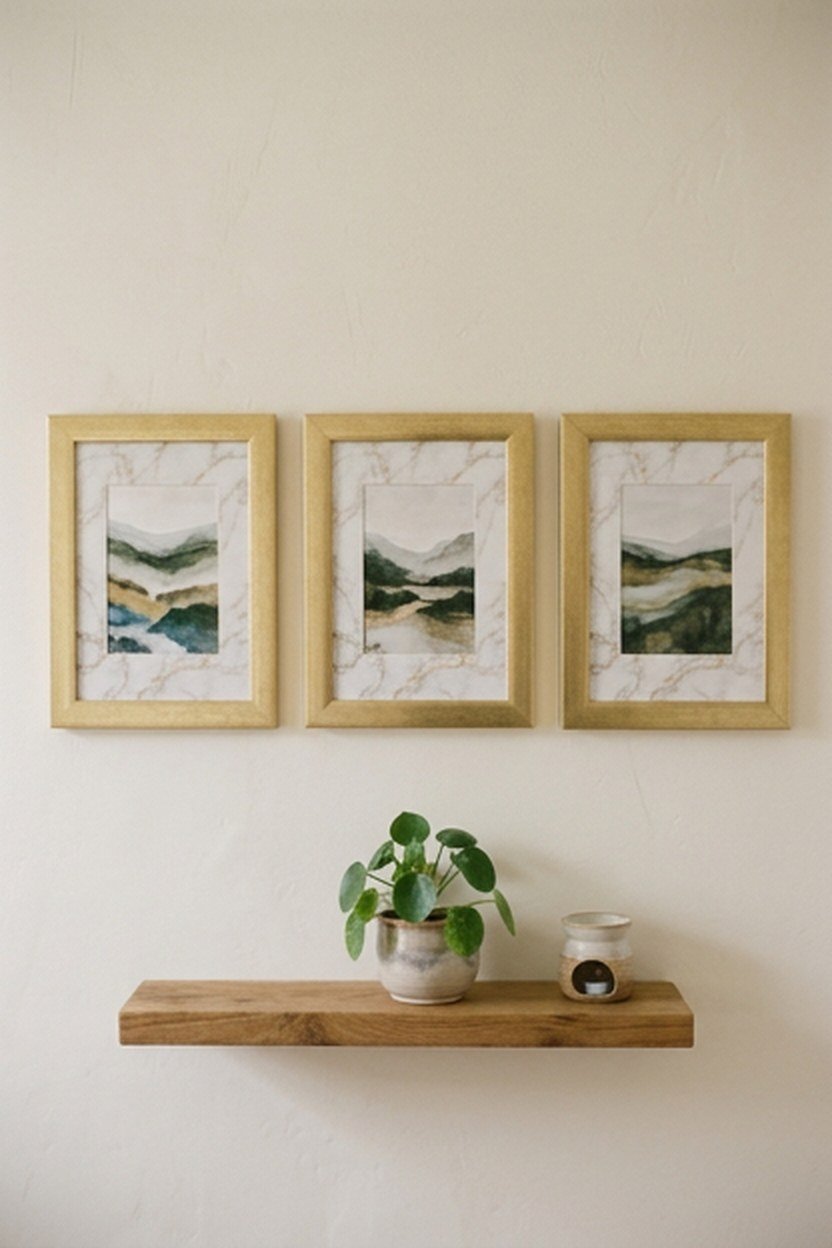
Gold picture frames, paired with marble-pattern matting behind the glass, bring the luxury pairing into wall art display, an affordable way to reinforce the aesthetic across multiple pieces in a room. This detail works particularly well for a gallery wall, where several coordinated gold frames create a cohesive grouping even when the artwork itself varies in subject or style.
Choosing frames in a consistent gold tone and finish across the entire gallery arrangement, even when frame sizes and shapes vary, keeps the overall grouping feeling cohesive rather than randomly assembled. This consistency consideration matters more for a gallery wall arrangement than for a single standalone frame, since inconsistency becomes considerably more visible when multiple frames are displayed together. Most successful gallery walls apply this consistent framing principle even when the artwork within each frame varies significantly.
Selecting marble-pattern matting in a subtle, muted veining pattern, rather than a bold, high-contrast pattern that competes with the framed artwork itself, keeps the matting playing a supporting rather than distracting visual role. This restraint consideration applies the same principle discussed throughout many other sections of this guide regarding subordinate decor elements supporting rather than competing with a room’s primary focal points.
Cost And Gallery Arrangement Guidance
Gold picture frames with marble-pattern matting typically cost $15 to $50 per frame depending on size, with a typical gallery wall arrangement requiring six to ten frames total. Planning the gallery arrangement on the floor first, similar to the floor-planning advice given for other layered decor concepts discussed elsewhere in this broader topic area, helps confirm the final composition before committing to any permanent wall mounting. This floor-planning step is worth the extra time it takes before any wall holes are made.
A common mistake is choosing frames in slightly different gold tones from different manufacturers, resulting in a gallery wall that reads as mismatched despite each individual frame appearing gold in isolation. Purchasing all frames from the same product line or manufacturer, rather than mixing sources to save cost, avoids this subtle but ultimately noticeable inconsistency once the full gallery is assembled. This single-source purchasing approach is worth prioritizing for this specific multi-piece application.
14. Marble Bar Cart With Gold Accents
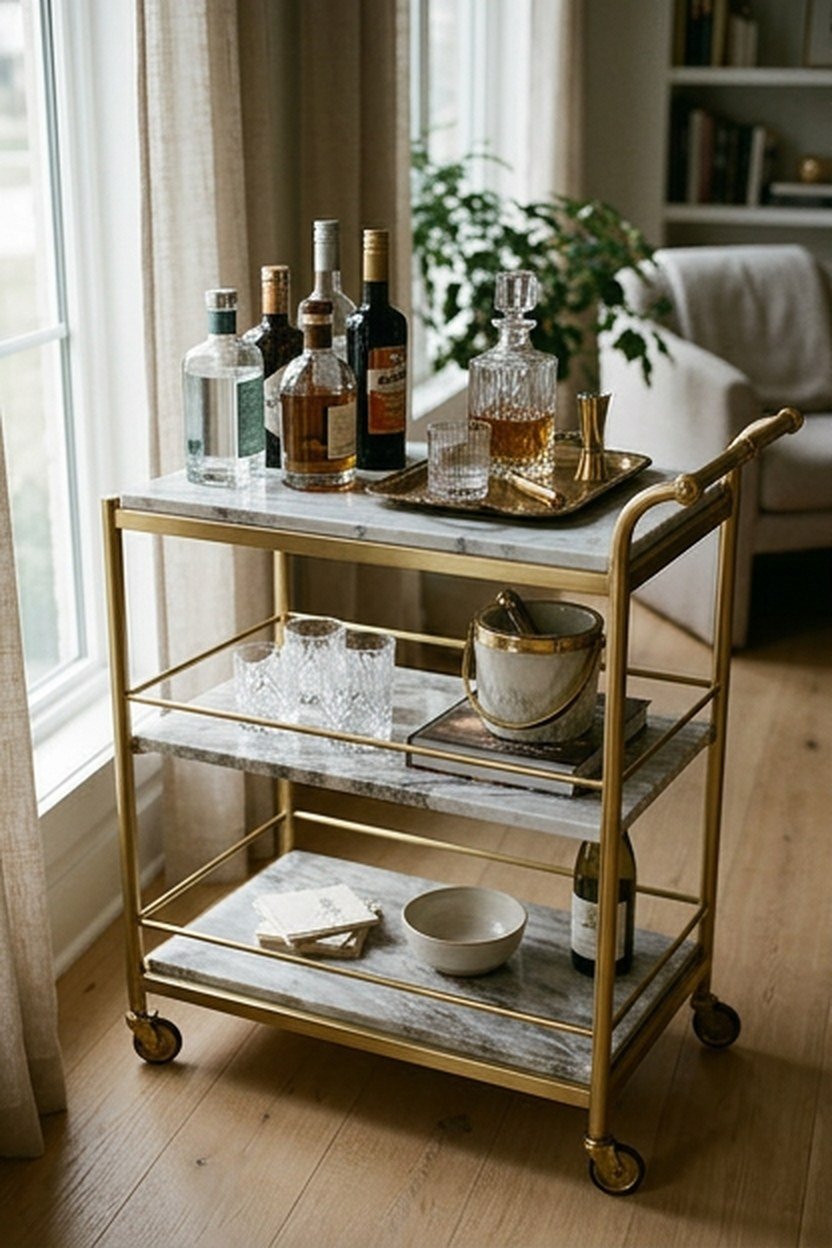
A marble-shelf bar cart with gold frame and accent details combines both materials into a functional entertaining piece that serves drinks while also serving as a genuine decor statement in a living room or dining area. This combination brings the gold and marble pairing into a piece with genuine social function, getting used and viewed during gatherings rather than remaining purely decorative. This dual-purpose quality makes the bar cart one of the more practically justified investments on this entire list.
Choosing a cart with marble shelves rather than glass or wood provides a durable, easy-to-clean surface well suited to holding bottles and glassware that inevitably experience occasional spills during regular use. The gold frame, typically in a thin, elegant profile rather than a bulky structure, keeps the cart feeling refined rather than heavy despite carrying genuine functional weight capacity.
Styling the cart with a curated selection of bottles, glassware, and a small tray, rather than cramming every beverage the household owns onto its shelves, keeps the piece looking intentional even when not actively in use during a gathering. This curation principle mirrors the same restraint discussed throughout many other sections of this guide regarding avoiding visual clutter on display surfaces.
Cost And Styling Guidance
A marble-shelf bar cart with gold accents typically costs $200 to $600 depending on size and whether genuine or engineered marble shelves are used. Choosing a cart with locking wheels, if the household includes children or pets, adds a practical safety consideration worth checking before finalizing a purchase.
A common mistake is overloading the cart’s shelves beyond their actual weight capacity, particularly with heavier glass bottles, risking damage to the marble shelves or the cart’s overall structural stability. Confirming the manufacturer’s weight rating for each shelf and staying comfortably within that limit avoids this structural risk.
15. Gold Wall Sconces With Marble Backplates
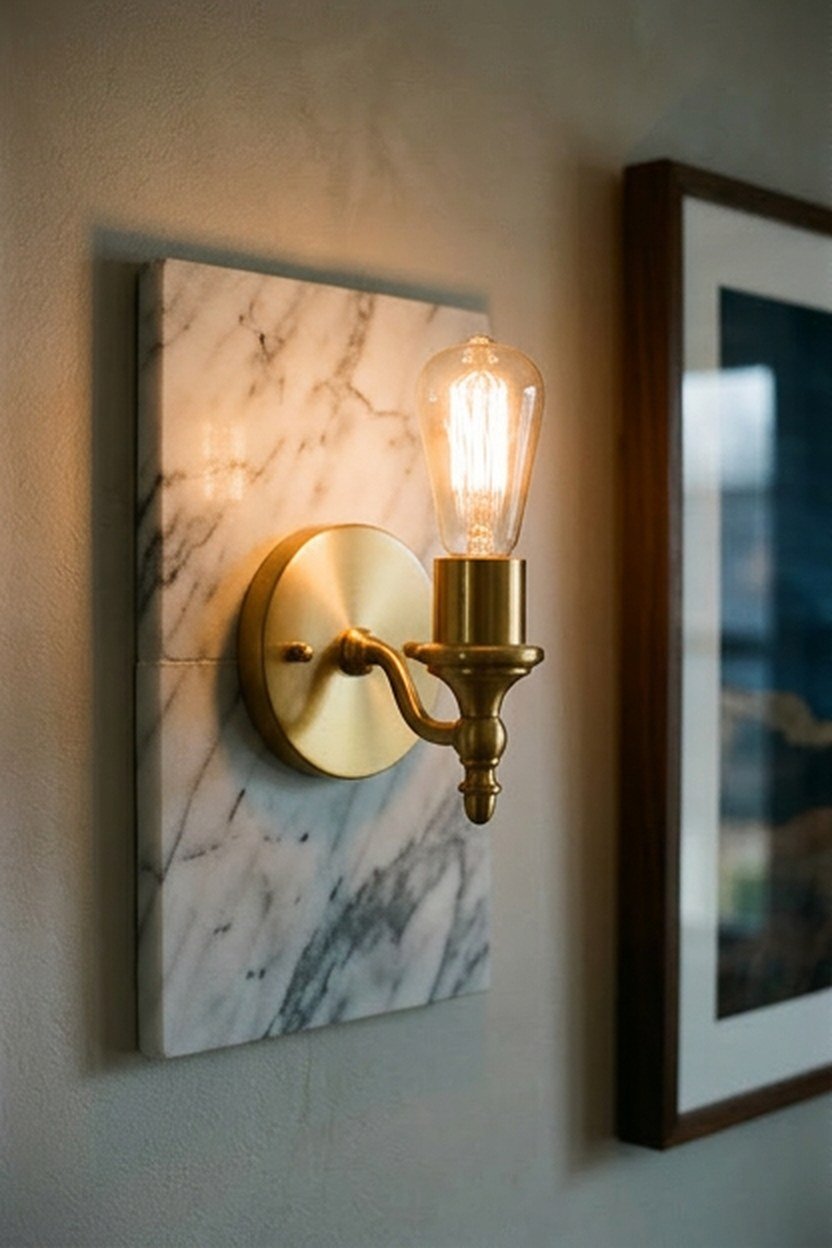
Gold wall sconces mounted on marble backplates bring the luxury pairing into ambient lighting fixtures, adding a layered lighting element that complements ceiling or lamp lighting elsewhere in the room. This combination works particularly well flanking a mirror, artwork, or fireplace, where the sconces provide both functional illumination and a coordinated decorative accent.
Choosing sconces with a warm-toned bulb, consistent with the lighting temperature guidance discussed elsewhere in this guide, ensures the fixtures contribute to the room’s warm ambient quality rather than a cooler, clinical light source. Positioning sconces at an appropriate height, typically five to six feet from the floor for a hallway or living room, provides balanced illumination without uncomfortable glare at eye level.
Hiring a licensed electrician for the wall wiring this hardwired fixture typically requires, rather than attempting a DIY electrical installation, ensures the sconces are installed safely and to code. This professional installation consideration matters more for a hardwired fixture than for a plug-in lighting option discussed elsewhere in this guide.
Cost And Installation Guidance
Gold wall sconces with marble backplates typically cost $80 to $250 per fixture depending on size and design complexity, with most applications requiring a pair for a flanking arrangement. Budgeting separately for professional electrical installation, typically $150 to $400 depending on the complexity of the wiring required, is worth factoring into the total project cost beyond the fixtures themselves.
A common mistake is purchasing sconces without confirming the household’s electrical setup can accommodate hardwired fixtures in the intended location, resulting in a more expensive and involved electrical project than initially anticipated. Consulting with an electrician before finalizing the fixture purchase, rather than after, helps set realistic expectations for the full project scope and cost.
What A Gold And Marble Apartment Scheme Actually Costs
A complete gold and marble accent scheme, incorporating several concepts from this guide across one or two rooms, typically costs $1,000 to $5,000 depending on how many pieces use genuine versus engineered materials and how much involves renovation versus decorative additions. This range reflects the cost gap between smaller pieces, like bookends or a vanity tray, and larger investments, like a fireplace surround or countertop. Understanding this rough breakdown helps prioritize spending toward the elements with the most visual impact.
Ongoing costs beyond the initial investment remain relatively modest for most pieces, mainly consisting of periodic marble sealing for genuine stone surfaces and occasional cleaning to maintain the gold finish’s shine and prevent tarnishing over time. Most quality gold-finished hardware and fixtures resist tarnishing for many years with only basic regular cleaning required.
| Investment Category | Typical Cost Range | Notes |
|---|---|---|
| Smaller decor accents | $100 to $500 | Bookends, trays, frames, hardware |
| Furniture pieces | $400 to $1,500 | Coffee table, console, side table, cart |
| Structural renovations | $600 to $4,000 | Countertops, fireplace surround, backsplash |
Prioritizing one or two high-visibility pieces first, like a coffee table or console table, before investing in smaller accents or larger structural renovations gives the most reliable path to a noticeable transformation even on a limited initial budget. This prioritization strategy is worth discussing before the first purchase is made. Most decorators find this order of investment produces the most satisfying result relative to the budget spent at each stage.
Common Mistakes That Undermine A Gold And Marble Scheme
The most common mistake across gold and marble apartment schemes is using too much gold relative to marble, tipping the balance so far toward the metal that the space starts to feel gaudy rather than elevated. Reserving gold for accents, hardware, and smaller fixtures while letting marble carry the larger surface areas, a ratio discussed earlier in this guide, keeps the balance feeling sophisticated rather than excessive.
A second frequent mistake is mixing gold tones that do not genuinely match, some pieces reading as warmer yellow-gold, others as a cooler rose-gold or brass, resulting in a scheme that feels inconsistent despite every individual piece technically qualifying as gold. Purchasing coordinated pieces from the same collection whenever possible, and bringing samples when shopping separately, avoids this common and easily overlooked inconsistency.
Recovering From These Setbacks
Recovering from an overly gold, gaudy-feeling room typically means removing or replacing the least necessary gold pieces first, prioritizing the largest, most visually dominant items for the biggest impact from the fewest changes. This targeted removal approach is more efficient than attempting to rebalance the entire room’s color scheme from scratch. Identifying which specific piece tipped the balance toward excessive gold is worth doing before removing anything, since a single dominant piece is often the actual culprit.
Recovering from mismatched gold tones usually requires an honest audit comparing every gold piece in the room side by side under the same lighting conditions, then replacing the pieces that clash most obviously with the majority established tone. This targeted correction is considerably less expensive than replacing every gold piece in the room, and often resolves the inconsistency with just one or two replacements. Identifying the majority tone first, rather than guessing which piece to replace, makes this correction process considerably more efficient.
Conclusion
A gold and marble accent scheme succeeds by respecting a ratio between the two materials, letting marble carry the larger surfaces while gold handles smaller accents, coordinated within one metal tone. The fifteen concepts here, from a coffee table to a small vanity tray, each offer a different entry point depending on your budget. Prioritizing one or two high-visibility pieces first, then layering in accents gradually, gives the most reliable path to a look that reads as elevated rather than assembled all at once.
Whether this is a first attempt at incorporating this pairing or a refinement of an already-established gold and marble collection, the underlying principles stay consistent: maintain the marble-to-gold ratio, keep every gold tone genuinely consistent, and let each piece serve some practical function alongside its decorative role. These fundamentals matter more than any single purchase on this list. Get them right, and the apartment reads as considered luxury rather than an assembled collection of expensive-looking objects.
Frequently Asked Questions
Why do gold and marble work so well together in interior design? Gold and marble pair a warm reflective metal with a cool natural stone, creating visual contrast that reads as genuinely elevated. Marble’s unique veining also reinforces the exclusivity signal that gold itself carries.
How much does a gold and marble apartment scheme cost? A complete scheme across one or two rooms typically costs $1,000 to $5,000 depending on how many pieces use genuine versus engineered materials. Structural renovations like countertops cost considerably more than smaller decor accents.
Should I use genuine marble or a marble-look alternative? Genuine marble offers unmatched natural veining but requires sealing and careful maintenance, while alternatives cost less and need less upkeep. The choice largely comes down to budget and how much maintenance the household is willing to take on.
What ratio of gold to marble works best in a room? Most designers recommend letting marble carry the larger surface areas, like countertops or tabletops, while reserving gold for smaller accents like hardware and lighting. Too much gold relative to marble tends to read as gaudy rather than elevated.
How do I keep gold accents from clashing with each other? Purchasing coordinated pieces from the same collection, or bringing a sample when shopping separately, helps ensure every gold piece shares the same tone. Mismatched gold tones are one of the most common mistakes in this style of decor.
Does genuine marble need special maintenance? Yes, genuine marble should be sealed periodically to prevent staining from acidic substances like wine or citrus. This maintenance is relatively simple once established as a regular habit.
What is the biggest mistake people make with gold and marble decor? Using too much gold relative to marble is the most common mistake, tipping a room toward feeling gaudy rather than genuinely elevated. Keeping marble as the larger surface material while reserving gold for accents avoids this problem.