
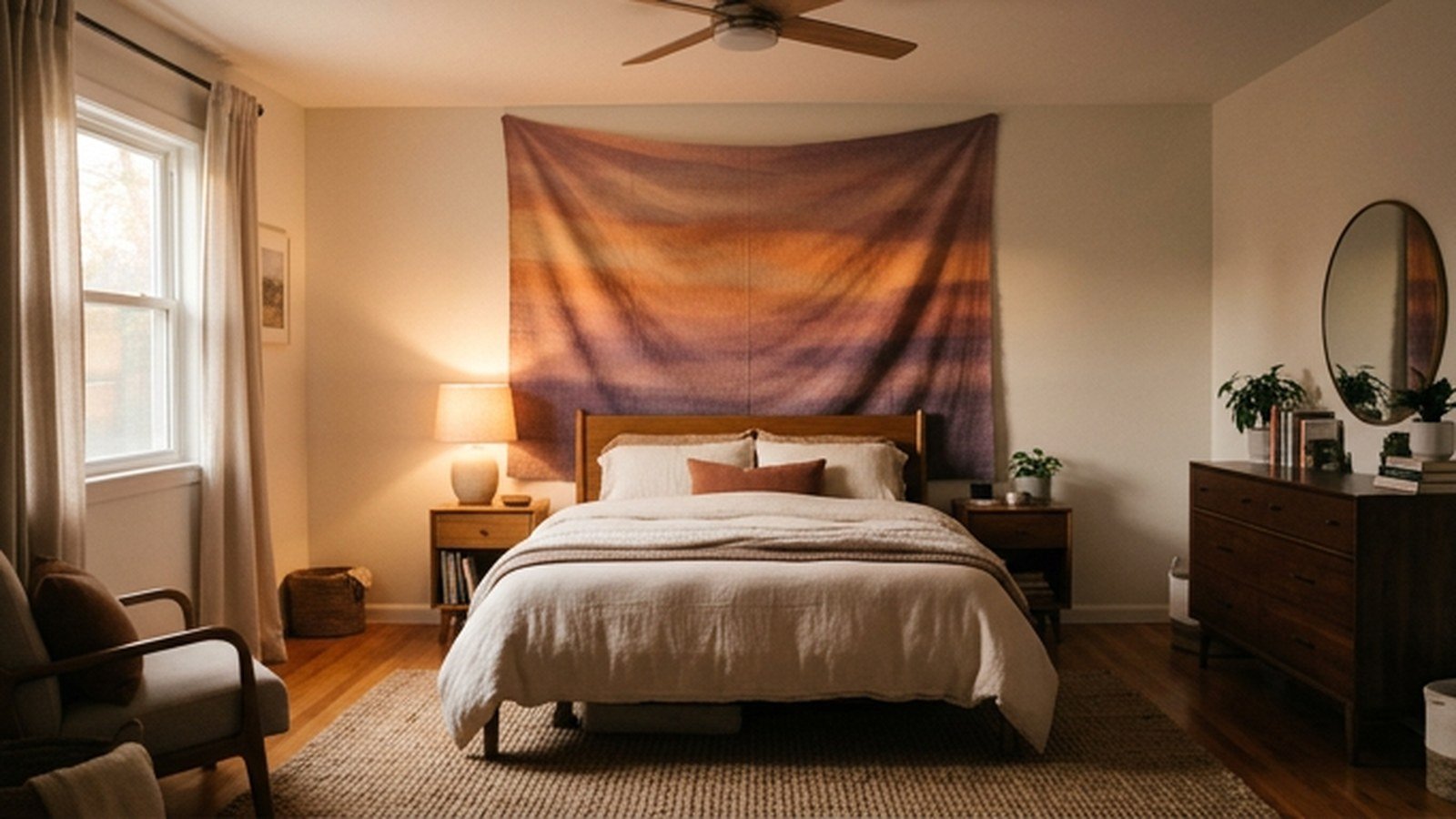
Sunset gradient tapestries use a fabric panel dyed or printed in blended tones of orange, pink, and purple to bring the warmth of a sunset directly onto a bedroom wall as a large-scale, affordable focal point. This decor choice works particularly well for renters and anyone hesitant to commit to paint, since a tapestry can be hung and removed without any wall damage. Fifteen concepts below cover the styles, hanging methods, and pairing choices that make this decor piece genuinely work in a bedroom.
I hung my first sunset tapestry above my bed as a temporary fix while deciding on a paint color, and three years later it is still there, because the gradient softens the room in a way solid paint never achieved. A tapestry’s blended color catches evening lamp light differently than a flat wall does, since the fabric’s texture scatters light across multiple tones rather than one uniform color.
Below you will find fifteen numbered concepts covering tapestry styles, hanging methods, and room pairing choices, plus a cost comparison table and a rundown of the mistakes that make a tapestry feel like a dorm room throwback rather than considered decor. Each idea includes a sub-angle on cost, sourcing, or what commonly goes wrong so you can build the look with a realistic budget. By the end you should know exactly how to hang and style this piece so it reads as genuinely elevated.
Why Sunset Gradient Tapestries Work So Well In A Bedroom
Sunset gradient tapestries succeed in a bedroom because the color transition, moving from a warm orange or coral at one end through pink and into a deeper purple or navy at the other, mimics a naturally calming visual pattern the eye already associates with day’s end. This associative quality gives the piece a genuinely soothing quality that a solid, single-color wall hanging cannot replicate as well. Most designers consider this gradient one of the more psychologically pleasing color choices for a bedroom.
The tapestry’s large scale, often covering most of a wall or the full width above a bed, makes it one of the more affordable ways to introduce a dramatic focal point compared to an equivalently sized piece of framed art or a large painted mural. This size-to-cost ratio is a major reason the trend has remained popular across renters and homeowners alike. Understanding this value proposition helps explain why a single fabric panel can transform a room’s entire feel so dramatically.
| Decor Option | Typical Cost For Similar Coverage | Wall Damage Risk |
|---|---|---|
| Sunset tapestry | $30 to $150 | None with proper hanging |
| Large framed art | $200 to $800 | Minimal, requires wall anchors |
| Painted mural | $500 to $2,000 | Permanent, requires repainting to change |
A complete sunset tapestry bedroom setup, including the tapestry itself and coordinating smaller decor pieces, typically costs $80 to $400 depending on tapestry quality and how many additional accent pieces are purchased. This modest cost range makes the tapestry one of the more budget-friendly ways to achieve a dramatic bedroom transformation. Understanding this helps set realistic expectations before shopping begins.
Planning Your Tapestry Placement And Room Pairing
Planning starts with choosing the tapestry’s primary wall placement, since most successful installations position the piece directly above or behind the bed where it becomes the room’s natural focal point when entering the space. This placement also takes advantage of the headboard wall, which in many bedrooms is otherwise left relatively bare compared to walls with windows or furniture.
Sizing the tapestry appropriately for the actual wall space matters considerably, since a piece too small relative to the wall reads as an afterthought while one properly scaled to the space creates the intended dramatic effect. Most successful installations use a tapestry sized to extend several inches beyond each side of the bed frame, rather than one that matches the bed’s exact width. This sizing principle mirrors the same proportion guidance used for large framed art throughout many other rooms in a home.
The biggest planning mistake is choosing a tapestry color palette that clashes with the room’s existing bedding or furniture rather than one that either complements or serves as an intentional contrast. Bringing a fabric swatch or a printed color reference into the room before committing to a purchase helps confirm the gradient’s specific tones will work with the existing color scheme.
Choosing A Gradient Palette That Suits Your Room’s Light
A room that receives abundant natural daylight can support a bolder, more saturated gradient, since ample daylight helps the deeper tones read as rich rather than heavy or overwhelming. A room with more limited natural light benefits from a softer, more muted gradient that avoids making an already dim space feel darker still.
Testing the tapestry’s actual colors under your bedroom’s typical evening lighting, not just under bright daytime conditions, matters since many buyers select a tapestry based on photos taken in ideal lighting that may not match their own bedroom’s ambient conditions. Requesting a fabric swatch sample before a full purchase, when a retailer offers this option, avoids a color mismatch discovered only after the full tapestry arrives.
1. Full Wall Tapestry Behind The Headboard
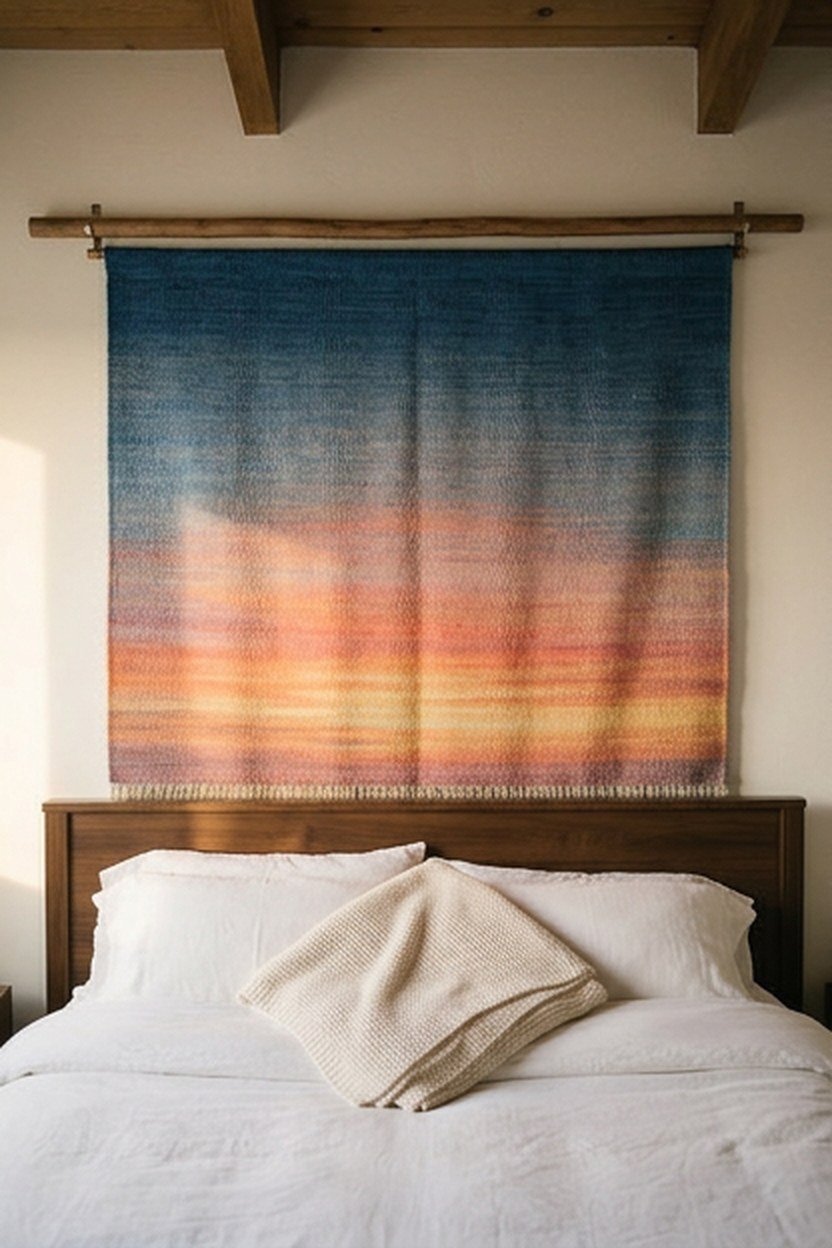
A full wall tapestry hung directly behind the headboard, extending from roughly six inches above the mattress to near the ceiling, creates the most dramatic and immersive version of this decor concept by treating the entire wall as the gradient’s canvas. This scale works particularly well in a bedroom with a low or simple headboard, since the tapestry itself becomes the visual statement rather than competing with an elaborate headboard design. This full-wall approach is the boldest interpretation of the entire concept.
Choosing a tapestry specifically sized for this full-wall application, rather than a smaller piece stretched or pinned awkwardly to cover more area than intended, produces a considerably more polished and professional appearance. Most specialty tapestry retailers offer sizing specifically marketed for this full-wall headboard application. Measuring your actual wall dimensions before ordering avoids the disappointing discovery of an undersized piece after installation.
Mounting this large tapestry with a wood dowel or curtain rod along the top edge, rather than relying solely on adhesive hooks or tacks, provides better weight distribution and prevents the fabric from sagging or developing wrinkles over time. This mounting method also allows the tapestry to be removed and rehung easily if the room’s layout ever changes.
Cost And Sizing Guidance
A full wall sunset tapestry sized for this application typically costs $60 to $200 depending on fabric quality and the exact dimensions required. Measuring the wall’s actual height and width, and adding a small margin to those measurements when ordering, ensures the tapestry provides full coverage without any visible gaps at the edges.
A common mistake is ordering a tapestry sized for a standard queen bed wall when the actual room has a king bed or an unusually wide wall, resulting in a piece that leaves an awkward, undersized coverage area. Confirming the tapestry’s exact listed dimensions against your own measured wall space, rather than assuming a “queen size” or “king size” label matches your specific room, avoids this common and frustrating mismatch.
2. Layered Mini Tapestries For A Gallery Effect
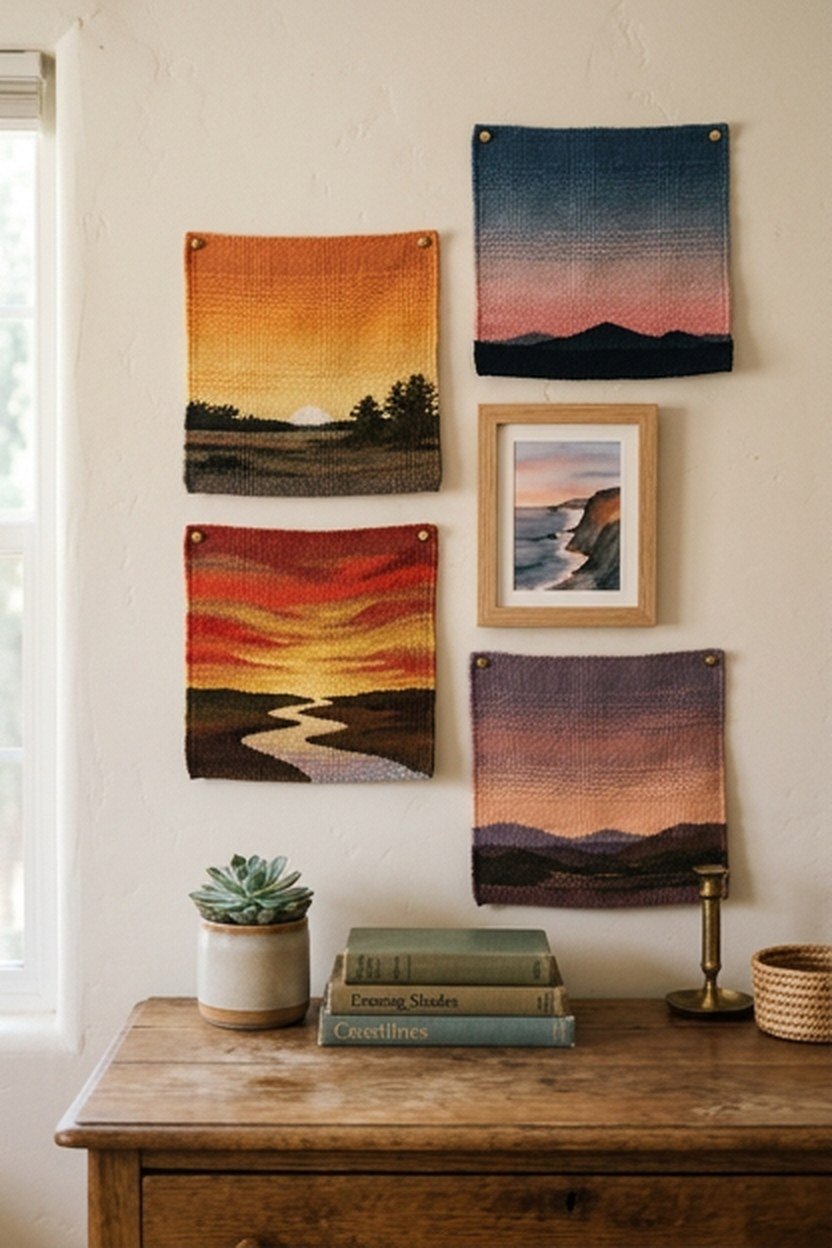
Layering several smaller sunset tapestries together, arranged in a loose grid or overlapping pattern, creates a gallery-wall effect that offers more visual complexity than a single large panel while still achieving the same overall gradient warmth. This approach suits a bedroom wall with an irregular shape or existing fixtures that would complicate hanging a single large piece.
Choosing mini tapestries in slightly varying gradient tones, some leaning more orange, others more purple, creates visual depth that a set of identical smaller pieces cannot achieve. Arranging these pieces with deliberate overlap, rather than precise even spacing, produces a more organic, collected-over-time appearance that reads as genuinely curated. This layered arrangement technique benefits from some trial placement on the floor before committing to the final wall positions.
Securing each smaller tapestry independently, rather than relying on a single mounting system for the entire arrangement, allows individual pieces to be repositioned or swapped out without disturbing the rest of the display. This independent mounting approach also simplifies the process if a single piece needs replacement due to fading or wear over time.
Cost And Arrangement Guidance
A set of three to five mini sunset tapestries typically costs $60 to $180 total depending on individual piece size and fabric quality. Planning the arrangement on the floor first, moving pieces around until the composition feels balanced, before committing to any wall mounting avoids a frustrating rehang if the initial arrangement does not work as intended. This floor-planning step is worth the extra time it takes before any permanent installation.
A common mistake is spacing the mini tapestries too evenly and symmetrically, resulting in an arrangement that reads as rigid and formulaic rather than the intentionally organic, gallery-style look this concept depends on. Introducing some deliberate asymmetry and overlap between pieces, rather than a strict grid pattern, avoids this stiff appearance.
3. Sunset Tapestry With A Macrame Wall Hanging Layered On Top
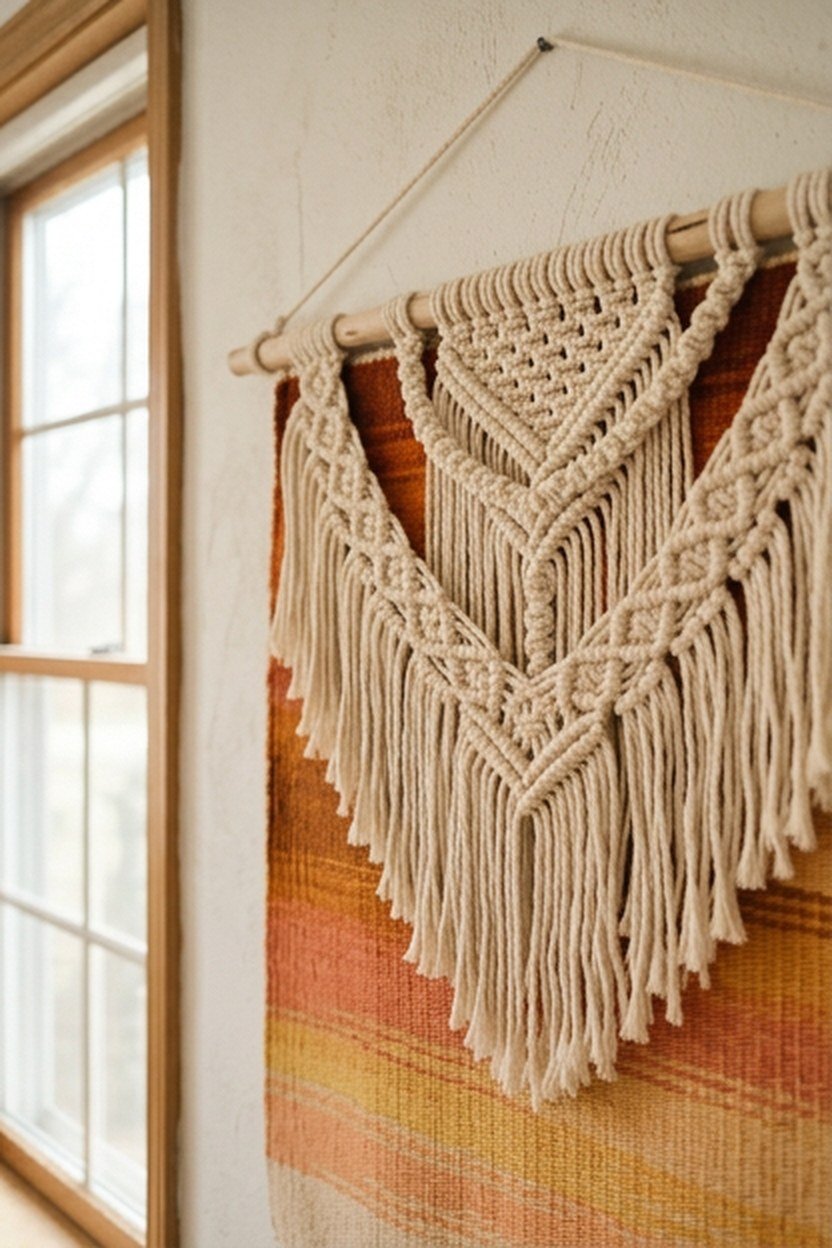
Layering a macrame wall hanging directly over a portion of a sunset tapestry combines two popular textile decor trends into a single cohesive display, with the macrame’s natural cream or ivory tone providing contrast against the tapestry’s warm gradient background. This pairing works particularly well for a bohemian-styled bedroom, since both elements share a similar relaxed, textural aesthetic.
Choosing a macrame piece sized considerably smaller than the tapestry behind it, positioned toward the upper portion of the display, keeps the tapestry’s gradient visible as the primary background rather than being fully obscured. This proportion consideration matters for maintaining the sunset effect as the display’s dominant visual element. Testing the macrame’s placement against the tapestry before final mounting confirms this proportion works as intended.
Selecting a macrame design with an open, airy weave pattern, rather than a dense, solid knot pattern, allows more of the tapestry’s gradient to remain visible through the gaps in the macrame’s structure. This open weave choice reinforces the layered, textural effect this combination is meant to achieve. Most macrame retailers offer several weave density options specifically suited to this kind of layered display.
Cost And Layering Guidance
A quality macrame wall hanging suited for this layered application typically costs $30 to $100 depending on size and knot complexity. Purchasing the macrame piece after the tapestry is already hung, rather than before, allows for more accurate sizing and placement decisions based on how the tapestry actually looks once installed.
A common mistake is choosing a macrame piece with a color tone that clashes with the tapestry’s specific gradient, particularly a stark white macrame against a warm orange-toned tapestry that can read as visually jarring rather than complementary. Choosing a cream or ivory macrame with a slight warmth to its natural fiber tone, rather than a bright white, avoids this common color clash.
4. Sunset Tapestry Paired With String Lights
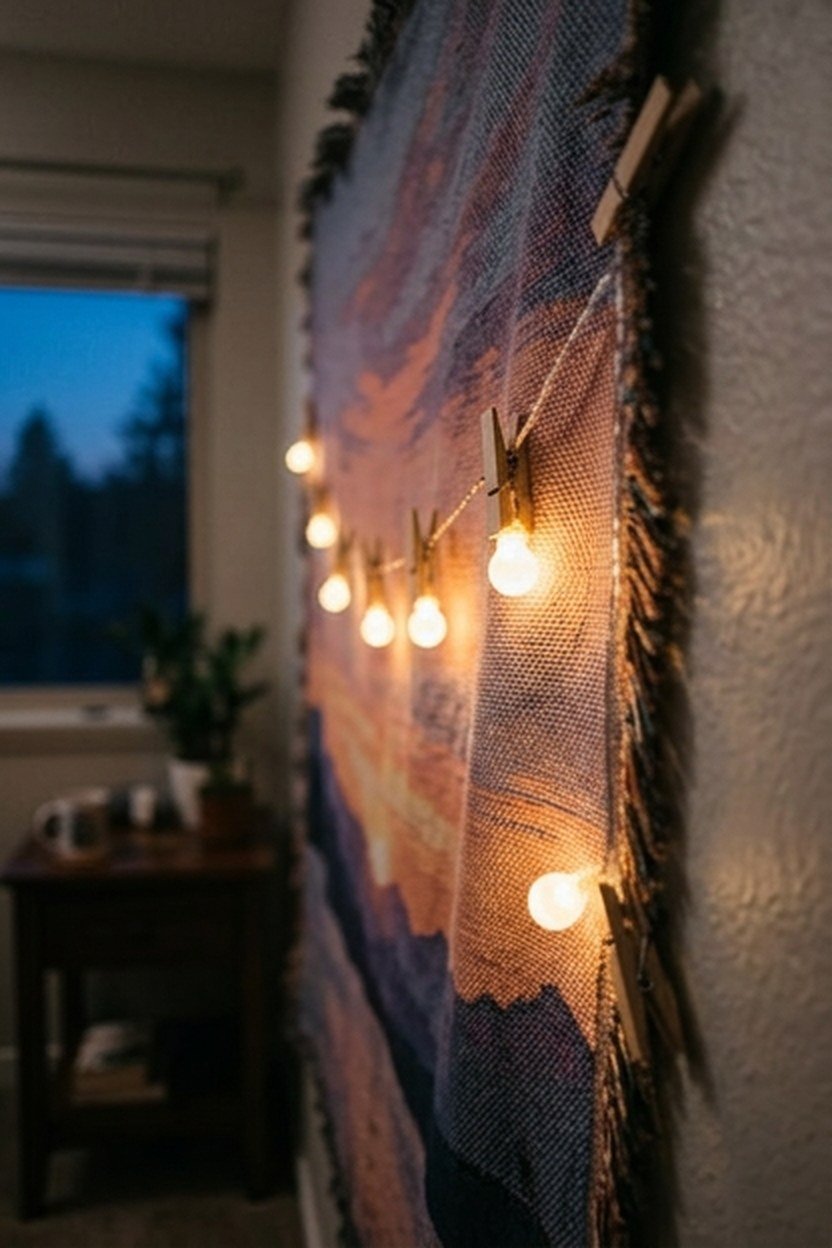
Weaving warm white string lights along the edges or through the folds of a sunset tapestry adds a subtle glow that extends the piece’s warm visual effect into the evening hours, beyond what the fabric’s colors alone can provide during daylight. This combination is one of the more affordable ways to add genuine ambient lighting to a bedroom without installing any new fixed light fixtures. This pairing has become one of the most popular ways to style a tapestry specifically.
Choosing string lights with a warm white bulb color, rather than a cooler white or multicolor option, keeps the lighting consistent with the tapestry’s warm gradient tones rather than introducing a jarring color contrast. Battery-powered string lights, rather than ones requiring a nearby outlet, offer more placement flexibility if the tapestry is positioned away from an accessible power source. This battery-powered option is worth the modest additional cost for the flexibility it provides.
Securing the string lights with small clear adhesive clips along the tapestry’s edges, rather than draping them loosely across the fabric’s front, keeps the lights from obscuring the gradient pattern while still providing an ambient glow around the piece’s border. This clip-based securing method also prevents the lights from shifting or tangling within the fabric’s folds over time.
Cost And Bulb Selection Guidance
Warm white battery-powered string lights suited for this application typically cost $10 to $30 depending on length and bulb quality. Choosing a string light set with a built-in timer function allows the lights to turn on automatically each evening without requiring manual activation every night.
A common mistake is draping string lights directly across the tapestry’s visible gradient pattern, obscuring the fabric’s color transition rather than complementing it from the edges. Positioning the lights specifically along the tapestry’s border or behind its top edge, rather than across its main visible surface, preserves the gradient as the display’s primary visual focus.
5. Layered Textiles In Complementary Warm Tones
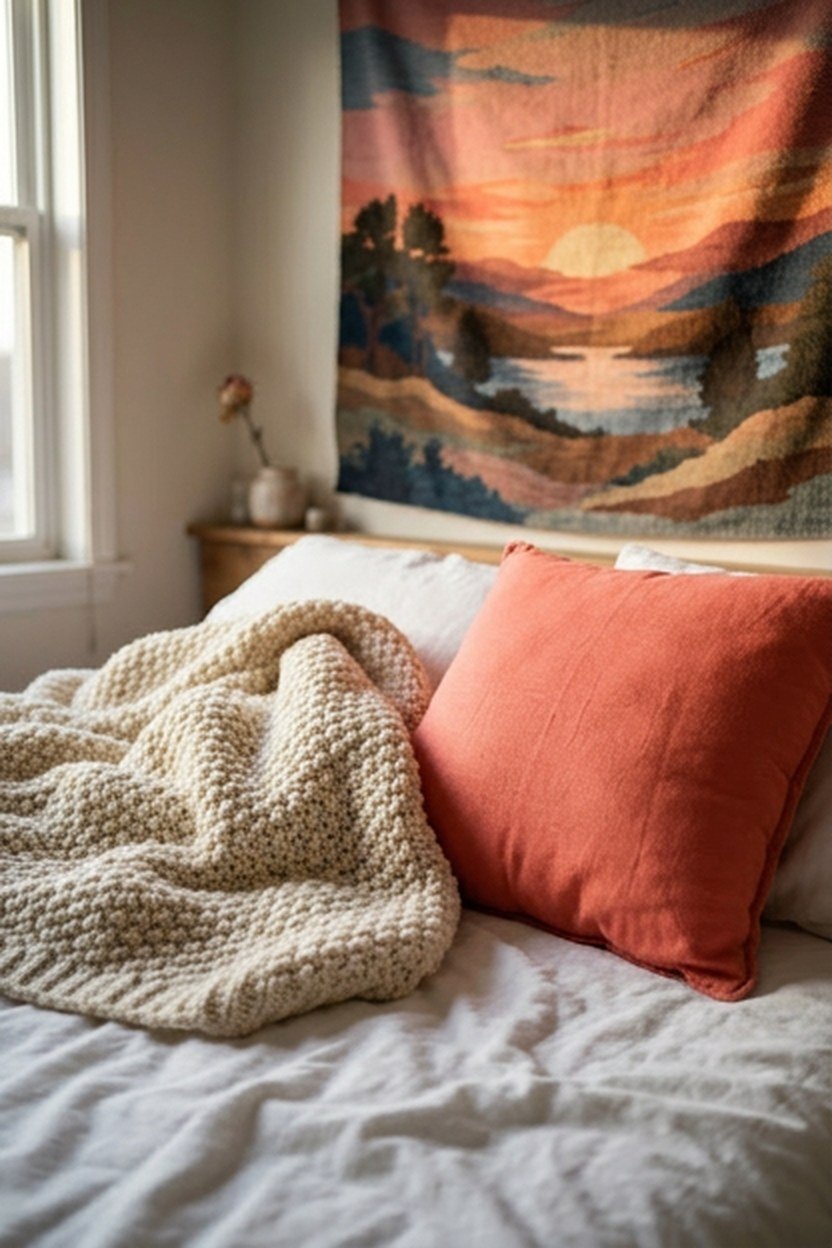
Layering the bedroom’s other textiles, throw pillows, a blanket, and even curtains, in tones that echo the tapestry’s specific gradient colors extends the sunset palette throughout the room rather than confining it to a single wall feature. This coordinated approach creates a considerably more cohesive overall room design than treating the tapestry as an isolated decor piece disconnected from everything else in the space.
Choosing textiles in just one or two of the tapestry’s specific tones, rather than attempting to match every color in the gradient, keeps the room feeling coordinated without becoming visually overwhelming. Most successful rooms pick the tapestry’s warmest tone, typically the orange or coral, for the majority of coordinating textiles, using the cooler purple or navy tone only as a smaller accent.
Mixing textile textures, a smooth cotton pillow cover against a chunkier knit throw blanket, within this coordinated color scheme adds the tactile variety that a single flat texture throughout the room would lack. This textural mixing principle applies across nearly every room styling project discussed throughout many other guides, and it holds true here as well.
Cost And Coordination Guidance
Coordinating textiles, pillows, a throw blanket, and small accent pieces, in tones matching a sunset tapestry typically cost $80 to $250 depending on quantity and fabric quality. Building this coordinated textile collection gradually, rather than purchasing everything simultaneously, allows for more careful color matching against the tapestry’s actual installed appearance.
A common mistake is choosing textiles in a shade too similar to the tapestry’s own fabric, resulting in a flat, monochromatic look rather than genuine coordination with intentional variation. Selecting textiles a shade or two different from the tapestry’s exact tones, while remaining within the same warm color family, avoids this flatness while still reading as clearly coordinated.
6. Sunset Tapestry As A Canopy Above The Bed
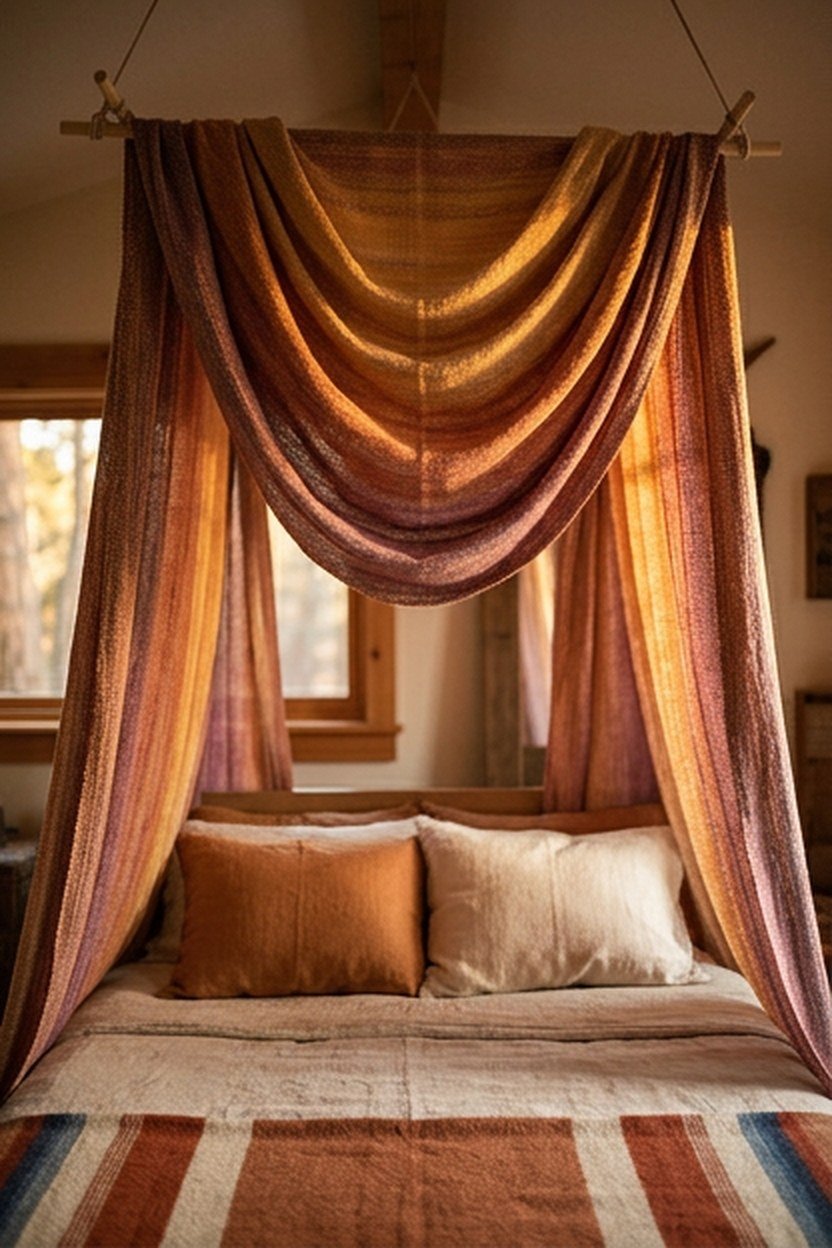
Hanging a sunset tapestry horizontally above the bed, suspended from the ceiling rather than mounted flat against the wall, creates a canopy effect that adds a dramatic, almost theatrical quality to the bedroom’s overall design. This approach works particularly well in a room with adequate ceiling height, since a canopy in a lower-ceilinged room can feel oppressive rather than dramatic.
Installing a simple curtain rod or a round embroidery hoop frame at the ceiling, then draping the tapestry over this structure so it cascades down toward the bed on either side, achieves this canopy effect without requiring elaborate custom hardware. This installation method is considerably simpler than it might initially appear, using widely available hardware rather than specialty canopy-specific equipment.
Choosing a tapestry with enough overall length to genuinely cascade down toward the bed on both sides, rather than one that merely covers the ceiling structure itself, matters for achieving the intended canopy silhouette. Measuring the desired drape length against the tapestry’s actual dimensions before ordering avoids the disappointing result of a canopy that reads as too short or abrupt.
Cost And Ceiling Height Guidance
A sunset tapestry sized appropriately for a canopy application, plus the ceiling mounting hardware, typically costs $80 to $220 depending on tapestry size and hardware quality. Confirming your room’s ceiling height provides adequate clearance for a draping canopy effect, typically requiring at least eight feet of ceiling height for the effect to read as dramatic rather than cramped, is worth assessing before committing to this specific application.
A common mistake is mounting the ceiling hardware without confirming it reaches a genuine structural anchor point, resulting in a canopy that eventually pulls loose under its own weight. Using a stud finder or consulting a hardware specialist to confirm secure anchoring before installation prevents this frustrating and potentially damaging failure.
7. Sunset Tapestry In A Reading Nook Or Alcove
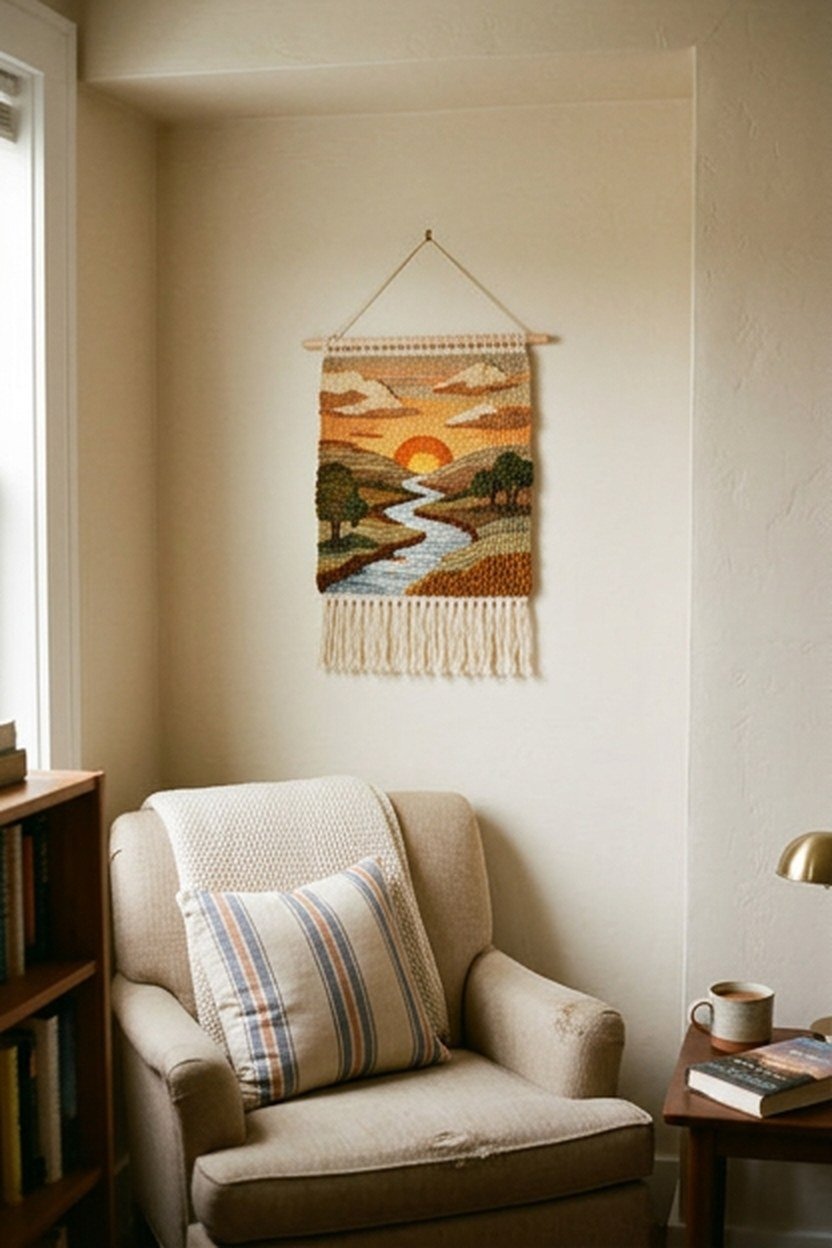
Positioning a smaller sunset tapestry within a reading nook or bedroom alcove, rather than as the room’s primary focal point, brings the warm gradient effect into a secondary but still meaningful decor zone within a larger bedroom. This application suits a bedroom with multiple distinct functional areas, letting the tapestry define one specific zone without requiring the entire room to adopt the same color scheme throughout.
Sizing the tapestry appropriately for the alcove’s specific, typically smaller, dimensions avoids the mismatched proportion that would result from simply using a full-size bedroom tapestry crammed into a considerably smaller space. Most alcove applications benefit from a tapestry roughly half the size used for a full headboard wall installation.
Pairing this alcove tapestry with a reading chair or a small seating area in a complementary neutral tone creates a genuinely inviting secondary space within the larger bedroom. This pairing extends the room’s overall design cohesion into a functional reading corner rather than leaving the tapestry as a purely decorative afterthought disconnected from the room’s actual use.
Cost And Proportion Guidance
A smaller sunset tapestry sized for an alcove or reading nook application typically costs $30 to $80 depending on size and fabric quality. Measuring the alcove’s actual dimensions before ordering, rather than assuming a smaller “throw” sized tapestry will automatically fit the space correctly, avoids a sizing mismatch discovered only after the piece arrives.
A common mistake is choosing a tapestry with too bold or busy a gradient pattern for a smaller, more intimate alcove space, where a subtler design would suit the space’s more contained scale better. Choosing a softer, more muted gradient specifically for this smaller application, reserving bolder patterns for larger wall installations, keeps the proportions feeling considered. This scale-appropriate color intensity consideration is worth applying specifically to this smaller application.
8. Ombre Curtain Panels Matching The Tapestry’s Gradient
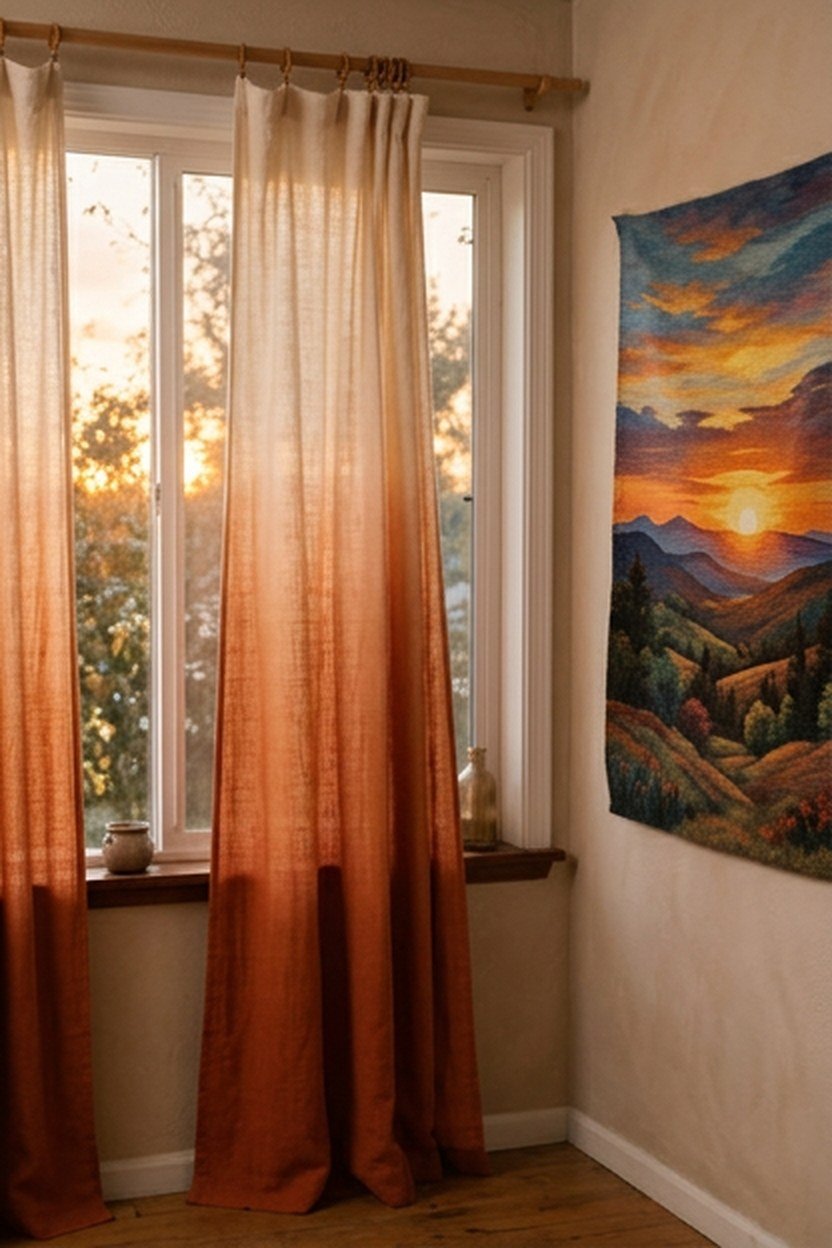
Choosing curtain panels in a gradient pattern that echoes the tapestry’s specific sunset colors extends the theme onto the room’s windows, creating a cohesive visual thread that ties the entire room’s design together. This detail is a more subtle way to reinforce the sunset theme than adding another large tapestry-style piece, since curtains serve a genuine functional purpose beyond pure decoration.
Matching the curtain’s specific gradient direction, light at the top transitioning to a deeper tone at the bottom, or vice versa, to the tapestry’s own gradient orientation creates visual consistency between the two elements. This directional matching consideration is a subtle detail that meaningfully affects how cohesive the overall room reads once both pieces are installed together. Confirming this orientation match before purchasing curtains specifically intended to pair with an existing tapestry is worth the extra attention.
Choosing a curtain fabric with a slight sheen or subtle texture, rather than a completely flat, matte fabric, allows the gradient to catch and reflect light in a way that echoes the tapestry’s own light-catching quality discussed throughout this guide. This fabric quality consideration is a small detail that experienced decorators specifically look for when selecting curtains meant to complement a textured tapestry elsewhere in the room.
Cost And Matching Guidance
Ombre gradient curtain panels sized for a standard bedroom window typically cost $40 to $120 per panel depending on fabric quality and length. Ordering a fabric swatch from the curtain retailer, then comparing it directly against your actual tapestry in the room’s own lighting, confirms the two pieces genuinely coordinate before committing to a full curtain purchase.
A common mistake is choosing curtains in a gradient that technically shares the same color family as the tapestry but in a noticeably different saturation or intensity, resulting in two pieces that feel more mismatched than coordinated once installed together. Comparing actual fabric samples side by side, rather than relying on product photos alone, avoids this subtle but noticeable mismatch. This side-by-side comparison is worth doing before any curtain purchase intended to pair with an existing tapestry.
9. Sunset Tapestry Behind A Floating Shelf Display
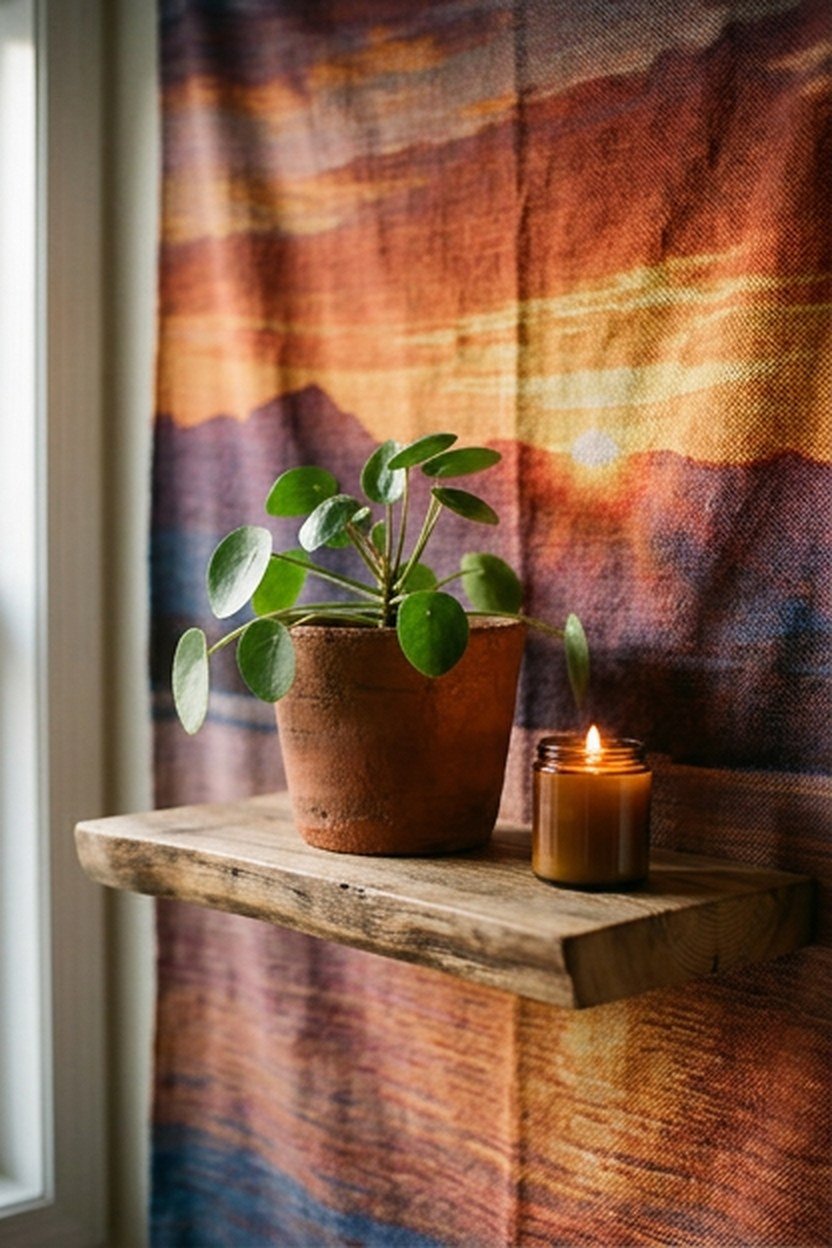
Positioning a floating wood shelf in front of a sunset tapestry, holding small plants, candles, or framed photos, creates a layered display that combines the tapestry’s flat color field with genuine three-dimensional objects and shadow play. This layering technique adds visual depth that a tapestry alone, however striking its gradient, cannot achieve on its own.
Choosing a shelf in a natural wood tone provides a grounding neutral element against the tapestry’s warm but potentially visually busy gradient background. Positioning the shelf at a height that allows the tapestry’s gradient to remain visible both above and below the shelf itself, rather than obscuring a large portion of the fabric, maintains the balance between the two elements.
Styling the shelf’s surface with objects in complementary warm tones, a terracotta planter or a brass candle holder, reinforces the tapestry’s color scheme rather than introducing an unrelated palette that competes with the gradient background. This styling coordination extends the same principle discussed throughout this guide regarding textile and curtain coordination, applied here to smaller decorative objects instead.
Cost And Shelf Placement Guidance
A simple floating wood shelf suited for this application typically costs $20 to $60 depending on size and wood quality, with styling objects adding a modest additional cost depending on what is selected. Confirming the shelf’s mounting hardware reaches the wall’s structural framing, rather than relying on drywall anchors alone, ensures the shelf can safely support the weight of any objects displayed on it.
A common mistake is overloading the shelf with too many objects, creating visual clutter that competes with and ultimately diminishes the tapestry’s own visual impact behind it. Limiting the display to just three or four carefully chosen objects, leaving genuine negative space between them, keeps the overall arrangement feeling curated rather than cluttered.
10. Sunset Tapestry With A Woven Rattan Mirror
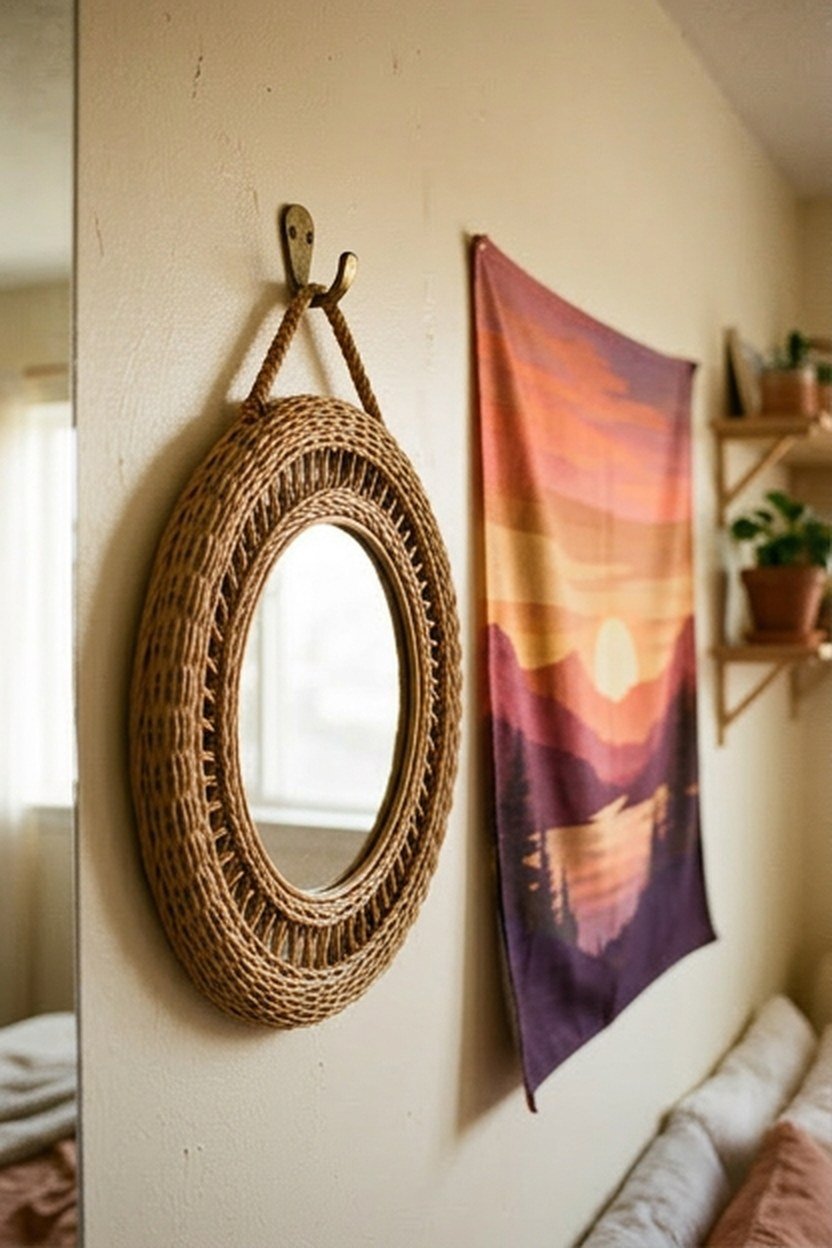
Pairing a sunset tapestry with a round woven rattan mirror, mounted either directly over a portion of the tapestry or on an adjacent wall, combines two popular bohemian decor elements that share a similarly warm, natural aesthetic. The rattan’s woven texture provides a tactile contrast against the tapestry’s smoother fabric surface, adding the kind of textural variety discussed throughout many sections of this guide.
Choosing a mirror sized proportionally smaller than the tapestry itself, positioned toward one side rather than dead center, prevents the mirror from competing directly with the tapestry as the room’s primary focal point while still adding genuine visual interest. This proportional and positioning consideration keeps the tapestry as the room’s clear main feature while the mirror serves a complementary supporting role. Testing this placement before final mounting confirms the proportions read correctly once installed.
Selecting a rattan mirror frame in a natural, unstained wood tone, rather than a painted or stained finish, keeps the piece consistent with the organic, natural material palette that typically accompanies this style of bohemian bedroom decor. This natural finish consideration matters for maintaining the overall aesthetic cohesion between the mirror and other natural-material accents likely present elsewhere in a room styled this way.
Cost And Placement Guidance
A round woven rattan mirror suited for this pairing typically costs $40 to $120 depending on size and frame quality. Testing the mirror’s placement with painter’s tape outlining its shape on the wall before actually mounting it confirms the proportions and positioning work correctly relative to the tapestry beneath or beside it. This test-placement step is worth the small extra time it takes before any permanent installation.
A common mistake is mounting the mirror directly over the tapestry’s most visually striking gradient transition point, obscuring the exact area of the fabric that provides the most visual interest. Positioning the mirror toward one of the tapestry’s more solid-colored ends, rather than over the blended transition zone, preserves the gradient’s most interesting visual element as fully visible.
11. Sunset Tapestry Paired With Terracotta Planters
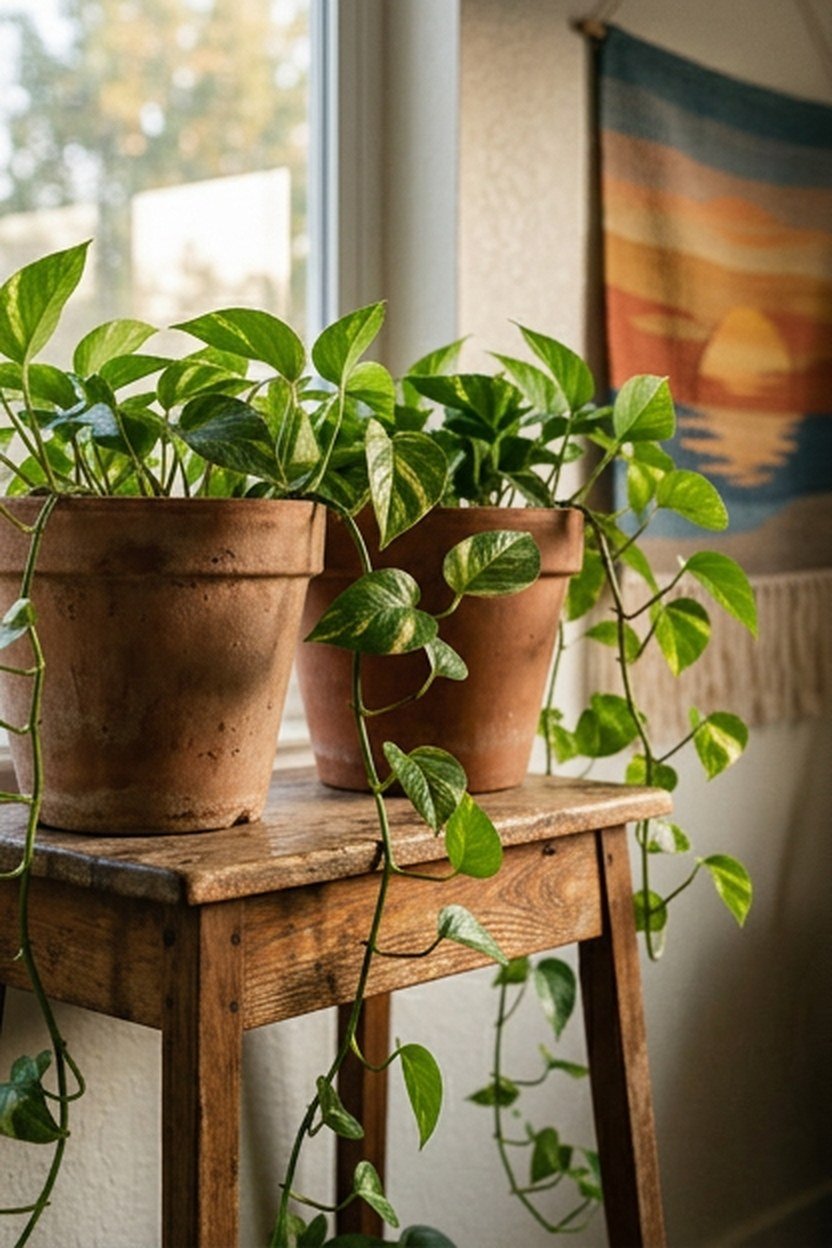
Placing terracotta planters holding trailing plants near the base of a sunset tapestry introduces genuine greenery that contrasts naturally against the tapestry’s warm color gradient. Terracotta’s own warm, earthy orange-brown tone complements the tapestry’s palette directly, making this one of the more naturally coordinated pairings on this entire list. This combination brings a living, growing element into what would otherwise be a purely static decor display.
Choosing trailing plant varieties, like pothos or string of pearls, rather than upright plants, allows the greenery to cascade downward in a way that echoes the same flowing, organic quality as the tapestry’s own draped fabric. This trailing growth habit creates a visual rhyme between the plant and the tapestry that a stiffer, upright plant variety would not achieve as effectively.
Positioning these planters on a small stand or shelf near the tapestry’s base, rather than directly on the floor where they might be accidentally knocked, keeps them both visible and reasonably protected from everyday bedroom foot traffic. This placement consideration balances the display’s visual impact against practical everyday safety in a frequently used room. This stand or shelf placement is worth the modest additional furniture piece it requires.
Cost And Plant Care Guidance
Terracotta planters and trailing plants suited for this pairing typically cost $30 to $90 depending on planter size and plant variety. Choosing low-maintenance trailing plants specifically suited to a bedroom’s typically lower light levels, like pothos, which tolerates indirect light well, avoids the frustration of plants that struggle in a room without abundant natural daylight.
A common mistake is overwatering plants in terracotta planters, which despite their porous, breathable material still require appropriate drainage to avoid root rot in a plant kept in a relatively low-light bedroom environment. Confirming the planter includes a proper drainage hole and using a saucer to protect the underlying furniture or floor avoids this common plant care mistake.
12. Sunset Tapestry As A Room Divider
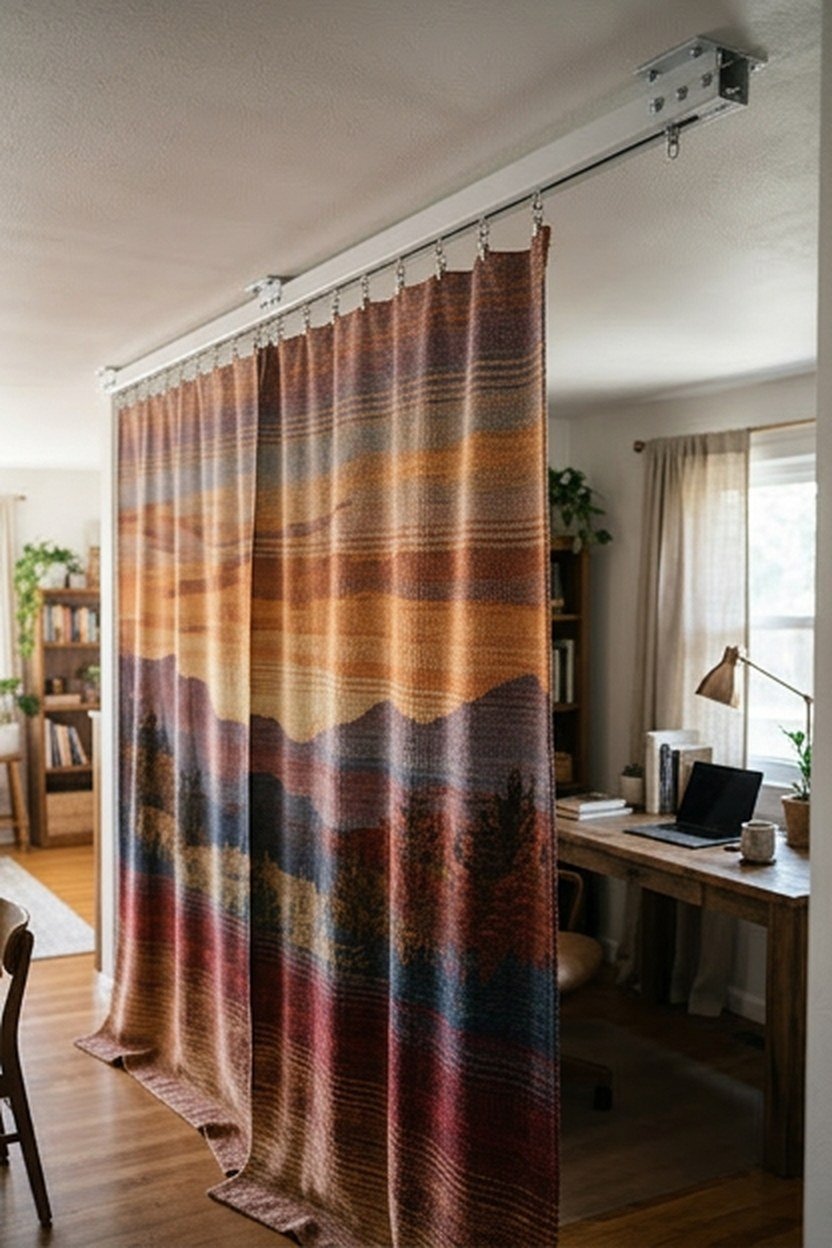
Hanging a sunset tapestry from the ceiling to create a soft room divider, separating a bedroom’s sleeping area from a workspace or seating zone, uses the fabric’s decorative quality to serve a genuine functional purpose beyond wall decoration alone. This application suits larger bedrooms or studio apartments where a single room needs to serve multiple distinct functions without the cost or permanence of an actual built wall. This dual-purpose application is one of the more practical interpretations of the broader tapestry concept.
Choosing a tapestry with enough length to reach from ceiling to floor, rather than one that only partially divides the space, provides genuine visual and some degree of privacy separation between the two zones. Installing a ceiling-mounted curtain track, rather than a fixed single-point hanging method, allows the tapestry-divider to be drawn open or closed as needed throughout the day. This track-based installation is worth the added hardware cost for the functional flexibility it provides.
Selecting a tapestry with a gradient orientation that reads correctly from both sides of the divider, or accepting that one side will show the fabric’s reverse pattern, is a consideration specific to this room-divider application. Testing how the fabric looks from both intended viewing angles before finalizing the installation avoids an unexpected reverse-side appearance discovered only after hanging. This double-sided check is worth doing specifically for this particular application.
Cost And Installation Guidance
A sunset tapestry sized for a full ceiling-to-floor room divider, plus the ceiling track hardware, typically costs $100 to $300 depending on tapestry length and track quality. Measuring the exact ceiling height and the desired divider width before ordering both the tapestry and the track ensures the two components fit together correctly during installation.
A common mistake is choosing a track system not rated for the actual weight of a full-length fabric panel, resulting in a track that sags or fails once the tapestry is installed and repeatedly drawn open and closed. Confirming the track’s weight rating against the tapestry’s actual weight, accounting for the fabric’s full wet weight if it will ever need washing while installed, avoids this structural failure.
13. Sunset Tapestry With A Dreamcatcher Accent
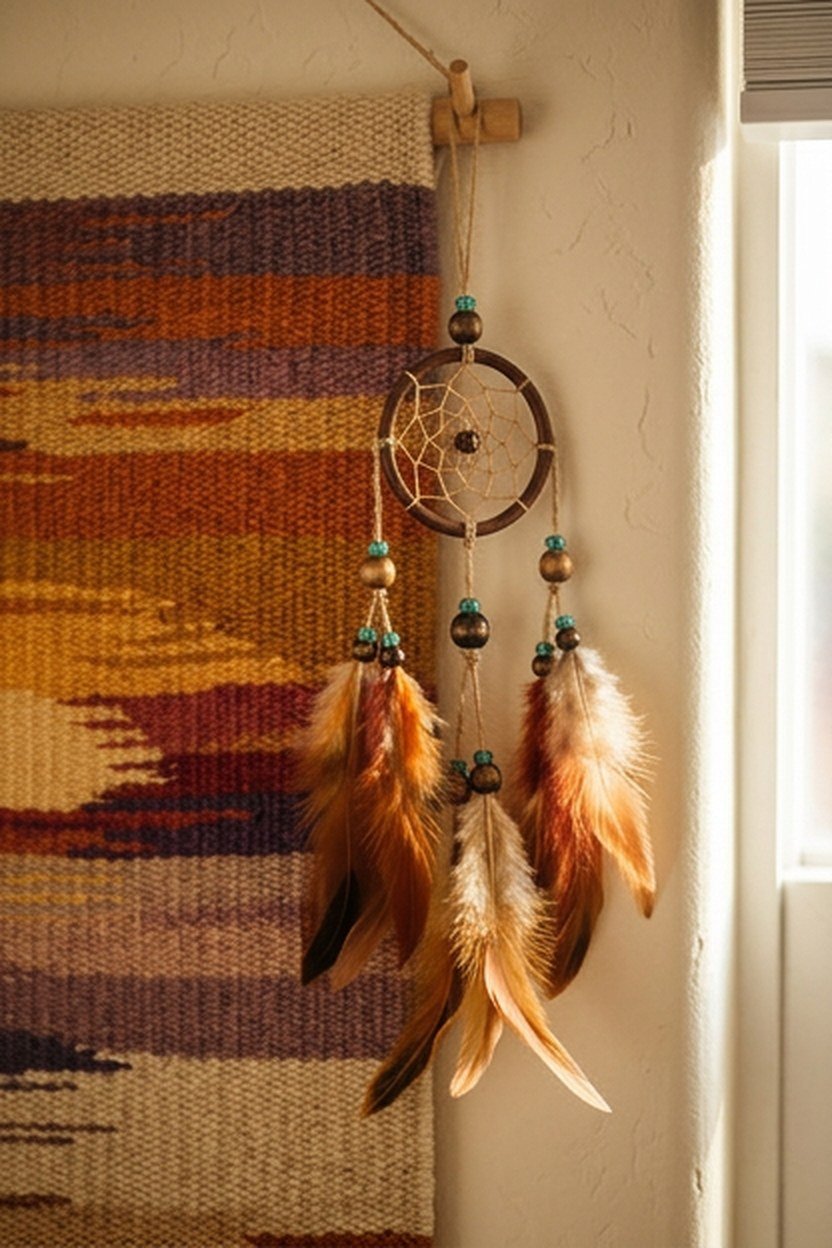
Adding a small dreamcatcher accent near the corner or edge of a sunset tapestry introduces another popular bohemian textile element that shares the same warm, natural color palette when chosen thoughtfully. This pairing works well specifically because dreamcatchers often incorporate feathers and beads in warm earth tones that echo the tapestry’s own gradient colors.
Choosing a dreamcatcher with feathers in warm brown, cream, or rust tones, rather than bright, unrelated colors, keeps the accent piece coordinated with the tapestry’s established palette rather than introducing a jarring, disconnected element. This color coordination consideration applies the same principle discussed throughout this guide regarding textile and object coordination, scaled down to this smaller decorative accent.
Positioning the dreamcatcher toward one corner of the tapestry, rather than centered where it would compete with the fabric’s main gradient pattern, keeps the accent piece playing a supporting rather than competing visual role. This corner placement consideration mirrors the same proportional thinking discussed regarding the rattan mirror pairing covered earlier in this guide.
Cost And Coordination Guidance
A quality dreamcatcher suited for this pairing typically costs $15 to $50 depending on size and the materials used in its feathers and beadwork. Purchasing the dreamcatcher after the tapestry is already hung, similar to the sequencing advice given for the macrame pairing earlier in this guide, allows for more accurate color matching based on how the tapestry actually appears once installed.
A common mistake is choosing a dreamcatcher significantly larger than appropriate for its intended role as a small corner accent, resulting in a piece that competes with rather than complements the tapestry’s own visual dominance. Choosing a genuinely small dreamcatcher, no larger than roughly eight to ten inches in diameter, keeps the proportions appropriately supporting rather than competing.
14. Layered Sunset Tapestries Of Varying Sizes
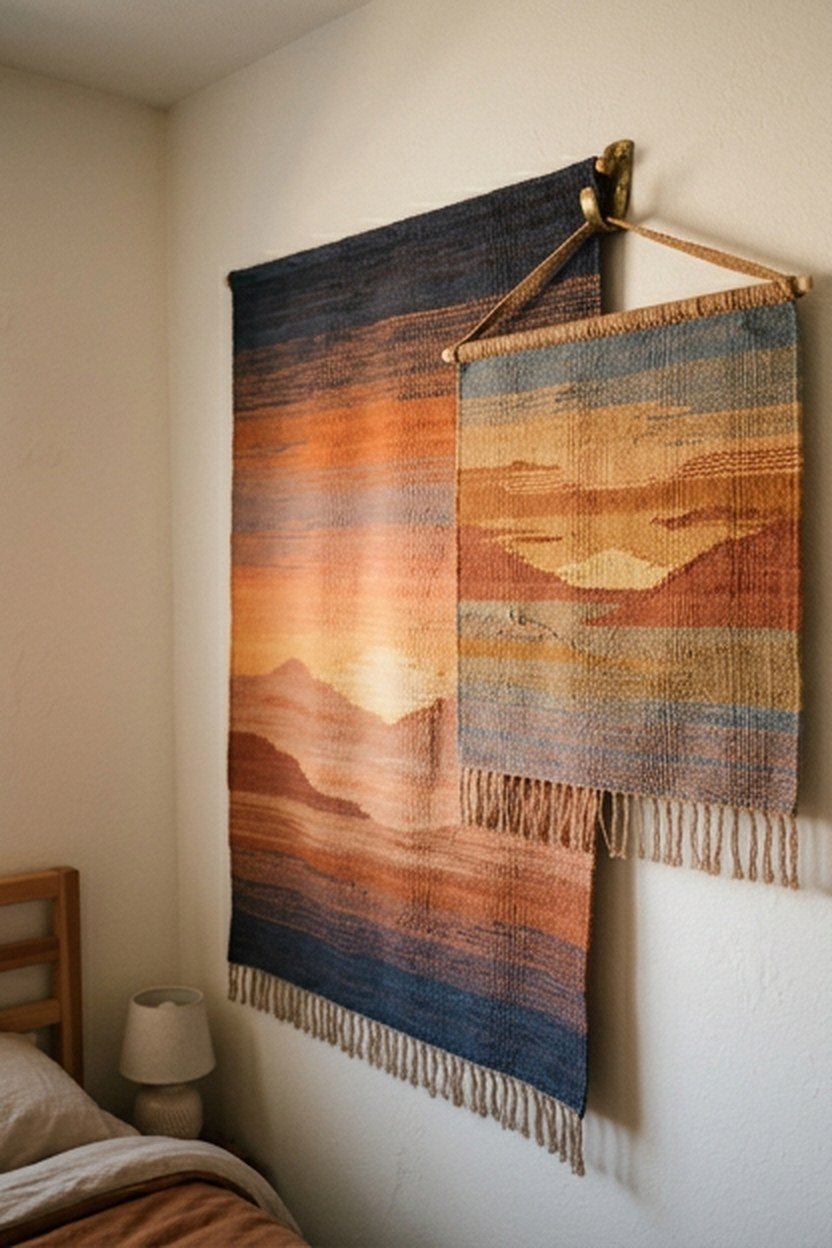
Layering two or three sunset tapestries of noticeably different sizes, with the largest as the primary background and smaller pieces overlapping toward one side or corner, creates a deliberately asymmetrical, artfully layered display distinct from the more uniform mini-tapestry gallery approach discussed earlier in this guide. This layered size variation adds a genuinely collected, evolved-over-time quality that a single uniform installation cannot replicate.
Choosing tapestries in gradients that share some overlapping color tones, even if the exact palettes differ slightly between pieces, keeps the layered display feeling cohesive rather than randomly assembled from unrelated pieces. This overlapping color consideration is what distinguishes an intentionally layered look from one that simply reads as mismatched. Testing different tapestry combinations against each other before committing to a final arrangement helps confirm this cohesion works as intended.
Securing the largest background tapestry first, then adding smaller layered pieces on top using their own independent mounting points, allows for easier future rearranging without needing to remove and rehang the entire display each time a change is desired. This independent mounting approach mirrors the same practical advantage discussed regarding the mini-tapestry gallery arrangement covered earlier.
Cost And Arrangement Guidance
A layered arrangement of two to three sunset tapestries of varying sizes typically costs $100 to $300 total depending on the individual pieces selected. Building this layered collection gradually, adding one additional tapestry at a time rather than purchasing the entire arrangement simultaneously, allows for more considered color and size coordination based on how each new piece actually looks against the existing display.
A common mistake is layering too many tapestries at once without adequate negative space between them, resulting in a visually overwhelming display rather than the intentionally curated layered effect this approach is meant to achieve. Limiting the layered arrangement to two or three pieces maximum, with genuine visible background tapestry showing around the layered accent pieces, avoids this overcrowded result.
15. Sunset Tapestry With Woven Basket Wall Accents
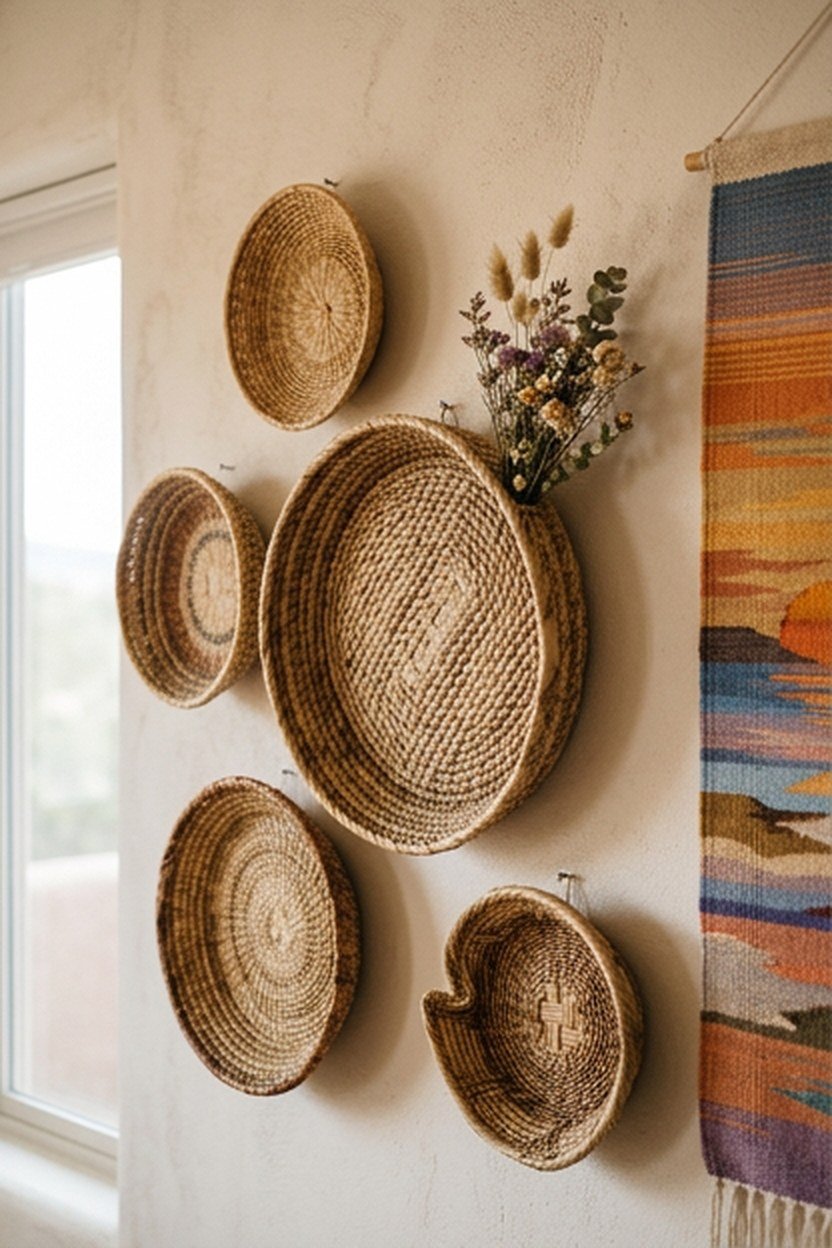
Pairing a sunset tapestry with woven basket accents mounted on an adjacent wall section introduces another popular natural-material decor trend that shares a similar warm, organic aesthetic quality. This combination adds genuine dimensional texture and visual interest beyond the flat tapestry surface, similar in spirit to the floating shelf and rattan mirror pairings discussed earlier in this guide.
Choosing baskets in varying sizes, arranged in a loose cluster rather than a uniform grid pattern, creates the same organic, collected-over-time appearance discussed throughout many other layered decor concepts in this guide. Selecting baskets in a natural, unstained woven material keeps the accent pieces consistent with the broader natural material palette that typically accompanies this bohemian bedroom styling approach.
Positioning these basket accents on the wall adjacent to the tapestry, rather than directly overlapping the fabric itself, allows both decor elements to remain fully visible without one obscuring the other. This adjacent placement consideration is worth testing before any permanent wall mounting to confirm the two decor zones read as complementary rather than competing for the same visual space.
Cost And Placement Guidance
A cluster of woven basket wall accents suited for this pairing typically costs $40 to $120 depending on the number and size of baskets included. Arranging the baskets on the floor first to test different cluster configurations before any wall mounting, similar to the floor-planning advice given for the mini-tapestry gallery arrangement earlier in this guide, helps confirm the final arrangement before committing to permanent wall holes. This floor-testing step is worth the extra time it takes before mounting begins.
A common mistake is mounting baskets using hardware not actually rated for their combined weight, particularly for larger woven baskets that weigh more than their appearance might suggest. Confirming the mounting hardware’s weight rating against the baskets’ actual measured weight, rather than estimating based on appearance alone, avoids a mounting failure that could damage both the baskets and the wall itself.
What A Sunset Tapestry Bedroom Setup Actually Costs
A complete sunset tapestry bedroom setup, incorporating several of the concepts discussed throughout this guide, typically costs $150 to $600 depending on how many coordinating pieces, string lights, curtains, plants, or additional wall accents are included alongside the primary tapestry itself. This modest total cost makes the sunset tapestry aesthetic one of the more budget-friendly full-room transformations covered across many different decor guides. Understanding this rough breakdown helps prioritize spending toward the elements with the most visual impact.
Ongoing costs beyond the initial setup remain relatively low, mainly consisting of occasional plant replacement or maintenance and periodic tapestry cleaning to remove accumulated dust from the fabric’s surface over time. Most quality tapestries hold their color well for several years with proper care, avoiding direct exposure to prolonged intense sunlight that can cause premature fading.
| Budget Category | Typical Cost Range | Notes |
|---|---|---|
| Primary tapestry | $30 to $200 | Largest single cost, scales with size |
| Lighting and textiles | $50 to $200 | String lights, pillows, throws |
| Accent pieces | $50 to $200 | Mirror, plants, baskets, shelves |
Prioritizing the primary tapestry purchase first, since this represents the room’s core focal point, before investing in smaller coordinating accents gives the most reliable path to a cohesive look even on a limited initial budget. This prioritization strategy is worth discussing before the first purchase is made. Most decorators find this order of investment produces the most satisfying room transformation relative to the budget spent at each stage.
Common Mistakes That Undermine A Sunset Tapestry Bedroom
The most common mistake across sunset tapestry installations is hanging the piece with visible wrinkles or sagging fabric, which immediately undermines the polished, considered look the color gradient is meant to convey. Using a proper mounting method, a wood dowel or curtain rod along the top edge rather than scattered adhesive hooks, as discussed in the full wall tapestry section earlier, prevents this common and easily avoidable presentation problem.
A second frequent mistake is choosing a tapestry with a gradient too similar in tone to the room’s existing wall color, resulting in a display that reads as flat and low-contrast rather than genuinely striking. Choosing a tapestry with colors that provide real contrast against the existing wall, even if this means selecting a bolder gradient than initially planned, avoids this common visual flatness.
Recovering From These Setbacks
Recovering from a wrinkled or sagging tapestry typically means removing the piece, steaming or ironing the fabric on a low setting to remove creases, then rehanging it using a proper dowel or rod mounting method rather than the original inadequate hanging approach. This correction is a relatively quick fix that dramatically improves the piece’s overall presentation without requiring any new purchase. Taking this correction step, rather than living with a wrinkled display, is worth the modest time investment it requires.
Recovering from a low-contrast tapestry and wall combination usually means either painting the wall a different, more contrasting color or replacing the tapestry itself with one offering bolder, more saturated gradient tones. This correction requires more effort and cost than the wrinkle fix discussed above, so identifying the contrast problem before purchase, through the swatch testing discussed earlier, is considerably easier than correcting it after the fact.
Conclusion
A sunset gradient tapestry succeeds in a bedroom by combining an affordable focal point with genuine warmth and a soothing color association suited to the room’s restful purpose. The fifteen concepts here, from a headboard installation to smaller layered accents, each offer a way to bring this warm gradient into a space while respecting its scale and existing decor. Prioritizing proper mounting and color contrast first, then layering in accents, gives the most reliable path to a display that reads as considered rather than accidental.
Whether this is a first tapestry purchase or an expansion of an existing collection, the underlying principles stay consistent: mount the piece properly, choose colors that genuinely contrast with the existing wall, and layer in complementary textures and objects gradually rather than all at once. These fundamentals matter more than any single decorative choice on this list. Get them right, and the tapestry becomes a genuine long-term centerpiece rather than a decor piece that feels temporary or accidental.
Frequently Asked Questions
What is a sunset gradient tapestry? A sunset gradient tapestry is a fabric wall hanging dyed or printed in blended tones of orange, pink, and purple that mimic the color transition of a sunset. It is typically hung as a large-scale focal point above or behind a bed.
How much does a sunset tapestry bedroom setup cost? A complete setup, including the tapestry and coordinating accents, typically costs $150 to $600 depending on how many additional pieces like lighting, plants, or curtains are included. The primary tapestry itself usually costs $30 to $200.
How do I hang a sunset tapestry without damaging the wall? Mounting the tapestry along a wood dowel or curtain rod, secured with removable adhesive hooks, avoids wall damage while also preventing the fabric from sagging over time. This method is preferred over scattered tacks or pins for both appearance and wall safety.
Will a sunset tapestry fade over time? Most quality tapestries hold their color well for several years, though prolonged direct sunlight exposure can cause premature fading. Positioning the tapestry away from a consistently bright window helps preserve its color longer.
What colors pair well with a sunset tapestry? Terracotta, cream, and warm wood tones pair naturally with a sunset tapestry’s gradient palette. Choosing one or two of the tapestry’s specific tones for coordinating textiles keeps the room feeling cohesive without becoming overwhelming.
Can a sunset tapestry work as a room divider? Yes, hanging a tapestry from a ceiling-mounted track can create a soft, functional room divider in a larger bedroom or studio apartment. This requires a full ceiling-to-floor tapestry and hardware rated for the fabric’s actual weight.
What is the biggest mistake people make with sunset tapestries? Hanging the tapestry with visible wrinkles or sagging fabric is the most common mistake, undermining the polished look the gradient is meant to create. Using a proper dowel or rod mounting method along the top edge avoids this common presentation problem.