
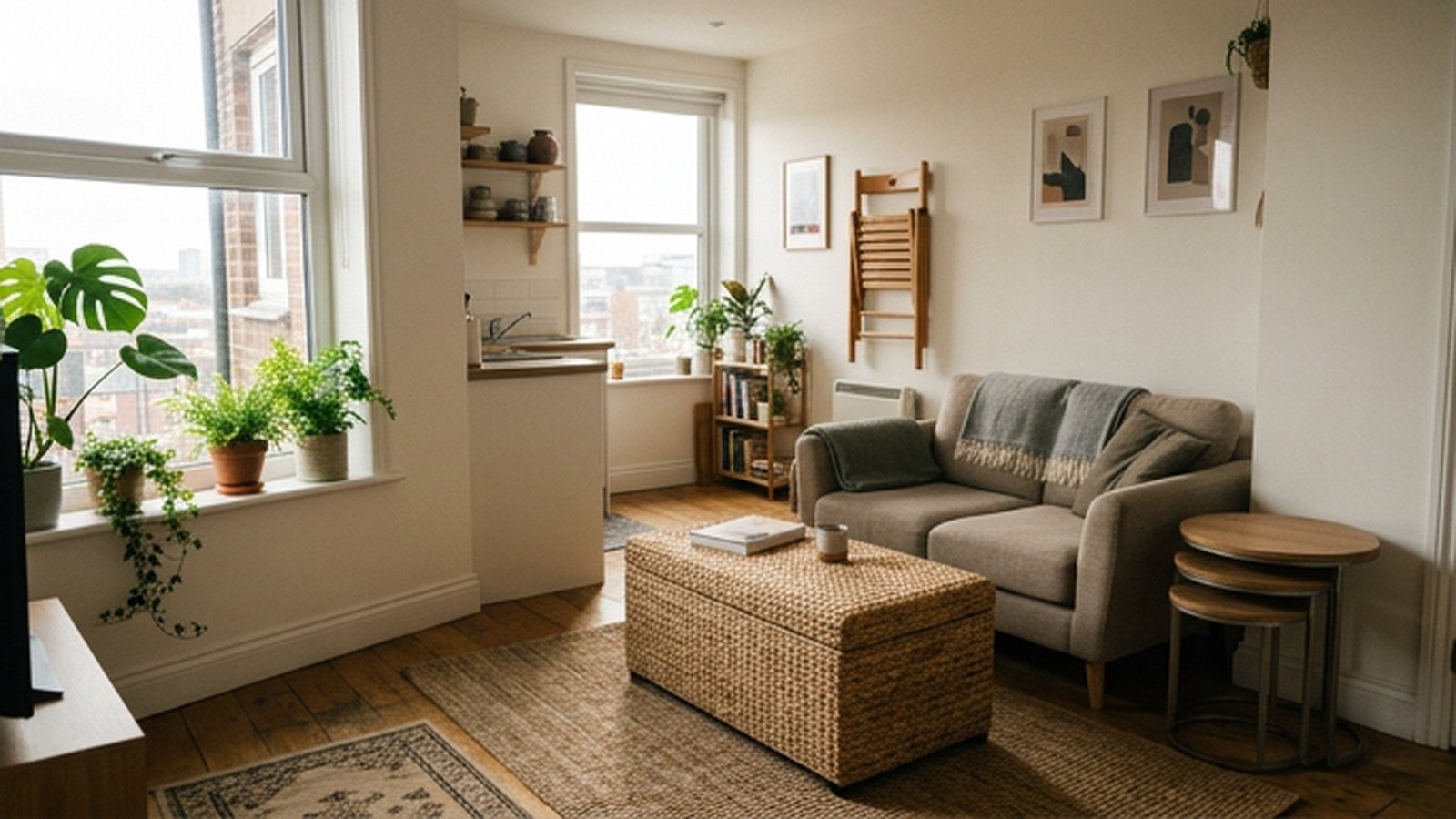
A tiny studio apartment lives or dies by its furniture choices, since every single piece either earns its square footage or quietly steals space you cannot afford to lose. The best space saving furniture does double duty, folding away, converting between uses, or tucking into a footprint smaller than its function suggests. This guide walks through fifteen real furniture ideas that make a small studio feel genuinely livable rather than cramped.
I have furnished more than one studio apartment under three hundred square feet, and the lesson that sticks is that multi-function furniture only works if the transformation itself is actually easy. A sofa bed that takes fifteen minutes and real effort to convert gets used as a permanent bed rather than the flexible piece it was sold as. Choosing furniture with a genuinely quick, simple transformation matters more than any other single factor.
By the end of this piece you will know which space saving pieces are worth the investment and which tend to disappoint in daily use, along with real costs for each. I have included a comparison table and a cost breakdown, since prices vary enormously between a simple folding table and a custom Murphy bed system. Read through all fifteen before furnishing your own tiny studio.
Why Multi-Function Furniture Matters More In A Studio
A studio apartment has no separate rooms to hide furniture that only serves one purpose, which means every piece is visible and competing for the same limited square footage all day, every day. This visibility is exactly why multi-function furniture matters so much more in a studio than in a larger home with rooms to spare. A single piece that serves two purposes effectively doubles your usable space without adding a single square foot.
The best space saving furniture disappears when not in use, whether by folding flat against a wall, tucking under another piece, or converting from one function to another in seconds. Furniture that requires real effort to transform tends to get stuck in one configuration permanently, defeating its entire purpose.
| Furniture Type | Space Saved | Typical Cost |
|---|---|---|
| Murphy bed | An entire bedroom’s footprint | $800 to $3,000 |
| Folding dining table | Full table footprint when stored | $100 to $400 |
| Storage ottoman | A separate storage cabinet | $80 to $250 |
| Loft bed with desk below | An entire desk footprint | $400 to $1,200 |
| Nesting side tables | Two to three tables in one | $60 to $200 |
Measuring your actual studio dimensions before buying any furniture, rather than estimating, prevents the common and expensive mistake of purchasing a piece that turns out to be too large once it arrives. A tape measure and a few minutes of planning save real money compared to returning oversized furniture after the fact.
Planning Furniture Around Your Studio’s Actual Layout
Before buying anything, map out your studio’s fixed elements, including windows, doors, and any built-in features, since these constraints determine which furniture arrangements are actually possible. A furniture piece that looks perfect in a showroom can block a window or doorway once placed in your specific layout.
Prioritizing furniture height and visual weight matters as much as footprint in a small space, since tall, bulky pieces make a studio feel more cramped even when their floor footprint is reasonable. Choosing furniture with visible legs, rather than pieces that sit flush to the floor, lets light and sightlines pass underneath, making the whole room feel more open.
Think about which functions genuinely need dedicated furniture and which can share a single piece before furnishing the whole space at once. A studio rarely needs a separate desk, dining table, and coffee table when one well-chosen convertible piece can serve two or three of those functions.
Measuring Doorways Before Buying Larger Pieces
Measuring not just your studio’s floor space but also the width of doorways, hallways, and any stairwells leading to the apartment prevents the specific frustration of furniture that fits the room but cannot actually get through the entrance. This is a common and entirely avoidable mistake, especially with larger pieces like a Murphy bed frame or a substantial sofa. A few extra minutes of measuring before ordering saves a genuinely disappointing delivery day.
1. Murphy Bed That Folds Into The Wall
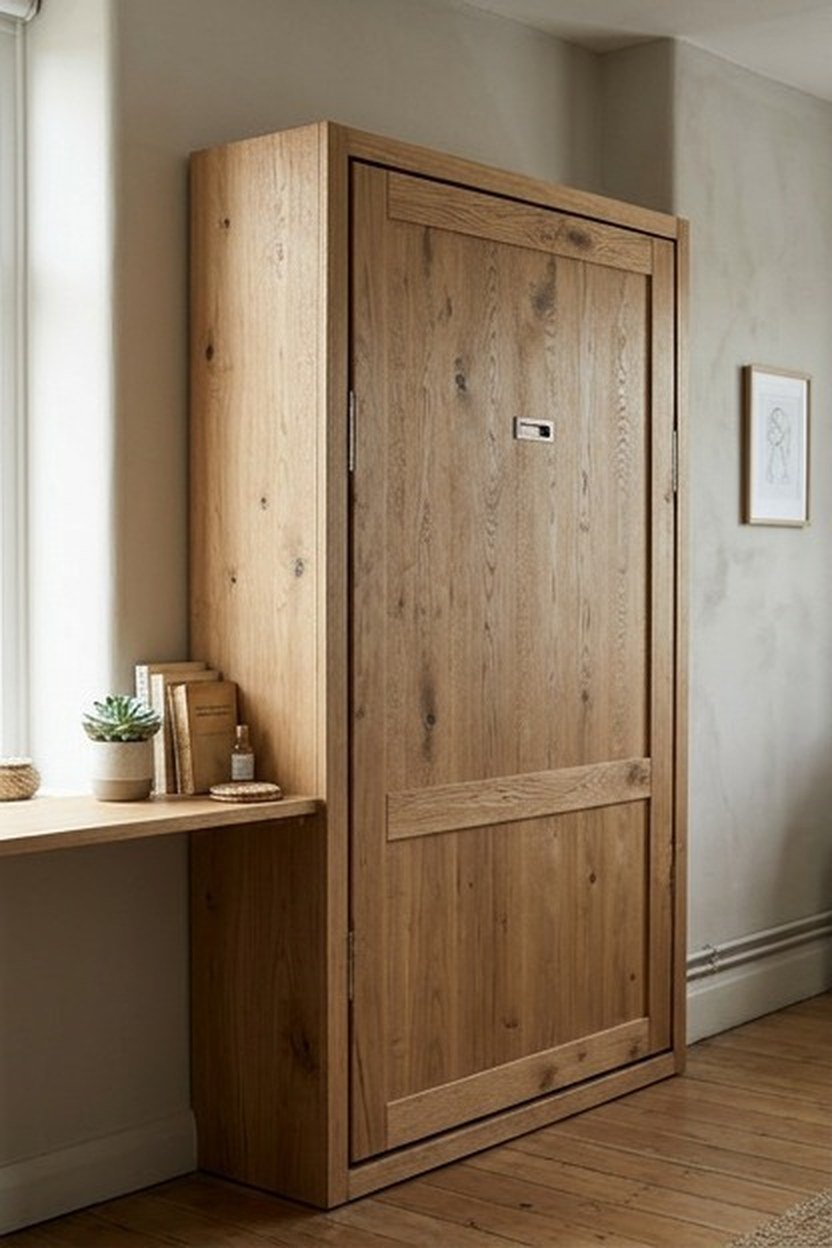
A Murphy bed folds vertically into a wall-mounted cabinet, freeing an entire bedroom’s worth of floor space during the day. This is the single most valuable space saving furniture piece for anyone using their studio as both bedroom and living space. Modern Murphy bed systems fold up and down with genuinely minimal effort, addressing the transformation-ease concern raised earlier in this guide.
Many Murphy bed cabinets include integrated shelving or a desk that becomes accessible once the bed folds up, effectively giving you two furniture functions within one wall-mounted unit. Choosing a system with this integrated secondary function maximizes the value of what is otherwise a significant furniture investment.
Professional installation is strongly recommended for a Murphy bed, since the mechanism involves genuine weight-bearing hardware that needs to be securely anchored to wall studs rather than drywall alone. This installation cost adds to the overall investment but protects against a genuine safety concern if the unit is not properly secured. Budgeting for professional installation from the start avoids an unpleasant surprise once quotes come in.
Choosing Between A Horizontal And Vertical Murphy Bed
A vertical Murphy bed folds upward against a taller wall section, suiting a room with more available wall height than width, while a horizontal version folds sideways and suits a wider, shorter wall. Measuring your specific wall dimensions before choosing between the two orientations ensures the unit actually fits your studio’s particular layout.
2. Folding Dining Table Mounted To The Wall
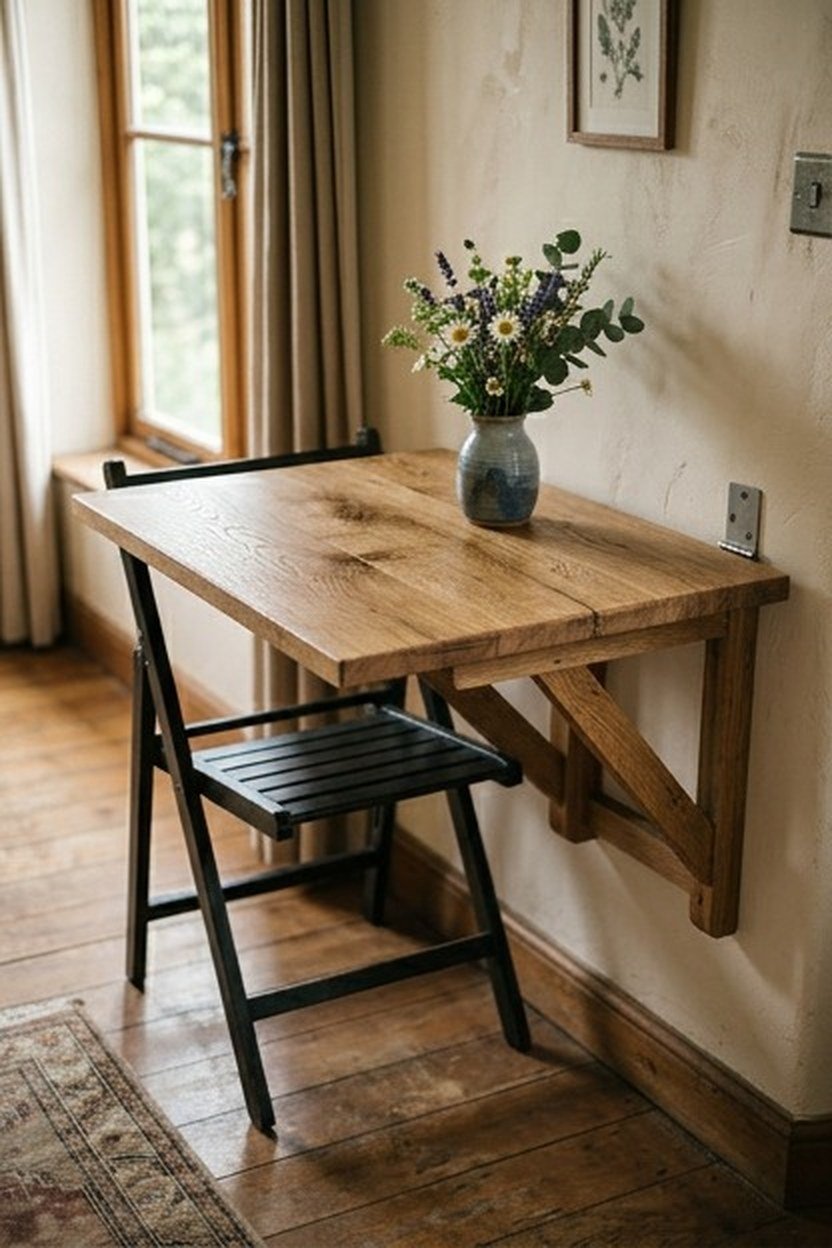
A dining table that folds flat against the wall when not in use solves the common studio problem of a permanent table eating floor space even during the many hours nobody is eating at it. Wall-mounted folding tables typically use a simple hinge and support leg mechanism, unfolding in seconds when needed for a meal or work session.
Choosing a table size that comfortably seats your typical group prevents either an oversized table that never folds away or an undersized one that cannot accommodate a real meal. A drop-leaf design, where only one side folds while the other stays fixed, offers a middle ground between fully folding and permanent.
Mounting the table securely to a wall stud, rather than drywall alone, matters for the same structural reasons discussed with the Murphy bed, since the table needs to support real weight when unfolded and in use. A wobbly or poorly mounted folding table undermines the whole point of choosing this space saving option.
Pairing A Folding Table With Stackable Chairs
Stackable or foldable chairs complete a folding dining table setup, since a bulky permanent chair set defeats much of the space saved by the table itself. Choosing chairs that store easily against a wall or in a closet, rather than chairs requiring their own dedicated floor space, keeps the whole dining setup genuinely space efficient.
3. Storage Ottoman Doubling As Seating And A Coffee Table
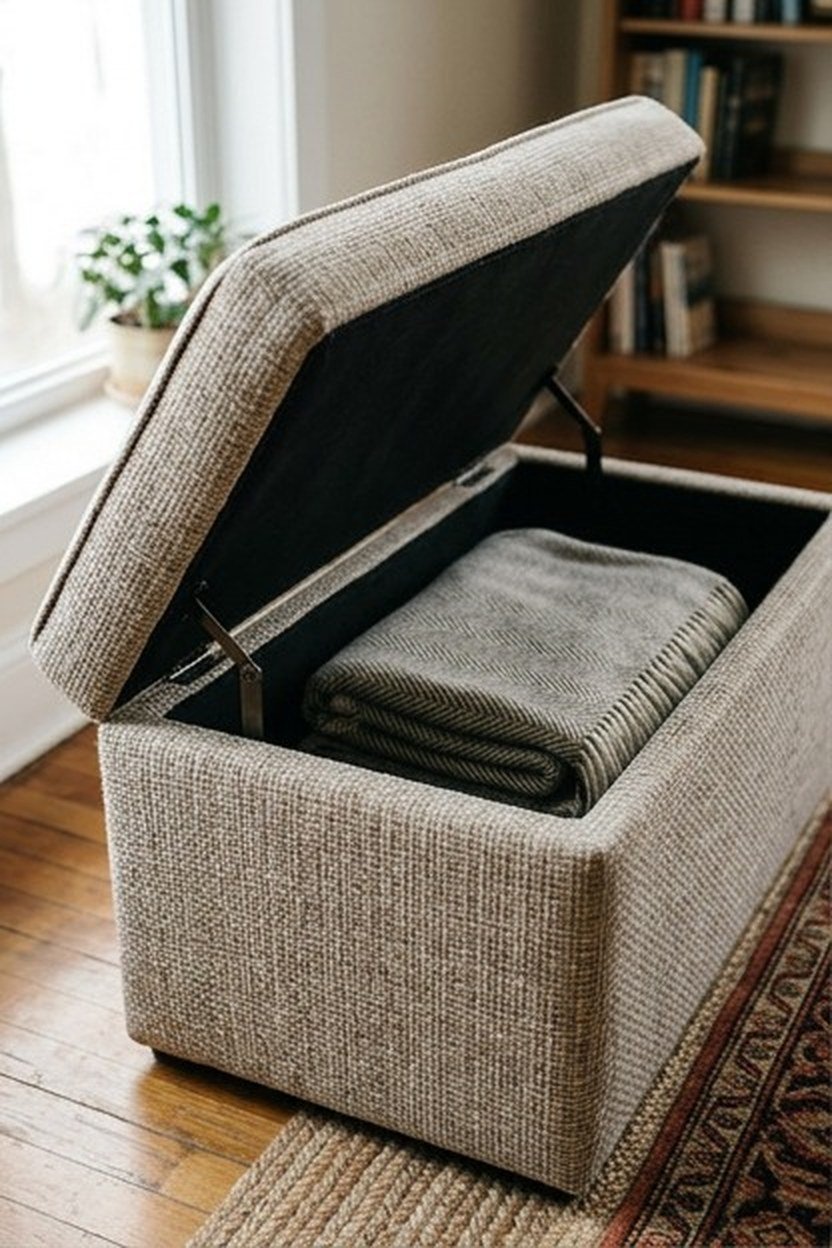
A storage ottoman combines seating, a coffee table surface, and hidden storage capacity within a single piece of furniture, making it one of the more versatile space saving options available for a tiny studio. The hollow interior, accessed by lifting the cushioned top, holds blankets, books, or other items that would otherwise need a separate storage solution. This dual function of visible furniture and hidden storage is a hallmark of smart small space design.
Choosing an ottoman with a sturdy, flat top surface, rather than a heavily tufted or curved design, makes it more practical as an actual coffee table for drinks or a laptop. A tray placed on top adds a stable, more presentable surface while still allowing quick access to the storage beneath when needed. This small addition improves the ottoman’s daily function without sacrificing its storage capacity.
Sizing the ottoman appropriately for your studio’s seating arrangement, neither so large it dominates the room nor so small it fails to provide meaningful storage, requires measuring your actual available space before purchase. A too-large ottoman becomes another space-consuming obstacle rather than the space saving solution it was meant to be.
Choosing Ottoman Material For Durability
A durable, easy-to-clean fabric or faux leather ottoman cover handles the daily wear of doubling as both seating and a table surface better than a delicate fabric meant purely for occasional use. This material consideration matters more for an ottoman serving multiple functions than for furniture used in only one way. Investing in a genuinely durable material upfront prevents needing to replace the cover within a year or two of heavy daily use.
4. Loft Bed With A Desk Or Seating Area Below
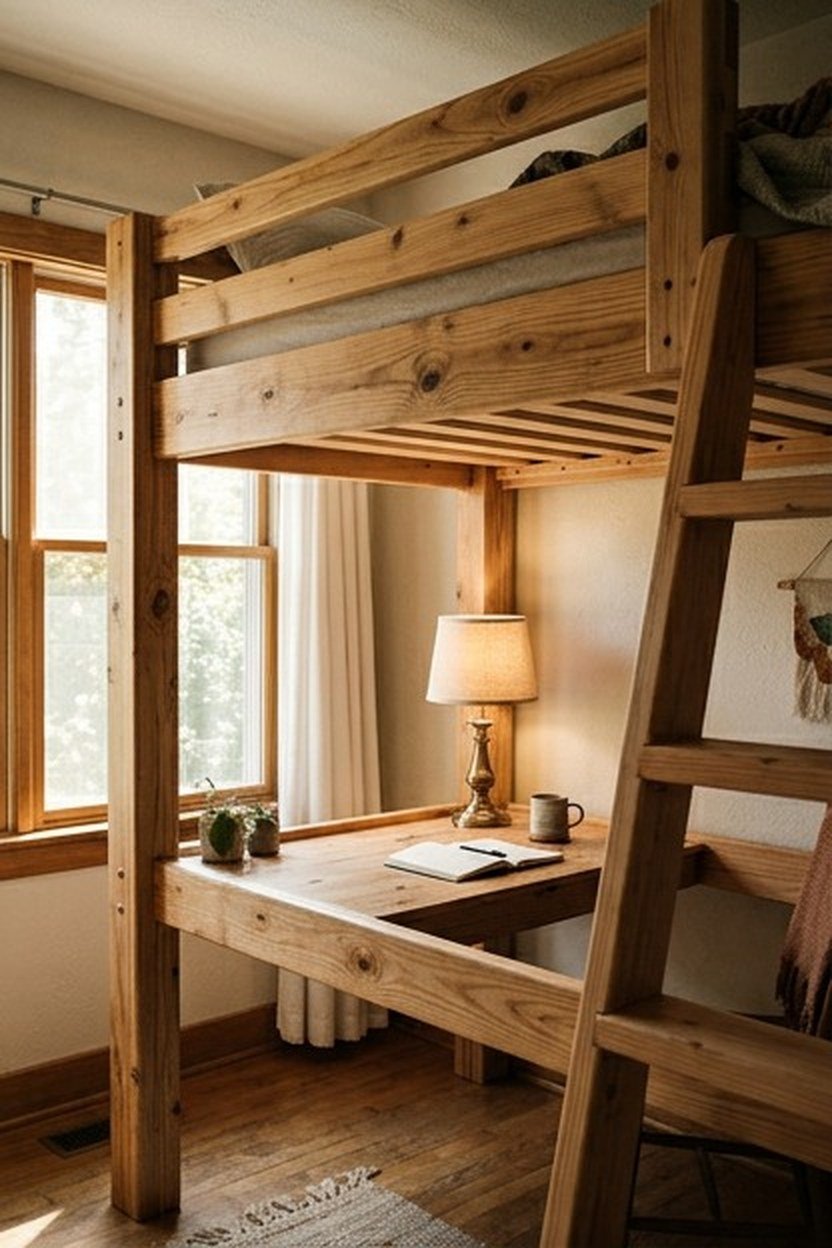
A loft bed elevates the sleeping area to create genuine usable floor space underneath, whether that space becomes a desk, a small seating area, or additional storage. This vertical solution suits a studio with adequate ceiling height, since a loft bed requires enough clearance both for the bed itself and for comfortable use of whatever function sits beneath it.
Choosing a loft bed frame with built-in stairs that double as drawers, rather than a simple ladder, adds storage capacity to the vertical structure itself while also making the bed safer and easier to access nightly. This dual-purpose stair design is worth the added cost for anyone planning to use the loft bed as a permanent, long-term sleeping solution rather than a temporary setup.
Because a loft bed is a substantial, permanent-feeling piece of furniture, measuring your ceiling height precisely and confirming adequate headroom both on the bed itself and underneath it prevents the disappointing discovery of insufficient clearance after installation. Most loft bed manufacturers specify minimum ceiling height requirements, and checking these against your actual studio before ordering matters.
Safety Considerations For A Loft Bed
A loft bed’s elevated sleeping surface requires a sturdy guardrail on all open sides to prevent falls, a safety feature that should never be treated as optional regardless of how the bed is marketed. Checking that any loft bed frame meets recognized safety standards, particularly if anyone in the household is a child or has mobility considerations, protects against a genuine injury risk.
5. Nesting Side Tables That Stack Into One Footprint
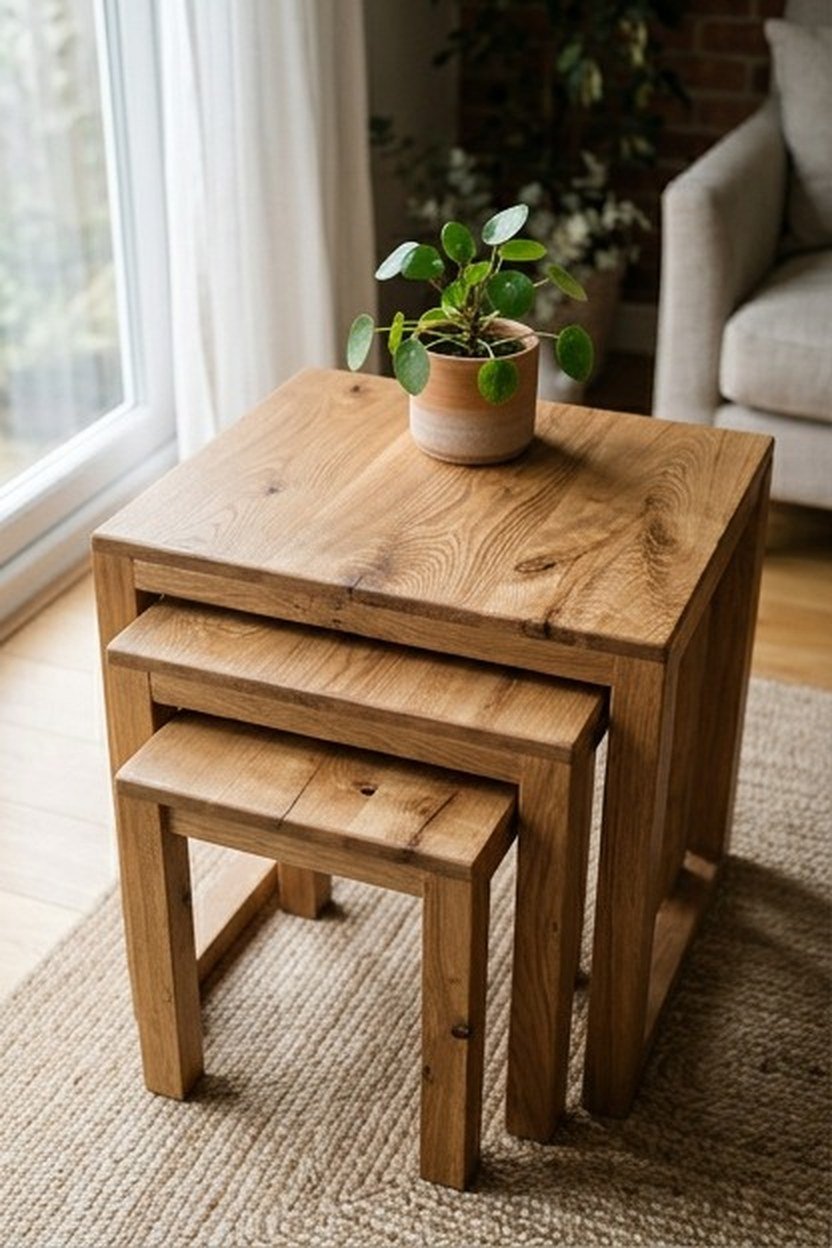
A set of nesting side tables, typically two or three tables of decreasing size that stack together into a single footprint, provides flexible additional surface space without permanently occupying the floor space multiple separate tables would require. Pulling out an extra table when hosting guests, then nesting them back together afterward, delivers genuine flexibility for a studio that occasionally needs more surface area than its everyday footprint suggests.
Choosing nesting tables in a material and finish that complements your existing furniture keeps the set feeling like an intentional design choice rather than a purely functional afterthought. Wood nesting tables with visible grain bring warmth, while a glass or acrylic set feels lighter and more visually unobtrusive in a small space. Either material choice works, so choose based on whether you want the tables to stand out or recede visually.
Because nesting tables stack together so compactly, they suit a studio with very little dedicated storage space for furniture not currently in use, unlike bulkier space saving pieces that still require some storage footprint even when folded. This minimal storage requirement is part of what makes nesting tables one of the easier space saving ideas to actually implement without any structural changes to the apartment.
Using Nesting Tables As A Coffee Table Alternative
In a studio too small for a full coffee table, a set of nesting tables can substitute for one, with the largest table serving as the primary surface and smaller tables pulled out as needed for additional space. This substitution works particularly well paired with a storage ottoman, giving you multiple flexible surface options without any single piece consuming permanent floor space.
6. Wall-Mounted Fold-Down Desk
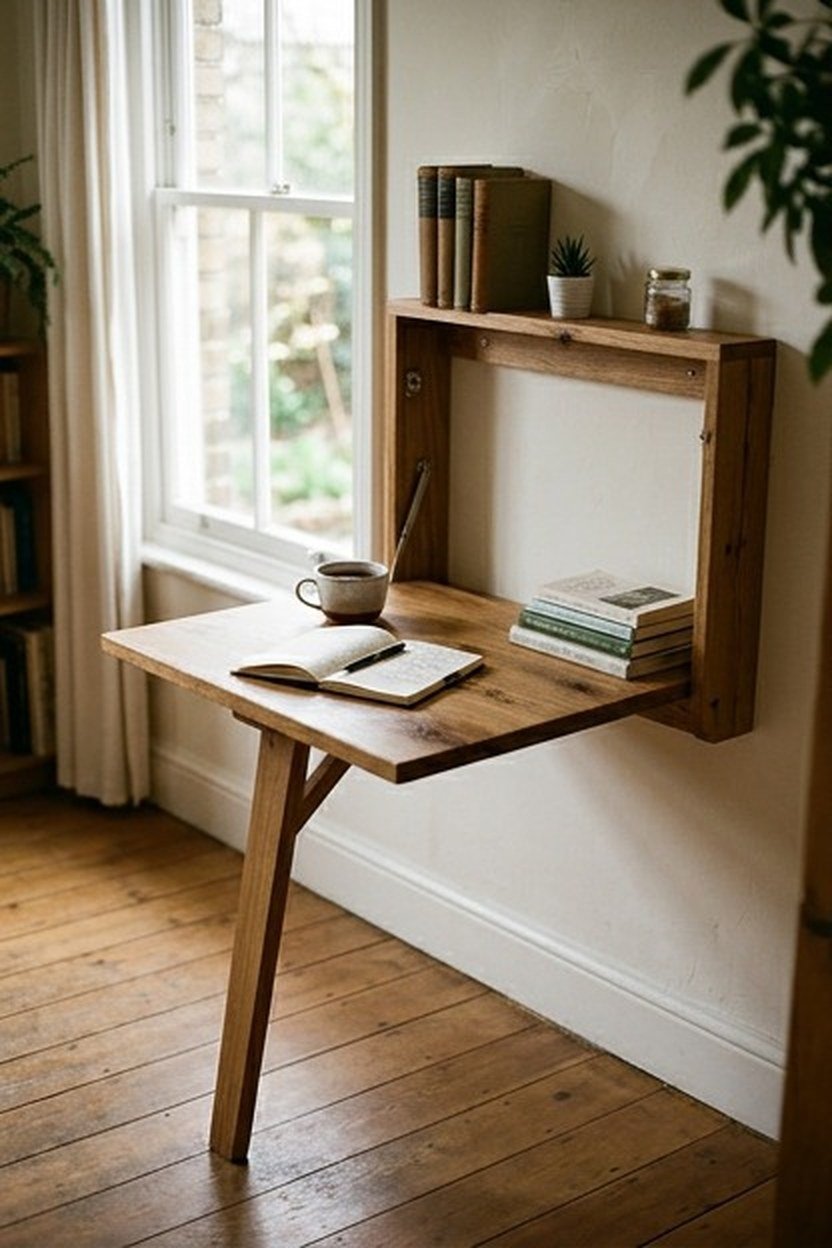
A wall-mounted fold-down desk provides a genuine work surface that disappears flat against the wall when not needed, solving the common studio problem of a permanent desk consuming floor space during non-working hours. This setup suits anyone working from home in a studio apartment, where a dedicated but not permanently visible workspace matters considerably. The desk typically includes a simple folding leg or bracket support system that deploys when unfolded.
Choosing a fold-down desk with built-in shelving above or beside it keeps office supplies and a computer monitor organized without requiring separate storage furniture elsewhere in the room. This integrated storage approach maximizes the value of the wall space the desk already occupies. Positioning this combination near natural light, if your studio’s layout allows, improves the desk’s usability for actual work sessions.
Because a fold-down desk mounts directly to the wall, the same stud-anchoring consideration discussed with the Murphy bed and folding dining table applies here as well, given the weight a laptop, monitor, and general desk use put on the folding mechanism. Skipping proper wall anchoring risks the desk failing under regular use rather than just looking flimsy.
Cable Management For A Fold-Down Desk
A fold-down desk that will host a computer or other electronics needs a cable management plan that allows the desk to fold flat without snagging or straining charging cables and monitor connections. Choosing cables with adequate slack, or a small cable channel built into the desk’s design, prevents this daily friction point from making the desk annoying to actually fold up and down.
7. Daybed That Converts Between Sofa And Guest Bed
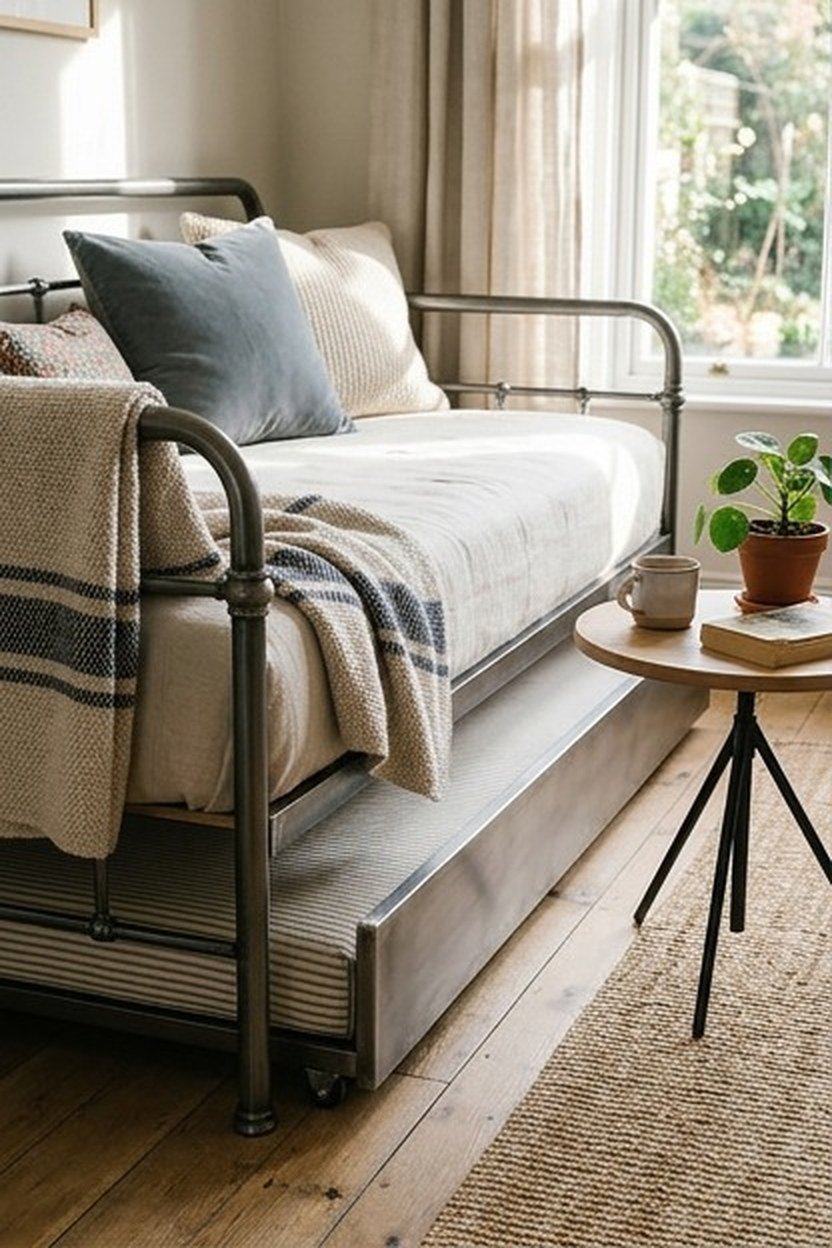
A daybed functions as a sofa for daily lounging while converting easily into a guest bed when needed, without requiring the more complex mechanism of a full sofa bed with an internal pull-out frame. This simpler conversion, typically just adding a mattress topper or trundle rather than unfolding an internal metal frame, tends to be more comfortable and easier to manage than a traditional sofa bed.
Choosing a daybed with a trundle, a second mattress that slides out from underneath the main daybed frame, adds a genuine second sleeping surface for hosting two guests rather than one. This trundle option is worth the added cost if you host guests with any regularity, since it roughly doubles the daybed’s guest capacity without doubling its footprint.
Because a daybed serves as the primary daily seating in many studio layouts, choosing a durable, comfortable cushion and upholstery matters as much for everyday lounging as for its occasional guest bed function. A daybed that looks appealing but proves uncomfortable for regular sofa use fails at its primary daily job.
Trundle Bed Storage When Not In Use
A trundle bed frame slides fully beneath the main daybed when not needed for a guest, so measuring the clearance beneath your specific daybed model confirms a standard trundle will actually fit before purchasing one separately. Some daybed frames come with a trundle already included and properly sized, which avoids this compatibility concern entirely. Checking this detail before buying either piece separately saves a frustrating mismatch.
8. Under-Bed Storage Drawers Or Bins
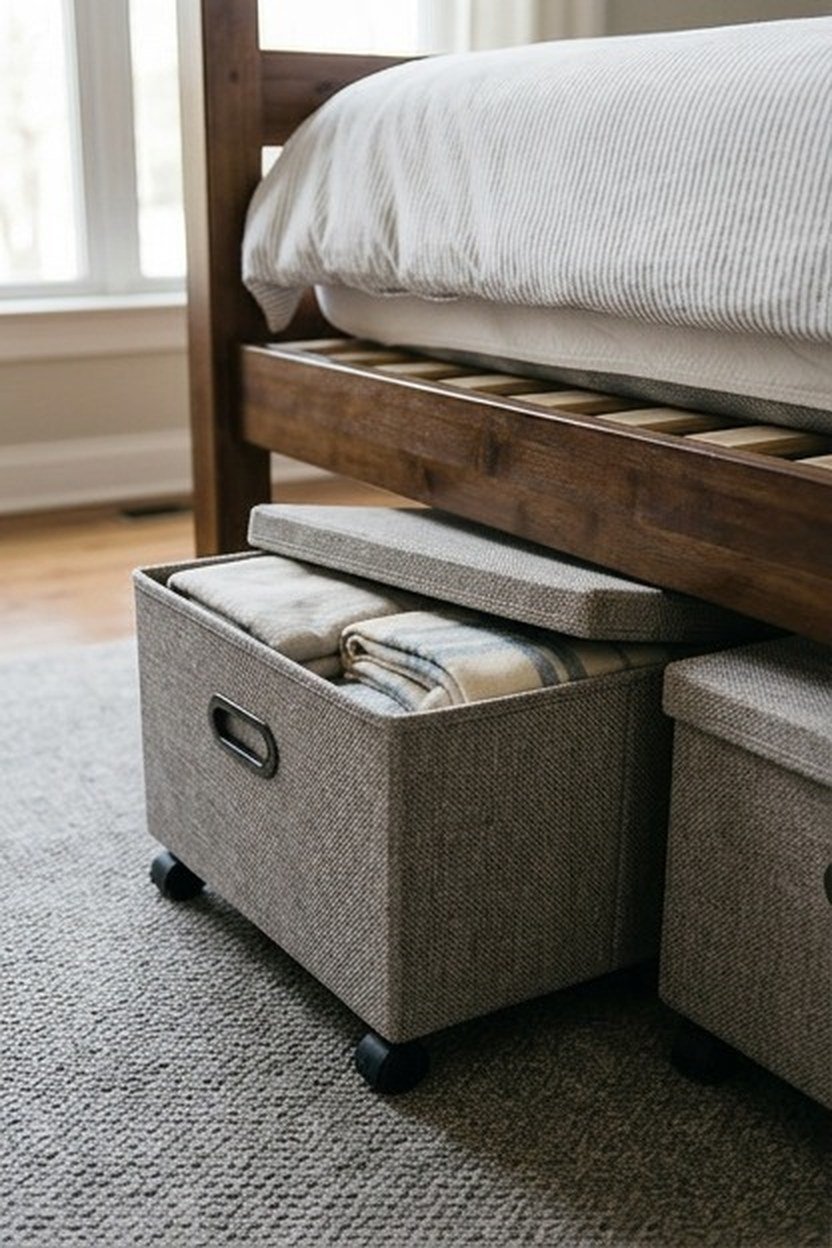
Under-bed storage, whether built-in drawers on a bed frame or simple rolling bins slid beneath a standard bed, uses one of the most commonly wasted spaces in any bedroom or studio sleeping area. This storage capacity suits off-season clothing, extra linens, or any items used infrequently enough to justify storage that requires bending down to access.
Choosing a bed frame with built-in drawers, rather than adding separate bins afterward, creates a more finished, intentional look and typically offers sturdier construction than aftermarket storage solutions. If your existing bed frame lacks this feature, rolling storage bins designed specifically for under-bed use provide much of the same functional benefit at a considerably lower cost than replacing the entire bed frame. Either approach meaningfully increases your studio’s total storage capacity.
Measuring the actual clearance beneath your bed frame before purchasing any storage bins prevents buying containers that turn out too tall to fit or that scrape the floor and become difficult to slide in and out. This measurement step, though simple, is easy to skip and then regret once ill-fitting bins arrive. A few minutes with a tape measure protects against this common and avoidable mistake.
Organizing Under-Bed Storage By Season
Grouping under-bed storage by season, keeping winter items in one bin and summer items in another, makes the twice-yearly wardrobe swap considerably more efficient than digging through a single mixed container. This organizational layer costs nothing extra beyond the bins themselves but meaningfully improves how useful the storage actually is in practice. Building this seasonal organization habit from the start keeps under-bed storage genuinely functional rather than becoming another catch-all space.
9. Bar Cart That Serves As Kitchen Storage And A Serving Station
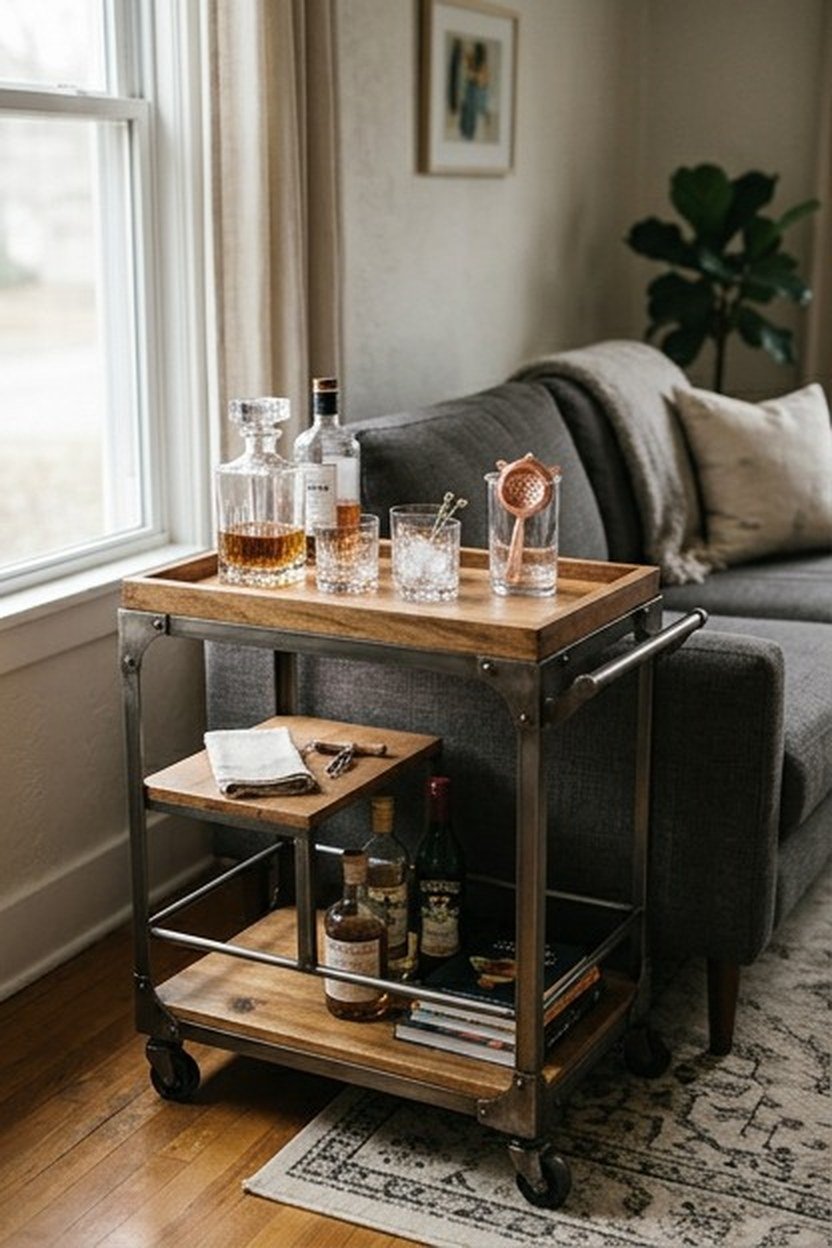
A rolling bar cart provides mobile storage and a serving surface that can move between the kitchen area and wherever guests are gathered, solving the common studio kitchen problem of insufficient counter and cabinet space. This piece works well storing dishware, glassware, or pantry items that do not fit in a small studio kitchen’s limited built-in storage. Its mobility means it can also serve as an impromptu dining or work surface when rolled elsewhere in the room.
Choosing a cart with at least two tiers, and ideally a bottom shelf enclosed or fitted with a lip to prevent items sliding off during movement, maximizes both storage capacity and safety when the cart is actually rolled between locations. Wire or wood shelving both work, with wire offering a lighter visual footprint and wood bringing more warmth and a solid surface for serving food or drinks.
Because a bar cart is often positioned near the kitchen area but visible from the main living space, choosing a design that complements your studio’s overall style matters more than for storage tucked away in a closet. This visibility consideration is worth factoring into the purchase decision alongside pure storage capacity. A well-chosen cart can function as a decor element in addition to genuine functional storage.
Securing Items On A Rolling Bar Cart
Adding non-slip shelf liners to each tier of a rolling bar cart prevents glassware and other items from sliding and potentially breaking when the cart moves across the floor. This small addition costs very little but protects against a genuinely annoying and potentially costly accident.
10. Floating Wall Shelves Above Eye Level

Floating shelves mounted above eye level use vertical wall space that typically goes entirely unused in most studio layouts, providing storage or display capacity without consuming any floor space whatsoever. This idea suits books, decorative objects, or storage bins that do not need daily, at-hand access, since retrieving items from above eye level requires more deliberate effort than a lower, more accessible shelf.
Choosing floating shelf brackets rated for your intended load, particularly for books or other heavy items, prevents the shelf sagging or, in a worst case, pulling away from the wall under excessive weight. Installing shelves into wall studs, the same structural consideration raised throughout this guide, matters especially for shelves positioned above head height where a failure poses a genuine safety risk.
Spacing multiple floating shelves with enough vertical clearance between them for the specific items you plan to store prevents an awkward mismatch where books or objects cannot actually fit between shelves set too close together. Planning this spacing based on your actual collection, rather than an arbitrary even spacing, makes the shelving genuinely useful rather than just visually tidy.
Styling Floating Shelves Above Eye Level
Because items on high floating shelves are viewed from below at a distance, choosing larger, bolder decorative objects or clearly spine-out book arrangements reads more successfully from that vantage point than small, detailed items that disappear visually from below. This styling consideration is specific to shelving positioned above eye level and differs from how you might style a lower, more closely viewed shelf. Keeping this viewing angle in mind while arranging items improves how the whole display actually reads in daily use.
11. Convertible Sofa Bed With A Slim Profile
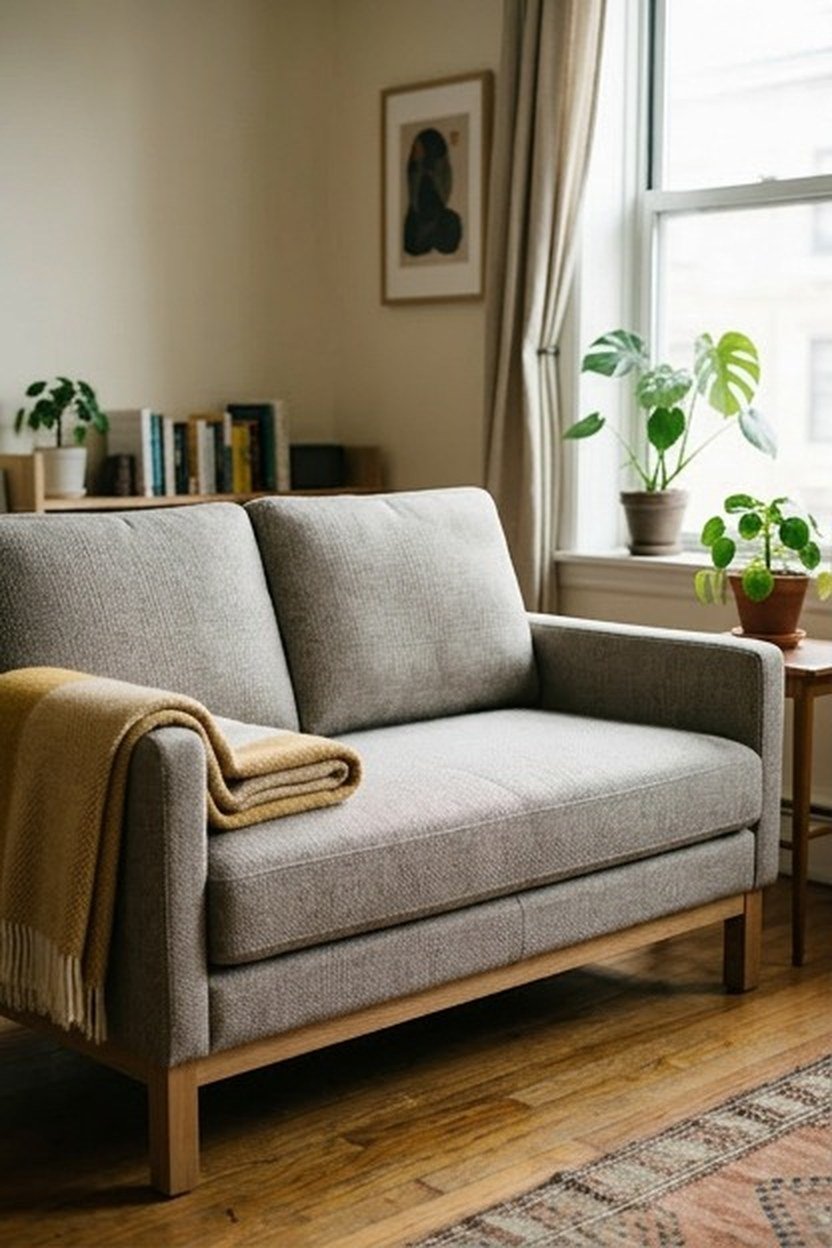
A modern slim-profile sofa bed avoids the bulky, uncomfortable reputation of older sofa bed designs, using a thinner mattress and simplified folding mechanism that converts more easily between sofa and bed configurations. This improved design directly addresses the transformation-ease concern raised at the start of this guide, since a sofa bed nobody actually wants to convert defeats its entire purpose.
Testing the actual fold-out mechanism in person before purchasing, rather than relying on product photos alone, reveals whether a specific model’s transformation genuinely takes the quick, easy process manufacturers often claim. Reading detailed customer reviews that specifically mention the folding experience, rather than only reviews about initial comfort, gives a more honest picture of daily usability.
Choosing a sofa bed with a genuinely comfortable mattress, rather than treating the sleeping function as secondary to the sofa’s daytime appearance, matters if the piece will serve as your actual primary bed rather than an occasional guest bed. A beautiful sofa with an uncomfortable pull-out mattress fails at half its intended function.
Sofa Bed Mattress Thickness And Comfort
Sofa bed mattresses have historically been thinner than standard mattresses to accommodate the folding mechanism, though newer designs have improved this considerably with better foam and innerspring options specifically engineered for sofa bed use. Checking a specific model’s mattress thickness and construction, rather than assuming all sofa beds offer similar comfort, helps set realistic expectations before purchase.
12. Rolling Kitchen Island For Extra Counter Space
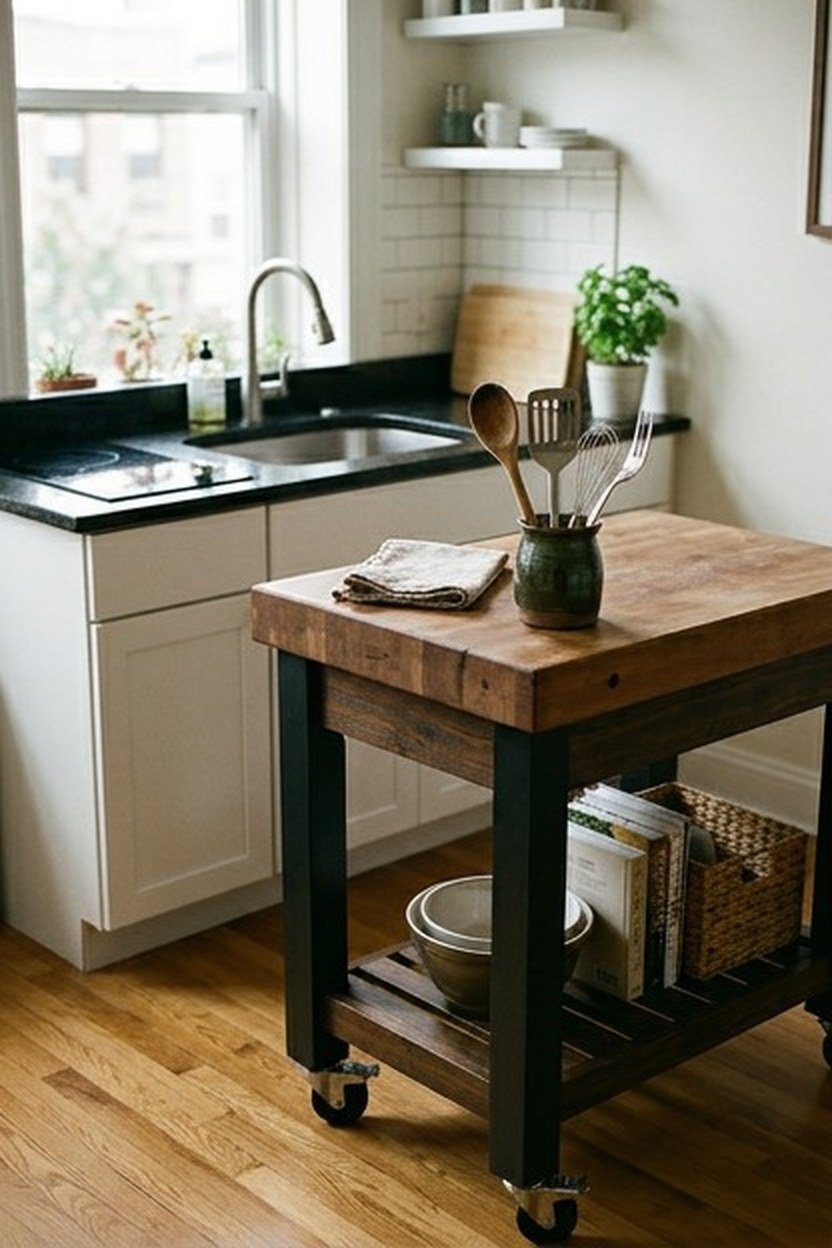
A rolling kitchen island adds genuine counter space and storage to a small studio kitchen without any permanent modification, and its mobility means it can be pushed against a wall when not in active use. This idea directly addresses one of the most common studio complaints, since built-in counter space is often genuinely insufficient for real cooking.
Choosing an island with built-in storage, whether open shelving, drawers, or a combination, maximizes the value of the additional footprint the island introduces into the room. A butcher block or other durable work surface on top makes the island genuinely useful for food preparation rather than purely decorative counter space. This dual function of storage and usable surface matters more than choosing an island based on appearance alone.
Because a rolling kitchen island occupies floor space even when pushed against a wall, measuring your kitchen area’s actual available footprint before purchase confirms the island will not create a circulation problem in an already tight space. This measurement consideration matters more in a studio kitchen than it would in a larger, separate kitchen room. A too-large island can create more problems than the additional counter space solves.
Locking Wheels On A Rolling Kitchen Island
Choosing a rolling island with locking caster wheels prevents unwanted movement while actively using the surface for food preparation, a genuine safety and convenience consideration for a piece meant to move between storage and active use positions. This small hardware detail is worth confirming before purchase, since an island that shifts unexpectedly during use undermines its function as a stable work surface. Testing the lock mechanism in person, if possible, confirms it holds securely under real pressure.
13. Behind-The-Door Storage Racks
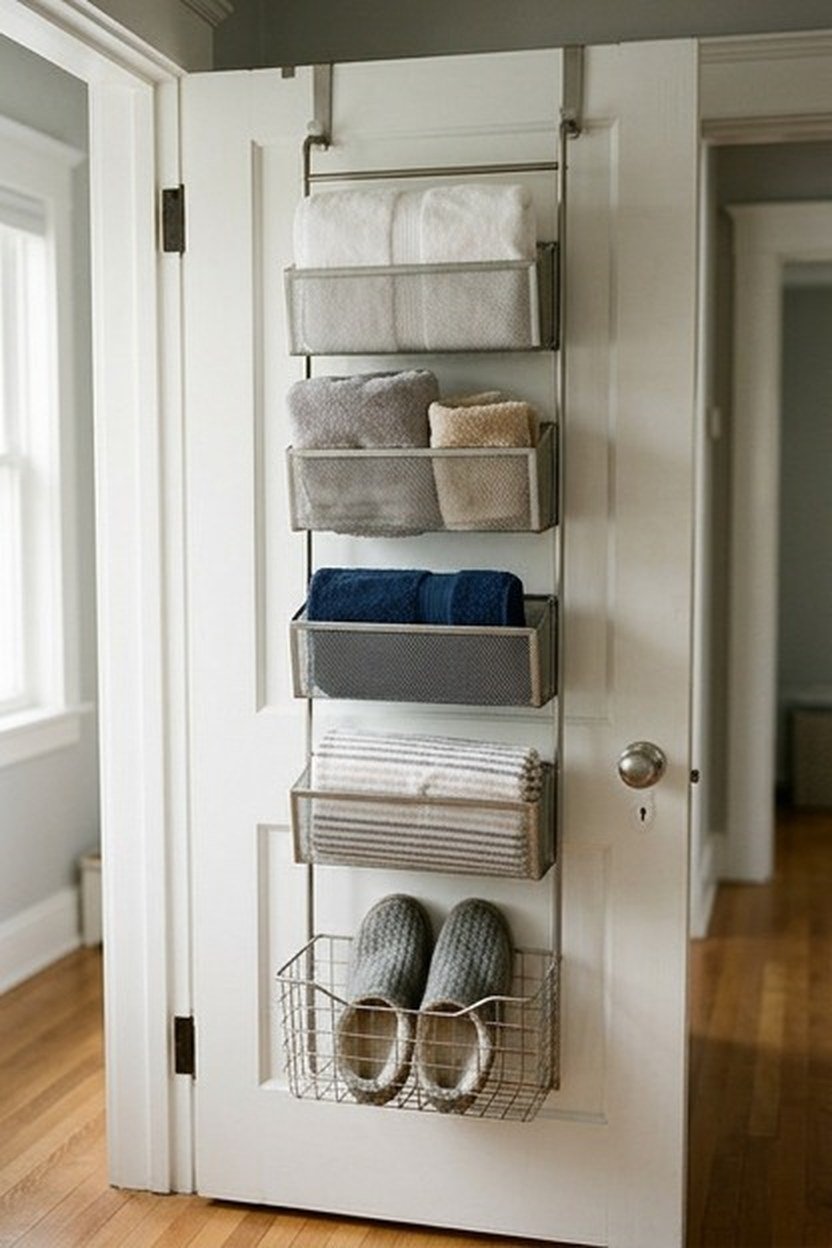
Behind-the-door storage racks, whether for shoes, pantry items, or bathroom supplies, use the otherwise entirely wasted space behind any door in a studio apartment, adding meaningful storage capacity without consuming any additional floor space. This idea works in closets, the pantry area, or even a bathroom door, making it one of the more versatile space saving additions across multiple areas of a small studio. This storage type typically installs without any tools, simply hanging over the top of a standard door.
Choosing a rack sized appropriately for the specific door and door swing clearance prevents the rack from interfering with the door’s normal function or catching on the door frame when closing. Measuring the door’s actual thickness and the rack’s mounting depth before purchase avoids this common compatibility issue.
Because these racks hang from the door itself rather than a wall, choosing a genuinely sturdy rack construction matters given the repeated stress of the door opening and closing throughout daily use. A flimsy rack that sags or falls off within a few months of regular door use fails at providing the storage capacity it promised.
Weight Limits For Door-Mounted Storage
Most behind-the-door racks specify a maximum total weight capacity, and exceeding this limit risks the rack pulling away from the door or the door hinges experiencing excessive strain from the added weight. Checking this weight rating before loading the rack heavily, particularly with denser items like canned goods or heavier shoes, protects both the rack and the door itself.
14. Corner Shelving Unit For Unused Corner Space
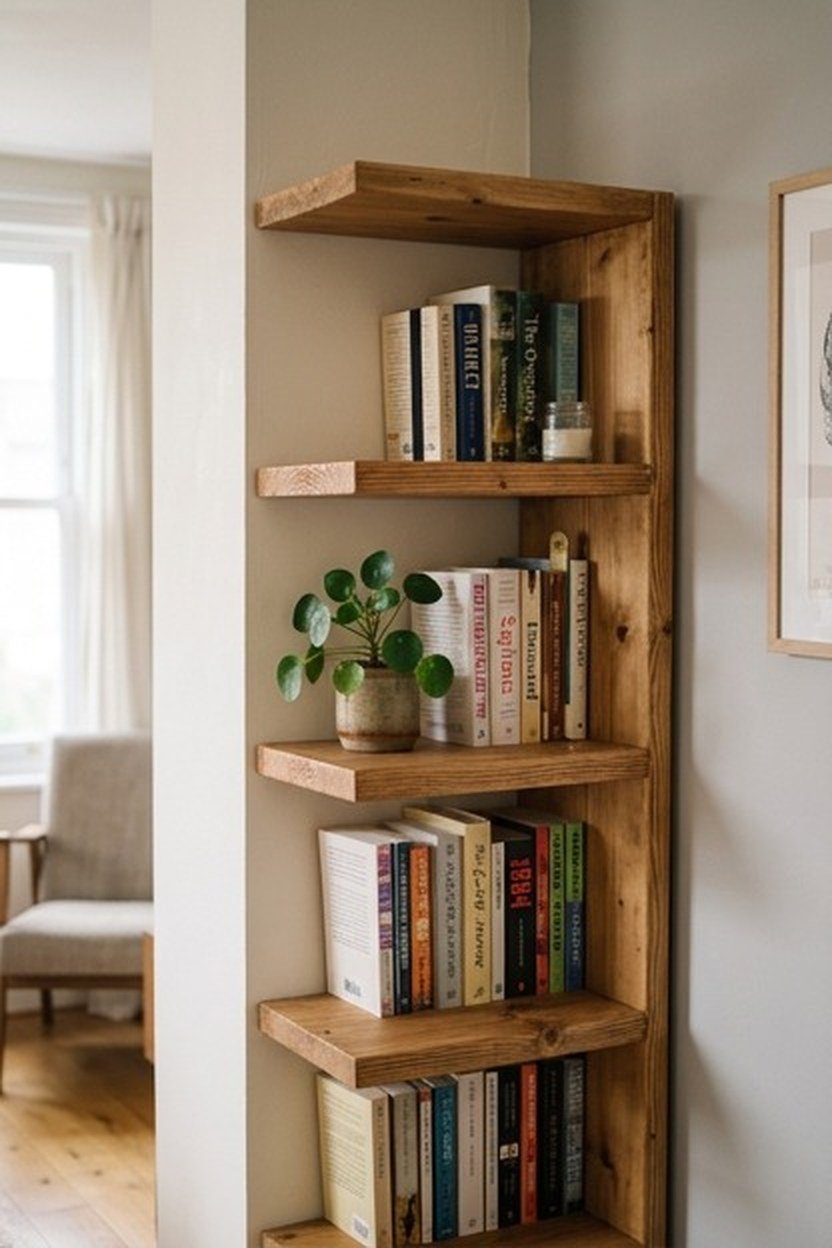
A corner shelving unit, specifically designed to fit into a room’s corner rather than along a flat wall, uses space that standard rectangular furniture typically leaves entirely empty. This idea suits any studio with underutilized corners, which describes nearly every small apartment layout given how furniture is typically arranged along flat walls. Corner shelving can hold books, decorative items, or additional storage bins depending on the specific unit’s design.
Choosing a corner unit with adjustable shelf heights, similar to the adjustable shelving principle discussed elsewhere in this guide, allows the storage to adapt as your specific items and needs change over time. Measuring the corner’s actual available depth and height before purchasing ensures the unit fits properly without protruding awkwardly into the room’s usable floor space.
Because corner units are a specialized furniture category, the selection available at any given style or price point tends to be more limited, so starting your search earlier helps ensure you find a model that suits your aesthetic. This narrower selection is worth planning around rather than discovering after already committing to a broader room design. Shopping specifically for corner pieces, rather than assuming standard stores stock many options, saves time.
Lighting A Corner Shelving Unit
Adding a small clip-on or battery-powered light to a corner shelving unit improves visibility for whatever is stored or displayed there, particularly important since corners often receive less natural light than the room’s central areas. This small addition is worth considering for any corner unit holding items you actually want to see and access easily, rather than purely out-of-sight storage.
15. Fold-Flat Chairs For Extra Seating On Demand
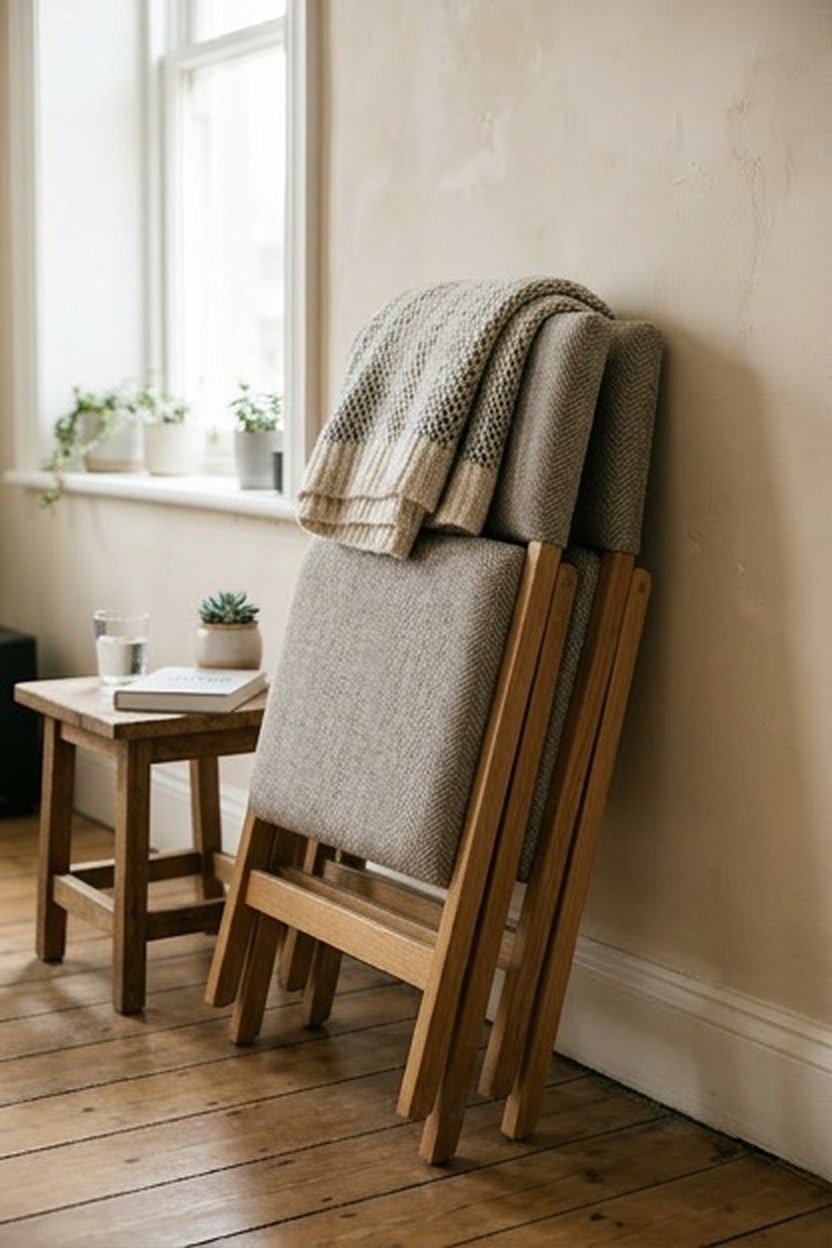
Fold-flat chairs provide genuine additional seating for guests without requiring permanent floor space when not in use, since they store flat in a closet or even behind a larger piece of furniture like a sofa or bed. This idea suits any studio that occasionally hosts more guests than the everyday furniture comfortably seats.
Choosing fold-flat chairs with a genuinely comfortable seat and back, rather than the most minimal, purely functional folding chair design, ensures guests are not stuck with uncomfortable seating during a longer gathering. Upholstered folding chairs, though pricier than basic metal folding chairs, offer meaningfully better comfort for anyone sitting in them for an extended period.
Storing fold-flat chairs somewhere genuinely accessible, rather than in a deep closet requiring other items to be moved first, ensures they actually get deployed when needed rather than being skipped in favor of guests sitting on the floor. This accessibility consideration matters as much as the chairs’ own design for whether this space saving solution actually gets used in practice. Planning a specific, easy storage spot for these chairs before purchase completes the whole setup.
Matching Fold-Flat Chairs To Your Existing Furniture
Choosing fold-flat chairs in a material or color that at least loosely coordinates with your primary seating furniture keeps impromptu extra seating from looking mismatched when deployed for guests. This coordination does not need to be an exact match, but avoiding a jarring contrast makes the temporary seating solution feel more intentional.
What Furnishing A Tiny Studio Actually Costs
The cost of furnishing a studio with genuinely space saving furniture ranges enormously, from built-in pieces like a Murphy bed or wall-mounted desk to simpler additions like nesting tables or storage ottomans. Smaller, affordable pieces deliver meaningful space savings without a large upfront investment, while structural additions cost more but deliver a bigger transformation. Understanding where your budget fits helps prioritize which of the fifteen ideas above matter most for your studio.
Starting with the more affordable, easily implemented ideas lets you test which specific space saving strategies genuinely improve your daily life before committing to a larger investment like a Murphy bed or loft bed. A storage ottoman, nesting tables, and behind-the-door racks together cost relatively little and can be assembled within a single weekend. Save the larger structural pieces for a second phase once you understand your studio’s specific needs more precisely.
| Idea | Typical Cost Range | Installation Effort |
|---|---|---|
| Storage ottoman | $80 to $250 | None |
| Nesting side tables | $60 to $200 | None |
| Behind-the-door rack | $20 to $60 | Minutes |
| Fold-down wall desk | $150 to $500 | Professional recommended |
| Murphy bed system | $800 to $3,000 | Professional required |
Budgeting for this project in phases, smaller furniture first and larger built-in pieces second, keeps the whole process financially manageable and lets you confirm which strategies actually suit your habits before spending more. Many of the most successfully furnished tiny studios were built up gradually rather than fully furnished in a single shopping trip.
Common Mistakes When Furnishing A Tiny Studio
The most common mistake is buying furniture based on how it looks in a showroom or online photo without measuring your actual studio dimensions first, resulting in pieces that are too large once they arrive. Measuring your space thoroughly, including doorway widths, before any purchase prevents this expensive and disappointing mistake.
A second common error is choosing multi-function furniture with a transformation process that is too difficult or time-consuming to actually use regularly, resulting in the piece getting stuck in one configuration and losing its space saving benefit entirely. Testing the fold or conversion mechanism in person, or reading detailed reviews specifically about ease of use, before purchase prevents this common disappointment. A beautiful convertible piece that never actually gets converted delivers none of its intended value.
The third mistake is filling every available surface and corner with furniture simply because the space exists, rather than leaving genuine breathing room that keeps a small studio from feeling claustrophobic. Restraint in how much furniture you actually introduce, even when clever space saving pieces make more storage technically possible, matters for how the room actually feels to live in day to day. A studio furnished to its absolute capacity often feels more cramped than one with a few pieces removed.
Recovering From An Overfurnished Studio
If an existing studio feels cluttered despite genuinely space saving furniture choices, the fix usually involves removing one or two pieces entirely rather than reorganizing everything within the same footprint. Identifying which piece gets used least, then finding it a new home outside the apartment, often solves the crowded feeling faster than any reorganization effort. A slightly emptier studio with room to move almost always feels better than one packed with every space saving idea in this guide simultaneously.
Conclusion
Furnishing a tiny studio apartment successfully comes down to choosing pieces that genuinely earn their square footage, whether through multi-function design, vertical space use, or a footprint smaller than their function suggests. The fifteen ideas in this guide range from simple, affordable additions like nesting tables to substantial investments like a Murphy bed, giving you a realistic path regardless of budget or specific layout. Start with the pieces that address your studio’s biggest daily friction points, whether that means sleeping, working, or entertaining guests.
Whichever furniture you choose first, prioritize genuinely easy daily transformation over an impressive-sounding feature list, since a convertible piece too difficult to actually convert delivers none of its promised space savings. Build your studio’s furniture gradually if budget requires it, testing smaller changes before committing to larger, more permanent investments. A studio furnished with a few well-chosen, genuinely functional pieces beats one crowded with every space saving idea available.
Frequently Asked Questions
What is the single best space saving furniture for a tiny studio? A Murphy bed delivers the largest single space savings by freeing an entire bedroom’s footprint during the day, though it requires the biggest upfront investment and professional installation.
Are sofa beds comfortable enough for daily sleeping? Modern slim-profile sofa beds with quality mattresses have improved considerably, though testing the specific model’s mattress and fold mechanism in person helps set realistic comfort expectations.
How do I know if furniture will fit through my studio’s doorway? Measuring your doorway, hallway, and any stairwell width before ordering larger pieces like a Murphy bed frame prevents the frustrating discovery that furniture cannot reach the room.
Is it worth hiring a professional to install a Murphy bed? Yes, since Murphy beds involve genuine weight-bearing hardware that needs secure anchoring to wall studs, and professional installation protects against a real safety concern.
What is the cheapest way to add storage to a tiny studio? Under-bed storage bins and behind-the-door racks use already-wasted space and cost relatively little, making them among the most affordable space saving additions available.
How much floor space does a Murphy bed actually save? A Murphy bed can free an entire bedroom’s worth of floor space during the day, since the bed itself folds flat into a wall-mounted cabinet when not in use.
Should I buy multi-function furniture for every piece in my studio? Not necessarily, since some furniture serves its single purpose well enough that a multi-function alternative adds unnecessary cost or complexity without meaningful benefit for your specific habits.