
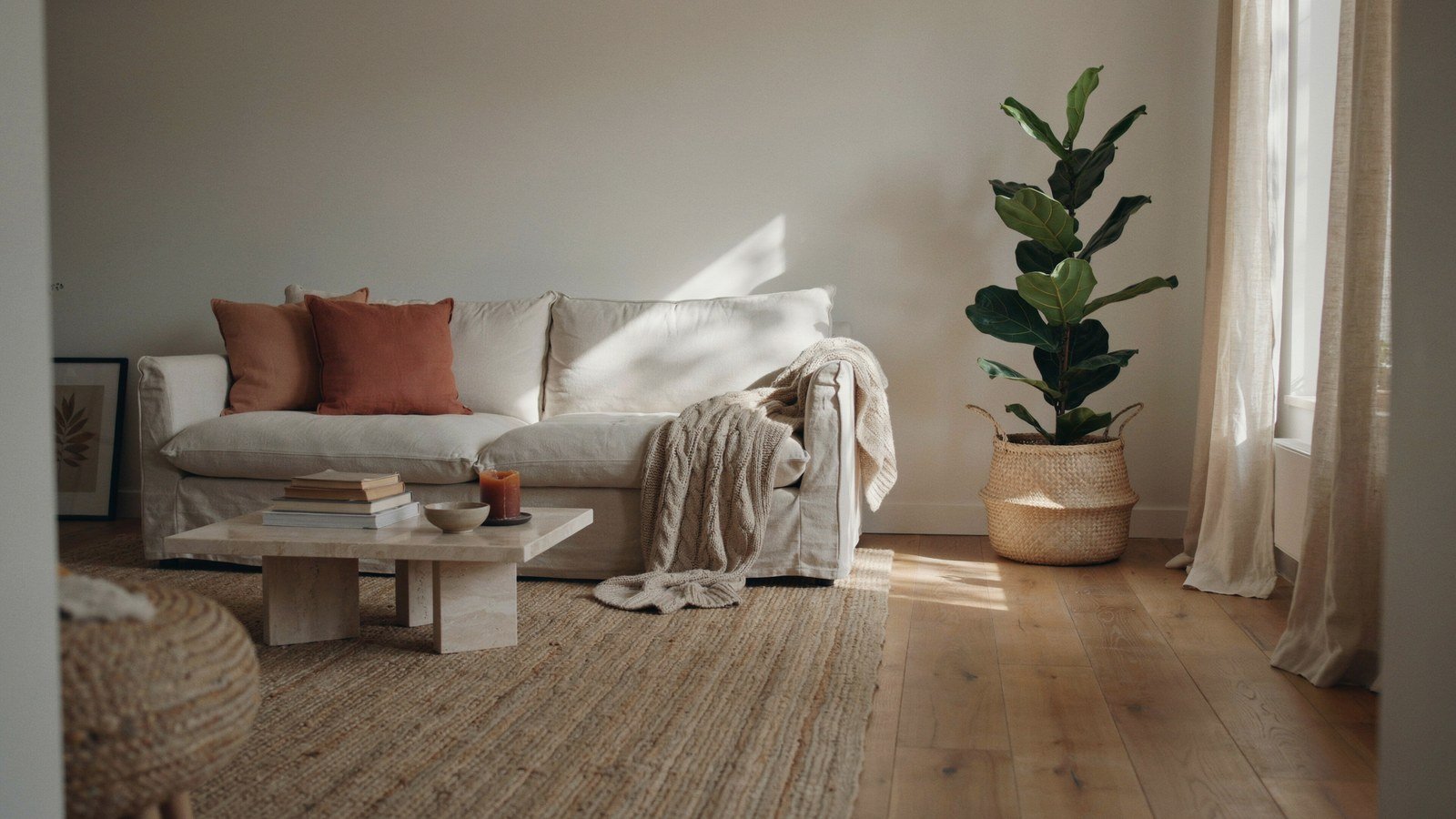
Modern boho works when the texture does the talking and the colour stays quiet. Cream, clay, oatmeal and wood, layered until the room has depth without a single bright shade in it. The failure mode is a room that looks like a furniture showroom with a plant in it.
I got this wrong for a year by buying the right objects and arranging them badly. The rug was too small, the sofa was against the wrong wall, and every texture was the same weight. Moving three things fixed more than the previous six purchases had.
Below are fifteen layouts and arrangements that make a neutral living room feel like a sanctuary rather than a catalogue. Most are about position rather than purchase. The ones that cost money are marked clearly at the end.
What Makes A Neutral Room Feel Like A Sanctuary
A neutral room needs texture in place of colour, and the texture has to vary in weight. Bouclé, jute, linen, rattan and raw timber all sit in the same palette while feeling completely different underfoot and under hand. That variation is what stops beige becoming bland.
The second requirement is layers at different heights. A room with everything at seat level reads as flat, however good the individual pieces are. Something low, something at eye level and something overhead gives the space depth.
The third is restraint about pattern. Modern boho is often shown with heavy pattern, and in a neutral scheme that pattern should be woven rather than printed. A flatweave rug and a slubby linen do more than any printed cushion.
| Layer | Modern Boho Choice | What Flattens It |
|---|---|---|
| Floor | Large jute or wool rug, layered | A small rug floating mid room |
| Seating | Low sofa in bouclé or linen | High backed formal upholstery |
| Texture | Three or more distinct weaves | One fabric repeated everywhere |
| Wood | One warm timber, repeated | Three timbers competing |
| Greenery | Two or three large plants | Many small pots on every surface |
| Lighting | Three warm sources, none overhead | A single ceiling pendant |
How To Read Your Living Room Before Moving Anything
Find the natural focal point first, which is usually a window, a fireplace or whichever wall you see from the door. Everything else arranges around it, and fighting it produces a room that never quite settles. Most awkward living rooms are arranged against their own geometry.
Then map the routes people actually walk. A living room usually has two or three paths through it, and furniture placed across one of them gets bumped daily. Watch for a week before committing to a layout.
Finally, note where the light falls in the evening, since that is when a living room does most of its work. A sanctuary is a room you want to sit in after dark, and that is decided by lamps rather than by daylight. Sit in the room after dark before you decide anything.
1. Float The Sofa To Face The Window

Pushing the sofa flat against the longest wall is the default and it rarely produces the best room. Floating it so it faces the window or the fireplace creates a defined seating area rather than a perimeter. The room gains a centre.
You need around 45cm behind the sofa for this to read as deliberate rather than accidental. Less than that looks like the sofa was pulled out for cleaning. More than a metre and you have created a corridor.
A console table behind a floated sofa turns the gap into useful space. It holds lamps, gives you sockets away from the wall and finishes the back of the sofa, which is otherwise a large blank surface. It is the piece that makes a floated sofa look planned rather than pulled out.
When The Room Is Too Narrow
Rooms under about 3.5 metres wide usually cannot take a floated sofa without blocking a walkway. In that case, put the sofa against the wall and create the centre with the rug instead. The rug does the same job.
Angle a single armchair rather than the whole arrangement. One piece turned off the grid breaks the boxiness of a narrow room without costing any circulation space. It is the cheapest fix on this list.
2. Buy The Rug Two Sizes Larger Than Feels Right
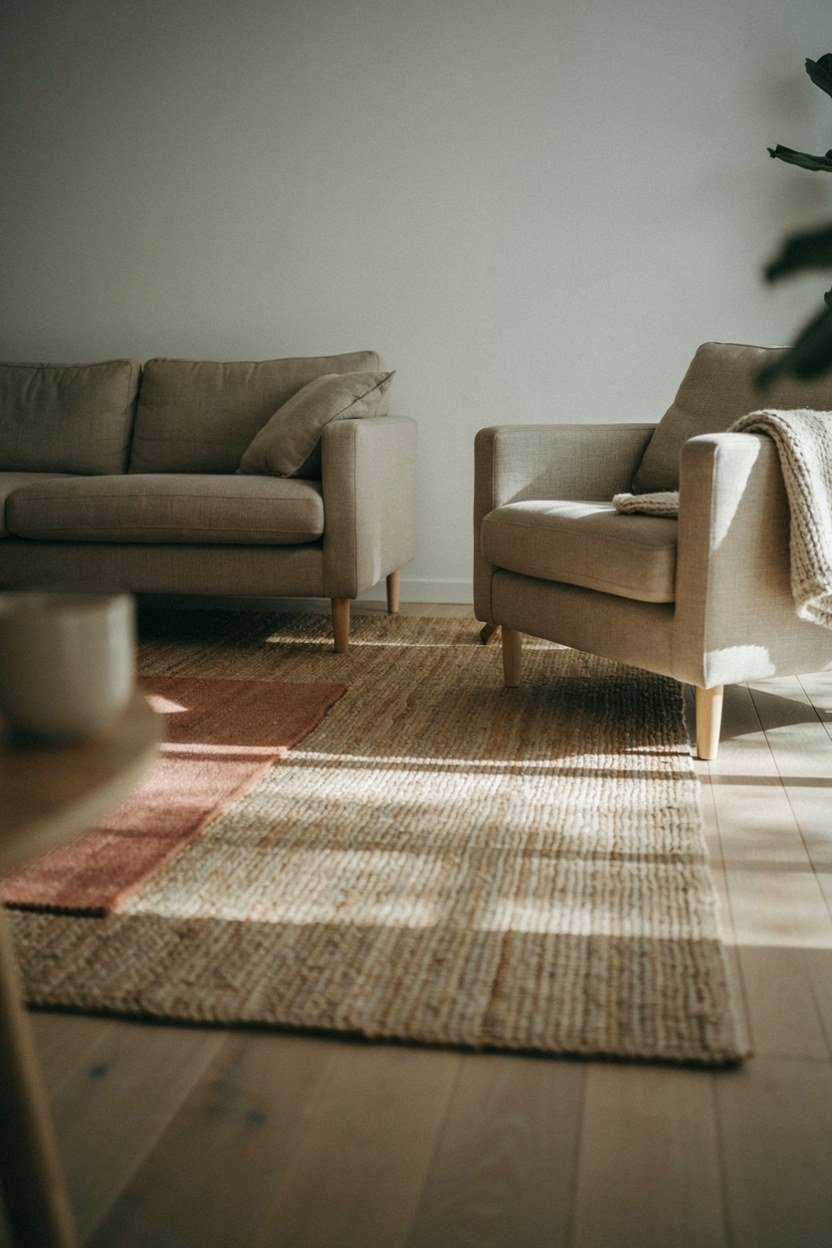
The most common mistake in a boho living room is a rug that is too small. A rug that only reaches the coffee table makes the furniture look like it is floating and the room look smaller. Go larger than seems sensible.
The target is all four sofa legs on the rug, or at minimum the front two legs of every seat. That single rule pulls the arrangement together and defines the seating zone. It is the difference between a room and a collection of furniture.
In a rented flat where a large rug is not practical, layer two smaller ones instead. A jute base with a wool or vintage rug on top gives you the coverage and the texture in one move. Two rugs also travel better than one enormous one.
Layering Rugs Properly
Put the flatter, coarser rug underneath and the softer one on top. A jute or sisal base with a wool or kilim layer is the reliable combination. The reverse feels wrong underfoot and the top rug slips.
Offset the top rug rather than centring it. A layered pair aligned exactly looks like a mistake, while a deliberate offset of 20 or 30cm reads as intentional. Let the base show on two sides.
3. Keep Seating Low And Deep
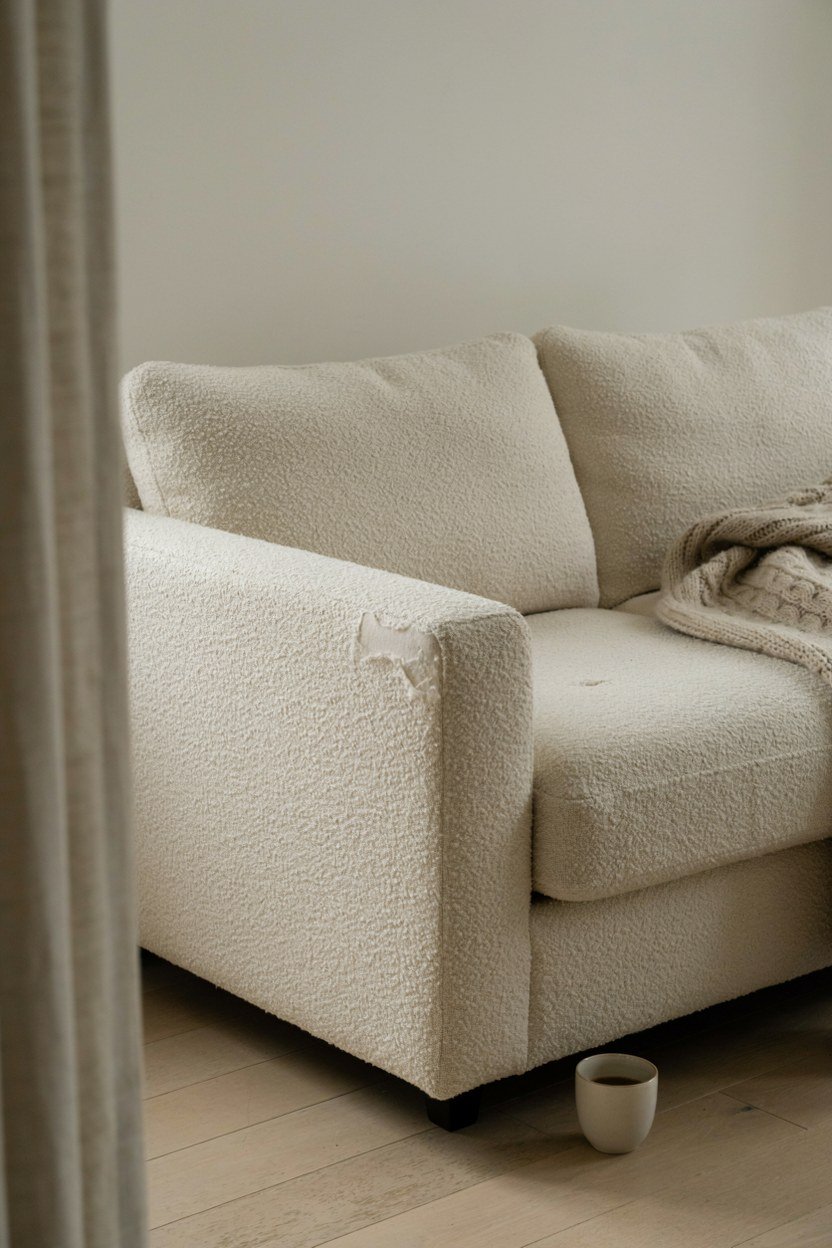
Low furniture is a defining feature of the style and it also makes ceilings feel higher. A sofa with a seat height around 40cm and a generous depth reads as relaxed in a way a formal upholstered piece never will. Comfort is part of the aesthetic here.
Depth matters more than length. A deep sofa invites people to sit back and settle, which is the entire point of a sanctuary. Around 95cm to 105cm of depth is the range that works without swallowing a small room.
Add a large cushion or two rather than buying an enormous sofa. Depth can be adjusted with cushions, while a sofa that is too big for the room cannot be adjusted at all. Cushions are also the cheapest thing in the room to change your mind about.
Choosing The Upholstery
Bouclé, heavy linen and cotton canvas all suit the palette and all wear differently. Bouclé is warm and catches on claws and zips, linen creases immediately and looks better for it, canvas is the most durable and the least interesting. Ask for a sample of each and rub it hard before deciding.
Choose a removable cover if the room gets real use. A neutral sofa in a household with children or animals needs washing, and a fixed cover turns every spill into a permanent decision. Check the covers are actually washable rather than dry clean only.
4. Build The Palette From Three Neutrals
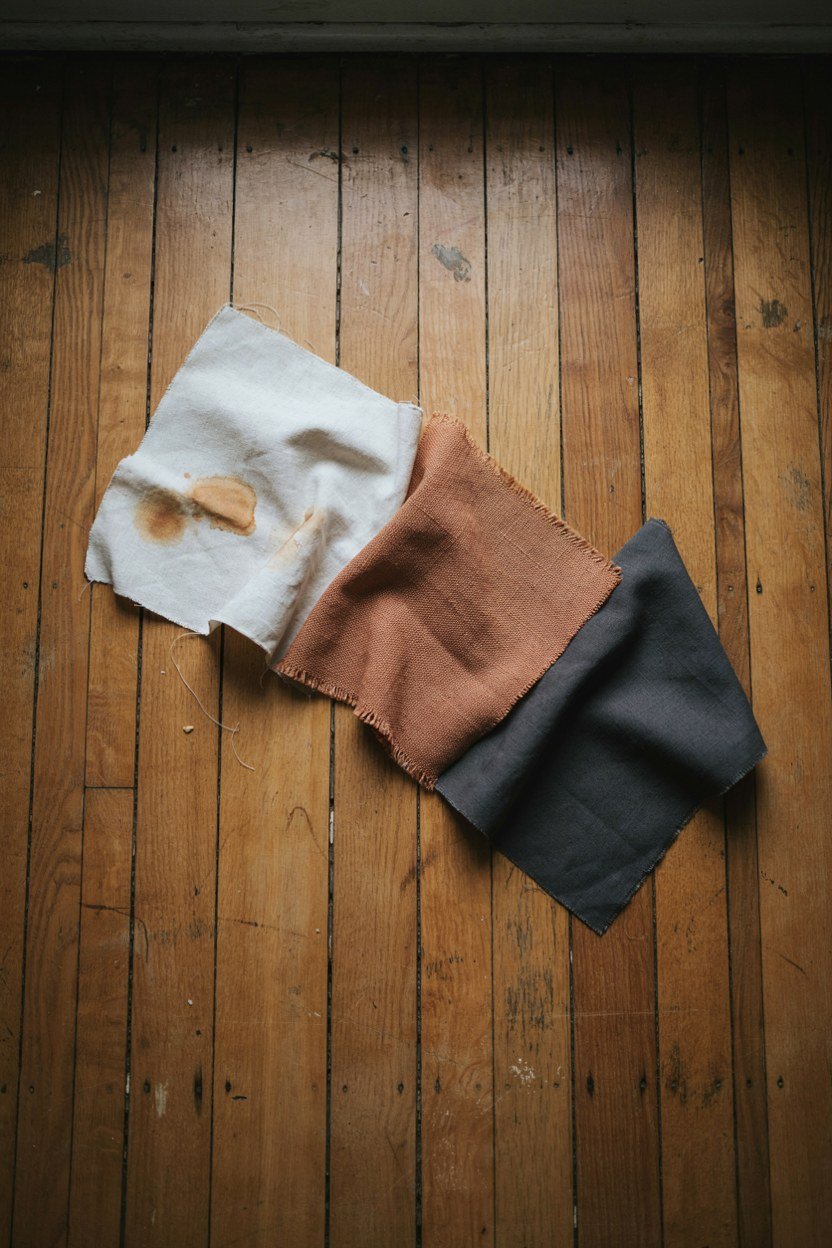
Three neutrals is the whole scheme: a pale base, a mid clay or oatmeal, and one darker grounding tone. Every object in the room should sit in one of those three. This is what keeps a textural room from becoming visual noise.
The darker tone is the one people skip and it is the one that stops the room floating. A charcoal cushion, a dark timber stool or a black metal frame gives the eye a full stop. Without it, everything blurs.
Warm neutrals and cool neutrals do not mix well. Pick a direction, warm or cool, and stay in it. A cool grey sofa in a room of warm clay tones reads as a mistake nobody can quite name.
Testing Neutrals Together
Gather the samples and look at them in one pile rather than separately. Neutrals shift dramatically against each other, and a cream that looked warm alone can look green beside an oatmeal. The pile test takes a minute.
Check them again at night under lamplight. Warm bulbs push every neutral yellower, and a palette chosen in daylight can look muddy after dark. Evening is when the room matters most.
5. Vary The Weave Weight, Not Just The Colour
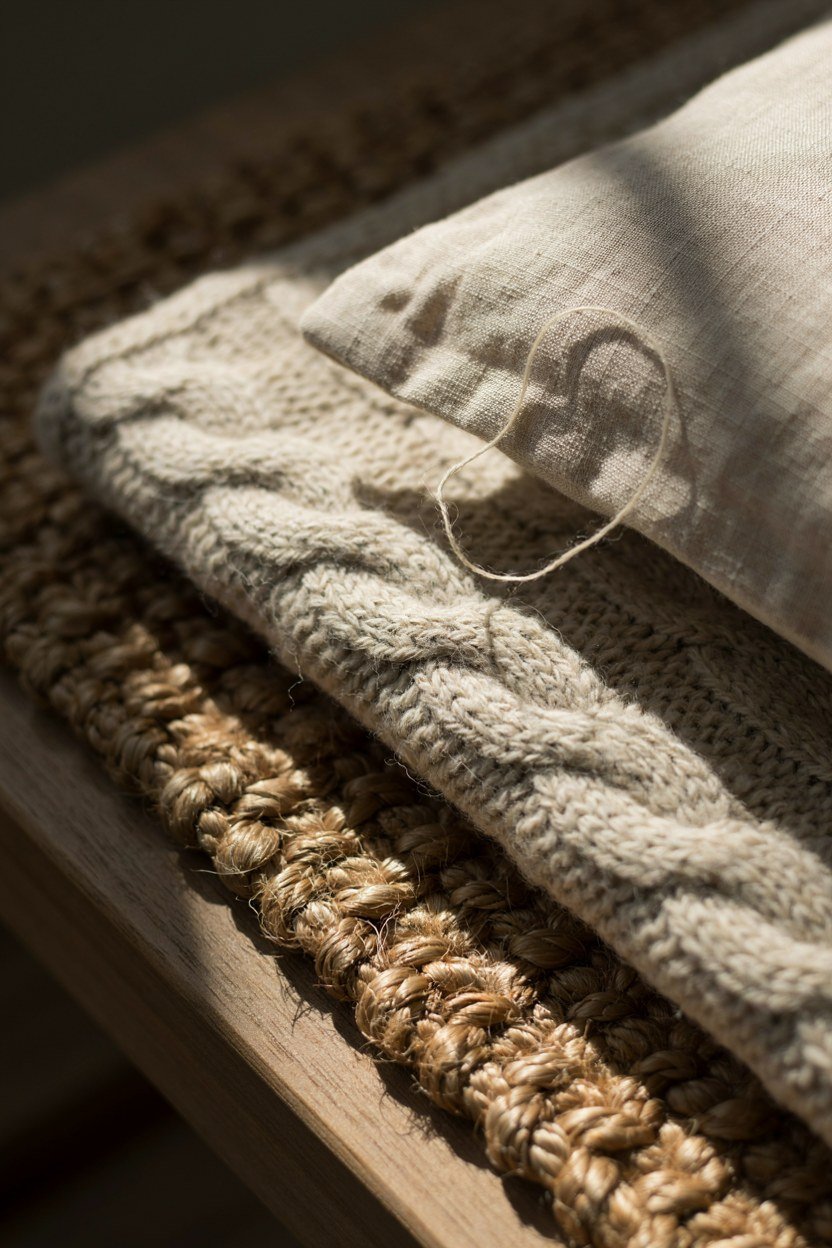
A room with linen cushions on a linen sofa beside linen curtains is technically layered and reads as flat. The variation has to be in the weight and coarseness of the weaves, not only in their tone. Fine against coarse is the contrast that works.
Aim for at least three distinct weights: something fine like linen or cotton, something chunky like bouclé or a heavy knit, and something coarse like jute or rattan. Each one catches light differently. Lay them side by side before buying the third.
Touch is a reasonable test here. If two textiles feel the same when you run a hand over them, they are doing the same job and one of them is redundant. Swap one of them for something coarser and the whole room sharpens up.
The Textures That Do Most Work
Jute and rattan bring the coarsest texture and they are the cheapest to introduce. A jute rug and a rattan basket together shift a room considerably for very little money. Both also age well, softening rather than wearing out.
A chunky knit throw is the second highest return. It adds volume as well as texture, which most flat textiles do not, and it reads as an invitation to sit down. Drape it rather than folding it, since folded throws read as unused.
6. Put Something Large And Green In The Corner
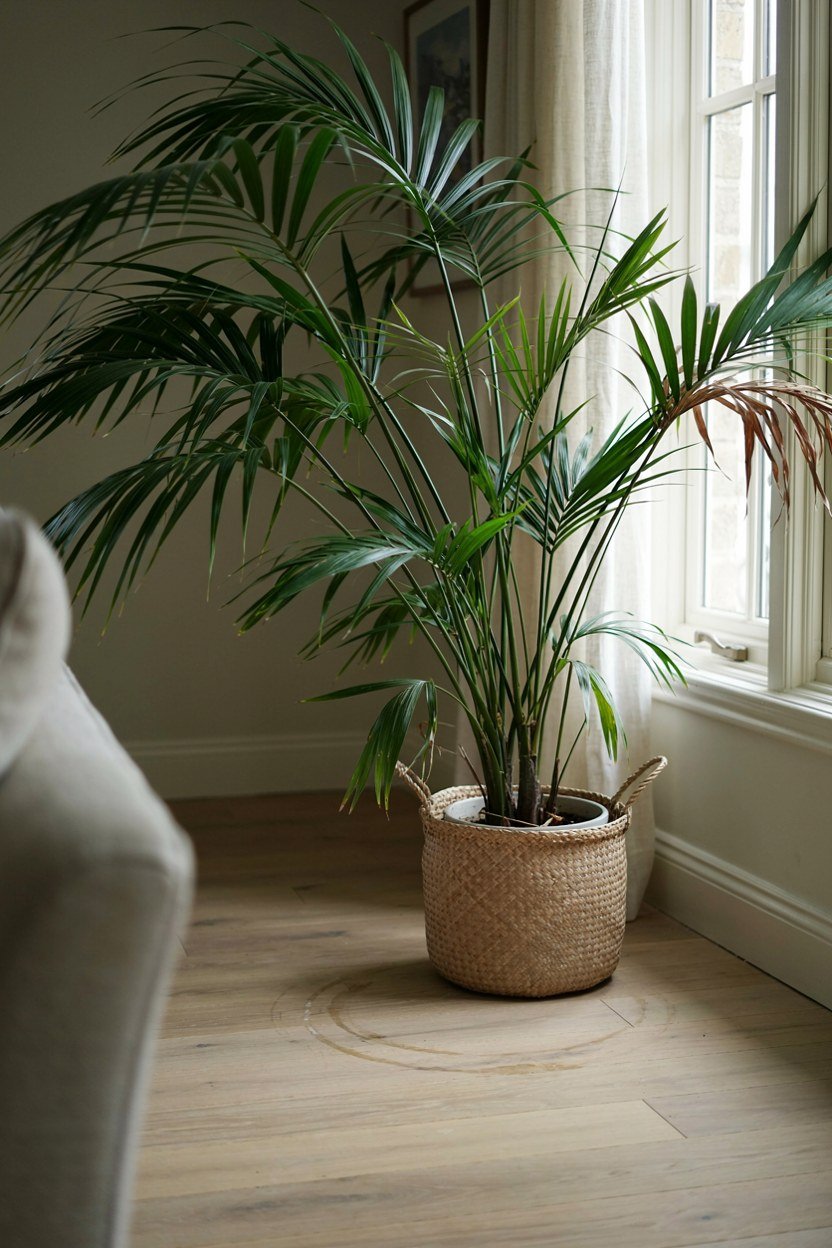
One substantial plant does more for a boho room than a dozen small ones. A fiddle leaf fig, a rubber plant or a large kentia palm gives you height, an irregular shape and a genuine colour without breaking the neutral scheme. Scale is what makes greenery register in a room of soft neutrals.
Choose the corner with the most light and be honest about how much that is. Most living room corners are darker than people assume, and a light hungry plant in a dark corner drops leaves within a season. Measure the hours of direct sun before buying anything expensive.
Put it in a basket or an unglazed pot rather than a decorative planter. The natural material is part of the point, and a plastic pot inside a basket is easier to water than a heavy ceramic. Keep the plastic nursery pot inside so it can be lifted out to drain.
Plants That Survive Real Rooms
A ZZ plant, a snake plant or a kentia palm will all tolerate low light and irregular watering. If the room is genuinely dark, these are the honest choices rather than the ones in the photographs. None of them will thank you for weekly watering either.
Two or three large plants is the ceiling for most living rooms. Beyond that the room starts to read as a conservatory and the individual shapes stop registering. Group them loosely rather than spacing them evenly around the walls.
7. Hang Art High And Leave Space Around It
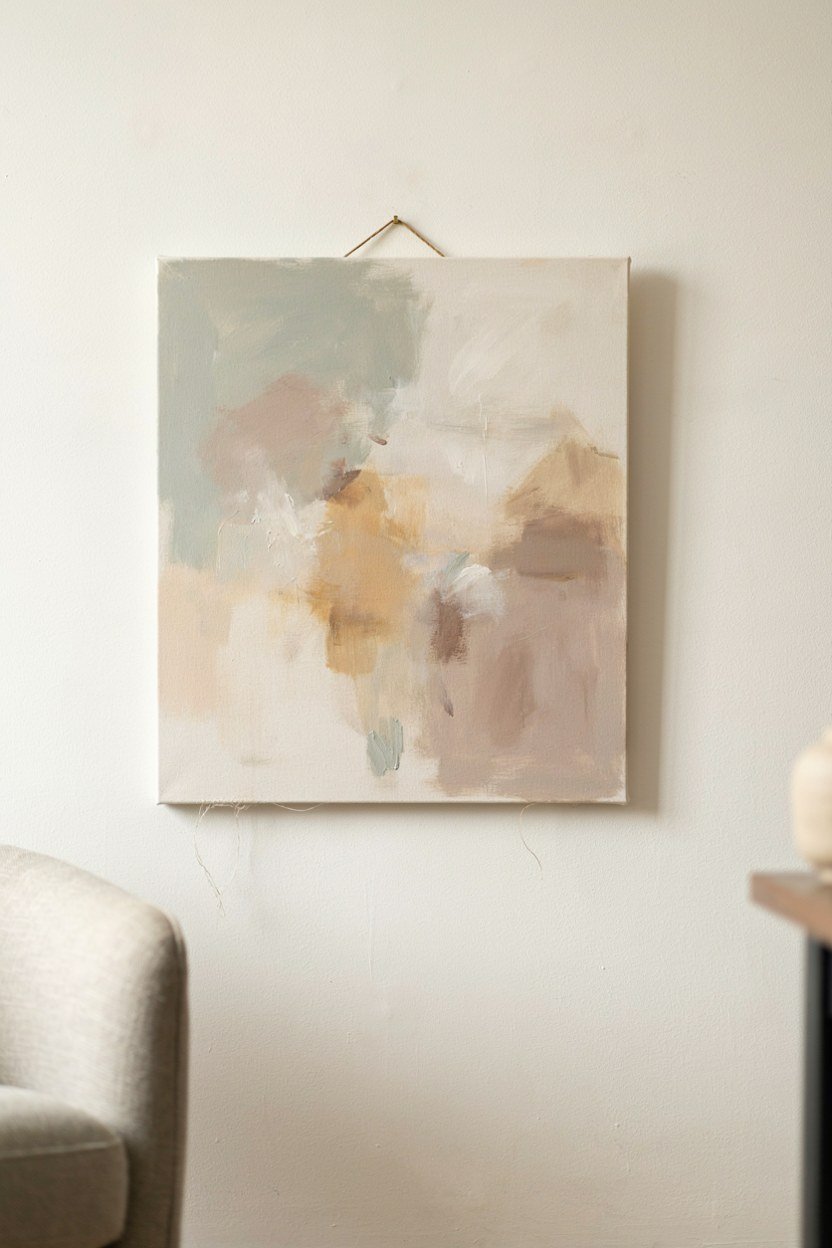
Art in a boho room should be sparse and large rather than dense and small. One or two substantial pieces with generous wall around them read as calm, while a gallery wall of small frames reads as busy. One good piece is worth more here than six modest ones.
Hang the centre at eye level for a seated person rather than a standing one. A living room is looked at from a sofa, and art hung at standing height floats above the sightline all evening. Sit on the sofa and have someone hold it before you drill.
Keep the frames simple and in the palette. Natural oak, black metal or no frame at all. Ornate or gilded frames pull the room towards traditional and away from the intended calm.
Alternatives To Framed Art
A woven wall hanging, a large piece of unframed canvas or a textile pinned to a batten all suit the style better than a print. They also add texture to a wall, which framed glass does not. All three are also considerably cheaper than framed prints of the same size.
A single large mirror in a rattan or plain timber frame does double duty. It bounces light around a neutral room and it counts as one large object rather than a collection. Check what it reflects before fixing it, since a mirror doubles whatever faces it.
8. Use Three Light Sources, None Of Them Overhead
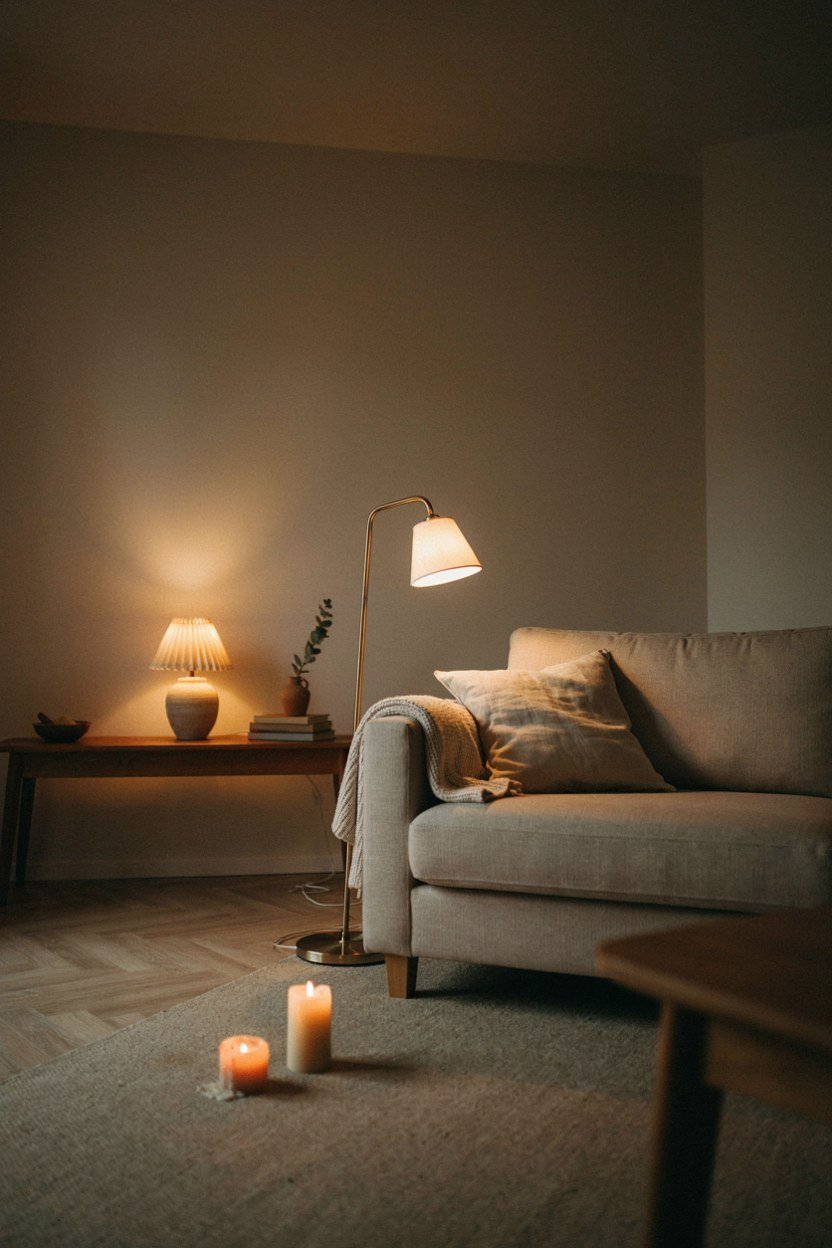
A single ceiling light is the fastest way to make a sanctuary feel like a waiting room. Three sources at different heights, all warm, is the minimum for a living room that works in the evening. This is the change people notice most.
A floor lamp beside the sofa, a table lamp on a console and something low such as a candle or a small lamp on the floor gives you the layers. None of them needs to be expensive. Plug in versions of all three need no electrician at all.
Warm bulbs throughout, around 2700K or lower. Neutral palettes are ruined by cool light more than any other scheme, because they have no strong colour to survive it. Buy them all at once so no odd bulb creeps in later.
Getting Light Away From The Ceiling
If the room only has a central pendant, a plug in floor lamp solves it for very little money. Put the pendant on a dimmer and turn it down to almost nothing rather than switching it off entirely. Run the cable along the skirting rather than across the floor.
A rattan or paper shade on the pendant softens the light and adds texture overhead, which is a layer most rooms miss. It also stops the fitting reading as builder standard. Check the shade clears the bulb properly before fitting it.
9. Add One Curved Piece
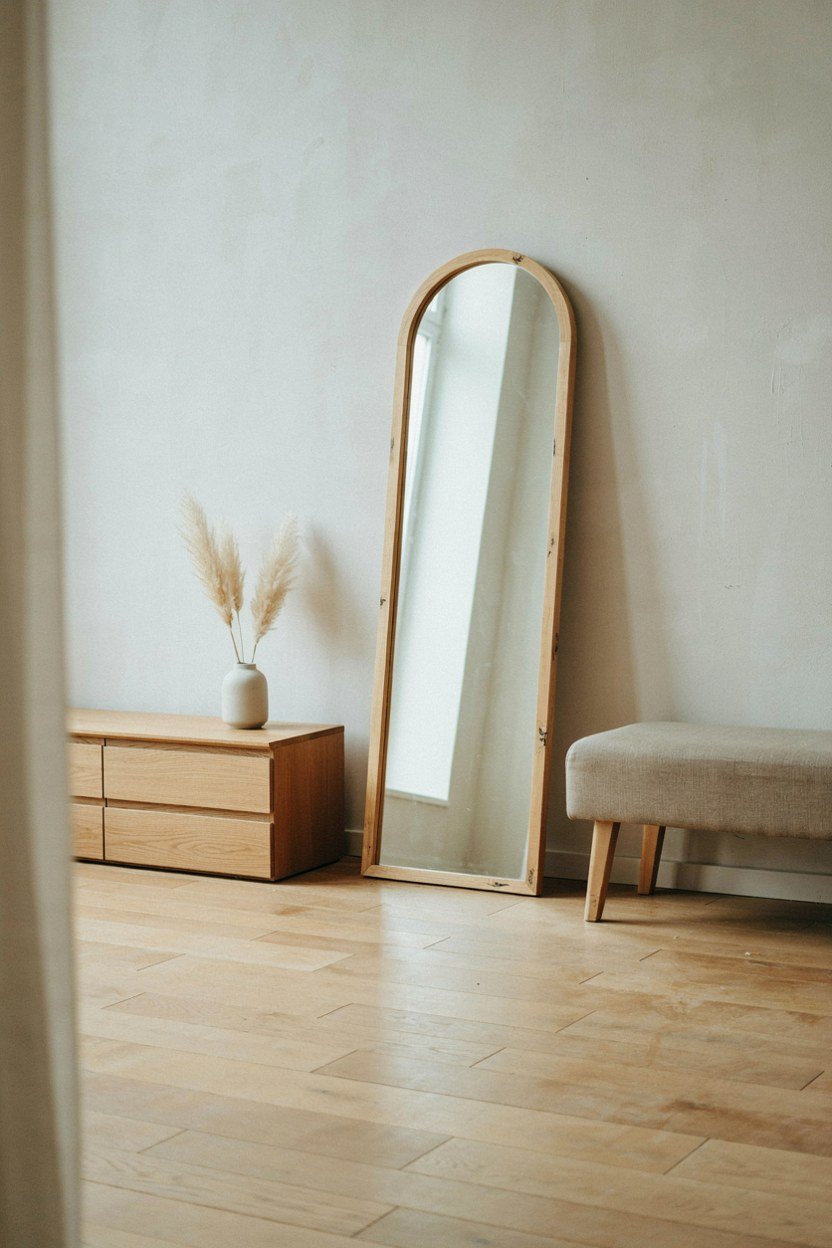
Modern boho leans on organic shapes, and one genuinely curved object stops a room of rectangles feeling rigid. An arched mirror, a round coffee table or a curved armchair all do it. One is enough.
Curves work best when everything around them is straight. A room of curved furniture becomes soft to the point of shapeless, and the individual pieces stop registering. One curve among rectangles reads as deliberate, while four read as a theme.
Put the curve where the eye lands first, usually opposite the door. That position gives it the most work to do and the rectangles elsewhere become the quiet background. That is normally the wall you face as you walk in.
Choosing Between Table And Mirror
A round coffee table is the more useful curve because it also improves circulation. There are no corners to catch a shin, and people can move around it from any angle in a tight room. It also seats more people around it than a rectangle of the same area.
An arched mirror is the cheaper curve and it adds light as well as shape. In a small or dark room, the mirror is usually the better first purchase. Lean it rather than hanging it if the wall is difficult.
10. Make The Coffee Table A Composition
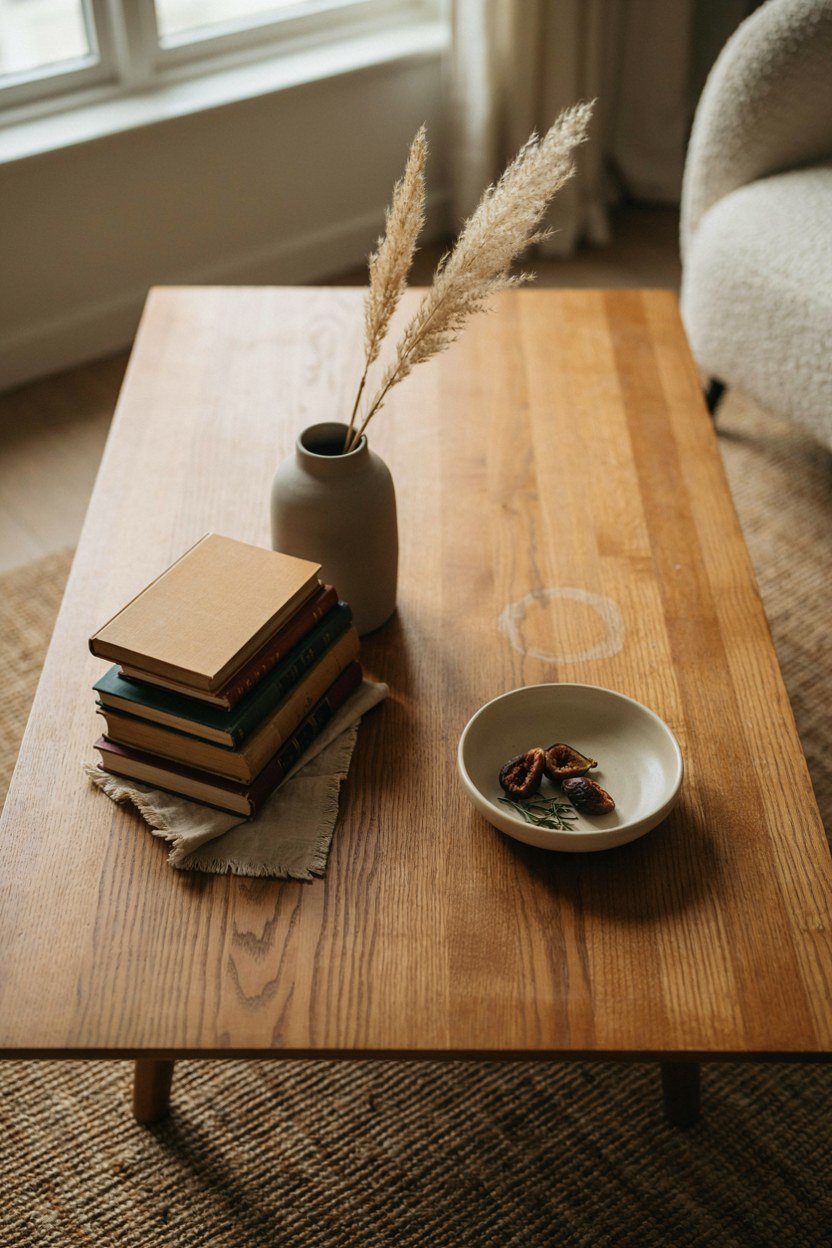
The coffee table is the surface everyone looks at and the one most likely to become clutter. Three objects at different heights is the reliable formula: something flat, something tall and something organic. A stack of books, a vase and a bowl.
Keep at least half the surface clear. A coffee table is a working surface as well as a display, and a fully dressed one becomes annoying within a week. A table you cannot put a mug on stops being furniture.
Use a tray to corral the small things. Remote controls and coasters look accidental loose and deliberate on a tray, and the tray can be lifted off entirely when the table is needed. Choose one in a material already in the room rather than a new finish.
Choosing The Table Itself
A low table suits low seating. If the sofa seat is at 40cm, the table should sit between 35cm and 42cm. A table taller than the seat looks wrong and is awkward to reach across.
Timber, travertine and rattan all work. Glass is the one material that fights this style, because it shows every mark and adds no texture at all. Travertine is heavier than it looks, so check the floor and your back.
11. Dress The Window Without Blocking The Light
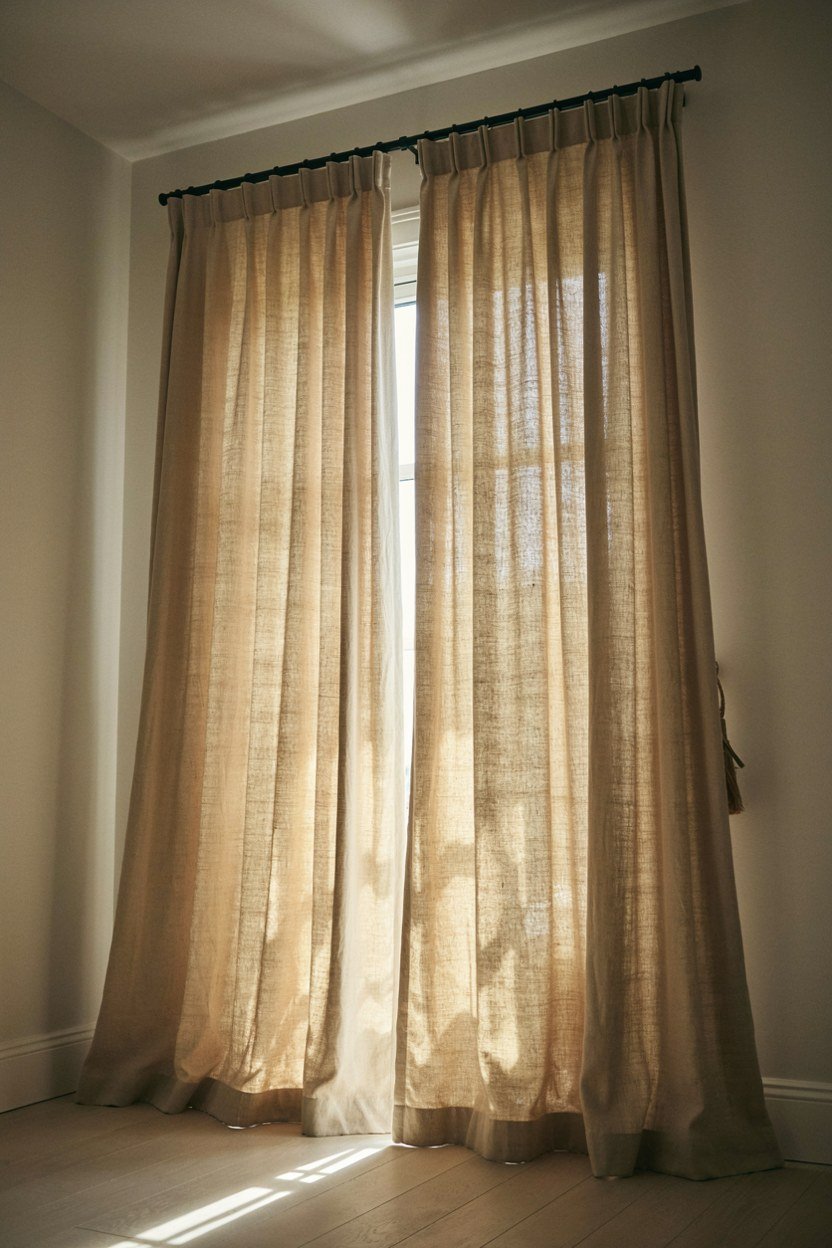
Neutral rooms depend on natural light, so window treatments should filter rather than block. Loose linen curtains hung wide of the reveal give softness without losing daylight. Heavy lined curtains close a room like this down.
Hang the pole close to the ceiling and let the curtains break slightly on the floor. That slight pooling is part of the relaxed look, and pin sharp hems read as formal. Order the drop a couple of centimetres long rather than short.
Skip the pelmet and the tiebacks. Both belong to a more formal style and they add structure where this room wants softness. Let the curtains hang loose and fall where they want to.
If You Need To Block Light
Add a plain roller blind behind the curtains rather than lining them. It keeps the curtains light and gives you blackout when it is needed. The blind disappears when rolled up.
A woven wood blind is the more characterful option and it adds another texture. It filters rather than blocks, so pair it with a curtain if the room needs darkness. It also throws a soft striped shadow across the room in the afternoon.
12. Keep One Surface Completely Empty
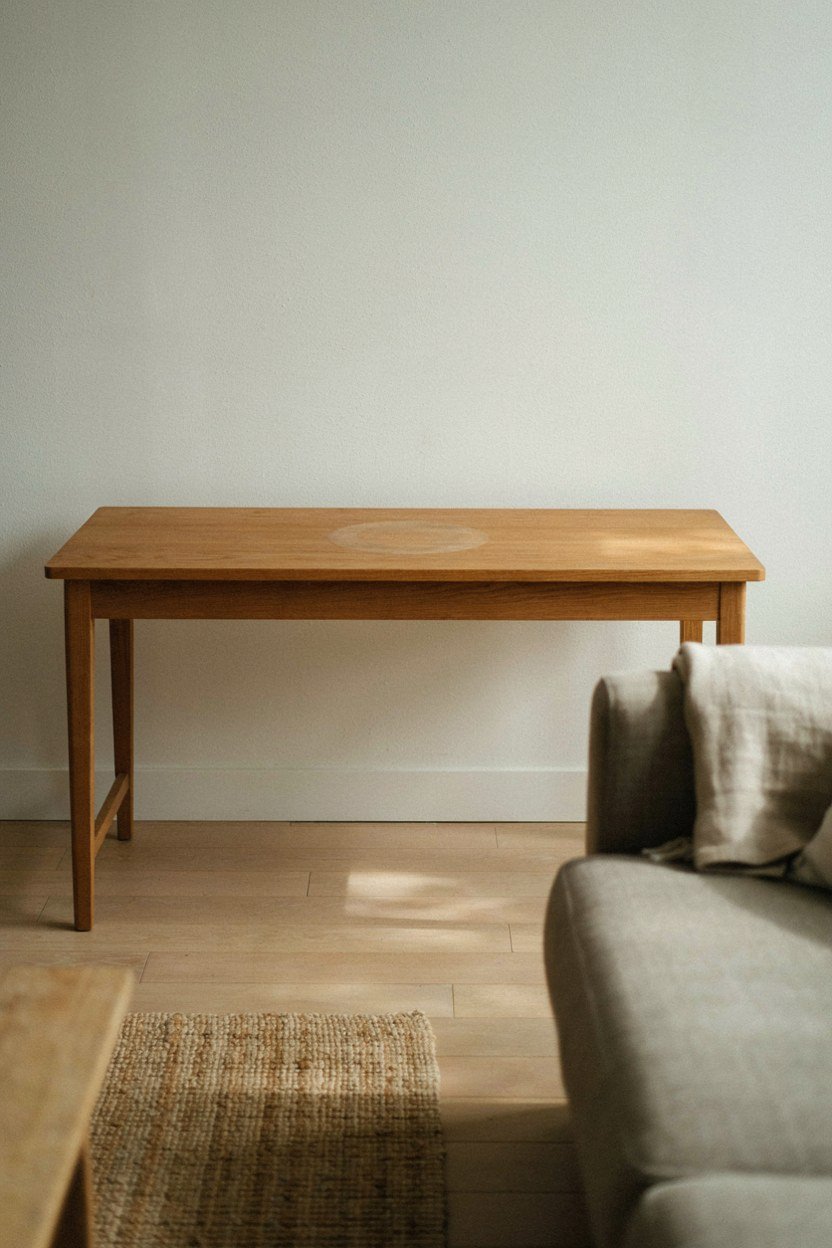
A neutral room fills up quickly because nothing stands out enough to look wrong. One deliberately empty surface, protected, is what keeps the room reading as calm. Usually that is a console top or one end of the coffee table.
Decide which surface it is and defend it. Empty space in a room like this is a design element rather than an oversight, and it needs the same protection as any other decision. Tell whoever else lives there which one it is.
The same applies to walls. One bare wall gives the eye somewhere to rest, and in a textural room that rest is what makes the textures readable. Choose the wall you see first from the door and leave it alone.
The Weekly Reset
Ten minutes returning objects to their homes keeps the room from silting up. Neutral rooms hide clutter better than colourful ones, which means the drift is slower and harder to notice. Do it at the same time each week so it becomes automatic.
Photograph the room monthly from the doorway. A camera flattens the scene and shows accumulation the eye has learned to ignore. Compare it with last month rather than judging it fresh.
13. Add A Bench Or Pouffe For Flexible Seating
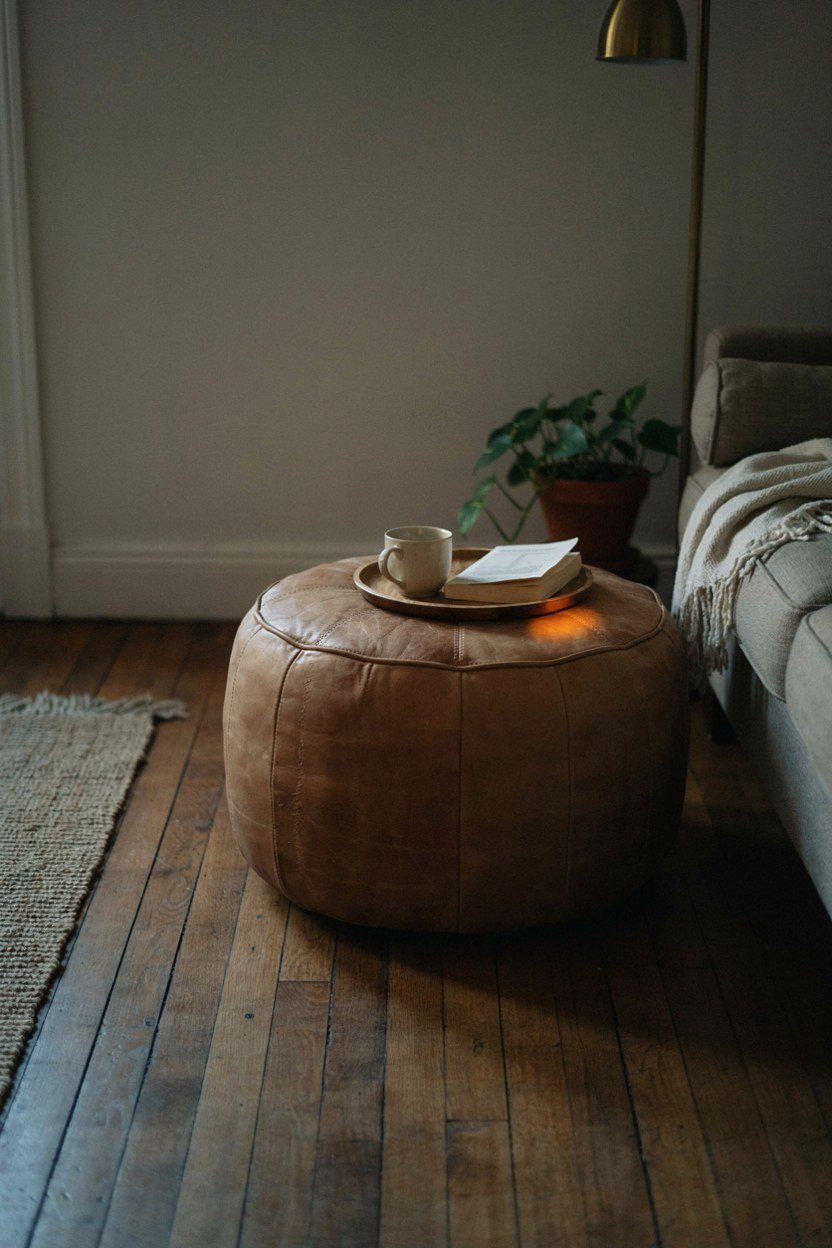
An upholstered pouffe or a low bench gives you extra seating without another armchair. It also works as a footstool and, with a tray, as a side table. In a small living room that flexibility matters.
Leather, wool and jute all suit the palette and all wear well. Leather in particular improves with age, which suits a room built around texture and patina. Avoid anything pale on a piece that doubles as a footstool.
Two small pouffes are more useful than one large one. They can be separated for two people or pushed together as a footstool, and they store more easily. They are also considerably easier to move out of the way.
Where To Put It
Keep it out of the walking route, usually tucked beside the sofa or under a console. A pouffe in a walkway becomes a hazard in the dark. Anything soft and low in a dark room will be tripped over eventually.
Choose something firm enough to sit on properly. Many decorative pouffes collapse under an adult, which makes them footstools with ambitions rather than seating. Sit on it in the shop rather than trusting the description.
14. Bring In One Vintage Or Handmade Object
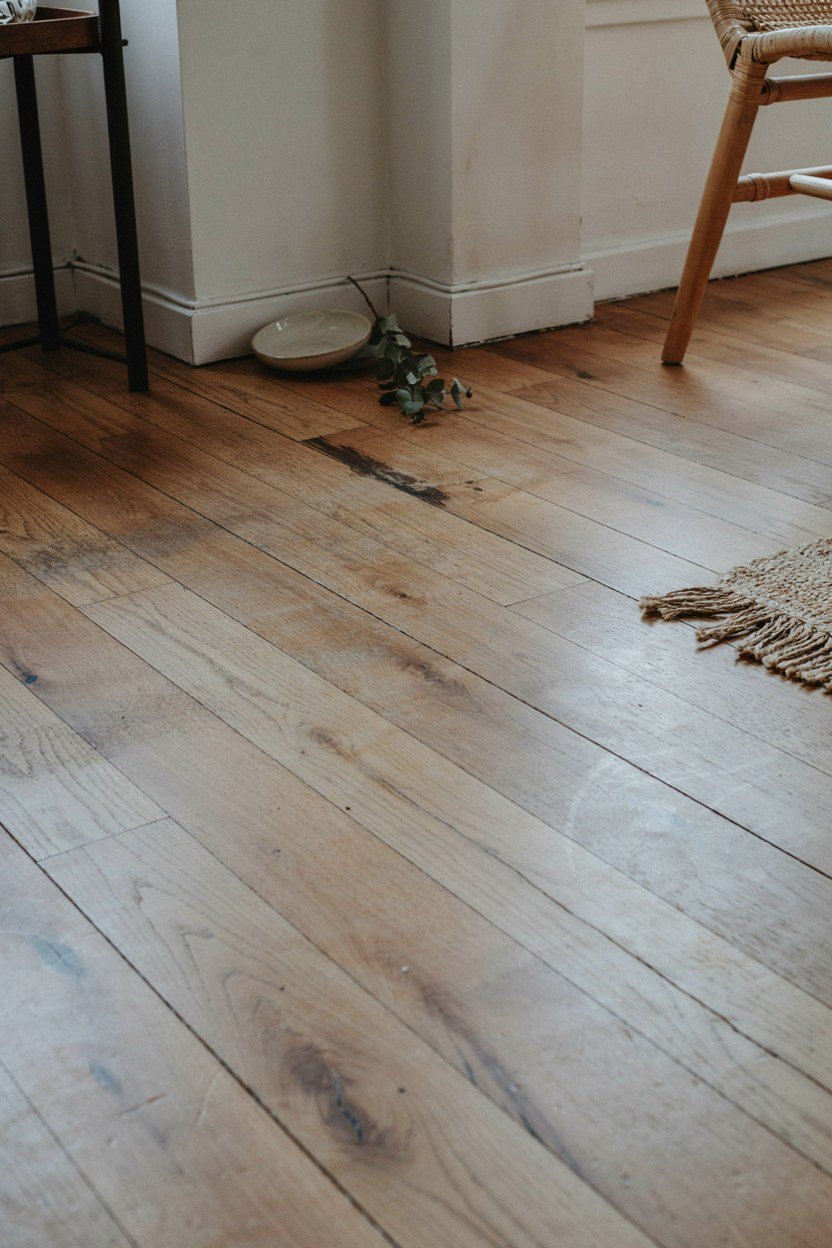
Everything in a modern boho room can be bought new, and that is exactly what makes some of them feel hollow. One genuinely old or handmade object gives the room a reference point that catalogue pieces cannot. One object with a history changes how the rest of the room reads.
A vintage kilim, an old wooden bowl, a hand thrown pot or a woven basket from a market all work. What matters is that it has wear and that it was not made to look worn. Markets and house clearances are far better hunting grounds than shops.
Put it somewhere you see daily rather than on a high shelf. The point is that it is used and looked at, not that it is displayed. Objects that get handled keep their character better than ones that only get dusted.
Telling Genuine From Manufactured
Real wear is uneven and appears where hands and feet actually land. Manufactured distressing is even and often appears in places that would never wear. The difference is obvious in person.
Buy from markets, house clearances and charity shops rather than shops selling a curated vintage look. The price difference is substantial and the objects are more interesting. The hunt is also most of the pleasure of this style.
15. Leave The Floor Visible Around The Edges
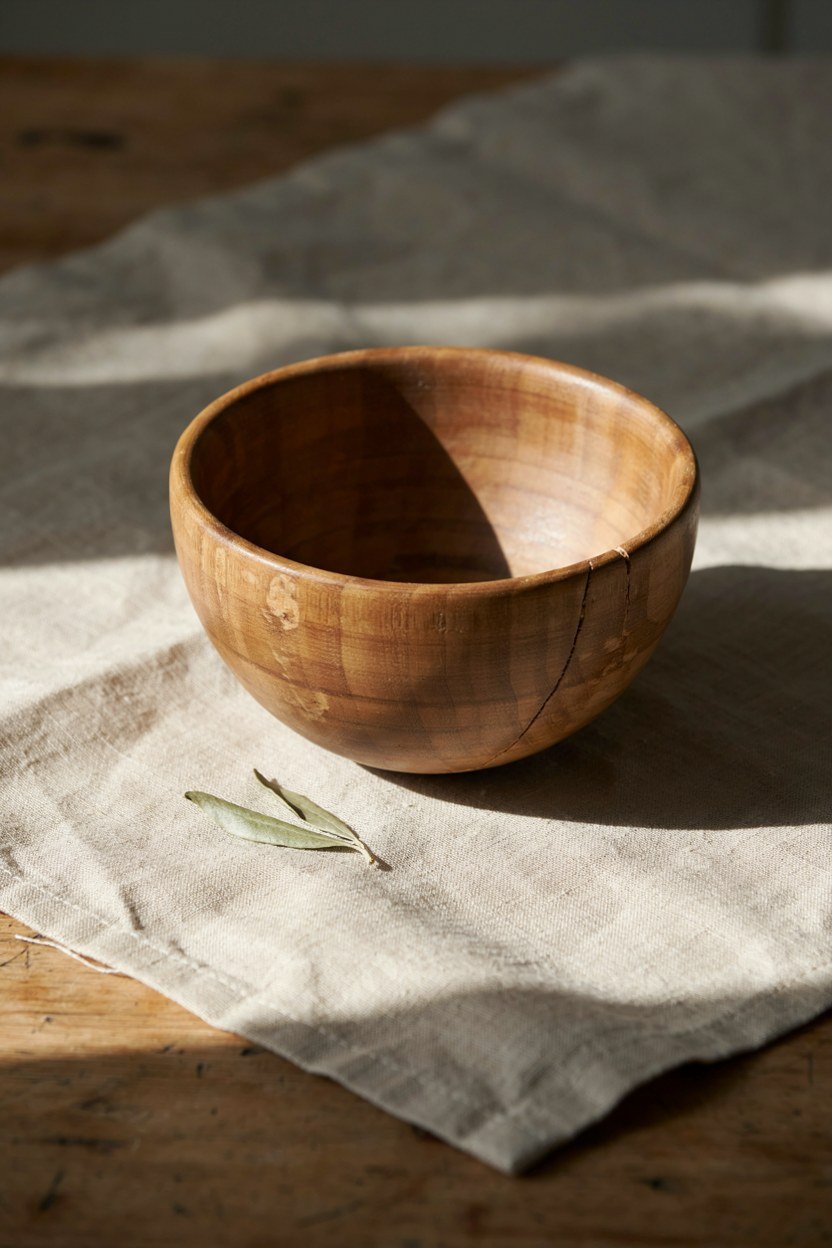
A boho room can accumulate furniture around its perimeter until no floor shows at all. Keeping the edges clear, particularly in corners, is what stops the room feeling crowded. Visible floor reads as space.
Choose furniture on legs wherever possible so the floor runs underneath. Solid based pieces block the eye and make a room feel more furnished than it is. Around 15cm of clearance is enough to read as floating.
Resist filling every corner. One corner with a plant, one with a floor lamp, and at least one left empty is a better distribution than four corners all occupied. An empty corner is what gives the furnished ones their effect.
The Test For Overcrowding
Stand at the door and count the pieces of furniture. Most living rooms work best with six to eight, and past ten the room starts to feel like storage regardless of how good each piece is. Count the large objects only, since cushions and books do not signify here.
Remove one thing and live with it for a week. Almost every crowded room improves when something leaves, and the piece can always come back. You will usually find you do not want it back.
What A Modern Boho Living Room Costs
The rug is the single most important purchase and the one worth stretching for. A large jute or wool rug transforms the arrangement and it is the item most people undersize to save money. Buy the size before the quality if you must choose.
Lighting is the cheapest significant change. Three warm sources at different heights cost very little and they alter the room more after dark than any furniture purchase. It is where I would start in any room on this list.
Seating is the expensive end and the slowest to get right. A low deep sofa in a durable neutral is a long purchase, and it is worth waiting for the right one rather than filling the space quickly. Live with an old sofa a few months longer rather than buying the wrong one.
| Element | Effect On The Room | Rough Cost |
|---|---|---|
| Large rug, correctly sized | Defines the whole arrangement | Mid to high |
| Three warm light sources | Biggest evening change per pound | Low |
| Textural layers, jute and knit | Adds depth without colour | Low |
| One large plant in a basket | Height, shape and life | Low |
| Curved piece, mirror or table | Breaks up the rectangles | Low to mid |
| Low deep sofa | The long purchase, take time | High |
| Vintage or handmade object | Gives the room a reference point | Low if hunted |
The Mistakes That Make A Neutral Room Look Flat
The most common mistake is treating neutral as a colour rather than a starting point. A room of one beige, however carefully chosen, has nothing for the eye to do. Three neutrals with a genuine dark grounding tone is the minimum.
The second is a rug that is too small, which undermines every other decision in the room. It makes furniture look unmoored and the space look smaller, and no amount of styling compensates. Measure the seating group and buy to that, not to the room.
The third is single source overhead lighting. A neutral room under a central pendant looks like an empty rental, because there is no colour to survive the flatness. Three warm sources at different heights is the fix.
The Check That Catches All Three
Photograph the room from the doorway in the evening with the lamps on. Flatness, rug size and lighting problems all show immediately in a photograph and are easy to miss in person. Look at the photograph rather than the room, since the camera is more honest.
Then run a hand over three textiles in turn. If they feel the same, the room needs a coarser or a chunkier layer rather than another cushion in the same weave. Do it with your eyes shut if you want the test to mean anything.
Conclusion: Three Decisions That Make The Room
Size the rug properly, keep the seating low and deep, and light the room from three warm sources rather than one overhead. Those three decisions carry a modern boho living room, and no amount of styling rescues a room that gets them wrong. Get those right and the room works before you style a single shelf.
Then build texture rather than colour. Three neutrals, three weave weights, one large plant and one curved shape will give a neutral room all the depth it needs. Everything after that is refinement rather than structure.
Finally, leave things out. One empty surface, one bare wall and visible floor around the edges are what turn a well furnished room into a sanctuary. The restraint is the style.
Frequently Asked Questions About Modern Boho Living Rooms
How large should a living room rug be?
Large enough that all four sofa legs sit on it, or at minimum the front legs of every seat. Undersized rugs are the most common mistake in this style.
How many neutrals should the palette have?
Three: a pale base, a mid tone and one genuinely dark grounding shade. The dark tone is the one people skip and the one that stops the room floating.
Can I mix warm and cool neutrals?
Not comfortably. Pick a direction and stay in it, because a cool grey among warm clay tones reads as an error nobody can quite place.
What plants work in a low light living room?
ZZ plant, snake plant and kentia palm all tolerate low light and irregular watering. Two or three large plants beats many small ones.
How do I stop a neutral room looking flat?
Vary the weave weight rather than the colour. Fine linen against chunky knit against coarse jute gives depth that three shades of beige never will.
Should the sofa go against the wall?
Only if the room is under about 3.5 metres wide. Floating it to face the window or fireplace gives the room a centre, provided the walkways still work.
What lighting suits a modern boho room?
Three warm sources at different heights, none of them a lone ceiling pendant. Keep every bulb at 2700K or lower.