
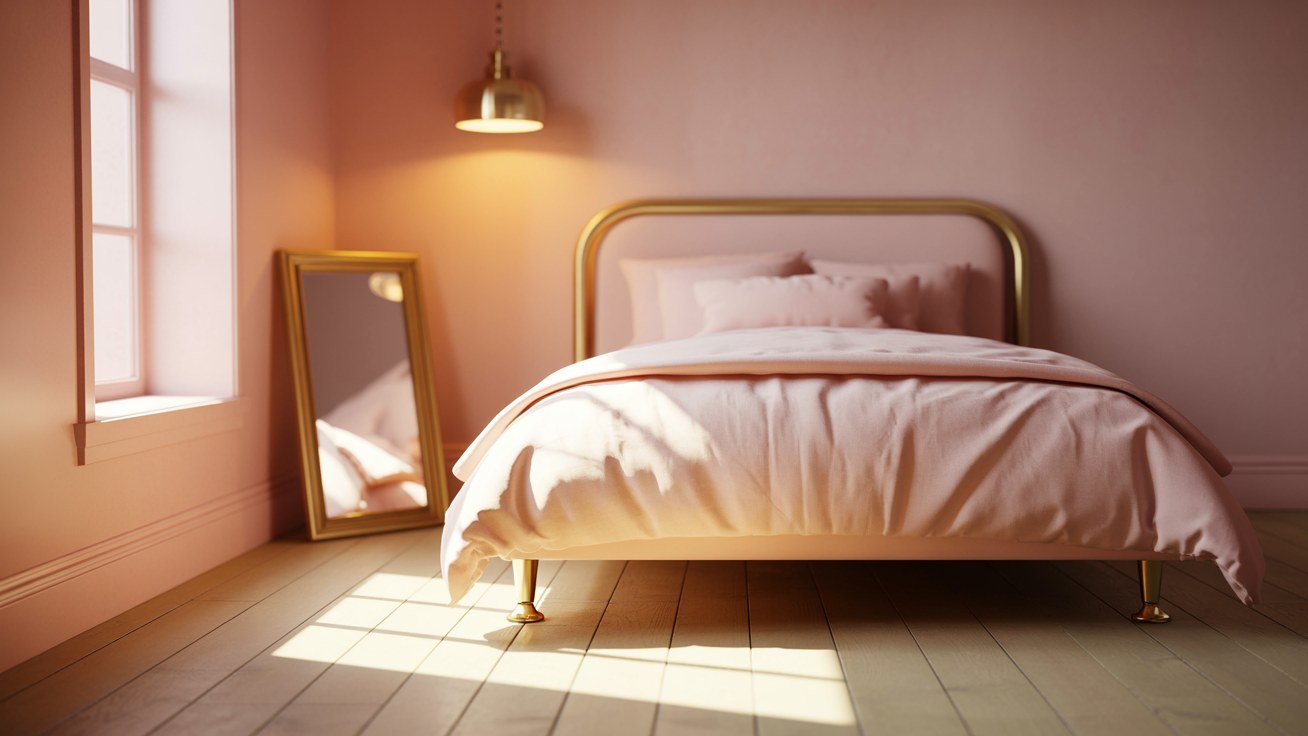
Metallic finishes make a kids bedroom feel grown up without making it feel like an adult room in miniature. Brass, gold and rose gold catch the light the way jewel tones and toys already do, so the room reads as considered rather than themed. Get the balance right and a child’s room can look genuinely luxurious. The trick is treating metal as a spice rather than a base ingredient.
The trap is doing it all at once. My own attempt started with a gold star light fixture, brass drawer pulls, a mirrored side table and metallic wallpaper in the same fortnight, and the room went from playful to gaudy within a week. Pulling two of those back out was the fix, and it taught me that metallic reads as luxury only in small, repeated doses. A single tone repeated quietly beats four tones competing for attention.
Below are fifteen ways to bring metallic finishes into a luxury kids bedroom, starting with the big decisions and moving to the cheap, fast ones. The first four set the tone for the whole room. The rest are additions you can make gradually as the room grows with the child. None of them need to happen in one weekend.
Why Metallic Works In A Kids Room When Done Sparingly
Metallic finishes catch and bounce light, which matters in a child’s room more than almost anywhere else in the house, since these rooms often have smaller windows and lower ceilings than the main living spaces. A brass handle or a gold frame picks up whatever daylight is there and throws a little of it back, making the whole room feel brighter without adding a single extra watt. That reflected light is free and it works all day.
The second reason is durability disguised as decoration. Solid brass hardware and powder coated gold frames survive being grabbed, climbed on and knocked far better than painted finishes, which chip and show every mark within a year. Choosing metal for the pieces that get handled most is a practical decision wearing a luxurious coat. It is the rare upgrade that saves money over the years rather than just spending it.
Restraint is what separates elegant from overwhelming. A room with one metallic finish repeated three or four times reads as designed, while a room with brass, gold, silver and copper all present at once reads as a costume jewellery box. Pick one metal tone and let it recur. Pick one metal tone.
| Metal tone | Best for | What clashes with it |
|---|---|---|
| Warm brass | Traditional, jewel toned rooms | Cool silver, chrome |
| Rose gold | Soft pastel or blush schemes | Bright primary colours |
| Matte gold | Neutral, sophisticated palettes | High gloss white |
| Brushed nickel | Cool grey or blue schemes | Warm wood tones |
| Antique bronze | Vintage or rustic rooms | Sleek modern acrylic |
What To Decide Before You Buy A Single Metallic Piece
Pick the one metal tone the room will use before shopping for anything. Every future purchase, from a lamp to a light switch cover, should match that tone, and deciding it up front stops the slow drift into a mismatched collection that happens when each purchase is chosen in isolation. Write the tone down somewhere you will see it before you shop.
Then think about height and reach. A child pulls on handles, leans on rails and touches everything within arm’s length, so the metallic pieces at that height need to be genuinely durable metal rather than a metallic finish over plastic, which scratches through to reveal the base colour within months. Anything above head height can afford to be more decorative than durable.
Finally, decide how the room should age. A nursery done entirely in soft rose gold will look wrong for an eight year old, so choose metallic pieces that are either genuinely neutral enough to carry the room for years, or cheap and quick enough to swap out as tastes change. Big furniture pieces belong in the first category, and small accents in the second. Sort each purchase into one bucket before you buy it.
1. Fit Brass Or Gold Drawer Pulls On A Plain Dresser
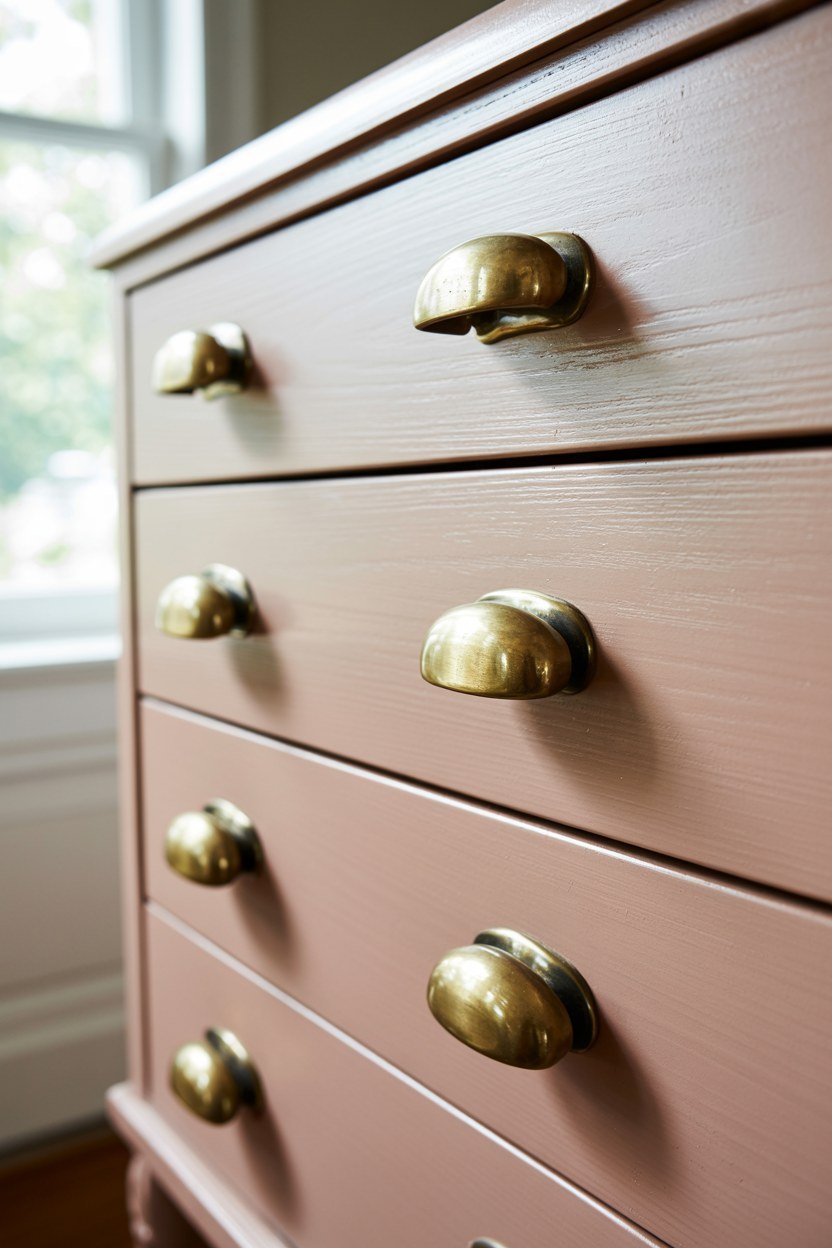
New hardware is the fastest, cheapest way to bring metallic finish into a kids room, and it changes a plain flat pack dresser more than repainting it would. Unscrewing six plastic knobs and replacing them with solid brass pulls takes under an hour and instantly lifts the whole piece. It is the single cheapest change on this entire list.
Choose a pull with a rounded profile rather than sharp edges, since small hands and hips will collide with these constantly. A capsule or bar pull in a warm brass finish gives you the metallic look while staying safe for a room used by a child rather than an adult. Run a finger along the edge in the shop before you buy it.
Buy solid brass or a genuine plated finish rather than painted plastic hardware sold as metallic. Painted finishes wear through at the exact points fingers grip, which on a dresser handle is every single day, and the bare plastic underneath looks far worse than no metallic accent at all. Solid brass simply darkens with age instead.
What It Costs
A full set of eight pulls in solid brass costs a fraction of a new dresser, and the tools required are a screwdriver and a tape measure to match the existing hole spacing. This is the best value single change on this entire list. Most families finish the whole job in a single evening.
Check the screw hole spacing on the old hardware before ordering new pulls. Matching centres means the new pulls go straight on, while a mismatch means filling old holes and drilling new ones, which turns an hour of work into an afternoon. A ruler and the old hardware in hand at the shop avoids the whole problem.
2. Hang A Brass Or Gold Framed Mirror At Child Height
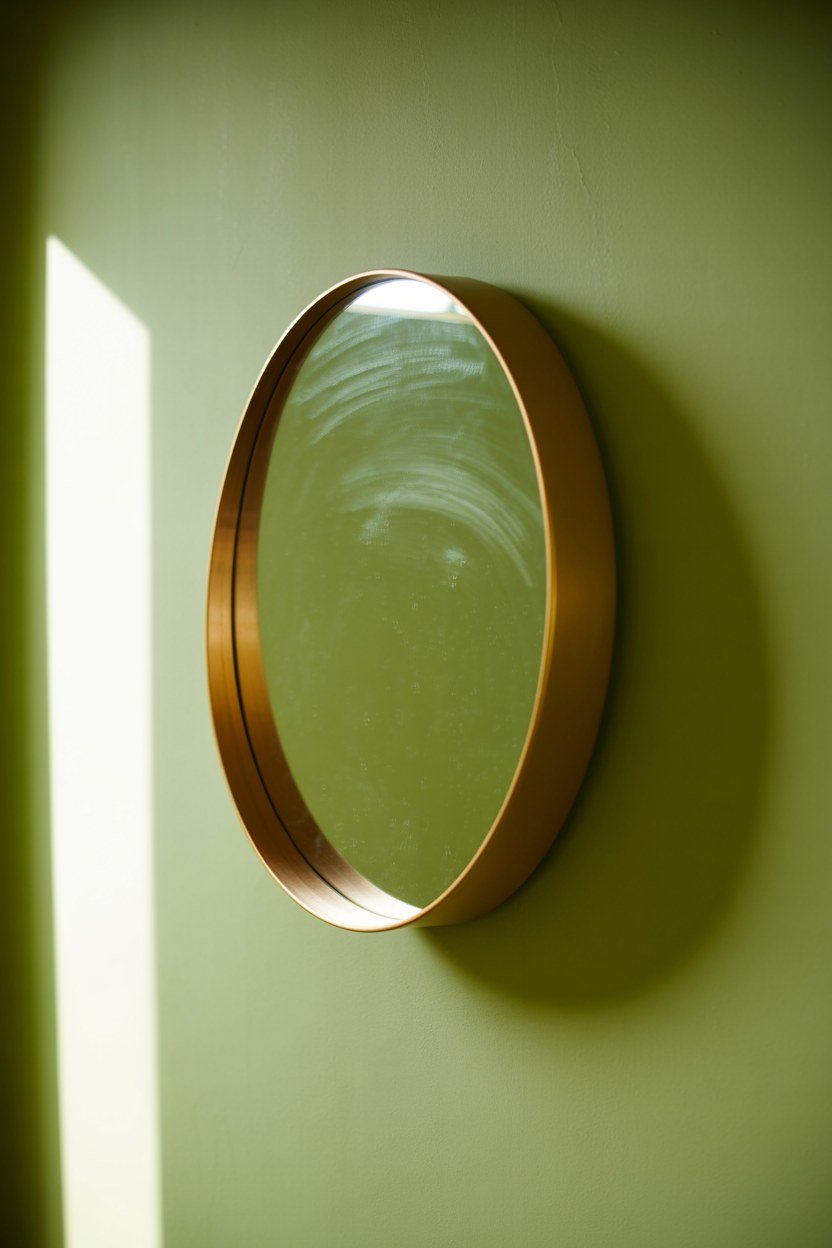
A mirror hung at a child’s eye level does double duty. It bounces light around the room, which every bedroom with limited natural light benefits from, and it gives a young child a genuinely useful object rather than a purely decorative one. A slim brass or gold frame turns a functional mirror into a design piece. Even a small one earns its place on a wall.
Hang it lower than you would in an adult room, with the bottom edge around 90 to 100 centimetres from the floor for a toddler or young child. That height lets the child actually see themselves, which is the entire point of putting a mirror where a child sleeps. Raise it as the child grows rather than buying a second one.
Choose safety glass or an acrylic mirror for a very young child’s room. A metal framed mirror in real glass looks the most luxurious, but for a toddler’s room the acrylic version removes the one genuine risk in an otherwise low risk addition. Swap to glass once the child is a little older.
How To Judge It Before You Buy
Hold a piece of card the size of the mirror against the wall at the height you plan to hang it, then crouch down to the child’s eye level and check the sightline. A mirror hung for an adult’s convenience often sits too high for the child to ever see themselves in it. A quick crouch test settles it before a single screw goes in.
Check the frame depth against the wall space. Ornate metallic frames project further than a slim modern one, and in a small bedroom that extra depth beside a bed or door can catch clothing or a passing shoulder. Measure the projection before buying if space beside the mirror is tight.
3. Choose A Bed Frame With Metallic Accent Legs
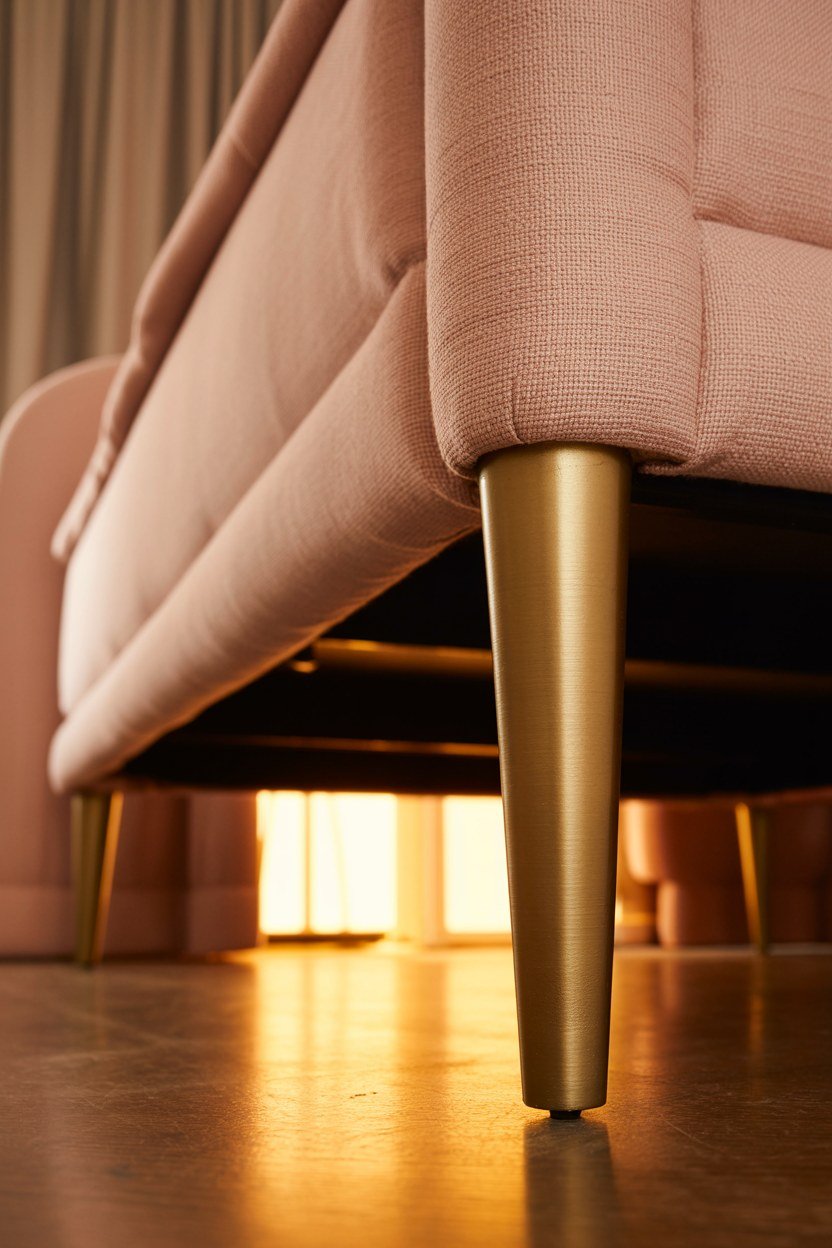
A bed frame is the largest piece of furniture in the room, and metallic legs give it a lift without turning the whole frame into a statement. Look for an upholstered or timber frame with slim gold or brass tapered legs rather than a fully metal frame, which reads colder and less suited to a child’s room. Warmth at bed level matters more than anywhere else.
Keep the metal to the legs and any visible joinery hardware, leaving the headboard and frame in fabric or timber. This is the largest surface in the room, so restraint here matters more than anywhere else on this list, since a fully metallic bed frame would use up the entire metallic allowance in one piece. Let the legs do the talking and leave the rest plain.
Check the weight rating and stability specifically for a child’s bed. Kids jump on beds regardless of instructions, and slim metallic legs need to be rated for that use rather than purely decorative ones designed for adult furniture that sees gentler treatment. Ask the retailer for the weight rating if it is not listed.
What Goes Wrong
Cheap gold paint on bed legs chips at the base first, since that is where a vacuum cleaner and shoes make contact daily. A genuine plated or powder coated finish costs more initially and survives years of that contact without showing bare metal underneath. The extra cost pays for itself within the first year.
The other common mistake is choosing legs so thin they look precarious under a growing child’s weight. Slim does not mean flimsy, and a leg with real substance in a tapered gold finish looks just as elegant as a spindly one while actually holding up to daily use. Give the leg a firm push in the shop before you decide.
4. Install A Statement Pendant Light With A Metallic Shade
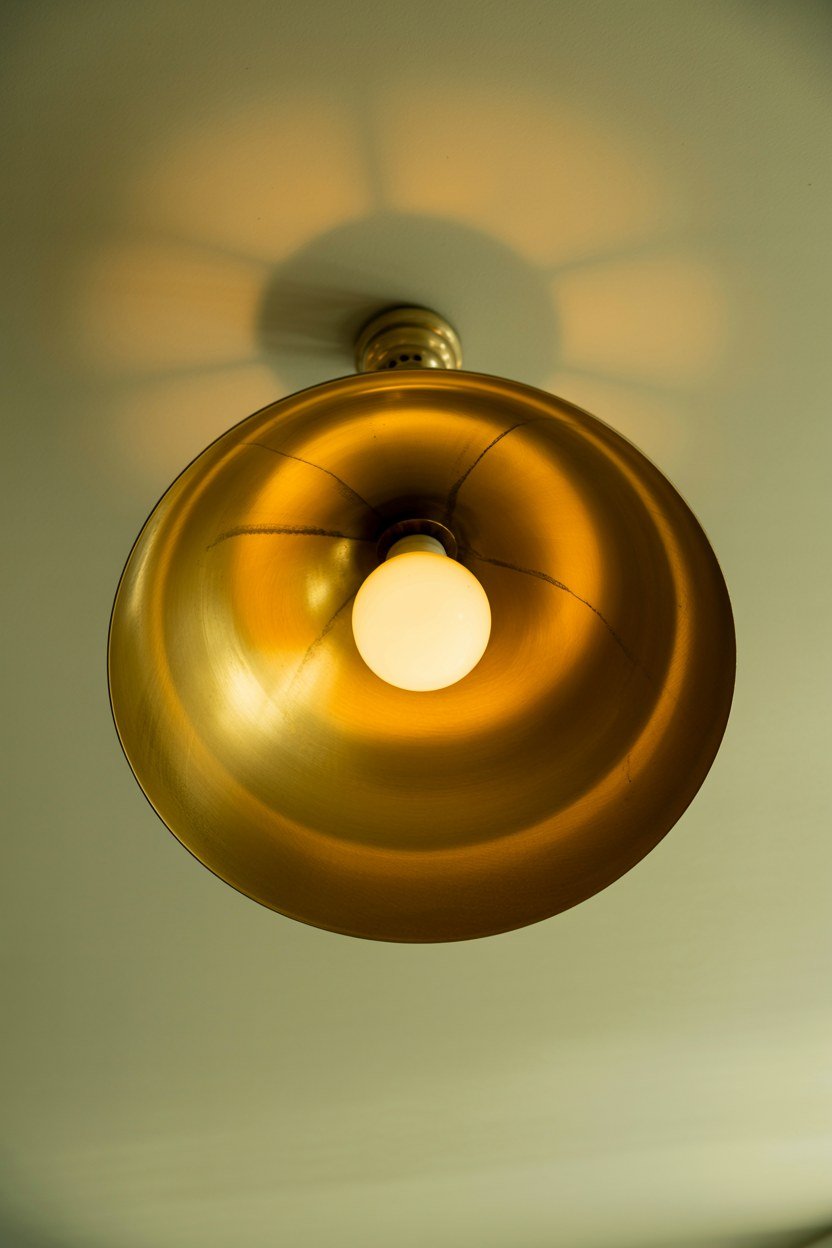
Overhead lighting is often the most overlooked spot for a metallic finish, yet it is the fixture every visitor to the room looks up and notices first. A pendant light with a brass, gold or copper shade throws warm reflected light across the ceiling and adds real presence without occupying any floor or wall space a child needs. It also becomes the first thing a visiting friend notices.
Choose a shade shape that suits the room’s proportions rather than the trendiest option available. A wide dome shade suits a room with a lower ceiling by keeping the fixture visually flat against it, while a taller pendant suits a room with more height to spare. Measure the ceiling height before choosing between the two.
Fit a warm white bulb rather than a cool or daylight one. Metallic finishes need warm light to glow properly, and a cool bulb inside a gold shade produces a flat, slightly grey effect that defeats the entire point of choosing the metallic finish in the first place. Look for a bulb rated around 2700 kelvin.
What It Costs
A well made metal shade pendant costs more than a basic fabric shade fixture, but it is a fixture that moves with the family from house to house and rarely needs replacing, unlike most kids room decor. Treat it as a longer term purchase rather than a phase specific one. A good pendant will still suit the room a decade from now.
Installation may need an electrician if the room has no existing ceiling point, which adds to the cost. If budget is tight, a plug in pendant kit with a matching metallic shade gives most of the visual effect without any wiring work at all. It also travels with the family to a new house later.
5. Add A Gold Framed Piece Of Art Above The Bed
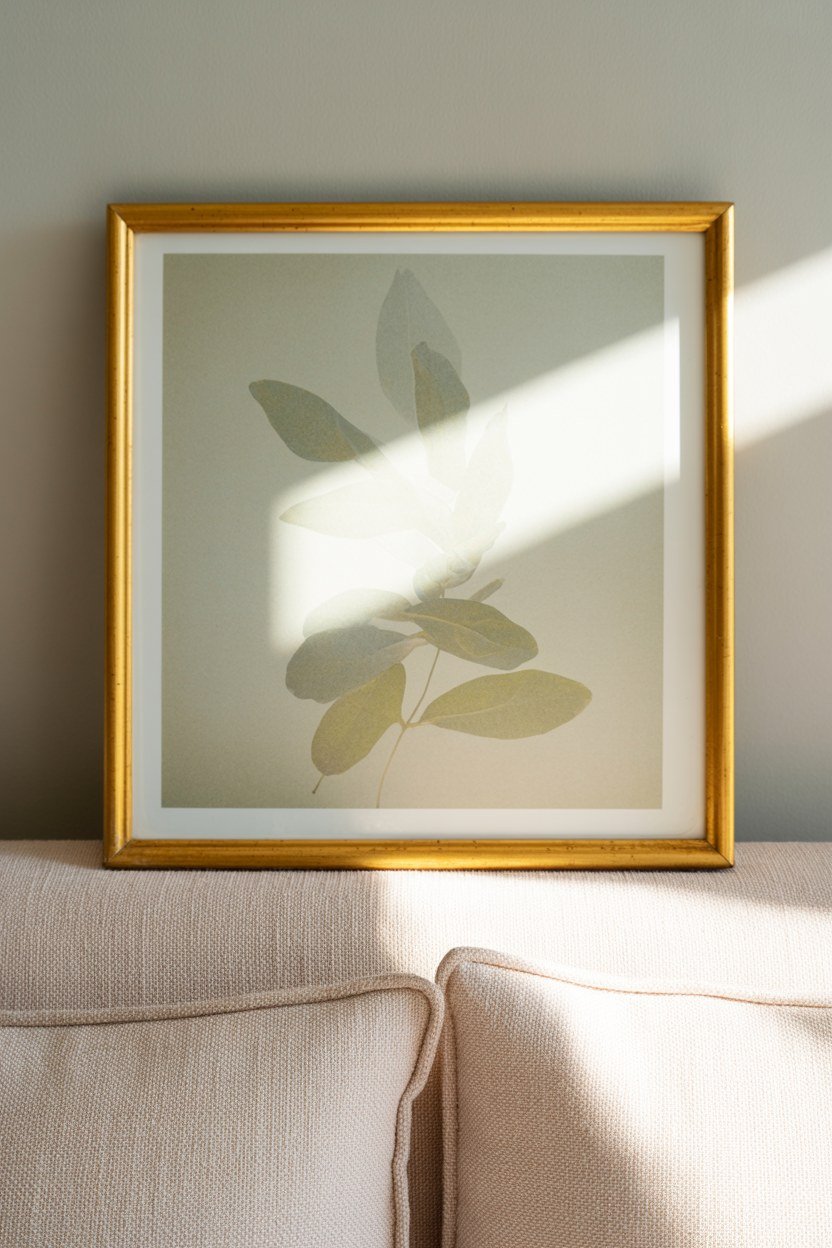
A single piece of art in a gold or brass frame above the headboard does more for the room’s sense of luxury than several smaller pieces scattered around. Choose art that suits the child rather than generic gold framed prints, since a room a child actually loves matters more than one styled purely for adults. Let the child have a say in what goes up if they are old enough to choose.
Size the frame generously. A small frame lost above a large bed looks like an afterthought, while a piece around two thirds the width of the headboard reads as intentional and gives the wall real presence. Measure the headboard before ordering the frame.
Hang it with the centre around eye level for an adult standing beside the bed, roughly 145 to 150 centimetres from the floor. This height works whether the room is being viewed from the doorway or from beside the bed while reading a bedtime story. Mark the spot with pencil before drilling anything.
How To Judge Scale
Cut a piece of paper or card to the exact size of the frame and tape it to the wall before drilling anything. Standing back at the doorway and looking at the taped outline tells you immediately whether the scale feels right, and adjusting paper costs nothing compared to patching an extra hole. Do this test in daylight rather than under a lamp.
Consider the art’s own colours against the gold frame. A print with warm tones, blush pinks or deep jewel colours will sit beautifully against gold, while a print with cool blues or stark black and white can fight the warmth of the frame. Hold a sample print against the frame before committing to either.
6. Use Metallic Wallpaper On One Feature Wall Only
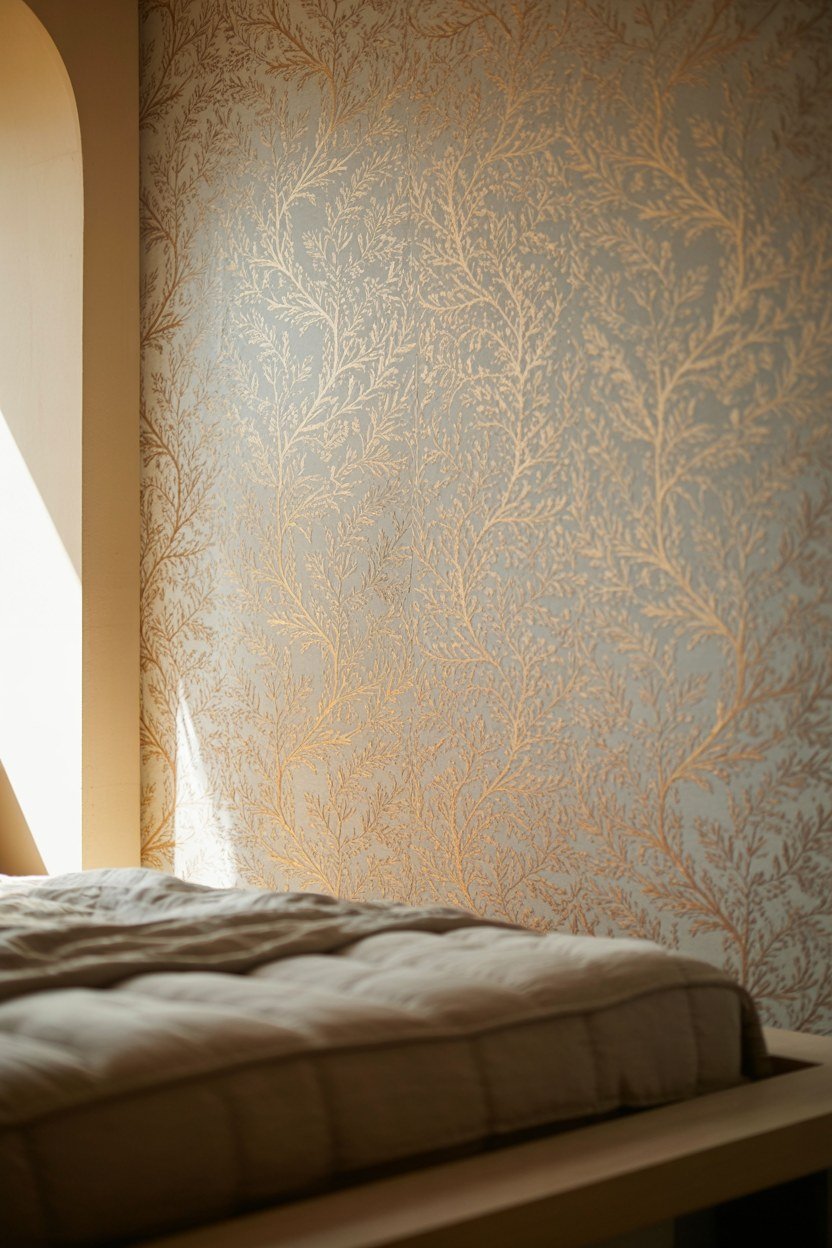
Metallic wallpaper delivers drama fast, and confining it to a single wall keeps that drama from becoming overwhelming in a room a child spends hours in every day. Choose the wall behind the bed or the one most visible from the doorway, since that is the wall doing the most visual work. The other three walls can stay plain and quiet.
Pick a subtle pattern with metallic detailing rather than an all over metallic sheet. A soft botanical or geometric print with gold or copper accent lines reads as sophisticated, while a wall entirely covered in shiny metallic paper can feel closer to a nightclub than a bedroom. Ask for a sample roll before ordering the full amount.
Check the wallpaper is washable or wipeable, since a kids bedroom wall gets marked, however careful the child. A vinyl coated metallic wallpaper survives a damp cloth, while some genuine foil papers cannot be cleaned without damaging the finish. Check the product description for a washable rating before buying.
When To Skip It
Skip this idea entirely in a room with limited natural light. Metallic wallpaper needs some daylight or good artificial light to catch and shimmer, and in a dim room it can look flat and slightly dated rather than luxurious. Check the room at dusk before committing to the paper.
Also skip it for a very young toddler’s room where crayon and marker are still a daily risk. Save the metallic wallpaper for when the child is a little older and the walls are less likely to become the next art project. A washable paint in the meantime is the safer bet.
7. Choose A Metallic Finish Ceiling Fan
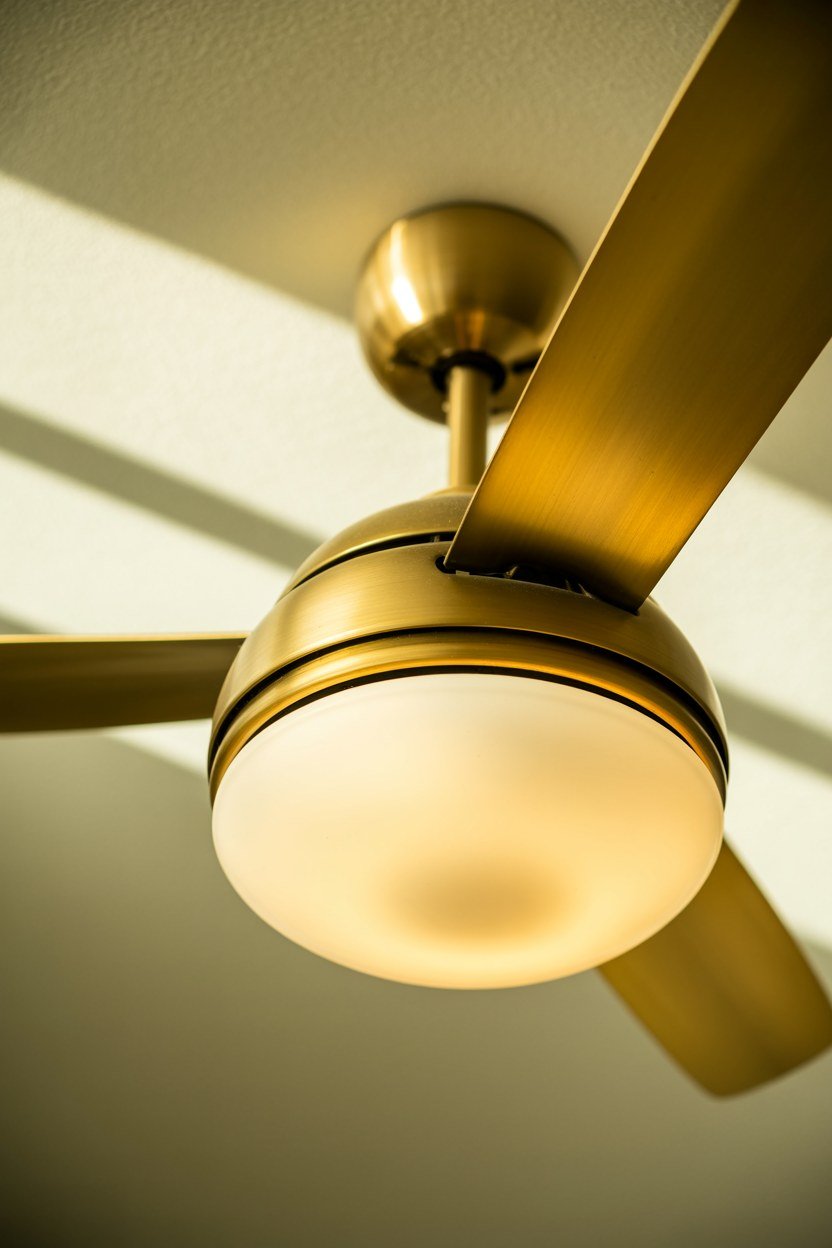
A ceiling fan in brushed brass or gold is a genuinely practical upgrade that also functions as a design statement, which is rare in this list. Many families skip ceiling fans in kids rooms entirely, but a well chosen metallic one adds air circulation and visual interest in a single fixture. It earns its keep through every hot summer night.
Match the blade finish to the room’s wood tones if the fan has visible blades, and choose a fully enclosed or blade free design for a toddler’s room where curiosity and reach are both increasing. Safety should always outrank the finish when the two are in tension. A plain safe fan beats a beautiful risky one every time.
Look for a model with a light kit built in, ideally with a metallic finished shade to match. Combining the fan and the light fixture into one metallic piece means the ceiling does not end up with two different finishes competing for attention. One fixture also means one less thing to install.
What It Costs
A quality brushed brass ceiling fan with a light kit costs more than a basic white fan, and installation often needs an electrician unless the room already has a fan rated ceiling box. This is a bigger investment than most items on this list. Budget for the electrician’s time as well as the fan itself.
The payoff is that a ceiling fan reduces the need for portable fans and improves sleep temperature regulation, so the cost offsets slightly against comfort gained rather than being purely decorative spend. Fewer floor fans also means fewer trailing cords in the room. That alone makes the room feel tidier year round.
8. Add A Brass Or Gold Reading Lamp Beside The Bed
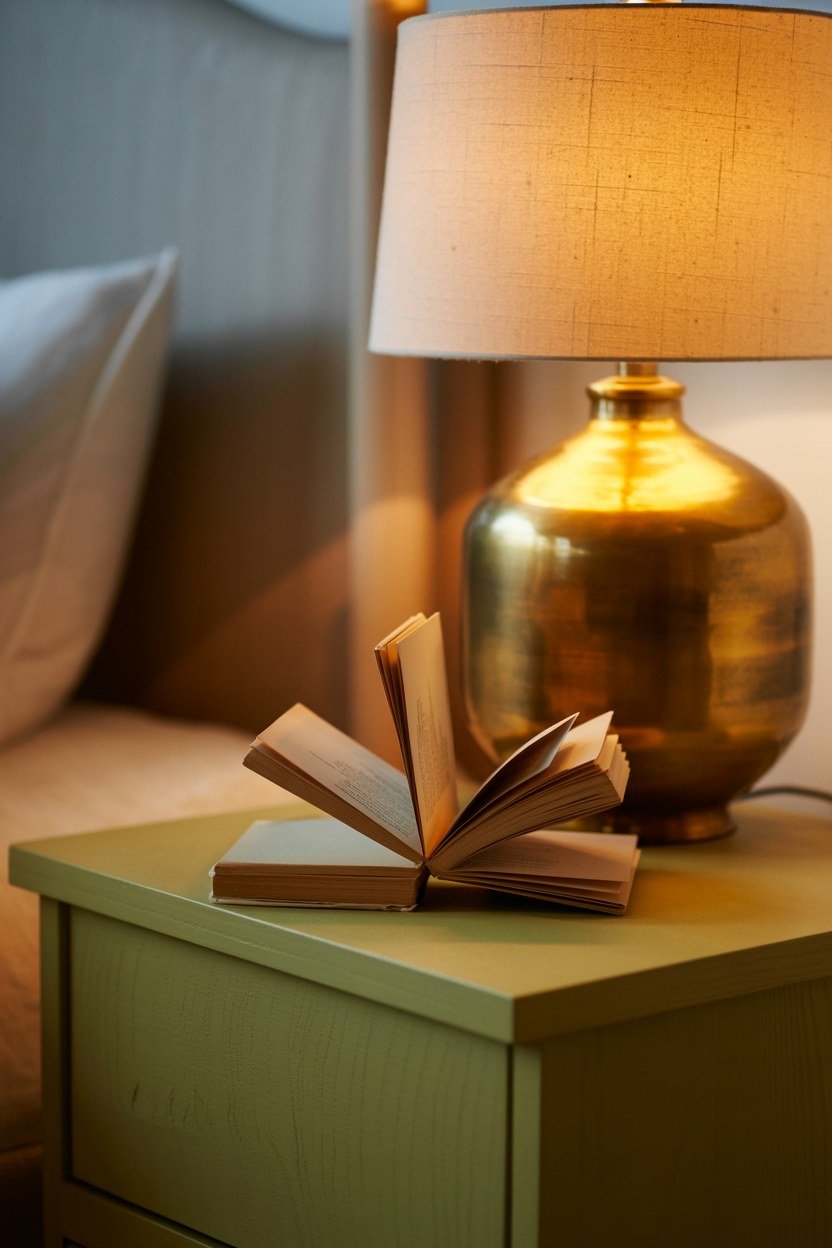
A bedside lamp is one of the most used objects in a kids room, switched on and off every single night, which makes it worth choosing well. A gold or brass base with a simple fabric shade gives warm, usable light and a metallic touch exactly where a child’s hand reaches most often. It is switched on and off hundreds of times a year.
Pick a lamp with a sturdy, weighted base rather than a tall, top heavy design. A metallic lamp that tips over easily becomes a nightly hazard rather than a design feature, and a wide, low base in the same finish looks just as elegant as a tall slender one. Give any lamp a gentle nudge in the shop before buying it.
Choose a switch a child can operate independently. A simple rotary or push switch at the base suits small hands better than a touch sensitive lamp, which can be confusing for a young child trying to turn a light off at bedtime. Test the switch yourself before assuming a child will manage it.
What Goes Wrong
Metallic finish lamps sold at very low prices often use a thin sprayed coating over plastic, which scratches and dulls within months of nightly handling. Check reviews or descriptions for solid metal or genuine plating before buying, since this is a piece touched daily. A lamp base is not the place to economise.
The cord is the other overlooked detail. A metallic lamp with a plain black cord trailing across a pastel or pale rug looks unfinished, so look for a lamp with a fabric covered cord in a coordinating tone, or route the cord discreetly behind furniture. A small clip under the nightstand keeps the rest of the cord out of sight.
9. Introduce A Gold Or Brass Toy Storage Basket

Storage does not have to look like storage, and a woven basket with metal legs or a brass rimmed lid brings the metallic theme into a functional piece a child interacts with daily. This is a genuinely useful addition rather than a purely decorative one. It earns its place by actually reducing clutter.
Choose a basket sized for the specific toys it needs to hold rather than the largest available, since an oversized basket becomes a dumping ground that never gets properly emptied. A snug fit encourages the sorting habit that keeps a room tidy. An oversized basket only invites everything to be tipped in at once.
Look for rounded metal trim rather than sharp edged frames, particularly for a basket that lives on the floor where a child crawls or plays nearby. Soft, rounded brass or gold edging keeps the practical safety consideration in line with the decorative one. Run a hand along the rim before buying.
What To Buy First
If budget only stretches to one storage piece with a metallic accent, choose the one for the most visible clutter category, usually stuffed animals or building blocks, since visible tidiness does more for the room’s overall look than storage for items that live in a cupboard anyway. Everything else can wait for a plain box out of sight. A labelled lid helps everyone remember where things go back to.
Avoid baskets with fully metal bases on a hard floor, since these scrape and can mark timber or laminate over time. A basket with a fabric or rubber foot base paired with metallic trim gives the look without the floor damage. Check the base before you carry a full basket across a wood floor.
10. Add Metallic Star Or Constellation Wall Decals

Wall decals in gold or rose gold foil bring metallic sparkle into a nursery or young child’s room without any of the permanence or cost of wallpaper or paint. Stars, moons and simple constellation shapes suit a bedroom ceiling especially well, catching light from below at night. A bedside lamp is usually enough to make them glimmer.
Apply them in a loose, scattered pattern rather than a rigid grid, since a naturalistic star field looks far more like a real sky than a perfectly even arrangement. Step back frequently while applying to check the overall spread rather than focusing on each individual sticker. A photograph on your phone makes the gaps easier to spot.
Choose decals specifically rated as removable and residue free, since ceilings and walls in a rental or a room that will be redecorated need to come clean when the child outgrows the theme. Genuine metallic foil decals in this category exist and remove far more cleanly than printed vinyl imitations. Read the product listing carefully to tell the two apart.
What Goes Wrong
Cheap foil decals lose their shine and start peeling at the corners within a year, especially in a room with any humidity from an ensuite or nearby bathroom. Spend slightly more on a reputable brand rated for several years of wear if the decals are meant to be a longer term feature. Cheaper sets are fine for a short lived theme.
Applying decals to freshly painted walls before the paint has fully cured, typically within the first month, risks pulling the paint off when the decal is eventually removed. Wait the full cure time stated by the paint manufacturer before applying anything adhesive. Rushing this step is the most common cause of paint damage on removal.
11. Use A Metallic Finish On A Reading Nook Canopy Frame
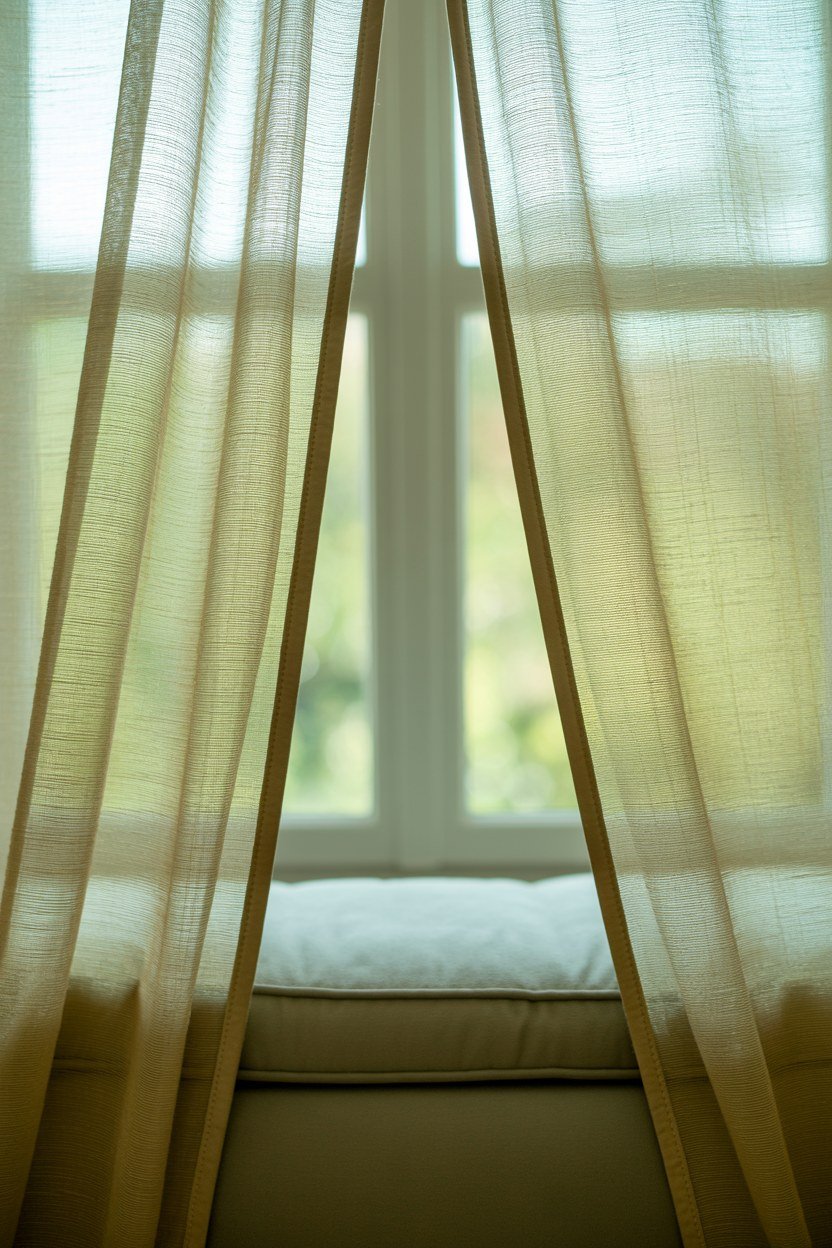
A canopy frame in gold or brushed brass over a reading nook or bed corner creates a genuine focal point and gives the room a sense of occasion without needing structural changes. Many canopy frames are freestanding or ceiling mounted and simple to install. Most go up in under an hour with two people.
Drape the canopy in a soft, sheer fabric that lets light through rather than a heavy blackout material, which can make a canopied corner feel closed in and slightly claustrophobic for a child. Sheer fabric also shows off the metallic frame beneath it rather than hiding it. Heavy fabric hides the very feature you paid for.
Position the canopy over a reading corner or window seat rather than directly over the bed if the ceiling height is limited, since a canopy needs enough clearance above it to avoid looking cramped against a low ceiling. A window seat usually has more spare height than the space directly over a bed. Measure both spots before deciding which one gets the canopy.
How To Judge Scale
Measure the ceiling height and the canopy’s full mounted height before ordering, allowing at least 30 centimetres of clearance above the frame to the ceiling for the arrangement to read as spacious rather than squeezed. Less clearance than that and the frame looks bolted on rather than floating. A tape measure settles the question in seconds.
Consider the width of the space it will sit in. A canopy frame that is too narrow for the bed or nook beneath it looks like an accessory that does not belong, while one sized generously to the space beneath reads as a considered architectural feature. Err on the side of slightly too large rather than too small.
12. Choose Metallic Finish Curtain Rods And Tiebacks
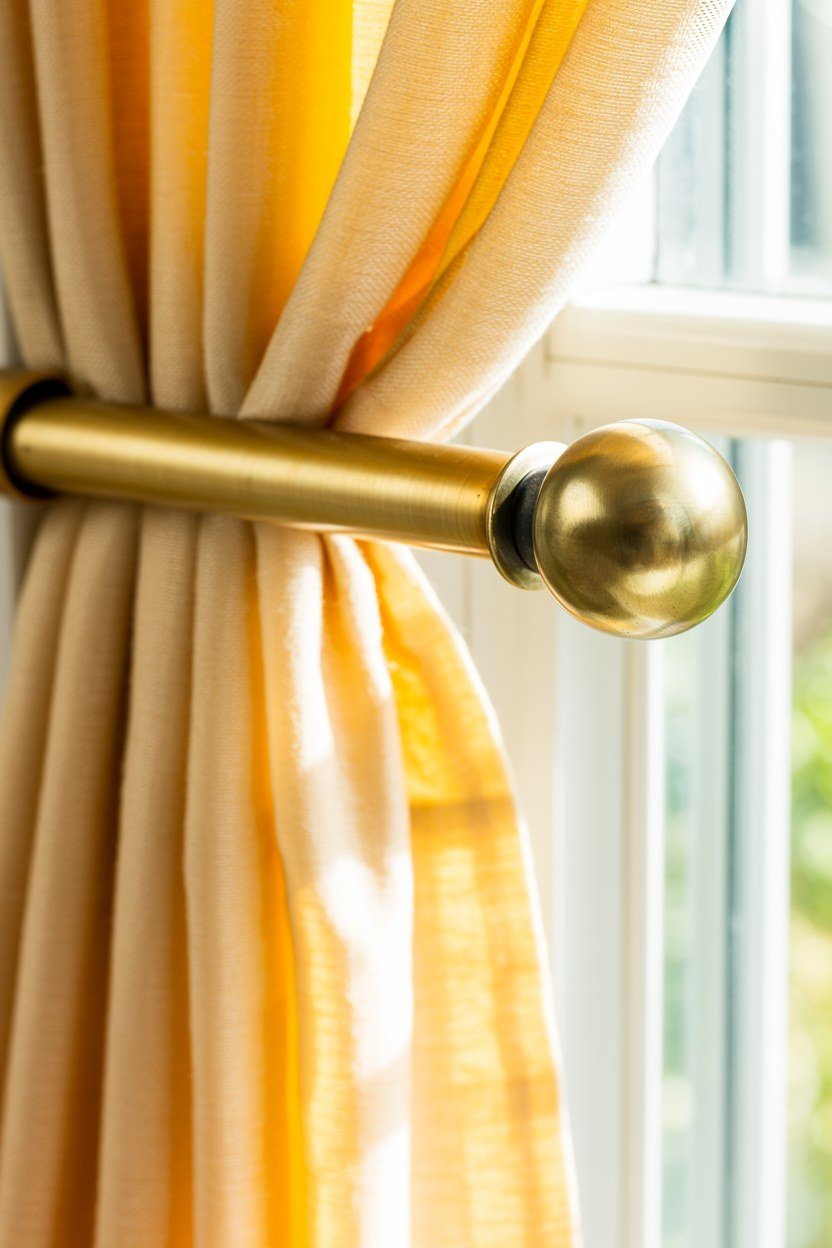
Curtain hardware is an easy, low commitment way to introduce a metallic finish at window height, which is a part of the room that gets plenty of natural light to catch the metal. Swapping a plain rod for a brass or gold one takes under thirty minutes. Most existing brackets can be reused without any new drilling.
Match the finial style, the decorative end piece on the rod, to the overall feel of the room. A simple ball or cap finial suits a modern scheme, while a more ornate finial suits a traditional or vintage inspired kids room with jewel tones and pattern. Bring a photo of the room when you shop for one.
Add matching metallic tiebacks or holdbacks if the curtains are ever held open during the day. These small details repeat the metallic tone at a height a child notices, since curtains are often within easy reach and touched regularly. A matching tieback ties the whole window together at a glance.
What It Costs
A full curtain rod and tieback set in a genuine metal finish costs a moderate amount, sitting well below furniture prices but above the small accent items on this list. It is a mid range investment with a high visual return relative to its cost. Most windows only need the one set for years.
Measure the window width and required rod length carefully before buying, since curtain rods are typically sold in fixed ranges rather than custom cut, and returning an oversized or undersized rod is an avoidable hassle. Measure twice and order once. Most suppliers will not accept a return once a rod has been cut to length.
13. Add A Gold Or Brass Wall Shelf For Display
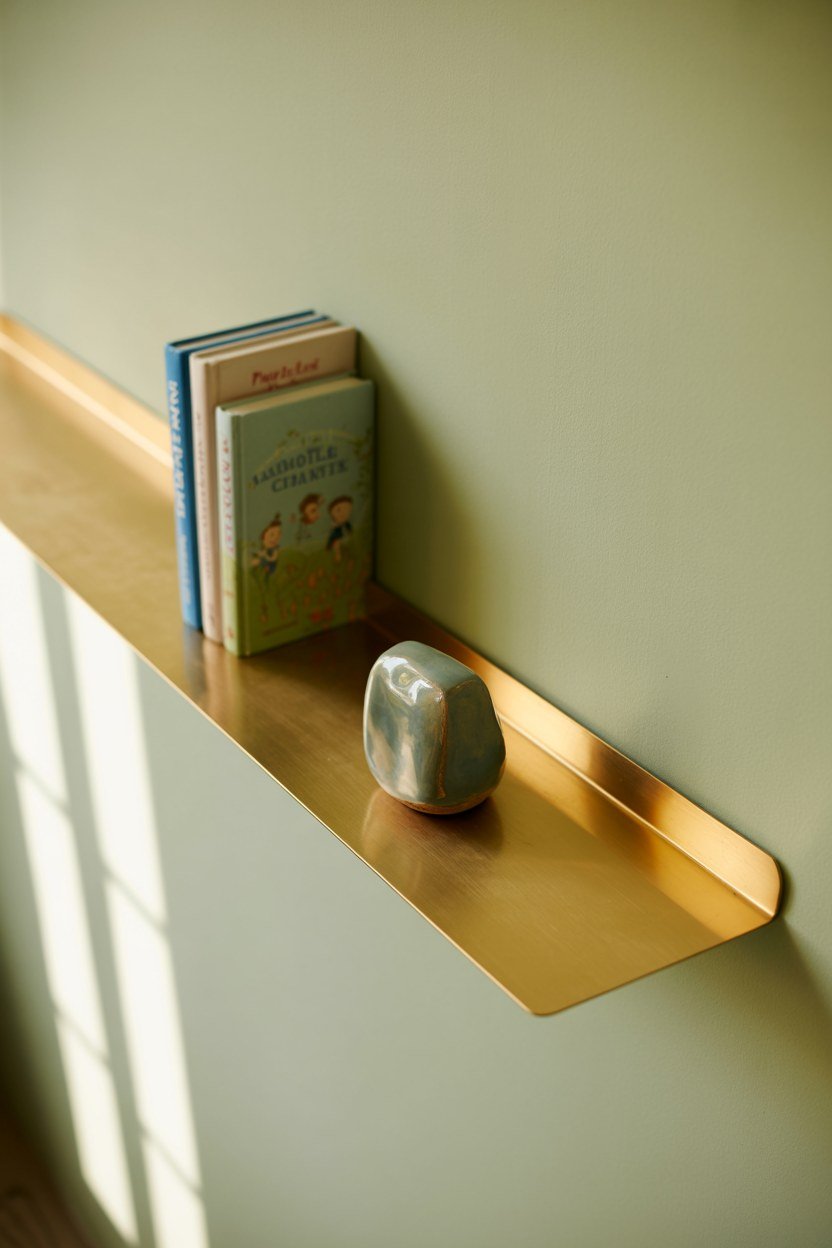
A single floating shelf in a gold or brass finish gives a child somewhere to display favourite toys, books or small treasures, turning personal items into part of the room’s decor rather than clutter on a dresser top. This also teaches a simple form of curation from an early age. It is a small habit that carries into how they keep the rest of the room.
Keep the shelf short, around 60 to 90 centimetres, and mount it at a height the child can reach and use independently, encouraging them to arrange and rearrange their own display rather than relying on an adult to do it for them. Most children take real pride in that small responsibility. It is a small habit that carries into how they treat the rest of the room.
Style it sparingly with three to five items rather than filling every available centimetre. A shelf with breathing room around each object looks curated, while a tightly packed shelf looks like overflow storage that ran out of space elsewhere. Fewer, better chosen items always read as more considered.
When To Skip It
Skip a floating shelf above a bed or anywhere a child sleeps or plays directly beneath it, regardless of how securely it seems mounted, since the small risk of an item falling is not worth the decorative benefit in that specific location. Choose a different wall for this one instead. The decorative gain is never worth the small extra risk in that spot.
Skip it too in a room shared by a much younger sibling who might pull at it or use it to try to climb, since floating shelves are rated for light display items rather than as a climbing aid, however tempting they look to a curious toddler. A low, floor standing basket is the safer choice in that room. It gives the same metallic touch without anything to pull on.
14. Introduce A Metallic Finish On A Bookend Set
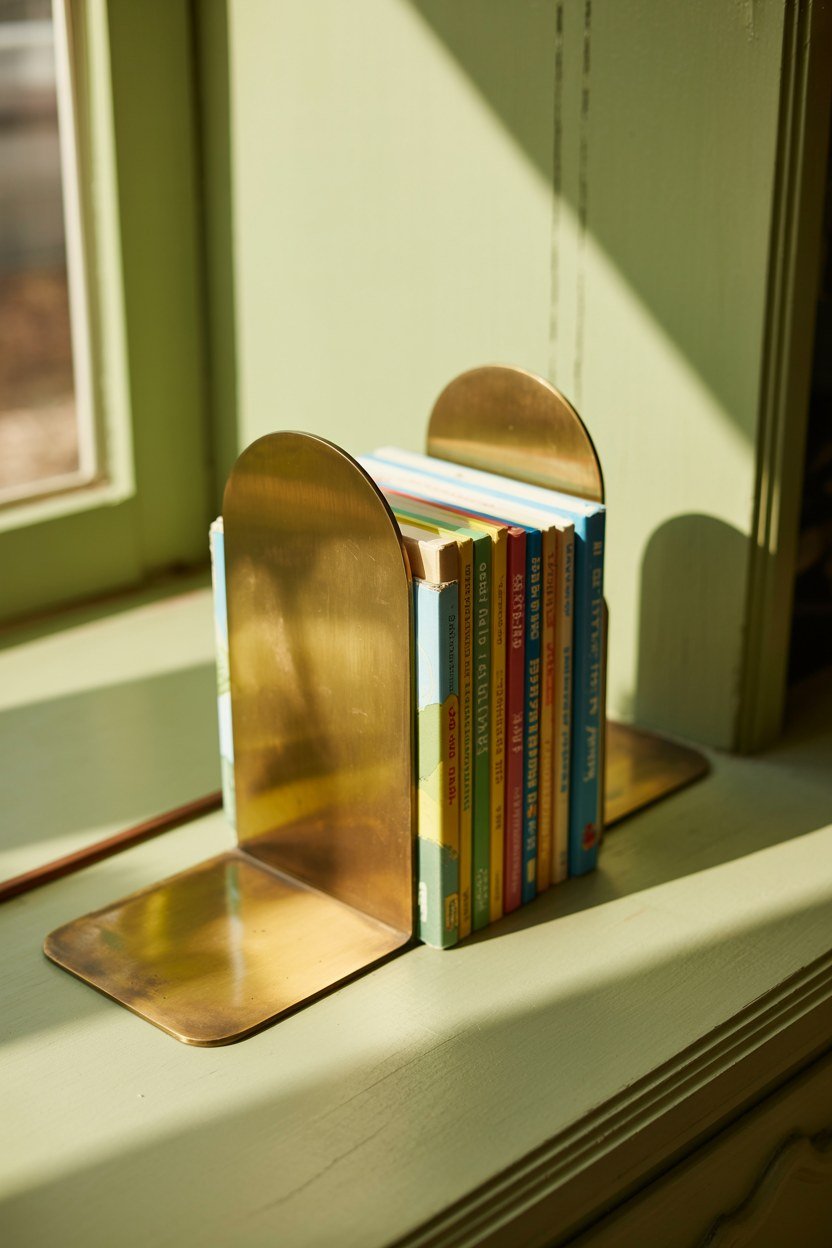
Bookends are a small, contained way to bring in a metallic accent, and they serve a genuine function on any shelf holding more than a few books. A pair in brass, gold or rose gold adds sparkle exactly where a child’s growing book collection sits. It costs less than almost anything else on this list.
Choose a simple geometric shape, such as a triangle, arch or cloud, over an overly literal or babyish design like a specific cartoon character, since simple shapes suit the room for longer as the child’s own tastes develop and change. A character themed pair is often outgrown within a year. A simple shape just gets restyled around as the room changes.
Weight matters more than most people expect. A lightweight metallic bookend looks the part but fails at its actual job, letting books slump sideways within days, so check the base weight or fill option before buying if the finish looks more substantial than it is. Pick a pair up in the shop to feel the weight for yourself.
What To Buy First
If choosing between a shelf, a lamp and bookends on a tight budget, bookends are the cheapest metallic accent on this entire list and one of the easiest to swap out later if tastes change, making them a low risk way to test whether the metallic tone works in the room before committing to bigger pieces. A pair costs little enough to change your mind later without any real loss. That is exactly what makes it a sensible first purchase.
Avoid buying bookends before there are enough books to need them, since a single pair sitting mostly empty on a shelf looks like clutter rather than a useful, styled object doing its job. Wait until the collection actually needs the support. A shelf half full of books does not need bookends at all yet.
15. Leave The Largest Surfaces Free Of Metallic Finish
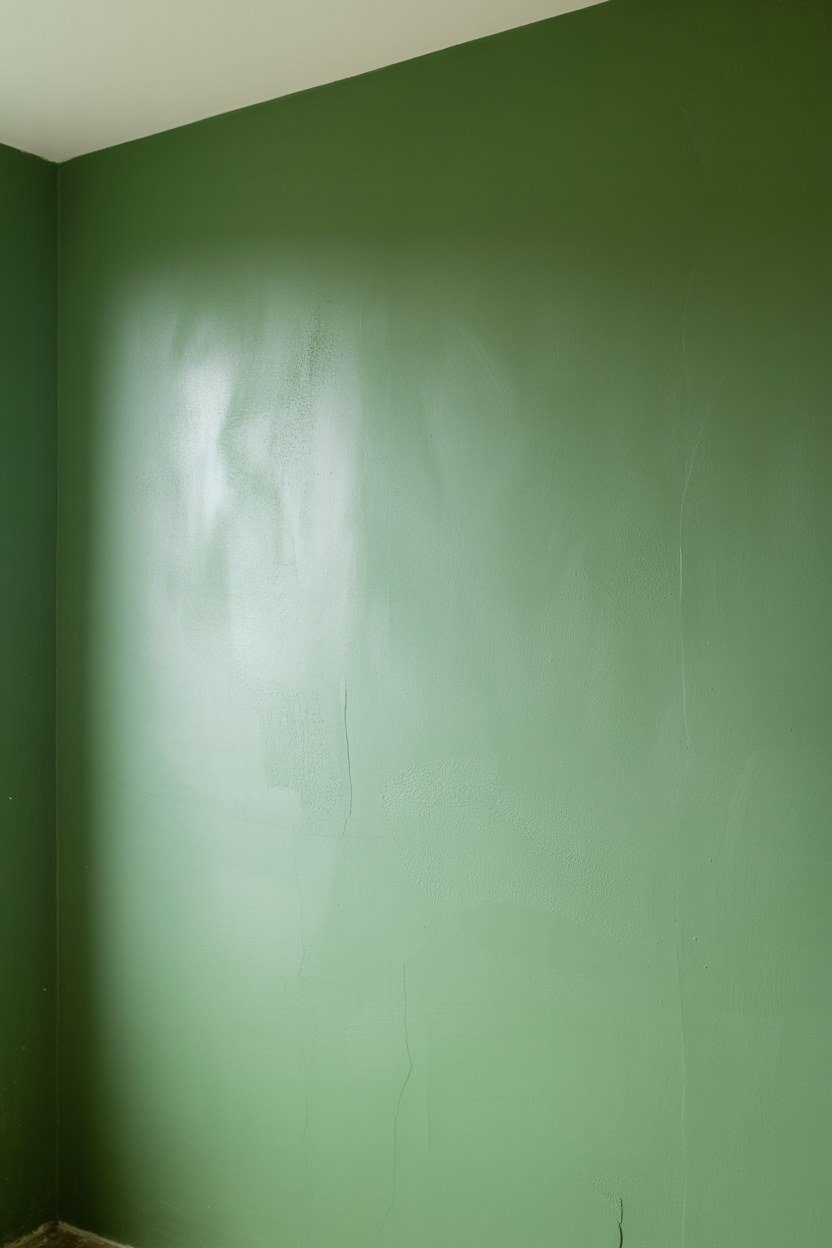
The walls, the floor and the main furniture surfaces, aside from small accent legs or hardware, should stay in soft, matte, child friendly finishes. Metallic works because it contrasts against these calmer surfaces, and covering too much of the room in shine removes that contrast entirely. The plain surfaces are doing just as much work as the shiny ones.
Think of metallic accents as the room’s jewellery rather than its clothing. A person wearing head to toe sequins looks costumed, while the same person in a simple outfit with one well chosen gold necklace looks elegant, and a kids bedroom works exactly the same way. One well chosen accent beats a room covered in them.
Count the metallic elements once the room feels finished. If there are more than five or six distinct metallic pieces in a single room, the effect has likely tipped from refined into overdone, and it is worth removing the piece that matters least rather than adding anything more. The room will read as calmer for it.
How To Hold The Line
Photograph the finished room and look at the photograph rather than standing in the room itself. A photograph flattens the space and makes it much easier to spot where metallic finishes have crept in and started to dominate rather than accent. Do this check every few months rather than once.
Revisit the room every few months as the child’s needs and interests change. It is far easier to remove or swap one overused metallic piece early than to redo an entire scheme once every surface has quietly accumulated its own gold or brass touch. Small course corrections beat a full redo.
What Metallic Finishes Cost To Add To A Kids Bedroom
The good news for parents is that the highest impact metallic changes on this list, hardware, curtain rods and small accessories, are also among the cheapest. A full hardware swap, a mirror and a pendant light together cost far less than a single piece of new furniture, yet transform how luxurious the room feels. Start with these before spending on anything larger.
Furniture with built in metallic accents, such as a bed frame with gold legs or a ceiling fan with a brass finish, represents the larger investments on this list, and these are worth prioritising for pieces that will stay in the room for years rather than through a single decorating phase. Treat them as an investment rather than a passing trend. Choosing them well the first time avoids paying for them twice.
The table below gives a rough sense of where the money goes across a full metallic refresh, since prices vary considerably by retailer and quality tier. Treat it as a guide to prioritising spend rather than a fixed budget. Local prices will vary the actual figures considerably.
| Item | Relative cost | Priority |
|---|---|---|
| Drawer pulls, hardware | Low | Do first |
| Mirror, wall shelf | Low to moderate | Early addition |
| Bedside lamp, bookends | Low | Easy to swap later |
| Curtain rods, wallpaper | Moderate | Mid project |
| Bed frame, ceiling fan | High | Long term investment |
The Mistakes That Make Metallic Feel Cheap Rather Than Luxurious
Mixing metal tones is the single most common mistake in this category. A room with brass hardware, a silver mirror frame and a copper light fixture all fighting for attention reads as unplanned rather than eclectic, and the fix costs nothing beyond choosing one tone and sticking with it going forward. Write the chosen tone down so it does not get forgotten mid project.
Choosing painted plastic over genuine metal or proper plating is the second mistake, and it shows up fastest on the pieces touched most, like drawer pulls and lamp switches. The painted finish wears through at exactly the points fingers grip daily, leaving a shabby patch within the first year rather than the decade a solid finish would last. The price difference rarely reflects that gap in lifespan.
Overloading the room is the third mistake, adding metallic finish to every possible surface until the effect cancels itself out entirely. A room needs its plain, matte, restful surfaces just as much as its shiny accents, and the contrast between the two is what actually creates the sense of luxury in the first place. Without that contrast, shine simply becomes noise.
The One To Watch For Long Term
A child’s taste changes fast, often within a single school year, and a heavily committed metallic scheme, particularly wallpaper or a fully metallic bed frame, can feel dated to the child themselves well before it is worn out physically. A child’s own opinion shifts faster than most furniture actually wears out. Plan the biggest purchases around that reality rather than against it.
Favour smaller, swappable metallic accents over large, fixed ones wherever the budget allows, so the room can evolve alongside the child without a full redecoration. A dresser can keep its brass pulls for a decade, but a themed rose gold rug might need retiring within two years. Plan the larger purchases around whichever changes more slowly.
Conclusion: The Choices That Make Metallic Finishes Work
If this list distills to three decisions, they are these: choose one metal tone and repeat it, spend on genuine metal or plating for anything touched daily, and leave the majority of the room’s surfaces in calm, matte finishes that let the metallic accents actually stand out. Those three decisions carry the whole approach. Everything else on this list is a variation on them.
Start with the cheapest, most reversible changes, hardware, a lamp, a mirror, and let the room tell you whether the tone and the amount feel right before committing to bigger pieces like a bed frame or a feature wall. Restraint applied early saves money and second guessing later. It is far cheaper to add a piece than to remove one.
A luxury kids bedroom built on metallic finishes should still feel, first and foremost, like a room a child wants to spend time in. The gold and brass are there to elevate that experience, not replace the comfort, colour and personality that actually make a child’s room feel like theirs. The metal should support the room, never define it.
Frequently Asked Questions About Metallic Finishes In Kids Bedrooms
Is metallic decor safe for a young child’s bedroom?
Yes, provided sharp or fully rigid metal edges are avoided at a child’s height and any metal furniture legs or frames are properly weighted and stable. Choose rounded profiles and check stability ratings for anything a child might climb, pull or lean on.
Which metallic finish suits a gender neutral kids room?
Warm brass and matte gold work well across most colour schemes and tend to feel less tied to a specific style trend than very bright rose gold or high shine chrome, making them a safer long term choice for a room that needs to suit changing tastes.
How much metallic is too much in one bedroom?
As a rough guide, more than five or six distinct metallic pieces in a single room starts to tip from refined into overdone. Repeating one tone in small doses, hardware, a lamp, a frame, reads as elegant, while covering every surface removes the contrast that makes it work.
Can I add metallic finishes to a rental without permanent changes?
Yes. Removable metallic wall decals, freestanding lamps, curtain hardware that clamps rather than drills, and swapped out furniture hardware all deliver the look without any permanent alteration to the room.
Will a metallic finish clash with existing kids room decor?
Usually not, as long as one tone is chosen and used consistently. Metallic accents generally complement existing colour schemes rather than compete with them, since gold, brass and rose gold all read as neutral against most colour palettes.
How do I clean metallic finished furniture and hardware in a kids room?
A soft, slightly damp cloth handles most daily marks on genuine metal or good quality plating. Avoid abrasive cleaners or scouring pads, which can dull a plated finish, and dry the surface promptly to prevent water spotting on polished metal.