
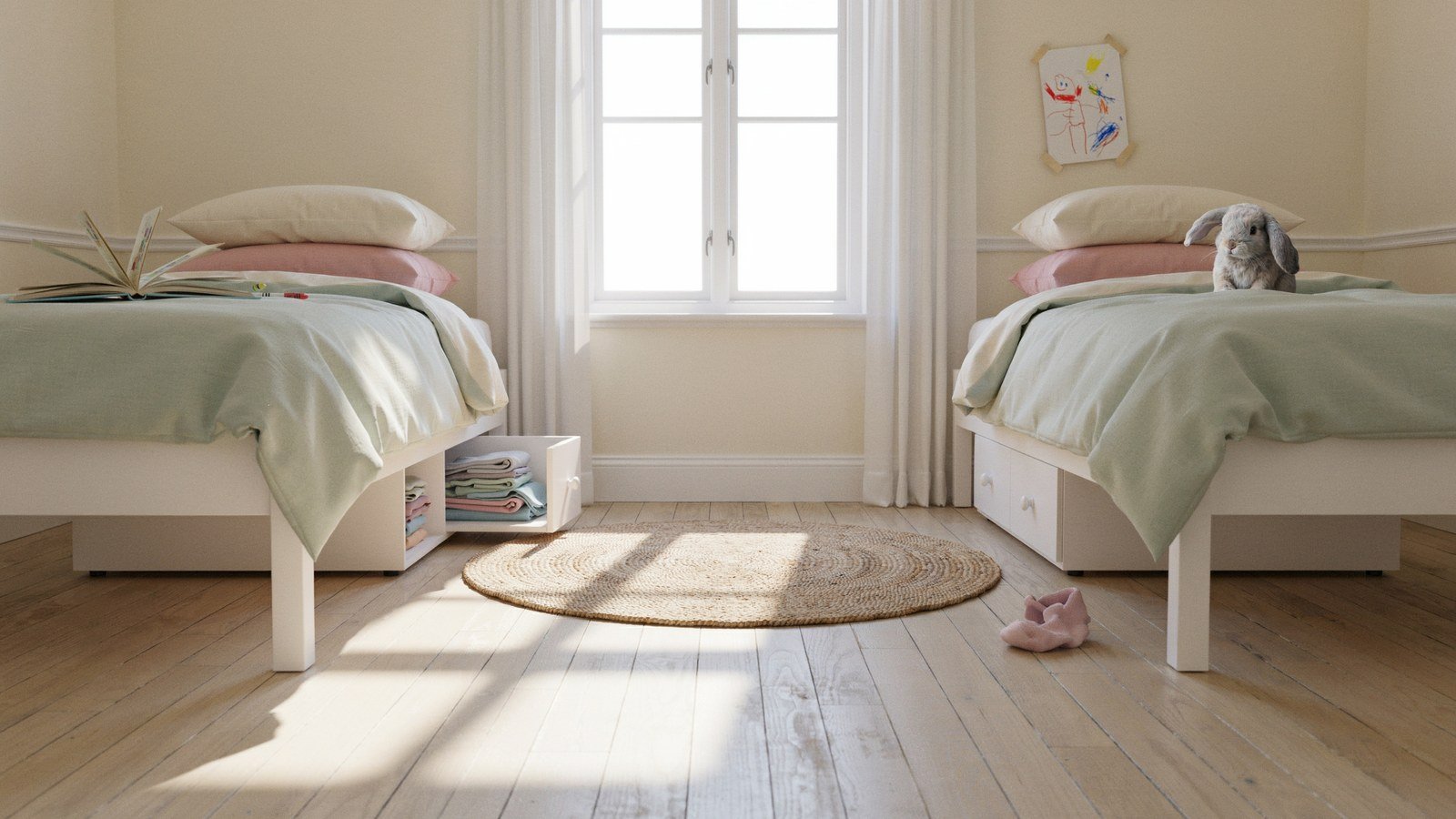
Symmetry in a shared kids room is not a design preference. It is conflict prevention, and it works because children measure fairness with their eyes.
I learned this watching two siblings argue for a week about a room where one bed sat under a window and the other did not. The room looked fine. It was not equal, and they knew it before I did.
Below are fifteen decisions that make a shared room feel fair, from mirroring the beds to giving each child something that is only theirs. Most cost nothing beyond planning.
Why Symmetry Settles Arguments Before They Start
Children audit their space constantly. Whoever gets the window, the bigger drawer or the better light knows it, and so does the other one.
Mirroring removes the argument by removing the comparison. Two identical sides means there is nothing to negotiate every night.
It also makes a small room read as calm. Matching pairs create visual order, which matters when two people are storing two sets of everything.
| Element | Symmetrical Approach | Why It Helps |
|---|---|---|
| Beds | Identical, mirrored either side | No better or worse side |
| Storage | Same drawer count each | Removes the fairness audit |
| Lighting | Own light per bed | Independent bedtimes |
| Display | Equal wall area each | Space for individuality |
| Flooring | One rug centred between | Shared ground, not divided |
1. Mirror The Beds Along One Axis
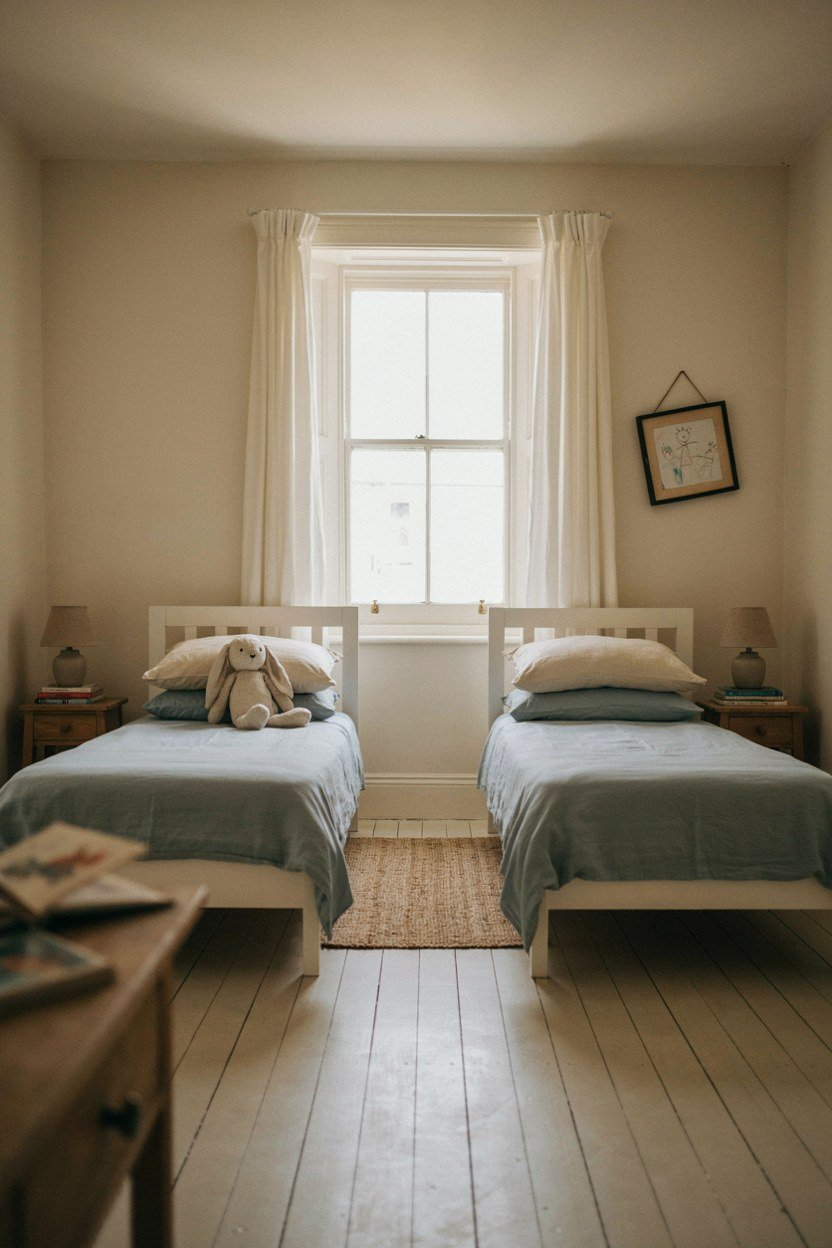
Start with the beds and let everything else follow. Two beds against the same wall, or either side of a window, is the cleanest arrangement.
Head to head in a corner works in narrow rooms. It keeps both children off the traffic route and leaves the floor centre clear.
Avoid stacking one bed under a feature the other cannot reach. A window, a radiator or a good reading light on one side only is the classic trigger. If one side has an advantage you cannot remove, rotate the beds termly and say so in advance.
2. Give Each Child Identical Storage
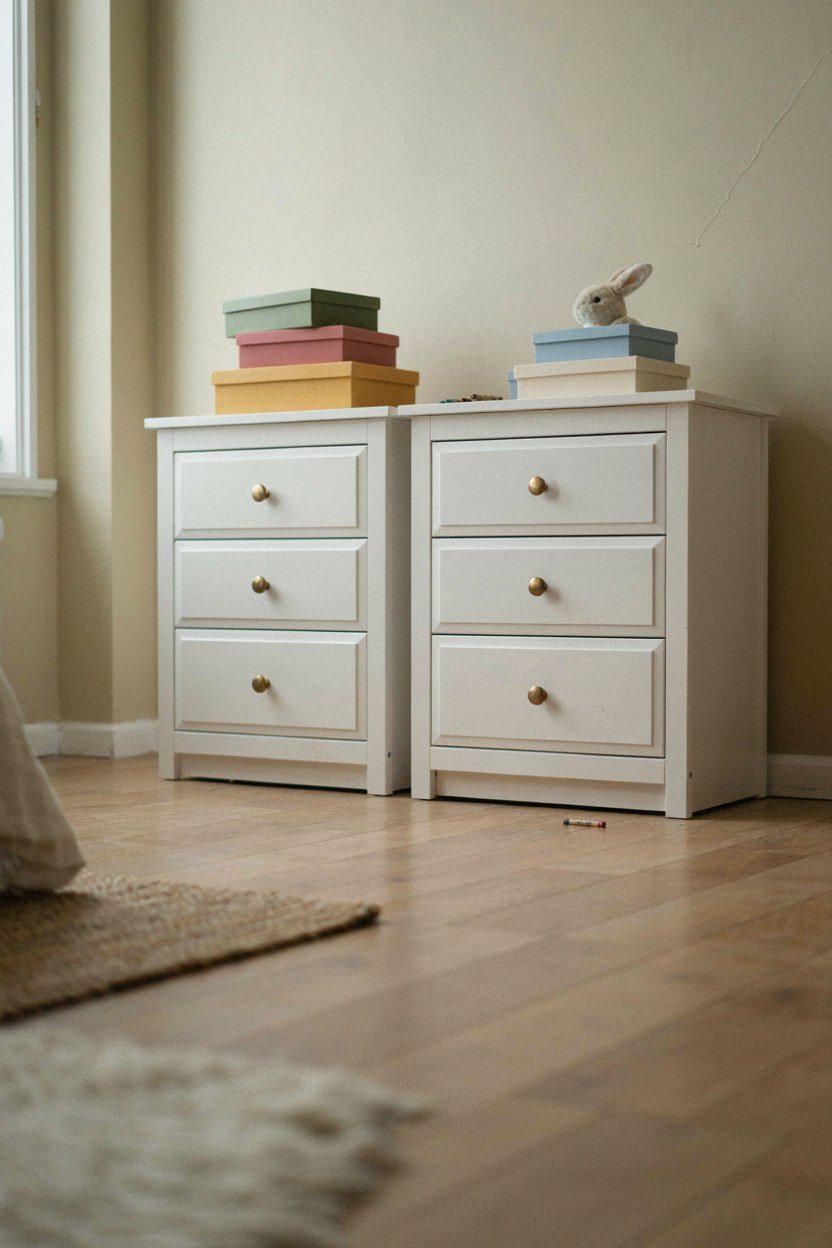
Match drawer for drawer. Two matching chests beat one large unit, even when the large unit holds more.
Count the hanging space too. If one gets the wardrobe rail and the other gets shelves, that difference will be noticed within a day.
Label by colour rather than name where you can. It survives the day one of them decides they hate their name label. Colour also works before either child can read.
3. Fit A Reading Light To Each Bed
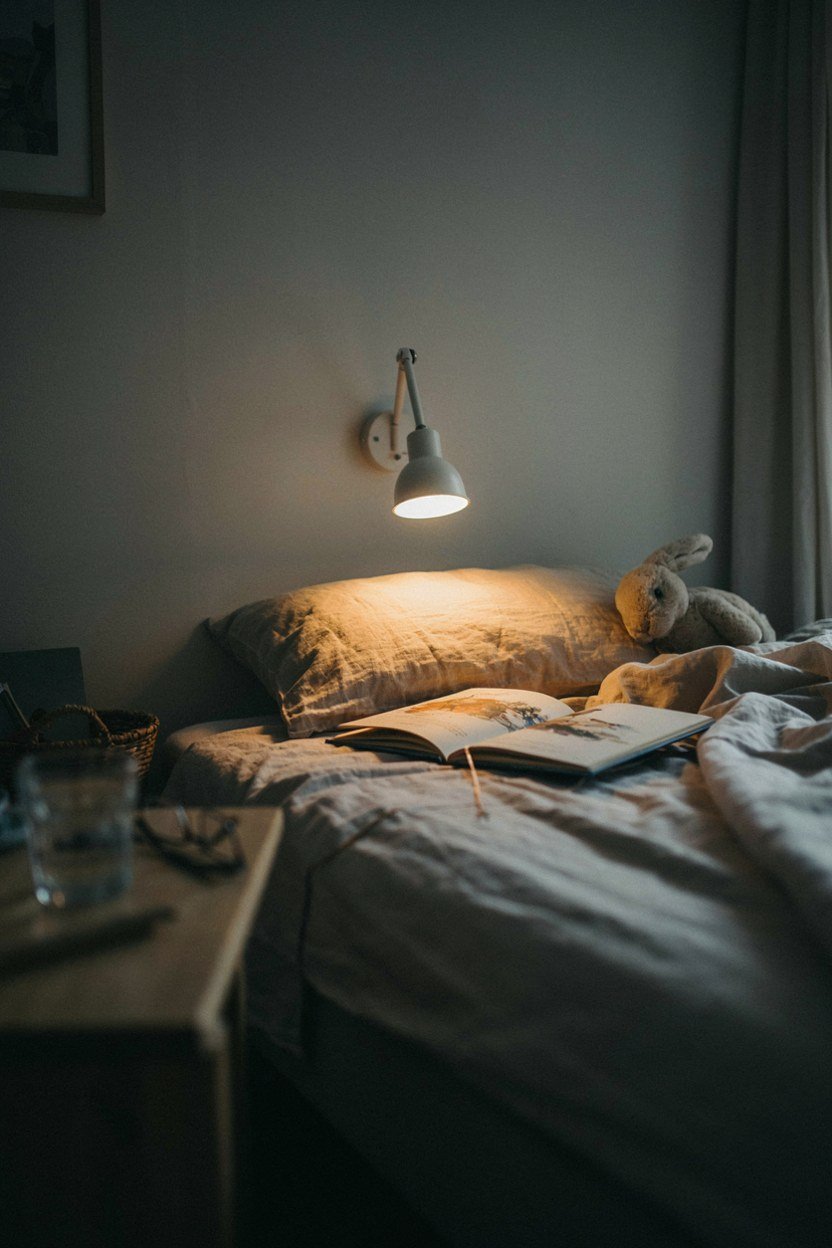
Independent lights solve independent bedtimes. Wall mounted is better than a lamp because it frees the surface and cannot be knocked over.
Put the switch within reach of the pillow. A child getting out of bed to turn off a light is a child getting out of bed.
Warm bulbs, and dimmable if you can. It makes the difference between winding down and being woken up. A dimmable light also lets one child read while the other sleeps.
4. Split The Wall Above Each Bed For Personality
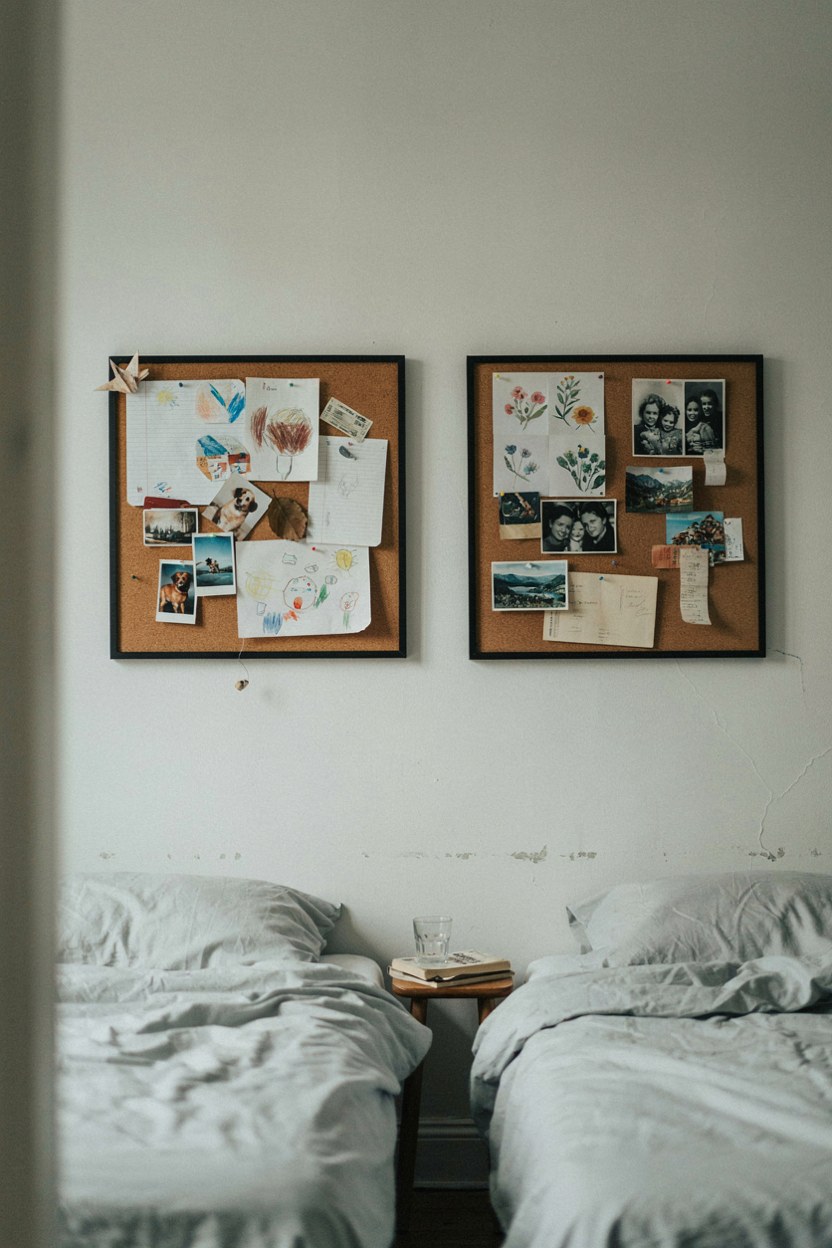
Symmetry does not mean identical taste. Give each child the same amount of wall and let them fill it differently.
A pinboard, a picture ledge or a peg rail on each side gives structure to the chaos. The frame is symmetrical; the contents are not.
Set the boundary clearly. Same size, same height, same distance from the bed, and the rest is theirs. Policing the contents defeats the purpose of giving them the space.
5. Choose One Rug That Sits Between Them
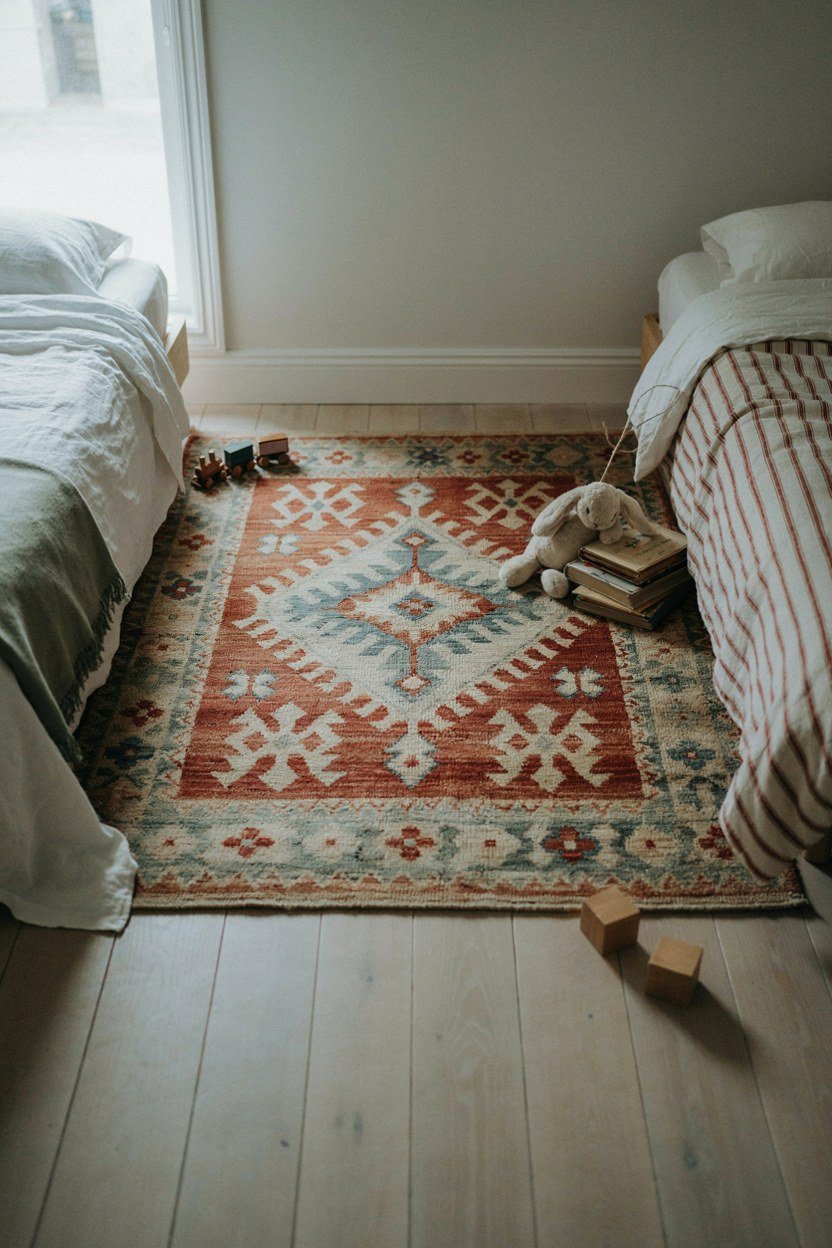
A single central rug reads as shared ground. Two small rugs divide the floor into territories.
Size it to sit between the beds with a margin on each side. A rug that touches one bed and not the other quietly favours somebody.
Choose a flat weave. It survives being crawled on, dragged across and cleaned repeatedly. A washable one is worth the small premium in a shared room.
6. Keep The Palette Shared And The Accents Personal
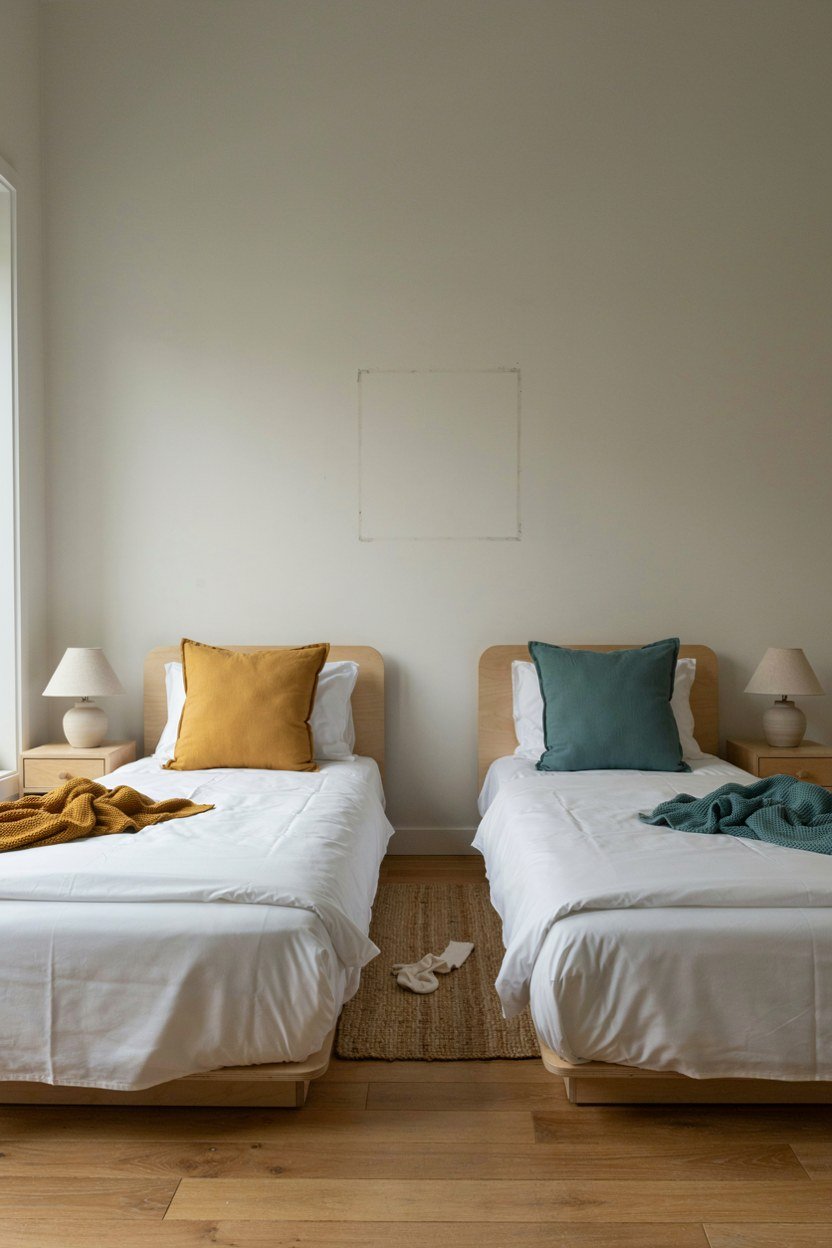
Pick one base palette for the whole room. Two competing colour schemes in one small space is what makes shared rooms feel chaotic.
Then give each child one accent colour. It appears on their bedding, their storage boxes and their pinboard, and nowhere else.
Neutral walls make this easy. Repainting a pinboard is a Saturday; repainting a room because a favourite colour changed is not. Favourite colours change roughly once a year at primary age.
7. Use Bunk Beds Only When The Floor Demands It
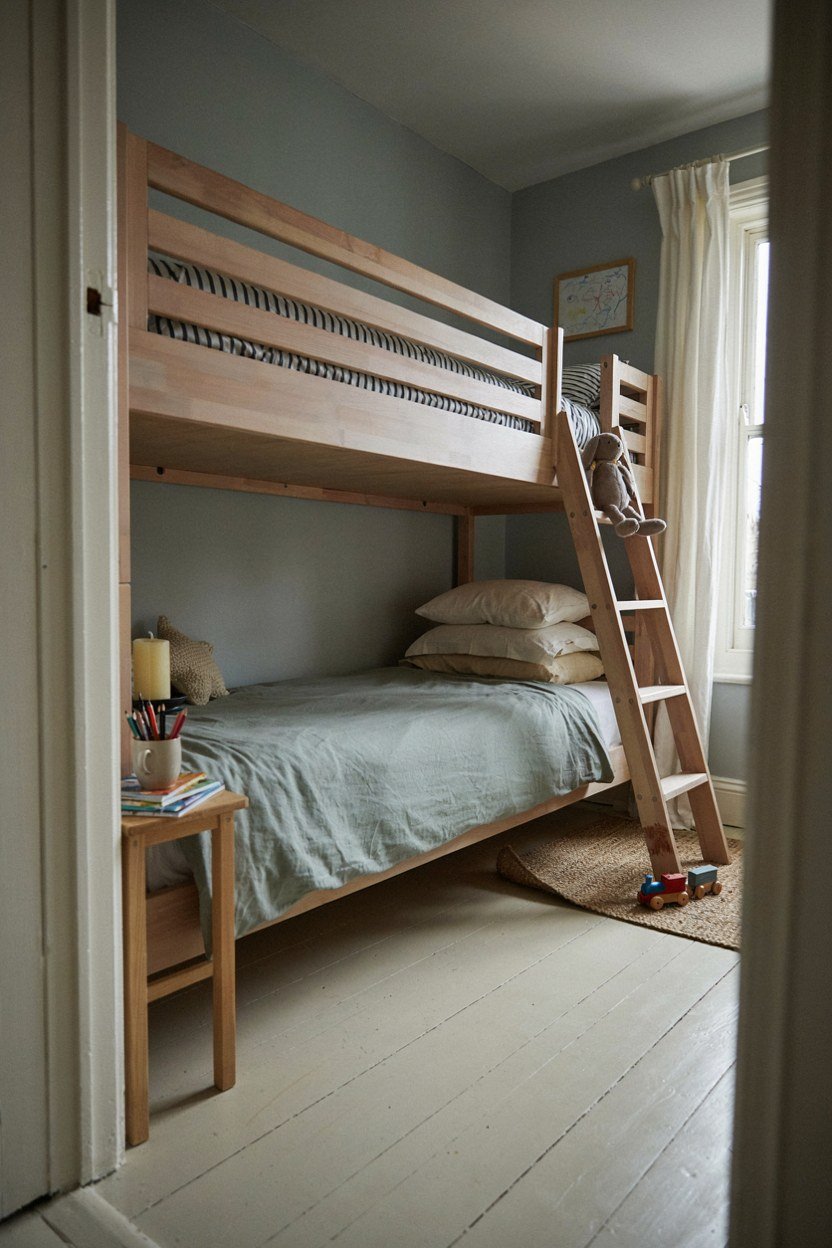
Bunks buy floor space and cost fairness. The top bunk is better and both children know it.
If you use them, rotate on a schedule and say so upfront. A written rotation prevents the negotiation happening nightly.
L shaped or staggered bunks are the fairer version. Neither position is obviously the prize. They take more floor than a straight stack, which is the trade you are making.
8. Create A Visual Divider Without Building A Wall
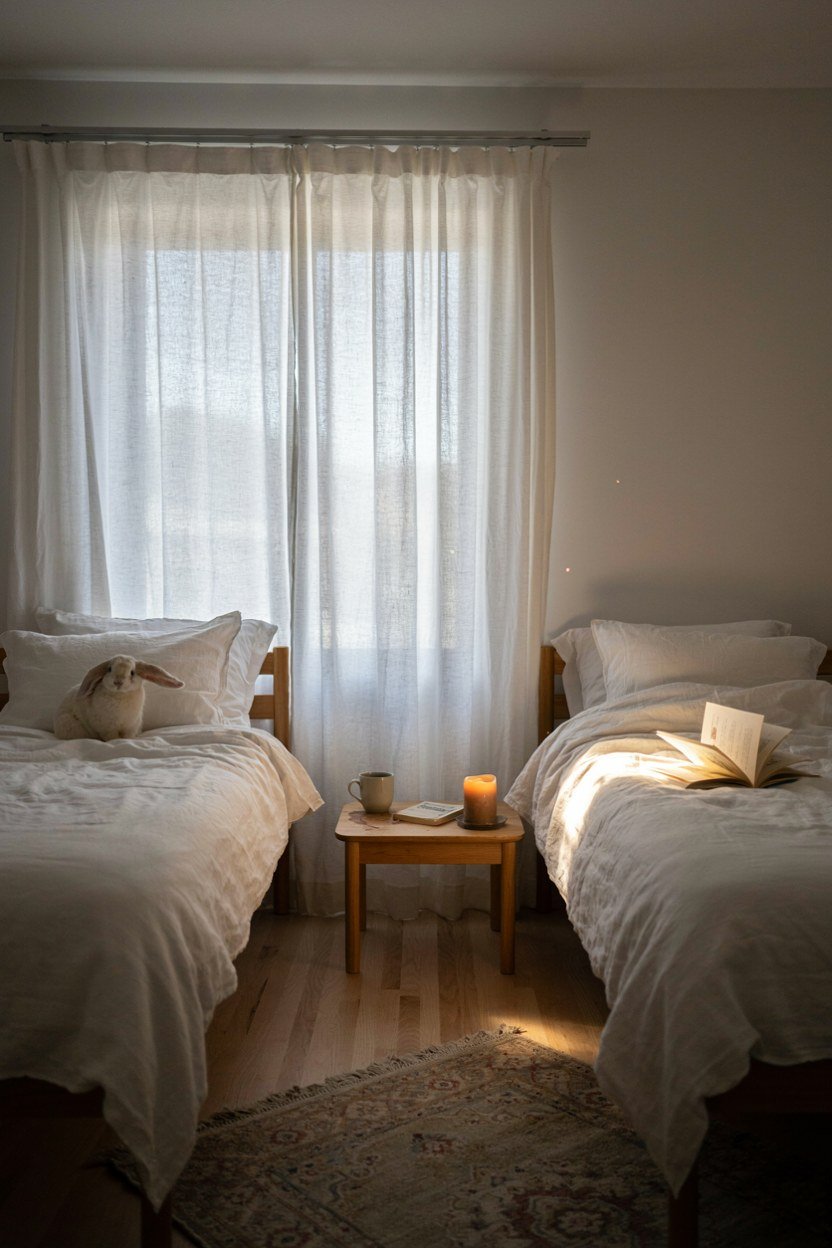
Children need somewhere to not be looked at. A curtain on a ceiling track, an open shelf unit or a tall headboard gives that without closing the room.
Keep the divider low or transparent. A solid partition halves the light and makes both sides feel like corridors.
Make it removable. The need for separation changes fast as they get older. What feels unnecessary at six is usually requested by ten.
9. Give Each Child One Thing That Is Only Theirs
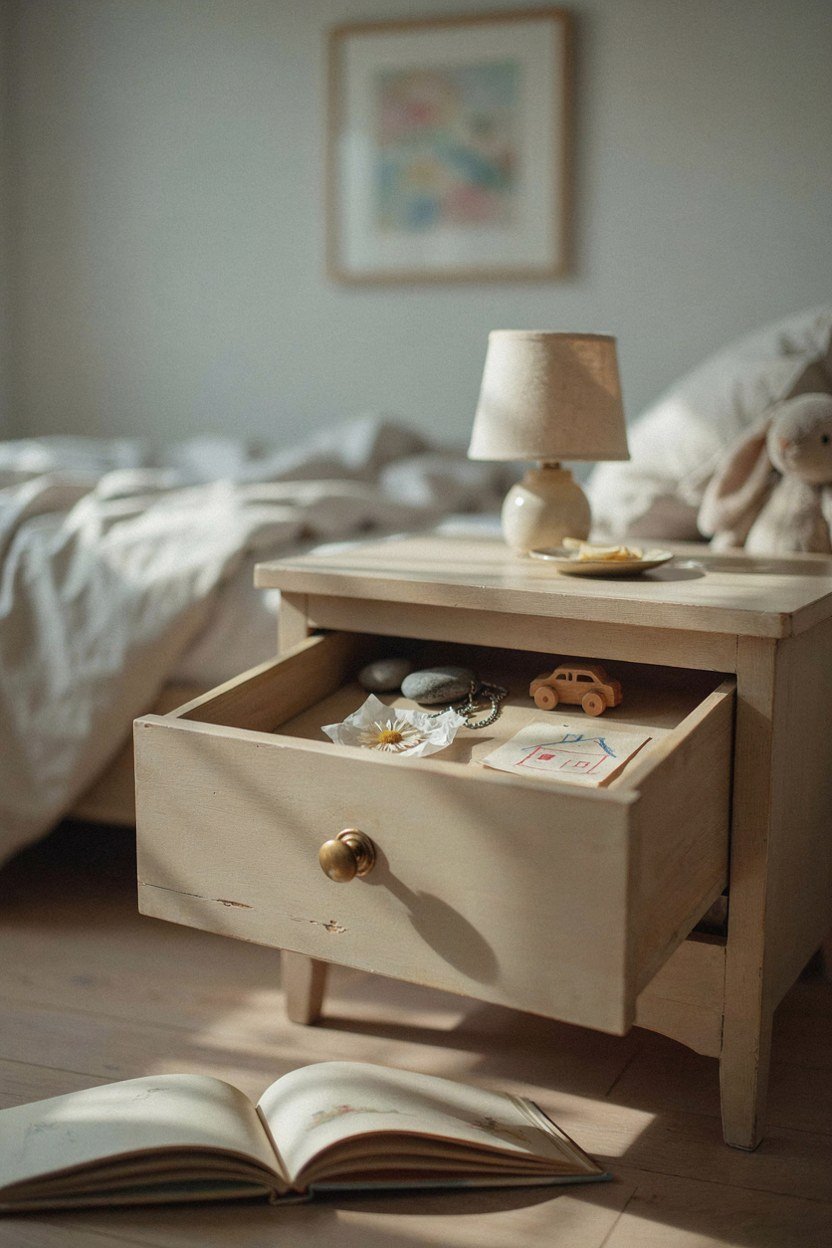
Symmetry handles fairness; ownership handles identity. One lockable drawer, one shelf, one box that the other does not open.
Make it genuinely private. A shared room with nothing private in it is the thing older children resent most.
Keep it small. One drawer is enough to change how the room feels to them. The point is that it exists, not how much it holds.
10. Match The Bedding Format, Not The Pattern
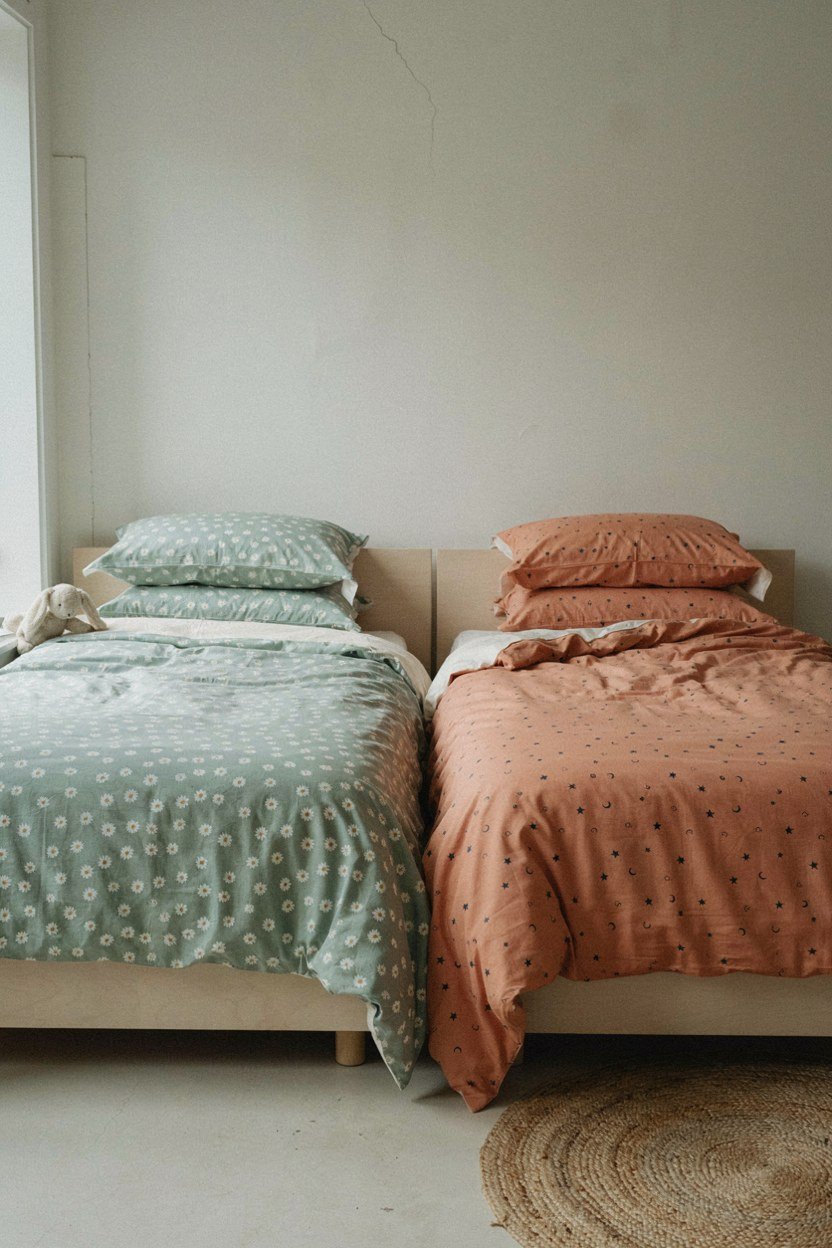
Same size, same tog, same pillow count. Different pattern entirely.
This is the cheapest way to let two personalities coexist without the room fragmenting. The shapes match, the fabrics do not.
Buy the plain fitted sheets in the shared base colour. It pulls the two beds back together visually. Matching the base layer is what lets the top layer differ without chaos.
11. Plan Shared Surfaces At The Right Height
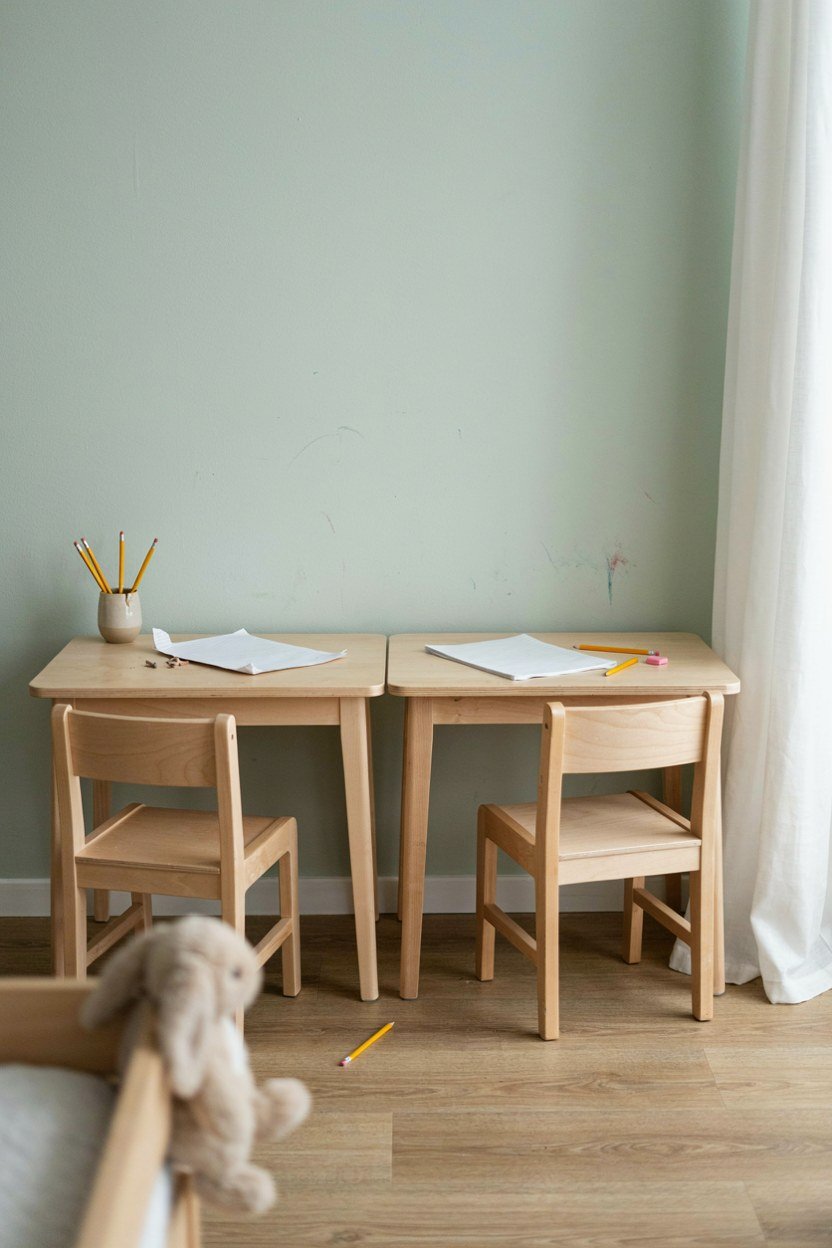
One desk shared by two rarely works past a certain age. Two small surfaces beat one large one.
If space forces sharing, split it clearly with a shelf or a divider down the middle. Ambiguous shared surfaces become disputed surfaces.
Check the heights against each child, not the older one. A younger sibling working at the wrong height simply stops sitting there. An adjustable chair is cheaper than a second desk.
12. Put Toy Storage In The Middle
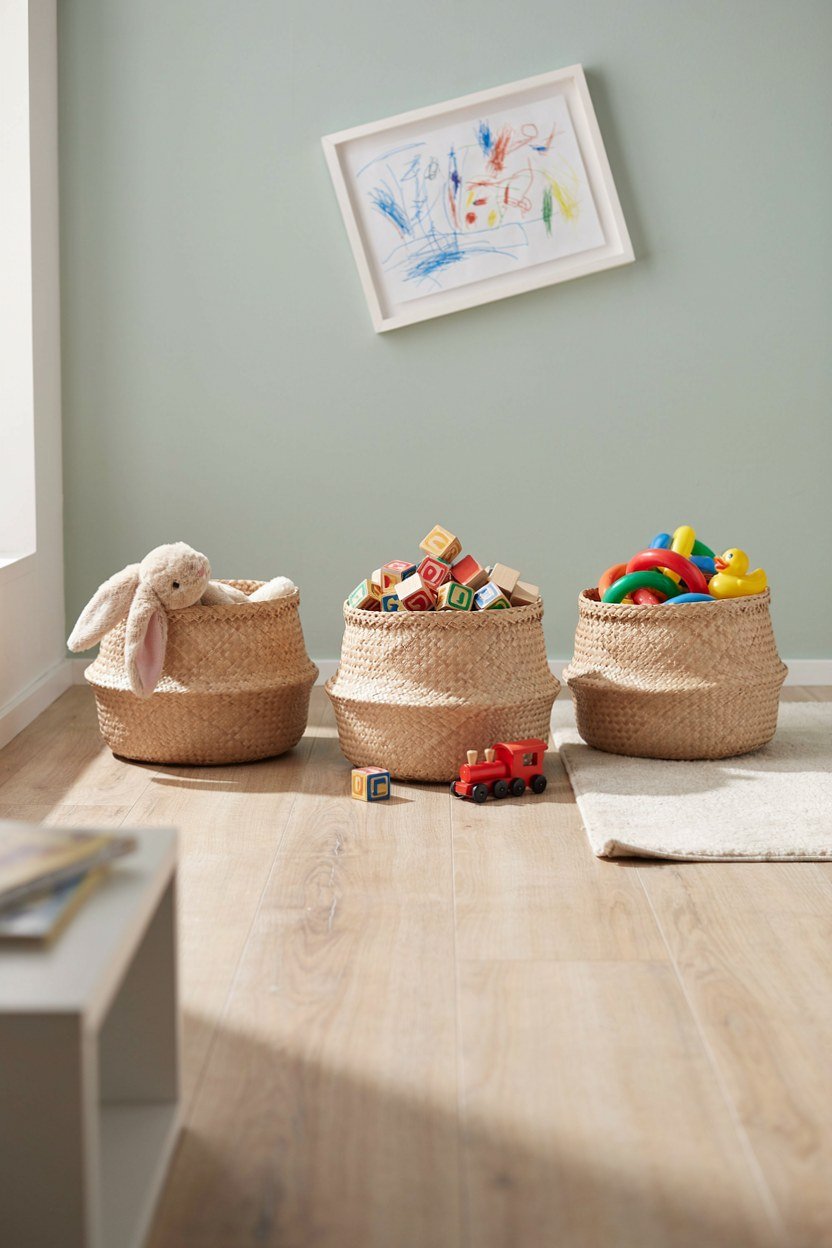
Shared toys belong in shared space, not under one bed. Central storage stops ownership creeping in by proximity.
Low open baskets work best for younger children. Anything with a lid gets ignored.
Personal toys go in personal storage. Separating the two categories physically prevents most of the arguing. Children are far better at sharing when the boundary is visible.
13. Keep The Route To The Door Clear For Both
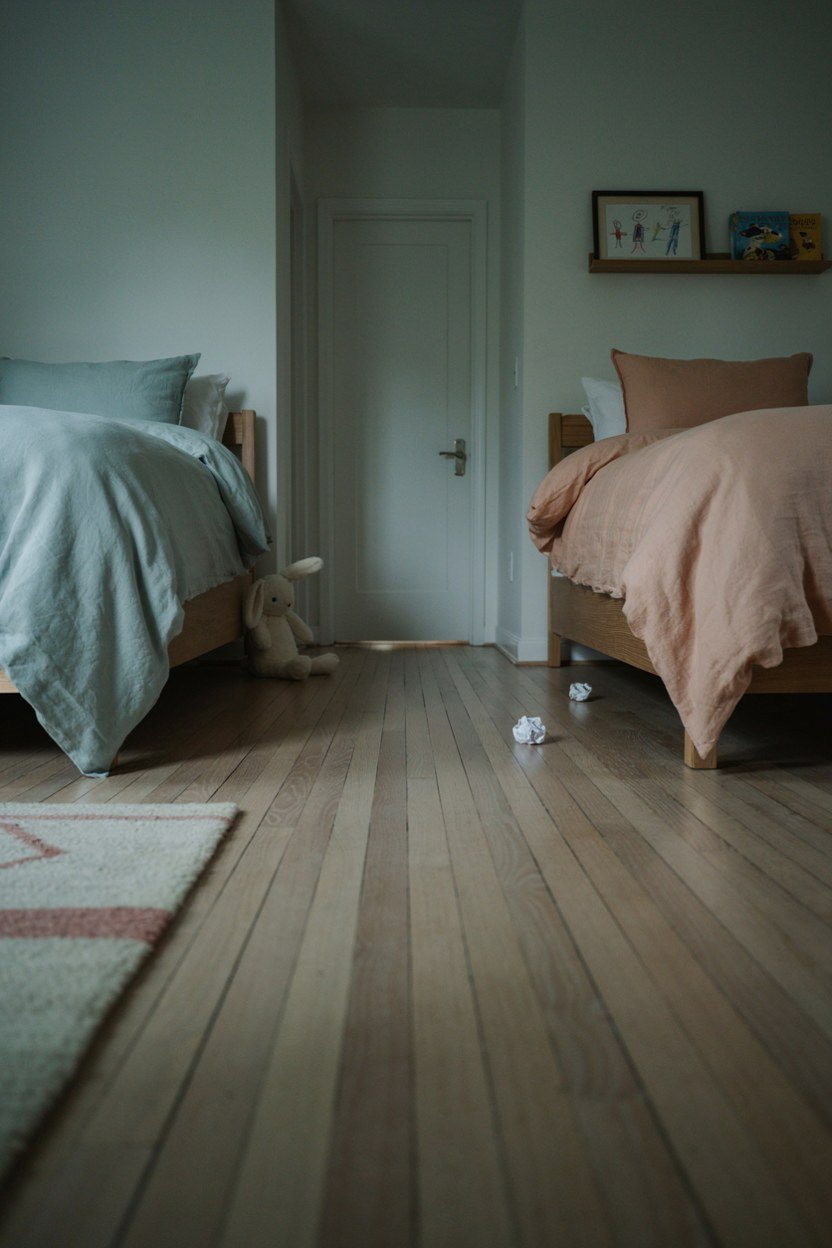
Both children need an unobstructed path out. A bed that blocks the other’s route creates a nightly irritation and a safety issue.
Leave at least two feet of clear floor along the main route. Measure it rather than eyeballing it.
Check it at night with the lights off. The route that works in daylight is not always the one that works at three in the morning. A low plug in nightlight solves most of what is left.
14. Plan For The Room Growing Up
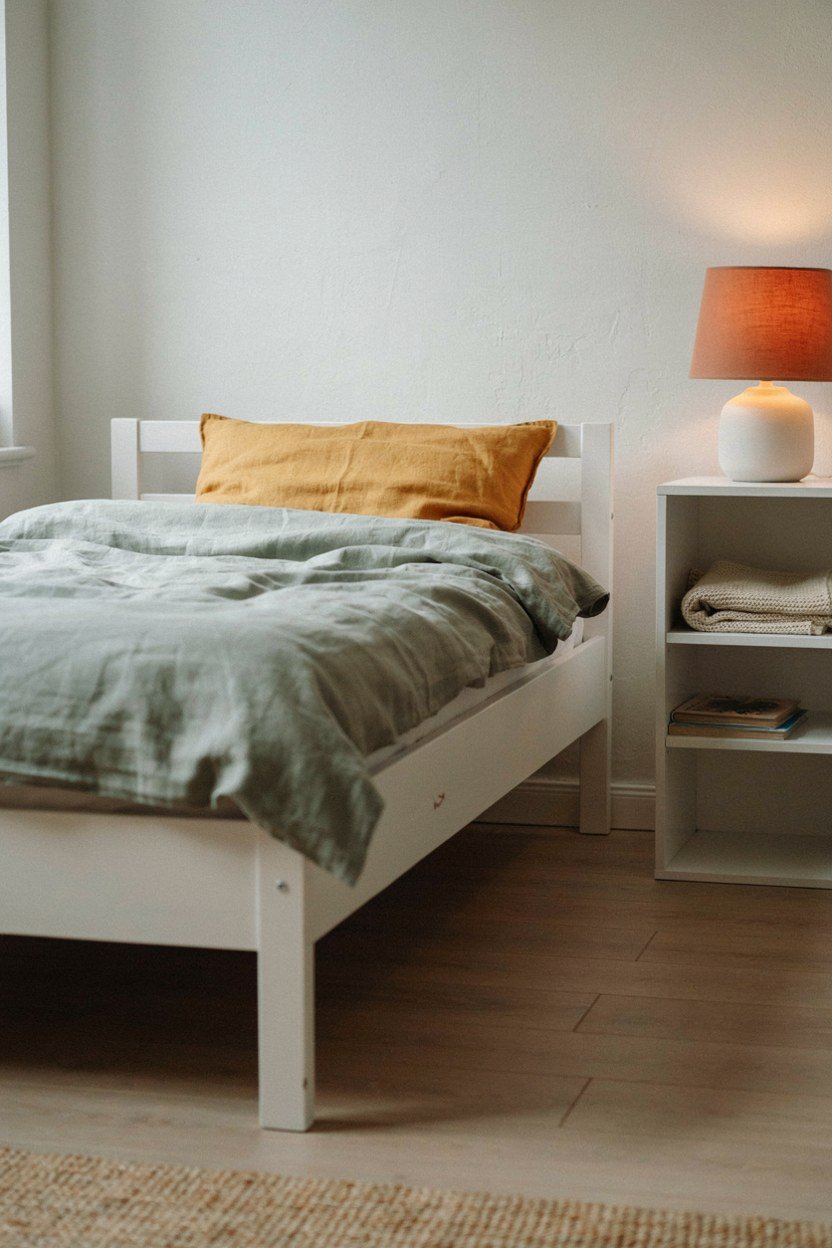
Choose furniture that survives a change of taste. Neutral beds and plain storage last, character themes do not.
Keep the theme in the removable layer: bedding, pinboard, wall stickers, lampshades. All of it changes in an afternoon.
Leave a wall free for the future. A desk wall becomes necessary sooner than most parents expect. Homework arrives before the room feels ready for it.
15. Let Them Choose Within Your Structure
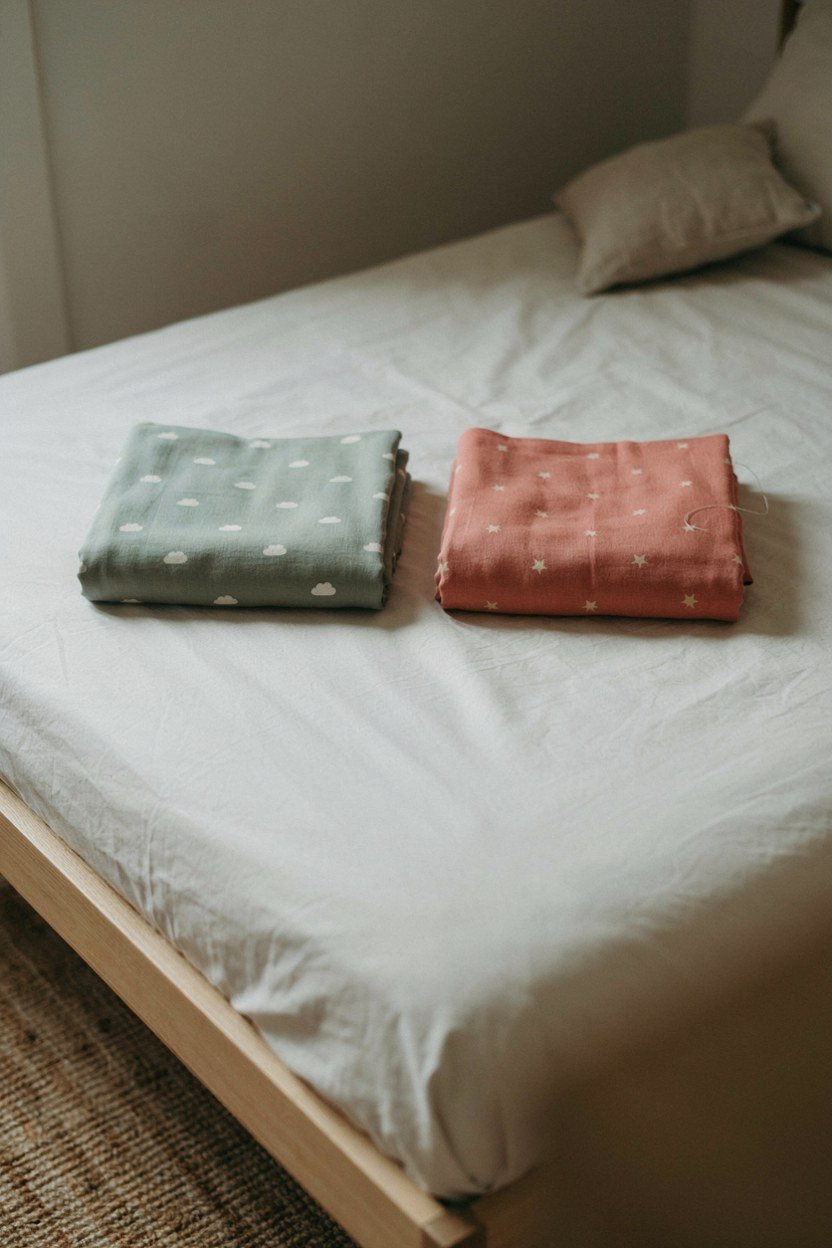
Give real choices inside fixed limits. Two bedding options you are happy with, rather than an open question.
Let each pick their accent colour. Ownership of one decision buys a surprising amount of cooperation about everything else.
Set the rules together. A room they helped arrange is a room they argue about less. Being consulted matters more to them than the decision itself.
What A Shared Kids Room Costs To Set Up Properly
Matching furniture is the main expense and the one worth paying for. Two identical chests cost more than one big unit and prevent months of friction over who got the bigger share. Buying plain also means the beds survive the next three changes of taste.
Lighting is the cheapest high impact item. Two wall lights transform how the room functions at bedtime, and they cost less than almost anything else in the room.
Textiles are where you personalise without spending much. Bedding, boxes and pinboard contents carry all the individuality, and every one of them is replaceable in an afternoon.
| Item | Priority | Rough Spend |
|---|---|---|
| Two matching beds | Buy plain, buy once | High |
| Identical storage each | Prevents the fairness audit | Mid to high |
| Two reading lights | Biggest bedtime improvement | Low |
| One central rug | Shared ground | Low to mid |
| Pinboard or ledge each | Personality within structure | Low |
| Divider curtain or shelf | Add when they ask for it | Low to mid |
Conclusion: What Actually Keeps The Peace
Three things do most of the work: mirror the beds, match the storage exactly, and give each child their own light.
Those cover the comparisons children actually make. Everything else is decoration, and decoration does not settle an argument about who got the better side.
Then leave room for difference. Identical structure with personal accents gives you a room that looks calm and still belongs to two people.
Frequently Asked Questions About Shared Kids Bedrooms
Does everything really need to match?
The structure does: beds, storage and lighting. Bedding, art and accent colours should differ, or the room has no personality and neither child feels it is theirs.
How do I make bunk beds feel fair?
Rotate on a set schedule and agree it in advance, in writing if they are old enough to read it. Staggered or L shaped bunks are fairer than a straight stack.
What is the best bed layout for a narrow room?
Head to head along one wall, or either side of the window if there is space. Both keep the walkway clear and give each child their own corner.
How much space should I leave between beds?
Two feet minimum, more if you can. It gives each child a sense of their own edge and keeps the route to the door clear at night, which matters more than it sounds.
Should siblings of different ages share differently?
Yes. Older children need privacy more than symmetry, so a divider and a lockable drawer matter more as the gap widens. Symmetry still helps with the younger one.
How do I stop toys taking over?
Split shared toys from personal ones and store them in different places. Shared toys go centrally in open baskets, personal toys in each child’s own storage.
What if they want completely different themes?
Give them a shared neutral base and one accent colour each, carried through bedding and boxes. The room stays coherent and both still get what they wanted.