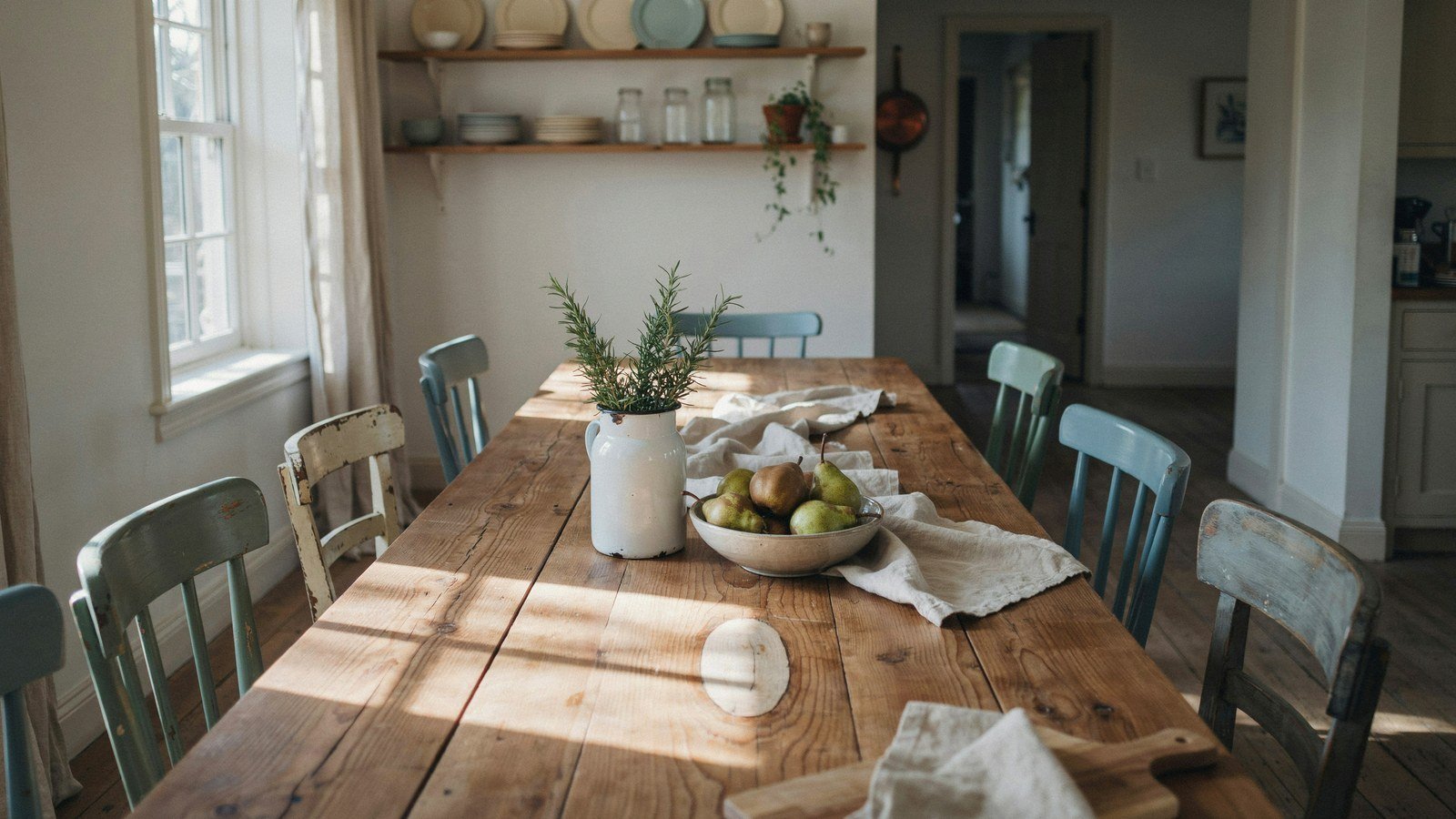
A reclaimed wood table is styled well when you can still see the wood. The marks, the colour changes and the old fixing holes are what you paid for, so the job is to arrange around them rather than over them. Cover the whole top with a cloth and you have spent good money on a surface nobody will ever look at.
My table came out of a school hall and has a row of drilled holes down one end where something was once bolted to it. I have stopped apologising for them and started leaving that end clear so people notice. It is the most commented on thing in the kitchen.
Below are fifteen ways to style a reclaimed table so it reads as a working country kitchen rather than a photograph of one. Some are about what you put on it, and several are about what you take off. The last few deal with keeping the top usable, which is the part most styling guides skip.
What Makes A Table Look Country Rather Than Themed
A country table looks used. Everything on it either has a job or looks like it recently did, which is why a bread board, a jug of herbs and a bowl of eggs all work while a decorative sign does not. The test is simple: if an object has no possible use, it probably belongs somewhere else.
The materials do the rest of the work. Wood, enamel, stoneware, linen, wicker and old glass all age visibly and sit together comfortably, because they share a matt, slightly irregular surface quality. Anything high gloss or perfectly uniform will fight the table rather than support it.
The third part is restraint, which is where most tables go wrong. A reclaimed top is already busy with grain, colour variation and old damage, so it needs fewer objects than a plain table, not more. Two thirds of the surface left clear is a reasonable target.
| Element | Reads as country | Reads as themed |
|---|---|---|
| Textiles | Linen runner, plain weave | Printed gingham with slogans |
| Tableware | Enamel, stoneware, old glass | Matching glossy dinner set |
| Greenery | Cut herbs, garden foliage | Florist arrangement in cellophane |
| Objects | Boards, jugs, baskets | Decorative signs and ornaments |
| Finish | Oiled, matt, visibly worn | High gloss lacquer |
What To Sort Out Before You Style Anything
Check the finish first, because it decides what you can safely put down. An oiled or waxed top will mark from a hot pan or a wet glass, while a hardwax oil resists both reasonably well. Knowing which you have tells you whether a trivet is a styling choice or a necessity.
Then measure the working clearances. You want about sixty centimetres of table width per person, and at least seventy five centimetres between the table edge and the nearest wall or unit for a chair to pull out. Styling a table that people cannot comfortably sit at is a common and expensive mistake.
Last, decide what the table is actually for. A table that is also a homework desk and a laptop stand needs a centre arrangement that lifts off in one movement, whereas a table used only for meals can carry something more permanent. Be honest about this before you buy a large centrepiece.
1. Let The Timber Be The Main Event
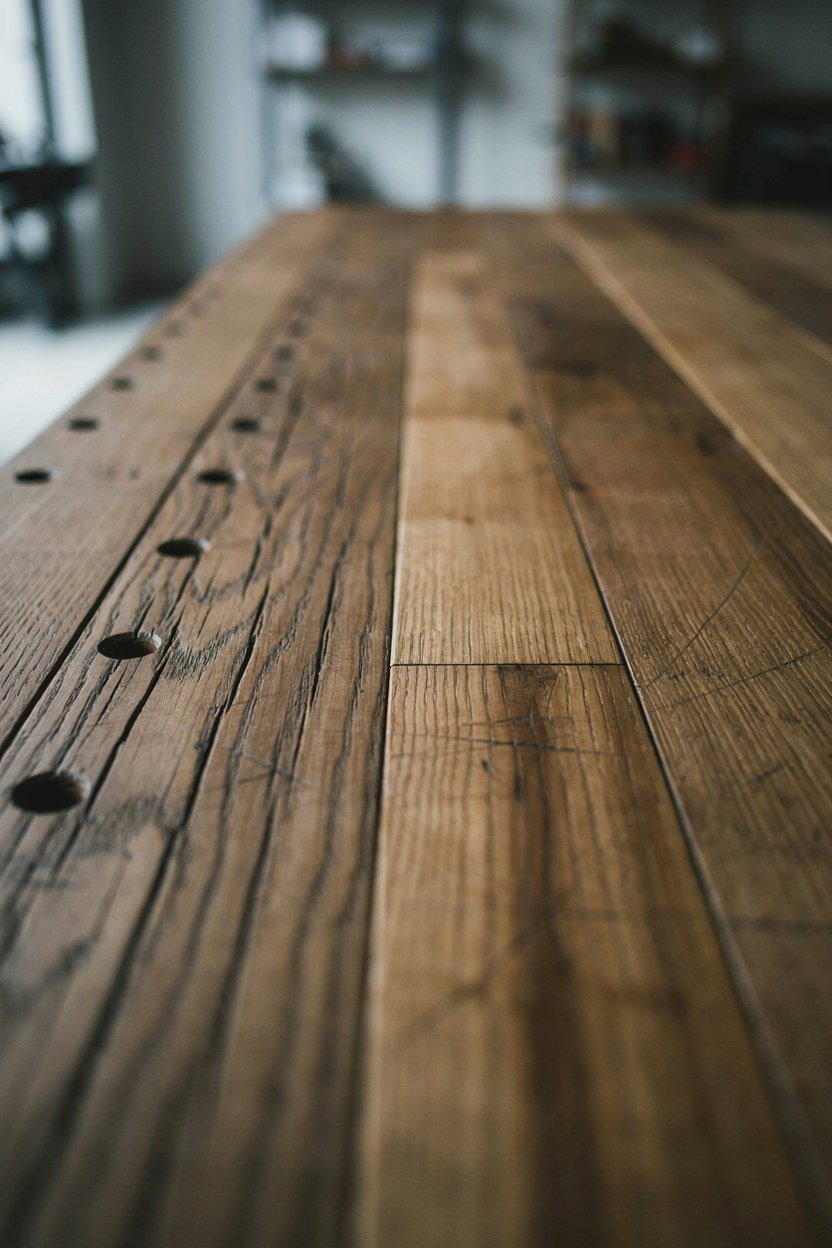
Start by clearing the table completely and looking at it. Note where the best grain sits, where the old marks are, and which end catches the light in the morning. Those three observations should decide where you place everything, and almost nobody does this before styling.
Leave the most interesting section of the top exposed. If there is a run of old saw marks or a patched section with a different timber, that is the part to keep clear, because it is the reason the table has character. Putting a fruit bowl squarely on top of it is a waste.
Keep the arrangement to one third of the surface at most. On a table two metres long, that is a run of about sixty centimetres in the middle, which is plenty for a jug, a board and a couple of small items. The empty space either side is what makes the wood read.
Reading The Table Before You Decorate It
Look at the top under a low side light and you will see the plane marks, the filled holes and the colour differences that flat overhead light hides. This is also how you spot a repair somebody has made and stained to match. Those details are worth designing around.
Photograph the bare top on your phone before you style it. Comparing that photograph to the styled version afterwards shows you very quickly whether you have improved it or buried it. I do this every time I change the arrangement.
2. Choose A Runner Over A Full Tablecloth
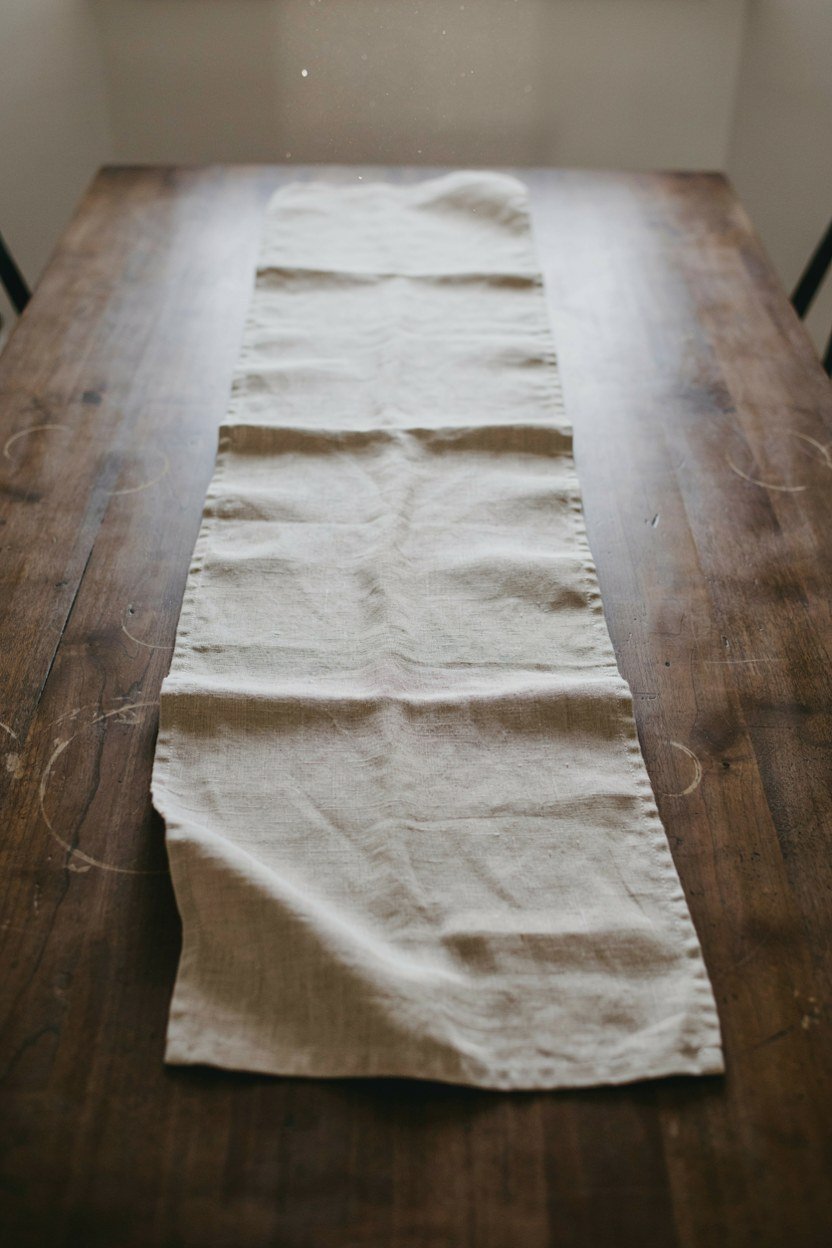
A runner covers roughly a quarter of the top and a tablecloth covers all of it. On a reclaimed table that difference matters, because the whole point is the surface underneath. A linen runner down the centre protects the busiest area and leaves the ends and edges visible.
Choose a runner in an undyed or muted colour so it recedes. Natural linen, soft grey, faded olive and washed oatmeal all sit quietly against old timber, whereas a bright pattern competes with the grain. The runner is meant to be the background, not the feature.
Let it crease. Ironed linen looks like a hotel, and a runner that has been washed and left to dry naturally has exactly the soft, slightly rumpled quality the look depends on. Fold it loosely rather than pressing it flat.
When A Full Cloth Still Makes Sense
Use a full cloth when the table itself is in poor condition or when you are protecting it for a long meal with wine and candles. A cloth is also the sensible answer for a table with a rough top that snags fabric or catches sleeves. Practicality wins over styling on those days.
Choose a cloth that drops around twenty five centimetres over the edge. Longer than that and it tangles with legs, shorter and it looks like it belongs to a smaller table. Plain white or natural reads better than anything printed.
3. Build A Low Centrepiece You Can See Over
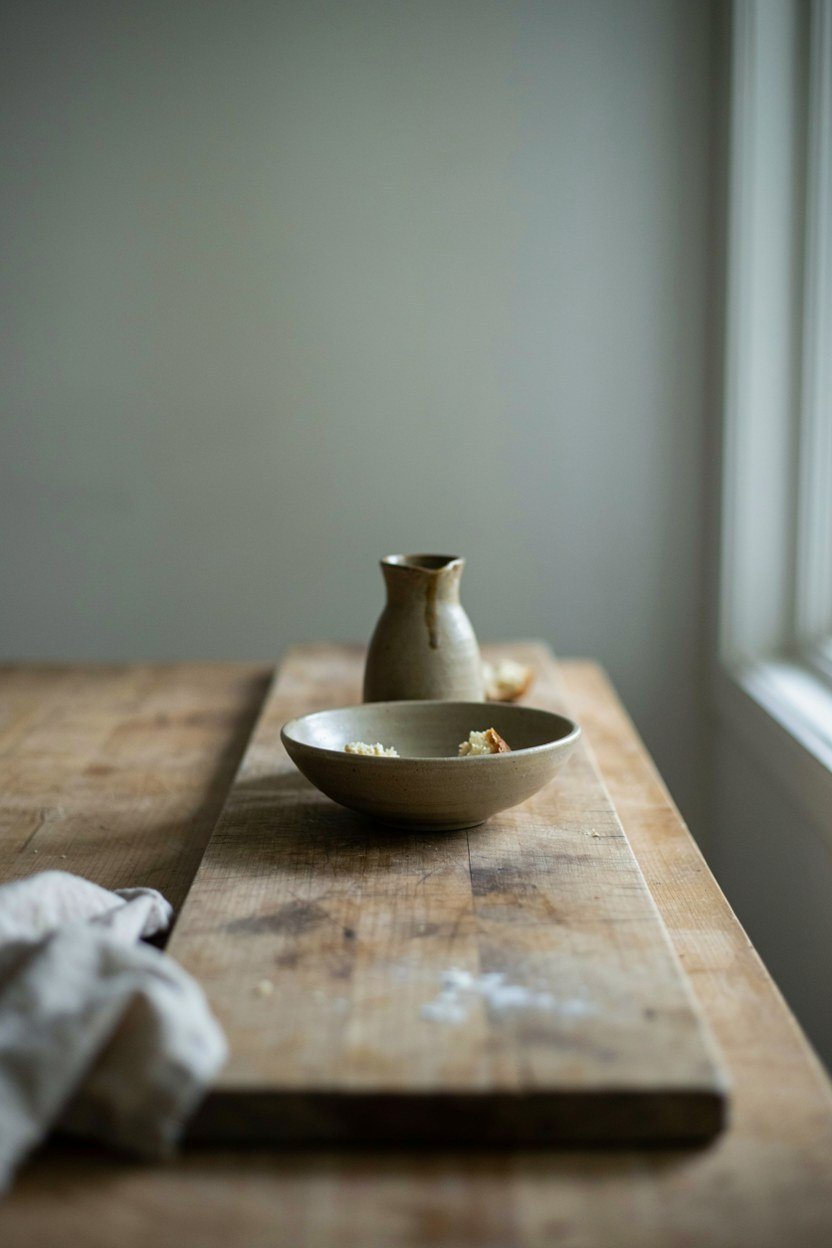
The single most useful rule for a kitchen table is that nothing in the middle should block a sightline. Keep the centre arrangement below about twenty five centimetres and people can talk across it comfortably. Anything taller gets moved to the floor within about ten minutes of guests arriving.
Build the arrangement in a line rather than a circle. A long table suits a run of three or four items down the centre far better than one large mass in the middle, and the line echoes the shape of the table. It also breaks down more easily when you need the space.
Vary the heights within that low limit. A flat board, a shallow bowl and a small jug at slightly different levels reads as composed, whereas three objects of identical height reads as a row. This is the same triangle trick that works on any surface.
The Exception For Taller Arrangements
Tall arrangements work when the table is not being sat at, for example a hall table or a kitchen island used mainly for preparation. In those cases a tall branch or a big jug of foliage gives the room real presence. The rule is about conversation, not about height itself.
If you want height on a dining table, put it at one end rather than the middle. A tall jug at the far end gives you the drama without sitting between two people. Move it to the side when everyone sits down.
4. Mix Enamel, Stoneware And Wood
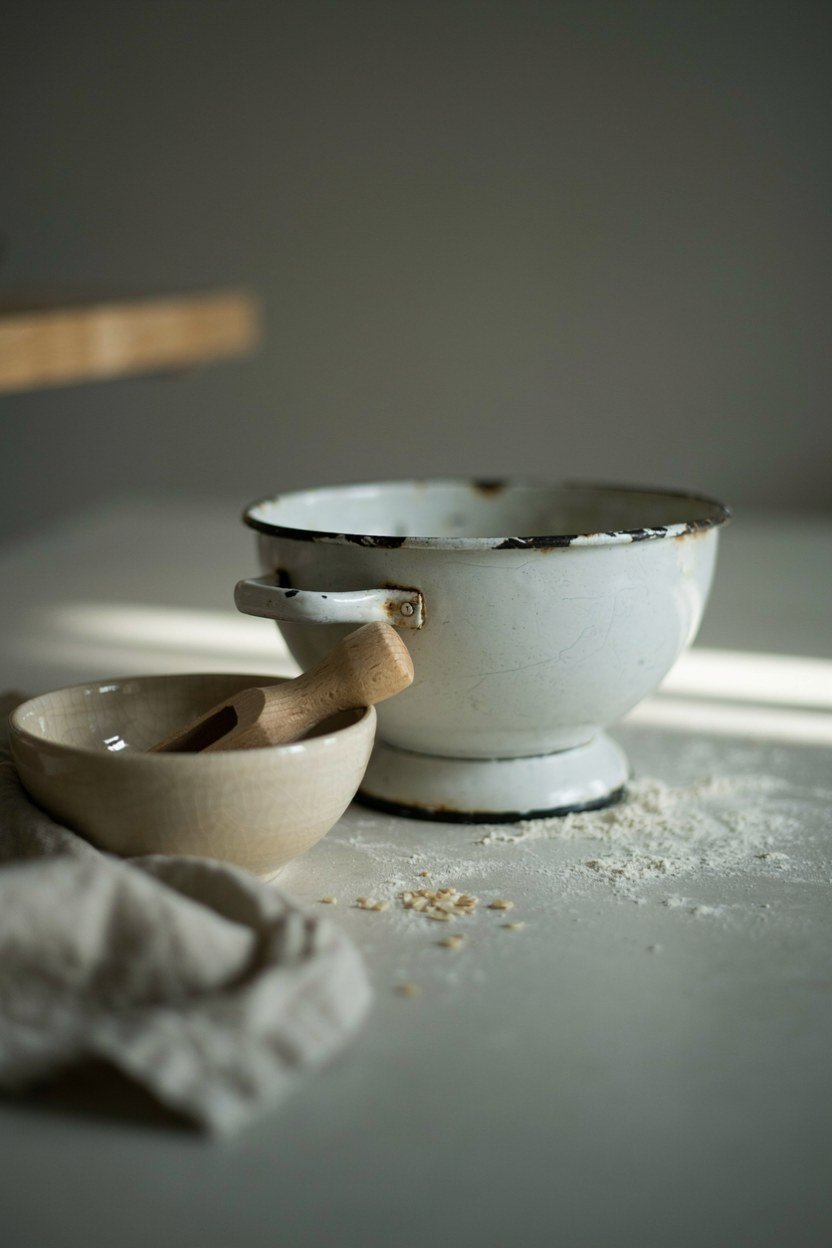
Country tables look best with a mix of humble materials rather than a matching set. Chipped enamel, matt stoneware, old wooden boards and plain glass all age in a way that suits reclaimed timber. The variation between them is what makes a table look collected rather than bought.
Keep the mix to three or four materials so it stays coherent. Wood, stoneware and enamel is a good working set, with glass as an occasional fourth for jugs and storage jars. Adding a fifth material starts to look like a jumble.
Repeat each material at least twice around the table. One enamel jug is an outlier, whereas an enamel jug and an enamel colander read as a deliberate thread. Repetition is what turns a mixture into a scheme.
Where Chips And Crazing Help
A chip in enamel that shows the dark metal underneath is one of the most useful details in this style, because it proves the object works for a living. The same applies to crazing in old stoneware glaze. Both read as history rather than damage.
Avoid anything actively broken or unhygienic, particularly cracked glaze on a surface you eat from. There is a real difference between worn and unusable. Keep the genuinely damaged pieces for holding dried flowers.
5. Add One Piece Of Wicker Or Basketry
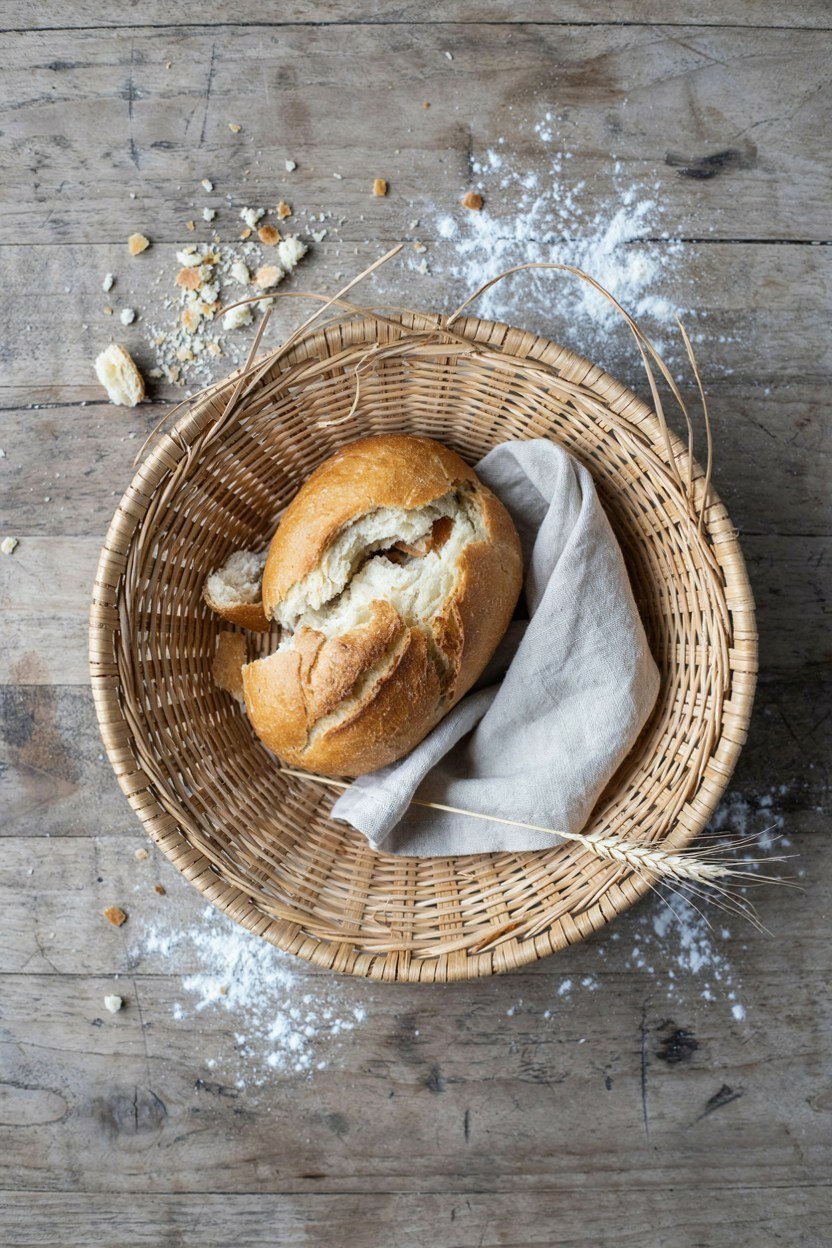
Basketry brings texture that no ceramic can, and one piece is usually enough. A shallow willow tray, a wicker bread basket or a small seagrass bowl adds a warm, irregular surface next to smooth pottery. It also softens the hard edges of a heavy table.
Use it as a container rather than as an ornament. Filled with bread, fruit, napkins or even post, a basket reads as part of the working table, while an empty decorative basket reads as filler. Function is what keeps this style honest.
Keep it low and wide rather than tall and upright. A shallow tray sits within the sightline rule and reads as part of the surface, whereas a tall basket becomes an obstacle. Height in basketry is best kept to the floor.
Caring For Basketry In A Kitchen
Willow and rattan dry out and split in a warm kitchen, particularly near a radiator or a range. Wiping a basket with a damp cloth every month or so keeps the fibres supple. It takes a minute and doubles the life of the piece.
Keep basketry away from direct heat and off any surface that gets regularly wet. A damp basket goes mouldy from the inside and the smell is very hard to remove. Line it with a cloth if it holds food.
6. Use Linen Napkins Rather Than Paper
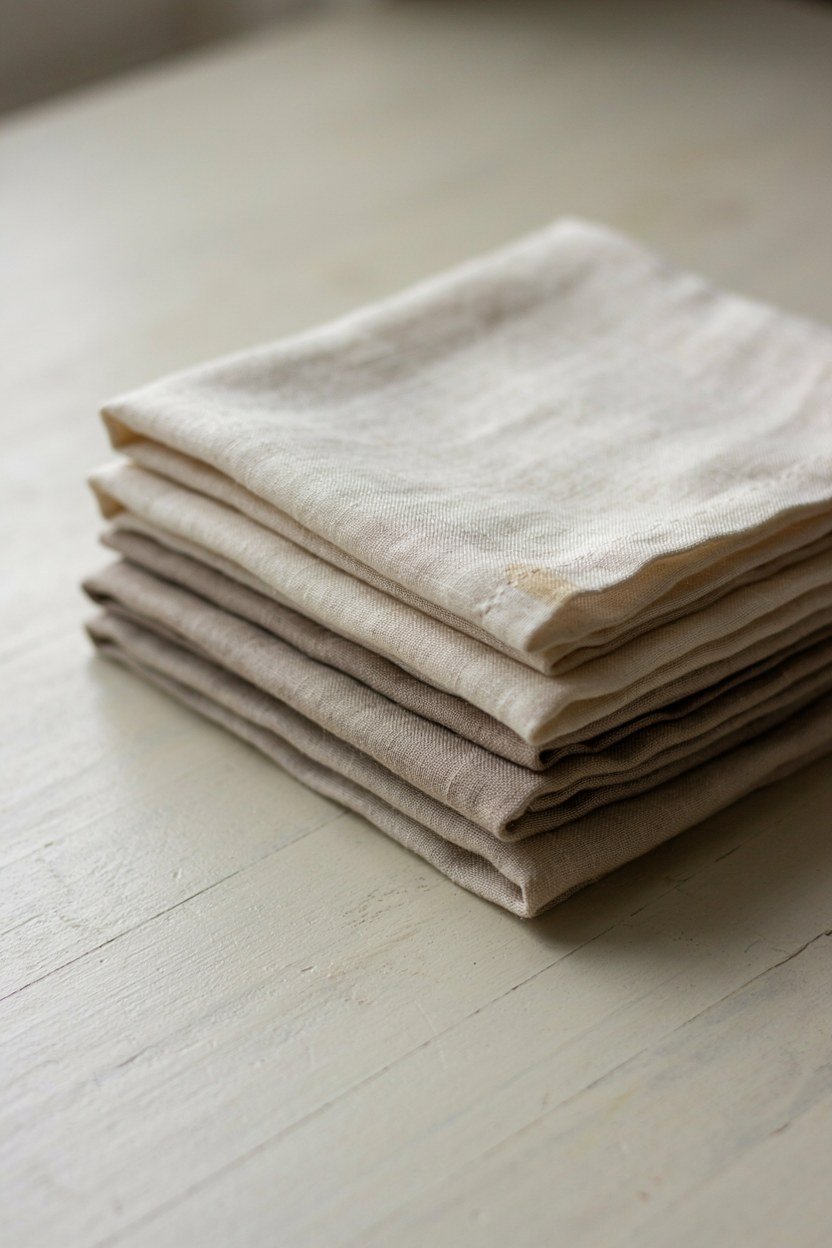
Cloth napkins change the look of a table more than their cost suggests. A stack of washed linen napkins in a neutral colour reads as generous and lived in, and they last for years. Paper napkins look temporary no matter how good the rest of the table is.
Leave them loosely folded rather than rolled or ringed. A soft square with a visible fold line sits well against reclaimed timber, whereas an elaborate fold looks like a restaurant. Napkin rings suit formal tables far better than country ones.
Buy more than you need so laundry never forces you back to paper. Twelve napkins covers most households comfortably. They wash with everything else and improve as they soften.
Choosing Colours That Take A Stain Well
Undyed, oatmeal and mid grey linens hide a red wine mark far better than white, which is worth knowing before you buy a set of white napkins for a family kitchen. Darker colours also fade less obviously over years of washing. Practicality here is genuinely part of the styling.
Wash at sixty degrees for anything that has held food and skip the fabric conditioner, which stops linen absorbing properly. Line drying gives the texture the look depends on. Tumble drying makes linen limp and slightly shiny.
7. Keep A Working Bowl Of Fruit Or Vegetables

A bowl of real fruit is the oldest table styling trick and still the best one. It brings colour, it changes weekly, and it is genuinely useful, which is exactly the combination this style wants. Artificial fruit does the opposite on every count.
Choose the bowl for the fruit rather than the other way round. A shallow wooden or stoneware bowl lets you see what is in it and keeps the height low, while a deep bowl hides everything below the rim and bruises what is underneath. Wide and shallow is almost always right.
Buy fruit that suits the palette when you can. Lemons, apples and pears all sit beautifully against old timber, whereas a bag of bright plastic wrapped citrus does not. This sounds precious until you see the difference.
Vegetables Work Just As Well
A bowl of squash in autumn, garlic and shallots in winter, or new potatoes in early summer all look better on a country table than most floral arrangements. They also last far longer than cut flowers. Onions and garlic in a shallow basket will hold for weeks.
Keep anything that ripens fast away from direct sun. A bowl left in a south facing window turns over in half the time. Move it to the shaded end of the table in summer.
8. Bring In Cut Herbs Instead Of Florist Flowers
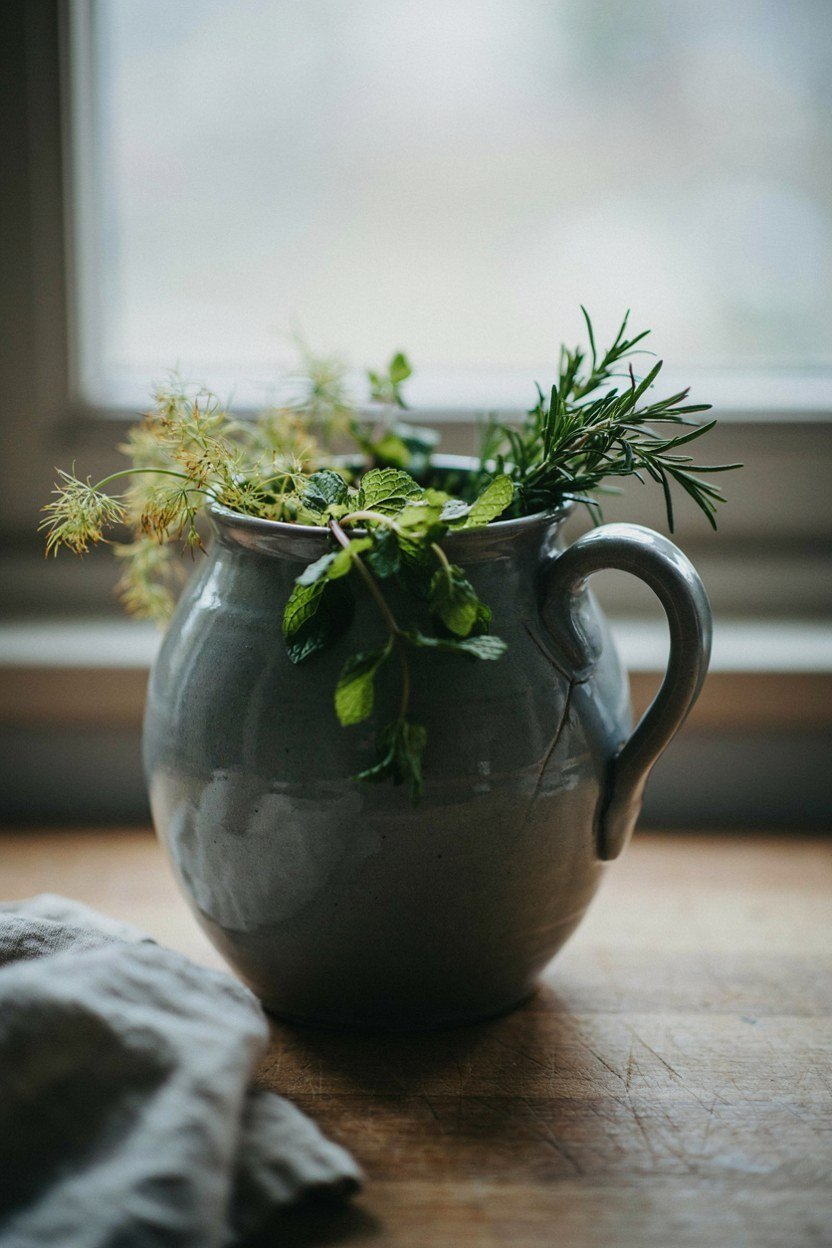
Herbs are the country kitchen answer to flowers, and they cost almost nothing. A jug of mint, rosemary, fennel or bay looks generous, smells good and lasts far longer than most cut stems. It also suits the room in a way a wrapped bouquet never quite does.
Cut them long and let them fall naturally in the jug. Arranged stems look florist made, whereas a loose handful dropped into water finds its own shape within an hour. Strip the leaves below the waterline so the water stays clear.
Change the water every two or three days and the same jug will last a fortnight. Woody herbs like rosemary and bay hold longest, while soft ones like basil collapse quickly. Mix the two if you want both the scent and the staying power.
Garden Foliage As A Free Alternative
Hedge cuttings, seed heads and small branches all work on a country table, and most gardens produce them for nothing. Beech, hornbeam and ivy all last well in water, while anything with a soft stem tends to wilt. Cut in the early morning for the longest life.
Keep the arrangement to one type rather than mixing five. A jug of a single foliage reads as confident, whereas a mixed bunch reads as leftovers. This is the one place where restraint really shows.
9. Choose Chairs That Do Not Match
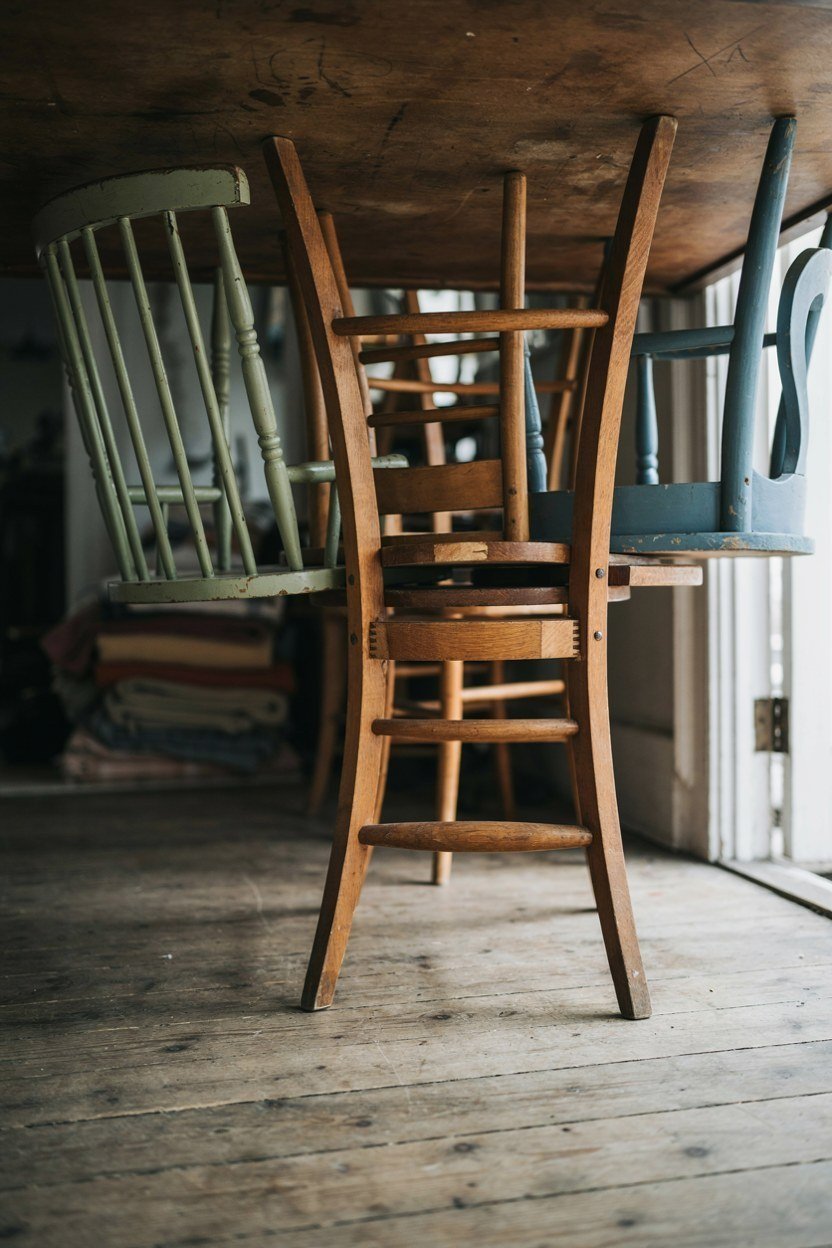
A matched dining set makes a reclaimed table look like a showroom piece. Mismatched chairs, whether by shape or by finish, are what make the whole arrangement read as gathered over time. This is the single biggest change you can make without touching the table itself.
Keep one thing consistent so it reads as intentional. That might be the seat height, the timber tone or the general shape, with everything else allowed to vary. Without one common thread it stops looking collected and starts looking accidental.
Buy the chairs secondhand and expect to wobble a few before you find good ones. Old chairs loosen at the joints, and a chair that rocks now will only get worse. Check by sitting and shifting your weight rather than by looking.
Fixing Loose Joints Before They Fail
A loose chair joint is fixed by taking it apart, cleaning off the old glue and regluing it properly, not by squeezing more glue into the gap. The second approach lasts about a month. It is an evening of work per chair and it lasts decades.
Use a wood glue and clamp or strap the joint while it sets. Wipe the squeeze out with a damp cloth immediately, because dried glue stops stain and wax taking. That is the detail most people miss.
10. Layer Two Heights Of Candlelight
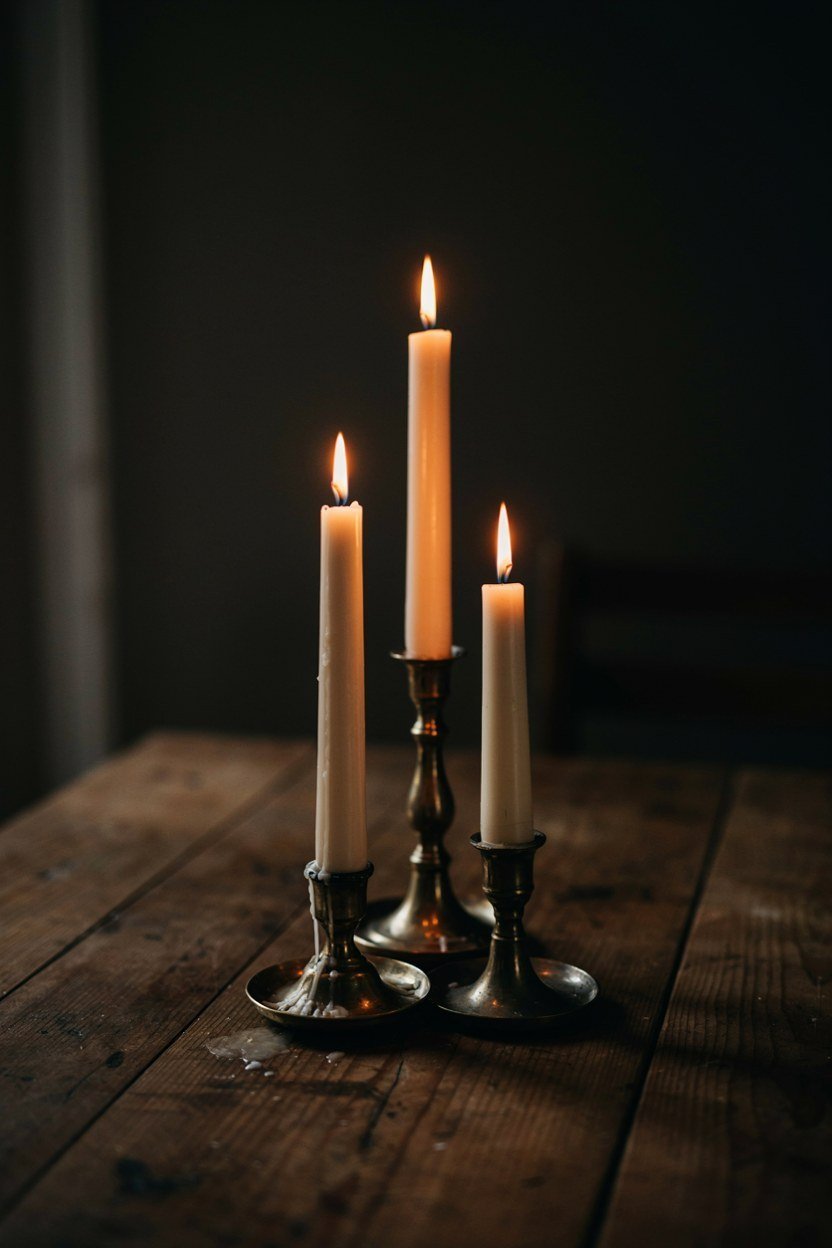
Candles are what make a kitchen table work in the evening. Using two heights, a taller candlestick and a low tea light or stub, gives the table depth instead of a flat line of flames. It is the same layering principle that works with lamps in a living room.
Group them rather than spacing them evenly. Three candlesticks of different heights clustered together read far better than five spaced out down the table. Uneven grouping is the country version of a candelabra.
Use plain unscented candles at the table. Scented ones interfere with food, which is a small point that becomes obvious the first time you serve a delicate dish under a vanilla candle. Save the scent for another room.
Holders That Suit Reclaimed Timber
Brass, iron and old glass all suit a reclaimed top, and all three look better tarnished than polished. Chrome and anything shiny sits awkwardly against worn wood. Buy old holders rather than new ones, since they cost less and look right immediately.
Put something under any holder that will drip. Wax on an oiled top comes off with a hairdryer and a cloth, but it takes the finish with it if you scrape. A small board or saucer avoids the whole problem.
11. Add A Stack Of Old Boards Or Books
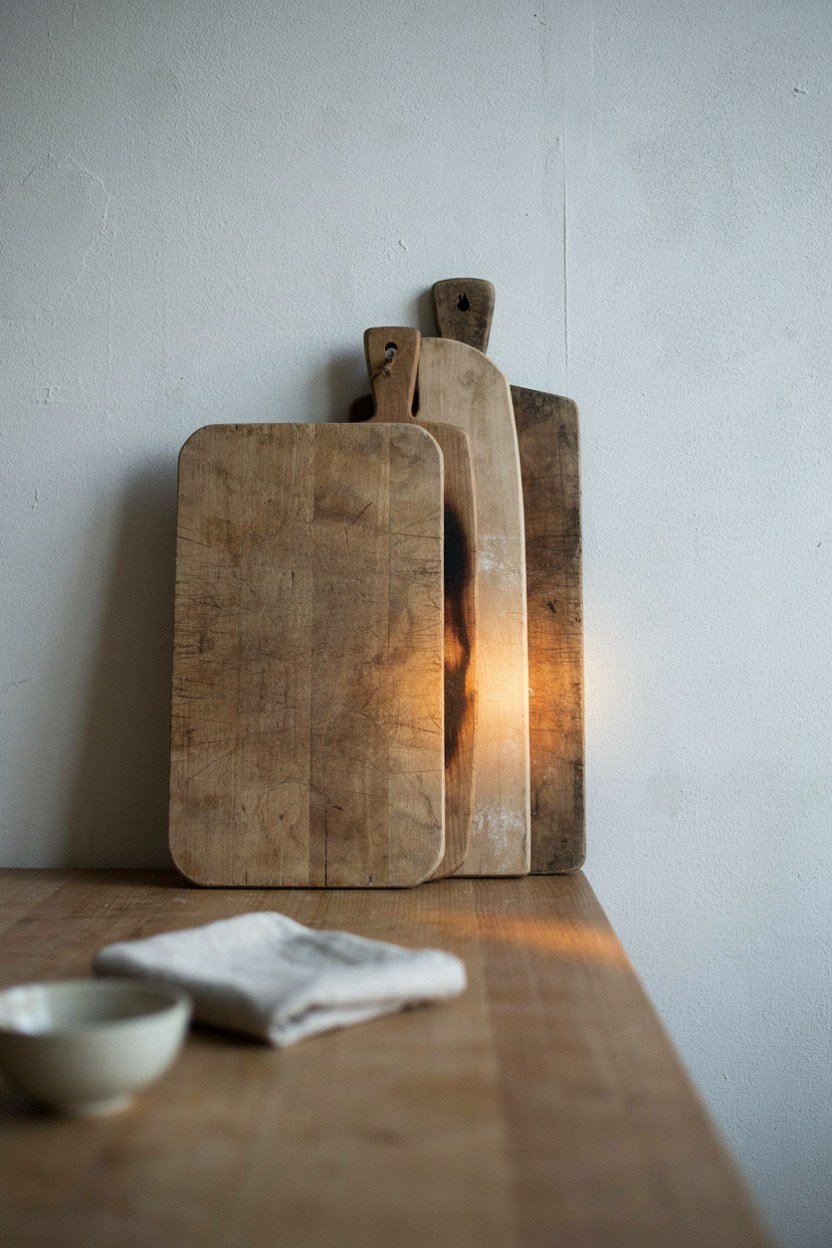
A leaning stack of wooden boards against the wall end of a table adds height without blocking anything. Old bread boards, chopping boards and small trays all work, and they cost very little secondhand. They also get used, which keeps the arrangement honest.
Cookbooks do the same job and bring colour to the table. A short stack of three or four, spines out, reads as a working kitchen rather than a display. Avoid stacking so many that they become a monument.
Keep the stack at one end rather than in the middle. It gives the table an asymmetric weight that looks far more natural than a centred arrangement. Asymmetry is one of the quiet markers of this style.
Where To Find Old Boards Cheaply
Car boot sales, charity shops and house clearance sales all turn up old boards, and the more scarred ones are usually cheapest. Look for solid timber rather than laminated blocks, which delaminate once they have been washed a few times. A dark stained board often cleans up to something much better.
Scrub with a stiff brush and salt rather than soaking, then oil the board once it is dry. Soaking a board in water is what warps and splits it. A few coats of food safe oil will bring back a board that looks past saving.
12. Use A Bench Down One Side
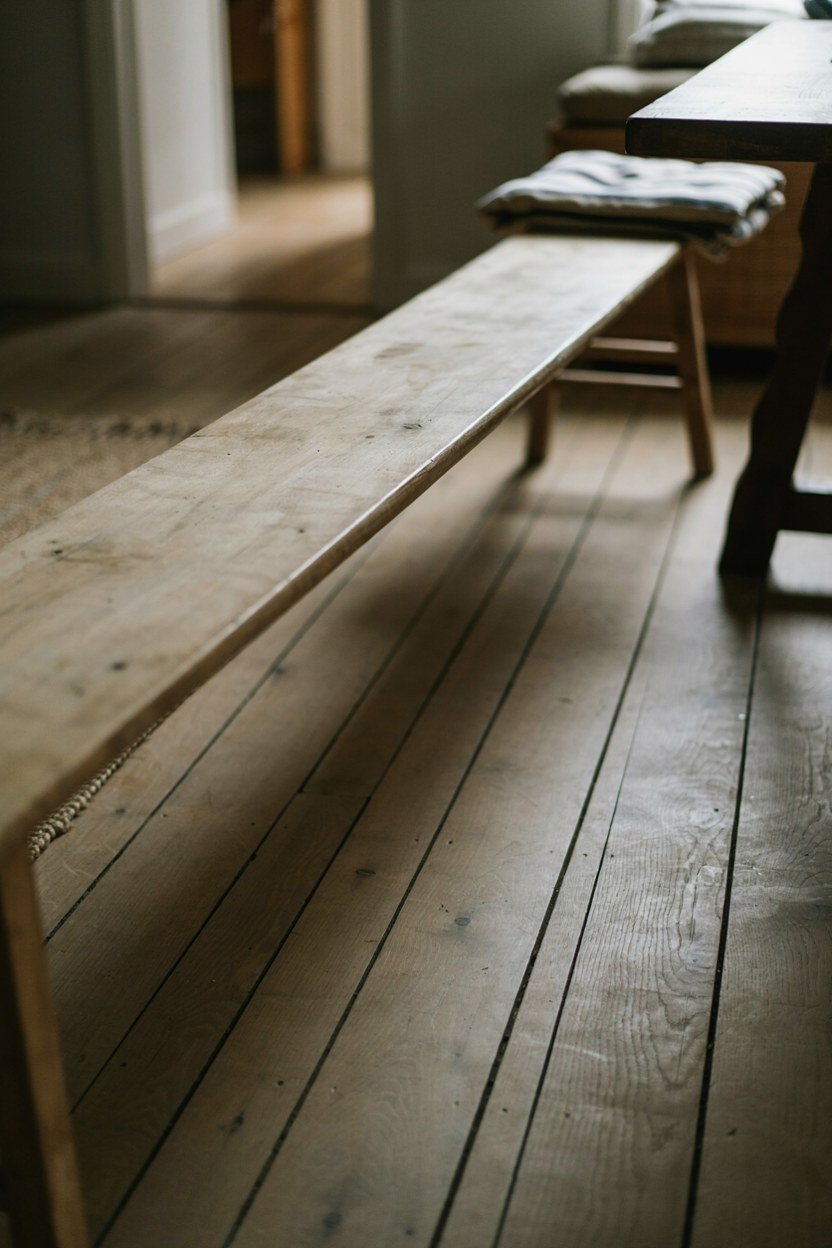
A bench along one side changes how a table works. It seats more people at a pinch, tucks fully underneath when not in use, and gives the arrangement a long uninterrupted line that chairs cannot. In a narrow kitchen it also frees up the walking route.
Match the bench to the table in height, not in timber. Seat height should sit around thirty centimetres below the tabletop, which is comfortable for most people. Getting that gap wrong makes the bench unusable regardless of how good it looks.
Keep one side as chairs so people can get out easily. An all bench table is charming and mildly infuriating when the person in the middle needs to leave. Mixed seating is more practical and looks better anyway.
Making A Bench More Comfortable
A long cushion or a folded runner along the seat makes a bench usable for a whole meal rather than twenty minutes. Choose something washable, because a bench cushion in a kitchen takes a beating. Ties at the corners stop it sliding off.
Sand and wax the front edge of the seat until it is properly rounded. A sharp edge under the thighs is the most common reason benches go unused. Ten minutes with abrasive paper solves it permanently.
13. Season The Table With Everyday Objects
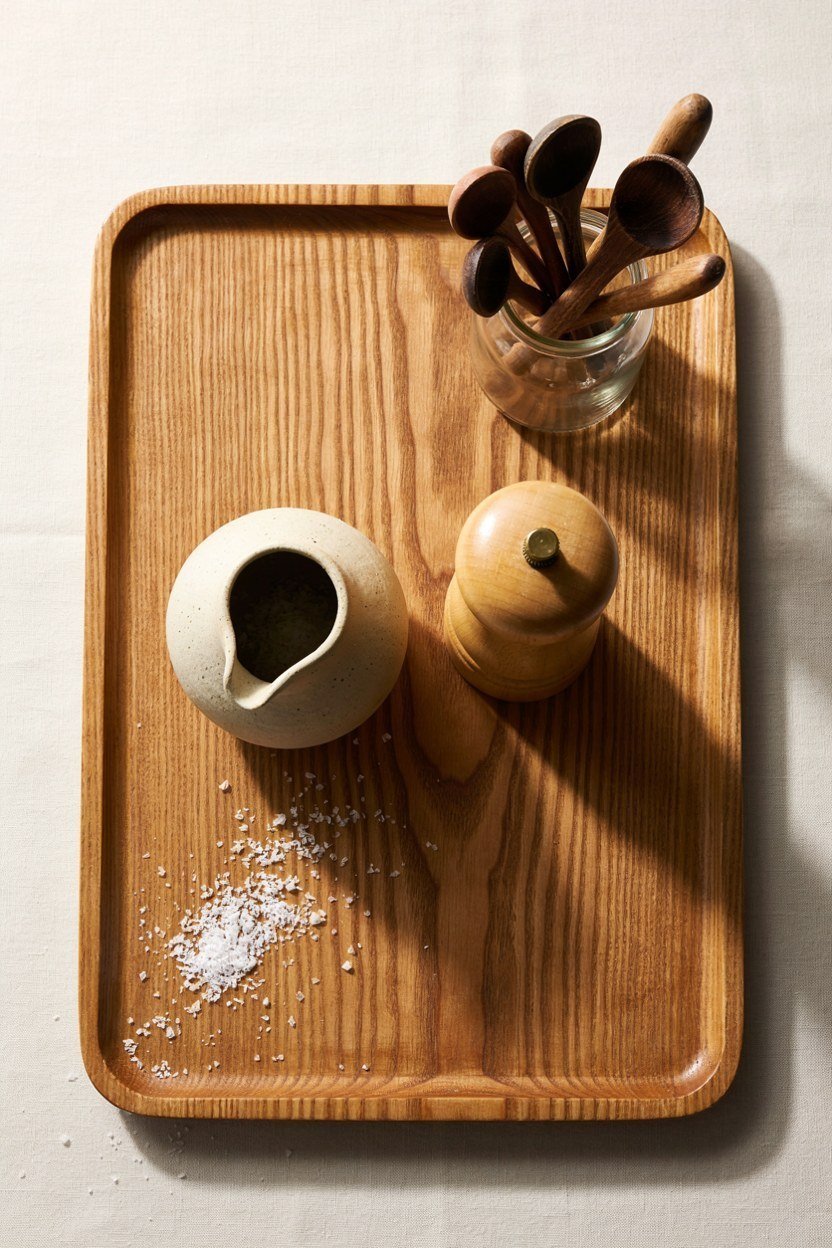
The most convincing country tables carry a few things that simply live there. A salt pig, a pepper mill, a jar of wooden spoons and a small oil bottle all read as a kitchen in use. These objects do more for the look than anything bought specifically to decorate.
Choose the everyday items with a little care, since they will be visible constantly. A stoneware salt pig costs slightly more than a plastic tub and looks better for years. This is the cheapest possible upgrade to a table’s appearance.
Keep the group together on a tray or board so it reads as one item. Three objects scattered look like clutter, while the same three on a small board look arranged. The tray is doing all the work here.
What To Take Off The Table
Post, keys, chargers and school bags all migrate to a kitchen table and undo everything else. A basket or a shelf near the door is the only fix that has ever worked in my house. The table needs somewhere else for the daily debris to go.
Clear the table completely once a day rather than tidying around things. It takes two minutes and resets the whole arrangement. Tidying around a pile only ever grows the pile.
14. Change The Styling With The Season
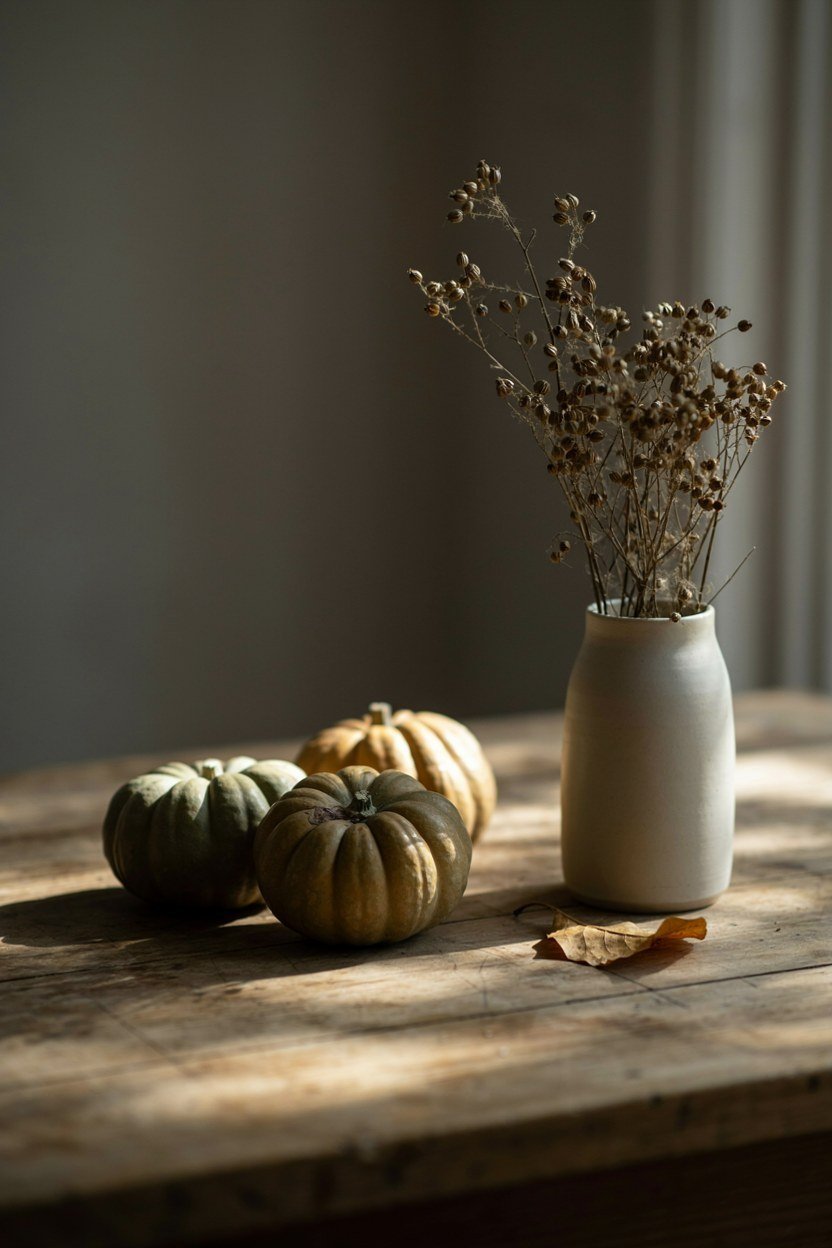
A table that stays identical all year stops being noticed. Swapping the centre arrangement three or four times a year keeps it alive, and it costs almost nothing if you use what is around. Branches in winter, blossom in spring, herbs in summer, squash and seed heads in autumn.
Keep the containers the same and change only the contents. The same three jugs will carry a completely different look from March to November, which saves both money and cupboard space. It also keeps the table consistent with the rest of the room.
Resist decorating for every occasion. A country table can carry one seasonal note comfortably, and starts to look like a shop display with more than that. One change per season is plenty.
The Winter Table Without The Kitsch
Winter styling goes wrong when it turns into ornaments. Bare branches, evergreen cuttings, a bowl of nuts and more candles will carry the whole season without a single novelty item. The materials do the work.
Add weight rather than sparkle. A heavier board, a darker linen and a taller candlestick all read as winter without announcing it. Save the shine for one thing at most.
15. Protect The Top Without Hiding It
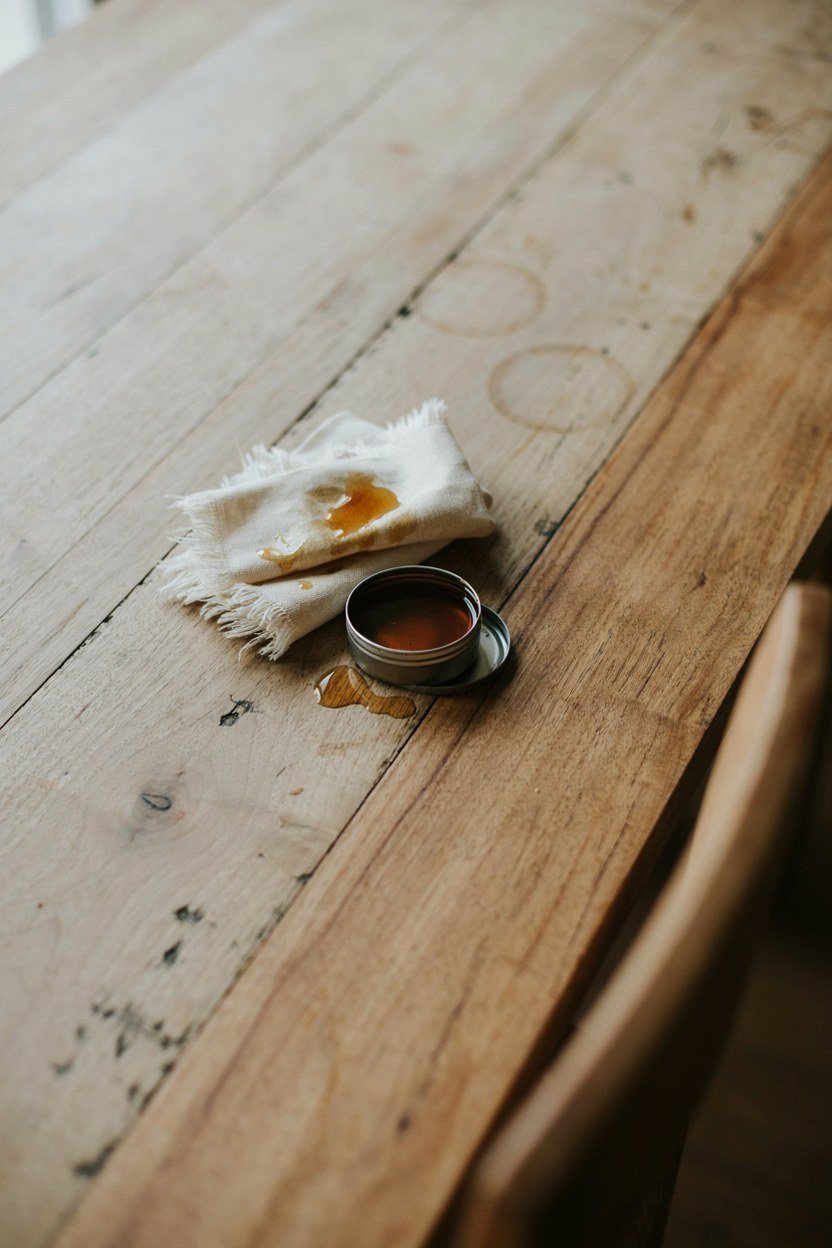
Reclaimed tops are usually softwood and mark easily, so a working table needs a few defences. Trivets for hot pans, coasters for anything cold, and a board for cutting cover almost every risk. None of them need to be visible when the table is not in use.
Choose protection that suits the table rather than fighting it. Cast iron and wooden trivets, cork backed coasters and thick end grain boards all sit comfortably in this style. Clear plastic protectors do the job and undo the look entirely.
Accept that some marking is part of it. A reclaimed table that gains a few new rings over ten years is doing exactly what it did for the previous fifty. The alternative is a table you cannot use.
Refreshing An Oiled Top
An oiled top wants a light re oiling once or twice a year, more often at the end where people eat most. Sand very lightly with a fine abrasive, wipe off the dust, then apply a thin coat and buff off the excess after twenty minutes. Thick coats stay tacky for weeks.
Deal with water rings before they darken. A gentle rub with fine wire wool and a little oil will lift a fresh ring completely. Left for months, the same mark goes into the timber and needs sanding out.
What Styling A Reclaimed Table Actually Costs
Most of this list costs very little, which is the appeal. Herbs from the garden, fruit you were buying anyway and boards from a car boot sale add up to almost nothing. The money goes into a small number of pieces you keep for years.
Linen is the one place worth spending properly, because cheap linen pills and thins within a couple of years. A good runner and a set of napkins will outlast several cheap versions and look better throughout. Buy fewer and better on textiles.
The table below gives a rough sense of where money is worth spending and where it is not. Treat the priorities as the useful part rather than the amounts, which move constantly. Almost every line here can wait until the right secondhand piece turns up.
| Item | Priority | Where to save |
|---|---|---|
| Linen runner and napkins | Worth spending | Buy plain, avoid printed sets |
| Stoneware and enamel pieces | Moderate | Secondhand and seconds shops |
| Wooden boards and trays | Low | Car boot sales, clean and oil |
| Candles and holders | Low | Old brass and iron holders |
| Herbs and foliage | Almost nothing | Garden, hedge, windowsill pots |
| Chairs and bench | The largest line | Secondhand, reglue the joints |
The Mistakes That Make A Country Table Look Staged
Over decorating is the first and most common. A reclaimed top has enough going on already, and a table carrying a runner, a cloth, a centrepiece, place settings and three ornaments has nothing left to look at. Take a third of it away and the rest improves immediately.
Matching everything is the second. A set of identical chairs, a matched dinner service and a coordinated runner turn a characterful table into a catalogue photograph. Break at least one of those matches on purpose.
Using fake produce is the third and the hardest to recover from. Artificial fruit, plastic herbs and dried flowers sprayed a colour all read instantly as decoration rather than kitchen. Real things that eventually get eaten are the whole point.
Blocking The Table For Everyday Use
A table styled so thoroughly that nobody can put a plate down has failed at its actual job. If clearing the arrangement takes more than one movement, it is too complicated for a table people eat at daily. Design the centre so it lifts off in one go.
Keep at least half the length usable at all times. That means a compact arrangement rather than a run of objects down the whole table. The styling should survive dinner, not prevent it.
Conclusion: Three Rules That Carry The Whole Table
If you take three things from this list, take restraint, real materials and a low centre. Leaving two thirds of the top clear is what lets the reclaimed timber do the work you bought it for. It is also free, which makes it the easiest rule to follow.
Real materials are the second. Wood, enamel, stoneware, linen and cut herbs all age visibly and sit together comfortably, while anything artificial or high gloss will look wrong no matter how carefully you place it. Buy fewer things and let them be genuine.
Keeping the centre low is the third, and it is the one that makes the table pleasant to sit at. Nothing above about twenty five centimetres in the middle, arranged in a line rather than a mass, and grouped so it lifts off in one movement. A table that works at dinner will always look better than one that only photographs well.
Frequently Asked Questions About Reclaimed Wood Tables
How do I stop a reclaimed table from marking?
Use trivets for hot pans and coasters for cold glasses, and keep the top lightly oiled. Some marking is normal on softwood and generally suits the table rather than spoiling it.
Should I use a tablecloth on a reclaimed table?
A runner is usually better, because it protects the centre while leaving the timber visible. Save the full cloth for long meals or for a top in poor condition.
What colour linen suits reclaimed wood?
Undyed, oatmeal, soft grey and faded olive all sit quietly against old timber. Darker shades also hide wine marks far better than white does.
Do the chairs need to match the table?
No, and it usually looks better when they do not. Keep one thing consistent, such as seat height or timber tone, so the mix reads as deliberate.
How high should a table centrepiece be?
Below about twenty five centimetres, so people can see across it comfortably. Anything taller belongs at the end of the table or on a surface nobody sits at.
How often should an oiled tabletop be re oiled?
Once or twice a year for most tables, and more often at the end that gets the heaviest use. Apply thin coats and buff off the excess rather than laying it on thickly.