
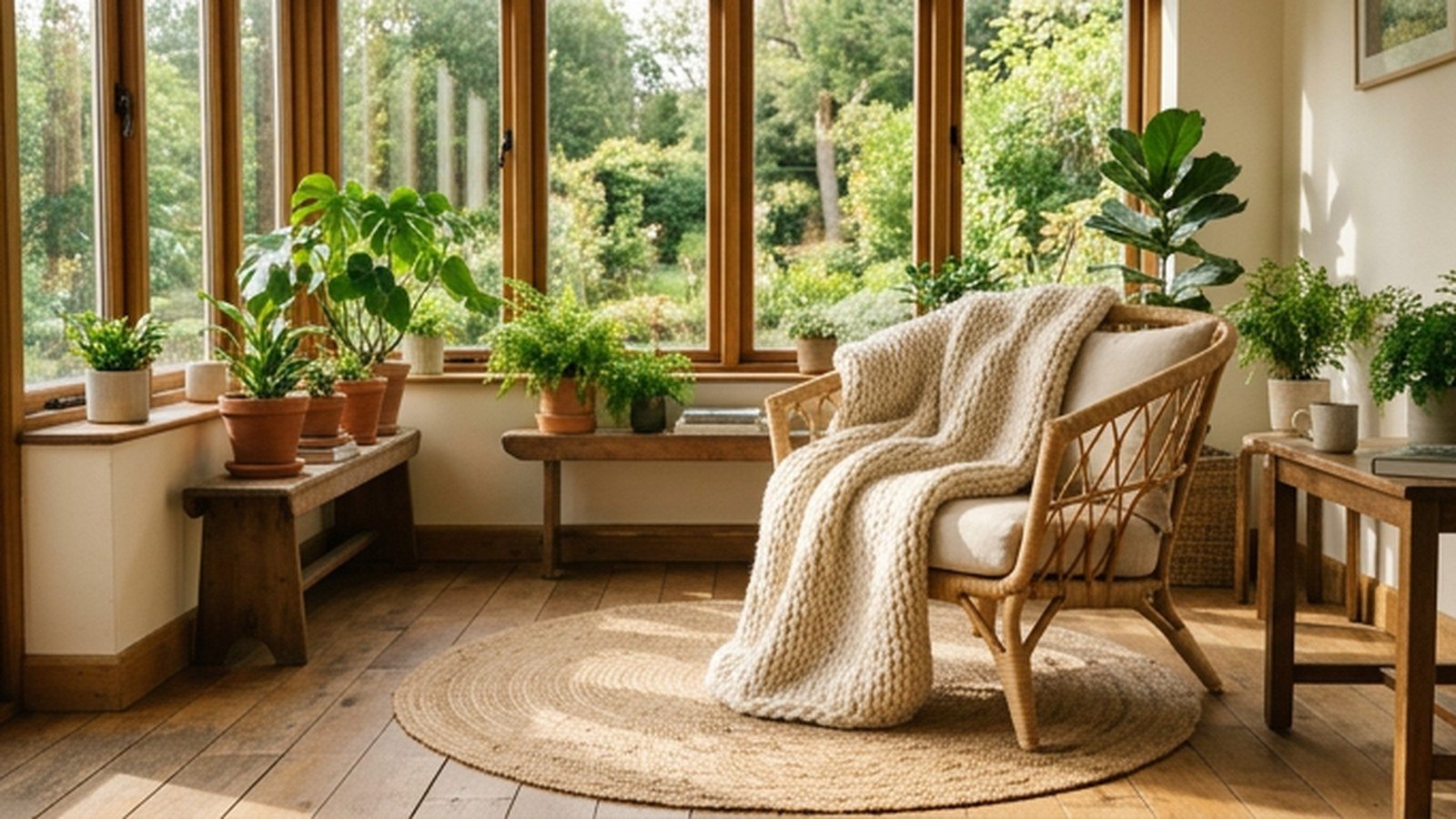
Creating a cozy sunroom with soft textures means layering fabric, wool, and other tactile materials into a space that otherwise tends to feel exposed and hard-surfaced due to its abundance of glass and minimal wall area. Sunrooms often default to a cold, sparse feel because their design prioritizes light and views over warmth, which soft textures directly counteract. Fifteen concepts below cover the textiles, furniture, and layout choices that transform a sunroom from a glass box into a genuinely inviting retreat.
I converted my own screened sunroom into a year-round space by focusing almost entirely on texture rather than furniture quantity, and the result surprised me given how few pieces I actually added. A sunroom’s abundant natural light showcases fabric texture more dramatically than a dimmer interior room does, since sunlight rakes across woven and knit surfaces and reveals depth indoor lighting alone cannot replicate.
Below you will find fifteen numbered concepts covering seating, window treatments, flooring, and lighting, plus a cost comparison table and a rundown of the mistakes that keep a sunroom feeling sparse rather than cozy. Each idea includes a sub-angle on cost, sourcing, or what commonly goes wrong so you can build the space with a realistic budget. By the end you should know exactly which textures carry the most impact in a room defined by glass and light.
Why Soft Textures Matter So Much In A Sunroom
Sunrooms present a unique styling challenge because their large glass surfaces, while wonderful for light and views, offer none of the textural softness that walls, carpet, or heavy furniture provide in a typical interior room. This absence means a sunroom relies almost entirely on textiles, furniture upholstery, and rugs to introduce the tactile warmth most rooms get partly for free from their architecture. Understanding this structural difference explains why texture strategy matters more here than nearly anywhere else in a home.
Natural light amplifies texture in a way indoor lighting cannot, since direct or filtered sunlight moving across a room throughout the day creates shifting shadows and highlights on woven, knit, and textured surfaces. A chunky knit throw or a nubby woven rug reads as considerably more dimensional in a sunlit room than the same item would in a room lit only by lamps.
| Room Type | Natural Textural Softness | Textile Dependence |
|---|---|---|
| Standard living room | Higher, from walls and carpet | Moderate |
| Sunroom | Lower, dominated by glass | High |
| Enclosed den | Highest, fully enclosed walls | Lower |
A complete cozy sunroom textile package, covering seating, rugs, and window treatments, typically costs $600 to $2,500 depending on room size and fabric quality. This range reflects how much of a sunroom’s coziness depends specifically on textile investment rather than structural renovation. Understanding this helps set a realistic budget before shopping begins.
Planning Your Sunroom’s Texture Strategy By Season
Planning starts with considering how the sunroom will be used across seasons, since a space intended for year-round use needs a texture strategy that works in both summer heat and winter cold. Lighter, breathable fabrics like linen and cotton suit warmer months, while wool and heavier knits suit colder ones, and many sunrooms layer both categories so textiles can be swapped seasonally.
Durability matters considerably more in a sunroom than in many interior rooms, since UV exposure from the abundant natural light can fade certain fabrics considerably faster than the same material would fade in a room with less direct sun. Choosing fade-resistant, UV-treated fabrics specifically marketed for sunroom or outdoor-adjacent use protects the investment in these textiles over time.
The biggest planning mistake is over-relying on a single texture category, using only smooth cotton throughout, for instance, rather than mixing several distinct textures that create the layered depth this style depends on. Combining at least three distinct textures, a knit, a woven, and a smooth fabric, throughout the room avoids this flatness.
Choosing Colors That Complement A Sunroom’s Natural Light
A sunroom’s abundant natural light tends to wash out very pale or very saturated colors differently than a room with more controlled artificial lighting, making it worth testing fabric swatches in the actual room under real daylight conditions before committing to a full purchase. Neutral and earth-toned textiles generally read most reliably consistent across a sunroom’s shifting daylight conditions throughout the day.
Choosing textiles in tones that complement rather than compete with any exterior view visible through the sunroom’s windows, greenery, water, or a garden, creates a more cohesive indoor-outdoor visual connection. This view-coordination consideration is unique to a sunroom given how much of the exterior remains visible from inside compared to a standard interior room. Testing fabric samples against the actual window view helps confirm this coordination works as intended.
1. Chunky Knit Throw Blankets Layered On Seating
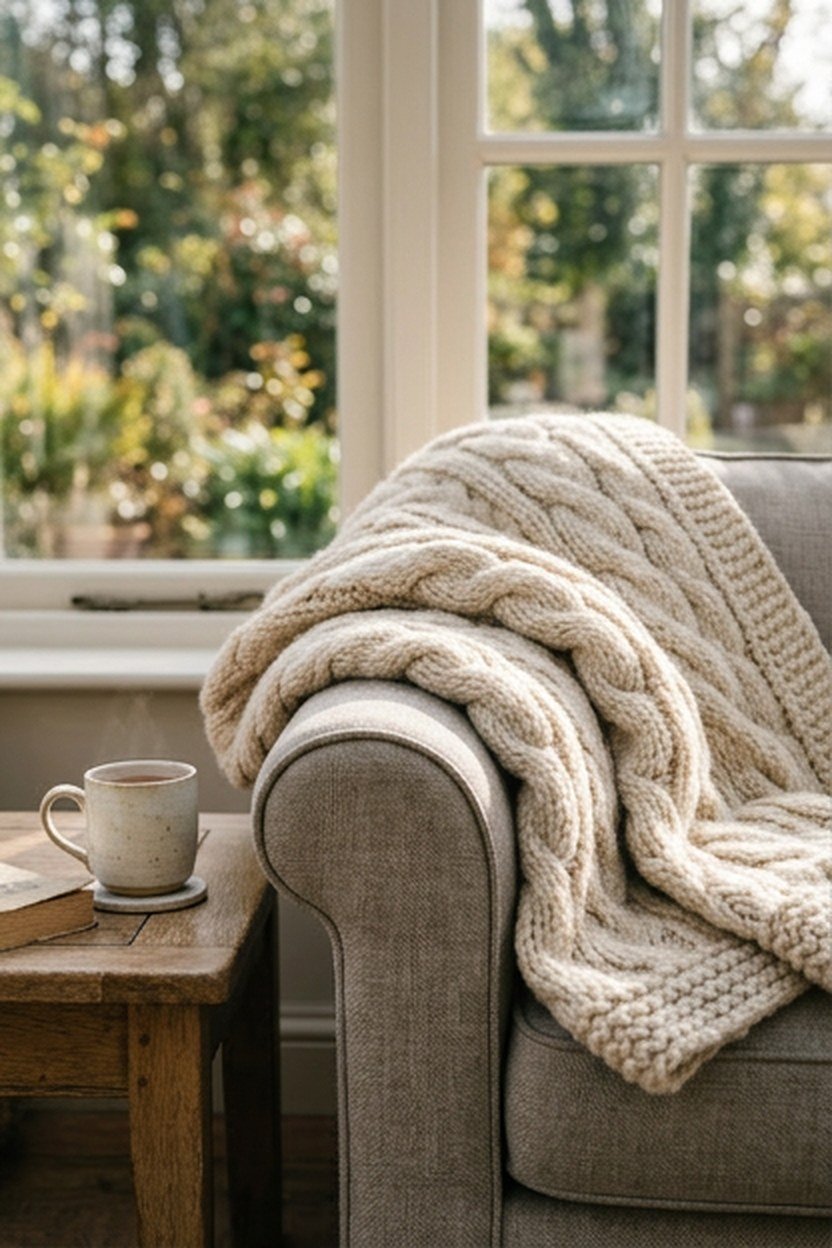
Chunky knit throw blankets, draped over sofa arms or folded at the foot of a chaise, introduce one of the most immediately visible texture upgrades available for a sunroom, since the thick, dimensional knit reads clearly even from across the room. This texture choice works particularly well in a sunroom specifically because the knit’s raised, three-dimensional structure catches natural light in a way that flatter fabrics cannot replicate as dramatically.
Choosing a blanket in a neutral or earth tone, rather than a bold pattern, keeps the piece feeling cohesive with the broader natural, textural aesthetic this room style depends on. A wool or wool-blend knit provides genuine warmth for cooler months, while a cotton knit offers a lighter option better suited to warmer seasons.
Draping the blanket loosely rather than folding it into a tight, uniform stack creates a more relaxed, lived-in appearance that suits the casual, comfortable quality this room style aims for. This draping technique is a small styling detail that meaningfully affects how inviting the finished display feels. Most experienced decorators apply this loose draping instinctively but it is worth learning explicitly if newer to this specific styling skill.
Cost And Seasonal Fabric Guidance
A quality chunky knit throw blanket typically costs $40 to $120 depending on fiber content and size. Choosing a wool or wool-blend option for winter use and a lighter cotton knit for summer, then rotating between them seasonally, addresses the temperature variation a sunroom experiences more dramatically than a typical interior room.
A common mistake is choosing a delicate, dry-clean-only knit fabric for a room that experiences heavy use and occasional spills during casual lounging. Choosing a machine-washable wool blend, even at a slightly higher price point, avoids the frustration of a delicate fabric in an active, frequently used space.
2. Woven Jute Or Sisal Area Rug
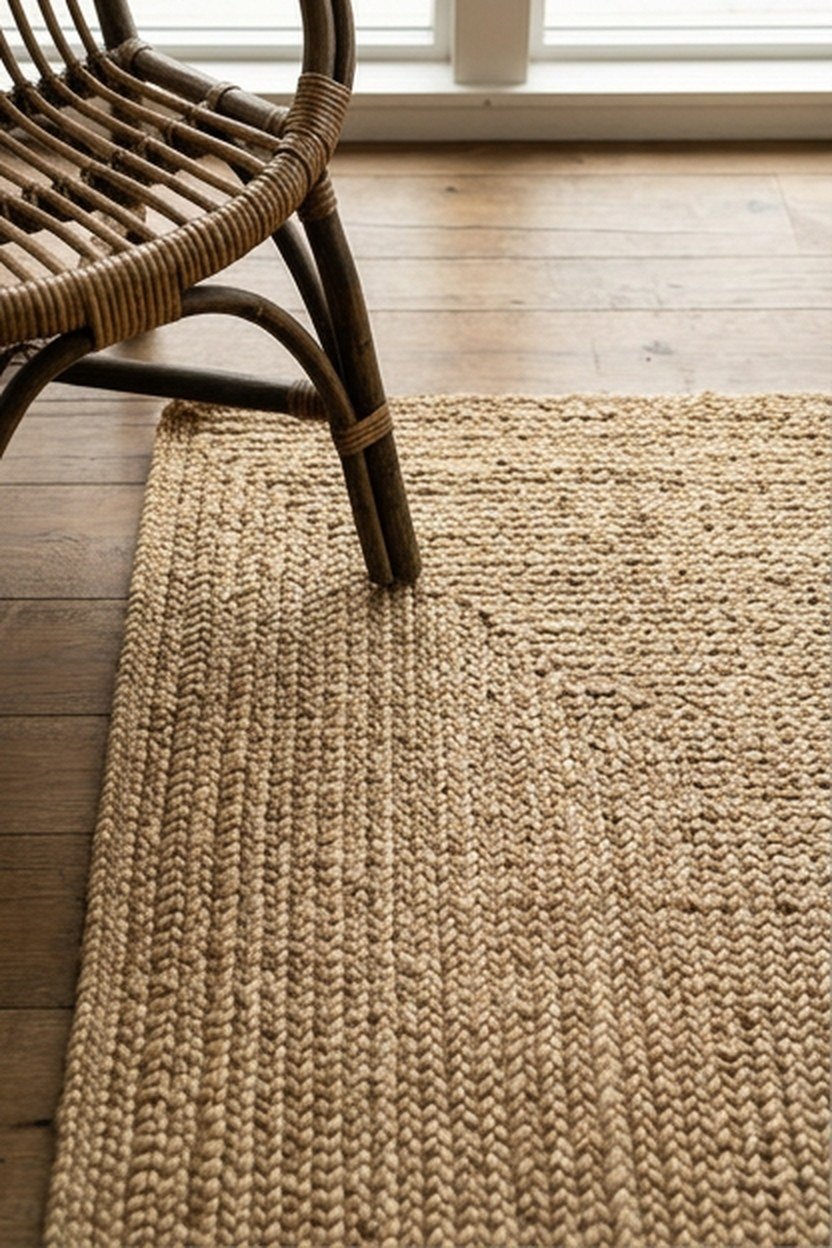
A woven jute or sisal area rug introduces genuine textural depth at floor level, an area that in a sunroom often defaults to hard tile or unfinished flooring without any softening element. This natural fiber rug style suits a sunroom particularly well because its texture and earthy tone echo the room’s connection to the outdoors visible through the surrounding windows.
Choosing a rug with a slightly looser, more visible weave, rather than a tightly woven, flatter option, maximizes the textural interest this piece contributes to the room. Sizing the rug appropriately for the seating arrangement, large enough that the front legs of major furniture pieces rest on the rug rather than floating just off its edge, creates a more finished, intentional look.
Layering a smaller, softer accent rug on top of the jute or sisal base, particularly in a spot where bare feet frequently rest, balances the natural fiber’s slightly rougher texture with a softer touch point. This layered rug technique adds another dimension of texture beyond the base rug alone.
Cost And Sizing Guidance
A jute or sisal area rug typically costs $80 to $300 depending on size and weave quality. Measuring the actual seating arrangement’s footprint before ordering, ensuring the rug provides adequate coverage beneath the furniture, avoids the disappointing undersized fit discovered only after the rug arrives.
A common mistake is choosing a natural fiber rug without confirming it can handle the moisture and temperature swings a sunroom experiences, since some natural fibers degrade faster in humid or fluctuating conditions than in a climate-controlled interior room. Confirming the specific rug material’s suitability for a sunroom environment with the manufacturer or retailer avoids this premature deterioration.
3. Linen Curtain Panels For Softening Hard Window Lines
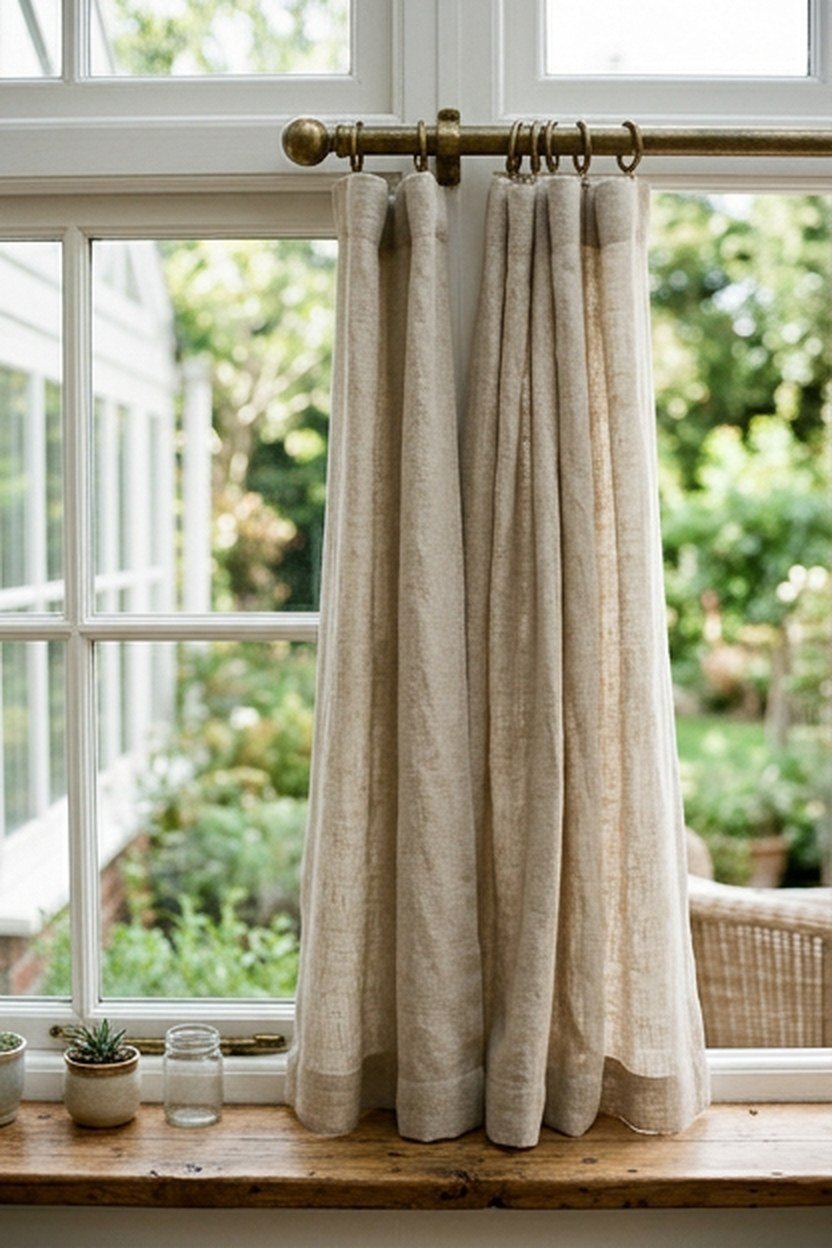
Linen curtain panels, hung at the sunroom’s windows even when full closure is rarely needed, soften the hard geometric lines that abundant glass and window framing create throughout the room. This detail introduces genuine fabric texture at the room’s largest surface area, the windows themselves, which otherwise remain entirely hard and reflective.
Choosing a linen with a slightly textured, nubby weave, rather than a completely smooth, flat fabric, maximizes the tactile interest this detail contributes to the room. Hanging the panels loosely, allowing them to remain mostly open to preserve the room’s light and views, rather than fully drawn most of the time, respects the sunroom’s core purpose while still adding the softening visual benefit. This partial-use approach is worth planning for from the initial curtain selection.
Choosing a curtain rod finish that complements the room’s other metal accents, brass or matte black depending on the room’s broader palette, ties this detail into the overall coordinated scheme. This coordination consideration is a small detail that meaningfully affects how intentional the finished window treatment reads. Most successful sunrooms apply this coordination principle across every visible hardware element in the space.
Cost And Fabric Guidance
Linen curtain panels sized for a typical sunroom window typically cost $40 to $120 per panel depending on fabric quality and length. Choosing a lighter-weight linen, rather than a heavy blackout fabric, respects the room’s core purpose of maximizing natural light while still providing the textural softening this detail is meant to achieve.
A common mistake is choosing curtains sized too short for the actual window height, resulting in a visually awkward gap that undermines the polished look this detail is meant to provide. Measuring the window’s actual height and ordering panels with adequate length, allowing for a slight pooling at the floor if desired, avoids this common and easily preventable shortfall.
4. Woven Rattan Or Wicker Furniture With Cushions
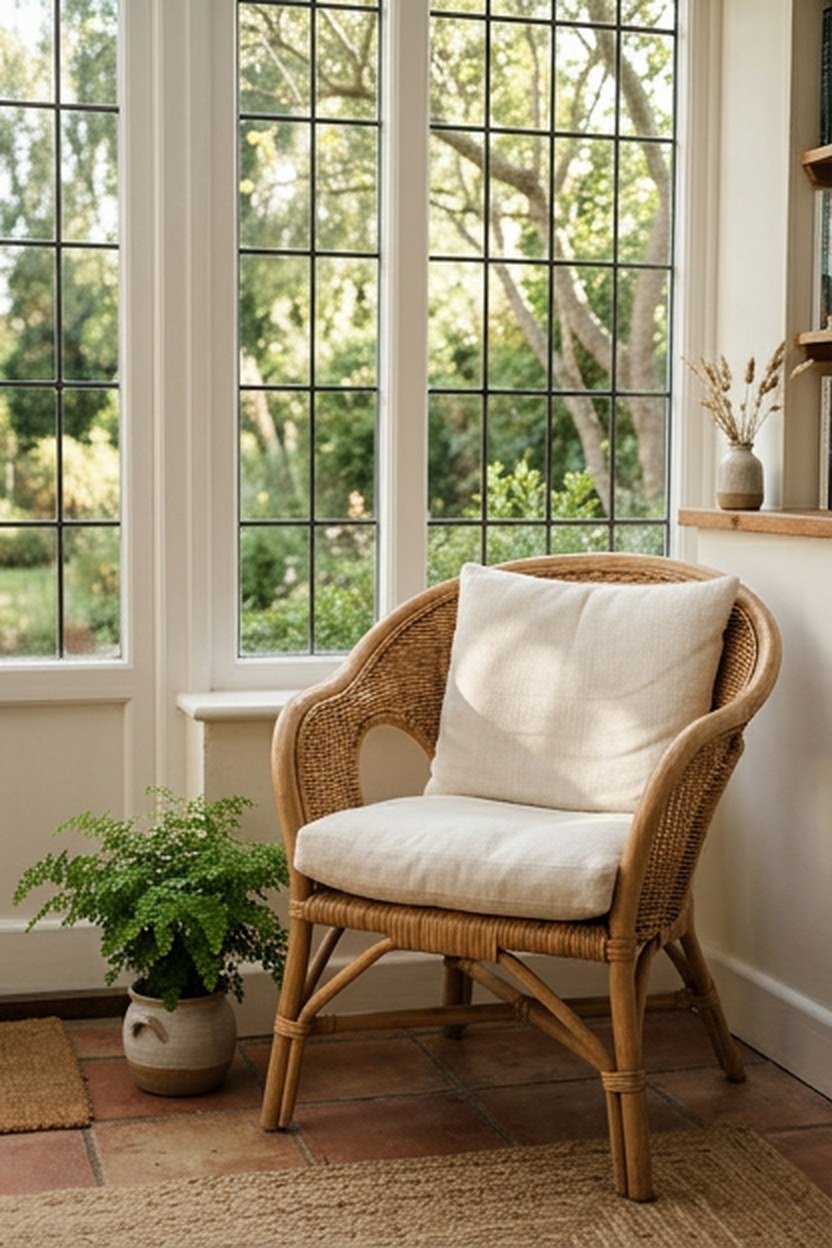
Woven rattan or wicker furniture, whether a full seating set or a single accent chair, introduces natural material texture that suits a sunroom’s connection to the outdoors while also providing genuine seating function. This furniture style has remained a sunroom staple for generations precisely because its woven structure photographs and feels appropriately textural in a room defined by natural light and outdoor views.
Adding thick, plush cushions in a complementary neutral or earth-toned fabric softens the rattan’s naturally more rigid structure, balancing the woven material’s texture against genuine seating comfort. This cushion addition matters for making rattan furniture genuinely comfortable for extended sitting, rather than purely decorative. Choosing cushions with a removable, washable cover simplifies maintenance considerably given the room’s exposure to dust and occasional spills.
Choosing rattan furniture with a natural, unstained finish, rather than a painted or heavily lacquered option, keeps the material’s texture and organic character fully visible rather than obscured by a glossy surface treatment. This natural finish consideration matters for maintaining the textural authenticity this furniture style is meant to contribute. Most furniture retailers offer several finish options specifically for this reason.
Cost And Maintenance Guidance
Woven rattan or wicker furniture typically costs $200 to $800 per piece depending on size and construction quality, with cushions adding a separate cost depending on fabric and fill quality. Choosing furniture rated specifically for sunroom or semi-outdoor use, rather than furniture intended purely for fully climate-controlled interior rooms, accounts for the temperature and humidity swings a sunroom typically experiences.
A common mistake is choosing rattan furniture without confirming its structural rating can handle regular daily use, resulting in furniture that creaks or develops loose joints within a year or two of active seating use. Testing floor models for sturdiness, or reading reviews specifically addressing long-term durability, before purchase avoids this frustrating and premature furniture failure.
5. Textured Wall Hangings Or Tapestries
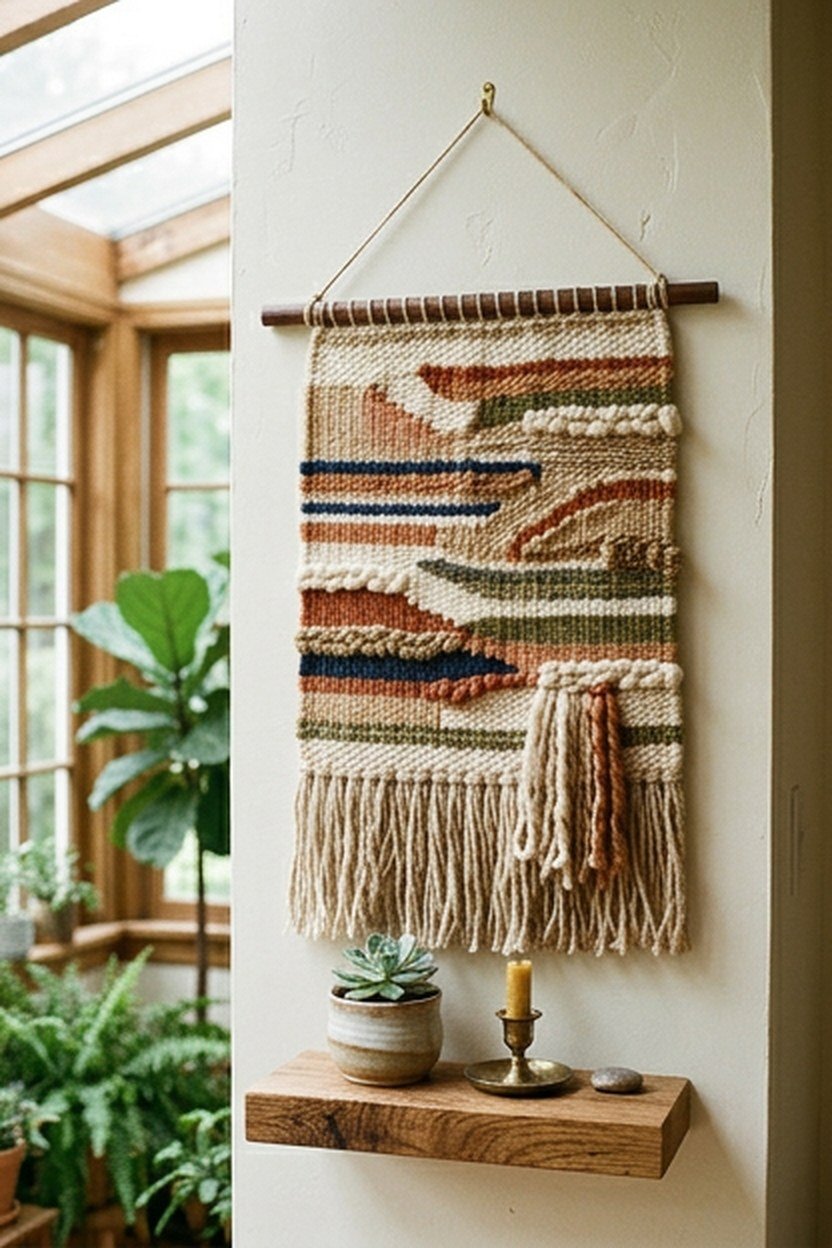
Textured wall hangings or fabric tapestries, hung on whatever limited wall space a sunroom offers, introduce vertical texture in a room where wall area is typically scarce compared to a standard interior room. This detail makes efficient use of the sunroom’s limited solid wall space, concentrating textural impact where it can genuinely register given the room’s otherwise glass-dominated surfaces.
Choosing a wall hanging with a natural fiber base, macrame, woven wool, or a textured wall tapestry, rather than a flat printed fabric, maximizes the dimensional texture this detail contributes. Positioning the piece on the most visually prominent available wall segment, typically near the room’s primary seating area, ensures the detail actually gets noticed despite the room’s limited wall space overall.
Sizing the wall hanging appropriately for the available space, rather than forcing an oversized piece into a cramped wall segment, keeps the detail feeling proportional rather than awkwardly squeezed. This sizing consideration is worth measuring carefully given how limited sunroom wall space typically is compared to other rooms. Most successful installations err toward a smaller, well-proportioned piece rather than an oversized one that overwhelms the available space.
Cost And Placement Guidance
A textured wall hanging or fabric tapestry suited for a sunroom typically costs $40 to $150 depending on size and material. Measuring the available wall space precisely before ordering, given how limited this space typically is in a sunroom, avoids the disappointing discovery of an oversized piece after purchase.
A common mistake is choosing a wall hanging in a fabric not suited to a sunroom’s temperature and humidity fluctuations, resulting in premature fading or fiber degradation compared to the same piece hung in a climate-controlled interior room. Confirming the specific material’s suitability for this environment, similar to the consideration discussed for the natural fiber rug earlier in this guide, avoids this premature deterioration.
6. Sheepskin Or Faux Fur Accent Throws
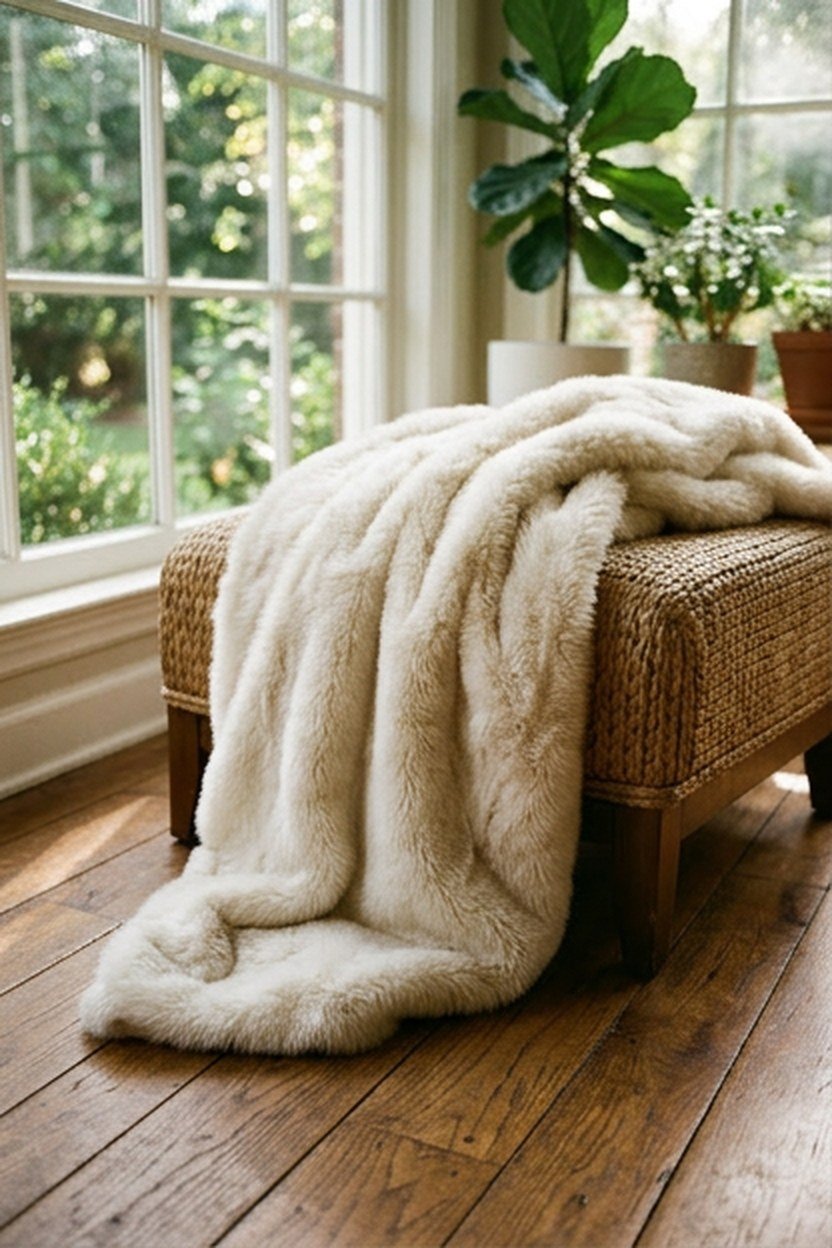
A sheepskin or faux fur accent throw, draped over a chair seat or an ottoman, introduces one of the plushest, most immediately tactile textures available for a sunroom’s seating area. This texture choice contrasts dramatically against the room’s hard glass and any woven natural fiber elements discussed elsewhere in this guide, providing genuine textural variety.
Choosing a faux fur option, rather than genuine sheepskin, provides an ethical and often more budget-friendly alternative while still delivering much of the same plush visual and tactile quality. Positioning this throw on a chair that receives regular use, rather than purely decorative seating rarely sat in, ensures the piece gets genuinely appreciated rather than remaining an untouched decorative object.
Choosing a neutral cream, gray, or tan tone for this throw, rather than a bold color, keeps it coordinated with the broader natural, textural palette this room style depends on throughout. This color restraint consideration mirrors the same principle applied throughout many other texture choices discussed in this guide. Most successful sunrooms apply this neutral color discipline consistently across nearly every textile element.
Cost And Placement Guidance
A quality sheepskin or faux fur accent throw typically costs $50 to $150 depending on size and material authenticity. Choosing a machine-washable faux fur option, rather than genuine sheepskin requiring specialty cleaning, simplifies maintenance considerably for a piece likely to see regular handling and occasional spills.
A common mistake is draping this throw somewhere purely decorative and rarely touched, wasting the piece’s genuine tactile appeal on a spot where it goes largely unnoticed and unused. Positioning the throw on the room’s most frequently used seating, rather than a decorative accent chair rarely sat in, ensures the investment actually gets appreciated during daily use.
7. Woven Basket Storage For Blankets And Pillows
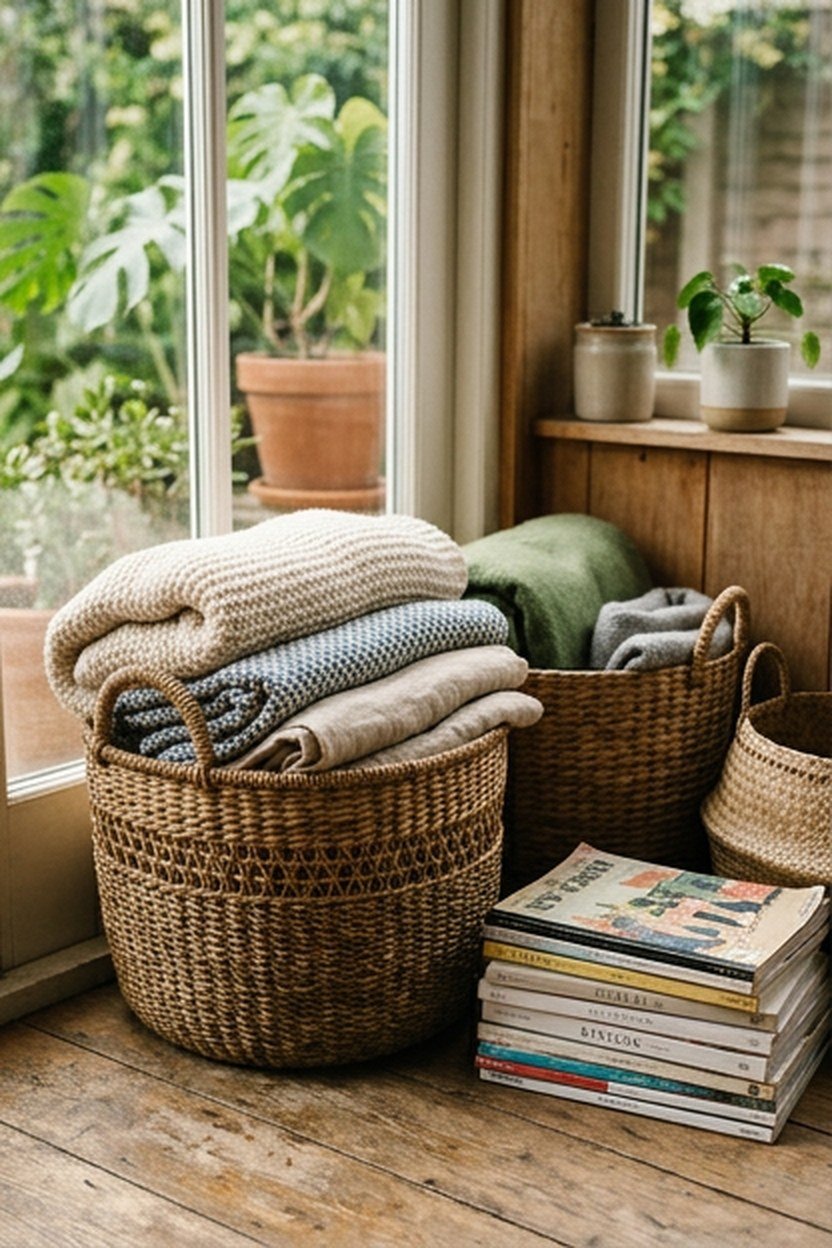
Woven baskets, used for storing extra blankets, pillows, or reading materials, introduce another layer of natural texture while also solving a genuine storage need many sunrooms face given their typically minimal built-in storage. This dual-purpose function, storage plus texture, makes woven baskets one of the more practically justified additions on this entire list.
Choosing baskets in varying sizes, a larger one for blankets and a smaller one for smaller items, allows for organized storage that also creates visual interest through the size variation itself. Positioning these baskets near the room’s primary seating area keeps stored items within easy reach for actual daily use, rather than requiring a trip to another room whenever an extra blanket or pillow is needed.
Selecting baskets in a natural, unstained woven material keeps the pieces consistent with the broader natural texture palette this room style depends on throughout every element discussed in this guide. This natural material consistency is worth prioritizing over a painted or stained alternative that might otherwise seem equally functional. Most natural fiber basket options suit this specific styling approach well regardless of exact weave pattern chosen.
Cost And Storage Guidance
A set of woven storage baskets suited for this application typically costs $40 to $120 depending on the number and size of baskets included. Choosing baskets with sturdy handles, rather than purely decorative options without genuine carrying capability, ensures the pieces function well for their actual practical storage purpose.
A common mistake is choosing baskets too small for the actual items intended for storage, resulting in overstuffed baskets that look messy rather than organized. Measuring the intended stored items, blankets, pillows, or reading materials, against the basket’s actual interior dimensions before purchase avoids this practical mismatch.
8. Macrame Plant Hangers For Vertical Greenery
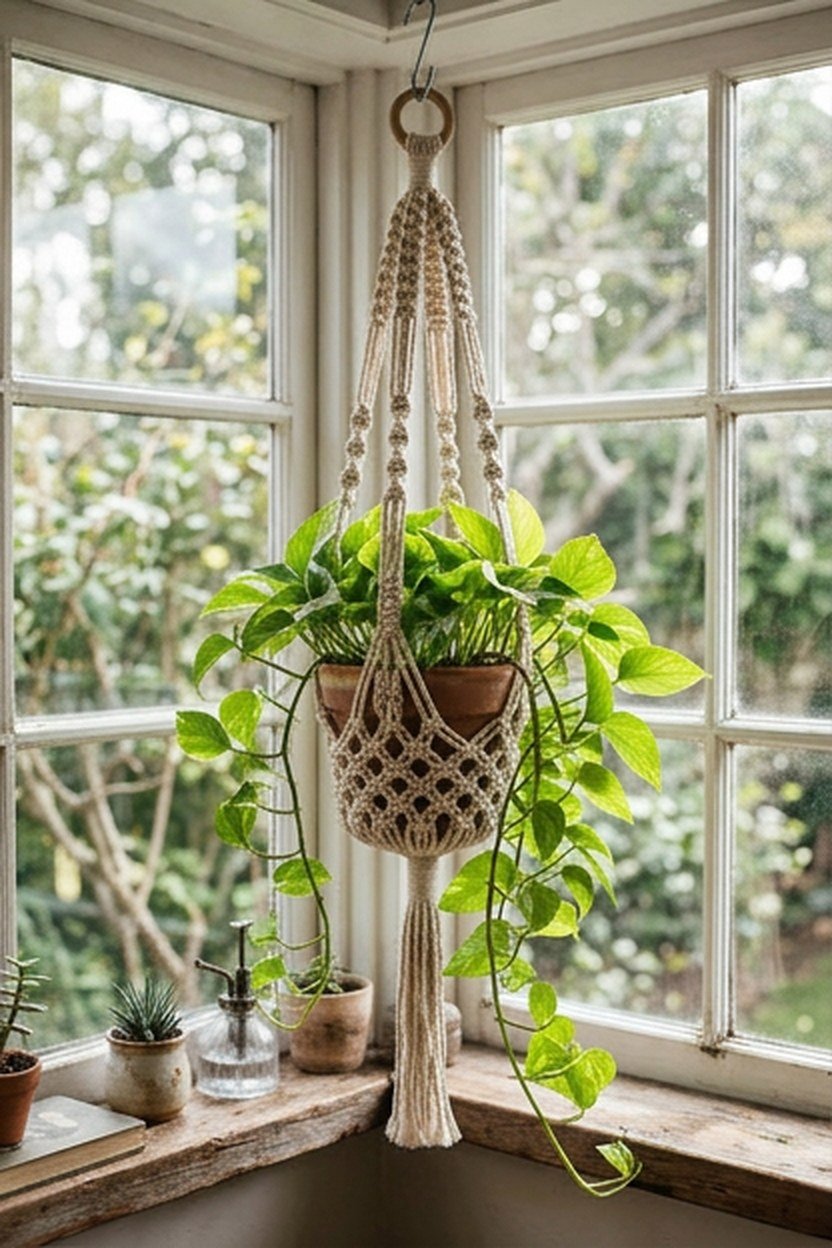
Macrame plant hangers, suspending trailing plants at varying heights throughout the sunroom, combine natural fiber texture with genuine living greenery, doubling up on the room’s connection to the outdoors visible through its surrounding windows. This detail adds vertical visual interest in a room where floor space might otherwise be entirely dedicated to seating and furniture. This combination of texture and living plant material is one of the more distinctive interpretations of the broader cozy sunroom concept.
Choosing macrame hangers with an open, visible knot pattern, rather than a tight, dense weave, maximizes the textural interest this detail contributes while also allowing adequate light to reach the suspended plant itself. Positioning these hangers at varying heights throughout the room, rather than all at the same level, creates a layered visual rhythm that avoids a flat, uniform appearance.
Selecting trailing plant varieties well suited to a sunroom’s typically abundant light, like pothos or string of pearls, ensures the greenery thrives rather than struggling in conditions that might not match the plant’s actual care needs. This plant selection consideration matters as much as the macrame hanger’s aesthetic contribution, since a struggling plant undermines the display regardless of how attractive the hanger itself remains.
Cost And Plant Care Guidance
Macrame plant hangers typically cost $15 to $50 per hanger depending on size and knot complexity, with the plants themselves adding a modest additional cost depending on variety and size. Confirming the mounting hardware reaches genuine structural support, rather than relying on drywall or window frame anchoring alone, ensures the hanger can safely support the plant’s weight once fully grown and watered.
A common mistake is choosing a plant variety poorly suited to the sunroom’s actual light conditions, particularly if the room receives more intense direct sun than the chosen plant variety tolerates well. Researching the specific light requirements for any plant before purchase, and choosing accordingly based on the room’s actual conditions, avoids this common and disappointing outcome.
9. Quilted Or Padded Bench Seating
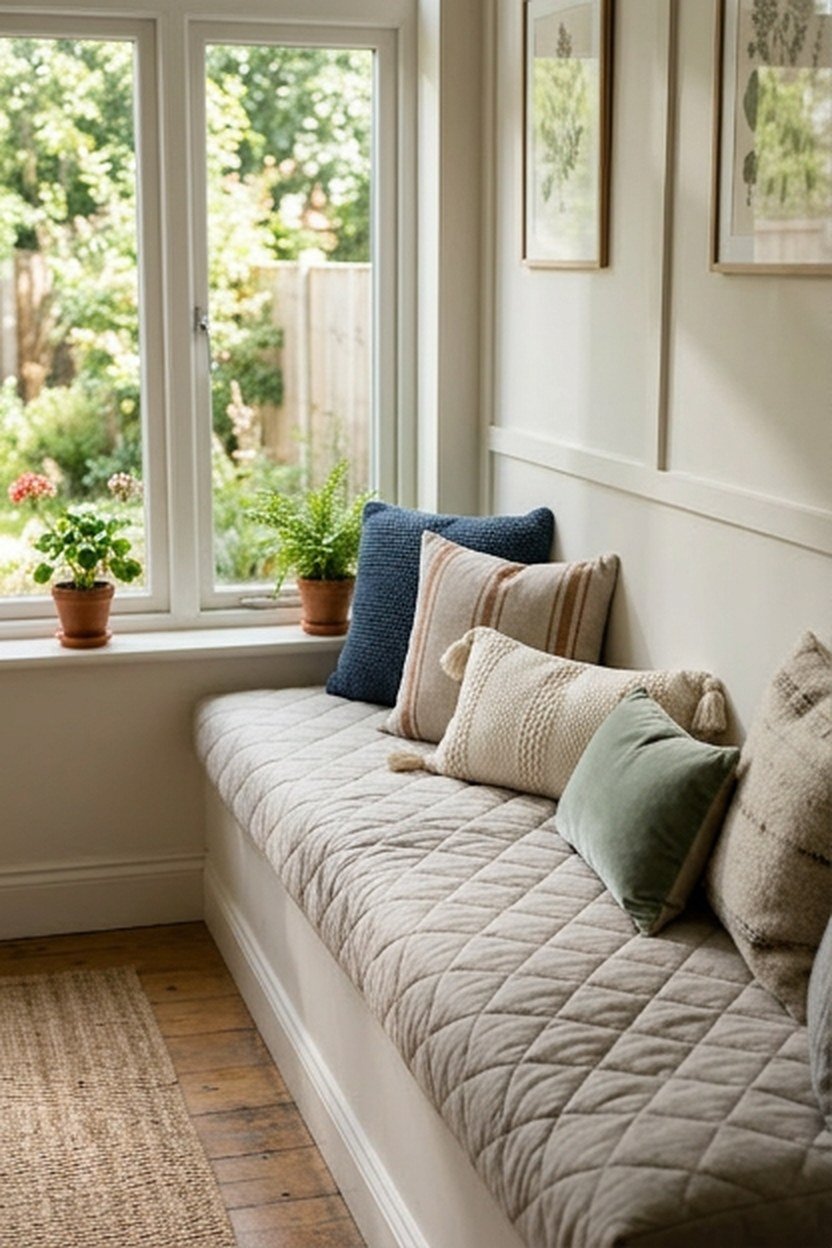
A quilted or padded bench, positioned along a sunroom wall or beneath a window, introduces upholstered seating with genuine textural depth from the quilting or padding pattern itself. This furniture style suits a sunroom particularly well since a bench often fits more efficiently into the room’s typically narrower floor plan than bulkier individual chairs would.
Choosing a quilted fabric with a visible, textured pattern, rather than a completely smooth, flat upholstery, maximizes the tactile and visual interest this piece contributes to the room. Adding a few coordinating throw pillows along the bench’s length extends the textural layering principle discussed throughout this guide into this specific piece of furniture.
Choosing a durable, easy-to-clean upholstery fabric, given the bench’s likely exposure to sun fading and regular use, accounts for the practical realities of this specific room’s environment. This durability consideration matters more here than for upholstered furniture in a fully climate-controlled interior room. Most quality bench options offer several fabric choices specifically suited to this kind of higher-exposure application.
Cost And Fabric Guidance
A quilted or padded bench suited for sunroom use typically costs $150 to $500 depending on size and upholstery quality. Choosing a fade-resistant, UV-treated fabric, consistent with the durability guidance discussed throughout this entire guide, protects the bench’s appearance from the sunroom’s abundant natural light exposure over time.
A common mistake is choosing a bench sized without accounting for the room’s actual wall space, resulting in a piece that either fits awkwardly or leaves an unused gap along the intended wall. Measuring the available wall space precisely before ordering avoids this common sizing mismatch.
10. Woven Wood Blinds For Layered Window Texture
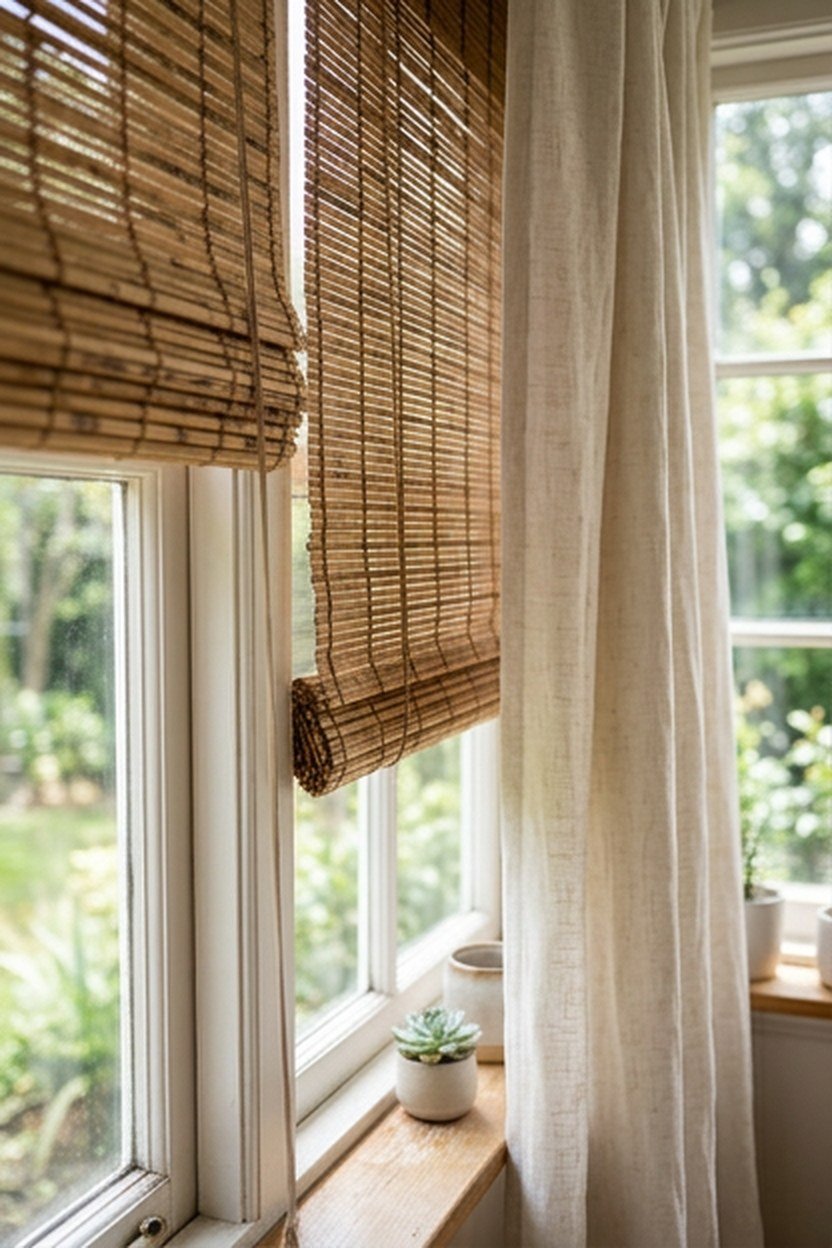
Woven wood blinds, installed either alone or layered beneath the linen curtain panels discussed earlier in this guide, introduce another distinct texture at the window, this time from natural wood or bamboo materials rather than fabric. This layering approach, combining wood blinds with fabric curtains, creates genuine depth at the window that a single window treatment alone cannot achieve.
Choosing blinds in a natural, unstained wood or bamboo tone, rather than a painted or heavily lacquered finish, keeps the material’s texture and organic character fully visible. This natural finish consideration mirrors the same principle discussed regarding rattan furniture earlier in this guide. Most blind manufacturers offer several natural finish options specifically suited to this styling approach.
Positioning the blinds to allow for adjustable light control throughout the day, since a sunroom’s light intensity can vary considerably between morning and afternoon, provides genuine practical function alongside the textural benefit. This adjustability consideration matters more in a sunroom than in a room with more consistent, moderate light exposure throughout the day. Testing the blinds’ actual light control at different times of day confirms this function works as intended.
Cost And Layering Guidance
Woven wood or bamboo blinds sized for a typical sunroom window typically cost $50 to $150 per window depending on width and material quality. Layering these blinds beneath fabric curtain panels, rather than choosing one treatment exclusively, adds a modest additional cost but delivers the fuller textural depth this styling approach depends on.
A common mistake is choosing blinds without confirming their suitability for a sunroom’s temperature and humidity fluctuations, since certain wood materials can warp or degrade faster in these conditions than in a fully climate-controlled interior room. Confirming the specific material’s suitability with the manufacturer or retailer before purchase avoids this premature deterioration.
11. Textured Ceramic Or Stoneware Accessories
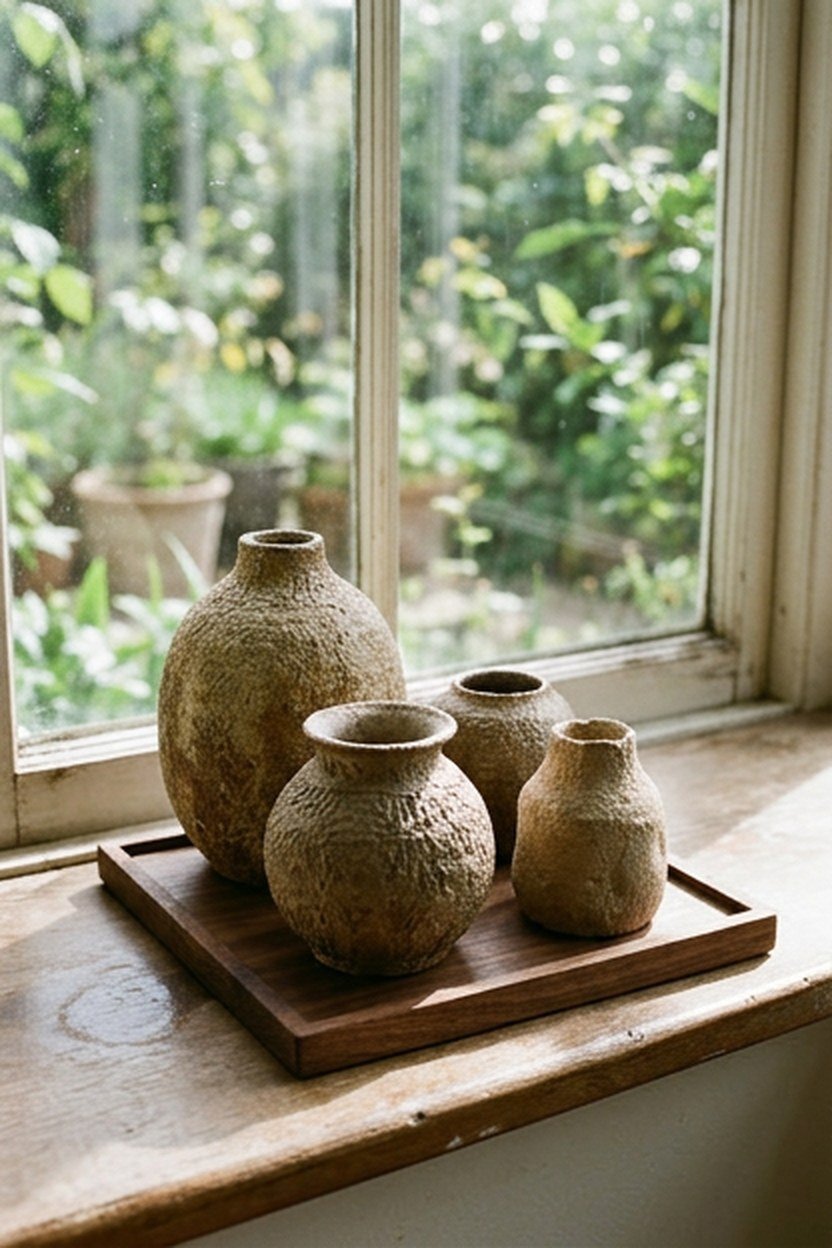
Textured ceramic or stoneware accessories, vases, bowls, or small decorative objects, introduce another material category’s texture beyond the fabric and natural fiber elements discussed throughout most of this guide. This variety in material type, not just pattern or color, adds genuine depth to the room’s overall textural strategy.
Choosing pieces with a visibly textured glaze or a raw, unglazed stoneware finish, rather than a smooth, glossy ceramic surface, maximizes the tactile and visual interest these accessories contribute. Grouping several pieces together in a curated cluster, rather than scattering individual items throughout the room, creates a more considered, intentional display than isolated pieces would achieve individually. This grouping principle applies the same styling technique discussed throughout many other sections of this guide.
Positioning these accessories on a surface that receives good natural light, a windowsill or a side table near a window, allows the texture to catch and reveal itself through the room’s abundant natural lighting throughout the day. This placement consideration leverages the same lighting advantage discussed at the start of this guide regarding how sunlight amplifies texture more dramatically than indoor lighting alone.
Cost And Styling Guidance
Textured ceramic or stoneware accessories typically cost $15 to $60 per piece depending on size and craftsmanship quality. Building this small collection gradually, adding one piece at a time rather than purchasing an entire matched set at once, allows for a more curated, collected-over-time appearance.
A common mistake is overcrowding a surface with too many small accessories, undermining the curated appearance this detail depends on for its visual impact. Limiting any single grouping to three or four carefully chosen pieces, leaving genuine negative space between them, keeps the arrangement feeling intentional rather than cluttered.
12. Upholstered Ottoman With A Textured Fabric
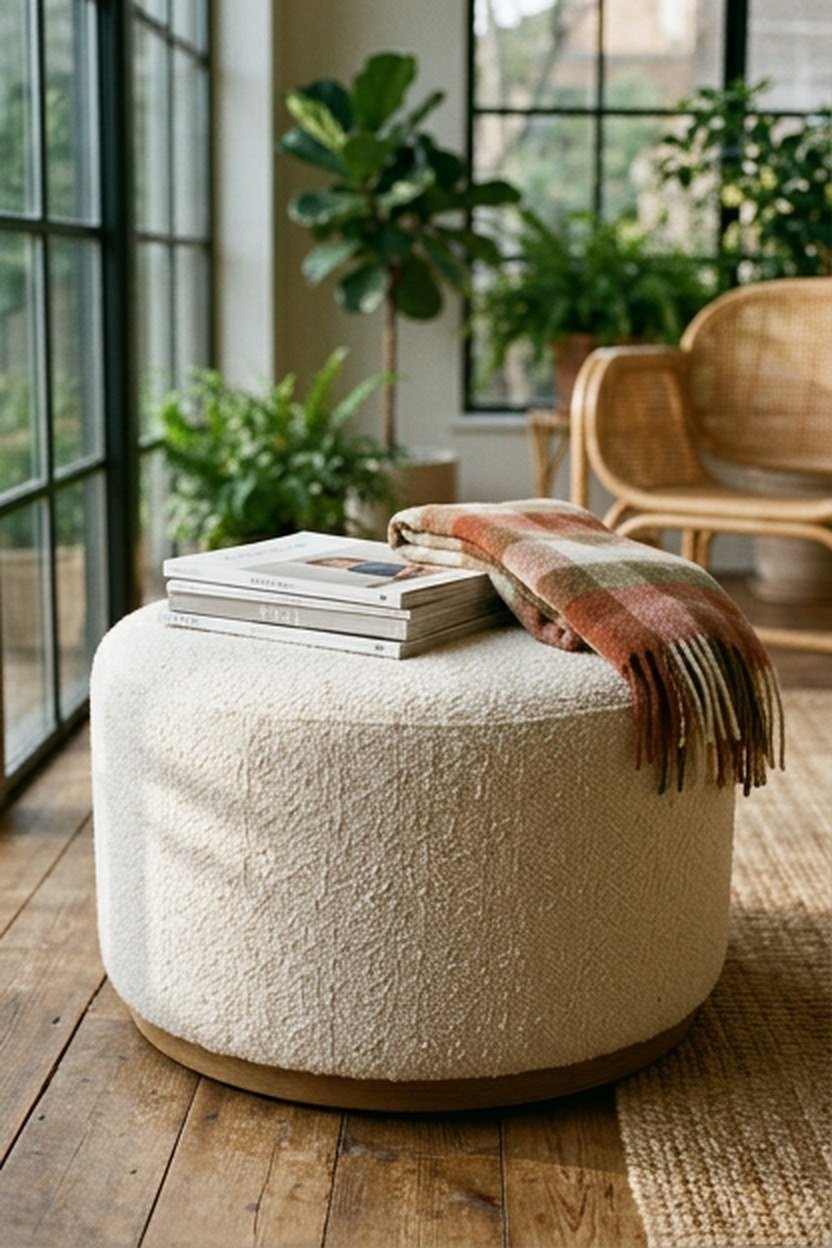
An upholstered ottoman, finished in a textured fabric like bouclé or a nubby weave, provides flexible seating or a footrest while introducing genuine tactile interest to the room’s furniture layer beyond the seating pieces already discussed elsewhere in this guide. This piece’s smaller scale makes it easier to fit into a sunroom’s often more limited floor plan compared to a larger upholstered chair.
Choosing a bouclé or similarly textured fabric, rather than a smooth, flat upholstery, maximizes the tactile contribution this piece makes to the room’s overall texture strategy. An ottoman with a removable, washable slipcover simplifies maintenance considerably given the room’s exposure to dust, sun, and occasional spills during regular use.
Positioning the ottoman within easy reach of the room’s primary seating, allowing it to double as a footrest or an extra perch during gatherings, ensures the piece serves genuine daily function alongside its textural contribution. This practical placement consideration matters as much as the aesthetic choice of fabric texture. Most successful sunroom layouts position the ottoman specifically with this dual function in mind.
Cost And Fabric Guidance
An upholstered ottoman with a textured fabric typically costs $100 to $350 depending on size and fabric quality. Choosing a fade-resistant, UV-treated upholstery, consistent with the durability guidance discussed throughout this entire guide, protects the piece’s appearance from the sunroom’s abundant natural light exposure over time.
A common mistake is choosing an ottoman fabric that shows wear or staining quickly given the room’s regular use as both a footrest and occasional extra seating. Choosing a more durable, tightly woven textured fabric, rather than a delicate option prone to snagging or staining, avoids this frustrating and visually noticeable deterioration.
13. Layered Floor Cushions For Casual Extra Seating
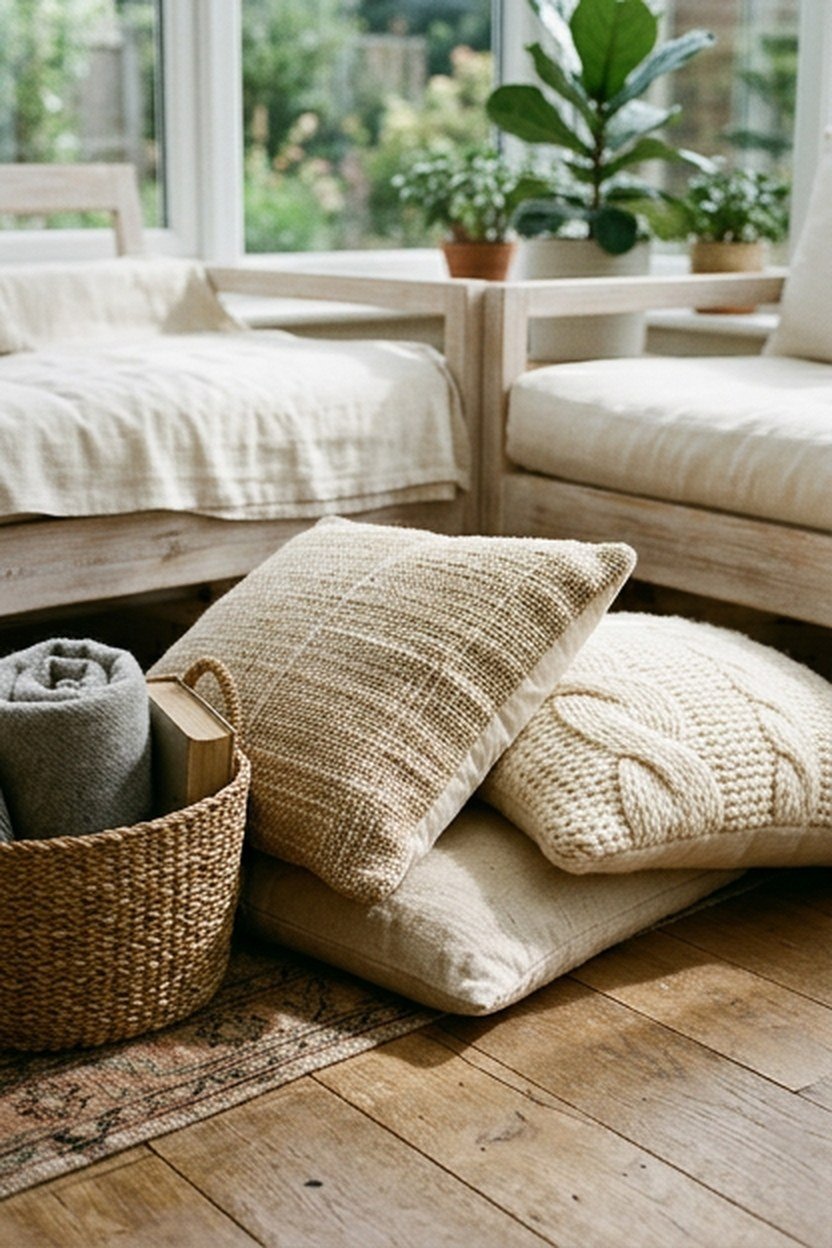
Layered floor cushions, arranged near the room’s primary seating area, introduce flexible, casual extra seating along with genuine textural softness at floor level, an area otherwise dominated by the hard flooring common in many sunrooms. This detail suits a sunroom particularly well given the room’s often more casual, relaxed intended use compared to a formal living room. This flexible seating option accommodates gatherings without requiring permanent furniture additions.
Choosing floor cushions in varied textures, a woven jute-covered cushion paired with a softer knit or velvet option, applies the same textural variety principle discussed throughout this entire guide to this specific floor-level application. Sizing the cushions generously, large enough for genuine comfortable seating rather than purely decorative, ensures they serve real function during actual use rather than remaining untouched decorative objects.
Storing these cushions in one of the woven baskets discussed earlier in this guide when not actively in use keeps the room feeling organized rather than cluttered with floor cushions scattered without clear purpose. This storage integration ties this detail back into the broader practical organization strategy discussed elsewhere in this guide.
Cost And Storage Guidance
A set of layered floor cushions suited for this application typically costs $60 to $180 depending on the number of cushions and fabric quality included. Choosing cushions with removable, washable covers simplifies maintenance considerably given their floor-level exposure to dust and regular handling.
A common mistake is choosing floor cushions too small or thin for genuine seating comfort, resulting in cushions that look appropriate in photos but prove uncomfortable for actual extended sitting. Testing a cushion’s actual thickness and firmness before committing to a full set avoids this common mismatch between appearance and function.
14. Textured Table Linens For A Sunroom Dining Nook
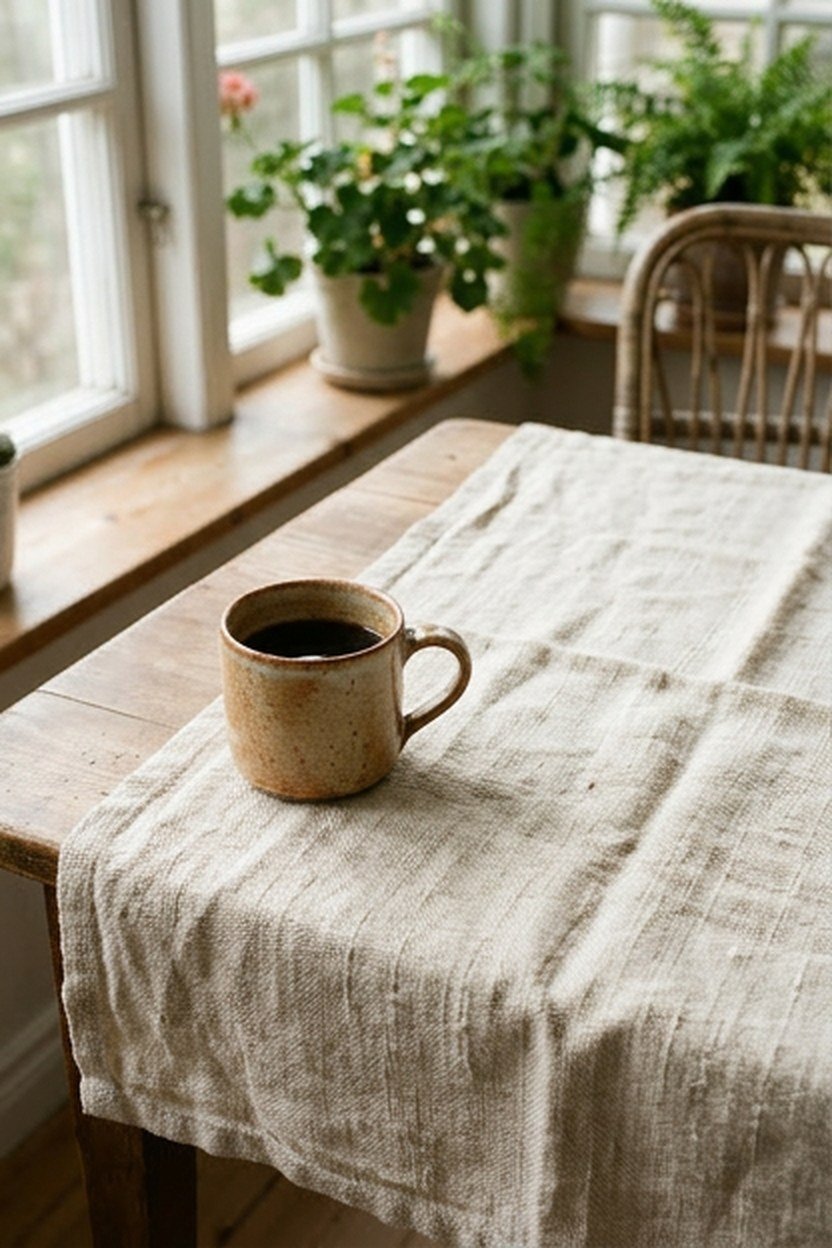
Textured table linens, a woven placemat or a nubby tablecloth, extend the room’s overall texture strategy into any dining nook a sunroom might include, applying the same principles discussed throughout this guide to a functional dining surface. This detail works particularly well for a sunroom used for casual breakfast or coffee gatherings, where the table itself becomes a frequently viewed and used surface. This textural extension into dining linens is a detail many sunroom styling guides overlook in favor of purely decorative elements.
Choosing linens in a natural fiber, linen or cotton with a visible woven texture, rather than a smooth, synthetic fabric, maximizes the tactile contribution this detail makes to the dining area specifically. Selecting a neutral or earth-toned color palette for these linens keeps them coordinated with the broader natural, textural aesthetic established throughout the rest of the room.
Choosing machine-washable linens, given the inevitable spills a dining surface experiences during regular use, simplifies maintenance considerably compared to delicate, dry-clean-only fabric options. This practical maintenance consideration matters more for table linens than for many other textiles discussed throughout this guide, given how frequently they encounter food and beverage spills.
Cost And Care Guidance
Textured table linens for a small dining nook typically cost $30 to $80 for a set of placemats or a tablecloth, a modest expense relative to the overall room styling budget discussed throughout this guide. Purchasing a few extra placemats beyond the exact seating count accounts for staining or wear over time without requiring an immediate full replacement. This extra-quantity consideration is worth the small additional cost for a frequently used textile.
A common mistake is choosing linens in a delicate fabric unsuited to a dining surface’s regular exposure to food, beverages, and sunlight, resulting in premature staining or fading. Choosing a durable, machine-washable natural fiber blend, rather than a delicate option chosen purely for appearance, avoids this common and frustrating deterioration.
15. Woven Lampshades For Textured Ambient Lighting
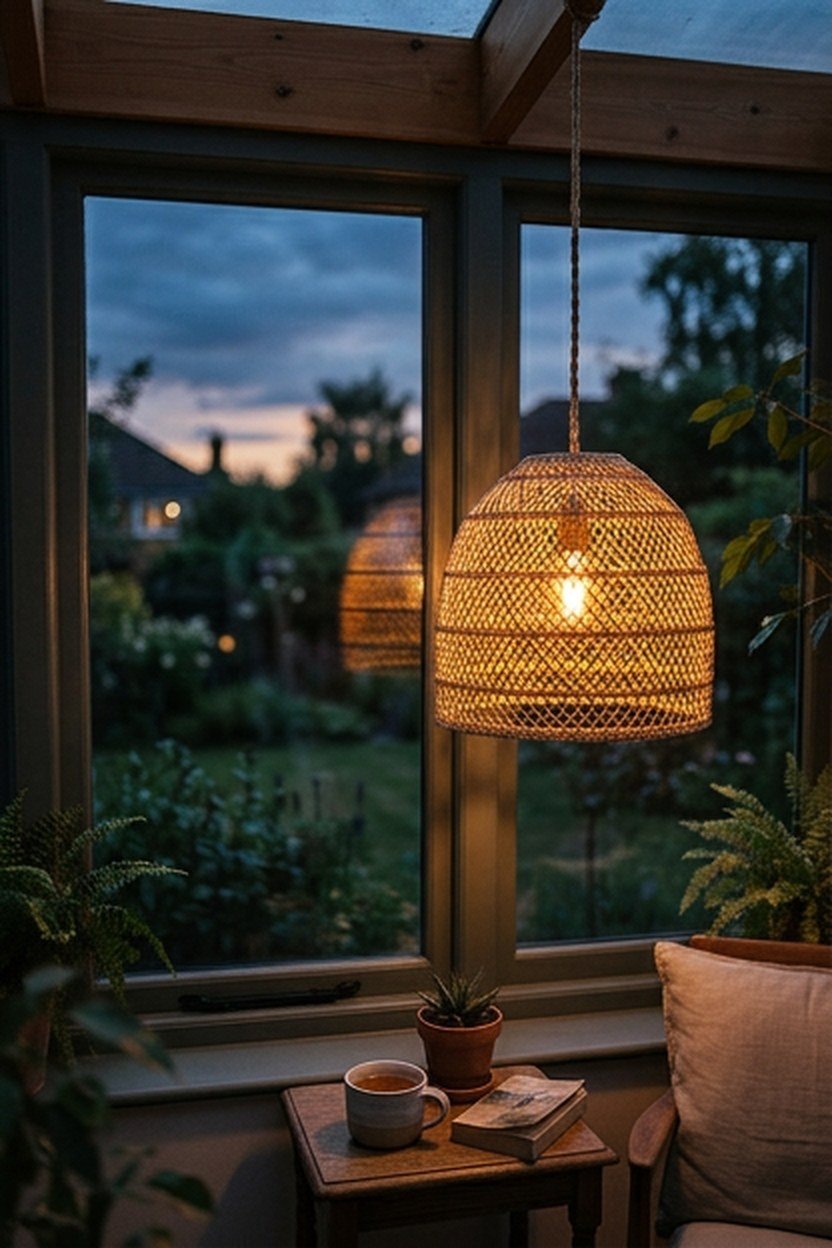
Woven lampshades, whether rattan, bamboo, or a textured fabric weave, extend the room’s textural strategy into its lighting fixtures, an element many sunroom styling approaches overlook in favor of purely functional, unremarkable lampshade choices. This detail works particularly well in the evening, when the lit shade’s woven texture becomes genuinely visible as light passes through the material. This lighting-specific texture application is one of the more distinctive finishing touches available for this room.
Choosing a lampshade with an open enough weave to allow adequate light diffusion, rather than an overly dense weave that blocks too much light, balances the textural contribution against genuine lighting function. Pairing this textured shade with a warm-toned bulb, consistent with the lighting guidance discussed throughout many other room styling approaches, ensures the fixture contributes to the room’s overall warm ambient quality.
Positioning lamps with these textured shades near the room’s primary seating area extends the room’s usability into the evening hours, when natural light alone no longer provides adequate illumination. This practical placement consideration matters as much as the shade’s textural contribution, since a beautifully textured shade positioned poorly still fails to provide adequate function.
Cost And Diffusion Guidance
Woven lampshades suited for this application typically cost $30 to $90 depending on size and material. Testing the shade’s actual light diffusion with the intended bulb before finalizing the lamp’s placement confirms the fixture provides adequate illumination for the room’s actual evening use.
A common mistake is choosing a woven shade so densely woven that it blocks too much light, resulting in a fixture that looks appropriately textural but fails to provide adequate illumination for actual evening use. Choosing a shade with visible gaps in its weave pattern, rather than an entirely solid, opaque surface, avoids this common functional shortfall.
What A Cozy Sunroom Texture Overhaul Actually Costs
A complete sunroom texture overhaul, incorporating several of the concepts discussed throughout this guide, typically costs $800 to $3,000 depending on room size and how many pieces use premium versus budget-friendly materials. This range reflects the fact that most of a sunroom’s coziness comes from textile investment rather than structural renovation, making this one of the more affordable full-room transformations covered across many different decor guides. Understanding this rough breakdown helps prioritize spending toward the elements with the most textural impact.
Ongoing costs beyond the initial styling remain relatively modest, mainly consisting of periodic textile replacement as sun exposure gradually fades certain fabrics faster than in a typical interior room. Choosing UV-treated, fade-resistant fabrics from the start, a consideration discussed throughout this guide, meaningfully extends how long the initial investment maintains its original appearance.
| Budget Category | Typical Cost Range | Notes |
|---|---|---|
| Seating and furniture | $300 to $1,200 | Rattan pieces, bench, ottoman |
| Textiles and rugs | $250 to $900 | Throws, rugs, curtains, cushions |
| Smaller accents | $150 to $500 | Baskets, ceramics, plant hangers |
Prioritizing seating and rug investments first, since these carry the most visual weight, before layering in smaller textile accents gives the most reliable path to a cohesive look even on a limited initial budget. This prioritization strategy is worth discussing before the first purchase is made. Most decorators find this order of investment produces the most satisfying room transformation relative to the budget spent at each stage.
Common Mistakes That Undermine A Cozy Sunroom
The most common mistake across sunroom styling projects is relying too heavily on hard, non-textile surfaces, wicker without cushions, bare floors without a rug, without introducing the layered fabric elements this room style genuinely depends on. Committing to at least three distinct textures across the room, a principle discussed earlier in this guide’s planning section, avoids this recurring flatness problem.
A second frequent mistake is choosing fabrics not suited to a sunroom’s fluctuating temperature, humidity, and intense sun exposure, resulting in premature fading, warping, or fiber degradation within just a season or two of regular use. Prioritizing UV-treated, fade-resistant materials specifically marketed for this kind of higher-exposure application, rather than choosing purely based on initial appearance, avoids this common and costly deterioration.
Recovering From These Setbacks
Recovering from an overly hard, sparse-feeling sunroom typically means adding two or three key textile pieces, a rug and a throw blanket at minimum, rather than attempting a complete room overhaul all at once. This targeted addition approach is considerably less expensive than replacing every hard surface in the room and often resolves the flatness problem with surprisingly few additional pieces. Identifying which specific missing texture category, floor, seating, or window, is contributing most to the sparse feeling helps target this addition most effectively.
Recovering from prematurely faded or degraded textiles usually means replacing the affected pieces with properly UV-treated alternatives, rather than repeating the same material mistake with a like-for-like replacement. This correction requires accepting the sunk cost of the original purchase, but prevents the same deterioration from recurring with the replacement piece. Choosing the more durable option this time, even at a somewhat higher upfront cost, is worth the investment given the room’s genuinely demanding light and temperature conditions.
Conclusion
A cozy sunroom succeeds by compensating for its abundant hard glass surfaces with deliberate, layered soft textures across seating, flooring, windows, and smaller accents. The fifteen concepts here, from a chunky knit throw to a woven lampshade, each contribute a piece of a considered whole that respects the room’s unique light and exposure conditions. Prioritizing durable, UV-treated materials from the start, then layering in texture variety gradually, gives the most reliable path to a sunroom that feels inviting rather than sparse.
Whether this is a first attempt at styling a new sunroom or a refinement of a space that has always felt slightly cold, the underlying principles stay consistent: layer at least three distinct textures, choose materials suited to the room’s conditions, and let sunlight amplify the tactile depth these choices provide. These fundamentals matter more than any single purchase on this list. Get them right, and the sunroom becomes a genuine year-round retreat rather than a room used only on the mildest days.
Frequently Asked Questions
Why do sunrooms need more soft textures than other rooms? Sunrooms rely heavily on glass rather than walls, which removes much of the natural textural softness a typical room gets from its architecture. This makes textiles, rugs, and upholstery carry more of the room’s overall coziness.
How much does a cozy sunroom texture overhaul cost? A complete overhaul typically costs $800 to $3,000 depending on room size and material quality. Most of this cost comes from seating, rugs, and textiles rather than structural renovation.
What fabrics hold up best in a sunroom? UV-treated, fade-resistant fabrics specifically marketed for sunroom or outdoor-adjacent use hold up best against the room’s abundant natural light exposure. Standard interior fabrics often fade or degrade faster in this environment.
How many different textures should a sunroom include? Most successful sunrooms combine at least three distinct textures, such as a knit, a woven natural fiber, and a smooth fabric, to avoid a flat, one-dimensional feel. This variety is one of the most important styling principles for this room type.
Can rattan furniture work in a sunroom year-round? Yes, as long as it is rated for the temperature and humidity swings a sunroom experiences, and paired with cushions for genuine comfort. Confirming this rating before purchase avoids premature wear.
Do sunroom textiles need to be swapped seasonally? Many households layer lighter fabrics like linen and cotton for warmer months and heavier wool or knit textiles for colder ones. This seasonal rotation is optional but helps the space feel comfortable year-round.
What is the biggest mistake people make styling a sunroom? Relying too heavily on hard surfaces without enough layered textile elements is the most common mistake, leaving the room feeling sparse despite good furniture choices. Committing to at least three distinct textures avoids this problem.