
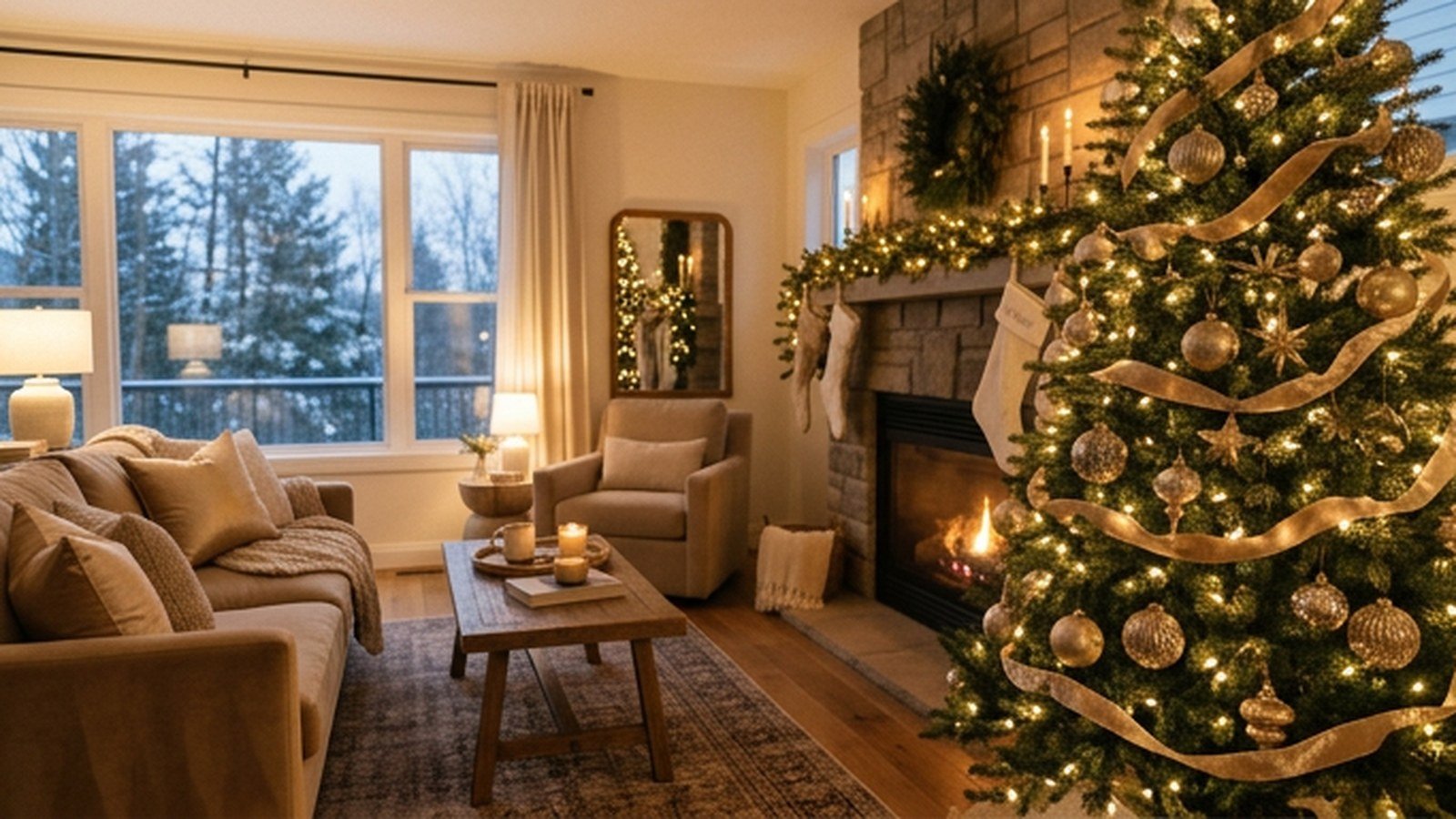
Champagne gold holiday decor replaces the traditional red and green Christmas palette with a softer, warmer metallic tone that reads as elegant rather than seasonal-only. This color, a muted gold with a slight pink or beige undertone, works because it photographs beautifully under warm indoor lighting and pairs naturally with the neutral furnishings many living rooms already have. Fifteen styles below cover the ornaments, textiles, and lighting choices that build this look room by room.
I switched my own tree from traditional red and green to champagne gold three years ago after feeling like the old palette clashed with my living room’s neutral furniture, and the difference was immediate. Champagne gold decor tends to photograph better in low winter light than bright red does, since the metallic tone catches and reflects warm lamp light rather than absorbing it.
Below you will find fifteen numbered concepts covering trees, mantels, tables, and lighting, plus a cost comparison table and a rundown of the mistakes that make a champagne gold scheme feel flat rather than elegant. Each idea includes a sub-angle on cost, sourcing, or what commonly goes wrong so you can build the look with a realistic budget. By the end you should know exactly which pieces carry the most visual weight and which ones are easy to skip.
Why Champagne Gold Works So Well For Holiday Styling
Champagne gold succeeds as a holiday palette because it sits between warm and cool tones, letting it pair with both a cream and white base or a deeper charcoal and navy backdrop without clashing either way. This flexibility means the palette works in a wide range of existing home interiors, unlike traditional red and green which can clash with certain wall colors or furniture finishes.
The metallic quality of champagne gold ornaments also interacts differently with lighting than a matte traditional palette does, catching and scattering warm bulb light in a way flat colors cannot replicate. A tree strung with warm white lights and champagne gold ornaments creates a genuine glow effect that a red and green tree, even with identical lighting, does not produce as strongly.
| Palette Element | Traditional Red/Green | Champagne Gold |
|---|---|---|
| Wall color pairing | Best with white or cream | Works with cream, white, or charcoal |
| Lighting interaction | Matte, absorbs light | Metallic, reflects light |
| Year-round versatility | Christmas-specific | Transitions into general winter decor |
A full champagne gold holiday decor package, covering a tree, mantel, and dining table, typically costs $400 to $1,200 depending on how many pieces are purchased new versus repurposed from existing neutral decor. This cost range sits comparable to a traditional red and green setup, since the price difference comes down more to ornament quality than the color itself. Understanding this helps set realistic expectations before shopping begins.
Planning Your Champagne Gold Scheme Room By Room
Planning starts with identifying which rooms will carry the full champagne gold treatment versus which will get lighter, accent-only touches, since decorating every room fully in this palette can feel repetitive rather than considered. Most successful champagne gold homes concentrate the full treatment in one or two primary rooms, like the living room and dining room, while using smaller accents like a wreath or table runner elsewhere.
Texture variety matters considerably within a single-color metallic palette, since an all-smooth-metallic scheme can start to feel flat without contrast from matte fabrics, natural wood, or textured glass. Most experienced decorators mix a metallic gold ornament with a matte velvet ribbon or a natural wood slice ornament to introduce this needed textural variety.
The biggest planning mistake is buying every decor piece in an identical, uniform gold tone, since champagne gold actually spans a range from pale rose gold to a deeper antique brass, and mixing these subtle variations creates more visual depth than a single flat tone. Shopping with swatches or sample pieces in hand helps confirm that new purchases genuinely complement, rather than clash with, existing pieces. This attention to tonal variation is worth the extra shopping time it requires.
Coordinating Champagne Gold With Existing Home Decor
Coordinating this palette with an already-neutral home, one with cream walls and light wood furniture, requires very little adjustment, since champagne gold naturally extends an existing neutral scheme rather than fighting against it. A home with bolder existing colors, like a navy accent wall or colorful upholstery, benefits from choosing a deeper antique gold tone that reads as more grounded against those stronger colors. This color-matching consideration is worth working through room by room before purchasing decor.
Testing a small sample of champagne gold decor, like a single ornament or a short garland section, against your existing furnishings before committing to a full-room purchase avoids an expensive mismatch discovered only after the holiday shopping is done. This test-first approach, while an extra step, is worth the confidence it provides before a larger investment. Most decorators recommend this small-scale testing regardless of how confident they feel about the palette choice.
1. Champagne Gold Ornament Tree With Warm White Lights
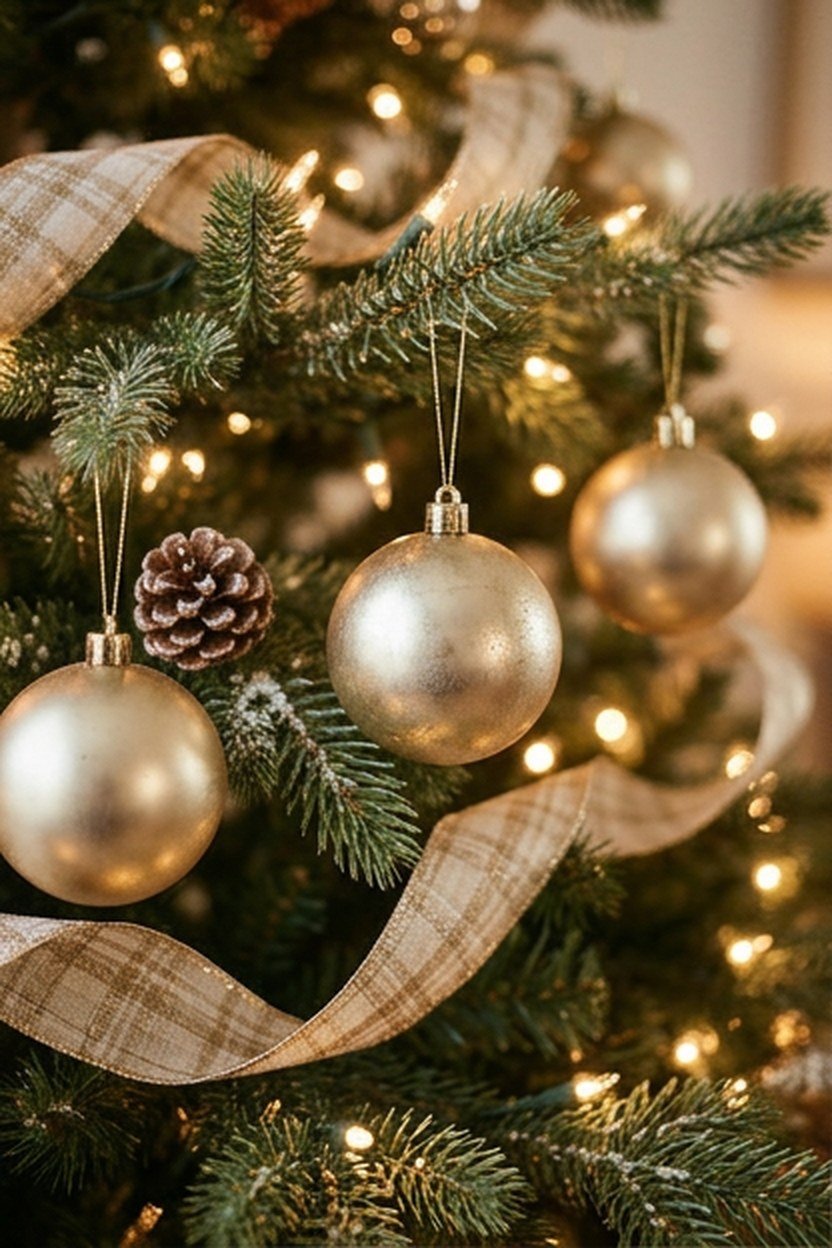
A tree decorated exclusively in champagne gold ornaments, paired with warm white rather than cool white string lights, creates the foundational look this entire palette depends on for its glow effect. Warm white lights, typically in the 2700 to 3000 kelvin range, complement the gold’s warm undertone far better than a cooler 5000 kelvin bulb, which can make the gold read as flat or slightly green.
Layering ornament sizes and finishes, mixing a matte champagne ball with a glossy metallic star and a textured glass icicle, keeps the tree from feeling monotonous despite using a single color family throughout. Most stylists recommend at least three distinct ornament finishes within the gold family to achieve this layered depth.
Adding a champagne gold ribbon woven through the branches, rather than only hanging ornaments, fills visual gaps between branches and adds movement to the tree’s overall silhouette. A wired ribbon holds its shape better through the display season than an unwired option, which tends to sag within a week or two.
Cost And Ornament Sourcing
A fully decorated champagne gold tree, including ornaments, ribbon, and warm white lighting, typically costs $200 to $500 for a standard 7-foot tree, depending on ornament quality and quantity. Sourcing ornaments gradually across several holiday seasons, rather than buying an entire set at once, spreads this cost over time while also allowing the collection to develop more variety naturally.
A common mistake is purchasing ornaments in bulk from a single set, resulting in a tree that looks uniform in a flat rather than intentional way. Mixing ornaments from at least two or three different sources or collections avoids this problem and introduces the tonal variation discussed earlier. This mixing takes slightly more shopping effort but produces a noticeably richer final result.
2. Champagne Gold Mantel Garland With Velvet Ribbon
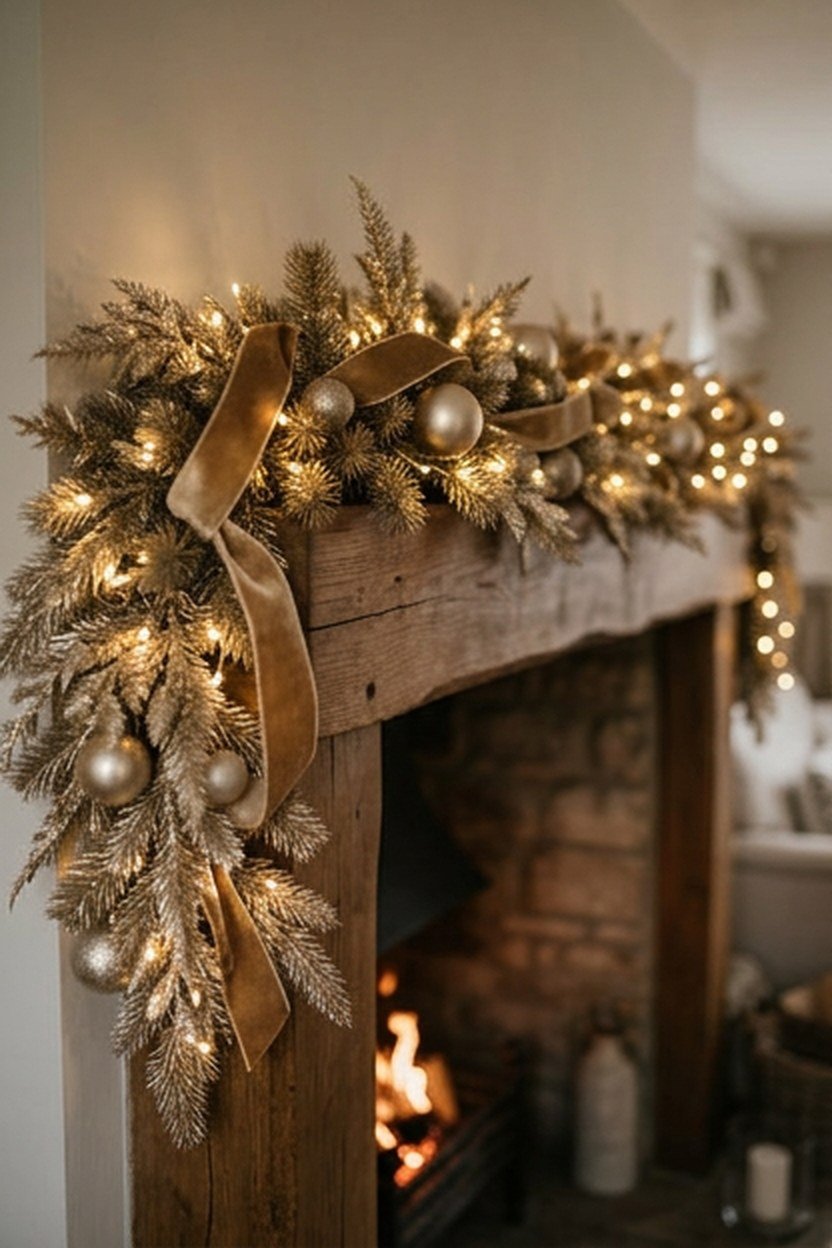
A champagne gold garland draped along the mantel, mixed with a matte velvet ribbon in a complementary cream or blush tone, introduces the textural contrast this palette depends on for genuine visual depth. The garland itself, typically faux eucalyptus or pine sprayed or dipped in a gold finish, provides the base greenery structure that ribbon and ornaments then layer onto.
Draping the garland with a gentle swag rather than a straight, taut line across the mantel creates a softer, more natural silhouette that photographs better and feels less rigid than a perfectly straight installation. Securing the garland at three or four points along the mantel, rather than only at each end, maintains this swag shape throughout the display season without sagging in the middle.
Adding a few battery-powered warm white fairy lights woven directly into the garland extends its glow into the evening without requiring a nearby outlet, which mantels often lack. This lighting addition is a small detail that many first-time decorators overlook until they notice how much darker the mantel looks compared to the rest of the room in the evening. Including this lighting from the start avoids a noticeable gap in the room’s overall evening ambience.
Cost And Installation Guidance
A champagne gold mantel garland with velvet ribbon typically costs $60 to $180 depending on garland length and ribbon quality. Choosing a wired garland base, rather than an unwired one, makes shaping the swag considerably easier and holds the desired form longer throughout the display season. This wired option costs marginally more but is worth the improved installation experience.
A common mistake is hanging the garland too close to the mantel’s edge, where it can obscure candles or other decor items placed on the mantel surface itself. Testing the garland’s drape against any planned mantel decor before finalizing the installation avoids this visual conflict. This test placement takes only a few minutes but prevents a crowded, cluttered final result.
3. Champagne Gold Table Runner With Metallic Charger Plates
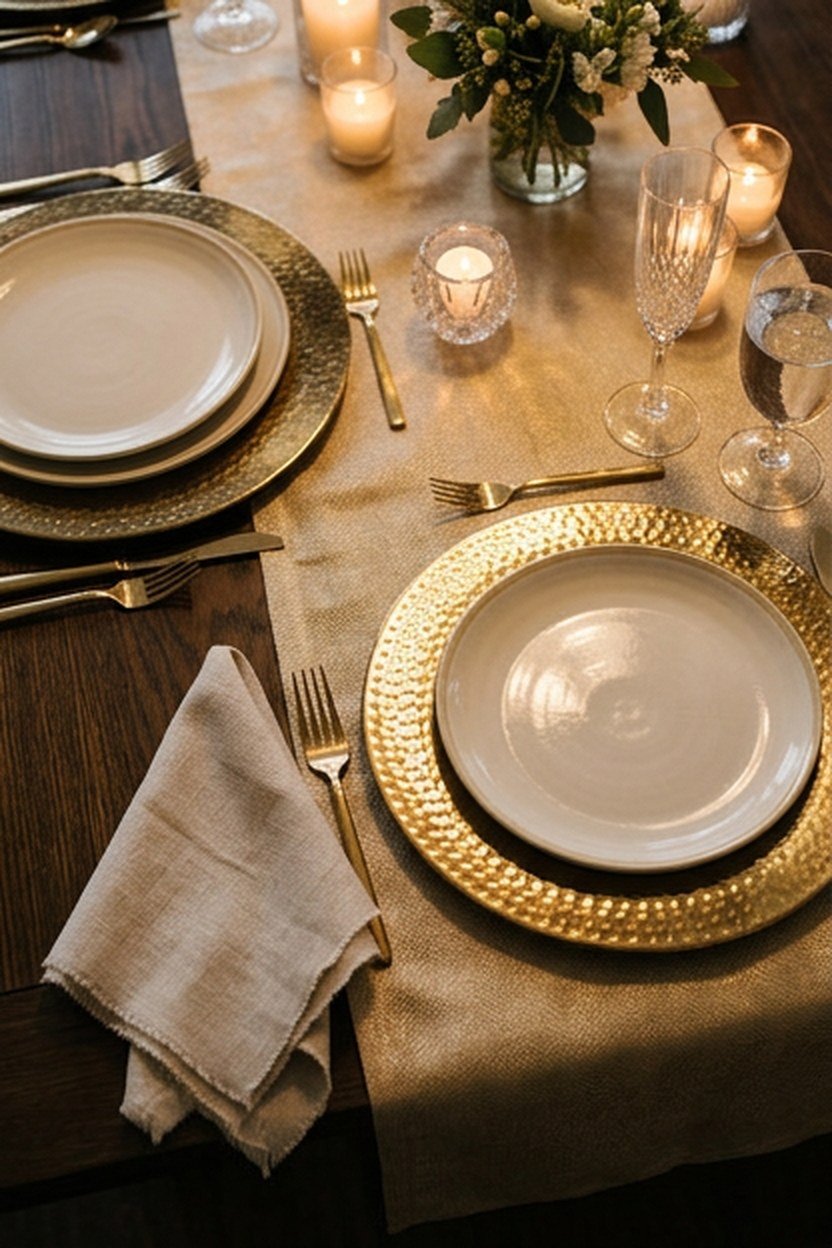
A champagne gold table runner, paired with metallic charger plates beneath each place setting, extends the holiday palette onto the dining table without requiring a full china replacement. This combination works particularly well for holiday meals since the runner and chargers can be removed easily after the season while leaving the everyday table setting unaffected. The metallic chargers also catch candlelight beautifully during an evening holiday dinner.
Choosing a runner fabric with a subtle texture, like a slightly crinkled or embroidered finish rather than a completely flat, glossy fabric, adds visual interest without overwhelming the table’s other elements. Most stylists pair this textured runner with simpler, smoother charger plates to avoid competing textures fighting for attention on the same table. This textural balance between runner and chargers is worth considering before purchasing either piece separately.
Layering a simple white or cream dinner plate directly on top of the metallic charger, rather than using patterned china, keeps the overall table setting feeling elegant rather than visually busy. This simplicity in the dinnerware itself lets the champagne gold accents genuinely stand out as the table’s decorative focus. Most holiday table settings benefit from this restraint in the dinnerware choice specifically.
Cost And Table Setting Guidance
A champagne gold table runner and a full set of metallic charger plates for eight settings typically costs $80 to $250 depending on runner fabric quality and charger material. Purchasing chargers in a durable metal or resin material, rather than a delicate glass option, makes them easier to store and reuse across multiple holiday seasons.
A common mistake is choosing a runner or charger finish in a noticeably different gold tone than the rest of the room’s decor, creating a visible mismatch when the dining area is viewed alongside the living room’s tree or mantel. Bringing a fabric or charger sample into the same room as your existing decor before purchasing avoids this common and easily preventable mismatch. This cross-room comparison is worth the extra shopping step.
4. Champagne Gold Stocking Holders On The Mantel
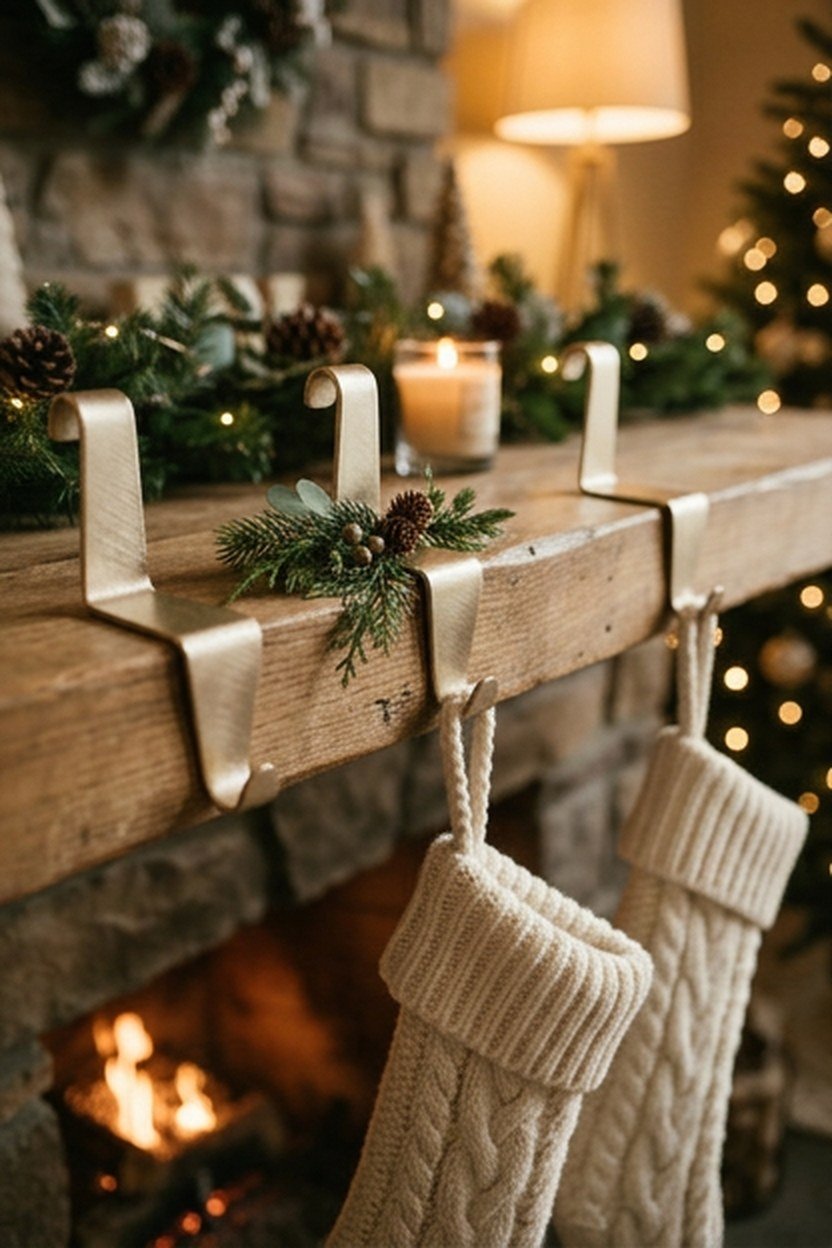
Champagne gold stocking holders, typically a simple curved metal hook designed to hang securely over the mantel edge, coordinate the stockings themselves into the room’s overall metallic palette rather than leaving them as a mismatched accent. This detail, while small, is one of the more visible decor pieces in a room since stockings hang at eye level and draw attention throughout the holiday season. Coordinating this piece is worth the modest additional cost involved.
Choosing stocking holders weighted appropriately for the stockings they will carry, particularly once stockings are filled with gifts on Christmas morning, prevents the embarrassing and potentially damaging mishap of a stocking sliding off the mantel under weight. Most quality holders include a weighted base or a secure clamping mechanism specifically to prevent this common failure.
Selecting stockings themselves in a complementary cream, blush, or ivory fabric, rather than traditional red felt, completes the coordinated look from the mantel garland down through the stockings themselves. A stocking with a small champagne gold monogram or embroidered detail adds a personalized touch without disrupting the overall palette.
Cost And Weight Safety Guidance
A set of champagne gold stocking holders typically costs $30 to $80 for a set of four to six, depending on material and weight rating. Confirming the holder’s weight rating against your actual planned stocking contents, rather than assuming a decorative holder will suffice, avoids the safety and mess issue of a stocking falling during the display season.
A common mistake is choosing a purely decorative, lightweight holder for stockings that will ultimately carry significant weight from wrapped gifts and stocking stuffers. Opting for a holder explicitly rated for heavier loads, even if it looks slightly less delicate, is the safer and more practical choice for actual holiday use.
5. Champagne Gold Wreath With Dried Botanicals
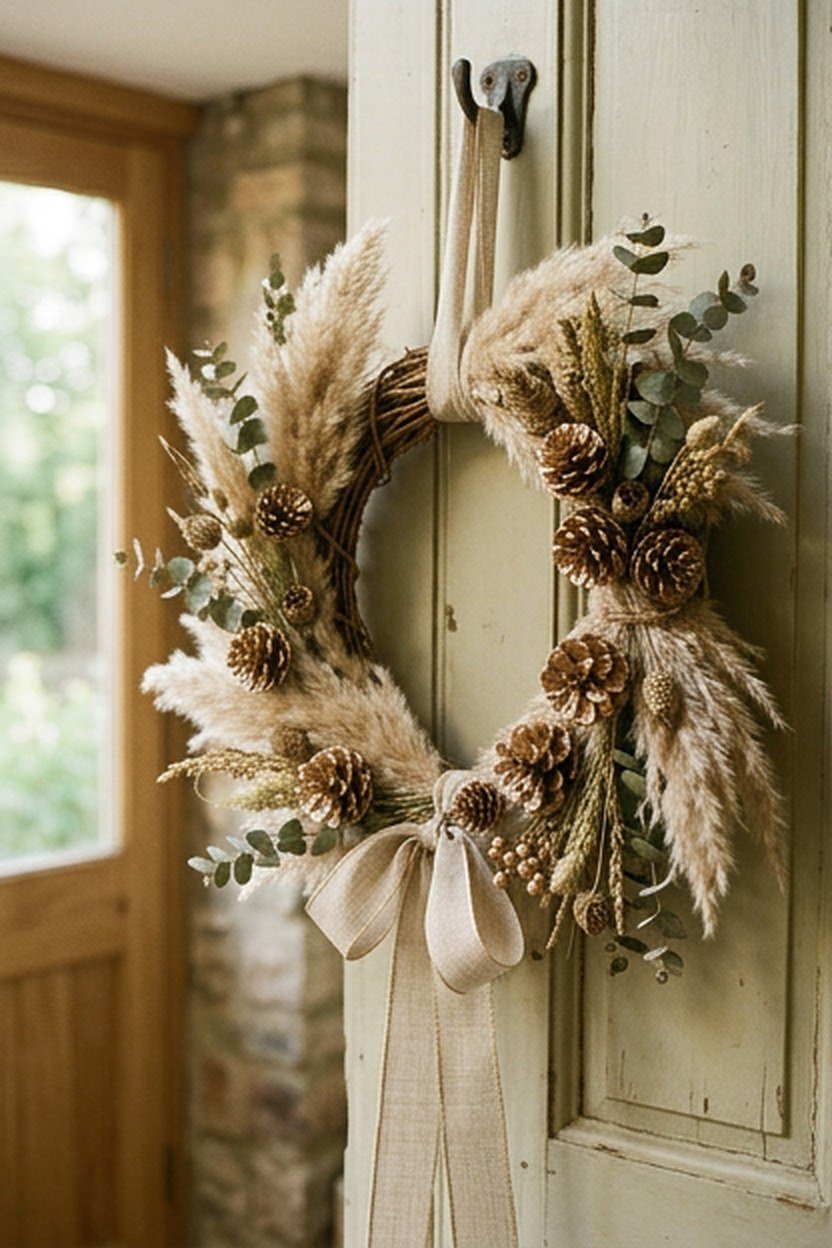
A champagne gold wreath, built from a base of dried eucalyptus, pampas grass, or preserved foliage with gold-dipped accents woven throughout, brings the palette to the home’s exterior or entryway in a way that greets guests before they even enter. This wreath style has become particularly popular for its transitional quality, working through the entire winter season rather than needing removal immediately after Christmas.
Choosing a mix of dried botanicals in varying textures, pairing feathery pampas grass with more structured dried eucalyptus stems, creates visual depth that a single dried material alone cannot achieve. Adding a few gold-dipped pinecones or small metallic ornaments throughout the wreath ties it back to the champagne gold palette used elsewhere in the home. This layering technique mirrors the same textural variety principle discussed for the tree and garland earlier.
Hanging the wreath with a wide, coordinating ribbon in a complementary cream or blush tone, rather than a plain wire hanger, adds a finishing detail that elevates the wreath’s overall presentation considerably. This ribbon can be tied in a simple bow or a more elaborate cascading style depending on the entryway’s overall formality. Either choice works within the palette, so this comes down to personal preference for the entryway’s desired look.
Cost And Seasonal Durability
A champagne gold dried botanical wreath typically costs $50 to $150 depending on size and the quality of dried materials used. Choosing preserved rather than simply dried botanicals extends the wreath’s usable lifespan considerably, since preserved materials resist the brittleness and color fading that plain dried materials experience after a few weeks of outdoor exposure.
A common mistake is hanging a delicate dried wreath in direct exposure to harsh winter weather without any protection, causing premature deterioration well before the season ends. Choosing a slightly sheltered entryway location, or adding a light protective coating to the dried materials, extends the wreath’s presentable lifespan considerably.
6. Champagne Gold Candle Holders And Taper Candles
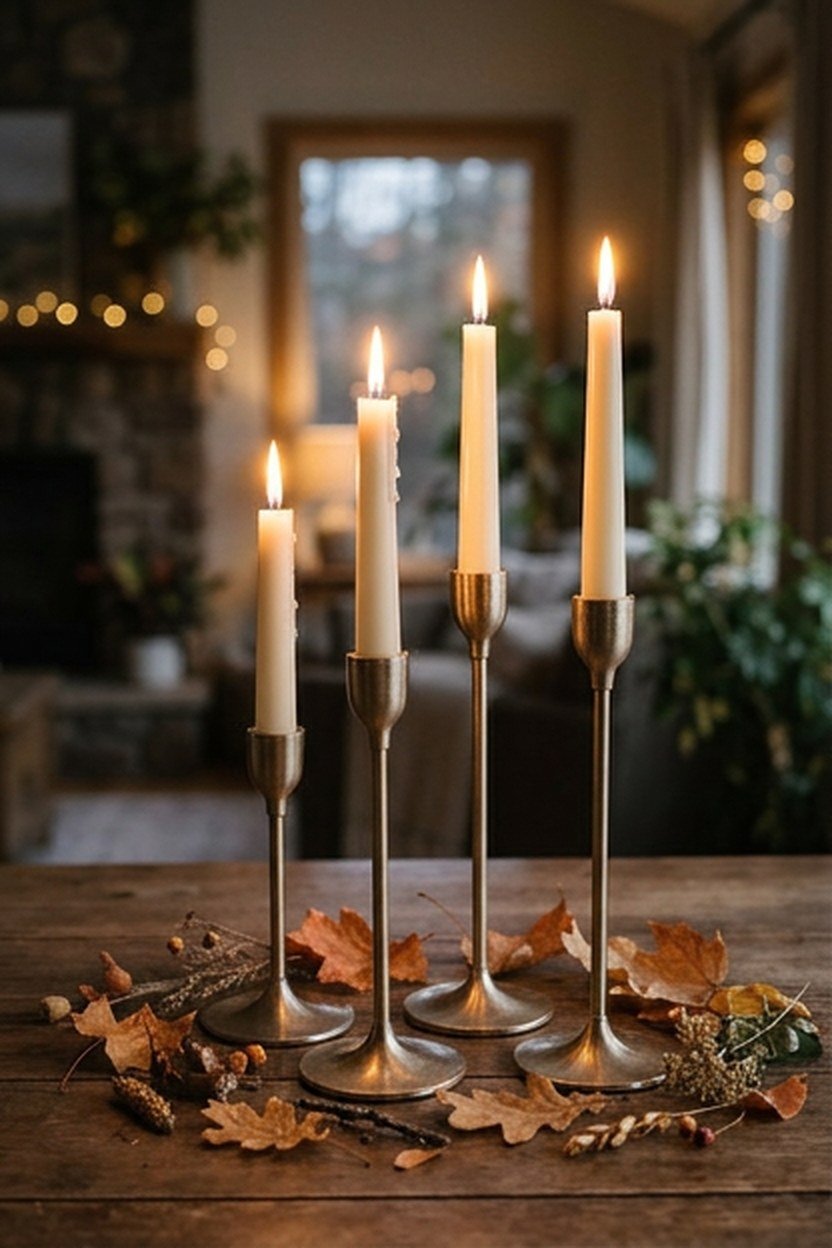
Champagne gold candle holders, whether simple taper holders or a cluster of varying-height pillar holders, introduce warm ambient lighting that complements the palette’s overall glow effect discussed throughout this list. Grouping several holders of varying heights together, rather than spacing identical holders evenly apart, creates a more layered visual arrangement that draws the eye naturally across the display.
Choosing cream or ivory taper candles, rather than traditional white or red, keeps the candlelight itself contributing to the warm overall palette rather than introducing a stark, cool-toned contrast. Unscented candles are generally preferred for a dining table specifically, since scented candles can interfere with the aroma of a holiday meal being served nearby.
Safety remains an important consideration with any candle display, particularly around dried botanicals or ribbon used elsewhere in the champagne gold decor scheme discussed in earlier sections. Keeping lit candles a safe distance from any dried or fabric decor, and never leaving them unattended, prevents the fire risk that decorative candle clusters can otherwise introduce.
Cost And Candle Selection Guidance
A set of champagne gold candle holders, including a mix of taper and pillar styles, typically costs $40 to $120 depending on material and the number of pieces included. Choosing metal holders over glass ones provides better durability for a decor element that gets moved and rearranged frequently throughout the holiday season.
A common mistake is placing candle holders too close to flammable garland or ribbon elsewhere in the room’s decor, creating a genuine fire hazard that is easy to overlook amid the broader styling process. Walking through the entire room’s decor with fire safety specifically in mind, checking distances between any open flame and flammable materials, is worth doing before the candles are ever lit.
7. Champagne Gold Bow Toppers On Gift Wrapping
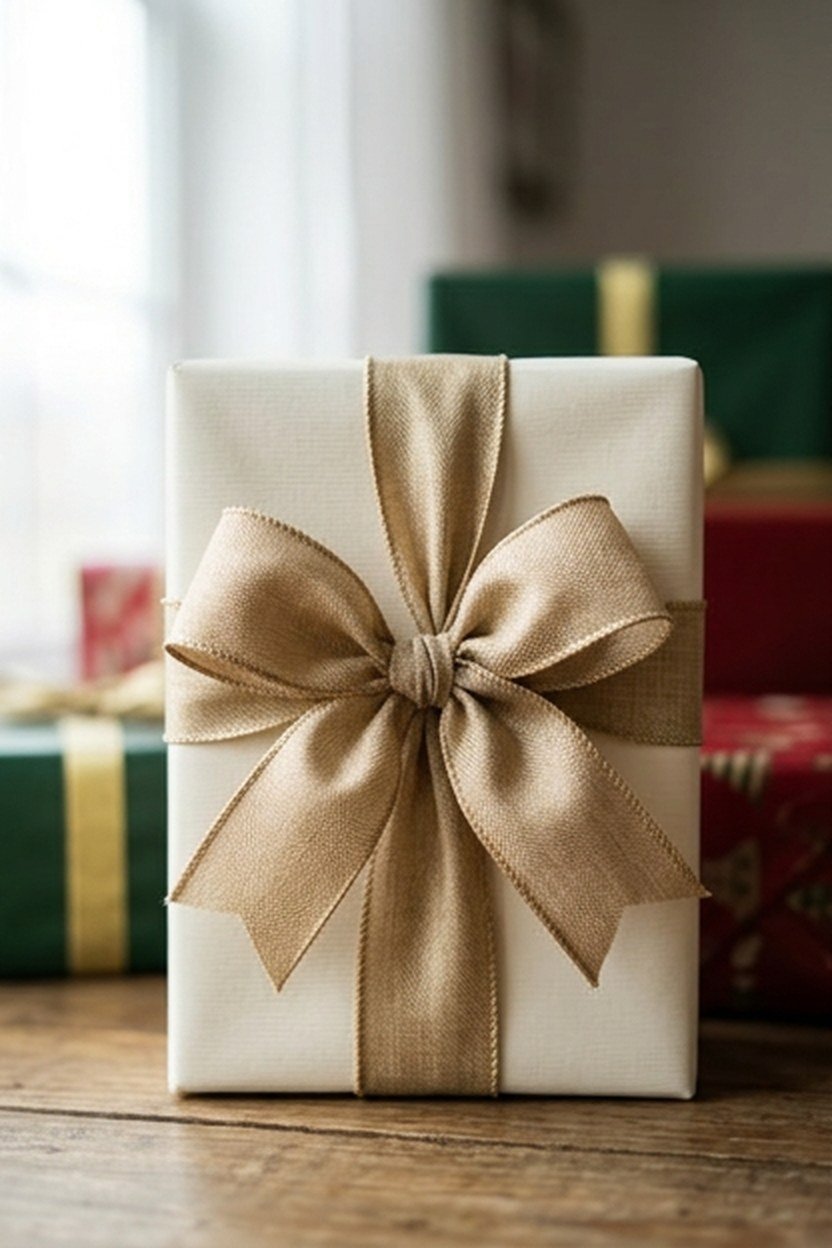
Champagne gold ribbon bows, tied onto gift wrapping in a coordinating cream, white, or kraft paper, extend the holiday palette from the tree and mantel down to the presents themselves, creating a cohesive look throughout the entire room during gift-opening. This detail is one of the more affordable ways to reinforce the palette, since wrapping paper and ribbon represent a relatively small expense compared to furniture or textile purchases. The visual payoff relative to cost makes this an easy addition to the overall scheme.
Choosing a wired ribbon for these bows, rather than an unwired option, allows for a fuller, more structured bow shape that holds up during transport and handling far better than a floppy unwired ribbon would. Most experienced gift wrappers recommend practicing the bow-tying technique on a few test pieces before wrapping the actual gifts, since a well-shaped bow takes some practice to execute consistently.
Varying the ribbon width slightly across different gift sizes, using a wider ribbon for larger boxes and a narrower one for smaller gifts, keeps the proportions looking intentional rather than uniform regardless of package size. This proportional consideration is a small detail that experienced gift wrappers apply instinctively but is worth learning explicitly if this is a newer styling skill. Getting this right noticeably improves how the gifts look arranged together under the tree.
Cost And Wrapping Guidance
Champagne gold ribbon and coordinating wrapping paper for a typical household’s gift collection usually costs $30 to $70 for the season, a modest expense relative to its visual impact throughout the room. Buying ribbon in bulk spools, rather than pre-cut lengths, is considerably more affordable for households wrapping a larger number of gifts.
A common mistake is choosing a wrapping paper pattern that clashes with the smooth metallic gold ribbon, like a busy traditional print, undermining the coordinated look this entire detail is meant to achieve. Sticking to a solid cream, white, or simple kraft paper base lets the ribbon itself carry the visual interest without competing patterns. This simplicity in the paper choice is worth prioritizing over a more elaborate printed option.
8. Champagne Gold Nutcracker Or Figurine Display
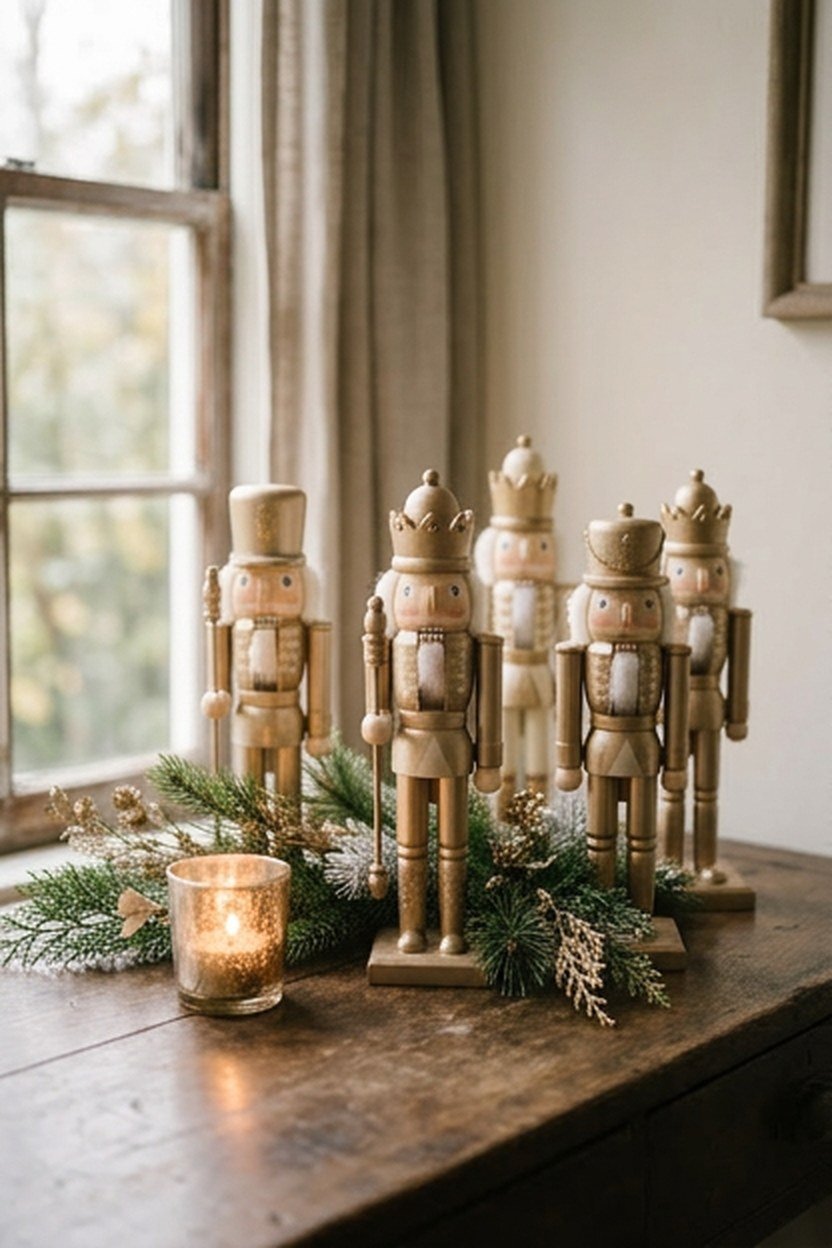
A small collection of champagne gold or gold-accented nutcrackers and figurines, arranged on a console table or mantel shelf, introduces a classic Christmas motif reinterpreted through the palette’s metallic finish. This detail works particularly well for households that already own traditional nutcracker figures, since many can be updated with a light gold spray paint rather than requiring an entirely new purchase.
Arranging figurines in a grouped cluster of varying heights, rather than spacing them evenly in a single row, creates a more visually interesting display that mirrors the same height-variation principle discussed for candle holders earlier. Adding a few sprigs of gold-dipped greenery around the base of the cluster ties the figurine display back into the broader botanical elements used throughout the rest of the home’s decor.
Choosing figurines with a matte rather than glossy gold finish tends to read as more elegant and less overtly costume-like than a shinier, more toy-like finish. This matte preference aligns with the broader champagne gold aesthetic, which generally favors a softer, more muted metallic quality over a bright, high-shine gold.
Cost And Repurposing Guidance
New champagne gold nutcracker figurines typically cost $15 to $60 per piece depending on size and detail level, while repainting existing traditional figurines with a gold spray paint costs only a few dollars in materials. This repurposing option is worth considering for households with an existing figurine collection they are hesitant to fully replace. A light sanding before painting improves paint adhesion and produces a more durable, even finish.
A common mistake is mixing figurines with drastically different gold finishes, some bright and shiny, others matte and muted, within the same display cluster, creating visual inconsistency that undermines the coordinated look. Choosing a single finish approach, either all matte or all glossy, for figurines displayed together avoids this common styling misstep.
9. Champagne Gold String Lights Along Windows And Doorways
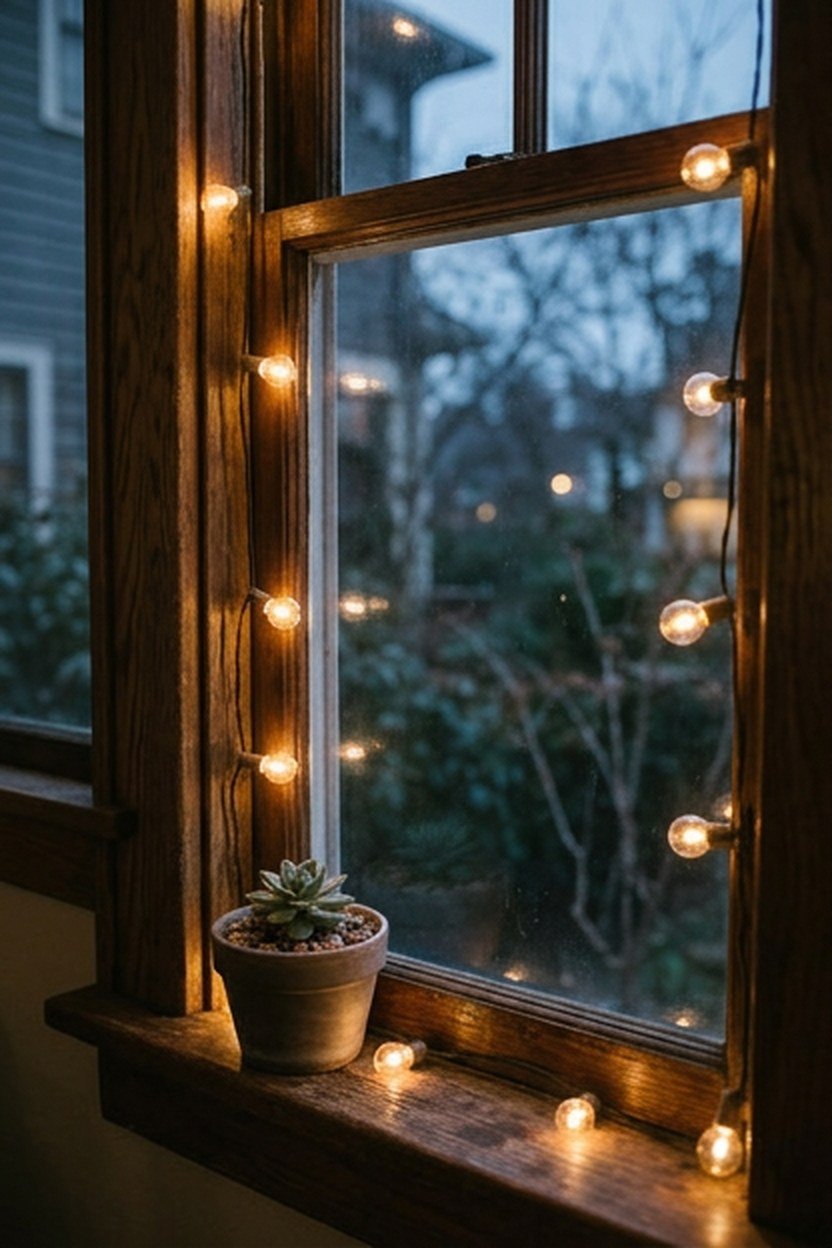
Champagne gold-toned string lights, warm white bulbs with a gold-tinted glass or filament, framed along window panes and doorway trim, extend the holiday glow beyond the tree and mantel into the room’s architectural features. This detail works particularly well for street-facing windows, since it contributes to the home’s exterior holiday presentation as well as the interior ambience. Many households find this one of the more rewarding additions relative to its actual installation effort.
Choosing lights with a warm gold-tinted glass, rather than clear glass warm white bulbs, adds a subtle color enhancement that reinforces the champagne gold palette even in fixtures primarily valued for their lighting function rather than decorative appearance. This tinted glass option costs marginally more than standard warm white string lights but delivers a noticeably more cohesive result within this specific color scheme.
Securing the lights with clear adhesive clips designed specifically for window and trim installation, rather than tape or staples, avoids damage to window frames or trim while still holding the lights securely in place throughout the display season. These clips are widely available and inexpensive relative to the protection they provide for the home’s existing woodwork or window frames.
Cost And Installation Timing
Champagne gold-toned string lights for a typical set of windows and doorways usually cost $40 to $100 per set depending on length and bulb quality. Installing these lights on a mild weather day, rather than during freezing temperatures, makes the adhesive clips bond more securely and reduces the risk of clips failing later in the season.
A common mistake is using an outdoor-rated extension cord or power source not actually rated for the load of a full string light installation, creating both a fire risk and a potential circuit overload. Confirming the electrical rating of both the lights and any extension cords used, and avoiding daisy-chaining too many light sets together, prevents this genuinely serious safety issue.
10. Champagne Gold Throw Pillows And Blankets
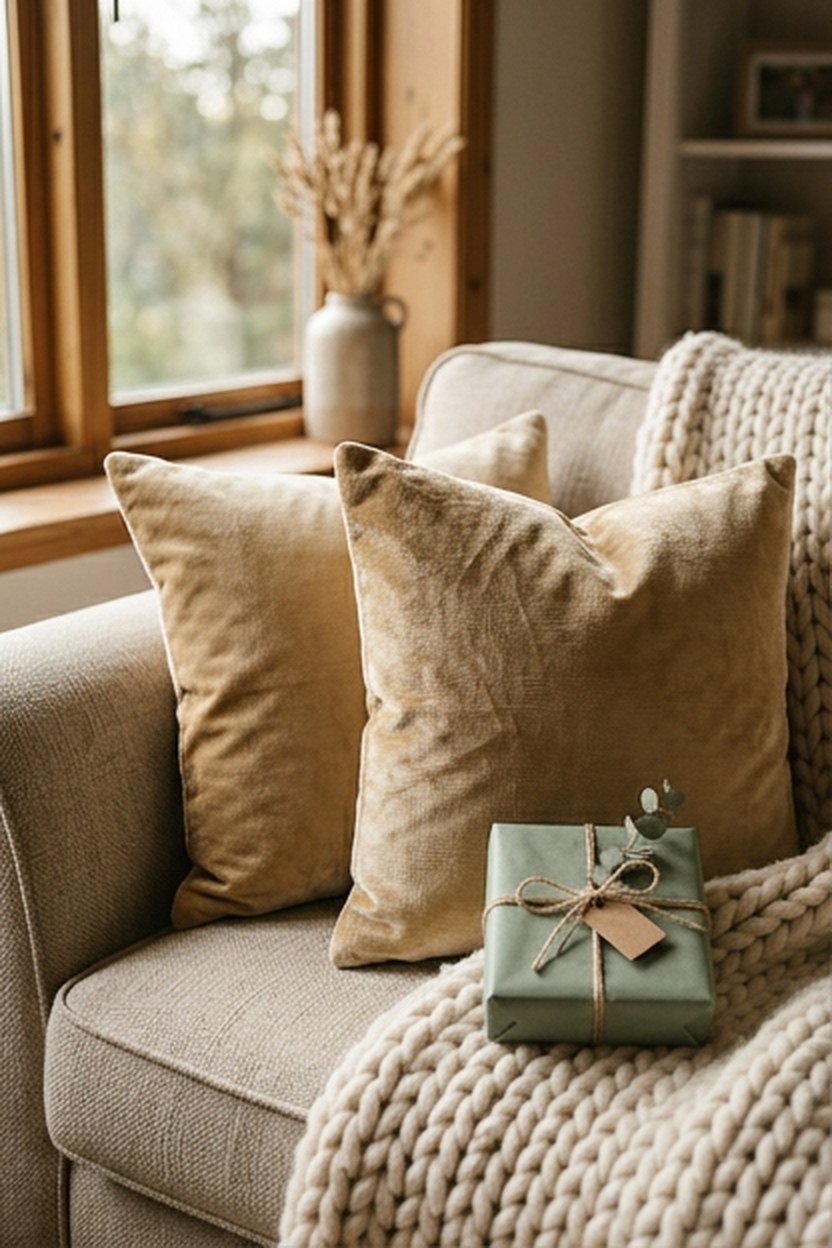
Champagne gold throw pillows and blankets, in either a metallic-threaded fabric or a solid champagne-toned velvet, extend the holiday palette into the room’s everyday seating without requiring a full furniture replacement. This detail works particularly well as a lower-commitment entry point into the champagne gold aesthetic, since pillows and blankets can be swapped out easily once the holiday season ends.
Mixing a solid velvet pillow with a subtly patterned metallic-threaded option, rather than choosing all-identical pillows, introduces the same textural variety principle discussed throughout this guide for other decor categories. Pairing these pillows with a chunky knit throw blanket in a complementary cream tone adds a cozy textural contrast against the smoother velvet and metallic pieces.
Choosing removable, washable pillow covers rather than fully upholstered pillows makes seasonal storage and cleaning considerably easier once the holiday display comes down. This practical consideration is worth prioritizing for pieces that will see regular handling and occasional spills during a season of hosting and gathering. Most quality decorative pillow lines offer this removable cover option specifically for this reason.
Cost And Seasonal Storage Guidance
Champagne gold throw pillows and blankets for a typical living room seating area usually cost $60 to $180 depending on quantity and fabric quality. Storing these pieces in a breathable fabric bag, rather than a sealed plastic bin, prevents the musty smell that can develop in fabric items stored in non-breathable containers between seasons.
A common mistake is choosing a delicate or dry-clean-only fabric for pieces that will see heavy use during a season of hosting guests and family gatherings. Opting for a more durable, machine-washable fabric blend, even if it sacrifices a small amount of luxury feel, is the more practical choice for pillows and blankets in active use.
11. Champagne Gold Advent Calendar Display
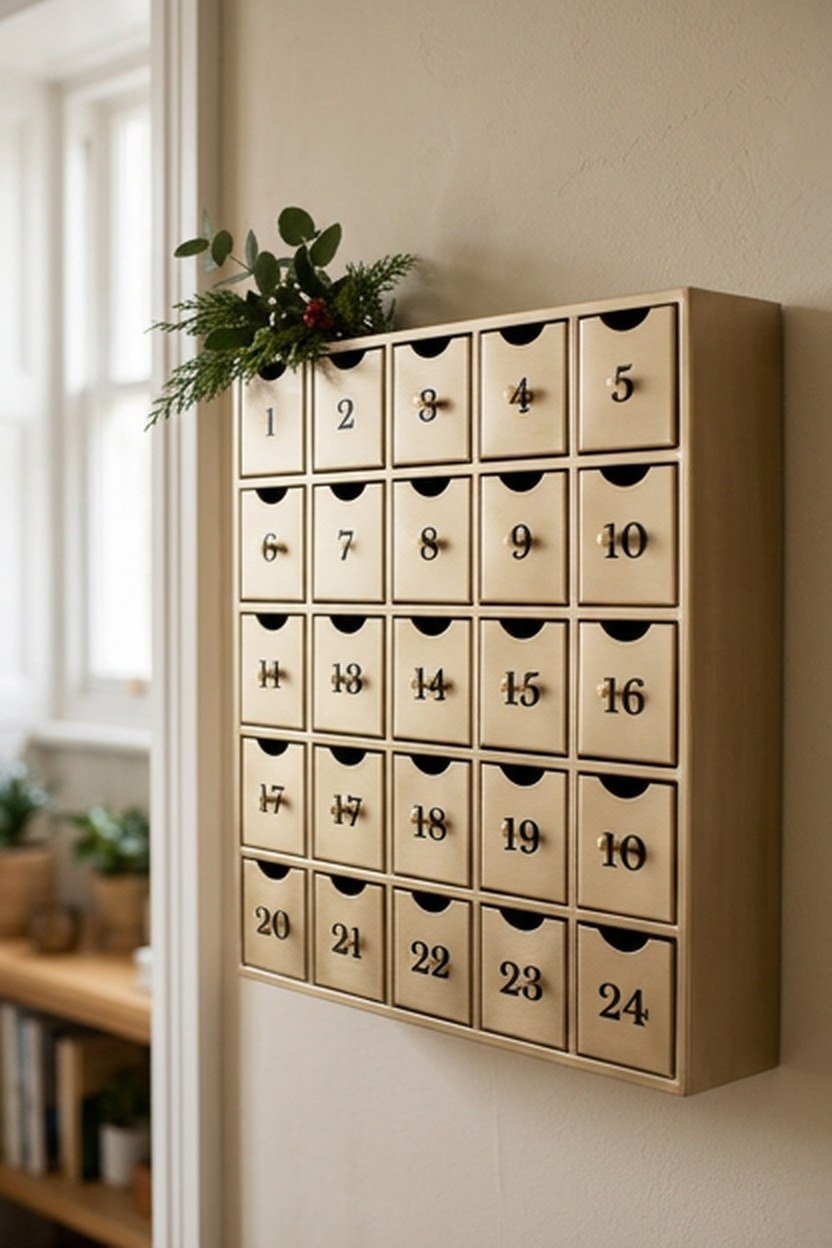
A champagne gold advent calendar, whether a set of small labeled drawers, hanging fabric pockets, or a wall-mounted display, brings the palette into a daily holiday ritual rather than a purely static decor element. This detail adds functional engagement to the decor scheme, since the calendar gets interacted with daily throughout December leading up to Christmas. Many households find this daily ritual becomes one of the most anticipated parts of their holiday season.
Choosing a reusable advent calendar structure, rather than a disposable paper one, allows the same champagne gold piece to be filled with new items each year rather than requiring replacement. Most reusable options use small labeled boxes, drawers, or fabric pockets that can be restocked annually with small treats, notes, or activities.
Positioning the advent calendar somewhere highly visible and easily accessible, like an entryway console table or a prominent living room wall, ensures it actually gets used daily rather than forgotten in a less-trafficked area of the home. This placement consideration matters more for functional engagement than for pure visual display, since the calendar’s value comes specifically from daily interaction. Most households find a central, high-traffic location works best for this reason.
Cost And Reusability Guidance
A reusable champagne gold advent calendar typically costs $40 to $120 depending on the number of compartments and overall construction quality. Choosing a wood or metal frame construction, rather than a flimsier cardboard or paper option, ensures the piece survives repeated annual use and storage between seasons.
A common mistake is choosing a calendar with compartments too small for the items a household actually wants to include each day, leading to frustration when trying to fill it each December. Measuring a few planned items against the compartment size before purchasing avoids this practical mismatch discovered only after the calendar arrives.
12. Champagne Gold Ornament Wreath As A Wall Accent
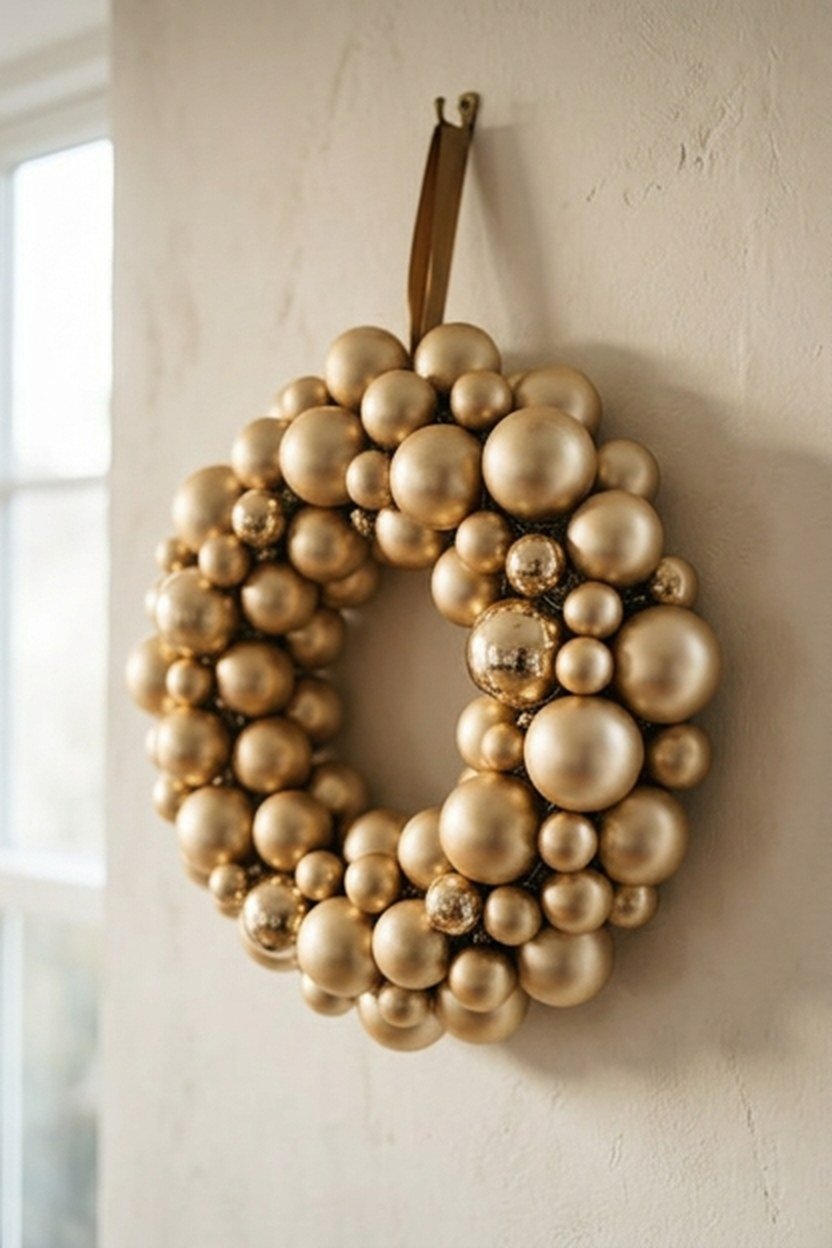
A wreath built entirely from clustered champagne gold ornament balls, rather than traditional greenery, creates a striking wall accent that works particularly well in a room without a fireplace mantel to serve as the primary focal point. This ornament-only wreath style has grown popular specifically for its modern, minimalist take on a traditionally botanical decor piece. This alternative structure gives households more placement flexibility than a traditional greenery wreath allows.
Constructing this wreath from ornaments of varying sizes, mixing larger 3-inch balls with smaller 1-inch accents, creates visual texture despite the uniform material and color throughout the piece. Attaching ornaments to a sturdy wire wreath frame, rather than a foam base that can crack under the ornaments’ collective weight, ensures the finished piece holds up structurally over repeated seasonal use.
Hanging this wreath with a sturdy ribbon or wire loop rated for its actual weight, since a cluster of glass or metal ornaments weighs considerably more than typical greenery, prevents the piece from falling and shattering during display. Testing the hanging mechanism with the fully assembled wreath before final installation catches this weight issue before it becomes a genuine mishap.
Cost And Construction Guidance
A champagne gold ornament wreath typically costs $60 to $150 in materials if assembled at home, or $150 to $400 if purchased pre-made from a specialty retailer. Choosing shatterproof plastic ornaments over glass for this specific project reduces both the wreath’s overall weight and the risk of breakage during construction, hanging, or seasonal storage.
A common mistake is underestimating how much a fully assembled ornament wreath actually weighs, resulting in a wire frame or hanging mechanism that bends or fails under the load. Reinforcing the wire frame with additional structural wire before attaching ornaments, and choosing a hanging point rated well beyond the estimated finished weight, prevents this frustrating and potentially costly failure.
13. Champagne Gold Tablescape Centerpiece With Candles And Greenery
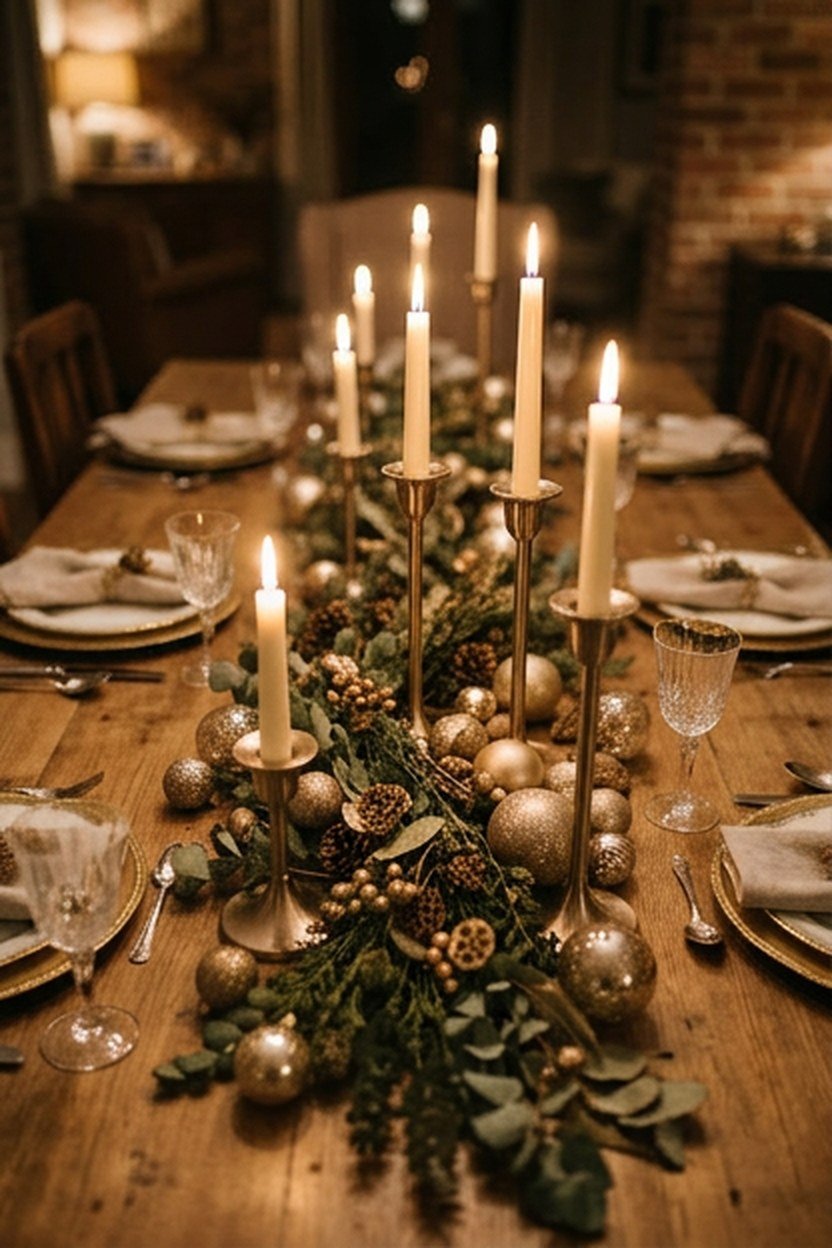
A layered tablescape centerpiece, combining champagne gold candle holders, dried or fresh greenery, and small ornament accents down the center of a dining table, creates a cohesive focal point for holiday meals and gatherings. This centerpiece style pulls together many of the individual elements discussed earlier in this guide, like the candles and dried botanicals, into a single unified display. Building this centerpiece often becomes the most photographed element of the entire holiday table setting.
Building the centerpiece in layers, starting with a base of greenery, then adding candle holders of varying heights, then finishing with small scattered ornament accents, creates the same visual depth principle applied throughout this guide’s other decor categories. Keeping the centerpiece low enough that guests can see and converse across the table matters as much as its visual impact, since an overly tall centerpiece can obstruct dinner conversation.
Using a mix of fresh and preserved greenery within the same centerpiece balances cost against longevity, since fresh greenery provides genuine fragrance and visual freshness while preserved elements hold their appearance for the entire display period without wilting. This combination approach lets hosts refresh only the fresh portions between gatherings rather than rebuilding the entire centerpiece.
Cost And Table Height Guidance
A layered champagne gold tablescape centerpiece typically costs $50 to $150 in materials for a standard dining table length, depending on how many candles, greenery bundles, and ornament accents are included. Building the centerpiece from individually sourced components, rather than purchasing a single pre-made arrangement, generally costs less and allows more customization to match the table’s specific length and shape.
A common mistake is building a centerpiece tall enough to obstruct sightlines across the table, which becomes a genuine annoyance during a multi-course holiday meal with extended conversation. Testing the centerpiece’s height against actual seated eye level, rather than only evaluating it while standing, catches this problem before the actual dinner takes place.
14. Champagne Gold Star Or Angel Tree Topper
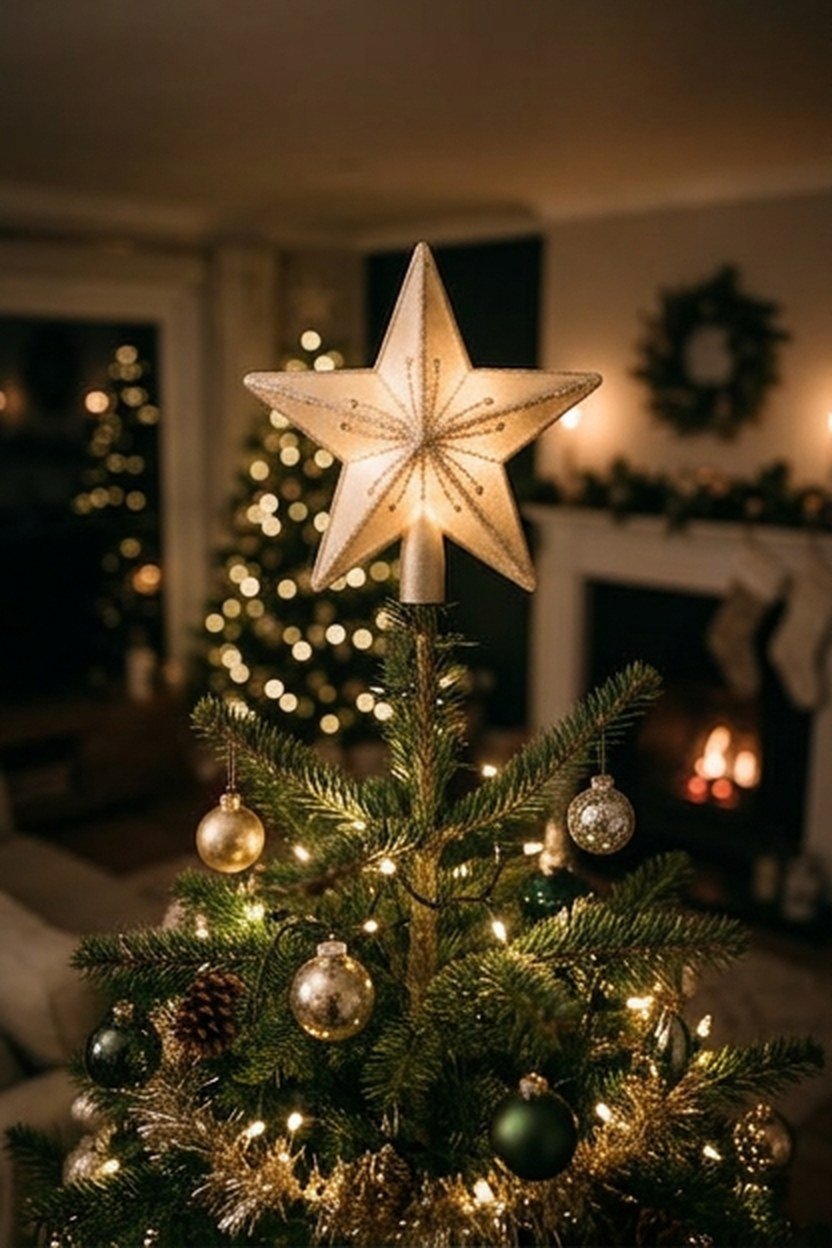
A champagne gold star or angel tree topper anchors the entire tree’s color scheme at its most visually prominent point, making this single piece worth particular attention despite its small physical size. Choosing a topper with a matte or slightly textured gold finish, rather than a glossy one, keeps it consistent with the muted aesthetic this palette depends on throughout the rest of the tree.
Sizing the topper proportionally to the tree’s actual height prevents either an oversized topper that looks disproportionate or an undersized one that gets visually lost at the tree’s peak. Most decorators recommend a topper roughly one-tenth the tree’s total height as a general proportion guideline.
Adding a small integrated light source within the topper itself, many modern designs include this feature, creates a subtle glow at the tree’s peak that complements the string lights used throughout the rest of the branches. This integrated lighting is a modest upgrade over a purely decorative topper and is worth the small additional cost for the visual impact it adds at such a prominent focal point.
Cost And Proportion Guidance
A champagne gold star or angel tree topper typically costs $20 to $80 depending on size, material, and whether integrated lighting is included. Measuring the tree’s actual height and comparing it against the topper’s listed dimensions before purchasing avoids the disappointing discovery of a mismatched proportion after the tree is already fully decorated. This measurement check takes only a moment but prevents a frustrating late-stage adjustment.
A common mistake is choosing a topper finish that clashes subtly with the ornaments used throughout the rest of the tree, particularly when the topper is purchased separately from the main ornament set. Bringing a sample ornament from the tree’s existing collection when shopping for a topper helps confirm the finishes genuinely coordinate before purchase.
15. Champagne Gold Holiday Card Display Stand
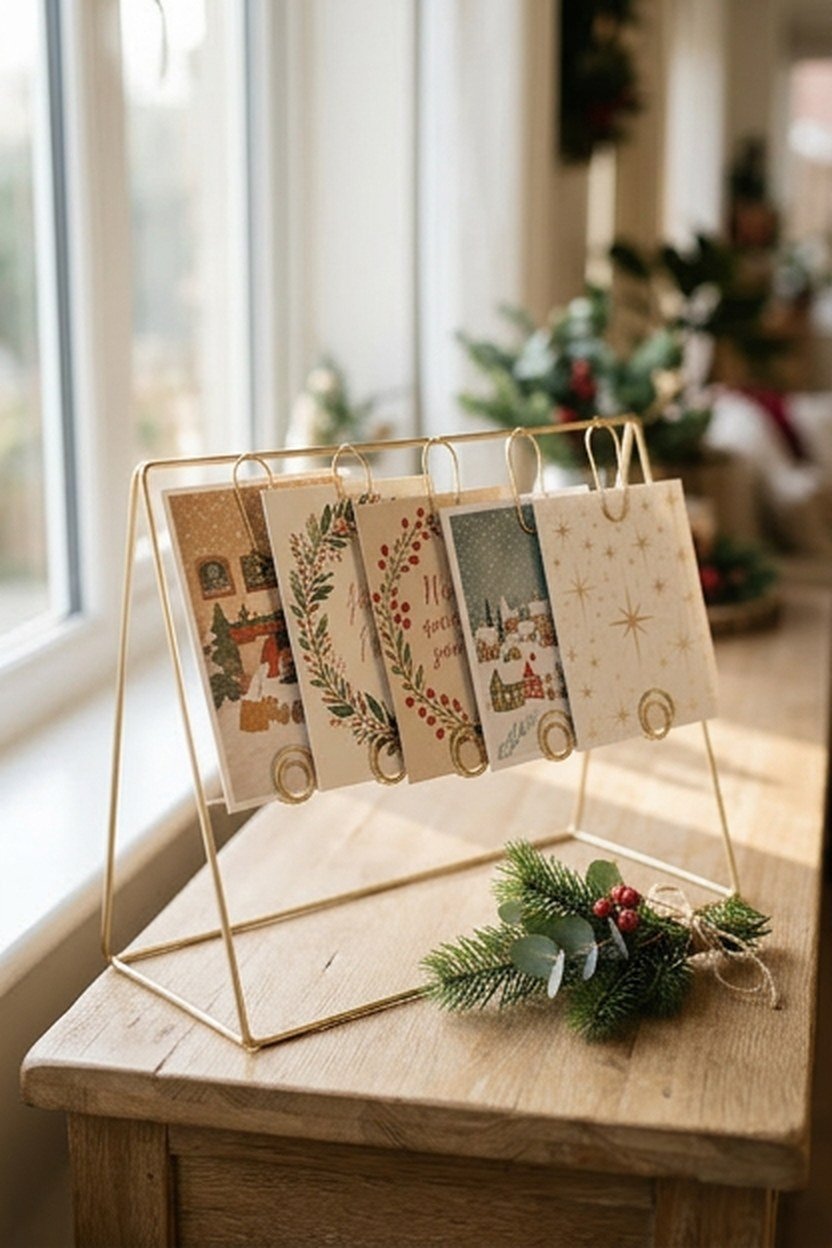
A dedicated display stand for holiday cards, finished in champagne gold and positioned on a mantel, console table, or bookshelf, turns an often-overlooked practical need into another coordinated piece within the room’s overall decor scheme. This detail solves the common problem of holiday cards accumulating in a messy stack or scattered pile as the season progresses. Many households find this small addition surprisingly improves how organized and intentional their holiday decor feels overall.
Choosing a display stand with multiple tiers or slots, rather than a single flat surface, allows cards to be displayed without overlapping each other, keeping each card’s design and message visible to guests. Most champagne gold card stands use a wire or metal frame construction that echoes the same metallic finish used in candle holders and other decor pieces discussed throughout this guide. This material consistency ties the card display back into the broader room-wide palette.
Positioning the card stand somewhere visible but out of the way of regular household traffic, avoiding a spot where it might be accidentally knocked over during a busy holiday gathering, balances its decorative visibility against practical durability. This placement consideration is worth thinking through given how many guests and family members typically pass through a home during the holiday season. Most households find a stable console table or mantel shelf works best for this purpose.
Cost And Capacity Guidance
A champagne gold holiday card display stand typically costs $20 to $60 depending on size and the number of cards it can hold. Choosing a stand with capacity somewhat beyond your household’s typical annual card count avoids running out of display space partway through the season, when card volume from friends and family is often unpredictable year to year.
A common mistake is choosing a decorative but flimsy display stand that tips easily, resulting in scattered cards and potential damage during a busy holiday gathering with children or pets present. Opting for a stand with a wider, more stable base, even if it takes up slightly more surface space, is the more practical choice for households with a livelier holiday atmosphere.
What A Champagne Gold Holiday Decor Scheme Actually Costs
A complete champagne gold holiday decor scheme, covering a tree, mantel, dining table, and several smaller accent pieces discussed throughout this guide, typically costs $500 to $1,800 depending on how much is purchased new versus repurposed from existing neutral decor. Building this collection gradually across two or three holiday seasons, rather than purchasing everything at once, spreads this cost while also allowing the scheme to develop more organically.
Ongoing costs beyond the initial purchase are relatively modest, mainly consisting of occasional replacement of consumable items like fresh greenery, candles, and any pieces that show wear after repeated seasonal use and storage. Most durable decor pieces, like metal candle holders and quality ornaments, last many seasons with proper storage between uses.
| Decor Category | Typical Cost Range | Notes |
|---|---|---|
| Tree and ornaments | $200 to $500 | Largest single investment category |
| Mantel and table decor | $150 to $400 | Garland, runner, chargers, candles |
| Smaller accents | $150 to $500 | Wreath, stockings, card stand, topper |
Prioritizing the tree and mantel first, since these represent the room’s primary focal points, before investing in smaller accent pieces like the card stand or advent calendar gives the most visual impact for the earliest dollars spent. This prioritization strategy is worth discussing as a household before the first shopping trip begins. Most decorators find this order of investment produces the most satisfying room transformation relative to the budget spent at each stage.
Common Mistakes That Undermine A Champagne Gold Holiday Scheme
The most common mistake across champagne gold decor schemes is mixing too many inconsistent gold tones, some bright and yellow, others muted and rose-toned, resulting in a display that reads as mismatched rather than intentionally layered. Bringing sample pieces together in the same room before finalizing any purchase, a practice mentioned throughout this guide, is the single best way to avoid this recurring problem.
A second frequent mistake is neglecting textural variety entirely, filling a room with only smooth metallic pieces and no matte, natural, or fabric contrast, resulting in a display that feels flat despite using an elegant color palette. Deliberately mixing velvet, dried botanicals, and natural wood alongside the metallic gold pieces, as discussed in several sections above, prevents this flatness.
Recovering From These Setbacks
Recovering from a mismatched gold-tone problem typically means auditing the entire room’s decor pieces side by side and identifying which specific items clash most obviously with the majority tone established elsewhere. Replacing or repainting just the worst offenders, rather than starting the entire collection over, is usually enough to resolve the visible inconsistency without a full financial reset.
Recovering from a flat, texture-lacking display usually means adding just a few key textural elements, like a chunky knit throw or a cluster of dried botanicals, rather than replacing the metallic pieces already purchased. This targeted addition is a far less expensive fix than starting over, and often resolves the flatness with surprisingly few additional pieces. Identifying exactly which texture is missing, matte, natural, or woven, before shopping for the fix makes this correction considerably more efficient.
Conclusion
A champagne gold holiday decor scheme succeeds through consistent tonal choices, deliberate textural variety, and warm lighting that lets the palette genuinely glow rather than read as flat. The fifteen concepts here, from the tree down to a small card stand, each contribute a piece of a cohesive whole that extends beyond any single room. Prioritizing the tree and mantel first, then layering in accents as budget allows, gives the most reliable path to a scheme that feels genuinely elegant rather than simply seasonal.
Whether this is a first attempt at the palette or an ongoing refinement of an existing collection, the underlying principles stay consistent: match your gold tones carefully, mix in genuine texture, and let warm lighting do real work throughout the display. These fundamentals matter more than any single decorative purchase on this list. Get them right, and each new piece added in future seasons only strengthens an already cohesive holiday look.
Frequently Asked Questions
What is champagne gold holiday decor? Champagne gold decor uses a muted, warm-toned gold with a slight pink or beige undertone in place of traditional red and green Christmas colors. It pairs well with neutral home interiors and photographs beautifully under warm lighting.
How much does a champagne gold holiday decor scheme cost? A complete scheme covering a tree, mantel, and dining table typically costs $500 to $1,800 depending on how much is purchased new versus repurposed. Building the collection gradually across a few seasons is a common and budget-friendly approach.
What light bulb color works best with champagne gold decor? Warm white bulbs, typically in the 2700 to 3000 kelvin range, complement champagne gold far better than cooler white bulbs. Cooler lighting can make the gold tone read as flat or slightly green.
Can champagne gold decor work with bold existing wall colors? Yes, though choosing a deeper antique gold tone tends to ground the palette better against bold existing colors like navy or charcoal. Testing a sample piece against the wall color before a full purchase is worth doing first.
How do I keep an all-gold room from looking flat? Mixing textures, like matte velvet, dried botanicals, and natural wood, alongside the metallic gold pieces prevents the room from feeling one-dimensional. This textural variety matters as much as the color choice itself.
Do champagne gold decorations work year after year? Most durable pieces, like metal candle holders and quality ornaments, last many seasons with proper storage between uses. Consumable items like fresh greenery and candles need periodic replacement each season.
What is the biggest mistake in champagne gold holiday styling? Mixing too many inconsistent gold tones, some bright and yellow, others muted and rose-toned, is the most common mistake. Comparing sample pieces together before purchasing helps avoid this mismatched result.