
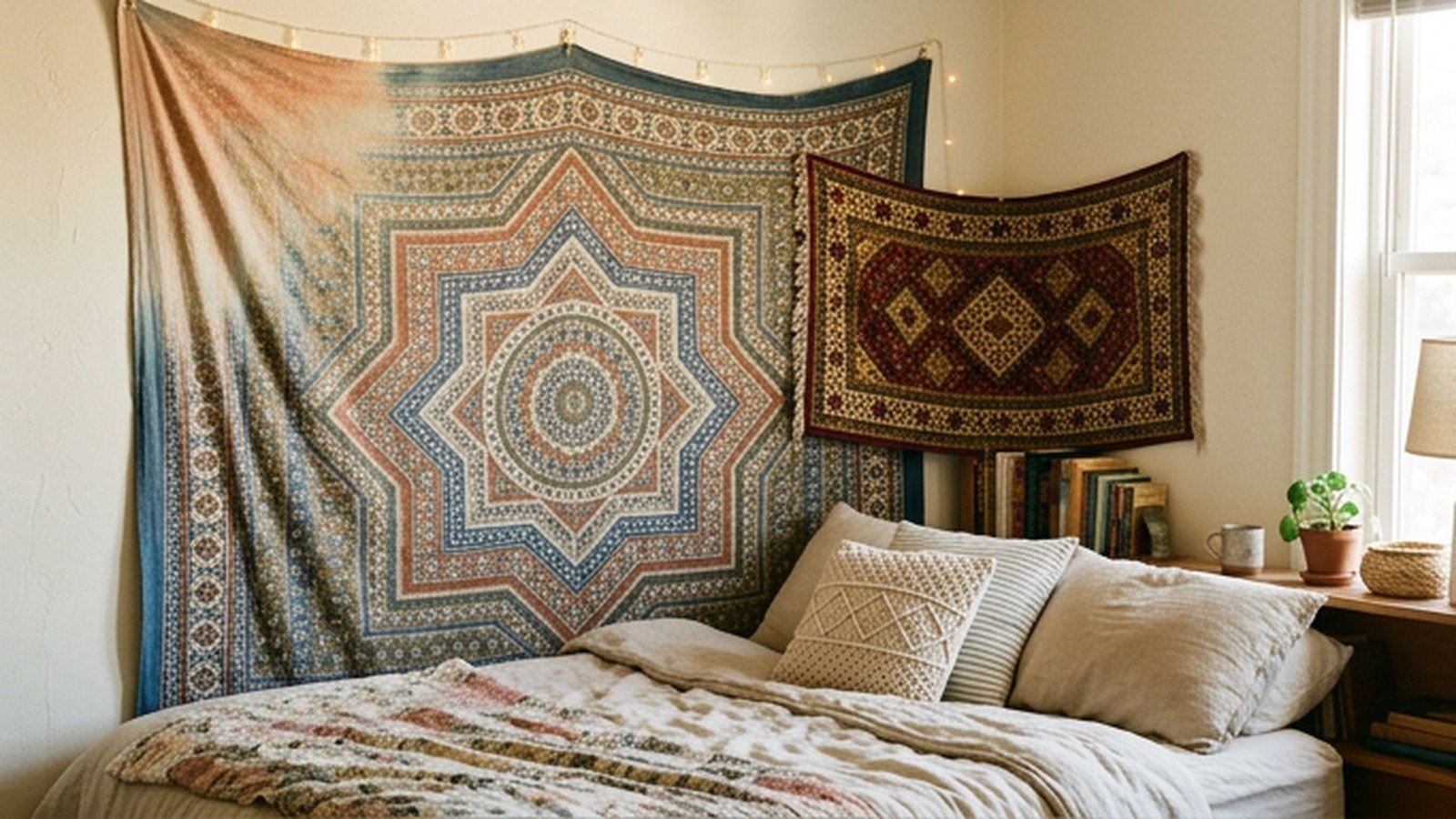
A college apartment does not have to look like a dorm room that grew up. Vibrant boho style turns a rented space into something that actually feels like yours, using color, texture, and pattern instead of expensive furniture. I decorated three different college apartments over four years and learned most of these lessons the hard way, usually after a security deposit disagreement.
Boho style leans on layered textiles, plants, warm colors, and mixed patterns rather than matching furniture sets. It works especially well for renters because most of the impact comes from things you can take with you when you move, unlike paint or built-in shelving. That flexibility matters more in a college apartment than almost anywhere else.
I will cover sixteen specific ideas, what each one actually costs, and where renters commonly run into trouble with landlords or roommates. Expect honest notes about wall damage risk, storage limits, and shared space compromises throughout. By the end you will have a real plan instead of a vague color scheme.
Why Boho Style Suits Renters So Well
Most college leases restrict permanent changes like paint colors or wall modifications, which rules out a lot of traditional decorating approaches. Boho style sidesteps this entirely by building its look through removable elements, tapestries, rugs, string lights, and plants, rather than anything that touches the walls or floors permanently. This makes it one of the most lease friendly aesthetics available to renters.
Budget flexibility is the other major advantage of this style for college apartments. A boho look can come together from thrifted textiles and a few key pieces just as convincingly as one built from higher end retailers, since the style celebrates an eclectic, collected over time feel rather than a matched showroom look. Mismatched pieces read as intentional rather than as a compromise.
The table below compares boho style against a typical minimalist college apartment approach on the factors that matter most to renters specifically. Neither approach is objectively better, since the right choice depends on your budget and your landlord’s specific restrictions. Review each row against your own situation before deciding which direction to pursue.
| Factor | Boho style | Minimalist style |
|---|---|---|
| Lease friendliness | High, mostly removable elements | High, but less personality |
| Startup cost | Low to moderate, thrift friendly | Moderate, fewer but pricier pieces |
| Storage needs | Higher, more textiles and objects | Lower, fewer total items |
Planning Your Boho Apartment Before You Buy Anything
Walk through your actual lease terms before buying a single item, specifically checking for restrictions on wall hangings, string lights, and candles. Many college leases ban open flame candles outright and restrict certain types of wall mounting hardware, which matters enormously for a style that leans heavily on both. Knowing these restrictions upfront saves wasted purchases later.
Talk to your roommates about shared space before committing to a full apartment wide boho transformation, since a bold aesthetic in a shared living room needs buy in from everyone using that space daily. A compromise where your bedroom goes fully boho while shared spaces stay more neutral often works better than forcing a shared aesthetic everyone did not agree to. A few minutes of planning here saves a bigger headache once everything is in place.
Measure your actual apartment’s ceiling height and window sizes before ordering large tapestries or curtains, since college apartments often have lower ceilings than the spacious photos that inspire this style online. A tapestry sized for a nine foot ceiling looks awkward bunched up against an eight foot one. Most renters only notice this after living with the setup for a few weeks.
1. Layered Textile Wall Tapestry As A Statement Piece
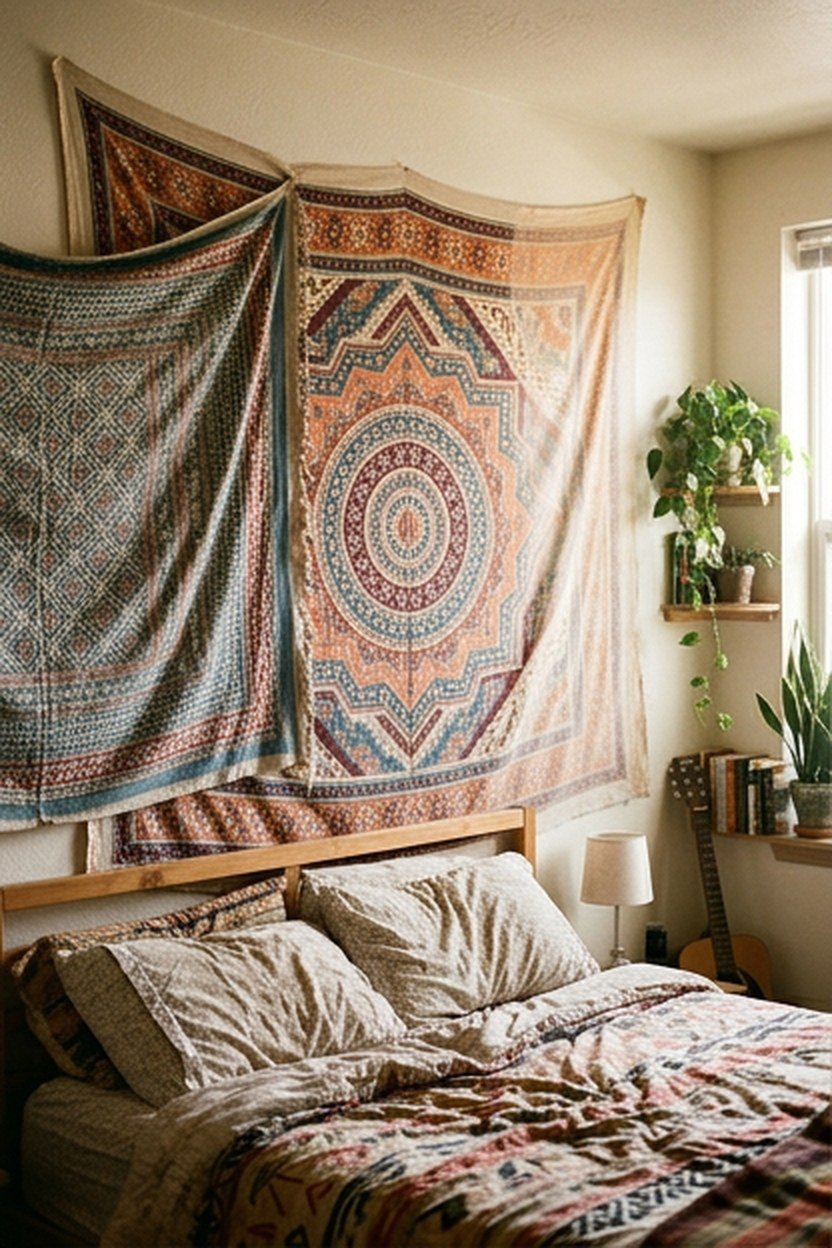
A large tapestry hung as a headboard backdrop or living room focal point delivers more visual impact per dollar than almost any other boho element. Most colorful mandala or geometric pattern tapestries run under thirty dollars and cover several feet of otherwise bare rental wall instantly. Command strips rated for the tapestry’s weight avoid any permanent wall damage that would risk your deposit.
Layering two smaller tapestries with complementary patterns creates more visual depth than one large single tapestry alone. I overlap mine slightly at one corner, which reads as an intentional collage rather than mismatched leftover fabric. This layering trick works especially well when your main tapestry has a solid color field that a second patterned piece can interrupt.
The fabric will develop a soft, faded look at the edges nearest a sunny window after a semester or two of exposure, a gentle sun fading that actually suits the boho aesthetic’s lived in character. Rotating the tapestry’s position occasionally evens out this fading if you want to preserve the original color longer. Keep this in mind before finalizing the arrangement, since it is easy to overlook at first.
Command Strip Weight Ratings For Textile Hanging
Check the actual weight rating printed on your command strip packaging before assuming a strip rated for a picture frame will hold a heavier woven tapestry. Most fabric tapestries weigh less than a pound, but a thicker macrame or woven wall hanging can weigh several pounds and needs the heavier duty strip rating. This is one of those details that seems minor until you are the one dealing with it.
Test the strip’s hold for a full day before trusting it with anything irreplaceable, since humidity and wall texture both affect how well command strips actually adhere. A textured or recently painted wall sometimes needs the strip repositioned once the initial adhesive fully sets. Factor this into your plan early rather than adjusting for it after the fact.
2. String Lights Layered Along The Ceiling Line
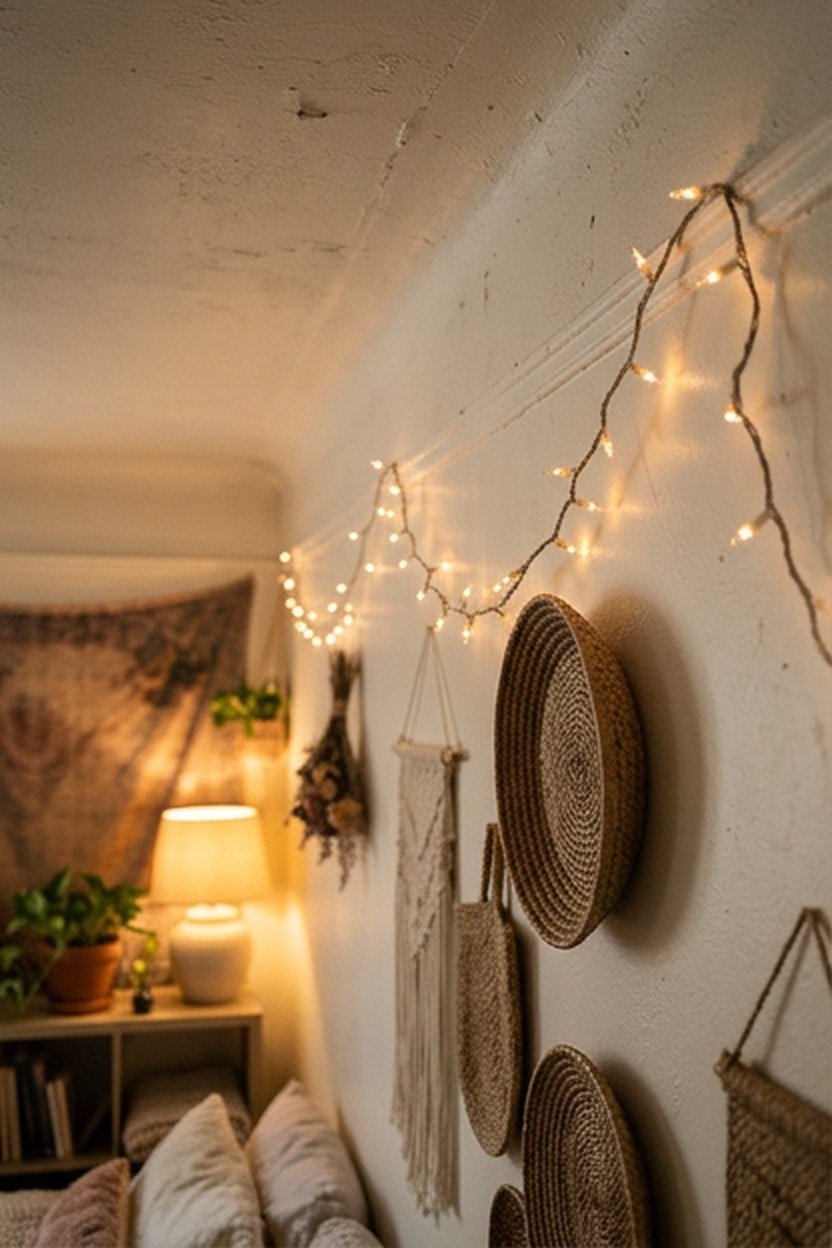
Warm white string lights run along the ceiling perimeter or draped across a window create the soft ambient glow that defines a boho evening atmosphere better than any overhead fixture. Battery powered or USB versions avoid the outlet limitations common in older college apartment buildings, giving you placement flexibility overhead outlets cannot match. Check your lease specifically for string light restrictions before installing, since some buildings ban them for fire code reasons.
Layering warm white lights with a secondary color, like amber or soft pink, adds depth without tipping into a garish look. I run a single strand of warm white as the base layer, then add a shorter strand of amber lights concentrated near my desk area for reading light that still feels cozy rather than clinical. It is a small consideration, but it makes a real difference in daily use.
The plastic light strand casing can develop a faint yellowing after a year or more of continuous use, an even discoloration from the bulbs’ own heat rather than any kind of damage. This is normal for affordable LED strand casings and does not affect the lights’ function or brightness at all. Taking the extra step here pays off more than it might seem worth at first.
Fire Safety With String Lights In Rental Apartments
Never run string lights through or under a rug or fabric, since trapped heat from the bulbs, even LED ones, creates a real fire risk over extended use. Route cords along baseboards or ceiling lines where airflow keeps them cool rather than tucking them under anything. This small detail matters more once you actually live with the choice day to day.
Check your specific string light’s certification marking before buying, since uncertified lights sold through some online marketplaces skip basic safety testing entirely. A small certification mark on the packaging is worth confirming before you fill an entire room with an uncertified product. A few minutes of planning here saves a bigger headache once everything is in place.
3. Macrame Plant Hangers For Vertical Greenery
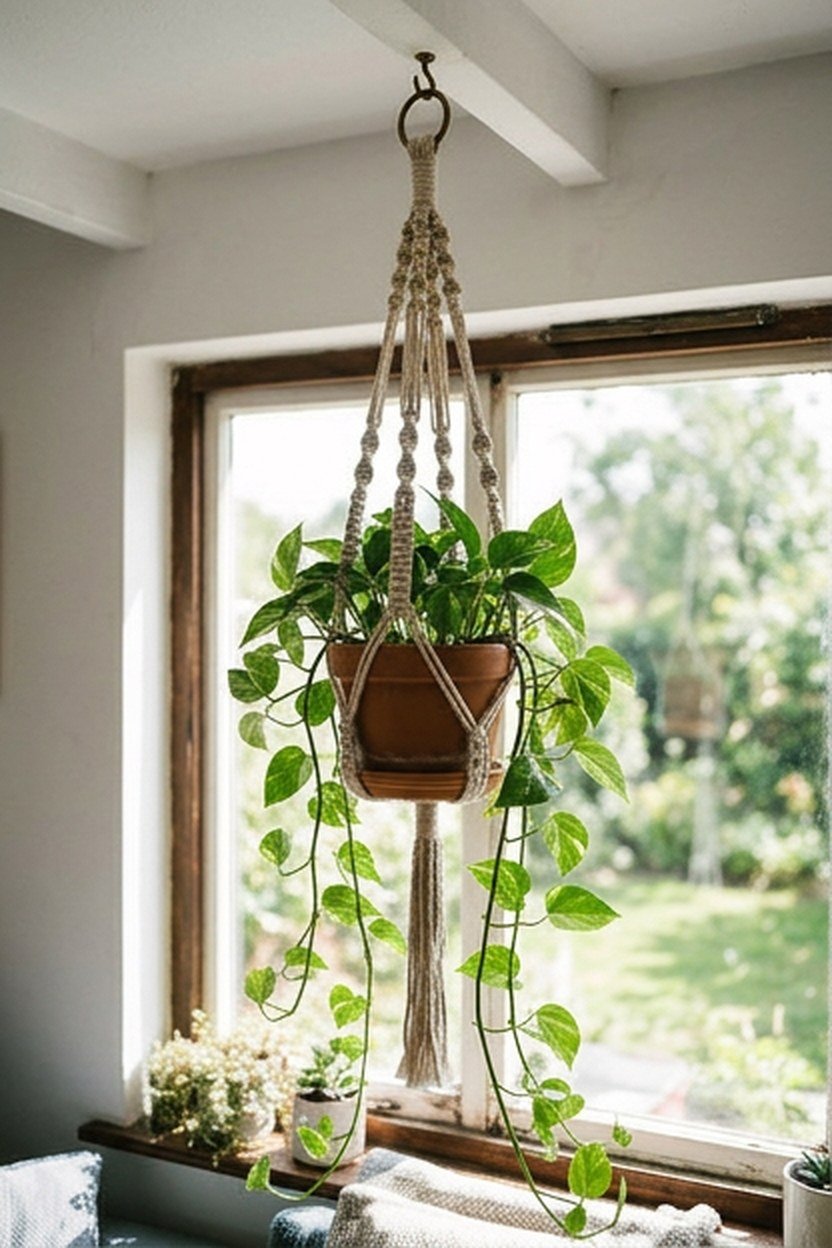
Macrame plant hangers let you add greenery without eating into a college apartment’s usually limited floor and surface space. Most hangers cost between ten and twenty five dollars depending on the knot complexity and cord thickness, and a single ceiling hook holds most standard hanging planters without issue. This vertical approach fits especially well in a small bedroom where floor space is already tight.
Choose trailing plants like pothos or string of pearls for hanging displays, since upright plants tend to look awkward suspended in a hanging position. Pothos in particular tolerates the inconsistent light and watering schedule typical of a busy college student’s routine better than most decorative plants. Most renters only notice this after living with the setup for a few weeks.
The natural cotton cord will develop a soft, faded look after a semester or two near a sunny window, a gentle color shift many renters consider part of the material’s natural character. Cotton cord in a shaded corner of the room stays closer to its original color for much longer. Keep this in mind before finalizing the arrangement, since it is easy to overlook at first.
Choosing Ceiling Hooks That Will Not Damage Rental Ceilings
A small adhesive hook rated for the plant and hanger’s combined weight avoids drilling into a rental ceiling entirely, though weight ratings on adhesive ceiling hooks tend to run lower than wall rated versions. Check the actual combined weight of your planter, soil, and plant before trusting a hook rated only slightly above that total. This is one of those details that seems minor until you are the one dealing with it.
A tension rod mounted between two walls near a window offers an alternative that needs no ceiling attachment at all. This works particularly well in a room with a deep enough window recess to mount the rod without it becoming a walking hazard. Factor this into your plan early rather than adjusting for it after the fact.
4. Vintage Or Thrifted Rug Layering
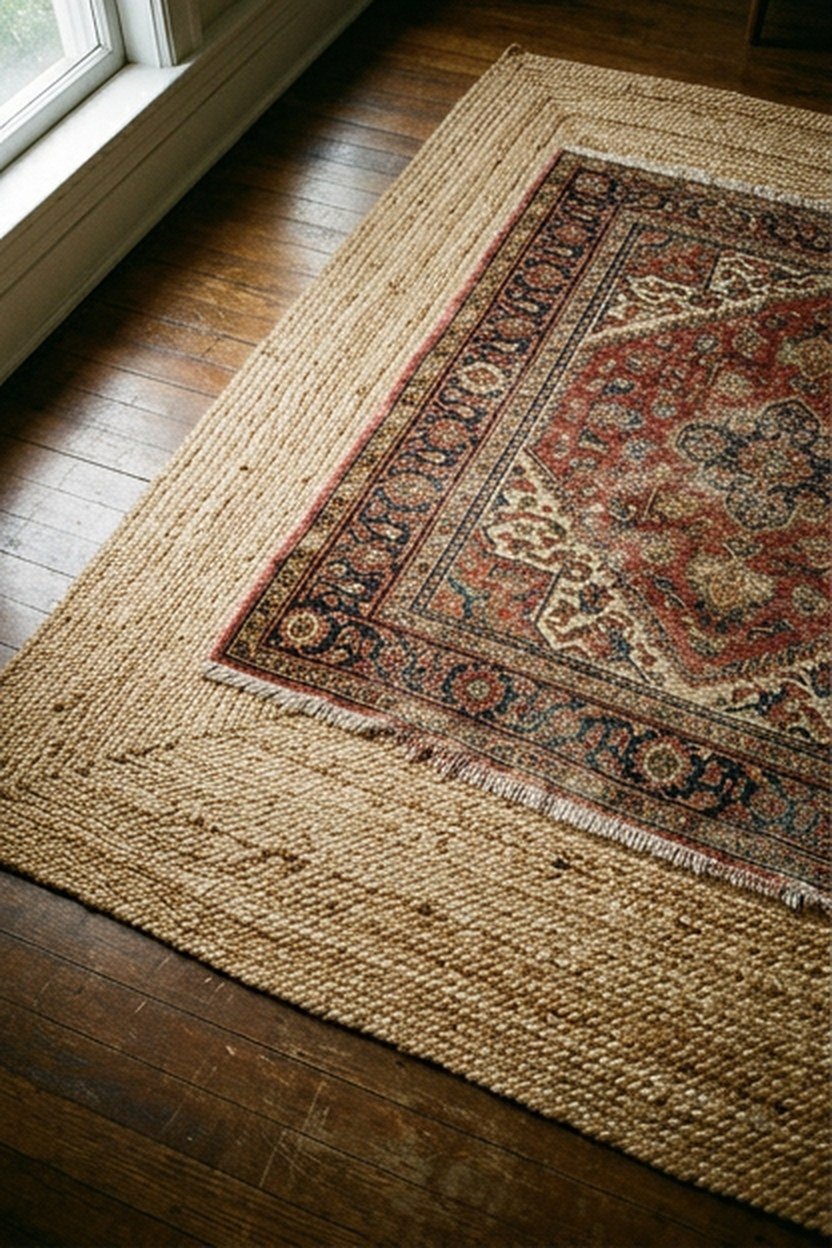
Layering two rugs, typically a larger jute or sisal base rug topped with a smaller patterned vintage style rug, creates the collected over time look central to boho style. Thrift stores and estate sales often carry patterned rugs at a fraction of retail price, and minor wear on a thrifted rug actually suits this layered aesthetic better than a pristine new one. Budget twenty to fifty dollars for a decent thrifted find.
Position the layered rugs so the pattern rug sits slightly off center rather than perfectly centered on the base rug, which reads as more intentionally curated than a perfectly symmetrical placement. I shift mine toward the seating area rather than centering on the room itself. It is a small consideration, but it makes a real difference in daily use.
Natural fiber base rugs like jute develop a soft, mellowed tone over a year or two of foot traffic, deepening slightly from their original pale color. This gradual change is completely normal for natural fiber rugs and actually improves the material’s look over time rather than detracting from it. Taking the extra step here pays off more than it might seem worth at first.
Buying Secondhand Rugs Without Bringing In Pests
Inspect any thrifted rug closely before bringing it into your apartment, checking specifically for any signs of moths or other pests that could spread to other textiles in your space. A rug that smells strongly musty or shows small holes in the fiber is worth skipping regardless of how good the pattern looks. This small detail matters more once you actually live with the choice day to day.
Steam cleaning or a thorough vacuum on both sides before first use is a reasonable precaution even for a rug that looks clean, since secondhand textiles can carry allergens or pests not visible at first glance. This small step takes an afternoon and prevents a much bigger problem later. A few minutes of planning here saves a bigger headache once everything is in place.
5. Floor Cushions And Poufs For Flexible Seating
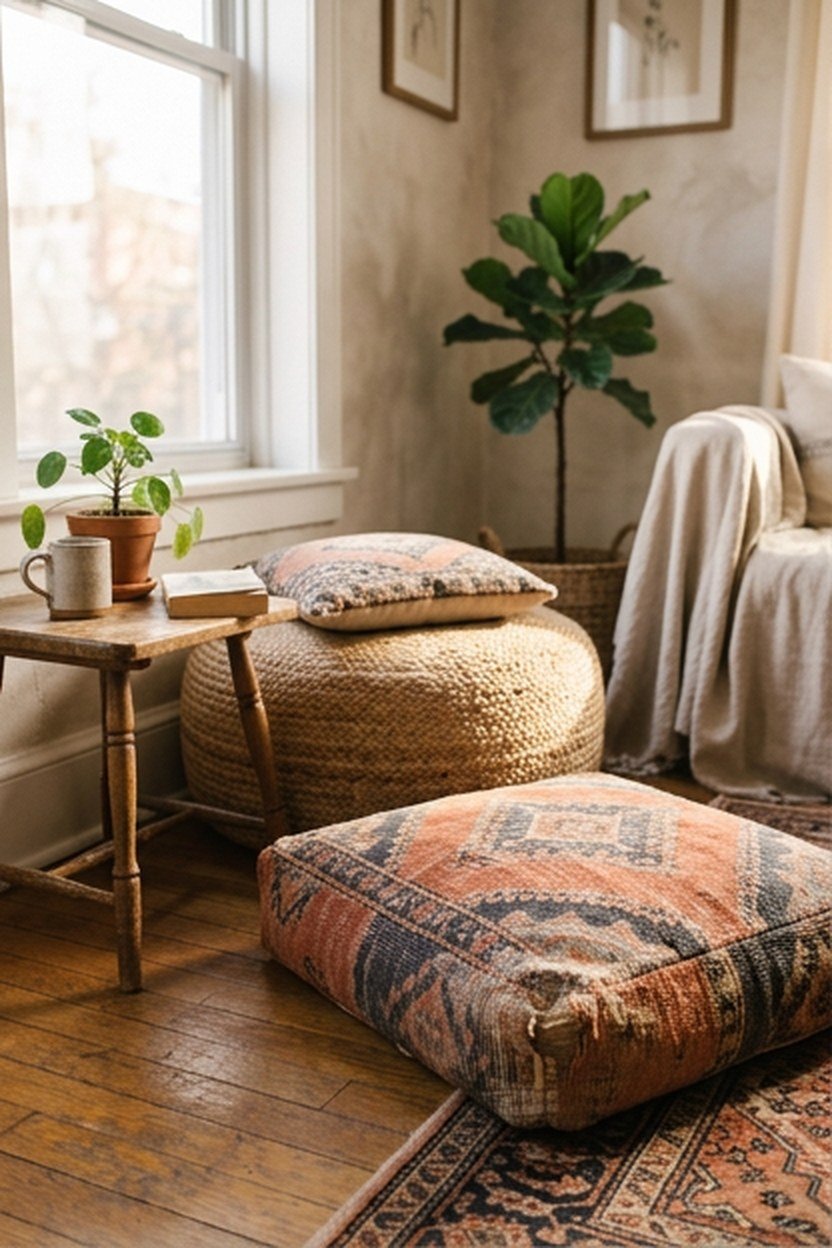
Floor cushions and poufs add extra seating for study groups or movie nights without requiring a second couch that likely will not fit in a college apartment’s limited square footage. Most poufs run between twenty and sixty dollars depending on size and fabric, and they fold or stack away easily when not in use. This flexibility matters enormously in apartments where every square foot serves multiple purposes.
Choose a durable, easily cleaned fabric like a canvas or a tightly woven cotton blend over delicate materials, since floor level seating in a shared apartment sees more spills and general wear than couch cushions do. A washable cover, sold separately for some pouf styles, extends the piece’s usable life considerably. Most renters only notice this after living with the setup for a few weeks.
The fabric will show a soft, worn smooth texture at the corners and edges where people sit and shift position most often, a gentle burnishing from repeated contact rather than any sign of damage. This gradual softening actually makes the seating more comfortable over time rather than less. Keep this in mind before finalizing the arrangement, since it is easy to overlook at first.
Storing Floor Seating When Not In Use
Choose a pouf style that compresses flat or nests inside another for easy storage when your apartment hosts fewer people than usual. A rigid foam filled pouf holds its shape better for regular use but takes up more permanent floor space than a bean filled or inflatable version. This is one of those details that seems minor until you are the one dealing with it.
Designate a specific corner or closet spot for extra floor cushions rather than letting them accumulate wherever they last landed. This small habit keeps the apartment feeling intentional rather than cluttered when the extra seating is not actively in use. Factor this into your plan early rather than adjusting for it after the fact.
6. Mixed Pattern Throw Pillows On A Neutral Base
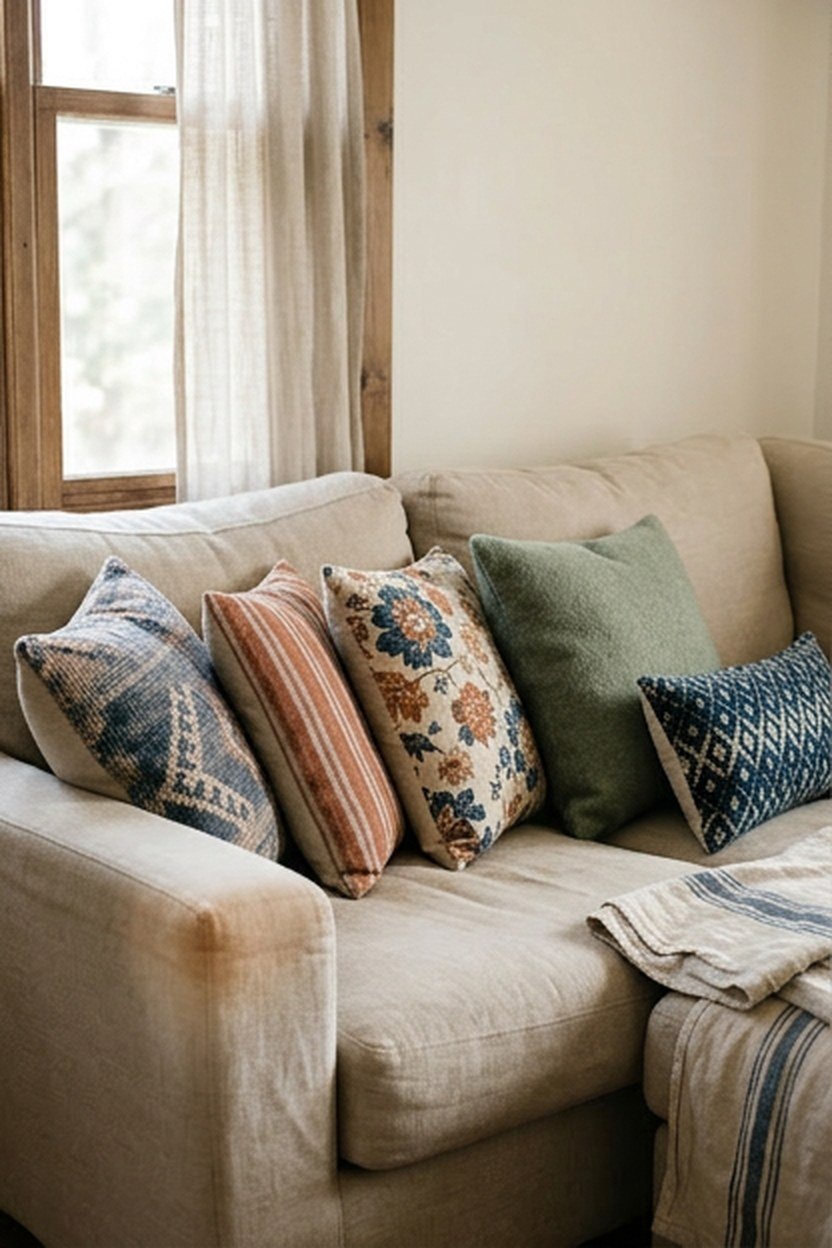
Mixing several patterned throw pillows on a neutral colored couch or bed creates the eclectic layered look central to boho style without requiring a full furniture replacement. Aim for three to five pillows in coordinating but not matching patterns, mixing scale between larger and smaller prints for visual interest. This approach works on any base furniture color, making it ideal for a rental where you did not choose the couch.
Budget conscious shoppers can find patterned pillow covers far cheaper than complete pillows with insert included, since reusing existing pillow inserts and just swapping covers cuts the cost significantly. I keep a rotation of covers and switch them seasonally rather than buying entirely new pillows each time I want a refresh. It is a small consideration, but it makes a real difference in daily use.
Pillow covers in cotton or linen blends develop a soft, faded look at the most sun exposed corner of a room after a full academic year of use. This even, gradual fading is a normal characteristic of natural fiber textiles and does not indicate any quality problem with the fabric. Taking the extra step here pays off more than it might seem worth at first.
Building A Pillow Rotation That Feels Fresh
Store off season pillow covers flat in a drawer or under bed storage bin rather than crumpled in a closet corner, since deep creasing from improper storage takes longer to smooth out than the fabric’s natural gradual aging does. A few minutes of proper folding extends how fresh each cover looks when it comes back into rotation. This small detail matters more once you actually live with the choice day to day.
Buy covers in a zippered style rather than an envelope closure if you plan to rotate them seasonally, since the zipper holds up better to repeated removal and washing than an envelope style closure over time. An envelope closure works fine for covers you rarely swap out. Save the zippered style specifically for your most frequently rotated pieces.
7. Woven Wall Baskets As Textural Wall Art
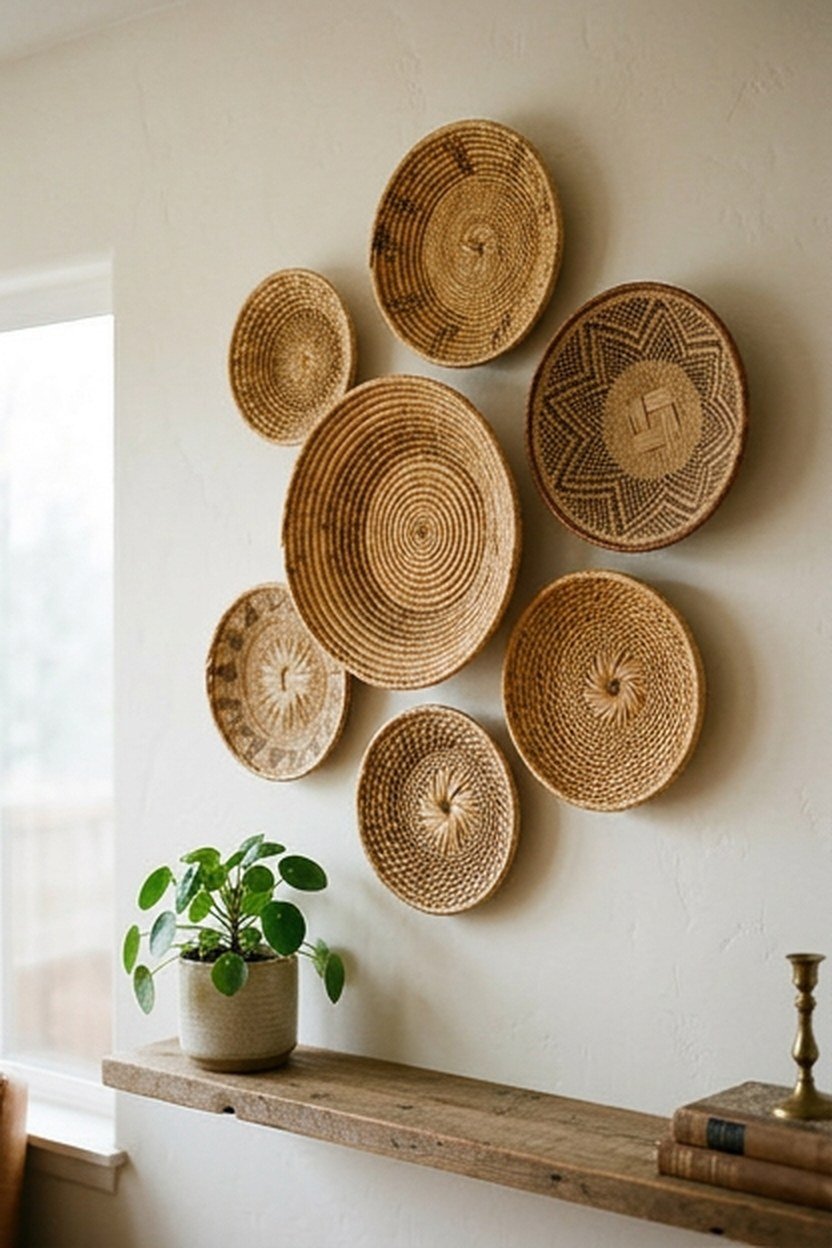
Flat woven baskets mounted on the wall in a cluster add texture and dimension without the cost or commitment of framed art. Most decorative wall baskets cost under fifteen dollars each, and a cluster of five to seven in varying sizes creates a genuinely impressive wall feature for under sixty dollars total. This approach also avoids the glass and frames that make traditional art riskier in a shared apartment.
Arrange the baskets in an organic, slightly asymmetrical cluster rather than a rigid grid pattern, which suits the relaxed boho aesthetic better than a perfectly symmetrical arrangement would. I start with the largest basket slightly off center and build outward from there, stepping back frequently to check the balance. Most renters only notice this after living with the setup for a few weeks.
The natural woven material can develop a soft, mellowed tone after a year or more on a sun exposed wall, a gentle warming of the original fiber color that many renters consider a positive sign of the material settling in. Baskets on an interior wall away from direct light retain their original tone much longer. Keep this in mind before finalizing the arrangement, since it is easy to overlook at first.
Hanging A Basket Cluster Without Excess Wall Damage
Use small adhesive picture hanging strips rated for the basket’s actual weight, since most decorative baskets weigh very little and do not need a full nail or screw. Test the hold on one basket for a few days before committing the full cluster to adhesive strips. This is one of those details that seems minor until you are the one dealing with it.
Plan your cluster’s full layout on the floor first, photographing the arrangement before transferring it to the wall. This planning step prevents the frustration of repositioning items after several are already mounted. Factor this into your plan early rather than adjusting for it after the fact.
8. Boho Curtains With Fringe Or Pattern Detail
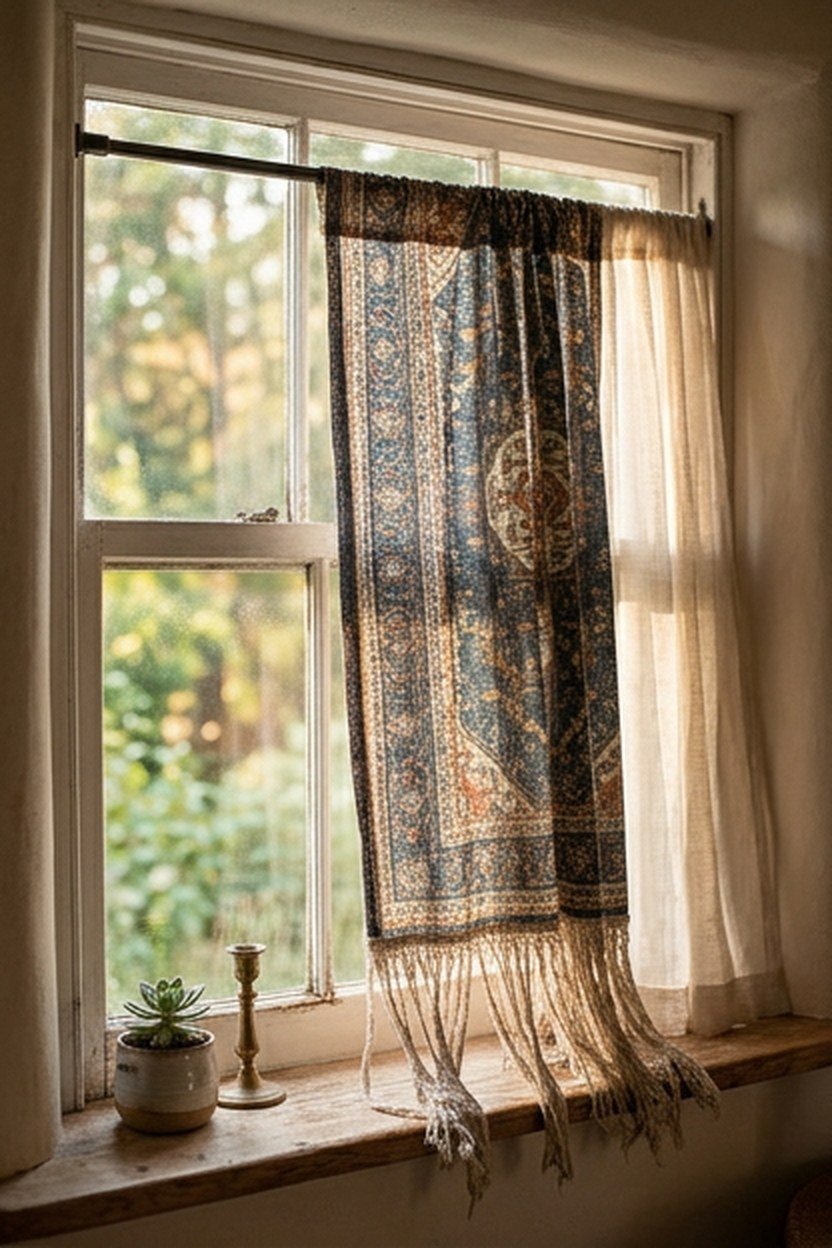
Patterned or fringed curtains replace a college apartment’s often generic mini blinds with something that carries the boho aesthetic all the way to the window. Tension rods mounted inside the window frame avoid drilling entirely, making this one of the most lease friendly upgrades on this whole list. Budget twenty to forty dollars per panel depending on fabric weight and pattern complexity.
Layering a sheer curtain behind a heavier patterned panel lets you control privacy and light separately from the decorative statement the pattern makes. I keep the sheer layer closed during the day for privacy and light softening, then open both layers in the evening when privacy matters less. It is a small consideration, but it makes a real difference in daily use.
Fringe trim on curtain panels can develop a soft, uneven texture after repeated washing, individual threads settling into a slightly looser, more textured drape rather than the crisp factory finish. Many boho style curtains are specifically chosen for this loosening, relaxed quality that develops with use and washing. Taking the extra step here pays off more than it might seem worth at first.
Measuring Windows Correctly For A Full Look
Measure your window’s full frame width and add several inches on each side if you want the curtains to appear wider and more dramatic than the window itself, a common styling trick that makes small college apartment windows feel more substantial. Mount the rod higher than the window frame for a similar height boosting effect. This small detail matters more once you actually live with the choice day to day.
Check your curtain panel’s actual finished length against your specific window height before ordering, since panels are often sold in standard lengths that do not always match a particular apartment’s ceiling height. A panel that pools slightly on the floor reads as intentional, while one that stops several inches short looks like a sizing mistake. A few minutes of planning here saves a bigger headache once everything is in place.
9. Gallery Wall With Mixed Frames And Prints
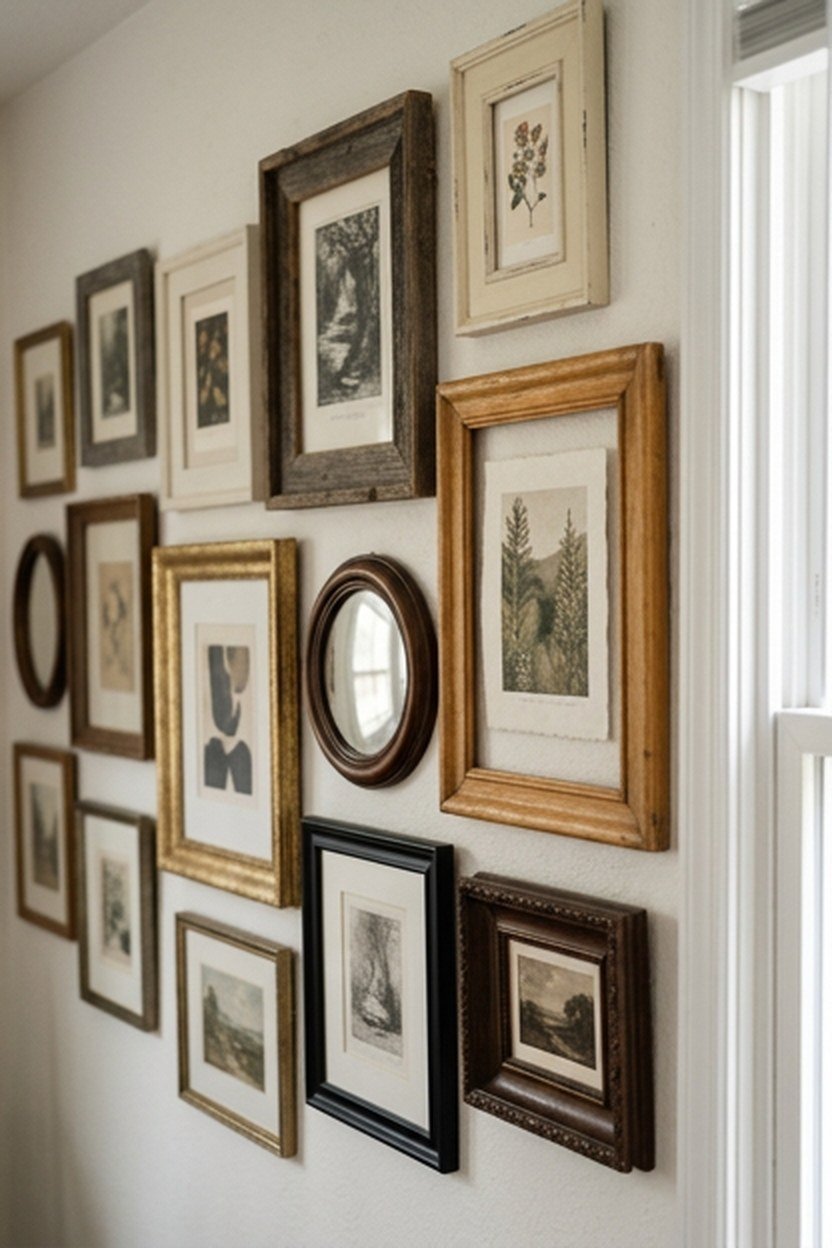
A gallery wall combining different frame styles, sizes, and print types creates a personalized focal point that a single large art piece cannot match on a college budget. Mix in a few plants, small mirrors, or woven pieces alongside traditional framed prints for genuine visual variety. This mixed media approach is significantly cheaper than filling an entire wall with framed prints alone.
Plan your layout on the floor or with paper templates taped to the wall before committing to any hanging, since a gallery wall with poor spacing looks cluttered rather than curated. I tape paper cutouts matching each frame’s dimensions to the wall first, adjusting the arrangement until the spacing feels balanced. Most renters only notice this after living with the setup for a few weeks.
Frames in mixed wood tones develop their own individual aging characteristics over time, unstained wood frames mellowing toward a warmer tone while painted frames may show a faint, even fading if positioned near a window. This natural divergence between pieces actually strengthens the collected over time look central to this style. Keep this in mind before finalizing the arrangement, since it is easy to overlook at first.
Frame Hanging Systems For Damage Free Walls
Adhesive picture hanging strips work well for lighter frames under about five pounds, while heavier frames need a small nail or the specific heavier duty strip rated for their weight. Check each frame’s actual weight before choosing a hanging method, since guessing leads to a frame falling and potentially breaking glass. This is one of those details that seems minor until you are the one dealing with it.
Consider a picture rail hanging system if your apartment has one installed, since these allow rearranging frames without any wall penetration at all. Not every college apartment has this feature, but it is worth checking for in older buildings specifically. Factor this into your plan early rather than adjusting for it after the fact.
10. Colorful Area Rug As A Room Anchor
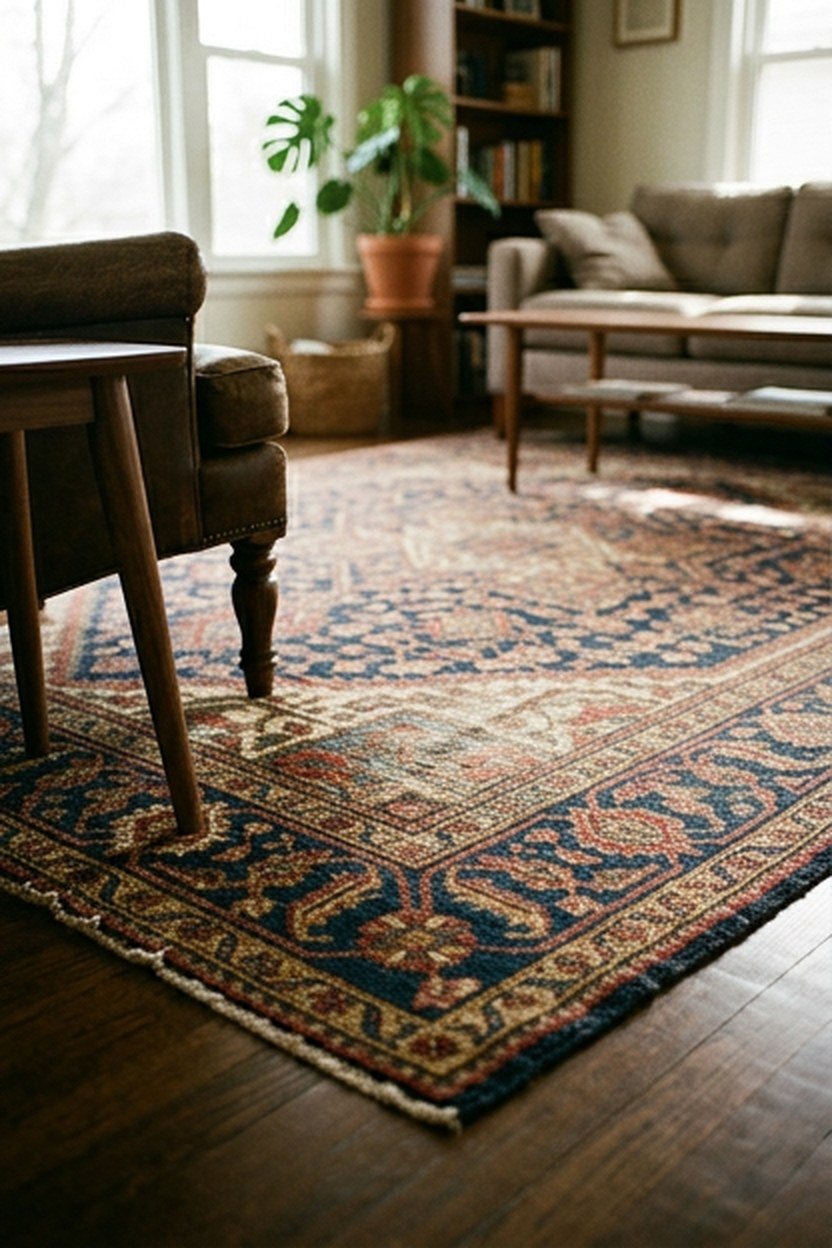
A single bold, patterned area rug in the main living space anchors the entire boho color scheme and gives the room a clear starting point for everything else. Choose the rug before other major purchases, since matching smaller items to an existing rug’s palette is easier than finding a rug to match several already chosen pieces. Budget forty to eighty dollars for a decent sized rug in a durable material.
Position the rug so all major furniture pieces have at least their front legs resting on it, a common styling guideline that keeps the room feeling connected rather than having furniture floating disconnected from the rug’s boundary. This detail matters more to a room’s overall cohesion than most renters initially realize. It is a small consideration, but it makes a real difference in daily use.
Synthetic and natural fiber blend rugs both develop a slightly softened texture underfoot after a year of regular foot traffic, the fibers settling and flattening slightly in high traffic paths. This gradual change is normal wear for any rug and does not indicate a defective product. Taking the extra step here pays off more than it might seem worth at first.
Rug Pad Considerations For Rental Flooring
A rug pad protects rental flooring from scuffs while also preventing the rug itself from sliding on hardwood or laminate surfaces common in college apartments. Choose a pad specifically rated safe for your flooring type, since some rubber backed pads can actually damage certain laminate finishes over extended contact. This small detail matters more once you actually live with the choice day to day.
Vacuum underneath the rug and pad every few months to prevent dust and debris buildup that can affect both the rug’s appearance and the flooring underneath. This small maintenance habit protects your security deposit as much as it protects the rug itself. A few minutes of planning here saves a bigger headache once everything is in place.
11. Rattan Or Wicker Furniture Accents
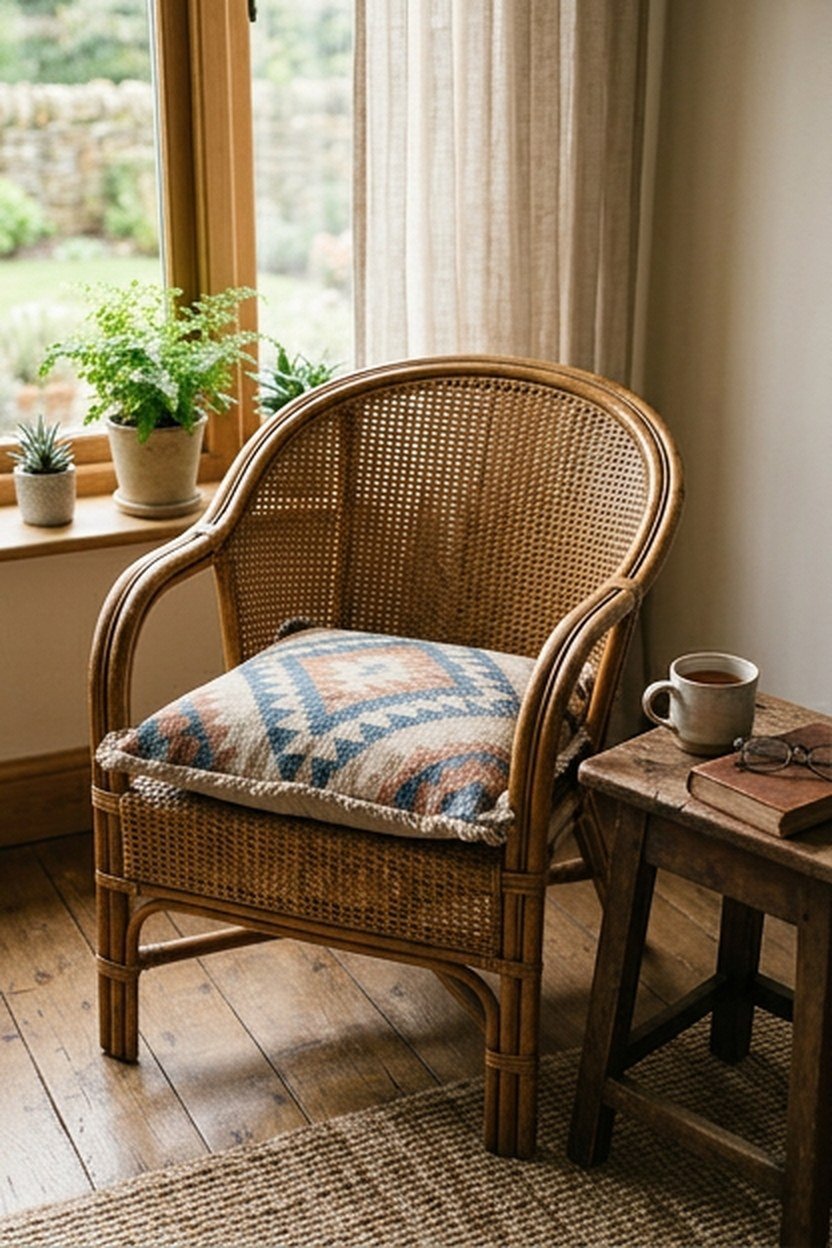
A rattan chair, side table, or shelving unit brings natural texture into a boho space without the bulk or cost of upholstered furniture pieces. These pieces work particularly well in a college apartment since they are lightweight enough to move easily between rooms or when moving apartments entirely. Budget varies widely, from thirty dollars for a small side table to several hundred for a substantial accent chair.
Pair rattan furniture with softer textiles, like a cushion or a draped textile, to keep the material from feeling too rigid or cold in a lived in space. I add a patterned cushion to my rattan chair specifically to soften its visual weight against the room’s other textiles. Most renters only notice this after living with the setup for a few weeks.
Natural rattan develops a warm, honey toned patina as it ages, deepening from its original lighter color with exposure to light and normal handling over time. This aging process is considered a desirable characteristic of natural rattan rather than something to prevent with excessive protective treatments. Keep this in mind before finalizing the arrangement, since it is easy to overlook at first.
Moving Rattan Furniture Between Apartments Safely
Rattan furniture, while lightweight, can be more fragile than it looks, particularly at woven joints that see repeated stress during a move. Wrap these joint areas specifically with moving blankets or bubble wrap rather than relying on the piece’s overall lightness to protect it during transport. This is one of those details that seems minor until you are the one dealing with it.
Check for any loose weaving before a move, since damage during transport tends to start at an already weakened point rather than a fully intact section. A quick repair with wood glue on a loose strand before moving day prevents a small issue from becoming a bigger one in transit. Factor this into your plan early rather than adjusting for it after the fact.
12. Layered Candles Or Battery Operated Alternatives
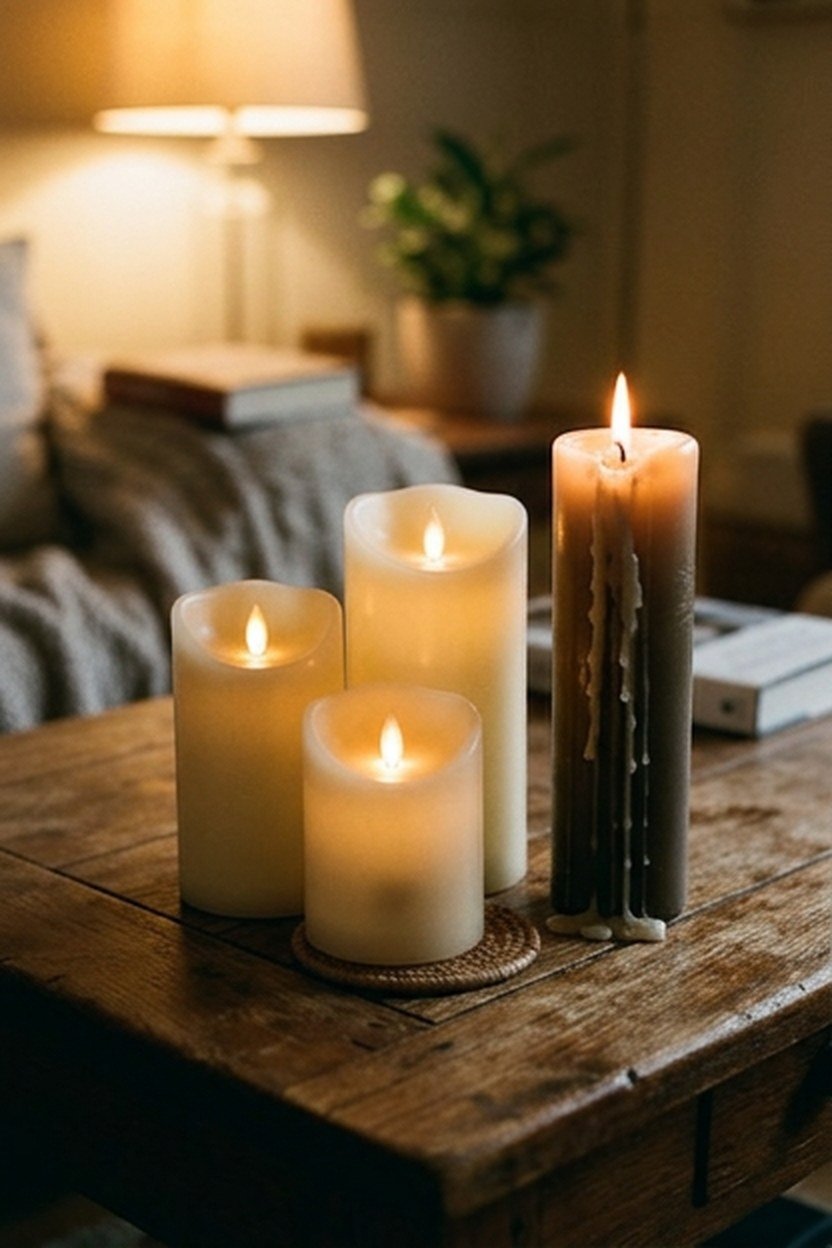
Grouped candles in varying heights create warm ambient light central to boho evening atmosphere, though many college leases restrict or ban open flame candles specifically due to fire risk. Battery operated flameless candles replicate the visual grouping effect without violating lease terms, and modern versions include a realistic flicker effect that reads convincingly from normal viewing distance. It is a small consideration, but it makes a real difference in daily use.
Group candles or flameless alternatives in odd numbered clusters of three or five, varying the heights noticeably rather than choosing pieces of similar size. This varied height grouping is a basic styling principle that applies well beyond just candles, but it shows up especially clearly in this kind of tablescape. Taking the extra step here pays off more than it might seem worth at first.
Real wax candles, where permitted, develop wax drips down their sides with use, an effect some boho decorators specifically encourage rather than clean up immediately. This dripped wax texture reads as an intentional aesthetic choice in this style rather than as neglect, though check your specific lease before assuming candles are allowed at all. This small detail matters more once you actually live with the choice day to day.
Checking Your Lease Before Buying Real Candles
Read your lease’s specific language on candles rather than assuming a blanket ban or blanket permission, since some leases allow candles with conditions like requiring a plate underneath or banning only specific candle types like tea lights near smoke detectors. This specific language matters more than general assumptions about typical apartment rules. A few minutes of planning here saves a bigger headache once everything is in place.
Battery operated alternatives remain the safer default choice regardless of what your lease technically permits, since they eliminate fire risk entirely while still delivering most of the visual effect real candles provide in a grouped display. Many modern versions even include a timer function that turns them on automatically each evening. This small feature makes the flameless option even more convenient than a real candle.
13. Statement Plant Corner With Mixed Pot Styles
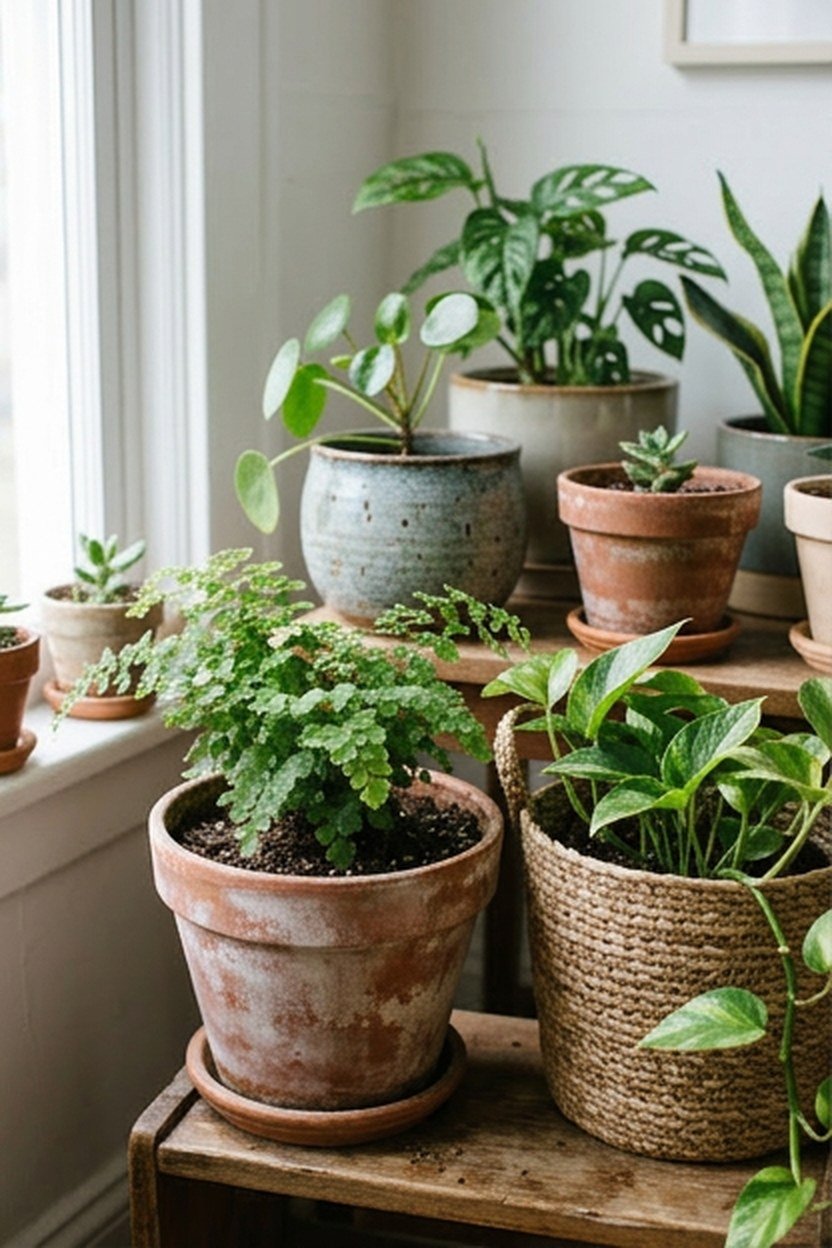
Grouping several plants of varying heights in one dedicated corner creates more visual impact than scattering individual plants throughout the apartment. Mix pot styles and materials, terra cotta, woven baskets, and ceramic, rather than matching planters for the eclectic look central to this aesthetic. This corner becomes a natural focal point that draws the eye without requiring any wall mounted elements.
Choose plants with genuinely different care needs honestly rather than aspirationally, since a corner full of plants that all need bright direct light will not thrive in a shaded apartment corner regardless of how good the styling looks initially. Pothos, snake plants, and ZZ plants all tolerate lower light conditions common in apartment corners away from windows. Keep this in mind before finalizing the arrangement, since it is easy to overlook at first.
Terra cotta pots develop a light, even mineral bloom on their surface after months of regular watering, a pale crusty texture from mineral deposits in tap water rather than any kind of damage to the pot itself. Many plant enthusiasts consider this bloom a sign of an actively used, well loved plant collection. This is one of those details that seems minor until you are the one dealing with it.
Protecting Rental Floors From Plant Watering Overflow
Use a saucer under every pot regardless of how careful you plan to be with watering, since even careful watering eventually overflows and rental flooring, especially older hardwood, shows water damage easily and expensively. A cheap plastic saucer costs a few dollars and prevents a repair bill running into hundreds. Factor this into your plan early rather than adjusting for it after the fact.
Check saucers regularly for standing water rather than assuming a single overflow event was a one time issue. Standing water left sitting attracts gnats and can damage flooring even through a saucer if left long enough. It is a small consideration, but it makes a real difference in daily use.
14. Beaded Or Macrame Curtain Room Divider
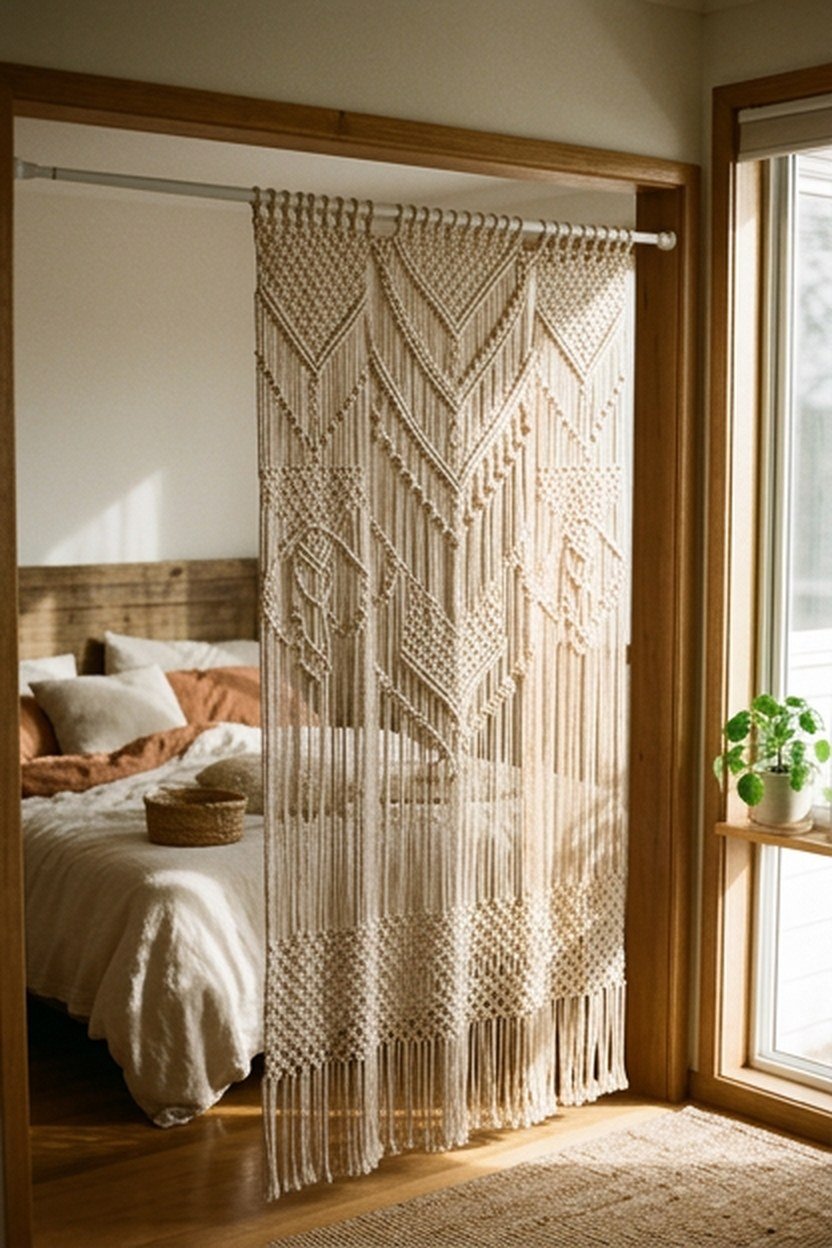
A beaded curtain or macrame room divider creates a visual and partial physical separation in a studio apartment or shared room without requiring any permanent construction. This solution works particularly well for college students in a studio layout who need to visually separate a sleeping area from a living space. Tension mounted rods again avoid any drilling into rental ceilings or walls.
Choose a divider material that still allows some light and airflow through, rather than a solid opaque curtain, to avoid making either side of the divided space feel closed off and dark. A macrame divider’s open weave pattern handles this balance particularly well compared to a solid fabric option. Taking the extra step here pays off more than it might seem worth at first.
The cord or bead material will develop a soft, faded look with prolonged sun exposure if positioned near a window, a gradual and even lightening that suits the material’s natural, handmade character. Repositioning the divider periodically evens out this fading across the full piece. This small detail matters more once you actually live with the choice day to day.
Divider Placement For Actual Privacy Benefit
Position the divider along the natural sightline between your bed and the room’s main entry point for the strongest privacy benefit, rather than placing it purely based on available ceiling mounting points. A divider positioned poorly for sightlines provides visual interest without much actual privacy function. A few minutes of planning here saves a bigger headache once everything is in place.
Test the privacy level at different times of day, since a see through style divider that seems adequate during daytime can feel far less private with interior lights on after dark and windows uncovered. Check the view from your roommate’s typical vantage point in the shared space, not just from your own bed. This quick test catches a privacy gap before it becomes an awkward daily reality.
15. Layered Wall Mirrors For Light And Depth
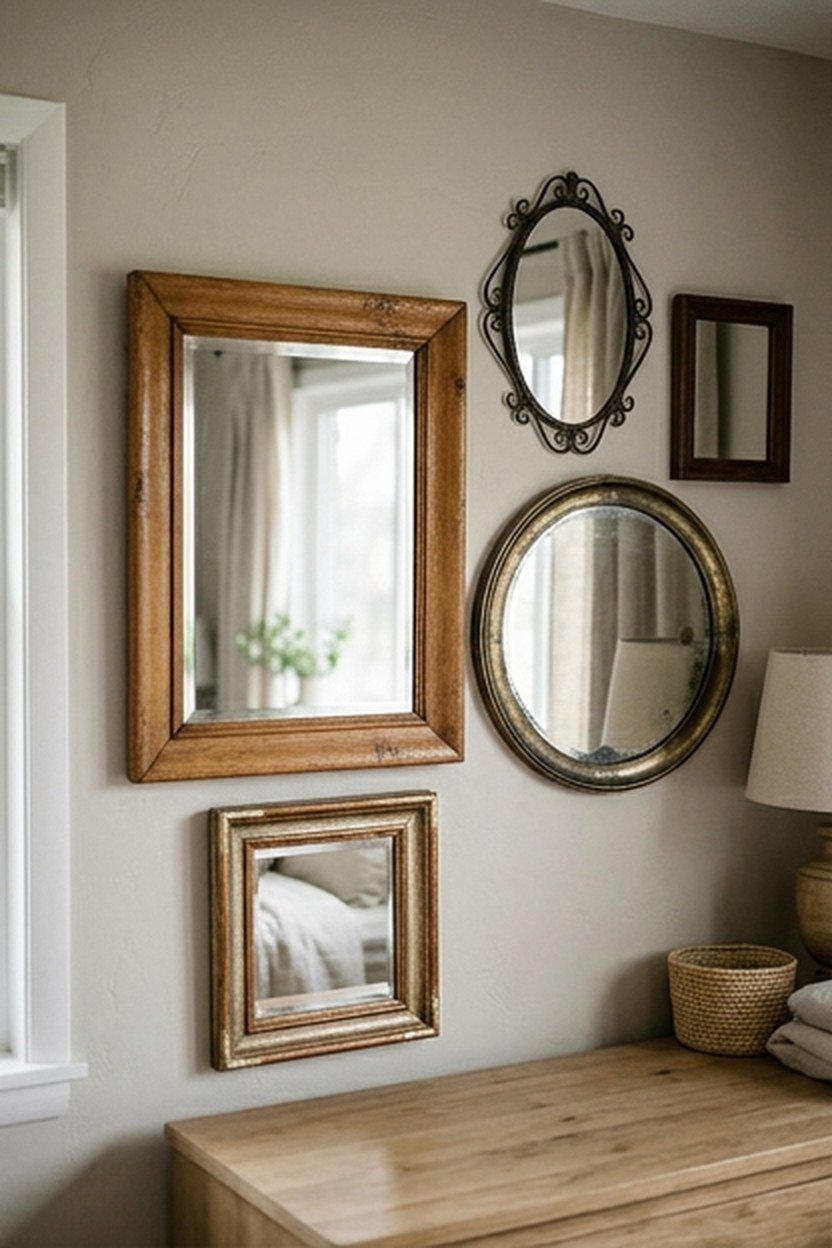
Grouping several small to medium mirrors with varied frame styles on one wall bounces additional light around a room while adding the eclectic collected look central to boho style. This works especially well in a college apartment bedroom that often lacks adequate natural light, making the space feel brighter without any electrical changes. Budget ten to twenty five dollars per mirror for a modest collection of five or six pieces.
Position at least one mirror to reflect a window or lamp directly, maximizing the actual light bouncing benefit rather than treating the mirrors as purely decorative. This functional consideration matters as much as the visual arrangement itself for a room that genuinely needs more light. Keep this in mind before finalizing the arrangement, since it is easy to overlook at first.
Mirror frames in mixed materials age at different rates, wood frames mellowing gradually while metal frames may show a faint tarnish if not sealed against humidity, particularly in a bathroom adjacent bedroom. This natural divergence in aging between pieces is expected and adds to the collected over time character rather than detracting from it. This is one of those details that seems minor until you are the one dealing with it.
Hanging Multiple Mirrors Without Wall Damage
Lightweight mirrors under five pounds typically work fine with adhesive strips rated for their specific weight, while heavier framed mirrors need an actual wall anchor or stud mounted screw for safety. Never assume adhesive strips work for a mirror without checking the actual weight against the strip’s rating first. Factor this into your plan early rather than adjusting for it after the fact.
Plan the mirror cluster’s arrangement on the floor before hanging, just as with a framed art gallery wall, to avoid the frustration of repositioning heavier pieces after the fact. This planning step matters even more with mirrors since a fall risks broken glass. It is a small consideration, but it makes a real difference in daily use.
What A Full Boho Apartment Setup Actually Costs
A complete boho transformation across a college apartment’s main living areas can range from under two hundred dollars using heavily thrifted and DIY elements to several hundred dollars buying mostly new pieces from retailers. Most students land somewhere in the middle, mixing a few new statement pieces with thrifted textiles and existing furniture they already owned before starting the project. Taking the extra step here pays off more than it might seem worth at first.
Spread purchases across the semester rather than buying everything before move in, both to manage cash flow around a student budget and to see how the space actually develops before committing to every planned element. I regret at least two purchases from my own first boho apartment that never actually fit once the rest of the room came together. This small detail matters more once you actually live with the choice day to day.
The table below breaks down rough cost tiers for a boho apartment project, though thrifting can push any tier toward the lower end significantly. Use it as a rough planning guide rather than a strict budget, since actual costs shift based on your local thrift store luck. Most students land somewhere between the lowest and middle tier once everything is accounted for.
| Budget tier | What it covers | Approach |
|---|---|---|
| Under $150 | Textiles, small plants, string lights | Mostly thrifted and DIY |
| $150 to $400 | Adds rugs, some furniture accents | Mixed thrift and retail |
| $400 and up | Full furniture pieces, larger rugs | Mostly new retail purchases |
Common Mistakes When Decorating A Boho College Apartment
Buying everything at once before living in the space is the most common mistake I see among first time boho decorators. A room planned entirely on paper or from inspiration photos rarely accounts for how you actually move through and use the space daily, and pieces that looked perfect in a mood board sometimes just do not work once installed. Live in the apartment a few weeks before finalizing major purchases.
Ignoring lease restrictions until after a purchase is made wastes money and creates unnecessary conflict with a landlord or property manager. Read the specific restrictions on wall hanging methods, candles, and any structural changes before buying items that assume permissions you have not actually confirmed. A five minute lease review saves considerable frustration later.
Overcrowding a small space with too many patterns and textures at once is the third common trap, since boho style’s eclectic nature can tip into visual chaos without some restraint. Choose a cohesive color palette of three to four main colors that recur across different patterns, which keeps an eclectic mix feeling curated rather than random. Most renters only notice this after living with the setup for a few weeks.
Balancing Boho Eclecticism With Visual Cohesion
Pick one or two pattern types, like mandala prints or geometric shapes, as your dominant visual language, then let other patterns play a supporting role rather than competing equally for attention. This hierarchy prevents the overwhelming look that can result from too many equally bold patterns fighting for the eye’s attention. Keep this in mind before finalizing the arrangement, since it is easy to overlook at first.
Step back and photograph your space periodically during the decorating process, since a photo often reveals visual imbalances that are harder to spot while standing inside the room itself. This simple check helps catch an overcrowded corner or a missing anchor point before you consider the room finished. This is one of those details that seems minor until you are the one dealing with it.
Conclusion
Building a vibrant boho college apartment comes down to layering removable, budget friendly elements rather than committing to expensive furniture or permanent changes a rental cannot accommodate anyway. Start with a rug or a large tapestry as your anchor piece, then build outward with textiles, plants, and mixed decorative objects that reflect your own collected over time story. The sixteen ideas covered here scale to almost any budget and any lease restriction.
Prioritize pieces that travel well between apartments over anything too tied to one specific space, since a college student’s living situation changes more often than most renters. A boho apartment built this way rewards you not just with a great looking space now, but with a collection of pieces that will furnish the next apartment just as well. Factor this into your plan early rather than adjusting for it after the fact.
Frequently Asked Questions
Will boho decorating violate my college apartment lease? Most boho elements are removable and lease friendly, though string lights and candles specifically face restrictions in many leases. Always check your specific lease language before assuming a decorating choice is permitted.
How much does a full boho apartment makeover typically cost? A budget conscious approach using thrifted textiles and DIY elements can come together for under two hundred dollars total. A more retail focused approach with new furniture accents can run several hundred dollars or more.
Can I achieve boho style in a shared apartment with roommates who prefer a different aesthetic? Yes, concentrating the full boho treatment in your own bedroom while keeping shared spaces more neutral works well for mixed preference households. This compromise respects everyone’s space without forcing one aesthetic on shared areas.
Do thrifted textiles carry any health or pest risks? Inspect and clean any secondhand textile before bringing it into your apartment, checking specifically for pest signs or strong musty odors. A thorough wash or steam clean before first use is a reasonable precaution for most thrifted fabric items.
What is the single best starting point for a boho college apartment on a tight budget? A patterned area rug or a large tapestry typically delivers the most visual impact per dollar spent, since both cover significant visual area for a relatively low cost. Either makes a strong anchor point to build the rest of the room around.
How do I keep a boho space from looking cluttered rather than curated? Stick to a cohesive color palette of three to four main colors across all your patterns and textures, which keeps an eclectic mix feeling intentional. Stepping back to photograph the space periodically also helps catch overcrowding before it becomes a real problem.