
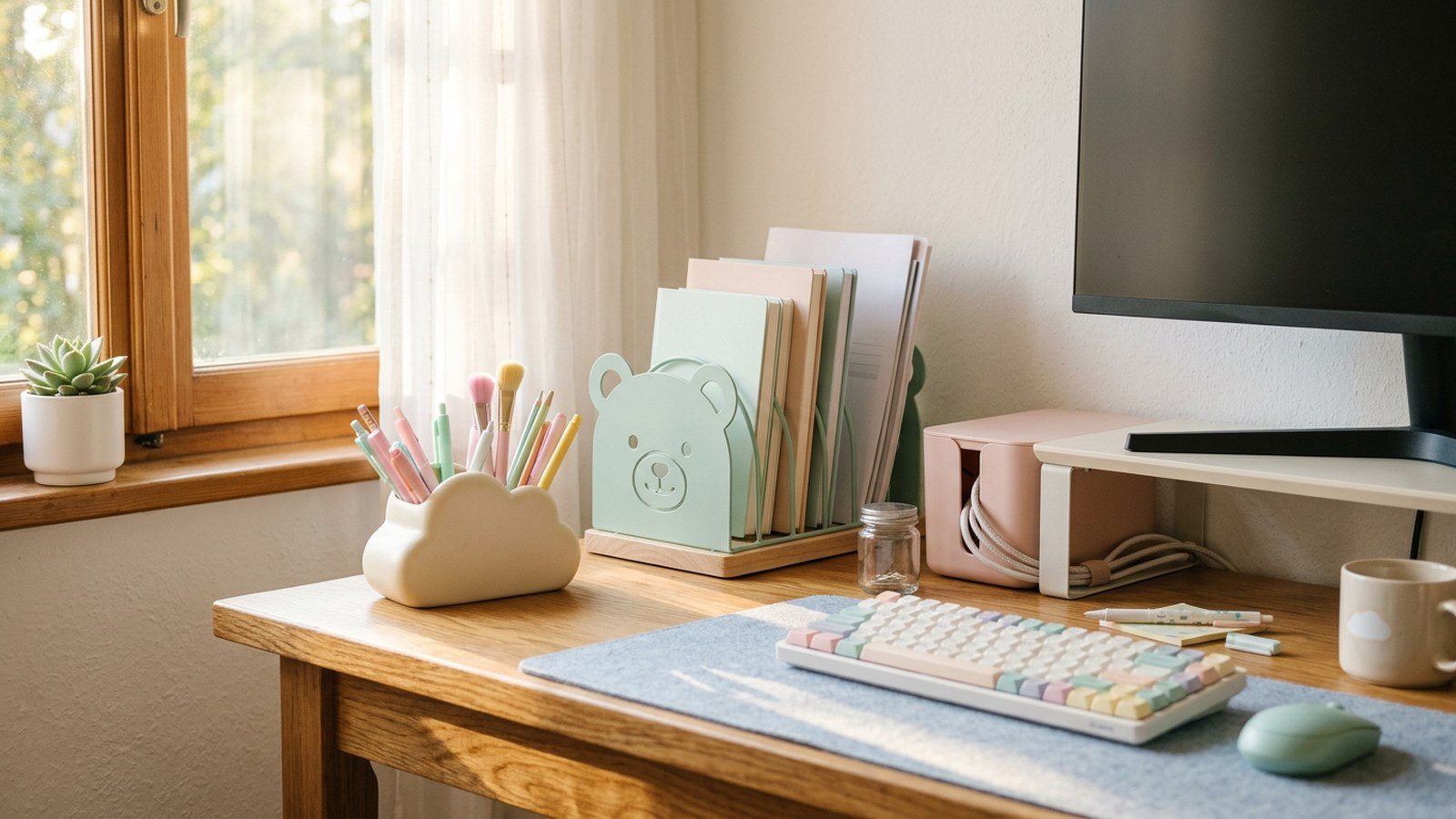
A cluttered desk drags on your focus more than most people admit. Pastel kawaii desk organizers fix that problem while making the workspace genuinely fun to sit at every morning. I have swapped out three different desk setups over the past two years chasing the same goal, a station that stays tidy without feeling clinical or cold.
Kawaii style brings soft pastel colors, rounded shapes, and small character details into everyday tools like pen cups, file trays, and cable boxes. It sounds decorative first, but the organizing logic underneath is what actually earns its keep. Every piece on this list has a job to do, not just a cute face to show off.
I will walk through seventeen specific organizers, what each one solves, and where it tends to go wrong if you rush the setup. Expect real trade offs between price, durability, and how much desk footprint you can spare. By the end you will know exactly which pieces fit a small desk and which ones need a bigger surface to breathe.
Why Kawaii Organization Actually Works For Focus
Color psychology plays a bigger role in desk setups than most productivity guides admit. Soft pastels like mint, blush, and lavender read as calm rather than sterile, and that calm translates into fewer moments of visual overwhelm during a long work session. A desk full of harsh black plastic bins can feel like a server room, while the same storage in a rounded pastel shell feels approachable instead.
The rounded shapes common in kawaii design also matter more than they seem to at first glance. Sharp edged organizers photograph well but catch on sleeves, bump elbows, and generally add friction to a space you touch dozens of times a day. Soft corners on a pen cup or a stacking tray remove that friction almost entirely, which sounds small until you notice how often you brush past your own supplies during a normal work day.
The table below breaks down how kawaii organizers stack up against plain utilitarian bins on the things that matter for daily use. Both styles hold the same volume of supplies, so the real difference sits in comfort and visual clutter tolerance. Price is close enough that it rarely decides the choice on its own.
| Factor | Kawaii pastel organizers | Plain utilitarian bins |
|---|---|---|
| Visual clutter tolerance | High, colors blend and soften mess | Low, mismatched bins look chaotic fast |
| Daily touch comfort | Rounded edges, softer grip points | Sharp corners, more snag points |
| Price range | $8 to $35 per piece typically | $4 to $20 per piece typically |
Planning Your Kawaii Desk Layout Before You Buy
Buying pieces one at a time without a plan is the single biggest mistake I see in this style of desk setup. A pastel pen cup looks great sitting alone in a product photo, but drop it next to three other organizers in slightly different pastel tones and the whole desk starts to look mismatched instead of coordinated. Pick a two or three color palette first, then buy toward that palette on purpose rather than by impulse.
Measure your desk surface before ordering anything, especially the depth from the front edge to your monitor stand or laptop riser. Kawaii organizers tend to run slightly larger than their minimalist counterparts because the rounded shells add bulk around the same internal capacity. A desk under 40 inches wide needs to prioritize vertical organizers over anything that spreads out horizontally across the surface.
Think about your actual daily workflow before deciding what needs a dedicated organizer at all. Sticky notes you touch ten times a day deserve prime real estate near your dominant hand, while reference documents you check once a week can live in a drawer organizer instead of taking up desktop space. The list below assumes a working desk, not a display shelf, so every recommendation ties back to something you touch regularly.
1. Cloud Shaped Pen And Pencil Holder
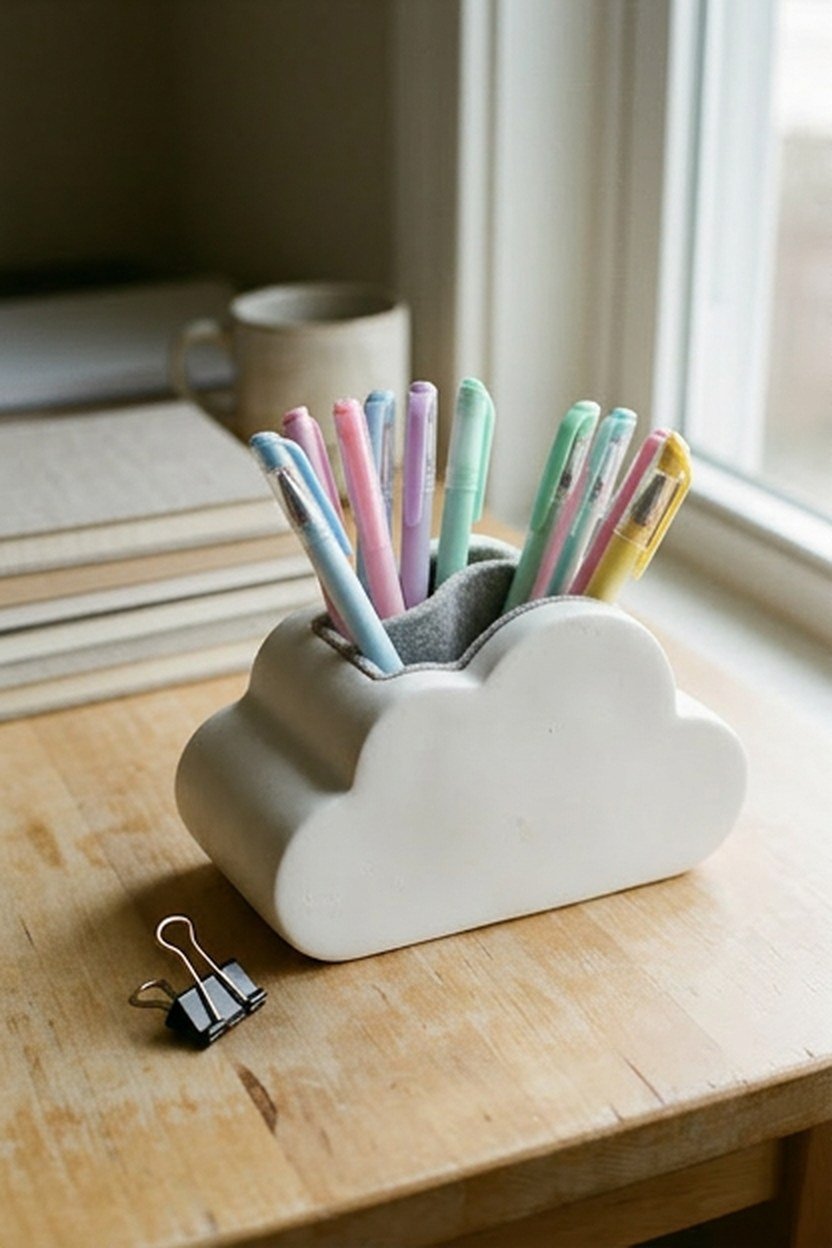
A cloud shaped pen holder solves the single most common desk clutter problem, pens rolling loose across the surface every time you reach for the keyboard. The rounded cloud silhouette usually holds twelve to sixteen pens upright in individual felt lined slots, which keeps thin gel pens from tipping the whole cup over the way open cylinder holders do. Most versions come in a soft white or pale blue resin with a matte finish that resists fingerprints better than glossy plastic.
Placement matters more than people expect with this piece. Set it on your non dominant side so reaching for a pen does not cross your writing hand over your keyboard every single time. The felt lining inside genuine kawaii versions is usually a light gray or cream fabric, mellowed slightly at the fold lines after a few months of pens sliding in and out, a small sign of real daily use rather than a shelf piece.
Budget versions swap the felt lining for bare plastic ridges, which works fine but lets pens rattle audibly when you bump the desk. Spend the extra few dollars for the lined version if you type near an open mic for calls, since that rattle picks up on recordings more than you would guess. The lined cup also protects softer pen tips from scuffing against bare plastic over time.
What This Organizer Costs You If You Skip It
Loose pens do more damage than clutter alone. I have watched a rolling pen knock a coffee cup edge twice in one week on an unorganized desk, and both times it was completely preventable with a four dollar holder. The cost of skipping this one is measured in small accidents, not big ones.
Consider a cloud holder with a small side compartment for paper clips or binder clips if your budget allows it. That second compartment keeps small hardware from disappearing into a junk drawer, and it means one object handles two organizing jobs instead of needing a separate tray. Check that the compartment sits low enough that clips do not spill out when you tilt the holder to grab a pen.
2. Stacking Bear Face Drawer Trays
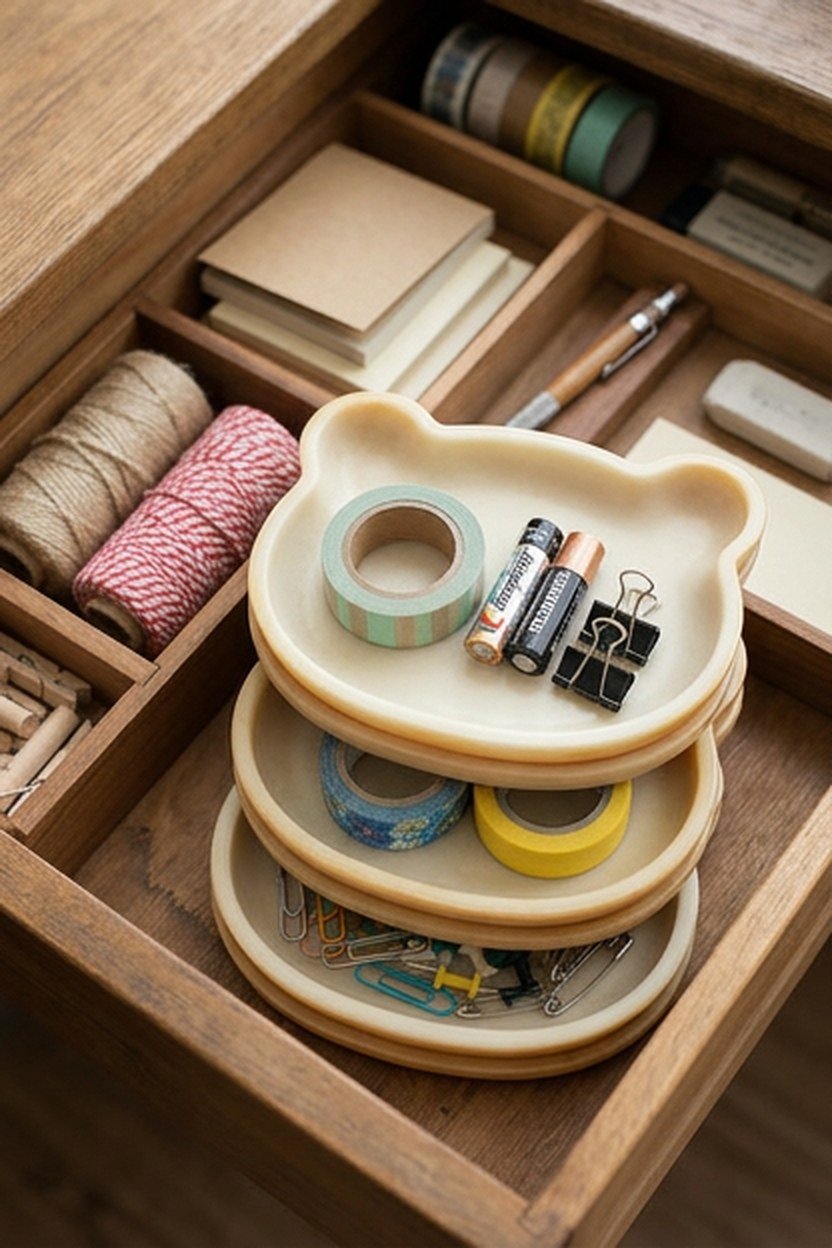
Stacking bear face drawer trays turn a chaotic desk drawer into something you can actually navigate without digging. Each tray usually measures around six by four inches with a bear face molded into one end, and they stack two or three high inside a standard desk drawer without wobbling. The stacking lip is the detail that makes or breaks this organizer, since a loose stack shifts every time you open and close the drawer.
I sort mine by frequency of use rather than by category, which goes against typical organizing advice but works better in practice. The top tray holds things I grab daily, like a tape dispenser and spare batteries, while the bottom tray holds backup supplies I touch once a month. The pastel resin these trays are molded from tends toward a soft honey patina after a year or two under fluorescent office lighting, a gentle warming rather than any kind of damage.
Watch the drawer depth before buying a full stack of three, since some desk drawers only clear about five inches and a triple stack simply will not close. Measure twice here, because returning a set of three trays costs more in shipping than the trays themselves in some cases. A quick tape measure check before ordering saves that whole return process.
Sizing These Trays To Your Actual Drawer
Standard desk drawers run anywhere from four to seven inches deep, and that range determines whether you can stack two trays or three. A drawer under five inches deep should stick to a single tray with dividers built in rather than stacking at all. Measure your specific drawer with a tape measure before ordering, since manufacturer photos rarely show true scale.
Consider mixing tray sizes rather than buying one uniform set. A wider tray on the bottom for bulky items like tape rolls, paired with a narrower tray on top for paper clips and pushpins, uses the vertical space more efficiently than three identical trays stacked straight up. This mixed approach keeps the stack more stable since the heavier tray anchors the bottom.
3. Pastel Cable Management Box With Character Lid
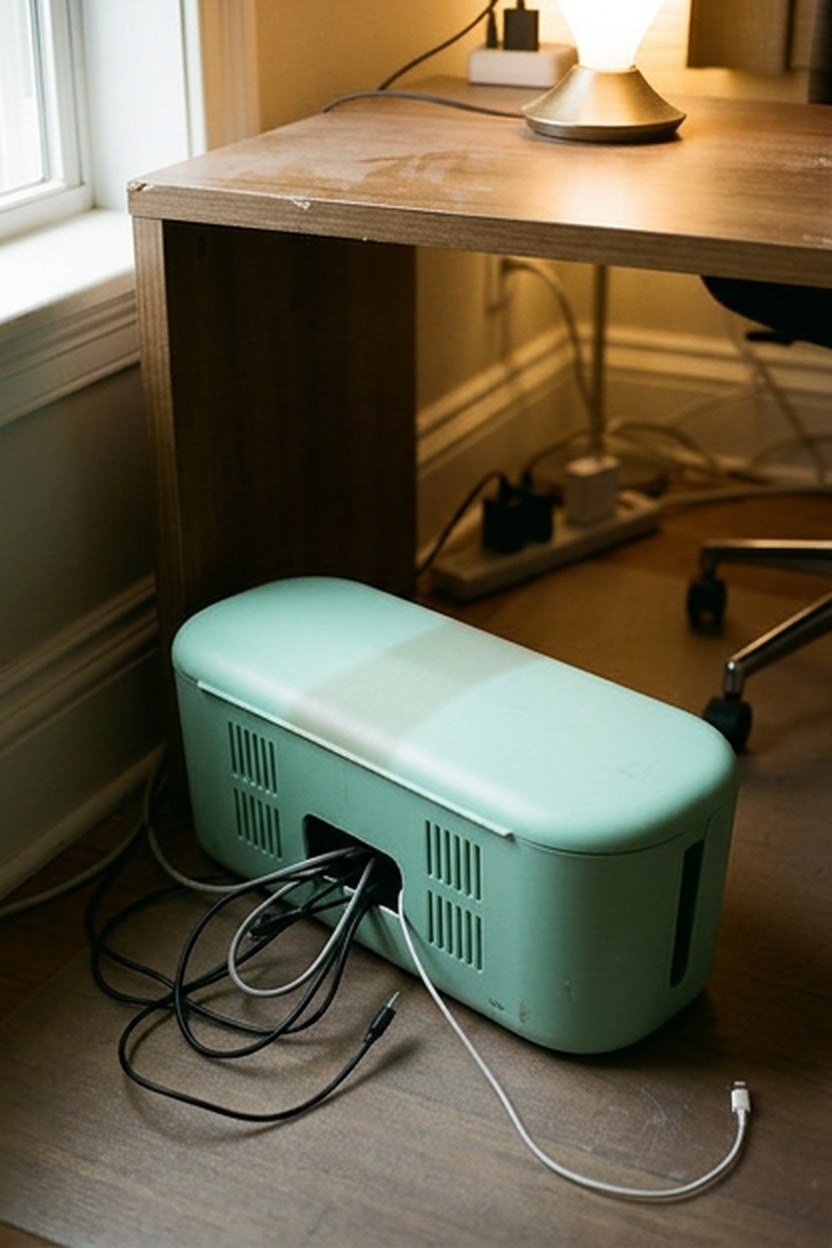
Cable clutter behind a desk is one of the ugliest and most avoidable messes in any home office. A pastel cable management box with a rounded character lid hides the power strip and charging cables while still letting cords pass through small cutouts on the back edge. Most boxes in this style hold a standard six outlet power strip plus two or three phone charging cables without crowding.
The lid usually lifts on a soft hinge rather than coming off entirely, which matters more than it sounds like it should. A removable lid gets set down somewhere and lost within a week, while a hinged lid stays attached and gets used correctly every time you need to plug in a new device. Look for the hinge detail in product photos before buying, since some budget versions skip it to save on manufacturing cost.
Ventilation slots on the sides or back keep the power strip from overheating inside the enclosed box, which is a genuine safety concern rather than a nitpick. A box with zero ventilation traps heat, especially if you run a laptop charger and a monitor together through the same strip for eight hours a day. Check for visible slots on at least two sides before assuming a box is safe for daily use.
Fire Safety With Enclosed Cable Boxes
Never enclose a power strip rated below the combined wattage of everything plugged into it, regardless of how good the box looks in a styling photo. Check the wattage printed on your power strip and add up your devices before trusting the box as shown online. This single check takes two minutes and prevents a real hazard.
Choose a box with visible ventilation slots over one with a fully sealed shell, even if the sealed version looks cleaner in photos. The few degrees of airflow difference matters over a full workday of continuous use, particularly in a warm room without air conditioning. A five dollar price difference between models is worth paying for that airflow alone.
4. Rabbit Ear Sticky Note Dispenser
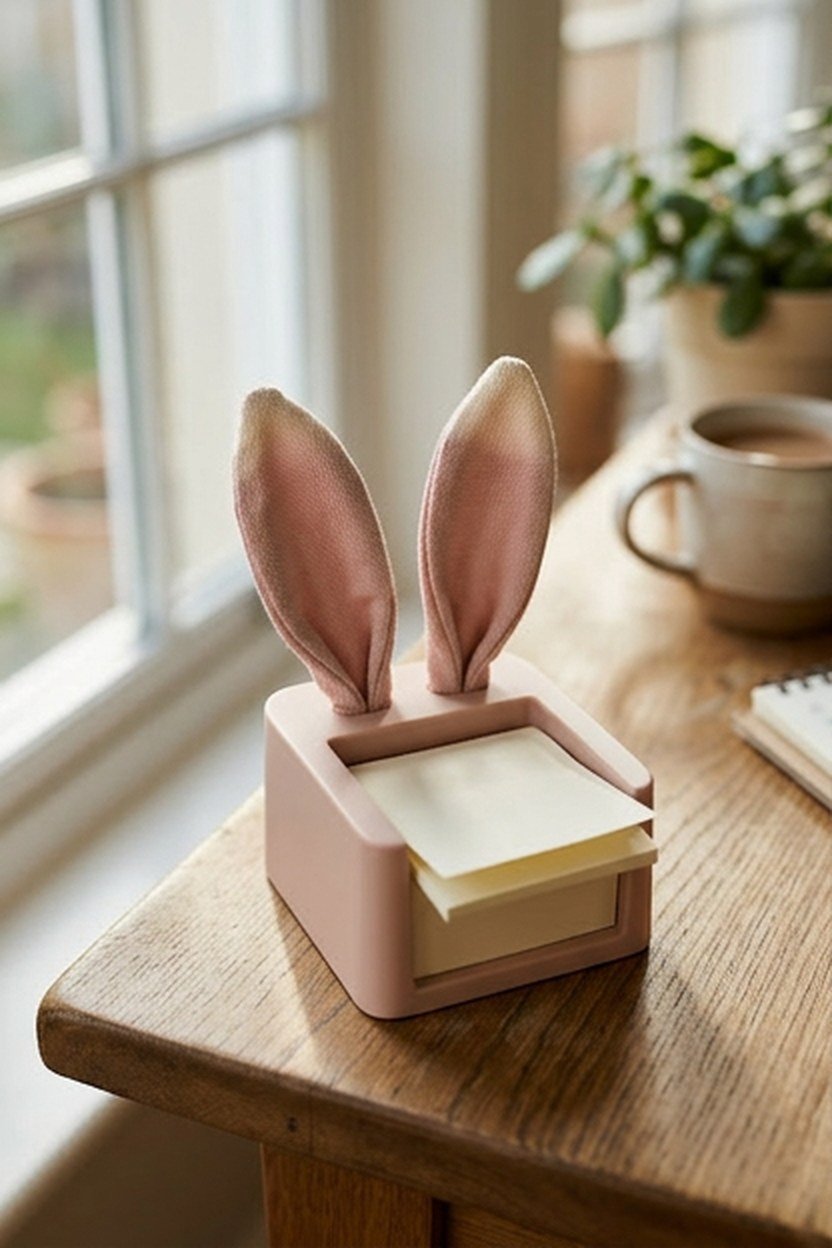
A rabbit ear sticky note dispenser holds a standard three inch sticky note pad upright with two soft fabric ears standing above the note stack. The dispenser base usually weighs enough to stay put on the desk even when you peel notes off quickly, which solves the classic problem of a note pad sliding away every time you reach for it. Pastel versions come in blush pink, mint, or pale yellow resin that matches most kawaii palettes without clashing.
Refilling the pad is simple on most models, since the front panel slides down or swings open rather than requiring you to pry the old pad out with your fingernail. Cheaper dispensers skip this feature and the front edge chips slightly after repeated prying, so check for a hinged or sliding refill mechanism before buying if you go through sticky notes quickly. I refill mine roughly every three weeks with normal daily use.
Position this one within arm’s reach of your dominant hand, since sticky notes work best as a quick capture tool rather than something you lean across the desk to reach. A dispenser tucked behind your monitor defeats the entire purpose of having one. Keep it on the same side as your phone charger if you jot quick reminders during calls.
Sticky Note Volume For Real Work Habits
Track how many notes you actually use in a normal week before assuming you need the largest pad size available. Most desk workers use fewer sticky notes than they think, closer to five or six a day rather than a full pad. Buying the compact three inch size in bulk saves money over the oversized dispensers built for a five inch pad you may never fill.
Pair the dispenser with a small pastel tray nearby for notes you have already actioned but are not ready to throw away yet. That second landing spot keeps used notes from piling up loose around your keyboard, which is where most sticky note clutter accumulates. Clear that tray at the end of each week alongside your other paper processing habits.
5. Kitty Ear Monitor Stand With Storage Drawer
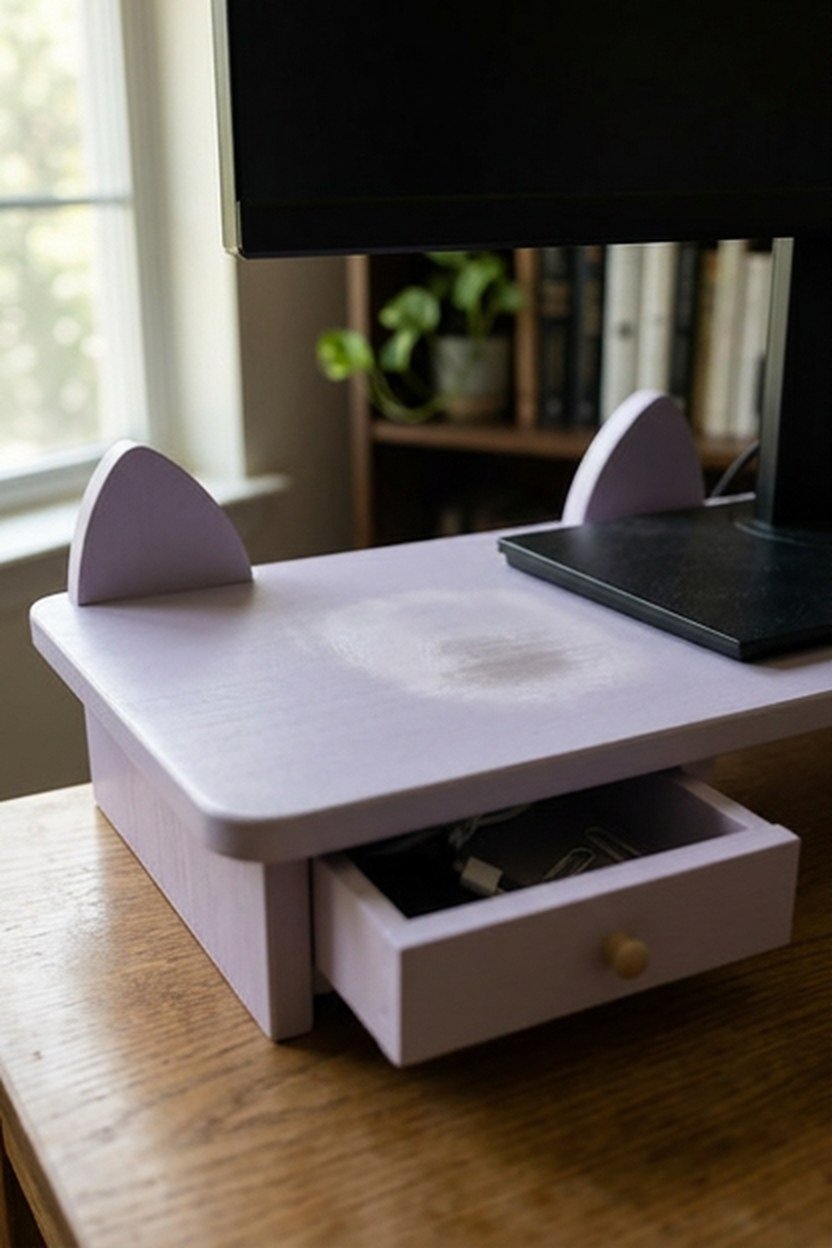
A kitty ear monitor stand raises your screen to eye level while adding a shallow storage drawer underneath the platform. The ear silhouettes sit at the top corners of the stand, usually molded in the same pastel resin as the platform itself. Most versions support monitors up to about 24 inches and lift the screen between two and four inches, enough to fix a slouched neck position for most desk heights.
The drawer underneath typically holds flat items only, think notepads, a spare mouse, or a phone, since the drawer depth rarely exceeds an inch and a half. Do not expect to store anything bulky in there, and check the weight rating before setting a heavier ultrawide monitor on top, since some kawaii stands rate lower than a standard office stand. Confirm the rating against your monitor’s listed weight before assuming it fits safely.
The platform surface itself tends to show soft wear over time where the monitor base sits, a light sheen that develops from months of static contact rather than any kind of scratch or damage. That patina is completely normal and does not affect the stand’s function. Wipe the surface occasionally with a dry cloth if the sheen bothers you visually.
Matching Stand Height To Your Actual Sitting Posture
A monitor stand that lifts your screen too high forces your neck to tilt back, which causes just as much strain as looking down at a screen positioned too low. The correct height puts the top third of your monitor at eye level when you sit up straight in your normal chair. Measure your current eye level against your screen before assuming a two inch lift is automatically correct.
Adjust your chair height first if you have that option, since a proper chair adjustment sometimes removes the need for a monitor stand entirely. Only add the stand once your chair is dialed in and you still need extra lift to reach eye level comfortably. Recheck your posture after a week, since your body adapts to a new height gradually.
6. Pastel Ceramic Succulent Planter Pen Pot

A small ceramic planter shaped like a rounded succulent pot doubles as a pen holder when you skip the plant and use the opening for pens or brushes instead. The ceramic shell holds a pale pink, sage, or cream glaze with a matte finish that photographs beautifully next to a laptop. Most versions measure around three inches across, small enough to fit even a compact desk corner without crowding your keyboard.
Ceramic brings a weight advantage over resin or plastic organizers, since the pot simply will not tip over from a light bump the way a hollow plastic cup sometimes does. That stability makes it a good choice for a desk near a doorway or a busy hallway where accidental knocks happen more often. The glaze can develop a faint crackling pattern after a year or two under direct sun exposure, a natural aging effect on ceramic glaze rather than any flaw.
Keep this one away from the very edge of your desk regardless of its weight advantage, since ceramic chips if it does eventually fall, unlike the softer resin pieces elsewhere on this list that tend to bounce. A few inches of buffer from the edge is enough to prevent most accidental knocks. That small habit protects the glaze finish for years of daily use.
Real Plant Versus Pen Holder Trade Off
Using the pot for an actual small succulent instead of pens adds a living element to the desk that plastic organizers cannot match, but it also adds a watering responsibility that pens never need. Choose the plant version only if you already have a track record of keeping small plants alive, since a dying succulent looks worse than an empty desk. The pen holder version has zero maintenance beyond an occasional wipe down.
Consider owning one of each if your desk has room, one ceramic pot with a real plant near your monitor and a second matching pot for pens closer to your writing hand. The visual pairing reads as intentional rather than cluttered when the two pots share the same glaze color. Buying both from the same batch also keeps the glaze tone consistent between them.
7. Bear Paw Mouse Pad With Wrist Rest
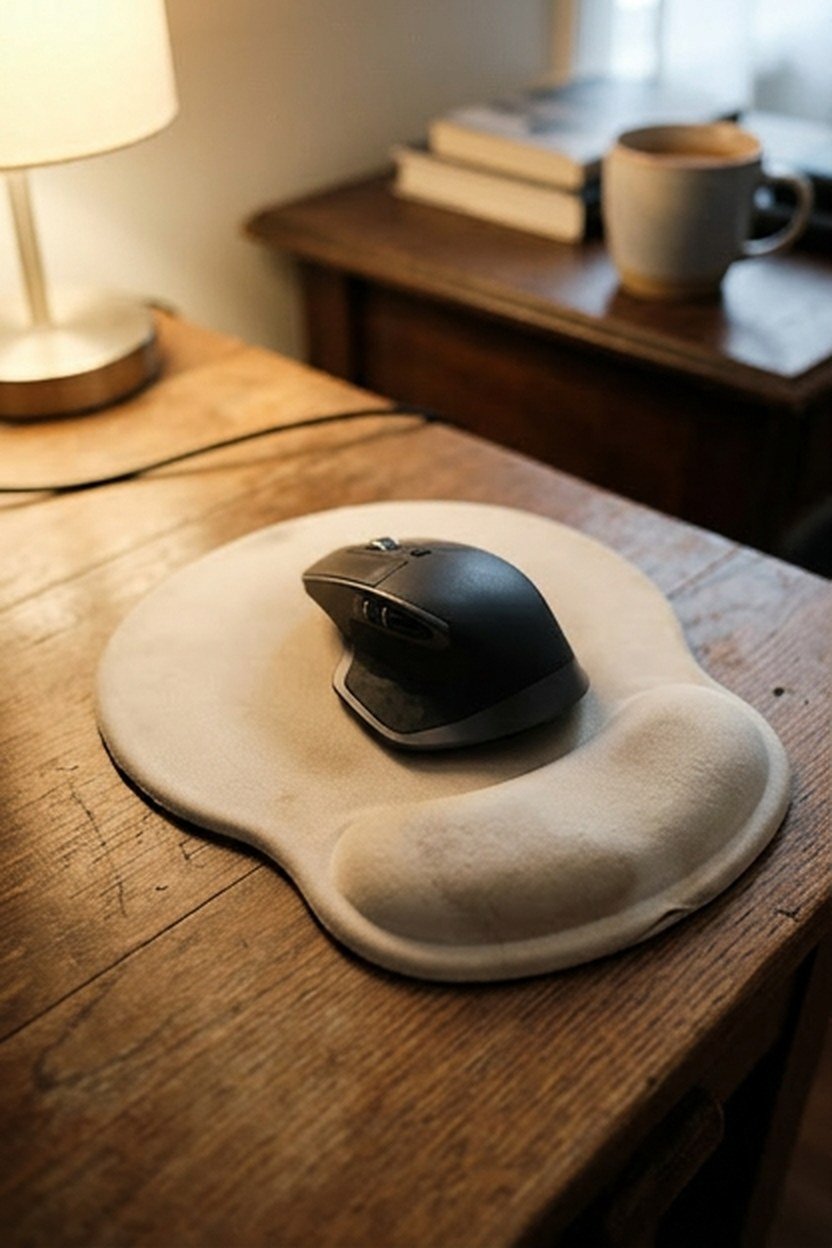
A bear paw shaped mouse pad extends the surface into a padded wrist rest molded to look like a rounded paw print. The padding underneath is usually memory foam covered in a soft fabric, and the mouse tracking surface sits on a firmer base layer so cursor movement stays accurate despite the plush wrist section. Sizes run larger than a standard mouse pad to accommodate the paw extension, so measure your available desk space before ordering.
Wrist support matters more than most people realize until they deal with the ache that comes from hours of unsupported wrist extension while mousing. The paw shaped rest keeps your wrist in a more neutral position compared to resting directly on a hard desk surface, which reduces strain over a full workday. The fabric covering shows gentle fading at the exact spot your wrist rests most often, a sun and friction fade that develops slowly and evenly rather than as a stain or a hole.
Wash instructions vary by material, so check whether your specific pad is spot clean only or machine washable before it needs a cleaning. Read the care tag before the first spill happens rather than after. Keeping a small fabric cleaner nearby saves a scramble when coffee inevitably gets close.
Ergonomic Fit For Different Hand Sizes
A wrist rest built for an average hand size can feel too high or too low if your hands run notably smaller or larger than typical. Test the height by resting your hand naturally on your mouse before committing to a specific pad, since a rest that is too tall pushes your wrist upward into a worse angle than no rest at all. Some brands offer a low profile version specifically for this reason.
Replace the pad every twelve to eighteen months of daily use even if it still looks fine, since the foam compresses over time and loses the support it originally provided. A flattened wrist rest offers barely more benefit than a bare desk surface. Set a reminder around the one year mark so replacement does not slip your mind.
8. Rounded Pastel File Sorter With Labeled Slots
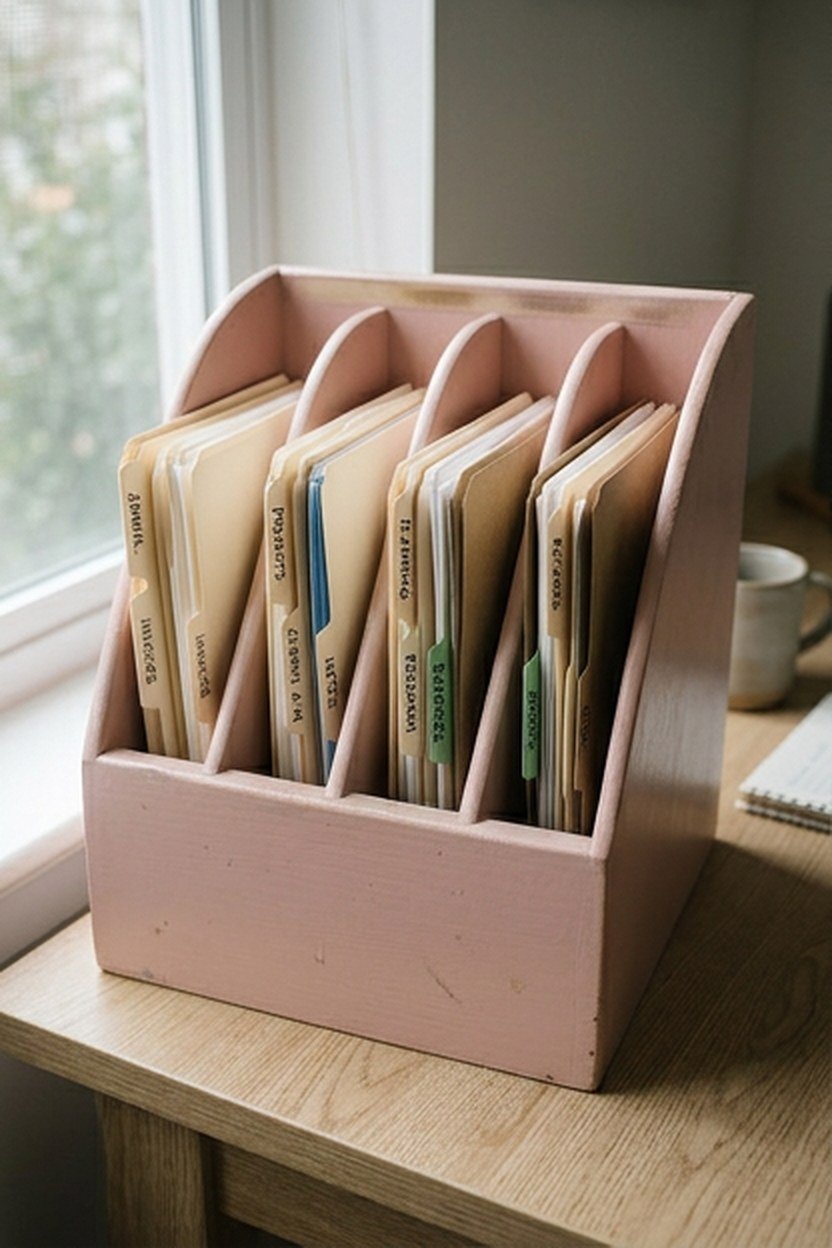
A rounded pastel file sorter holds folders vertically in five or six slots, each wide enough for a standard letter size folder without cramming. The rounded top edge of each slot is the signature kawaii detail here, softening what is normally a sharp edged office object into something friendlier to look at all day. Most versions ship in a single pastel color rather than mixed tones, which keeps the whole piece feeling cohesive on a shared desk.
Labeling each slot is worth the extra five minutes it takes, since an unlabeled sorter tends to become a single messy stack within a month regardless of how many separate slots it technically has. Small blank labels in a matching pastel tone keep the labeling from clashing with the organizer’s look. I relabel mine every few months as active projects shift, which takes less time than searching through unlabeled folders.
The resin these sorters are molded from can develop a faint sun faded band across the top edge if the sorter sits directly in a window’s light path for months, evenly across the surface rather than as a spot or a stain. Rotating the sorter a quarter turn occasionally evens out any exposure if the fading bothers you. This is purely cosmetic and never affects how the slots function.
Vertical Versus Horizontal File Storage
Vertical sorters like this one work best for folders you access several times a week, since flipping through upright folders is faster than digging through a horizontal stack. Reserve horizontal stacking trays for reference material you touch rarely, where quick access matters less than compact storage. Mixing both systems on one desk covers both use cases without forcing either one to do a job it handles poorly.
Rotate completed project folders out of the sorter promptly rather than letting finished work compete for slots with active projects. A sorter at capacity stops being useful the moment you have to shuffle folders around just to add a new one. Archive finished folders into a filing cabinet or a labeled box instead of leaving them in active rotation.
9. Kawaii Character Tape Dispenser
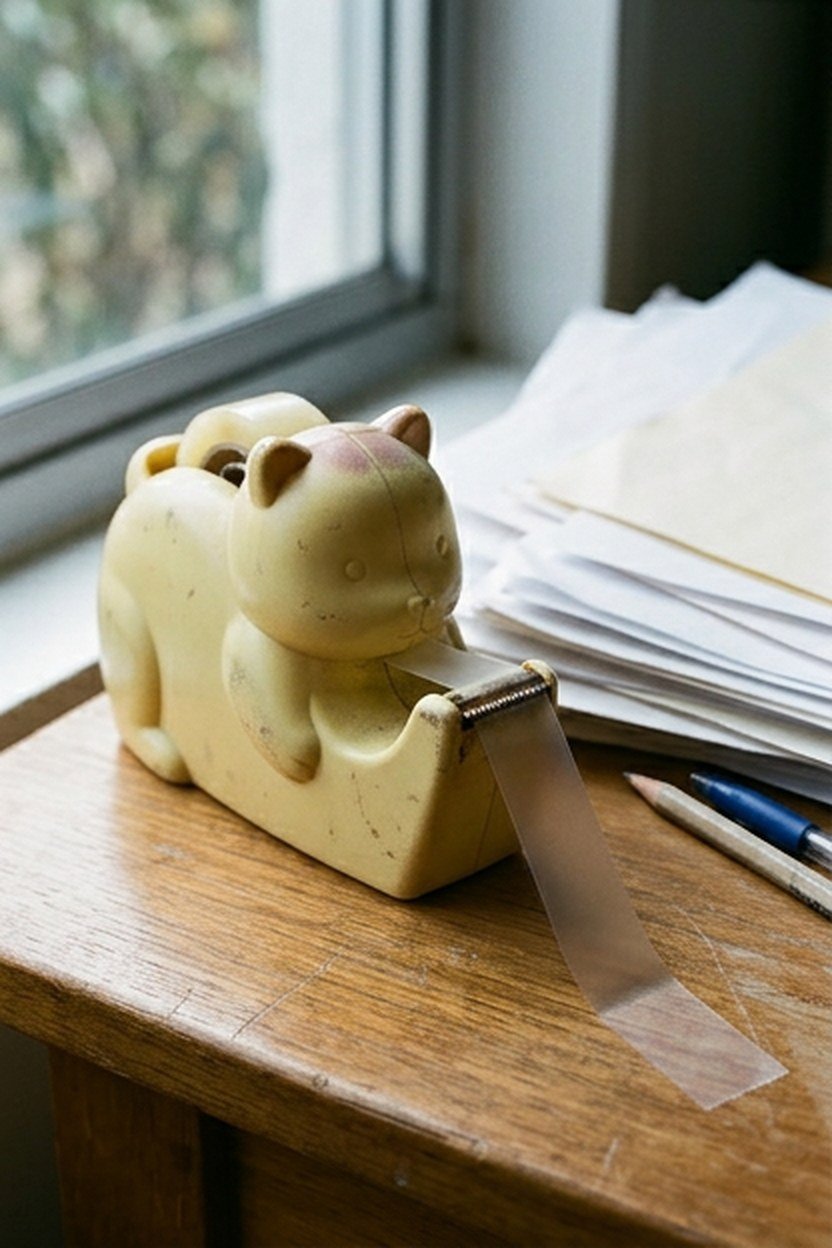
A character shaped tape dispenser holds a standard tape roll inside a rounded pastel shell with a small molded face on the front panel. The tape cutter edge is usually a soft serrated plastic rather than sharp metal, a genuine safety improvement for a desk shared with kids doing homework nearby. Most dispensers hold the common three quarter inch width tape rather than wider packing tape rolls.
Weight underneath the dispenser keeps it from sliding across the desk when you pull tape off with one hand, a detail cheaper versions sometimes skip in favor of a lighter, less stable shell. Test this by pulling tape firmly before buying if you can, or check reviews mentioning stability if ordering online. A dispenser that slides every time defeats its own purpose.
The plastic shell holds color well over time with minimal fading, since tape dispensers typically live in shadier desk positions than sun exposed items like monitor stands or file sorters near a window. This makes the dispenser one of the lowest maintenance pieces on this list. A quick wipe every few months is really all it needs.
Choosing Tape Width For Actual Desk Tasks
Standard desk tape in the three quarter inch width handles paper repairs, light wrapping, and craft projects without issue. Only step up to a wider dispenser built for packing tape if you regularly ship packages from your home office, since the wider dispensers take up noticeably more desk space for a width you might use only occasionally. Most desk workers never actually need that wider format.
Keep a spare tape roll in a nearby drawer rather than on the desk surface itself, so running out mid task means a quick reach rather than a shopping trip. This small habit prevents the annoying moment of an empty dispenser interrupting a wrapping or repair job. Buying tape in multi packs also works out cheaper per roll than single purchases.
10. Pastel Stackable Storage Cubes With Lids
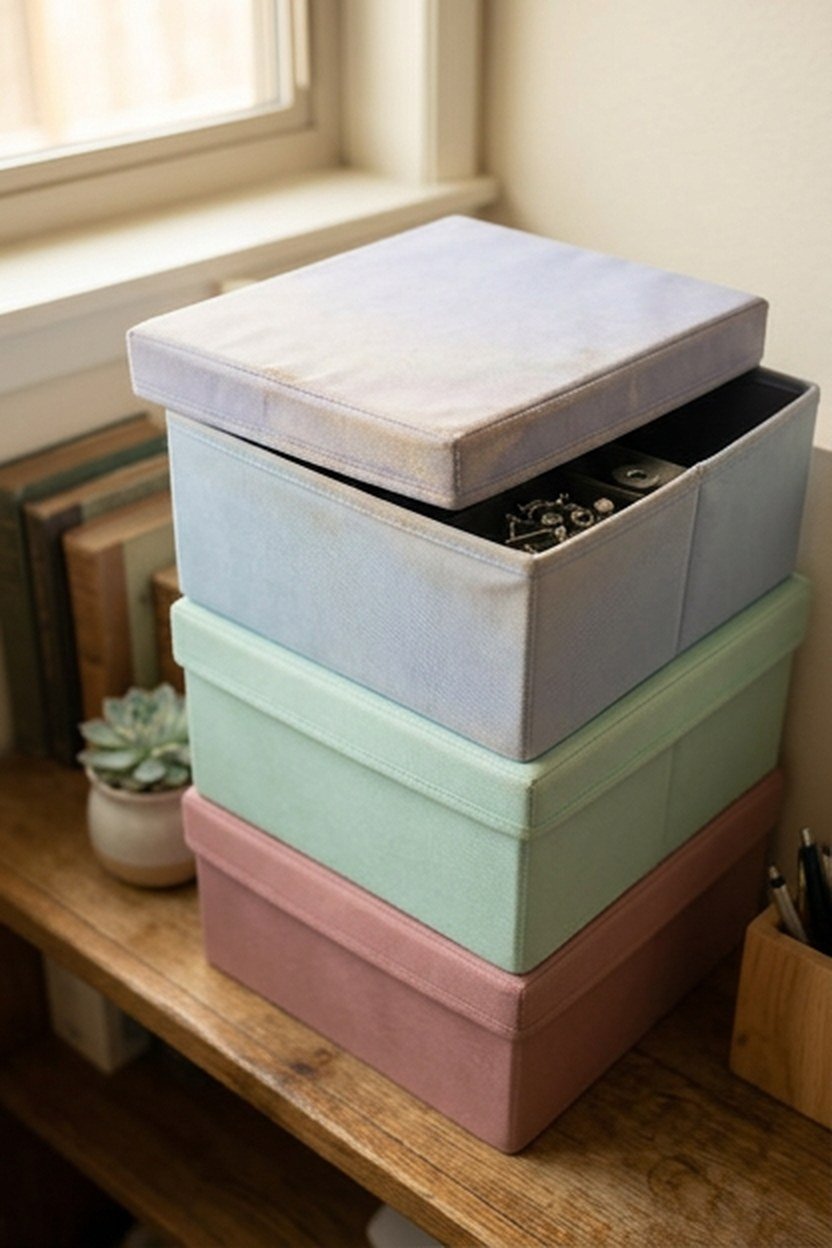
Stackable storage cubes in soft pastel tones give you modular storage that grows with your desk needs rather than committing to one fixed layout. Each cube typically measures about four inches per side with a lid that clicks shut, and the cubes interlock slightly at the corners to prevent a tall stack from sliding apart. Colors usually come as a set of three to five different pastels rather than all matching, which lets you sort visually by color instead of by label.
I use mine for small hardware, thumb drives, and spare cables that do not belong loose in a drawer but are too small to justify a dedicated organizer. The lids matter more than they first appear to, since an open cube collects dust and stray desk debris over time in a way a lidded one avoids entirely. Buy the lidded version even if it costs a few dollars more than an open equivalent.
The plastic shell can develop very faint surface fading on the topmost cube if that stack sits under direct light for extended periods, an even and gradual lightening rather than a spot or blemish. This kind of fading is purely cosmetic and does not weaken the plastic or the lid mechanism. Rotating cubes within the stack occasionally keeps the fading even across all of them.
Building A Stack That Will Not Tip
Stack heavier cubes toward the bottom regardless of color coordination preferences, since a light empty cube under a heavier full one creates real tipping risk. Test the stability of your specific stack by giving it a gentle nudge before finalizing the arrangement, particularly if your desk sees any vibration from a nearby door or hallway traffic. A stable base matters more than a perfect color gradient.
Limit stacks to four cubes high on a standard desk unless the cubes specifically advertise a locking mechanism between layers. Taller stacks without locking tend to sway during normal desk use even when they seem stable at rest. Splitting a tall stack into two shorter stacks side by side is usually the safer choice.
11. Rounded Pastel Desk Organizer Caddy With Compartments
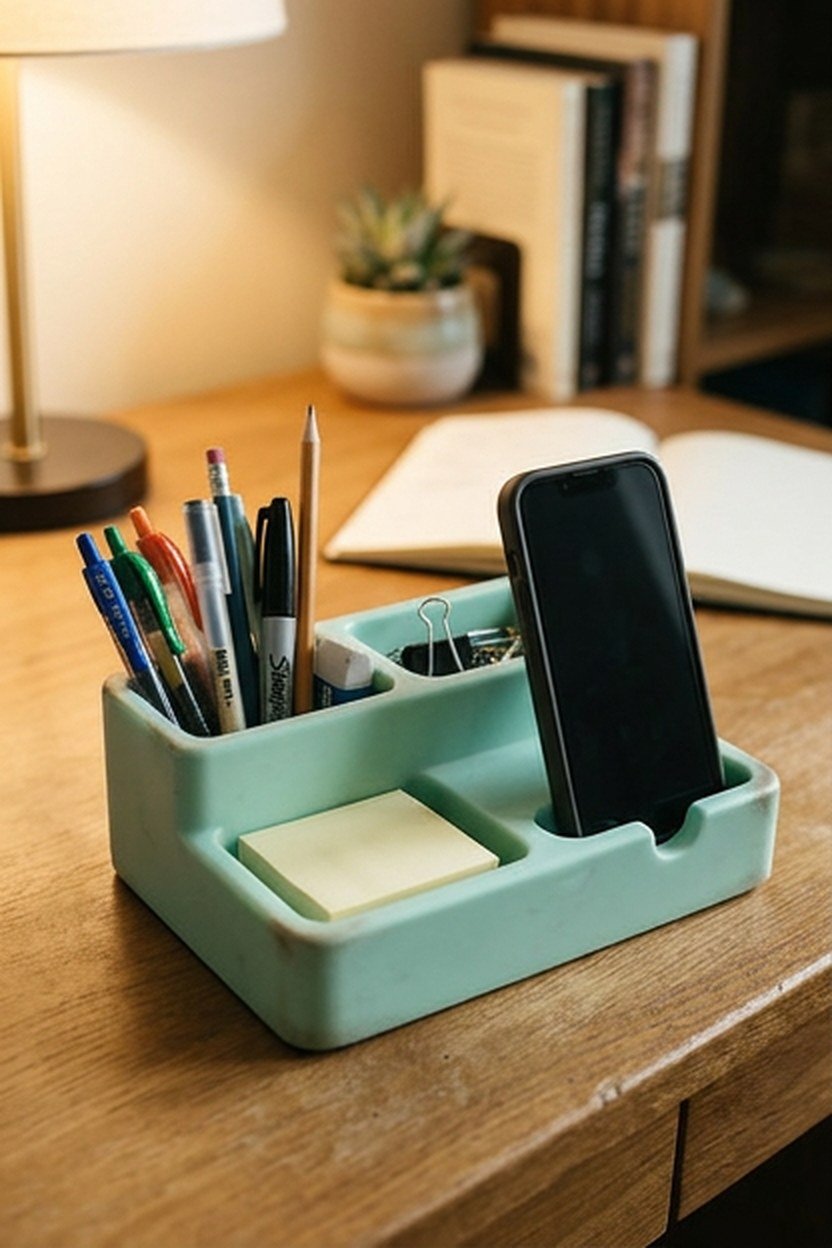
A multi compartment desk caddy combines several small bins into one molded pastel tray, typically offering four to six sections of varying sizes for pens, sticky notes, paper clips, and a phone slot. The rounded exterior shape is the kawaii signature here, while the interior compartments stay fairly standard and functional. This single piece often replaces three or four smaller organizers scattered across the desk.
Consolidating into one caddy like this genuinely reduces visual clutter compared to the same number of items spread across separate containers, since your eye has fewer distinct shapes to process at a glance. The trade off is flexibility, since a fixed caddy cannot be rearranged the way separate pieces can if your storage needs shift over time. Consider your storage needs as fairly stable before committing to this all in one approach.
The larger footprint of a combined caddy means measuring your desk space matters even more than with single purpose organizers. A caddy that looks compact in photos can still eat up a third of a small desk’s usable surface once it arrives. Measuring your actual desk before ordering avoids that unpleasant surprise.
One Big Caddy Versus Several Small Pieces
A single caddy works best for desks under 36 inches wide, where consolidating saves precious surface area compared to scattering several individual organizers. Larger desks can afford the flexibility of separate pieces without sacrificing usable space, and separate pieces let you swap or upgrade one organizer without replacing the whole system. Consider your desk width as the deciding factor rather than personal preference alone.
Measure the caddy’s full footprint against your desk before buying, not just the compartment capacity advertised in the listing. Photos taken from above tend to make these caddies look smaller relative to a full desk than they actually are in person. A simple tape measure check against the listed dimensions avoids that mismatch.
12. Pastel Whiteboard With Rounded Kawaii Frame
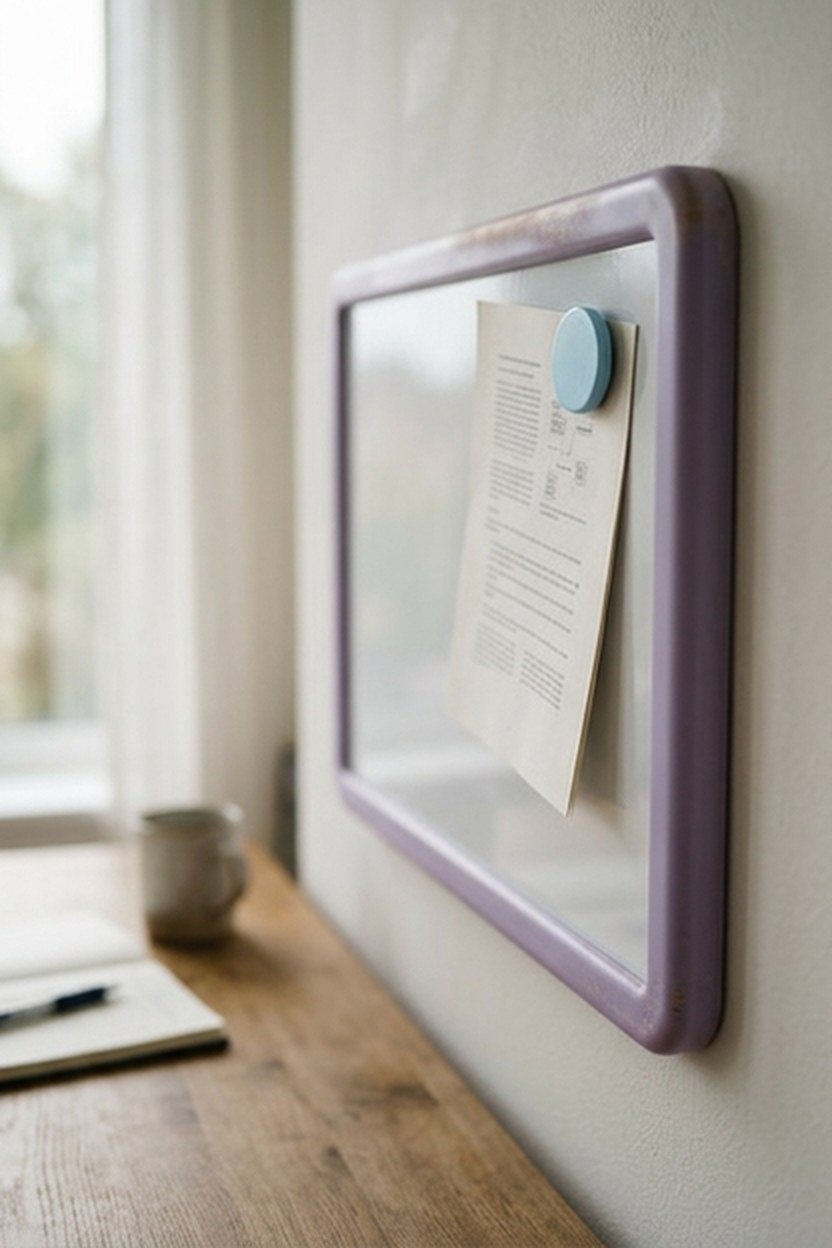
A small pastel framed whiteboard mounted above or beside your desk gives you a quick capture surface for reminders that do not belong on paper. The frame usually comes in a rounded pastel shell around a standard magnetic whiteboard surface, often sized around twelve by sixteen inches for a desk mounted version. Magnetic backing lets you use small pastel magnets to pin printed notes alongside written reminders.
Dry erase markers matched to your palette complete the look, though any standard dry erase marker works fine functionally. The whiteboard surface will show faint ghosting from old writing after months of heavy use, a light residue that a proper whiteboard cleaner removes rather than a permanent stain from a specific mark. Wipe with actual whiteboard spray rather than a dry cloth alone to prevent that ghosting from building up over time.
Mounting hardware varies between adhesive strips and actual wall anchors, and the adhesive option works fine for lighter boards but risks falling in humid rooms over time. Choose wall anchors if your desk sits in a bathroom adjacent office or anywhere with regular humidity swings. The extra ten minutes of drilling is worth avoiding a board crashing down later.
Whiteboard Versus Digital Reminders
A physical whiteboard forces a glance every time you sit down, which beats a digital reminder app that requires you to actively open it. That said, a whiteboard only helps if you actually update it regularly, since a board covered in outdated reminders becomes visual noise rather than useful information. Set a specific day each week to wipe and refresh it.
Reserve the whiteboard for short term reminders measured in days rather than long term goals measured in months. Long term goals belong in a planner or digital document where they will not get erased accidentally during a quick wipe down. Treating the board as disposable in this way keeps it genuinely useful.
13. Kawaii Desk Fan With Pastel Blades
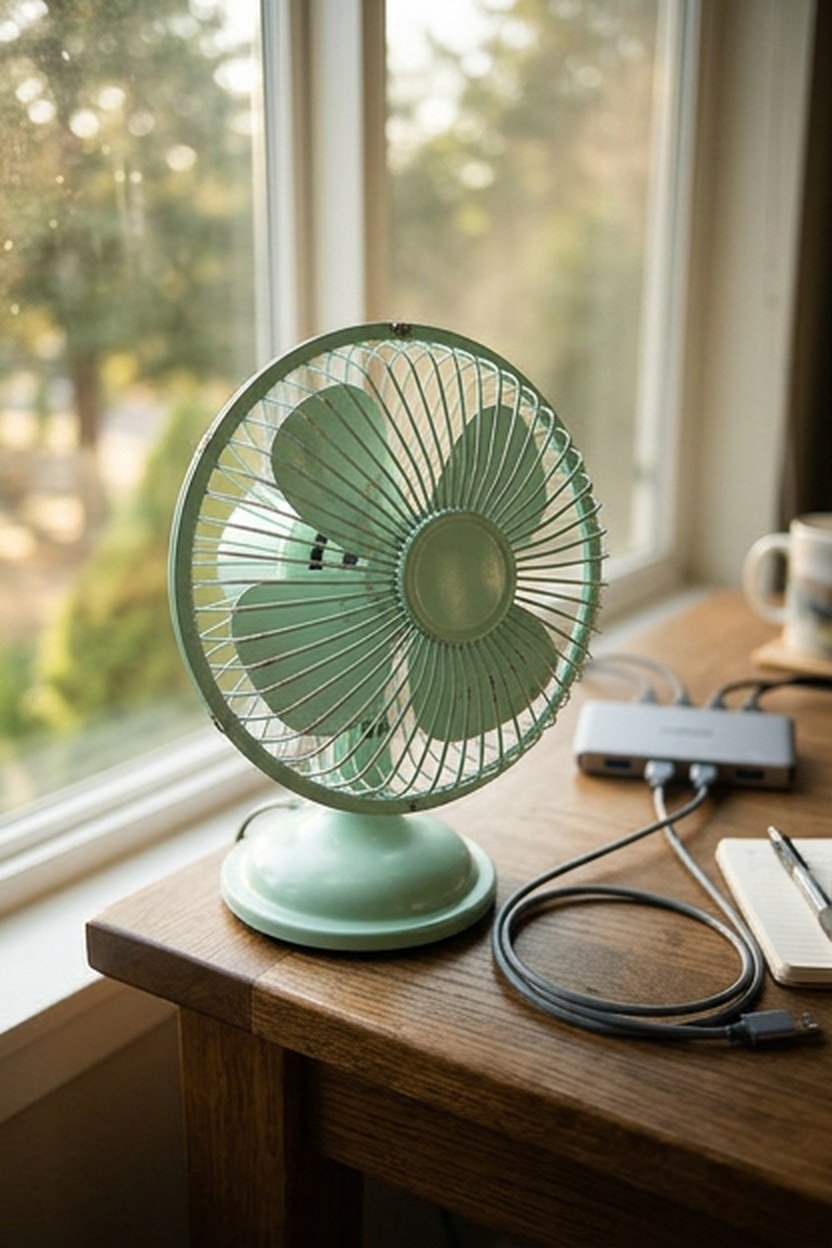
A small kawaii desk fan brings personal airflow to a warm office corner while matching the rest of your pastel setup instead of standing out as an obvious appliance. Blade guards are usually molded in the same rounded style as the rest of the fan body, and most desk sized versions run quiet enough for video calls at the lowest speed setting. USB power is common on this style, which means no separate outlet is needed if your desk already has a powered hub.
Test the noise level at each speed setting before committing to using it during calls, since even a quiet sounding fan can pick up on a sensitive microphone in ways your own ears do not notice in the room. I keep mine on the lowest setting during calls and bump it up during focused solo work when noise matters less. A quick test call with a colleague reveals more than listening on your own ever will.
The plastic housing can pick up a very light dust film on the blade edges over weeks of continuous use, which wipes away easily with a dry cloth and is simply a sign of normal air circulation rather than any kind of wear or damage. A quick monthly wipe keeps the blades looking fresh without needing any disassembly. This is standard maintenance for any small fan, kawaii styled or not.
Placement For Airflow Without Paper Chaos
Position the fan so airflow crosses your body rather than blasting directly onto loose papers on your desk, since a strong fan aimed at paper stacks creates its own kind of chaos. Angle it slightly toward your torso rather than straight at your face or your desk surface for the most comfortable and least disruptive airflow. A slight downward tilt also reduces the noise reaching your ears directly.
Weigh down any loose papers with a small paperweight if the fan must sit near your document tray. This small addition prevents the minor but consistent annoyance of chasing blown papers across the floor throughout the day. A pastel paperweight also fits the desk’s overall look without standing out.
14. Pastel Rolling Storage Cart With Drawers
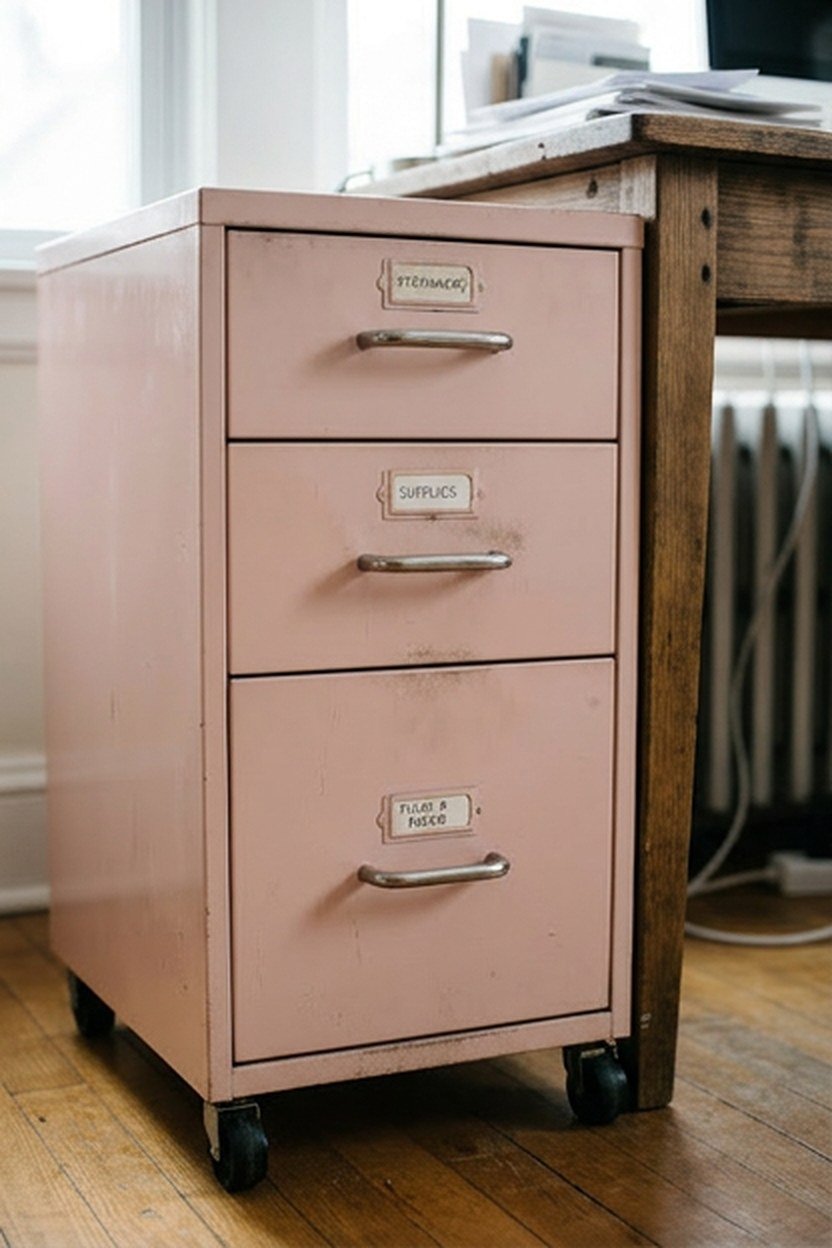
A rolling storage cart in soft pastel tones adds mobile storage you can tuck under the desk or pull out for access, typically offering three to four drawers of graduated depth. The wheels let you reposition the whole cart without lifting it, which matters if your desk setup changes between solo work and video calls where you want less visible clutter behind you. Most carts in this style are built from a lightweight resin or metal frame with a pastel powder coat finish.
Drawer depth varies by tier, with the bottom drawer usually deeper for bulkier supplies and the top drawer shallow enough for small items like paper clips or sticky notes. Label each drawer front with a small pastel tag so you are not opening three drawers to find one item. The powder coat finish shows a subtle sheen change at the drawer pull area after months of daily gripping, a smooth wear pattern rather than a chip or scratch.
Check the wheel lock feature before buying if your floor has any slope or if the cart will sit near a doorway with foot traffic, since an unlocked cart on the wrong surface can drift over time. Locking wheels cost only a little more and prevent an annoying midday drift across the room. Test the lock mechanism in the store or check reviews closely if buying online.
Cart Placement That Keeps Cords Clear
Position the cart’s rolling path away from any floor mounted power strips or cable runs, since wheels catching on a cord is both an annoyance and a minor safety issue over repeated use. Route cables along the wall or under a cord cover rather than across the open floor where the cart travels. This simple routing choice prevents a tripping hazard as much as a cart snag.
Test the cart’s full extended drawer reach against your desk’s under space before assuming it tucks away cleanly. Some carts extend further than expected once a drawer is pulled fully open, which can bump into desk legs or a chair. A quick measurement before delivery day saves an awkward furniture rearrangement.
15. Pastel Kawaii Letter Tray Stack For Incoming Mail
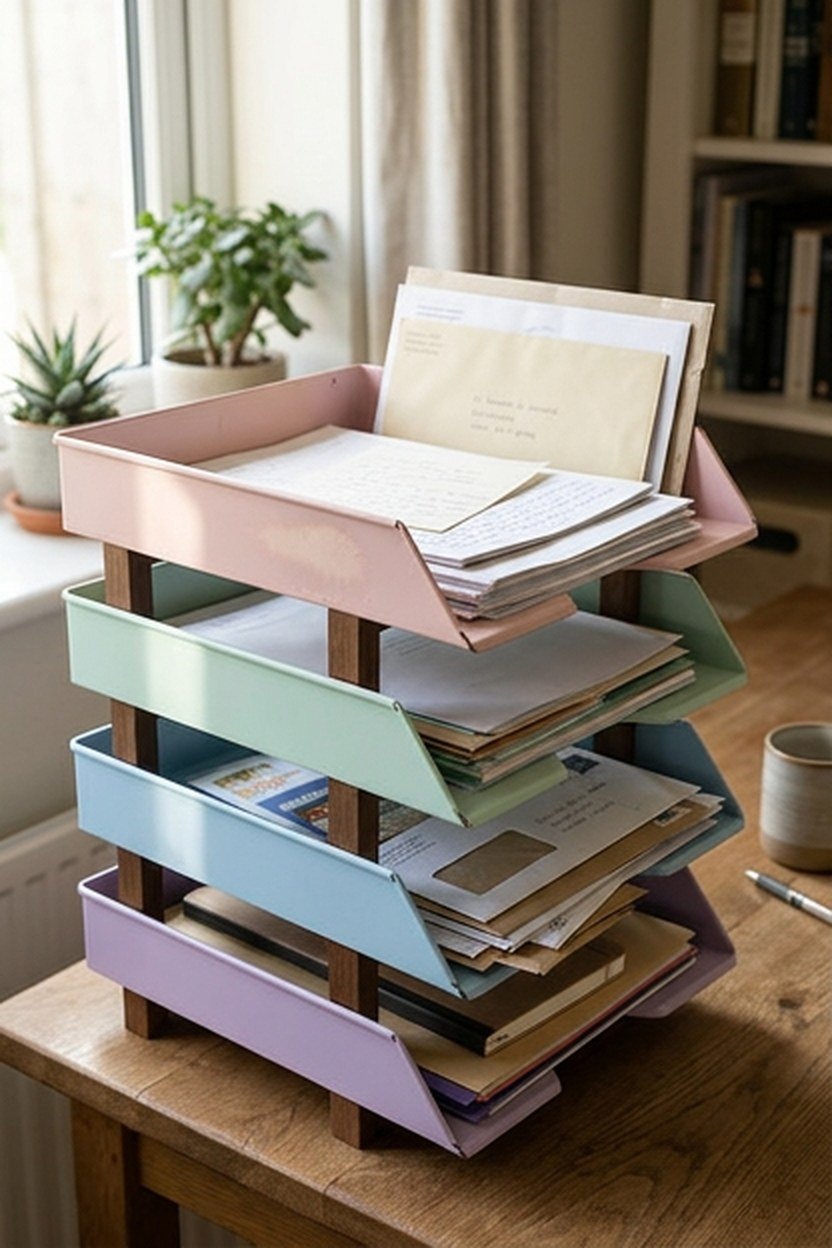
A stacked letter tray system in pastel tones sorts incoming mail and documents into clear stages, typically labeled something like inbox, to file, and to shred. The trays stack on short pastel risers rather than sitting flush, which keeps air circulating and prevents the bottom tray from feeling buried under the others. Standard sizes fit letter paper without folding, which matters for anything you need to file away intact later.
Processing the trays on a set schedule, I use once a week, keeps the stack from becoming a permanent paper graveyard instead of an active sorting system. An unprocessed letter tray defeats its entire purpose within a month, becoming just another flat surface where paper accumulates. Set a recurring reminder if your natural habits do not already include a weekly paper review.
The tray material holds up well against paper handling over time, though the very top tray can show a faint sun faded patch if it sits beneath a window, an even lightening across the surface rather than a mark or stain. Rotating the stack occasionally evens out that exposure if it bothers you visually. It never affects how well the trays hold paper.
Building A Realistic Paper Processing Habit
Match the number of trays to stages you will actually use rather than buying the largest available stack out of habit. Three trays used consistently beat five trays where two sit permanently empty because the sorting system was more ambitious than your actual paper volume requires. Start smaller and add a tray later if you genuinely need one.
Shred sensitive documents the same day they move into the shred tray rather than letting them accumulate, since a full shred tray sitting for weeks defeats the security purpose entirely. Keep the shredder within reach of this specific tray to make that immediate habit easier to maintain. A shredder more than a few steps away almost guarantees the tray fills up instead.
What These Organizers Actually Cost Over A Full Setup
Budgeting for a full kawaii desk setup means thinking beyond the price of any single piece, since seventeen individual purchases add up faster than expected. A basic starter set covering just the essentials, pen holder, file sorter, and cable box, typically runs between thirty and sixty dollars total depending on brand and material quality. A complete setup covering everything on this list can run past two hundred dollars if you buy premium ceramic and resin pieces throughout.
Spread purchases across a few months rather than buying everything at once, both for your budget and for giving yourself time to see what you actually use daily. I regret at least two impulse purchases from my own setup that looked cute but never earned a permanent spot on my desk. Waiting reveals which organizational problems are real and which ones you imagined while browsing online.
The table below breaks down rough price tiers so you know what to expect before shopping. Higher tiers generally buy sturdier materials rather than just fancier decoration. Match your tier to how heavily you actually handle your supplies each day.
| Price tier | What you get | Typical materials |
|---|---|---|
| Budget ($5 to $15) | Basic single function pieces | Molded plastic |
| Mid range ($15 to $30) | Multi compartment or ceramic pieces | Resin, ceramic |
| Premium ($30 and up) | Larger furniture pieces like carts or stands | Metal frame, thick resin |
Common Mistakes When Building A Kawaii Desk Setup
Buying every piece in a matching set without considering your actual workflow is the mistake I see most often. A coordinated set photographs beautifully, but if half the pieces do not match how you actually work, you end up with expensive clutter instead of a functional desk. Start with the two or three organizers that solve your biggest current annoyance, then expand from there once you know what sticks.
Overcrowding a small desk is the second common trap, especially once someone gets excited about a full seventeen piece list like this one. Not every desk needs every organizer covered here, and a small desk crammed with too many pieces creates the exact clutter problem you were trying to solve in the first place. Measure your available surface honestly before adding a new piece, and remove something if the desk starts feeling tight.
Ignoring material quality in favor of the cutest design is the third mistake worth avoiding. A beautiful pastel organizer made from thin, flexible plastic will crack or warp within months of daily handling, while a slightly plainer piece in solid resin or ceramic lasts for years. Read material descriptions carefully rather than shopping by photo alone.
Spotting Low Quality Pieces Before You Buy
Check reviews specifically for mentions of the material feeling flimsy or cracking early, since photos alone cannot reveal build quality. A pattern of complaints about a specific weak point, like a hinge or a stacking lip, tells you more than a five star average rating with vague praise. Spend the extra few minutes reading a handful of critical reviews before adding anything to your cart.
Favor sellers who list specific material names like ABS resin or stoneware ceramic over vague terms like premium plastic, since specificity usually signals a manufacturer who stands behind their material choices. Vague descriptions often hide a lower quality material the seller would rather not name directly. Ask in the listing’s question section if the material is not specified anywhere.
Conclusion
Building a pastel kawaii desk setup works best as a gradual process tied to real problems rather than a single big purchase chasing an aesthetic. Start with whichever organizer on this list solves your most annoying daily friction point, whether that is loose pens, tangled cables, or a mail pile that never gets processed. Add pieces slowly, checking that each one earns a permanent spot before moving on to the next.
The seventeen options covered here range from a four dollar pen holder to a full rolling storage cart, which means this style scales to almost any budget and any desk size. Prioritize material quality and actual daily function over matching every color perfectly, since a desk that works well will always look better in practice than one that only works well in photos. Your future self reaching for a pen that is actually where it belongs will appreciate the investment.
Frequently Asked Questions
Are kawaii desk organizers more expensive than regular office organizers? Kawaii pieces typically run a few dollars more than plain equivalents due to the molding detail and pastel finishes involved. The gap narrows in mid range pieces and mostly disappears at the budget tier.
Will pastel colors show dirt and fingerprints more than darker organizers? Matte pastel finishes hide light dust and fingerprints better than glossy dark plastic, which shows every smudge under office lighting. Glossy pastel finishes do show fingerprints more readily, so matte is the safer choice.
Can I mix kawaii organizers with a more minimalist desk setup? Yes, choosing two or three pastel pieces as accent organizers within an otherwise neutral desk works well and avoids an overwhelming amount of color. This approach also costs less than committing to a full themed setup.
How do I keep resin organizers from fading in sunlight? Position sun sensitive pieces away from direct window light where possible, or rotate them occasionally so any fading stays even rather than concentrated on one face. Fading is gradual and cosmetic rather than something that affects function.
Do these organizers work for a shared family desk rather than a personal one? Color coding by family member using different pastel tones works well for a shared desk, since kids especially respond to visual sorting systems better than labeled text alone. Keep each person’s zone clearly separated to avoid mixed up supplies.
What is the single most useful piece to start with on a budget? A rounded file sorter or a cable management box typically solves the most visible clutter problem for the lowest cost. Both address a mess that is highly visible daily, which makes the improvement immediately noticeable.