
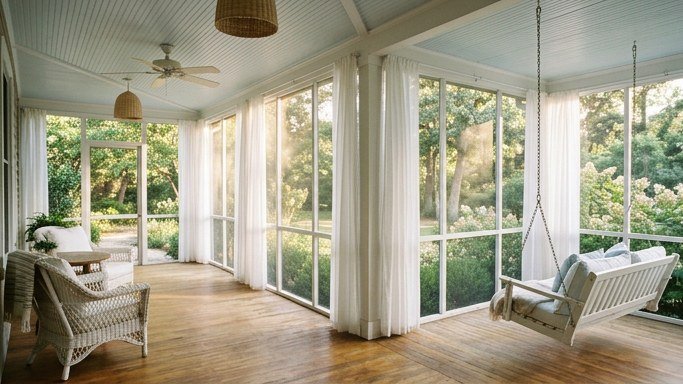
A white screened porch works because it borrows light from every direction at once, the ceiling, the mesh walls, the floor, and bounces it around a space that would otherwise sit in permanent half shade. Painted white, the whole structure disappears a little, leaving mostly the view and the breeze. That disappearing act is the entire appeal, and it is surprisingly easy to undo with the wrong furniture or the wrong finish.
My own porch faced the wrong way for direct sun and stayed gloomy no matter how much I cleaned the screens, until I repainted the beadboard ceiling a bright white and swapped a dark wicker set for pale painted furniture. The room did not get any bigger and the screens let in exactly the same light as before. It simply stopped absorbing every bit of that light before it reached my eyes.
Below are fifteen tips for decorating a white screened porch so it stays airy through every season rather than only on the one bright afternoon it gets photographed. The first few deal with the big surfaces that set the tone. The rest are the furnishing and finishing choices that keep the room feeling like a retreat rather than an afterthought.
Why White Works Specifically On A Screened Porch
A screened porch sits in a permanent state of filtered light, since the mesh itself softens and slightly dims whatever sun reaches it before that light ever touches a surface inside. White reflects the largest share of whatever light does get through, which matters enormously here in a way it does not in a fully glazed sunroom receiving direct, unfiltered sun. Darker colours simply absorb light that is already limited.
The second reason is that white minimises the visual weight of the structure itself, the posts, the rafters and the screen frames a fully enclosed room does not have. A porch has more visible structure per square metre than most rooms in the house, and painting it white lets the eye pass through toward the garden rather than stopping on every post and beam. Colour on the structure draws attention to the very thing you want to disappear.
The third reason is durability in a genuinely tough environment. A porch faces temperature swings, damp mornings and blowing dust in a way indoor rooms never do, and a good exterior grade white paint handles that cycling far better than most decorative colours, which show fade and chalking noticeably faster. White ages more gracefully outdoors, and touch ups blend in rather than standing out as a visible patch.
| Surface | White treatment | Why it matters here |
|---|---|---|
| Ceiling | Bright white, often beadboard | Bounces light down into the seating |
| Structure, posts, rails | Semi gloss exterior white | Recedes, lets the view read clearly |
| Floor | Pale painted or whitewashed | Reflects light upward, feels cooler |
| Screens and frames | White or very pale frame colour | Frame disappears against the sky |
| Furniture | White or bleached natural tones | Stays light even in shadowed corners |
What To Decide Before You Paint Or Furnish Anything
Test the existing light honestly before committing to an all white scheme, since a porch that gets strong afternoon sun handles pure white differently from one that sits in permanent dappled shade under mature trees. A shaded porch often benefits from a slightly warmer off white rather than a stark, cool white, which can read as flat and grey without enough sun to activate it. Sit out there at the hour you actually use the space and judge the light then.
Then check what the white will sit against, since the garden, the sky and any adjacent house walls all become part of the porch’s real colour palette whether you plan for it or not. A very cool white against warm brick can look slightly clinical, while the same white against greenery generally reads as fresh and clean. Bring a paint sample outside and hold it against these real backgrounds before buying in bulk.
Finally, decide how much maintenance you genuinely want to take on, since white shows dirt, pollen and insect marks more visibly than a mid tone would, particularly on screens and lower rails. A porch used daily through pollen season needs a wipe down routine built into the plan from the start, not treated as an afterthought once the yellow dust appears. Choose a paint finish, generally satin or semi gloss, that makes that wiping down genuinely easy.
1. Paint The Ceiling A Bright White With A Hint Of Blue
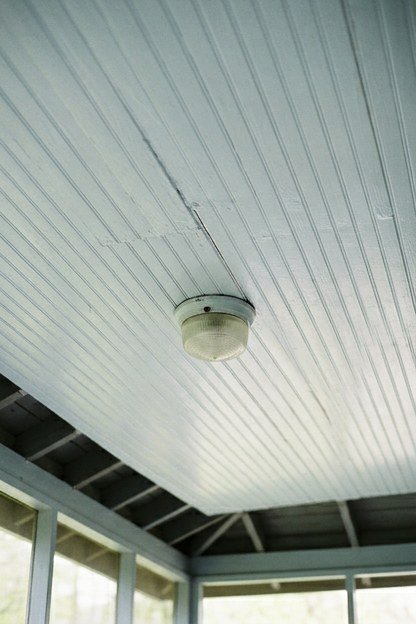
A painted ceiling is the single change that does the most to lift a screened porch, and the traditional choice of a very pale blue white, often called haint blue in older porch traditions, does something a flat stark white cannot. It reads as sky reflected downward, extending the sense of openness the screens already provide. Beadboard paneling amplifies the effect further, since its grooved lines catch light differently along their length.
Choose a finish with at least a satin sheen for the ceiling, since a fully flat finish shows water staining and insect marks far more readily in a space exposed to genuine weather. Satin wipes clean with far less effort and still reads as a soft, non reflective white from below. This small specification choice saves real maintenance time over the years the ceiling is in place.
Light the ceiling from below with warm fixtures rather than leaving it to daylight alone, since a porch used into the evening loses the benefit of a pale ceiling entirely once the sun goes down. A row of simple flush mounted fixtures or a single ceiling fan with an integrated light keeps that lifted feeling going after dark. The blue white tone still reads beautifully under warm bulb light.
What It Costs
Painting an existing beadboard ceiling costs relatively little in materials, since a gallon or two of quality exterior paint covers most standard porch ceilings, though the labour of working overhead for an extended period should not be underestimated. Renting or borrowing a proper platform rather than balancing on a stepladder makes this a considerably safer and faster job. Two coats generally give the most even, opaque finish.
Installing new beadboard where none currently exists costs meaningfully more and is a bigger project, generally worth pairing with any planned porch renovation rather than undertaken purely for the ceiling alone. The visual payoff is significant, but so is the added labour of a full material installation over simply repainting an existing surface. Weigh both against the size of the ceiling before deciding.
2. Choose White Painted Wicker Over Dark Natural Rattan
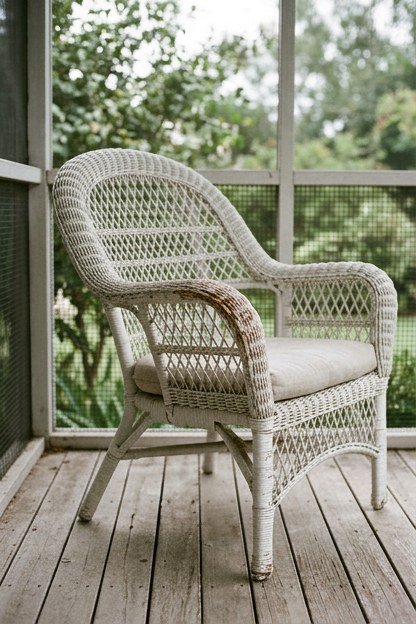
Furniture material makes an enormous difference to how airy a porch actually feels, and white painted wicker achieves something dark natural rattan simply cannot, letting the eye see through the woven gaps to the light behind rather than registering a solid dark mass. This matters especially on a porch with limited floor space, where every piece of furniture either opens the room up or closes it down visually. Choose the open option whenever the two are close in price.
Choose pieces with a genuinely open weave pattern rather than a tightly packed one, since the openness of the weave is doing real visual work here, not just the paint colour. A chair with large visible gaps between the woven strands reads as considerably lighter than one with a dense, solid looking weave, even in the identical white finish. Hold two samples side by side before deciding.
Check that the paint used is a proper exterior grade formulated for wicker specifically, since standard interior paint chips and peels quickly on the flexing, curved surfaces that wicker furniture presents. A quality exterior wicker paint moves with the material as humidity changes rather than cracking at the joints where the reeds bend. Ask specifically for this rating before buying.
How To Judge It Before You Buy
Look at the piece from several angles in the actual porch light rather than under bright retail lighting, since wicker’s open structure means the play of light and shadow through it changes considerably depending on the direction and strength of the light source. What looks airy in a showroom can look surprisingly heavy in dappled afternoon shade. A quick photo on your phone helps compare the two settings.
Sit in any chair for several minutes rather than judging by appearance alone, since wicker seating varies enormously in actual comfort despite looking similar from a distance. A cushion helps, but the underlying frame and weave tension should feel supportive on their own before any cushion is added. A wobbly frame rarely improves once a cushion is added on top.
3. Use A Whitewashed Or Painted Wood Floor
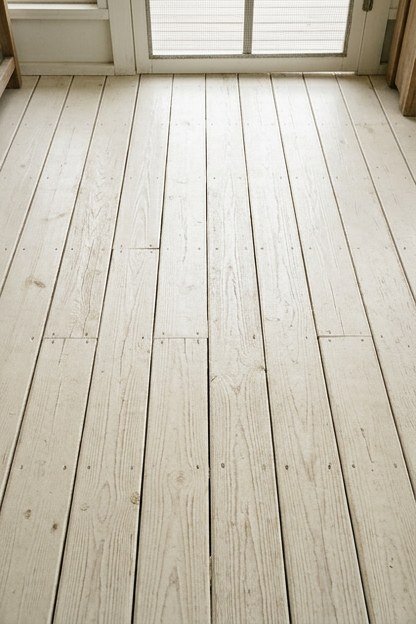
A painted or whitewashed floor reflects light upward in a way a stained dark wood floor never will, and on a screened porch that upward bounce genuinely changes how bright the whole space feels, since light entering through the screens above now has a pale surface to reflect off rather than being absorbed downward. This single change affects the entire room’s brightness more than most people expect. Even a modest sized porch shows a real difference.
Choose a floor paint specifically rated for exterior or porch use, generally a porch and floor enamel, since interior floor paint lacks the flexibility and abrasion resistance to survive foot traffic, furniture movement and weather exposure over multiple seasons. These specialised paints cost more per gallon but last considerably longer under genuine porch conditions. The extra cost per gallon pays for itself in fewer repaints.
Consider a whitewash technique over a solid opaque paint if the existing wood grain is attractive and worth preserving, since whitewashing lets some of that natural grain and texture show through a translucent white layer rather than fully obscuring it. This suits a porch with good quality existing timber that would look like a shame to fully hide under solid paint. Test a small hidden patch first to see how the grain responds.
What Goes Wrong
A painted floor without a proper primer coat will show wear patterns and traffic paths within a single season, particularly at the entry point and around frequently used seating. Two coats of a dedicated floor primer before the topcoat is not an optional step to skip, however tempting that shortcut looks on a tight schedule. Skipping it is the single most common cause of early failure.
Skipping a non slip additive in the final coat creates a genuinely dangerous surface once the floor gets wet from rain blowing through the screens or from wet feet coming in from the garden. A small amount of texture additive mixed into the final coat solves this without meaningfully changing the appearance of the finish. Most hardware stores stock this additive as a standard item.
4. Add A Ceiling Fan With White Blades
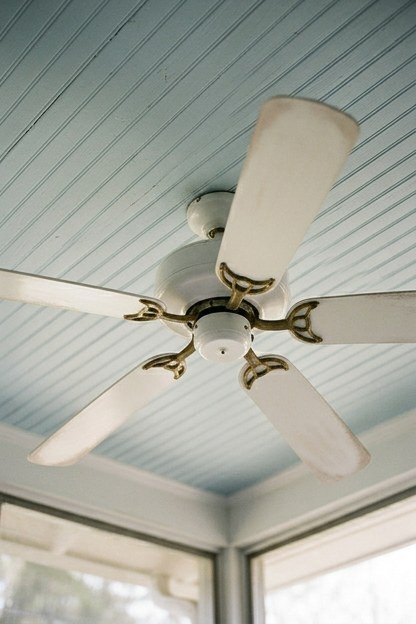
A ceiling fan does more for actual comfort on a screened porch than almost any decorative choice, since moving air makes a humid, still afternoon feel noticeably cooler even before you add any other cooling measure. White blades against a white ceiling nearly disappear from view, keeping the fan from becoming a visual distraction against the pale backdrop above. Dark blades would stand out sharply by comparison.
Choose a fan rated specifically for damp or wet outdoor locations rather than a standard indoor model, since a screened porch experiences genuine humidity and occasional wind driven rain that an indoor rated motor is not built to handle. This specification matters for longevity far more than blade colour or style. Check the rating label before adding it to the cart.
Position the fan centrally over the main seating area rather than at the geometric centre of the entire porch if those two points differ, since the goal is comfortable airflow exactly where people actually sit rather than technically centred placement that might miss the seating entirely. Mark the seating layout on the ceiling before drilling anything. Chalk the outline of the seating group directly onto the floor first.
What It Costs
A quality wet rated ceiling fan with white blades costs meaningfully more than a basic indoor fan repurposed for outdoor use, but the difference in expected lifespan justifies that gap considerably. A fan rated for the wrong environment can fail within a single humid season, making the cheaper option the more expensive choice over time. Spend the extra amount up front and avoid the replacement.
Installation may require an electrician if the porch lacks an existing ceiling fan rated junction box, since a standard light fixture box is not rated to support a fan’s ongoing weight and vibration. Confirming this before purchasing the fan itself avoids an awkward and costly surprise partway through installation. A quick call to an electrician settles the question early.
5. Layer White And Natural Textiles For Warmth
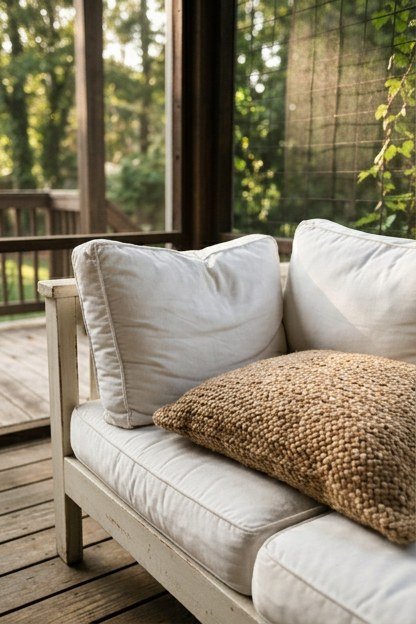
An all white scheme risks feeling slightly clinical without the layer of texture that fabric provides, and cushions, throws and a woven rug in white paired with natural fibres like jute or linen add warmth without introducing colour that competes with the airy effect. This layering is what separates a considered porch from one that simply happens to be painted white. The fabric layer is doing real design work here.
Choose outdoor rated fabric specifically for any cushion or textile that stays out permanently, since indoor fabric in white shows mildew spotting within weeks of genuine outdoor humidity exposure, a problem that ruins the entire look far faster than any other single mistake on this list. Solution dyed acrylic in white holds its colour and resists that spotting considerably better than any indoor alternative. Look for the term specifically on the product label.
Mix textures deliberately rather than choosing everything in an identical smooth finish, since a nubby linen cushion beside a smooth cotton one beside a chunky knit throw reads as considered and layered, while everything in the same texture reads as flat regardless of how correct the colour is. Texture is doing real work here that colour alone cannot. Aim for at least two distinct textures in any grouping.
When To Skip It
Skip heavy textiles entirely in a porch with genuinely high humidity and poor airflow, since fabric in that environment struggles to dry out fully between uses and becomes a mildew risk regardless of how well rated the material is. Prioritise ventilation improvements first before adding fabric layers in a problem space like this. Fabric will only mask the underlying airflow problem.
Consider washable slipcovers over fixed upholstery if the porch sees heavy seasonal pollen or genuine weather exposure, since the ability to fully remove and wash a cover matters considerably more in this environment than it would for equivalent indoor furniture that never faces these conditions. A removable cover also makes seasonal storage far simpler. Store the covers indoors over winter to extend their life.
6. Choose White Framed Screens Over Standard Aluminium

Standard screen framing often comes in a dull grey or bronze finish by default, and that frame colour sits directly in the sightline every time you look out from inside the porch, subtly darkening the perceived view even when the screen mesh itself is perfectly clean and clear. White framing removes that visual interruption almost entirely against a bright sky. The difference is most obvious at midday.
Choose fibreglass mesh in a pale or white toned weave rather than the standard charcoal grey mesh most commonly installed by default, since charcoal mesh, while genuinely better at reducing glare and reflection for viewing out, does darken the overall feel of the porch from inside in a way that suits some settings better than others. Consider your priority between glare reduction and overall brightness before choosing. A sample panel viewed from your usual seat settles it quickly.
Match the screen frame colour to the surrounding trim rather than treating it as a separate decision, since a mismatched frame colour against freshly painted white trim looks like an obvious oversight rather than a deliberate choice. This is a detail worth specifying explicitly when ordering new screen panels or a full re-screening job. Installers will often default to standard grey unless asked.
How To Judge The Look
Look at screen samples against the actual sky and garden view at different times of day before committing to a frame and mesh colour combination, since morning and evening light change how visible any given frame colour actually appears from a seated position inside. A frame that disappears at midday can suddenly stand out at dusk. Check both times before finalising the order.
Consider the view from outside the porch as well as from inside it, since a screen colour that reads beautifully from your armchair might look considerably different to someone approaching the house from the garden or driveway. Both perspectives matter if the porch is a visible part of the home’s exterior presentation. A short walk around the outside settles the question.
7. Add A Single Statement Piece In A Soft Natural Tone
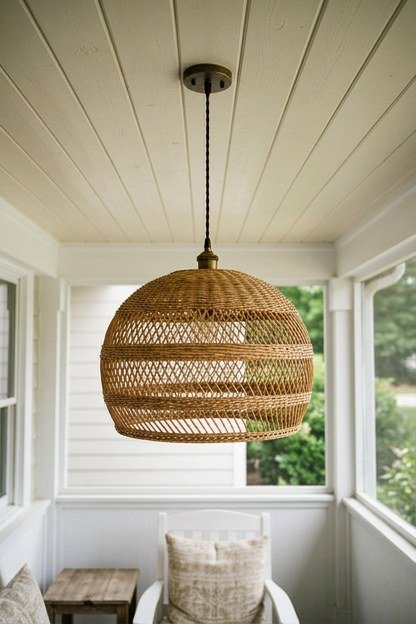
An entirely white and pale natural room needs one grounding element to keep it from feeling untethered, and a single statement piece, a woven pendant light, a large terracotta planter, or a piece of driftwood art, gives the eye somewhere to rest without introducing a competing colour scheme. One piece does this job; several starts to dilute the effect each was meant to have. Choose the single piece you would miss most if it were gone.
Choose a natural material over a painted or synthetic one for this piece specifically, since the contrast between raw, unfinished material and the surrounding white paint is what creates the visual interest here. A rattan pendant, an unglazed terracotta pot or a piece of weathered driftwood all achieve this in a way a painted white object never could alongside an already white room. Raw material against painted surface is the contrast to aim for.
Position it where it catches light well through the day, generally near the main seating area rather than tucked into a corner that rarely gets noticed, since the entire point of a single statement piece is that it gets seen and appreciated regularly rather than existing as an overlooked detail nobody actually looks at. Sit in the main chair and check the sightline before fixing it in place. What looks right from the doorway can sit awkwardly from the seat.
What To Buy First
If choosing between several possible statement pieces, prioritise whichever one serves a genuine function alongside its decorative role, a pendant light that actually illuminates the seating area, or a planter that holds a plant you actually want growing there, since dual purpose pieces earn their place in the room twice over rather than existing purely for appearance. Function first tends to make the better long term choice. A piece earning its keep twice over rarely feels like clutter.
Avoid choosing something too small to actually register as a statement from typical seating distance, since an item that needs to be examined up close to be appreciated fails at its core job in a room meant to be experienced while relaxing rather than inspected closely. Scale the piece to the room rather than to a tabletop display. Step back to the doorway and judge the size from there.
8. Introduce Greenery In White Or Pale Planters
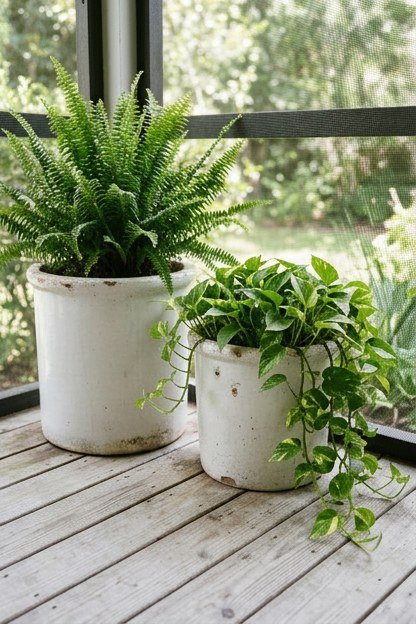
Plants bring the one thing an all white, mostly hard surfaced porch genuinely needs, which is living colour and texture that changes with the seasons rather than staying static year round. White or pale planters let the greenery itself provide all the colour contrast the space needs without introducing a competing decorative palette alongside it. Let the plants carry all the seasonal colour change.
Choose plants suited to the porch’s actual light and airflow conditions rather than whatever looks appealing at the garden centre, since a screened porch sits in an unusual middle ground between full outdoor exposure and indoor conditions that many plants are not naturally suited to. Ferns, palms and trailing pothos generally handle this filtered, humid environment better than plants bred for full sun or fully indoor conditions. Check the plant tag for its light preference before buying.
Vary the planter heights and groupings rather than lining identical pots along one wall, since a mix of a tall floor standing plant, a mid height table plant and a small hanging specimen creates the layered, natural feeling that a single uniform row of pots never quite achieves regardless of how healthy the plants themselves are. Odd numbers generally read as more natural than even ones. Group in threes or fives rather than pairs.
What Goes Wrong
Overwatering is the most common failure with porch plants specifically, since the humid, partially sheltered environment retains moisture longer than either a fully outdoor or fully indoor setting, and a watering schedule copied from an indoor houseplant routine frequently leads to root rot in this in between climate. Check the actual soil moisture before watering rather than following a fixed calendar schedule. A finger pressed an inch into the soil is enough to tell.
The other common failure is choosing plants that outgrow the available space within a single growing season, leaving an awkward oversized specimen crowding a seating area it was never meant to dominate. Research the mature size of any plant before bringing it home, not just its appearance at the point of purchase. A quick search by the plant’s proper name usually answers it.
9. Hang White Curtains Just Inside The Screen Line

Sheer white curtains hung just inside the screen mesh add a layer of softness that pure structure and furniture cannot provide on their own, moving gently with the breeze that already passes through the screens and catching light in a way solid surfaces never do. This is one of the cheapest changes on this entire list relative to how much visual interest it adds. A single panel per opening is usually enough.
Choose a lightweight, unlined fabric specifically, since anything heavier fights the breeze rather than moving with it and can look static and slightly out of place in a room defined by its connection to moving outdoor air. Cotton voile or a similarly sheer linen blend both work well here without adding real weight to the panel. Hold a sample up to a fan before buying to check how it moves.
Hang the rod close enough to the mesh that the curtain visually reads as part of the screen wall rather than a separate indoor style treatment competing with it. This placement decision matters more than the fabric choice itself in keeping the whole look cohesive rather than mismatched. A rod within a few centimetres of the mesh reads as intentional.
What Goes Wrong
Curtains left permanently drawn across the screens block the very breeze and view the porch exists to provide, turning a thoughtful detail into an obstruction most of the time. Tie them back generously during the day and only draw them across for the occasional afternoon of especially harsh, low angled sun. A simple tieback in white keeps them out of the way the rest of the time.
Outdoor humidity causes untreated cotton to mildew faster than most people expect, so choose a fabric rated for outdoor or semi outdoor use even though the curtains sit under cover. This small specification prevents a beautiful detail from becoming a recurring laundry chore. Check the care label before buying the fabric.
10. Choose A White Painted Porch Swing Over A Standard Bench
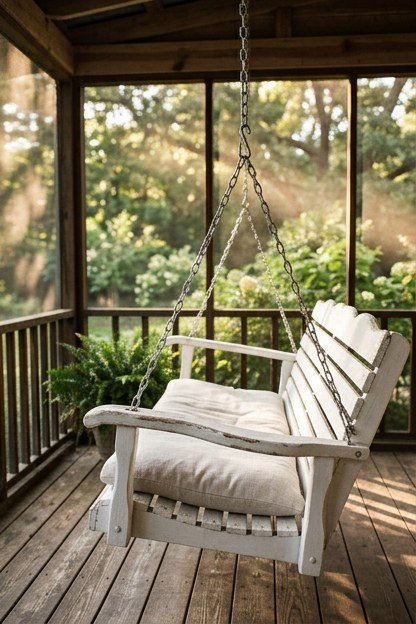
A porch swing does something a fixed bench cannot, adding gentle motion to the space that suits the relaxed, unhurried character a white screened porch is meant to convey. Painted white with a genuinely comfortable cushion, it becomes the piece most people gravitate toward first when they step into the room. A well chosen swing often becomes the porch’s defining feature.
Choose chain or rope hardware in a finish that will not streak the white paint beneath it, since rust bleeding down from a swing’s suspension point is one of the more common and more visible maintenance problems on a painted porch. Powder coated or stainless hardware avoids this issue entirely over the life of the swing. Ask specifically about the hardware finish before ordering.
Size the swing to the actual porch width, leaving genuine clearance on both sides for the full arc of its motion rather than crowding it against adjacent furniture. A swing that cannot swing freely loses much of what makes it worth having in the first place. Measure the full arc, not just the swing’s resting width.
How To Judge It Before You Buy
Test the swing’s motion in the shop or showroom if at all possible, since the smoothness of the swinging action varies enormously between models despite looking similar when stationary. A swing that catches or judders undermines the very sense of ease it is meant to provide. A smooth, quiet motion is worth paying slightly more for.
Check the mounting requirements carefully before committing to a specific model, since a genuinely heavy duty swing needs structural support well beyond what a typical porch ceiling joist provides without reinforcement. Confirm this with a contractor if there is any doubt at all. A swing falling from an unreinforced ceiling is a genuine hazard.
11. Add A White Painted Side Table Within Reach Of Every Seat
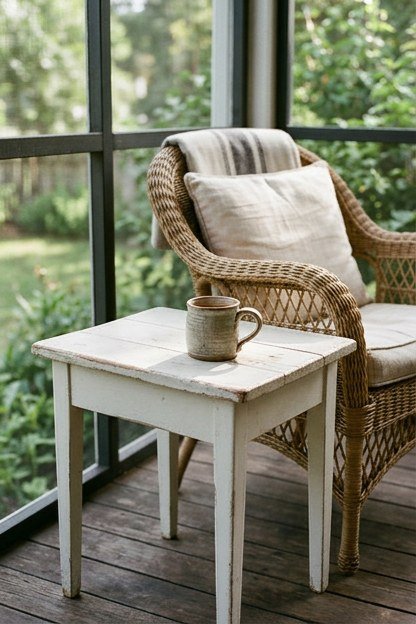
A side table within easy reach of every seating position solves the small but constant frustration of nowhere to set down a drink, a book or a phone, and a simple white painted table does this without adding any visual weight to the room. This is a small, inexpensive addition that pays off every single time the porch actually gets used. Even a single table beside the main chair makes a real difference.
Choose a table height that roughly matches the arm height of the adjacent seating, since a table too low or too high creates an awkward reach that people notice and dislike without necessarily identifying why. Match it to the specific chair or sofa it will sit beside rather than buying a generic standard height table. A quick tape measure check avoids an awkward mismatch.
Pick a material that tolerates being outdoors under cover without special care, teak, aluminium or a properly sealed painted wood all suit this environment well. Avoid anything that requires bringing it indoors overnight, since that defeats the convenience the table exists to provide. A table that has to be moved daily rarely gets moved consistently.
What To Buy First
If furnishing the porch gradually rather than all at once, prioritise side tables over larger decorative pieces, since the daily functional benefit of somewhere to set a drink down outweighs almost any purely decorative addition on this list. Comfort and convenience should come before appearance in the purchase order. Decorative pieces can always follow once the basics are covered.
Avoid glass tabletops specifically in a screened environment, since pollen and condensation show constantly on glass in a way they do not on a solid painted or wood surface, creating a maintenance burden disproportionate to the table’s actual usefulness. A solid top wipes clean in seconds by comparison. Pale timber ages far more gracefully in this spot than glass does.
12. Use A White Woven Rug To Anchor The Seating Area
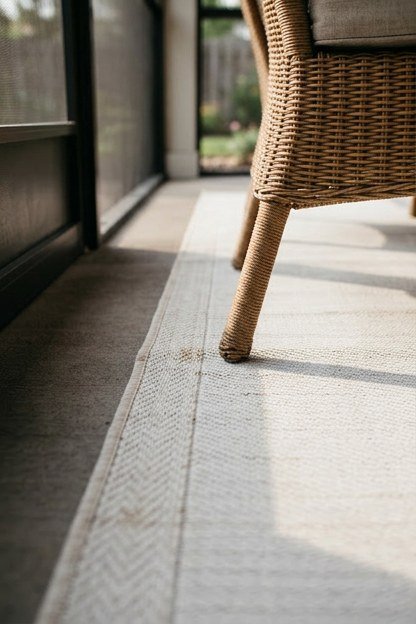
A rug grounds a seating arrangement on a porch in the same way it does indoors, giving the furniture a defined zone rather than letting pieces feel scattered across an open floor. A white or very pale woven rug continues the airy palette down to floor level, completing the scheme rather than introducing a competing tone. A pale rug also makes the floor read as one continuous surface.
Choose a flat weave, outdoor rated rug specifically, since a rug intended for indoor use will not withstand the humidity, dust and occasional weather exposure a screened porch experiences even under cover. Polypropylene and similar synthetic weaves handle this environment considerably better than natural fibre alternatives. Check the label specifically for an outdoor rating.
Size the rug so the front legs of every seating piece rest on it, the same rule that applies indoors, since a rug too small to reach the furniture reads as floating and disconnected rather than anchoring the space as intended. Measure the seating footprint before choosing a rug size. Going one size up is almost always the safer choice.
When To Skip It
Skip a rug entirely on a porch that experiences genuine standing water during heavy rain, since even an outdoor rated rug will struggle to dry out fully in that specific condition and can become a mildew risk despite its rating. Address any drainage issue first before adding floor textiles. A rug is not a fix for a drainage problem underneath it.
Consider a smaller accent rug rather than a full room sized one if the porch floor itself is an attractive painted or whitewashed finish worth showing, since covering that floor entirely with a large rug hides work you may have specifically done to improve it. A smaller rug lets both the floor and the rug get noticed. Neither has to compete with the other for attention.
13. Install White Roll Down Shades For Adjustable Shade
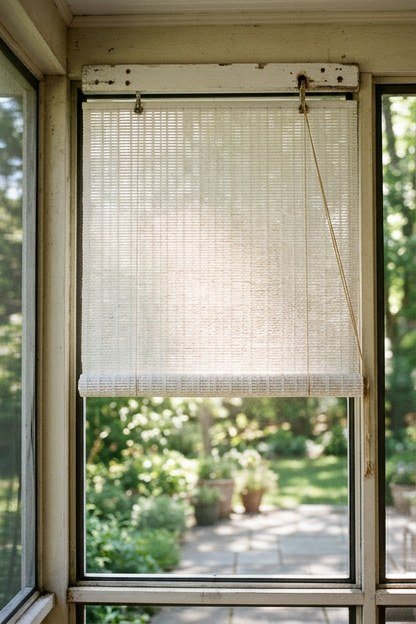
Roll down shades in white or a very pale natural fibre give a screened porch the ability to adjust its light and privacy through the day in a way fixed screens alone cannot provide. Lowered partway during harsh afternoon sun and raised fully in the evening, they add genuine flexibility to how the space performs across different conditions. That flexibility suits a porch used at every hour of the day.
Choose a material that still allows some airflow through when lowered, a woven bamboo or a mesh specific outdoor shade fabric, rather than a fully solid blackout material that would turn the porch into an enclosed room whenever privacy or shade is needed. Airflow should remain available even with the shades down. A fully solid fabric turns a breezy porch into a stuffy one.
Position the mounting hardware to sit flush against the existing screen frame rather than protruding awkwardly in front of it, keeping the overall look clean and integrated rather than looking like an obvious later addition to the original structure. A matched paint finish on the brackets helps this considerably. Unpainted brackets are the detail people notice first.
What It Costs
Basic roll down shades cost relatively little and install with simple hardware most homeowners can manage without professional help, making this one of the more accessible upgrades on this list for a typical weekend project. Motorised versions cost considerably more but add genuine convenience for hard to reach or frequently adjusted shades. Reserve the motorised option for the least accessible windows.
Factor in the cost of matching hardware finish to the rest of the porch trim, since mismatched brackets in a dull grey against fresh white trim undercut the polished look the rest of the project is working to achieve. A small tin of matching touch up paint solves this cheaply. Keep a labelled tin on hand for exactly this purpose.
14. Choose White Or Clear Glass Lanterns For Evening Ambience
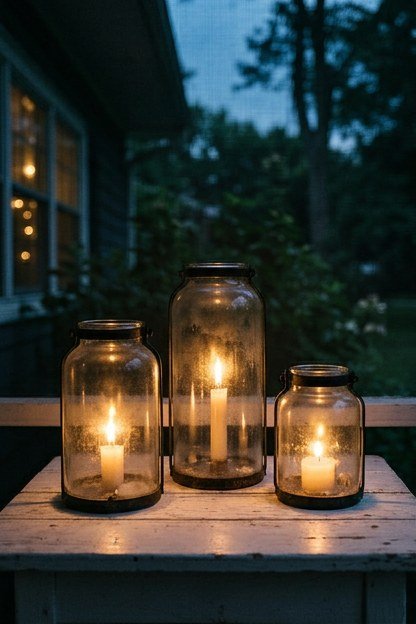
Lanterns add a warm, flickering quality to evening light that overhead fixtures alone cannot replicate, and white or clear glass versions keep that warmth from introducing a competing colour note into the otherwise pale scheme. Grouped in odd numbers along a table or hung at varying heights, they extend the porch’s usable hours meaningfully. Even a modest grouping makes a genuine difference after dark.
Choose genuine candle lanterns or high quality flameless alternatives specifically rated for outdoor or covered outdoor use, since indoor rated flameless candles often look noticeably artificial and dim in comparison once actual darkness falls around the porch. The better outdoor rated versions close much of that visual gap. Read reviews specifically for flame realism before buying.
Vary the lantern heights and groupings rather than lining identical ones along a single surface, echoing the same principle that applies to planters and other grouped decor throughout this list. Uneven groupings consistently read as more considered than perfectly matched rows. Three at different heights usually looks better than three in a line.
What Goes Wrong
Genuine flame lanterns near sheer curtains or dry seasonal decor represent a real fire risk that deserves more caution than it typically receives, so keep an honest, generous distance between any open flame and anything flammable nearby regardless of how attractive the closer arrangement might look. A hand’s width of clearance is a reasonable minimum to keep. Never leave an open flame burning in an empty porch.
Cheap flameless candles with weak, flickering LED effects look noticeably artificial once the sun goes down fully, undermining the warm ambience they were meant to create. Spend slightly more on a quality version with a genuinely convincing flame simulation if going the flameless route. The better versions are worth the extra cost after dark.
15. Leave One Full Wall Of Screen Completely Unobstructed
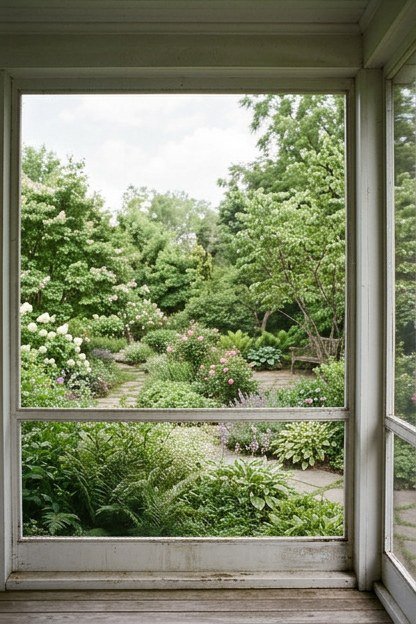
The final and most disciplined choice on this list is restraint, keeping at least one full screen wall entirely free of furniture, plants or hanging decor so the view itself remains the uninterrupted focal point it was designed to be. Every other choice on this list adds something to the porch; this one is specifically about what you leave out. Restraint here does as much work as any purchase.
Choose the wall with the best actual view, whether that is a garden, a tree line or simply open sky, and commit to keeping that specific wall clear regardless of how tempting it becomes to add just one more hanging plant or side table there over time. The view earns that protected status precisely because it changes throughout the day and the seasons in a way no decor choice ever could. No object competes with a view that keeps changing.
Communicate this as an actual household rule rather than an unstated assumption, since the slow creep of clutter onto a previously clear wall happens through many small individual additions that each seemed reasonable at the time. A stated rule gives everyone in the household the same understanding of which wall stays clear. A short conversation once avoids repeated small disagreements later.
How To Hold The Line
Do a seasonal review of the porch specifically checking this one wall, since decor and furniture genuinely do migrate over time even in households that started with the best intentions about keeping a space clear. A quarterly check catches the creep early, before it becomes an entrenched habit that feels harder to reverse. Ten minutes each season is all the check really takes.
Photograph the porch when it feels balanced and refer back to that image periodically as an honest benchmark, since memory of how a space originally felt tends to be considerably more forgiving than an actual photograph comparing the current state against the original intention. Keep the photo somewhere easy to find and compare against. A phone folder labelled for the porch works well for this.
What A White Screened Porch Costs To Decorate
Paint represents the highest impact, lowest cost change on this entire list, transforming the ceiling, floor and structure for a fraction of what new furniture or a full re-screening would cost. Prioritise these surface changes first if the budget is genuinely limited, since they affect how every subsequent purchase actually looks once installed. A freshly painted surface also makes new furniture easier to judge.
Furniture and screening represent the larger investments, and both benefit from being planned together rather than separately, since a beautiful white wicker set against mismatched grey screen frames undercuts much of the intended effect. Budget for these as a coordinated project rather than a series of unrelated purchases made over time. A single moodboard keeps every purchase pulling in one direction.
The table below gives a rough sense of relative costs across a full porch refresh, since actual prices vary considerably by region, porch size and whether work is done professionally or as a DIY project. Get at least one quote before assuming a job is out of reach. Costs vary considerably more by region than by the work itself.
| Item | Relative cost | Priority |
|---|---|---|
| Ceiling and structure paint | Low | Do first |
| Floor paint | Low to moderate | Early addition |
| Ceiling fan | Moderate | Comfort priority |
| White wicker furniture | Moderate to high | Mid project |
| Full re-screening | High | As needed |
The Mistakes That Make A White Porch Feel Cold Rather Than Airy
Choosing a stark, cool white without accounting for natural texture and warmth is the most common mistake, leaving a porch that reads as clinical rather than relaxed. Layering in natural fibre textiles and at least one warm toned statement piece is what prevents this specific failure, and it costs relatively little to correct. A single throw and two cushions often solves it entirely.
Neglecting maintenance is the second major mistake, since white shows dirt, pollen and mildew spotting more visibly than any other colour, and a porch that starts white but gets left unmaintained looks considerably worse than a mid tone porch would in the identical state of neglect. Build a simple wipe down routine into the plan from the very beginning rather than reacting once grime is already visible. A five minute wipe down each week keeps ahead of it.
Overfilling the space is the third mistake, adding furniture, plants and decor until the airy quality the white scheme was meant to create gets buried under sheer quantity of stuff. A screened porch has a naturally more limited sense of enclosure than an indoor room, and it shows clutter more readily as a result rather than less. Fewer, better chosen pieces suit this room particularly well.
The One To Watch For Long Term
White exterior paint yellows and chalks gradually over years of UV exposure, a change so gradual that residents often stop noticing it happening in their own home until a visitor points out the difference or a fresh coat goes up beside the old one. This slow shift is normal and expected rather than a sign anything has gone wrong. A test patch beside the old paint shows the gap clearly.
Plan for a repaint cycle of roughly five to seven years for most exterior white finishes in a genuinely sunny climate, adjusting based on your specific exposure and paint quality. Staying ahead of this cycle rather than waiting for visibly obvious yellowing keeps the porch looking consistently fresh rather than swinging between freshly painted and visibly tired. Mark the likely repaint year on a household calendar now.
Conclusion: The Choices That Make A White Porch Work
If this list distills to three decisions, they are these: paint the ceiling and structure a considered white that suits your actual light conditions, choose furniture and screening that stay genuinely open rather than visually heavy, and layer in enough natural texture and warmth to keep the whole scheme from feeling clinical. Those three decisions carry the whole approach. Everything else on this list simply refines them.
Start with the surfaces, since paint changes more about how the space feels than almost any other single decision, and let that surface work inform which furniture and textiles actually suit the specific quality of light your particular porch receives. Committing to furniture before understanding how the painted surfaces will read is a common way projects go slightly wrong. Paint first and judge the furniture against the result.
A white screened porch done well should feel like the calmest room in the house regardless of the weather outside, a genuine retreat rather than simply an outdoor space that happens to be painted a fashionable colour. The white is there to serve that feeling of ease, not to become a decorating project that demands constant vigilance to maintain. Keep the maintenance routine as simple as the look itself.
Frequently Asked Questions About White Screened Porch Decor
What is the best white paint for a screened porch ceiling?
A pale blue white, often called haint blue in traditional porch decorating, remains a popular choice because it reads as sky reflected downward while still functioning as a genuine white. Choose a satin or semi gloss exterior grade paint for easier cleaning over the years.
Does an all white porch show dirt more than other colours?
Yes, noticeably more than a mid tone finish would, particularly on screens and lower rails exposed to pollen and splashback. A regular wipe down routine, ideally weekly during high pollen seasons, keeps this manageable without becoming a significant chore.
Can I have a white screened porch in a shaded location?
Yes, though a slightly warmer off white generally suits shaded porches better than a stark, cool white, which can read as flat without enough direct sun to activate its brightness. Test samples in your actual shaded light before committing to a specific shade.
What furniture material works best on a white screened porch?
White painted wicker with a genuinely open weave pattern lets light pass through the furniture itself rather than registering as a solid mass. Ensure any paint used is exterior grade and rated specifically for wicker’s flexing, curved surfaces.
How often does a white porch need repainting?
Most exterior white finishes need a fresh coat every five to seven years in a sunny climate, sometimes longer in a shaded or less exposed location. Watch for gradual yellowing or chalking as your cue to plan the next repaint before it becomes visually obvious.
Should screen frames match the porch trim colour?
Generally yes, since a mismatched frame colour against fresh white trim reads as an oversight rather than a considered choice. Specify frame colour explicitly when ordering new screens rather than accepting whatever the standard default happens to be.