
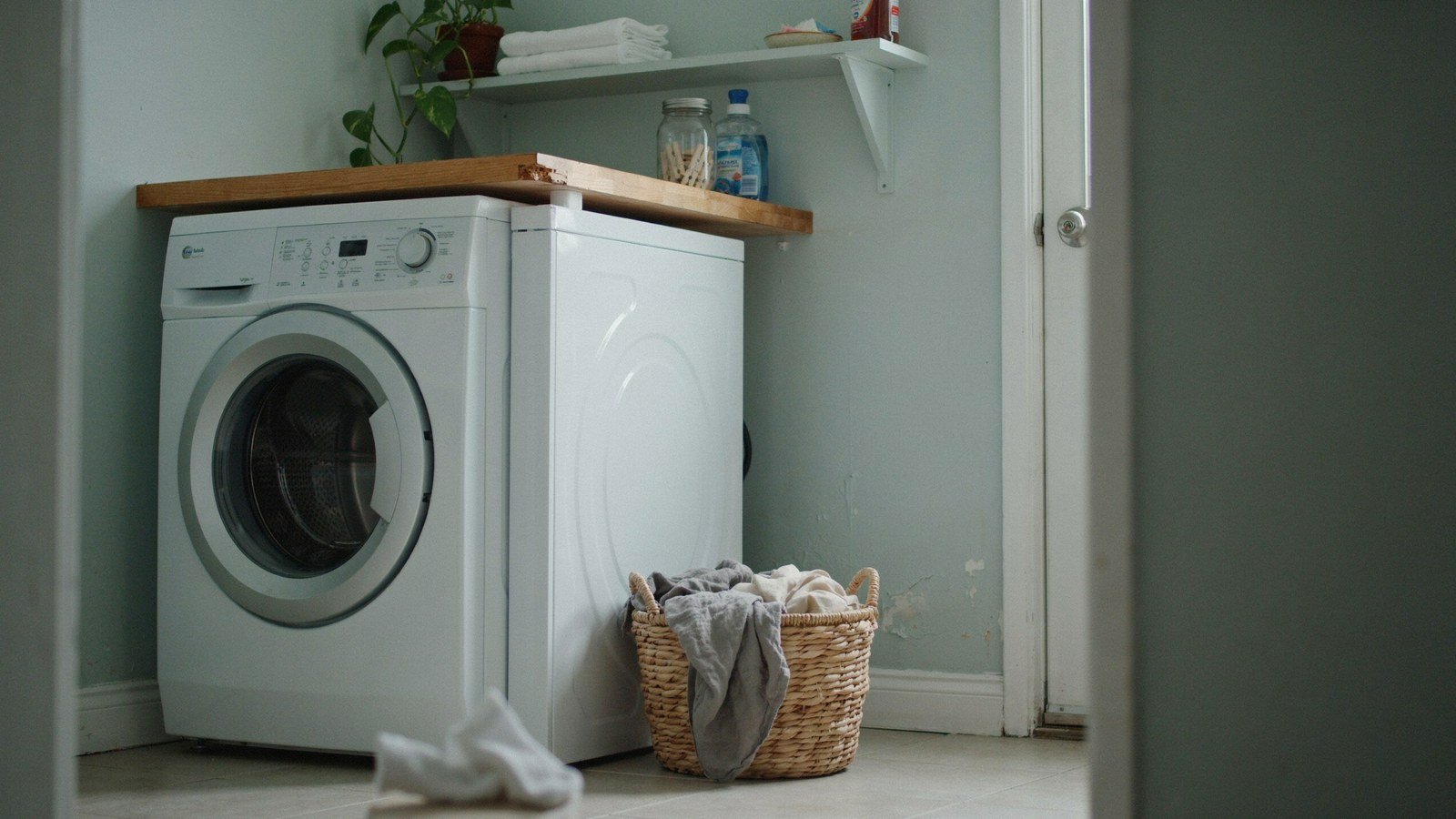
A small laundry room works when every stage of the wash has a place to happen. Sorting, washing, drying, folding, storing.
Most cramped laundry nooks fail on one of those five and the whole room jams up. Usually it is folding, because nobody left a surface.
Below are the fifteen decisions I would make in order, from measuring the alcove to the last hook. Most cost very little.
Why A Laundry Nook Needs Planning More Than A Laundry Room
A full laundry room forgives mistakes because there is slack. A nook has none, so a single wrong measurement blocks a door or a drawer.
I plan a nook the way I would plan a boat galley. Every surface does at least two jobs and nothing sits idle.
The other difference is noise. A nook usually opens onto a hallway or kitchen, so machine choice and door choice matter far more than they would in a separate room.
| Nook Type | Typical Width | Best Layout | Watch Out For |
|---|---|---|---|
| Cupboard alcove | 30 to 36 in | Stacked machines | Door swing and venting |
| Hallway run | 36 to 60 in | Side by side, counter over | Noise into living space |
| Under stairs | Sloping | Stacked, front loaders only | Head height at the back |
| Kitchen corner | 24 to 30 in | Single machine, tall storage | Sharing plumbing runs |
1. Measure The Alcove Before You Fall For Anything
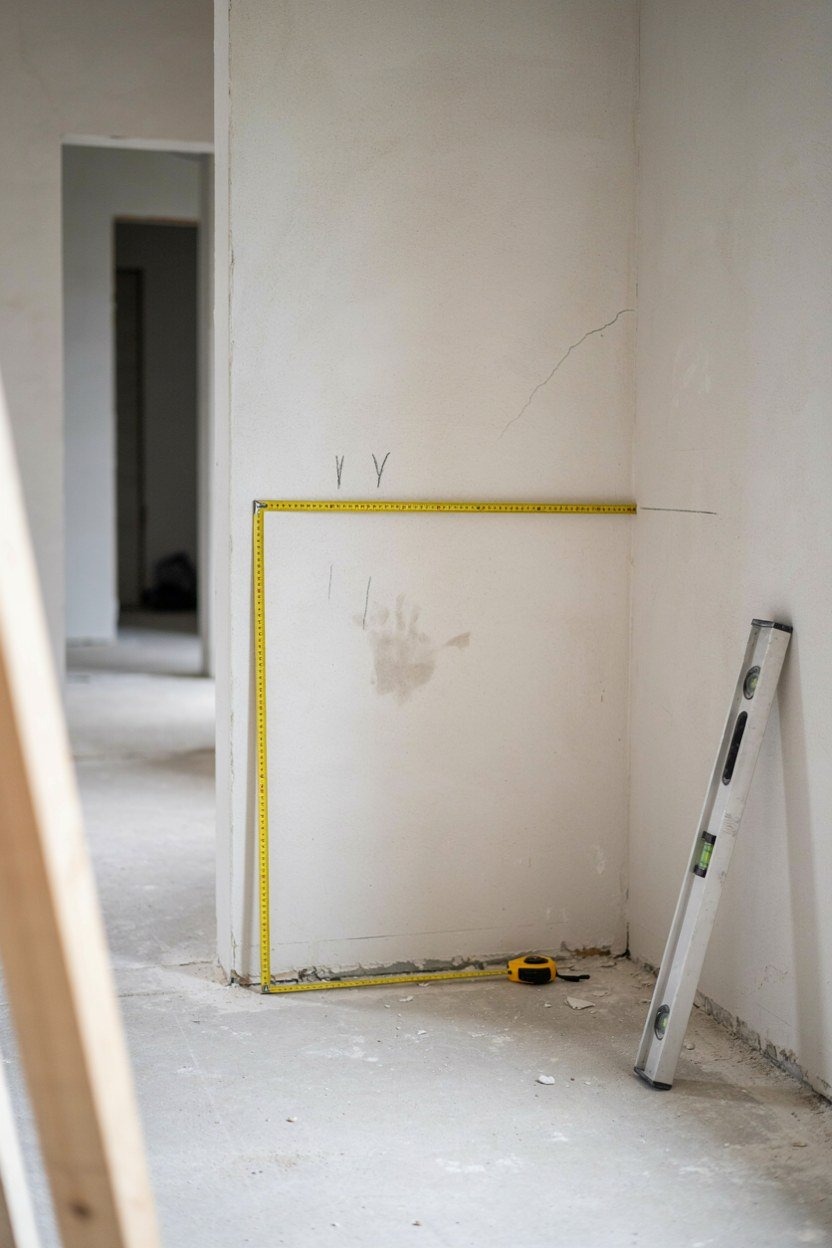
Measure width, depth and height, then measure the doorway you have to carry a machine through. That second number stops more projects than the first.
Take the depth to the wall face, not the skirting. A standard washer needs about 25 inches plus another 4 for hoses and clearance behind.
Check the height under any shelf or worktop as well. Stacked machines usually need around 70 inches, and that is before feet or an anti vibration mat.
Write the three numbers on a card and take it shopping. Appliance listings quote depth without the door, and that difference has caught out plenty of people.
2. Stack The Machines If The Width Is Under Four Feet
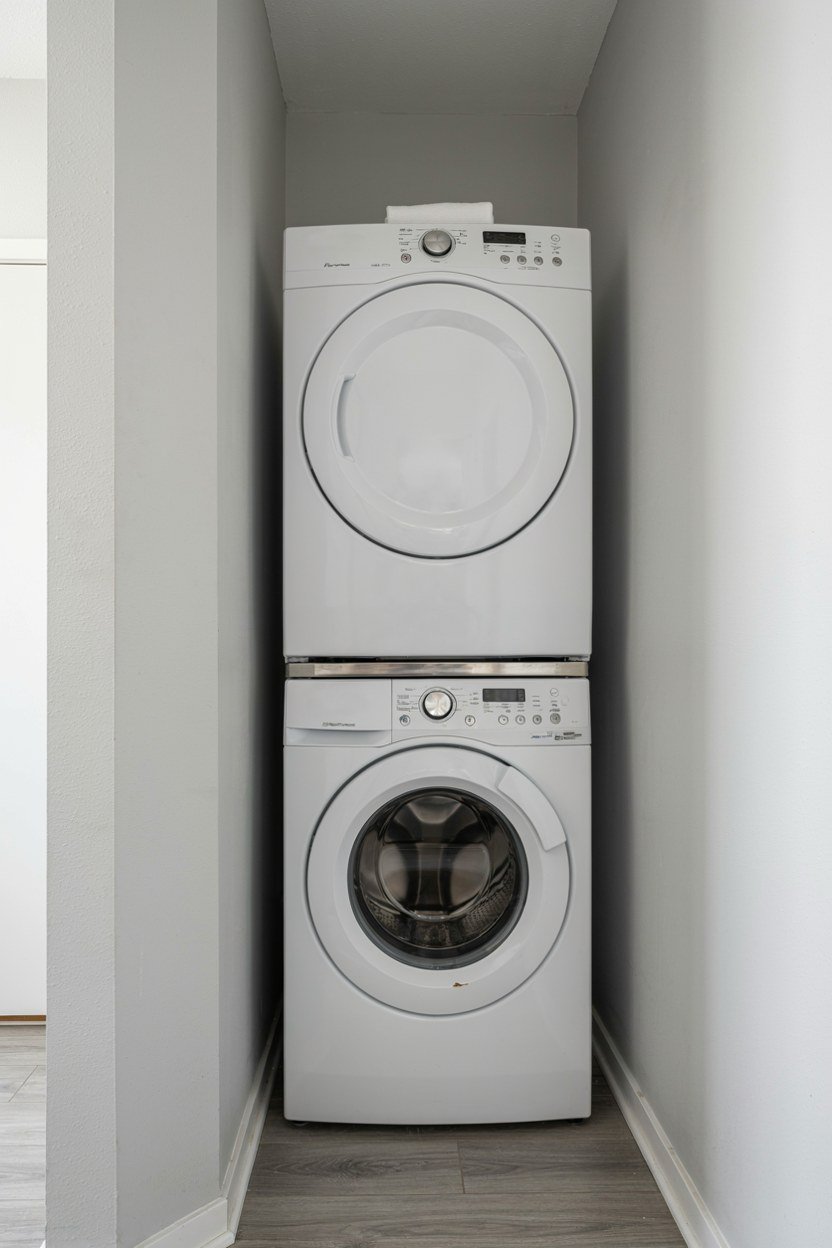
Stacking buys you the single most useful thing in a nook: floor space. Below about 48 inches of width, side by side stops being sensible.
You need a proper stacking kit rather than balancing one on the other. It bolts the two together and stops the dryer walking off in a spin cycle.
Put the washer on the bottom. It is heavier, and loading the dryer at chest height is far kinder on your back than the other way round.
Check the stacking kit is made for your exact pair. Universal kits exist but a matched one holds far more securely.
3. Choose Front Loaders So You Keep The Worktop
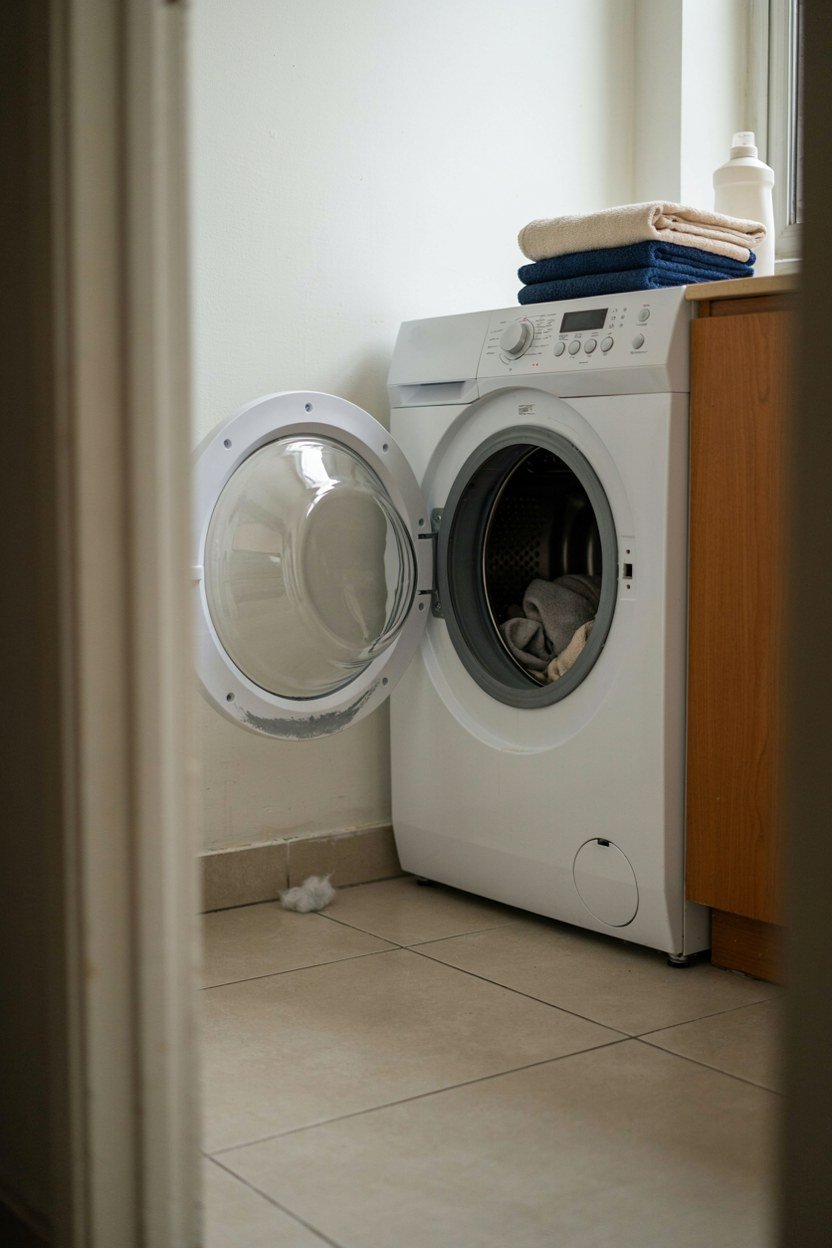
Front loaders let you run a continuous surface above them, which is where folding happens. A top loader gives that up permanently.
They also stack, which a top loader cannot. In a nook that single fact usually decides it.
The trade is a longer cycle and a door that swings into your standing space. Check which way the door hinges before you buy, because some models offer a choice and some do not.
Reversible doors are worth hunting for in a narrow nook. Being able to swing the door away from your standing spot changes how usable the space feels.
4. Run A Counter Over The Machines For Folding
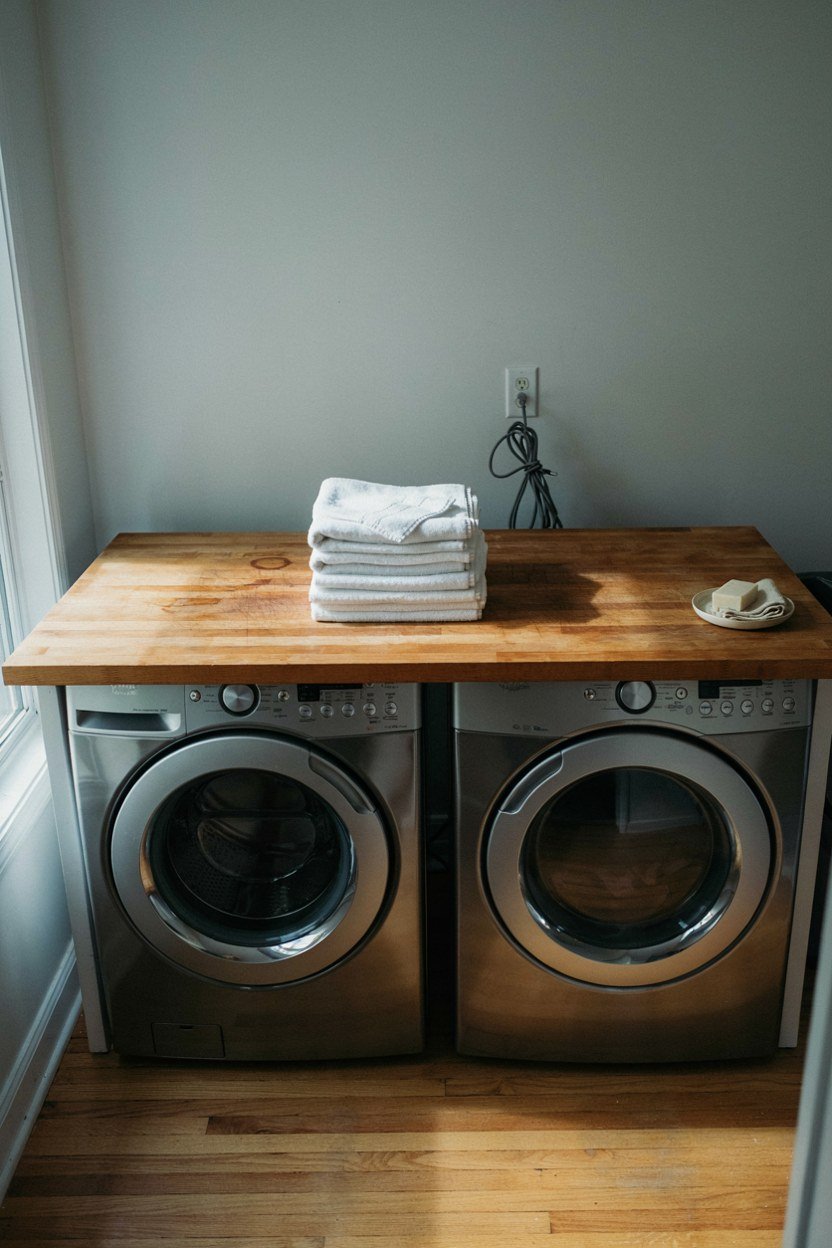
A worktop over the machines turns two appliances into a work surface. It is the cheapest upgrade in the whole room.
Leave a small gap above the machines so they can be pulled out for service. About an inch is enough, and a lip at the front stops socks disappearing behind.
Butcher block, laminate or a leftover kitchen offcut all work. I would avoid stone here because the weight needs proper support and the benefit is nil.
Round the front edge slightly if you can. In a narrow room you will catch your hip on that corner more often than you would think.
5. Fit A Deep Sink If You Have The Width
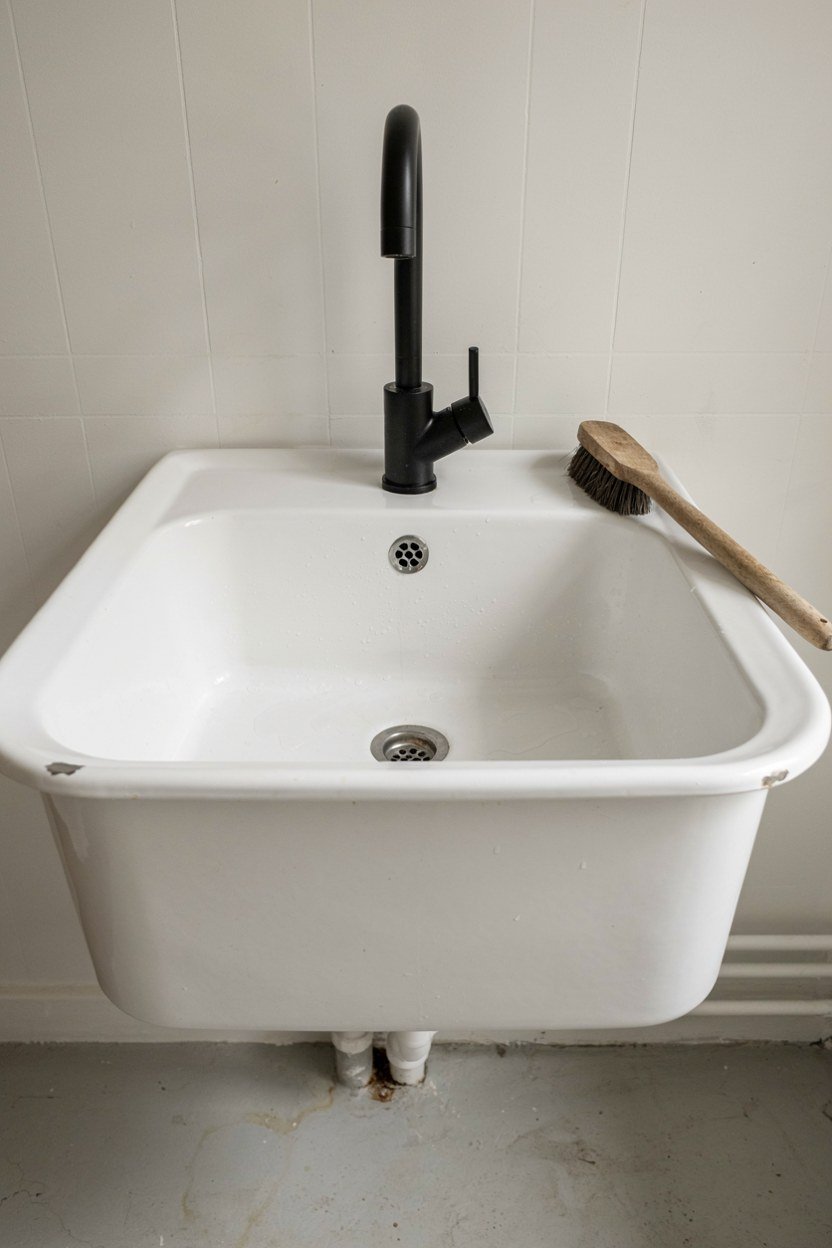
A deep utility sink handles hand washing, soaking and filling buckets. If you have twelve spare inches, it earns them.
Look for a bowl around 9 inches deep with a tall mixer tap. Shallow bowls splash and defeat the point.
If width is tight, a sink is the first thing I would drop. A washing machine and a folding surface both beat it.
A shallow bar sink is the compromise if space is very tight. It handles rinsing without taking the depth a full utility bowl needs.
6. Add A Rail For Immediate Hanging
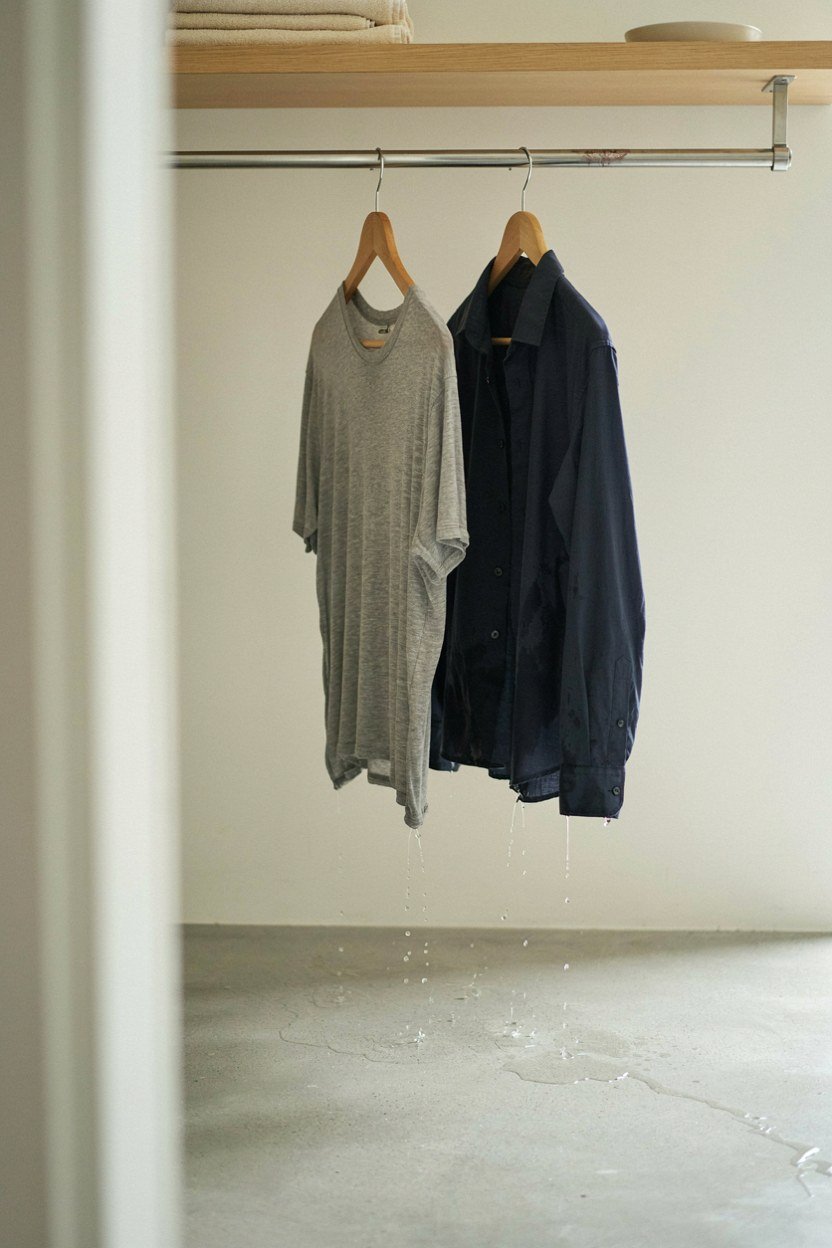
Anything that cannot go in the dryer needs somewhere to go the moment the machine stops. Without a rail it lands on a door or a chair.
A short length of tube on two brackets under the shelf costs almost nothing. Twenty four inches holds a surprising amount.
Mount it where wet clothes will not drip onto the machines or a socket. Over the sink or over a hard floor is ideal.
A second retractable line above the first doubles capacity for almost nothing. It tucks away when the room is back to normal.
7. Use Vertical Storage Above Eye Level
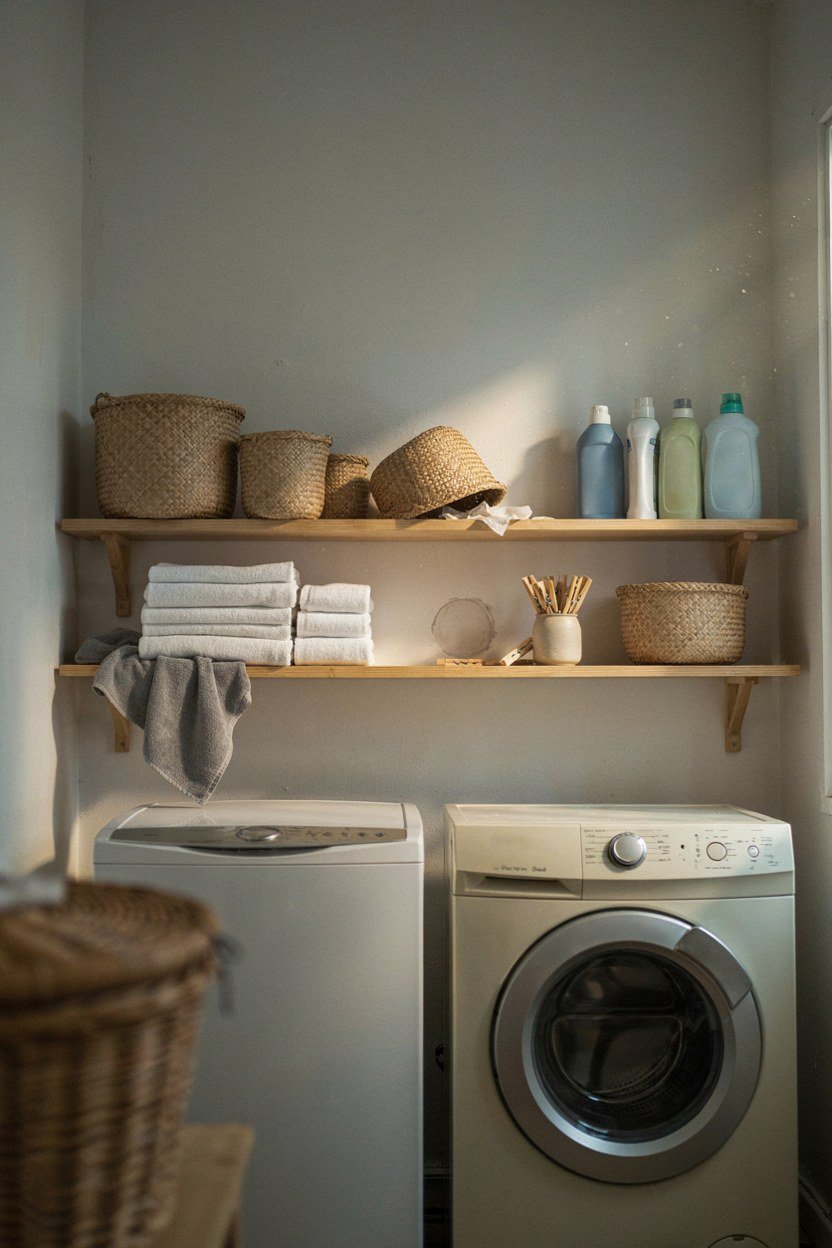
The wall above the machines is usually wasted. Two shelves or a shallow cupboard there hold everything you use weekly.
Keep the depth to about 12 inches. Anything deeper and things get lost at the back, which in a small room means you buy duplicates.
Put daily items at eye level and bulk stock up high. Detergent is heavy, so keep the big containers low if you can.
Open baskets beat closed boxes on high shelves. You can see what is in them from below, which saves dragging a stool over.
8. Hide The Bins But Keep Them Reachable
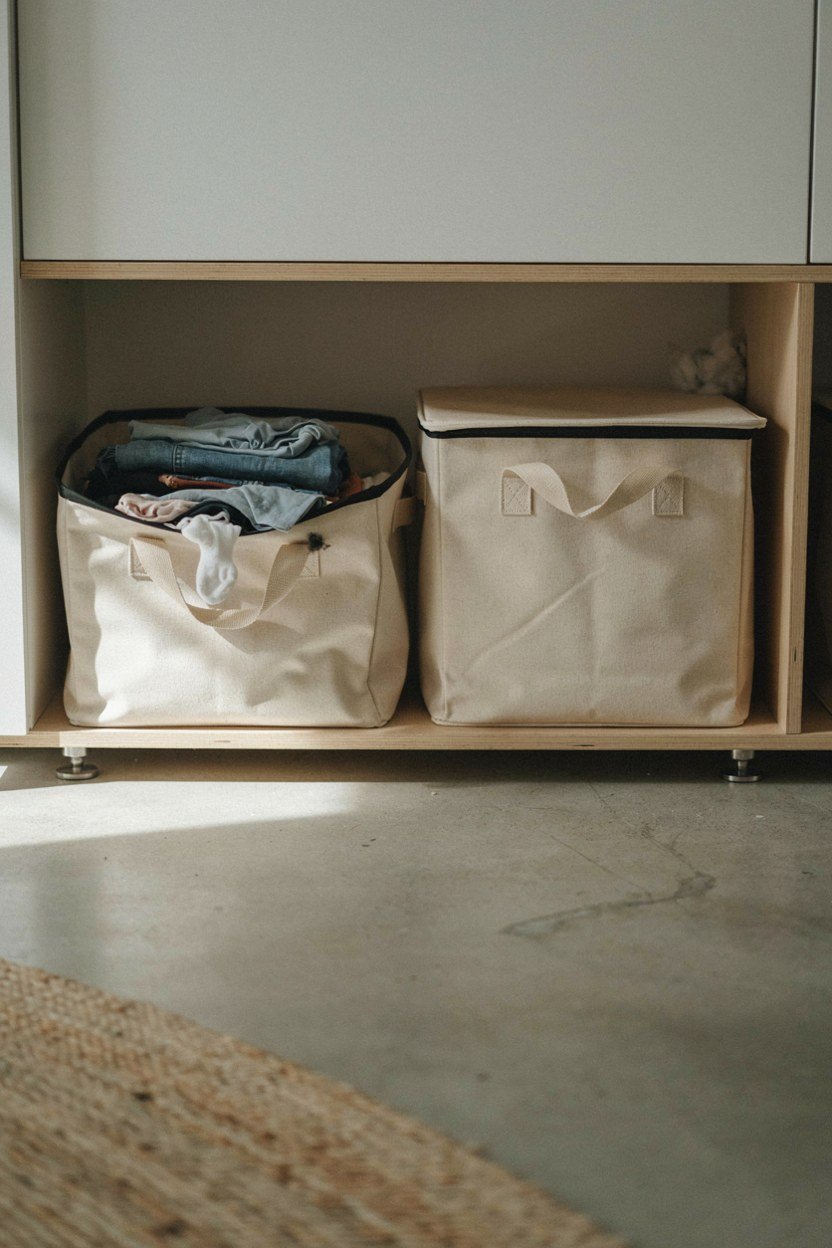
Sorting needs at least two containers, and they should not live on the floor. Pull out baskets under the counter are the tidiest answer.
Two is usually enough: lights and darks. Three works if someone in the house needs delicates kept separate.
Label them if more than one person uses the room. Unlabelled bins slowly become one bin.
Size the baskets to one wash load each. Bigger ones just delay the wash and make the pile look defeating.
9. Choose A Door That Does Not Steal Space
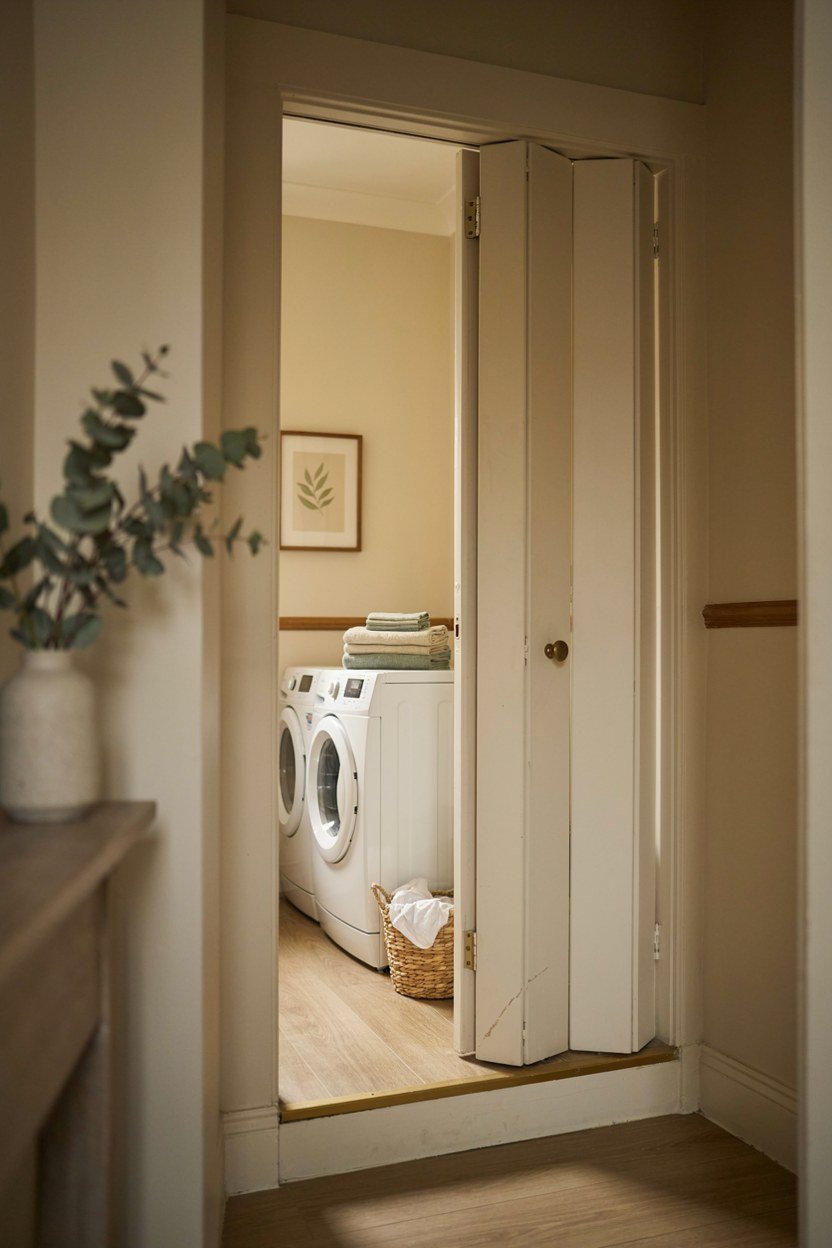
A hinged door swinging into a nook wastes the exact floor you need to stand on. Bifold, pocket or sliding doors all avoid that.
Louvred doors help with heat and damp from the dryer. Solid doors are quieter, which matters if the nook opens onto a living space.
If the nook is genuinely tiny, consider no door at all and style the shelving instead. An open nook that looks deliberate beats a door you cannot open fully.
Measure the swing before committing to bifolds. They need clearance at the sides that a narrow alcove may not have.
10. Light The Work Surface, Not The Ceiling
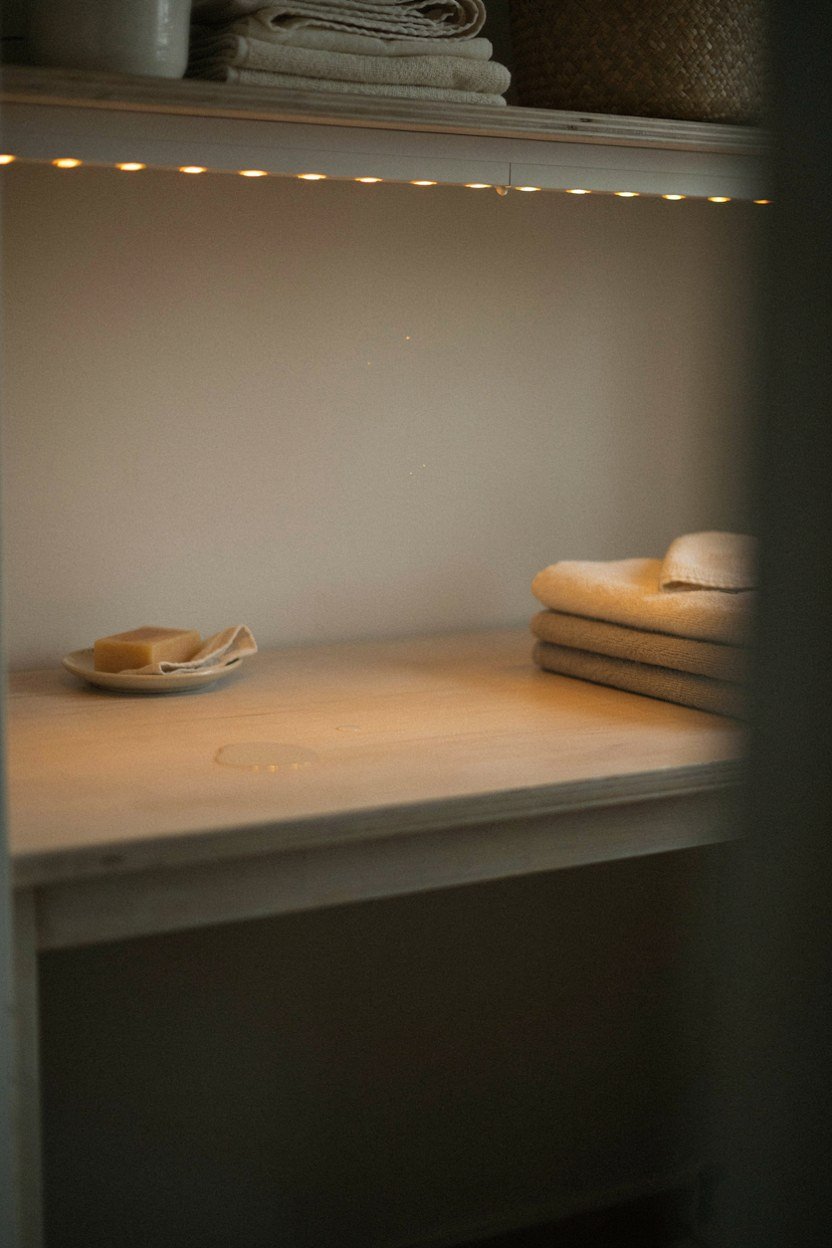
One ceiling light behind you puts your own shadow on the folding surface. An under shelf strip fixes that for very little money.
Use warm white around 3000K. Cool blue light makes it harder to judge whether a stain has actually gone.
Add a light inside any deep cupboard. A nook is dark by nature and you will not sort colours accurately in shadow.
Put the light on the same switch as the room it opens onto. A separate switch inside a cupboard gets left on.
11. Sort Out Ventilation Early
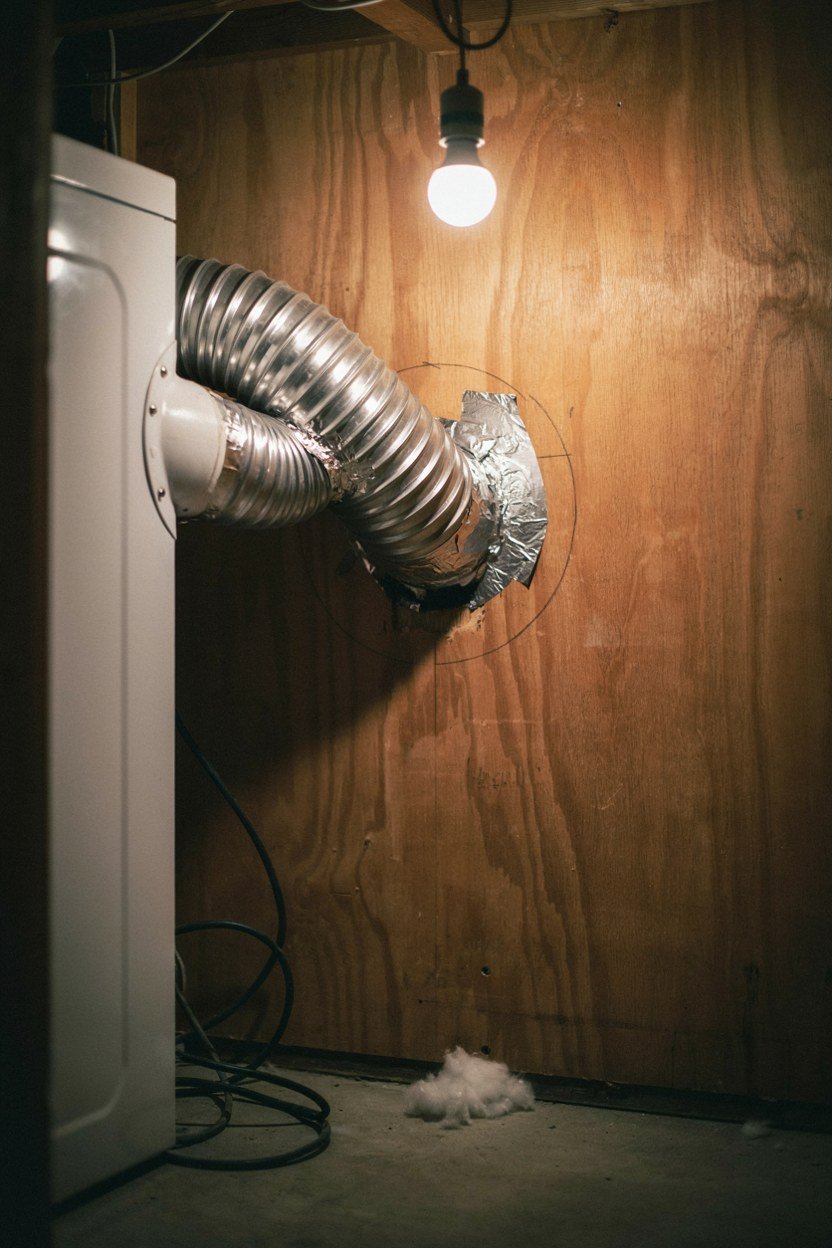
A dryer in a small enclosed space needs somewhere to send its moisture, or the damp goes into your walls. This is not optional.
A vented dryer needs a duct to outside, kept as short and straight as possible. A heat pump or condenser dryer avoids the duct entirely and suits a nook far better.
Even with a condenser, add a vent in the door or a small extractor. Enclosed cupboards hold humidity and that is how you get mould behind the machines.
Wipe the door seal and leave the door ajar between washes. Most of the smell people blame on the machine starts in that rubber gasket.
12. Plan Plumbing And Power Before Tiling
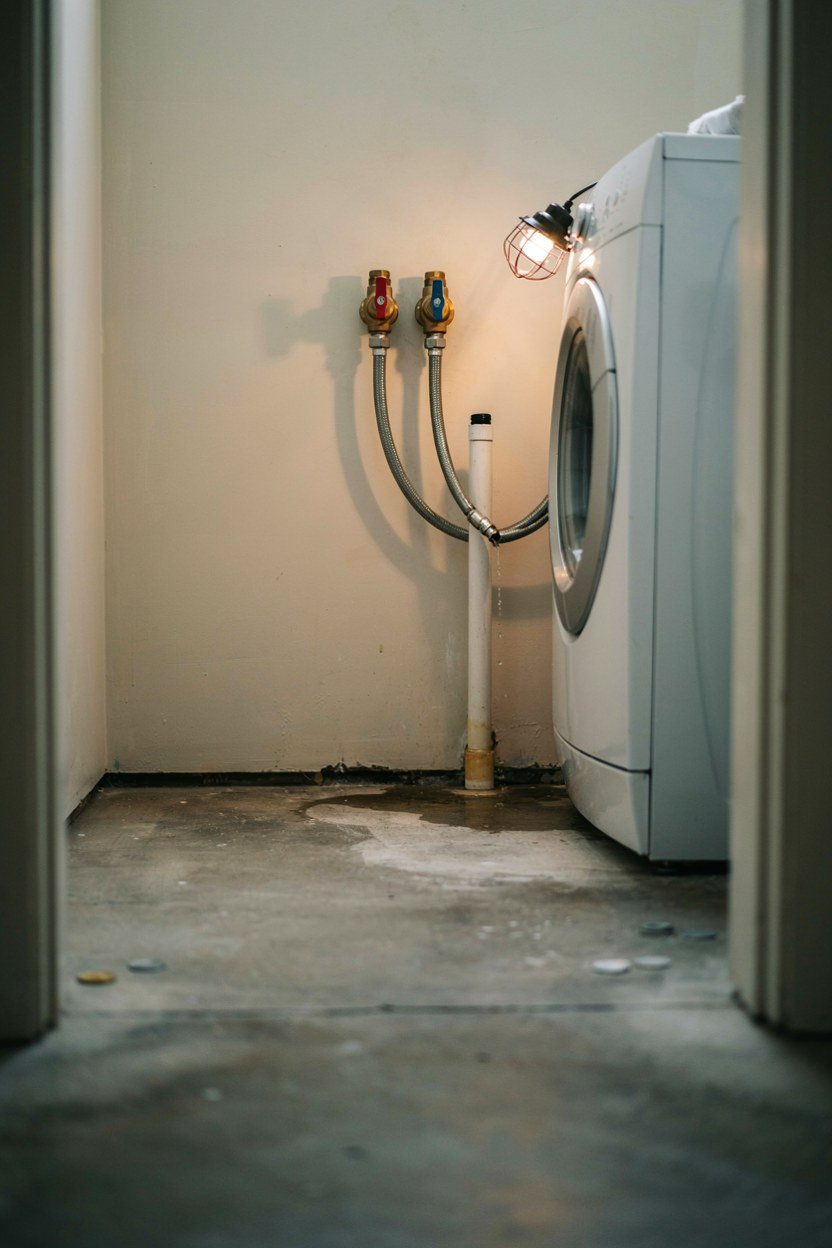
Sockets, waste and supply all need to be sited where the machine is not. Behind a machine is fine for pipes, not for a socket you need to reach.
Put the socket high on a side wall rather than directly behind. You will thank yourself the first time something needs unplugging in a hurry.
Fit isolation valves on the hot and cold feeds. Being able to shut off one machine without draining the house is worth the small cost.
13. Pick Flooring That Survives A Leak
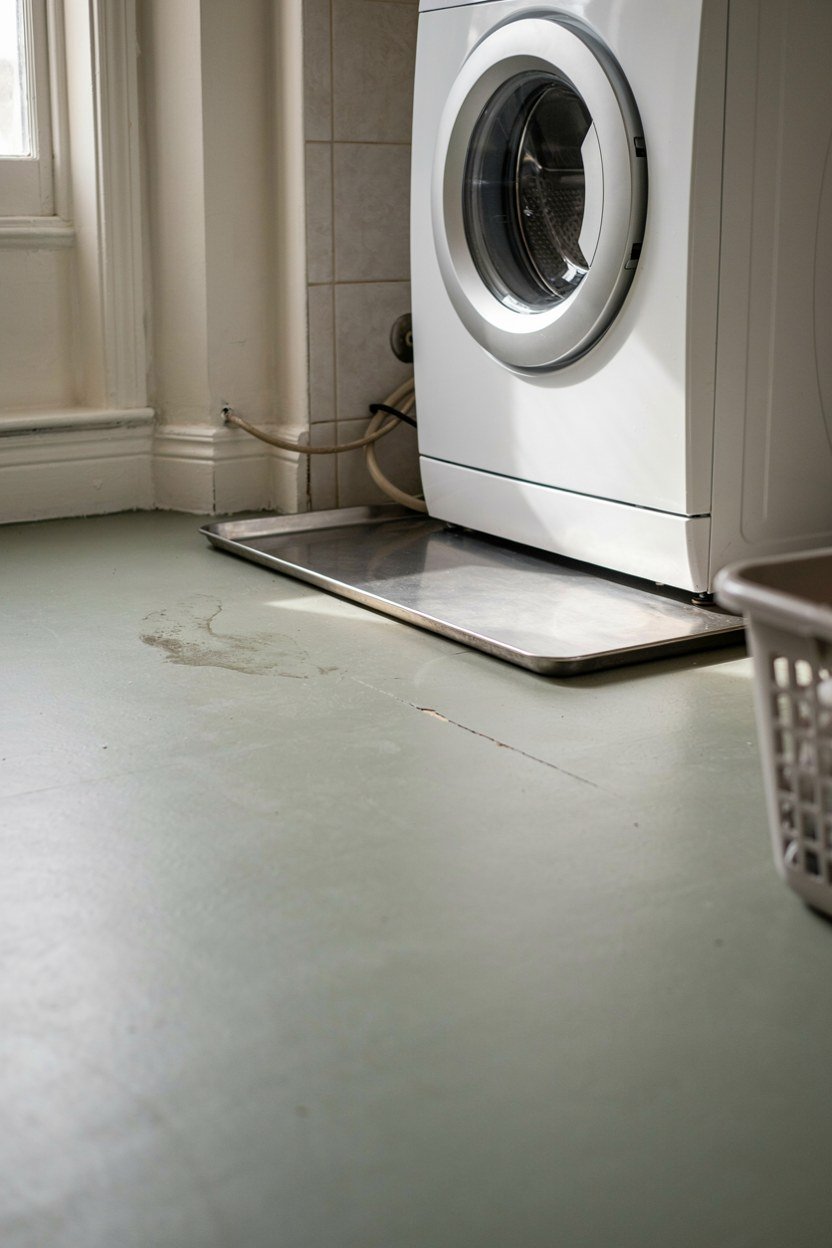
Every laundry room floods eventually. Vinyl, tile or sealed concrete all handle it; laminate and real wood do not.
Continue the flooring under the machines. If you ever pull them out, a clean surface underneath makes the job far less unpleasant.
A small waterproof tray under the washer catches slow drips before they reach the subfloor. Cheap, and it buys you early warning.
Check the tray every few months. A dry tray means nothing is wrong, and a damp one is a much cheaper problem than a rotten floor.
14. Quieten The Machines Where You Can
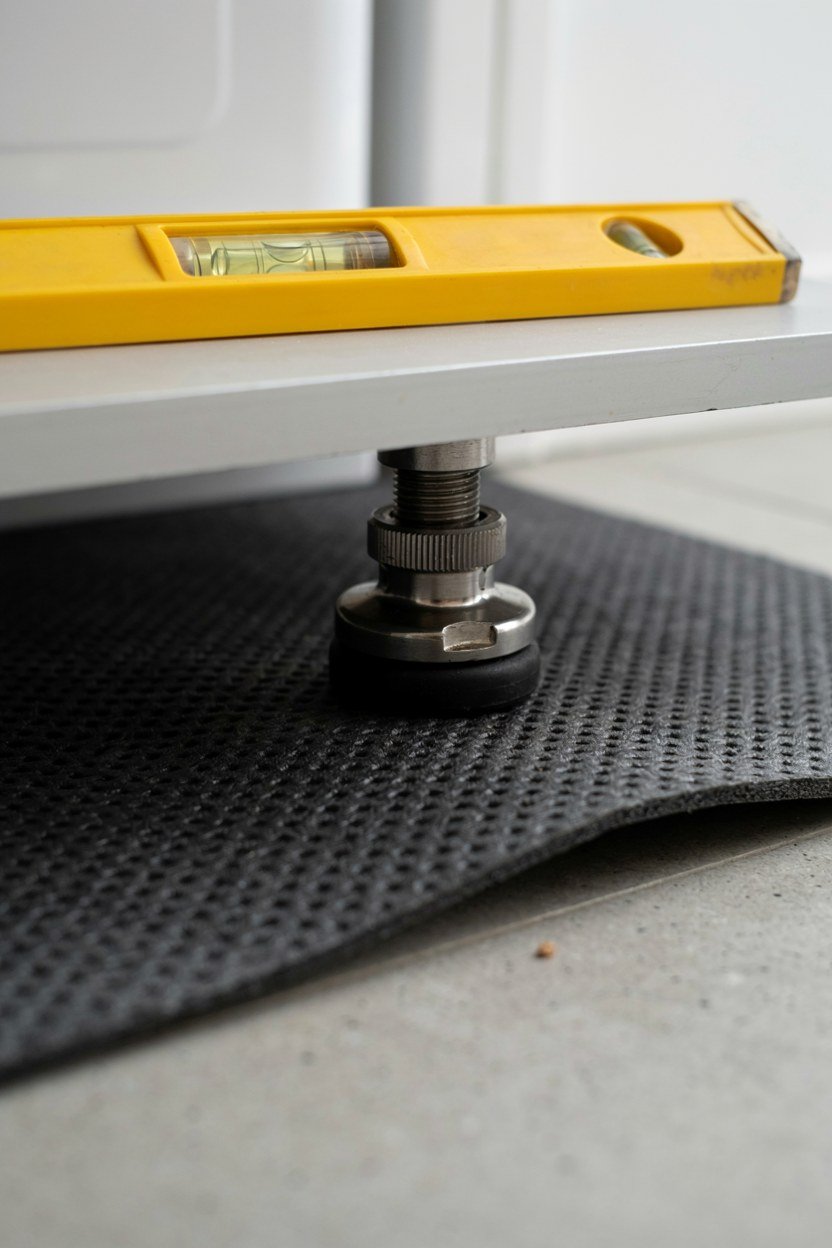
Noise is the main complaint about laundry nooks near living space. Most of it is vibration passing into the floor and walls.
An anti vibration mat under each machine costs little and helps immediately. Making sure the feet are level and locked helps just as much.
Check the noise rating before buying. A machine rated in the low 70s decibels on spin is noticeably calmer than one in the high 70s.
Run the machines outside quiet hours if the nook sits near a bedroom. A delay start timer solves this without any building work.
15. Leave One Empty Shelf
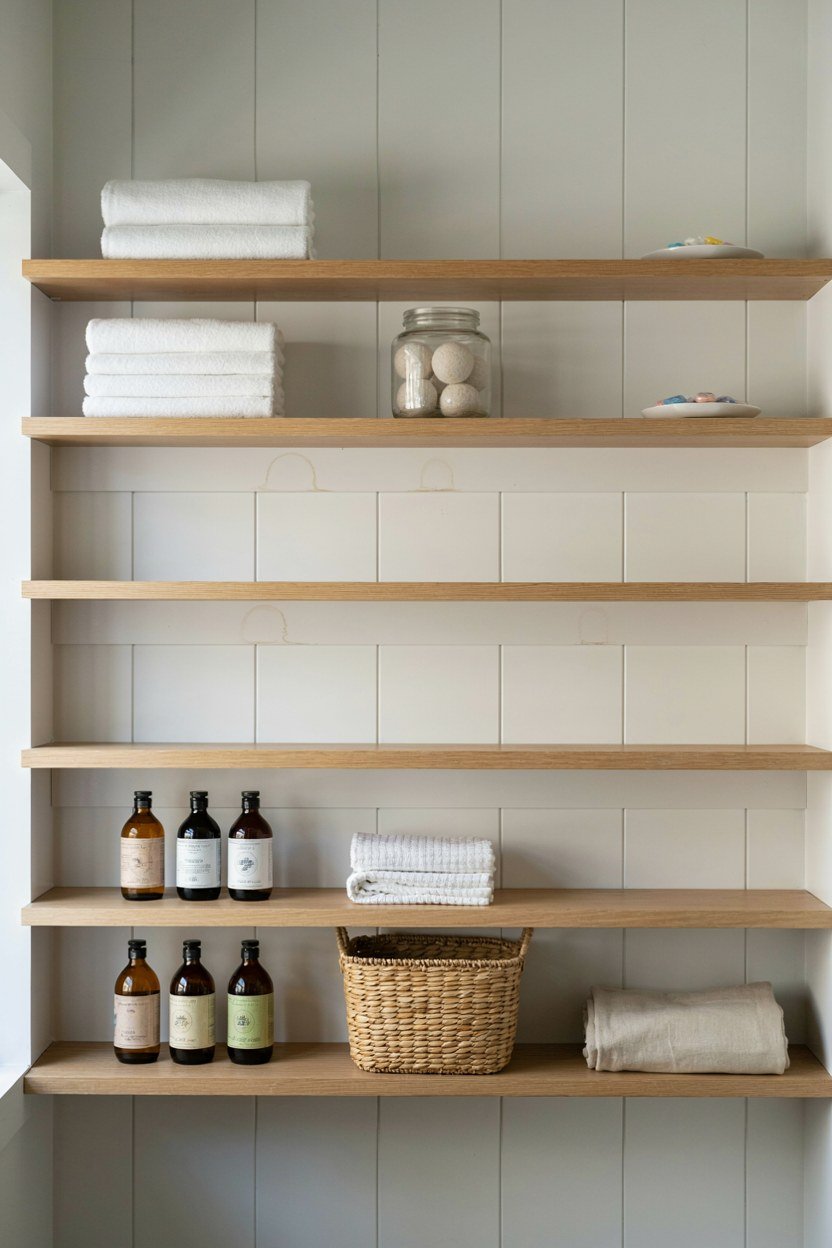
Every working laundry room needs slack for the odd thing: a stain kit, a bag for dry cleaning, shoes drying out.
I keep one shelf deliberately empty. Fill every inch on day one and the room becomes cluttered by month two.
It also gives you somewhere to put things during a repair, which will happen sooner than you expect.
What A Small Laundry Nook Costs To Fit Out
The machines dominate the budget and the joinery is usually second. Everything else is small money with a large effect.
I would spend on the dryer type and the worktop first. A condenser or heat pump dryer solves your ventilation problem, and the counter solves your folding problem.
Storage and lighting can be added over time. The plumbing and electrics cannot, so get those right at the start even if the shelves wait.
| Element | Priority | Rough Cost |
|---|---|---|
| Washer and dryer | Decide type before layout | High |
| Stacking kit | Needed for any stack | Low |
| Worktop over machines | Biggest daily improvement | Low to mid |
| Cabinetry and shelves | Can be phased | Mid |
| Plumbing and electrics | Do it once, properly | Mid |
| Lighting, rail, bins | Cheap, high impact | Low |
Conclusion: The Three Things That Make A Nook Work
Get the surface, the ventilation and the door right and the rest is detail. A folding counter, a way for moisture to leave, and a door that does not block the floor.
Stacked front loaders under a continuous worktop is the layout I would choose almost every time in a small space. It gives you the most usable room per inch.
Then keep one shelf empty. A laundry nook fails from being overfilled far more often than from being badly designed.
Frequently Asked Questions About Small Laundry Rooms
What is the minimum width for a laundry nook?
About 30 inches for a single stacked pair. Below that you are looking at a washer dryer combo unit instead.
Should I stack or put machines side by side?
Stack below roughly 48 inches of width. Side by side only earns its space when you can run a counter across both.
Do I need a vent for a dryer in a cupboard?
Yes, unless you choose a heat pump or condenser model. Even then, add a door vent so humidity can escape.
What flooring is best for a laundry room?
Vinyl, tile or sealed concrete. Avoid laminate and wood, because the first leak will ruin them.
How do I stop the machines being so loud?
Level the feet properly and add anti vibration mats. Most noise is vibration entering the floor, not the motor itself.
Can I put a laundry nook in a hallway?
Yes, and it works well if you choose a condenser dryer and a solid door. Noise and moisture are the two things to plan for.
Where should the socket go behind a washing machine?
High on a side wall, never directly behind the machine. You need to reach it without pulling the appliance out.