
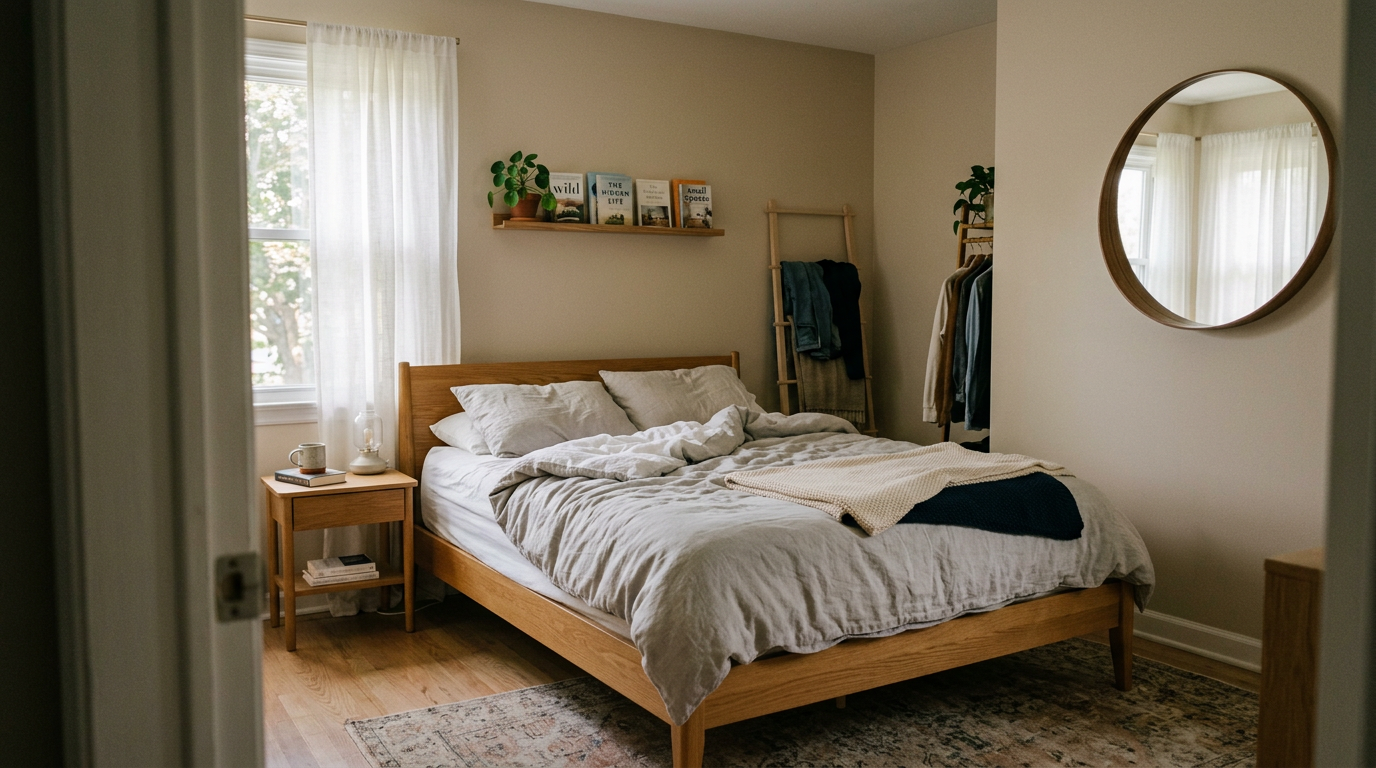
A small bedroom doesn’t have to feel cramped. With the right furniture, smart storage, good lighting, and a layout that makes sense, even a tiny room can feel open and functional. I’ve redone a few small bedrooms myself, and the biggest lesson I learned is that size isn’t the real problem. Poor planning is.
Most people walk into a small bedroom and start subtracting. They pull out furniture, skip storage, and end up with a room that’s empty but still feels tight. That’s backward. The goal isn’t to have less stuff in the room. It’s to have the right stuff, placed the right way.
In this guide, I’ll walk you through furniture picks that fit small rooms, storage solutions that don’t eat up floor space, lighting setups that make a room feel bigger, and layout tricks that change how a room breathes. These are things I’ve tested, not theories I read somewhere and repeated.
1. Choosing the Right Bed for a Small Bedroom

The bed is the biggest object in the room, so it decides more than anything else how the space feels. I always tell people to measure the room first and the bed second. A size that’s technically fine can still swallow a small room if it’s the wrong shape.
A full or queen bed usually fits best in a small bedroom, depending on the room’s width. Twin beds save more floor space but limit comfort for two people, so it comes down to who’s actually sleeping there.
Go for a frame with visible legs instead of a solid base. A bed that sits flush to the floor blocks sight lines and makes the room look shorter. Legs let your eye travel underneath, which tricks the brain into reading the room as bigger.
2. Furniture That Doesn’t Crowd the Room
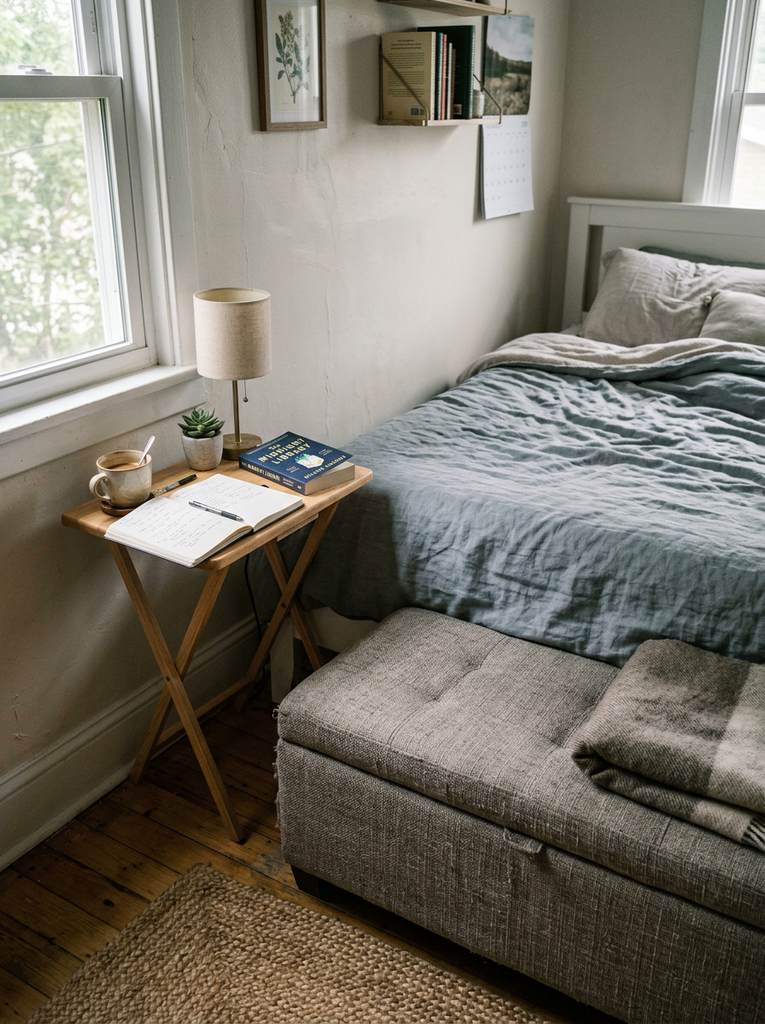
Beyond the bed, every other piece of furniture needs to earn its spot. I stopped buying furniture just because it looked nice in a store and started asking if it actually fit my room’s proportions.
Multi-purpose furniture earns its keep here. A bed with drawers underneath, a desk that folds into the wall, or a bench at the foot of the bed that doubles as storage all give you function without stealing square footage.
I used a storage ottoman in my last small bedroom setup, and it replaced an entire dresser drawer. Small swaps like that add up fast without making the room feel packed.
3. Vertical Storage Solutions That Save Floor Space
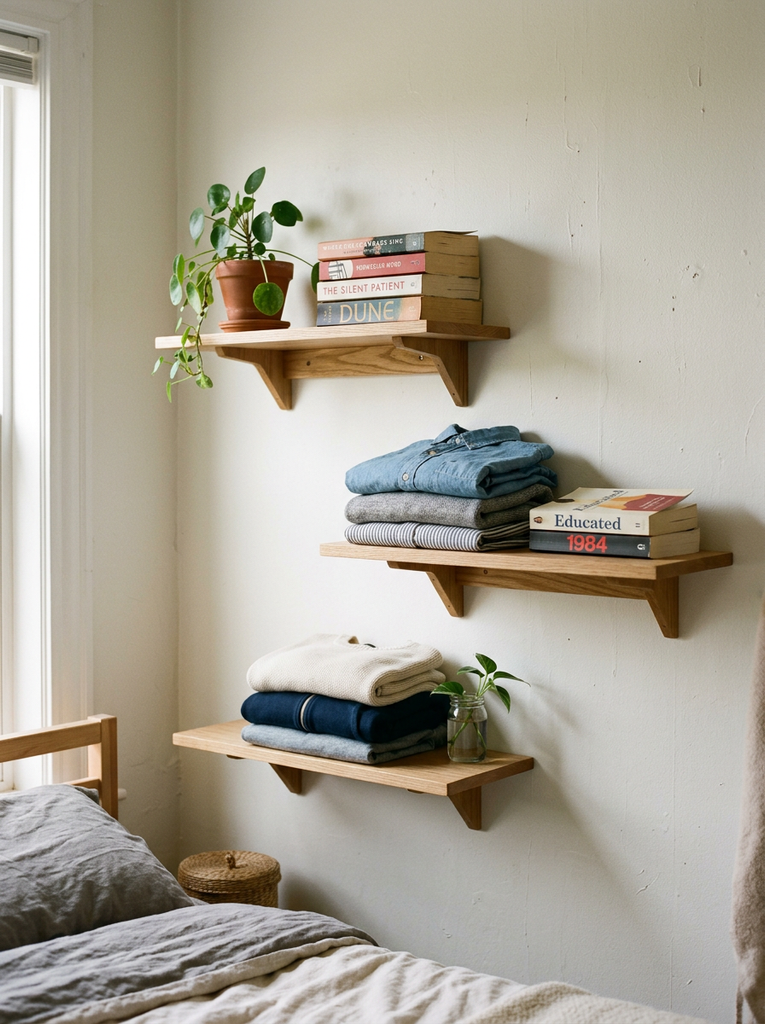
Storage is where most small bedrooms fail. People buy big dressers and bulky nightstands because that’s what they’re used to, then wonder why the room feels tight. The fix is going vertical instead of horizontal.
Wall-mounted shelves are my go-to recommendation. They hold books, folded clothes, or decor without touching the floor at all. I switched from a floor bookshelf to three wall-mounted shelves in my own room and got back nearly two feet of walking space.
Tall, narrow furniture works the same way. A slim, six-drawer dresser holds as much as a wide four-drawer one but takes up a fraction of the floor space.
4. Under-Bed and Closet Storage Tricks
Under-bed storage is an underused option in most bedrooms. Bins, drawers, or a bed frame with built-in storage can hold seasonal clothes, extra linens, or shoes. It’s space that already exists, just sitting there unused.
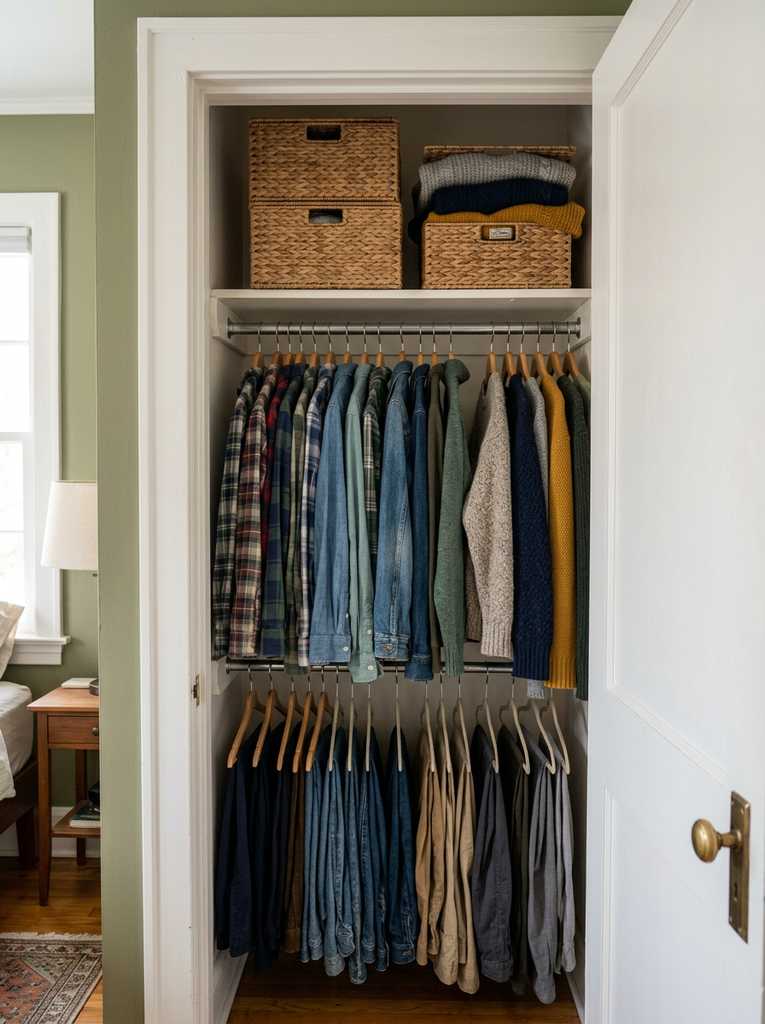
Closet organizers also make a bigger difference than people expect. A basic closet with one hanging rod wastes most of its vertical space and leaves the floor cluttered with shoes and bags.
Adding a second rod, shelves, or stackable bins can double what your closet actually holds. I did this in my own closet and never had to buy a separate storage piece for the room again.
5. Layered Lighting for a Bigger Feel
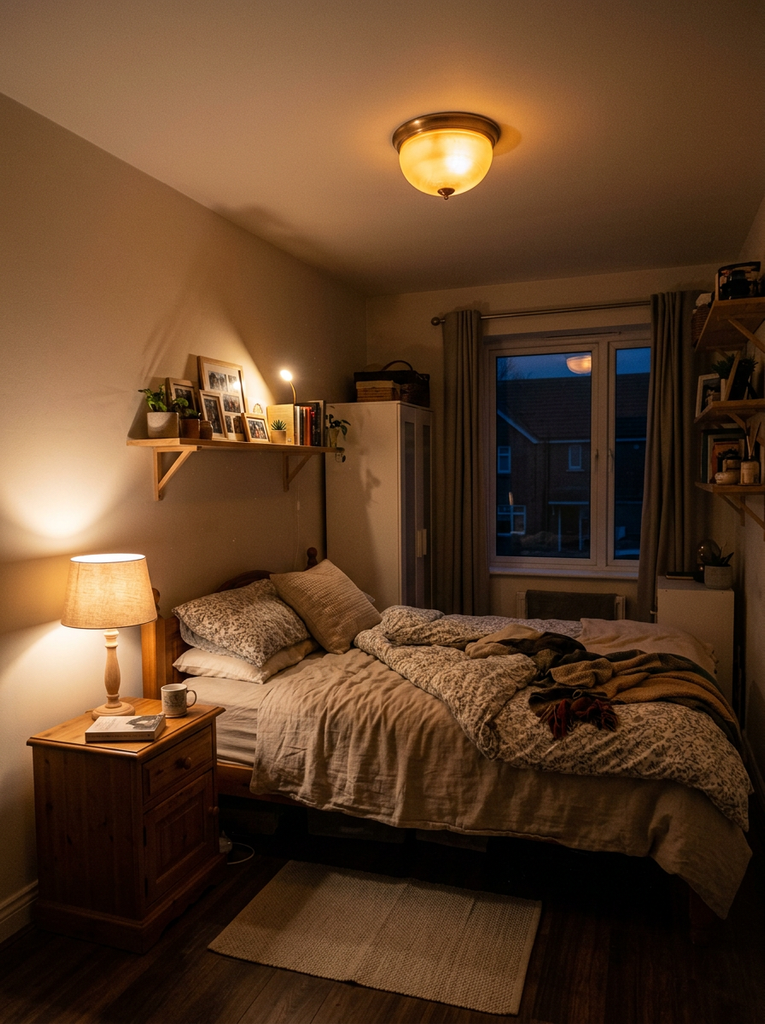
Lighting changes how a room feels more than almost anything else. A small bedroom with one dim overhead light will always feel smaller than it is, no matter how good the layout is.
Layer your light sources instead of relying on one fixture. A ceiling light, a lamp on the nightstand, and maybe a small accent light near a shelf work together to remove harsh shadows.
Shadows are what make rooms feel boxed in, not the actual square footage. Fixing the lighting is often a faster fix than rearranging furniture.
6. Using Natural Light and Mirrors
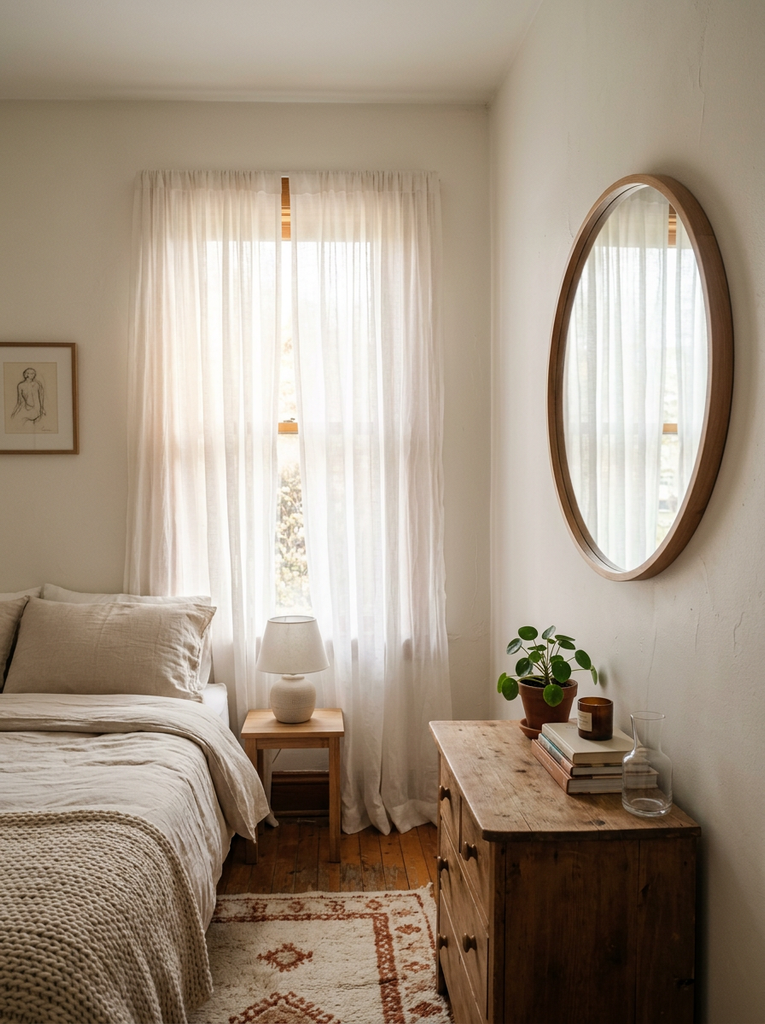
Natural light matters just as much as artificial lighting. Keep window treatments light and simple. Heavy curtains block daylight and visually shrink the wall they hang on.
I switched to sheer curtains in my small bedroom and the whole room felt brighter within a week. It’s one of the cheapest changes that made the biggest visible difference.
Mirrors paired with light sources are a small bedroom trick that actually works. Placing a mirror across from a window bounces daylight deeper into the room, which makes the space feel roughly twice as open.
7. Smart Bed Placement and Layout
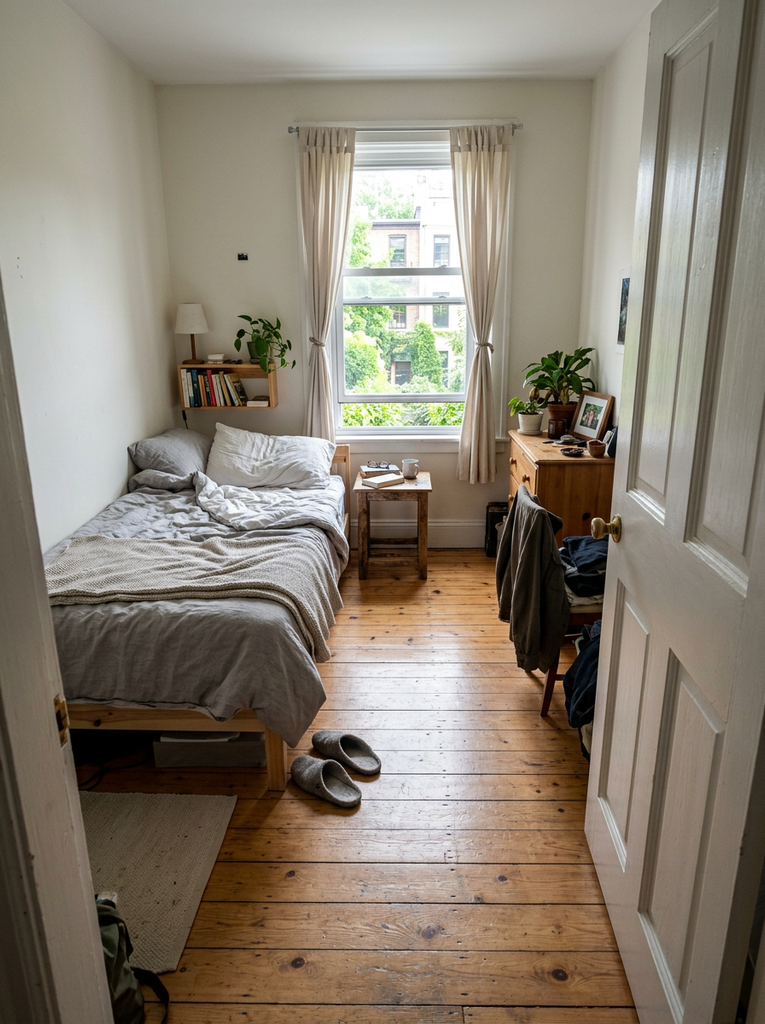
Layout is the piece people overthink the least, but it matters the most. Where you place the bed decides how the entire room feels, so start there before anything else.
Push the bed against the longest wall instead of centering it in the room. This frees up floor space on both sides and creates an actual walking path instead of a maze of furniture.
I made this one change in my last bedroom, and it felt like a different room entirely. Keep a clear path from the door to the window if your room has one, since a straight, unobstructed line makes the space read as open.
8. Color, Clutter, and Final Layout Tips
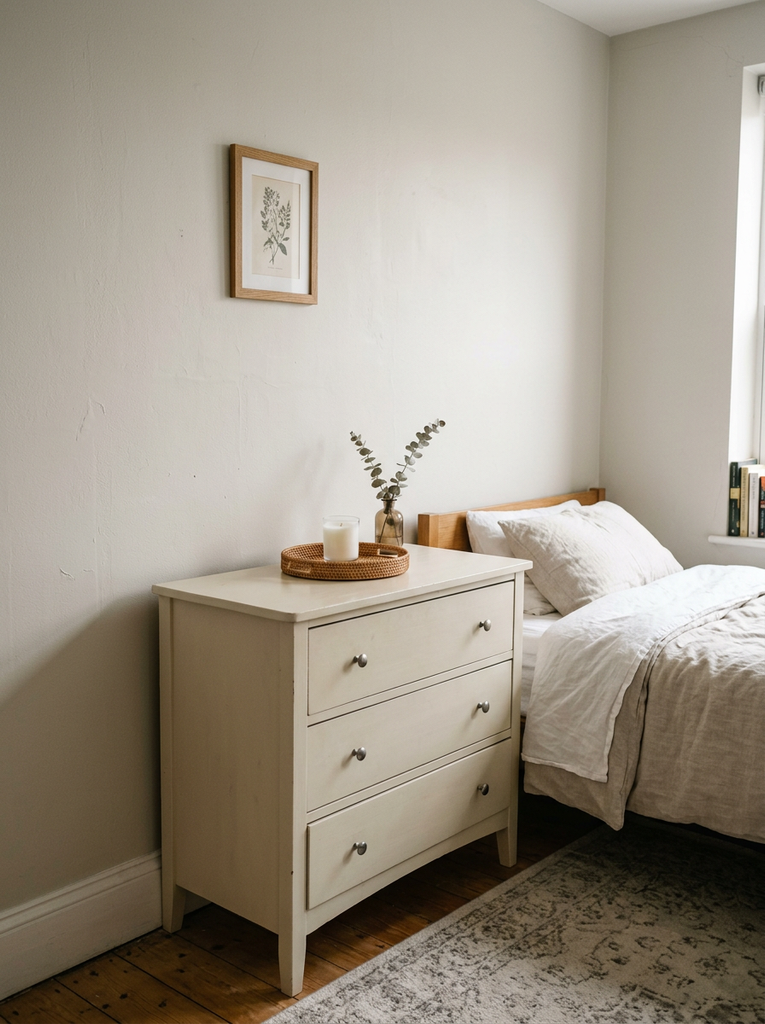
Wall color plays a bigger role than most people expect. Light, soft tones reflect more light and make walls feel like they’re set further back than they actually are.
Avoid pushing every piece of furniture against the walls. It sounds counterintuitive, but a small gap of a few inches between furniture and the wall softens the boxed-in feeling that comes from a room where everything hugs the perimeter.
Keep flat surfaces clear as often as you can. A nightstand or dresser covered in loose items reads as clutter even in a well-designed room, and clutter is what makes a small bedroom feel small.
Final Thoughts: Small Bedroom, Big Difference
A small bedroom isn’t a limitation. It’s a puzzle, and once you solve it, the room works better than a lot of bigger bedrooms I’ve seen. Furniture with legs, vertical storage, layered lighting, and a smart layout all work together to change how the space feels.
None of this requires a full renovation or a big budget. Small swaps, like sheer curtains, wall shelves, or moving your bed to a different wall, add up fast.
Start with one change instead of trying to fix everything at once. Pick the area that bothers you most, whether it’s storage, lighting, or layout, and work from there.
Frequently Asked Questions
What is the best bed size for a small bedroom?
A full or queen bed usually works best, depending on the room’s width. Twin beds save more space but limit comfort for two people.
How can I make a small bedroom look bigger without renovating?
Use light colors on walls, add mirrors across from windows, and switch to sheer curtains. Furniture with visible legs also helps the room read as open.
Is it better to have less furniture in a small bedroom?
Not necessarily. The goal is fewer, smarter pieces rather than simply removing furniture. Multi-purpose pieces give you function without wasting space.
Where should storage go in a small bedroom?
Go vertical with wall shelves and tall, narrow furniture instead of wide dressers. Under-bed storage and closet organizers also free up floor space.
What lighting works best in a small bedroom?
Layered lighting works best, combining a ceiling fixture, a bedside lamp, and one accent light. This removes the harsh shadows that make rooms feel boxed in.
Should the bed go against the wall in a small bedroom?
Yes, placing the bed against the longest wall usually works best. It keeps floor space open on both sides and creates a clear walking path.
Do mirrors actually help small bedrooms feel bigger?
Yes, especially when placed across from a window. Mirrors bounce natural light deeper into the room, which makes the space feel noticeably more open.