
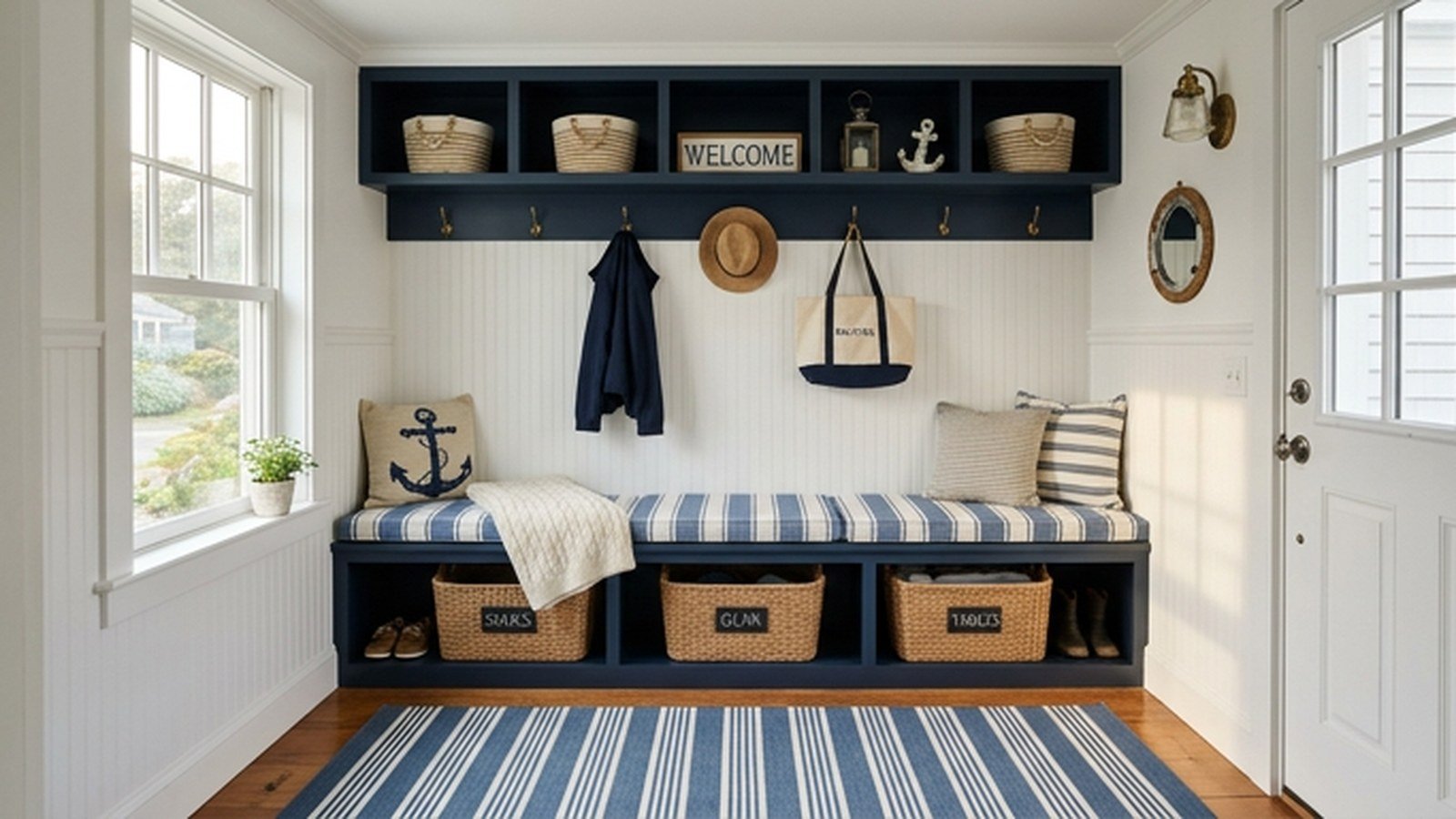
A navy and white palette turns a mudroom from a purely functional catch-all into a genuinely designed entry point, and it does this without going out of style. The combination reads as crisp and organized rather than trendy, which matters in a room that needs to look put together despite handling muddy boots and wet coats daily. I have specced this palette for three different mudroom projects now, and it remains the single combination clients return to years later without wanting a refresh.
This guide covers fifteen specific ways a navy and white nautical palette shows up in a mudroom, what each one actually costs, and where the color choice can go wrong in a room that sees genuinely heavy daily wear. Expect honest notes about durability, practical storage, and the small details that separate a mudroom that stays looking sharp from one that shows every scuff. By the end you will have a real plan matched to your own household’s actual needs.
A navy and white mudroom needs genuinely durable materials more than almost any other room in the home, since this space handles mud, water, and constant traffic daily. I will flag durability considerations directly throughout this guide rather than let the color scheme’s classic appeal outweigh practical performance. The best navy and white mudrooms balance timeless style with real everyday function.
Why Navy And White Suits A Mudroom So Well
Navy and white carries a nautical heritage that connects naturally to the practical, working room character a mudroom already has, since both the color scheme and the room’s function share a no-nonsense, purposeful quality. This connection is why the palette feels appropriate rather than arbitrary in this specific room, unlike a more delicate or purely decorative color choice might. Few color combinations align this well with a room’s actual practical purpose.
The combination also hides daily wear better than many alternatives, since navy conceals dirt and scuffs far more effectively than a pale color would, while white in the right applications, like painted trim, still photographs as clean and crisp despite regular contact. This practical durability advantage matters as much as the palette’s classic visual appeal for a room that genuinely earns its keep daily. Few palettes balance looking good and staying clean this effectively.
The table below compares navy and white against an all white and an earth toned mudroom palette on the factors that matter most for this specific room. Use it as a quick reference before committing to a full palette. Most households find navy and white wins on the factors that matter most day to day.
| Factor | Navy and white | All white | Earth toned |
|---|---|---|---|
| Hides daily dirt and scuffs | Strong | Weak, shows every mark | Strong |
| Feels timeless rather than trendy | Very strong | Strong | Moderate |
| Visual crispness | Strong | Very strong | Weaker |
Planning A Navy And White Mudroom Before You Start
Assess your household’s actual daily mudroom traffic and storage needs honestly before choosing specific design elements, since a beautiful navy and white scheme still needs to function as genuine storage and transition space above all else. Walk through your family’s actual daily routine, entering with muddy boots, wet umbrellas, school bags, before finalizing layout decisions. I redesigned my own mudroom’s storage twice before landing on a layout that matched how my family actually uses the space.
Consider your mudroom’s specific moisture and durability demands before committing to any finish, since this room handles more direct water and dirt exposure than almost any other room in the home. A navy paint or tile chosen purely for color without confirming durability ratings can wear poorly regardless of how well it matches your intended palette. Address this practical foundation before layering in the specific decorative choices covered throughout this guide.
Set a realistic budget that separates durable, functional elements like flooring and storage from smaller decorative accents like hardware and textiles. Both a modest and a more generous budget can achieve genuine navy and white character, so match your plan to what you can actually spend while prioritizing durability where it matters most. The ideas below are ordered roughly from foundational investments to smaller finishing touches.
1. Navy Painted Built-In Storage Bench
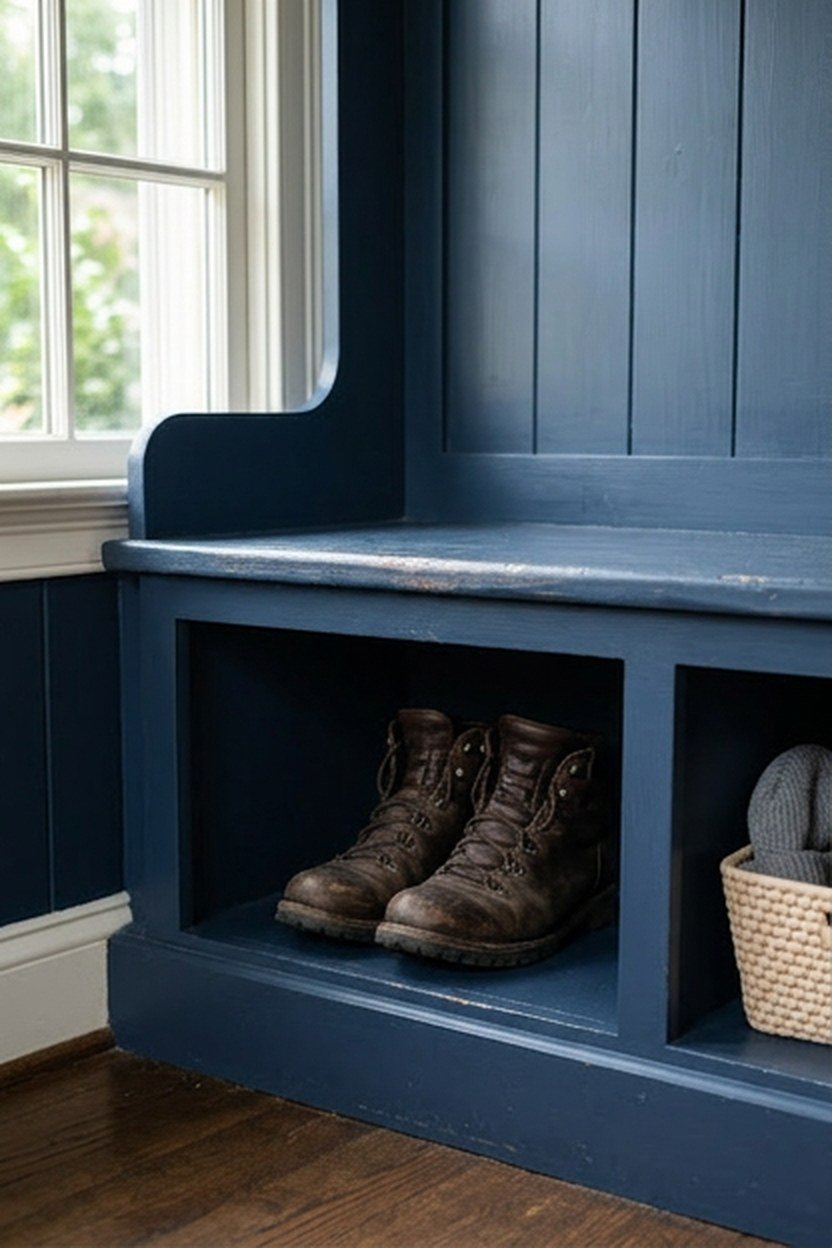
A navy painted built-in bench with storage cubbies underneath is one of the most functional and most visually defining features a mudroom can have, combining seating, shoe storage, and a genuine focal point in one piece. Expect to pay 800 to 2000 dollars for a quality custom built-in bench system, or considerably less for a simpler pre-made version. This piece typically anchors the entire room’s layout and color scheme.
Choose a durable, washable paint formulation specifically rated for high traffic furniture, since a bench sees genuinely heavy daily contact from sitting, boot removal, and general handling. Ask specifically for a cabinet grade or enamel paint rather than standard furniture paint when having a bench custom built or repainting an existing piece. This distinction in paint type matters considerably for how well the finish holds up to years of daily mudroom use.
The painted navy surface will develop a soft matte texture across the surface within the first year or two of normal daily use and cleaning. This gradual textured change in the paint’s original sheen is expected for painted furniture in a high traffic mudroom and does not affect the bench’s structural integrity. A durable finish specifically formulated for this kind of use slows this change considerably compared to a standard paint.
Choosing Cubby Size For Your Household’s Shoe Storage
Measure your household’s actual typical shoe and boot collection before finalizing cubby dimensions, since a cubby too shallow forces boots to stick out awkwardly while one too deep wastes valuable storage space. Count your household size and typical seasonal footwear rotation honestly when planning this storage capacity. This practical sizing consideration matters more to the bench’s daily usefulness than its visual design.
Consider labeled cubbies for each family member specifically in a household with several children, since this small organizational system considerably reduces the daily search for missing shoes. Simple painted labels or small nameplates work well for this purpose. This small habit saves real time during a busy morning routine.
2. White Beadboard Wainscoting With Navy Above
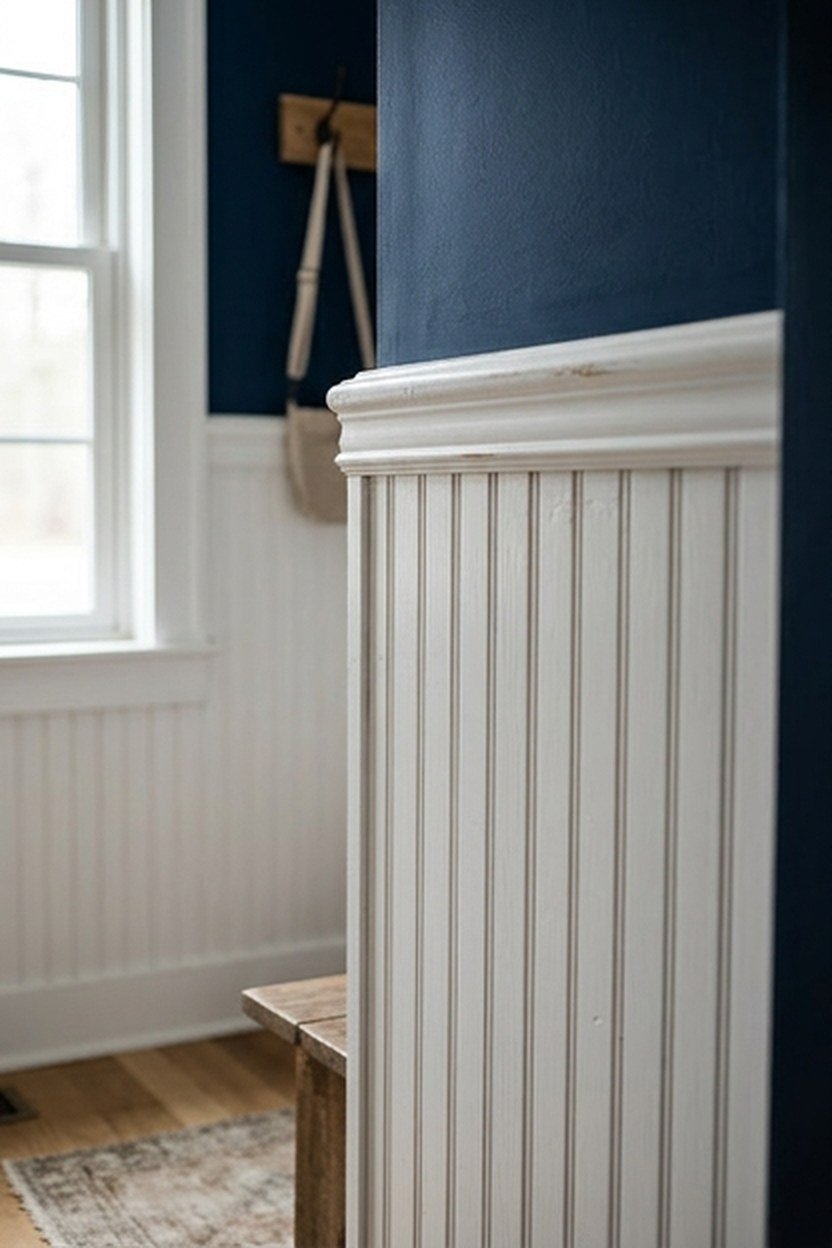
White beadboard wainscoting on the lower portion of mudroom walls, paired with navy paint above, creates a classic nautical layered look that also protects the most contact-prone wall area with a more durable material. Expect to pay 400 to 900 dollars in materials for a standard mudroom’s wainscoting treatment. This layered approach addresses both durability and visual interest in a single design decision.
Choose a moisture resistant beadboard material, either PVC based or properly primed and sealed real wood, rather than standard interior beadboard not rated for a mudroom’s humidity and moisture exposure. This material choice matters significantly for the wainscoting’s long term durability given the room’s consistent exposure to wet boots and coats. A local building supplier can point you toward the specific product line rated for this application.
The painted beadboard will develop a soft matte texture in the grooves between each board as dust and normal handling settle into these recessed areas over time. This gradual textured change is completely normal for beadboard under regular mudroom use and cleaning does not remove the underlying texture entirely. Regular dusting with a soft brush attachment keeps the grooves looking their best between deeper cleanings.
Choosing Wainscoting Height For Maximum Protection
Standard wainscoting height runs around three to four feet, though a mudroom specifically benefits from extending this slightly higher given the room’s greater exposure to contact and splashing compared to other rooms. Measure your specific wall height and consider where boots, bags, and coats typically make contact before finalizing this height. This practical consideration matters more here than in a room with lower daily contact exposure.
Confirm your chosen wainscoting height coordinates well with any window sills or door frames already in the room, since a mismatched height against existing architectural features looks unintentional rather than deliberately planned. Hold a length of trim against the wall before installation to preview the line. This quick check avoids an awkward mismatch you would otherwise notice every day.
3. Navy And White Striped Runner Rug
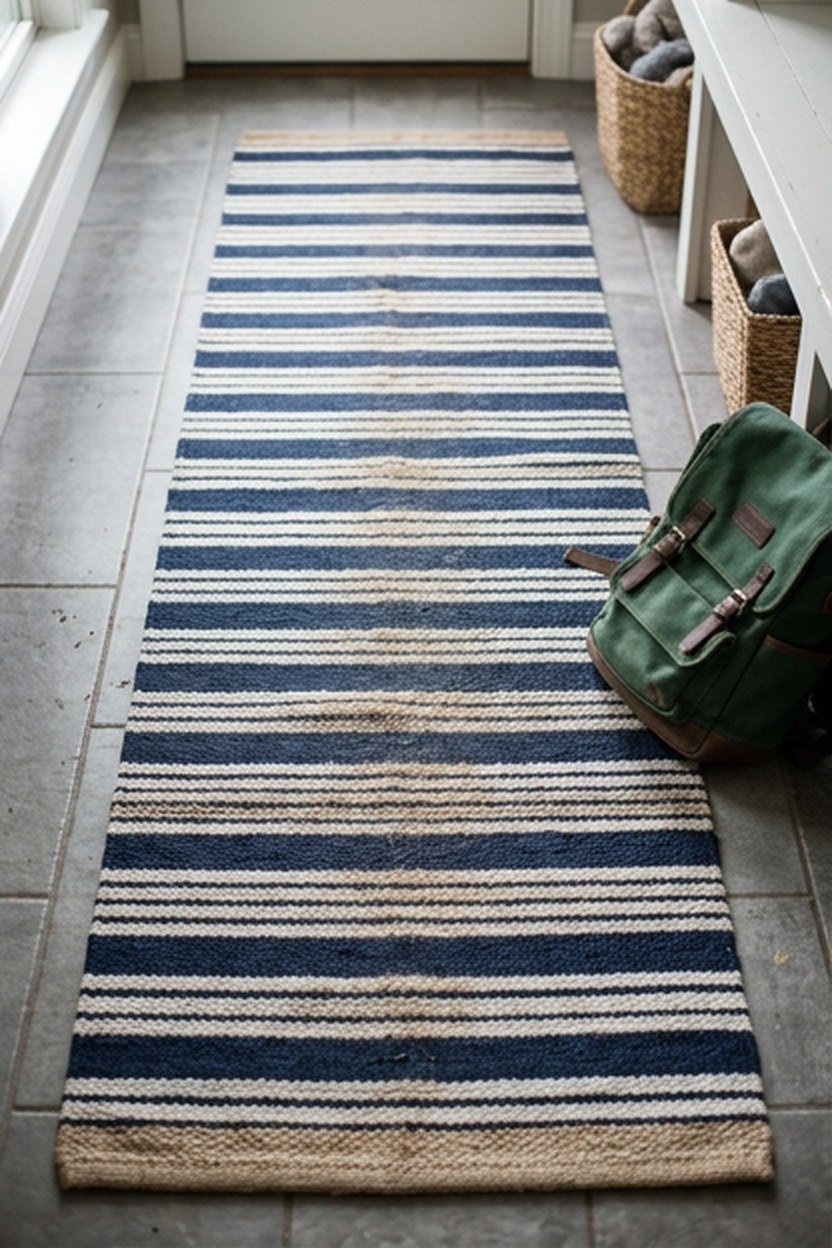
A navy and white striped runner rug running the length of a mudroom’s main walkway anchors the floor level design while providing genuine functional protection for the flooring beneath. Expect to pay 60 to 150 dollars for a quality durable runner sized for a standard mudroom length. This addition works especially well at capturing dirt and moisture before it spreads further into the home.
Choose a flat weave or a low pile runner specifically rated for high traffic and easy cleaning, since a plush or delicate rug material handles mud and water far worse than a more utilitarian weave. Many quality mudroom specific runners are now designed with washable, durable materials specifically for this demanding application. This practical material choice matters more here than in almost any other room’s rug selection.
The runner’s fibers will develop a soft natural fiber texture becoming more pronounced as the material compresses slightly from concentrated daily foot traffic along the main walking path. This gradual textured change is completely normal for a mudroom runner under sustained use and does not indicate a defect. Rotating the runner periodically, if long enough, evens out this wear across more of the surface.
Choosing Runner Length For Your Mudroom Layout
Measure your specific walkway length precisely before ordering a runner sized to match this area, since a runner too short leaves gaps in the protected coverage while one too long can bunch awkwardly at either end. Confirm this measurement rather than guessing at a standard length available from a retailer. This detail matters considerably for both function and finished appearance.
Choose a runner with a non-slip backing specifically for mudroom use, since a shifting rug in a room where people enter with wet or muddy shoes presents a genuine trip hazard during regular daily use. Test the backing on your specific floor type before committing to a longer runner. This small safety check matters more here than in a lower traffic room.
4. Navy Hooks With White Cubby Backing
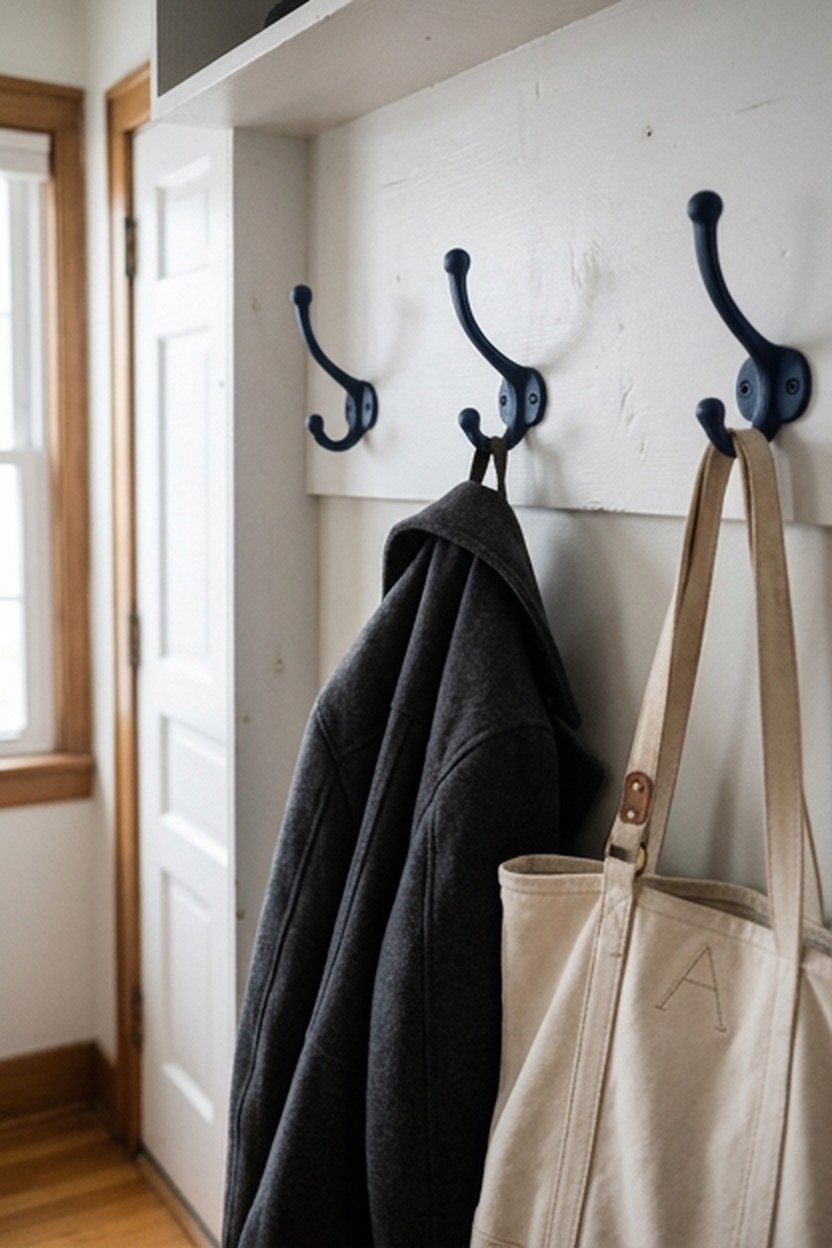
Navy metal or painted wood hooks mounted against a white painted cubby backing creates strong visual contrast at the exact point where coats and bags get hung daily. Expect to pay 15 to 40 dollars per hook for quality options, with most mudrooms needing four to eight hooks depending on household size. This detail adds color exactly where it gets noticed most during daily use.
Position hooks at appropriate heights for each household member, including lower hooks specifically sized for children if applicable, rather than a single uniform height for the entire family. This practical accommodation matters more to daily usability than the hooks’ visual arrangement alone. Measure typical users’ heights before finalizing hook placement.
The navy hooks, if a painted finish, will develop a soft matte texture change near the contact point where coats and bags are regularly hung and removed. This gradual textured change at this specific high contact point is normal for painted hardware under sustained daily use and does not affect the hook’s structural function. A durable, high quality paint finish slows this change considerably.
Spacing Hooks For A Busy Household
Space hooks widely enough that hung coats and bags do not constantly tangle with neighboring items, a common frustration in a busy household’s daily routine. Consider double hooks or a slightly longer hook style if your household regularly hangs both a coat and a bag on the same hook position. This small spacing and style consideration matters more to daily frustration levels than the hooks’ color or finish.
Label each hook position for younger children specifically, since this small addition helps build the habit of consistent coat and bag placement rather than items ending up scattered around the room. A picture label works well for children too young to read. This small system pays off within just a few weeks of consistent use.
5. White Subway Tile Flooring With Navy Grout
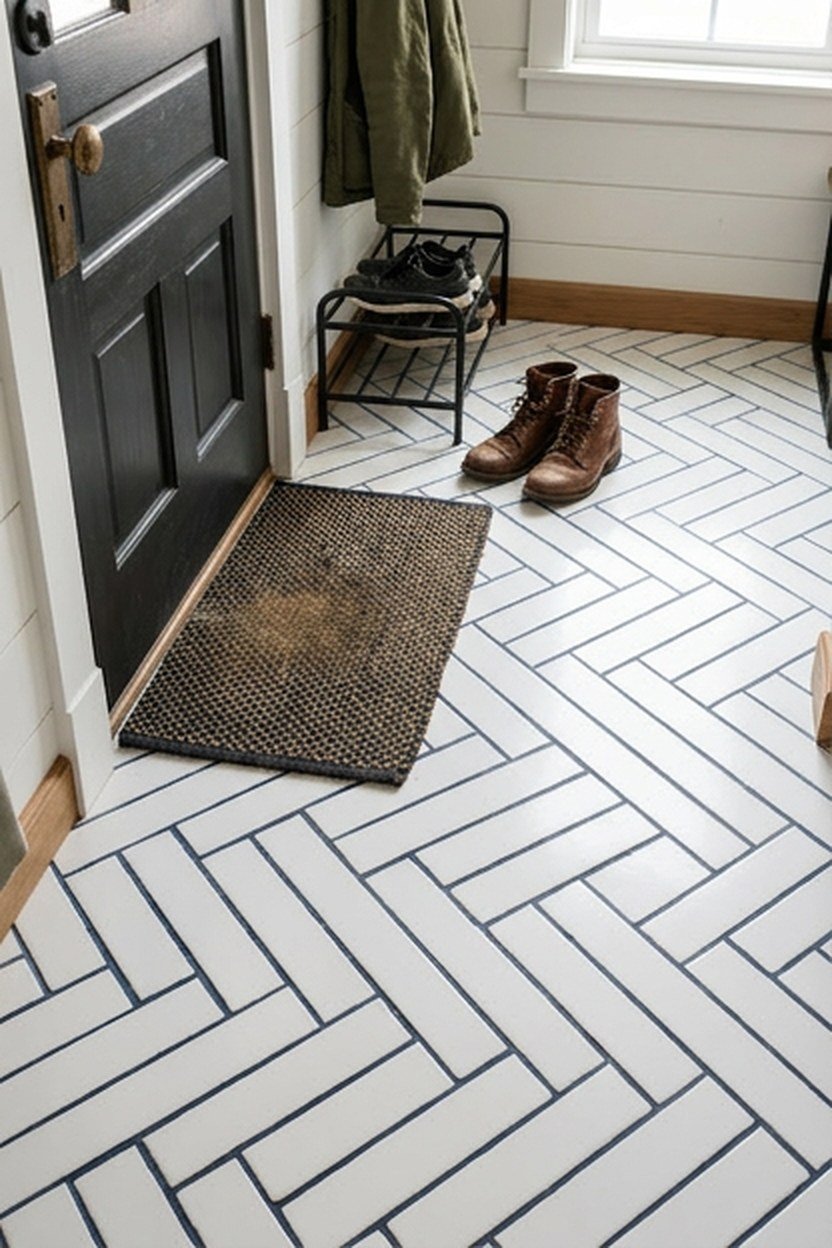
White subway tile flooring paired with navy colored grout creates a striking pattern that also happens to hide dirt in the grout lines far better than a standard white or gray grout would. Expect to pay 800 to 1800 dollars for a professional installation covering a standard mudroom floor. This detail turns a practical flooring choice into a genuine design statement.
Choose a tile specifically rated for high traffic floor use rather than a decorative wall tile mistakenly applied to flooring, since floor tile needs different durability and slip resistance ratings than a wall application requires. Confirm this rating specifically with your tile supplier before finalizing a purchase. This distinction matters considerably for both safety and long term durability in a mudroom application.
The navy grout will develop a soft matte texture change in the highest traffic areas near the entry door after a couple years of regular use and cleaning. This gradual textured change from foot traffic and cleaning product residue is normal for grout under sustained daily use and does not indicate an installation problem. Resealing the grout annually slows this change if you want to maintain the crispest possible contrast against the white tile.
Choosing Tile Pattern For A Mudroom Floor
A classic straight lay or a herringbone pattern both suit a navy and white nautical mudroom well, with herringbone adding more visual complexity at a somewhat higher installation cost given the more intricate cutting required. Choose based on your budget and how much visual pattern interest you want from the floor itself. Both patterns achieve the classic navy and white aesthetic this palette is meant to evoke.
Confirm your tile installer has specific experience with your chosen pattern, since herringbone especially requires more precise cutting and planning than a standard straight lay installation. Ask to see photos of a completed herringbone project before hiring. This small verification step avoids a disappointing, uneven final pattern.
6. Navy Shiplap Accent Wall
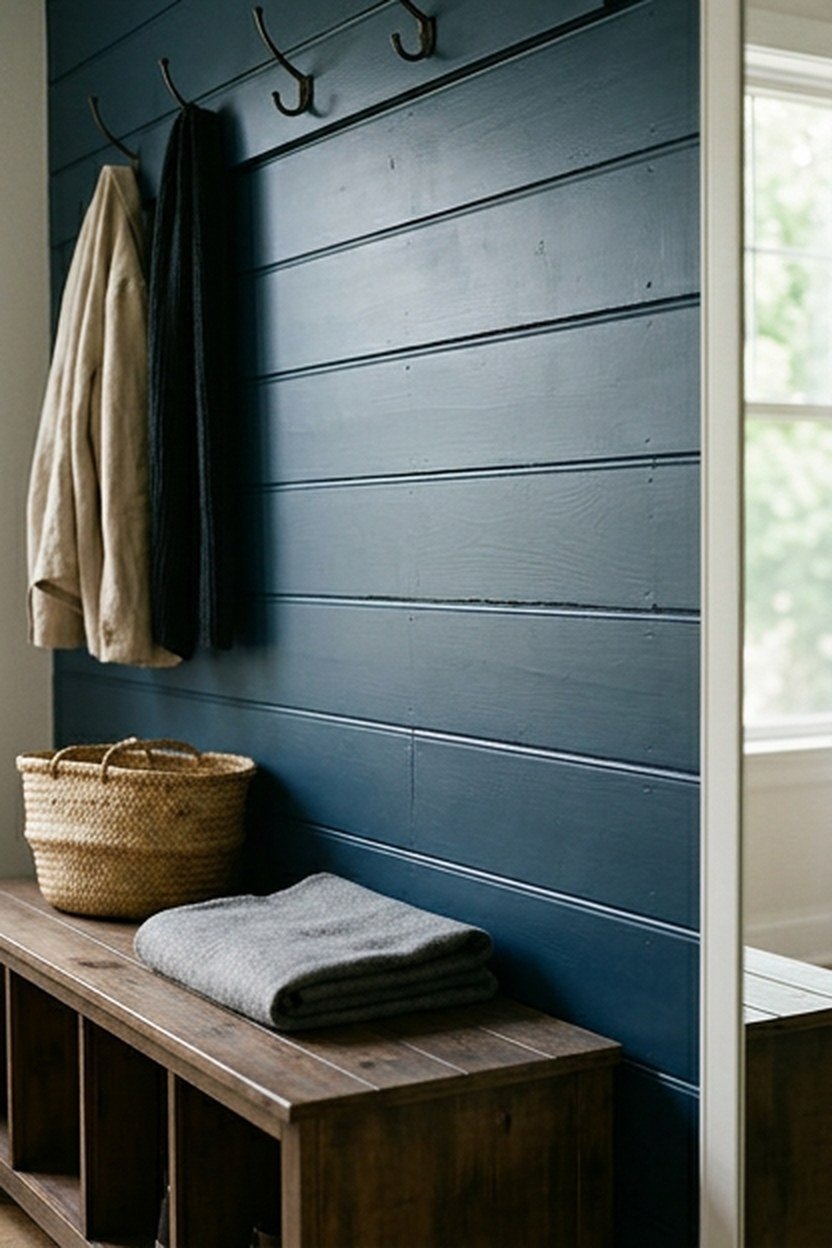
A navy painted shiplap accent wall brings genuine architectural texture to a mudroom while introducing the color at a scale larger than smaller accents alone could achieve. Expect to pay 300 to 700 dollars in materials for a single accent wall’s shiplap installation. This treatment works especially well positioned behind the main storage bench or hook area, creating a cohesive focal point.
Choose a satin or semi gloss paint finish for shiplap in a mudroom specifically, since this sheen level handles the moisture and regular cleaning this room requires better than a flat paint finish would. Resist the urge to fill every gap between boards perfectly smooth, since the visible seams are part of the classic shiplap character this treatment is meant to provide. This detail matters more to the authentic look than a flawlessly smooth finish would.
The painted shiplap boards will show a soft matte texture developing across the surface within the first year of normal humidity and use exposure from the mudroom’s daily traffic. This gradual textured change in the paint’s original sheen is expected for painted wood in this environment and does not affect the boards’ structural integrity. A humidity resistant paint formulation slows this change if you want to preserve the original finish longer.
Coordinating Shiplap With Existing Wainscoting
If your mudroom already features white wainscoting elsewhere, consider whether a navy shiplap accent wall should extend from floor to ceiling or stop at the same height as the wainscoting for visual consistency. This coordination decision affects how cohesive the room’s overall wall treatment reads. Measure and photograph your existing wainscoting height before finalizing the shiplap wall’s own proportions.
Budget slightly more time and labor for shiplap installed around existing architectural features like windows or door frames, since these transitions require more precise cutting than a simple flat wall application. Discuss this added complexity with your installer before finalizing a quote. This upfront conversation prevents a surprise cost once the project is underway.
7. Navy And White Striped Wallpaper
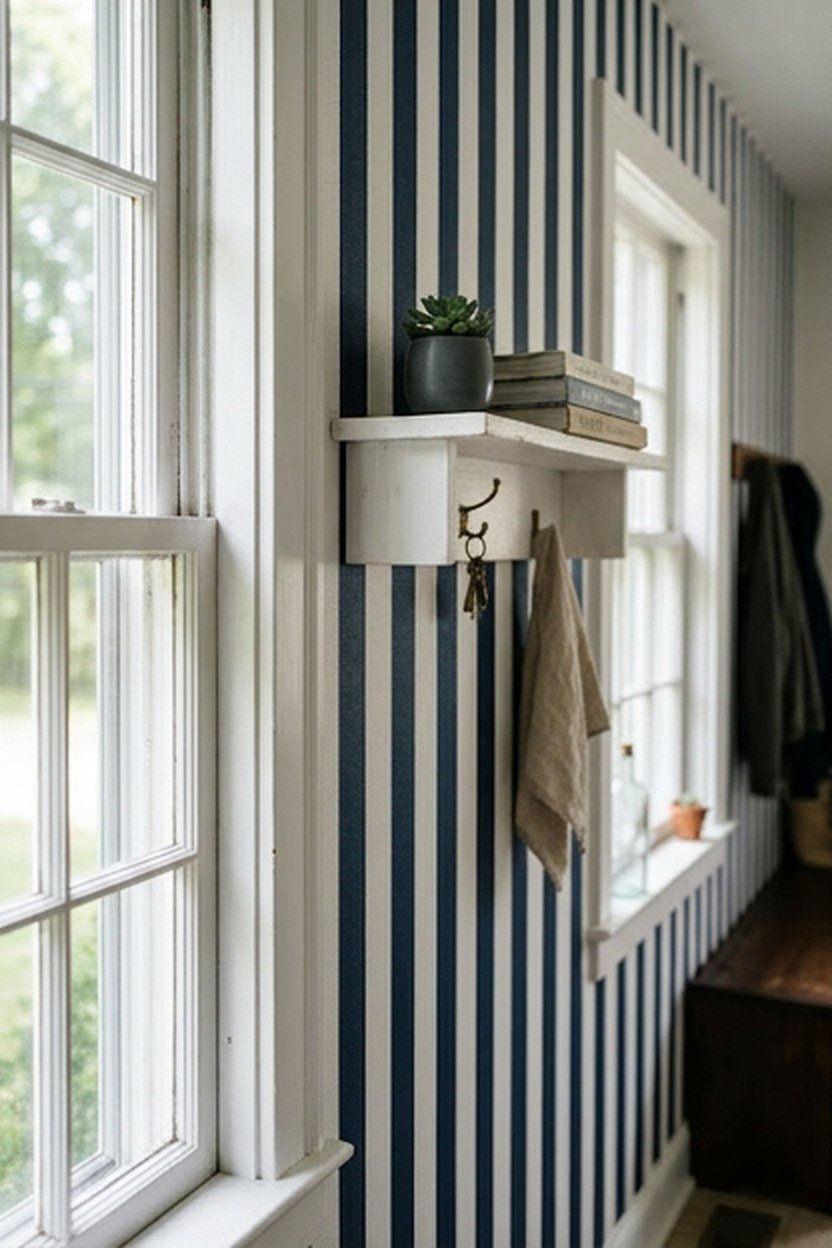
Navy and white striped wallpaper, whether classic pinstripes or a wider awning stripe, brings pattern and genuine nautical character to a mudroom wall without requiring a painting project. Expect to pay 100 to 250 dollars for quality wallpaper covering a standard mudroom accent wall. This detail suits a mudroom wanting more visual pattern than a solid painted wall alone would provide.
Choose a wallpaper specifically rated for high humidity and high traffic areas, typically a vinyl coated or scrubbable option, rather than a standard paper wallpaper not built for a mudroom’s demanding conditions. This distinction matters considerably more for a mudroom application than for wallpaper in a drier, lower traffic room. Confirm this rating specifically when selecting a pattern for this room.
The wallpaper’s pattern can show a soft even texture change in the highest contact areas near the entry door or storage bench from years of incidental brushing contact. This gradual, cosmetic change affects only the most directly contacted sections and is normal for wallpaper under sustained mudroom conditions. Choosing a scrubbable formulation specifically allows for gentle cleaning of any marks that develop in these zones.
Applying Wallpaper Only To A Protected Wall Section
Consider applying striped wallpaper only to an upper wall section, above any wainscoting or a chair rail, keeping the more contact-prone lower wall in a more durable painted finish. This approach balances pattern interest with practical durability in the zones that need it most. Many mudrooms specifically use this layered approach for exactly this reason.
Hire a professional installer for a full wall striped wallpaper application specifically, since stripes require precise, level installation to look genuinely crisp rather than subtly crooked. A slightly off level stripe pattern is far more noticeable than an off level solid color. This small investment in professional installation protects the finished look.
8. Navy Metal Mail And Key Organizer
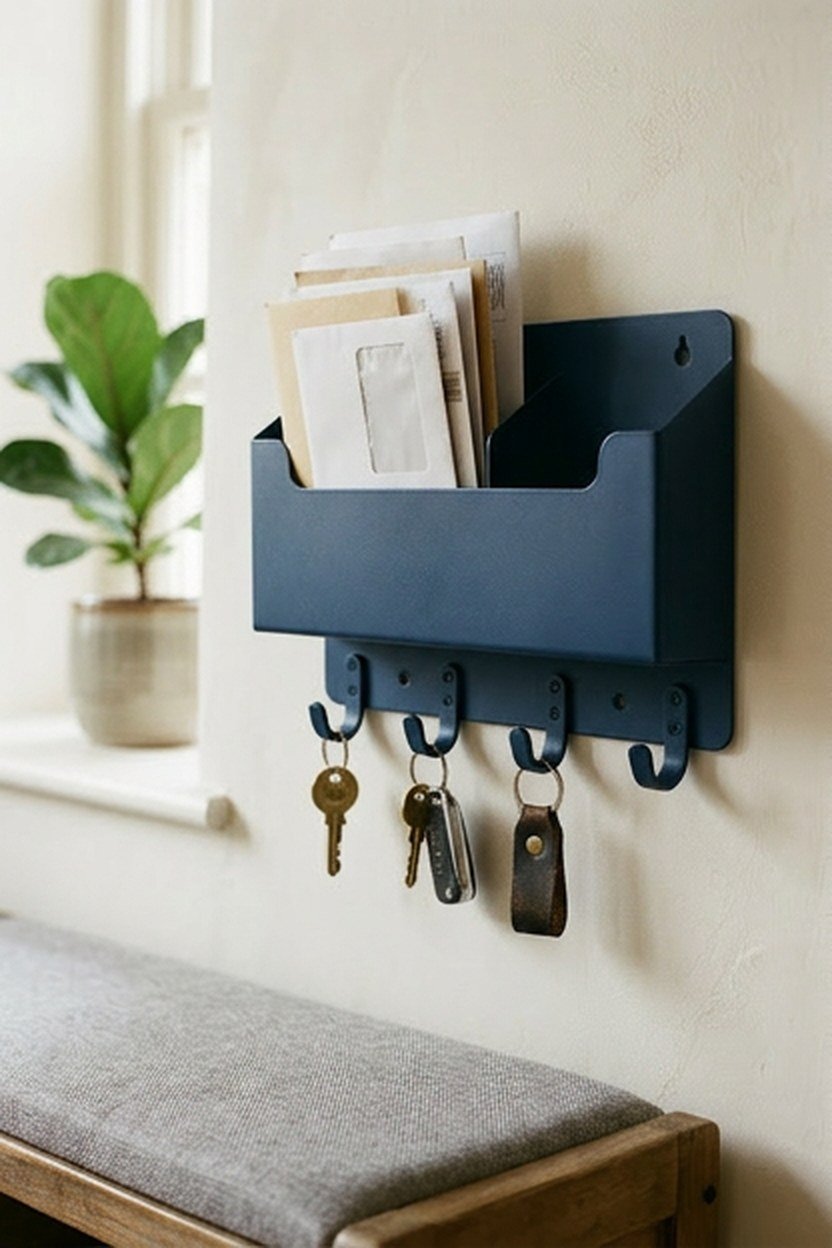
A navy painted metal wall organizer for mail, keys, and small daily essentials keeps this often-cluttered category contained while adding a functional design element to the mudroom wall. Expect to pay 30 to 70 dollars for a quality navy metal organizer with multiple compartments. This detail solves a genuine daily organizational problem most mudrooms face.
Position the organizer at a height convenient for daily use by the adults in the household, typically near eye level, rather than purely for visual balance within the overall wall composition. This practical placement consideration matters more to daily usefulness than the organizer’s position within a symmetrical design. Confirm the specific height works for your household’s typical users before final installation.
The navy painted metal will develop a soft matte texture change at the most handled compartments, like key hooks or the mail slot opening, from years of daily use. This gradual textured change at these specific high contact points is normal for painted metal hardware under sustained daily use and does not affect its structural function. A durable powder coated finish resists this change more than a standard painted finish would.
Choosing Organizer Compartments For Your Household’s Needs
Count your household’s actual daily items needing this kind of organization, mail, keys, sunglasses, a phone charging spot, before choosing a specific organizer’s compartment configuration. An organizer with compartments mismatched to your actual daily items solves less of the clutter problem than one genuinely suited to your household’s needs. Confirm the specific compartment sizes and types before purchasing based on appearance alone.
Consider a organizer with a small chalkboard or whiteboard section specifically for daily reminders or notes, adding functional communication space alongside the physical item storage. This small addition works well for shared household reminders or a running errand list. Many families find this feature earns its keep within the first week.
9. Navy Painted Interior Door
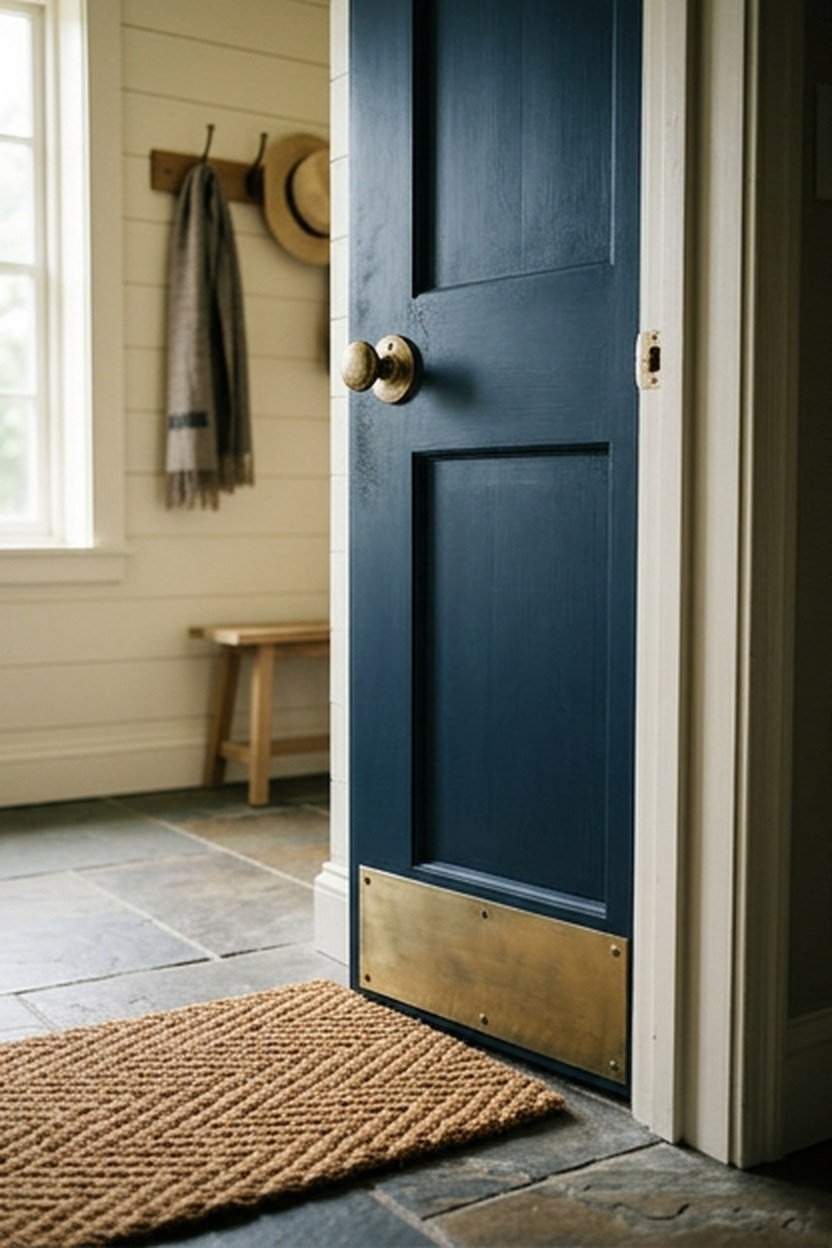
Painting a mudroom’s interior door, whether leading to the garage, backyard, or main house, in navy creates a bold architectural moment at a transition point most rooms overlook. Expect to pay 40 to 100 dollars for quality door paint and supplies for a single door. This is one of the more affordable ways to add meaningful color impact to the room.
Choose a durable, washable paint finish for this door specifically, since it experiences regular hand contact and occasional splashes or mud transfer from daily use. A satin or semi gloss finish handles this considerably better than a flat paint would. This practical finish choice matters more for a mudroom door than for a door elsewhere in a lower traffic part of the home.
The painted door will develop a soft matte texture in the highest contact areas near the handle and kickplate after a year or two of regular use. This gradual textured change from repeated hand and foot contact is completely normal for a painted door in this application and does not indicate a paint quality problem. A touch up kit matched to your specific paint color keeps these high contact areas looking fresh between full repaints.
Adding A Kickplate To Protect A Painted Door
Install a simple metal or painted wood kickplate at the base of a navy painted mudroom door, since this area experiences the most direct contact from boots, bags, and general daily traffic. This small addition protects the paint finish specifically in the zone most prone to scuffing and wear. Most hardware suppliers carry this item at a modest additional cost worth the protection it provides.
Choose a kickplate finish that coordinates with your door’s other hardware, whether matching the navy paint or contrasting with a metallic finish, for a cohesive final look. Bring a paint sample when shopping for hardware to confirm the match in person. This small coordination step keeps the door reading as one deliberate design choice.
10. White Painted Ceiling With Exposed Beams
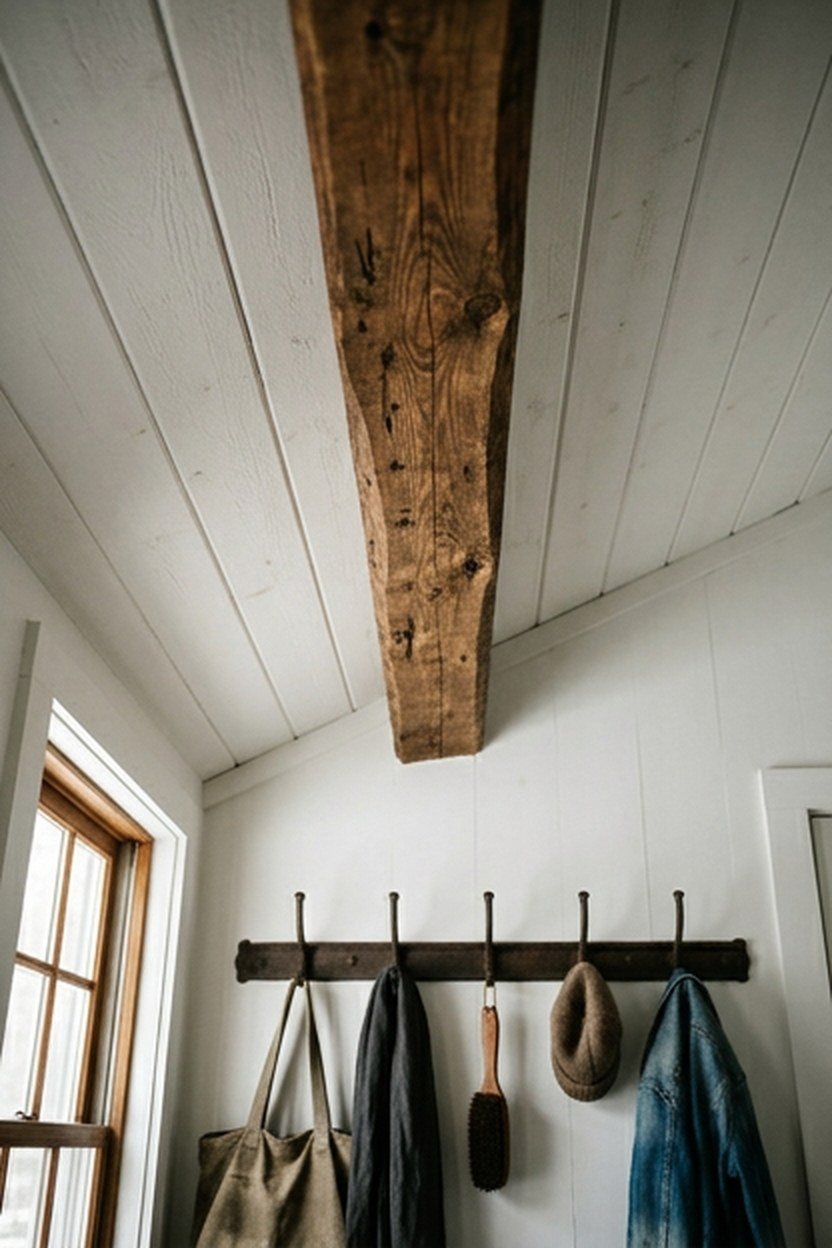
A white painted ceiling paired with exposed, unpainted or navy stained wood beams creates depth and genuine architectural interest overhead in a room that typically has little visual detail above eye level. Expect to pay 300 to 700 dollars for a quality faux beam installation across a standard mudroom ceiling. This detail makes efficient use of vertical space most mudroom designs overlook entirely.
Choose faux beams made from lightweight polyurethane rather than structural wood if your ceiling was not designed to support additional load, since these lighter options install without triggering the same structural considerations real wood beams would require. Position beams running perpendicular to the room’s main storage bench or walkway for the strongest visual anchor. This placement consideration matters more to the finished look than most people initially expect from a purely overhead detail.
The beam’s surface, whether left natural or stained navy, will show a visible natural grain pattern becoming more textured in appearance as dust settles into the material’s surface details over months of normal use. This is a cosmetic characteristic of textured beams and does not affect their lightweight mounting at all. Occasional dusting with a long handled duster keeps the beams looking fresh.
Choosing Beam Finish To Match Your Palette
A natural wood toned beam adds warmth against the crisp white ceiling and navy accents elsewhere in the room, while a navy stained beam extends the color scheme even to the ceiling level for a more immersive overall effect. Consider your room’s existing wood tones and how much navy saturation you want throughout the space before choosing between these two finish approaches. Both achieve genuine visual interest, so this choice comes down to your preferred overall balance.
Paint or stain a faux beam to match your chosen finish rather than trusting a manufacturer’s default color, since faux beams typically ship in a base color meant to be customized during installation. Test your chosen finish on a small hidden section first. This small test confirms the color reads correctly under your room’s actual lighting.
11. Navy And White Ticking Stripe Curtains
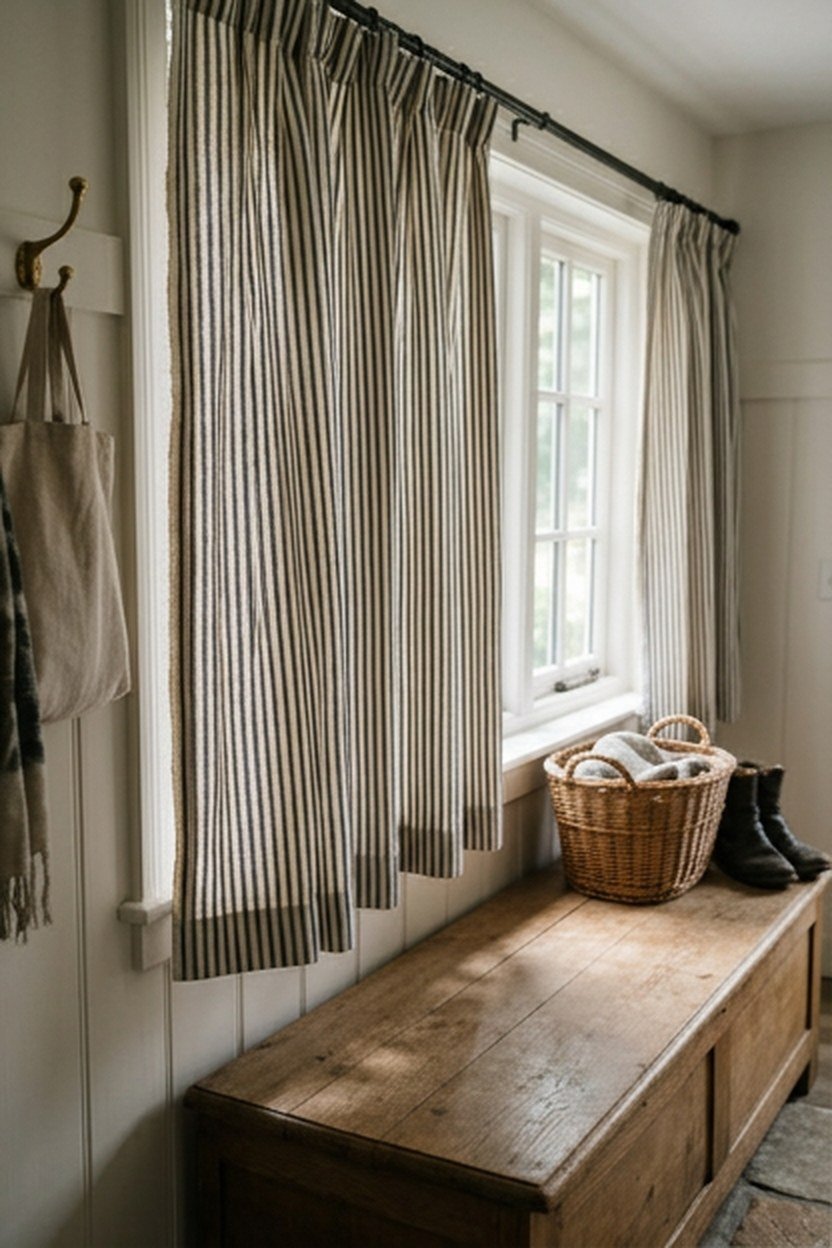
Navy and white ticking stripe curtains over a mudroom window bring soft textile texture and pattern that hard surfaces like tile and paint cannot achieve on their own. Expect to pay 40 to 90 dollars for quality ticking stripe curtain panels sized for a standard mudroom window. This classic pattern reads as genuinely nautical and pairs naturally with the rest of the palette.
Choose a durable, washable cotton or cotton blend fabric specifically for a mudroom window, since curtains in this room can accumulate dust and occasional splashes more readily than curtains in a drier, lower traffic room. Confirm the fabric’s care instructions allow for regular washing before committing to a specific style. This practical durability consideration matters more here than for window treatments elsewhere in the home.
The curtain fabric will develop a soft natural fiber texture becoming more pronounced after repeated washing, the fibers softening and the weave relaxing slightly with each wash cycle. This gradual textured change is completely normal for cotton and cotton blend fabrics and many people specifically prefer this softened texture over a crisp, unwashed feel. Regular laundering according to the fabric’s care label maintains both the pattern’s crispness and this desirable texture.
Choosing Curtain Length For A Mudroom Window
Cafe style curtains covering only part of a mudroom window work well if privacy is a lesser concern and you want to maximize natural light, while full length curtains suit a window needing more complete coverage. Choose based on your specific window’s placement and your household’s privacy needs for this particular room. Both lengths achieve the classic ticking stripe look this idea is built around.
Measure your specific window dimensions carefully before ordering, since a mismatched curtain length looks unintentional regardless of how well the pattern itself suits the room. Measure twice at different times of day, since a window frame can appear slightly different depending on light. This small habit avoids an awkward, ill fitting final result.
12. Navy Painted Shoe Storage Cabinet
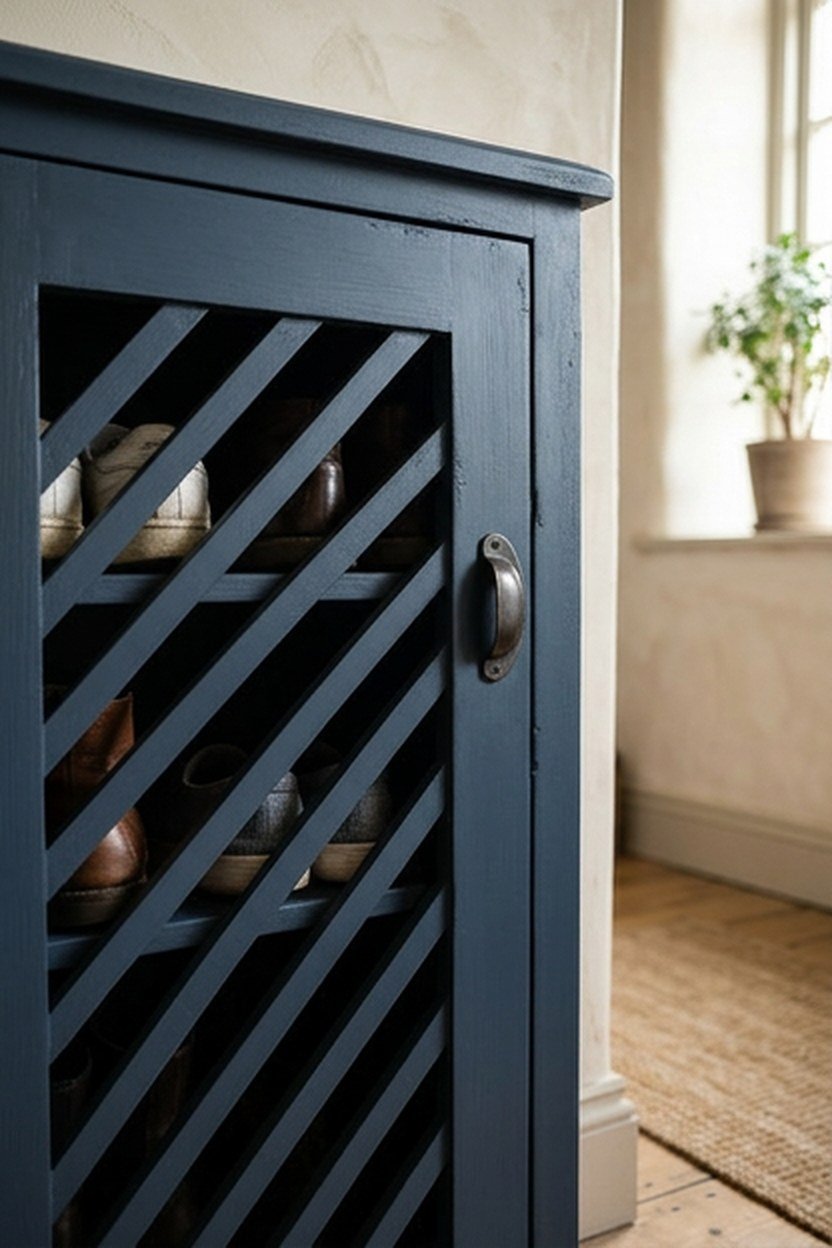
A dedicated navy painted shoe storage cabinet, separate from an open bench style cubby system, keeps footwear fully concealed while adding a substantial furniture piece to the room’s overall design. Expect to pay 300 to 700 dollars for a quality navy painted shoe cabinet sized for your household’s typical footwear collection. This approach suits a household wanting a more concealed, tidier look than open cubby storage provides.
Choose a cabinet with adequate ventilation, either through vented doors or an open slat design, since fully sealed shoe storage can trap moisture and odor from damp footwear far more than a design allowing some airflow. This practical ventilation consideration matters considerably for a mudroom application specifically. Confirm this feature before purchasing based on appearance alone.
The painted navy surface will develop a soft matte texture change near the door handles and hinge areas from years of regular opening and closing to access stored shoes. This gradual textured change at these specific high contact points is normal for painted cabinetry under frequent use and does not affect the mechanism’s function. A quality hinge system continues operating smoothly despite this cosmetic surface change.
Sizing Shoe Storage For A Growing Family
Size your shoe storage cabinet with some genuine growth capacity in mind if you have young children, since footwear needs and quantities tend to increase as a family grows rather than staying static. A cabinet sized purely for your current needs may feel insufficient within just a couple years. This forward planning consideration matters more for a substantial furniture investment than for smaller, more easily replaced accents.
Consider adjustable interior shelving specifically for a shoe cabinet, since this flexibility accommodates everything from small children’s shoes to adult boots without wasting vertical space on a fixed shelf configuration. Look for a cabinet with shelves that adjust in small increments rather than only two or three fixed positions. This small feature keeps the cabinet useful as your household’s footwear changes over time.
13. Navy And White Nautical Rope Details
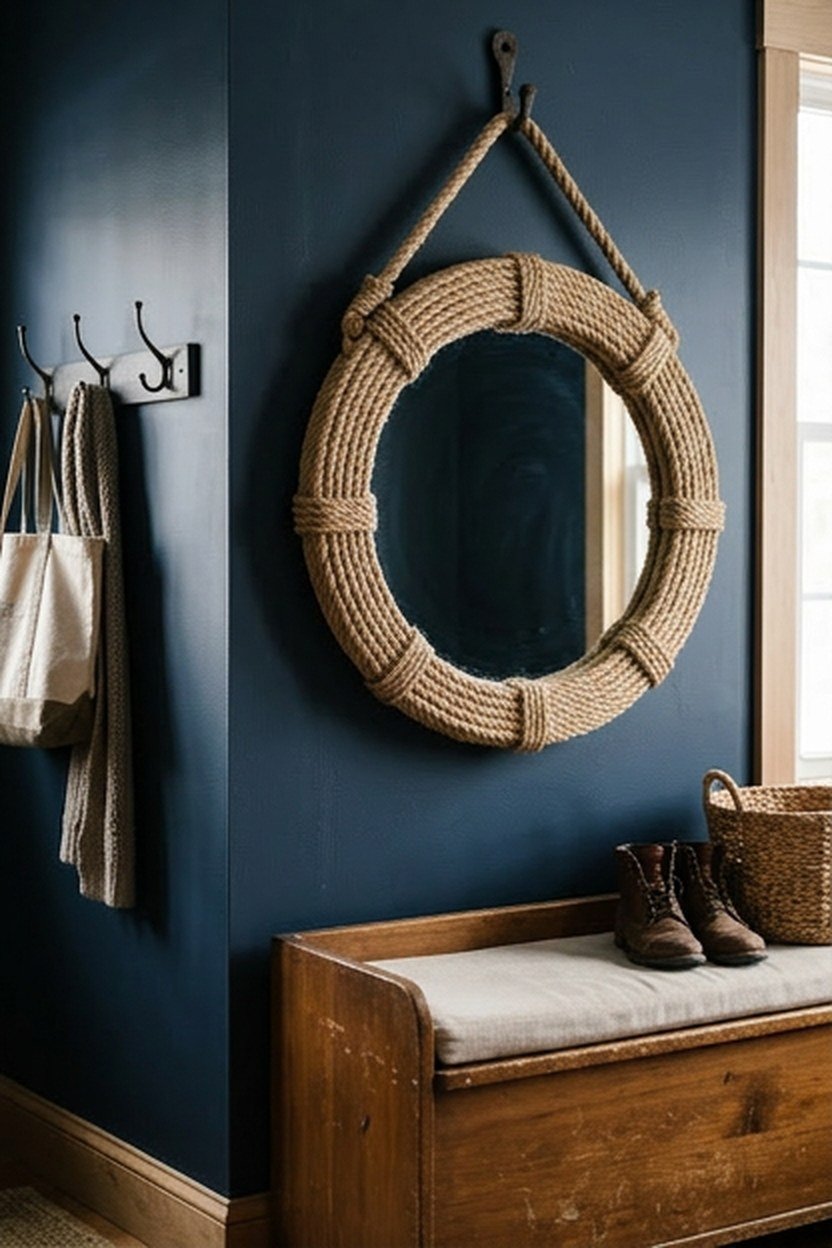
Small nautical rope details, like a rope wrapped mirror frame or rope handles on a storage bin, add genuine textural and thematic character that reinforces the navy and white palette’s nautical inspiration directly. Expect to pay 15 to 50 dollars per piece for quality rope detailed accents. This approach works well as a finishing touch after larger design decisions are already in place.
Choose genuine natural fiber rope rather than a synthetic imitation for the most authentic nautical character, since real rope’s texture and slight irregularity reads as more genuine than a uniform synthetic alternative. This material choice matters for anyone specifically pursuing an authentic rather than merely referenced nautical theme. Confirm the specific material when shopping for rope detailed accents.
The natural rope will develop a soft natural fiber texture becoming more pronounced as the material ages and the fibers loosen slightly with regular handling. This gradual textured change is completely normal for natural rope under typical household conditions and adds to its authentic character over time. Positioning rope accents away from direct water exposure, like away from a boot tray, slows this change considerably.
Balancing Rope Details Without Overdoing The Theme
Choose two or three rope detailed accents rather than incorporating this specific texture throughout every element in the room, since too much of a single thematic device can tip a considered nautical palette toward looking like a costume rather than genuine design. Let rope details serve as accents within the broader navy and white scheme rather than the scheme’s dominant feature. This restraint keeps the theme feeling sophisticated rather than overdone.
Mix rope details with other nautical adjacent textures, like woven baskets or simple brass hardware, rather than relying on rope alone to carry the entire thematic reference. This variety keeps the nautical reference feeling layered rather than repetitive. A mix of two or three complementary textures usually reads best.
14. Navy And White Striped Cushion On A Bench
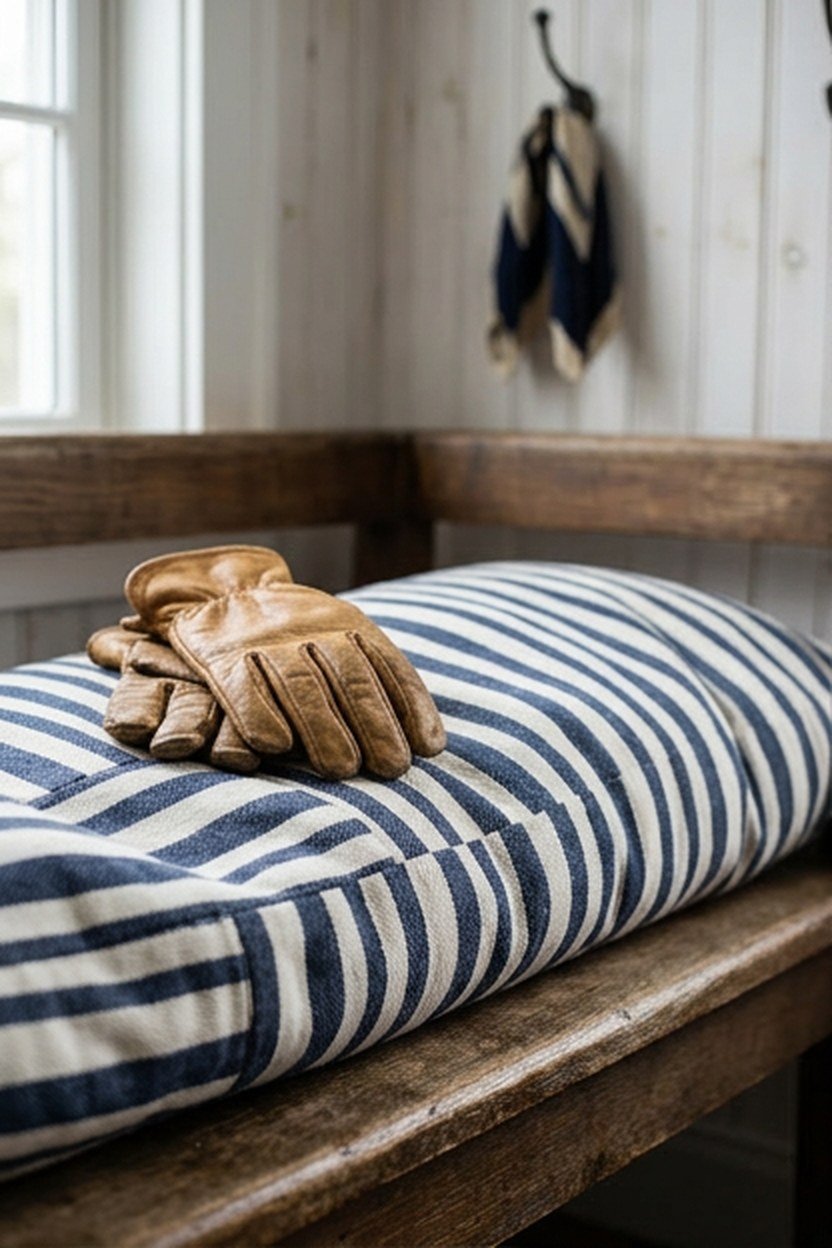
A navy and white striped cushion on the mudroom’s main seating bench adds comfort and softens what would otherwise be a purely hard surface, while reinforcing the room’s core color pattern at seating height. Expect to pay 30 to 70 dollars for a quality durable outdoor rated cushion sized for your specific bench. This detail improves daily comfort while contributing to the overall palette.
Choose an outdoor rated or otherwise highly durable fabric for this cushion specifically, since a mudroom bench sees regular contact from wet clothing and muddy hands that a delicate indoor fabric would handle poorly. Confirm the fabric’s water resistance and cleanability before committing to a specific cushion. This practical durability consideration matters more here than for cushions used in a drier part of the home.
The cushion fabric will develop a soft matte texture change across the seating surface from years of regular sitting and use. This gradual textured change is expected for outdoor rated cushion fabric under sustained use and does not significantly affect comfort or the fabric’s water resistance. A removable, washable cushion cover makes maintaining this specific item considerably easier across years of daily use.
Securing A Bench Cushion Against Daily Movement
Choose a cushion with ties or a non-slip backing specifically to keep it in place on the bench despite regular sitting and standing throughout the day. A cushion that constantly shifts creates a minor but genuine daily annoyance regardless of how well it matches the room’s palette. Test the cushion’s stability on your specific bench before considering the addition complete.
Wash or spot clean the cushion cover regularly given the mudroom’s higher than average exposure to dirt and moisture, since this maintenance habit keeps the cushion looking fresh despite the room’s demanding conditions. Keep a spare cover on hand if your household uses the bench heavily. This small precaution avoids a bare cushion while the primary cover is being washed.
15. Navy And White Doormat At The Entry
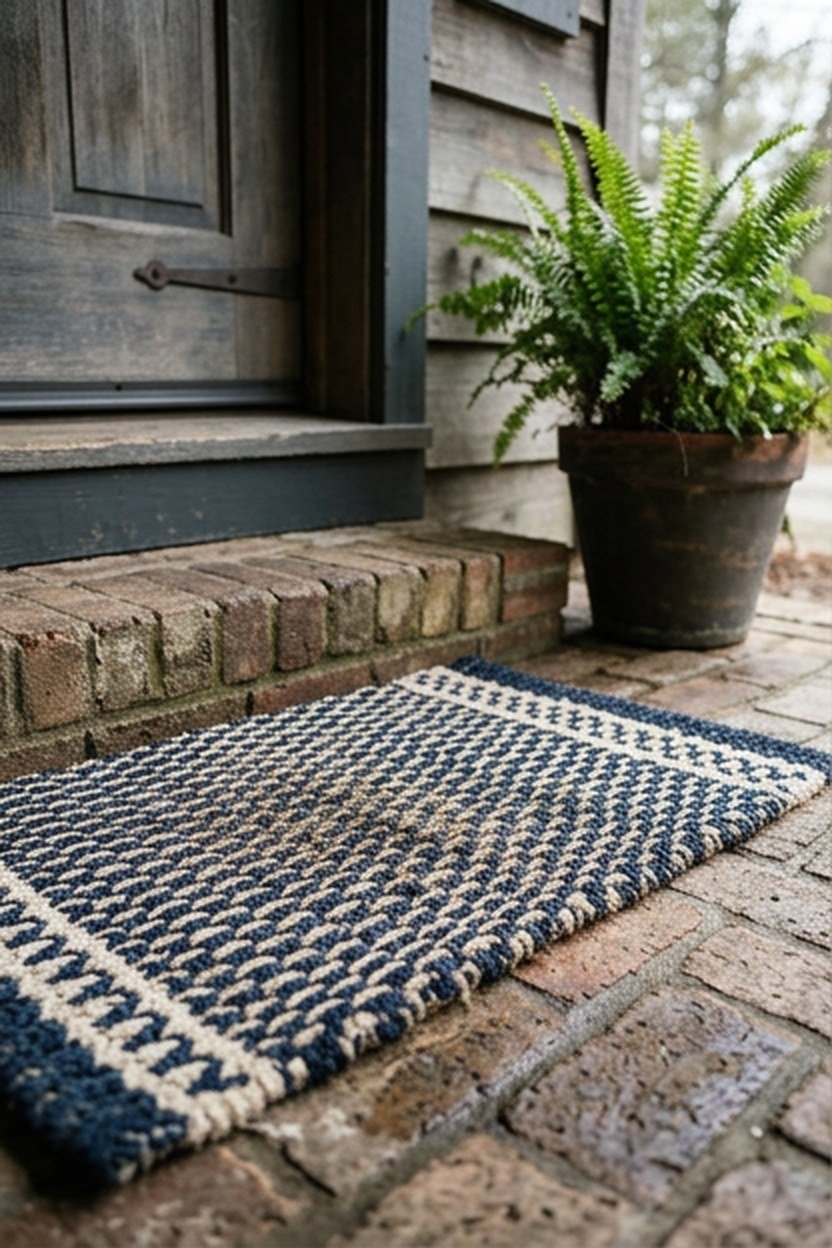
A navy and white doormat positioned at the mudroom’s exterior entry point is the very first design element visitors and family encounter, setting the palette’s tone before anyone even steps inside. Expect to pay 20 to 45 dollars for a quality durable doormat in a navy and white pattern. This is one of the most affordable ideas on this entire list and an easy, low commitment way to establish the palette.
Choose a doormat material genuinely suited to your climate and typical weather conditions, like a coir or rubber backed option for a wetter climate, rather than a purely decorative mat not rated for heavy exterior use. A doormat that looks great but wears out within a single season is a poor value regardless of how well it matches your color scheme. Check the specific material rating before buying based purely on the pattern.
The coir fiber doormat will show a soft natural fiber texture becoming more pronounced as the material compresses slightly from regular foot traffic and exterior weather exposure. This textured change at the highest traffic point is normal wear for coir material and does not affect the mat’s basic function as a shoe wiping surface. Replacing the exterior doormat every one to two years is normal maintenance given its more demanding exterior exposure compared to an interior mat.
Layering An Exterior And Interior Doormat
Consider pairing your exterior navy and white doormat with a coordinating, more durable interior mat just inside the door, creating a two stage dirt and moisture capture system before anyone reaches the main mudroom flooring. This layered approach genuinely reduces how much dirt and water make it further into the room. Many households find this small addition considerably reduces daily cleaning needs.
Choose interior and exterior mats in complementary rather than identical patterns, since slight variation between the two reads as more intentionally coordinated than a perfectly matched pair might. A shared color palette with a different stripe width or scale usually works well. This small distinction keeps the entry feeling considered rather than accidental.
What A Navy And White Nautical Mudroom Actually Costs
A complete navy and white nautical mudroom can range from under 300 dollars using paint, hardware, and textile accents to 4000 dollars or more including custom built-in storage, new flooring, and coordinated hardware throughout. Most homeowners land somewhere in the middle, prioritizing durable storage and flooring before adding decorative accents. Prioritize the functional elements that address your household’s specific daily needs over purely decorative choices.
Spread larger investments like custom built-in storage or new flooring across a realistic timeline if the full cost feels like a stretch, starting with paint, hardware, and textiles for immediate visual impact while saving toward bigger functional upgrades. I recommend this phased approach specifically for a mudroom, since the room’s daily function matters immediately while its full aesthetic vision can develop over time. This staged approach lets the room improve steadily without one overwhelming expense.
The table below breaks down rough cost tiers for a navy and white nautical mudroom project, acknowledging that regional material and labor costs shift these numbers considerably. Treat it as a planning starting point rather than a firm quote for your specific project. Most homeowners land in the middle tier once storage and flooring are included.
| Budget tier | What it covers | Approach |
|---|---|---|
| Under $300 | Paint, hardware, textiles, small accents | Cosmetic refresh |
| $300 to $1500 | Runner rug, wainscoting, shiplap wall | Moderate investment |
| $1500 and up | Built-in storage, new flooring, full renovation | Complete transformation |
Common Mistakes When Designing A Navy And White Mudroom
Choosing beautiful but genuinely delicate materials without confirming durability ratings for a mudroom’s demanding conditions is the most common and most costly mistake, leading to a room that looks tired within a single season despite an initially strong design vision. Always confirm durability and moisture resistance specifically before committing to paint, flooring, or textile choices in this room. This upfront verification prevents the most frustrating and expensive mudroom design mistakes.
Prioritizing the navy and white color scheme over genuine storage function is the second frequent mistake, since a mudroom’s core purpose is managing the daily transition of coats, shoes, and bags regardless of how well it matches a color scheme. Assess your household’s actual storage needs before finalizing decorative choices, ensuring the room genuinely functions before it merely looks good. A beautiful mudroom that fails at its basic job creates daily frustration regardless of the palette.
Overdoing the nautical theme with too many literal references, excessive rope details, anchors, and ship imagery throughout, is the third mistake, since this can tip a sophisticated navy and white palette toward looking like a themed costume rather than genuine design. Choose the color palette as the primary nautical reference and add no more than a couple of literal thematic accents. This restraint keeps the room feeling considered rather than overdone.
Testing Durability Claims Before A Full Room Commitment
Request actual durability ratings and, where possible, physical samples for any flooring, paint, or fabric before committing to a full mudroom application, rather than trusting marketing descriptions alone. Test a sample under conditions similar to your household’s actual daily use if genuinely possible. This verification step matters more for a mudroom than almost any other room given its demanding daily conditions.
Ask other homeowners or a contractor for real world durability feedback on specific products you are considering, since actual long term performance sometimes differs meaningfully from a product’s marketed durability claims. Online reviews from other mudroom projects can also be a useful, if imperfect, source of this feedback. This extra research step helps avoid a costly mismatch between marketing and reality.
Conclusion
Building a classic navy and white nautical mudroom comes down to choosing genuinely durable materials that happen to carry timeless nautical character, then applying the palette with attention to the room’s actual functional needs. Start with the foundational storage and flooring decisions that address your household’s specific daily routine, then layer in the decorative details covered throughout this guide. The fifteen ideas covered here scale from an affordable cosmetic refresh up to a complete room transformation.
Prioritize durability and genuine storage function alongside the classic navy and white palette, since this room’s daily demands will test every choice you make over the years. A well planned navy and white nautical mudroom rewards your household with a genuinely functional, timeless entry space for decades of daily use. Get the fundamentals right, and the palette will keep earning its place for years to come.
Frequently Asked Questions
How much does a full navy and white mudroom transformation typically cost? Costs range from under 300 dollars for a cosmetic refresh using paint and textiles to 4000 dollars or more for a full renovation with custom storage and new flooring. Most projects land in the moderate middle range once storage and a durable floor treatment are included.
Is navy paint durable enough for a high traffic mudroom? Yes, when a quality durable, washable paint formulation specifically rated for high traffic use is chosen. Navy also has the practical advantage of hiding daily dirt and scuffs better than a paler color would.
What is the most budget friendly way to start a navy and white mudroom? A doormat, hooks, and a few textile accents deliver genuine palette impact for under 100 dollars combined. This approach lets you test the palette before committing to larger investments like flooring or built-in storage.
How do I keep a navy and white mudroom from feeling too nautical or themed? Let the color palette itself carry the nautical reference rather than adding excessive literal details like rope, anchors, or ship imagery throughout. Two or three genuine thematic accents are usually enough alongside the core color scheme.
Can I use this palette in a genuinely small mudroom? Yes, many of the ideas scale down well, including painted hooks, a small runner, and a compact storage bench. Focus on two or three strong ideas rather than attempting a full room transformation in a compact space.
What is the biggest functional mistake people make with mudroom design? Prioritizing the color scheme and decorative details over genuine storage function is the biggest mistake, since a mudroom’s core job is managing daily transitions regardless of how well it matches a palette. Confirm your storage genuinely meets your household’s needs before finalizing decorative choices.