
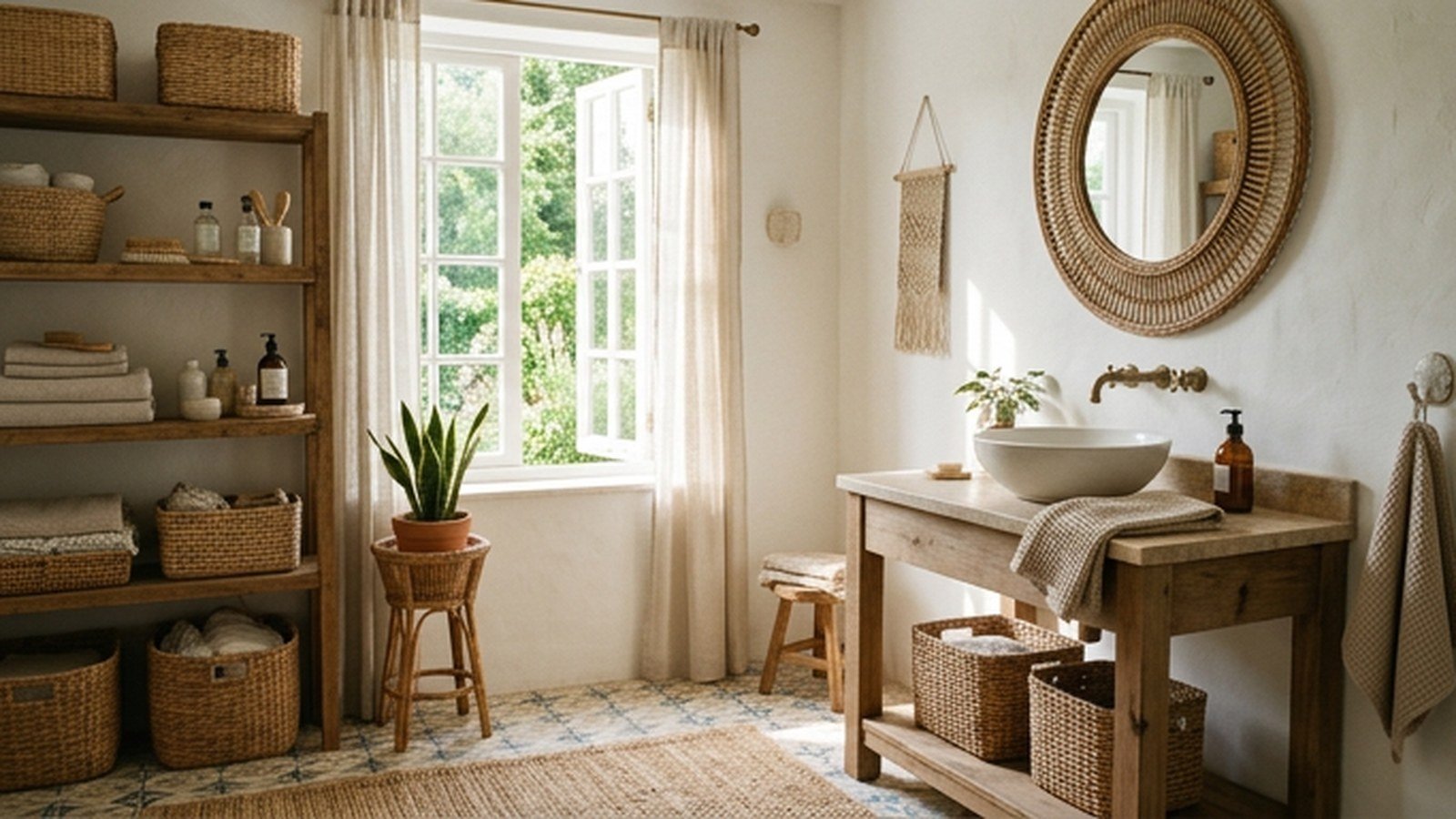
Natural wicker is the single fastest way to turn a plain bathroom into a genuinely breezy boho retreat. The material brings warmth and texture that tile and porcelain alone cannot provide, and it does this without requiring any permanent renovation. I have added wicker accents to three rental bathrooms now, none of which allowed structural changes, and every one still achieved a genuinely transformed feel.
This guide covers fifteen specific natural wicker accents for a boho bathroom, what each one actually costs, and where humidity can cause real problems if you choose the wrong wicker product or placement. Expect honest notes about moisture resistance, durability, and the small details that separate a wicker accent that lasts years from one that molds within months. By the end you will have a real plan suited to your own bathroom’s humidity level and budget.
Wicker and bathroom humidity are not natural friends, and choosing the wrong wicker type or the wrong spot can lead to real problems within a single season. I will flag these humidity risks directly throughout this guide rather than let enthusiasm for the look outweigh practical durability. The best boho bathrooms use wicker thoughtfully, not everywhere at once.
Why Wicker Suits A Boho Bathroom So Well
Wicker carries an inherently organic, relaxed texture that pairs naturally with the layered, collected over time aesthetic central to boho style. This texture contrast against a bathroom’s typically hard, smooth surfaces, tile, porcelain, and glass, is exactly what makes wicker accents feel so immediately different in this specific room. Few materials add this much warmth for a relatively modest cost.
The material also tends to be lightweight and easy to move or replace, which suits a bathroom’s often tight storage and styling needs better than a heavier furniture material would. A wicker basket or shelf can be repositioned in seconds to adapt to changing storage needs, unlike a built-in cabinet. This flexibility is a genuine practical advantage beyond the material’s visual appeal.
The table below compares natural wicker against two other popular bathroom accent materials on the factors that matter most for this specific room. None of the three is objectively better, since the right pick depends on your bathroom’s humidity and your maintenance habits. Use it as a starting point before reading the planning section that follows.
| Factor | Natural wicker | Galvanized metal | Painted wood |
|---|---|---|---|
| Visual warmth | High | Low, feels industrial | Moderate to high |
| Humidity resistance | Moderate, needs care | High | Moderate, needs sealing |
| Typical cost | Low to moderate | Low to moderate | Moderate |
Planning Wicker Accents Before You Buy
Assess your bathroom’s actual humidity level honestly before committing to wicker accents throughout the room, since a bathroom with poor ventilation or no exhaust fan presents real risk of mold forming in untreated wicker. Check whether your bathroom has a working exhaust fan and consider running it longer after showers if you plan to add wicker accents. This honest assessment matters more than any single product choice on this list.
Consider which specific accents will sit closest to direct water exposure, like near the shower or tub, versus drier zones like a vanity counter or a shelf away from water sources. Reserve more moisture resistant wicker treatments for the wetter zones and save less treated pieces for drier areas. This zone based thinking prevents the most common wicker durability problems in a bathroom application.
Set a realistic budget that accounts for both the wicker pieces themselves and any sealant or protective treatment needed for bathroom use. Both a modest and a more generous budget can achieve genuine boho character, so match your plan to what you can actually spend and maintain. The accents below are ordered roughly from lower risk, lower humidity zones to higher moisture areas.
1. Wicker Storage Baskets On Open Shelving
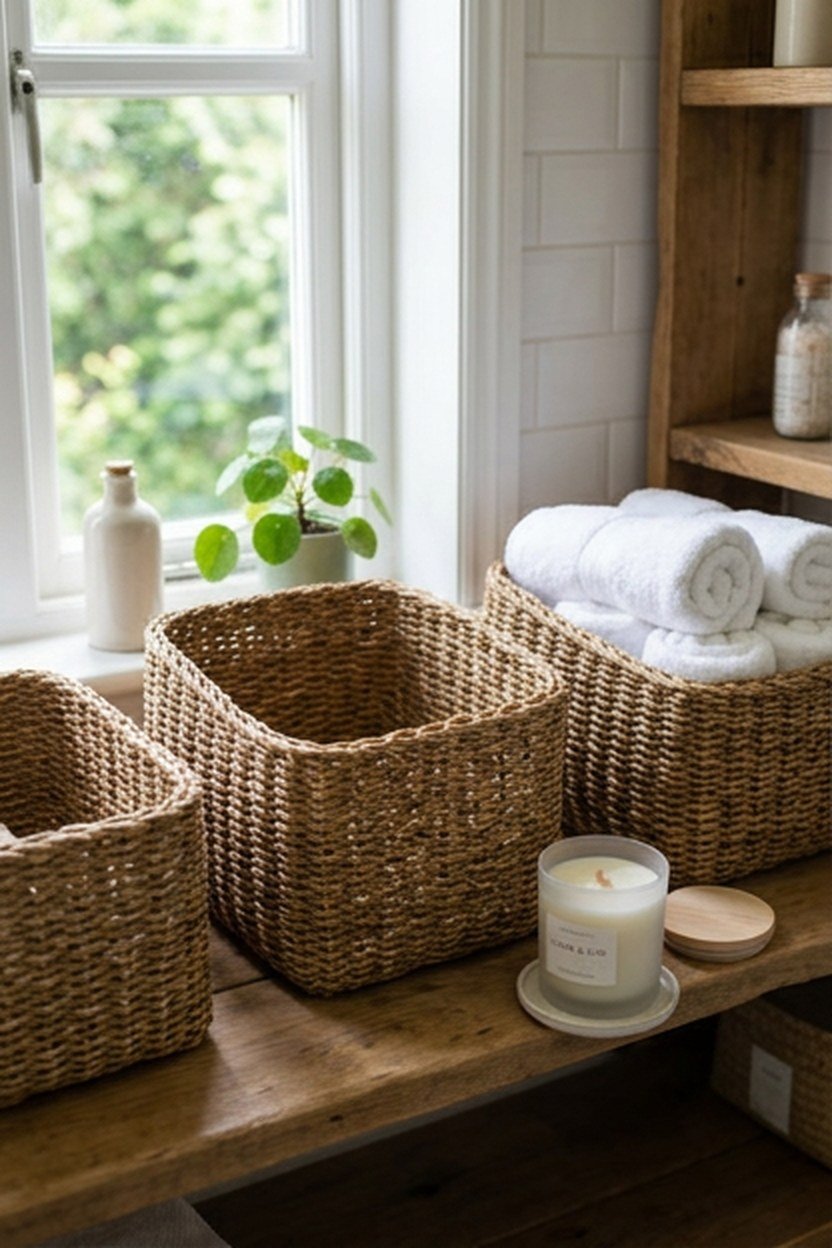
Wicker storage baskets lined up on open bathroom shelving hold towels, toiletries, and extra supplies while adding immediate textural warmth to the room. Expect to pay 15 to 40 dollars per basket for quality natural wicker in a size appropriate for bathroom storage. This is one of the lowest risk wicker accents since baskets typically sit away from direct water exposure on a shelf.
Choose baskets with a tighter, denser weave for bathroom use specifically, since a looser weave traps more ambient humidity than a tighter one would. Line baskets holding smaller items with a fabric liner, which both protects the wicker from direct contact with toiletry bottles and makes the baskets easier to keep tidy. This small addition extends the baskets’ useful life in a humid environment.
The wicker will develop a soft natural fiber texture becoming more pronounced as the material settles and the weave loosens slightly with regular handling and ambient humidity exposure. This gradual textured change is completely normal for natural wicker under typical bathroom conditions and adds to rather than detracts from its authentic character. Positioning baskets away from direct steam exposure, like away from the shower door, slows this change considerably.
Sealing Wicker Baskets For Bathroom Humidity
Apply a clear polyurethane or a specific wicker sealant to bathroom bound baskets before their first use, since this thin protective layer significantly slows moisture absorption compared to leaving the wicker untreated. Reapply this sealant every year or two depending on your bathroom’s specific humidity level. This small maintenance step meaningfully extends how long wicker baskets hold up in this demanding environment.
Choose a matte rather than glossy sealant finish if you want to preserve wicker’s natural, slightly textured appearance rather than giving it an artificially shiny look. Test the sealant on a small hidden section first if possible. This small check confirms the finish looks the way you expect before treating the whole piece.
2. A Wicker Framed Bathroom Mirror
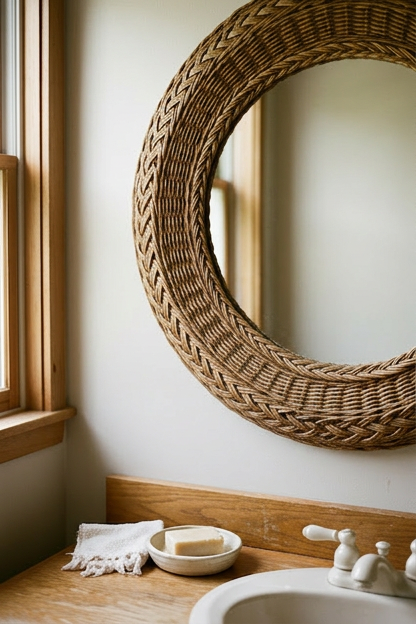
A wicker framed mirror above the vanity brings organic texture to a bathroom fixture that is usually either plain glass or a cold metal frame. Expect to pay 60 to 150 dollars for a quality wicker framed mirror sized for a standard vanity. This accent sits above the direct splash zone, making it one of the lower risk wicker placements in terms of water exposure.
Position the mirror where it will not receive direct spray from the shower or a nearby faucet, since even a moisture resistant treated wicker frame benefits from staying outside the most concentrated splash zone. Confirm the mirror’s mounting hardware suits your specific wall type before installation, since a wicker framed mirror can weigh more than a comparable simple metal framed option. This weight consideration matters for both the hardware and the wall’s structural capacity.
The wicker frame will show a soft natural fiber texture developing more visibly at the edges nearest the vanity’s typical splash zone, even with reasonable placement away from direct water exposure. This gradual textured change is normal for wicker in a bathroom environment and does not affect the mirror’s function. Wiping any accidental splashes from the frame promptly slows this change considerably.
Weight Considerations For A Wicker Framed Mirror
Confirm your wall can support the mirror’s actual combined weight, wicker frame plus glass, using appropriate anchors rather than simple picture hooks meant for lighter frames. Ask your supplier for the mirror’s exact weight before purchasing if this information is not clearly listed. This small check prevents a serious safety issue from an improperly mounted heavy mirror.
Have a second person help hold the mirror in place during installation, since a wicker framed mirror’s irregular shape can make solo installation more awkward than a standard rectangular frame. Mark the mounting points on the wall before lifting the mirror into place. This small preparation step makes the actual installation considerably smoother.
3. Wicker Waste Basket
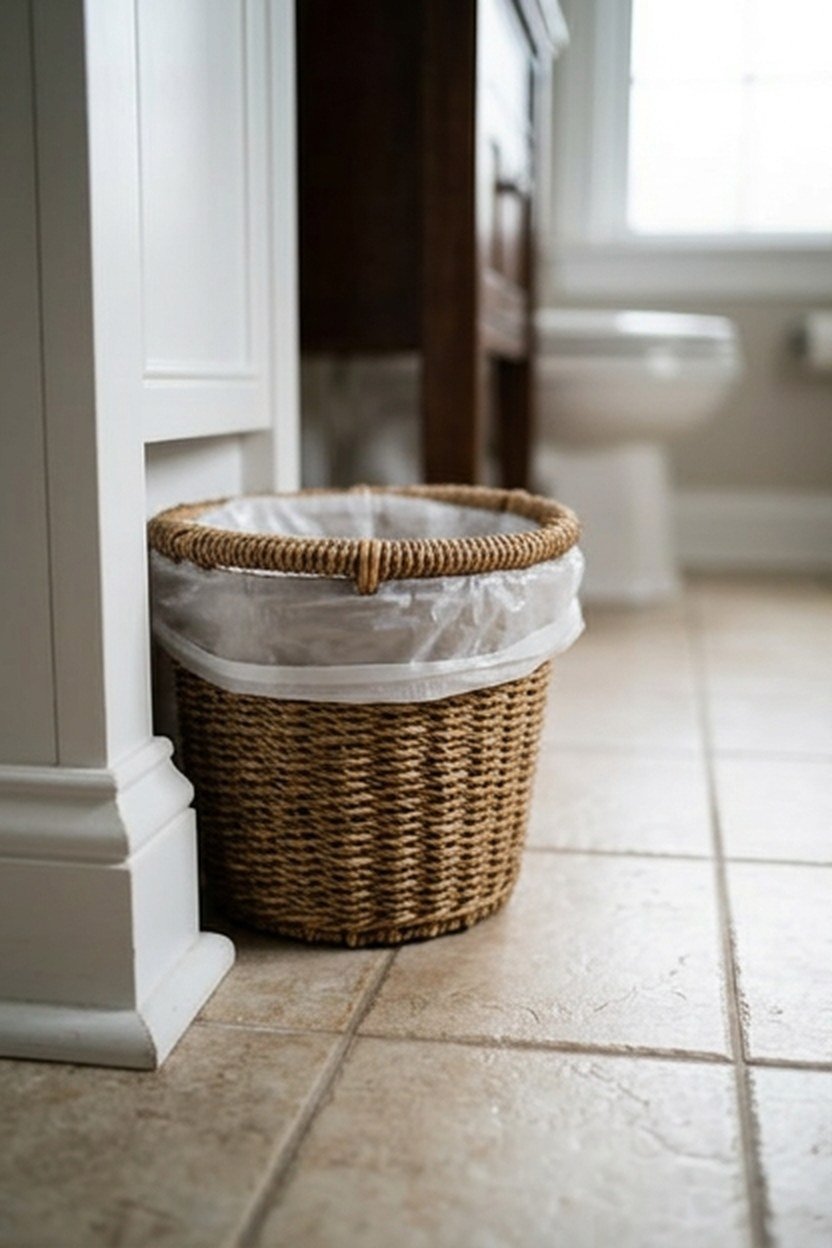
A simple wicker waste basket replaces a typical plastic or metal bin with a genuinely boho appropriate texture for one of the bathroom’s most overlooked functional items. Expect to pay 15 to 35 dollars for a quality small wicker waste basket sized for bathroom use. This is one of the most affordable accents on this entire list and an easy first step into wicker bathroom styling.
Choose a wicker basket with a removable plastic liner insert specifically for waste basket use, since this protects the wicker itself from direct contact with waste and makes emptying and cleaning considerably easier. Many wicker waste baskets designed for bathroom use include this liner as a standard feature. Confirm this detail before purchasing if it is not clearly stated in the product description.
The wicker will develop a soft natural fiber texture becoming more visible over months of regular use and handling as the lid or opening area, if present, sees the most frequent contact. This gradual textured change at the highest contact point is normal for a functional wicker piece under regular use. Regular liner changes protect the wicker from any direct contact with waste contents.
Choosing Waste Basket Size For Your Bathroom
Measure your available floor space, typically beside the vanity or toilet, before ordering a waste basket size, since an oversized basket can crowd a small bathroom’s limited floor space. Most bathroom specific wicker waste baskets run smaller than a kitchen or office waste basket, scaled appropriately for this room’s typical needs. Confirm the specific dimensions rather than assuming a standard size will fit your space.
Choose a basket shape, round versus rectangular, based on your specific corner or space constraints, since a rectangular basket can fit more efficiently into a tight corner than a round one would. Measure the actual available space before choosing a shape purely by preference. This small check avoids an awkward fit once the basket arrives.
4. Wicker Toilet Paper Storage Basket
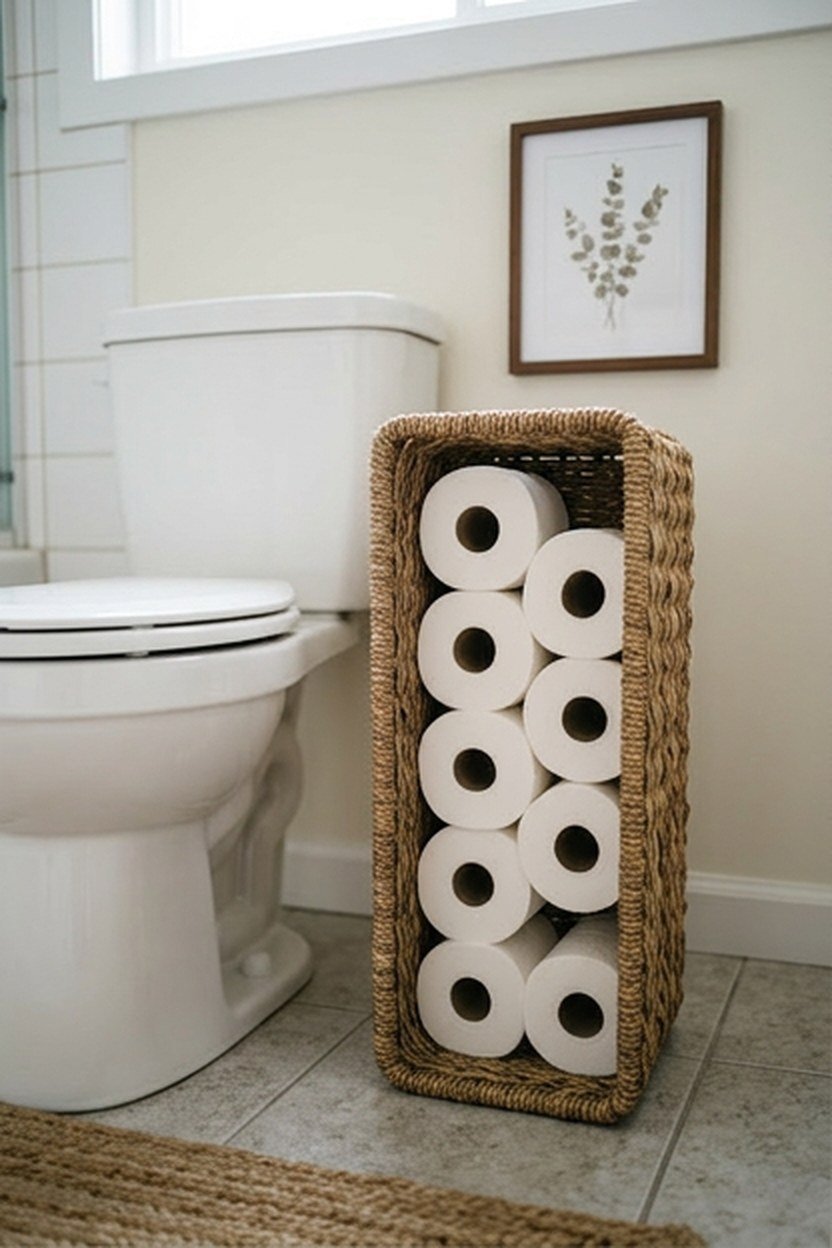
A wicker basket dedicated to storing extra toilet paper rolls, positioned on the floor or a shelf near the toilet, keeps this necessary supply accessible while looking considerably more intentional than a bare stack of rolls. Expect to pay 15 to 30 dollars for a quality wicker basket sized for this specific purpose. This detail is a small but genuinely useful addition to most bathroom layouts.
Position this basket somewhere within easy reach of the toilet without crowding the space needed to use the toilet itself comfortably. A basket that looks charming but blocks comfortable movement creates daily friction regardless of how well it matches your style. Measure your available floor or shelf space before finalizing basket placement.
The wicker will develop a soft natural fiber texture becoming more pronounced from ambient bathroom humidity and regular handling as rolls are added and removed. This gradual textured change is normal for wicker in this application and does not affect its function as storage. Positioning the basket away from any direct water source, like a nearby sink splash zone, slows this change considerably.
Stacking Versus Upright Toilet Paper Storage
A tall, narrow wicker basket that holds rolls upright works well in a tight floor space, while a wider, shorter basket suits a shelf or counter application where rolls can be stacked on their sides. Choose based on your specific available space rather than a general preference, since the wrong shape for your space wastes the storage capacity this accent is meant to provide. Measure your intended spot before choosing between these two basic shapes.
Consider a basket with a lid specifically if you want to conceal the toilet paper supply entirely rather than displaying it as an open, visible element. A lidded basket also keeps rolls cleaner in a bathroom with more airborne moisture. Weigh this practical benefit against the slightly higher cost of a lidded option.
5. Wicker Bath Mat Or Floor Runner
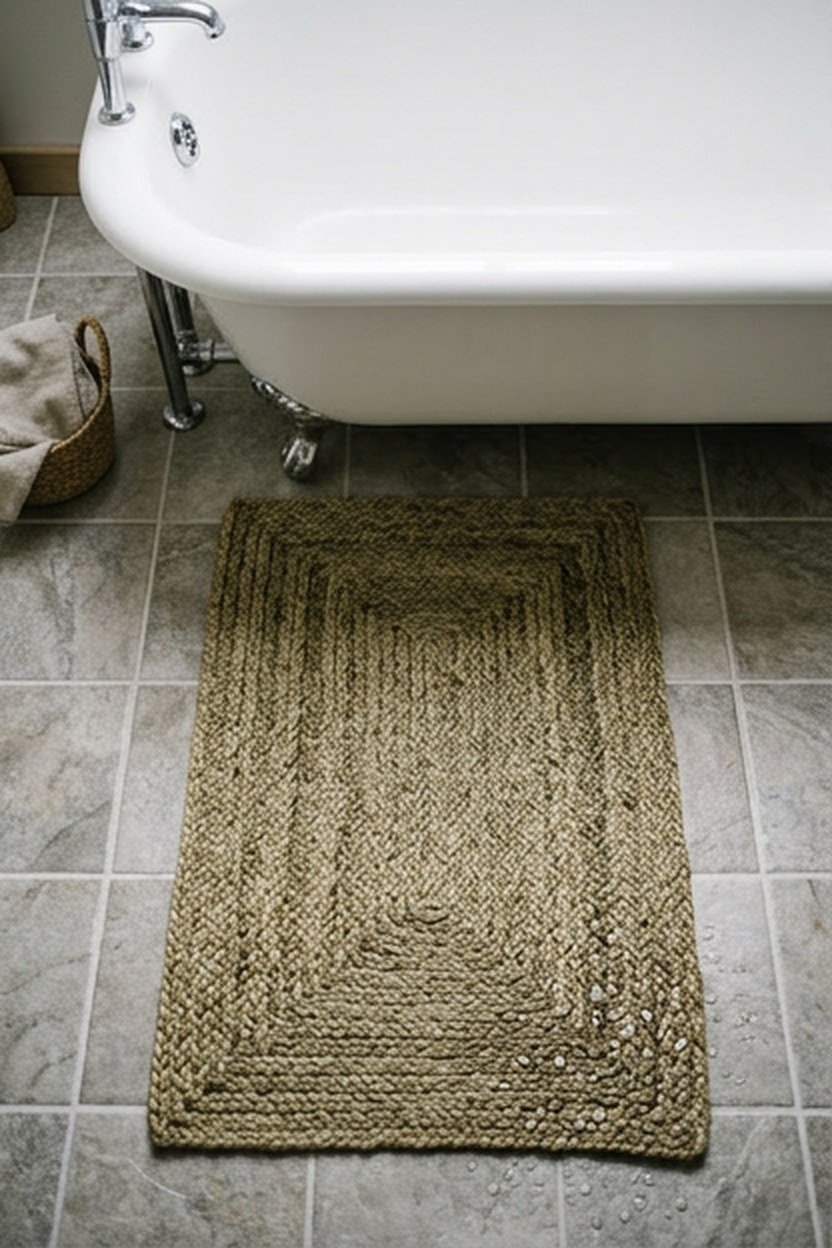
A natural wicker or seagrass bath mat brings genuine texture underfoot in a way a standard cotton or microfiber bath mat cannot replicate. Expect to pay 30 to 70 dollars for a quality natural fiber bath mat sized for standing in front of a sink or tub. This accent works especially well in a bathroom with hard flooring already, adding warmth without needing a full flooring replacement.
Choose a mat specifically designed and treated for bathroom floor use, since floor level wicker or seagrass products face more direct water exposure than any other wicker accent on this list. Confirm the specific product is rated for this wet application rather than assuming any woven natural fiber mat will hold up to bathroom floor conditions. This distinction matters more here than for almost any other accent covered.
The natural fiber will develop a soft natural fiber texture becoming considerably more pronounced from direct, regular water contact and foot traffic, the material settling and softening at a faster rate than a wicker accent positioned away from the floor. This gradual textured change is expected for a floor level natural fiber product under bathroom conditions and is part of its normal wear pattern. Regular airing out and occasional replacement, more frequent than other wicker accents, keeps this specific item functioning well.
Replacement Schedule For A Wicker Bath Mat
Expect to replace a wicker or seagrass bath mat more frequently than other wicker accents on this list, typically every one to two years depending on your bathroom’s humidity and how directly the mat sits in the water splash zone. Budget for this more frequent replacement as an ongoing cost of choosing this specific accent. This realistic expectation prevents disappointment when the mat needs replacing sooner than a shelf accent would.
Rotate between two mats if budget allows, letting one fully dry out between uses, which can meaningfully extend how long each individual mat lasts before replacement becomes necessary. Keep the spare mat somewhere with good airflow rather than folded in a closet. This small habit noticeably extends both mats’ useful life.
6. Wicker Pendant Or Hanging Light Fixture
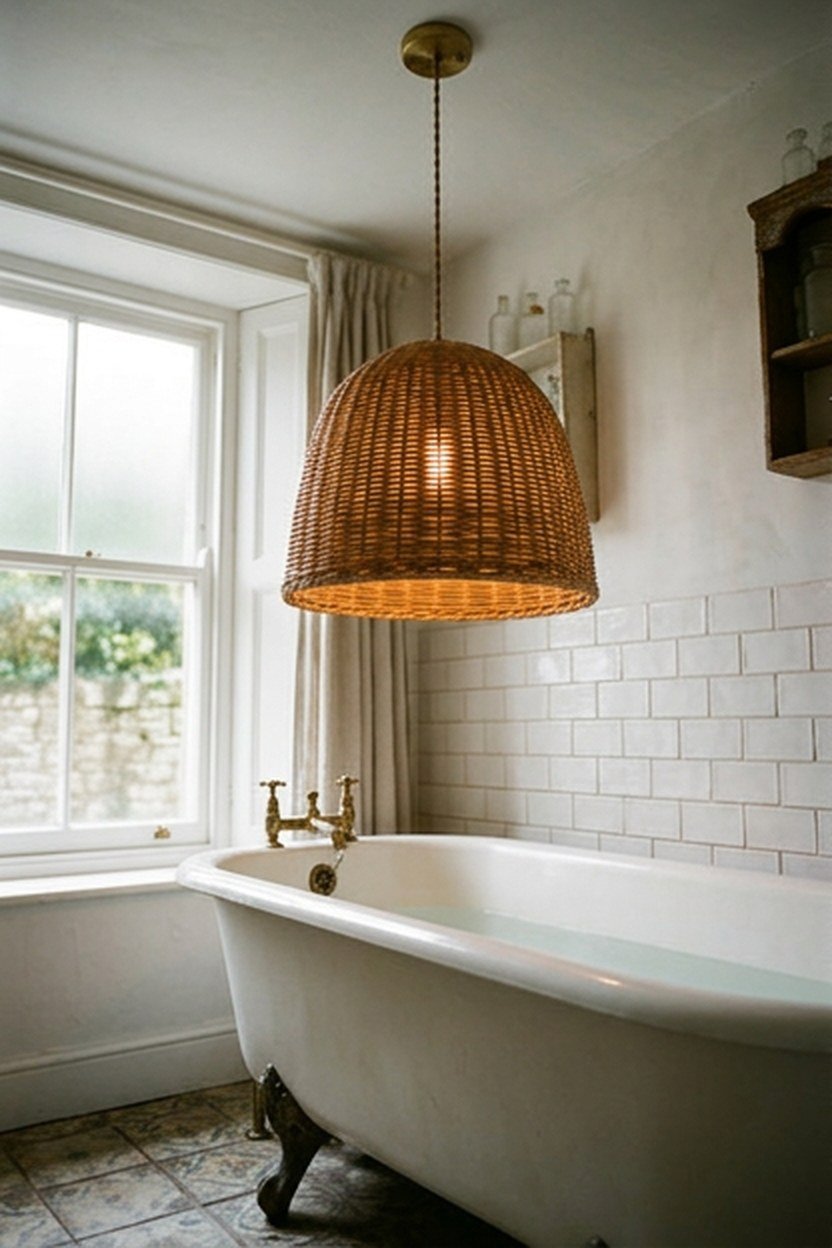
A wicker or rattan pendant light fixture brings texture to the ceiling, an area most bathroom styling ideas overlook entirely. Expect to pay 60 to 150 dollars for a quality wicker or rattan pendant fixture rated for bathroom use. This detail adds visual interest at a height that draws the eye upward, completing the room’s boho character from floor to ceiling.
Confirm any wicker or rattan light fixture you choose is specifically rated for bathroom or damp location use, since standard decorative lighting not rated for this application presents a genuine electrical safety concern in a humid room. Ask specifically about this rating when shopping for bathroom lighting, since not every attractive wicker style fixture meets this safety standard. This detail matters more than any other consideration on this specific accent.
The fixture’s wicker or rattan shade will develop a soft natural fiber texture becoming more visible from the mild heat the bulb generates combined with ambient bathroom humidity over years of use. This gradual textured change is normal for a properly rated fixture under sustained bathroom conditions and does not affect its electrical function. Regular gentle dusting keeps the fixture looking its best.
Damp Rating Requirements For Bathroom Light Fixtures
Look specifically for a fixture rated for “damp” or “wet” locations, with damp rated fixtures suiting an area away from direct water spray and wet rated fixtures required for a location directly exposed to shower spray. Confirm which rating your specific installation location requires before purchasing based on style alone. This safety distinction is not optional for a bathroom lighting installation.
Hire a licensed electrician for any new bathroom light fixture installation, since bathroom electrical work involves genuine safety considerations that are not worth attempting without proper qualification. Ask the electrician to confirm the fixture’s damp or wet rating matches its planned location. This small verification step protects both safety and your investment in the fixture.
7. Wicker Wall Hanging Or Woven Wall Art
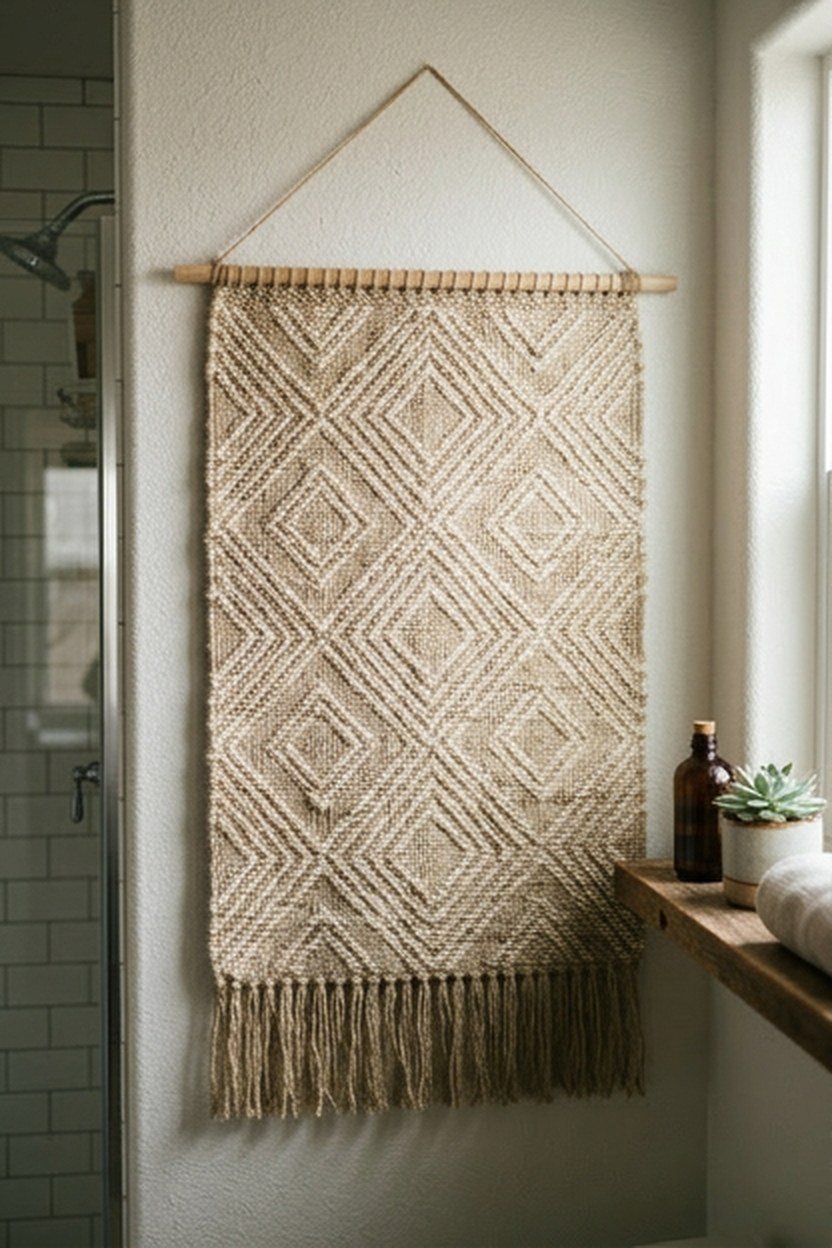
A flat woven wicker or rattan wall hanging, positioned on a drier wall away from direct water exposure, adds textural wall art that pure paint or tile cannot achieve. Expect to pay 30 to 80 dollars for a quality woven wall hanging sized appropriately for your available wall space. This accent works well on a wall opposite the shower or tub, keeping it safely away from direct moisture.
Position woven wall art on the driest wall in your bathroom, typically the wall containing the door or opposite the shower, rather than a wall that receives regular direct splash or steam exposure. This placement consideration matters more for wall art than for almost any other accent, since wall hangings are harder to dry out quickly if they do get wet. Confirm your intended wall’s actual moisture exposure honestly before committing to this placement.
The woven material will develop a soft natural fiber texture becoming more visible as ambient humidity affects the fibers even on a relatively dry wall, this change happening more slowly than for accents in wetter zones. This gradual textured change is normal for natural woven material in any bathroom environment and adds to its authentic character over time. Ensuring good general bathroom ventilation slows this change for all wicker and woven accents throughout the room.
Choosing Wall Hanging Size For Your Bathroom
Measure your available wall space carefully before ordering a wall hanging size, since an oversized piece can overwhelm a typically smaller bathroom wall while an undersized one gets visually lost. A general guideline suggests choosing a piece that covers a meaningful portion of the available wall without touching adjacent fixtures or the ceiling. Confirm this proportion works for your specific space before finalizing a purchase.
Consider a smaller, simpler woven piece for a genuinely tiny bathroom, since even a well proportioned larger piece can feel oversized in a truly compact space. Measure your actual wall space before falling for a larger, more dramatic piece online. A smaller piece chosen deliberately often reads as more intentional than an oversized one crammed into a tight room.
8. Wicker Vanity Tray
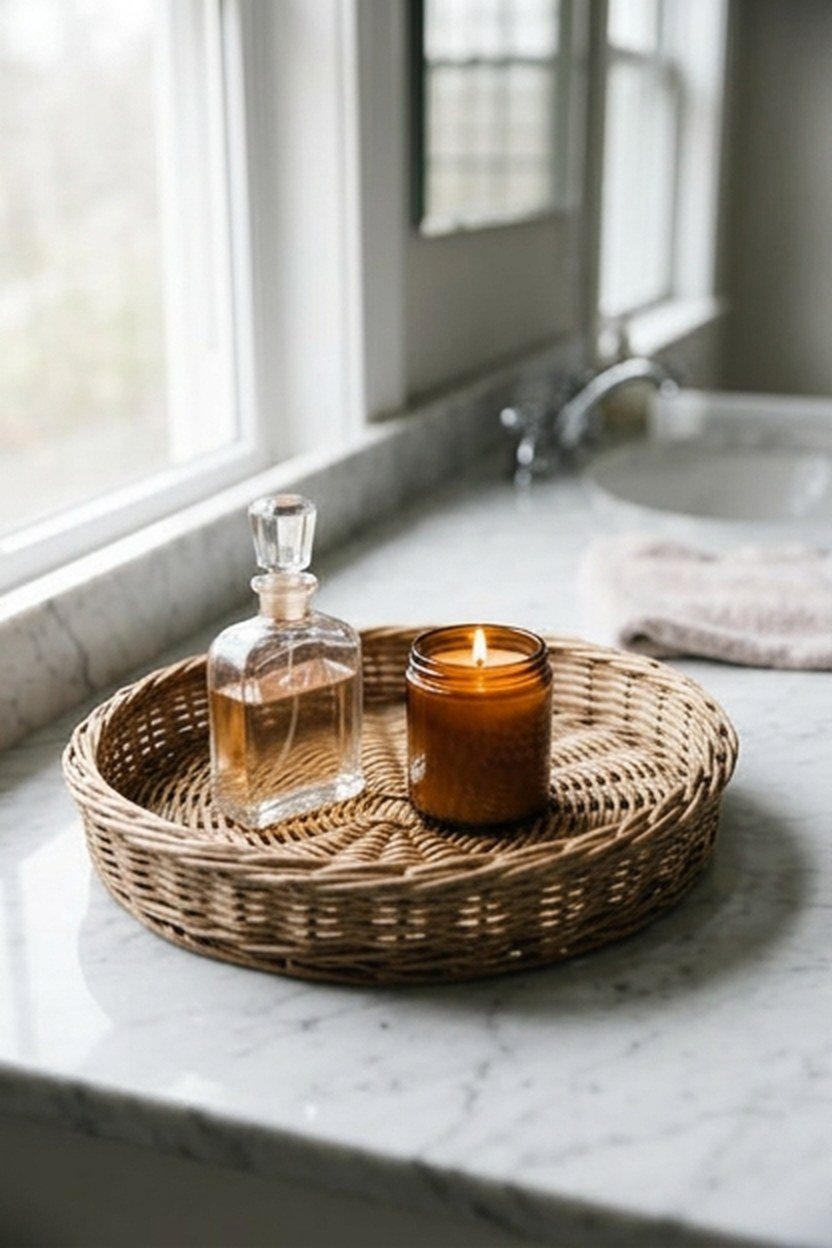
A wicker tray on the bathroom vanity organizes smaller items like soap, lotion, and jewelry while adding a natural texture accent right at eye level during daily use. Expect to pay 15 to 35 dollars for a quality wicker vanity tray sized for typical countertop use. This is a low commitment, easily changed accent that works well as a starting point for wicker bathroom styling.
Choose a tray with a slightly raised lip or edge, since this prevents smaller items from sliding off during regular use and keeps the vanity looking tidy despite daily handling. Style the tray with a curated few items rather than overloading it, since a cluttered tray undermines the clean, intentional look this accent is meant to achieve. This restraint matters more to the finished look than the specific items you choose to display.
The wicker will develop a soft natural fiber texture becoming more pronounced from regular handling and any incidental water or product spills during daily vanity use. This gradual textured change is normal for a wicker vanity accent under regular use and does not affect its function. Wiping any product spills from the tray promptly slows this textured change considerably.
Protecting A Wicker Tray From Product Spills
Line a wicker vanity tray with a small glass or acrylic insert specifically for holding liquid products like lotion or perfume bottles, since this protects the wicker itself from direct contact with any accidental spills. This small addition considerably extends the tray’s useful life in a vanity setting where spills are a genuine regular occurrence. Treat this lining step as a genuine requirement rather than optional for a tray holding liquid products specifically.
Choose a tray finish, natural versus a light stain, based on how visible you want any potential water marks to be, since a lighter natural finish tends to show water marks more readily than a slightly darker stained option. Consider your own tolerance for visible marks between cleanings. This small choice affects how often the tray needs wiping down to look its best.
9. Wicker Plant Stand For Bathroom Greenery
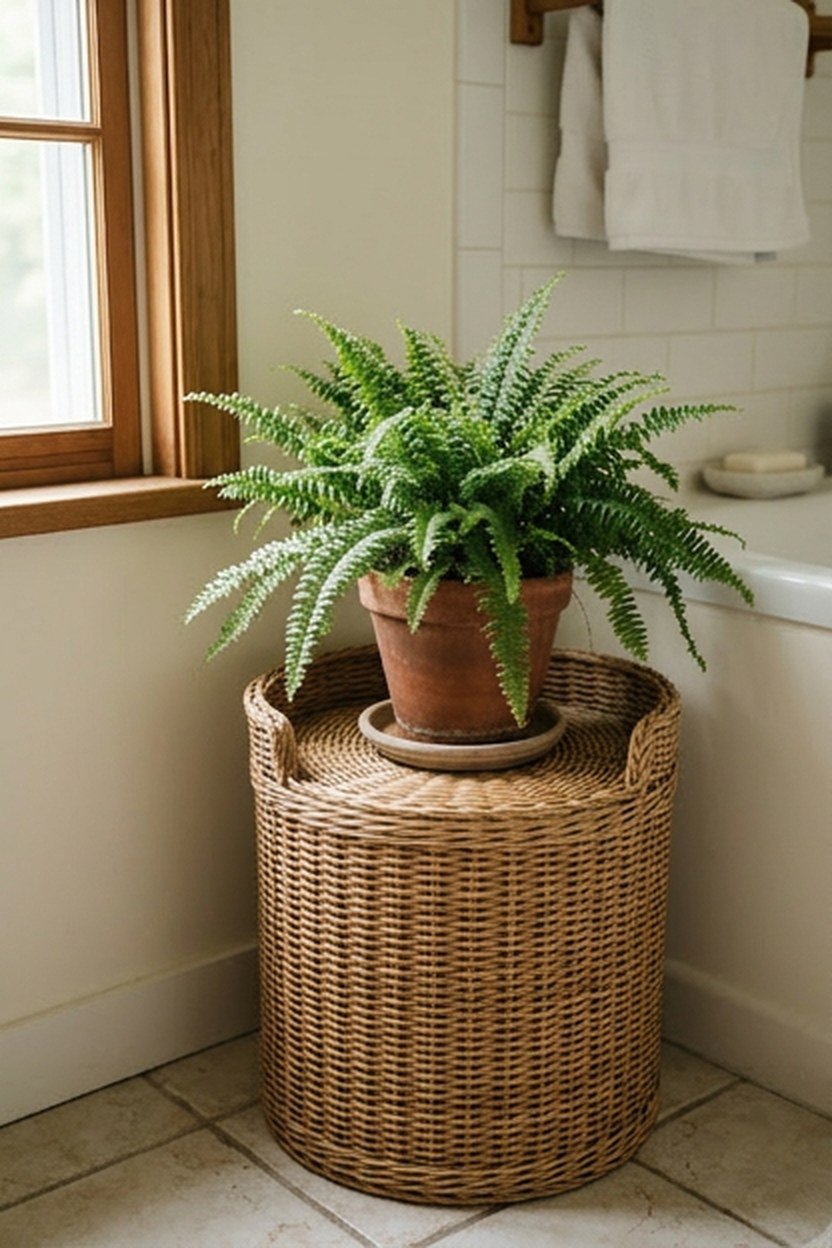
A wicker plant stand elevates a humidity loving plant, taking advantage of a bathroom’s naturally elevated moisture level while adding both height and texture to the room. Expect to pay 25 to 60 dollars for a quality wicker plant stand sized for a typical bathroom corner. This accent pairs particularly well with the many houseplants that specifically thrive in higher humidity environments.
Choose plants genuinely suited to bathroom conditions, like a fern, pothos, or peace lily, rather than a plant that prefers drier air, since the whole point of this pairing is taking advantage of the bathroom’s natural humidity. Position the stand where the plant will receive adequate light, since many bathrooms have more limited natural light than other rooms in the home. This practical plant care consideration matters as much as the stand’s own styling.
The wicker stand will develop a soft natural fiber texture becoming more pronounced from the combination of regular watering runoff and ambient bathroom humidity over time. This gradual textured change is normal for a wicker plant stand under these specific conditions and adds to its authentic character. A saucer beneath the plant pot protects the stand from direct water contact during watering.
Choosing Plants That Thrive In Bathroom Humidity
Research your specific bathroom’s actual light conditions honestly before choosing a plant, since a plant needing bright indirect light will struggle in a windowless bathroom relying only on artificial lighting. Ferns and pothos both tolerate lower light situations better than many other humidity loving plants. Match your plant choice to your bathroom’s real conditions rather than an aspirational one.
Rotate the plant between the bathroom and a brighter room periodically if your bathroom’s natural light is genuinely limited, giving it recovery time in better light conditions between bathroom stays. Watch the plant’s leaves for signs of stretching toward light, a sign it needs this rotation more often. This small habit keeps a humidity loving plant genuinely healthy long term.
10. Wicker Laundry Hamper
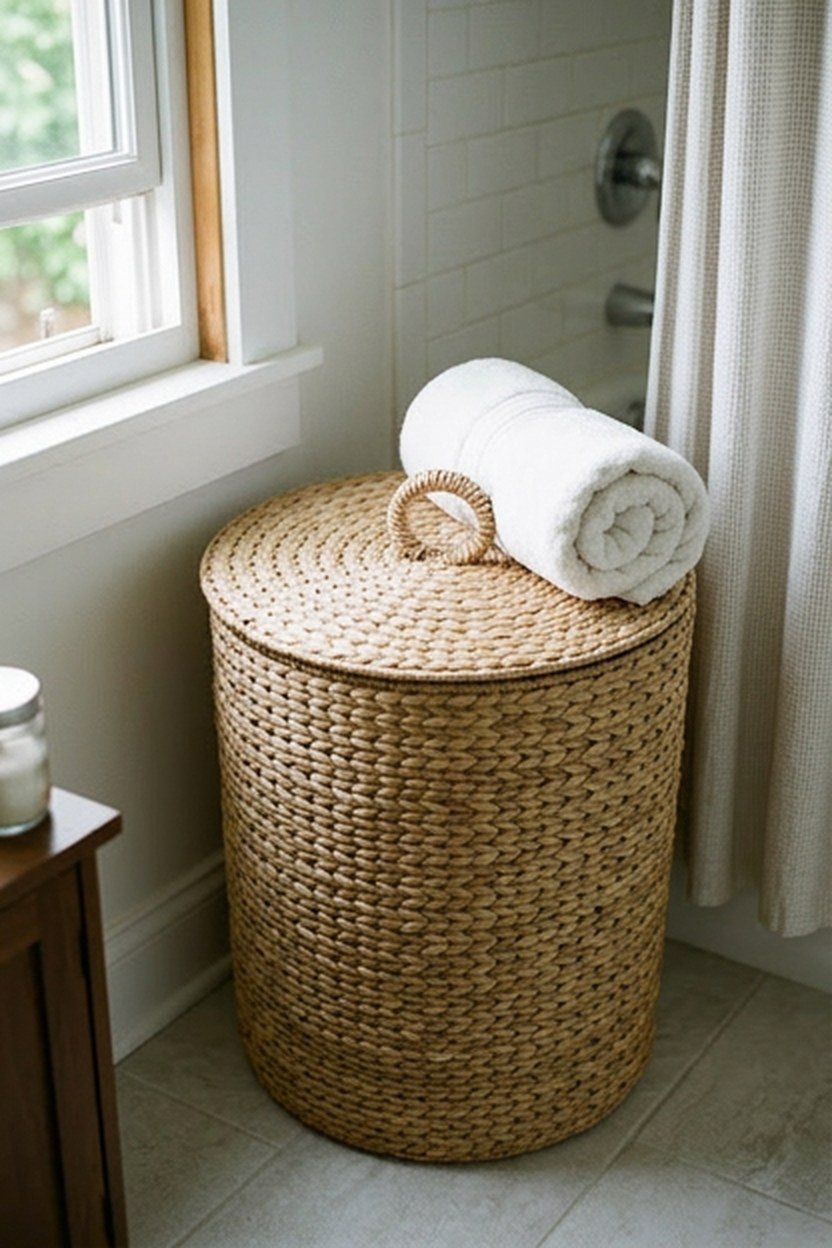
A wicker laundry hamper in the bathroom or an adjoining space keeps dirty clothes contained while adding a natural texture element to a genuinely functional piece. Expect to pay 40 to 90 dollars for a quality wicker hamper sized for typical household laundry volume. This accent suits a bathroom with enough floor space to accommodate a standalone hamper without crowding the room.
Choose a hamper with a removable fabric liner specifically, since this protects the wicker from direct contact with laundry and makes transporting items to the washing machine considerably easier than removing items individually from an unlined wicker interior. Many quality wicker hampers include this liner as a standard feature. Confirm this detail before purchasing if it is not clearly stated in the product listing.
The wicker will develop a soft natural fiber texture becoming more pronounced at the areas most handled during daily use, like the lid and any handle points, from years of regular opening and closing. This gradual textured change at these specific contact points is normal for a wicker hamper under sustained daily use. A properly fitted liner protects the interior wicker from direct fabric and moisture contact considerably.
Sizing A Wicker Hamper For Your Household
Estimate your household’s actual typical laundry volume before choosing a hamper size, since an undersized hamper overflows quickly while an oversized one wastes valuable bathroom floor space. Consider your actual laundry frequency alongside household size when making this estimate. This practical sizing consideration matters more to daily usability than the hamper’s specific style.
Choose a hamper with a lid if concealing laundry contents matters to you, or an open top style if you prioritize easy, quick access over visual concealment. Consider your own daily habits honestly before choosing between these two styles. Most households find one style noticeably more convenient than the other once actually living with it.
11. Wicker Towel Ladder Or Blanket Rack
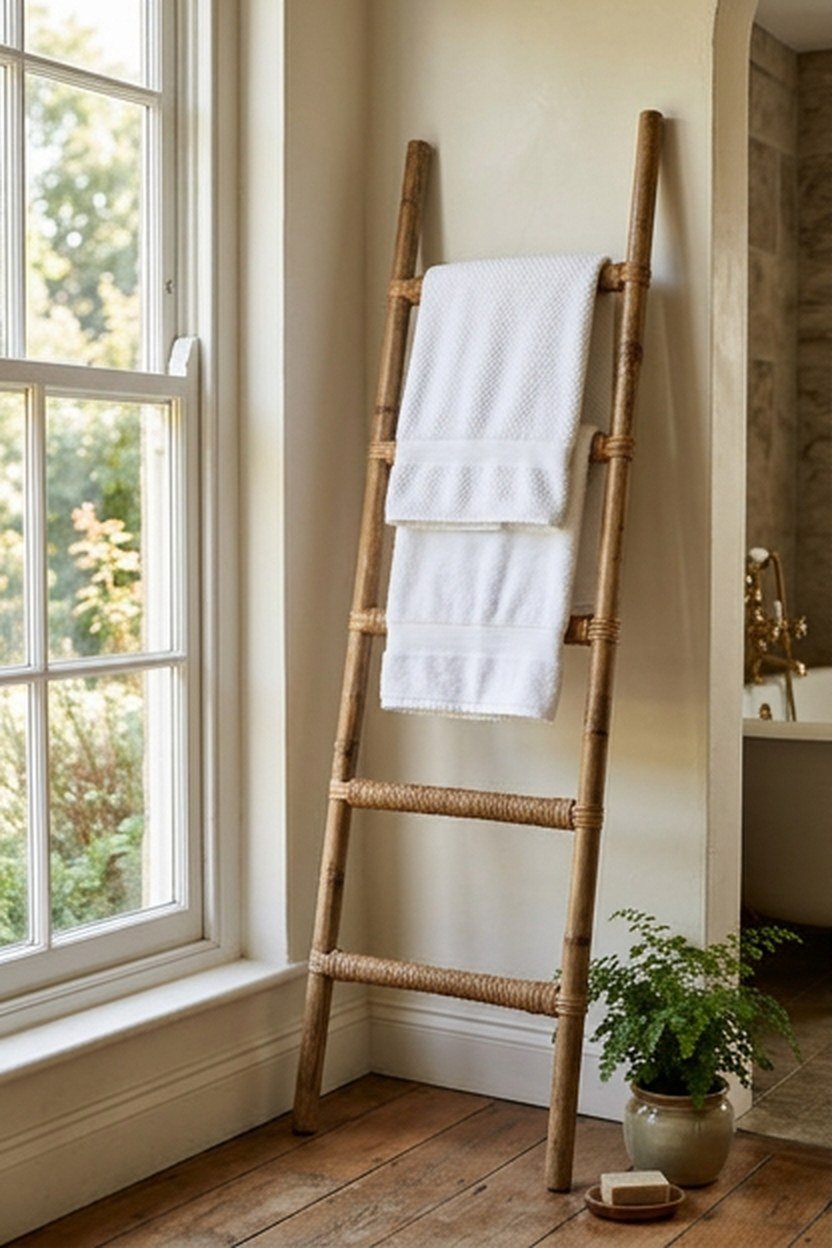
A wicker or rattan towel ladder, leaned against a wall, provides both functional towel storage and a genuine styling feature that a standard towel bar cannot achieve on its own. Expect to pay 50 to 120 dollars for a quality wicker or rattan towel ladder sized for your bathroom’s ceiling height. This piece works especially well in a bathroom with enough wall space to accommodate its leaned, angled footprint.
Position the ladder against a sturdy wall section rather than a door or a wall with limited backing, since a leaned piece needs genuine stability to hold the weight of draped towels safely. Confirm the ladder’s specific height suits your ceiling, since these pieces typically lean at a specific angle that requires adequate vertical clearance. Measure your available wall height before ordering a specific ladder size.
The wicker or rattan rungs will develop a soft natural fiber texture becoming more pronounced where damp towels are regularly draped, this contact point developing a different visible character than the ladder’s less used sections. This gradual textured change is normal for a wicker towel ladder under regular use with damp textiles and does not affect its structural function. Allowing towels to fully dry rather than staying permanently damp on the rack slows this textured change considerably.
Weight Capacity For A Leaned Towel Ladder
Confirm the specific weight capacity of a wicker or rattan towel ladder before loading it with multiple heavy, damp towels, since this figure varies between products and a lightweight decorative piece may not be rated for genuinely heavy daily towel use. Ask directly about this rating if it is not clearly stated in the product description. This practical check matters more for a functional piece than a purely decorative one.
Test the ladder’s stability against your specific wall before relying on it daily, since a leaned piece’s stability depends partly on the wall surface and floor traction at its base. A small rubber pad at the base can improve grip on a smooth tile floor. This small addition adds meaningful stability for very little cost.
12. Wicker Framed Shower Curtain Rings Or Rod Accents
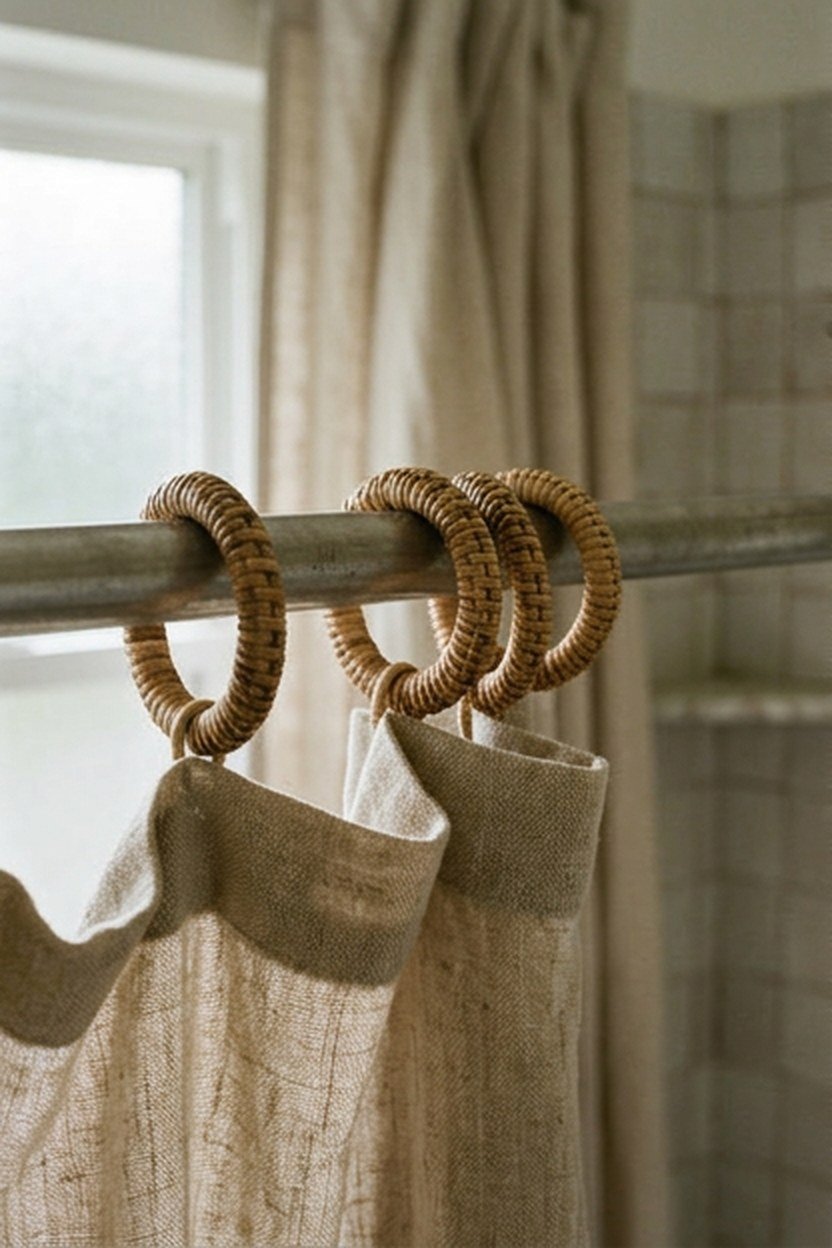
Wicker or rattan wrapped curtain rings, or a rattan detail on the shower curtain rod itself, bring texture to an element most bathrooms treat as purely functional and overlooked. Expect to pay 15 to 40 dollars for a set of wicker wrapped curtain rings. This is one of the smallest, most affordable accents on this entire list, suited to anyone wanting a subtle rather than dramatic wicker touch.
Choose curtain rings specifically treated or rated for direct water exposure, since this accent sits closer to the shower’s actual water spray than almost any other wicker item on this list. Confirm this water resistance rating specifically before purchasing, since an untreated decorative ring will degrade quickly in this demanding location. This detail matters more here than for any other accent covered.
The wicker wrapped rings will develop a soft natural fiber texture becoming considerably more pronounced from direct, frequent water exposure during regular shower use. This gradual textured change happens faster for this specific accent than for any other wicker item on this list, given its close proximity to direct water spray. Expect a shorter replacement cycle for this item compared to wicker accents positioned away from direct water contact.
Replacement Frequency For Shower Adjacent Wicker
Expect to replace wicker wrapped shower curtain rings more frequently than any other accent on this list, potentially annually depending on your specific shower use patterns and bathroom humidity. Budget for this more frequent replacement as a known cost of choosing this particular accent. This realistic expectation prevents disappointment at needing to replace this item sooner than other wicker pieces in the room.
Consider this accent only if you specifically want wicker texture in this exact location, since a metal or plastic ring alternative may offer better long term value given this location’s demanding conditions. Weigh the visual benefit against the more frequent replacement this specific accent requires. Many people find the tradeoff worth it purely for the texture it adds.
13. Wicker Framed Bathroom Art Or Photography
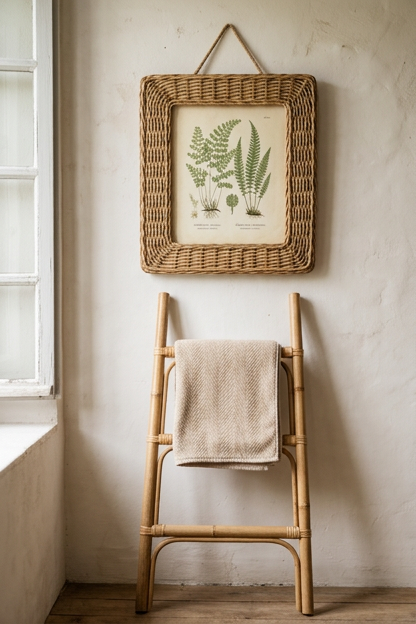
A wicker framed piece of art or photography, positioned on a drier wall, brings natural texture to the frame itself alongside whatever image or art the frame contains. Expect to pay 25 to 70 dollars for a quality wicker framed piece sized appropriately for your available wall space. This accent works especially well combined with botanical or beach themed art that reinforces the room’s overall boho, natural aesthetic.
Position wicker framed art on the same drier wall zone recommended for woven wall hangings, away from direct shower spray or sink splash exposure. This placement consideration protects both the wicker frame and, if applicable, the artwork or photograph itself from moisture damage. Confirm your intended wall’s actual humidity exposure honestly before finalizing this placement.
The wicker frame will develop a soft natural fiber texture becoming more visible from ambient bathroom humidity even on a relatively dry wall, this change happening gradually over years of typical bathroom conditions. This textured change is normal for a wicker frame in any bathroom environment and adds to its authentic character over time. Ensuring good bathroom ventilation slows this change for this and all other wicker accents in the room.
Protecting Art Behind Glass In A Humid Room
Choose a wicker framed piece with the artwork protected behind glass or acrylic glazing specifically for bathroom use, since this protects the actual image or print from humidity damage even as the wicker frame itself develops its own natural textured character over time. Confirm this glazing detail when purchasing framed art specifically for bathroom placement. This distinction matters considerably for preserving the artwork itself long term.
Check behind the glazing periodically for any condensation buildup, which can indicate the seal is not adequately protecting the artwork from the room’s ambient humidity. Address any moisture found promptly rather than waiting for visible damage to appear. This small habit protects the artwork far longer than reacting after damage occurs.
14. Wicker Or Rattan Bathroom Stool
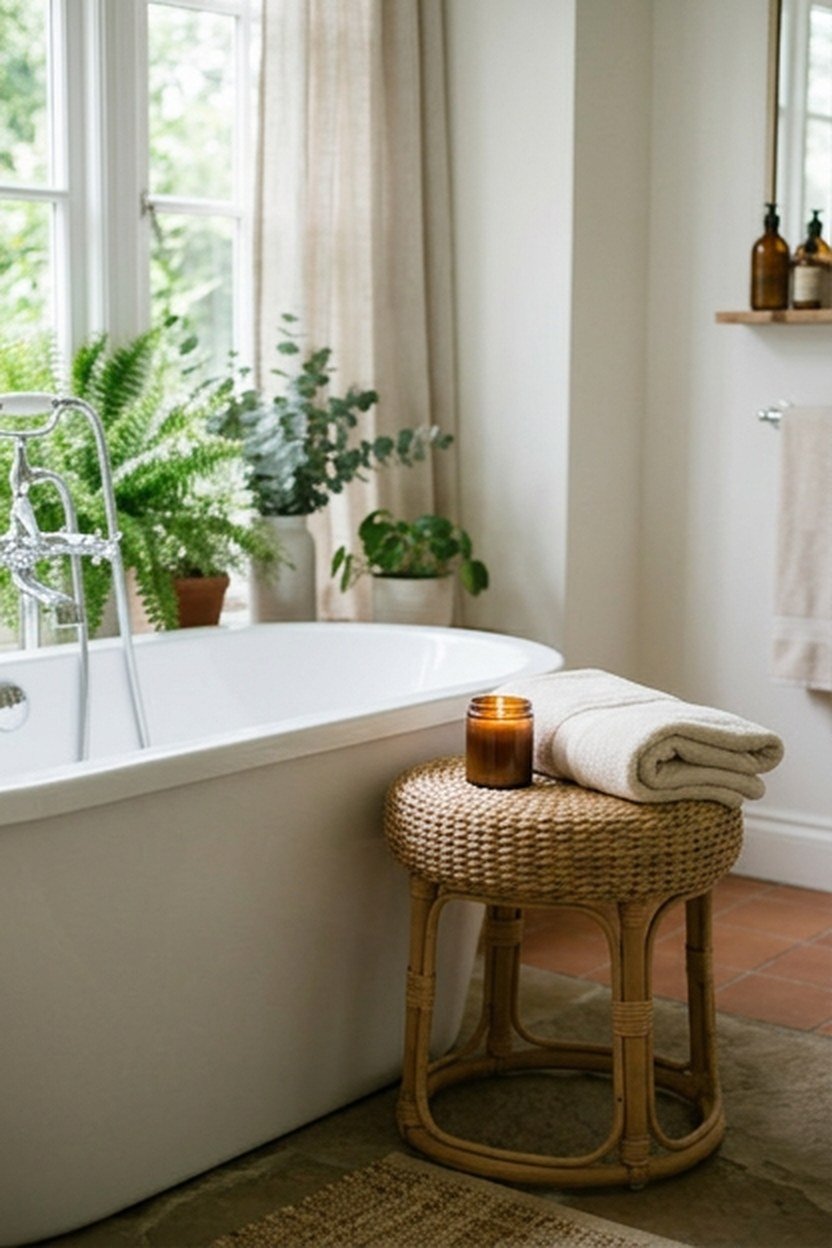
A small wicker or rattan stool provides a place to sit while dressing or a surface for a towel and a plant, adding genuine function alongside its textural contribution. Expect to pay 40 to 90 dollars for a quality wicker or rattan stool sized for bathroom use. This piece works well in a bathroom with enough floor space to accommodate a small additional furniture item.
Choose a stool with a genuinely sturdy construction rather than a purely decorative, lightweight option if you intend to actually sit on it regularly, since a stool meant for real use needs different structural qualities than one meant purely for display. Test the stool’s stability before committing to regular use if purchasing secondhand or from an unfamiliar source. This practical check matters more for a functional piece than a purely decorative accent.
The wicker or rattan will develop a soft natural fiber texture becoming more pronounced at the seat surface from regular sitting contact and ambient bathroom humidity over time. This gradual textured change at this specific contact point is normal for a wicker stool under sustained bathroom use and does not affect its structural stability. Regular use actually helps the material settle into a more comfortable, broken in character over time.
Choosing Stool Height For Bathroom Use
Consider the stool’s intended use, sitting while applying makeup or drying feet versus simply holding a towel or plant, before choosing a specific height. A genuinely functional seating height differs from what works best as a decorative side table height. Match your choice to how you actually expect to use the piece rather than styling considerations alone.
Test the stool’s actual stability on your specific bathroom flooring, since a stool that feels sturdy on carpet can behave differently on a smooth tile or vinyl floor. Sit on the stool directly on your own floor before trusting it for regular use. This small check matters more for safety than the stool’s appearance.
15. Wicker Woven Curtain Panels Over A Window
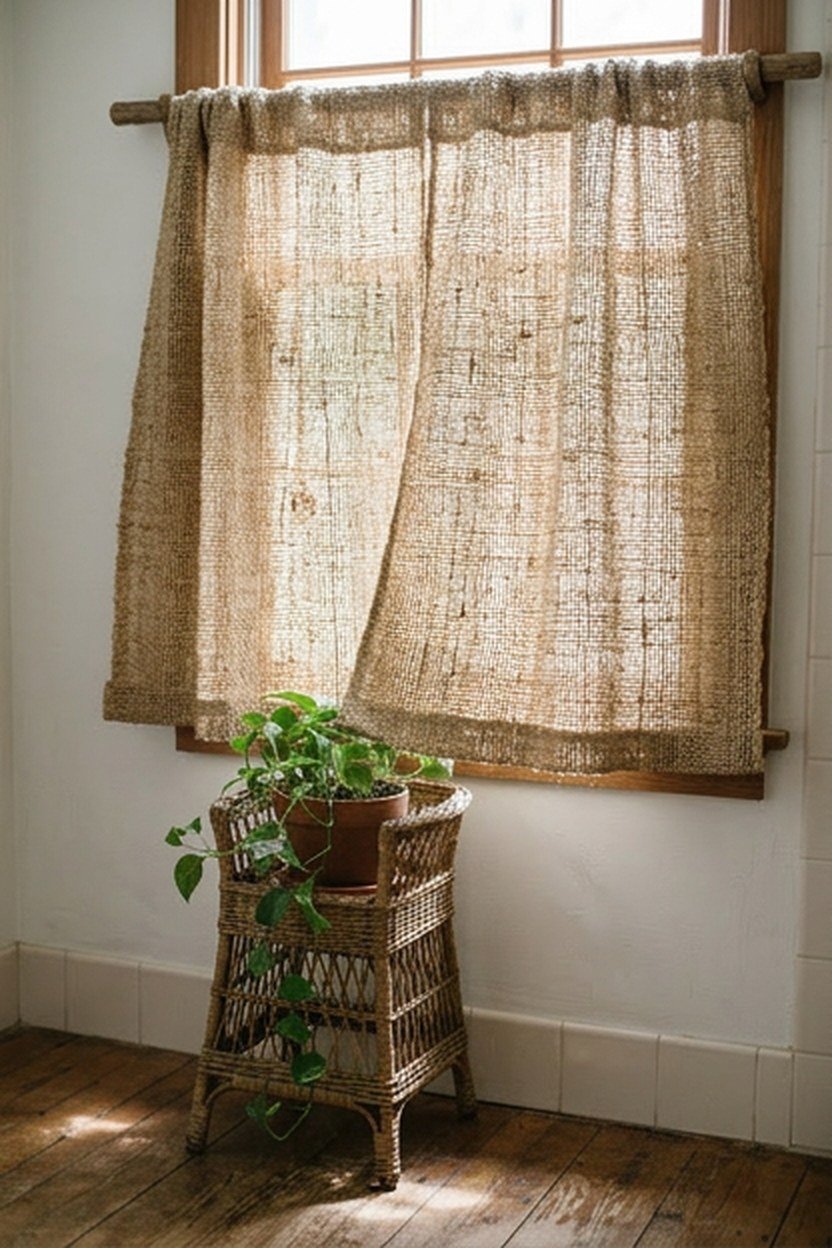
Wicker or woven natural fiber curtain panels over a bathroom window bring texture and gentle light filtering that a standard fabric curtain cannot achieve in quite the same way. Expect to pay 40 to 100 dollars for quality woven natural fiber window coverings sized for a standard bathroom window. This accent works well in a bathroom with a window that needs privacy without fully blocking natural light.
Choose a woven material specifically treated for bathroom humidity, since window coverings positioned near a shower or tub can experience significant steam exposure during regular use. Confirm this treatment specifically when shopping for bathroom window coverings rather than assuming any decorative woven panel will hold up to this environment. This detail matters considerably more here than for a window covering in a drier room.
The woven material will develop a soft natural fiber texture becoming more pronounced from steam exposure and ambient bathroom humidity over time, the fibers settling and softening with sustained exposure to this specific environment. This gradual textured change is expected for natural fiber window coverings under bathroom conditions and adds to their authentic character. Good bathroom ventilation slows this change considerably for this and other wicker or woven accents throughout the room.
Privacy Versus Light Filtering For Woven Panels
A tighter weave provides more privacy but blocks more natural light, while a looser weave allows more light through at the cost of some privacy. Consider your bathroom window’s specific location and how much privacy you genuinely need before choosing weave density. This balance matters more for a bathroom window than for almost any other room in the home given the privacy considerations involved.
Layer a simple frosted film on the glass itself if you want maximum privacy alongside a looser, more light filtering woven panel, combining both benefits without needing an extremely tight weave that blocks too much light. This combination costs little more than either solution alone. Most people find this pairing solves the privacy and light tradeoff more completely than either option by itself.
What A Wicker Boho Bathroom Actually Costs
A complete natural wicker boho bathroom transformation can range from under 100 dollars using a few baskets and small accents to 500 dollars or more including a mirror, lighting, and larger furniture pieces like a hamper or stool. Most people land somewhere in the middle, choosing a handful of higher impact accents rather than attempting every idea on this list at once. Prioritize the accents suited to your specific bathroom’s humidity zones over simply chasing every wicker idea available.
Spread larger investments like a wicker light fixture or a framed mirror across a few purchases if the full cost feels like a stretch, starting with lower cost, lower risk accents like baskets and a vanity tray. I recommend this staged approach specifically for a humid room like a bathroom, since it lets you observe how wicker performs in your specific space before committing to pricier pieces. This gradual confirmation prevents disappointment from an expensive piece degrading faster than expected.
The table below breaks down rough cost tiers for a wicker boho bathroom project, acknowledging that specific product quality and treatment shift these numbers somewhat. Treat it as a planning starting point rather than a firm quote for your specific project. Most people land in the middle tier once a mirror or lighting fixture is included.
| Budget tier | What it covers | Approach |
|---|---|---|
| Under $100 | Baskets, vanity tray, waste basket | Low risk, easily replaced |
| $100 to $300 | Mirror, plant stand, hamper, towel ladder | Moderate investment pieces |
| $300 and up | Light fixture, stool, multiple larger pieces | Full room transformation |
Common Mistakes When Using Wicker In A Boho Bathroom
Placing untreated wicker directly in a high humidity or direct splash zone is the most common and most damaging mistake, leading to mold or rapid material breakdown within a single season. Always match the specific wicker product’s treatment level to its intended placement, reserving treated, water resistant pieces for wetter zones. This upfront matching prevents the most frustrating and costly wicker bathroom mistakes.
Neglecting bathroom ventilation while adding multiple wicker accents throughout the room is the second frequent mistake, since even well placed wicker benefits from genuine airflow to prevent excess moisture buildup. Confirm your exhaust fan works properly and run it longer than usual if you have added several wicker pieces to the room. This ventilation consideration matters more as you add more wicker accents to the same space.
Overcrowding a small bathroom with too many wicker pieces at once is the third mistake, since a bathroom has genuinely limited space and too many textural accents can start to feel cluttered rather than intentionally styled. Choose three or four strong wicker accents rather than attempting all fifteen ideas in one compact room. A more restrained approach consistently reads as more considered than a bathroom crowded with every possible wicker item.
Monitoring Wicker Accents For Early Signs Of Trouble
Check wicker accents periodically for any musty smell, visible dark spotting, or a soft, degrading texture, all early signs of moisture damage that are much easier to address before they progress further. Catching this early sometimes allows for cleaning and re-sealing rather than full replacement. Make this a habit specifically for bathroom wicker given the room’s inherently challenging conditions for this material.
Replace any wicker accent showing genuine mold growth immediately rather than attempting to clean and reuse it, since mold in a porous natural material like wicker is difficult to fully eliminate once established. Dispose of the affected piece promptly rather than storing it elsewhere in the home. This small precaution prevents mold spores from spreading to other items.
Conclusion
Building a breezy boho bathroom with natural wicker accents comes down to matching each specific piece’s moisture treatment to its actual placement, and choosing genuine ventilation alongside style. Start with lower risk accents like baskets and a vanity tray before moving to larger investments like a mirror or lighting fixture. The fifteen accents covered here scale from an affordable starter approach up to a fully realized wicker filled bathroom retreat.
Prioritize honest assessment of your bathroom’s humidity and proper product treatment above simply chasing every wicker idea at once, since durability matters as much as the initial visual impact for this specific material in this specific room. A well planned wicker boho bathroom rewards you with genuine warmth and texture that lasts for years rather than months. Get the placement and treatment right, and the look will keep earning its place in daily use.
Frequently Asked Questions
Does wicker actually hold up well in a bathroom? Yes, when properly treated and placed thoughtfully away from direct water exposure, quality wicker can last for years in a bathroom. Untreated wicker placed in a high moisture zone will degrade much faster.
What is the safest place to start with wicker in a bathroom? Storage baskets on open shelving and a vanity tray are the lowest risk starting points, since these typically sit away from direct water exposure. Both are also among the most affordable accents on this list.
How often do I need to reseal wicker bathroom accents? Most treated wicker benefits from resealing every one to two years depending on your bathroom’s specific humidity level. Items closer to direct water exposure, like a bath mat, may need more frequent attention or replacement.
Can I use wicker in a bathroom with no window or exhaust fan? This is genuinely risky, since poor ventilation significantly increases the chance of mold forming in wicker accents. Address ventilation first, even with a portable dehumidifier, before adding much wicker to a poorly ventilated bathroom.
Is rattan the same as wicker for bathroom use? Rattan is a specific natural material often woven into a wicker pattern, so the terms overlap considerably in casual use, though wicker can also refer to synthetic weaves. Natural rattan wicker requires the same humidity considerations as any other natural fiber material.
What is the biggest mistake people make with bathroom wicker? Placing untreated wicker in a high moisture zone like directly beside the shower is the most common and most costly mistake. Match each piece’s treatment level and placement carefully to avoid mold or rapid material breakdown.