
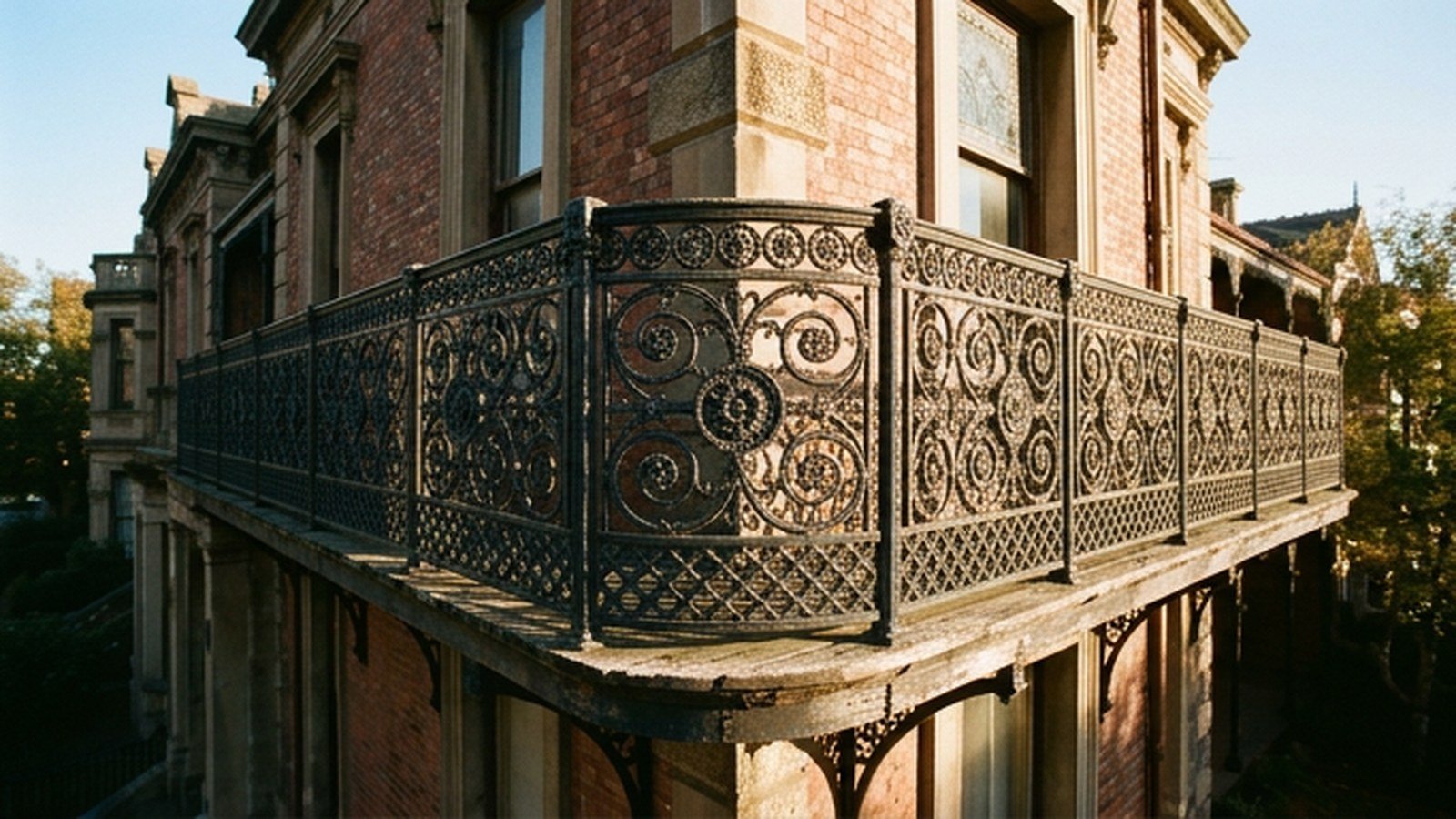
An ornate Victorian balcony grill turns a plain metal railing into genuine architectural character, and it remains one of the most recognizable exterior details a home can carry. The style leans on scrollwork, repeating patterns, and cast or wrought iron construction that has stayed structurally sound on real Victorian homes for well over a century. I have researched and priced these styles for three different restoration projects, and the range genuinely spans from a modest accent panel to a full custom fabricated railing system.
This guide covers fifteen specific ornate Victorian balcony grill styles, what each one actually costs, and where the design choices can go wrong on a modern renovation or a period appropriate restoration. Expect honest notes about material durability, local building code, and the details that separate an authentic Victorian look from a generic wrought iron pattern. By the end you will have a real shortlist matched to your home’s actual architecture and budget.
Not every home suits a heavily ornate grill design, and forcing Victorian detailing onto a home with a different architectural style can look mismatched rather than intentional. I will flag which styles suit which house types directly throughout this guide. The best balcony grill choice always relates back to the home’s existing architecture rather than a design trend on its own.
Why Victorian Balcony Grills Remain So Popular
Victorian architecture prized visible craftsmanship, and a balcony grill was one of the most public opportunities a builder had to display that skill, which is why the era produced such an enormous range of scrollwork and pattern styles. This historical emphasis on visible detail is exactly why Victorian grill designs still read as impressive rather than dated on a modern restoration. Few architectural details carry this much character from a single decorative element.
The style also holds up remarkably well from a structural standpoint, since genuine wrought iron and cast iron both resist the elements far better than many people assume for a material this old. A properly maintained Victorian style grill installed today can reasonably be expected to outlast most other exterior features on a home. This durability is a genuine practical argument for the style beyond its obvious visual appeal.
The table below compares Victorian style grillwork against two other common balcony railing approaches on the factors that matter most for exterior architecture. None of the three is universally correct, since the right choice depends on your home’s period and your maintenance appetite. Use it as a starting point before reading the planning section that follows.
| Factor | Victorian ornate grill | Simple modern railing | Basic wood railing |
|---|---|---|---|
| Visual character | Very high, distinct architectural detail | Low, minimal detail | Moderate, depends on style |
| Material durability | High, iron construction | High, typically aluminum or steel | Moderate, needs regular maintenance |
| Typical cost | Moderate to high | Low to moderate | Low |
Planning A Victorian Balcony Grill Before You Order One
Research your home’s actual architectural period and regional style before choosing a specific Victorian grill pattern, since Victorian era detailing varied meaningfully between regions and sub styles like Queen Anne, Italianate, and Gothic Revival. A pattern authentic to one Victorian sub style can look subtly wrong on a home built in a different regional tradition. A local historical society or preservation group can often help identify your home’s specific architectural lineage.
Check your local building code and any historic district guidelines before finalizing a design, since balcony railings typically have minimum height and maximum gap requirements that an authentic historical pattern may not automatically satisfy. Many ornate Victorian patterns need modification to meet modern safety codes without losing their defining character. Confirm this with a local contractor or code official before committing to a final design.
Set a realistic budget that accounts for the material and labor differences between a mass produced pattern and a genuinely custom fabricated design, since these two approaches can differ substantially in price for what looks like a similar level of ornamentation. Both approaches can achieve an authentic look, so match your choice to what you can actually spend rather than assuming custom fabrication is always necessary. The styles below are ordered roughly from more accessible to more involved.
1. Classic Scrollwork Panel Design
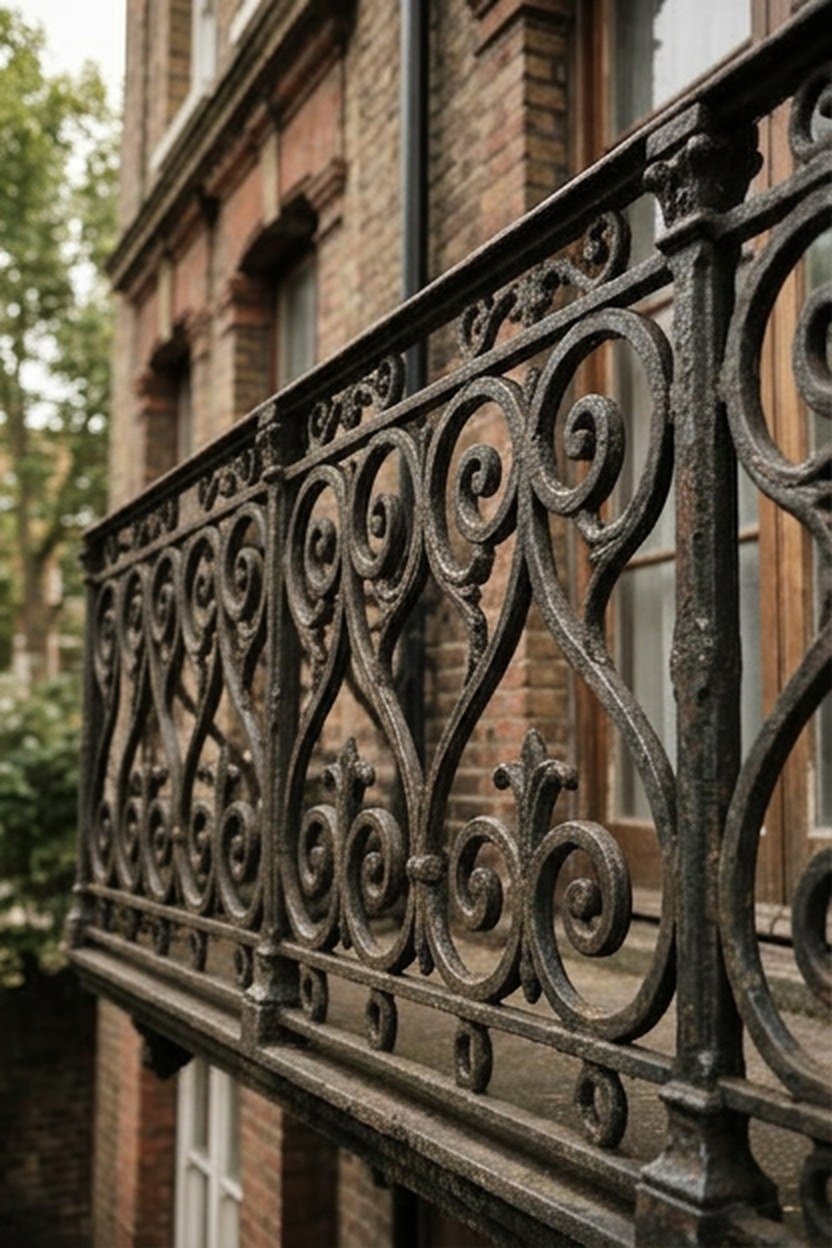
A classic scrollwork panel featuring repeating C shaped and S shaped iron curves is the most recognizable Victorian grill pattern and remains widely available from specialty ironwork suppliers today. Expect to pay 80 to 150 dollars per linear foot for a quality cast iron scrollwork panel, with the total cost depending heavily on your balcony’s total railing length. This pattern suits almost any Victorian era home regardless of the specific regional sub style.
Choose a panel with a consistent scroll density across its full length rather than mixing panels from different suppliers that may not match precisely, since even small variations in scroll spacing become obvious once installed side by side. Order slightly more material than your minimum measurement to account for any cutting or fitting adjustments during installation. This small buffer prevents a mismatched panel from a second supplier order later.
The cast iron surface, if left in its natural finish rather than painted, will develop a soft natural patina texture over years of outdoor exposure as the metal’s surface oxidizes evenly. This gradual textured change in raw cast iron is a normal characteristic of the material and does not indicate structural weakness, since a light surface oxidation layer actually helps protect the iron underneath. A painted finish prevents this specific textured change if you prefer a more consistent color over time.
Painted Versus Natural Finish For Scrollwork Panels
A painted finish, typically a matte or satin black, gives scrollwork panels a crisper, more defined look that highlights the pattern’s shadows and depth more clearly than a raw natural finish does. A natural or lightly sealed finish shows the iron’s own aging character more directly but requires more attentive maintenance to prevent excessive rust formation over time. Consider your appetite for ongoing maintenance honestly before choosing between these two finish approaches.
Repaint a black finished scrollwork panel every five to eight years depending on your climate, since coastal or consistently humid regions accelerate paint breakdown on exterior ironwork considerably faster than a drier inland climate would. Inspect for early rust spots between full repaints and address them promptly. Catching a small spot early is far cheaper than a full strip and repaint later.
2. Fleur-De-Lis Pattern Grillwork
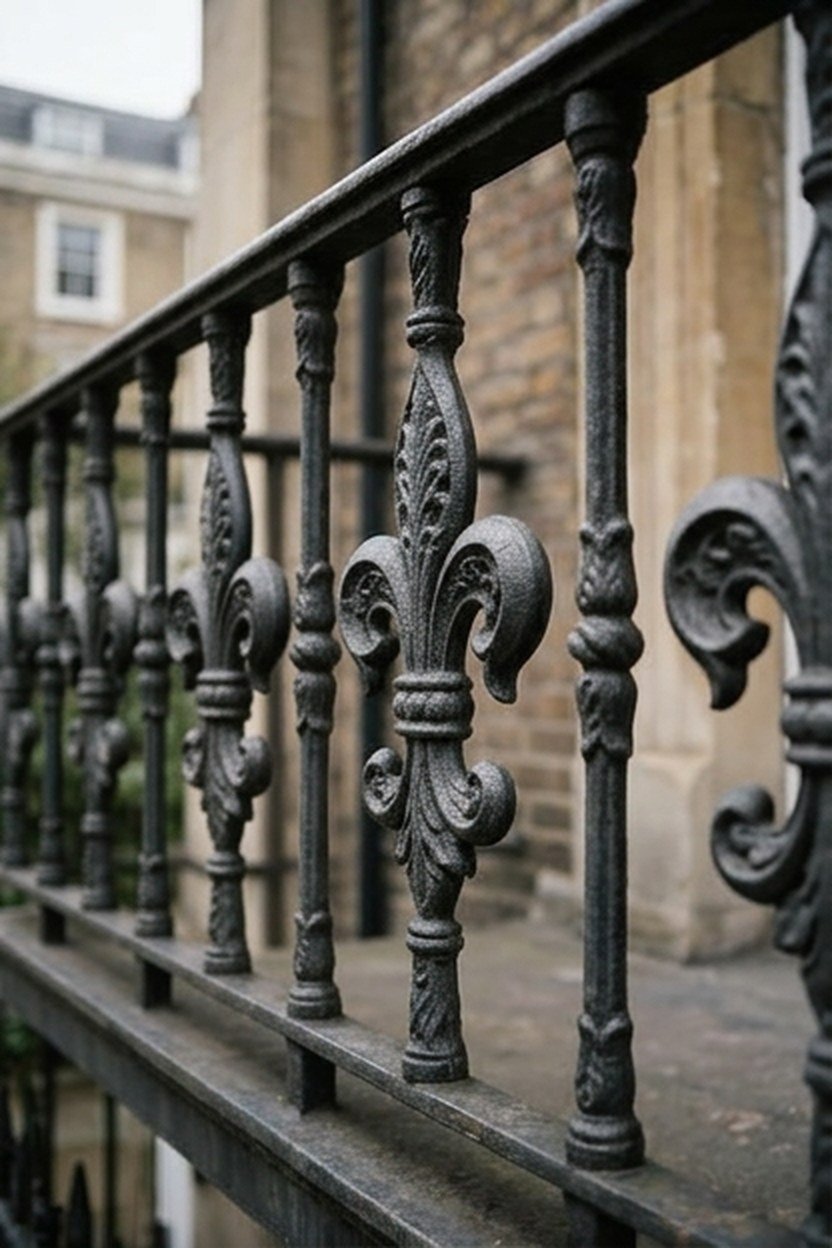
Fleur-de-lis motifs incorporated into a balcony grill’s vertical elements add a specific decorative flourish that pairs especially well with French influenced or Second Empire style Victorian homes. Expect to pay 100 to 180 dollars per linear foot for a quality fleur-de-lis pattern grill, reflecting the additional casting detail this specific motif requires. This pattern reads as more formal and refined than a purely abstract scrollwork design.
Position fleur-de-lis elements at a consistent height and spacing across the full railing run, typically centered within each vertical baluster section, for the most visually balanced result. An inconsistent spacing pattern draws the eye to the irregularity rather than the motif’s actual detail. Work with your fabricator during the design phase specifically to confirm this spacing before any casting begins.
The cast iron fleur-de-lis elements will show a visible natural grain pattern developing in the surface texture as the casting’s original mold marks weather and soften slightly with age. This gradual textured change is a normal characteristic of cast iron detailing exposed to years of outdoor conditions and does not affect the structural integrity of the casting itself. A protective clear coat over a natural finish slows this softening if you want to preserve the crisper original detail longer.
Sourcing Authentic Fleur-De-Lis Casting Molds
Look specifically for a fabricator who uses traditional sand casting methods for fleur-de-lis detailing rather than a modern laser cut alternative, since the casting process produces a dimensional depth that laser cutting cannot fully replicate. This distinction matters most if historical authenticity is a genuine priority for your specific restoration project. Ask to see physical samples of both methods side by side before deciding which approach suits your project and budget.
Confirm lead times carefully when ordering custom cast fleur-de-lis panels, since traditional sand casting takes considerably longer than a standard scrollwork order and can add several weeks to your overall project timeline. Build this extra time into any broader renovation schedule that depends on the balcony being finished. A fabricator can usually give a realistic estimate once the design is finalized.
3. Gothic Revival Pointed Arch Motif
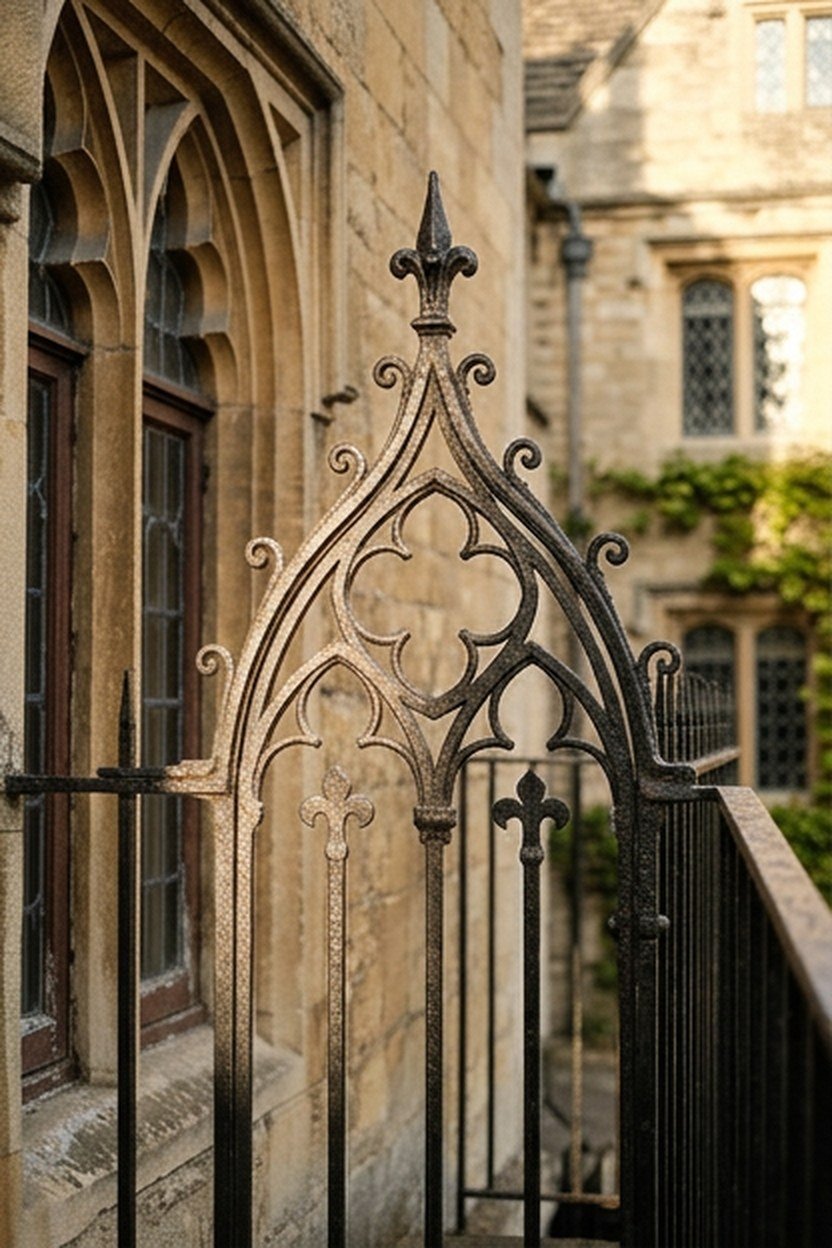
A Gothic Revival balcony grill featuring pointed arch motifs echoes the pointed window and doorway shapes common to Gothic Revival Victorian homes, creating genuine architectural cohesion between the balcony and the rest of the facade. Expect to pay 120 to 200 dollars per linear foot given the more intricate geometric casting this style requires. This pattern suits a home with existing pointed arch windows or trim details particularly well.
Match the balcony grill’s specific arch angle to your home’s existing window and door arch angles rather than choosing a generic pointed shape, since a mismatched arch angle undermines the architectural cohesion this style is specifically meant to achieve. Bring photographs or measurements of your home’s existing arch details to your fabricator during the design consultation. This coordination step is what separates a genuinely cohesive Gothic Revival balcony from one that merely gestures at the style.
The iron’s surface, whether cast or wrought, will develop a soft even sheen change across the most sun exposed sections of the grill after several years of consistent weather exposure. This gradual textured change in the metal’s original finish sheen is expected for exterior ironwork under sustained sun and weather exposure and does not affect the structural material underneath. Regular inspection catches any deeper rust formation before it becomes a structural concern, separate from this cosmetic sheen change.
Balancing Gothic Detail With Modern Safety Code
Gothic Revival balcony patterns often feature wider decorative gaps between elements than modern safety code typically allows, since historical code standards were considerably less strict about fall prevention gaps than current requirements. Work with your fabricator to incorporate a secondary, less visually prominent support element that satisfies modern gap requirements without disrupting the pattern’s overall visual rhythm. This solution preserves the style’s authentic look while meeting current safety standards.
Request your fabricator provide documentation confirming code compliance for your specific local jurisdiction, since gap and height requirements vary somewhat between different regional building codes. Keep this documentation on file in case a future inspection or resale requires proof. This small paperwork step protects you long after installation.
4. Queen Anne Sunburst Panel
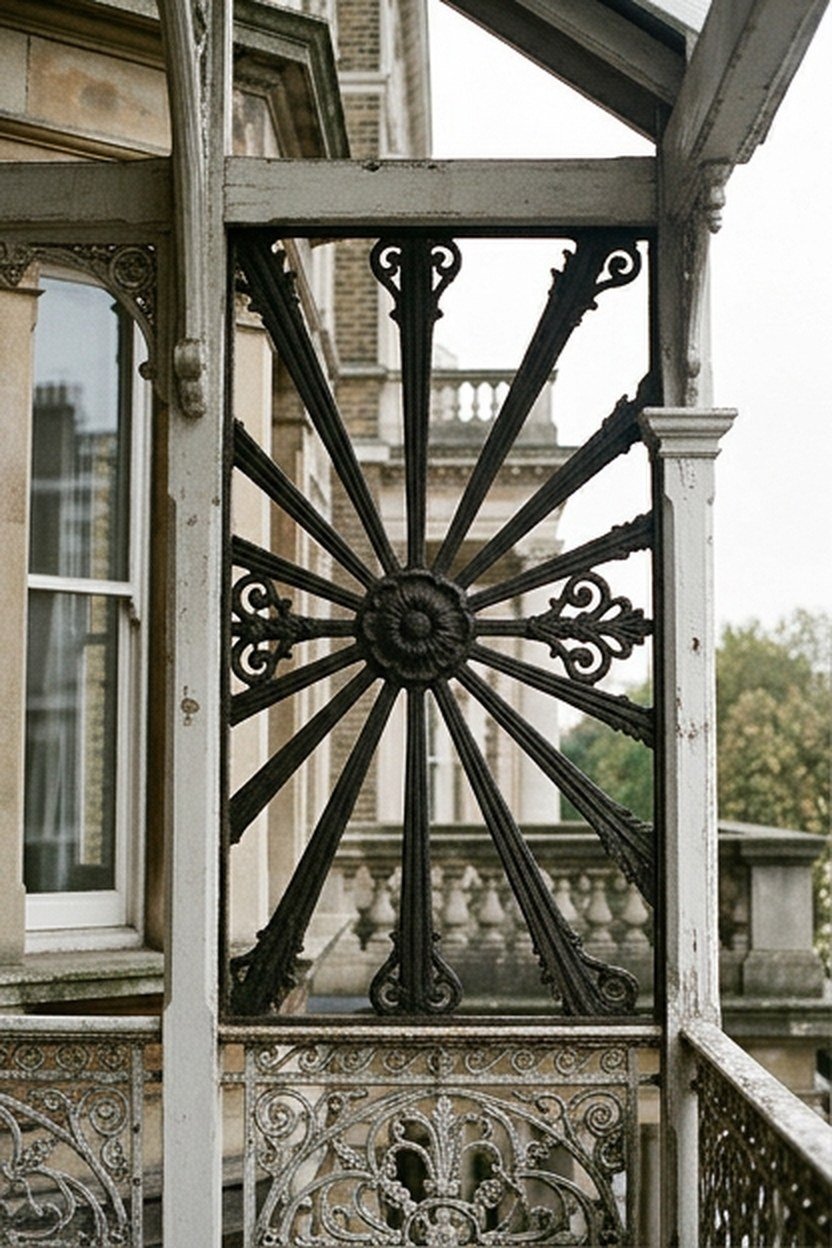
A Queen Anne style sunburst panel, featuring radiating iron spokes from a central point, adds a bold geometric focal point that suits the more eclectic, asymmetrical character typical of Queen Anne Victorian homes. Expect to pay 150 to 250 dollars per panel for a quality sunburst design, typically installed as a repeating feature at intervals along the railing rather than continuously. This pattern reads as more of a statement element than a continuous decorative texture.
Space sunburst panels evenly along your balcony’s total length, typically one panel centered within each major structural bay, rather than placing them at irregular intervals that can look accidental rather than intentional. Measure your balcony’s actual structural spacing before finalizing how many sunburst panels the design will include. This planning step prevents an awkward, unevenly spaced final installation.
The iron spokes will show a visible natural grain pattern becoming more textured in appearance as the casting’s surface ages and the original smooth finish develops more visible character over years of weather exposure. This gradual textured change is a normal characteristic of exterior cast iron detailing and many people consider it part of the material’s authentic aging process. A more frequently maintained painted finish shows less of this specific visible change.
Choosing Sunburst Panel Size For Your Balcony Proportions
A larger sunburst panel suits a wider balcony with generous spacing between structural supports, while a smaller, more compact sunburst design fits a narrower balcony without overwhelming the available space. Measure your specific bay width before ordering a standard sunburst size, since a panel proportioned for a much wider balcony can look oversized and awkward on a narrower one. A custom sized panel costs more but ensures proper proportion for your specific balcony dimensions.
Consider whether your balcony’s existing structural framework can accommodate the sunburst panel’s central mounting point without additional reinforcement, since this detail sometimes requires a small structural modification depending on your balcony’s original construction. A structural engineer’s brief assessment settles this question before fabrication begins. This upfront check avoids a costly surprise during installation.
5. Wrought Iron Lattice Diamond Pattern
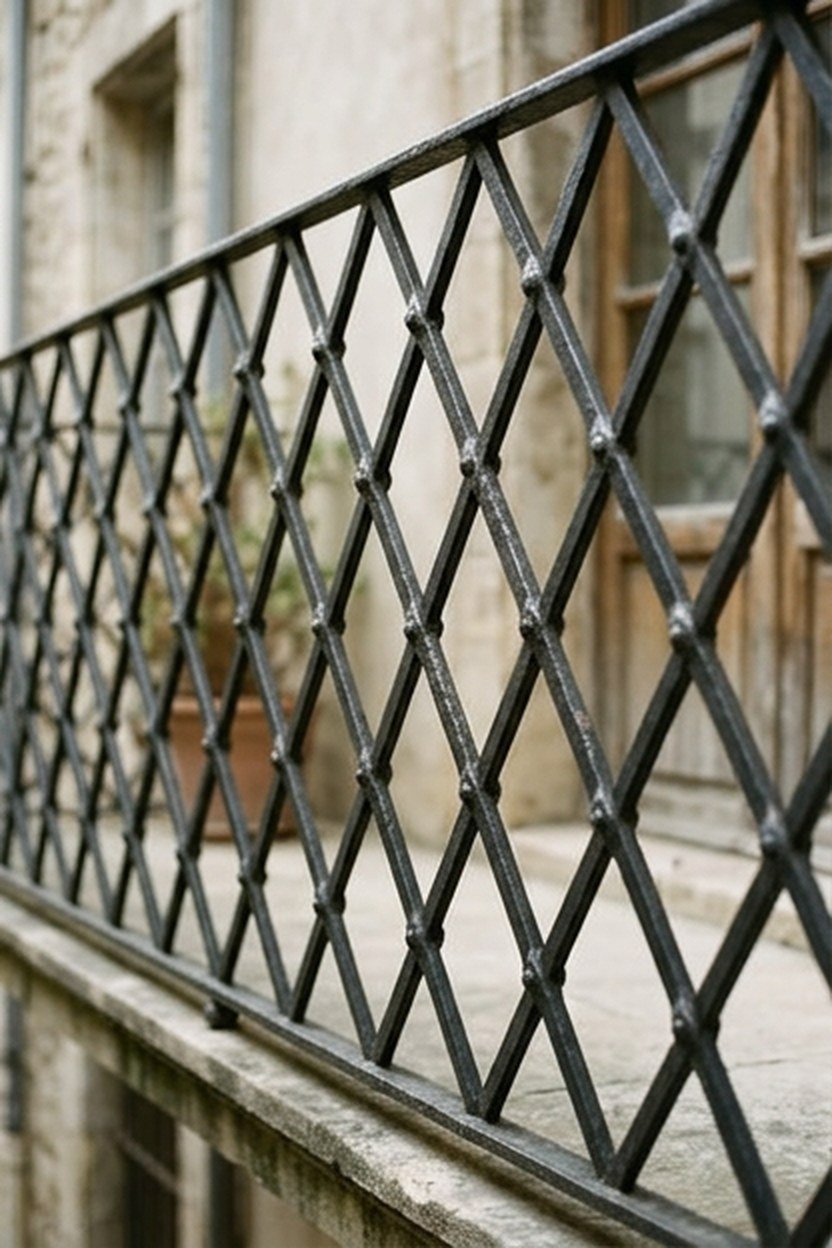
A wrought iron lattice in a repeating diamond pattern offers a slightly more restrained ornate look compared to heavier scrollwork, suiting a Victorian home that wants period appropriate character without an overly heavy visual presence. Expect to pay 70 to 130 dollars per linear foot, making this one of the more accessible ornate patterns on this list. The diamond lattice pattern also tends to read as slightly more versatile across different Victorian sub styles than a more specific motif would.
Choose a lattice diamond size proportional to your balcony’s overall scale, since an oversized diamond pattern can look sparse and thin on a smaller balcony while an undersized pattern can look busy and cluttered on a larger one. Request a sample section at your balcony’s actual scale before committing to a full order. This sample review step matters more for a repeating pattern like lattice than for a single focal point design.
The wrought iron will develop a soft natural sheen change across the lattice’s crossing points where individual iron pieces are joined, a gradual textured change from the joint welding process weathering evenly with the surrounding metal over time. This is a normal characteristic of wrought iron joinery exposed to outdoor conditions and does not indicate a weak connection point. A quality fabricator’s joints continue holding structural integrity despite this cosmetic surface change.
Diamond Lattice Spacing For Child And Pet Safety
Confirm the specific gap size within each diamond opening meets your local code’s maximum gap requirement, since a decorative lattice pattern with gaps too large presents a genuine safety concern for small children or pets on an upper floor balcony. Most current codes require openings small enough that a four inch sphere cannot pass through, though this exact figure varies by jurisdiction. Verify this specific measurement with your fabricator before finalizing the diamond size.
Consider a tighter lattice spacing than the strict code minimum if young children will regularly use the balcony, since building an extra safety margin beyond the legal minimum costs little in exchange for meaningful peace of mind. Discuss this option directly with your fabricator during the design phase. Most families who add this margin say it was worth the small extra cost.
6. Cast Iron Rosette Accent Medallions
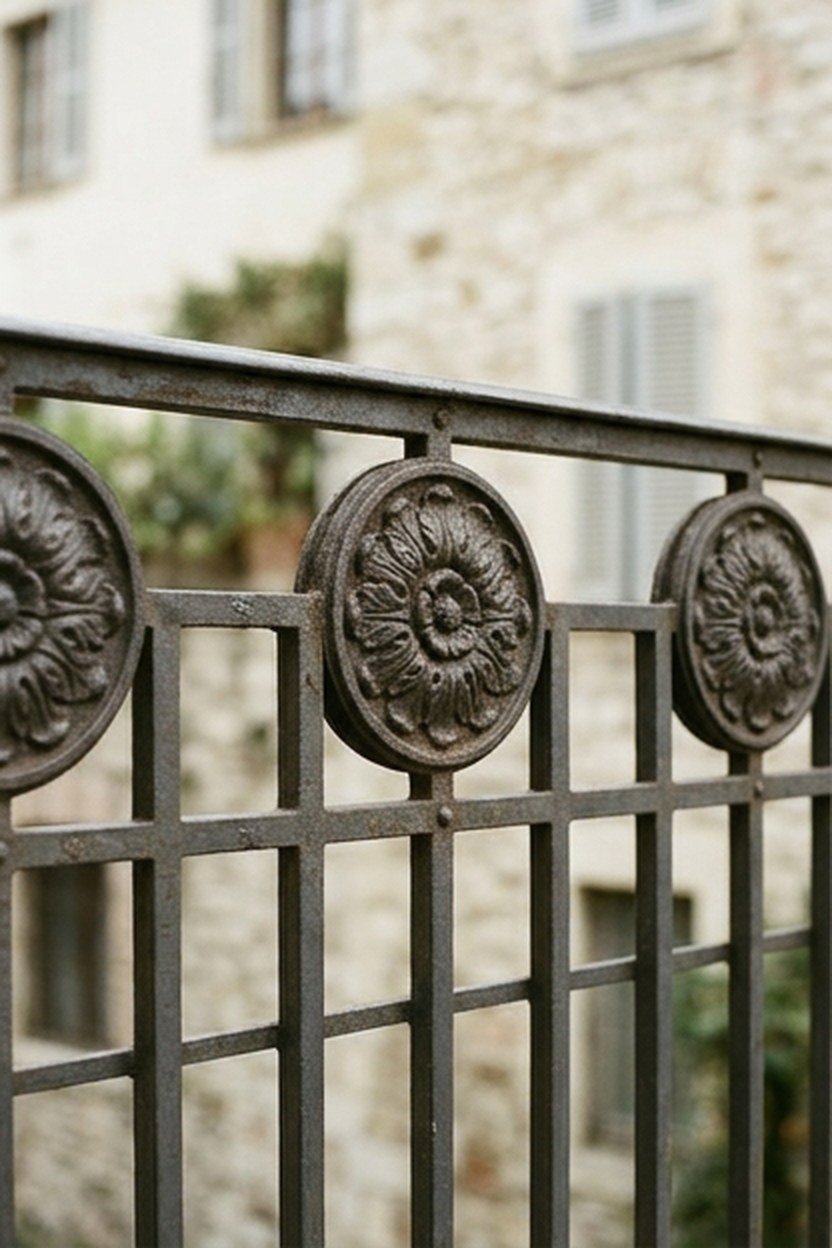
Cast iron rosette medallions positioned at regular intervals along an otherwise simpler grill pattern add a refined decorative accent without the cost and complexity of a fully ornate design covering the entire railing. Expect to pay 40 to 90 dollars per rosette medallion, typically needing four to eight medallions for a standard balcony length. This approach lets you achieve genuine Victorian character on a more modest overall budget than a fully ornate pattern would require.
Position rosette medallions at the intersection points of a simpler underlying grid or lattice pattern, since this placement makes the medallions look structurally integrated rather than applied as an afterthought. Work with your fabricator to plan medallion placement during the initial design phase rather than trying to add them to an already fabricated simple railing. This upfront planning produces a noticeably more cohesive final result.
The cast iron rosette’s raised detail will show a visible natural grain pattern in its surface as the casting ages and weathers over multiple seasons of outdoor exposure. This gradual textured change in the raised decorative surface is a normal characteristic of outdoor cast iron and adds to rather than detracts from the medallion’s authentic character over time. A painted finish slows this specific visible change if you prefer more consistent detail definition.
Combining Rosettes With A Simple Base Pattern
A straightforward vertical bar or simple square lattice base pattern pairs well with rosette medallion accents, since the simpler background lets the medallions serve as genuine focal points rather than competing with an already busy underlying pattern. Avoid pairing rosettes with an already heavily ornate base pattern, since this combination tends to look overdone rather than intentionally layered. Choose one element, either the base pattern or the medallions, to serve as the design’s primary decorative statement.
Order a few extra rosette medallions beyond your exact calculated need, since a small manufacturing variation or an installation adjustment can require an additional piece that would otherwise mean a slow, costly reorder from the fabricator. Two or three spares is usually enough of a buffer. Keep any leftover pieces on hand for future repairs as well.
7. Italianate Bracket And Scroll Combination
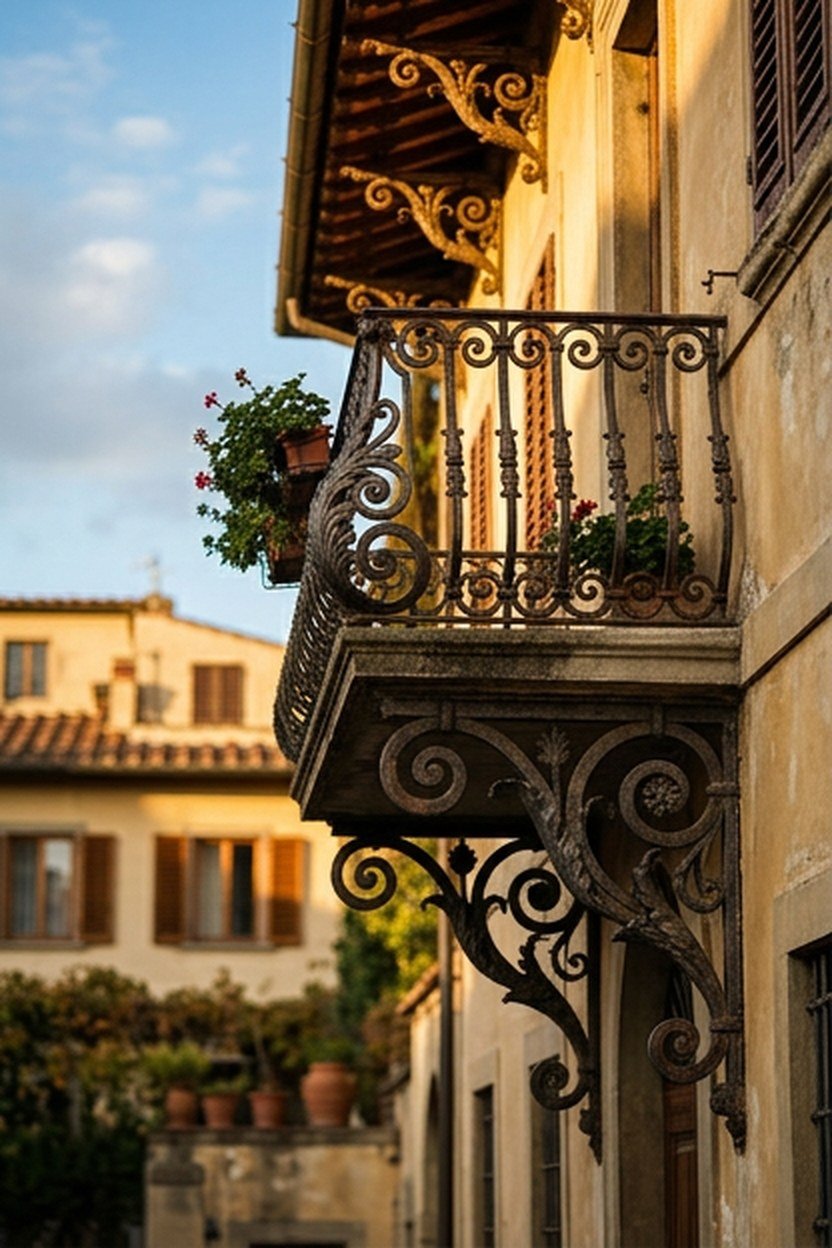
An Italianate style balcony grill combining decorative brackets with scrollwork detailing suits homes with the low pitched rooflines and wide eaves characteristic of Italianate Victorian architecture. Expect to pay 130 to 220 dollars per linear foot given the combined complexity of both bracket and scroll elements working together. This combination style pairs particularly well with a home that already features Italianate style roof brackets, creating visual continuity across different parts of the facade.
Match the balcony grill’s bracket style specifically to any existing roofline brackets on your home, since this coordination is what makes an Italianate balcony design read as genuinely cohesive rather than two unrelated decorative choices happening to share a house. Photograph your existing roof brackets and bring these references to your ironwork fabricator during design discussions. This matching detail carries more weight for authentic Italianate character than the scrollwork pattern itself.
The combined bracket and scroll ironwork will show a soft even sheen change developing across the bracket’s more exposed surfaces first, since brackets typically catch more direct weather than the more sheltered scrollwork sections beneath them. This uneven aging pattern between different sections of the same installation is a normal characteristic of complex ironwork with varying exposure levels. Regular cleaning and inspection helps this aging progress evenly rather than concentrating heavily in just the most exposed areas.
Matching New Ironwork To Existing Roof Brackets
Bring a physical sample or detailed photograph of your existing roof bracket style to any ironwork fabricator you are considering, since matching an existing decorative element precisely requires more reference material than a verbal description alone can provide. A skilled fabricator can typically replicate an existing bracket style closely even without an original manufacturer’s pattern to work from. Confirm this replication capability specifically before committing to a fabricator for this particular style.
Budget extra time in your project timeline for this matching process, since achieving a genuinely close match to existing architectural details typically takes longer than ordering a standard, non matched pattern. A skilled fabricator will usually flag this extra time upfront rather than promising an unrealistic schedule. Plan around this honestly rather than rushing a match that needs more care.
8. Ornamental Iron Grapevine Motif
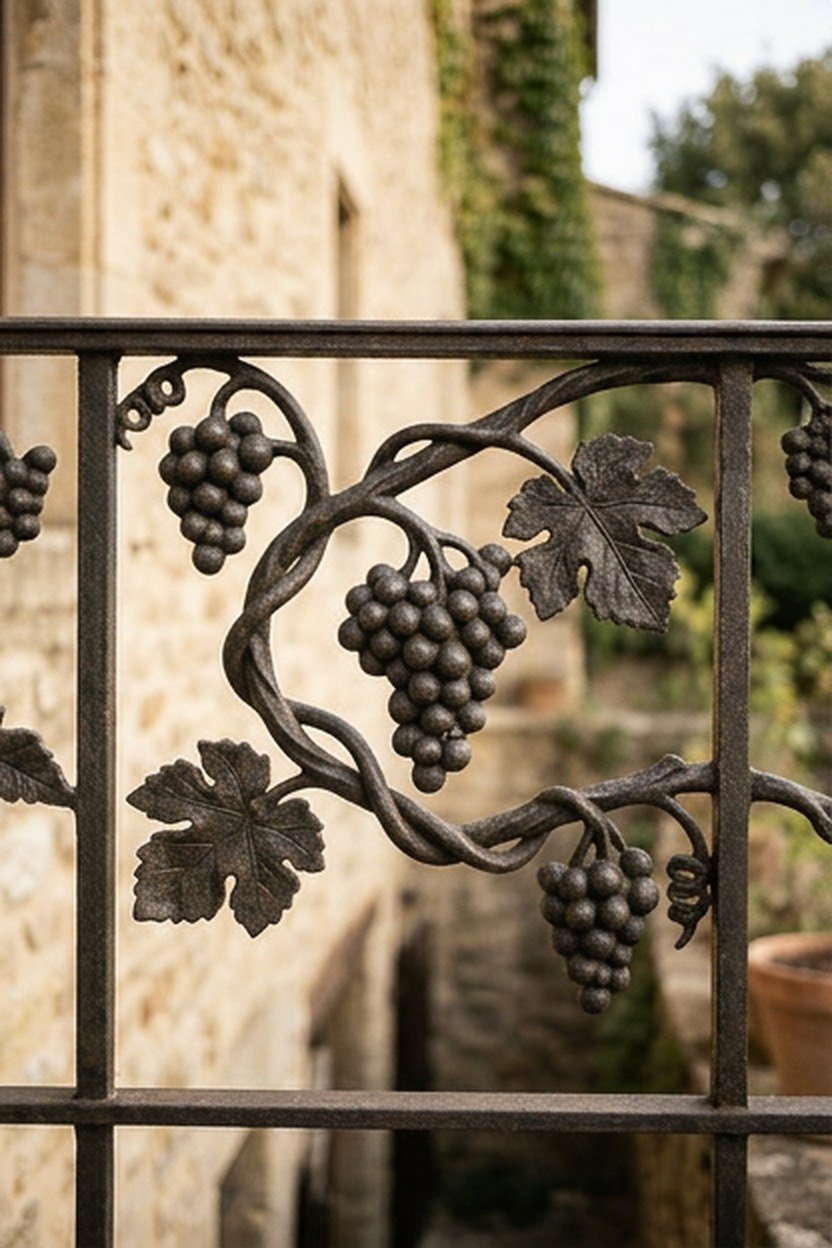
A grapevine motif worked into balcony ironwork, featuring leaves and clustered grape shapes along a winding stem, brings genuine naturalistic Victorian detail that suits homes wanting a softer, more organic ornate look than pure geometric scrollwork provides. Expect to pay 140 to 230 dollars per linear foot given the intricate, non repeating nature of a convincing grapevine pattern. This style works especially well on a home with other naturalistic exterior details, like carved wood trim featuring similar botanical motifs.
Request design variation along the grapevine’s length rather than a perfectly repeating identical pattern, since real grapevines grow with natural irregularity and a too perfectly repeated pattern undermines the naturalistic effect this motif is meant to achieve. A skilled fabricator can introduce subtle variation in leaf placement and stem curve while still maintaining overall visual balance. This attention to natural irregularity is what separates a convincing grapevine motif from a generic vine shaped scrollwork pattern.
The grapevine’s leaf and grape cluster details will develop a visible natural grain pattern in their surface texture as the casting ages and weathers, the fine details softening slightly while remaining clearly recognizable. This gradual textured change is a normal characteristic of detailed cast iron exposed to years of outdoor conditions and does not affect the pattern’s overall legibility or structural soundness. Many people specifically appreciate how this aging process makes an already naturalistic motif feel even more organic over time.
Fabricators Who Specialize In Naturalistic Ironwork Motifs
Seek out a fabricator with a specific portfolio of naturalistic motifs like grapevines, ivy, or floral patterns rather than a general ironwork shop, since these organic designs require different casting and finishing skills than geometric scrollwork does. Ask to see completed grapevine or similar naturalistic projects specifically before committing to a fabricator for this style. A shop skilled at geometric patterns does not automatically translate to skill with convincing organic detail.
Expect a longer design consultation process for a naturalistic motif compared to a standard geometric pattern, since achieving a convincing, non repetitive natural look requires more back and forth design refinement than a repeating geometric order typically needs. Budget for a few rounds of sketches before the final design locks in. This extra consultation time is what produces a genuinely convincing result.
9. Cast Iron Egg And Dart Border
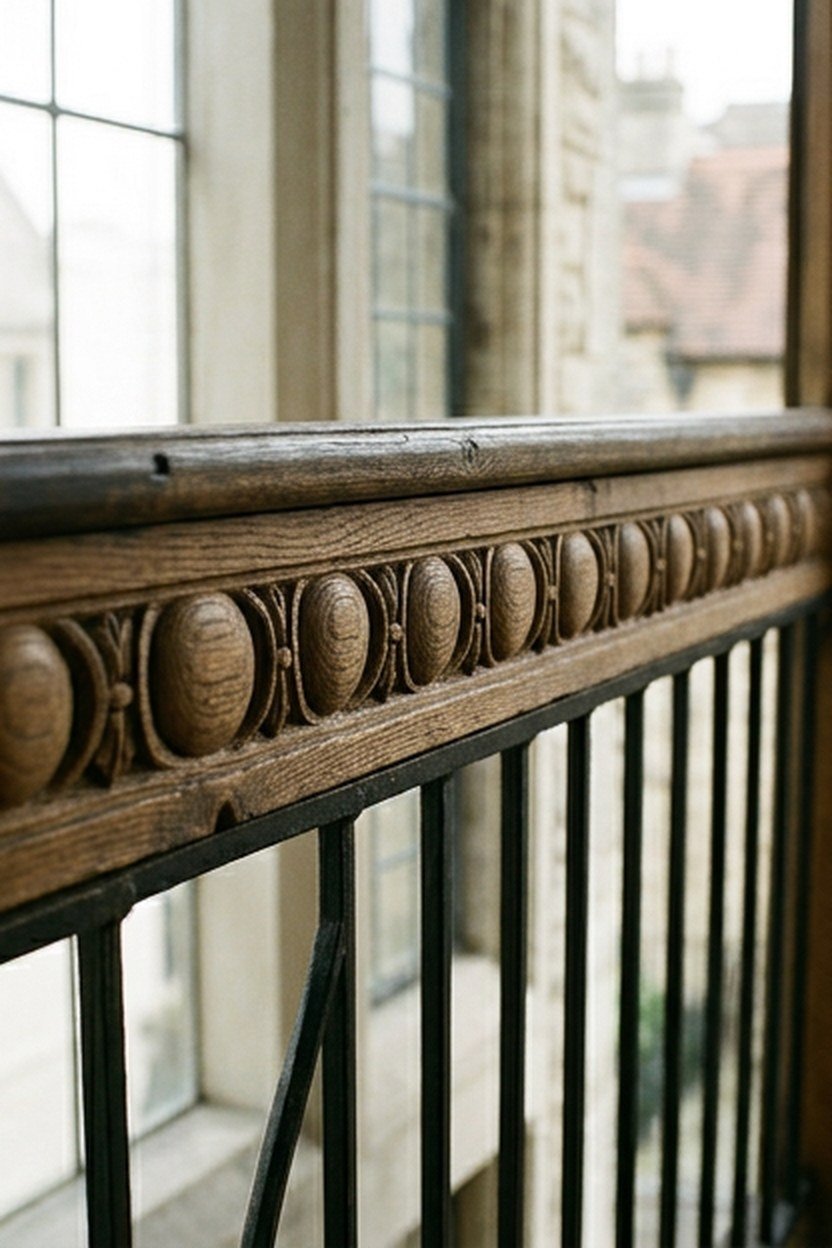
An egg and dart border pattern, a classical repeating motif of alternating oval and pointed shapes, provides refined edge detailing along the top or bottom rail of a balcony grill without overwhelming a simpler central pattern. Expect to pay 30 to 60 dollars per linear foot for this border detail alone, typically added to an existing base railing structure rather than standing as the balcony’s sole decorative element. This classical motif suits Victorian homes with other classical revival details elsewhere on the facade.
Position the egg and dart border consistently along both the top and bottom rails for visual symmetry, rather than applying it only to one edge, since a border on just one side can look unfinished or accidental. Confirm your fabricator’s standard egg and dart module size divides evenly into your balcony’s total length, since an uneven division leaves an awkward partial pattern at one end. Adjusting the overall length slightly or requesting custom sized end pieces solves this common fitting issue.
The border’s raised detail will show a visible natural grain pattern in its surface as the casting’s fine edges weather and soften gradually over years of outdoor exposure. This textured change at the pattern’s crisp original edges is a normal characteristic of detailed cast iron trim and does not affect the border’s overall visual presence significantly for many years. A painted finish preserves the crisper edge definition longer than a raw natural finish would.
Pairing An Egg And Dart Border With A Simpler Central Pattern
A straightforward vertical bar pattern or simple geometric lattice pairs particularly well with an egg and dart border, since the refined classical edge detail provides enough visual interest without needing a busy central pattern competing for attention. This pairing achieves a genuinely elegant, restrained ornate look at a lower total cost than a fully ornate central pattern combined with border detailing would require. Consider this combination specifically if budget is a meaningful constraint on an otherwise ornate design goal.
Confirm the border module’s specific depth does not create a snagging hazard for clothing or bare feet on a frequently used balcony, since some deeply carved classical border patterns have more pronounced raised edges than a shallower relief version. Run a hand along a sample section before ordering the full run. This quick physical check catches a comfort issue no drawing reveals.
10. Victorian Anthemion Palmette Pattern
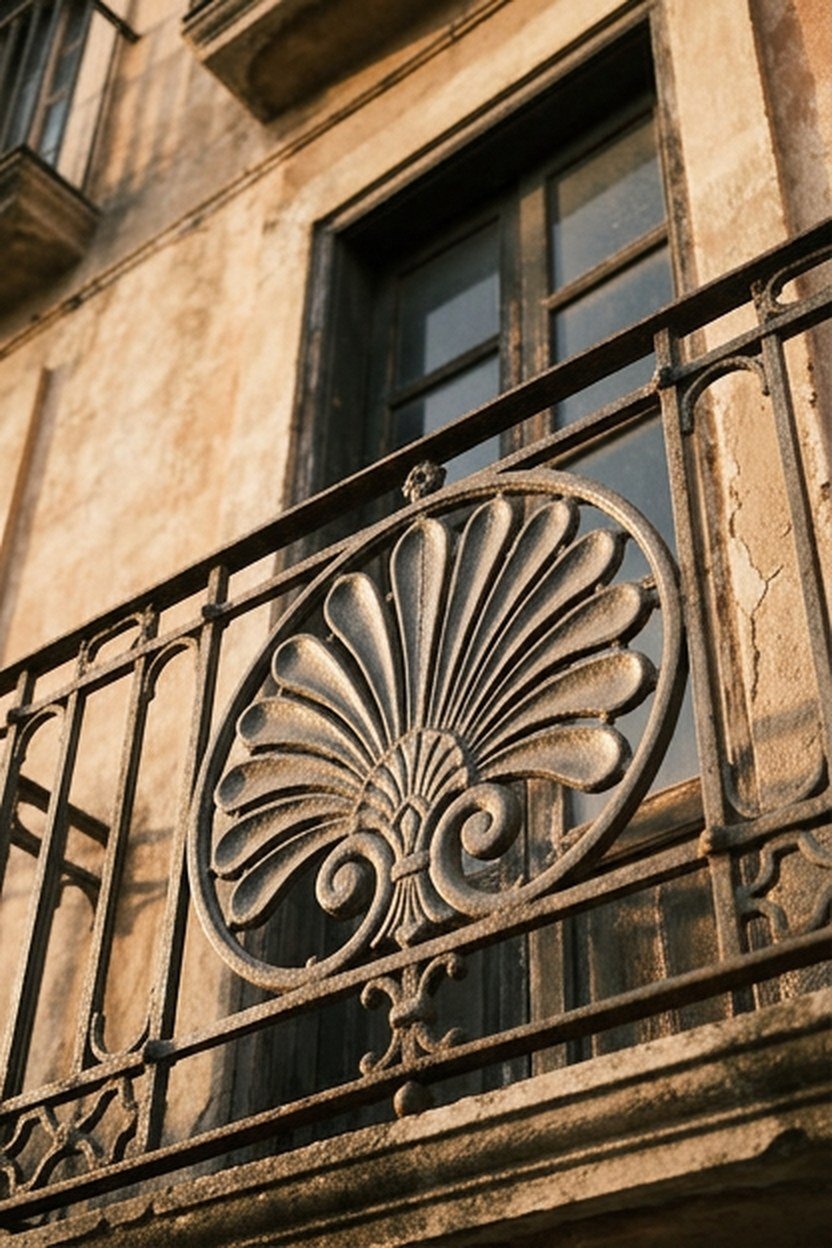
An anthemion palmette pattern, featuring a stylized fan shaped leaf motif common to late Victorian and Aesthetic Movement influenced architecture, brings a more refined, almost Greek revival influenced character to a balcony grill design. Expect to pay 150 to 240 dollars per linear foot given the detailed relief work this pattern typically requires. This motif suits a later Victorian home with Aesthetic Movement influences more specifically than an earlier, more purely Gothic or Italianate Victorian structure.
Research your home’s specific construction date and any documented architectural influences before choosing this pattern, since the anthemion palmette motif reads as historically appropriate on a later Victorian home but can feel anachronistic on an earlier structure predating the Aesthetic Movement’s influence. A local architectural historian or preservation resource can often help confirm this timeline for your specific property. This research step matters more for historical accuracy with this particular pattern than for some of the more universally applicable Victorian motifs.
The palmette’s fan shaped detail will develop a soft even sheen change across its raised surfaces as the casting weathers, the originally crisp relief edges softening slightly while remaining clearly legible for many years. This gradual textured change is a normal characteristic of detailed exterior cast iron and is part of the expected long term aging process for this kind of relief pattern. Regular gentle cleaning helps maintain the pattern’s visual clarity despite this natural surface aging.
Historical Accuracy Versus Personal Preference In Pattern Choice
Decide honestly whether historical accuracy to your home’s specific construction period matters more to you than simply choosing a Victorian style pattern you find visually appealing, since these two goals can sometimes point toward different specific pattern choices. Neither approach is wrong, but being clear about your actual priority helps you and your fabricator make faster, more confident design decisions. A restoration focused project usually prioritizes historical accuracy, while a new build inspired by Victorian style has more flexibility.
Document your reasoning for the final pattern choice if historical accuracy was a consideration, since this record can matter for future resale value or any historic district review process your project might need to pass. A simple written note with photos and sources is usually enough. Future owners or reviewers will appreciate having this context available.
11. Wrought Iron Basket Weave Pattern
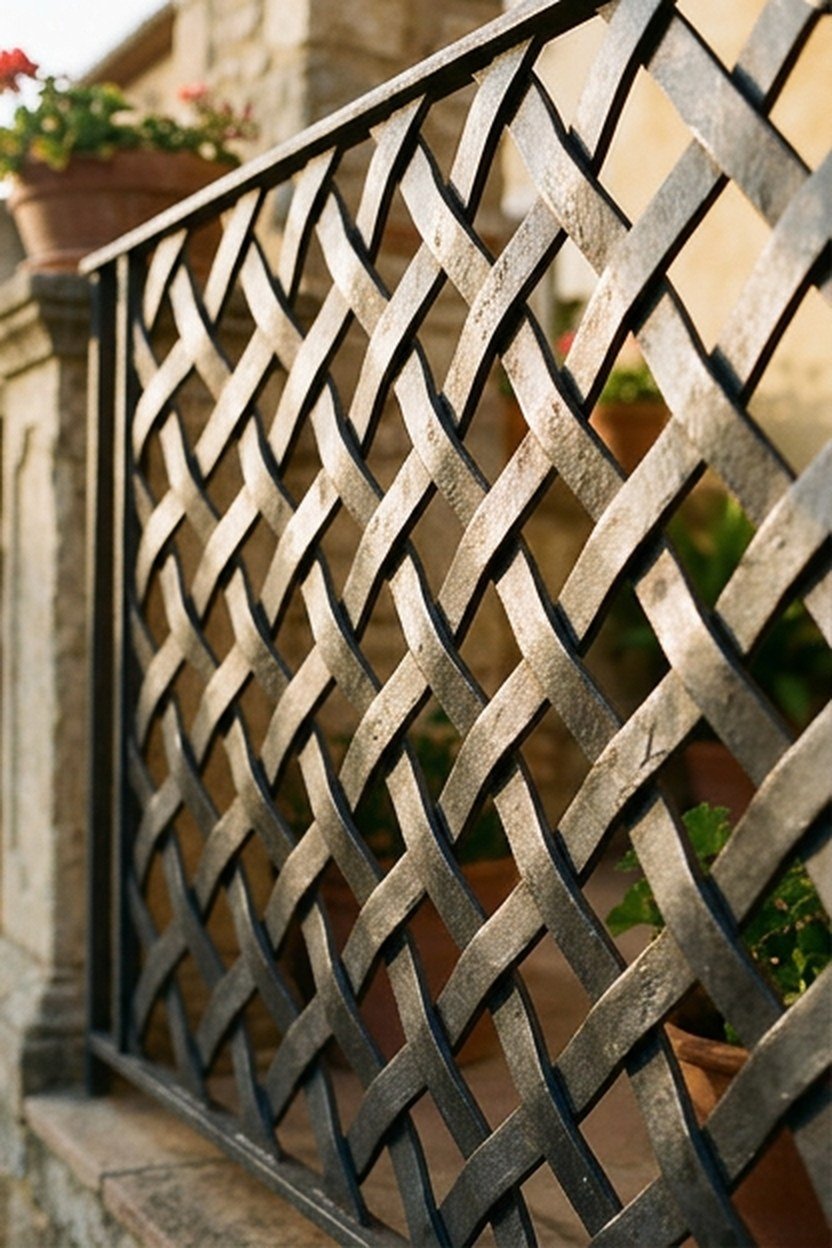
A basket weave pattern, featuring iron strips woven in an interlocking over under pattern reminiscent of actual basket weaving, offers a textural, tactile Victorian style that reads as slightly less formal than scrollwork or floral motifs. Expect to pay 90 to 160 dollars per linear foot for a quality wrought iron basket weave design. This pattern works particularly well on a wraparound porch balcony where the textural quality reads well from multiple viewing angles.
Confirm your fabricator uses genuine interwoven iron strips rather than a surface pattern merely styled to look woven, since true structural weaving provides both the authentic visual depth and the added strength genuine interlocking construction offers. Ask specifically how the weave is constructed during your fabricator consultation, since this distinction significantly affects both the final look and the long term durability of the installation. A genuinely woven pattern typically costs more but delivers a noticeably more convincing result.
The woven iron strips will develop a soft natural sheen change at each interlocking crossing point where two strips make contact, a gradual textured change from these contact points weathering slightly differently than the surrounding flatter strip surfaces. This is a normal characteristic of genuinely interwoven ironwork exposed to outdoor conditions and does not indicate any weakness in the weave’s construction. A quality basket weave pattern maintains its structural interlocking regardless of this cosmetic surface change over time.
Weave Density And Its Effect On Privacy And Airflow
A tighter basket weave pattern with less open space between woven strips provides more visual privacy for a balcony facing a busy street or neighboring property, while a looser weave allows more airflow and a more open, lighter visual feel. Consider your balcony’s specific privacy needs and typical wind exposure before choosing a weave density, since this practical consideration matters as much as the pattern’s visual appeal. Request sample sections at a few different weave densities before finalizing this choice.
Confirm a tighter weave pattern still meets your local code’s maximum gap requirements despite its denser appearance, since a tightly woven pattern can sometimes create gap dimensions that technically still exceed code limits depending on the specific strip width used. Ask your fabricator to measure and confirm this specific figure rather than assuming a tight look automatically passes. This confirmation step matters more than visual density alone.
12. Cast Iron Shield And Crest Motif
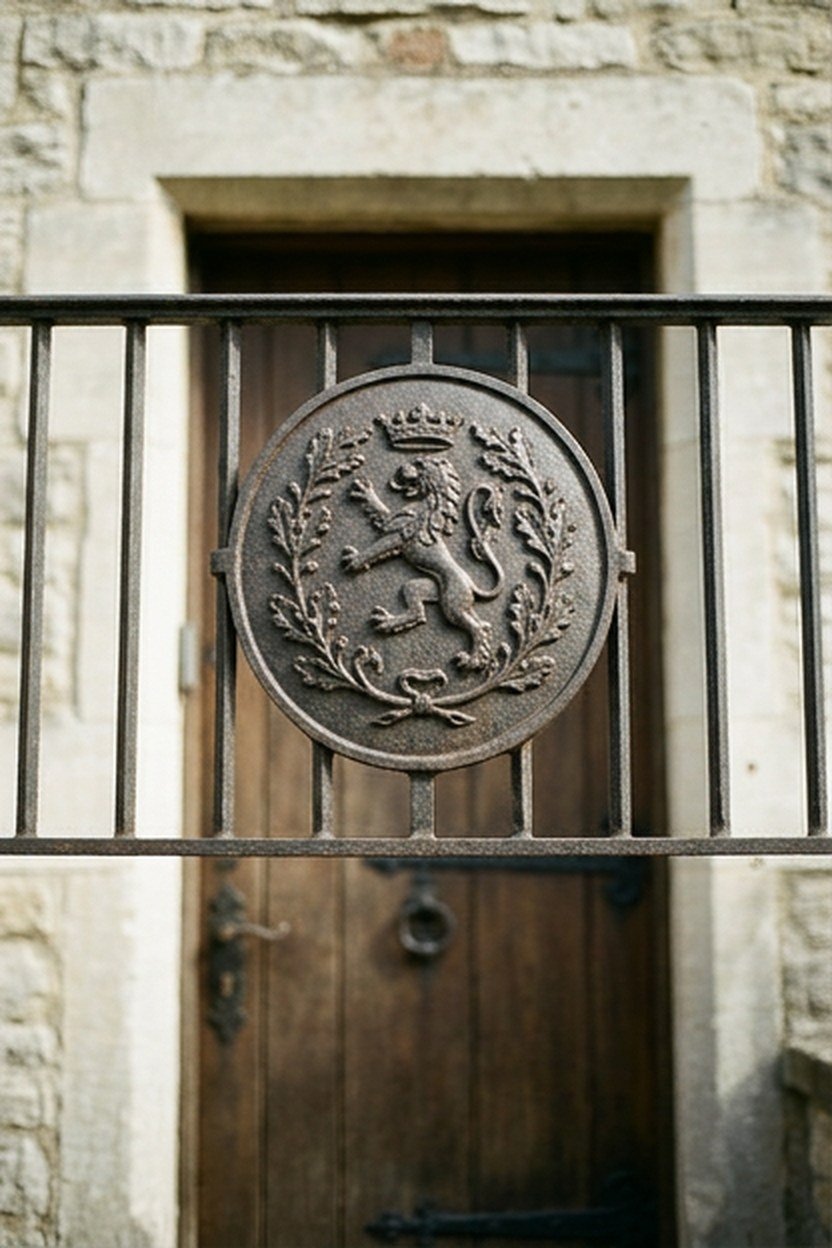
A shield or crest motif incorporated into a balcony grill’s central panel adds a formal, almost heraldic character that suits a larger, more architecturally significant Victorian home particularly well. Expect to pay 200 to 350 dollars per custom shield panel, reflecting the detailed, often unique casting this motif typically requires. This style works best as a single focal point feature rather than a repeating pattern across the full balcony length.
Consider whether a generic decorative shield shape or a more personalized crest design, potentially incorporating a family initial or a meaningful symbol, better suits your goals for this feature. A personalized crest adds genuine meaning but typically costs more due to the fully custom casting mold required. A generic decorative shield achieves similar visual impact at a somewhat lower cost if personalization is not a priority for your specific project.
The shield’s raised detail will show a visible natural grain pattern in its surface as the casting ages, the originally sharp edges softening gradually while the overall shape remains clearly legible for decades. This gradual textured change is a normal characteristic of substantial cast iron relief work and adds to the feature’s sense of permanence over time. A protective finish slows this change if you prefer to preserve crisper original detail.
Placement Considerations For A Central Shield Feature
Position a shield or crest motif at the balcony’s visual center, typically aligned with the home’s front entrance or a prominent architectural feature directly below, for the strongest overall composition. An off center placement can look accidental rather than intentional for a feature specifically meant to serve as a focal point. Measure your balcony’s actual centerline carefully before finalizing the shield’s mounting position with your fabricator.
Confirm the shield panel’s mounting method provides adequate structural support for its typically greater weight compared to a repeating lighter pattern, since a substantial cast shield needs more robust attachment points than standard scrollwork. Ask your fabricator directly how the panel’s weight was calculated into the mounting design. This confirmation matters more for a heavy single feature than for a distributed pattern.
13. Victorian Fern Frond Scrollwork
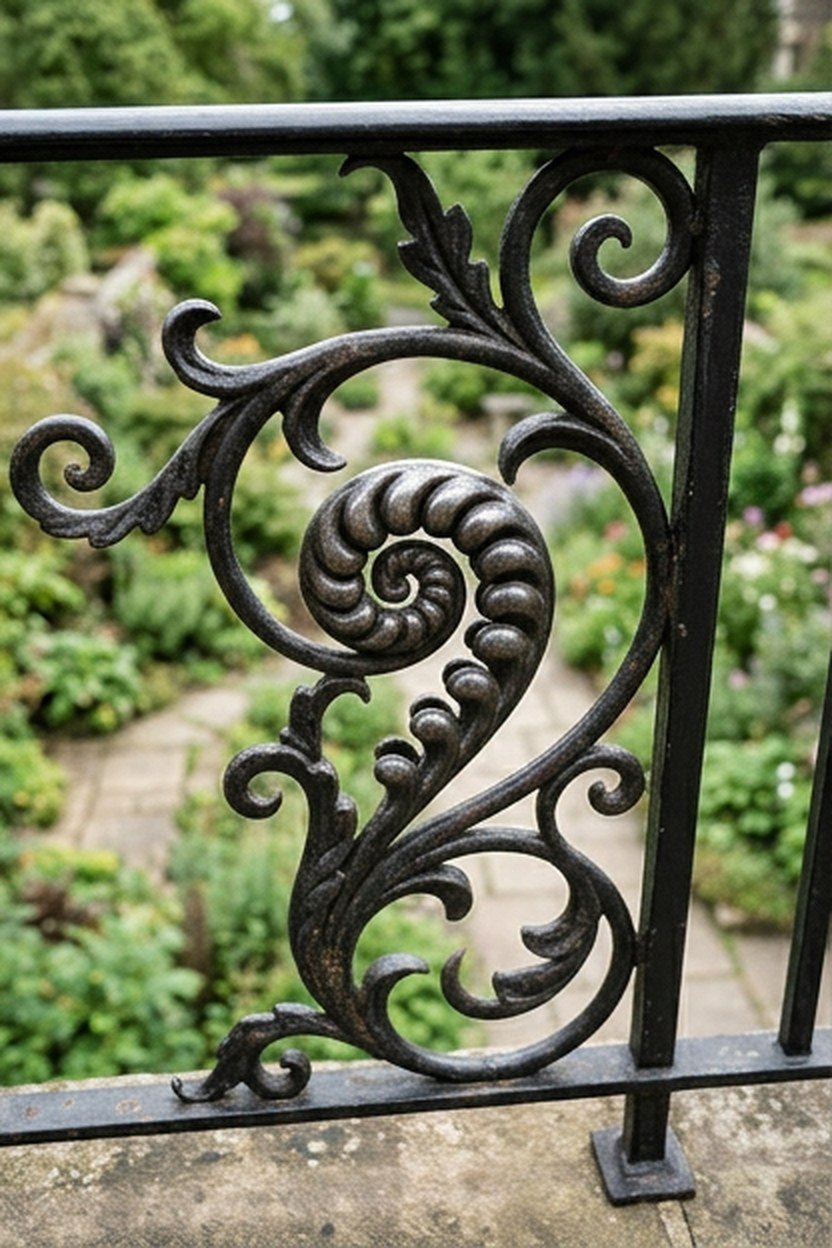
A fern frond motif, incorporating the distinctive curled, feathery shape of an unfurling fern into scrollwork detailing, brings a specifically botanical Victorian character popular during the era’s broader fascination with ferns and natural history. Expect to pay 130 to 210 dollars per linear foot for this detailed naturalistic pattern. This motif suits a home with a garden focused landscape design or other botanical exterior details particularly well, creating thematic continuity between the architecture and the surrounding grounds.
Request your fabricator reference authentic Victorian fern frond pattern books or historical examples rather than a generic modern interpretation of a fern shape, since genuine Victorian fern motifs have a specific curled, detailed character that a simplified modern version often misses. Several published references document historically accurate Victorian botanical ironwork patterns in detail. Providing these references to your fabricator improves the chances of a genuinely authentic result.
The fern frond’s curled detail will develop a soft natural sheen change along its more exposed convex surfaces as the casting weathers unevenly compared to its more sheltered concave curves. This uneven aging between the pattern’s exposed and sheltered surfaces is a normal characteristic of detailed curved ironwork and actually enhances the frond’s dimensional, naturalistic appearance over time. Many people consider this uneven weathering part of what makes a genuinely detailed botanical motif feel convincing rather than flat.
Combining Fern Motifs With Garden Landscape Design
Coordinate your balcony’s fern frond ironwork with any garden or landscape elements visible from the balcony, since this thematic connection creates a more cohesive overall property design. Consider what is actually visible from the balcony’s typical vantage point when planning this, since a fern motif facing an unrelated view loses some of its intended connection. This coordination is a nice bonus rather than a strict requirement for the pattern to work on its own.
Photograph your existing garden’s fern or fern adjacent plantings if you have them, bringing these references to your ironwork consultation for the closest possible thematic match between the real plants and the ironwork motif. Even a few casual phone photos give a fabricator useful shape and texture reference. This small step improves the final motif’s believability.
14. Ornate Iron Cresting Combined With Grill Panel
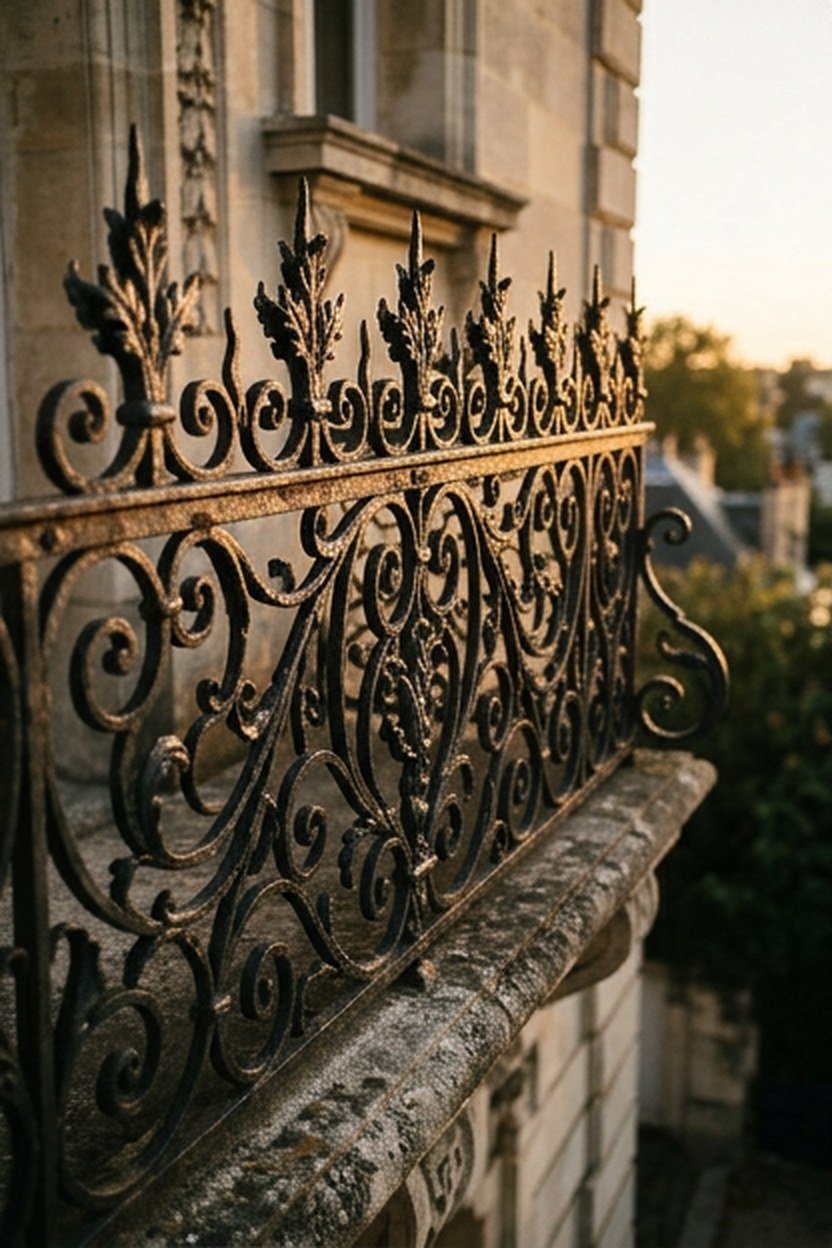
Ornate iron cresting, a decorative raised trim typically running along the very top edge of a balcony railing, paired with a coordinated grill panel below creates a two tiered decorative effect common on more elaborate Victorian homes. Expect to pay an additional 50 to 100 dollars per linear foot for cresting on top of whatever base grill pattern cost you are already budgeting. This combination style suits a home wanting maximum ornate character within a single balcony feature.
Choose a cresting pattern that echoes rather than competes with the grill panel’s own motif below it, since two unrelated decorative patterns stacked together can look chaotic rather than intentionally layered. A scrollwork cresting pairs naturally with a scrollwork grill panel, while a more geometric cresting suits a geometric lattice pattern below. This coordination between the two tiers matters more to the finished look than either element’s individual quality.
The cresting’s raised, often finial topped silhouette will develop a visible natural grain pattern along its edges as the casting weathers, since cresting typically sits at the most exposed point of the whole railing assembly. This gradual textured change is expected for the most weather exposed ironwork on a property and does not indicate a structural problem. Regular inspection of cresting specifically catches deeper issues before they progress, given its exposed position.
Wind Load Considerations For Tall Cresting Features
Taller, more elaborate cresting designs present more surface area to wind than a flatter railing profile, which matters structurally in regions with regular high wind events or hurricane exposure. Confirm your specific cresting design has been evaluated for wind load in your region before finalizing a particularly tall or elaborate pattern. This engineering consideration matters more for cresting than for most other decorative elements on this list given its height and exposed position.
Consider a shorter, more restrained cresting profile specifically in a high wind region, trading some visual drama for genuine structural peace of mind during severe weather events. A local fabricator familiar with regional wind conditions can advise on a reasonable height limit. This conversation is worth having before committing to a particularly tall design.
15. Custom Monogram Panel Integration
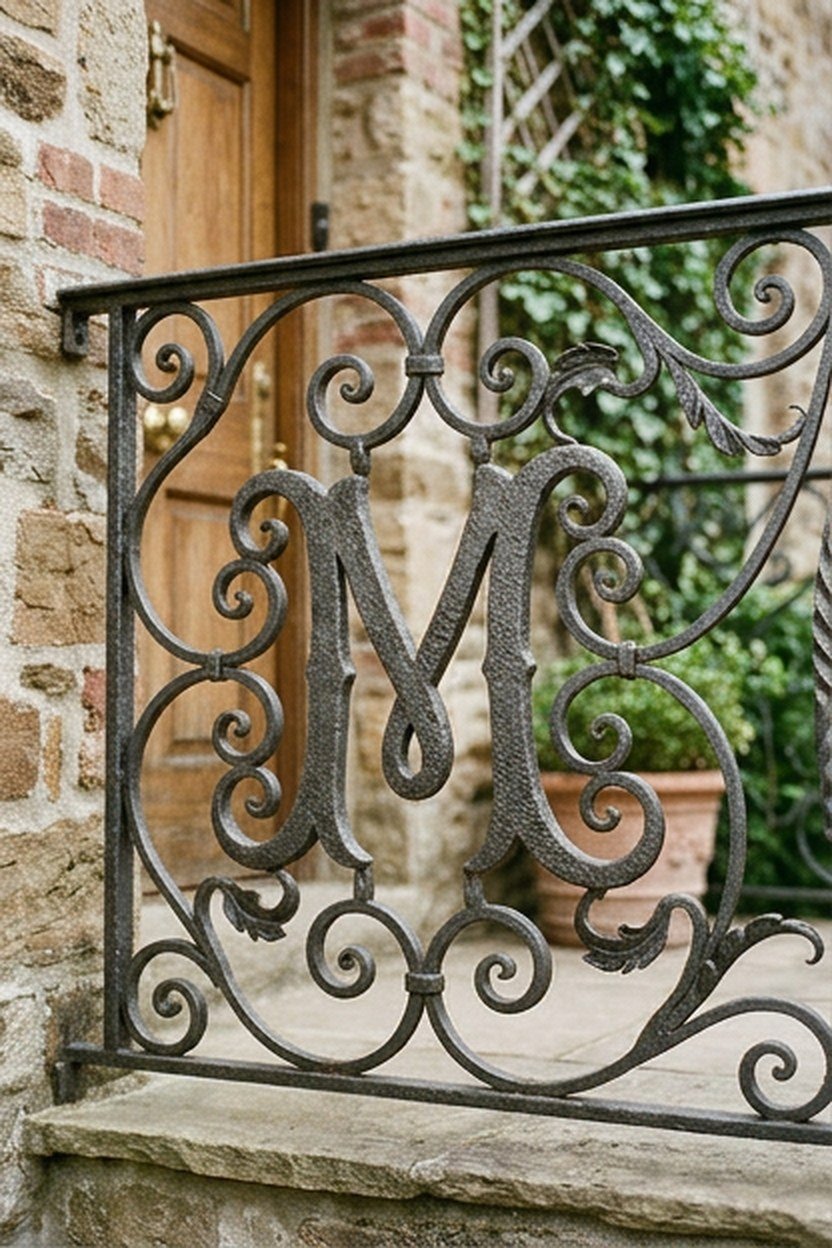
A custom monogram panel, incorporating a family name initial or a specific date into an otherwise ornate scrollwork or geometric pattern, adds a genuinely personal touch that a purely decorative pattern cannot provide on its own. Expect to pay 250 to 450 dollars for a fully custom monogram panel given the unique casting mold this personalization requires. This feature works best as a single accent panel rather than a repeating element across the full balcony length.
Position a monogram panel at the balcony’s most visually prominent point, typically centered or positioned near the main entrance sightline, so the personal detail actually gets seen and appreciated rather than lost among other decorative elements. Discuss letter style and sizing carefully with your fabricator, since a monogram that is too small becomes illegible from a normal viewing distance while one too large can look disproportionate to the surrounding pattern. This balance takes some back and forth during the design phase to get right.
The monogram’s cast lettering will show a visible natural grain pattern developing in its surface as the casting ages, the letter edges softening slightly while remaining clearly legible for many decades under normal conditions. This gradual textured change is a normal characteristic of substantial cast iron lettering and adds a sense of history and permanence to what is often a multi generational architectural feature. A protective finish slows this specific change if crisp letter definition matters more to you than the natural aging character.
Choosing Letter Style For Maximum Legibility At A Distance
Choose a simpler, bolder letter style over an intricate script for a monogram meant to be legible from a typical approach distance, since fine decorative script that looks elegant up close often becomes unclear from further away. Request a printed mockup at the actual installation scale before finalizing the casting mold, since letter proportions correct on paper do not always translate to a large outdoor piece. This mockup step is worth the small delay it adds.
Confirm the monogram’s specific lettering choice will still read clearly after the expected surface aging discussed above, since a very fine or delicate letter style may lose legibility faster as the surface texture develops over years of outdoor exposure. Ask your fabricator to show an aged sample if one is available. This preview helps set realistic expectations for the long term look.
What An Ornate Victorian Balcony Grill Actually Costs
A complete ornate Victorian balcony grill project can range from under 2000 dollars for a modest accent panel approach on a shorter balcony to 8000 dollars or more for a fully custom fabricated design covering a larger balcony with multiple decorative elements. Most homeowners land somewhere in the middle, choosing one or two strong decorative features rather than combining every ornate element from this list into a single design. Prioritize the pattern choices that most directly relate to your home’s specific architectural style and period.
Spread a larger project across multiple phases if the full cost feels like a stretch, installing a solid base pattern first and adding accent features like medallions or a monogram panel later. I recommend this phased approach for a genuinely custom design, since rushing the full scope to save on one fabrication order often means compromising on quality. A well planned phased project can reach the same final result as an all at once approach.
The table below breaks down rough cost tiers for an ornate Victorian balcony grill project, acknowledging that regional fabrication costs and material availability shift these numbers meaningfully. Treat it as a planning starting point rather than a firm quote for your specific project. Most homeowners land in the middle tier once a base pattern and one accent feature are included.
| Budget tier | What it covers | Approach |
|---|---|---|
| Under $2000 | Accent medallions or border on existing railing | Modest addition to current structure |
| $2000 to $5000 | Full pattern panel, one story balcony | Standard scrollwork or lattice design |
| $5000 and up | Custom motif, cresting, larger balcony | Fully custom fabrication |
Common Mistakes When Choosing A Victorian Balcony Grill
Choosing a pattern purely because it looks impressive in a catalog without confirming it suits your home’s actual architectural style and period is the most common and most visually damaging mistake. A stunning Gothic Revival pattern installed on an Italianate home reads as mismatched regardless of how well made the ironwork itself is. Always start from your home’s specific architecture rather than a pattern you simply like the look of in isolation.
Underestimating local building code requirements around gap size and railing height is the second frequent mistake, since many authentic historical patterns were designed before modern fall prevention standards existed. Confirm code compliance early in the design process rather than after a beautiful but non compliant pattern has already been fabricated. A good fabricator flags this concern proactively, but final responsibility for meeting code rests with the homeowner.
Skimping on fabrication quality to save money on what looks like a similar pattern is the third mistake, since a poorly cast or poorly welded ornate design can develop real structural problems well before a quality fabrication would. Ask detailed questions about material thickness, casting method, and welding quality when comparing quotes that seem unusually far apart in price. A significantly cheaper quote for an apparently identical design often reflects a meaningful quality difference you will notice over time.
Getting Multiple Fabricator Quotes For A Fair Comparison
Request quotes from at least three different ironwork fabricators for any substantial custom project, since pricing and quality both vary considerably between shops even for what looks like the same basic design on paper. Ask each fabricator the same specific questions about material, process, and warranty to ensure you are comparing genuinely equivalent offers. This comparison process takes real time but prevents both overpaying and receiving lower quality work than expected.
Check references and, if possible, view a fabricator’s completed installations in person before committing to a substantial custom order, since photographs alone do not always reveal the full quality of a finished ironwork installation. Ask to see a project of similar scope and age to your own. This in person check is worth the extra time for a significant investment.
Conclusion
Choosing the right ornate Victorian balcony grill design comes down to matching the pattern to your home’s specific architectural period and style, confirming code compliance early, and working with a fabricator whose quality you have genuinely verified. Start with the pattern that most directly relates to your home’s existing architectural details, then layer in accent features like medallions or a monogram panel as budget allows. The fifteen styles covered here scale from an accessible accent addition up to a fully custom, multi element design.
Prioritize historical and architectural fit alongside genuine fabrication quality above simply choosing the most elaborate pattern available, since a well matched, well made grill design ages into a genuine architectural asset for decades. A thoughtfully chosen Victorian balcony grill rewards a home with the kind of character that a generic modern railing simply cannot provide. Get the fit and the fabrication right, and the design will keep earning its place for generations.
Frequently Asked Questions
How much does an ornate Victorian balcony grill typically cost? Costs range from under 2000 dollars for a modest accent addition to 8000 dollars or more for a fully custom multi element design. Most projects land in the 2000 to 5000 dollar range for a standard full pattern panel.
Does an ornate Victorian grill design meet modern safety codes? Not automatically, since many historical patterns predate modern gap and height requirements. A quality fabricator can adapt an authentic looking pattern to meet current code without sacrificing its visual character.
How do I know which Victorian sub style suits my specific home? Research your home’s construction date and any documented architectural details, or consult a local historical society or preservation group for guidance. Matching the grill pattern to your home’s specific Victorian sub style, whether Queen Anne, Italianate, or Gothic Revival, produces the most authentic result.
Is cast iron or wrought iron better for a balcony grill? Both materials perform well outdoors when properly finished and maintained, with cast iron typically suiting more intricate repeating patterns and wrought iron suiting woven or hand forged designs. The right choice depends more on your specific pattern than on one material being universally superior.
How often does ornate ironwork need repainting or maintenance? Most painted ironwork needs repainting every five to eight years depending on your climate, with coastal or humid regions needing more frequent attention. Natural or raw finishes need less frequent painting but benefit from regular inspection for rust.
Can I add ornate detailing to an existing simple balcony railing rather than replacing it entirely? Yes, accent medallions, a decorative border, or a monogram panel can all be added to an existing simpler railing structure without a full replacement. This approach achieves genuine Victorian character at a lower cost than a complete railing replacement.