
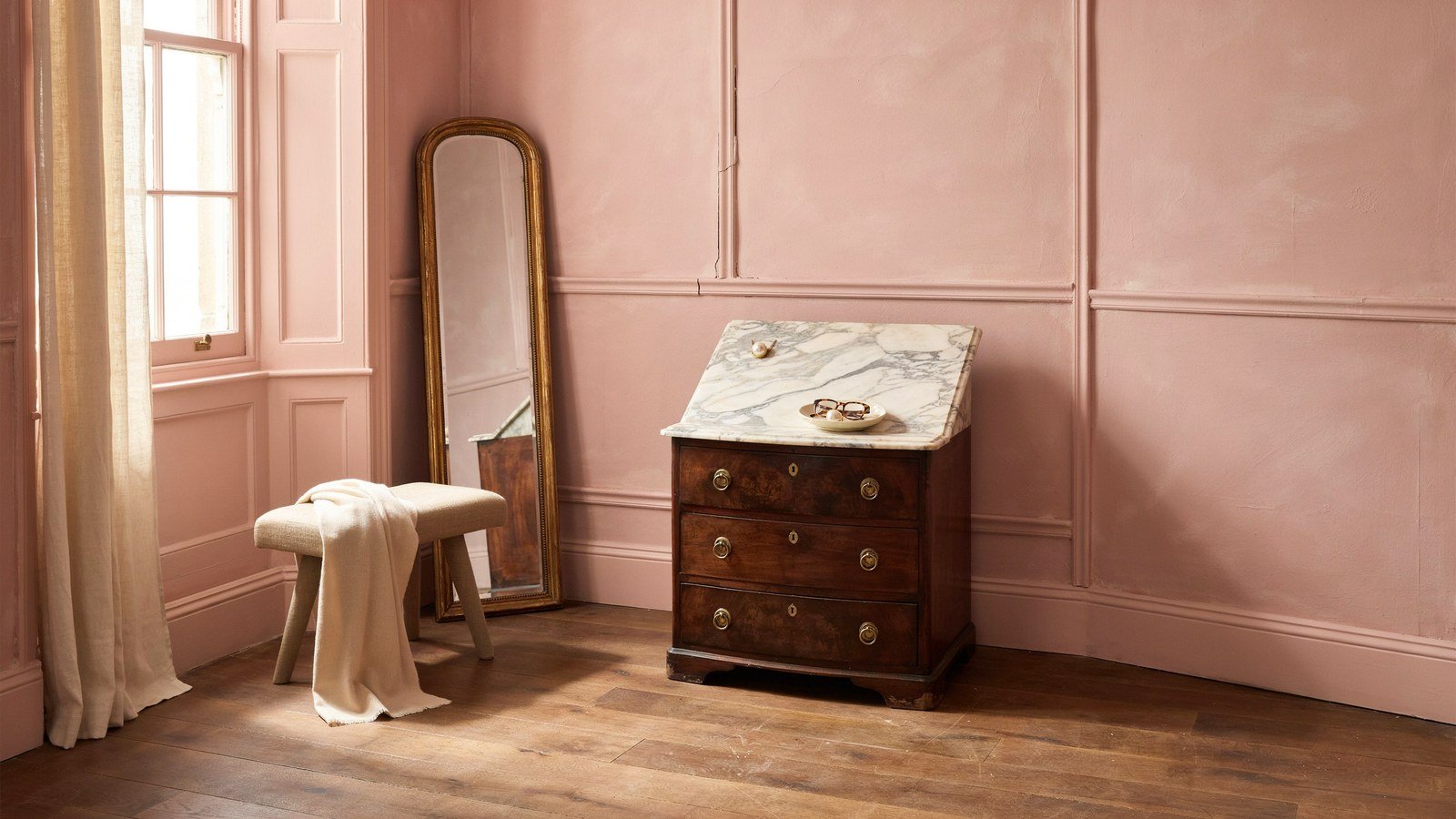
A romantic French dressing room is built from three things: a soft chalky wall colour, one piece of furniture with real age, and light that falls from more than one height. Get those right and even a box room reads as a proper dressing room. Get them wrong and you have a fitted wardrobe with a chair in front of it.
Mine is a converted third bedroom, two and a half metres square, with a window on the short wall and a radiator exactly where the mirror wanted to go. The radiator won, the mirror moved, and the room is better for the compromise. That is roughly how the whole project went.
Below is the full build in fifteen steps, running from the first measurement through to the finishing details on the shelves. Some steps are decisions you make before ordering anything, and a few are afternoons of work. Doing them in this order will save you money and at least one difficult conversation with a joiner.
What Makes A Dressing Room Read As French Rather Than Just Pretty
French dressing rooms work on softness and age, not on symmetry and gloss. The colours sit in the chalky half of the palette, the metals are aged rather than polished, and at least one piece looks older than the house. That combination is what separates the look from a showroom fitted wardrobe with a fancy handle.
The second part is visible storage. A French room shows some of what it holds, so open shelving, a rail of hanging pieces and a tray of jewellery all become part of the decoration. Closed doors on every wall read as a utility room no matter what colour you paint them.
The third part is imperfection, and it is the one people leave out. A slightly worn seat, a mirror with speckled silvering and a floor that creaks in one place all say the room has been lived in. New everything, matched everything, reads as staged.
| Element | French dressing room | Standard fitted wardrobe room |
|---|---|---|
| Wall colour | Chalky, soft, low sheen | Bright white or grey |
| Storage | Part open, part closed | Fully closed doors |
| Metals | Aged brass, iron, bronze | Chrome or brushed nickel |
| Furniture | One antique anchor piece | Matching modern set |
| Lighting | Three heights, warm | Single ceiling spotlight grid |
What To Sort Out Before Any Joinery Is Ordered
Start with an inventory, because the room has to hold what you actually own. Count your hanging items in metres of rail, not in garments, and measure the longest thing you own before deciding on rail heights. Most people need far less full length hanging than they assume and far more shelving.
Then find the services. Radiators, sockets and the direction the door swings will all decide where a mirror or a seat can go, and moving any of them costs more than changing the plan. Mark them on a sketch before you fall in love with a layout.
Last, work out the light you already have. A north facing room needs warmer bulbs and more of them, while a bright south facing room can carry a darker wall colour without going gloomy. This one decision shapes the palette, so make it before you buy paint.
1. Measure The Room And Decide What It Must Hold
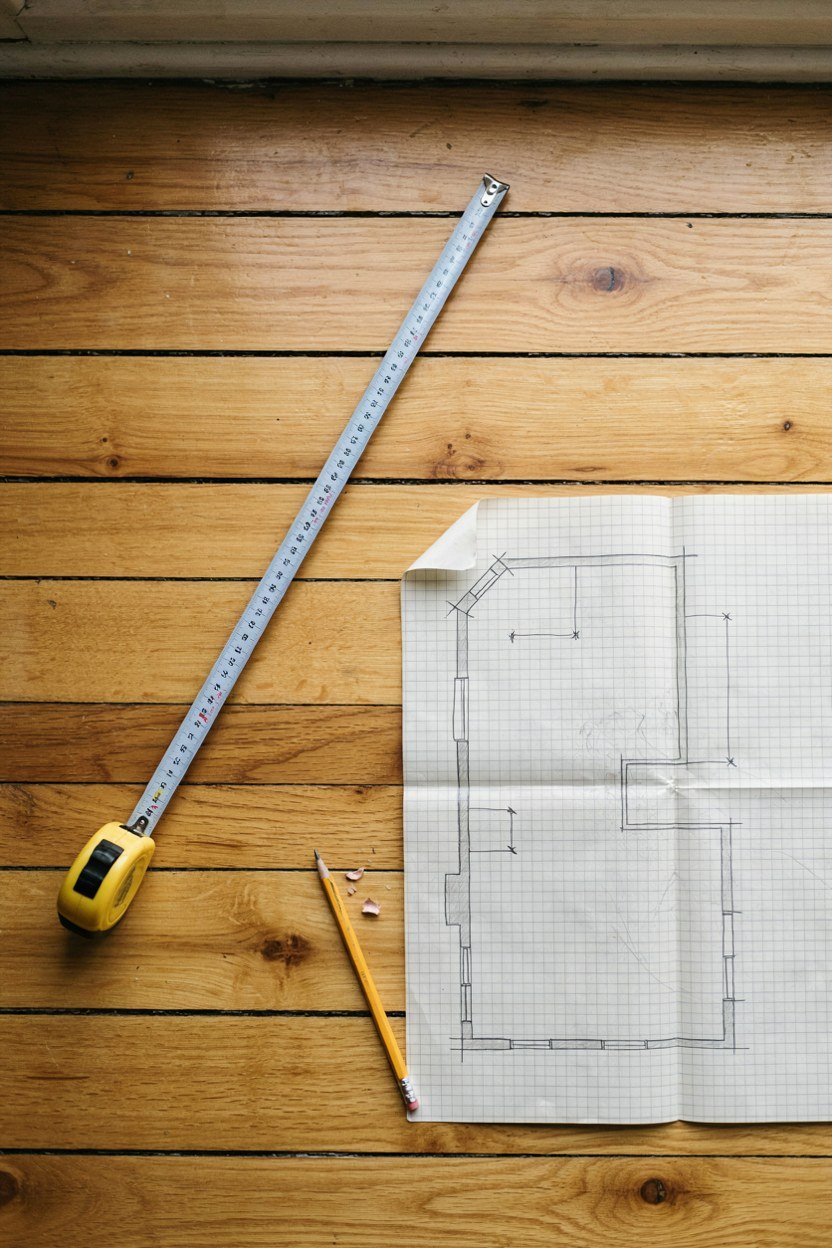
Draw the room on paper with the door swing, the window and the radiator marked, then write the internal dimensions on it. Millimetres matter here, because dressing rooms are usually small and a fitted run that is twenty millimetres too long will not go in. Measure at floor level and again at waist height, since old walls are rarely parallel.
Now allocate the walls by function rather than by looks. One wall for hanging, one for shelving and drawers, one for the mirror and seat, and the fourth for the door and whatever fits beside it. Trying to give every wall every function is how small rooms end up cramped.
Decide the split between hanging and folding at this stage. A rough starting point is sixty percent hanging and forty percent shelves and drawers, adjusted by what your inventory actually showed. Changing that split later means new joinery, not new baskets.
The Measurements Worth Writing Down Now
Note the ceiling height, the skirting depth, the window reveal and the distance from the door to the nearest corner. Those four numbers decide whether panelling, a tall cupboard or a full length mirror will physically fit. Writing them once saves ten trips back upstairs with a tape measure.
Also record the floor to sill height on the window. It tells you whether a chest or a dressing table can sit under it without blocking light, which is one of the best uses of that wall. If the sill is under seventy centimetres, plan for a low seat instead.
2. Choose A Soft Chalky Wall Colour First
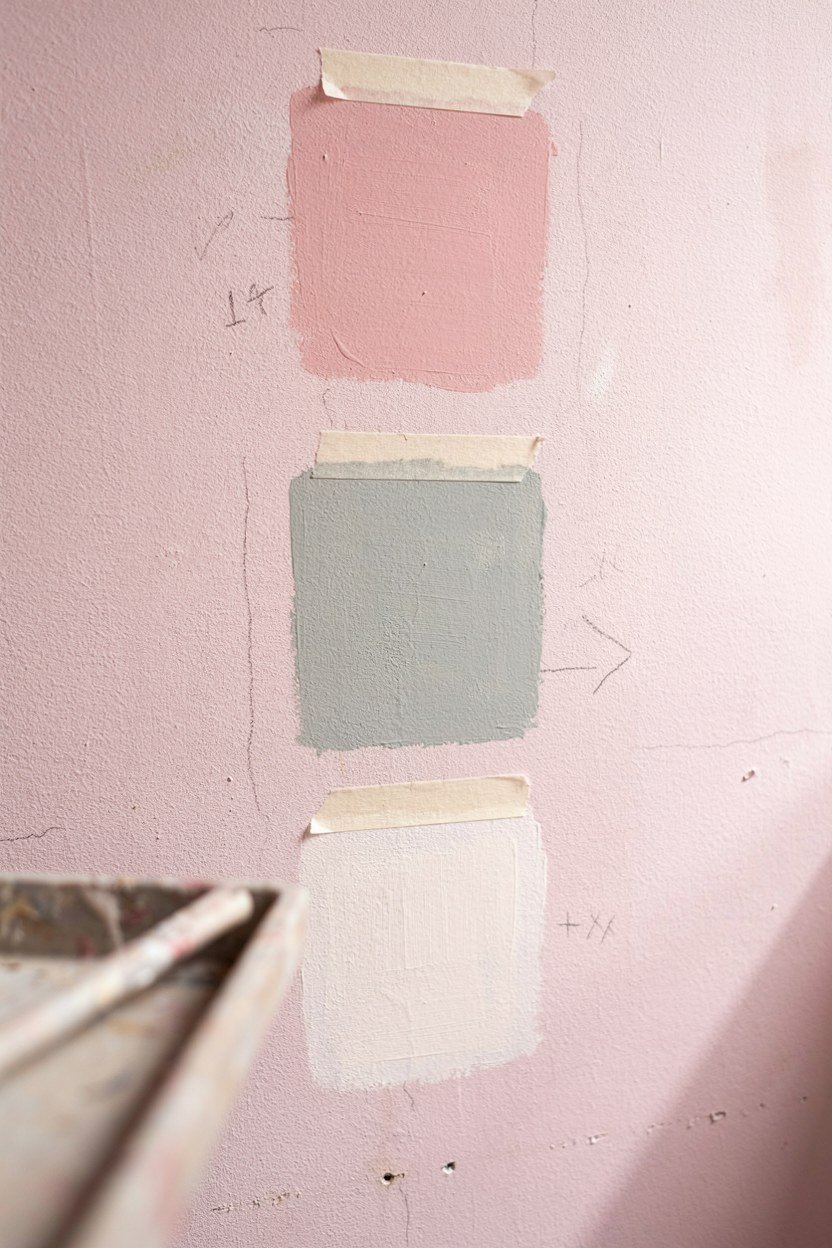
Colour comes before furniture because it is the cheapest thing to change and the hardest to work around. French dressing rooms sit in a narrow band of soft, slightly greyed colours: warm off whites, pale plaster pinks, muted sages and the palest blues. What they share is low chroma and a matt or eggshell finish that absorbs light rather than bouncing it.
Test three colours on large pieces of paper, not on the wall itself. Move them around the room through a full day, because a colour that looks lovely by the window will read completely differently on the wall opposite. I discarded my first choice within two hours of doing this.
Paint the ceiling in a paler version of the wall colour rather than brilliant white. The white line where a coloured wall meets a white ceiling is exactly what makes a small room feel boxed in. A tinted ceiling lifts and softens the whole thing at no extra cost.
Why Matt Beats Anything With A Sheen
Matt paint scatters light and hides the small bumps that every older wall has, which is exactly the effect you want. Eggshell and satin reflect, and reflections show every ripple in the plaster under raking light from a window. In a room with a mirror and a chandelier there is quite enough shine already.
The trade off is durability, since matt marks more easily and is harder to wipe. In a dressing room that barely matters, because the walls take very little traffic. Use a wipeable matt on the wall behind any seating and ordinary matt everywhere else.
3. Fit Panelling Or Simple Boiserie To The Walls
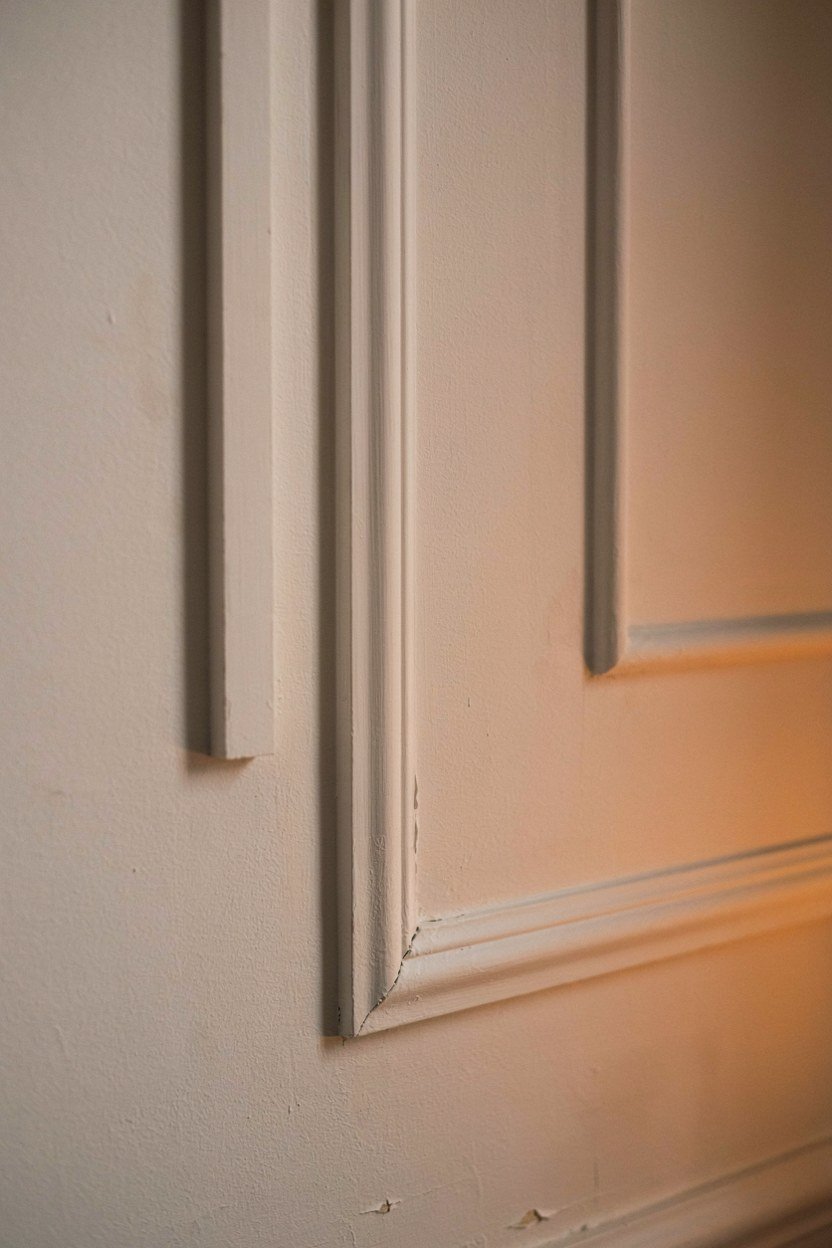
Panelling is the single change that most makes a plain room read as French. Traditional boiserie is carved and expensive, but a simple applied moulding on a painted wall gives ninety percent of the effect for a fraction of the cost. It is a weekend job with a mitre box, some lengths of moulding and a tube of grab adhesive.
Set the panel proportions from the room, not from a photograph. A common approach is a tall rectangle centred on each wall section with equal margins at the sides and a slightly larger margin at the bottom. Getting that bottom margin wrong is what makes amateur panelling look off, so mark it all out in pencil first.
Paint the mouldings the same colour as the wall. Contrasting panel frames read as Victorian rather than French, and the shadow lines alone are enough to give you the pattern. This also means one tin of paint instead of two.
Where Panelling Is Not Worth The Effort
Skip the panelling on any wall that will be covered by joinery, since nobody will ever see it. The same goes for the wall behind a full height mirror. Spending two days on mouldings that end up hidden behind a wardrobe is a mistake I have watched somebody make.
On very low ceilings, panelling can crowd the room. If your ceiling is under two and a quarter metres, run a simple picture rail instead and paint above it in the ceiling colour. The effect is lighter and the room stays taller.
4. Plan Hanging In Two Heights Rather Than One
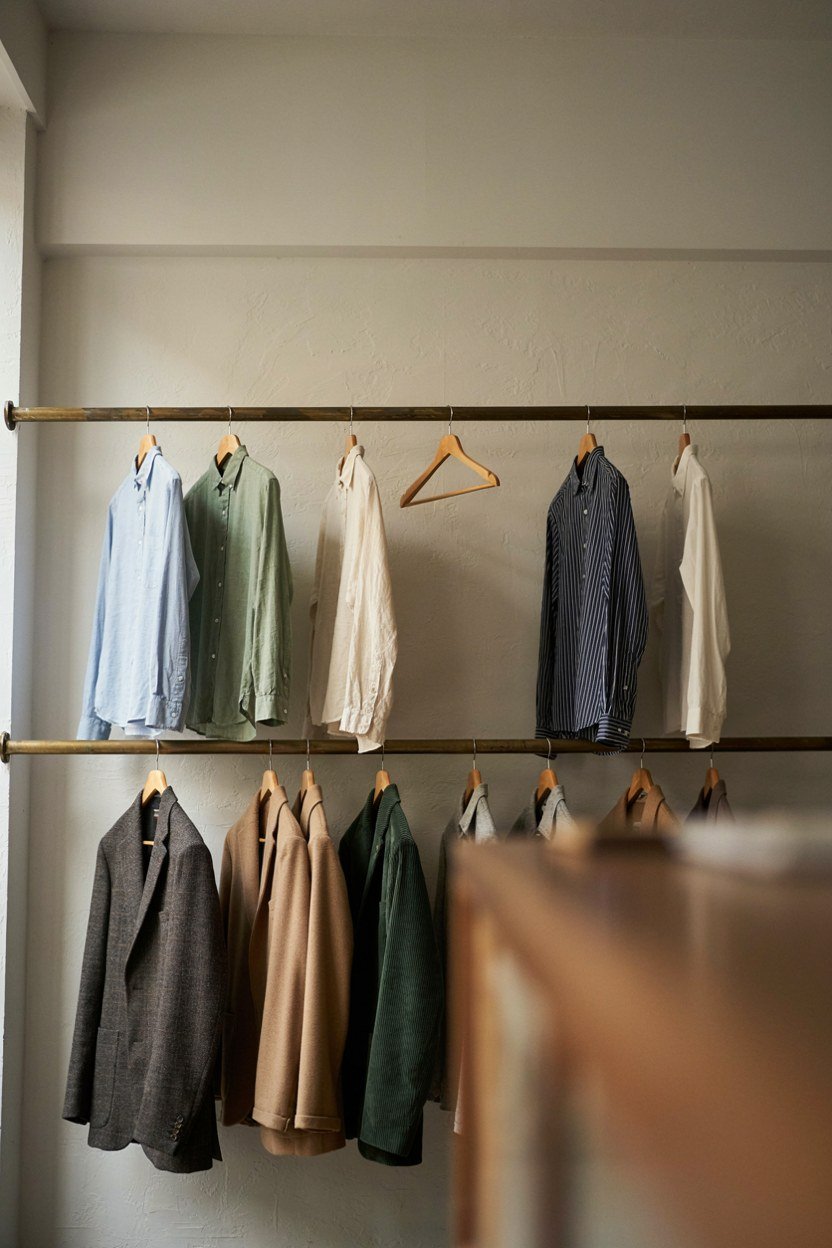
A single rail at shoulder height wastes almost half the wall. Splitting the run into a double hang for shirts, jackets and skirts, with one full height section at the end for coats and dresses, roughly doubles what the same wall will hold. This is the cheapest capacity you will ever add.
Set the upper rail at around one hundred and ninety centimetres and the lower at ninety five, adjusted to your own reach. Leave at least five centimetres of clearance under each rail so hangers do not drag on what is below. Those few centimetres are the difference between using the lower rail and ignoring it.
Give the full height section a genuine measurement rather than a guess. Measure your longest coat on its hanger, add ten centimetres and use that. Most people find they need one hundred and fifty to one hundred and seventy centimetres and no more.
Choosing The Rail Itself
Aged brass or blackened iron rail suits the look far better than chrome, and both age well rather than pitting. A round section rail of at least twenty five millimetres will not sag across a metre span, while thinner rail needs a centre support. That sag is slow, so you will not notice it until the whole run is bowed.
Match the hangers if you can face it, because a rail of mismatched plastic undoes a lot of careful work. Wooden hangers in one finish cost little and look consistent behind an open front. Slim velvet ones hold more per metre if capacity matters more than looks.
5. Swap Doors For Open Shelving Where It Suits
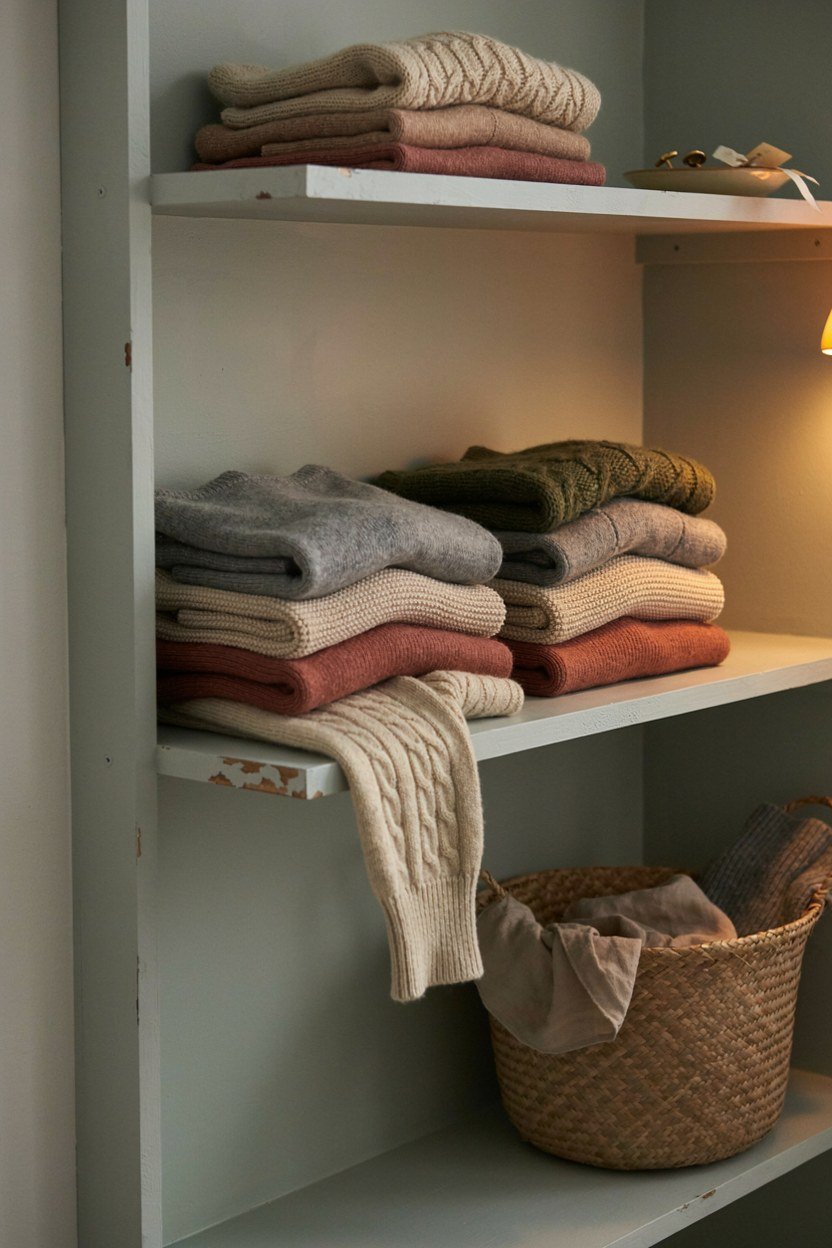
Open storage is what makes a dressing room feel French rather than fitted. Replacing the doors on one run with open shelving turns folded knitwear, bags and boxes into part of the decoration. It also makes a small room feel larger, because the eye reads the full depth of the wall instead of stopping at a door front.
Keep open shelving to one wall, or one section of a wall, rather than everywhere. Fully open storage looks wonderful for about a week and then looks like a jumble sale, unless you are far tidier than most of us. The mixture of open and closed is what holds it together.
Style the open shelves with a rule: fold in threes, colours grouped, one basket per shelf for the small things. It takes about twenty minutes to set up and roughly a minute a day to maintain. Without a rule the shelves drift back into chaos within a fortnight.
What Belongs Behind A Door
Anything that comes in loud packaging or many colours belongs behind a door. Cleaning items, spare hangers, shoe boxes and laundry are all quietly ruinous to an open shelf. Hide them and the visible part of the room stays calm.
Seasonal items also belong out of sight, ideally high up. A run of closed cupboards above head height takes the bulky things you touch twice a year. That leaves the reachable, visible shelving for what you actually use.
6. Add A Fireplace Or A Focal Point Wall
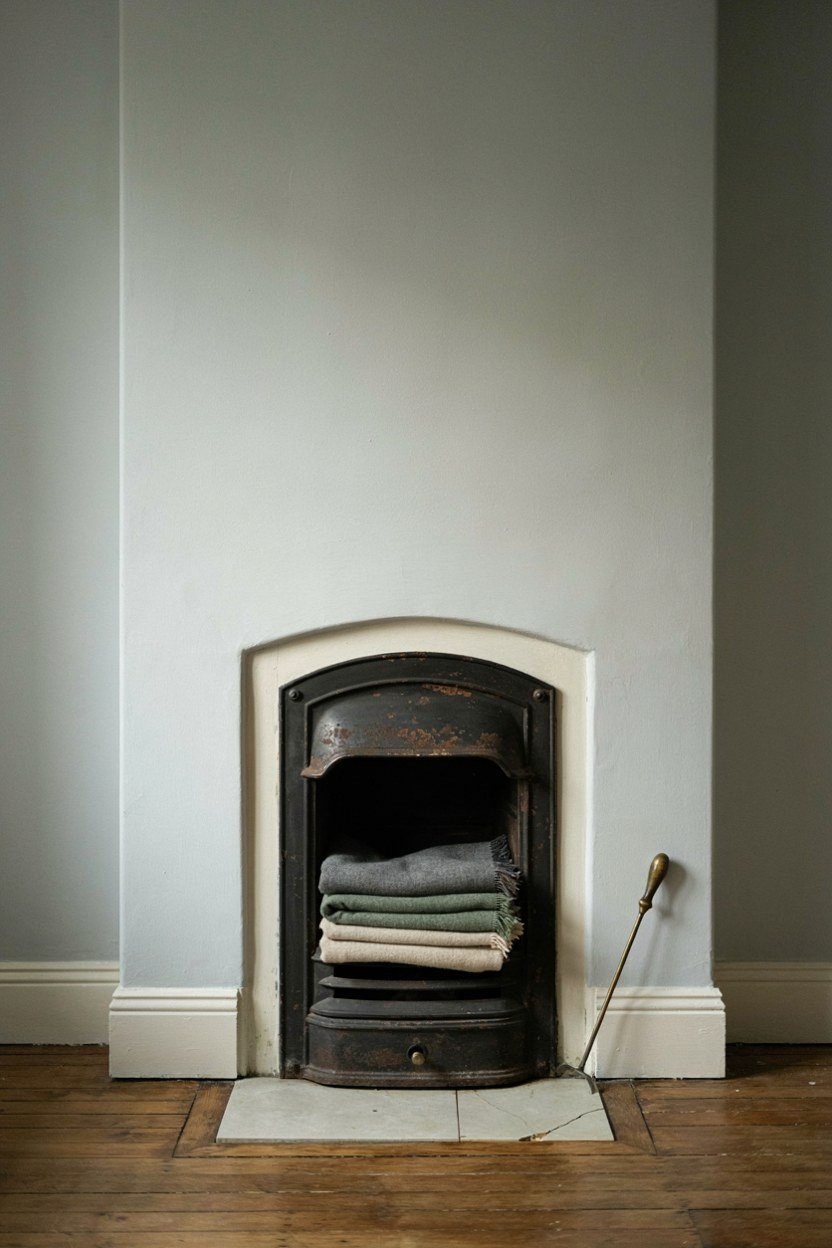
A French room almost always has a focal point, and in a dressing room it is usually a fireplace or the wall that faces the door. If you have an original chimney breast, open it up and use it, even if it is only decorative. A cast iron insert with a simple surround gives the room a centre to arrange everything else around.
Without a chimney breast, build the focal point instead. A run of panelling behind a chest of drawers, a large mirror and a pair of sconces will do the same job. What matters is that the wall opposite the door has something worth looking at.
Do not put storage on that wall if you can avoid it. The moment the focal wall becomes a cupboard run, the room reverts to a utility space. Keep it for furniture, mirror and light.
Working With A Blocked Chimney
A blocked chimney can still carry the surround and the hearth, which is most of the visual effect. Fit a vent to the blocked flue so the stack stays ventilated and the plaster does not go damp. That is a small job that prevents a slow and expensive problem.
Use the opening rather than sealing it flat. A stack of folded blankets, a group of candles or a basket in the empty grate reads far better than a boarded rectangle. It costs nothing and stops the fireplace looking dead.
7. Choose One Antique Piece As The Anchor
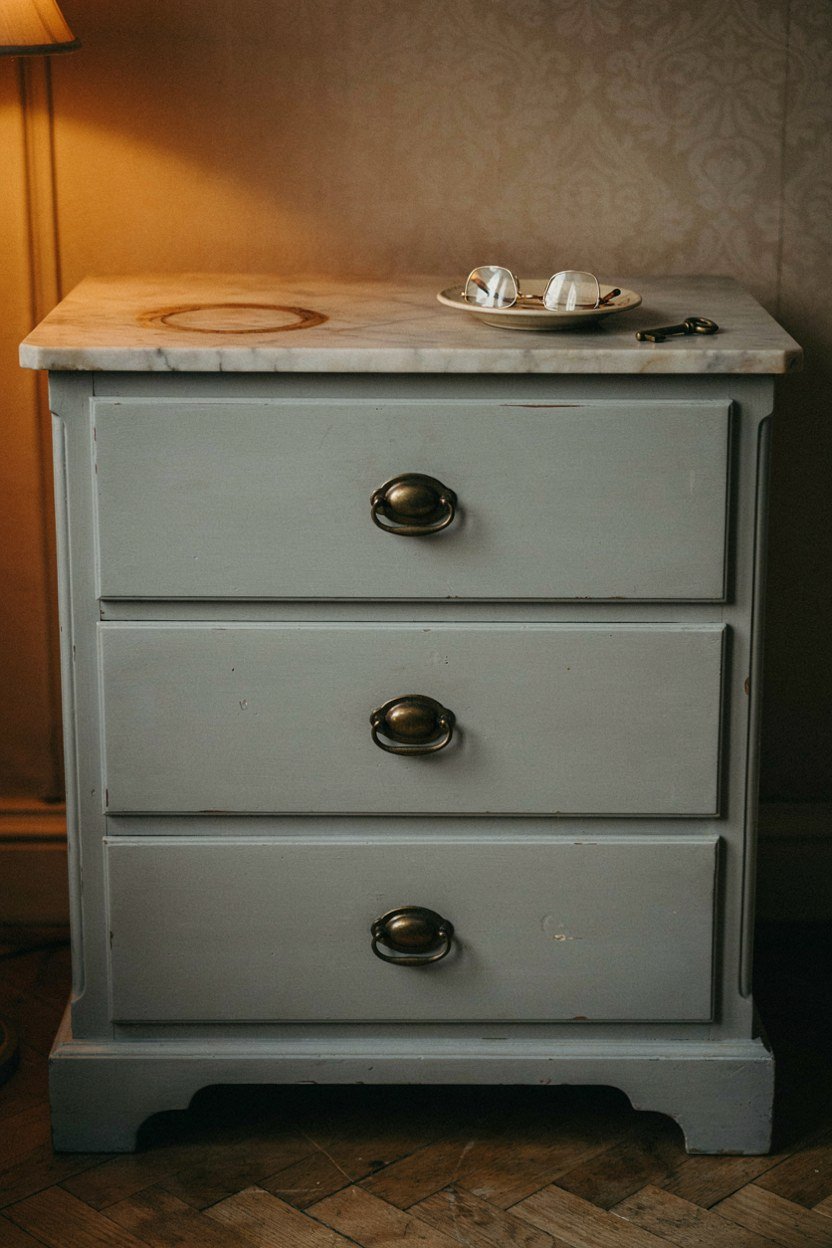
Every French dressing room needs one piece that is genuinely old. A marble topped chest, a painted armoire, a bergère chair or a gilt framed mirror will all do it, and one is enough. That single piece gives the room a history that new furniture cannot fake.
Buy it early, because everything else gets chosen around it. The wood tone, the metal finish and even the wall colour work better when they answer to something specific rather than to a mood board. I bought the chest first and matched three other decisions to it.
Do not restore it too far. Repair anything structural, wax the surface, and leave the marks. A refinished antique loses precisely the quality you paid for.
Where To Find The Anchor Piece Without Overspending
Local auction houses are consistently cheaper than dealers, and the general household sales are cheaper still than the specialist ones. Painted furniture usually goes for less than polished wood because it needs more imagination. That is exactly the category to hunt in.
Check the drawers run, the joints are tight and the feet are original before bidding. Marble tops crack along old repairs, so run a finger underneath and feel for filler. Everything cosmetic is fixable, and everything structural is expensive.
8. Put A Mirror Where It Catches The Window
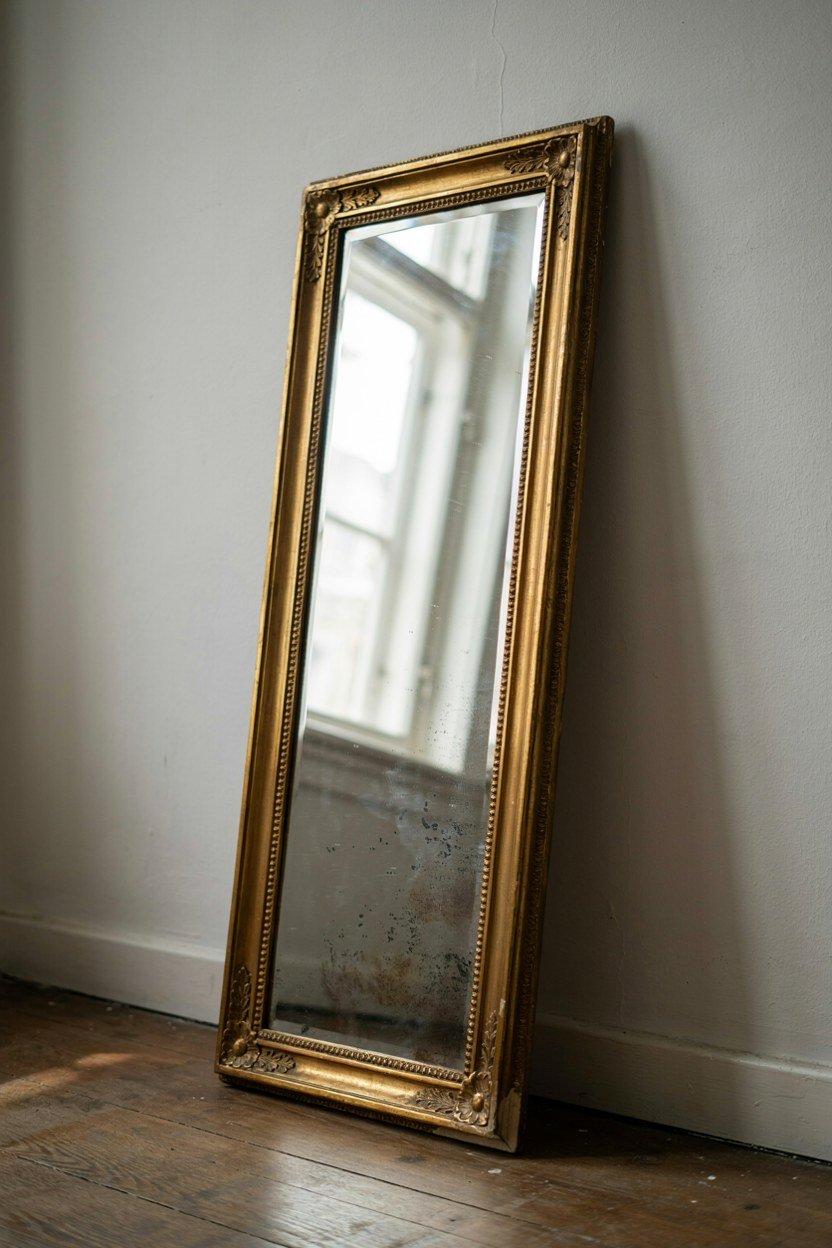
A mirror in a dressing room has two jobs, and only one of them is checking an outfit. Placed opposite or diagonal to the window, it doubles the daylight and makes the room feel twice its size. Placed on the wall beside the window, it does almost nothing at all.
Go bigger than feels reasonable. A full length mirror leaning against the wall reads as generous and needs no fixing, while a small mirror at head height reads as an afterthought. Leaning also lets you adjust the angle, which matters more than people expect.
Choose an aged or foxed glass if you can find one. The speckled silvering on old mirrors softens the reflection and adds to the age of the room. New mirror glass is sharp and slightly cold by comparison.
Getting The Angle And Height Right
Lean a full length mirror so the top tips back by roughly five degrees, which flatters the reflection and stops it feeling like a shop fitting. Any more than that and you get a distorted view of your own feet. Test it against the skirting before fixing the safety chain.
Always fix the chain, particularly on heavy antique frames. A leaning mirror that slides on a hard floor is genuinely dangerous. Two screws into a stud and a short length of chain take five minutes.
9. Layer Lighting At Three Heights
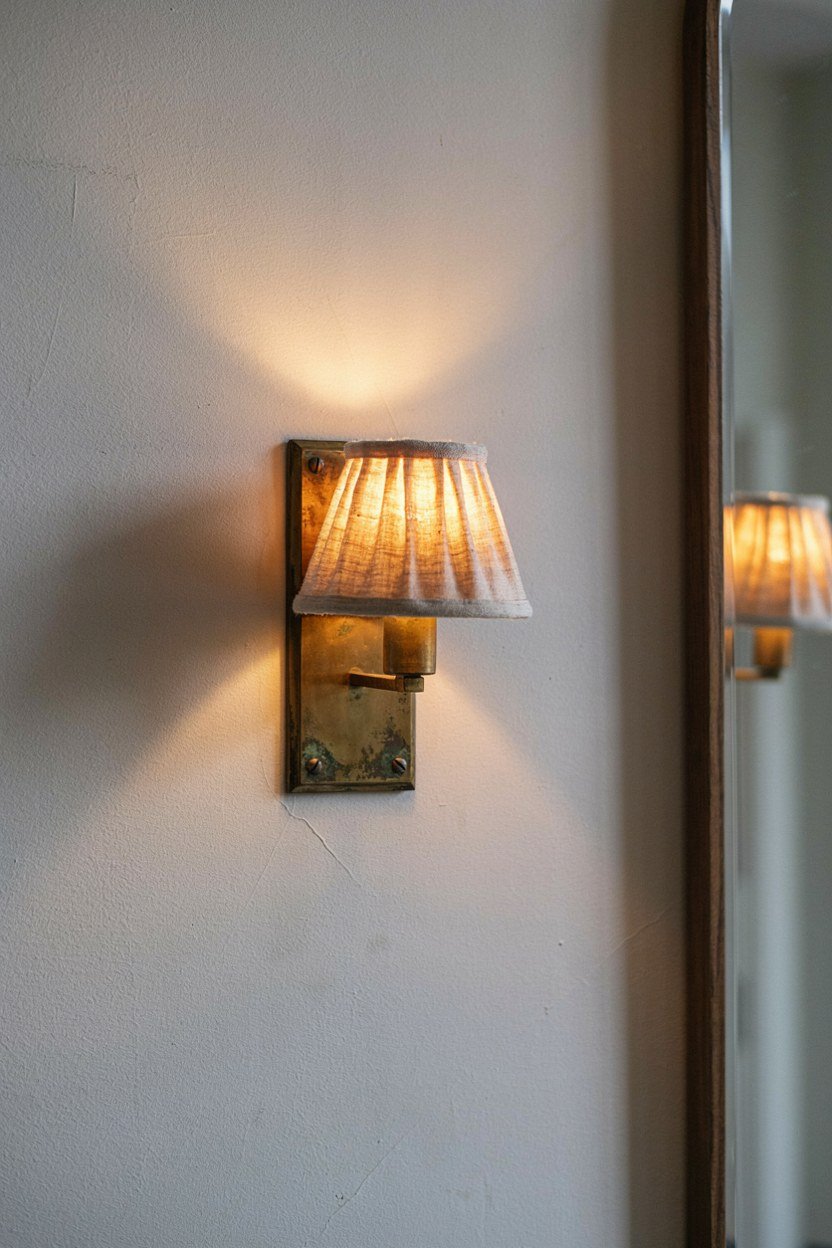
One ceiling light will ruin an otherwise good dressing room. You need light at three heights: something overhead for general light, something at eye level for the mirror, and something low for warmth in the evening. That layering is what gives the room its softness after dark.
Put the mirror lighting either side rather than above. A light above throws shadow down onto your face, which is the opposite of useful when you are getting ready. Two sconces at roughly eye level give even, flattering light and look right when they are off.
Keep every bulb in the same warm colour temperature, around 2700K. Mixing warm and cool bulbs in one small room is jarring and no amount of styling covers it. Buy them all at once so they genuinely match.
Dimmers Are Worth The Small Extra Cost
A dimmer turns one lighting scheme into three, and in a dressing room that is the difference between a functional morning light and something calmer at night. Fit a trailing edge dimmer for modern bulbs, since older dimmers make them buzz. The cost difference is small and the buzz is maddening.
Put the overhead and the sconces on separate switches if the wiring allows. Being able to use the low light alone is most of the point. Retrofitting a second circuit later means chasing walls you have just decorated.
10. Add A Small Upholstered Seat
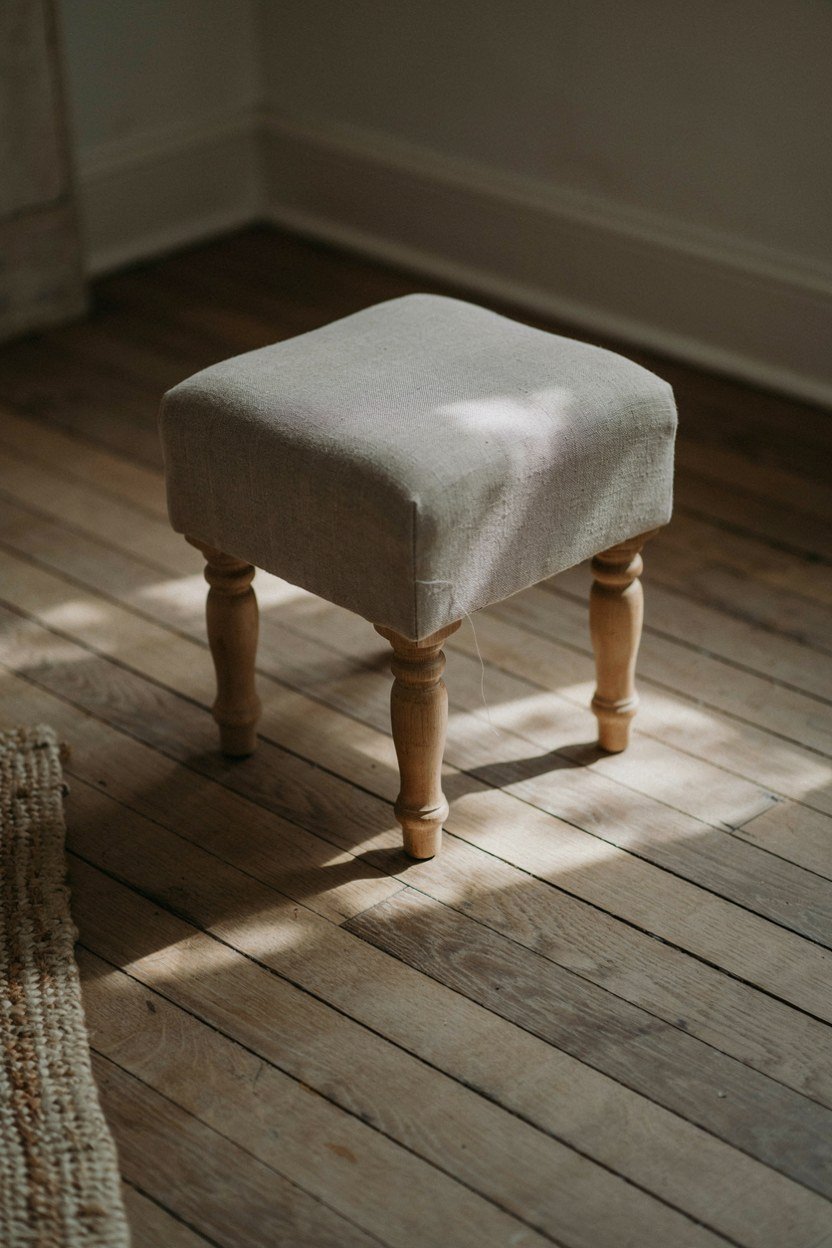
A seat turns a storage room into a dressing room. A small stool, a slipper chair or an upholstered bench gives you somewhere to sit for shoes and somewhere for the eye to rest between runs of storage. It is the piece that makes the room feel like somewhere you spend time.
Scale it carefully, because seating is what usually overwhelms a small room. Measure the walking route between the door, the mirror and the hanging, then choose a seat that does not cross it. A stool that tucks fully under a chest is often the right answer.
Upholster it in something soft and slightly worn rather than crisp. Linen, faded velvet or a washed cotton all suit the look, and all improve with a little age. Bright new upholstery is the fastest way to make the rest of the room look staged.
The Bench Versus The Chair
A bench seats two, tucks against a wall and takes almost no visual space, which suits narrow rooms. A chair is more comfortable, better looking and eats far more floor. Choose by the room rather than by preference.
If you go for a chair, an antique bergère or a small nursing chair fits the style better than anything modern. Both are common at auction and both take a reupholster well. Budget for new webbing on anything older than about fifty years.
11. Bring In A Chandelier Or A Decorative Pendant
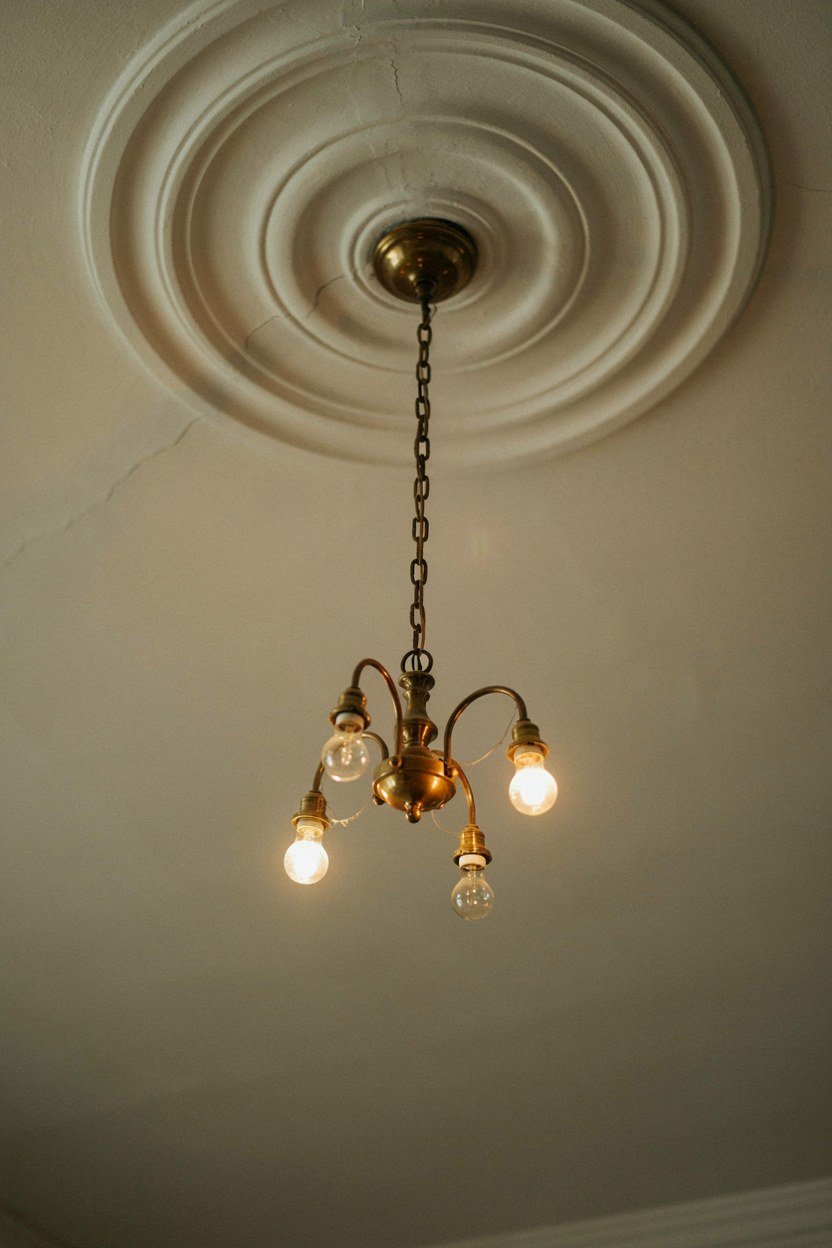
The overhead light should be a decorative object, not a functional fitting. A small chandelier, a beaded pendant or an antique lantern all give the room its French note, and they read as jewellery for the ceiling. A flush plastic fitting undoes a lot of expensive work below it.
Check the drop before you buy. In a room with a standard ceiling you want the bottom of the fitting at least two metres from the floor, and more if it sits over a walking route. Hanging it above a chest rather than in the centre solves most clearance problems.
Buy the fitting to suit the room’s scale, not the ceiling’s. Small chandeliers look mean, and a slightly oversized one gives the room its confidence. Err upwards by one size.
Weight, Fixing And The Ceiling Rose
Anything over about three kilograms needs fixing into a joist or a proper brace, not into plasterboard. A chandelier that comes down takes a good deal of ceiling with it. If in doubt, get an electrician to fit a brace between the joists.
Keep or add a plaster ceiling rose if the style suits. It finishes the junction between the fitting and the ceiling and hides any patching. A plain rose costs very little and looks correct.
12. Use Fabric To Soften The Hard Surfaces
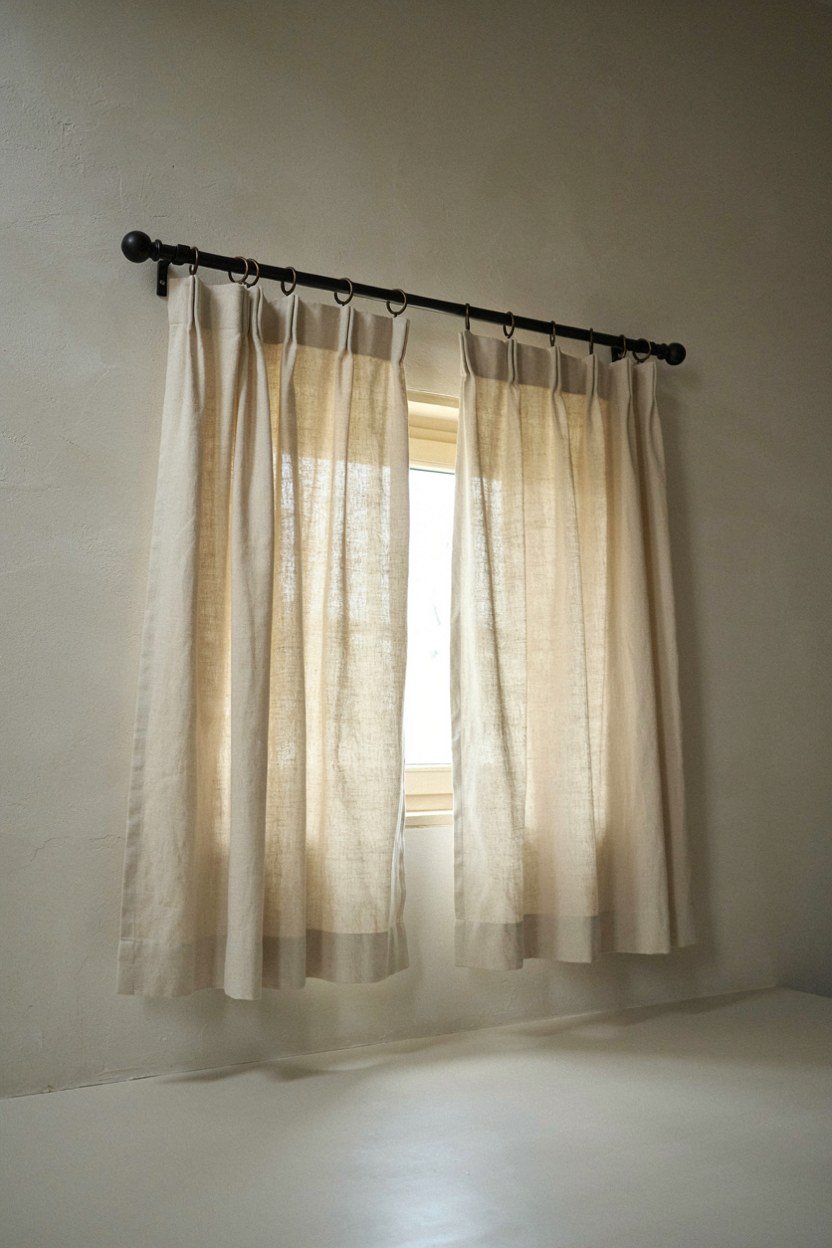
Dressing rooms are full of hard surfaces, and fabric is what stops them echoing. Curtains, a blind, a rug and an upholstered seat all absorb sound and light, and the difference is immediate when you walk in. A room with no fabric always feels colder than its temperature.
Hang curtains high and wide, with the pole well above the window and extending past the reveal on both sides. That makes the window look larger and lets the curtains clear the glass when open. It is the cheapest way to improve a small window.
Choose linen or a soft cotton over anything shiny. Both hang in a way that suits the style and both look better slightly crumpled. Avoid heavy blackout linings, which make the folds stiff and clumsy.
A Rug Even On A Carpeted Floor
A rug over carpet sounds wrong and looks right, particularly a flat weave or a worn antique. It defines the space in front of the mirror and adds a layer of pattern at floor level. In a small room, choose one large enough that the seat sits fully on it.
On boards, a rug is doing acoustic work as well as decorative. Bare boards in a small room produce a hard echo that makes the space feel unfinished. Anything wool will fix it.
13. Keep The Palette To Three Quiet Colours
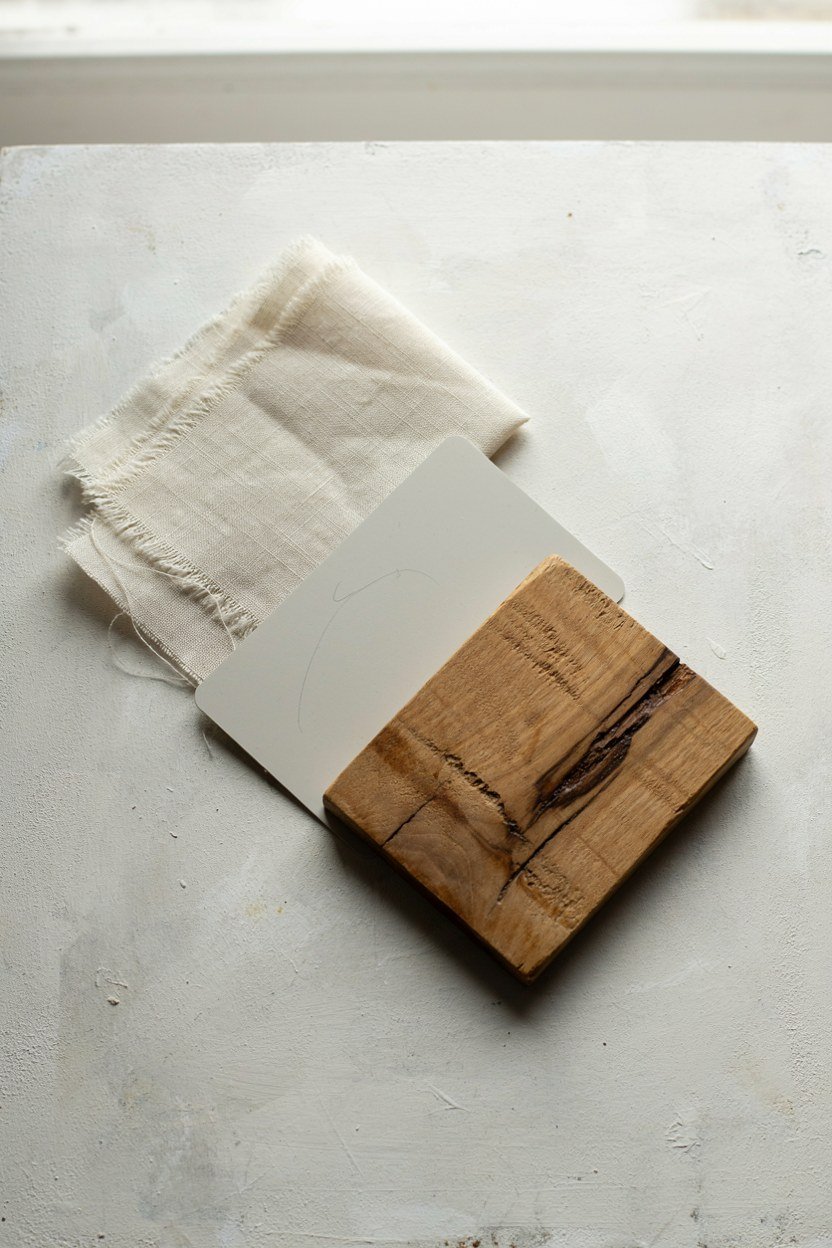
Three colours is the working limit for a room this size. A wall colour, a fabric colour and a wood or metal tone will carry the whole scheme, and everything else should sit inside those. Rooms that fail usually fail because a fourth and fifth colour crept in through accessories.
Let the anchor antique set the wood tone and match the other timber to it loosely rather than exactly. Perfectly matched wood reads as a suite, which is the opposite of the collected look you want. A little variation is what makes it feel gathered over time.
Repeat each colour at least three times around the room. A single pink cushion is an accident, whereas pink in the cushion, a box and the edge of the rug reads as a scheme. Repetition is what makes a small palette look deliberate.
Where Metal Finishes Fit In The Palette
Treat metal as one of your three, not as a free extra. Aged brass, blackened iron and old bronze all suit the look, but mixing all three in one small room reads as indecision. Pick one for the visible hardware and allow a second only for the lighting.
Skip polished chrome and bright nickel entirely. Both are perfectly good finishes in the wrong room. Nothing dates a French scheme faster.
14. Style The Surfaces With Restraint

The styling stage is where good rooms most often go wrong. A tray, a small stack of books, one plant and a group of scent bottles is enough for an entire chest top, and anything more starts reading as clutter. Leave at least half of every surface empty.
Group in odd numbers and vary the heights, keeping the tallest item at the back. This is a small trick and it works every time, because the eye reads a triangle as composed and a row as lined up. It takes about a minute per surface.
Use trays and small dishes to corral the genuinely useful things. A tray turns three loose objects into one arrangement, which is why hotel rooms use them everywhere. Without one, the same three objects read as things put down.
The Things Worth Leaving On Display
Jewellery on a stand, perfume bottles and folded silk are all worth showing, because they are attractive and you use them daily. Anything plastic, branded or medical belongs in a drawer. That single rule does most of the work.
Fresh flowers or a single stem in a small vase lift the whole room, and dried grasses do the same job for months at a time. Keep the arrangement small so it does not crowd the surface. One stem is usually enough.
15. Finish The Floor And The Threshold
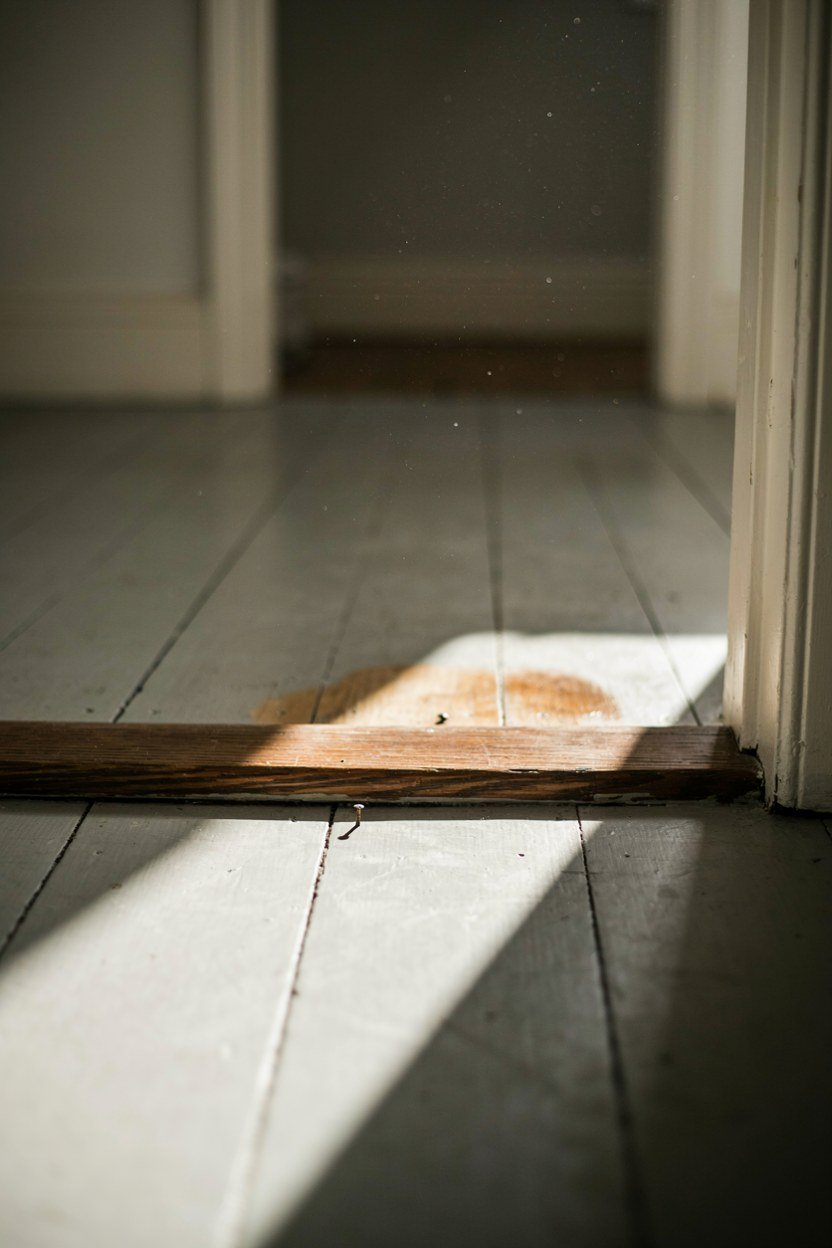
The floor decides how the room feels underfoot and how it joins the rest of the house. Painted boards, natural wood, a soft wool carpet or a limestone tile all work, and the choice is mostly about warmth. In a room where you dress barefoot, warmth beats appearance more often than people plan for.
Deal with the threshold properly rather than leaving a raw edge. A hardwood threshold strip, or carpet turned and bound at the door line, is what stops the room looking unfinished. It is a twenty minute job that everybody notices and nobody talks about.
Fix any creaking boards before you lay anything over them. A screw into the joist through the board is usually all it takes. Doing it after the carpet is down means lifting the carpet.
Painted Boards As The Budget Option
Painted floorboards suit a French scheme better than almost any modern flooring, and they cost very little. Use a hard wearing floor paint in a pale chalky tone, and accept that it will wear at the door and by the mirror. That wear is part of the look rather than a fault.
Repaint every few years rather than trying to protect it. Two coats over a weekend restores the whole floor. It is far cheaper than any other flooring you could relay.
What A French Dressing Room Costs To Put Together
The cost of this room varies more by how you buy than by what you buy. Joinery is the largest single line and the easiest to reduce, since a simple painted run with open shelving costs a fraction of a fitted wardrobe system. Doing the panelling and painting yourself removes most of the labour cost.
Antiques are the surprise, because they are frequently cheaper than new furniture of the same size. A painted chest at a general auction often costs less than a flat pack equivalent and will hold its value. The saving is real, but it takes patience and several failed bids.
The table below gives a rough sense of where the money goes in a small room of around six to eight square metres. Treat the proportions as the useful part, since prices move with region and season. Add a contingency of about a tenth for the things you find behind the plaster.
| Item | Rough share of budget | Where to save |
|---|---|---|
| Joinery and rails | The largest line | Open shelving, painted MDF |
| Lighting, three layers | Moderate | Secondhand fittings, own bulbs |
| Anchor antique piece | Moderate | General auctions, painted pieces |
| Panelling and paint | Low | Do it yourself with a mitre box |
| Mirror | Low to moderate | Lean it, buy old glass |
| Fabric, rug and seat | Low | Reupholster rather than buy new |
The Mistakes That Make A Dressing Room Look Staged
Matching everything is the most common mistake. A room where the chest, the mirror frame, the stool and the handles all share one finish reads as a showroom set, and the French look depends on things having arrived at different times. Deliberately break one match and the room relaxes.
Over lighting is the second. A grid of downlights gives you a flat, shadowless room with nowhere for the eye to rest, and no amount of warm bulbs fixes the layout. Fewer fittings at more heights always beats more fittings in the ceiling.
Under scaling is the third. Small mirror, small rug, small light fitting and a small picture all shrink a room that was already small. One generous object gives a small room far more presence than five modest ones.
Storing Too Much In Too Little Space
A dressing room fails the moment it holds more than it comfortably can. Rails packed so tightly that nothing slides, shelves stacked to the underside, and boxes on the floor all undo the styling in a week. The room needs roughly a fifth of its capacity left empty to keep working.
If the space genuinely will not hold your wardrobe, store the off season half elsewhere. Vacuum bags under a bed cost almost nothing and buy back a third of your hanging. That is far cheaper than more joinery.
Conclusion: The Three Decisions That Carry The Room
If you remember only three things, remember the wall colour, the anchor antique and the three heights of light. A soft chalky colour in a matt finish sets the whole tone and costs the least of any decision you make. One genuinely old piece gives the room a history that new furniture cannot copy.
The lighting is what makes it work after dark, which is when most people use a dressing room. Overhead for general light, sconces either side of the mirror at eye level, and something low and warm for the evening. Put them on dimmers and the room does three different jobs.
Everything else is refinement. The panelling, the open shelving and the styling rules all add polish, but none of them will rescue a room lit by one bright ceiling fitting and painted brilliant white. Start at the top of that list and work down as the budget allows.
Frequently Asked Questions About French Dressing Rooms
What colours suit a French dressing room?
Soft, chalky and low chroma: warm off whites, pale plaster pink, muted sage and the palest blues. Use a matt or eggshell finish, and tint the ceiling rather than leaving it brilliant white.
How small can a dressing room be?
Around four square metres works if the layout is efficient, with hanging on one wall and a mirror opposite. Below that you are really planning a walk in wardrobe rather than a dressing room.
Do I need an antique to get the look?
One genuinely old piece does most of the work, but a well chosen secondhand item painted and waxed will pass. What matters is that something in the room looks older than the rest.
How should a dressing room be lit?
At three heights, all in the same warm colour temperature around 2700K. Sconces either side of the mirror at eye level are the single most useful addition.
Is open shelving practical in a dressing room?
Yes, on one wall, with the rest behind doors. Fully open storage looks wonderful at first and needs constant tidying to stay that way.
What flooring works best?
Painted boards, natural wood or a soft wool carpet all suit the style, and warmth underfoot matters more than appearance. Finish the threshold properly, since a raw edge undoes the whole room.