
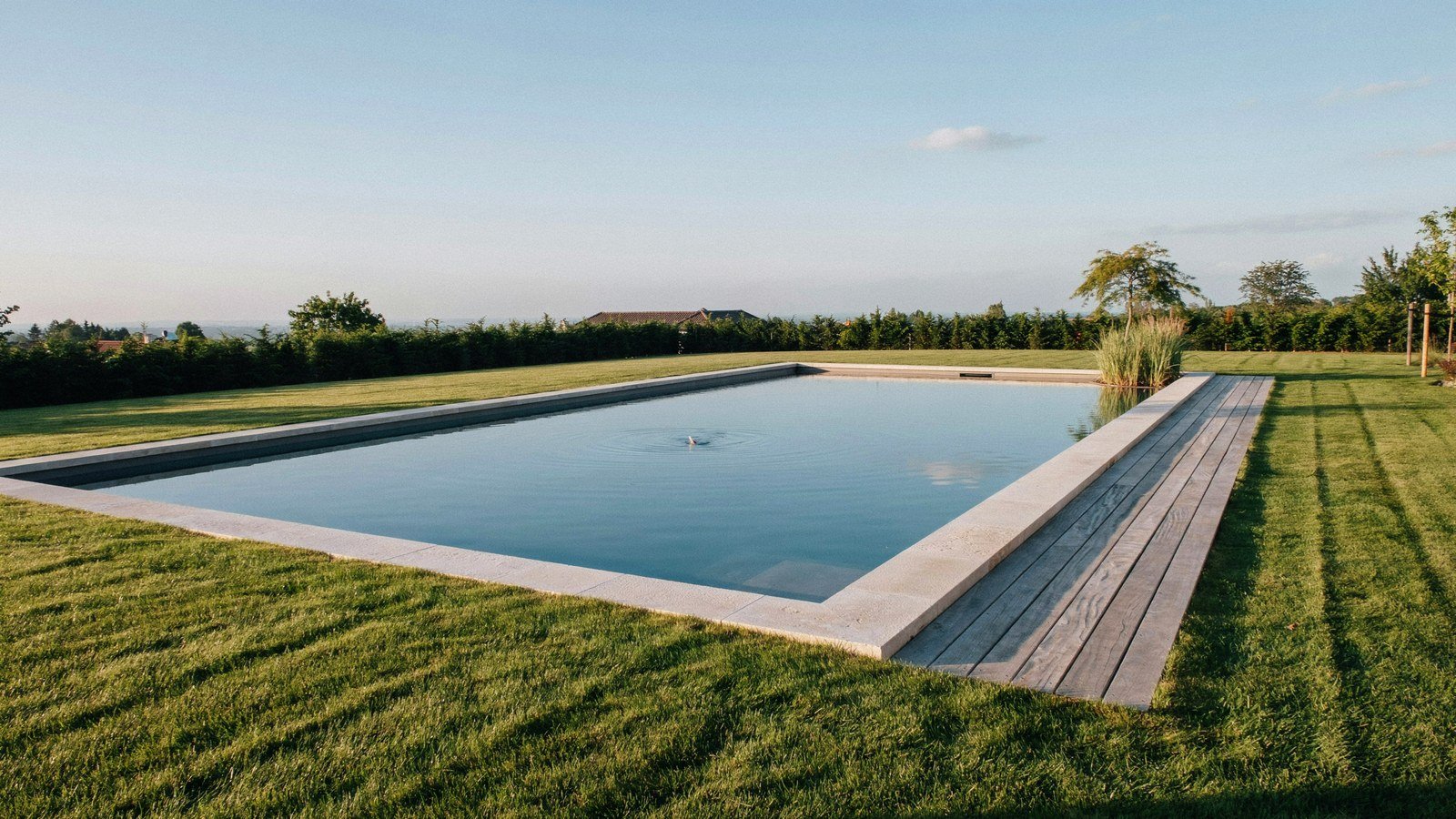
A contemporary backyard pond works because of its edge, not its water. Get the shape and the rim right and the rest follows.
I spent a long time thinking pond design was about plants and fish. Then I saw a plain rectangle of water with a crisp stone lip and understood the whole thing differently.
What follows is the order I would work in, from choosing the spot to setting a maintenance routine. Fifteen decisions, most of which happen before you dig.
Why Contemporary Ponds Look Different From Traditional Ones
Traditional ponds hide their edges. Contemporary ponds show them off, using a clean line between water and hard landscaping as the main design move.
That single difference drives everything else. Straight sides, restrained planting and one material repeated around the rim read as deliberate rather than accidental.
The style also suits smaller gardens well. A geometric pool of water reads as architecture, so it holds its own in a courtyard where a naturalistic pond would look like a puddle.
| Feature | Traditional Pond | Contemporary Pond |
|---|---|---|
| Shape | Curved, irregular | Rectangle, square or long strip |
| Edge | Hidden under planting | Exposed stone, steel or timber |
| Planting | Dense and mixed | Sparse, architectural |
| Materials | Mostly natural stone | Corten steel, concrete, sawn stone |
| Water movement | Rock waterfall | Single spout or a flush weir |
1. Pick A Spot With Half Day Sun And No Overhanging Trees
Aim for four to six hours of sun. Less and your plants sulk, more and algae takes over in July.
Keep clear of deciduous trees. Falling leaves rot in the water, feed algae and give you a netting job every autumn that you will grow to resent.
Think about where you sit. A pond you cannot see from the kitchen window or the patio gets ignored, however well it is built.
2. Choose A Geometric Shape And Commit To It

Pick a rectangle, a square or a long narrow strip and keep the lines straight. Half committed curves are what make a pond look homemade.
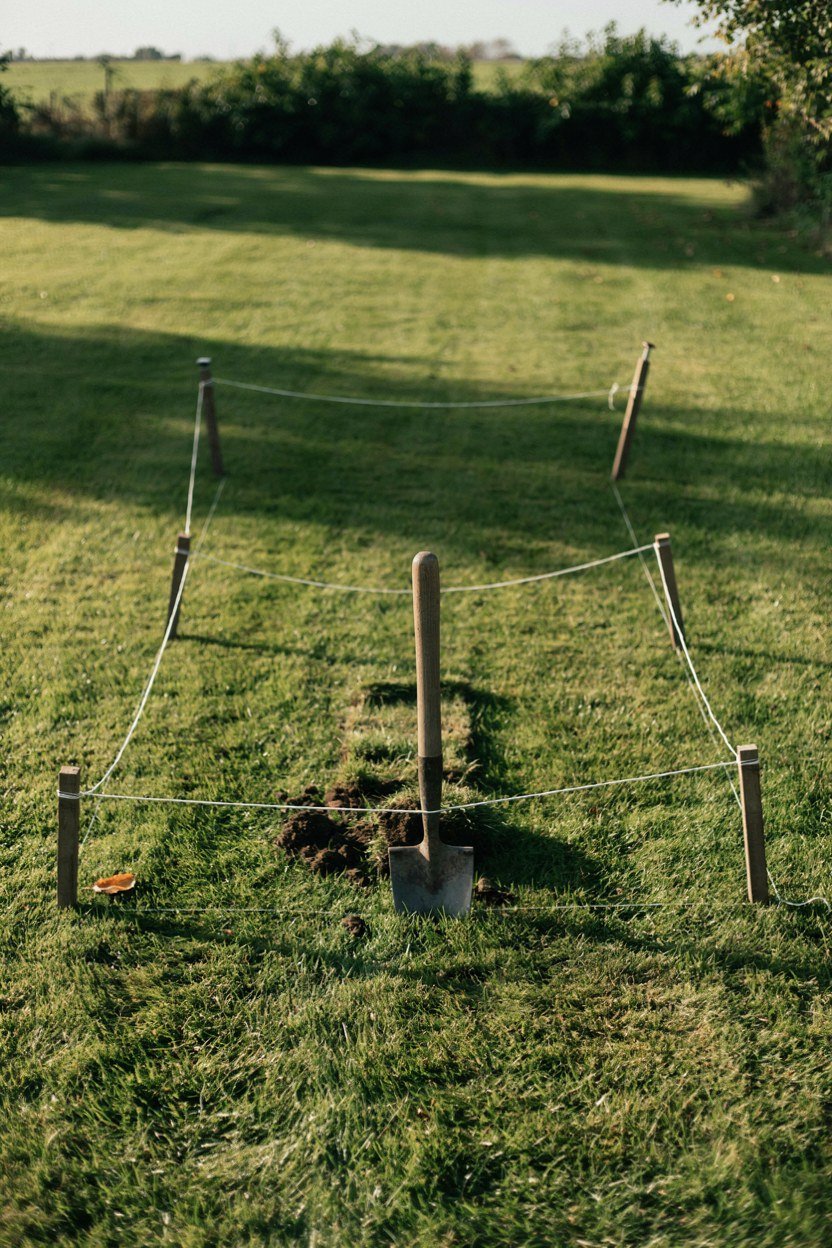
Mark it out with string and pegs, then live with it for a week. I have moved a marked outline twice before digging and been glad both times.
Align the lines with something that already exists. Squaring the long edge to a fence, a path or the house wall makes the pond look planned.
3. Decide The Depth Before You Dig
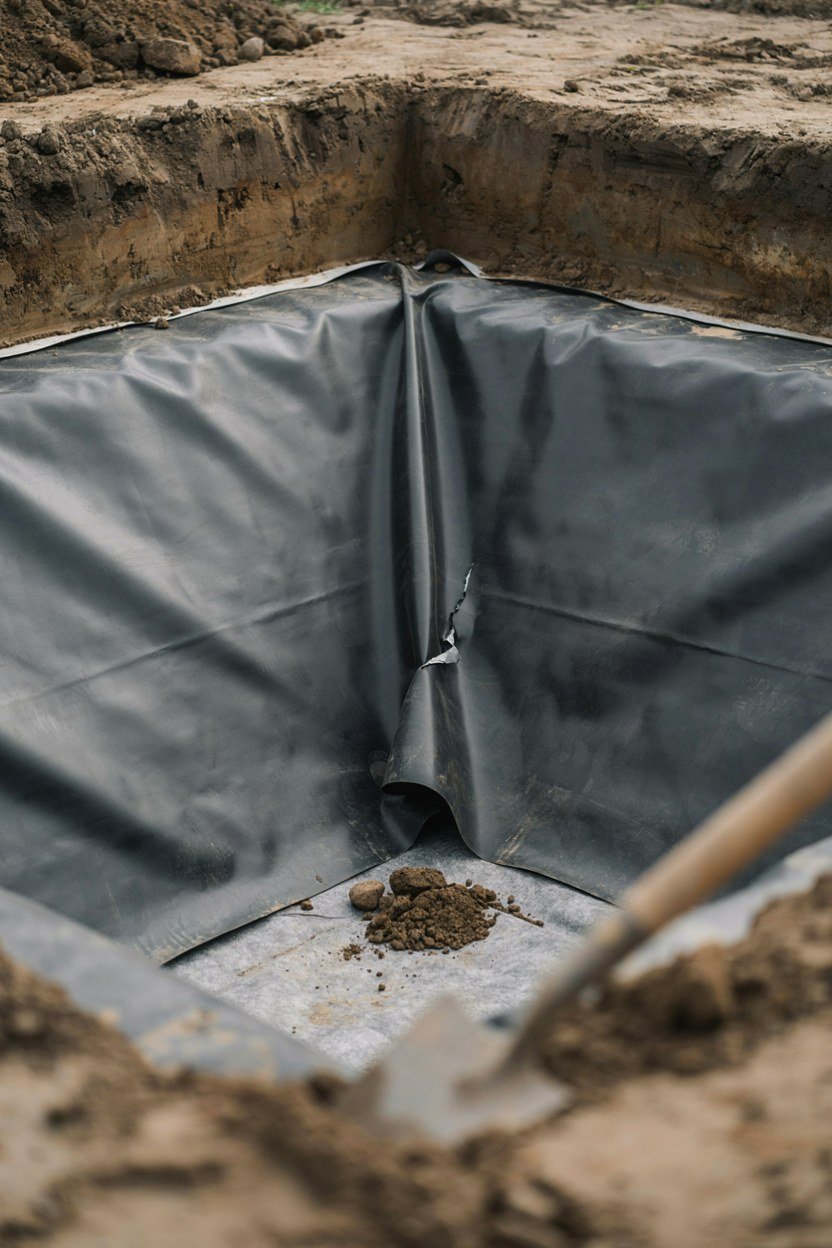
Depth is a decision you cannot revisit later. Around 18 inches suits a plants only pond, while fish need roughly 30 inches so they can sit below the ice line.
Dig the deepest section in the middle and step up towards the edges. That profile gives you planting shelves without wasting volume.
Check your water table before digging deep. A high one can float a liner, and that is a problem best found with a spade rather than afterwards.
4. Choose Between A Flexible Liner And A Preformed Shell
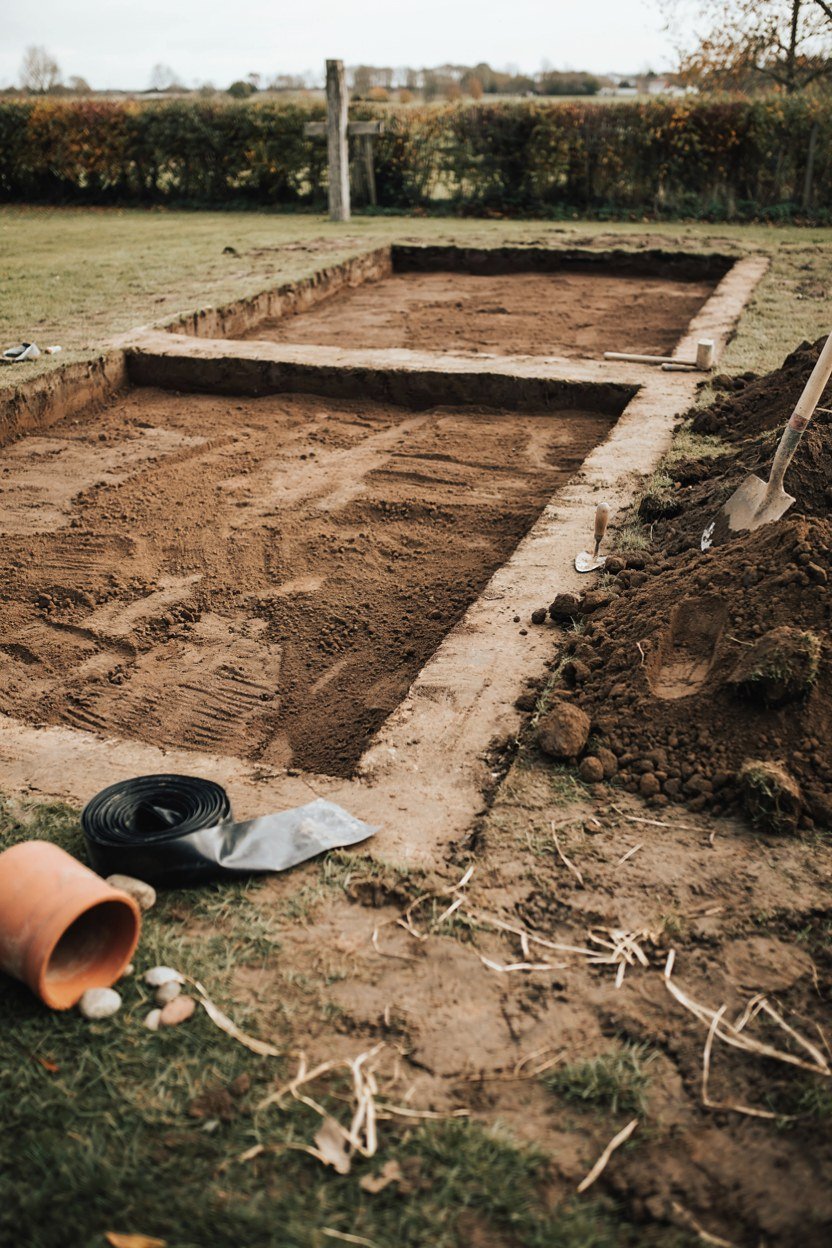
Flexible EPDM liner suits geometric shapes because you fold the corners to whatever plan you drew. Preformed shells are faster but come in shapes that fight a contemporary look.
I would use EPDM for anything with straight sides. Add a protective underlay first, because one sharp stone undoes the whole job.
Order the liner oversized. Twice the depth plus the length and width, with a foot spare all round, costs little and saves a bad afternoon.
5. Build A Crisp Edge, Because It Carries The Design
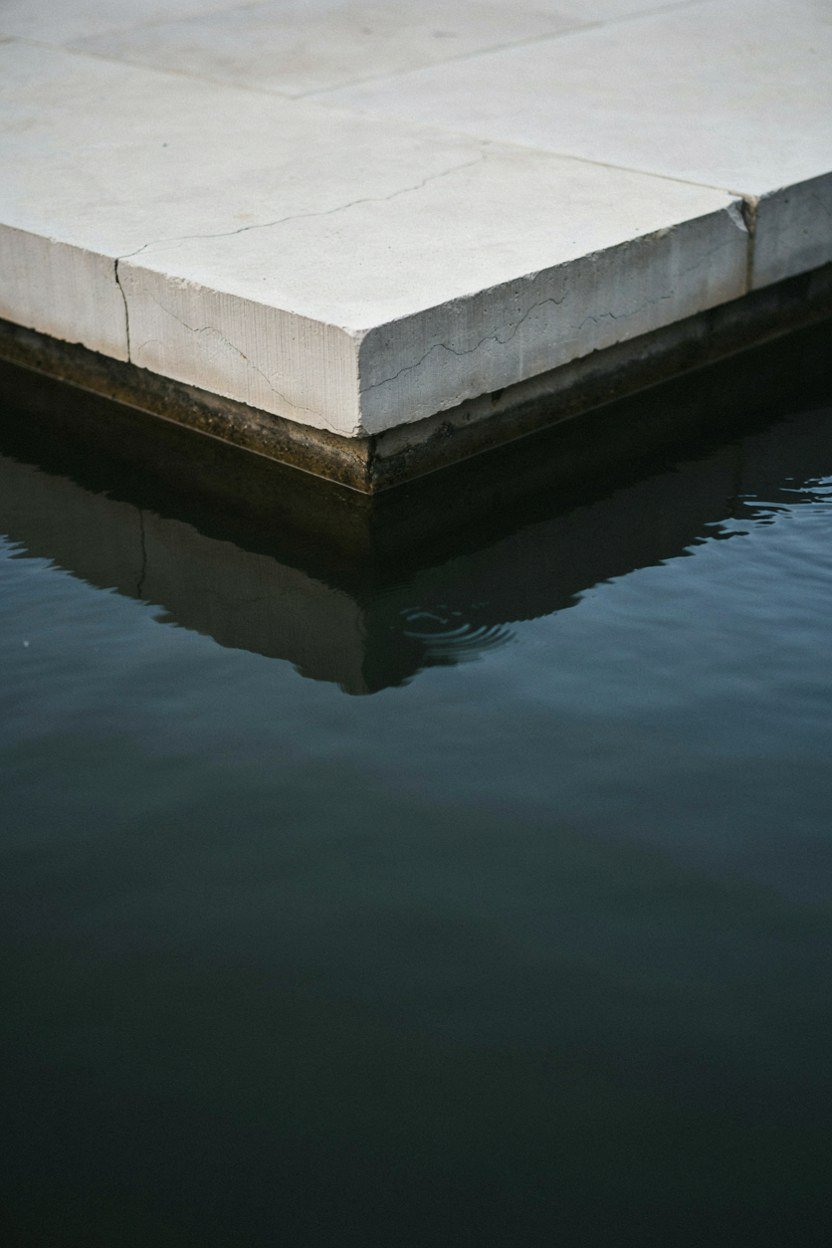
The rim is the single most visible detail, so spend your money here. Sawn stone coping, a corten steel band or a poured concrete lip all give you the hard line the style depends on.
Overhang the edge slightly above the water. That small shadow line hides the liner and makes the water look deeper than it is.
Set the coping dead level. Water shows every millimetre of error, and a rim slightly out reads as sloppy from right across the garden.
6. Size The Pump And Filter To The Actual Volume
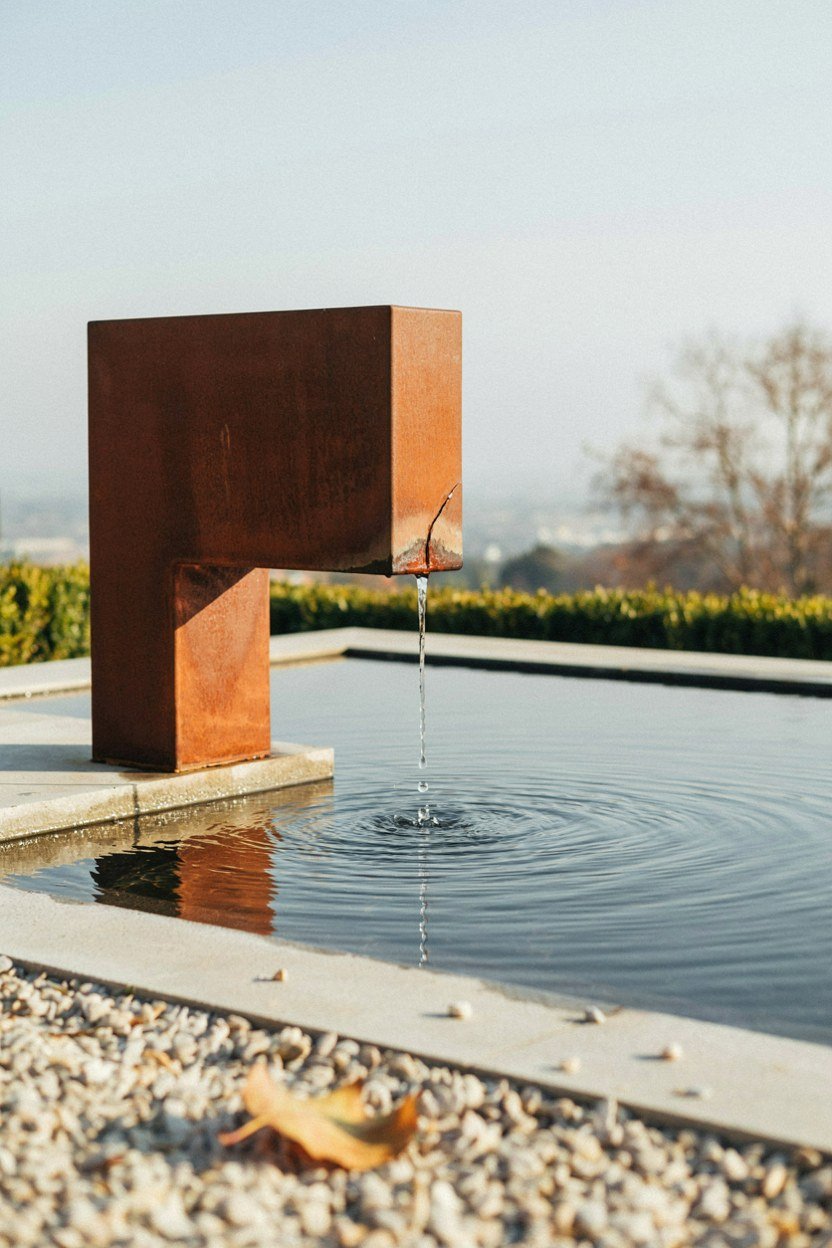
Work out your volume in gallons, then choose a pump that turns it over once an hour. Undersizing is the most common mistake and it shows up as green water in week three.
Buy the filter one size up from the calculator’s answer. Fish, sun and summer all push the real demand higher than the box suggests.
Site the pump where you can actually reach it. Filters need rinsing monthly, and one in the far corner quietly stops being maintained.
7. Add One Simple Water Feature For Sound And Oxygen
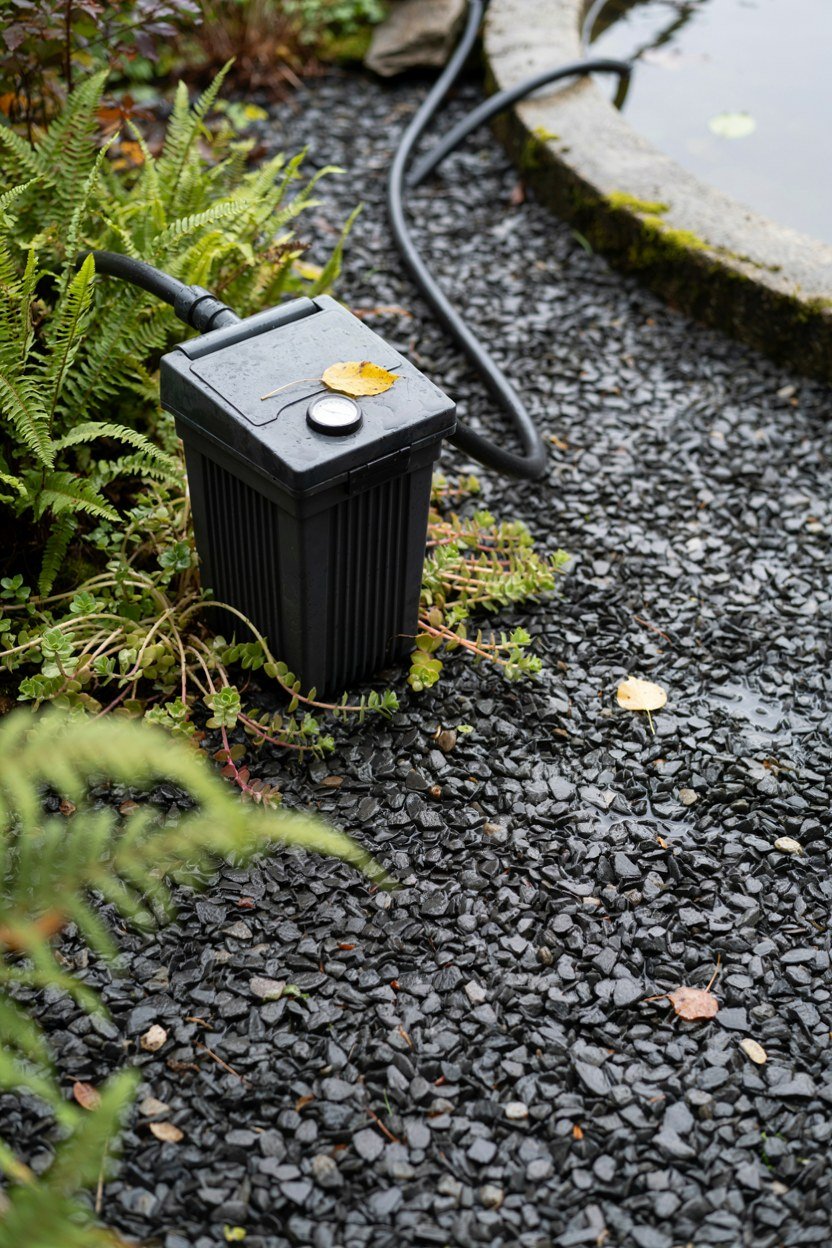
Sound matters more than the visual in a small garden. A single spout, a slot weir or a low bubbler adds movement without turning the pond into a rockery.
Keep it geometric and keep it quiet. A tall splashing feature fights the calm that a contemporary pond is trying to create.
Put it on a timer if sound carries. Moving water is lovely at breakfast and less welcome through an open bedroom window at midnight.
8. Plan Planting Shelves At Two Levels
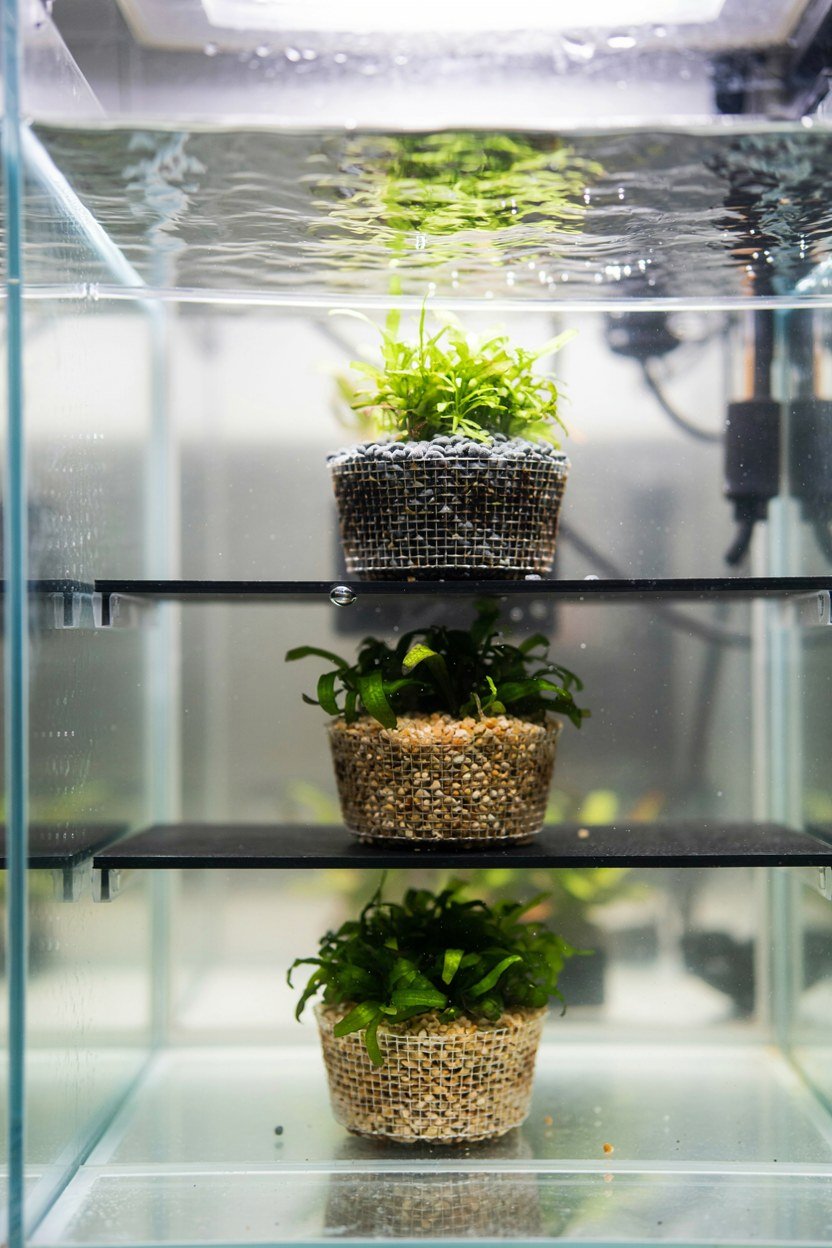
Two shelves cover most planting. A shallow ledge around 9 inches suits marginals, and a deeper one around 18 inches suits water lilies in baskets.
Build the shelves into the excavation rather than stacking bricks later. Anything resting on the liner tends to shift the first time you wade in.
Make the shelves wide enough for a basket. Nine inches deep and a foot across holds a standard planting crate without it tipping in.
9. Choose Architectural Plants Over Cottage Ones
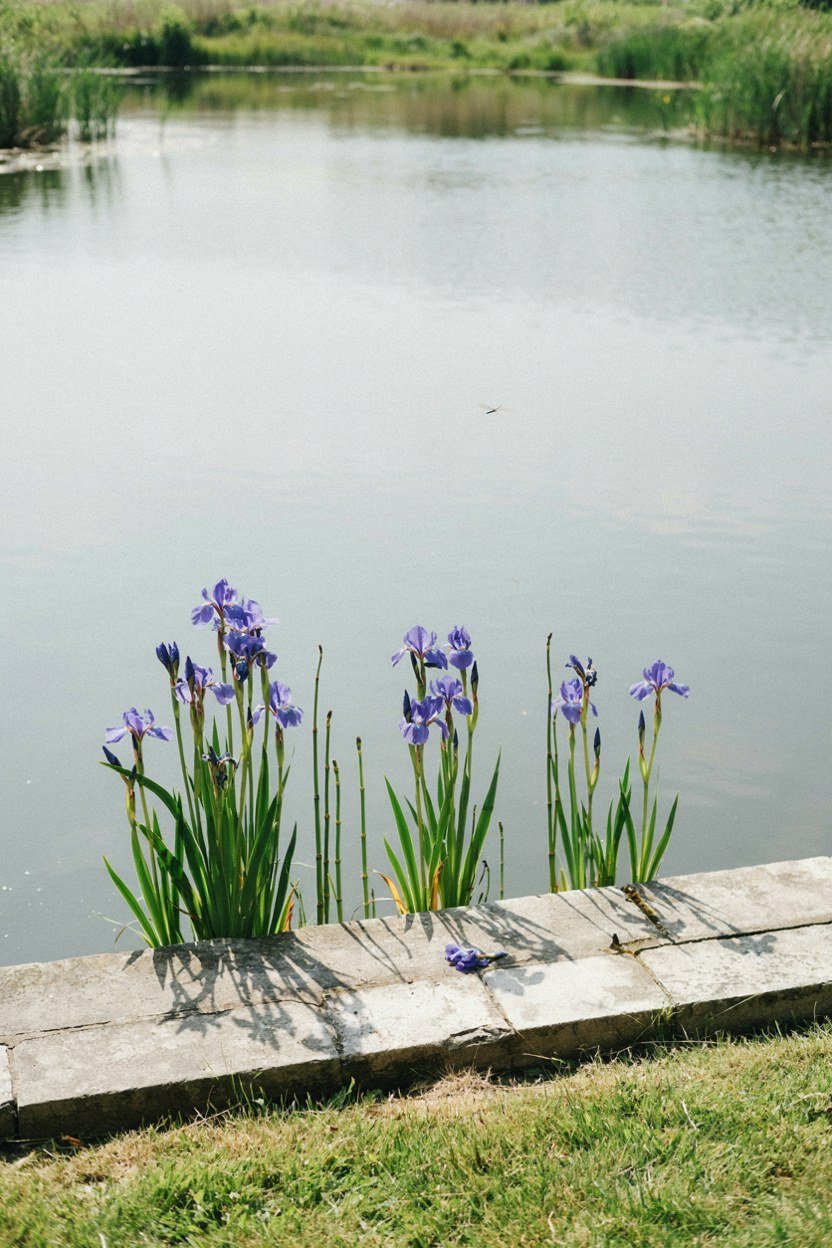
Plant sparsely and repeat. Irises, horsetail, dwarf papyrus and a single lily give you strong vertical lines without the pond disappearing under foliage.
Aim to cover no more than a third of the surface. Open water is the point of the design, and planting is there to frame it.
Buy fewer, larger plants. Three established clumps look intentional straight away, while a dozen small ones look sparse for two seasons.
10. Decide Early Whether You Want Fish
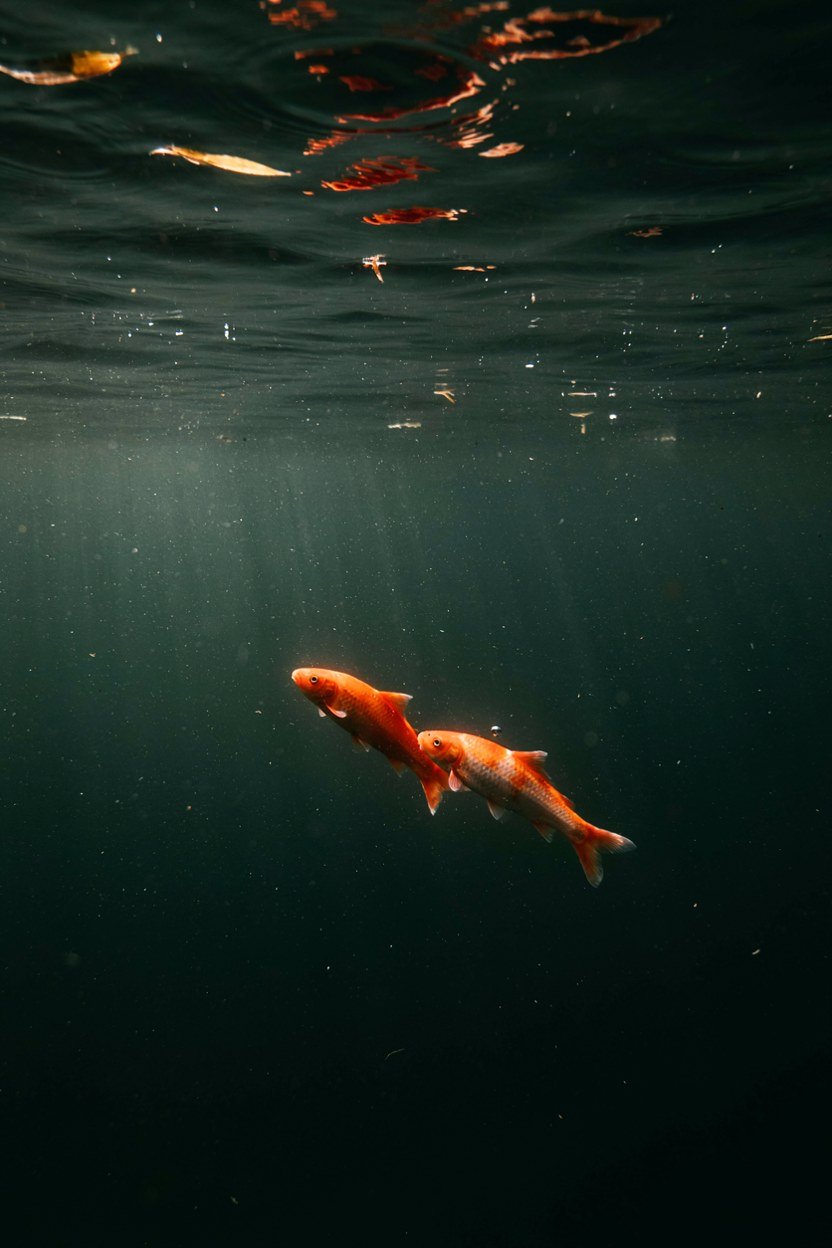
Fish change the build. They need more depth, stronger filtration, shade in summer and protection from herons, and all of that is easier to plan than retrofit.
A plant only pond is far less work. If you mainly want the reflection and the sound, I would skip fish and enjoy the lower maintenance.
Herons are patient. If you do keep fish, plan somewhere for them to hide, because an open geometric pond offers no cover at all.
11. Light The Water For Evening Use
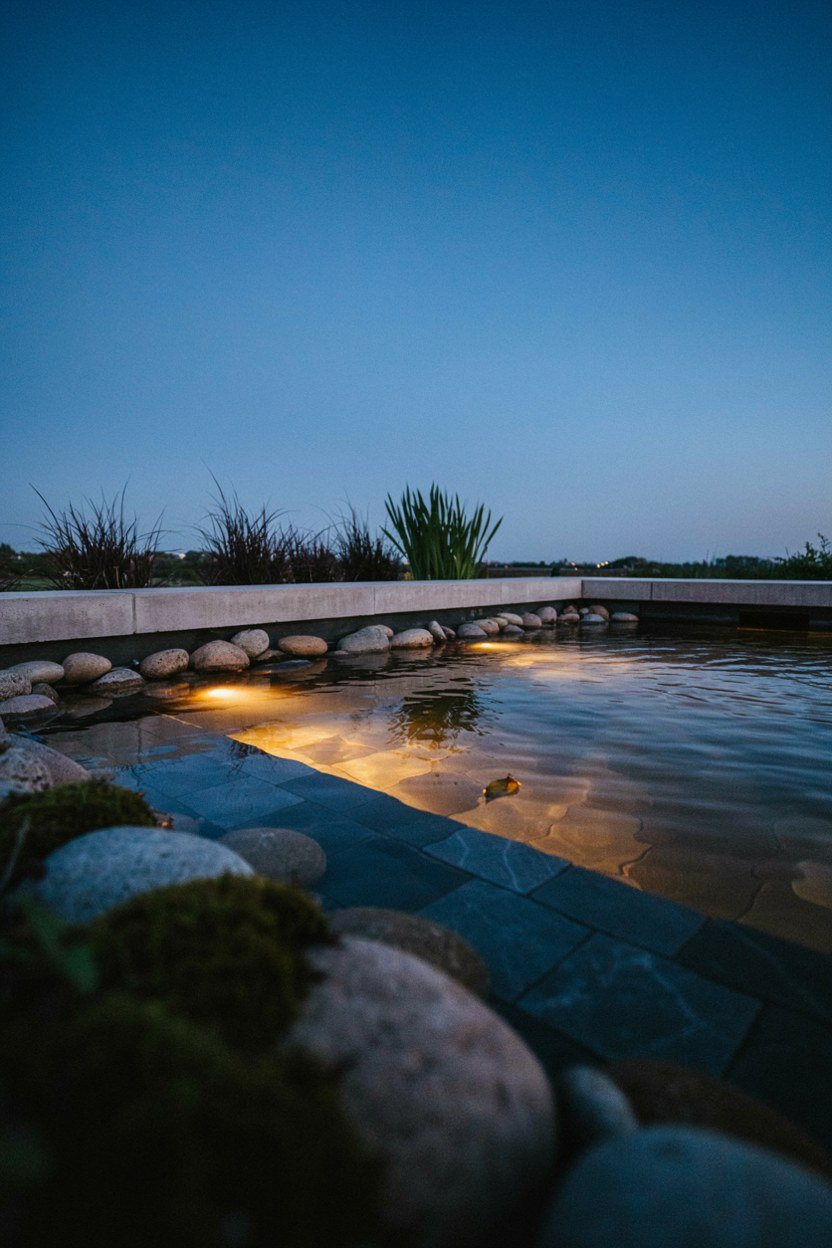
Underwater lighting turns a pond into a feature after dark, which is when most people are actually in the garden. Two or three low output submersible lights are plenty.
Aim them at the water feature or the edge, never straight up. Warm white looks natural, and anything cooler makes the water look like a swimming pool.
Use low voltage kit with a proper outdoor transformer. Garden lighting near water is one place to follow the rules exactly.
12. Keep The Surroundings Minimal

Whatever surrounds the pond does half the work. Gravel, clipped lawn or a timber deck running right up to the coping all keep the focus on the water.
Resist filling the perimeter with pots and ornaments. One large planter placed off centre does more for the composition than six scattered ones.
Leave room to walk right around it. A pond reachable from only one side is harder to maintain and reads smaller than it is.
13. Plan Safety If Children Use The Garden
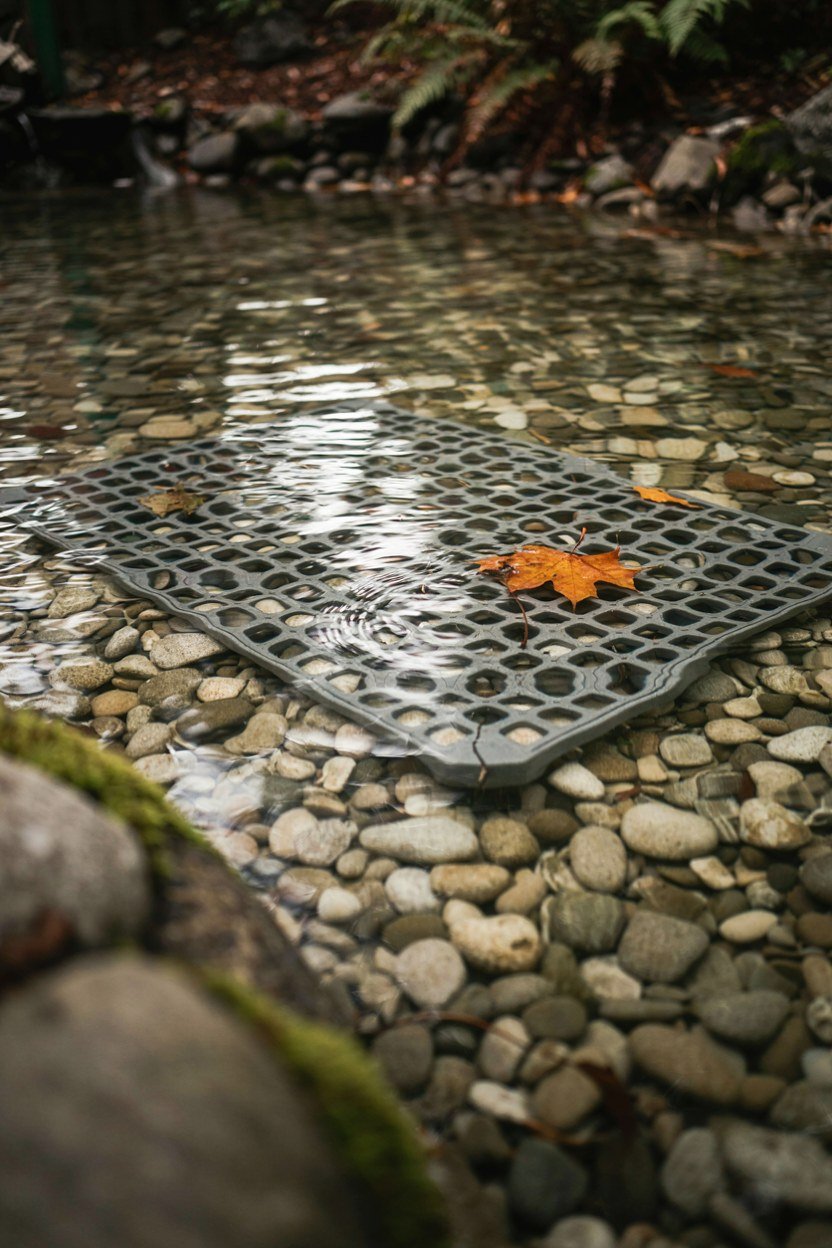
Water and small children need a plan you make before building, not after. A rigid mesh grille set just below the surface is almost invisible and takes a child’s weight.
The alternative is depth. A shallow reflecting pool of six inches gives you the same mirror effect with far less risk.
Check your local rules as well. Some areas set requirements for water features in domestic gardens, and it is worth a search before building.
14. Set Up A Maintenance Routine You Will Actually Follow
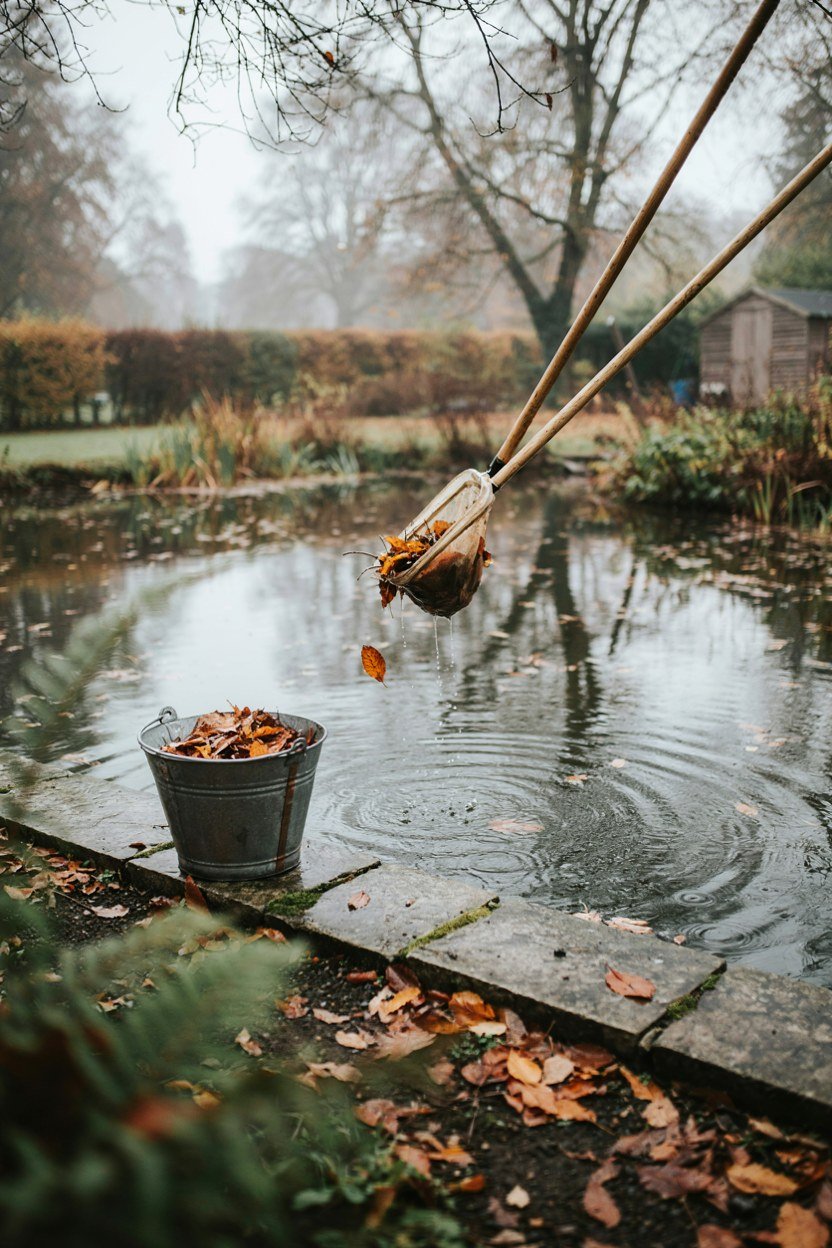
Little and often beats an annual overhaul. I skim the surface weekly, rinse the filter monthly in pond water rather than tap water, and thin the plants once a year.
Autumn is the one job you cannot skip. Net the pond before the leaves drop and you avoid the sludge that causes most water quality problems.
Keep a net and a bucket nearby. Maintenance you can do in two minutes actually happens, and anything needing a trip to the shed does not.
15. Build It In Phases And Spread The Budget
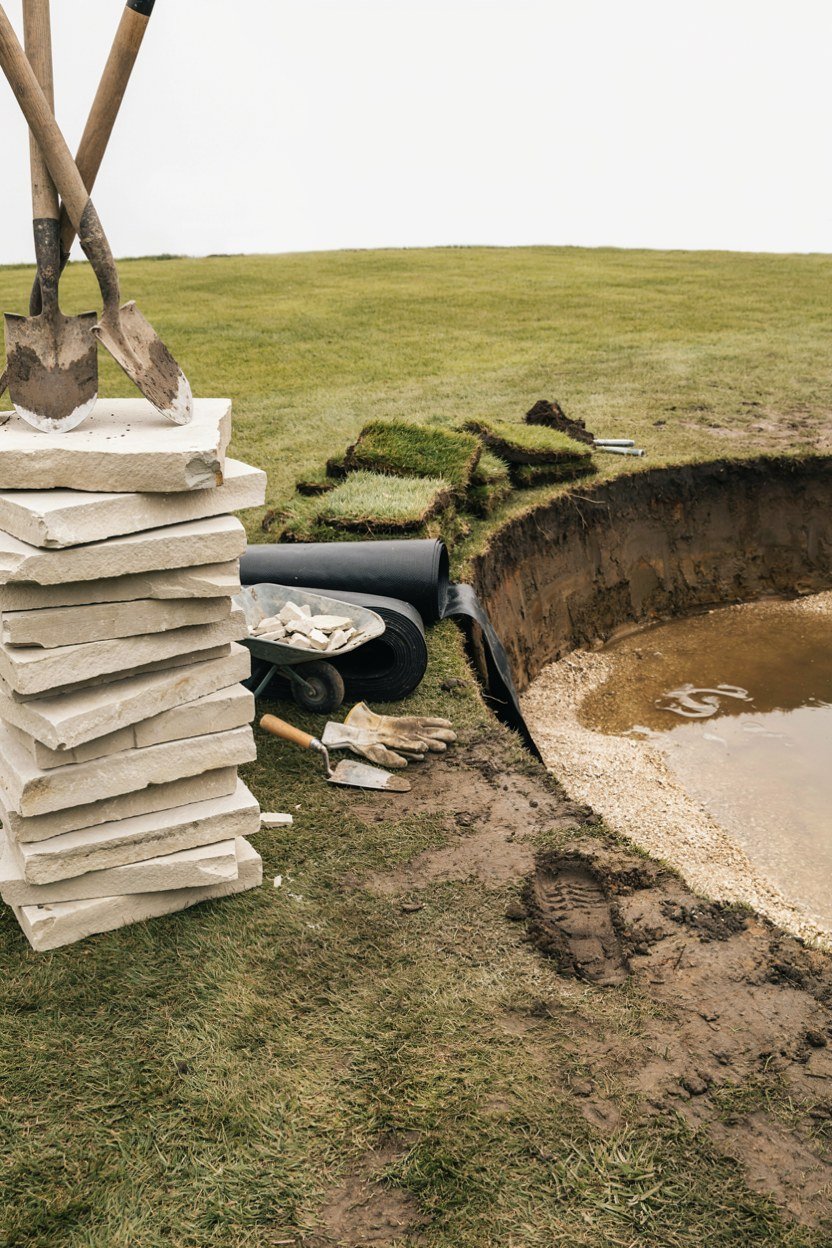
Excavation, liner and edging come first because they are structural. Pump, planting and lighting can all follow over a season without any rework.
I would rather build a smaller pond properly than a larger one with a cheap edge. The rim is what people see, and it is the hardest thing to fix later.
Order the liner and the edging together. Matching coping to the finished water level is far easier with both materials on site at once.
What A Contemporary Backyard Pond Costs To Build
Costs split roughly into groundwork, materials and equipment. Groundwork swallows the most if you hire help, and almost nothing if you dig it yourself.
Materials are where the contemporary look lives. Sawn stone and corten steel cost more than reclaimed rock, and they are the reason the finished pond reads as designed.
Equipment is the part people underspend on. A pump and filter matched to the volume saves you a summer of fighting green water, which is worth more than another plant.
| Element | Notes | Relative Cost |
|---|---|---|
| Excavation | Free if you dig it yourself | None to high |
| Underlay and EPDM liner | Do not skip the underlay | Mid |
| Edge coping or steel | Where the style comes from | Mid to high |
| Pump and filter | Size up rather than down | Mid |
| Planting | Few plants, repeated | Low |
| Lighting | Two or three units is plenty | Low |
Conclusion: Where To Put Your Effort
The three decisions that make a contemporary pond are the shape, the edge and the filtration. Everything else is adjustable later.
Straight lines and a crisp rim give you the look. A correctly sized pump keeps the water clear enough to actually see that rim, which is the part people forget.
Then keep the planting sparse and the surroundings quiet. A contemporary pond is mostly open water, and the discipline to leave it that way is what separates the good ones.
Frequently Asked Questions About Contemporary Backyard Ponds
How deep should a contemporary backyard pond be?
Around 18 inches suits plants only. Go to roughly 30 inches if you want fish to overwinter safely.
What shape works best for a modern garden pond?
A rectangle or a long narrow strip. Straight lines echo the hard landscaping and read as intentional.
Do I need a pump in a backyard pond?
Almost always. A pump turning the volume over once an hour keeps the water clear and stops it stagnating in summer.
Can I build a contemporary pond in a small garden?
Yes, and the style suits small spaces well. A geometric pool of water reads as a design feature rather than an afterthought.
How do I stop pond water turning green?
Size the filter correctly, limit direct sun to about six hours and keep planting to a third of the surface. Green water is usually a filtration problem.
Is a pond safe with young children around?
Only with planning. A rigid mesh grille below the water line or a shallow reflecting pool of six inches both reduce the risk substantially.
What edging material suits a contemporary pond?
Sawn stone coping, corten steel or poured concrete. Each gives the clean line the style relies on, with a slight overhang to hide the liner.