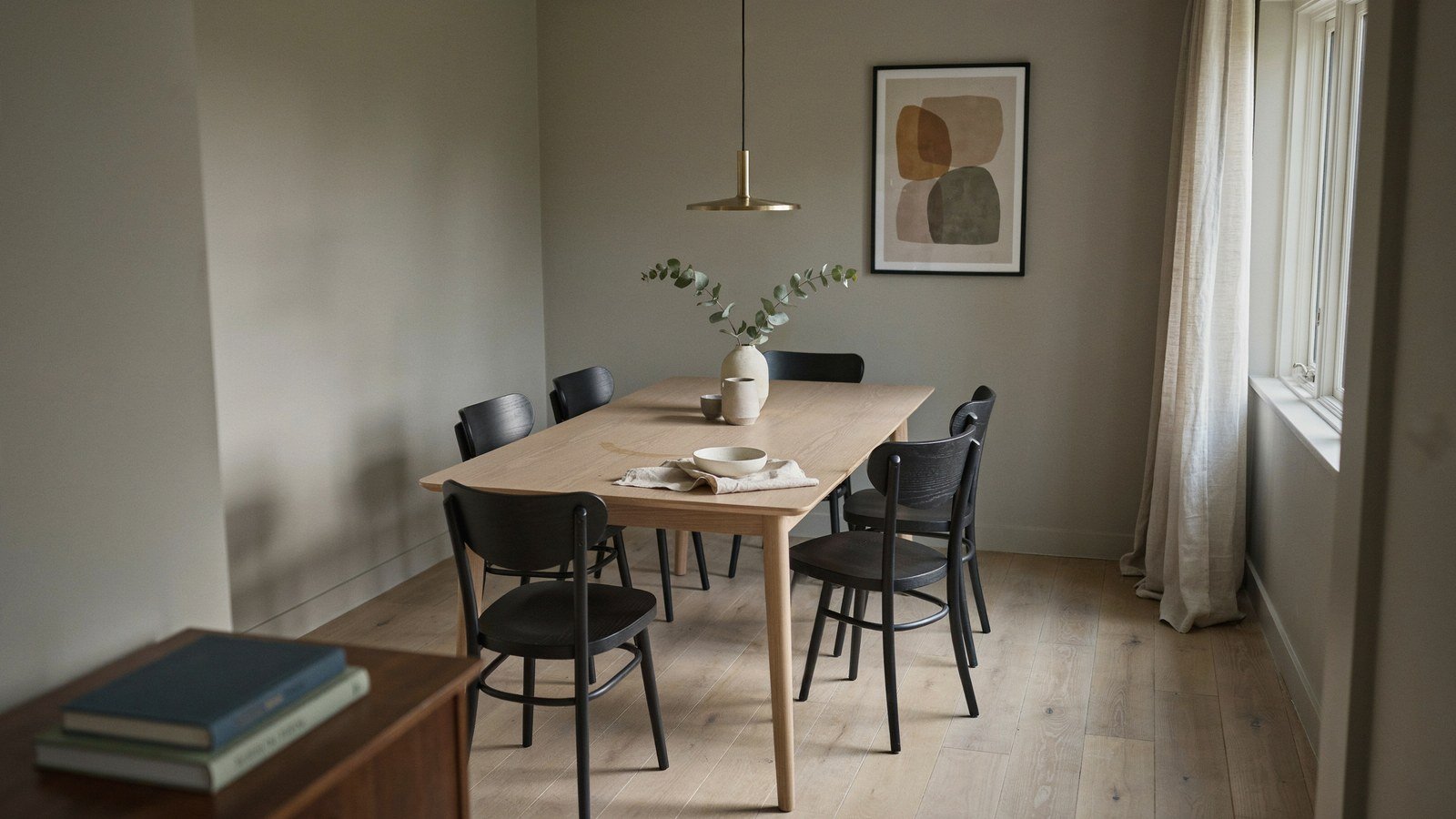
A modern dining room gets its edge from contrast, not from removing things. Two tones, two textures, and the discipline to stop there.
Strip a room back with no contrast and you get a waiting area. I have sat in a few and nobody lingers after the plates are cleared.
Below are fifteen looks that use contrast to carry a pared back dining room, from the table finish to the last light fitting.
What Contrast Minimalism Actually Means In A Dining Room
Minimalism removes clutter. Contrast puts back the tension that keeps a room interesting once the clutter has gone.
In practice that means pairing opposites deliberately. Pale table with dark chairs, matt walls with a glossy pendant, hard stone against soft wool.
The rule I follow is two strong notes and one quiet one. Three competing statements in a dining room and the whole thing turns noisy.
| Contrast Pair | Where It Works | What To Avoid |
|---|---|---|
| Light table, dark chairs | Small rooms, keeps floor visual space | Matching both, which flattens |
| Matt walls, gloss lighting | Any size | Gloss on every surface |
| Stone and wool | Hard floors, echoey rooms | All hard, no soft |
| Black frames, pale art | Gallery wall alternative | Busy multi frame clusters |
| Warm wood, cool grey | Open plan next to a kitchen | Two warm woods clashing |
1. Pick The Table As The Anchor Tone
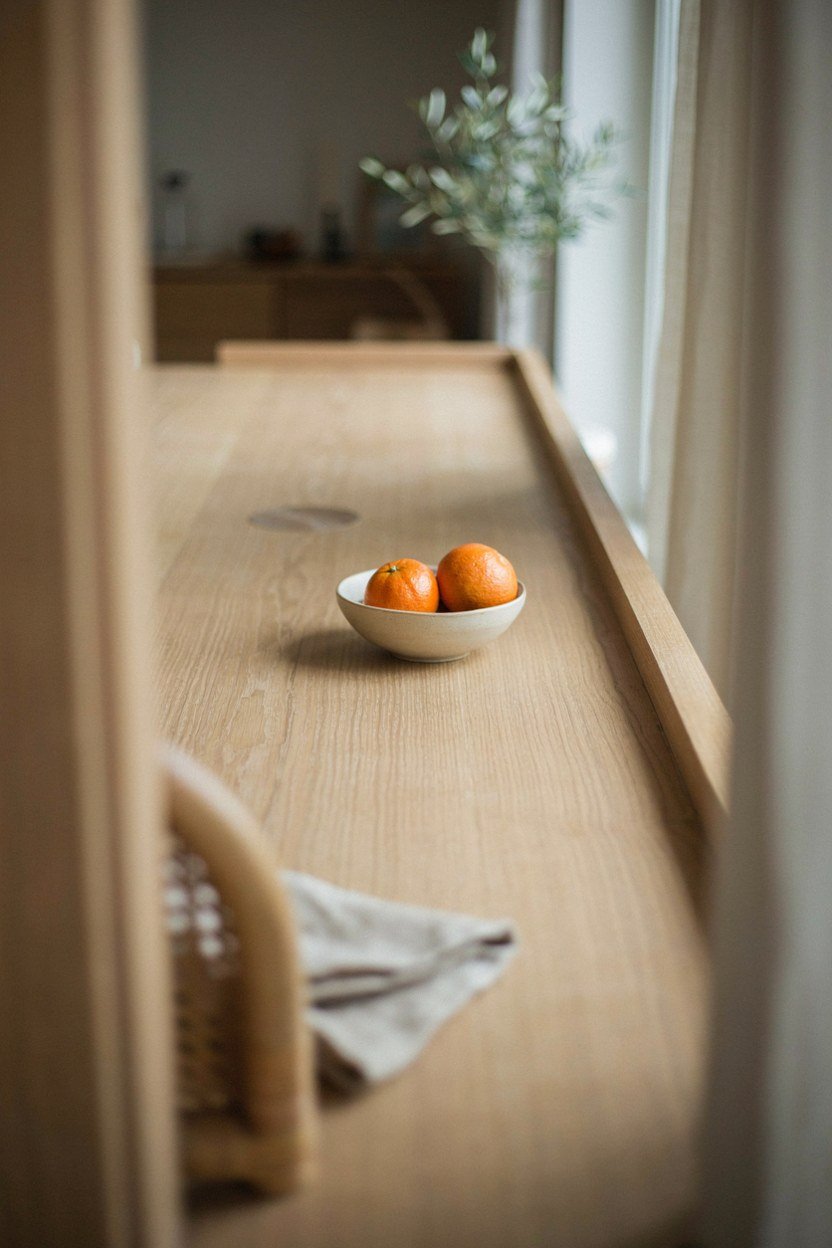
The table is the largest single object, so its tone decides which direction the contrast runs. Choose it before the chairs.
A pale oak or white top gives you a light anchor and lets dark chairs do the work. A walnut or blackened top flips it, and then the chairs go pale.
Avoid a table that matches the floor closely. Similar but not identical tones read as a mistake rather than a scheme.
Consider the table edge profile. A thin edge reads modern and a chunky one reads farmhouse, whatever the finish.
2. Contrast The Chairs Against The Table

Chairs are where the second tone belongs. Matching them to the table is the most common way a minimal dining room goes flat.
Black chairs against a pale top is the reliable version. Pale moulded chairs against a dark table is the same idea reversed.
Keep the chair shape simple if the contrast is strong. A bold colour plus a bold silhouette competes with itself.
Buy one chair first if you can. Chairs look different in a room than in a showroom and this is the piece you sit in daily.
3. Hang One Sculptural Pendant Low
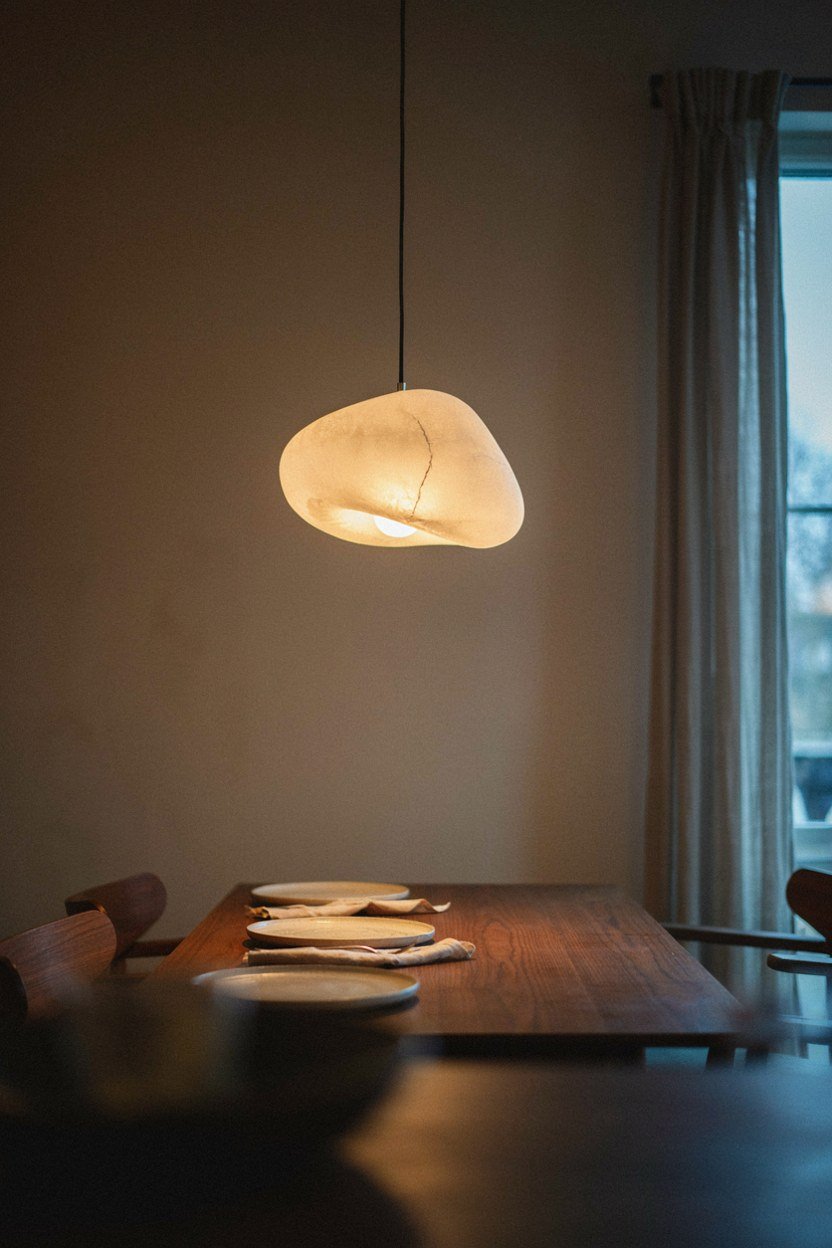
A single pendant hung low over the table defines the space more than any other fitting. It is the room’s punctuation mark.
Hang it around 30 to 36 inches above the tabletop. Higher and it stops feeling connected to the table.
Choose one with presence. In a minimal room the pendant is doing the decorative work that pattern and accessories would do elsewhere.
Centre the pendant on the table, not the room. An off centre table with a centred light looks wrong from every seat.
4. Use A Matt Wall Against A Reflective Fitting
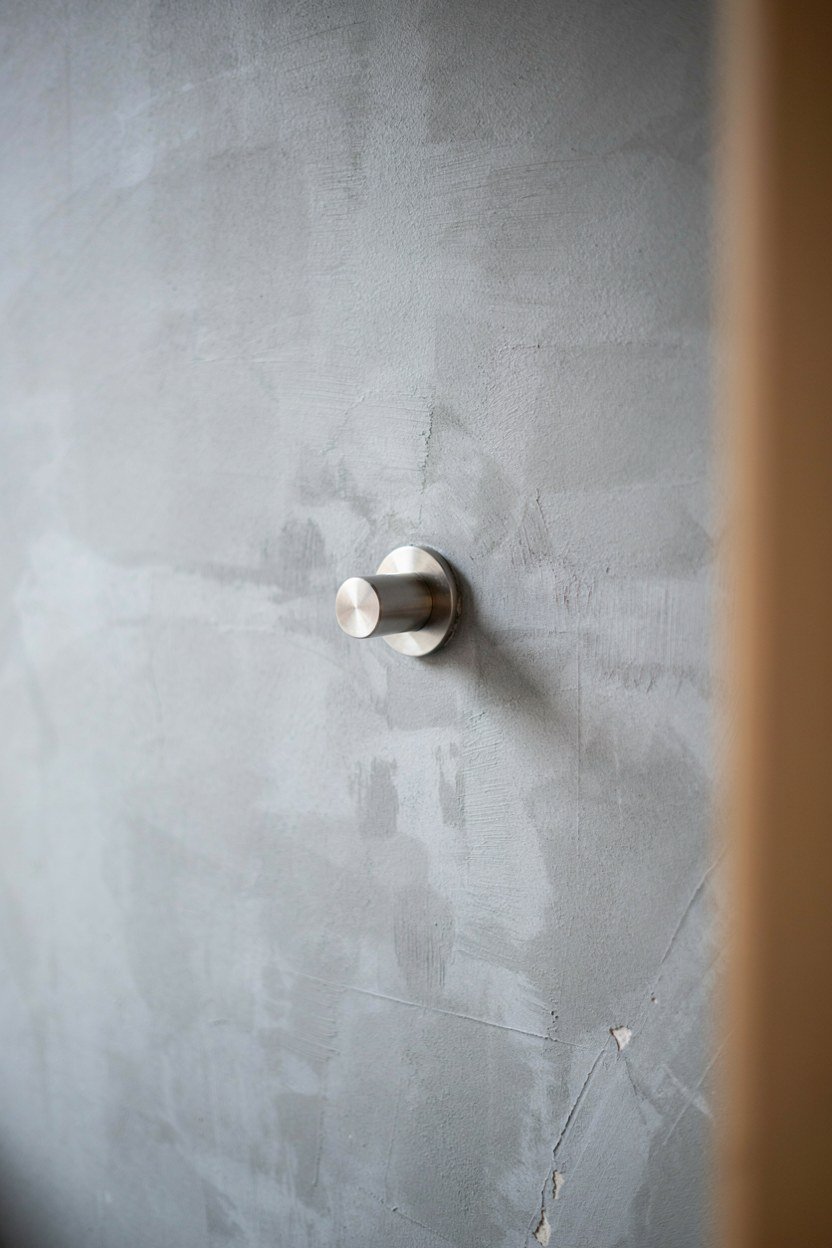
Matt or limewashed walls absorb light and make a metal or glass fitting glow by comparison. That is contrast doing real work.
Keep the wall colour quiet. Deep greige, soft charcoal or chalky off white all sit behind a strong pendant without competing.
Gloss walls plus gloss fittings cancel each other out. Pick which surface reflects and let the other stay flat.
Test wall colour on two walls. Dining rooms often have one wall in shadow and the same paint reads as two colours.
5. Add One Textile To Kill The Echo

Hard minimal rooms sound wrong. A rug or curtain absorbs enough sound to make the room comfortable to sit in.
A flatweave wool rug under the table is the usual answer. Size it so the chairs stay on the rug when pulled out.
If a rug under a dining table worries you, floor length curtains do the same acoustic job with less cleaning.
Choose a low pile if you go for a rug. Chair legs catch on anything deep and crumbs work into it.
6. Choose A Bench For One Side Only
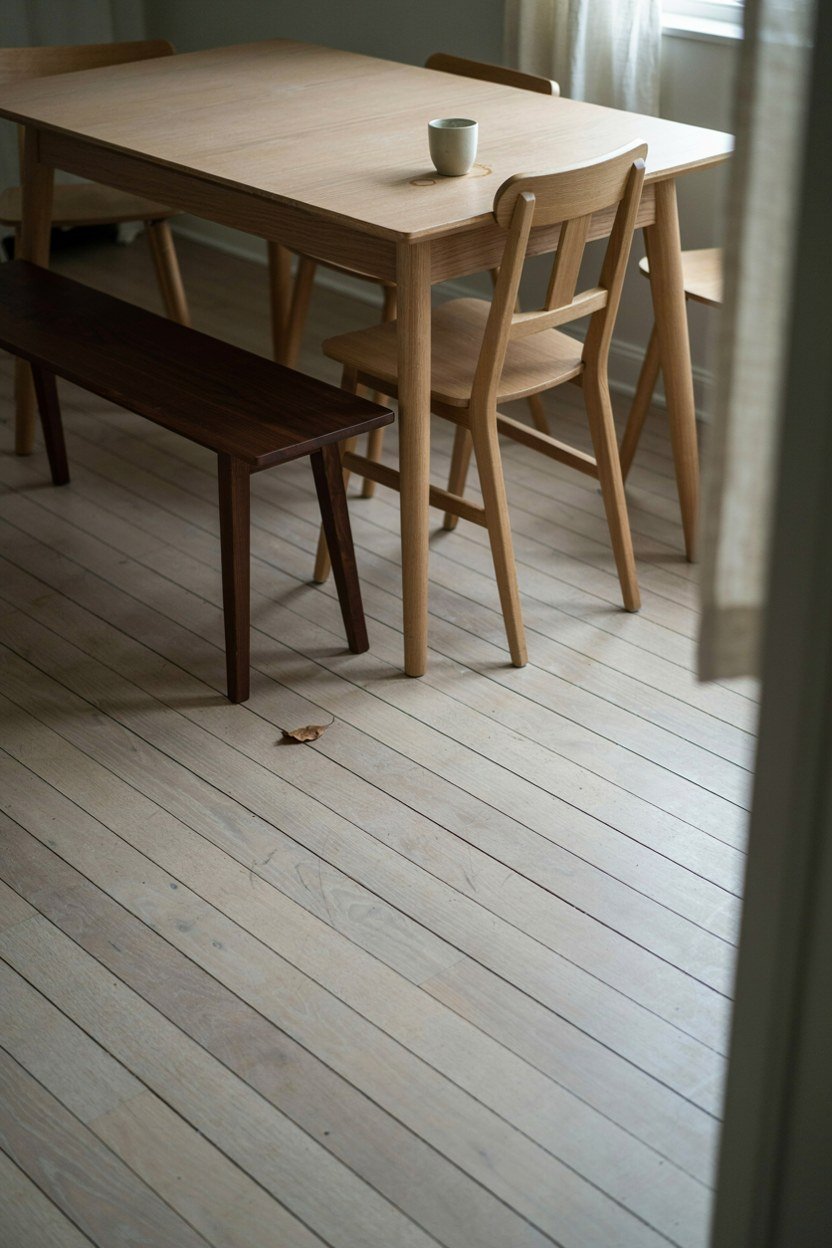
A bench on one side and chairs on the other breaks symmetry without adding clutter. It also seats more people in less space.
Push the bench in fully and the room reads as tidy from the door, which matters in open plan.
Make it the contrasting tone, not a third one. Two tones with a bench is composed; three tones with a bench is busy.
Measure the bench to sit under the table fully. Even two inches proud stops the room reading as clear.
7. Keep The Table Bare Except For One Object
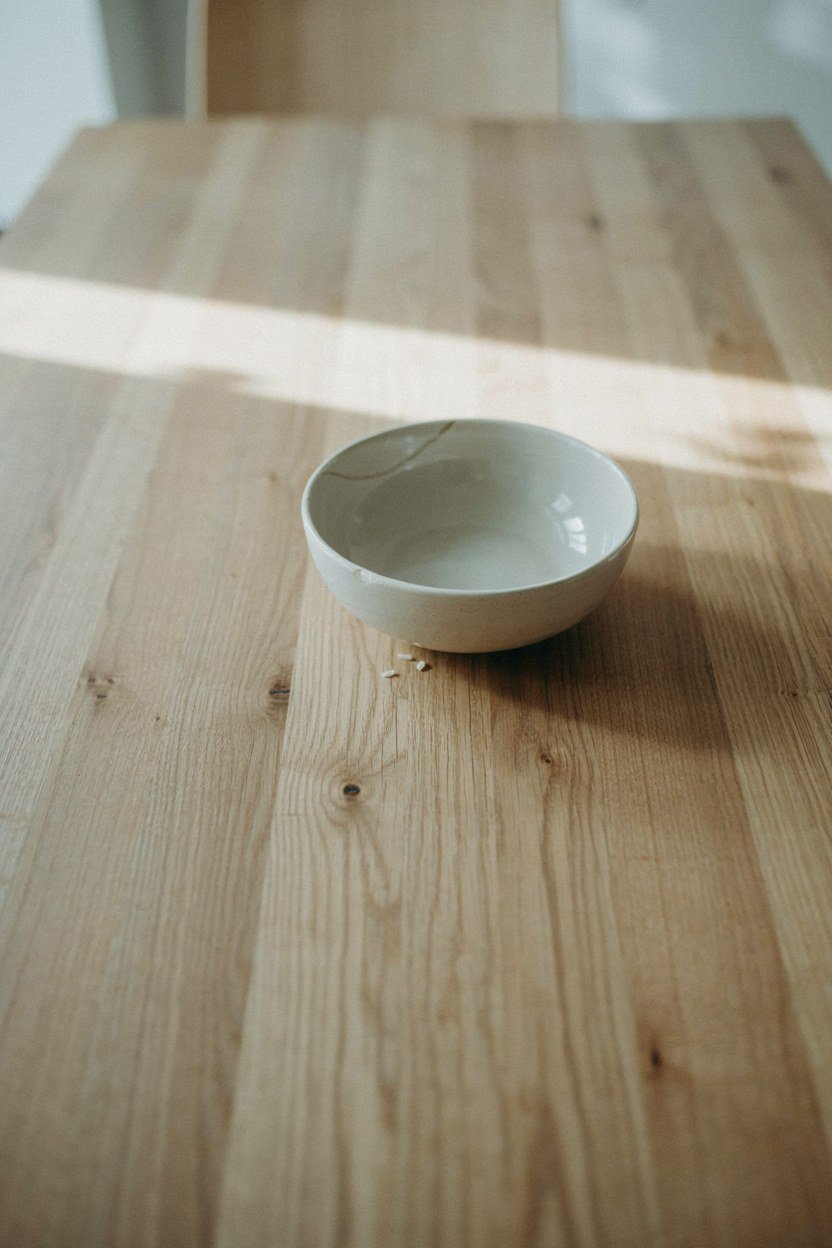
A permanently bare table looks unused, and a fully dressed one fights the minimalism. One object solves both.
A single bowl, a low vase or a sculptural candle holder is enough. Keep it low so it does not block conversation.
Change that one object seasonally rather than adding more. The slot stays the same and the room stays calm.
Keep the object off centre. Dead centre looks staged, while slightly off looks like someone lives there.
8. Use Black Frames For Art, Sparingly
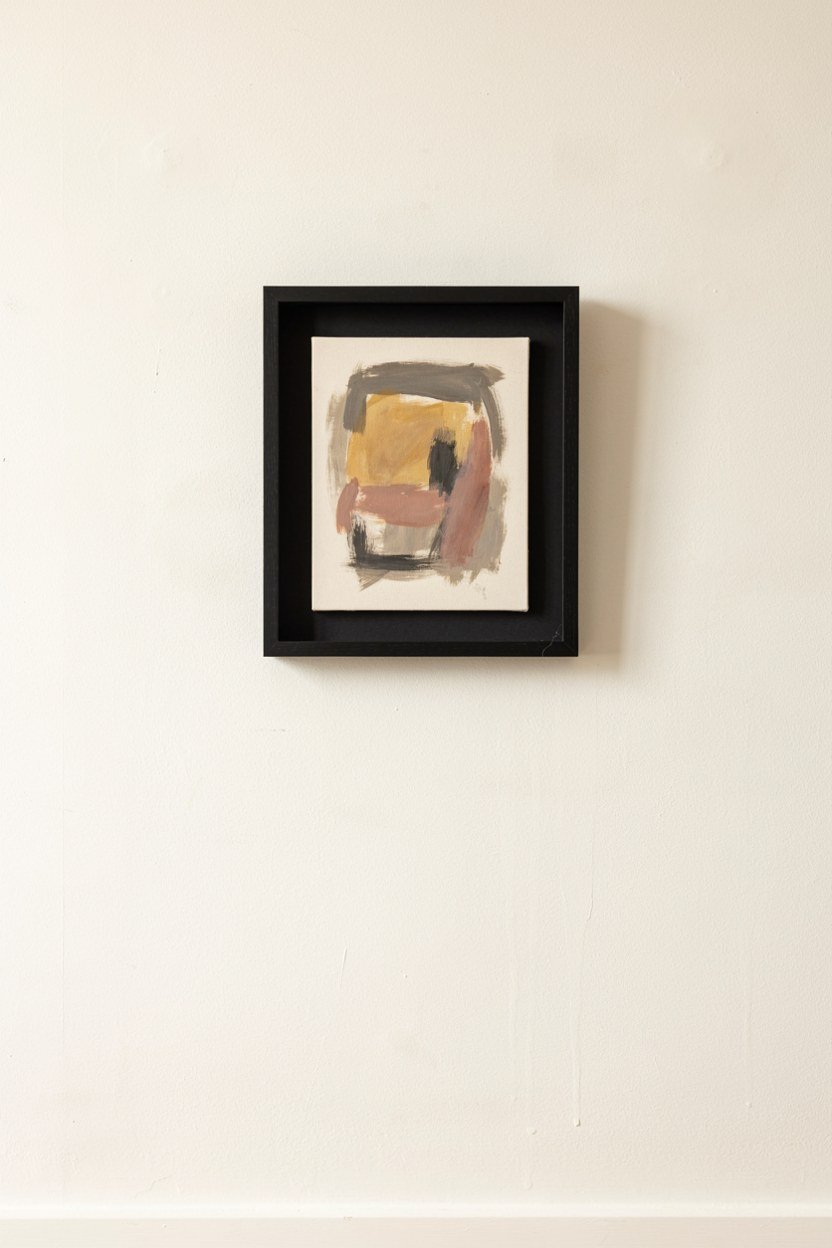
A pale wall with one or two black framed pieces gives you contrast without pattern. It suits contrast minimalism better than a gallery wall.
Go large. One oversized frame reads as intentional where four small ones read as leftover.
Hang the centre at eye level when seated, not standing. A dining room is looked at from a chair.
Leave generous space around a single piece. Art in a minimal room needs the wall around it as much as the frame.
9. Let The Floor Be The Third Quiet Tone
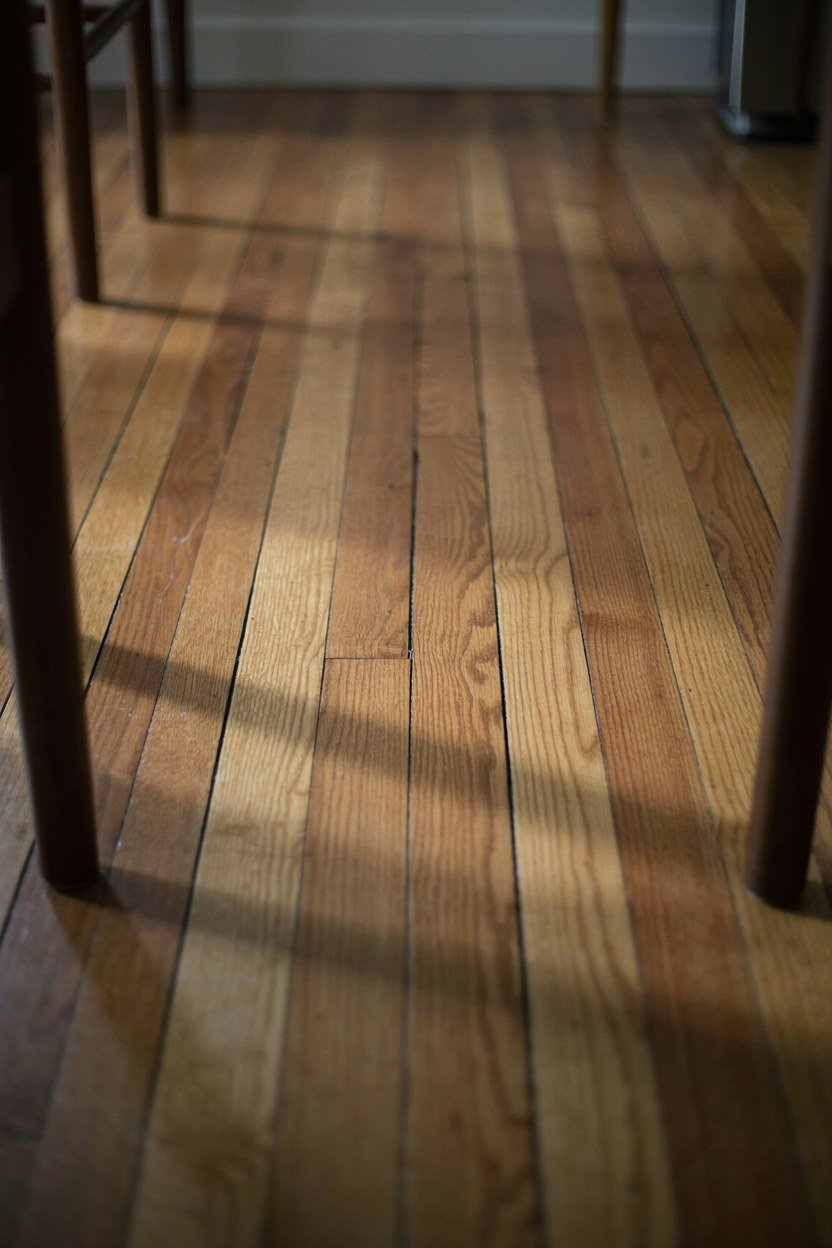
The floor should support the contrast rather than joining in. A mid tone timber or a plain stone keeps the table and chairs as the story.
Very dark floors work if the walls stay pale and the table is light. Very pale floors need a dark anchor above them.
Avoid strong pattern underfoot. Pattern is the thing minimalism gives up in exchange for the strength of the contrast.
Run boards in the longer direction of the room. It lengthens the space and keeps the floor quiet underfoot.
10. Add Warmth With One Wood Tone Only
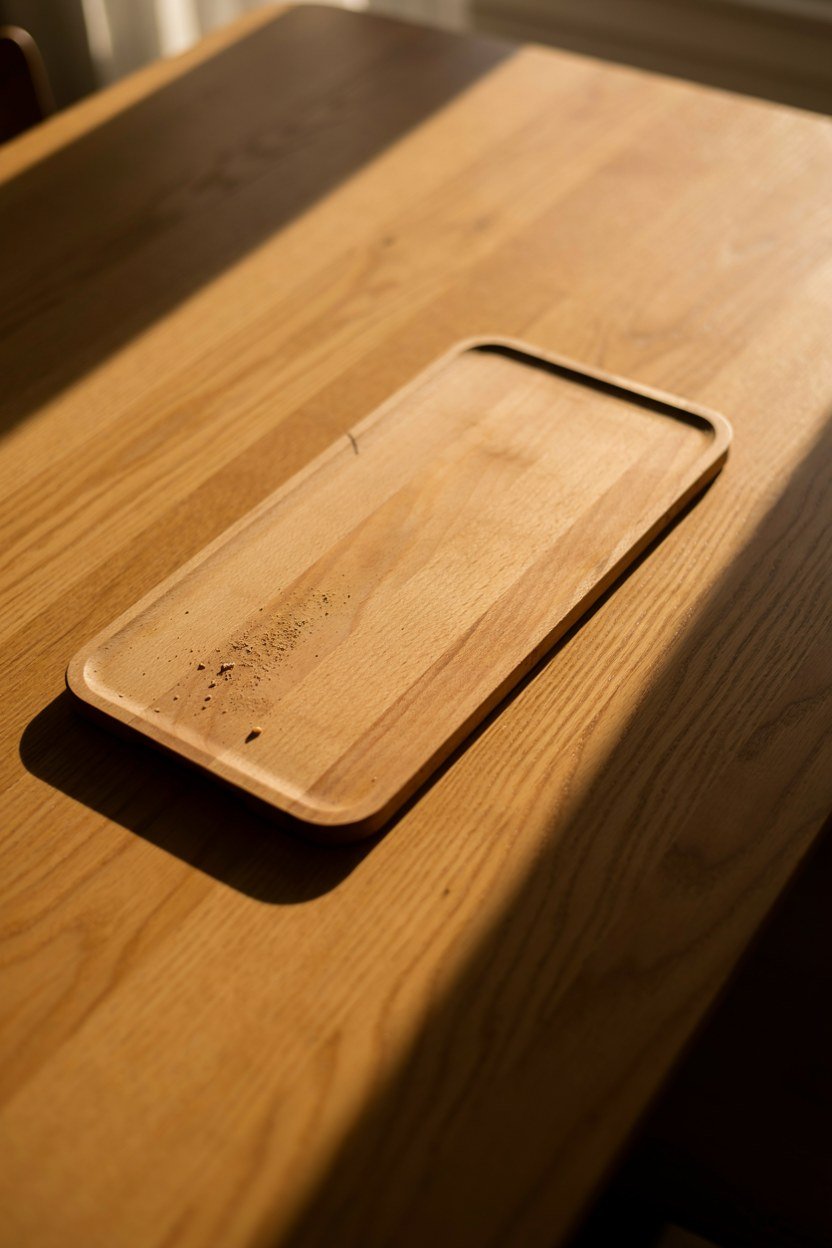
Multiple wood tones in a minimal room read as accumulation. One wood, repeated, reads as a decision.
Pick the wood in the table or the floor and echo it once more, perhaps in a bench or a shelf. That is enough.
If you have inherited mixed woods, paint one out rather than trying to match stains. Matching rarely works and painting always does.
Repeat the wood in something small. A serving board or a bowl is enough to tie the tone together.
11. Hide The Storage Completely
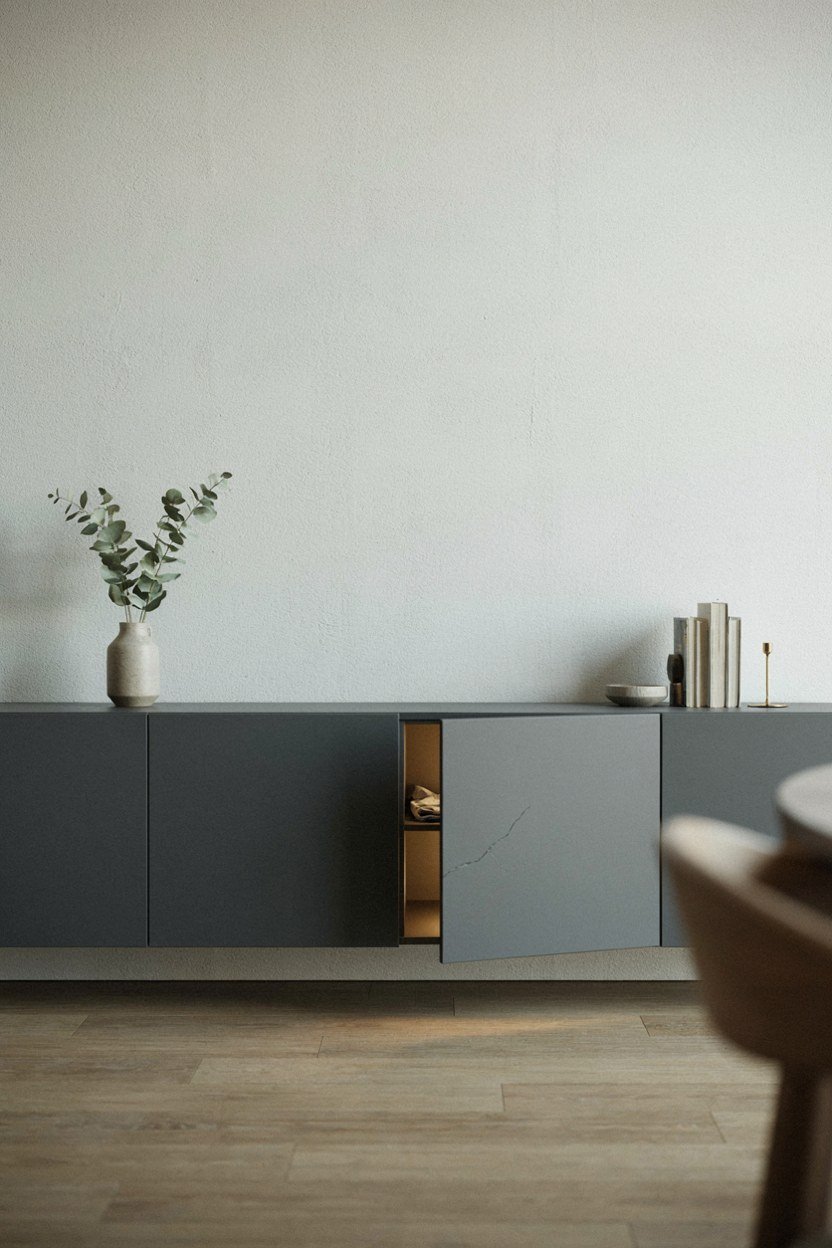
Visible storage is the enemy of a minimal dining room. Handleless doors or a run of closed cabinetry keeps the walls calm.
Push to wall sideboards work better than freestanding pieces because they read as architecture rather than furniture.
If you must have open shelving, restrict it to one shelf and keep it half empty. Half full open shelving still reads as considered.
Match the sideboard height to the table. Two horizontal lines at similar heights calm a room more than people expect.
12. Dim Everything
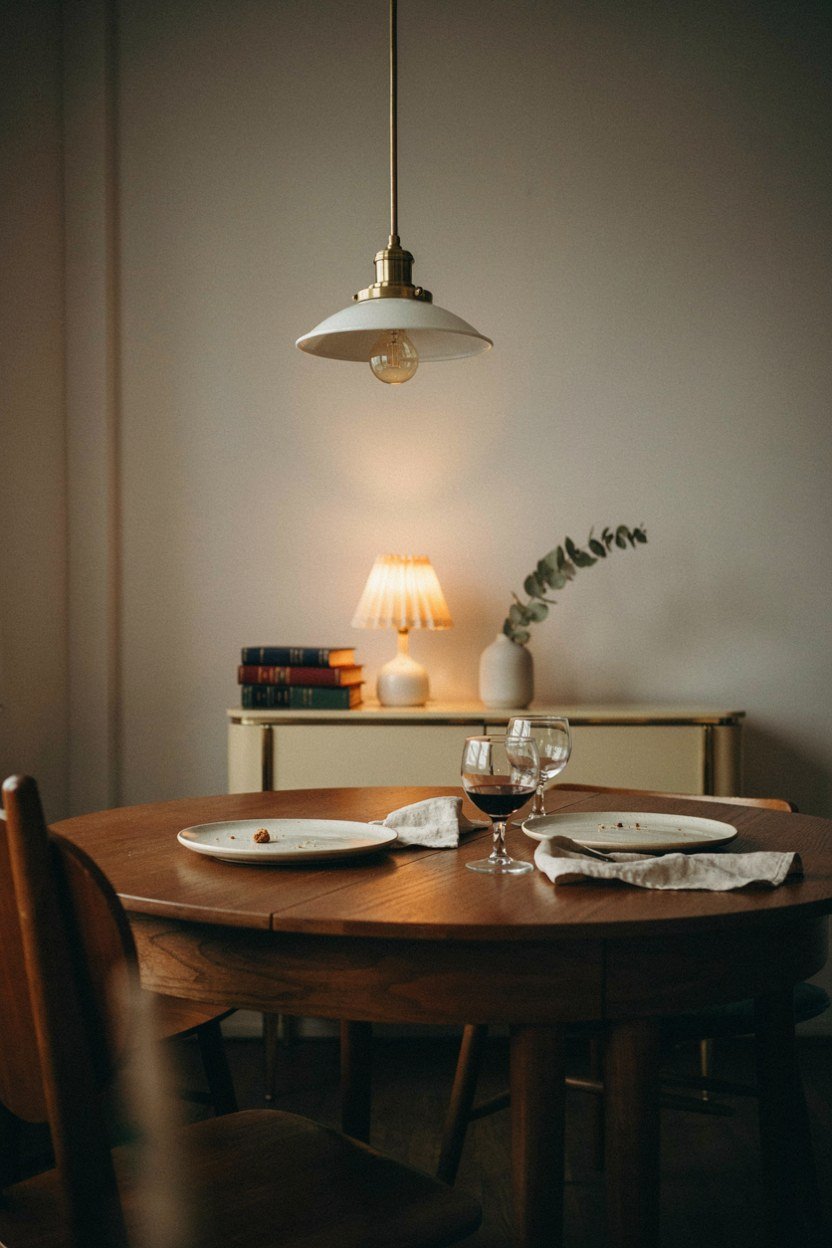
A single bright overhead light ruins a dining room after dark. Dimmers are the cheapest upgrade on this list.
Put the pendant on a dimmer and add one low level source, a wall light or a lamp on a sideboard.
Use warm bulbs, around 2700K. Cool light makes food look grey and flattens every contrast you have built.
Put the dimmer where you sit down, not by the door. You adjust the light once seated, not on the way in.
13. Use A Long Runner Instead Of Placemats
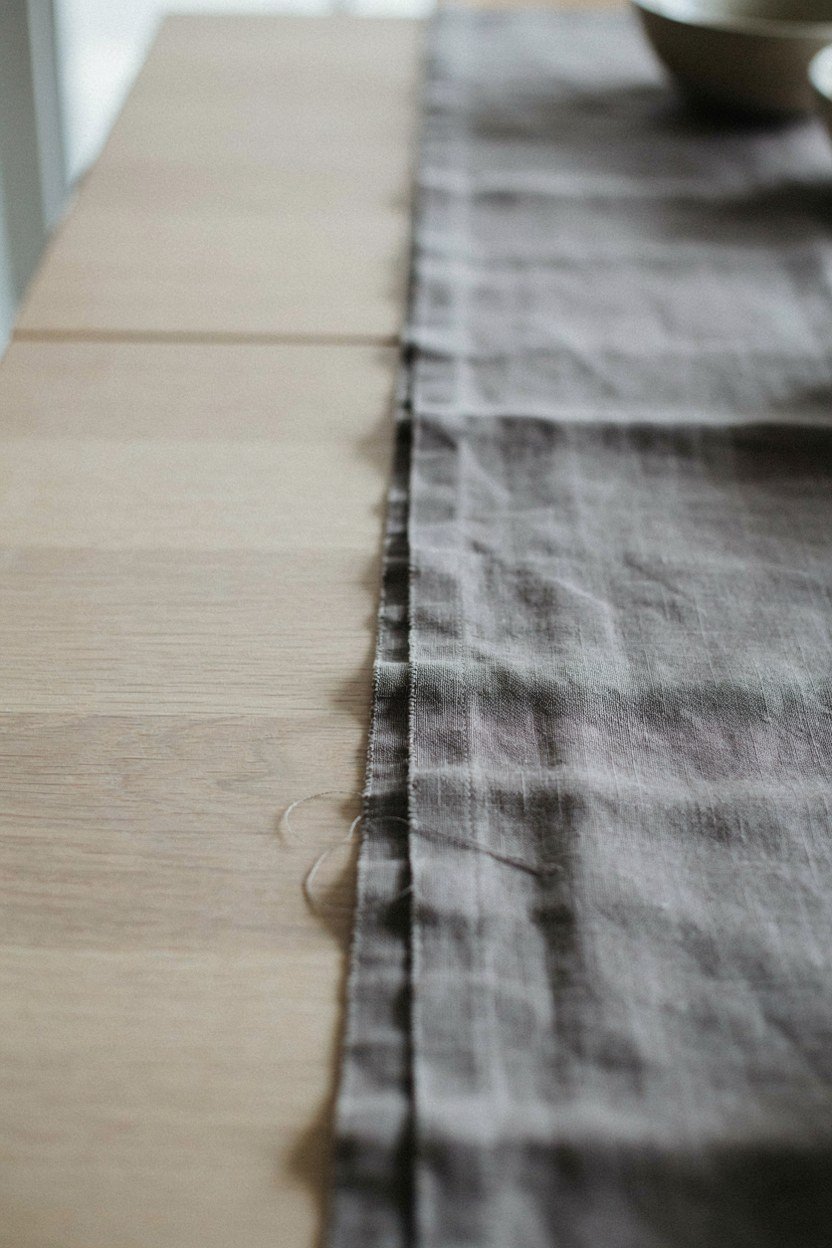
A single runner keeps the table line unbroken, where six placemats break it into pieces. It suits a minimal scheme better.
Choose the contrasting tone again rather than a new one. A charcoal runner on a pale table repeats the chair contrast.
Linen creases and that is fine. Texture is the softness that stops a hard scheme feeling clinical.
Wash and hang the runner rather than ironing it. Pressed linen on a minimal table looks oddly formal.
14. Repeat One Shape Around The Room
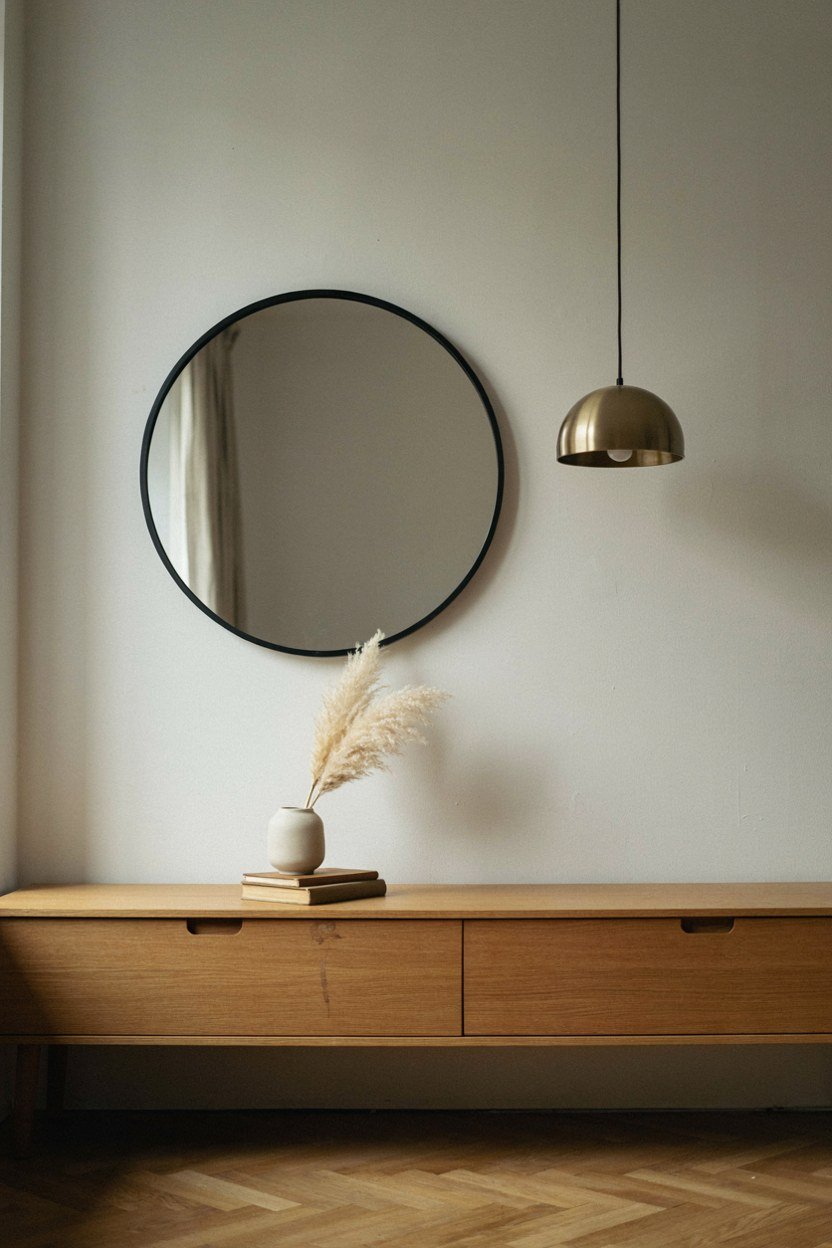
Repetition is what makes a sparse room feel designed. Pick one shape and echo it two or three times.
Round pendant, round mirror, round table is the obvious version. Arch backed chairs and an arched alcove is another.
Stop at three repeats. Beyond that it becomes a theme rather than a rhythm.
Vary the scale of the repeats. Three circles at the same size read as a pattern instead of a rhythm.
15. Leave One Wall Completely Empty
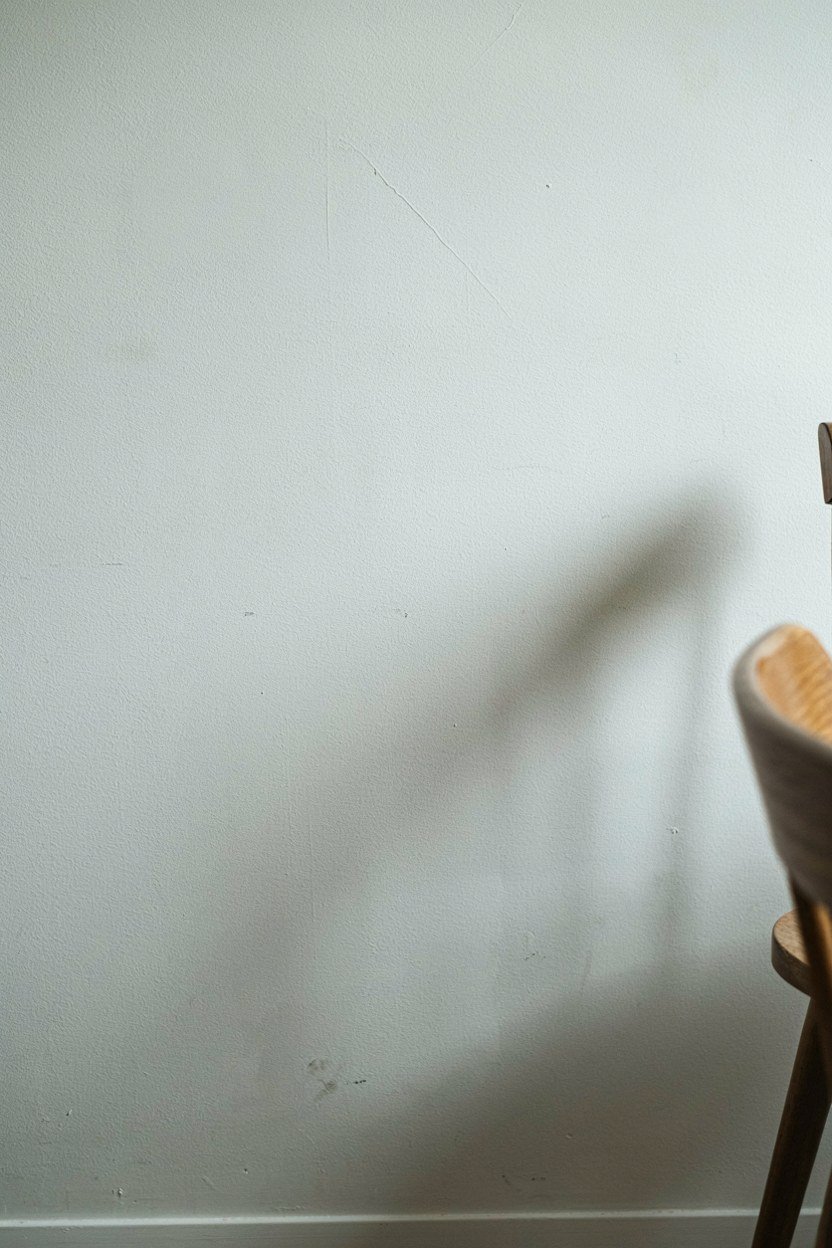
An empty wall is a decision, not an omission. In a contrast scheme it gives the eye somewhere to rest.
Choose the wall people see as they enter and leave it bare. The room will feel larger and the pieces you did hang will read louder.
Resist filling it later. Empty wall space is the hardest thing to keep and the first thing that makes a minimal room work.
Photograph the room from the door. A camera shows crowding that the eye forgives when you live there.
What A Contrast Minimal Dining Room Costs
The table and chairs dominate the budget and everything else is comparatively small. That is where the contrast lives, so it is money well placed.
Lighting is the next priority and the one that changes the room most after dark. A dimmer and a warm bulb cost very little.
Textiles, art and the single table object can all be added slowly. None of them needs to arrive at once.
| Element | Priority | Rough Cost |
|---|---|---|
| Table | Sets the anchor tone | High |
| Chairs or bench | Carries the contrast | Mid to high |
| Pendant light | Defines the space | Mid |
| Dimmer and warm bulbs | Biggest effect per pound | Low |
| Rug or curtains | Fixes the echo | Mid |
| Art, runner, one object | Add over time | Low |
Conclusion: Three Decisions That Carry The Room
Choose the table tone, contrast the seating against it, and hang one pendant low. Those three decisions establish the whole scheme.
Then protect it. One soft textile for sound, warm dimmed light for evenings, and one empty wall to give the eye a rest.
Everything else on this list is refinement. Contrast minimalism fails from adding a third and fourth idea, never from having too few.
Frequently Asked Questions About Modern Dining Rooms
What is contrast minimalism?
A pared back scheme that keeps interest through deliberate opposites: light against dark, matt against gloss, hard against soft.
Should dining chairs match the table?
No. Contrasting chairs against the table is what stops a minimal dining room looking flat.
How low should a dining pendant hang?
Around 30 to 36 inches above the tabletop. Higher and it stops reading as part of the table.
Do I need a rug under a dining table?
It helps with sound in a hard room. Size it so chairs stay on the rug when pulled out, or use floor length curtains instead.
How many wood tones should a minimal dining room have?
One, repeated. Mixed wood tones read as accumulation rather than a decision.
What bulb colour suits a dining room?
Warm, around 2700K, on a dimmer. Cool light makes food look grey and flattens the contrast.
How do I keep a minimal dining table from looking unused?
Keep one low object on it permanently, such as a bowl or a small vase, and change it seasonally rather than adding more.